Best Backlist Reads of 2018
Like a lot of book bloggers, I’m irresistibly drawn to the shiny new books released each year. However, I’ve noticed recently that many of my most memorable reads were published years or even decades ago. In 2018 I even came across a handful of books that are for me among the very best representatives of their genre, whether that’s nature, travel, family memoir, historical fiction or science fiction. The below selections are in alphabetical order by author name, and account for all the rest of my 4.5- and 5-star ratings of the year (another 27!).

My best backlist reads of the year (most of the ones I own in print, anyway).
Fiction
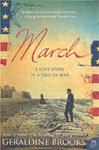 March by Geraldine Brooks (2005): The best Civil War novel I’ve read. The best slavery novel I’ve read. One of the best historical novels I’ve ever read, period. Brooks’s second novel uses Little Women as its jumping-off point but is very much its own story. The whole is a perfect mixture of what’s familiar from history and literature and what Brooks has imagined.
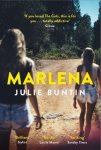 Marlena by Julie Buntin (2017): The northern Michigan setting pairs perfectly with the novel’s tone of foreboding: you have a sense of these troubled teens being isolated in their clearing in the woods, and from one frigid winter through a steamy summer and into the chill of the impending autumn, they have to figure out what in the world they are going to do with their terrifying freedom. It’s basically a flawless debut, one I can’t recommend too highly.
 Reading in the Dark by Seamus Deane (1996): Ireland’s internecine violence is the sinister backdrop to this family’s everyday sorrows, including the death of a child and the mother’s shaky mental health. The book captures all the magic, uncertainty and heartache of being a child, in crisp scenes I saw playing out in my mind.
 The Life and Loves of Lena Gaunt by Tracy Farr (2013): Lena Gaunt: early theremin player, grande dame of electronic music, and opium addict. I loved how Farr evokes the strangeness and energy of theremin music, and how sound waves find a metaphorical echo in the ocean’s waves – swimming is Lena’s other great passion.
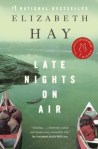 Late Nights on Air by Elizabeth Hay (2007): A tight-knit cast gathers around the local radio station in Yellowknife, a small city in Canada’s Northwest Territories: Harry and Gwen, refugees from Ontario starting new lives; Dido, an alluring Dutch newsreader; Ralph, the freelance book reviewer; menacing Eddie; and pious Eleanor. This is a marvellous story of quiet striving and dislocation; I saw bits of myself in each of the characters, and I loved the extreme setting, both mosquito-ridden summer and bitter winter.
 The Leavers by Lisa Ko (2017): An ambitious and satisfying novel set in New York and China, with major themes of illegal immigration, searching for a mother and a sense of belonging, and deciding what to take with you from your past. This was hand-picked by Barbara Kingsolver for the 2016 PEN/Bellwether Prize for Socially Engaged Fiction.
 The Invisible Bridge by Julie Orringer (2010): Hungarian Jew Andras Lévi travels from Budapest to Paris to study architecture, falls in love with an older woman who runs a ballet school, and – along with his parents, brothers, and friends – has to adjust to the increasingly strict constraints on Jews across Europe in 1937–45. It’s all too easy to burn out on World War II narratives these days, but this is among the very best I’ve read.
 The Sparrow by Mary Doria Russell (1996): For someone like me who struggles with sci-fi at the best of times, this is just right: the alien beings are just different enough from humans for Russell to make fascinating points about gender roles, commerce and art, but not so peculiar that you have trouble believing in their existence. All of the crew members are wonderful, distinctive characters, and the novel leaves you with so much to think about: unrequited love, destiny, faith, despair, and the meaning to be found in life.
 Salt Creek by Lucy Treloar (2015): Hester Finch is looking back from the 1870s – when she is a widowed teacher settled in England – to the eight ill-fated years her family spent at Salt Creek, a small (fictional) outpost in South Australia, in the 1850s–60s. This is one of the very best works of historical fiction I’ve read; it’s hard to believe it’s Treloar’s debut novel.
 Christmas Days: 12 Stories and 12 Feasts for 12 Days by Jeanette Winterson (2016): I treated myself to this new paperback edition with part of my birthday book token and it was a perfect read for the week leading up to Christmas. The stories are often fable-like, some spooky and some funny. Most have fantastical elements and meaningful rhetorical questions. Winterson takes the theology of Christmas seriously. A gorgeous book I’ll return to year after year.
Poetry
 Available Light by Marge Piercy (1988): The subjects are diverse: travels in Europe, menstruation, identifying as a Jew as well as a feminist, scattering her father’s ashes, the stresses of daily life, and being in love. Some of my favorites were about selectively adhering to the lessons her mother taught her, how difficult it is for a workaholic to be idle, and wrestling the deity for words.
Nonfiction
 Deep Country: Five Years in the Welsh Hills by Neil Ansell (2011): One of the most memorable nature/travel books I’ve ever read; a modern-day Walden. Ansell’s memoir is packed with beautiful lines as well as philosophical reflections on the nature of the self and the difference between isolation and loneliness.
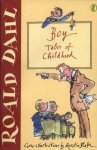 Boy by Roald Dahl (1984): Pranks and larks and holidays: these are all here; so is crushing homesickness and a bitter sense of injustice at being at the mercy of sadistic adults. Nearly 60 years later, Dahl could use memory and imagination to fully inhabit his childhood self and give a charming survey of the notable events of his life up to age 20.
 This Cold Heaven: Seven Seasons in Greenland by Gretel Ehrlich (2001): I thoroughly enjoyed my armchair trek across a frigid island nation in the company of Gretel Ehrlich, who traveled here repeatedly between 1995 and 2001 and intersperses her journeys with those of her historical model, Inuit–Danish explorer Knud Rasmussen, whose seven Arctic expeditions took in the west coast of Greenland and the far north of the North American continent. Every time she finds a fresh way to write about ice and sun glare and frigid temperatures.
 Ali: A Life by Jonathan Eig (2017): It’s a riveting account of outliving segregation and developing a personal style and world-beating confidence; it’s a sobering tale of facing consequences and having your own body fail you. I’m the furthest thing from a sports fan you could imagine, but I approached this as a book about a cultural icon and read it with a spirit of curiosity about how Eig would shape this life story and separate the facts from the legend. I loved it.
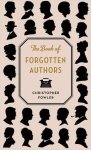 The Book of Forgotten Authors by Christopher Fowler (2017): A charming introduction to 99 more or less obscure writers. Each profile is a perfectly formed mini-biography with a survey of the author’s major work: in just two or three pages, Fowler is able to convey all a writer’s eccentricities and why their output is still worth remembering.
 To the Is-Land: An Autobiography by Janet Frame (1982): This is some of the best writing about childhood and memory that I’ve ever read, infused with music, magic and mystery. The prose alternates between dreamy and matter-of-fact as Frame describes growing up in New Zealand one of five children in the Depression and interwar years.
 Leaving Before the Rains Come by Alexandra Fuller (2015): This poignant sequel to Don’t Let’s Go to the Dogs Tonight is a portrait of Fuller’s two-decade marriage, from its hopeful beginnings to its acrimonious end. What I most appreciated about the book was Fuller’s sense of being displaced: she no longer feels African, but nor does she feel American.
 West With the Night by Beryl Markham (1942): Markham writes so vividly about the many adventures of her life in Africa: hunting lions, training race horses, and becoming one of the continent’s first freelance pilots, delivering mail and locating elephant herds. Whether she’s reflecting on the many faces of Africa or the peculiar solitude of night flights, the prose is just stellar.
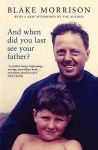 And When Did You Last See Your Father? by Blake Morrison (1993): An extraordinary memoir based around the author’s relationship with his father. Alternating chapters give glimpses into earlier family life and narrate Morrison’s father’s decline and death from cancer. This is simply marvelously written, not a bad line in the whole thing.
 The Seabird’s Cry: The Lives and Loves of Puffins, Gannets and Other Ocean Voyagers by Adam Nicolson (2017): This is an extraordinarily well-written and -researched book (a worthy Wainwright Prize winner) about the behavior, cultural importance, and current plight of the world’s seabirds. Each chapter takes up a different species and dives deep into everything from its anatomy to the legends surrounding it, simultaneously conveying the playful, intimate real lives of the birds and their complete otherness.
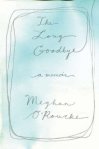 The Long Goodbye: A Memoir of Grief by Meghan O’Rourke (2011): I read a whole lot of bereavement memoirs; this has been one of the very best. O’Rourke tells her story with absolute clarity – a robust, plain-speaking style that matches her emotional transparency. The heart of the book is her mother’s death from colorectal cancer on Christmas Day 2008, but we also get a full picture of the family life that preceded it and the first couple of years of aftermath.
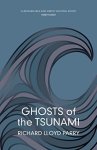 Ghosts of the Tsunami: Death and Life in Japan’s Disaster Zone by Richard Lloyd Parry (2017): Eighteen and a half thousand people died in the earthquake and tsunami that hit Japan in March 2011. It’s not really possible to get your head around a tragedy on that scale so, wisely, Parry focuses on a smaller story within the story: 74 died at Okawa primary school because the administration didn’t have a sufficient disaster plan in place. This is a stunning portrait of a resilient people, but also a universal story of the human spirit facing the worst.
 Lots of Candles, Plenty of Cake by Anna Quindlen (2012): A splendid memoir-in-essays that dwells on aging, parenting and female friendship. Some of its specific themes are marriage, solitude, the randomness of life, the process of growing into your own identity, and the special challenges her generation (roughly my mother’s) faced in seeking a work–life balance. Her words are witty and reassuring, and cut right to the heart of the matter in every case.
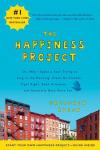 The Happiness Project: Or, Why I Spent a Year Trying to Sing in the Morning, Clean My Closets, Fight Right, Read Aristotle, and Generally Have More Fun by Gretchen Rubin (2009): Probably the best self-help book I’ve read; dense (in the best possible way) with philosophy, experience and advice. What I appreciated most is that her approach is not about undertaking extreme actions to try to achieve happiness, but about finding contentment in the life you already have by adding or tweaking small habits – especially useful for pessimists like me.
 In the Days of Rain: A daughter. A father. A cult by Rebecca Stott (2017): This was a perfect book for my interests, and just the kind of thing I would love to write someday. It’s a bereavement memoir that opens with Stott’s father succumbing to pancreatic cancer and eliciting her promise to help finish his languishing memoir; it’s a family memoir that tracks generations through England, Scotland and Australia; and it’s a story of faith and doubt, of the absolute certainty experienced inside the Exclusive Brethren (a Christian sect that numbers 45,000 worldwide) and how that cracked until there was no choice but to leave.
 Writers & Company by Eleanor Wachtel (1993): Erudite and fascinating author interviews from Wachtel’s weekly Canadian Broadcasting Corporation radio program. Whether I’d read anything by these authors (or even heard of them) or not, I found each Q&A chock-full of priceless nuggets of wisdom about creativity, mothers and daughters, drawing on autobiographical material, the writing process, and much more.
And if I really had to limit myself to just two books – my very best fiction and nonfiction reads of the year – they would be March by Geraldine Brooks and And When Did You Last See Your Father? by Blake Morrison.

What were your best backlist reads this year?
Incidents of Book Serendipity
Since May I’ve been posting my occasional reading coincidences on Twitter and/or Instagram. This is when two or more books that I’m reading at the same time or in quick succession have something pretty bizarre in common. Because I have so many books on the go at once – usually between 10 and 20 – I guess I’m more prone to such serendipitous incidents. What’s the weirdest one you’ve had lately? (The following are in rough chronological order.)
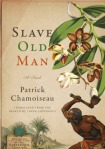
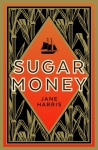
- Two historical novels set (partially) among the slaves of Martinique and featuring snippets of Creole (Patrick Chamoiseau’s Slave Old Man and Jane Harris’s Sugar Money)
- A book about epilepsy and a conductor’s memoir, followed by a novel with a conductor character and another who has seizures (Suzanne O’Sullivan’s Brainstorm and Lev Parikian’s Why Do Birds Suddenly Disappear? to Caoilinn Hughes’s Orchid & the Wasp)
- Two characters mistake pregnancy for cholera (in Alexandra Fuller’s Leaving Before the Rains Come and W. Somerset Maugham’s The Painted Veil)
 Two characters are reading Ursula K. Le Guin’s The Left Hand of Darkness (in Lily Brooks-Dalton’s Good Morning, Midnight and Julie Buntin’s Marlena) … I’ve since tried again with Le Guin’s book myself, but it’s so dry I can only bear to skim it.
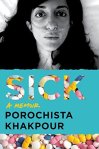
- Two memoirs by Iranian-American novelists with mental health and drug use issues (Porochista Khakpour’s Sick and Afarin Majidi’s Writing and Madness in a Time of Terror)

- References to the blasé response to Martin Luther King’s assassination in North Carolina (in Paulette Bates Alden’s Crossing the Moon and David Sedaris’s Calypso)
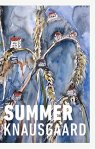
- The Police lyrics (in Less by Andrew Sean Greer and Summer by Karl Ove Knausgaard [a whole essay called “Sting”])

- Salmon croquettes mentioned in Less by Andrew Sean Greer and An American Marriage by Tayari Jones
- I’m reading Beryl Markham’s West with the Night … and then Glynnis MacNicol picks that very book up to read on a plane in No One Tells You This
- Starting two books with the word “Ladder” in the title, one right after the other: Ladders to Heaven by Mike Shanahan and Ladder of Years by Anne Tyler (followed just a couple of weeks later by A Ladder to the Sky by John Boyne!)


 Two books set in Dunedin, New Zealand, one right after the other – I planned it that way, BUT both have a character called Myrtle (To the Is-Land by Janet Frame and Dunedin by Shena Mackay). Then I encountered Harold Gillies, the father of plastic surgery, in Jim McCaul’s Face to Face, and guess what? He was from Dunedin!
- Then I was skimming Louisa Young’s You Left Early and she mentioned that her grandmother was a sculptor who worked with Gillies on prostheses, which was the inspiration for her WWI novel, My Dear I Wanted to Tell You.
- Two novels featuring drug addicts (Pretend I’m Dead by Jen Beagin and Bad News by Edward St. Aubyn)
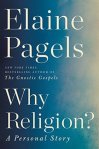
- The same Wallace Stevens lines that appear as an epigraph to Barbara Kingsolver’s Unsheltered are mentioned in Elaine Pagels’s Why Religion? – “After the final no there comes a yes / And on that yes the future world depends.”

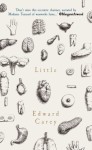 “Twinkle, Twinkle, Little Star” is mentioned in Little by Edward Carey and Marilla of Green Gables by Sarah McCoy
- Reading Nine Pints, Rose George’s book about blood, at the same time as Deborah Harkness’s Time’s Convert, which is partially about vampires; in this it takes 90 days for a human to become fully vampirized – the same time it takes to be cured of an addiction according to the memoir Ninety Days by Bill Clegg.
Polishing off My 20 Books of Summer with Hay, Jones & Markham
I finished off strong with a few books I’ve been meaning to read for months or years.
Late Nights on Air by Elizabeth Hay (2007)
 (This was a Twitter buddy read with Naomi of Consumed by Ink and Penny of Literary Hoarders.) I read my first novel by Hay, A Student of Weather, last year. It was wonderfully rewarding even though it took me a month to read. By contrast, I read the Giller Prize-winning Late Nights on Air in half that time. Most of it is set in 1975–7 in Yellowknife, a small city in Canada’s Northwest Territories. Here winter lasts for eight months and you can still meet with snow and frozen lakes in early July. A tight-knit cast gathers around the local radio station: Harry and Gwen, refugees from Ontario starting new lives; Dido, an alluring Dutch newsreader; Ralph, the freelance book reviewer; menacing Eddie; and pious Eleanor.
Everyone is in love with everyone else, so you get these layers of unrequited romance and a sense of exposure: not just to the elements, but to the vulnerabilities of admitting one’s feelings and risking professional failure. The novel is also about appearances and assumptions – “You don’t look anything like how you sound,” Gwen says to Harry – and the dangers of obsession. Four of the station employees set out one summer to recreate the six-week journey of Arctic explorer John Hornby, a trip that ends up being as wondrous as it is fraught. Hay’s foreshadowing is a bit heavy-handed, and I found the final chapters after the expedition a slight letdown, but overall this is a marvellous story of quiet striving and dislocation. I saw bits of myself in each of the characters, and I loved the extreme setting, both mosquito-ridden summer and bitter winter. I need to read the rest of Hay’s oeuvre stat.
Favorite passages:
Harry’s professional advice to Gwen: “Radio was like poetry, he told her. At its best it could be, while television was like a blockbuster novel: one made you think and feel, the other dulled your mind. … ‘To be any good you have to believe it’s hard. It’s called creative tension. … And you won’t be any good until you’re dedicated to something outside yourself.’ … I learned that a mistake is just something you go on from.”
“Something blossoms in an unlikely place. An oasis of trees miles above the treeline. An arctic river warmer than any other water they’d come upon. The four of them bathed in the waters of the Thelon, wading out into it, almost swimming. On shore they towelled themselves dry and dressed, and there was no feeling to equal the splendour of warm clothes on river-cold skin.”
My rating: 
I ran out of time for Half of a Yellow Sun by Chimamanda Ngozi Adichie so substituted in…
An American Marriage by Tayari Jones (2018)
(If it’s good enough for Barack Obama and Oprah Winfrey, it’s good enough for me!)
 The title feels like an echo of An American Tragedy. It’s both monolithic and generic, as if saying: Here’s a marriage; make of it what you will. Is it representative of the average American situation, or is it exceptional? Roy and Celestial only get a year of happy marriage before he’s falsely accused of rape and sentenced to 12 years in prison in Louisiana. Through their alternating first-person narration and their letters back and forth while Roy is incarcerated, we learn more about this couple: how their family circumstances shaped them, how they met, and how they drift apart as Celestial turns to her childhood friend, Andre, for companionship. When Roy is granted early release, he returns to Georgia to find Celestial and see what might remain of their marriage. I ached for all three main characters: It’s an impossible situation. The novel ends probably the only way it could, on a realistic yet gently optimistic note. Life goes on, if not how you expect, and there will be joys still to come.
This would make a great book club pick: there’s a lot to probe about the characters’ personalities and motivations, and about how they reveal or disguise themselves through their narration. I found it remarkable how the letters, which together make up not even one-fifth of the text, enhance the raw honesty of the book. There are other marriages on display besides Roy and Celestial’s, their range providing a snapshot of African-American lower-middle- and upper-middle-class life in the South. I especially liked the use of two totem objects, Roy’s tooth and the hickory tree outside Celestial’s childhood home (what you see on the cover).
Favorite lines:
Celestial: “I believed that our marriage was a fine-spun tapestry, fragile but fixable. We tore it often and mended it, always with a silken thread, lovely but sure to give way.”
Andre: “I don’t believe that blood makes a family; kin is the circle you create, hands held tight.”
Celestial: “Our marriage was a sapling graft that didn’t have time to take.”
Roy: “mostly my life is good, only it’s a different type of good from what I figured on.”
My rating: 
An American Marriage was published in the UK by Oneworld on April 5th. My thanks to the publisher for the free copy for review.
West With the Night by Beryl Markham (1942)
 (Another Twitter buddy read, with Laila of Big Reading Life.) I’ve meant to pick this up ever since I read Paula McLain’s fantastic novel about Beryl Markham, Circling the Sun. I loved Markham’s memoir even more. She writes so vividly about the many adventures of her life in Africa: hunting lions, training race horses, and becoming one of the continent’s first freelance pilots, delivering mail and locating elephant herds.
It took me a while to get used to the structure – this is a set of discrete stories rather than a chronological narrative – but whether she’s reflecting on the many faces of Africa or the peculiar solitude of night flights, the prose is just stellar. Ernest Hemingway once asserted in a letter that Markham could “write rings around all of us who consider ourselves as writers,” and I certainly enjoyed this more than anything I’ve read by Hemingway.
The text is bookended by two momentous flights: it opens with Markham scrambling to deliver oxygen to an injured miner, and ends with her completing the first east–west solo flight across the Atlantic in 1936. Her engine cut out multiple times; it’s no less than a miracle that she survived to crash land in Nova Scotia. Laila and I agree that Markham’s life is so exciting it’s crying out for a movie version. In the meantime, I’d like to read some more about her circle – Denys Finch Hatton; and Baron von Blixen and his wife Karen (aka Danish writer Isak Dinesen, famous for Out of Africa). In my Circling the Sun review for BookTrib, I wrote that “Markham was the kind of real-life action adventure heroine you expect to find in Indiana Jones movies,” and that sense was only confirmed by her own account.
Favorite passages:
“to fly in unbroken darkness without even the cold companionship of a pair of ear-phones or the knowledge that somewhere ahead are lights and life and a well-marked airport is something more than just lonely. It is at times unreal to the point where the existence of other people seems not even a reasonable possibility. The hills, the forests, the rocks, and the plains are one with the darkness, and the darkness is infinite. The earth is no more your planet than is a distant star—if a star is shining; the plane is your planet and you are its sole inhabitant.”
“I saw how a man can be master of a craft, and how a craft can be master of an element. I saw the alchemy of perspective reduce my world, and all my other life, to grains in a cup. I learned to watch, to put my trust in other hands than mine. And I learned to wander. I learned what every dreaming child needs to know—that no horizon is so far that you cannot get above it or beyond it.”
My rating:
So how did I do on my first-ever #20BooksofSummer challenge? In that I read and reviewed (more than) 20 books by women that I owned in print, it was a smashing success. However, I only read 7 of the books I’d intended to, substituting in the rest from my review pile, books I owned in America, and others that grabbed my attention more than those I’d picked out in early June. Looks like I’m not great at sticking with the specific reading plans I set!
At any rate, as bonuses, here are the additional books by women that I read in print from my own shelves over the summer, not counting ones already reviewed on the blog (in chronological order, with ratings and links to any Goodreads reviews):
- Blue Horses, Mary Oliver

- The Egg and I, Betty Macdonald
- Eye of the Shoal: A Fish-watcher’s Guide to Life, the Ocean and Everything, Helen Scales
- The Partly Cloudy Patriot, Sarah Vowell

- Talk before Sleep, Elizabeth Berg
- The Incendiaries, R.O. Kwon [blog tour review coming on Monday]

- The Artist’s Way: A Spiritual Path to Higher Creativity, Julia Cameron
- Gross Anatomy: My Curious Relationship with the Female Body (The Top Half and the Bottom Half), Mara Altman [Glamour UK review coming soon]
- Questions of Travel, Elizabeth Bishop
- Writers & Company, Eleanor Wachtel

- Help Me!: One woman’s quest to find out if self-help really can change her life, Marianne Power
- Mrs Gaskell & Me: Two Women, Two Love Stories, Two Centuries Apart, Nell Stevens
I’d call that a result!
What have been the best books of the summer? Of the final 20, The Invisible Bridge by Julie Orringer was the winner, followed closely by The Life and Loves of Lena Gaunt by Tracy Farr, Late Nights on Air by Elizabeth Hay, and West With the Night by Beryl Markham. There were no real duds. I’m still very interested in all but one of the books I chose back in June, so I’ll see how many of the rest I can fit into this autumn and winter’s reading.
How was your summer of reading? Did you meet any goals you set?
August Thoughts (via Song Lyrics and Book Quotes)
Can’t believe I let the summer slip away again
Like watermelon juice dripping down my chin
It might be light enough for one last swim
If we hurry on down to the shore
A fool would ask for more
A fool would ask for more
~from “August” by Mark Erelli
Summer is winding down here in southern England. The chilly nights and mornings and the huge ripe blackberries tell us autumn will be here soon. Did I make enough of the summer? Or did I so ardently escape the heat, here and in America, that I didn’t let myself enjoy it?
 We didn’t end up making a summer pudding this year. It’s an old-fashioned, grown-up dessert made of almost nothing but white bread and fresh berries, but if you want to taste July in a bowl this is it. Sweetness from strawberries and raspberries; only just palatable sharpness from currants; smoothness from a generous pouring of cream. As my husband says each year, who knows how many more annual summer puddings we’ll get? Food traditions are as important a way of marking the passing of time and the seasons’ gifts as anything else.
~
I’ve had “August” by Mark Erelli, a New England folk singer/songwriter we discovered through The Darwin Song Project, in my head for weeks and weeks. It presents scenes from a languid summer evening that appeal to my nostalgia for my American childhood. More than that, though, its recurring line – “A fool would ask for more” – encourages me to be grateful for what I have and to appreciate these ordinary, fleeting moments.
“You’re one of those people who wants everything but what they have.” So Ruth, dying of breast cancer, skewers her best friend Ann, the narrator of Talk before Sleep by Elizabeth Berg. That line stung a little, because I fear it’s true of me. When I’m in America I’m silently contemptuous of the lavish lifestyle and the can-do attitude; as soon as I’m back in England I stew in my cluttered house and my shabby little life. I envy friends with design magazine-worthy homes (but I don’t want the hassle of owning a house), sweet kids (but I don’t want to have children), stable careers (but I don’t want a regular job), and comfortable habits not needled by environmental and ethical dilemmas (but once you know you can’t go back).
~
My five-year freelancing anniversary passed quietly at the end of July. Being a freelancer has all the perks you’d expect – no boss or co-workers, at least not in the traditional sense; no commute; flexibility; variety – but also some downsides you might not realize. In my case, it means I virtually never leave my house, and I’m sedentary and sitting most of the time. I don’t get vacation time or sick pay, I have to muddle through my taxes in two countries, and I put hours and hours of work into assignments that pay insultingly little.
When asked recently for advice about freelance writing, I warned that it is extremely difficult to make money from writing about books – so if you want to do it, be sure you’re just doing it for the love of books, and secure another source of income. For me that’s proofreading science journal articles. It’s something I’m good at and find just challenging enough to keep me stimulated, but if I’m honest I don’t really care about this work. It’s just a paycheck.
To put it simply, I’m bored. Some of my writing gigs have spanned the full five years, and I’m still doing exactly the same things. I’ve had a couple small pay rises, but I’m not earning significantly more than I was in 2013, even though I was recently named an associate editor at one of the magazines (an honorary title, alas). I feel restless and like I’m just waiting for the smallest signal to tell me I can drop everything. It would be a relief to let it all go. Julia Cameron captures this feeling in The Artist’s Way: “Restive in our lives, we yearn for more, we wish, we chafe. … We want to do something but we think it needs to be the right something, by which we mean something important.”
So really what I should be doing is aiming higher. I’m now a member of the National Book Critics Circle and have access to a document listing the pay rates for big-name venues, places that pay hundreds of dollars for book reviews and $1+/word for literary articles. But it often takes me months to get up the courage to pitch to a new publication, if I ever do it at all.
In Help Me! (out on September 6th), freelance journalist Marianne Power took on a different self-help book each month for a year to see if she could change her life for the better. One particularly rough month was all about Rejection Therapy. “I should have been constantly sending ideas to different publications but I didn’t. … I didn’t want to get rejected because I would take that as a confirmation of all the insecurities I had in my head – that I was a rubbish writer, that I had been lucky to get even this far, that I would never work again.”
That passage certainly resonated for me. No matter how many hundreds of reviews I write, I still barely trust myself to write another successful one. Temporary triumphs fade fast. Getting a pitch accepted at Literary Hub had been one of the highlights of my year, but pretty much as soon as the article was published on the website I felt deflated. It was a flash in the pan; a few comments and retweets and then it was forgotten before you know it.
I didn’t think I was a flighty person who needed a lot of novelty in my life. But Beryl Markham – lion hunter, horse trainer, aviatrix – has been reminding me that even if you have a good life that many would admire, even if you’d be a fool to ask for more, sometimes you still need a change. Here’s a passage from the formidable adventurer’s West with the Night: “I wonder if I should have a change – a year in Europe this time – something new, something better, perhaps. A life has to move or it stagnates. Even this life, I think. … it is no good anticipating regrets. Every tomorrow ought not to resemble every yesterday.”
My 35th birthday is coming up this autumn. It feels like time for a rethink. What do I want every tomorrow to look like? It’s all too easy to stick with what feels like a sure thing instead of launching into something new.
How do you ensure you’re appreciating your life but also challenging yourself with new things?
#16–17: The Life and Loves of Lena Gaunt & The Invisible Bridge
I’m coming towards the close of my 20 Books of Summer challenge. Now, I’ve done plenty of substituting – some of my choices from early in the summer will have to spill over into the autumn (for instance, I’m reading the May Sarton biography slowly and carefully so am unlikely to finish it before early September) or simply wait for another time – but in the end I will have read 20+ books I own in print by women authors. (Ongoing/still to come are a few buddy reads: Half of a Yellow Sun by Chimamanda Ngozi Adichie with Anna Caig; Late Nights on Air by Elizabeth Hay with Naomi of Consumed by Ink and Penny of Literary Hoarders; and West with the Night by Beryl Markham with Laila of Big Reading Life.)
The two #20Booksof Summer I finished most recently have been the best so far. I’d heard great things about these debut novels but let years go by before getting hold of them, and then months more before picking them up. Though one is more than twice the length of the other, they are both examples of large-scale storytelling at its best: we as readers are privy to the sweep of a whole life, and get to know the protagonists so well that we ache for their sorrow. What might have helped the authors tap into the emotional power of their stories is that both drew on family history, to different extents, when creating the characters and incidents.
The Life and Loves of Lena Gaunt by Tracy Farr (2013)
 Lena Gaunt: early theremin player, grande dame of electronic music, and opium addict. When we meet our 81-year-old narrator, she’s just performed at the 1991 Transformer Festival and has caught the attention of a younger acolyte who wants to come interview her at home near Perth, Australia for a documentary film – a setup that reminded me a bit of May Sarton’s Mrs. Stevens Hears the Mermaids Singing. It’s pretty jolting the first time we see Lena smoke, but as her life story unfolds it becomes clear that it’s been full of major losses, some nearly unbearable in their cruelty, so it’s no surprise that she would wish to forget.
Though Lena bridles at Mo’s many probing questions, she realizes this may be her last chance to have her say and starts typing up a record of her later years to add to a sheaf of autobiographical stories she wrote earlier in life. These are interspersed with the present action to create a vivid collage of Lena’s life: growing up with a pet monkey in Singapore, moving to New Zealand with her lover, frequenting jazz clubs in Paris, and splitting her time between teaching music in England and performing in New York City.
With perfect pitch and recall, young Lena moved easily from the piano to the cello to the theremin. I loved how Farr evokes the strangeness and energy of theremin music, and how sound waves find a metaphorical echo in the ocean’s waves – swimming is Lena’s other great passion. Life has been an overwhelming force from which she’s only wrested fleeting happiness, and there’s a quiet, melancholic dignity to her voice. This was nominated for several prizes in Australia, where Farr is from, but has been unfairly overlooked elsewhere.
Favorite lines:
“I once again wring magic from the wires by simply plucking and stroking my fingers in the aether.”
“I felt the rush of the electrical field through my body. I felt like a god. I felt like a queen. I felt like a conqueror. And I wanted to play it forever.”
“All of the stories of my life have begun and ended with the ocean.”
My rating:
The Life and Loves of Lena Gaunt was published in the UK by Aardvark Bureau in 2016. My thanks to the publisher for a free copy for review.
The Invisible Bridge by Julie Orringer (2010)
 It’s all too easy to burn out on World War II narratives these days, but this is among the very best I’ve read. It bears similarities to other war sagas such as Birdsong and All the Light We Cannot See, but the focus on the Hungarian Jewish experience was new for me. Although there are brief glimpses backwards and forwards, most of the 750-page book is set during the years 1937–45, as Andras Lévi travels from Budapest to Paris to study architecture, falls in love with an older woman who runs a ballet school, and – along with his parents, brothers, and friends – has to adjust to the increasingly strict constraints on Jews across Europe.
A story of survival against all the odds, this doesn’t get especially dark until the last sixth or so, and doesn’t stay really dark for long. So if you think you can’t handle another Holocaust story, I’d encourage you to make an exception for Orringer’s impeccably researched and plotted novel. Even in labor camps, there are flashes of levity, like the satirical newspapers that Andras and a friend distribute among their fellow conscripts, while the knowledge that the family line continues into the present day provides a hopeful ending.
This is a flawless blend of family legend, wider history, and a good old-fashioned love story. I read the first 70 pages on the plane back from America but would have liked to find more excuses to read great big chunks of it at once. Sinking deep into an armchair with a doorstopper is a perfect summer activity (though also winter … any time, really). [First recommended to me by Andrea Borod (aka the Book Dumpling) over five years ago.]
Favorite lines:
“He felt the stirring of a new ache, something like homesickness but located deeper in his mind; it was an ache for the time when his heart had been a simple and satisfied thing, small as the green apples that grew in his father’s orchard.”
“[It] seemed to be one of the central truths of his life: that in any moment of happiness there was a reminder of bitterness or tragedy, like the ten plague drops spilled from the Passover cup, or the taste of wormwood in absinthe that no amount of sugar could disguise.”
“For years now, he understood at last, he’d had to cultivate the habit of blind hope. It had become as natural to him as breathing.”
My rating:
The Best Fiction of 2015: My Top 15
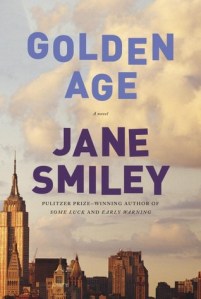
2015 was a great year for fiction, largely dominated by doorstoppers (like Death & Mr. Pickwick and City on Fire, in addition to the Franzen and Yanagihara listed below) and Harper Lee. I’ve decided to pass on Go Set a Watchman, but I’ve read plenty of the year’s big-name fiction, as well as some more obscure titles I’d like to bring to your attention.
As difficult as it is to pit books against each other and come up with a numbered list, I’ve given it a go and come up with my top 15 fiction works of the year. To keep it simple for myself and straightforward for potential readers, I’m limiting myself to two sentences per title: the first is a potted summary; the second tells you why you should read it. I also link to any full reviews.
Let the countdown begin!
- The Shore
 by Sara Taylor: Gritty and virtuosic, this debut novel-in-13-stories imagines 250 years of history on a set of islands. Every region needs a literary chronicler, and I reckon Taylor – channeling David Mitchell with her cross-centuries approach – is it for the Eastern Shore of Maryland and Virginia’s islands.
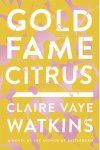 Gold Fame Citrus by Claire Vaye Watkins: Gold, fame, citrus: reasons people once came to California; now, only a desperate remnant remains in the waterless wasteland. As a smart, believable dystopian with a family at its heart, this trumps any of last year’s efforts (like Station Eleven or California).
 Preparation for the Next Life by Atticus Lish: Like West Side Story, this debut novel is an updated Romeo and Juliet narrative – a tragedy-bound love story with a grimy contemporary setting and a sobering message about racism and the failure of the American dream. The matter-of-fact style somehow manages to elevate the everyday and urban into an art form. (Reviewed for Third Way magazine in August.)
- Circling the Sun
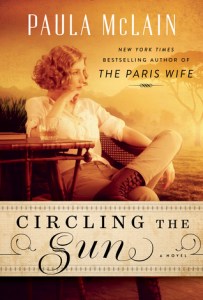 by Paula McLain: Before she ever thought of flying solo across the Atlantic, aviatrix Beryl Markham was just Beryl Clutterbuck: raised in Kenya, one of Africa’s first female horse trainers, its first professional female pilot, and the other side of the love triangle featuring Karen Blixen (Isak Dinesen) and Denys Finch Hatton. McLain describes her African settings beautifully, and focuses as much on the small emotional moments that make a life as she does on its external thrills.
 Kitchens of the Great Midwest by J. Ryan Stradal: One of my favorite debuts of the year: a culinary-themed collection of short stories loosely linked through the character of Eva Thorvald, a young chef with an unfortunate past and a rare palate. Read it for a glimpse of how ordinary, flawed Americans live – no fairytale endings here.
 Hausfrau by Jill Alexander Essbaum: This arresting debut reads like a modern retelling of Madame Bovary, with its main character a desperate American housewife in Zurich. Watch Anna’s trajectory with horror, but you cannot deny there is a little of her in you.
 The Versions of Us by Laura Barnett: In this impressively structured, elegantly written debut, Barnett chronicles the romantic lives of two Cambridge graduates through three-quarters of a century, giving three options for how their connection might play out. There is no one perfect person or story: unsentimental this may be, but it feels true to how life works. (Reviewed for Third Way magazine in July.)
 Fates and Furies by Lauren Groff: An incisive study of a marriage, beautifully written and rich with allusions to Shakespeare and Greek mythology. Groff makes it onto a short list of women I expect to produce the Great American Novel (along with Curtis Sittenfeld, Jennifer Egan, and Hanya Yanagihara).
 Purity by Jonathan Franzen: East Germany, Bolivia and Oakland, California: Franzen doesn’t quite pull all his settings and storylines together, but this is darn close to a 5-star Dickensian read. It’s strong on the level of character and theme, with secrecy, isolation and compassion as recurring topics.
 You Too Can Have a Body Like Mine by Alexandra Kleeman: Kleeman’s first novel is a full-on postmodern satire bursting with biting commentary on consumerism and conformity. Think of her as an heir to Dave Eggers and Douglas Coupland, with a hefty dollop of Margaret Atwood thrown in.
 The Animals by Christian Kiefer: Kiefer’s second novel contrasts wildness and civilization through the story of a man who runs an animal refuge to escape from his criminal past. A tough opening sequence establishes themes that will be essential to the novel: the fine line between instincts and decisions, the moral dilemmas involved in environmentalism, and the seeming inescapability of violence.
 The Tsar of Love and Techno by Anthony Marra: A collection of tightly linked short stories giving an intimate look at Russia and Chechnya in wartime and afterwards – revealing how politics, family, and art intertwine. Just as he did in his first novel, Marra renders unspeakable tragedies bearable through his warm and witty writing.
 Girl at War by Sara Nović: This pitch-perfect debut novel is an inside look at the Yugoslavian Civil War and its aftermath, from the perspective of a young girl caught up in the fighting. The way Nović recreates a child’s perspective on the horrors of war is masterful: Ana’s viewpoint is realistic and matter-of-fact, without the melodrama an omniscient narrator might inject.
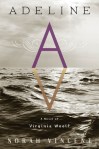 Adeline by Norah Vincent: Set in 1925–1941 and structured like a five-act play, the novel revolves around Virginia Woolf’s philosophical conversations with Leonard Woolf, Lytton Strachey and his lover Carrington, T.S. and Valerie Eliot, W.B. Yeats, and her doctor, Octavia Wilberforce. Vincent has produced a remarkable picture of mental illness from the inside.
- A Little Life
 by Hanya Yanagihara: Jude St. Francis: Dickensian orphan, patron saint of lost causes, Christlike Man of Sorrows, and one of the most memorable characters in recent fiction. This novel is an attempt to tackle the monolithic question of what makes life worth living; among the potential answers: love (though it doesn’t conquer all), friendship, creativity, and the family you create for yourself.
Best Discoveries of the Year: Mary Lawson (Road Ends), Daniel Kehlmann (F: A Novel), Jonathan Evison (This Is Your Life, Harriet Chance!) and Jonathan Coe (Number 11).
Debut Novelists Whose Next Work I’m Most Looking Forward to: Jessamyn Hope (Safekeeping – reviewed here in June) and Carmiel Banasky (The Suicide of Claire Bishop – reviewed for Foreword’s Fall 2015 issue).
 The Year’s Biggest Disappointments: Etta and Otto and Russell and James by Emma Hooper; Where My Heart Used to Beat by Sebastian Faulks and Avenue of Mysteries by John Irving (both rehash the authors’ familiar themes; I couldn’t make it past 15% in the latter).
Novels I Most Wish I’d Gotten to in 2015: Nell Zink’s Mislaid, Sara Baume’s Spill Simmer Falter Wither, and the final two volumes of Jane Smiley’s “Last Hundred Years” trilogy.
What are the best novels you read this year? Any new favorite books or authors? Your comments are always welcome.
I’ll be back tomorrow with my top 15 nonfiction books I read this year (most of them not published in 2015, however – I seem to have been a nonfiction slacker!)
Reviews Roundup, May–June
One of my goals with this blog is to have one convenient place where I can gather together all my writing that has appeared in disparate online locations. To that end, once a month – or maybe more often – I’ll provide links to all the book reviews I’ve published elsewhere, with a rating and a short taster so you can decide whether to click to read more. (A couple of exceptions: I won’t point out my Kirkus Indie or BlueInk reviews since I don’t get a byline.)
BookBrowse
Girl at War by Sara Nović [subscription service; excerpt available to non-subscribers]: This pitch-perfect debut novel is an inside look at the Yugoslavian Civil War and its aftermath, from the perspective of a young girl caught up in the fighting. The careful structure is what keeps it from becoming just another ordinary, chronological war story. The recreation of a child’s perspective on the horrors of war is stunning. In fact, I can barely think of a negative thing to say about this concise novel. It strikes a perfect balance between past and present, tragic and hopeful.

 Church of Marvels by Leslie Parry [subscription service; excerpt available to non-subscribers]: With settings ranging from a Coney Island theater to an opium den and a mental asylum, this is a gritty look at late-nineteenth-century outsiders. Circus and sideshow themes have been very popular in fiction in recent years, and this is a great example of a novel that uses those elements as background but goes beyond the incidentals of the carnival lifestyle to examine sexuality and societal outcasts. A very atmospheric and accomplished debut novel.

The Bookbag
Secrets of the Pomegranate by Barbara Lamplugh (& interview): In the aftermath of the 2004 Madrid train bombings, the secrets harbored by two English sisters, one of them settled in Granada, will come out into the open and affect the entire family. Lamplugh does a great job of unveiling a little at a time – but still maintaining tension until the surprise of the final revelation. The novel shifts easily between the central narrative and Deb’s diary entries, and between Alice’s and Mark’s perspectives. A strong debut novel.
An Account of the Decline of the Great Auk, According to One Who Saw It by Jessie Greengrass: An unusual mixture of historical, contemporary and dystopian short stories. A number of the first-person narratives feel like vague interior monologues, though there are some universal sentiments. When Greengrass picks one genre (but which will it be?) and sticks with it for the length of a whole book, she should have the time and space for the deep characterizations I thought were missing here. (But you can’t beat this book’s title, can you?)

 From the Mixed-Up Files of Mrs. Basil E. Frankweiler by E.L. Konigsburg: This was one of the key books of my American childhood. All these years later, phrases were still familiar to me, such as Jamie’s frequent exclamation of “Oh, boloney!” I clearly remembered the delicious overall sense of adventure and secrecy. Konigsburg captures school group chatter and brother/sister banter perfectly. The museum and archive settings are a great way to get children interested in art, history and library research. This was the original Night at the Museum before that franchise was ever dreamed up.
The Hunt for the Golden Mole by Richard Girling: From Victorian animal collecting to present-day poaching, Girling surveys the contradictory human instincts toward exploitation and preservation of mammals. The book is rather scattered, with too little about the actual quest for the mole, but the message about species extinction is powerful. (The Somali golden mole has never been seen in the wild, except as a few bones in an owl pellet found by an Italian zoologist in 1964. For some reason, it captured Girling’s imagination, becoming a symbol of rarity and fragility.)

Nudge
Road Ends by Mary Lawson: Contrasting rural Canada and London in the 1960s, Lawson’s third novel is a powerful story about how people deal with a way of life ending. She creates a perfect balance between her two plot strands, and the evocation of both locations is flawless, perhaps because they have autobiographical worth for her – she grew up on a farm in Ontario but moved to England in 1968. One remarkable thing about the novel is how she traces every decision back to a traumatic event in a character’s past.
 The Wolf Border by Sarah Hall: Rachel Caine has run Idaho’s Chief Joseph wolf preserve for nearly a decade, but her roots are in England’s Lake District. Her two worlds unexpectedly collide when an earl asks for her help reintroducing wolves near the Scottish border. Alongside the story of the wolves’ release runs Rachel’s decision to become a mother. The twin plot strands – one environmental and the other personal – ask what can be salvaged from the past.
Italian Ways by Tim Parks: Parks, an Englishman, has lived and worked in northern Italy for over 30 years. To start with he saw his train travel as an everyday source of woes about ticket queues, late running, officious staff, and so on, but as years passed he decided to interrogate Italy’s rail system as a metaphor for the country itself. He structures this book around seven train journeys. It’s better suited to train spotters than to armchair travelers: there is quite a lot about train schedules and not enough about the countryside itself.
 Landmarks by Robert Macfarlane: This new classic of nature writing zeroes in on the language we use to talk about our environment, both individual words – which Macfarlane celebrates in nine mini-glossaries alternating with the prose chapters – and the narratives we build around places, via discussions of the work of nature writers he admires. Whether poetic (“heavengravel,” Gerard Manley Hopkins’s term for hailstones), local and folksy (“wonty-tump,” a Herefordshire word for a molehill), or onomatopoeic (on Exmoor, “zwer” is the sound of partridges taking off), his vocabulary words are a treasure trove.
Penelope Fitzgerald: A Life by Hermione Lee: A thorough and sympathetic appreciation of an underrated author, and another marvelously detailed biography from Lee. Fitzgerald is, like Diana Athill, a reassuring examples of an author who did not find success until well into middle age. Although she always guarded literary ambitions, she was not able to pursue her work wholeheartedly until she had reared three children and nursed her hapless husband through his last illness. The approach is largely chronological, though Lee pauses at key moments to investigate the biographical origins of each of Fitzgerald’s books.
Saint Mazie by Jami Attenberg: Mazie Phillips-Gordon, a real ticket-taker at The Venice movie theatre, barely gets a footnote in history. Here we see all sides of this bold, brassy broad through Attenberg’s fragmented, epistolary narrative. The novel intersperses Mazie’s fictional diary entries (1907 to 1939) with excerpts from her unpublished autobiography and interviews with people who knew her. This is historical fiction – but not as we’re accustomed to it. Attenberg shows how fragile and incomplete the documentary record can be. A hard-nosed heroine with a heart of gold, Mazie will leave her mark on you.
 A Buzz in the Meadow by Dave Goulson: As Goulson did in his book about bees, A Sting in the Tale, he treats readers like friends he is taking on a gentle tour to have everyday encounters with nature. The low-key, humorous anecdotes are reminiscent of the writings of Gerald Durrell, but – like Durrell – Goulson has a serious environmental agenda. Some of the most amusing chapters are about the sexual habits of insects and plants. This is less focused than his previous book, though, and repeats some of the material. The main draw, as always, is Goulson’s infectious enthusiasm and excellent explanations of science.
We Love This Book
War of the Encyclopaedists by Christopher Robinson and Gavin Kovite: In this postmodern satire, two Seattle hipsters must face reality when one of them leaves to fight in the Iraq War. From now on they keep in touch by updating their pretentious Wikipedia article. While Hal applies literary criticism to Star Wars and tries to make amends to his ex-girlfriend, Mickey is in life-and-death situations, looking for car bombs and overseeing local elections. Robinson and Kovite (an Iraq War veteran) alternate their settings in a fairly seamless whole.
The Edible Atlas by Mina Holland: Food lovers and armchair travelers alike will savor this tour through the world’s regional cuisines and trademark dishes. In her first book, the editor of the Guardian’s Cook supplement introduces 39 cuisines with larder lists, a rundown of crucial flavors, and one to four recipes. Maps show which spices and chilies are used in different areas, while sidebars present key ingredients. The book strives for a balance of common imports and unknown dishes, prioritizing authenticity and reproducibility at home.
 Hollow Heart by Viola di Grado: Twenty-five-year-old Dorotea Giglio slit her wrists in the bathtub in July 2011 and expired in “a grim mojito of mint bubble bath and blood.” Over the next four years she chronicles her physical decomposition as well as her spirit’s enduring search for love. In alternately clinical and whimsical language, with fresh metaphors that have survived translation from Italian admirably, di Grado’s second novel examines the secret sadness passed down through families.
Foreword Reviews
Auschwitz #34207: The Joe Rubinstein Story by Nancy Sprowell Geise: This eye-opening account of a Polish Jew’s life before, during, and after Auschwitz deposits readers right into concentration camp horrors. Instead of presenting this as a third-person biography, Geise writes as Rubinstein, using extensive interviews and documentary research to recreate his perspective. While the story is necessarily a bit less dramatic after the chapters on the Holocaust, the fact that Rubinstein survived and later became a successful shoe designer in New York is inspiring.
The Contaminants by Devin K. Smyth: Two teens aboard a spacecraft hold out hope for new life on post-apocalyptic Earth in this believable YA science fiction novel. Composed of two solid first-person narratives and based around two father-child relationships, this is a novel that prizes emotions as much as it does technology. The novel is on the thin side; it could have done with another subplot or two to add some complexity. However, the subtle eugenics theme will give teen readers plenty to think about while they follow the fast-paced story.
 The Loneliness Cure by Kory Floyd: A professor of communication tackles the loneliness epidemic with stories and science. Floyd explains the problems associated with chronic affection deprivation and suggests practical strategies for getting more of the human contact we naturally crave. Two-thirds of the text goes to preliminaries, but the subtitle’s six strategies are worth waiting for. Like the best self-help books, this convinces readers that “it pays to reach out for help when you need it” and gives the confidence and tactics to do so.
BookTrib
In this article I give a more in-depth preview of Circling the Sun by Paula McLain, her fictionalized biography of Beryl Markham.
I also post reviews of most of my casual reading and skimming on Goodreads.
Insomnia by Linda Pastan: Excellent free verse poems infused with images of weather, heavenly bodies, the night sky, art history, and travels. No rhymes to speak of, but plenty of alliteration and repetition – like in “Necklace,” where nearly every line ends with “pearl” or “pearls.” Historical and mythological references are frequent and highbrow. Especially in Part 3, the main theme is facing old age and illness. Linda Pastan has been writing poetry for nearly half a century; I’ll be sure to seek out more of her collections. Releases October 26th.
The Kindness by Polly Samson: This very subtle novel reminds me of works by Tessa Hadley and Lucy Caldwell. It takes one seemingly perfect couple – Julia and Julian – and parses out what went wrong between them and the aftermath. The book is so elegantly structured; characters drift in and out of flashbacks with none of the customary warnings. Instead Samson leaves it to readers to piece together the jigsaw puzzle of how they met and raised their daughter, Mira, and then how everything fell apart.
 The Versions of Us by Laura Barnett: In this impressive debut, Barnett chronicles the romantic lives of two Cambridge graduates through three-quarters of a century, giving three options for how their connection might play out. She juggles her storylines and moves through decades with ease. Less mawkish than One Day; less gimmicky than Life After Life – though there are shades of both. The message seems to be: there is no one perfect person, no one perfect story. Unsentimental this may be, but it feels true to how life works. (My full review will appear in the July 2015 issue of Third Way magazine.)
Eating Appalachia: Rediscovering Regional American Flavors by Darrin Nordahl: Nordahl travels through Ohio, West Virginia, Kentucky and North Carolina in search of truly indigenous local ingredients. He highlights ramsons, pawpaw, elk (leaner and richer than beef), squirrel, hickory nuts and black walnuts, sumac, spicebush berry, sassafras, and persimmons. There are a few recipes and photographs in each chapter, although this is more of a narrative than a cookbook. I loved how he brought it all together with an imagined Appalachian Thanksgiving feast.
Eating Rome: Living the Good Life in the Eternal City by Elizabeth Minchilli: Minchilli’s parents moved the family from America to Rome when she was 12. Over the years she kept going back to Italy: to Florence as a graduate student, and then to stay when she married Domenico. Here, through recipes and personal stories, she shares her enthusiasm for Italian food and for Rome in particular. She finishes each chapter with a list of favorite eateries, so this is a practical guide anyone would benefit from taking along on a trip to Rome.
Some Churches by Tasha Cotter: I loved the first two poems but felt a number of the rest were lacking in artistry. Almost all are written in complete sentences, some in paragraph blocks, and alliteration isn’t always enough to differentiate them from prose. Favorite lines (from “Blood Orange”): “People think that either the red or the orange should go, because to blend the two / alienates some readers. / … I, too, am having an identity crisis, / just like the blood orange. Now that we’ve peeled back / the artifice, you’re inviting me in anyway”.
South Toward Home: Travels in Southern Literature by Margaret Eby: This tour through Southern literature is a great introduction for someone whose familiarity with Southern authors is minimal. Starting off in her home state of Mississippi, Eby travels through Georgia, Alabama, Louisiana, and back to Mississippi in a roughly circular road trip. My favorite chapter was on Flannery O’Connor, but I was also interested to learn about Harry Crews, who I’d never heard of before – it certainly sounds like he was a character. Releases September 8th.
 Post-Traumatic Church Syndrome: A Memoir of Humor and Healing by Reba Riley: I could relate to much of Riley’s story. She was a Pentecostal-leaning fundamentalist through high school, but now even setting foot in a church made her feel nauseous. Yet she retained a strong spiritual compass that helped her tap into the energy of the “Godiverse.” Aged 29, Riley had the idea of experiencing 30 different religious traditions before 30. She writes in a chatty, girlfriend-to-girlfriend style, as if you’ve joined her book club for a glass of pinot grigio.
Reviews Roundup, April–May
One of my goals with this blog is to have one convenient place where I can gather together all my writing that has appeared in disparate online locations. To that end, once a month – or maybe more often – I’ll provide links to all the book reviews I’ve published elsewhere, with a rating and a short taster so you can decide whether to click to read more. (A couple of exceptions: I won’t point out my Kirkus Indie or BlueInk reviews since I don’t get a byline.)
[I seem to have done more ‘free’ than ‘required’ reading this past month, which I attribute to having been on vacation in America for about two weeks of that time.]
BookBrowse
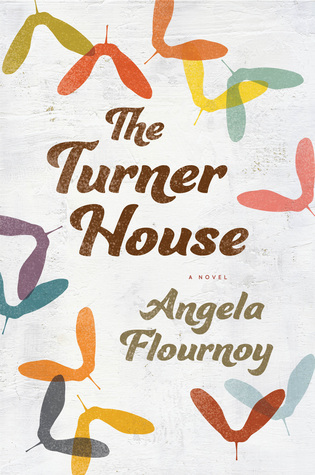 The Turner House by Angela Flournoy [subscription service, but an excerpt is available for free on the website]: In Flournoy’s debut novel, the 13 grown children of Francis and Viola Turner must put aside their own personal baggage and decide what will become of their parents’ Detroit house during the financial crisis.
The Bookbag
Mother of Eden by Chris Beckett: This sequel to 2012’s Arthur C. Clarke Award-winning science fiction novel Dark Eden sees Gela’s descendants splitting into factions and experimenting with different political systems. Starlight Brooking emerges as a Messiah figure, spreading a secret message of equality. Releases June 4th.
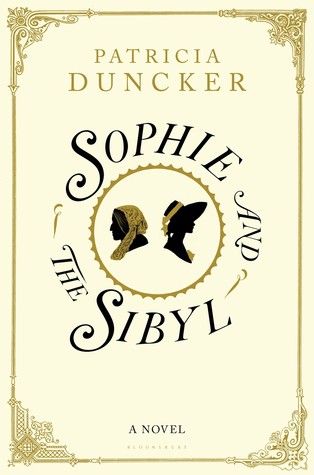 Sophie and the Sibyl by Patricia Duncker: In Duncker’s sixth novel, a playful Victorian pastiche, George Eliot’s interactions with her German publisher and his feisty young wife provide fodder for Daniel Deronda. Consciously modeled on John Fowles’s The French Lieutenant’s Woman, this is a postmodern blending of history, fiction, and metafictional commentary.
We Love This Book
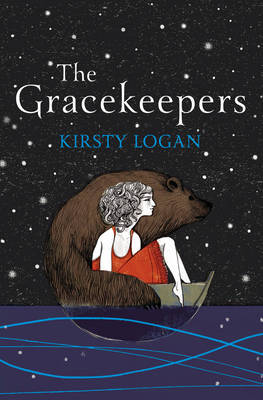 The Gracekeepers by Kirsty Logan: This inventive debut novel imagines a circus traveling through a flooded future world. Humanity is divided into two races, landlockers and damplings. Fear and prejudice distance these groups but the novel imagines them drawn together through a meeting between two young women, Callanish and North.
Foreword Reviews
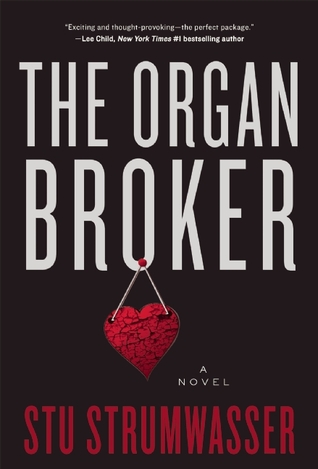 The Organ Broker by Stu Strumwasser: “There is no shortage of organs; there is only a shortage of organs in America.” The antihero of this debut novel finds organs on the international market and sells them for huge profits to Americans on transplant waiting lists. With snappy dialogue and a lovable hustler protagonist, it explores ethical ambiguities.
BookTrib
I chose my top four mother–daughter memoirs (by Alice Eve Cohen, Abigail Thomas, Alison Bechdel and Jeanette Winterson) for this Mother’s Day article.
I also post reviews of most of my casual reading on Goodreads.
Mademoiselle Chanel by C.W. Gortner: A writer of Tudor-era mysteries turns to more recent history with this novel about Coco Chanel. Detailing every business venture and love affair, he makes some parts a real chronological slog. I always associate Chanel with the 1950s–60s, so it was interesting to learn that she was born in the 1880s and experienced both world wars.
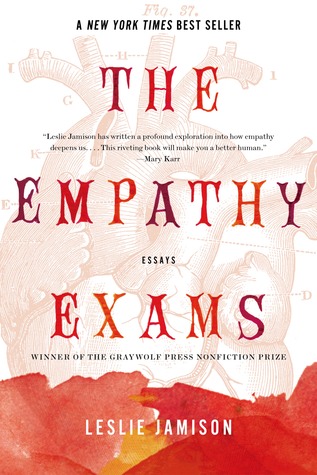 The Empathy Exams by Leslie Jamison: I liked the medical-related pieces – attending a Morgellons disease conference, working as a medical actor – but not the Latin American travel essays or the character studies. The overarching theme of empathy was not as strong as I thought it would be; really, the book is more about how experiences mark the body.
The Real Thing: Lessons on Love and Life from a Wedding Reporter’s Notebook by Ellen McCarthy: McCarthy writes about weddings and relationships for The Washington Post. This is a collection of short pieces about modern dating, breakups, wedding ceremonies, marriage, and making love last. The style is breezy and humorous, largely anecdote- and interview-based, with some heartfelt moments. If you’re a wedding junkie you’ll definitely enjoy it, but I didn’t think it broke new ground.

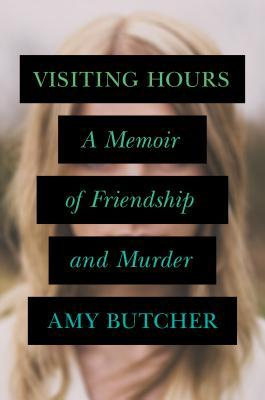 Visiting Hours: A Memoir of Friendship and Murder by Amy E. Butcher: The facts are simple: one night towards the end of their senior year at Gettysburg College, Kevin Schaeffer walked Butcher home from a drunken outing, then stabbed his ex-girlfriend to death. This book has elements of a true crime narrative, detailing the crime and speculating on possible causes for Kevin’s psychotic episode, but it’s more about how the crime affected Butcher. This is a concise and gripping narrative reminiscent of Half a Life by Darin Strauss.
A Reunion of Ghosts by Judith Claire Mitchell: Vee, Lady and Delph are the fourth generation of Alters, a Jewish family cursed with a rash of suicides. Indeed, the majority of the novel is the middle-aged sisters’ collective suicide note, narrated in the first-person plural. They reach back into the past to give the stories of their ancestors, including great-grandparents Iris and Lenz Alter, the latter of whom had the ironic distinction of being the Jewish creator of Zyklon gas (based on a real figure).
Beloved Strangers: A Memoir by Maria Chaudhuri: Islam versus Christianity is a background note, but the major theme is East versus West – specifically, Chaudhuri’s native Bangladesh set against America, where she attended university and later lived and worked. Religion, sexuality, dreams and second chances at love are all facets of the author’s search for a sense of home and family in a life of shifting loyalties. (My full review will appear in the autumn 2015 issue of Wasafiri literary magazine.)
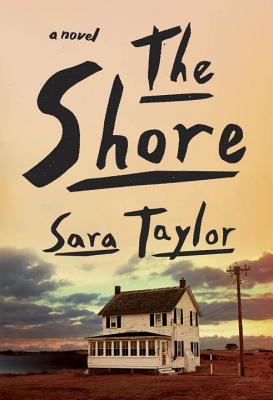 The Shore by Sara Taylor: Gritty and virtuosic, this novel-in-13-stories imagines 250 years of history on a set of islands off the coast of Virginia. As a Maryland native, I think of Chincoteague and Assateague as vacation destinations, but Taylor definitely focuses on their dark side here: industrial-scale chicken farms, unwanted pregnancies, domestic violence, bootleg liquor, gang rape, murders and meth labs.
Echoes of Heartsounds: A Memoir by Martha Weinman Lear: Longtime New York City journalist Lear’s first husband, a doctor named Hal, died after a series of heart attacks. Ironically, 30 years later she was admitted to the same hospital for a heart attack – an event that presents completely differently in women. As a sequel to her previous memoir, Heartsounds (1980), this explores life’s odd parallels and repetitions.
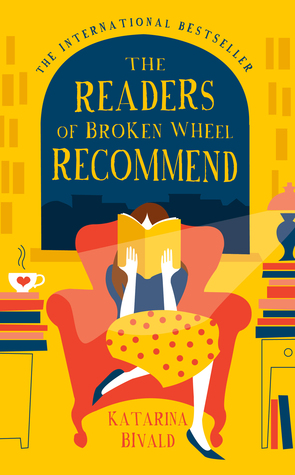 The Readers of Broken Wheel Recommend by Katarina Bivald: A Swedish tourist opens a bookstore in small-town Iowa. Given that she’d never visited the States at the time she wrote this novel (published in her native Sweden in 2013), Bivald has painted a remarkably accurate picture of a Midwestern town peopled with fundamentalists, gays, rednecks and a gun-toting diner owner. A cute read for book lovers, provided you can stomach a bit of chick lit / romance.
Life From Scratch: A Memoir of Food, Family, and Forgiveness by Sasha Martin: Martin writes well and I enjoyed this book overall, but at times you may become frustrated and ask “where’s the food?!” That’s because the makeup of this book is: Misery Memoir – 70% / Global Table Adventure blog – 30%. Martin had the idea to cook dishes from every country of the world. At the rate of one feast per weekend, the blog project took four years. She manages to give a fairly comprehensive overview of the cooking she did over that time.
Plumb Line by Steve Luttrell: Disappointingly average poems about nature and memory. The situations and sentiments are relatable but the language so plain that nothing sticks out.

The Sixth Extinction: An Unnatural History by Elizabeth Kolbert: The picture Kolbert paints of our environmental situation is depressing. I already knew the facts of climate change and animal extinction, but according to Kolbert the prognosis is even worse than I was aware. As a longtime New Yorker journalist, she writes at a good level for laymen: not talking down, nor assuming any specialist knowledge. Luckily, there are spots of humor to lighten the tone.
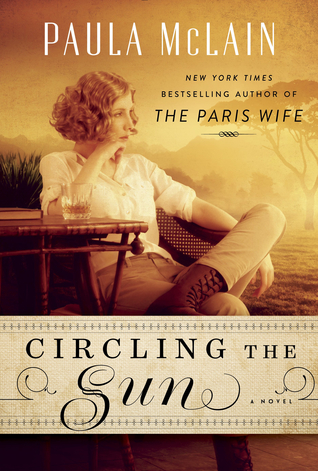 Circling the Sun by Paula McLain: This is just as good as The Paris Wife – if not better. I didn’t think I was very interested in aviatrix Beryl Markham, but McLain proved me wrong. The love triangle between her, Karen Blixen (Isak Dinesen) and Denys Finch Hatton forms the kernel of the book. McLain describes her African settings beautifully, and focuses as much on the small emotional moments that make a life as she does on the external thrills, though there are plenty of those.
The Size of Our Bed by Jacqueline Tchakalian: Well-structured and grouped into thematic sections, these poems are primarily about motherhood, the death of a much-loved husband from cancer, and adjusting to the reality of war. Alliteration and assonance stand in for traditional rhymes. Tchakalian is especially good with colors and flowers, which combine to create memorable metaphors. Releases September 15th.
 Bookish Beck = Rebecca Foster. American transplant to England. Freelance proofreader and book reviewer.
 Bookish Beck