Some 2024 Reading Superlatives
Longest book read this year: The Bee Sting by Paul Murray

Shortest books read this year: The Wood at Midwinter by Susanna Clarke – a standalone short story (unfortunately, it was kinda crap); After the Rites and Sandwiches by Kathy Pimlott – a poetry pamphlet
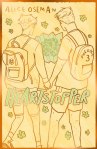 Authors I read the most by this year: Alice Oseman (5 rereads), Carol Shields (3 rereads); Margaret Atwood, Rachel Cusk, Pam Houston, T. Kingfisher, Sarah Manguso, Maggie O’Farrell, and Susan Allen Toth (2 each)
Publishers I read the most from: (Besides the ubiquitous Penguin Random House and its myriad imprints,) Carcanet (15), Bloomsbury & Faber (12 each), Alice James Books & Picador/Pan Macmillan (9 each)
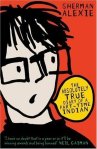
My top author ‘discoveries’ of the year: Sherman Alexie and Bernardine Bishop

Proudest bookish achievements: Reading almost the entire Carol Shields Prize longlist; seeing The Bookshop Band on their huge Emerge, Return tour and not just getting my photo with them but having it published on both the Foreword Reviews and Shelf Awareness websites

Most pinching-myself bookish moment: Getting a chance to judge published debut novels for the McKitterick Prize
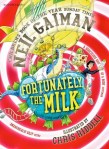
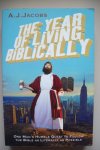
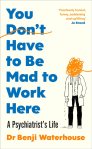
Books that made me laugh: Lots, but particularly Fortunately, the Milk… by Neil Gaiman, The Year of Living Biblically by A.J. Jacobs, and You Don’t Have to Be Mad to Work Here by Benji Waterhouse
Books that made me cry: On Chesil Beach by Ian McEwan, My Good Bright Wolf by Sarah Moss
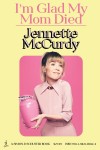 Two books that hit the laughing-and-crying-at-the-same-time sweet spot: The Absolutely True Diary of a Part-Time Indian by Sherman Alexie and I’m Glad My Mom Died by Jennette McCurdy
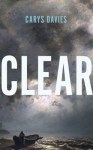
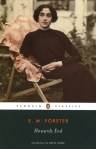
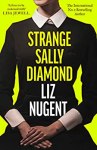
Best book club selections: Clear by Carys Davies, Howards End by E.M. Forster, Strange Sally Diamond by Liz Nugent
Best first lines encountered this year:
- From Cocktail by Lisa Alward: “The problem with parties, my mother says, is people don’t drink enough.”
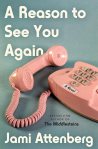
- From A Reason to See You Again by Jami Attenberg: “Oh, the games families play with each other.”
- From The Snow Queen by Michael Cunningham: “A celestial light appeared to Barrett Meeks in the sky over Central Park, four days after Barrett had been mauled, once again, by love.”

Best last lines encountered this year:
 From The Ministry of Time by Kaliane Bradley: “Forgiveness and hope are miracles. They let you change your life. They are time-travel.”
- From Mammoth by Eva Baltasar: “May I know to be alert when, at the stroke of midnight, life sends me its cavalry.”
- From Private Rites by Julia Armfield: “For now, they stay where they are and listen to the unwonted quiet, the hush in place of rainfall unfamiliar, the silence like a final snuffing out.”
- From Come to the Window by Howard Norman: “Wherever you sit, so sit all the insistences of fate. Still, the moment held promise of a full life.”
- From Intermezzo by Sally Rooney: “It doesn’t always work, but I do my best. See what happens. Go on in any case living.”
- From Barrowbeck by Andrew Michael Hurley: “And she thought of those Victorian paintings of deathbed scenes: the soul rising vaporously out of a spent and supine body and into a starry beam of light; all tears wiped away, all the frailty and grossness of a human life transfigured and forgiven at last.”
- From Small Rain by Garth Greenwell: “Pure life.”

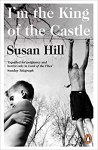
Books that put a song in my head every time I picked them up: I’m the King of the Castle by Susan Hill (“Crash” by Dave Matthews Band); Y2K by Colette Shade (“All Star” by Smashmouth)
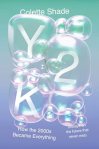
Shortest book titles encountered: Feh (Shalom Auslander) and Y2K (Colette Shade), followed by Keep (Jenny Haysom)
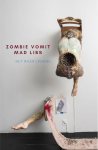
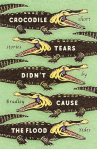 Best 2024 book titles: And I Will Make of You a Vowel Sound, I Can Outdance Jesus, Zombie Vomit Mad Libs, Crocodile Tears Didn’t Cause the Flood, This Is Why We Can’t Have Nice Things
Best book titles from other years: Recipe for a Perfect Wife, Tripping over Clouds, Waltzing the Cat, Dressing Up for the Carnival, The Met Office Advises Caution
Favourite title and cover combo of the year: I’m Mostly Here to Enjoy Myself by Glynnis MacNicol

Best punning title (and nominative determinism): Knead to Know: A History of Baking by Dr Neil Buttery
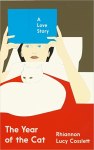 Biggest disappointments: The Glassmaker by Tracy Chevalier (I didn’t get past the first chapter because of all the info dumping from her research); The Year of the Cat by Rhiannon Lucy Cosslett; milk and honey by Rupi Kaur (that … ain’t poetry); 2 from the Observer’s 10 best new novelists feature (here and here)
A couple of 2024 books that everyone was reading but I decided not to: Creation Lake by Rachel Kushner, You Are Here by David Nicholls
 The worst books I read this year: Mammoth by Eva Baltasar, A Spy in the House of Love by Anaïs Nin
The downright strangest books I read this year: Zombie Vomit Mad Libs, followed by The Peculiar Life of a Lonely Postman. All Fours by Miranda July (I am at 44% now) is pretty weird, too.

February Releases by Hess, Kim, Sides (#ReadIndies); Atwood and Shah
I’m pleased to have, between this post and yesterday’s review catch-up, featured 9 books from 8 independent publishers for Read Indies this month. (I have also done some indie reading from my shelves, which I’ll summarize early in March.) Three of the books in my February review stacks were indie releases. I’ve got a hybrid memoir that blends poetic exploration of scripture with personal psychological reflections; an out-of-the-ordinary mystery about a father’s disappearance that comments on disability, racism and much more; and a terrific set of fabulist short stories. My two bonus (non-indie) February books are an unconvincing collaborative novel and a counselling-focussed bibliotherapy guide.

When Fragments Make a Whole: A Personal Journey through Healing Stories in the Bible by Lory Widmer Hess
 Some of you may know Lory, who is training as a spiritual director, from her blog, Enter Enchanted. It was so kind of her to get in touch offering her first book for review. It’s a unique combination of poetry, scriptural exegesis, and fragments of memoir. Each chapter considers a different healing story from the Gospels. As in the lectio divina I learned from college Christian fellowships, the idea with the verse retellings from the Bible is to imagine oneself into a character’s position and consider the crises that led to seeking Jesus’ help. I especially liked the poem “Talitha, Koum,” which links the stories of the woman with the issue of blood and the resurrection of Jairus’ daughter. In both, faith reverses a seemingly hopeless situation.
The short sections of commentary draw in a lot of context as well as etymology from the Greek. The autobiographical essays chart a history of physical and mental challenges, including dissociation, low self-esteem and shame, and offer openness to healing as its own miracle when there are no easy answers. They are notable for their vulnerability, especially when discussing marital problems. The outlook is intellectual and psychological rather than the spiritualizing I’m used to from my evangelical background – Lory comes from the anthroposophy tradition, which I don’t claim to fully understand but (I think) eschews dogma like original sin and atonement and instead makes the spiritual journey a matter of human reconnection with God through free will and the intellect. This is nicely balanced, though, by her work with developmentally disabled adults in residential homes in New England and Switzerland, which reminds her “there is a truth beyond intellectual knowledge, a language beyond words”. It is a calm, honest, methodical book that will intrigue anyone interested in thinking through how the Bible is applicable to the challenges of daily life.
With thanks to the author and Floris Books (Edinburgh) for the free copy for review.
Happiness Falls by Angie Kim
Buzz from across the pond about Kim’s novels led me to request this even though I don’t typically read mysteries. The bulk is set over 2.5 days in June 2020 as the Korean American Parkson family investigates, on their own and with the help of police and various local tip-offs, what happened to the father, Adam, who’d been at River Falls Park with the severely disabled 14-year-old son, Eugene, who is autistic and has mosaic Angelman syndrome. Mother Hannah and 20-year-old twins Mia and John, home from college for the lockdown, quickly realise something is wrong when Eugene, who has blood on his shirt and under his nails, stumbles home on his own and Adam is unreachable by phone. There’s more to the setup than that, and many complicated side-tracks to the investigation, but the basic questions remain for 300+ pages: What happened to Adam? and What was Eugene’s part in it?
Mia narrates, and it’s a pleasure spending time with her quick, systematic brain as she runs through all the options and deals with each new theory and red herring. She clearly gets it from her father, whose recovered notebook is full of amateur experimentation on the “Happiness Quotient”. Her wit and garrulousness (sample aside: “I’m sorry, but I don’t care how much you love fun fonts—you cannot talk about prison rape in Comic Sans”) spills over into footnotes as if in effusive counterpoint to Eugene, who is nonspeaking.
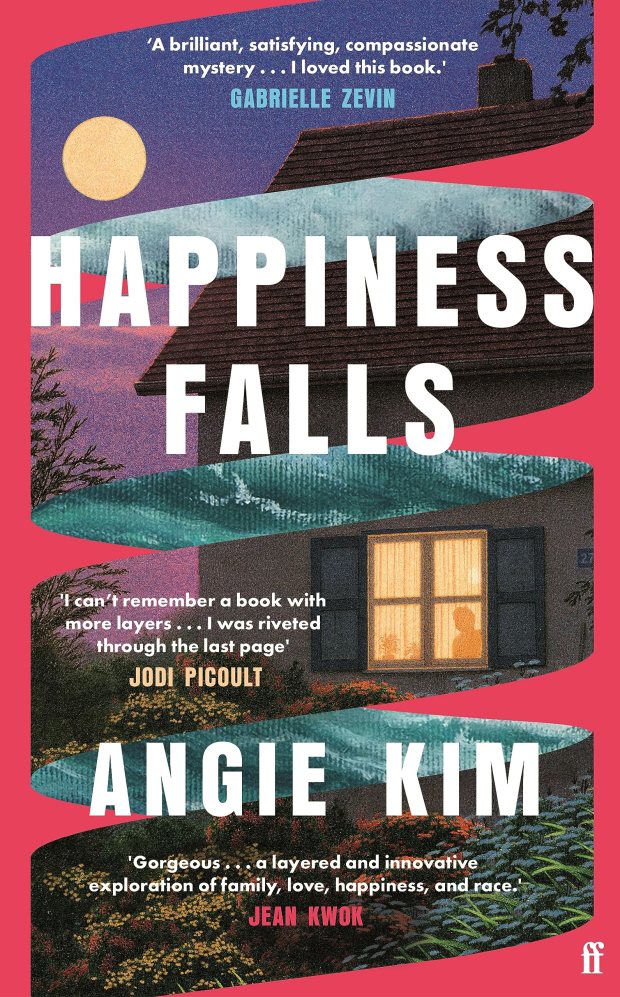
The pandemic setting places interesting constraints on the official proceedings, and the prospect of a new communication method (involving painstaking spelling with a letter stencil) revolutionizes this family as they grasp that Eugene is far from nonverbal and has been ‘locked in’ all along. The account a therapist elicits from him seems to clinch the case, but uncertainty lingers.
This is like a blend of Celeste Ng’s Everything I Never Told You, Rebecca Makkai’s I Have Some Questions for You, and Naoki Higashida’s The Reason I Jump; if you’ve liked one or more of these, I would strongly recommend it. Mystery readers may lack patience for the digressions. The solution is eclipsed by the many issues – prejudice based on race and disability, how one’s circumstances affect contentment, nuances of communication, sibling relationships and twin ESP – explored along the way. Because I am not a crime reader, the pace was no problem for me. My annoyances were with the preponderance of hindsight (“I wish I’d said something,” “It didn’t occur to me until much later”) and the fact that Mia says “begs the question” for raising a question (misuse of a rhetorical term) several times. I found personal meaning in the book because of the Washington, DC-area locales and my severely disabled, nonverbal goddaughter. What if there really is something going on in her mind, and we could find out what it was… I mused. I’ll be keen to read Kim’s debut, Miracle Creek.
With thanks to Faber for the free copy for review.
Crocodile Tears Didn’t Cause the Flood by Bradley Sides
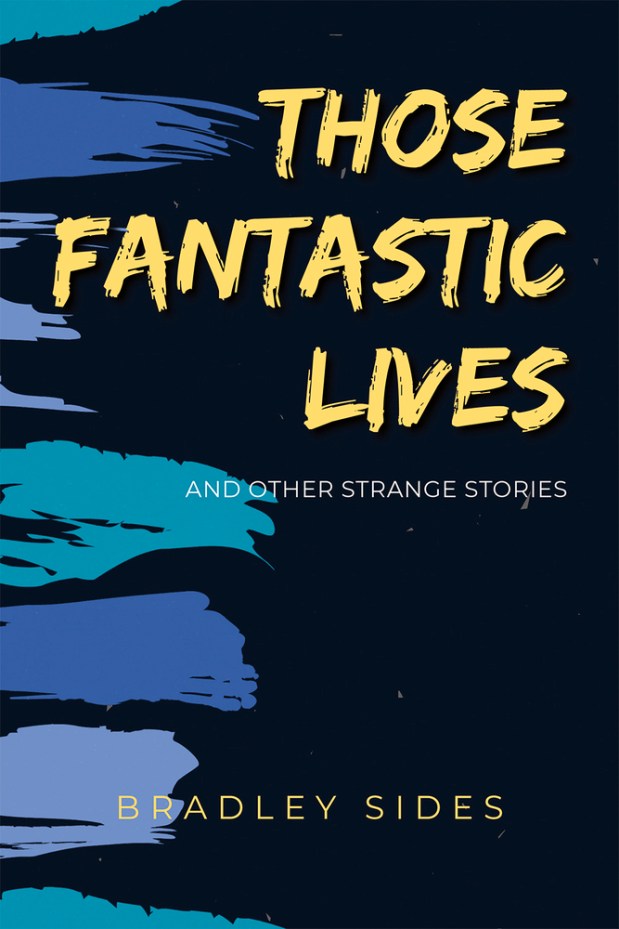
 These 17 flash fiction stories fully embrace the possibilities of magic and weirdness, particularly to help us reconnect with the dead. Brad and I are literary acquaintances from our time working on (the now defunct) Bookkaholic web magazine in 2014–15. I liked this even more than his first book, Those Fantastic Lives (2021), although the contours are very similar. Young people, animals and monsters abound – and sometimes the lines between those identities are unclear. There’s a lot of experimentation with form: a choose-your-own-adventure narrative, a police transcript, a two-truths-and-a-lie challenge, a story all in questions, an English exam, and a letter. A few of my favorite stories were “The Guide to King George,” about an amusement farm’s resident pond monster; “Claire & Hank,” in which a paleontologist’s unearthed Pteranodon becomes a sister to his motherless son; and “Dying at Allium Farm,” whose sassy undead owners think they’re fooling their Tennessee customers. And can you imagine a better title and cover combination?!
With thanks to Montag Press and publicist Lori Hettler for the e-copy for review.
And a couple of bonus February releases that are not from indie publishers:
Fourteen Days, ed. Margaret Atwood and Douglas Preston
This Authors Guild Foundation collaborative project is a Covid-era Decameron update in which the residents of an increasingly derelict New York City apartment complex meet on the rooftop every evening for two early lockdown weeks to clap for healthcare workers, indulge in adult beverages, and swap random stories. The tenants all go by nicknames like “Hello Kitty,” “Florida” and “Vinegar.” The frame narrative has the building superintendent (Yessie, a lesbian of Romanian heritage) worrying over her father’s wellbeing in a care home and surreptitiously recording the oral stories on her phone to later transcribe into the “bible” kept by the previous super. We’re told up front that the manuscript ends up in police custody.
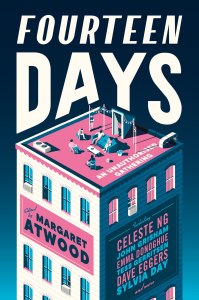 I had a misconception that each chapter would be written by a different author. I think that would actually have been the more interesting approach. Instead, each character is voiced by a different author, and sometimes by multiple authors across the 14 chapters (one per day) – a total of 36 authors took part. I soon wearied of the guess-who game. I most enjoyed the frame story, which was the work of Douglas Preston, a thriller author I don’t otherwise know.
There was a promising idea here, but problems with the execution. One is that, for the most part, the stories are pointless. The characters get hung up on whether they’re ‘true’ or not, but for readers it’s all made up and, while one or two individual tales might be amusing, they do nothing to build a plot and so I found myself mostly skipping over them to get back to the interactions on the roof and the super’s commentary. Another is that, to stand out from an ensemble cast, a voice needs to be really distinctive, and only “Eurovision” (flamboyantly gay) was that for me – based on my love for his rabbit story in particular, I should be reading Joseph Cassara. And finally, the book culminates with an annoying twist that made me cross.
With thanks to Chatto & Windus (Penguin) for the proof copy for review.
Bibliotherapy: The Healing Power of Reading by Bijal Shah
Bibliotherapy is one of my niche bookish interests (see my write-up of my bibliotherapy appointment with Ella Berthoud at the School of Life), so I was delighted to be offered a copy of another relevant book. Bijal Shah grew up in an East African Indian community before moving to the UK with her family as a teenager. When she was in training as a psychodynamic counsellor and attended therapy sessions herself, she realised how helpful literature was in helping her think through traumatic experiences from her past, such as sexism, colourism and a painful break-up. “I have lived half my life in the pages of books,” she observes, “relying on them to put my real life into perspective.” I feel the same way.

The emphasis is very much on therapy here, as Shah elaborates on practices such as literary journaling, recording audio notes, writing poetry, and focusing on gratitude. About half of the book is given over to anonymized sample case studies where she looks at the reasons why a client might come to her for bibliotherapy, the books and exercises she prescribed them, and the sorts of realizations people came to when reflecting on their own lives in relation to what they read. I suspect that the majority of readers, unless they have a vested interest in counselling, will, like me, most enjoy browsing the A–Z list of book prescriptions in the final 20% of the book (with more on Shah’s website). There is good variety to these in terms of author diversity, new vs. backlist reads, and both YA and adult fiction, though most of the recommendations are nonfiction, particularly psychology and self-help: these are much more literal (and, generally, obvious) prescriptions than Berthoud and Elderkin’s playful take.
With thanks to the author and Piatkus (Hachette) for the free copy for review.
Review and Q&A: Those Fantastic Lives by Bradley Sides
Bradley Sides and I worked together on Bookkaholic web magazine in 2014–15 and I’ve been following his career ever since. I was delighted to get early access to his debut short story collection, Those Fantastic Lives (out today from Blacklight Press), which was an ideal transition for me from September’s short story focus to October’s R.I.P. challenge for how it blends the genres of dystopia, horror, and magic realism with literary writing.
Many of the protagonists in these 17 stories are orphans or children who have lost one parent. Grief uproots them, leaves them questing; combine their loneliness with dashes of the supernatural and you have perfect situations for strange and wonderful things to happen. So in the title story we have Sam, who at eight longs to follow in his psychic grandmother’s footsteps. In the achingly beautiful “Dolls for the End of the World,” young Patrick’s empathy somehow makes the apocalypse more bearable. In “The Hunt,” 10-year-old Zoey is obsessed with finding a sasquatch, while “In the Hollow” Walt trusts wolf-like creatures to lead him to his dead mother.
“Commencement,” in a first-person plural voice, is the creepiest of the lot, documenting preparations for graduation at a special academy. To be named the class valedictorian is an enduring yet dubious honor… But there are flashes of humor in the book as well. For instance, the lighthearted werewolf story “A Complicated Correspondence” is told via a series of increasingly convoluted e-mails. These two and “Back in Crowville,” in which scarecrows are used to scare off ghosts, too, struck me as perfect Halloween reading. I’d particularly recommend the book to readers of Kelly Link and Lydia Millet.
Brad and I had a chat over e-mail about his inspiration, themes and publication process.
Can you remember what the seed was for some of these stories? A particular line, scene, image, or character? Do you start writing a story with a title in mind, or does the title usually suggest itself later on?
Almost all of the stories I write come to me initially as a vision. I don’t mean in a dream or anything that dramatic, but I might be walking and see a stream, and suddenly that stream is placed in another world, and the stakes are much, much higher. Once I see my characters or my setting or my situation, I have to write a story that leads up to the moment I’m seeing. Writing and creating is, for me, a very internalized process.
Titles are so hard for me. I wish this weren’t the case, but I never write with titles in mind. Sometimes I’ll have the story ready, and I might have to wait weeks before I come to the right title. In regards to writing, I think I’m the worst at titling.
I think my favorite line in the book might be “Just because something can’t be seen doesn’t mean that it’s gone.” That’s from “The Comet Seekers,” about a pair of brothers in search of their father. A number of the stories feature children who have lost a guardian. How does bereavement alter the course of these coming-of-age narratives?
I’m so interested in loss in general. In life, we lose things. As kids. As adults. It doesn’t stop. I grew up on a farm, and animals died constantly. Chickens were slaughtered by foxes. Ducks were killed on their nests by turtles. Cows were sold and slaughtered. Pets died. Loss was everywhere. I’ve always thought about it. I guess, in many ways, loss haunts me.
I feel like bereavement and orphanhood create tension in many of my stories, but they also serve to add stakes to my characters’ lives. It’s tough to keep losing. Sometimes, you’ll do anything to keep from experiencing that—or to try to keep from experiencing that, at least. There’s power there.
I imagine that, like sequencing an album, choosing the order of the stories was a pleasurable challenge. How did you decide on the structure of the book – the opening story, the closing story; the themes running into or contrasting with each other; transitions; and so on?
It was a fun process to start putting all of my work together. I mean, it was also a little stressful once I got near the end and was getting ready to send Those Fantastic Lives out, but it was still fun. I have written a lot of stories, but for my collection, I wanted to only include the stories I love the most. I cut and cut based on just pure writerly love first—and gut instinct, I suppose. Once I had it narrowed, I started looking closely at themes. I removed a handful that felt like they didn’t belong. I really like slim collections (and slim books in general), so I wanted something relatively short—something less than 200 pages. The strangest thing I did was that I read the collection aloud. SEVERAL times, too. If a story didn’t fit the sound, I cut it. I really wanted to put out a cohesive collection, and I think (hope?) I’ve done that with these seventeen stories.
I loved how elements recurred in later tales – for instance, in both “Losing Light” and “The Mooneaters” characters consume sources of light and glow from the inside, and “What They Left Behind” connects back to “The Mooneaters” in that a character starts to sprout feathers. How do you account for these pervasive images?
This is probably a terrible response to such a great question, but it’s the truth: I look at the sky a lot. As in, probably way beyond what is normal. When I walk my dog, I look up at the morning sky and think about the clouds and the rising sun. When my wife and I are out on the porch in the evenings, I look up and think about the approaching stars. The coming moon. Whether early or late, the birds are always around, flying to wherever it is they go. I am so amazed by and curious of the sky. It’s such a beautiful, mysterious place that hovers above us, and it’s kind of the perfect space for me to root a lot of the fantastical elements of my stories.
In my favorite story, “The Galactic Healers,” Lian makes contact with aliens who offer a therapeutic balm. His suspicious father takes the medicine by force – a plan that quickly backfires. To what extent might this one be read as a parable of colonial exploitation and toxic masculinity?
I’m so glad you liked “The Galactic Healers,” Rebecca. It is one of my favorites, too. I’m naturally drawn, just as a human and not even necessarily speaking as a writer, to the topics you mention. I think about otherness. What it means to be outside or different. In that same way, I think about tender versus toxic behavior. I think the reading you have of the story is definitely a good one. And it probably captures where I was, in my head, at that time.
I sensed shades of Karen Russell and George Saunders. Who are some of your favorite writers, and who would you cite as inspirations for the collection?
I love Karen Russell and George Saunders both. I’m honored that my work reminds you of their writing. I think they are both influences on my fiction. I’m also inspired by Ray Bradbury a lot. I’m a very visual creator, so television writers also serve as huge inspirations for me. Mike Flanagan’s work (The Haunting of Hill House and The Haunting of Bly Manor) haunts me, and I love it.
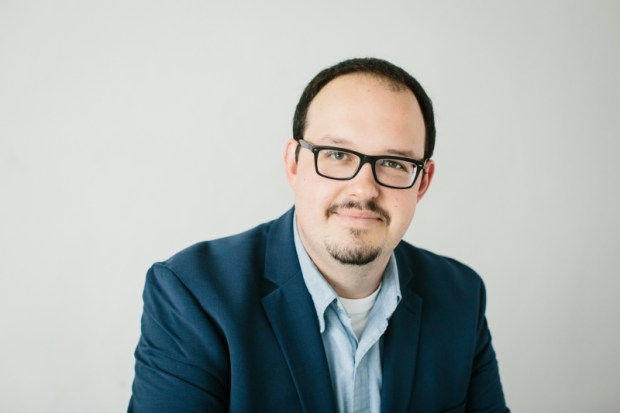
Bradley Sides. Photo by Abraham Rowe.
Versions of 12 of the stories previously appeared in various publications. What has your experience been of getting your work into literary magazines?
Getting published in literary magazines is an exhausting process. Don’t get me wrong, it’s a necessary one and one that gives me a lot of joy in the long run, but it’s also tough. I write weird stuff. Not every magazine wants a story about glowing monsters or a tiny kid whose home planet was invaded by giants and now lives on an ice cube. Finding the right magazine takes time, and even when I think I’ve found the right place, I’m sometimes wrong. I submit, hope for the best, and keep submitting. Usually, most of my stories wind up finding homes in the first five or so magazines I submit them to, but that’s not always the case. With “What They Left Behind,” for example, I bet I sent that story to twenty or thirty magazines before I found the perfect match at Crow & Cross Keys. Although it took some time to land at its home, it found its PERFECT home.
These stories were seven years in the making. What was your road to publication like, and how did you land at Blacklight Press?
Like many yet-to-publish-a-book writers, I was constantly searching for publication information as I was reaching the end of my writing cycle for Those Fantastic Lives, and I kept encountering these articles about how long and tough the publication process can be. I was prepared for it to take years before I found a press willing to take on my collection.
Once it was ready, I sent Those Fantastic Lives out to a handful of publishers—all of which I’d found out about with basic web searches. A couple were interested, but the offer wasn’t what I was looking for. A couple showed interest, but ultimately passed. Blacklight landed, and I knew it was what I was looking for very early on.
The process of when I began to when I found my publisher was probably less than six months.
The whole team at Blacklight has been fantastic, too. It’s really been a dream experience. I feel very grateful.
In your day job, you teach English and creative writing to high schoolers. What are some of the most important lessons you hope your students will take away from your classes, and what have you learned from them?
I hope, more than anything, that my students learn that their words—and their stories—matter. If they truly put themselves into their work, it is art, and it is important. I also hope they leave my classroom knowing how important respect is. To other writers. To themselves. To their eventual readers. To people in general. Respect is key.
I’ve learned so much from my creative writing students. They inspire me. They motivate me. Seeing their excitement when they write something they are proud of reminds me why I write in the first place. They are also wonderfully eager readers. I love discussing stories with them and learning how they perceive texts. Creative writing classes are treasured places.
What are you working on next?
Earlier this year, I began working on my next set of stories. I’m a slow writer. Maybe a very slow writer. With it being so early in the process, it’s hard to say exactly what the next collection will look like, but I do think I’ll largely stay focused on the same kinds of themes. Loss, loneliness, and transformation are naturally interesting to me. There’ll be more experimentation with form. A story in the shape of a manual. A gameplay story. A transcript. A flash in questions. There’ll be plenty of magical weirdness, too, with, probably, pond monsters, apocalypses, a shark boy, kidnapping ghosts, and who knows what else. I just hope it won’t take me so long to write this second book!

 Bookish Beck = Rebecca Foster. American transplant to England. Freelance proofreader and book reviewer.
 Bookish Beck