20 Books of Summer, 19–20: Emily St. James and Abraham Verghese
Going out on a high! My last three books for the challenge (also including Beautiful Ruins) were particularly great, just the sort of absorbing and rewarding reading that I wish I could guarantee for all of my summer selections.
Woodworking by Emily St. James (2025)
Colloquially, “woodworking” is disappearing in plain sight; doing all you can to fade into the woodwork. Erica has only just admitted her identity to herself, and over the autumn of 2016 begins telling others she’s a woman – starting with her ex-wife Constance, who is now pregnant by her fiancé, John. To everyone else, Erica is still Mr. Skyberg, a 35-year-old English teacher at Mitchell High involved in local amateur dramatics. When Erica realizes that not only is there another trans woman in her small South Dakota town but that it’s one of her students, Abigail Hawkes, she lights up. Abigail may be half her age but is further along in her transition journey and has sassy confidence. But this foul-mouthed new mentor has problems of her own, starting with parents who refuse to refer to her by her chosen name. Abigail lives with her adult sister instead, and gains an unexpected surrogate family via her boyfriend Caleb, a Korean adoptee whose mother, Brooke Daniels, is directing Our Town. Brooke is surprisingly supportive given that she attends Isaiah Rose’s megachurch.
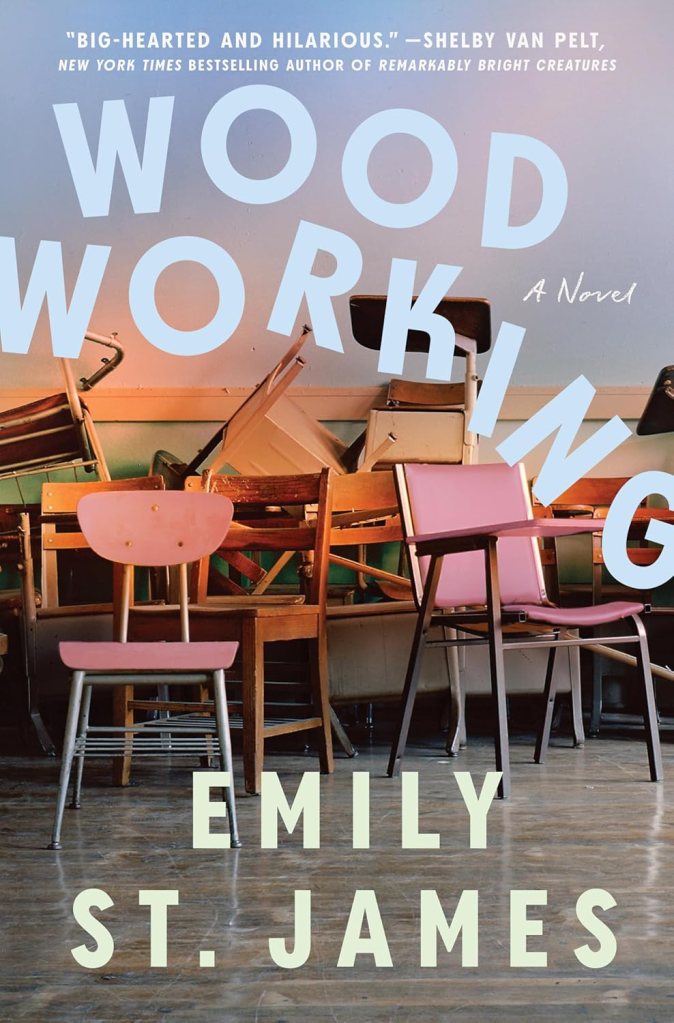
As Trump/Pence signs proliferate, a local election is heating up, too: Pastor Rose is running for State Congress on the Republican ticket, opposed by Helen Swee. Erica befriends Helen and becomes faculty advisor for the school’s Democrat club (which has all of two members: Abigail and her Leslie Knope-like friend Megan). The plot swings naturally between the personal and political, emphasizing how the personal business of 1% of the population has been made into a political football. Chapters alternate between Abigail in first person and Erica in third. The characters feel utterly real and the dialogue is as genuine as the narrative voices. The support group Erica and Abigail attend presents a range of trans experiences based on when one came of age. Some are still deep undercover. There’s a big reveal I couldn’t quite accept, though I can see its purpose. It’s particularly effective how St. James lets second- and third-person narration shade into first as characters accept their selves. Grey rectangles cover up deadnames all but once, making the point that even allies can get it wrong.
This was pure page-turning enjoyment with an important message to convey. It reminded me a lot of Under the Rainbow by Celia Laskey but also had the flavour of classic Tom Perrotta (Election). In the Author’s Note, St. James writes, “They say the single greatest determinant of whether someone will support and affirm trans people is if they know a trans person.” I feel lucky to count three trans people among my friends. It’s impossible to make detached pronouncements about bathrooms and slippery slopes if you care about people whose rights and very existence are being undermined. We should all be reading books by and about trans women. (New purchase from Bookshop.org) 
The Covenant of Water by Abraham Verghese (2023)
All too often, I shy away from doorstoppers because they seem like too much of a time commitment. Why read 715 pages in one novel when I could read 3.5 of 200 pages each? Yet there’s something special about being lost in the middle of a great big book and trusting that wherever the story goes will be worthwhile. I let this review copy languish on the shelf for over TWO YEARS when I should have known that the author of the amazing Cutting for Stone couldn’t possibly let me down. Verghese’s second novel is very much in the same vein: a family saga that spans decades and in every generation focuses on medical issues. Verghese is a practicing doctor as well as a Stanford professor and you can tell he glories in the details of hand and brain surgeries, disability and rare diseases – and luckily, so do I.
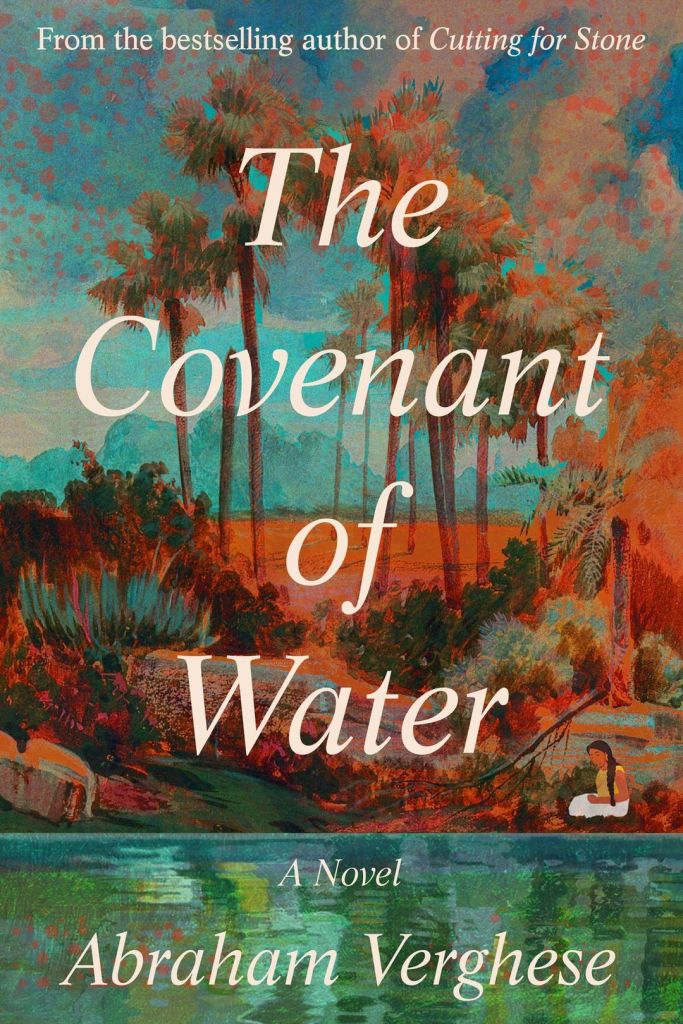
Wider events play out in the background (wars, partition, the fall of the caste system), but the focus is always on one family in Kerala, starting in 1900 when a 12-year-old girl is brought to the Parambil estate for her arranged marriage to a 40-year-old widower. One day she will be Big Ammachi, the matriarch of a family with a mysterious Condition: In every generation, someone drowns. As a result, they all avoid water, even if it requires going hours out of their way. Her son Philipose longs to be a scholar, but is so hard of hearing that his formal education is cut short. He becomes a columnist in a local newspaper and marries Elsie, a spirited artist. Their daughter, Mariamma, trains as a doctor. In parallel, we follow the story of Digby Kilgour, a Glaswegian surgeon whose career takes him to India. Through Digby and Mariamma’s interactions with colleagues, we watch colonial incompetence and sexism play out. Addiction and suicide recur across the years. Destiny and choice lock horns. I enjoyed the window onto the small community of St. Thomas Christians and felt fond of all the characters, including Damodaran the elephant. It’s also really clever how Verghese makes the Condition a cross between a mystical curse and a diagnosable ailment. An intellectual soap opera that makes you think about storytelling, purpose and inheritance, this is extraordinary. 
With thanks to Atlantic Books for the proof copy for review.

I read 10 of the books I selected in my initial planning post. I’m pleased that I picked off a couple of long-neglected review copies and several recent purchases. The rest were substituted at whim. There were two duds, but the overall quality was high, with 10 books I rated 4 stars or higher! Along with the above and Beautiful Ruins, Pet Sematary and Storm Pegs were overall highlights. I also managed to complete a row on the Bingo card, a fun add-on. And, bonus: I cleared 7 books from my shelves by reselling or giving them away after I read them.
Book Serendipity, Mid-February to Mid-April
I call it “Book Serendipity” when two or more books that I read at the same time or in quick succession have something in common – the more bizarre, the better. This is a regular feature of mine every couple of months. Because I usually have 20–30 books on the go at once, I suppose I’m more prone to such incidents. People frequently ask how I remember all of these coincidences. The answer is: I jot them down on scraps of paper or input them immediately into a file on my PC desktop; otherwise, they would flit away!
The following are in roughly chronological order.
- The protagonist isn’t aware that they’re crying until someone tells them / they look in a mirror in The Remains of the Day by Kazuo Ishiguro and Three Days in June by Anne Tyler.
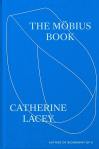
- A residential complex with primal scream therapy in Confessions by Catherine Airey and The Möbius Book by Catherine Lacey.
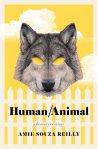
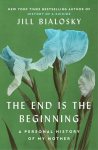
- Memories of wiping down groceries during the early days of the pandemic in The End Is the Beginning by Jill Bialosky and Human/Animal by Amie Souza Reilly.
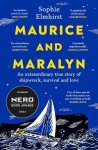
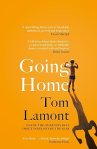
- A few weeks before I read Maurice and Maralyn by Sophie Elmhirst, I’d finished reading the author’s husband’s debut novel (Going Home by Tom Lamont); I had no idea of the connection between them until I got to her Acknowledgements.
- A mention of the same emergency money passing between friends in Alligator Tears by Edgar Gomez ($20) and The Möbius Book by Catherine Lacey ($100).
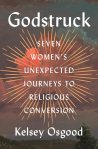
- Autobiographical discussions of religiosity and anorexia in The Möbius Book by Catherine Lacey and Godstruck by Kelsey Osgood.
- The theme of the dark night sky in The Wild Dark by Craig Childs, followed almost immediately by Night Magic by Leigh Ann Henion.
- Last year I learned about Marina Abramović’s performance art where she and her ex trekked to China’s Great Wall from different directions, met in the middle, and continued walking away to dramatize their breakup in The Ritual Effect by Michael Norton. Recently I saw it mentioned again in The Möbius Book by Catherine Lacey. Abramović’s work is also mentioned in Human/Animal by Amie Souza Reilly and is the basis for the opening track on Anne-Marie Sanderson’s album Old Light, “Amethyst Shoes.”
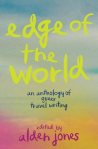
- The idea of running towards danger appears in Alex Marzano-Lesnevich’s essay in Edge of the World, a queer travel anthology edited by Alden Jones; and the bibliography of The Möbius Book by Catherine Lacey.
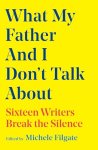
- I then read another Alex Marzano-Lesnevich essay in quick succession (both were excellent, by the way) in What My Father and I Don’t Talk About, edited by Michele Filgate.
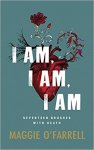
- A scene in which a woman goes to a police station and her concerns are dismissed because she has no evidence and the man/men’s behaviour isn’t ‘bad enough’ in I Am, I Am, I Am by Maggie O’Farrell and Human/Animal by Amie Souza Reilly.
- Too many details as the sign of a lie in Dream Count by Chimamanda Ngozi Adichie and Three Days in June by Anne Tyler.
- Scenes of throwing all of a spouse’s belongings out on the yard/street in Old Soul by Susan Barker, How to Survive Your Mother by Jonathan Maitland, and Human/Animal by Amie Souza Reilly.
- Reading two lost American classics about motherhood and time spent in a mental institution at the same time: The Shutter of Snow by Emily Holmes Coleman and I Am Clarence by Elaine Kraf.
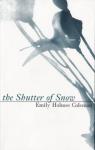
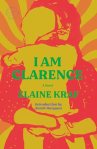
- Disorientation underwater: a literal experience in I Am, I Am, I Am by Maggie O’Farrell, then used as a metaphor for what it was like to be stuck in a blizzard on Annapurna in 2014 in The Secret Life of Snow by Giles Whittell.
- A teenager who has a job cleaning hotels in Old Soul by Susan Barker and I Am, I Am, I Am by Maggie O’Farrell. (In Stir-Fry by Emma Donoghue, Maria is also a teenaged cleaner, but of office buildings.)
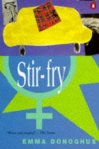
- A vacuum cleaner bag splits in Stir-Fry by Emma Donoghue and one story of Are You Happy? by Lori Ostlund – in the latter it’s deliberate, searching for evidence of the character’s late son after cleaning his room.

- An ailing tree or trees that have to be cut down in one story of The Accidentals by Guadalupe Nettel and The Lost Trees of Willow Avenue by Mike Tidwell.
- Buchenwald was mentioned in one poem each in A God at the Door by Tishani Doshi and The Ghost Orchid by Michael Longley.
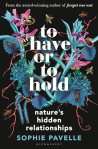
- A reference to Robin Wall Kimmerer’s Braiding Sweetgrass in To Have or to Hold by Sophie Pavelle and Human/Animal by Amie Souza Reilly.

- A mentally unwell woman deliberately burns her hands in I Am Clarence by Elaine Kraf and Every Day Is Mother’s Day by Hilary Mantel.
- A mention of the pollution caused by gas stoves in We Do Not Part by Han Kang and The Lost Trees of Willow Avenue by Mike Tidwell.
- An art installation involving part-buried trees was mentioned in Immemorial by Lauren Markham and then I encountered a similar project a few months later in We Do Not Part by Han Kang. Burying trees as a method of carbon storage is then discussed in The Lost Trees of Willow Avenue by Mike Tidwell.

- Imagining the lives of the people living in an apartment you didn’t end up renting in Scaffolding by Lauren Elkin and one story of The Accidentals by Guadalupe Nettel.
- The Anthropocene is mentioned in Scaffolding by Lauren Elkin and The Alternatives by Caoilinn Hughes.
- I was reading three debut novels from the McKitterick Prize longlist at the same time, all of them with very similar page counts of 383, 387, and 389 (i.e., too long!).
- Being appalled at an institutionalized mother’s appearance in The End Is the Beginning by Jill Bialosky and Every Day Is Mother’s Day by Hilary Mantel.
 A remote artist’s studio and severed fingers in Old Soul by Susan Barker and We Do Not Part by Han Kang.
- A lesbian couple in New Mexico, the experience of being watched through a window, and the mention of a caftan/kaftan, in Old Soul by Susan Barker and one story of Are You Happy? by Lori Ostlund.
- Refusal to go to a hospital despite being in critical condition in I Am, I Am, I Am by Maggie O’Farrell and one story of Are You Happy? by Lori Ostlund.
- It’s not a niche stylistic decision anymore; I was reading four novels with no speech marks at the same time: Old Soul by Susan Barker, Scaffolding by Lauren Elkin, The Alternatives by Caoilinn Hughes, and We Do Not Part by Han Kang. [And then, a bit later, three more: Wild Boar by Hannah Lutz, Mouthing by Orla Mackey, and How to Be Somebody Else by Miranda Pountney.]
 A lesbian couple is alarmed by the one partner’s family keeping guns in Spent by Alison Bechdel and one story of Are You Happy? by Lori Ostlund.
- Responding to the 2021 murder of eight Asian spa workers in Atlanta in Foreign Fruit by Katie Goh and Find Me as the Creature I Am by Emily Jungmin Yoon.
- Disposing of a late father’s soiled mattress in Mouthing by Orla Mackey and one story of Are You Happy? by Lori Ostlund.
 New York City tourist slogans in Apple of My Eye by Helene Hanff and How to Be Somebody Else by Miranda Pountney.
- A Jewish care home for the elderly in The End Is the Beginning by Jill Bialosky and Joanna Rakoff’s essay in What My Father and I Don’t Talk About (ed. Michele Filgate).
- A woman has no memory between leaving a bar and first hooking up with the man she’s having an affair with in If You Love It, Let It Kill You by Hannah Pittard and How to Be Somebody Else by Miranda Pountney.
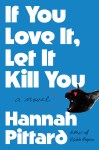 A stalker-ish writing student who submits an essay to his professor that seems inappropriately personal about her in one story of Are You Happy? by Lori Ostlund and If You Love It, Let It Kill You by Hannah Pittard.
- A pygmy goat as a pet (and a one-syllable, five-letter S title!) in Spent by Alison Bechdel and Sleep by Honor Jones.
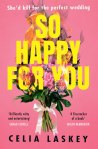
- A Brooklyn setting and thirtysomething female protagonist in Sleep by Honor Jones, So Happy for You by Celia Laskey, and How to Be Somebody Else by Miranda Pountney.
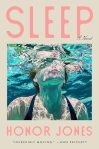
- A mention of the American Girl historical dolls franchise in Sleep by Honor Jones and If You Love It, Let It Kill You by Hannah Pittard, both of which I’m reviewing early for Shelf Awareness.
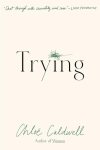 A writing professor knows she’s a hypocrite for telling her students what (not) to do and then (not) doing it herself in Trying by Chloé Caldwell and If You Love It, Let It Kill You by Hannah Pittard. These two books also involve a partner named B (or Bruce), metafiction, porch drinks with parents, and the observation that a random statement sounds like a book title.
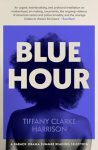
- The protagonist’s therapist asks her to find more precise words for her feelings in Blue Hour by Tiffany Clarke Harrison and So Happy for You by Celia Laskey.
- The protagonist “talks” with a dying dog or cat in The Möbius Book by Catherine Lacey and If You Love It, Let It Kill You by Hannah Pittard.
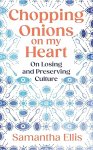 Shalimar perfume is mentioned in Scaffolding by Lauren Elkin and Chopping Onions on My Heart by Samantha Ellis.
- The Rapunzel fairytale is a point of reference in In the Evening, We’ll Dance by Anne-Marie Erickson and Secret Agent Man by Margot Singer, both of which I was reading early for Foreword Reviews.
What’s the weirdest reading coincidence you’ve had lately?
My Best Backlist Reads of the Year
Like many bloggers, I’m irresistibly drawn to the new books released each year. However, I consistently find that many of my more memorable reads were published earlier – most of these happen to have been published between one and a few years ago, with the ‘oldest’ being from 2004. These dozen selections – alphabetical within genre but in no particular rank order – together with my Best of 2023 post (coming up tomorrow), make up about the top 10% of my year’s reading.

Fiction
 Loved and Missed by Susie Boyt: The heart-wrenching story of a woman who adopts her granddaughter because of her daughter’s drug addiction. The prose is stunning as Boyt traces the history of this complicated, makeshift family. The title has a wry double meaning, but also connotations of anticipatory grief. There can be love even where there is estrangement, or eternal separation. That is one of the enduring messages of this gem of a short novel.
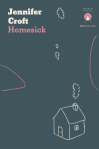 Homesick by Jennifer Croft: Each vignette – some just a paragraph long – is perfectly chosen to reveal a family dynamic and a moment in American history. What Croft does so brilliantly is to chart the accretion of ordinary and landmark events that form a life. In the end it didn’t matter whether this was presented as memoir or autofiction, so true was it to the experience of 1990s girlhood, as well as to sisterhood and coming of age.
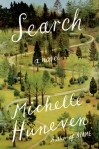 Search by Michelle Huneven: When middle-aged restaurant critic Dana Potowski is invited to be on the search committee to appoint the next minister for her California Unitarian church, she reluctantly agrees but soon wonders whether the experience could be interesting fodder for a new book… The setup might seem niche but will resonate with anyone who’s had a brush with bureaucracy. Pure pleasure; lit fic full of gossip and good food.
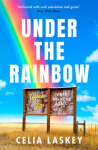 Under the Rainbow by Celia Laskey: Researchers identified Big Burr, Kansas as the most homophobic town in America. An Acceptance Across America task force descends on the rural backwater for a two-year program promoting education and friendship. Each chapter in the linked short story collection is a first-person, present-tense confession from a local or a queer visitor, whose stories interlock. Laskey inhabits all 11 with equal skill and compassion.
 The Chosen by Elizabeth Lowry: This utterly immersive novel examines Thomas Hardy’s relationship with his first wife, Emma Gifford. It opens on the morning of her death. The couple had long been estranged, but Hardy was instantly struck with grief – and remorse, his guilt compounded by what he found in her journals. A universal tale of waning romance, loss, and regret. Beautifully understated; perfectly convincing for the period but also timeless.
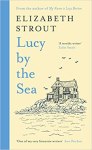 Lucy by the Sea by Elizabeth Strout: As Covid hits, William whisks Lucy from her NYC apartment to a house at the Maine coast. She’s an Everywoman recounting the fear and confusion of the early pandemic. Isolation has benefits: the first ‘room of her own’ she’s ever had, and time to ponder her childhood trauma and what went wrong in her marriage. Astute on American politics and writers’ inspirations; an effortless voice and emotional intelligence.
Nonfiction
 Bibliomaniac by Robin Ince: Ince was meant to undertake a stadium tour in Autumn 2021, but a Covid resurgence put paid to that. Not one for sitting around at home, he formulated Plan B: 100+ events, most of them in independent bookshops, over the course of two months, criss-crossing Britain and hitting many of my favourites. He’s not just a speaker at them but, invariably, a customer. I sensed a kindred spirit in so many lines. Witty and open-minded.
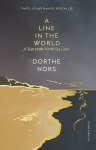 A Line in the World by Dorthe Nors: Nors lives in rural Jutland along the west coast of Denmark – little visited and largely unknown to foreigners. This can be both good and bad. Tourists feel they’re discovering somewhere new, but the residents are insular. Local legends and traditions, bird migration, reliance on the sea, wanderlust, maritime history, a visit to church frescoes, and more. Gorgeous writing and atmosphere, despite the bleakness.
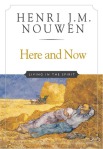 Here and Now by Henri Nouwen: This collection of micro-essays under themed headings like “Living in the Present” and “Suffering” is a perfect introduction to the Dutch Catholic priest’s theology. I marked out many reassuring or thought-provoking passages. I was taken by his ideas that the life of compassion is one of “downward mobility” and that inner freedom comes when you don’t judge anyone. Peaceful and readable; a good bedside devotional.
Poetry
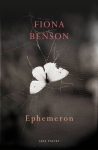 Ephemeron by Fiona Benson: Exquisite poems about the ephemeral, whether that be insect lives, boarding school days, primal emotions or moments from her children’s early years. The book is in four discrete corresponding sections but themes and language bleed from one into another and the whole is shot through with astonishing corporeality and eroticism. The form varies but the alliteration, slant rhymes and unexpected metaphors make each poem glisten.
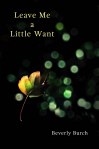 Leave Me a Little Want by Beverly Burch: Burch’s fourth collection juxtaposes the cosmic and the mundane, marvelling at the behind-the-scenes magic that goes into one human being born but also making poetry of an impatient wait in a long post office queue. Beset by environmental anxiety and the scale of bad news during the pandemic, she pauses in appreciation of the small and gradual.
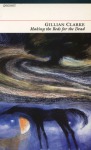 Making the Beds for the Dead by Gillian Clarke: Full of colour and nature imagery, profuse with alliteration and slant rhymes, relishing its specialist terminology, and taking on the serious subject matter of manmade disasters. Several sequences are devoted to gardening and geology; some pieces are ekphrastic, or dedicated to particular poets. The title sequence tackles the 2001foot and mouth disease outbreak. “The Fall” is on 9/11. Very affecting stuff.
My overall favourites were: in novels, Search and The Chosen (one contemporary and one historical) and in poetry, Ephemeron.
What were your best backlist reads this year?
Three on a Theme: “Rainbow” Books for Pride Month
Two of these are short story collections (and one almost is); two are specifically queer in outlook; all attracted me for their colorful covers, and all were borrowed from the library. #LoveYourLibrary

Rainbow Rainbow: Stories by Lydia Conklin (2022)
The 10 stories in this confident debut collection are unabashedly queer, and half involve the trans experience, whether ideation or reality. Conklin is nonbinary, so it’s tempting to read several stories as autobiographical: female characters long to get top surgery and transition to male or nonbinary, but worry it will change how they are perceived or desired. “Pink Knives” and “Boy Jump,” especially, have the flavor of autofiction, with protagonists traveling in Poland and feeling attraction to people of various genders. (The former has a pandemic setting, which I’ve noticed has at this point started to feel dated.) My overall favorite was “Sunny Talks,” in which middle-aged Lillia accompanies her trans teenage nephew to a conference for celebrity YouTubers but can’t bring herself to announce her own intended transition. Though life hasn’t been easy for Sunny, he has support she lacked growing up.
 Asher and Ivan, two characters of nebulous sexuality and future gender, are the core of “Cheerful Until Next Time” (check out the acronym), which has the fantastic opening line “The queer feminist book club came to an end.” “Laramie Time” stars a lesbian couple debating whether to have a baby (in the comic Leigh draws, a turtle wishes “reproduction was automatic or mandatory, so no decision was necessary”). “A Fearless Moral Inventory” features a pansexual who is a recovering sex addict. Adolescent girls are the focus in “The Black Winter of New England” and “Ooh, the Suburbs,” where they experiment with making lesbian leanings public and seeking older role models. “Pioneer,” probably my second favorite, has Coco pushing against gender constraints at a school Oregon Trail reenactment. Refusing to be a matriarch and not allowed to play a boy, she rebels by dressing up as an ox instead. The tone is often bleak or yearning, so “Counselor of My Heart” stands out as comic even though it opens with the death of a dog; Molly’s haplessness somehow feels excusable.
Six of the stories are in the third person and four in first person. I’d be interested to try Conklin’s longer-form work, and think first-person narration would particularly suit her. I didn’t really sense that this was a book meant for me, but that’s okay; a lot of readers will feel seen and represented. Pair this with, or have it on hand as a follow-up to, work by Allison Blevins, Melissa Febos and, most of all, Eley Williams. 
Under the Rainbow by Celia Laskey (2020)
In Laskey’s debut, which has been marketed as a novel but reads more like linked short stories, a favorite format of mine, researchers have identified Big Burr, Kansas as the most homophobic town in America. A task force from Acceptance Across America descends on the rural backwater for a targeted two-year program promoting education and friendship. Each chapter is a first-person, present-tense confession from a local or a queer visitor, whose stories interlock and push the chronology forward. For every positive step – a gender-neutral bathroom in the high school, a closeted individual who summons up the courage to come out – there is a regressive one, such as a AAA billboard being set on fire or a house being egged.
 Laskey inhabits all 11 personae with equal skill and compassion. Avery, the task force leader’s daughter, resents having to leave L.A. and plots an escape with her new friend Zach, a persecuted gay teen. Christine, a Christian homemaker, is outraged about the liberal agenda, whereas her bereaved neighbor, Linda, finds purpose and understanding in volunteering at the AAA office. Food hygiene inspector Henry is thrown when his wife leaves him for a woman, and meat-packing maven Lizzie agonizes over the question of motherhood. Task force members David, Tegan and Harley all have their reasons for agreeing to the project, but some characters have to sacrifice more than others.
Little references in later chapters catch you up on what’s happened with the others. I only questioned the need for Elsie as a POV character, and the exclusion of Jamal (presumably Laskey thought it unwise to write from the perspective of a Black man, but he’s a glaring omission). A final chapter, returning to one of the protagonists and set 10 years later, presents a town that’s changed enough to host its first gay wedding and first LGBTQ-owned business.
The novel is realistically sad, but not overly so, and was compellingly readable and heartwarming in a way that reminded me of how I felt about Shotgun Lovesongs. You might not want to live there, but I guarantee you’ll develop a certain fondness for Big Burr. 
Scattered Showers: Stories by Rainbow Rowell; illus. Jim Tierney (2022)
I spotted this collection while shelving in the YA section of the library one day and admired the sky blue naked hardback for its red sprayed edges, chunky rainbow endpapers, distinctive font, and teal and magenta interior color scheme. I’d read one Rowell book before, the graphic novel Pumpkinheads. This is probably a better match for her dedicated fans in that three of the stories are spin-offs from her fiction and a few of the rest are one-offs (Amazon Original Stories, a World Book Day publication, a contribution to an anthology), such that I felt a little like I was reading leftovers. A B-sides volume, if you will.
 Four of the nine are holiday-themed, so this could make a good Twixtmas read if you like seasonality; eight are in the third person and just one has alternating first person narrators. All are what could be broadly dubbed romances, with most involving meet-cutes or moments when long-time friends realize their feelings go deeper (“Midnights” and “The Snow Ball”). Only one of the pairings is queer, however: Baz and Simon (who are a vampire and … a dragon-man, I think? and the subjects of a trilogy) in the Harry Potter-meets Twilight-meets Heartstopper “Snow for Christmas.” The rest are pretty straightforward boy-girl stories.
I liked “Kindred Spirits,” in which Elena joins a small group (“three cold nerds”) of hardcore Star Wars fans waiting in line for the first sequel and notices Gabe, a classmate, as if for the first time; “Winter Songs for Summer,” in which a sensitive jock proves he knows his upstairs dorm mate better than anyone through the breakup-recovery tracks he puts on a mix CD for her; and “If the Fates Allow,” about Nebraska neighbors who bond over Jell-O salad during a couple of pandemic Christmases.
I wasn’t as enamored by the couple of fantasy stories, “The Prince and the Troll,” a fairy tale twisted into a vague environmental dystopian parable (“This isn’t easy. This is just another kind of hard. That’s all that’s left now, for any of us”), and “In Waiting,” about the evolving characters incubating in a writer’s head. “Mixed Messages” was refreshing for having middle-aged characters, two friends texting back and forth to try to work out whether the one missed a period because she’s pregnant or in perimenopause, but I doubt I’d be tempted to seek out the book these characters originated in (Attachments), or any of Rowell’s others. 
There was a clear winner here: Under the Rainbow!
Extra goodies:
Celebrate Pride Month! The Bookshop.org team has curated this list of books by LGBTQIA+ authors for you to enjoy. Please enjoy 20% OFF all titles. [affiliate link]
A song Sufjan Stevens wrote for Pride Month 2019.
 Bookish Beck = Rebecca Foster. American transplant to England. Freelance proofreader and book reviewer.
 Bookish Beck