September Releases by Chloe Lane, Ben Lerner, Navied Mahdavian & More
September and October are bounteous months in the publishing world. I’ll have a bunch of books to plug in both, mostly because I’ve upped my reviewing quota for Shelf Awareness. There’s real variety here, from contemporary novellas and heavily autobiographical poetry to nature essays and a graphic memoir.
Arms & Legs by Chloe Lane
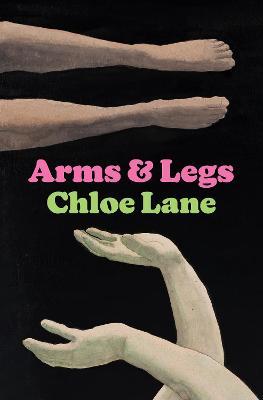 I reviewed Lane’s debut novel, The Swimmers, a black comedy about a family preparing for an assisted suicide, this time last year. It seems there’s an autobiographical setup to the author’s follow-up, which focuses on a couple from New Zealand now living in Florida with their young son. Narrator Georgie teaches writing at a local college and is having an affair with Jason, an Alabama-accented librarian she met through taking Finn to the Music & Movement class. She joins in a volunteer-led controlled burn in the forest, and curiosity quickly turns to horror when she discovers the decaying body of a missing student.
There’s a strong physicality to this short novel: fire, bodies and Florida’s dangerous fauna (“To choose to live in a place surrounded by these creatures, these threats, it made me feel like I was living a bold life”). Georgie has to decide whether setting fire to her marriage with Dan is what she really wants. A Barry Hannah short story she reads describes adultery as just a matter of arms and legs, a phrase that’s repeated several times.
Georgie is cynical and detached from her self-destructive choices, coming out with incisive one-liners (“My life isn’t a Muriel Spark novel, there’s no way to flash forward and find out if I make it out of the housefire alive” and “He rested the spade on his shoulder as if he were a Viking taking a drinks break in the middle of a battle”). Lane burrows into instinct and motivation, also giving a glimpse of the challenges of new motherhood. Apart from a wicked dinner party scene, though, the book as a whole was underwhelming: the body holds no mystery, and adultery is an old, old story.
With thanks to Gallic Books for the proof copy for review.
The Lights by Ben Lerner
 I’d read fiction and nonfiction from Lerner but had no idea of what to expect from his poetry. Almost every other poem is a prose piece, many of these being absurdist monologues that move via word association between topics seemingly chosen at random: psychoanalysis, birdsong, his brother’s colorblindness; proverbs, the Holocaust; art conservation, his partner’s upcoming C-section, an IRS Schedule C tax form, and so on.
The vocabulary and pronouncements can be a little pretentious. The conversational nature and randomness of the subjects contribute to the same autofiction feel you get from his novels. For instance, he probes parenting styles: his parents’ dilemma between understanding his fears and encouraging him in drama and sport; then his daughters’ playful adoption of his childhood nickname of Benner for him.
A few highlights: the enjambment in “Index of Themes”; the commentary on pandemic strictures and contrast between ancient poetry and modern technology in “The Stone.” I wouldn’t seek out more poetry by Lerner, but this was interesting to try. (Read via Edelweiss)
Sample lines:
“When you die in the patent office / there’s a pun on expiration”
“the goal is to be on both sides of the poem, / shuttling between the you and I. … Form / is always the answer to the riddle it poses”
“It’s raining now / it isn’t, or it’s raining in the near / future perfect when the poem is finished / or continuous, will have been completed”
This Country: Searching for Home in (Very) Rural America by Navied Mahdavian
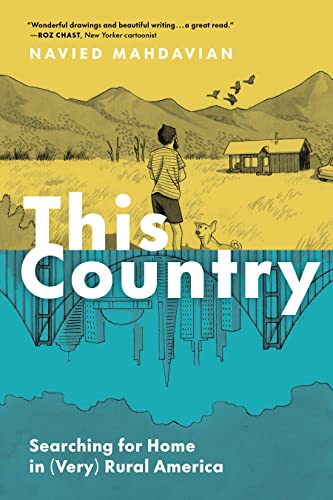 Mahdavian has also published comics in the New Yorker. His debut graphic novel is a memoir of the three years (2016–19) he and his wife lived in remote Idaho. Of Iranian heritage, the author had lived in Miami and then the Bay Area, so was pretty unprepared for living off-grid. His wife, Emelie (who is white), is a documentary filmmaker. They had a box house brought in on a trailer. After Trump’s surprise win, it was a challenging time to be a Brown man in the rural USA. “You’re not a Muslim, are you?” was the kind of question he got on their trips into town. Neighbors were outwardly friendly – bringing them firewood and elk kebabs, helping when their car wouldn’t start or they ran off the road in icy conditions, teaching them the local bald eagles’ habits – yet thought nothing of making racist and homophobic slurs.
I appreciated the self-deprecating depictions of learning DIY from YouTube videos and feeling like a wimp in comparison to his new friends who hunt and have gun collections – one funny spread has him imagining himself as a baby in a onesie sitting across from a manly neighbor. “I am shedding my city madness,” Mahdavian boasts as they plant an abundant garden and start learning about trees and birds. The references to Persian myth and melodrama are intriguing, though sometimes seem à propos of nothing, as do the asides on science and nature. I preferred when the focus was on the couple’s struggles with infertility and reopening the town movie theater – a flop because people only want John Wayne flicks.
This was enjoyable reading, but the simple black-and-white style is unlikely to draw in readers new to graphic storytelling, and I wondered if the overall premise – ‘we expected to find closed-minded racists and we did’ – was enough to hang a memoir on. (Read via Edelweiss)
Reviewed for Shelf Awareness:
(Links to full text)
The Wren, The Wren by Anne Enright
 Enright’s astute eighth novel traces the family legacies of talent and trauma through the generations descended from a famous Irish poet. Cycles of abandonment and abuse characterize the McDaraghs. Enright convincingly pinpoints the narcissism and codependency behind their love-hate relationships. (It was an honor to also interview Anne Enright. You can see our Q&A here.)
When My Ghost Sings by Tara Sidhoo Fraser
 This lyrical debut memoir is an experimental, literary recounting of the experience of undergoing a stroke and relearning daily skills while supporting a gender-transitioning partner. Fraser splits herself into two: the “I” moving through life, and “Ghost,” her memory repository. But “I can’t rely only on Ghost’s mental postcards,” Fraser thinks, and sets out to retrieve evidence of who she was and is.
The Vaster Wilds by Lauren Groff
 (Already featured in my Best of 2023 so far post.) Groff’s fifth novel combines visceral detail and magisterial sweep as it chronicles a runaway Jamestown servant’s struggle to endure the winter of 1610. Flashbacks to traumatic events seep into her mind as she copes with the harsh reality of life in the wilderness. The style is archaic and postmodern all at once. Evocative and affecting – and as brutal as anything Cormac McCarthy wrote. A potent, timely fable as much as a historical novel.
Zoo World: Essays by Mary Quade
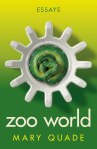 A collection of 15 thoughtful nature/travel essays that explore the interconnectedness of life and conservation strategies, and exemplify compassion for people and, particularly, animals. The book makes a round-trip journey, beginning at Quade’s Ohio farm and venturing further afield in the Americas and to Southeast Asia before returning home.
The Goodbye World Poem by Brian Turner
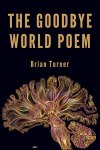 The lovely laments in Brian Turner’s fourth collection (a sequel to The Wild Delight of Wild Things) dwell in the aftermath of the loss of his wife and others, and cultivate compensatory appreciation for the natural world. Turner’s poetry is gilded with alliteration and maritime metaphors The long title piece, which closes the collection, repeats many phrases from earlier poems—a pleasing way of drawing the book’s themes together. (My review of the third volume in this loose trilogy is forthcoming.)
And a bonus review book, relevant for its title:
September and the Night by Maica Rafecas
[Translated from the Catalan by Megan Berkobien and María Cristina Hall]
 A new Logistics Centre is to cut through Anaïs’s family vineyards as part of a compulsory land purchase. While her father, Magí, and brother, Jan, are resigned to the loss, this single mother decides to resist, tying herself to a stone shed on the premises that will be right in the path of the bulldozers. This causes others to question her mental health, with social worker Elisa tasked with investigating the case. Key evidence of her irrational behaviour turns out to have perfectly good explanations.
Certain chapters alternate Jan’s and Anaïs’s perspectives, recreate her confusion in a psychiatric hospital, or have every sentence beginning with “There” or “And” – effective anaphora. Although I didn’t think Jan’s several romantic options added to the plot, this debut novella from a Spanish author was a pleasant surprise. It’s based on a true story, though takes place in fictional locations, and bears a gentle message of cultural preservation.
With thanks to Fum d’Estampa Press for the free copy for review.
Book Serendipity, August to September 2023
I call it “Book Serendipity” when two or more books that I read at the same time or in quick succession have something in common – the more bizarre, the better.
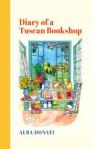
In Diary of a Tuscan Bookshop, Alba Donati remarks on this phenomenon: “Jung called these coincidences ‘synchronicities’, postulating that the universe possessed its own form of intelligence, which generated harmonies. A universe that detects and brings together the elements it feels are seeking each other in the endless swirl of life. Chance be damned.”
This is a regular feature of mine every couple of months. Because I usually have 20–30 books on the go at once, I suppose I’m more prone to such incidents. The following are in roughly chronological order.
- A memoir that opens with a little girl being injured in a bicycle accident: Some of Us Just Fall by Polly Atkin and Pharmakon by Almudena Sánchez.
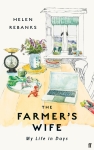
- Telling stories through embroidery in Cross-Stitch by Jazmina Barrera and The Farmer’s Wife by Helen Rebanks.

- A small boy nicknamed “Willmouse” (real name: William) in Mary and the Birth of Frankenstein by Anne Eekhout and The Greengage Summer by Rumer Godden.
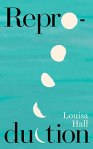
- An account of a routine sonogram that ends with the technician leaving the doctor to deliver bad news in Reproduction by Louisa Hall and The Unfamiliar by Kirsty Logan.
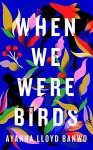
- Black dreadlocks/braid/ponytail being cut off in When We Were Birds by Ayanna Lloyd Banwo, The Wren, The Wren by Anne Enright, and Rebecca, Not Becky by Christine Platt and Catherine Wigginton Greene.

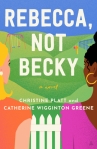
- Wondering how to arm a Black daughter against racist microaggressions in Rebecca, Not Becky by Christine Platt and Catherine Wigginton Greene and Ordinary Notes by Christina Sharpe.
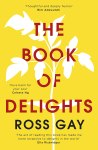
- Countering the commodification or romanticization of Black suffering in The Book of Delights by Ross Gay and Ordinary Notes by Christina Sharpe.

- An account of how the foot and mouth disease outbreak of 2001 affected the UK, especially northwest England, in Making the Beds for the Dead by Gillian Clarke and The Farmer’s Wife by Helen Rebanks.
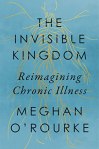
- I encountered the quote from Elaine Scarry’s The Body in Pain about pain being inexpressible in Reproduction by Louisa Hall and The Invisible Kingdom by Meghan O’Rourke on the same day. It’s also referenced in Mary Jean Chan’s Bright Fear.
- A mention of eating frogs’ legs in The Book of Delights by Ross Gay and La Vie by John Lewis-Stempel.
- I read about the effects of heavy metal pollution on the body in The Invisible Kingdom by Meghan O’Rourke and Windswept by Annie Worsley in the same evening.
- Composer Erik Satie is mentioned in Making the Beds for the Dead by Gillian Clarke and August Blue by Deborah Levy.
- Stendhal syndrome and Florence are mentioned in The Wren, The Wren by Anne Enright and Pharmakon by Almudena Sánchez.
- Swallows nesting in an old Continental building in Diary of a Tuscan Bookshop by Alba Donati and La Vie by John Lewis-Stempel.
- France being all about the rules and a “Putain de merde” exclamation to bad news in Dirt by Bill Buford and La Vie by John Lewis-Stempel.

- A character named Nomi in Friends and Strangers by J. Courtney Sullivan and one called Noemi in Diary of a Tuscan Bookshop by Alba Donati.
- Epigenetics (trauma literally determining the genetic traits that are passed on) is discussed in The Invisible Kingdom by Meghan O’Rourke and Pharmakon by Almudena Sánchez.
- Women of a certain age in Tuscany in The Three Graces by Amanda Craig and Diary of a Tuscan Bookshop by Alba Donati.
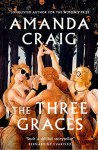
- Audre Lorde is quoted in Tremor by Teju Cole, Bibliomaniac by Robin Ince, The Invisible Kingdom by Meghan O’Rourke, Alone by Daniel Schreiber, and Ordinary Notes by Christina Sharpe.
- A Galway Kinnell poem is mentioned/quoted in The Dead Peasant’s Handbook by Brian Turner and Otherwise by Julie Marie Wade.
- The Bamiyan Buddhas are mentioned in Tremor by Teju Cole and The Dead Peasant’s Handbook by Brian Turner.


- Both The Three Graces by Amanda Craig and The Story of Lucy Gault by William Trevor open with a man shooting someone from his bedroom window.
- Linked short story collections about two children’s relationship with their Jamaican father, and mention of a devastating hurricane, in If I Survive You by Jonathan Escoffery and The Human Origins of Beatrice Porter and Other Essential Ghosts by Soraya Palmer. (Dual review coming up tomorrow!)
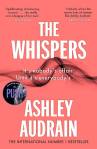
- Characters named Ben and Mara in The Whispers by Ashley Audrain and one story in Kate Doyle’s I Meant It Once.
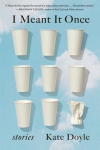
- Occasional uncut pages in my copies of I Meant It Once by Kate Doyle and The Unfamiliar by Kirsty Logan.
- A Florida setting and mention of the Publix supermarket chain in If I Survive You by Jonathan Escoffery and Arms and Legs by Chloe Lane.
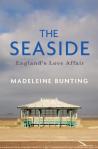
- A down-at-heel English seaside town near Scarborough features in The Seaside by Madeleine Bunting and Penance by Eliza Clark.

- A fictional northern town with “Crow” in the name: Crow-on-Sea in Penance by Eliza Clark and Crows Bank in Weyward by Emilia Hart.
- Claw-machine toys are mentioned in Penance by Eliza Clark and Directions to Myself by Heidi Julavits.
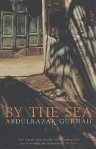
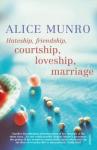
- Reading books by two Nobel Prize winners at the same time: Abdulrazak Gurnah (By the Sea) and Alice Munro (Hateship, Friendship, Courtship, Loveship, Marriage).
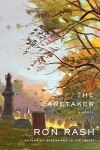
- Reading my second 2023 release featuring North Carolina ghost lights (after All of Us Together in the End by Matthew Vollmer, which I actually read last year): The Caretaker by Ron Rash.
- Reading my second 2023 release featuring a cat named Virginia Woolf (after Tell the Rest by Lucy Jane Bledsoe, which I actually read last year): one of the short stories in I Meant It Once by Kate Doyle.
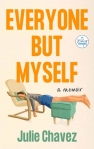
- A character named Shay in Everyone but Myself by Julie Chavez, The Human Origins of Beatrice Porter and Other Essential Ghosts by Soraya Palmer and The Caretaker by Ron Rash.

What’s the weirdest reading coincidence you’ve had lately?
Review Catch-Up: The Swimmers, Black Butterflies, Bi, and On the Scent
I have a preposterous backlog of review copies to finish and write about (I’m going to go ahead and blame buying a house, moving and DIY for my lack of focus and diminished time, as I have done most of this year), but I’ve decided to get on top of it by pulling a quartet off of my set-aside shelf each week for short responses. I always like to feature a variety, so here I have two fiction and two nonfiction selections: novels about assisted dying and the Bosnian War that are a lot funnier and more life-affirming than you might expect, and books about bisexuality and the sense of smell – and the effect of its loss.
The Swimmers by Chloe Lane (2020; 2022)
 Erin Moore has returned to her family’s rural home for Queen’s Birthday (now a dated reference, alas!), a long weekend in New Zealand’s winter. Not a time for carefree bank holiday feasting, this; Erin’s mother has advanced motor neurone disease and announces that she intends to die on Tuesday. Aunty Wynn has a plan for obtaining the necessary suicide drug; it’s up to Erin to choreograph the rest. “I was the designated party planner for this morbid final frolic, and the promise of new failures loomed. … The whole thing was looking more and more like the plot of a French farce, except it wasn’t funny.”
Lane renders a potentially maudlin situation merely bittersweet through black comedy. Erin isn’t the most endearing narrator because, Disaster Woman-like, she keeps undertaking weird acts of self-sabotage – at 26, she’s blown her first gallery curation opportunity by sleeping with her boss. Still, the picture of a different sort of dysfunctional family and the contrast between an illustrious past (Erin comes from a line of semi-pro swimmers: Aunty Wynn qualified to compete in the Commonwealth Games) and an iffy future make this fairly memorable, if not so much so as the other 2022 The Swimmers – Julie Otsuka’s.
Readalikes: Sorrow and Bliss by Meg Mason, What Are You Going Through by Sigrid Nunez, The Inland Sea by Madeleine Watts, The Weekend by Charlotte Wood
With thanks to Gallic Books for the proof copy for review.
Black Butterflies by Priscilla Morris (2022)
 Drawing on her own family history, Morris has crafted an absorbing story set in Sarajevo in 1992, the first year of the Bosnian War. Zora, a middle-aged painter, has sent her husband, Franjo, and elderly mother off to England to stay with her daughter, Dubravka, confident that she’ll see out the fighting in the safety of their flat and welcome them home in no time. But things rapidly get much worse than she is prepared for. Phone lines are cut off, then the water, then the electricity. “We’re all refugees now, Zora writes to Franjo. We spend our days waiting for water, for bread, for humanitarian handouts: beggars in our own city.”
When even the haven of her studio is taken away from her, she’s reduced to the bare bones of existence, with just a few beloved neighbours to keep her spirits up. Her painting, more an obsession than a hobby, keeps her human as she awaits space on a Red Cross convoy. The title has heartrending significance: ‘black butterflies’ are fragments of paper carried on the breeze after the burning of the National Library of Sarajevo, 30 years ago last month. It was especially poignant to be reading this during the war in Ukraine and think about the sorts of daily dangers and deprivation that people face in conflict zones. The pages turned quickly and I was reminded of Girl at War, one of my absolute favourites, as well as The Pianist.
With thanks to Duckworth for the proof copy for review.
Bi: The hidden culture, history, and science of bisexuality by Julia Shaw (2022)
I’m tying this in with today’s celebration of Bi Visibility Day. Shaw is a criminal psychologist; her third book is a departure for her thematically, but means a lot to her personally. Bisexuality is the largest minority sexuality group, yet bisexuals are less likely to be out because of misconceptions and stereotypes – there are fewer outward signals and less group identification – which can sometimes result in poor mental health. Shaw realized how tricky bi identity was when a German TV show wanted to base a character on her but didn’t know how to make her sexuality obvious to viewers (lingering glances/flirtations involving both men and women? a backstory about a previous relationship with a woman?), and when trying to figure out what to wear to gay bars.
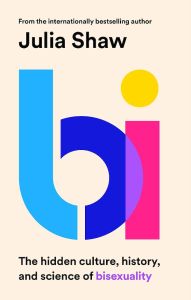 The book aims to situate bisexuality historically and scientifically. The term “bisexual” has been around since the 1890s, with the Kinsey Scale and the Klein Grid early attempts to add nuance to a binary view. Shaw delights in the fact that the mother of the Pride movement in the 1970s, Brenda Howard, was bisexual. She also learns that “being behaviourally bisexual is commonplace in the animal kingdom,” with many species engaging in “sociosexual” behaviour (i.e., for fun rather than out of reproductive instinct). It’s thought that 83% of bisexuals are closeted, mostly due to restrictive laws or norms in certain parts of the world – those seeking asylum may be forced to “prove” bisexuality, which, as we’ve already seen, is a tough ask. And bisexuals can face “double discrimination” from the queer community.
It felt odd to me that a final chapter on bisexual relationships ended up being mostly about threesomes, such that my main question (as she puts it: “what are the problems with the assumed link between bisexuality and non-monogamy?”) only merited four pages. A valuable book, certainly, but one to read for information rather than entertainment or thoughtful prose.
With thanks to Canongate for the free copy for review.
On the Scent: Unlocking the mysteries of smell – and how its loss can change your world by Paola Totaro and Robert Wainwright (2022)
Totaro (co-author Wainwright is her husband) contracted COVID-19 in March 2020 and temporarily lost the ability to smell, prompting her to embark on this investigation into a 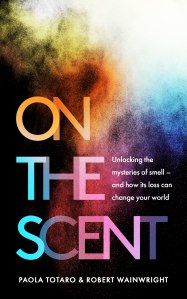 less-understood sense. One in 10,000 people have congenital anosmia, but many more than that experience it at some point in life (e.g., due to head trauma, or as an early sign of Parkinson’s disease), and awareness has shot up since it’s been acknowledged as a symptom of Covid. For some, it’s parosmia instead – smell distortions – which can almost be worse, with people reporting a constant odour of smoke or garbage, or that some of their favourite aromas, like coffee, were now smelling like faeces instead. Such was the case for Totaro.
She visits fascinating places like the Smell and Taste clinic in Dresden and the University of Reading Flavour Centre. “Sniffin’ sticks” are used to put people’s sense of smell to the test, but it’s notoriously difficult, even for those who haven’t had their senses compromised by illness, to name a smell out of context; people generally don’t score over 50%. That’s one of the major questions the book asks: why it is quite so difficult to identify smells, or describe them in words. Totaro also considers perfume-making, the associations of particular smells (bleach, pine or lemon, depending on your country) with cleanliness, and the potential for multisensory experiences, such as releasing odours during film showings. Lots of interesting topics and stories here, but not as compelling on the whole as The Smell of Fresh Rain.
With thanks to Elliott & Thompson for the proof copy for review.
Best of the 4: Black Butterflies
Would you be interested in reading one or more of these?
Book Serendipity, January to February 2022
This is a bimonthly feature of mine. I call it Book Serendipity when two or more books that I read at the same time or in quick succession have something in common – the more bizarre, the better. Because I usually 20–30 books on the go at once, I suppose I’m more prone to such incidents. (I’ve realized that, of course, synchronicity is really the more apt word, but this branding has stuck.) I always like hearing about your bookish coincidences, too!
The following are in roughly chronological order.
- The author takes Valium to cope with fear of flying in two memoirs I read at the same time, I Came All This Way to Meet You by Jami Attenberg and This Boy We Made by Taylor Harris.


- The fact that the Spanish brought wild horses to the USA is mentioned in the story “The Team” by Tommy Orange (in The Decameron Project) and the poetry collection Rise and Float by Brian Tierney – this also links back to a book I reread in late 2021, Misty of Chincoteague by Marguerite Henry.
- There are roaches in a New York City apartment in I Came All This Way to Meet You by Jami Attenberg and the story “Other People’s Lives” in Loss of Memory Is Only Temporary by Johanna Kaplan.
- The same Dostoevsky passage from The Brothers Karamazov, about loving everything (“Love all the earth, every ray of God’s light, every grain of sand or blade of grass, every living thing. If you love the earth enough, you will know the divine mystery” and so on), is quoted in Faith after Doubt by Brian McLaren and Reflections from the North Country by Sigurd Olson.

- A description of nicotine-stained yellow fingers in What I Wish People Knew About Dementia by Wendy Mitchell, The Cure for Sleep by Tanya Shadrick, and Free by Lea Ypi.
- Joni Mitchell’s music is mentioned in The Reactor by Nick Blackburn and The Cure for Sleep by Tanya Shadrick, two memoirs I was reading at the same time.
- From one summer camp story to another … I happened to follow up The Interestings by Meg Wolitzer with Honor Girl by Maggie Thrash.
- Audre Lorde’s definition of the erotic is quoted in Body Work by Melissa Febos and Heaven Is a Place on Earth by Adrian Shirk, both of which are March 15, 2022 nonfiction releases I’ve reviewed for Shelf Awareness.


- The 2017 white supremacist terrorist attack in Charlottesville, Virginia is mentioned in This Boy We Made by Taylor Harris (who lives there), Faith after Doubt by Brian McLaren (who was part of the clergy counterprotest group that day), and Heaven Is a Place on Earth by Adrian Shirk (she went there for a literary event a few months later).
- The Salvador Dalí painting The Persistence of Memory (that’s the one with the melting clock) is described in The Reactor by Nick Blackburn and This Boy We Made by Taylor Harris.
- On the same day, I came across the fact that Mary Shelley was pregnant while she wrote Frankenstein in two books: Linea Nigra by Jazmina Barrera and Smile by Sarah Ruhl.

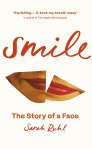
- The fact that cysts in female organs can contain teeth comes up in Heaven Is a Place on Earth by Adrian Shirk and I Love You but I’ve Chosen Darkness by Claire Vaye Watkins.
- Reading two novels by Japanese-American authors who grew up in Hawaii at the same time: How High We Go in the Dark by Sequoia Nagamatsu and To Paradise by Hanya Yanagihara.
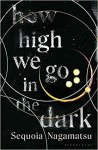

- Twins are everywhere! Including, just in a recent reading pile, in Hands by Lauren Brown (she’s a twin, so fair enough), Birth Notes by Jessica Cornwell, The Snow Collectors by Tina May Hall, Smile by Sarah Ruhl (this and the Cornwell are memoirs about birthing twins, so also fair enough), Ordinary Love by Jane Smiley, and The Priory by Dorothy Whipple. For as uncommon as they are in real life, they turn up way too often in fiction.
- Bell’s palsy AND giving birth to twins are elements in Birth Notes by Jessica Cornwell and Smile by Sarah Ruhl.
- There’s a no-nonsense maternity nurse in Birth Notes by Jessica Cornwell and The Priory by Dorothy Whipple.


- U.S. West Coast wolves (a particular one in each case, known by a tracking number) are the subject of a poem in Postcolonial Love Poem by Natalie Diaz and The Necessity of Wildfire by Caitlin Scarano.
- Herons appear and/or have metaphorical/symbolic meaning in Thorpeness by Alison Brackenbury, What Willow Says by Lynn Buckle, Maggie Blue and the Dark World by Anna Goodall, and The Priory by Dorothy Whipple.

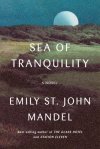
- There’s a character named Edwin in Booth by Karen Joy Fowler and Sea of Tranquility by Emily St. John Mandel.

- The use of “hoard” where it should be “horde” in Maggie Blue and the Dark World by Anna Goodall and Acts of Desperation by Megan Nolan – both errors were encountered in the same evening.
- I read about Lindisfarne in Jini Reddy’s essay in Women on Nature (ed. Katharine Norbury) and The Interior Silence by Sarah Sands in the same evening.
- “Flitting” as a synonym for moving house in Thorpeness by Alison Brackenbury and Nature Cure by Richard Mabey.
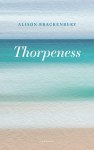

- A brother named Paul in Tides by Sara Freeman and Sea of Tranquility by Emily St. John Mandel.
- A woman knows her lover is on the phone with his ex by his tone of voice in Tides by Sara Freeman and Acts of Desperation by Megan Nolan.
- In two novels I’ve read so far this year – but I won’t say which ones as it’s a spoiler – the big reveal, towards the very end, is that a woman was caught breastfeeding someone who was not her baby and it caused a relationship-destroying rupture.
- Reading a second memoir this year where the chapters are titled after pop songs: Dear Queer Self by Jonathan Alexander (for a Foreword review) and now This Will Only Hurt a Little by Busy Philipps.


- A second short novel entitled The Swimmers this year: the first was Julie Otsuka’s, recently reviewed for Shiny New Books; a proof copy is on the way to me of Chloe Lane’s, coming out from Gallic Books in May.
- Reading a second memoir this year whose author grew up in the Chicago suburbs of Illinois (Arlington Heights/Buffalo Grove vs. Oak Park): I Came All This Way to Meet You by Jami Attenberg and This Will Only Hurt a Little by Busy Philipps.
- The linea nigra (a stripe of dark hair down a pregnant woman’s belly) provides the title for Linea Nigra by Jazmina Barrera and is also mentioned in Birth Notes by Jessica Cornwell.
 The famous feminist text Our Bodies, Ourselves is mentioned in Birth Notes by Jessica Cornwell and I Love You but I’ve Chosen Darkness by Claire Vaye Watkins.
- Childbirth brings back traumatic memories of rape in Birth Notes by Jessica Cornwell and This Will Only Hurt a Little by Busy Philipps.
 Bookish Beck = Rebecca Foster. American transplant to England. Freelance proofreader and book reviewer.
 Bookish Beck