February Releases by de Visser, George, Lawson, and Smiley
Nonfiction about doctors’ memorable patients and a life of chronic pain and disability; novels set in 1970s Canada and contemporary (but magically outside-of-time) Paris.
That One Patient: Doctors’ and nurses’ stories of the patients who changed their lives forever by Ellen de Visser
[Translated from the Dutch by Brent Annable]
Ellen de Visser is a science writer for the most popular newspaper in the Netherlands, De Volkskrant. Her “That One Patient” column, which began in the summer of 2017, turns interviews with medical professionals into punchy first-person narratives. A collection of them was published in Dutch in 2019. This English translation tacks on 10 additional pieces based on conversations with English and American practitioners (including Dr. Anthony Fauci, immunologist and presidential medical advisor), four of them explicitly reflecting on COVID-19.
Many of the cases are decades old yet stuck with the doctor or nurse in question because of a vital lesson learned. Overtreatment is regretted just as much as an omission of care. Again and again, these medical professionals conclude that it’s impossible to judge someone else’s decisions or quality of life. For instance, a surgeon admits he had a hard time empathizing with his obese patients undergoing stomach reduction until he followed up with a young woman who told him about how invisible she’d felt before her surgery. Premature and disabled children bring grief or joy, not always in the expected doses. A doctor resents the work his team puts into repairing a woman who jumped from an eighth-floor window – why the heroic measures for someone who wanted to die? – until he learns she was pushed. A cancer surgeon develops breast cancer and now knows exactly what her patients go through.
 Some of these stories are disturbing: being stalked by a patient with a personality disorder, a man poisoning his girlfriend, a farmer predicting the very day and time of his death. A gynaecologist changes his mind about abortion after he meets a 15-year-old who gave birth at home and left her baby outside in a plastic bag to die of exposure. Other pieces are heart-warming: A paramedic delivers a premature, breech baby right in the ambulance. Staff throw a wedding at the hospital for a dying teen (as in Dear Life by Rachel Clarke). A woman diagnosed with cancer while pregnant has chemotherapy and a healthy baby – now a teenager. There’s even a tale from a vet who crowdfunded prostheses for a lively terrier.
One unique thing about the Netherlands is that euthanasia is legal and provided by doctors upon the express request of a patient suffering from a terminal illness. It is taken for granted in these essays, yet some interviewees express their discomfort with it as an option for young patients. De Visser is careful to note that, even with the situation as it is, only 4% of deaths in the Netherlands are by euthanasia, and the majority of these are end-stage cancer cases.
As with any collection of this nature, some stories are more enticing than others, but overall I found it a surprising and moving set of reflections that is alive to ethical complexities and grapples with tough issues like disability, doctor error, loneliness, pain, and sense of purpose.
Two quotes, in particular, stood out to me, one from a nurse – “We are only ever guests in other people’s lives, and that’s how we ought to behave” – and the other from Dr. Fauci’s piece. In 2014 he treated a doctor who had been volunteering in Sierra Leone after an Ebola outbreak but became ill with the virus and had to be evacuated. “He cited Hippocrates: ‘It is far more important to know what sort of person has the disease, rather than what sort of disease the person has.’ You treated me like a person, not a disease, he said. And that’s what medicine is all about.” 
With thanks to 4th Estate for the proof copy for review.
A Still Life: A Memoir by Josie George
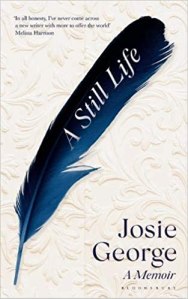 Over a year of lockdowns, many of us have become accustomed to spending most of the time at home. But for Josie George, social isolation is nothing new. Chronic illness long ago reduced her territory to her home and garden. The magic of A Still Life is in how she finds joy and purpose despite extreme limitations. Opening on New Year’s Day and travelling from one winter to the next, the book is a window onto George’s quiet existence as well as the turning of the seasons. (My full review will appear in a forthcoming issue of the Times Literary Supplement. See also Eleanor’s thorough review.) This is top of my wish list for next year’s Barbellion Prize shortlist.
With thanks to Bloomsbury for the proof copy for review.
A Town Called Solace by Mary Lawson
I discovered Mary Lawson in 2015 with Road Ends and caught up with Crow Lake in the summer of 2019. All four of her books are set in fictional locations inspired by the villages and rural areas of Northern Ontario, where the author grew up before moving to England in 1968. So Solace, while not a real town, is true to her memory and, despite the sometimes gruff or know-it-all locals, an emotional landmark for the three central characters, all of whom are processing trauma and looking for places of comfort where they can start over.
 1972. First we meet Clara, a plucky seven-year-old sitting vigil. She’s waiting for the return of two people: her sixteen-year-old sister, Rose, who ran away from home; and their next-door neighbour, Mrs. Orchard, whose cat, Moses, she’s feeding until the old lady gets back from the hospital. As days turn into weeks, though, it seems less likely that either will come home, and one day Clara sees a strange man moving boxes around in Mrs. Orchard’s house. This is Liam Kane, who’s inherited the house from a family friend. In his thirties and recently divorced, he’s taking a break in this tiny town, never imagining that he might find a new life. The third protagonist, and only first-person narrator, is Elizabeth, who lies in a hospital bed with heart trouble and voices her memories as a monologue to her late husband.
As we cycle through these three characters’ perspectives in alternating chapters, we gradually come to understand the connections between them. There are satisfying parallels in that, on multiple occasions but in slightly different ways, a child attaches to an older person or an adult stands in as a guardian for a neglected child. All of Lawson’s creations, even the secondary figures, are dealing with distressing memories or a loss of some kind, the details of which might only emerge much later on. Solace offers myriad opportunities for recovery, whether kitty playtime at Mrs. Orchard’s or diner food and homemade ice cream.
Like Lawson’s other works, this is a slow burner featuring troubled families. Her characters, often full of regret and sorrow, take a shadowy past as a prompt to reset their lives. They’re charming in spite of their flaws. I recalled that Crow Lake also looks back to the climactic happenings experienced by a seven-year-old girl. And like Road Ends, A Town Called Solace makes a convincing case for present decisions being influenced by historical trauma. It’s a tender and inviting story I’d recommend to readers of Wendy McGrath and Anne Tyler, with Clever Girl by Tessa Hadley and Olive, Again by Elizabeth Strout as specific readalikes. (My dilemma now is whether to read my only remaining Lawson novel, The Other Side of the Bridge, right away or save it: she’s not the most prolific author, with four books in 19 years.)
A favorite passage:
[Liam’s] life prior to coming north seemed to be taking on the quality of an old movie, one in which he’d been deeply engrossed while watching it but which now seemed trivial, unconvincing and profoundly lacking in either colour or plot. Solace had colour and plot in spades, maybe too much. In every way it was coming to seem more real than Toronto, with its endless malls and traffic jams and high-powered jobs. Though maybe, if he went back to Toronto, the same would be true in reverse. Maybe when he’d been back for a couple of months he’d find that it was Solace that seemed unreal, its unremarkable streets and stores like something from a dream, its dramatic landscape fading to nothing, like a holiday photo left in the sun.
With thanks to Chatto & Windus for the free copy for review.
The Strays of Paris by Jane Smiley
(Published in the USA in December 2020 under the title Perestroika in Paris. It’s been given a The Boy, the Mole, the Fox and the Horse treatment for its UK release.)
 My summary for Bookmarks magazine: “A racehorse, Perestroika—nicknamed Paras—strays from her unlocked suburban stable one day, carrying her groom’s purse in her mouth, and ends up in Paris’s Place du Trocadéro. Here she meets Frida the dog, Sid and Nancy the mallards, and Raoul the raven. Frida, whose homeless owner died, knows about money. She takes euros from the purse to buy food from a local market, while Paras gets treats from a baker on predawn walks. Etienne, an eight-year-old orphan who lives with his ancient great-grandmother, visits the snowy park to feed the wary animals (who can talk to each other), and offers Paras a home. A sweet fable for animal lovers.”
Yes, this is a talking animal book, but the animals only talk to each other; they communicate with humans through their gestures and soulful eyes. Kindly shopkeepers work out what Frida wants to buy based on what she stares at or points to with a paw; the baker whose window Paras passes on her early morning walks intuits that the horse is hungry; Etienne, who gives a couple of the stray animals a home during a chill winter, learns to understand when Paras needs to go out to relieve herself, after piles of dung build up in the sitting room.
I liked how patiently and convincingly Smiley builds the portrait of each character – human or animal – and the overall situation of kindness and good fortune. Raoul is particularly amusing for his birdsplaining: “It is a feature of age. I have learned so many things in my life that they just force their way out of my beak,” he says. However, a crow would be much more realistic for Paris (or any city) than a raven, and, overall, this was a little twee and farfetched for my tastes. It was nice to read something a bit different from Smiley, who I haven’t tried since her Last Hundred Years Trilogy. She has a sideline in YA horse novels; this should probably have been lumped with those.  (Annabel liked it a bit more.)
I was sent an unsolicited review copy by Picador/Mantle.
What recent releases can you recommend?
January’s Nonfiction Releases: Clarke, Heminsley and Lalkhen
Three new books with medical themes (no surprise there), including the first Covid wave in the UK; fertility and body issues in a new queer family; and pain management strategies.
Breathtaking: Inside the NHS in a Time of Pandemic by Rachel Clarke
 Clarke is a palliative care doctor based in Oxfordshire. She runs the Katharine House hospice but during the coronavirus pandemic has also been on active duty in the Oxford University Hospitals system. If you’re on social media you have likely come across some of her postings as she has been equally vocal in her praise of the NHS and her criticism of Boris Johnson’s faltering policies, which are often of the too little, too late variety. So I was eager to read her insider’s account of hospital treatment of the first wave of Covid in the UK, especially because her previous book, Dear Life, was one of my top two nonfiction releases of last year.
The focus is on the first four full months of 2020, and the book originated in Clarke’s insomniac diaries and notes made when, even after manically busy shifts, she couldn’t rest her thoughts. Her pilot husband was flying to China even as increasingly alarming reports started coming in from Wuhan. She weaves in the latest news from China and Italy as well as what she hears from colleagues and disease experts in London. But the priority is given to stories: of the first doctor to die in China; of a Yorkshire ICU nurse’s father, who comes down with Covid and is on a ventilator in an Oxford hospital; and of her patients there and in the hospice. She is touched that so many are making great sacrifices, such as by deciding not to visit loved ones at the end of their lives so as not to risk spreading infection.
A shortage of PPE remained a major issue, though Dominic Pimenta (whose Duty of Care was my first COVID-19 book) pulled through for her with an emergency shipment for the hospice – without which it would have had to close. Clarke marvels at the NHS’s ability to create an extra 33,000 beds within a month, but knows that this comes at a cost of other services, including cancer care, being stripped back or cancelled, meaning that many are not receiving the necessary treatment or are pushing inescapable problems further down the road.
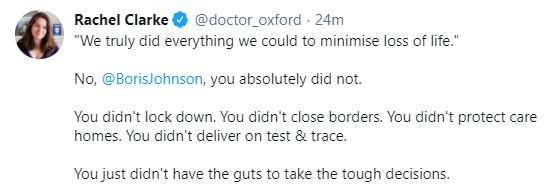
From January 26, 2021
A comparison with Gavin Francis’s Intensive Care, published earlier in the month, is inevitable. Both doctors bounce between headlines and everyday stories, government advice and the situation on the ground. Both had their own Covid scare – Clarke didn’t meet the criteria to be tested so simply went back to work two weeks later, when she felt well enough – and had connections to regions that foreshadowed what would soon happen in the UK. Both give a sense of the scope of the crisis and both lament that, just when patients need compassion most, full PPE leads to their doctors feeling more detached from them than ever.
However, within the same page count, Francis manages to convey more of the science behind the virus and its transmission, and helpfully explores the range of effects Covid is having for different groups. He also brings the story more up to the minute with a look back from November, whereas Clarke ends in April and follows up with an epilogue set in August. A book has to end somewhere, yes, but with this crisis ongoing, the later and more relevant its contents can be, the better. And in any book that involves a lot of death, mawkishness is a risk; Clarke so carefully avoided this in Dear Life, but sometimes succumbs here, with an insistence on how the pandemic has brought out the best in people (clapping and rainbows and all that). Her writing is as strong as ever, but I would have appreciated a sharper, more sombre look at the situation a few months later. Perhaps there will be a sequel.

From January 6, 2021
With thanks to Little, Brown UK for the free copy for review.
Some Body to Love: A Family Story by Alexandra Heminsley
 From Heminsley’s previous book, Leap In, I knew about her getting married and undergoing IVF. It was also a book about outdoor swimming; I appreciated her words on acquiring a new skill as an adult and overcoming body issues. This memoir continues the story: in 2017, after a gruelling journey through infertility treatment, Heminsley finally got the baby she wanted. But not before a couple more heart-wrenching moments: the lab made an error and notified her that she shared no DNA with this last embryo, and while heavily pregnant she was assaulted by a drunk man on a train. Both incidents left her feeling a loss of agency. “Why was I consistently being deemed the least reliable witness of my own reality?” she asks.
As they adjusted to new life with a baby, Heminsley started to notice that she wasn’t connecting with her husband, D, like she used to. She felt emotionally unsupported and, in fact, jealous of D’s relationship with their son, L. And while they’d never been the most conventional couple, D’s changes of appearance and wardrobe seemed like a sign of something bigger. Indeed, when L was six months old, D told Heminsley, “this body doesn’t represent who I am” and announced a decision to begin transitioning.
As D moved towards having a body that fit their identity, Heminsley, too, needed to get back in touch with her body. After books like Running Like a Girl, she was considered an exercise guru, but she didn’t see herself in the new obsession with Instagram-ready images of fitness perfection. This is not, then, primarily a memoir of queer family-making, because D’s transitioning was not Heminsley’s story to tell and mostly occurs in the background. Instead she focuses on what she does know and can control: her relationship to her own body.
However, this entails what can feel like irrelevant flashbacks to her teenage years of undergoing rehab at a military clinic in Germany for hypermobility, trips to Trinidad and Italy, and the genesis of her two sporting memoirs. Much as I applaud the sensitivity to trans and body issues, the book ends up feeling scattered. Still, the writing is so candid and the narrative so eventful that you’ll race through this even if you don’t normally pick up nonfiction. (For a bit more information, see my short write-up of the virtual book launch.)
With thanks to Chatto & Windus for the free copy for review.
Pain: The Science of the Feeling Brain by Abdul-Ghaaliq Lalkhen
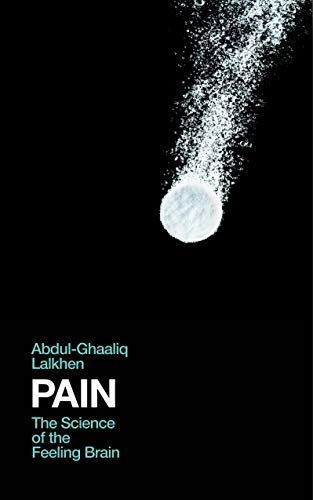 Originally from South Africa, Dr Lalkhen is an anaesthesiology and pain specialist based in Manchester. In a nutshell, his approach is “biopsychosocial,” meaning that he seeks to understand pain not just as a physical phenomenon resulting from acute injury or damage but as an ongoing process that is affected by emotional and psychological factors. Particularly in the context of chronic syndromes, he acknowledges that pain can continue even when its immediate cause has been repaired. Mental preparation can come into the equation: if a patient assumes they’ll wake up from surgery healed, they may be alarmed if pain persists. Lalkhen talks about managing patient expectations, perhaps with something as simple as the promise, “we’ll aim to get your pain down to a 4 after surgery.” In part, he blames Western society’s Cartesian philosophy for treating mind and body as separate rather than a system.
There are genetic and psychological reasons people might be predisposed to chronic pain. Pain itself can then change the brain chemistry, making the body more alert to pain signals. People can choose one of three paths, Lalkhen observes: “You can spend your time agitating about the alarm going off, you can try to ignore it (but the ignoring of it actually takes up more energy), or the final alternative is to learn to live with this deeply unpleasant situation.” Those who opt for pharmacological solutions can become addicted to opiates, which are less effective over time. Non-drug-related therapies involve the desensitization of nerves, the injection of anaesthetics or steroids, or the implanting of spinal cord stimulators. But all of these strategies have their limitations, and can diminish in efficacy. The patients he sees in his pain clinics may be disappointed that, rather than offering a panacea, he wants to wean them off their current pain relief and help them develop a new way of thinking about pain.
I felt I learned a lot from reading this. Lalkhen is careful to state that he is only referring to non-cancer pain (cancer pain in terminal patients will take all the morphine you can throw at it). Like many physicians, he worries about the modern epidemic of overtreatment and our obsession with wellness. I especially enjoyed the discussion of the understanding of pain and its treatment from the ancient world onward, and in particular the history of opiates. The prose is not literary, but this is an accessible and informational read if the subject matter draws you.
With thanks to Atlantic Books for the free copy for review.
What recent nonfiction releases can you recommend?
A Reading Malady, a Book Haul, a Book Launch, and a TBR Challenge
A bit of a miscellany today, as a placeholder until I finally have some more reviews to share.
Stuck in the Middle
 I’ve been reading up a storm in 2021, of course, but I’m having an unusual problem: I can’t seem to finish anything. Okay, I’ve finished three books so far – Intensive Care, my first read and only proper review so far of the year; In These Days of Prohibition by Caroline Bird, a surprising and funny poetry collection about mental illness and the crutches people turn to, including drugs and sex; and one more poetry book, a recent release I’ll round up later in the month – but compare that to January 2020, when I’d finished 11 books within the first 11 days. Half a month gone and I’m way behind on my Goodreads challenge already.
Most of you know that I take multi-reading to an extreme: I currently have nearly 30 books on the go, plus piles of set-aside and occasional-reading titles that I try to reintroduce a few at a time. All in all, that’s nearly 60 books I’m partway through, whether by a mere 10 pages or over 200. These stacks represent thousands of pages read, but no finished books. By the end of this month, I will at least have finished and reviewed the five more January releases, but it’s still an awfully slow start to the year for me. Maybe I’ve spread myself too thin.
Current Stars
I often stretch the definition of “currently reading” in that most days I don’t sit with every book on my stack; instead, I end up spending time with a changing subset of 10‒15. Some books I have barely touched since Christmas. But there are others that consistently hold my attention and that I look forward to reading 20 or more pages in each day. Here are some of the highlights on the pile:
 Spinster by Kate Bolick: Written as she was approaching 40, this is a cross between a memoir, a social history of unmarried women (mostly in the USA), and a group biography of five real-life heroines who convinced her it was alright to not want marriage and motherhood. First was Maeve Brennan; now I’m reading about Neith Boyce. The writing is top-notch.
 America Is Not the Heart by Elaine Castillo: Set in the 1990s in the Philippines and in the Filipino immigrant neighborhoods of California, this novel throws you into an unfamiliar culture and history right at the deep end. The characters shine and the story is complex and confident – I’m reminded especially of Chimamanda Ngozi Adichie’s work.
 Some Body to Love by Alexandra Heminsley: Finally pregnant after a grueling IVF process, Heminsley thought her family was perfect. But then her husband began transitioning. This is not just a memoir of queer family-making, but, as the title hints, a story of getting back in touch with her body after an assault and Instagram’s obsession with exercise perfection.
 The Light Years by Elizabeth Jane Howard: We’re reading the first volume of The Cazalet Chronicles for a supplementary book club meeting. I can hardly believe it was published in 1990; it’s such a detailed, convincing picture of 1937‒8 for a large, wealthy family in London and Sussex as war approaches. It’s so Downton Abbey; I love it and will continue the series.
 Outlawed by Anna North: After Reese Witherspoon chose it for her book club, there’s no chance you haven’t heard about this one. I requested it because I’m a huge fan of North’s previous novel, The Life and Death of Sophie Stark, but I’m also enjoying this alternative history/speculative take on the Western. It’s very Handmaid’s, with a fun medical slant.
 Love After Love by Ingrid Persaud: It was already on my TBR after the Faber Live Fiction Showcase in November, but my interest was redoubled by this recently winning the Costa First Novel Award. Set in Trinidad, it’s narrated, delightfully, in turn by Betty, a young widow; Solo, her teenage son; and Mr. Chetan, their lodger. Perfect for fans of Mr Loverman.
Acquiring More
Last week I ordered 21 books in one day. (In my defense, only 18 of them were for me.) It started like this: “Ah, must find a clearance 2021 calendar. Waterstones had a good selection last year…” And indeed, I found the perfect calendar, for half price. But then I continued browsing the online sale items and before I knew it there were also seven books in my basket. While I was at it, I went onto Awesomebooks.com and put together an order of secondhand books by authors I’ve been wanting to try or read more by. Add to that a couple more review books coming through the door and a couple of giveaways from neighbors (the Nicolson in the first photo, and Stoner for me to reread) and it’s been a big week for book acquisitions.


Attending a Book Launch
My fifth book launch since March 2020; my first to take place on Instagram. Hosted by Damian Barr, who runs a literary salon, it was for one I’ve already mentioned, Some Body to Love by Alexandra Heminsley, which came out on the 14th. (Barr and his husband are the book’s dedicatees.) “I am not ashamed of what happened,” she said about how her family has changed, adding that writing about such recent events has been a way of solidifying how she felt about them. Her ex has not read the book but wrote to Chatto & Windus saying she completely trusted Heminsley and consented to the publication. Some of her offers were for a more mass-market memoir about the marriage, whereas the book ended up being more diffuse, including other medical experiences and challenges to self-belief. It was amusing to hear that after the BLM movement her manuscript went through a “Karen edit” to make sure she hadn’t taken her privilege for granted.
A New TBR Challenge
“Hands. Face. Space.” is a current UK public health campaign slogan. It inspired me to trawl through my TBR shelves for appropriate covers and titles. I don’t know if I’m actually serious about reading these particular books I selected (I could have chosen any of dozens for the Face covers), but it was fun to put together the photo shoot. I had two replies from people on Twitter who came up with their own trio of titles.


And to cap off this miscellany, something non-book-related…
Top 5 albums from 2020
I originally wrote this little note for Facebook.
 Banana Skin Shoes, Badly Drawn Boy – His best since his annus mirabilis of 2002. Funky pop gems we’ve been caught dancing to by people walking past the living room window … oops! A track to try: “Is This a Dream?” (psychedelic music video)!
 Where the World Is Thin, Kris Drever – You may know him from Lau. Top musicianship and the most distinctive voice in folk. Nine folk-pop winners, including a lockdown anthem. A track to try: “I’ll Always Leave the Light On.”
 Henry Martin, Edgelarks – Mention traditional folk and I’ll usually run a mile. But the musical skill and new arrangements, along with Hannah Martin’s rich alto, hit the spot. A track to try: “Bird in a Cage.”
 Blindsided, Mark Erelli – We saw him perform the whole of his new folk-Americana album live in lockdown. Love the Motown and Elvis influences; his voice is at a peak. A track to try: “Rose-Colored Rearview.”
 American Foursquare, Denison Witmer – A gorgeous ode to family life in small-town Pennsylvania from a singer-songwriter whose career we’ve been following for upwards of 15 years. A track to try: “Birds of Virginia.”
How is your 2021 reading going?
Book Spine Poetry Strikes Again
Great minds think alike in the blogging world: last week, on the very day that Annabel posted a book spine poem, it was on my to-do list to assemble my current reading stack into a poem or two. I’d spotted some evocative and provocative titles, as well as some useful prepositions. The poems below, then, serve as a snapshot of what I’m reading at the moment, with some others from my set aside and occasional reading shelves filling in. You get a glimpse of the variety I read. (For one title in the second pile, a poetry book I’m reading on my e-reader, I had to improvise!)
My previous book spine poetry efforts are here and here (2016); and here (March 2020).
A dark one, imagining an older woman in serious condition and passing a night in a hospital bed:

Intensive Care
Complications,
Pain.
As I Lay Dying,
Owls Do Cry.
I Miss You When I Blink.
This Thing of Darkness,
Spinster Keeper,
Wrestling with the Angel.
And a more general reflection on recent times and what might keep us going:

Embers
How Should a Person Be
In These Days of Prohibition?
The Light Years
Outlawed,
The Noonday Demon.
Some Body to Love
The Still Point,
The Still Point of the Turning World.
Color and Line
A Match to the Heart.
The Bare Abundance
Love’s Work.
Unsettled Ground
The Magician’s Assistant.
Braiding Sweetgrass
Revelations of Divine Love.
Have a go at some book spine poems if you haven’t already! They’re such fun.
Review: Intensive Care by Gavin Francis
I finally finished a book in 2021! And it’s one with undeniable ongoing relevance. The subtitle is “A GP, a Community & COVID-19.” Francis, a physician who is based at an Edinburgh practice and frequently travels to the Orkney Islands for healthcare work, reflects on what he calls “the most intense months I have known in my twenty-year career.” He draws all of his chapter epigraphs from Daniel Defoe’s A Journal of the Plague Year and journeys back through most of 2020, from the day in January when he and his colleagues received a bulletin about a “novel Wuhan coronavirus” to November, when he was finalizing the book and learned of promising vaccine trials but also a rumored third wave and winter lockdown.
In February, no one knew whether precautions would end up being an overreaction, so Francis continued normal life: attending a conference, traveling to New York City, and going to a concert, pub, and restaurant. By March he was seeing more and more suspected cases, but symptoms were variable and the criteria for getting tested and quarantining changed all the time. The UK at least seemed better off than Italy, where his in-laws were isolating. Initially it was like flu outbreaks he’d dealt with before, with the main differences being a shift to telephone consultations and the “Great Faff” of donning full PPE for home visits and trips to care homes. The new “digital first” model left him feeling detached from his patients. He had his own Covid scare in May, but a test was negative and the 48-hour bug passed.
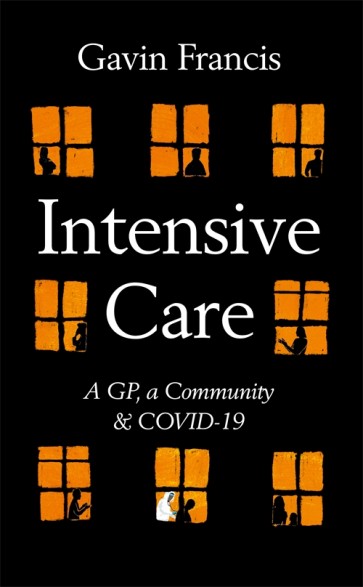 Through his involvement in the community, Francis saw the many ways in which coronavirus was affecting different groups of people. He laments the return of mental health crises that had been under control until lockdown. Edinburgh’s homeless, many in a perilous immigration situation thanks to Brexit, were housed in vacant luxury hotels. He visited several makeshift hostels, where some residents were going through drug withdrawal, and also met longtime patients whose self-harm and suicidal ideation were worsening.
Children and the elderly were also suffering. In June, he co-authored a letter begging the Scottish education secretary to allow children to return to school. Perhaps the image that will stick with me most, though, is of the confused dementia patients he met at care homes: “there was a crushing atmosphere of sadness among the residents … [they were] not able to understand why their families no longer came to visit. How do you explain social distancing to someone who doesn’t remember where they are, sometimes even who they are?”
Francis incorporates brief histories of vaccination and the discovery of herd immunity, and visits a hospital where a vaccine trial is underway. I learned some things about COVID-19 specifically: it can be called a “viral pneumonia”; it has two phases, virological (the virus makes you unwell) and immunological (the immune system misdirects messages and the lungs get worse); and it affects the blood vessels as well as the lungs, with one in five presenting with a rash and some developing chilblains in the summer. Amazingly, as the year waned, Francis only knew three patients who had died of Covid, with many more recovered. But in August, a city that should have been bustling with festival tourists was nearly empty.
Necessarily, the book ends in the middle of things; Francis has clear eyes but a hopeful heart. While this is not the first COVID-19 book I’ve encountered (that was Duty of Care by Dominic Pimenta) and will be far from the last – next up for me will be Rachel Clarke’s Breathtaking, out at the end of this month – it is an absorbing first-hand account of a medical crisis as well as a valuable memorial of a time like no other in recent history. A favorite line was “One of the few consolations of this pandemic is its grim camaraderie, a new fellowship among the fear.” Another consolation for me is reading books by medical professionals who can compassionately bridge the gap between expert opinion and everyday experience.
Intensive Care was published by the Wellcome Collection/Profile Books on January 7th. My thanks to the publisher for the free copy for review.
Gavin Francis’s other work includes:
Previously reviewed: Shapeshifters
Also owned: Adventures in Human Being
I’m keen to read: Empire Antarctica, about being the medical officer at the British research centre in Antarctica – ironically, this was during the first SARS pandemic. (In July 2020, conducting medical examinations on the next batch of scientists to ship out there, he envied them the chance to escape: “By the time they came home it would be 2022. Surely we’d have the virus under control by then?”)
Christmas and Snow Reading: George Mackay Brown & More
I’ve never had a Christmas Day without my immediate family or in-laws before, but when West Berkshire leapt into the Tier 4 (highest) COVID-19 risk category on Saturday it was clear that even our modest plans to spend 48 hours at my parents-in-law’s home by the coast would be dashed. How we’d looked forward to seeing other people and going somewhere else! Nothing dramatic; just a change of scene and an excuse to pack an overnight bag and a giant tote full of books. The bright side, if there is one, is that we can choose exactly how to spend the holidays, and my husband – a fantastic cook – will have total control over the feast.
To keep our spirits up, we’ve done more Christmas decorating than usual. Our lounge is dominated by the biggest tree we’ve had yet, there’s holly all over, and we strung colored fairy lights across one wall. After Saturday’s bad news, we brought forward our annual viewing of Elf. And of course, I have a stack of seasonally appropriate books at the ready.
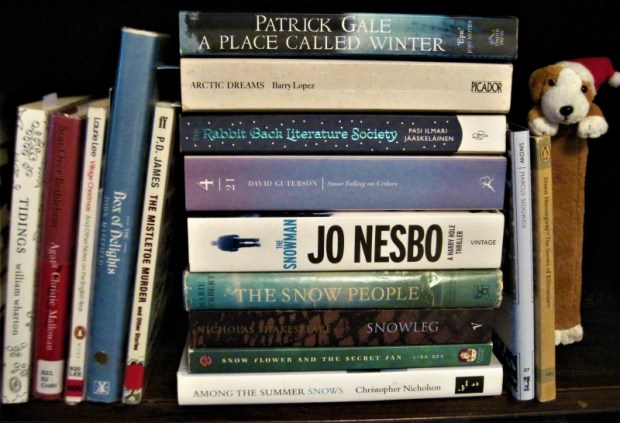
Here’s the first two I managed to read for review:
Christmas Stories by George Mackay Brown
 Many of these 30 short stories originally appeared in publications like the Scotsman, Tablet and Glasgow Herald between the 1940s and 1990s, with some also reprinted in previous Mackay Brown story volumes. This posthumous collection of seasonal tales by Orkney’s best-known writer runs the gamut from historical fiction to timeless fable, and travels from the Holy Land to Scotland’s islands. Often, Orkney is contrasted with Edinburgh, as in one of my favorites, “A Christmas Exile,” in which a boy is sent off to Granny’s house in Orkney one winter while his mother is in hospital and longs to make it home in time for Christmas.
Although the main characters are usually crofters, fishermen and lairds, they take on other roles in Nativity and Christmas Carol-like setups. For instance, a skipper, a miller, and a shepherd play the part of the Three Kings, while a greedy general merchant who won’t close his shop for Christmas Day is like Ebenezer Scrooge. Biblical and Dickensian figures merge in “An Epiphany Tale,” in which a deaf-blind-mute boy is visited by three strangers who give him back each of his senses, in turn, for one magical day. Characters get visions of the past or glimpses of how the other half live (“The Poor Man in His Castle”). Children are disabused of the idea of Santa Claus, but the unexplained still fuels a sense of wonder, as in Jeanette Winterson’s holiday stories. Even the poor have small gifts and pleasures to look forward to.
As editor William S. Peterson notes in his introduction, Calvinism had erased much of the joy from Christmas in Scotland, but in Mackay Brown’s lifetime he saw Yule traditions returning and was keen to emphasize that Christmas was not just about one day of celebration but was a whole season running from Advent through to Epiphany. The story “I Saw Three Ships…” remembers an oppressed past, though: set at the end of the Civil War, after King Charles I was beheaded, it is set at a time when the government declared “‘There will be no more Christmas. Christmas is abolished and forbid in the islands here, as it has been put down everywhere in this commonwealth. We will have no more of such ancient mummery.’ … Men reckoned that that was the longest coldest dreichest winter ever known in Orkney.” Those words might feel gloomily appropriate, but let’s celebrate all the more in defiance.
With thanks to Galileo Publishers for the free copy for review.
Fifty Words for Snow by Nancy Campbell
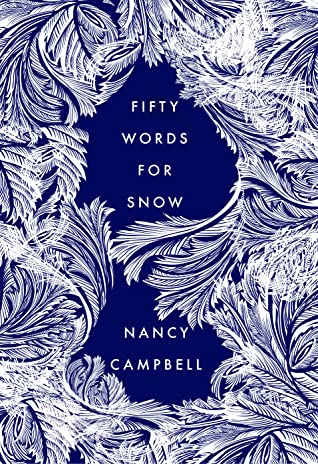 Words for snow exist in most of the world’s languages – even those spoken in countries where it rarely, if ever, snows. For instance, Thai has “hima” at the ready even though there were only once claims of a snow flurry in Thailand, in 1955. Campbell meanders through history, legend, and science in these one- to five-page essays. I was most taken by the pieces on German “kunstschnee” (the fake snow used on movie sets), Icelandic “hundslappadrifa” (snowflakes big as a dog’s paw, a phrase used as a track title on one of Jónsi’s albums – an excuse for discussing the amazing Sigur Rós), and Estonian “jäätee” (the terrifying ice road that runs between the mainland and the island of Hiiumaa – only when the ice is 22 cm thick, and with cars traveling 2 minutes apart and maintaining a speed of 25–40 km/hour).
The white and blue tendrils of the naked hardback’s cover creep over onto the endpapers, each essay is headed by a Wilson Bentley photograph of a snowflake, and the type is in a subtle dark blue ink rather than black. Too many of the essays are thin or dull, such that the contents don’t live up to the gorgeous physical object they fill. Still, I imagine you have a snow-loving relative who would appreciate a copy as a seasonal coffee table book.
With thanks to Elliott & Thompson for the free copy for review.
And a bonus:
“The Burglar’s Christmas” by Willa Cather (1896)
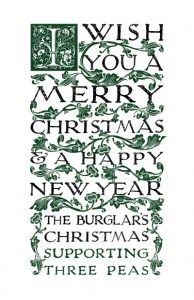 This Renard Press pamphlet supporting the Three Peas charity (in aid of Europe’s refugees) was sent to me as a Christmas card alternative by Annabel/Shiny New Books. A young man wanders the slushy streets of Chicago one Christmas Eve. On this, his 24th birthday, he laments how low he has sunk that he has to rob the rich in order to get money to eat. But in this take on the Prodigal Son story, there is a second chance at forgiveness and a good life. I was reminded of the high society atmosphere of Edith Wharton’s work and the moral fables of O. Henry. The lovely little story has a William Morris design on the cover. I’ll keep it with my small collection of Christmas books and bring it out to reread in future years.
Are you reading any Christmas or wintry books?
What are your plans for the holidays?
Recent Reviews for Shiny New Books: Poetry, Fiction and Nature Writing
First up was a rundown of my five favorite poetry releases of the year, starting with…
Dearly by Margaret Atwood
 Dearly is a treasure trove, twice the length of the average poetry collection and rich with themes of memory, women’s rights, environmental crisis, and bereavement. It is reflective and playful, melancholy and hopeful. I can highly recommend it, even to non-poetry readers, because it is led by its themes; although there are layers to explore, these poems are generally about what they say they’re about, and more material than abstract. Alliteration, repetition, internal and slant rhymes, and neologisms will delight language lovers and make the book one to experience aloud as well as on paper. Atwood’s imagery ranges from the Dutch masters to The Wizard of Oz. Her frame of reference is as wide as the array of fields she’s written in over the course of over half a century.
I’ll let you read the whole article to discover my four runners-up. (They’ll also be appearing in my fiction & poetry best-of post next week.)
Next was one of my most anticipated reads of the second half of 2020. (I was drawn to it by Susan’s review.)
Artifact by Arlene Heyman
 Lottie’s story is a case study of the feminist project to reconcile motherhood and career (in this case, scientific research). In the generic more than the scientific meaning of the word, the novel is indeed about artifacts – as in works by Doris Lessing, Penelope Lively and Carol Shields, the goal is to unearth the traces of a woman’s life. The long chapters are almost like discrete short stories. Heyman follows Lottie through years of schooling and menial jobs, through a broken marriage and a period of single parenthood, and into a new relationship. There were aspects of the writing that didn’t work for me and I found the book as a whole more intellectually noteworthy than engaging as a story. A piercing – if not notably subtle – story of women’s choices and limitations in the latter half of the twentieth century. I’d recommend it to fans of Forty Rooms and The Female Persuasion.
Finally, I contributed a dual review of two works of nature writing that would make perfect last-minute Christmas gifts for outdoorsy types and/or would be perfect bedside books for reading along with the English seasons into a new year.
The Stubborn Light of Things by Melissa Harrison
 This collects five and a half years’ worth of Harrison’s monthly Nature Notebook columns for The Times. The book falls into two rough halves, “City” and “Country”: initially based in South London, Harrison moved to the Suffolk countryside in late 2017. In the grand tradition of Gilbert White, she records when she sees her firsts of a year. Often, she need look no further than her own home and garden. I appreciated how hands-on and practical she is: She’s always picking up dead animals to clean up and display the skeletons, and she never misses an opportunity to tell readers about ways they can create habitat for wildlife (e.g. bat and bird nest boxes that can be incorporated into buildings) and get involved in citizen science projects like moth recording.
The book’s final two entries were set during the UK’s first COVID-19 lockdown in spring 2020 – a notably fine season. This inspired me to review it alongside…
The Consolation of Nature by Michael McCarthy, Jeremy Mynott and Peter Marren
 A tripartite diary of the coronavirus spring kept by three veteran nature writers based in southern England (all of them familiar to me through their involvement with New Networks for Nature and its annual Nature Matters conferences). The entries, of a similar length to Harrison’s, are grouped into chronological chapters from 21 March to 31 May. While the authors focus in these 10 weeks on their wildlife sightings – red kites, kestrels, bluebells, fungal fairy rings and much more – they also log government advice and death tolls. They achieve an ideal balance between current events and the timelessness of nature, enjoyed all the more in 2020’s unprecedented spring because of a dearth of traffic noise.
Miscellaneous Novellas: Murdoch, Read & Spark; Comics; Art Books
Novellas in November will be coming to a close on Monday and has been a great success in terms of blogger engagement. I’ve been adding review links to the master post nearly every day of the month, and I’m sure there are some I have missed. Although I still have a couple of novellas on the go, I don’t see myself finishing them this month, so I’m going to end with this set: three short classics to continue the week’s theme, two graphic novels, and a pair of nature/art/music/poetry books.
Classics:
Something Special by Iris Murdoch (1957)
[51 pages]
 A Murdoch rarity, this appeared in a 1950s anthology and in an English-language textbook in Japan, but was not otherwise published in the author’s lifetime. I think it’s her only short story. I’m counting it as a novella because it was published as a stand-alone volume by Vintage Classics in 2000. Twenty-four-year-old Yvonne Geary doesn’t know precisely what she wants from life, but hopes there might be more for her than a conventional marriage to Sam, her beau. “Can’t I live my life as I please since it’s the only thing I have?” she asks her hen-pecking mother. “I can’t see him as something special and I won’t marry him if I can’t.” Maybe she’ll escape to England. But for now she’s off for a night on the town in Dublin with Sam, going from a rowdy pub to the quiet of a locked-up park. Sam may be dull, but he seems sensitive, solicitous and well-meaning. Yvonne’s feelings for him flip-flop over the course of the evening. I’ve noticed before that Murdoch is a bit funny about Jewishness, but this is still a brisk, bittersweet story in the direct lineage of Sally Rooney’s Normal People. (With striking black-and-white woodcut-style illustrations by Michael McCurdy.)
The Fairacre Festival by ‘Miss Read’ (1968)
[80 pages]
 I’m not sure why I’d never tried anything by ‘Miss Read’ (the pseudonym of Dora Jessie Saint, a teacher turned author who was based not far from me in Berkshire) until now. She wrote two series of quaint novels set in the fictional villages of Fairacre and Thrush Green; this is #7 in the Fairacre series. Miss Read, her narrator, is a schoolteacher who records her wry observations of all the local happenings. After an autumn storm damages the church roof, the parishioners are dismayed to learn the renovations could cost £2000. No amount of jumble sales, concerts and tea dances will raise that much. So they set their sights higher, to an Edinburgh-style festival with a light show and an appearance from a famous opera singer. But it’s not going to be smooth sailing now, is it? This was cozy, quaint fun, and if I wished it had been a full-length book, that means I’ll just have to begin at the beginning with 1955’s Village School.
The Driver’s Seat by Muriel Spark (1970)
[107 pages]
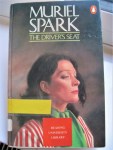 Lise has her “glad rags” on – bright new clothes in clashing patterns that strangers can’t help commenting on. The 34-year-old single woman has worked in an accounting office for the last 16 years and is now off to the South (Italy?) for a long-awaited vacation. This will be no blissful holiday, though. Just 11 pages in, we get our first hint that things are going to go wrong, and in the opening line of Chapter 3 Spark gives the game away. Clearly, her intention is to subordinate what happens to why it happens, so the foreshadowing of the early chapters is twisted to ironic effect later on. Lise is an unappealing character, haughty and deceitful, and the strangers she meets on the flight and at the hotel, including a man obsessed with the macrobiotic diet, are little better. I felt I didn’t have enough time to change my mind about Lise before we’re asked to have pity. Of course, this is meant to be a black comedy, but it was a little abrasive for my taste. This was my third and probably last from Spark, as I haven’t particularly enjoyed any of her work; I do love this pithy description of The Ballad of Peckham Rye, though: “An entertaining tale of satanism in South London.”
Graphic Novels:
Why Don’t You Write My Eulogy Now So I Can Correct It? A Mother’s Suggestions by Patricia Marx, illus. Roz Chast (2019)
[81 pages]
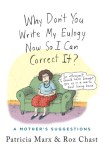 I loved Chast’s graphic memoir Can’t We Talk about Something More Pleasant? and figured this would have the same witty approach to an elderly parent’s decline. Apart from a brief introduction to her mother (from Philadelphia, outspoken, worked as a guidance counselor and for her husband’s office supplies company), there is hardly any text; the rest is just illustrated one-liners, sayings her mother had or opinions she espoused. Many of these have to do with fashion no-nos, dinner party etiquette, grammar pedantry, avoiding the outdoors and exercise, and childrearing. “My mother never hesitates to say what other mothers would not even think to think. She calls it constructive criticism.” She reminds me of Bess Kalb’s grandmother in Nobody Will Tell You This but Me, an overall much funnier and more complete picture of an entertaining figure.
The Exciting World of Churchgoing by Dave Walker (2010)
[90 pages]
 A third set of Church Times comics, not as memorable as the original Dave Walker Guide to the Church. Once again, Walker pokes fun at bureaucracy, silly traditions, closed-mindedness, and the oddities of church buildings and parishioners’ habits. You really need to be familiar with the UK churchgoing scene, and specifically with Anglican churches, to get much out of the cartoons. I loved “According to legend, there is a lady who changes the teatowels in the church kitchen from time to time” and the “Infestations” spread that starts with bats and wasps and moves on to Charismatics. Most striking are two pages on church proceedings during swine flu – what was meant to be a joke doesn’t seem so funny now that it literally describes in-person services during COVID-19: “Shaking hands during the peace should be replaced by a friendly wave,” “Administration of anti-bacterial gel should take place,” etc.
Art Books:
The Lost Words: A Spell Book by Robert Macfarlane, illus. Jackie Morris (2017)
[112 pages]
 Macfarlane’s work has been hit or miss for me and I was suspicious of this project in general, thinking it would be twee or juvenile, but the beauty of the artwork and playful energy of the poems won me over. It’s common knowledge that this book arose as a response to news that many words to do with nature had been removed from the latest version of a junior dictionary published in the UK, to be replaced by technology vocabulary. Macfarlane spotlights these omitted words through acrostic poems alive with alliteration (“Fern’s first form is furled, / Each frond fast as a fiddle-head”), wordplay and internal rhymes. He peppers in questions, both rhetorical and literal-minded, and exclamations. Conker, Dandelion, Lark and Otter are highlights. Morris’s wildlife paintings are superb, with a Giotto-like gilt portrait facing each poem and two-page in situ tableaux in between.
The Lost Words Spell Songs (2019)
[112 pages]
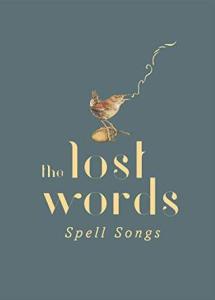 I followed up immediately with this companion book to the 14-track album a group of eight folk musicians made in response to The Lost Words. We were already fans of Kris Drever (mostly via Lau), Karine Polwart and Beth Porter (via the Bookshop Band), and became familiar with a few more of the artists (Kerry Andrew, Julie Fowlis and Rachel Newton) earlier this year through the online Folk on Foot festivals. This volume includes six additional poems, four of which directly inspired songs on the album, plus brief bios and words on the project from each artist (each portrayed by Morris as a relevant bird, with the musician serving as the “spirit human” for the bird) the complete lyrics with notes from whoever took the lead on a particular song, and short essays by Macfarlane, Morris (also an interview) and Polwart.
It was interesting to compare the different approaches to the project: five songs directly set Macfarlane’s poetry to music, two of them primarily in spoken word form; five are based on Macfarlane “extras,” like the new spells and the “charm against harm” he wrote during anti-tree felling campaigns like the one in Sheffield; a few are essentially pop songs based around major lines from Dandelion, Goldfinch and Lark (these plus “Selkie-Boy,” based on Grey Seal, ended up being my favorites); one is a traditional song from Seckou Keita’s native Senegal that also incorporates the bilingual Fowlis’s Gaelic to mourn the words that are lost with the past; and one is a final blessing song that weaves in bits from multiple spells. The artists all bring their individual styles, but the collaborations are strong, too.

Are you squeezing in any more novellas this month?
Do you like the sound of any of the ones I’ve read?
Being the Expert for #NonficNov / Three on a Theme: “Care”
The Being/Becoming/Asking the Expert week of the month-long Nonfiction November challenge is hosted by Rennie of What’s Nonfiction. This is my second entry for the week after Monday’s post on postpartum depression, as well as the second installment in my new “Three on a Theme” series, where I review three books that have something significant in common and tell you which one to pick up if you want to read into the topic for yourself.

It will be no surprise to regular readers that both of my ‘expert’ posts have been on a health theme: I have an amateur’s love of medical memoirs and works of medical history, and I’ve followed the Wellcome Book Prize closely for a number of years – participating in official blog tours, creating a shadow panel, and running this past year’s Not the Wellcome Prize.
The three books below are linked by the word “Care” in the title or subtitle; all reflect, in the wake of COVID-19, on the ongoing crisis in UK healthcare and the vital role of nurses.
Labours of Love: The Crisis of Care by Madeleine Bunting
 Bunting’s previous nonfiction work could hardly be more different: Love of Country was a travel memoir about the Scottish Hebrides. It was the first book I finished reading in 2017, and there could have been no better start to a year’s reading. With a background in history, journalism and politics, the author is well placed to comment on current events. Labours of Love arose from five years of travel to healthcare settings across the UK: care homes for the elderly and disabled, hospitals, local doctors’ surgeries, and palliative care units. Forget the Thursday-night clapping and rainbows in the windows: the NHS is perennially underfunded and its staff undervalued, by conservative governments as well as by people who rely on it.
We first experience bodily care as infants, Bunting notes, and many of the questions that run through her book originated in her early days of motherhood. Despite all the advances of feminism, parental duties follow the female-dominated pattern evident in the caring careers:
By the age of fifty-nine, women will have a fifty-fifty chance of being, or having been, a carer for a sick or elderly person. At the same time, many are still raising their teenage children and almost half of those over fifty-five are providing regular care for grandchildren.
Women dominate caring professions such as nursing (89 per cent), social work (75 per cent) and childcare (98 per cent). They now form the majority of GPs (54 per cent) and three out of four teachers are female. And they provide the vast bulk of the army of healthcare workers in the NHS (80 per cent) and social-care workers (82 per cent) for the long-term sick, disabled and frail elderly.
These are things we know intuitively, but seeing the numbers laid out so plainly is shocking. I most valued the general information in Bunting’s introduction and in between her interviews, while I found that the bulk of the book alternated between dry statistics and page after page of interview transcripts. However, I did love hearing more from Marion Coutts, the author of the 2015 Wellcome Book Prize winner, The Iceberg, about her husband’s death from brain cancer. (Labours of Love was longlisted for the Baillie Gifford Prize for Non-Fiction 2020.)
My thanks to Granta for the free copy for review.
Duty of Care: One NHS Doctor’s Story of Courage and Compassion on the COVID-19 Frontline by Dr Dominic Pimenta
 We’re going to see a flood of such books; I’m most looking forward to Dr Rachel Clarke’s Breathtaking (coming in January). Given how long it takes to get a book from manuscript to published product, I was impressed to find this on my library’s Bestsellers shelf in October. Pimenta’s was an early voice warning of the scale of the crisis and the government’s lack of preparation. He focuses on a narrow window of time, from February – when he encountered his first apparent case of coronavirus – to May, when, in protest at a government official flouting lockdown (readers outside the UK might not be familiar with the Cummings affair), he resigned his cardiology job at a London hospital to focus on his new charity, HEROES, which supports healthcare workers via PPE, childcare grants, mental health help and so on.
It felt uncanny to be watching events from earlier in the year unfold again: so clearly on a trajectory to disaster, but still gripping in the telling. Pimenta’s recreated dialogue and scenes are excellent. He gives a real sense of the challenges in his personal and professional lives. But I think I’d like a little more distance before I read this in entirety. Just from my skim, I know that it’s a very fluid book that reads almost like a thriller, and it ends with a sober but sensible statement of the situation we face. (All royalties from the book go to HEROES.)
The Courage to Care: A Call for Compassion by Christie Watson
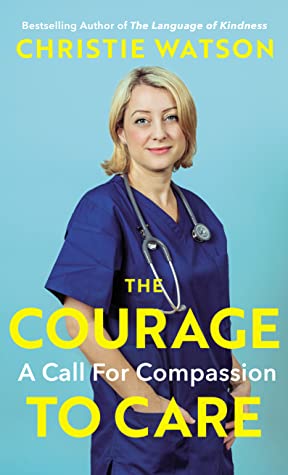 I worried this would be a dull work of polemic; perhaps the title, though stirring, is inapt, as the book is actually a straightforward sequel to Watson’s 2018 memoir about being a nurse, The Language of Kindness. Although, like Bunting, Watson traveled widely to research the state of care in the country, she mostly relies on her own experience of various nursing settings over two decades: a pediatric intensive care unit, home healthcare for the elderly, a children’s oncology day center, a residential home for those with severe physical and learning disabilities, a community mental-health visiting team, and the emergency room. She also shadows military nurses and prison doctors.
With a novelist’s talent for scene-setting and characterization, Watson weaves each patient and incident into a vibrant story. Another strand is about parenthood: giving birth to her daughter and the process of adopting her son – both are now teenagers she raises as a single mother. She affirms the value of everyday care delivered by parents and nurses alike. I was especially struck by the account of a teenage girl who contracted measles (then pneumonia, meningitis and encephalitis) and was left blind and profoundly disabled, all because her parents were antivaxxers. In general, I’ve wearied of doctors’ memoirs composed of obviously anonymized case studies, but I’ll always make an exception for Clarke and Watson because of their gorgeous writing.
Note: Watson had left nursing to write full-time, but explains in an afterword that she returned to critical care in a London hospital during COVID-19.
What I learned:
Empathy is a key term for all three authors. They emphasize that the skills of compassion and listening are just as important as the ability to perform the required medical procedures.
A chilling specific fact I learned: 43,000 people died in the Blitz* in the UK. Pimenta cited that figure and warned that COVID-19 could be worse. And indeed, as of now, over 63,000 people have died of COVID-19 in the UK. The American death toll is even more alarming.
Here are some passages that stood out for me from each book:
Bunting: “Good care is as much an art as a skill, as much competence as tact. … Care is where we make profound collective decisions about the worth of an individual life. … There is no tradition of ageing wisely in the West, unlike in many Asian and African cultures where age has prestige, status and is associated with wisdom … We need to speak about care in a different language, instead of the relentless macho repetition of words such as ‘efficiency’, ‘quality’, ‘driving’, ‘choice’, ‘delivery’ and productivity.’”
Pimenta: “this will be akin to the Blitz*, and … we need to start thinking of it like that. A marathon, not a sprint. … The challenges to come – a second or even third wave, a global recession, climate change, mass misinformation … and political and societal upheaval … – will all require more from all of us if we hope to meet them. The challenge of our generation is not behind us, it is only just beginning. I plan to continue doing something about it, and perhaps now you do as well. So stay informed, stay safe and be kind.”
Watson: “So much of nursing, I think to myself, seems obvious, and yet seeing that need in the first place is difficult and takes experience, training and something extra. … The mundanity of human existence is where I find the most beauty … It takes my breath away: how fragile, extraordinary and vulnerable, how full of hatred and love and obsession and complexity we all are – every single one of us.”
*I highly recommend all of folk artist Kris Drever’s latest album, Where the World Is Thin, but especially the song “Hunker Down / That Old Blitz Spirit,” which has become my lockdown anthem.

If you read just one, though… Make it The Courage to Care by Christie Watson.
Can you see yourself reading any of these books?
Wigtown Book Festival 2020: The Bookshop Band, Bythell, O’Connell & Stuart
During the coronavirus pandemic, we have had to take small pleasures where we can. One of the highlights of lockdown for me has been the chance to participate in literary events like book-themed concerts, prize shortlist announcements, book club discussions, live literary award ceremonies and book festivals that time, distance and cost might otherwise have precluded.
In May I attended several digital Hay Festival events, and this September to early October I’ve been delighted to journey back to Wigtown, Scotland – even if only virtually.
The Bookshop Band
The Bookshop Band have been a constant for me this year. After watching their 21 Friday evening lockdown shows on Facebook, as well as a couple of one-off performances for other festivals, I have spent so much time with them in their living room that they feel more like family than a favorite band. Add to that four of the daily breakfast chat shows from the Wigtown Book Festival and I’ve seen them play over 25 times this year already!
(The still below shows them with, clockwise from bottom left, guests Emma Hooper, Stephen Rutt and Jason Webster.)

Ben and Beth’s conversations with featured authors and local movers and shakers, punctuated by one song per guest, were pleasant to have on in the background while working. The songs they performed were, ideally, written for those authors’ books, but other times just what seemed most relevant; at times this was a stretch! I especially liked seeing Donal Ryan, about whose The Spinning Heart they’ve recently written a terrific song; Kate Mosse, who has been unable to write during lockdown so (re)read 200 books instead, including all of Agatha Christie, Ngaio Marsh et al.; and Ned Beauman, who is nearing the deadline for his next novel, a near-future story of two scientists looking for traces of the venomous lumpsucker (a made-up fish) in the Baltic Sea. Closer to science fiction than his previous work, it’s a funny take on extinctions, he said. I’ve read all of his published work, so I’m looking forward to this one.
Shaun Bythell
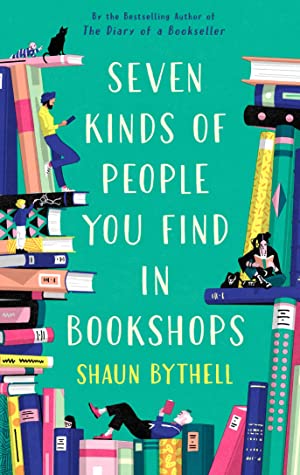 The opening event of the Festival was an in-person chat between Lee Randall and Shaun Bythell in Wigtown, rather than the split-screen virtual meet-ups that made up the rest of my viewing. Bythell, owner of The Book Shop, has become Wigtown’s literary celebrity through The Diary of a Bookseller and its sequel. In early November he has a new book coming out, Seven Kinds of People You Find in Bookshops. I’m halfway through it and it has more substance than its stocking-stuffer dimensions would imply. Within his seven categories are multiple subcategories, all given tongue-in-cheek Latin names, as if he’s naming species.
The Book Shop closed for 116 days during COVID-19: the only time in more than 40 years that it has been closed for longer than just over the Christmas holidays. He said that it has been so nice to see customers again; they’ve been a ray of sunshine for him, something the curmudgeon would never usually say! Business has been booming since his reopening, with Agatha Christie his best seller – it’s not just Mosse who’s turning to cozy mysteries. He’s also been touched by the kindness of strangers, such as one from Monaco who sent him £300, having read an article by Margaret Atwood about how hard it is for small businesses just now and hoping it would help the shop survive until they could get there in person.
(Below: Bythell on his 50th birthday, with Captain the cat.)

Randall and Bythell discussed a few of the types of customers he regularly encounters. One is the autodidact, who knows more than you and intends for you to know it. This is not the same, though, as the expert who actually helps you by sharing their knowledge (of a rare cover version on an ordinary-looking crime paperback, for instance). There’s also the occultists, the erotica browsers, the local historians and the young families – now that he has one of his own, he’s become a bit more tolerant.
Mark O’Connell
 Appearing from Dublin, Mark O’Connell was interviewed by Scottish writer and critic Stuart Kelly about his latest book, Notes from an Apocalypse (my review). He noted that, while all authors hope their books are timely, perhaps he overshot with this one! The book opens with climate change as the most immediate threat, yet now he feels that “has receded as the locus of anxiety.” O’Connell described the “flattened” experience of being alive at the moment and contrasted it with the existential awfulness of his research travels. For instance, he read a passage from the book about being at an airport Yo Sushi! chain and having a vision of horror at the rampant consumerism its conveyor belt seemed to represent.
Kelly characterized O’Connell’s personal, self-conscious approach to the end of the world as “brave,” while O’Connell said, “in terms of mental health, I should have chosen any other topic!” Having children creates both vulnerability and possibility, he contended, and “it doesn’t do you any good as a parent to indulge in those predilections [towards extreme pessimism].” They discussed preppers’ white male privilege, New Zealand and Mars as havens, and Greta Thunberg and David Attenborough as saints of the climate crisis.

O’Connell pinpointed Dr. Seuss’s The Lorax as the work he spends more time on in his book than any other; none of your classic nihilist literature here, and he deliberately avoided bringing up biblical references in his secular approach. In terms of the author he’s reached for most over the last few years, and especially during lockdown, it’s got to be Annie Dillard. Speaking of the human species, he opined, “it should not be unimaginable that we should cease to exist at some point.”
This talk didn’t add much to my experience of reading the book (vice versa would probably be true, too – I got the gist of Roman Krznaric’s recent thinking from his Hay Festival talk and so haven’t been engaging with his book as much as I’d like), but it was nice to see O’Connell ‘in person’ since he couldn’t make it to the 2018 Wellcome Book Prize ceremony.
Douglas Stuart
Glasgow-born Douglas Stuart is a fashion designer in New York City. Again the interviewer was Lee Randall, an American journalist based in Edinburgh – she joked that she and Stuart have swapped places. Stuart said he started writing his Booker-shortlisted novel, Shuggie Bain, 12 years ago, and kept it private for much of that time. Although he and Randall seemed keen to downplay how autobiographical the work is, like his title character, Stuart grew up in 1980s Glasgow with an alcoholic single mother. As a gay boy, he felt he didn’t have a voice in Thatcher’s Britain. He knew many strong women who were looked down on for being poor.
 It’s impossible to write an apolitical book about poverty (or a Glasgow book without dialect), Stuart acknowledged, yet he insisted that the novel is primarily “a portrait of two souls moving through the world,” a love story about Shuggie and his mother, Agnes. The author read a passage from the start of Chapter 2, when readers first meet Agnes, the heart of the book. Randall asked about sex as currency and postulated that all Agnes – or any of these characters; or any of us, really – wants is someone whose face lights up when they see you.
The name “Shuggie” was borrowed from a small-town criminal in his housing scheme; it struck him as ironic that a thug had such a sweet nickname. Stuart said that writing the book was healing for him. He thinks that men who drink and can’t escape poverty are often seen as loveable rogues, while women are condemned for how they fail their children. Through Agnes, he wanted to add some nuance to that double standard.
The draft of Shuggie Bain was 900 pages, single-spaced, but his editor helped him cut it while simultaneously drawing out the important backstories of Agnes and some other characters. He had almost finished his second novel by the time Shuggie was published, so he hopes it will be with readers soon.
[I have reluctantly DNFed Shuggie Bain at p. 100, but I’ll keep my proof copy on the shelf in case one day I feel like trying it again – especially if, as seems likely, it wins the Booker Prize.]
 Bookish Beck = Rebecca Foster. American transplant to England. Freelance proofreader and book reviewer.
 Bookish Beck