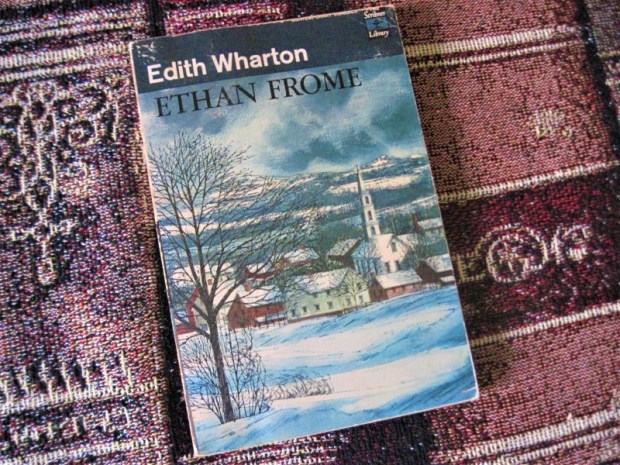
Ethan Frome by Edith Wharton (#NovNov Classics Week Buddy Read)
For the short classics week of Novellas in November, our buddy read is Ethan Frome by Edith Wharton (1911). You can download the book for free from Project Gutenberg here if you’d still like to join in.
Did you have to read Ethan Frome in school? For American readers, it’s likely that it was an assigned text in high school English. I didn’t happen to read it during my school days, but caught up in 2006 or 2008, I think, and was impressed with this condensed tragedy and the ambiance of a harsh New England winter. It struck me even more on a reread as a flawless parable of a man imprisoned by circumstance and punished for wanting more.
I had forgotten that the novella is presented as a part-imagined reconstruction of the sad events of Ethan Frome’s earlier life. A quarter-century later, the unnamed narrator is in Wharton’s fictional Starkfield, Massachusetts on business, and hears the bare bones of Ethan’s story from various villagers before meeting the man himself. Ethan, who owns a struggling sawmill, picks up extra money from odd jobs. He agrees to chauffeur the narrator to engineering projects in his sleigh, and can’t conceal his jealousy at a technical career full of travel – a reminder of what could have been had he been able to continue his own scientific studies. A blizzard forces the narrator to stay overnight in Ethan’s home, and the step over the threshold sends readers back in time to when Ethan was a young man of 28.
*There are SPOILERS in the following.*
Ethan’s household contains two very different women: his invalid wife, Zeena, eight years his elder; and her cousin, Mattie Silver, who serves as her companion and housekeeper. Mattie is dreamy and scatter-brained – not the practical sort you’d want in a carer role, but she had nowhere else to go after her parents’ death. She has become the light of Ethan’s life. By contrast, Zeena is shrewish, selfish, lazy and gluttonous. Wharton portrays her as either pretending or exaggerating about her chronic illness. Zeena has noticed that Ethan has taken extra pains with his appearance in the year since Mattie came to live with them, and conspires to get rid of Mattie by getting a new doctor to ‘prescribe’ her a full-time servant.
The plot turns on an amusing prop, “Aunt Philura Maple’s pickle-dish.” While Zeena is away for her consultation with Dr. Buck, Ethan and Mattie get one evening alone together. Mattie lays the table nicely with Zeena’s best dishes from the china cabinet, but at the end of their meal the naughty cat gets onto the table and knocks the red glass pickle dish to the floor, where it smashes. Before Ethan can obtain glue to repair it in secret, Zeena notices and acts as if this never-used dish was her most prized possession. She and Ethan are both to have what they most love taken away from them – but at least Ethan’s is a human being.
I had remembered that Ethan fell in love with a cousin (though I thought it was his cousin) and that there is a dramatic sledding accident. What I did not remember, however, was that the crash is deliberate: knowing they can never act on their love for each other, Mattie begs Ethan to steer them straight into the elm tree mentioned twice earlier. He dutifully does so. I thought I recalled that Mattie dies, while he has to live out his grief ever more. I was gearing myself up to rail against the lingering Victorian mores of the time that required the would-be sexually transgressing female to face the greatest penalty. Instead, in the last handful of pages, Wharton delivers a surprise. When the narrator enters the Frome household, he meets two women. One is chair-bound and sour; the other, tall and capable, bustles about getting dinner ready. The big reveal, and horrible irony, is that the disabled woman is Mattie, made bitter by suffering, while Zeena rose to the challenges of caregiving.
Ethan is a Job-like figure who lost everything that mattered most to him, including his hopes for the future. Unlike the biblical character, though, he finds no later reward. “Sickness and trouble: that’s what Ethan’s had his plate full up with, ever since the very first helping,” as one of the villagers tells the narrator. “He looks as if he was dead and in hell now!” the narrator observes. This man of sorrow is somehow still admirable: he and Zeena did the right thing in taking Mattie in again, and even when at his most desperate Ethan refused to swindle his customers to fund an escape with Mattie. In the end, Mattie’s situation is almost the hardest to bear: she only ever represented sweetness and love, and has the toughest lot. In some world literature, e.g. the Russian masters, suicide might be rendered noble, but here its attempt warrants punishment.
{END OF SPOILERS.}
I can see why some readers, especially if encountering this in a classroom setting, would be turned off by the bleak picture of how the universe works. But I love me a good classical tragedy, and admired this one for its neat construction, its clever use of foreshadowing and dread, its exploration of ironies, and its use of a rustic New England setting – so much more accessible than Wharton’s usual New York City high society. The cozy wintry atmosphere of Little Women cedes to something darker and more oppressive; “Guess he’s been in Starkfield too many winters,” a neighbor observes of Ethan. I could see a straight line from Jude the Obscure through Ethan Frome to The Great Gatsby: three stories of an ordinary, poor man who pays the price for grasping for more. I reread this in two sittings yesterday morning and it felt to me like a perfect example of how literature can encapsulate the human condition.
(Secondhand purchase) [181 pages]
My original rating (c. 2008): 
My rating now: 
Keep in touch via Twitter (@bookishbeck / @cathy746books) and Instagram (@bookishbeck / @cathy_746books), using the hashtag #NovNov. We’ll add any of your review links in to our master posts.
Get Ready for Novellas in November!
Novellas: “all killer, no filler”
~Joe Hill
For the second year in a row, Cathy of 746 Books and I are co-hosting Novellas in November as a month-long challenge with four weekly prompts.

New this year: each week we will take it in turns to host a “buddy read” of a featured book we hope you will join in reading. We’re announcing the challenge early to give you plenty of time to get your stack ready.
(We suggest 150–200 pages as the upper limit for a novella, and post-1980 as a definition of “contemporary.”)
1–7 November: Contemporary fiction (Cathy)
Open Water by Caleb Azumah Nelson – including a giveaway of a signed copy!
8–14 November: Short nonfiction (Rebecca)
The Story of My Life by Helen Keller (free to download here from Project Gutenberg. Note: only the first 85 pages constitute her memoir; the rest is letters and supplementary material.)
15–21 November: Literature in translation (Cathy)
Territory of Light by Yuko Tsushima
22–28 November: Short classics (Rebecca)
Ethan Frome by Edith Wharton (free to download here from Project Gutenberg)

We’re looking forward to having you join us! Keep in touch via Twitter (@bookishbeck / @cathy746books) and Instagram (@bookishbeck / @cathy_746books) and feel free to use the terrific feature images Cathy has made and the hashtag #NovNov.
Christmas and Snow Reading: George Mackay Brown & More
I’ve never had a Christmas Day without my immediate family or in-laws before, but when West Berkshire leapt into the Tier 4 (highest) COVID-19 risk category on Saturday it was clear that even our modest plans to spend 48 hours at my parents-in-law’s home by the coast would be dashed. How we’d looked forward to seeing other people and going somewhere else! Nothing dramatic; just a change of scene and an excuse to pack an overnight bag and a giant tote full of books. The bright side, if there is one, is that we can choose exactly how to spend the holidays, and my husband – a fantastic cook – will have total control over the feast.
To keep our spirits up, we’ve done more Christmas decorating than usual. Our lounge is dominated by the biggest tree we’ve had yet, there’s holly all over, and we strung colored fairy lights across one wall. After Saturday’s bad news, we brought forward our annual viewing of Elf. And of course, I have a stack of seasonally appropriate books at the ready.
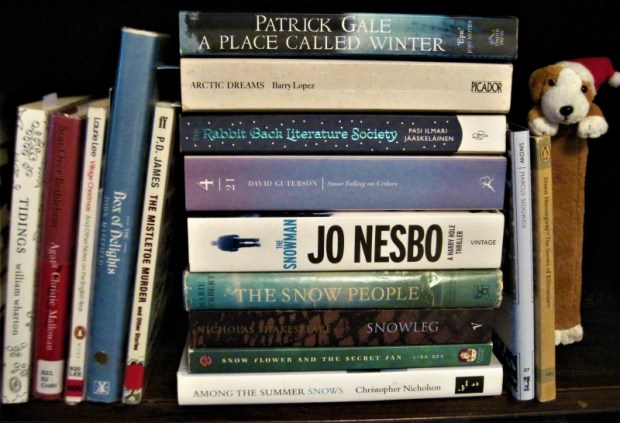
Here’s the first two I managed to read for review:
Christmas Stories by George Mackay Brown
 Many of these 30 short stories originally appeared in publications like the Scotsman, Tablet and Glasgow Herald between the 1940s and 1990s, with some also reprinted in previous Mackay Brown story volumes. This posthumous collection of seasonal tales by Orkney’s best-known writer runs the gamut from historical fiction to timeless fable, and travels from the Holy Land to Scotland’s islands. Often, Orkney is contrasted with Edinburgh, as in one of my favorites, “A Christmas Exile,” in which a boy is sent off to Granny’s house in Orkney one winter while his mother is in hospital and longs to make it home in time for Christmas.
Although the main characters are usually crofters, fishermen and lairds, they take on other roles in Nativity and Christmas Carol-like setups. For instance, a skipper, a miller, and a shepherd play the part of the Three Kings, while a greedy general merchant who won’t close his shop for Christmas Day is like Ebenezer Scrooge. Biblical and Dickensian figures merge in “An Epiphany Tale,” in which a deaf-blind-mute boy is visited by three strangers who give him back each of his senses, in turn, for one magical day. Characters get visions of the past or glimpses of how the other half live (“The Poor Man in His Castle”). Children are disabused of the idea of Santa Claus, but the unexplained still fuels a sense of wonder, as in Jeanette Winterson’s holiday stories. Even the poor have small gifts and pleasures to look forward to.
As editor William S. Peterson notes in his introduction, Calvinism had erased much of the joy from Christmas in Scotland, but in Mackay Brown’s lifetime he saw Yule traditions returning and was keen to emphasize that Christmas was not just about one day of celebration but was a whole season running from Advent through to Epiphany. The story “I Saw Three Ships…” remembers an oppressed past, though: set at the end of the Civil War, after King Charles I was beheaded, it is set at a time when the government declared “‘There will be no more Christmas. Christmas is abolished and forbid in the islands here, as it has been put down everywhere in this commonwealth. We will have no more of such ancient mummery.’ … Men reckoned that that was the longest coldest dreichest winter ever known in Orkney.” Those words might feel gloomily appropriate, but let’s celebrate all the more in defiance.
With thanks to Galileo Publishers for the free copy for review.
Fifty Words for Snow by Nancy Campbell
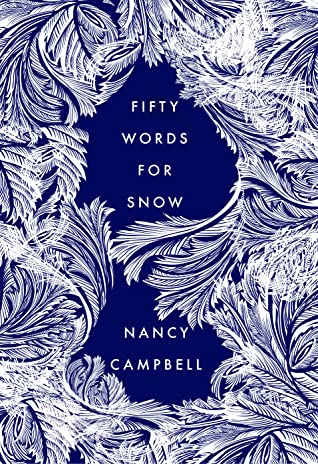 Words for snow exist in most of the world’s languages – even those spoken in countries where it rarely, if ever, snows. For instance, Thai has “hima” at the ready even though there were only once claims of a snow flurry in Thailand, in 1955. Campbell meanders through history, legend, and science in these one- to five-page essays. I was most taken by the pieces on German “kunstschnee” (the fake snow used on movie sets), Icelandic “hundslappadrifa” (snowflakes big as a dog’s paw, a phrase used as a track title on one of Jónsi’s albums – an excuse for discussing the amazing Sigur Rós), and Estonian “jäätee” (the terrifying ice road that runs between the mainland and the island of Hiiumaa – only when the ice is 22 cm thick, and with cars traveling 2 minutes apart and maintaining a speed of 25–40 km/hour).
The white and blue tendrils of the naked hardback’s cover creep over onto the endpapers, each essay is headed by a Wilson Bentley photograph of a snowflake, and the type is in a subtle dark blue ink rather than black. Too many of the essays are thin or dull, such that the contents don’t live up to the gorgeous physical object they fill. Still, I imagine you have a snow-loving relative who would appreciate a copy as a seasonal coffee table book.
With thanks to Elliott & Thompson for the free copy for review.
And a bonus:
“The Burglar’s Christmas” by Willa Cather (1896)
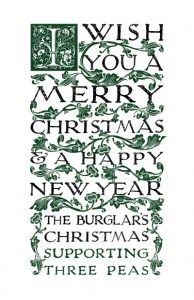 This Renard Press pamphlet supporting the Three Peas charity (in aid of Europe’s refugees) was sent to me as a Christmas card alternative by Annabel/Shiny New Books. A young man wanders the slushy streets of Chicago one Christmas Eve. On this, his 24th birthday, he laments how low he has sunk that he has to rob the rich in order to get money to eat. But in this take on the Prodigal Son story, there is a second chance at forgiveness and a good life. I was reminded of the high society atmosphere of Edith Wharton’s work and the moral fables of O. Henry. The lovely little story has a William Morris design on the cover. I’ll keep it with my small collection of Christmas books and bring it out to reread in future years.
Are you reading any Christmas or wintry books?
What are your plans for the holidays?
Novellas in November Wrap-Up
This is the first year that Novellas in November ran as an official blogger challenge. Cathy and I have been bowled over by the level of response: as of the time of this writing, 30 bloggers have taken part, publishing a total of 89 posts. (I’ve collected all the links on this master post.) Thank you all for being so engaged and helping to spread the love of short books!
We’re already thinking about how to adapt things for next year if we host #NovNov again.

A few specific books were reviewed more than once: The Swallowed Man by Edward Carey, The Spare Room by Helen Garner, and Train Dreams by Denis Johnson.
Three different novellas by Georges Simenon featured, and two by Hubert Mingarelli.
Other novellas discussed more than once were Breakfast at Tiffany’s by Truman Capote, The Metamorphosis by Franz Kafka, Bonjour Tristesse by Françoise Sagan, and Ethan Frome by Edith Wharton.
Aside from the above, here are other frequently mentioned authors who tend(ed) to write short books perfect for Novellas in November: James Baldwin, J.L. Carr, Penelope Fitzgerald, Jean Rhys, Muriel Spark, John Steinbeck, Nathanael West, and Jacqueline Woodson.
Along with Charco Press and Peirene Press, two more UK publishers whose books lend themselves to this challenge are And Other Stories and Fairlight Books. (If you have more ideas of authors and publishers, let me know and I’ll update these sections.)
And here’s my statistics for 2020:
Total number of novellas read this month: 16 (the same as 2019; vs. 26 in 2018)
Favorites: Dear Ijeawele by Chimamanda Ngozi Adichie (nonfiction); La Symphonie Pastorale by André Gide & Bonjour Tristesse by Françoise Sagan (in translation); The Lost Words by Robert Macfarlane and Jackie Morris
What’s the best novella you read this month?
Novellas in November: 10 Favorite Classic Novellas
For this final week of Novellas in November, we’re focusing on classic literature. The more obscure the better, as far as I’m concerned. Maybe a few of the favorites I feature below will be new to you? (The two not pictured were read from the library.)

 Giovanni’s Room by James Baldwin [150 pages]: David, a penniless American, came to Paris to find himself. His second year there he meets Giovanni, an Italian barman. They fall in love and move in together. There’s a problem, though: David has a fiancée. We know from the first pages that David has fled to the south of France and that Giovanni faces the guillotine in the morning, but throughout Baldwin maintains the tension as we wait to hear why he has been sentenced to death. Deeply sad, but also powerful and brave.
 The Darling Buds of May by H.E. Bates [137 pages]: “Perfick” reading for an afternoon sitting or two; The Novel Cure even prescribes it as a tonic for cynicism. Just like tax inspector Cedric Charlton, you’ll find yourself drawn into the orbit of junk dealer Pop Larkin, Ma, and their six children at their country home in Kent – indomitably cheery hedonists, the lot of them. Ma and Pop are more calculating than they let on, but you can’t help but love them. Plus Bates writes so evocatively about the British countryside in late spring.
 Breakfast at Tiffany’s by Truman Capote [91 pages]: Whether you’ve seen the Audrey Hepburn film or not, this is delightful. Holly Golightly has remade herself as a New York City good-time girl, but her upstairs neighbor discovers her humble origins. This was from my pre-reviewing days, so I have no more detail to add. But whenever I think of its manic cocktail party scenes, I think of a holiday do from my final year of college: packed like sardines, everyone talking over each other, and my professor couldn’t stop shaking my hand.
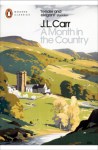 A Month in the Country by J.L. Carr [108 pages]: Summer 1920: Tom Birkin, a WWI veteran, arrives in North Yorkshire to uncover a local church’s medieval wall painting of the Judgment Day. With nothing awaiting him back in London, he gives himself over to the rhythms of working, eating and sleeping. Also embarked on a quest into the past is Charles Moon, searching for the grave of their patroness’ 14th-century ancestor in the churchyard. Moon, too, has a war history he’d rather forget. A Hardyesque, tragicomic romance.
 The Pumpkin Eater by Penelope Mortimer [144 pages]: Aged 31 and already on her fourth husband, the narrator, known only as Mrs. Armitage, has an indeterminate number of children. A breakdown at Harrods is the sign that Mrs. A. isn’t coping, and she starts therapy. Meanwhile, her filmmaker husband is having a glass tower built as a countryside getaway, allowing her to contemplate an escape from motherhood. A razor-sharp period piece composed largely of dialogue, it gives a sense of a woman overwhelmed by responsibility.
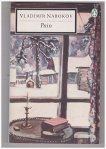 Pnin by Vladimir Nabokov [177 pages]: A comic novel about a Russian professor on an American college campus. In this episodic narrative spanning 1950–4, Timofey Pnin is a figure of fun but also of pathos: from having all his teeth pulled out and entertaining the son his ex-wife had by another man to failing to find and keep a home of his own, he deserves the phrase Nabokov originally thought to use as a title, “My Poor Pnin”. There are shades of Lucky Jim here – I laughed out loud at some of Pnin’s verbal gaffes and slapstick falls.
 No Signposts in the Sea by Vita Sackville-West [156 pages]: Sackville-West’s last novel, published a year before her death, was inspired by world cruises she and her husband, Harold Nicolson, took in later life. Fifty-year-old Edmund Carr, a journalist with a few months to live, has embarked on a cruise ship voyage to be close to the woman he loves, 40-year-old war widow Laura Drysdale. He dares to hope she might return his feelings … but doesn’t tell her of his imminent demise. The novel is presented as Edmund’s diary, found after his death.
 The Catcher in the Rye by J.D. Salinger [192 pages]: Believe it or not, I didn’t read this until December 2018! From the start I found Holden Caulfield’s voice funny and surprising, so drenched in period American slang you can never forget when and where it’s set. He’s a typical lazy teenager, flunking four subjects when he’s kicked out of Pencey Prep. The first part is a languorous farewell tour to classmates and teachers before he takes the train back to NYC. Once there, he lives it up in a hotel for a few days. A shocker of an ending is to come.
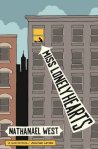 Miss Lonelyhearts by Nathanael West [110 pages]: Like The Great Gatsby, this is a very American tragedy and state-of-the-nation novel. “Miss Lonelyhearts” is a male advice columnist for the New York Post-Dispatch. His letters come from a pitiable cross section of humanity: the abused, the downtrodden and the unloved. Not surprisingly, these second-hand woes start to get him down, and he turns to drink and womanizing for escape. West’s picture of how beleaguered compassion can turn to indifference feels utterly contemporary.
 Ethan Frome by Edith Wharton [181 pages]: Unlike Wharton’s NYC society novels, this has a rural setting, but the plot is not dissimilar to that of The Age of Innocence, with extra tragic sauce. The title character makes the mistake of falling in love with his wife’s cousin, and the would-be lovers are punished one New England winter. A quarter of a century later, the narrator learns what happened to this sad old man. It’s probably been 15 years since I’ve read this, and I like the catharsis of a good old-fashioned tragedy. Maybe I’ll reread it soon.
Not enough women on my list! I should redress that by reading some more Jean Rhys…
Keep in touch via Twitter (@bookishbeck / @cathy746books) and Instagram (@bookishbeck / @cathy_746books). We’ll keep adding your review links in to our master posts. Feel free to use the terrific feature image Cathy made and don’t forget the hashtag #NovNov.
Any suitably short classics on your shelves?
Five Novellas in Translation
We’re coming to the close of Literature in Translation week of Novellas in November. Cathy and I have both noted that novellas seem more common in other languages, with the work more likely to take on experimental forms. We wondered why this is – do foreign languages and cultures somehow lend themselves to concise storytelling that takes more risks? However, a commenter on a post of Cathy’s suggested that economic realities may have something to do with it: translating short works is faster and cheaper. In a recent blog post, Louise Walters, whose indie publishing imprint is preparing to release its shortest book yet (In the Sweep of the Bay by Cath Barton, 22,000 words), confirms that production and shipping costs are lower for novellas, so she has the chance of recouping her investment.
I’ve gotten to five short translated works this month: three fiction and two nonfiction. (Or should that be four fiction and one nonfiction? With autofiction it’s hard to tell.)
Dependency by Tove Ditlevsen (1971; 2019)
[Translated from the Danish by Michael Favala Goldman]
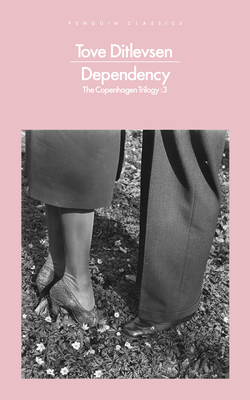 The final volume of the autobiographical Copenhagen Trilogy, after Childhood and Youth. Ditlevsen recalls her upbringing in poverty and her early success as a poet. By the end of the second book, she’s engaged to a much older literary editor. A series of marriages and affairs follows: Viggo, Ebbe, Carl and Victor are the major names, with some others in between. She produces stories and poems as well as a daughter and a son, but also has two abortions. Carl performs one of these and gives her a Demerol shot; ever afterwards, she takes advantage of his obsession with her chronic ear infection to beg for painkiller shots. “Then time ceases to be relevant. An hour could be a year, and a year could be an hour. It all depends on how much is in the syringe.” Addiction interferes with her work and threatens her relationships, but it’s an impulse that never leaves her even when she swaps the harder stuff for alcohol.
I only skimmed this one because from the other volumes I knew how flat and detached the prose is, even when describing desperate circumstances. I can admire this kind of writing – the present-tense scenes, the lack of speech marks, the abrupt jumps between time periods and emotional states, all coldly expressed – but I’m not sure I’ll ever love it. Of the three books, I liked Childhood the best for its universal observations. 
La Symphonie Pastorale by André Gide (1919; 1931)
[Translated from the French by Dorothy Bussy]
“Love is blindness / I don’t want to see” (U2)
 I had a secondhand French copy when I was in high school, always assuming I’d get to a point of fluency where I could read it in its original language. It hung around for years unread and was a victim of the final cull before my parents sold their house. Oh well! There’s always another chance with books. In this case, a copy of this plus another Gide novella turned up at the free bookshop early this year. A country pastor takes Gertrude, the blind 15-year-old niece of a deceased parishioner, into his household and, over the next two years, oversees her education as she learns Braille and plays the organ at the church. He dissuades his son Jacques from falling in love with her, but realizes that he’s been lying to himself about his own motivations. This reminded me of Ethan Frome as well as of other French classics I’ve read (Madame Bovary and Thérèse Raquin). Melodramatic, maybe, but I loved the religious and medical themes (deaf-blind Laura Bridgman gets a mention; when the preacher and Gertrude attend the title symphony, he encourages her synesthetic thinking).
Stammered Songbook: A Mother’s Book of Hours by Erwin Mortier (2011; 2015)
[Translated from the Dutch by Paul Vincent]
 In fragmentary vignettes, some as short as a few lines, Belgian author Mortier chronicles his mother’s Alzheimer’s, which he describes as a “twilight zone between life and death.” His father tries to take care of her at home for as long as possible, but it’s painful for the family to see her walking back and forth between rooms, with no idea of what she’s looking for, and occasionally bursting into tears for no reason. Most distressing for Mortier is her loss of language. As if to compensate, he captures her past and present in elaborate metaphors: “Language has packed its bags and jumped over the railing of the capsizing ship, but there is also another silence … I can no longer hear the music of her soul”. He wishes he could know whether she feels hers is still a life worth living. There are many beautifully meditative passages, some of them laid out almost like poetry, but not much in the way of traditional narrative; it’s a book for reading piecemeal, when you have the fortitude.
Bonjour Tristesse by Françoise Sagan (1954; 1955)
[Translated from the French by Irene Ash]
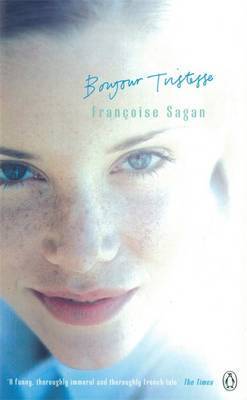 Like The Go-Between and Atonement, this is overlaid with regret about childhood caprice that has unforeseen consequences. That Sagan, like her protagonist, was only a teenager when she wrote it only makes this 98-page story the more impressive. Although her widower father has always enjoyed discreet love affairs, seventeen-year-old Cécile has basked in his undivided attention until, during a holiday on the Riviera, he announces his decision to remarry a friend of her late mother. Over the course of one summer spent discovering the pleasures of the flesh with her boyfriend, Cyril, Cécile also schemes to keep her father to herself. Dripping with sometimes uncomfortable sensuality, this was a sharp and delicious read.
The Order of the Day by Éric Vuillard (2017; 2018)
[Translated from the French by Mark Polizzotti]
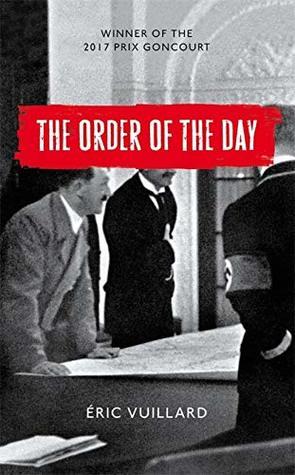 February 1933: 24 German captains of industry meet with Hitler to consider the advantages of a Nazi government. I loved the pomp of the opening chapter: “Through doors obsequiously held open, they stepped from their huge black sedans and paraded in single file … they doffed twenty-four felt hats and uncovered twenty-four bald pates or crowns of white hair.” As the invasion of Austria draws nearer, Vuillard recreates pivotal scenes featuring figures who will one day commit suicide or stand trial for war crimes. Reminiscent in tone and contents of HHhH, The Tobacconist, and the film Downfall, this starts off promisingly and ends with clear relevance to the present moment (“a mysterious respect for lies. Political manoeuvring tramples facts”) and a brilliant final paragraph, but in between was dull. You’d have to have more interest in history than I do to love this Prix Goncourt winner.
Publishers that specialize in novellas in translation:
Charco Press – I’ve reviewed:
 The Wind that Lays Waste by Selva Almada
Fish Soup by Margarita García Robayo
Die, My Love by Ariana Harwicz
Peirene Press – I’ve reviewed:
Mr. Darwin’s Gardener by Kristina Carlson
The Looking-Glass Sisters by Gøhril Gabrielsen
Ankomst by Gøhril Gabrielsen
 Dance by the Canal by Kerstin Hensel
The Last Summer by Ricarda Huch
Snow, Dog, Foot by Claudio Morandini
Her Father’s Daughter by Marie Sizun
The Orange Grove by Larry Tremblay
The Man I Became by Peter Verhelst
A few more favorite novellas in translation:
The Plimsoll Line by Juan Gracia Armendáriz
 Silk by Alessandro Baricco
Agatha by Anne Cathrine Bomann
Swallowing Mercury by Wioletta Greg
Next week, we’re closing out Novellas in November with a focus on short classics. I’ll introduce the week’s theme with some of my favorite examples on Monday.
Any theories as to why so many novellas are from other languages?
What are some of your favorites?
Doorstopper of the Month: The Emperor’s Children by Claire Messud (2006)
My impression of Claire Messud is that she’s admired by critics but unpopular with ordinary readers (e.g. this novel has a catastrophically low average rating on Goodreads, probably because of that “unlikable characters” chestnut). I fit into both categories, so was curious to see where I would fall on the appreciation spectrum. Doubly intrigued by Susan’s inclusion of The Emperor’s Children on her list of top New York novels, I finally picked up the copy I’d gotten from the free mall bookshop where I volunteered weekly in ordinary times.
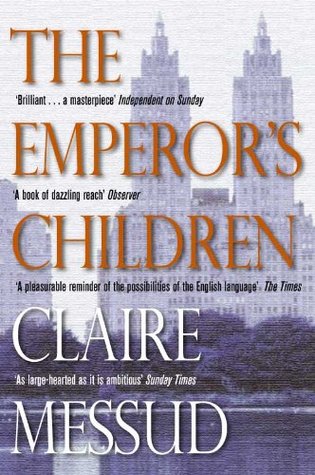 I don’t think it’s a spoiler to tell you that this is a 9/11 novel. It opens in March 2001 and covers the next eight months, with “the towers” first getting a mention at the halfway point. There’s heavy irony in one character commenting to another in the first week of September, “Whatever else they may be, our times are almost criminally uninteresting. The dullest times ever.” As in a couple of novels I read last year (not naming them in case that is a spoiler), the terrorist attacks wake the main characters up from a stupor of entitlement and apathy.
The trio of protagonists, all would-be journalists aged 30, have never really had to grow up. Marina still lives with her parents, social worker Annabel and respected cultural pundit Murray Thwaite. She got an advance to write a book on children’s fashions, but the project has languished for years. Her best friend Danielle is a documentary maker mired in an affair with an older man. Their other close pal is half-Vietnamese Julius, whose new boyfriend keeps him in the luxurious lifestyle to which he’s become accustomed.
The arrival of two young men sets the plot in motion. Through Danielle, Marina meets Ludovic Seeley, who has moved from Australia to New York City to launch a magazine, The Monitor, for which he is soliciting cutting-edge cultural exposés. Meanwhile, Murray’s nephew, college dropout Frederick Tubb, who has the unfortunate nickname of “Bootie,” has moved to the City to seek his fortune. Murray offers him a job as his amanuensis, but what Bootie learns leads him to wish he could expose his idolized uncle as an intellectual fraud.
For these characters, leaving an extended childhood behind means getting out from under the shadow of a previous generation and reassessing what is admirable and who is expendable. As Marina’s book title (The Emperor’s Children Have No Clothes) indicates, appearance and substance do not always match. I won’t give away what 9/11 means for this fictional world, though I’d be interested in discussing it in the comments with anyone who’s read the book. Bootie was my favorite, and what happens with him is particularly interesting.
This was thoroughly engrossing: richly textured and intellectually satisfying in a way that might call to mind George Eliot and Edith Wharton – or, more recently, Jennifer Egan and Zadie Smith. Great American Novel territory, for sure. I’ll be keen to read more by Messud.
Page count: 581
My rating: 
#1920Club Classics of the Month: Agatha Christie and F. Scott Fitzgerald
I’m sneaking in a couple of quick reviews on the final day to join in with Simon and Karen’s latest reading week, The 1920 Club. Speaking of books that were published a century ago, I happened to review Chéri by Colette as one of my monthly classics last year, and I’m currently reading The Age of Innocence by Edith Wharton in advance of our May book club meeting.

The Mysterious Affair at Styles by Agatha Christie
 I don’t think I’ve read an Agatha Christie mystery since I was about … 13? (It was And Then There Were None.) But over the years I’ve watched countless Poirot and Miss Marple cases on TV with my mother. This was Poirot’s first outing, and it’s narrated by Hastings, the slightly dim Watson to the Belgian detective’s Sherlock Holmes.
One July, invalided home from the war at age 30, Hastings goes to visit old family friends at Styles, their Essex manor house: brothers John and Lawrence Cavendish and their elderly stepmother, who has recently (and somewhat shockingly) remarried. When old Mrs. Cavendish is found dead of strychnine poisoning, Poirot is brought in to sort through the potential suspects. Coffee and cocoa cups, a fragment of a charred will, a fake beard, a candle wax stain and a bolted door will be among his major clues.
Like Hastings, we as readers are quick to point to the obvious: hey, that foreigner who happens to be an expert on poisons, it’s him, right?! But as Poirot carefully explains, again and again, “If the fact will not fit the theory, let the theory go. … Real evidence is usually vague and unsatisfactory. It has to be examined, sifted. But here the whole thing is cut and dried.”
I rarely pick up a mystery novel, though when I can get stuck in I do tend to enjoy them. This was a super-quick read and I found myself turning to it more often than to other books on my stack that felt weightier in subject matter. In the end I find crime novels inconsequential, so can’t imagine needing to try another Poirot or Marple for another 20 years or so. But if you’re struggling to read in a time of anxiety, you could certainly do worse than a Christie novel.
My rating:
This Side of Paradise by F. Scott Fitzgerald
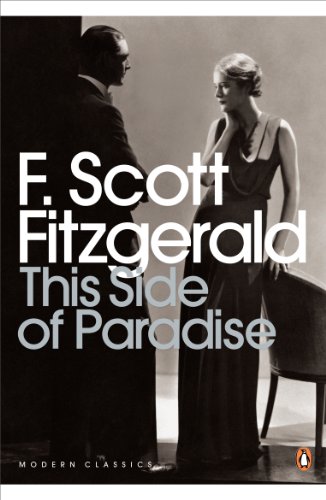 Fitzgerald has long been one of my literary blind spots. The Great Gatsby is a masterpiece, sure: I studied it in school and have read it another couple of times since, as well as lots of background nonfiction and some contemporary novels that riff on the story line. But everything else of his that I’ve tried (Tender Is the Night was the other one) has felt aimless and more stylish than substantive.
Amory Blaine is a wealthy Midwesterner who goes from boarding school to Princeton and has literary ambitions and various love affairs. He’s convinced he’s a “boy marked for glory.” But Monsignor Darcy, his guru, encourages the young man to focus on developing his character more than his dashing personality.
Hugely popular at its first release, this debut novel won Fitzgerald his literary reputation – as well as Zelda Sayre’s hand in marriage. What with the slang (“Oh my Lord, I’m going to cast a kitten”), it felt very much like a period piece to me, most impressive for its experimentation with structure: parts are written like a film script or Q&A, and there are also some poems and lists. This novelty may well be a result of the author cobbling together drafts and unpublished odds and ends, but still struck me as daring.
In a strange way, though, the novel is deliberately ahistorical in that it glosses over world events with a flippancy that I find typical of Fitzgerald. Even though Amory is called up to serve, his general reaction to the First World War is dispatched in a paragraph; Prohibition doesn’t get much more of a look-in.
I understand that the book is fairly autobiographical and in its original form was written in the first person, which I might have preferred if it led to greater sincerity. I could admire some of the witty banter and the general coming-of-age arc, but mostly felt indifferent to this one.
My rating:
R.I.P. Reads: Dahl, Le Guin, Lessing, Paver
This is my second year participating in R.I.P. – Readers Imbibing Peril, now in its 14th year. I assembled a lovely pile of magical or spooky reads to last me through October and noticed they were almost all by women, so I decided to make it an all-female challenge (yes, even with a Dahl title – see below) this year. I’m in the middle of another book and have a few more awaiting me, but with just two weeks left in the month I don’t know if I’ll manage to follow up this post with a Part II. At any rate, these first four were solid selections: classic ghost stories, children’s fantasy, a horror novella about an evil child, and an Arctic chiller.
Fear: Tales of Terror and Suspense (selected by Roald Dahl) (2017)
“Spookiness is, after all, the real purpose of the ghost story. It should give you the creeps and disturb your thoughts.”
I was sent this selection of Dahl-curated ghost stories as part of a book bundle in advance of a blog tour for Roald Dahl Day last year. For now I’ve read just the five stories by women, and will polish off the rest next year.
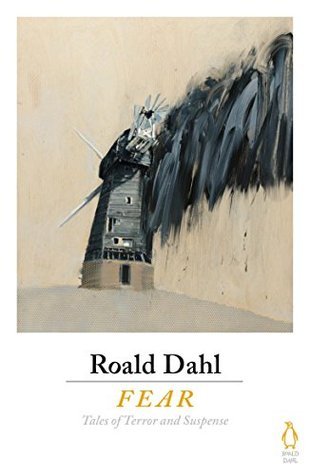 This collection originated from a television series on ghost stories that Dahl proposed for the American market in 1958 (the pilot was poorly received and it never got made). For his research he read nearly 750 ghost stories and whittled them down to the top 24. Women authors dominated early on in the selection process, but by the end the genders came out nearly even, with 13 men and 11 women. It’s disappointing, then, that only five of the 14 stories included here are by women – one of whom gets two entries, so there’s just four female authors recognized. And this even though Dahl claims that, when it comes to ghost stories, “it is the women who have written some of the very best ones.”
Any road, these are the five stories I read, all of which I found suitably creepy, though the Wharton is overlong. Each one pivots on a moment when the narrator realizes that a character they have been interacting with is actually dead. Even if you’ve seen the twist coming, there’s still a little clench of the heart when you have it confirmed by a third party.
“Harry” and “Christmas Meeting” by Rosemary Timperley: A little girl who survived a murder attempt is reclaimed by her late brother; a woman meets a century-dead author one lonely holiday – I liked that in this one each character penetrates the other’s time period.
“The Corner Shop” by Cynthia Asquith: An inviting antique shop is run by two young women during the day, but by a somber old man in the evenings. He likes to give his customers a good deal to atone for his miserly actions of the past.
“The Telephone” by Mary Treadgold: A man continues communicating with his dead ex-wife via the phone line.
“Afterward” by Edith Wharton: An American couple settles in a home in Dorset, and the husband disappears, after a dodgy business deal, in the company of a mysterious stranger.
A Wizard of Earthsea by Ursula K. Le Guin (1968)
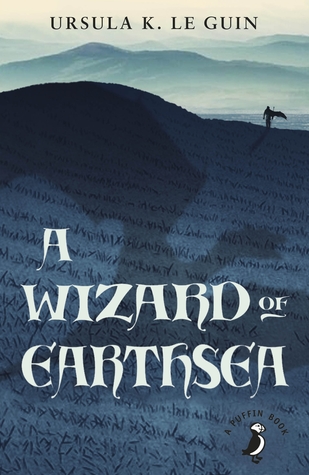 This was my second attempt with the late Le Guin, who would be turning 90 on the 21st; I didn’t get far at all with a buddy read of The Left Hand of Darkness last year. I enjoyed this a fair bit more, perhaps because it’s meant for children – I reckon I would have liked it most when I was ages nine to 11 and obsessed with various series of fantasy novels featuring dragons.
Long before Harry Potter was a glimmer, this was the archetypal story of a boy wizard learning magic at school. Ged meets many cryptic mentors and realizes that naming a thing gives you power over it. In his rivalry with the other boys, he accidentally releases a shadow beast and has to try to gain back control of it. It’s slightly difficult to keep on top of all the names and places (Le Guin created a whole archipelago, which you can see in the opening map) and I found my interest waning after the halfway point, but I did love the scene of Ged fighting with a dragon. 
A favorite passage: “But you must not change one thing, one pebble, one grain of sand, until you know what good and evil will follow on the act. … A wizard’s power of Changing and of Summoning can shake the balance of the world.”
The Fifth Child by Doris Lessing (1988)
Shelve this alongside We Need to Talk about Kevin as a book to make you rethink having kids. Harriet and David Lovatt buy a large Victorian house within commuting distance of London and dream of filling it with children – six, eight; however many. Their first four children are all they’d hoped for, if not spaced out as much as they intended. The Lovatts enjoy hosting the extended family at Easter and Christmas and during the summer holidays. Although there are good-natured jokes about the couple’s fertility, everyone enjoys the cozy, bustling atmosphere. “The Lovatts were a happy family. It was what they had chosen and what they deserved.”
[MILD SPOILERS ENSUE]
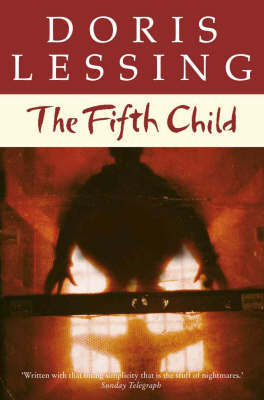 Everything changes with pregnancy #5, which is different right from the off. This “savage thing inside her” is kicking Harriet black and blue from the inside and grown to full term by eight months. When Ben is born Harriet thinks, “He’s like a troll, or a goblin.” Like a succubus, he sucks her dry, biting her nipples black and blue; he screams and thrashes non-stop; he’s freakishly strong and insatiably hungry. He strangles house pets and eats a raw chicken with his bare hands. Although he learns basic language and social skills from watching his older siblings and mimicking his idols from a motorcycle gang, something in him is not human. Yet Harriet cannot bear to leave Ben to rot in an institution.
At first I wondered if this was a picture of an extremely autistic child, but Lessing makes the supernatural element clear. “We are being punished,” Harriet says to David. “For presuming … we could be happy.” I think I was waiting for a few more horrific moments and a climactic ending, whereas Lessing almost normalizes Ben, making him part of a gang of half-feral youths who rampage around late-1980s Britain (and she took up his story in a sequel, Ben in the World). But I raced through this in just a few days and enjoyed the way dread overlays the fable-like simplicity of the family’s early life.
Dark Matter: A Ghost Story by Michelle Paver (2010)
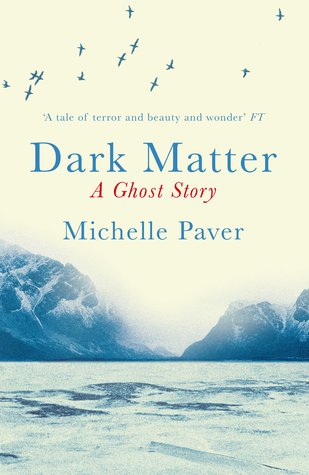 I read Paver’s Thin Air as part of last year’s R.I.P. challenge and it was very similar: a 1930s setting, an all-male adventure, an extreme climate (in that case: the Himalayas). Most of Dark Matter is presented as a journal written by Jack Miller, a lower-class lad who wanted to become a physicist but had to make a living as a clerk instead. He feels he doesn’t truly belong among the wealthier chaps on this Arctic expedition, but decides this is his big chance and he’s not going to give it up.
Even as the others drop out due to bereavement and illness, he stays the course, continuing to gather meteorological data and radio it back to England from this bleak settlement in the far north of Norway. For weeks his only company is a pack of sled dogs, and his grasp on reality becomes shaky as he begins to be visited by the ghost of a trapper who was tortured to death nearby – “the one who walks again.” Paver’s historical thrillers are extremely readable. I tore through this, yet never really found it scary.
Note: This book is the subject of the Bookshop Band song “Steady On” (video here).
And, alas, three DNFs:
 The Wych Elm by Tana French – French writes really fluid prose and inhabits the mind of a young man with admirable imagination. I read the first 100 pages and skimmed another 50 and STILL hadn’t gotten to the main event the blurb heralds: finding a skull in the wych elm in the garden at Ivy House. I kept thinking, “Can we get on with it? Let’s cut to the chase!” I have had French’s work highly recommended so may well try her again.
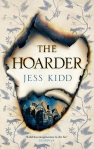 The Hoarder by Jess Kidd – Things in Jars was terrific; I thought Kidd’s back catalogue couldn’t fail to draw me in. This was entertaining enough that I made it to page 152, if far too similar to Jars (vice versa, really, as this came first; ghosts/saints only the main character sees; a transgender landlady/housekeeper); I then found that picking it back up didn’t appeal at all. Maud Drennan is a carer to a grumpy giant of a man named Cathal Flood whose home is chock-a-block with stuff. What happened to his wife? And to Maud’s sister? Who cares!
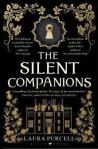 The Silent Companions by Laura Purcell – Purcell is now on her third Gothic novel in three years. I had a stab at her first and it was distinctly okay. I read the first 24 pages and skimmed to p. 87. Reminiscent of The Shadow Hour, The Familiars, etc.
Have you been reading anything fantastical or spooky this October?
Blog Tour: Literary Landscapes, edited by John Sutherland
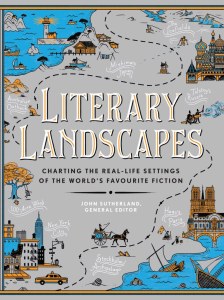 The sense of place can be a major factor in a book’s success – did you know there is a whole literary prize devoted to just this? (The Royal Society of Literature’s Ondaatje Prize, “for a distinguished work of fiction, non-fiction or poetry, evoking the spirit of a place.”) No matter when or where a story is set, an author can bring it to life through authentic details that appeal to all the senses, making you feel like you’re on Prince Edward Island or in the Gaudarrama Mountains even if you’ve never visited Atlantic Canada or central Spain. The 75 essays of Literary Landscapes, a follow-up volume to 2016’s celebrated Literary Wonderlands, illuminate the real-life settings of fiction from Jane Austen’s time to today. Maps, author and cover images, period and modern photographs, and other full-color illustrations abound.
Each essay serves as a compact introduction to a literary work, incorporating biographical information about the author, useful background and context on the book’s publication, and observations on the geographical location as it is presented in the story – often through a set of direct quotations. (Because each work is considered as a whole, you may come across spoilers, so keep that in mind before you set out to read an essay about a classic you haven’t read but still intend to.) The authors profiled range from Mark Twain to Yukio Mishima and from Willa Cather to Elena Ferrante. A few of the world’s great cities appear in multiple essays, though New York City as variously depicted by Edith Wharton, Jay McInerney and Francis Spufford is so different as to be almost unrecognizable as the same place.
One of my favorite pieces is on Charles Dickens’s Bleak House. “Dickens was not interested in writing a literary tourist’s guide,” it explains; “He was using the city as a metaphor for how the human condition could, unattended, go wrong.” I also particularly enjoyed those on Thomas Hardy’s The Return of the Native and Robert Louis Stevenson’s Kidnapped. The fact that I used to live in Woking gave me a special appreciation for the essay on H. G. Wells’s The War of the Worlds, “a novel that takes the known landscape and, brilliantly, estranges it.” The two novels I’ve been most inspired to read are Thomas Wharton’s Icefields (1995; set in Jasper, Alberta) and Kate Grenville’s The Secret River (2005; set in New South Wales).

The essays vary subtly in terms of length and depth, with some focusing on plot and themes and others thinking more about the author’s experiences and geographical referents. They were contributed by academics, writers and critics, some of whom were familiar names for me – including Nicholas Lezard, Robert Macfarlane, Laura Miller, Tim Parks and Adam Roberts. My main gripe about the book would be that the individual essays have no bylines, so to find out who wrote a certain one you have to flick to the back and skim through all the contributor biographies until you spot the book in question. There are also a few more typos than I tend to expect from a finished book from a traditional press (e.g. “Lady Deadlock” in the Bleak House essay!). Still, it is a beautifully produced, richly informative tome that should make it onto many a Christmas wish list this year; it would make an especially suitable gift for a young person heading off to study English at university. It’s one to have for reference and dip into when you want to be inspired to discover a new place via an armchair visit.
Literary Landscapes will be published by Modern Books on Thursday, October 25th. My thanks to Alison Menzies for arranging my free copy for review.
 Bookish Beck = Rebecca Foster. American transplant to England. Freelance proofreader and book reviewer.
 Bookish Beck