Most Anticipated Books of the First Half of 2025
As I said the other week, I sometimes wonder if designating a book as “Most Anticipated” is a curse – if the chosen books are doomed to fail to meet my expectations. Nonetheless, I can’t resist compiling such a list at least once each year.
Also on my radar: fiction by Claire Adam, Amy Bloom, Emma Donoghue, Sarah Hall, Michelle Huneven, Eowyn Ivey, Rachel Joyce, Heather Parry and Torrey Peters; nonfiction by Melissa Febos, Robert Macfarlane, Lucy Mangan, Suzanne O’Sullivan and Sophie Pavelle. (Further ahead, I’ll seek out I Want to Burn This Place Down: Essays by Maris Kreizman and The Girls Who Grew Big by Leila Mottley in July, The Savage Landscape by Cal Flyn in Oct. and Tigers between Empires by Jonathan C. Slaght in Nov.)
However, below I’ve narrowed it down to the 25 books I’m most looking forward to for the first half of 2025, 15 fiction and 10 nonfiction. I’m impressed that 4 are in translation! And 22/25 are by women (all the fiction is). In release date order, with UK publication info given first if available. The blurbs are adapted from Goodreads. I’ve taken the liberty of using whichever cover is my favourite (almost always the U.S. one).

Fiction
 Live Fast by Brigitte Giraud (trans. from the French by Cory Stockwell) [Feb. 11, Ecco]: I found out about this autofiction novella via an early Shelf Awareness review. It “follows one woman’s quest to comprehend the motorcycle accident that took the life of her partner Claude at age 41. The narrator … recounts the chain of events that led up to the fateful accident, tracing the tiny, maddening twists of fate that might have prevented its tragic outcome. Each chapter asks the rhetorical question, ‘what if’ … A sensitive elegy to her husband”.
 The Unworthy by Agustina Bazterrica (trans. from the Spanish by Sarah Moses) [13 Feb., Pushkin; March 4, Scribner]: I wasn’t enamoured of the Argentinian author’s short stories, but Tender Is the Flesh was awesome. This is a short dystopian horror set in a convent. “In the House of the Sacred Sisterhood, the unworthy live in fear of the Superior Sister’s whip. … Risking her life, one of the unworthy keeps a diary in secret. Slowly, memories surface from a time before the world collapsed, before the Sacred Sisterhood became the only refuge. Then Lucía arrives.” (PDF copy for Shelf Awareness review)
 Victorian Psycho by Virginia Feito [13 Feb., Fourth Estate; Feb. 4, Liveright]: Feito’s debut, Mrs March, was deliciously odd, and I love the (U.S.) cover for this one. It sounds like a bonkers horror take on Henry James’s The Turn of the Screw, “a gruesome and gleeful new novel that probes the psyche of a bloodthirsty governess. Winifred Notty arrives at Ensor House prepared to play the perfect Victorian governess—she’ll dutifully tutor her charges, Drusilla and Andrew, tell them bedtime stories, and only joke about eating children.”

Three Days in June by Anne Tyler [13 Feb., Chatto & Windus (Penguin) / Feb. 11, Knopf]: I’m not a Tyler completist, but she’s reliable and this is a novella! “It’s the day before her daughter’s wedding and things are not going well for Gail Baines. First …, she loses her job … Then her ex-husband Max turns up at her door expecting to stay for the festivities. He doesn’t even have a suit. Instead, he’s brought memories, a shared sense of humour – and a cat looking for a new home. … [And] daughter Debbie discovers her groom has been keeping a secret.” Susan vouches for this. (Edelweiss download / on order from library)
 The Swell by Kat Gordon [27 Feb., Manilla Press (Bonnier Books UK)]: I got vague The Mercies (Kiran Millwood Hargrave) vibes from the blurb. “Iceland, 1910. In the middle of a severe storm two sisters, Freyja and Gudrun, rescue a mysterious, charismatic man from a shipwreck near their remote farm. Sixty-five years later, a young woman, Sigga, is spending time with her grandmother when they learn a body has been discovered on a mountainside near Reykjavik, perfectly preserved in ice.” (NetGalley download)
 Dream Count by Chimamanda Ngozi Adichie [4 March, Fourth Estate/Knopf]: This is THE book I’m most looking forward to; I’ve read everything Adichie has published and Americanah was a 5-star read for me. So I did something I’ve never done before and pre-ordered the signed independent bookshop edition from my local indie, Hungerford Bookshop. “Chiamaka is a Nigerian travel writer living in America. Alone in the midst of the pandemic, she recalls her past lovers and grapples with her choices and regrets.” The focus is on four Nigerian American women “and their loves, longings, and desires.” (New purchase)
 Kate & Frida by Kim Fay [March 11, G.P. Putnam’s Sons]: “Frida Rodriguez arrives in Paris in 1991 … But then she writes to a bookshop in Seattle … A friendship begins that will redefine the person she wants to become. Seattle bookseller Kate Fair is transformed by Frida’s free spirit … [A] love letter to bookshops and booksellers, to the passion we bring to life in our twenties”. Sounds like a cross between The Paris Novel and 84 Charing Cross Road – could be fab; could be twee. We shall see! (Edelweiss download)
 The Antidote by Karen Russell [13 March, Chatto & Windus (Penguin) / March 11, Knopf]: I love Russell’s Swamplandia! but haven’t gotten on with her other work I’ve tried, so I’m only tentatively enthusiastic about the odd Wizard of Oz-inspired blurb: “a historic dust storm ravages the fictional town of Uz, Nebraska. But Uz is already collapsing—not just under the weight of the Great Depression … but beneath its own violent histories. The Antidote follows a ‘Prairie Witch,’ … a Polish wheat farmer …; his orphan niece, a … witch’s apprentice …; a voluble scarecrow; and a New Deal photographer”. (Requested from publisher)
 Elegy, Southwest by Madeleine Watts [13 March, ONE (Pushkin) / Feb. 18, Simon & Schuster]: Watts’s debut, The Inland Sea, was a hidden gem. Given the news from L.A., this seems all the more potent: “In November 2018, Eloise and Lewis rent a car in Las Vegas and take off on a two-week road trip across the American southwest … [w]hile wildfires rage. … Lewis, an artist working for a prominent land art foundation, is grieving the recent death of his mother, while Eloise is an academic researching the past and future of the Colorado River … [and] beginning to suspect she might be pregnant”. (Edelweiss download)
 O Sinners! by Nicole Cuffy [March 18, One World (Random House)]: Cuffy’s Dances, which was longlisted for the Carol Shields Prize, was very good. The length of this sophomore novel (464 pages) gives me pause, but I do generally gravitate towards stories of cults. “Faruq Zaidi, a young journalist reeling from the recent death of his father, a devout Muslim, takes the opportunity to embed in a cult called The Nameless [b]ased in the California redwoods and shepherded by an enigmatic [Black] Vietnam War veteran.”
 The Accidentals: Stories by Guadalupe Nettel (trans. from the Spanish by Rosalind Harvey) [10 April, Fitzcarraldo Editions / April 29, Bloomsbury]: I really enjoyed Nettel’s International Booker-shortlisted novel Still Born. “When an albatross strays too far from its home, or loses its bearings, it becomes an ‘accidental’, an unmoored wanderer. The protagonists of these eight stories each find the ordinary courses of their lives disrupted by an unexpected event. … Deft and disquieting, oscillating between the real and the fantastical”. (PDF copy for Shelf Awareness review)
 Ordinary Saints by Niamh Ni Mhaoileoin [24 April, Manilla Press (Bonnier Books UK)]: “Brought up in a devout household in Ireland, Jay is now living in London with her girlfriend, determined to live day to day and not think too much about either the future or the past. But when she learns that her beloved older brother, who died in a terrible accident, may be made into a Catholic saint, she realises she must at last confront her family, her childhood and herself.” Winner of the inaugural PFD Queer Fiction Prize and shortlisted for the Women’s Prize Discoveries Award.
 Heartwood by Amity Gaige [1 May, Fleet / April 1, Simon & Schuster]: I loved Gaige’s Sea Wife. “In the heart of the Maine woods, an experienced Appalachian Trail hiker goes missing. She is forty-two-year-old Valerie Gillis, who has vanished 200 miles from her final destination. … At the centre of the search is Beverly, the determined Maine State Game Warden tasked with finding Valerie, who is managing the search on the ground. While Beverly is searching, Lena, a seventy-six-year-old birdwatcher in a retirement community, becomes an unexpected armchair detective.”
 Are You Happy?: Stories by Lori Ostlund [May 6, Astra House]: Ostlund is not so well known, especially outside the USA, but I enjoyed her debut novel, After the Parade, back in 2015. “Nine masterful stories that explore class, desire, identity, and the specter of violence in America–and in American families–against women and the LGBTQ+ community. … [W]e watch Ostlund’s characters as they try—and often fail—to make peace with their pasts while navigating their present relationships and responsibilities.” (Edelweiss download)
 Ripeness by Sarah Moss [22 May, Picador / Sept. 9, Farrar, Straus and Giroux]: Though I was disappointed by her last two novels, I’ll read anything Moss publishes and hope for a return to form. “It is the [19]60s and … Edith finds herself travelling to rural Italy … to see her sister, ballet dancer Lydia, through the final weeks of her pregnancy, help at the birth and then make a phone call which will seal this baby’s fate, and his mother’s.” Promises to be “about migration and new beginnings, and about what it is to have somewhere to belong.”
Nonfiction
 The Forgotten Sense: The New Science of Smell by Jonas Olofsson [Out now! 7 Jan., William Collins / Mariner]: Part of a planned deep dive into the senses. “Smell is … one of our most sensitive and refined senses; few other mammals surpass our ability to perceive scents in the animal kingdom. Yet, as the millions of people who lost their sense of smell during the COVID-19 pandemic can attest, we too often overlook its role in our overall health. … For readers of Bill Bryson and Steven Pinker”. (On order from library)
 Bread and Milk by Karolina Ramqvist (trans. from the Swedish by Saskia Vogel) [13 Feb., Bonnier Books / Feb. 11, Coach House Books]: I think I first found about this via the early Foreword review. “Bread and Milk traces a life through food, from carefully restricted low-fat margarine to a bag of tangerines devoured in one sitting to the luxury of a grandmother’s rice pudding. In this radiant memoir from one of Northern Europe’s most notable literary stylists, we follow several generations of women and their daughters as they struggle with financial and emotional vulnerability, independence, and motherhood.”
 My Mother in Havana: A Memoir of Magic & Miracle by Rebe Huntman [Feb. 18, Monkfish]: I found out about this from Rebecca Moon Ruark and by the time the publisher offered it to me I’d already downloaded it. The themes of bereavement and religion are right up my street. “As she explores the memory of her own mother, interlacing it with her search for the sacred feminine, Huntman leads us into a world of séance and sacrifice, pilgrimage and sacred dance, which resurrect her mother and bring Huntman face to face with a larger version of herself.” (Edelweiss download)
 Mother Animal by Helen Jukes [27 Feb., Elliott & Thompson]: This may be the 2025 release I’ve known about for the longest. I remember expressing interest the first time the author tweeted about it; it’s bound to be a good follow-up to Lucy Jones’s Matrescence. “When Helen Jukes falls pregnant, … she widens her frame of reference, looking beyond humans to ask what motherhood looks like in other species. … As she enters the sleeplessness, chaos and intimate discoveries of life with a newborn, these animal stories become … companions and guides.” (Requested from publisher)
 Alive: An Alternative Anatomy by Gabriel Weston [6 March, Vintage (Penguin) / March 4, David R. Godine]: I’ve read Weston’s Direct Red and appreciate her perspective. “As she became a surgeon, a mother, and ultimately a patient herself, Weston found herself grappling with the gap between scientific knowledge and unfathomable complexity of human experience. … Focusing on our individual organs, not just under the intense spotlight of the operating theatre, but in the central role they play in the stories of our lives.”
 The Lost Trees of Willow Avenue: A Story of Climate and Hope on One American Street by Mike Tidwell [March 25, St. Martin’s Press]: A must-read for me because it’s set in Takoma Park, Maryland, where I was born. “A love letter to the magnificent oaks and other trees dying from record heat waves and bizarre rain, [activist] Tidwell’s story depicts the neighborhood’s battle to save the trees and combat climate change. … Tidwell chronicles people on his block sick with Lyme disease, a church struggling with floods, and young people anguishing over whether to have kids, … against the global backdrop of 2023’s record heat domes and raging wildfires and hurricanes.”
 Breasts: A Relatively Brief Relationship by Jean Hannah Edelstein [3 April, Phoenix (W&N)]: I loved Edelstein’s 2018 memoir This Really Isn’t About You, and I regularly read her Substack. “As [Edelstein] comes of age, she learns that breasts are a source of both shame and power. In early motherhood, she sees her breasts transform into a source of sustenance and a locus of pain. And then, all too soon, she is faced with a diagnosis and forced to confront what it means to lose and rebuild an essential part of yourself.”
 Poets Square: A Memoir in Thirty Cats by Courtney Gustafson [8 May, Fig Tree (Penguin) / April 29, Crown]: Gustafson became an Instagram and TikTok hit with her posts about looking after a feral cat colony in Tucson, Arizona. The money she raised via social media allowed her to buy her home and continue caring for animals. “[Gustafson] had no idea about the grief and hardship of animal rescue, the staggering size of the problem in neighborhoods across the country. And she couldn’t have imagined how that struggle … would help pierce a personal darkness she’d wrestled for with much of her life.” (Proof copy from publisher)
 Lifelines: Searching for Home in the Mountains of Greece by Julian Hoffman [15 May, Elliott & Thompson]: Hoffman’s Irreplaceable was my book of 2019. “In the summer of 2000, Julian Hoffman and his wife Julia found themselves disillusioned with city life. Overwhelmed by long commutes, they stumbled upon a book about Prespa, Greece – a remote corner of Europe filled with stone villages, snow-capped mountains and wildlife. What began as curiosity soon transformed into a life-changing decision: to make Prespa their home.” I know next to nothing about Greece and this is a part of it that doesn’t fit the clichés.
 Spent: A Comic Novel by Alison Bechdel [22 May, Jonathan Cape (Penguin) / May 20, Mariner Books]: Bechdel’s Fun Home is an absolute classic of the graphic memoir. I’ve lost track of her career a bit but like the sound of this one. “A cartoonist named Alison Bechdel, running a pygmy goat sanctuary in Vermont, is existentially irked by a climate-challenged world and a citizenry on the brink of civil war.” After her partner’s wood-chopping video goes viral, she decides to create her own ethical-living reality TV show. Features cameos from some characters from her Dykes to Watch Out For series.
Other lists of anticipated books:
Clare – we overlap on a couple of our picks
Kate – one pick in common, plus I’ve already read a couple of her others
Laura – we overlap on a couple of our picks
Paul (mostly science and nature)
What catches your eye here? What other 2025 titles do I need to know about?
20 Books of Summer, #14–15, RED: Gabriel Weston and Marie Winn
I’m catching up on blogs and getting back into the swing of work after a week’s staycation hosting my mom and stepdad and taking them on daytrips to lots of local sites: Highclere Castle (“Downton Abbey”), Bath, Avebury, the south coast, Sandham Memorial Chapel, the Kennet & Avon canal, and Mottisfont Abbey.
Today’s contributions to my colour-themed summer reading are both nonfiction: a forthright memoir from a female surgeon and a light-hearted record of multiple seasons of hawk-watching in Central Park.
Direct Red: A Surgeon’s Story by Gabriel Weston (2009)
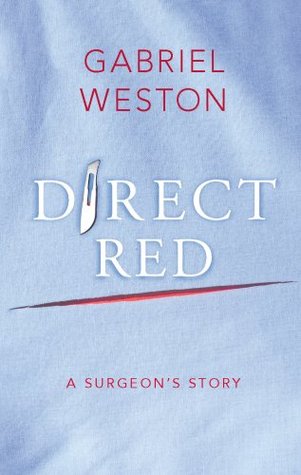 Trying to keep herself alert seven hours into assisting with a neck surgery, Weston recites to herself a list of dyes used to stain tissues for microscopy: methylene blue, acridine orange, saffron, malachite green, Tyrian purple, Hoffman’s violet, direct red. This is how the book opens, and of course, red being the colour of blood, it shows up frequently in what follows. She tells (anonymized) stories of people she has treated, of all ages and from all backgrounds, both during her training and after she specialized in ear, nose and throat surgery.
Like Henry Marsh in Admissions, she expresses regret for moments when she was in a rush or trying to impress seniors and didn’t give the best patient-focused care she could have. Some patients even surprise her into changing her mind, such as about the morality of plastic surgery.
The accounts of individual surgeries are detailed and sometimes gory: morbidly delicious for me, but definitely not for the squeamish.
Blood trickled in a stream down the inside of my wrist onto the plasticky gown, and then dripped off me and onto the drape. It collected in a green valley and was congealing there like a small garnet jelly. I lost my balance slightly as the breast was cut off.
Surgery is still a male-dominated field, and I’ve sensed unpleasant machismo from surgeon authors before (Stephen Westaby’s The Knife’s Edge). As a woman in medicine, Weston is keenly aware of the difficult balance to be struck between confidence and compassion.
To be a good doctor, you have to master a paradoxical art. You need to get close to a patient so that they will tell you things and you will understand what they mean. But you also have to keep distant enough not to get too affected.
It is no longer enough to be technically proficient; nowadays, we need to be nice. And this presents the modern surgeon with a great challenge: how to combine a necessary degree of toughness with an equally important ability to be gentle.
Initially, her bedside manner is on the brusque side, but when she becomes a mother this changes. Treating a sick baby in the ITU, she realizes she barely sees her own child for more than five minutes per evening. In the final paragraphs, she quits her career-track consultant job to work part-time. “I chose a life with more home in it.” It’s an abrupt ending to a 180-page memoir that I thoroughly enjoyed but that left me wanting more. (Secondhand purchase from Oxfam Books, Reading) 
Red-Tails in Love: A Wildlife Drama in Central Park by Marie Winn (1998)
 In the early 1990s, Wall Street Journal columnist Winn fell in with an earnest group of birdwatchers who monitor the daily activity in New York City’s Central Park, a haven for wildlife. Through the Register, a logbook stored in a boathouse, they share sightings and track patterns. Relative rarities thrive and breed each year. Before long the book zeroes in on a famous pair of red-tailed hawks, “Pale Male” and a series of females. Winn emphasizes the “drama” of her subtitle, arranging the content into Acts and Scenes that span about five years.
Wild birds face many risks, most of them the fault of humans, and there are some distressing losses here. It is thus a triumph when Pale Male and his mate successfully raise three chicks on the façade of a Fifth Avenue apartment building (home to Mary Tyler Moore, with Woody Allen across the street). The birdwatchers are vigilant, sending letters to the apartment manager and calling park staff to ensure the birds are left in peace. No doubt it’s easier to disseminate information and assign responsibility now what with WhatsApp and Twitter. Indeed, I found the book a little dated and the anthropomorphizing somewhat over-the-top, but Winn makes a sweet, rollicking yarn out of people getting invested in nature. (Secondhand purchase from Clock Tower Books, Hay-on-Wye) 
Coming up next: Three green, one black, one gold (and maybe a rainbow bonus).
Would you be interested in reading one of these?
Too Male! (A Few Recent Reviews for Shiny New Books and TLS)
I tend to wear my feminism lightly; you won’t ever hear me railing about the patriarchy or the male gaze. But there have been five reads so far this year that had me shaking my head and muttering, “too male!” While aspects of these books were interesting, the macho attitude or near-complete dearth of women irked me. Two of them I’ve already written about here: Ernest Hemingway’s The Garden of Eden was a previous month’s classic and book club selection, while Chip Cheek’s Cape May was part of my reading in America. The other three I reviewed for Shiny New Books or the Times Literary Supplement; I give excerpts below, with links to visit the full reviews in two cases, plus ideas for a book or two by a woman that should help neutralize the bad taste these might leave.
Shiny New Books
The Way Home: Tales from a Life without Technology by Mark Boyle
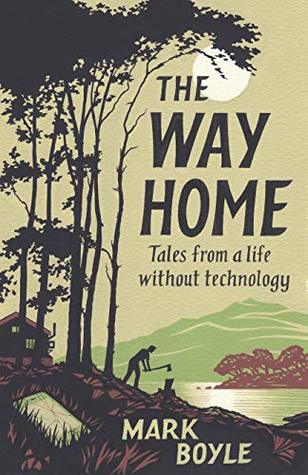 Boyle lives without electricity in a wooden cabin on a smallholding in County Galway, Ireland. He speaks of technology as an addiction and letting go of it as a detoxification process. For him it was a gradual shift that took place at the same time as he was moving away from modern conveniences. The Way Home is split into seasonal sections in which the author’s past and present intermingle. The writing consciously echoes Henry David Thoreau’s. Without even considering the privilege that got Boyle to the point where he could undertake this experiment, though, there are a couple of problems with this particular back-to-nature model. One is that it is a very male enterprise. Another is that Boyle doesn’t really have the literary chops to add much to the canon. Few of us could do what he has done, whether because of medical challenges, a lack of hands-on skills or family commitments. Still, the book is worth engaging with. It forces you to question your reliance on technology and ask whether making life easier is really a valuable goal.
 The Remedy: Homesick: Why I Live in a Shed by Catrina Davies, which I’m currently reading for a TLS review. Davies crosses Boyle’s Thoreauvian language about solitude and a place in nature with a Woolfian search for a room of her own. Penniless during the ongoing housing crisis, she moves into the shed near Land’s End that once served as her father’s architecture office and embarks on turning it into a home.
Doggerland by Ben Smith
 This debut novel has just two main characters: ‘the old man’ and ‘the boy’ (who’s not really a boy anymore), who are stationed on an enormous offshore wind farm. The distance from the present day is indicated in slyly throwaway comments like “The boy didn’t know what potatoes were.” Smith poses questions about responsibility and sacrifice, and comments on modern addictions and a culture of disposability. He has certainly captured something of the British literary zeitgeist. From page to page, though, Doggerland grew tiresome for me. There is a lot of maritime vocabulary and technical detail about supplies and maintenance. The location is vague and claustrophobic, the pace is usually slow, and there are repetitive scenes and few conversations. To an extent, this comes with the territory. But it cannot be ignored that this is an entirely male world. Fans of the themes and style of The Old Man and the Sea and The Road will get on best with Smith’s writing. I most appreciated the moments of Beckettian humor in the dialogue and the poetic interludes that represent human history as a blip in the grand scheme of things.
 The Remedy: I’m not a big fan of dystopian or post-apocalyptic fiction in general, but a couple of the best such novels that I’ve read by women are Station Eleven by Emily St. John Mandel and Gold Fame Citrus by Claire Vaye Watkins.
Times Literary Supplement
The Knife’s Edge: The Heart and Mind of a Cardiac Surgeon by Stephen Westaby
 In this somewhat tepid follow-up to Fragile Lives, Westaby’s bravado leaves a bad taste and dilutes the work’s ostensibly confessional nature. He has a good excuse, he argues: a head injury incurred while playing rugby in medical school transformed him into a risk taker. It’s widely accepted that such boldness may be a boon in a discipline that requires quick thinking and decisive action. So perhaps it’s no great problem to have a psychopath as your surgeon. But how about a sexist? Westaby’s persistent references to women staff as “lady GP” and “registrar lady” don’t mitigate surgeons’ macho reputation. It’s a shame to observe such casual sexism, because it’s clear Westaby felt deeply for his patients of any gender. And yet any talk of empathy earns his derision. It seems the specific language of compassion is a roadblock for him. The book is strongest when the author recreates dramatic sequences based on several risky surgeries. Alas, at its close he sounds bitter, and the NHS bears the brunt of his anger. Compared to Fragile Lives, one of my favorite books of 2017, this gives the superhero surgeon feet of clay. But it’s a lot less pleasing to read. (Forthcoming in TLS.)
 The Remedy: I’m keen to read Direct Red by Gabriel Weston, a memoir by a female surgeon.
(Crikey! This was my 600th blog post.)
20 Books of Summer 2018
This is my first year joining in with the 20 Books of Summer challenge run by Cathy of 746 Books. I’ve decided to put two twists on it. One: I’ve only included books that I own in print, to work on tackling my mountain of unread books (300+ in the house at last count). As I was pulling out the books that I was most excited to read soon, I noticed that most of them happened to be by women. So for my second twist, all 20 books are by women. Why not? I’ve picked roughly half fiction and half life writing, so over the next 12 weeks I just need to pick one or two from the below list per week, perhaps alternating fiction and non-. I’m going to focus more on the reading than the reviewing, but I might do a few mini roundup posts.
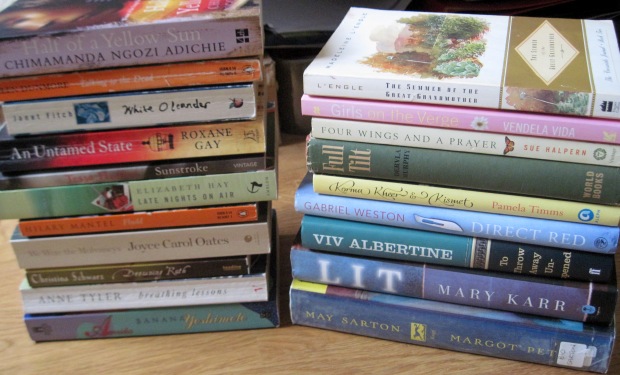
I’m doing abysmally with the goal I set myself at the start of the year to read lots of travel classics and biographies, so I’ve chosen one of each for this summer, but in general my criteria were simply that I was keen to read a book soon, and that it mustn’t feel like hard work. (So, alas, that ruled out novels by Elizabeth Bowen, Ursula K. LeGuin and Virginia Woolf.) I don’t insist on “beach reads” – the last two books I read on a beach were When Breath Becomes Air by Paul Kalanithi and Grief Cottage by Gail Godwin, after all – but I do hope that all the books I’ve chosen will be compelling and satisfying reads.
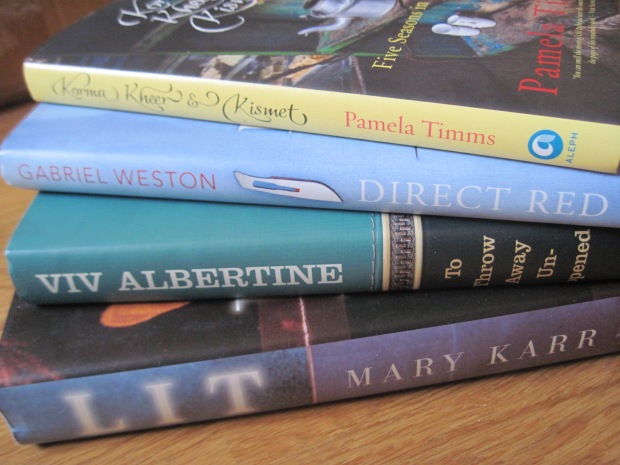
- To Throw Away Unopened by Viv Albertine – I picked up a copy from the Faber Spring Party, having no idea who Albertine was (guitarist of the all-female punk band The Slits). Everyone I know who has read this memoir has raved about it.
- Lit by Mary Karr – I’ve read Karr’s book about memoir, but not any of her three acclaimed memoirs. This, her second, is about alcoholism and motherhood.
- Korma, Kheer and Kismet: Five Seasons in Old Delhi by Pamela Timms – I bought a bargain copy at the Wigtown Festival shop earlier in the year. Timms is a Scottish journalist who now lives in India. This should be a fun combination of foodie memoir and travel book.
- Direct Red: A Surgeon’s Story by Gabriel Weston (a woman, honest!) – Indulging my love of medical memoirs here. I bought a copy at Oxfam Books earlier this year.
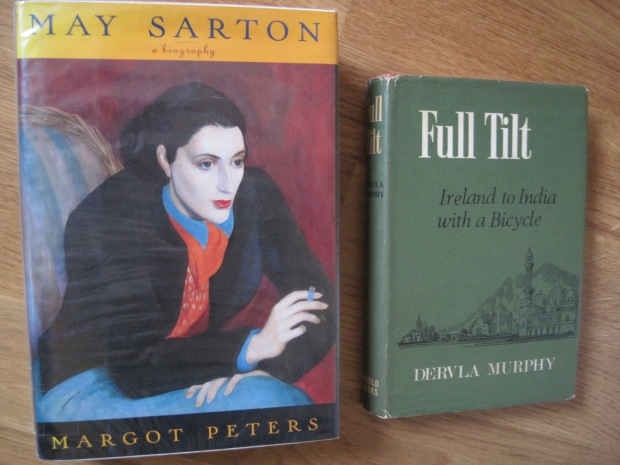 5. May Sarton by Margot Peters – I’ve been on a big May Sarton kick in recent years, so have been eager to read this 1997 biography, which apparently is not particularly favorable.
6. Full Tilt: Ireland to India with a Bicycle by Dervla Murphy – I bought this 1960s hardback from a charity shop in Cambridge a couple of years ago. It will at least be a start on that travel classics challenge.
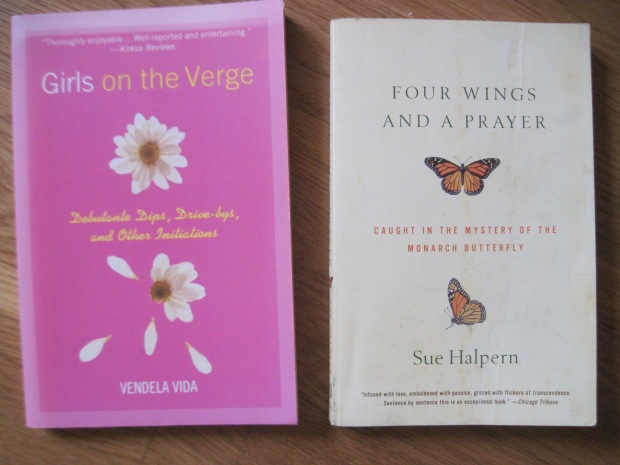
7. Girls on the Verge: Debutante Dips, Drive-bys, and Other Initiations by Vendela Vida – This was Vida’s first book. It’s about coming-of-age rituals for young women in America.
8. Four Wings and a Prayer: Caught in the Mystery of the Monarch Butterfly by Sue Halpern – Should fall somewhere between science and nature writing, with a travel element.
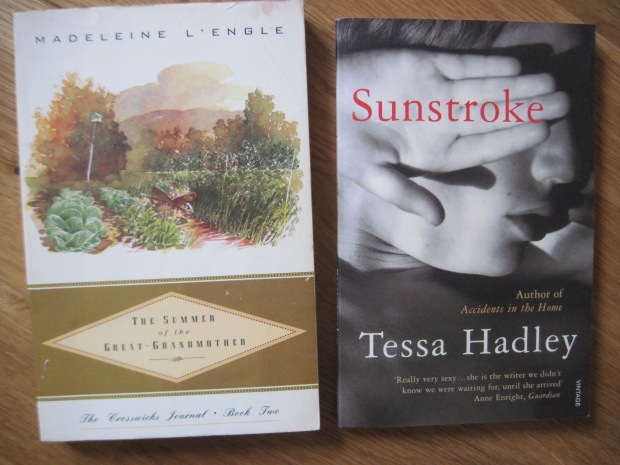
9. The Summer of the Great-Grandmother by Madeleine L’Engle – L’Engle is better known for children’s books, but she wrote tons for adults, too: fiction, memoirs and theology. I read the stellar first volume of the Crosswicks Journal, A Circle of Quiet, in September 2015 and have meant to continue the series ever since.
10. Sunstroke by Tessa Hadley – You know how I love reading with the seasons when I can. This slim 2007 volume of stories is sure to be a winner. Seven of the 10 originally appeared in the New Yorker or Granta.
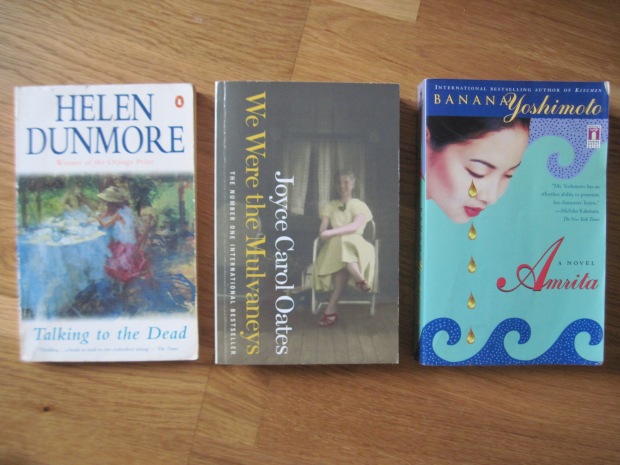
11. Talking to the Dead by Helen Dunmore – I’ve only ever read Dunmore’s poetry. It’s long past time to try her fiction. This one comes highly recommended by Susan of A life in books.
12. We Were the Mulvaneys by Joyce Carol Oates – Oates is intimidatingly prolific, but I’m finally going to jump in and give her a try.
13. Amrita by Banana Yoshimoto – A token lit in translation selection. “This is the story of [a] remarkable expedition through grief, dreams, and shadows to a place of transformation.” (Is it unimaginative to say that sounds like Murakami?)
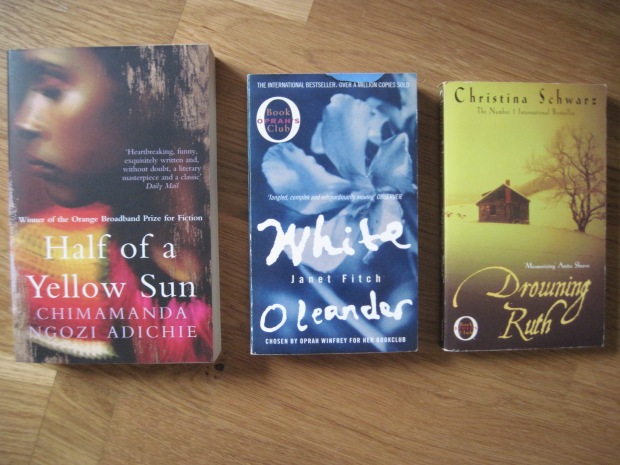
14. Half of a Yellow Sun by Chimamanda Ngozi Adichie – How have I not read any of her fiction yet?! This has been sitting on my shelf for years. I only vaguely remember the story line from the film, so it should be fairly fresh for me.
15. White Oleander by Janet Fitch – An Oprah’s Book Club selection from 1999. I reckon this would make a good beach or road trip read.
16. Drowning Ruth by Christina Schwarz – Another Oprah’s Book Club favorite from 2000. Set in Wisconsin in the years after World War I.
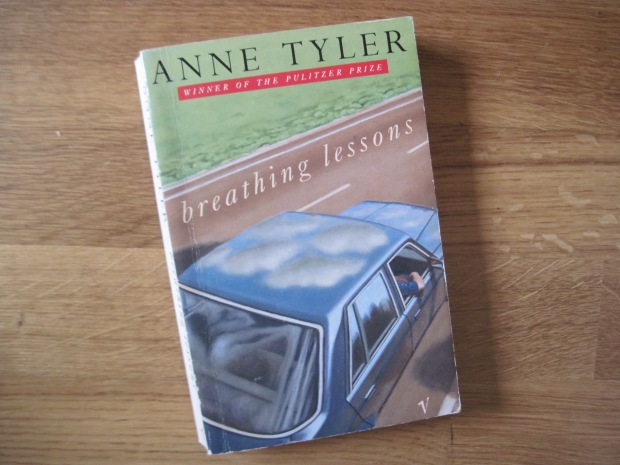
- Breathing Lessons by Anne Tyler – Tyler novels are a tonic. I have six unread on the shelf; the blurb on this one appealed to me the most. This summer actually brings two Tylers as Clock Dance comes out on July 12th – I’ll either substitute that one in, or read both!
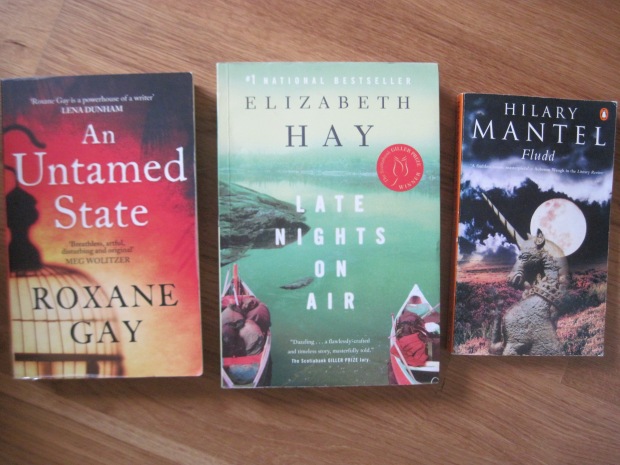
18. An Untamed State by Roxane Gay – I’ve only read Gay’s memoir, Hunger. She’s an important cultural figure; it feels essential to read all her books. I expect this to be rough.
19. Late Nights on Air by Elizabeth Hay – This has been on my radar for such a long time. After loving my first Hay novel (A Student of Weather) last year, what am I waiting for?
20. Fludd by Hilary Mantel – I haven’t read any Mantel in years, not since Bring Up the Bodies first came out. While we all await the third Cromwell book, I reckon this short novel about a curate arriving in a fictional town in the 1950s should hit the spot.
I’ll still be keeping up with my review books (paid and unpaid), blog tours, advance reads and library books over the summer. The aim of this challenge, though, is to make inroads into the physical TBR. Hopefully the habit will stick and I’ll keep on plucking reads from my shelves during the rest of the year.
Where shall I start? If I was going to sensibly move from darkest to lightest, I’d probably start with An Untamed State and/or Lit. Or I might try to lure in the summer weather by reading the two summery ones…
 Bookish Beck = Rebecca Foster. American transplant to England. Freelance proofreader and book reviewer.
 Bookish Beck