Winter Reads, Part II: Elisa Shua Dusapin, Howard Norman & Picture Books
As hoped for in my first instalment of winter reads, the weather is warmer now and signs of spring are appearing in the form of cherry blossom, crocuses, daffodils, primroses and snowdrops. So I’m bidding a (perhaps premature) farewell to winter with these two novels featuring very chilly settings. I also borrowed from the library a big ol’ pile of wintry children’s books full of bears, rabbits, snowmen, snowballs and days off school.
Winter in Sokcho by Elisa Shua Dusapin (2016; 2020)
[Daunt Books Originals; translated from the French by Aneesa Abbas Higgins]

Another title doing double duty for #FrenchFebruary and #ReadIndies month. This was Dusapin’s debut and won the Prix Robert Walser and the Prix Régine-Deforges.
Our beaches are still waiting for the end of a war that’s been going on for so long people have stopped believing it’s real. They build hotels, put up neon signs, but it’s all fake, we’re on a knife-edge, it could all give way any moment. We’re living in limbo. In a winter that never ends.
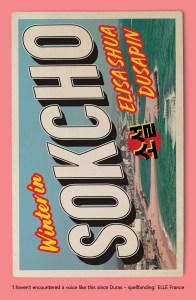 The protagonist is a young mixed-race woman working behind the reception desk at a hotel in Sokcho, a South Korean resort at the northern border. A tourist mecca in high season, during the frigid months this beach town feels down-at-heel, even sinister. The arrival of a new guest is a major event at the guesthouse. And not just any guest but Yan Kerrand, a French graphic novelist. Although she has a boyfriend and the middle-aged Kerrand is probably old enough to be her father – and thus an uncomfortable stand-in for her absent French father – the narrator is drawn to him. She accompanies him on sightseeing excursions but wants to go deeper in his life, rifling through his rubbish for scraps of work in progress.
The underemployed, self-sabotaging young woman is so familiar these days as to be a cliché (and I’d already met a very similar one, also Korean, in Ro from Sea Change by Gina Chung), but there is still something enticing about the atmosphere of this novella. I also enjoyed the narrator’s relationship with her mother, a fishmonger, which sets up for the entirely inconclusive and potentially very disturbing ending. Impossible to say more without spoilers, but I’d be interested to hear what others who have read it think will happen after the last page. (Birthday gift from my wish list) 
The Northern Lights by Howard Norman (1987)
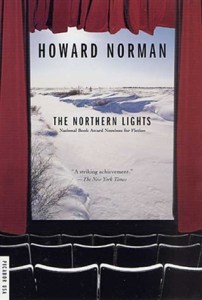 Norman is a really underrated writer and I’m a big fan of The Bird Artist and especially I Hate to Leave This Beautiful Place. This is a weird one; it’s his debut and you can see the autobiographical inspiration (per his Introduction) and the sorts of interests that would recur across his oeuvre, such as subarctic Canada and its Indigenous peoples, absent fathers and hotels (not the only reason this reminded me most of early John Irving).
The Canadian settings represent the two poles of isolation and the urban: Quill, Manitoba versus Toronto in 1959–60. The novel opens with the death of teenage Noah’s best friend, Pelly, who fell through a frozen lake while riding his unicycle. Noah’s family dynamic changes quickly, as his cousin Charlotte, orphaned by a factory disaster, comes to live with them and then his cartographer father leaves them to become a hermit in a remote cabin furnished with musical instruments. Noah stays with Pelly’s parents, Sam and Hettie (a Cree woman), to brave a harsh Quill winter –
January and February mornings you would get a crack of icy static in the nostrils when first stepping outside and have to shade your eyes against the harsh glint of snow, if the sun had worked its way through. Certain days neighbors were seen only on their way to their woodsheds. Chimney smoke was our windsocks. Enormous drifts had built up against the houses, sculpted in various shapes. Even brief walks were taken on snowshoes. Winter might be seven months long.
– while his mother, Mina, takes Charlotte to Toronto to run The Northern Lights, the movie theatre where she met her husband as a young woman. The previous alcoholic owner has run it into the ground; “the curtain smelled like a ten-thousand-year-old moose hide.”
At the time that Noah joins them, he’s never seen a movie before, but as “manager” of the theatre he soon sees The Magnificent Seven 15 times in quick succession. Norman does a peculiar thing here, which is to introduce a key character quite late on in the action. Noah hires Levon, a Cree man, to be the projectionist and he promptly moves his entire family into the building. Had Noah relocated to Toronto earlier, we might have seen more of these characters. Norman’s habit of mimicking broken speech from non-native speakers through overly frequent commas (indicating pauses, I suppose) irked me. There are lots of quirky elements here and I enjoyed the overall atmosphere, but felt the plot left something to be desired. I’d start elsewhere with Norman, but could still recommend this to readers of Robertson Davies and Elizabeth Hay. (Secondhand – 2nd & Charles)
And a DNF:
Snowflake, AZ by Marcus Sedgwick (2019): I wanted to try something else by the late Sedgwick (I’ve only read his nonfiction monograph, Snow) and this seemed ideal. I could have gotten onboard with the desert dystopia, but Ash’s narration was so unconvincing. Sedgwick was attempting a folksy American accent but all the “ain’t”s and “darned”s really don’t work from a teenage character. I only managed about 20 pages. (Public library)
Plus a whole bunch of children’s picture books:
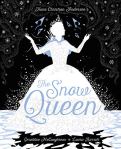 The Snow Queen by Hans Christian Andersen [adapted by Geraldine McCaughrean; illus. Laura Barrett] (2019): The whole is in the shadow painting style shown on the cover, with a black, white and ice blue palette. It’s visually stunning, but I didn’t like the language as much as in the original (or at least older) version I remember from a book I read every Christmas as a child.
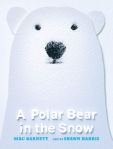 A Polar Bear in the Snow by Mac Barnett [art by Shawn Harris] (2020): From a grey-white background, a bear’s face emerges. The remaining pages are made of torn and cut paper that looks more three-dimensional than it really is. The bear passes other Arctic creatures and plays in the sea. Such simple yet intricate spreads.
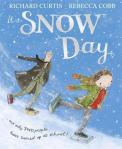 Snow Day by Richard Curtis [illus. Rebecca Cobb] (2014): When snow covers London one December, only two people fail to get the message that the school is closed: Danny Higgins and Mr Trapper, his nemesis. So lessons proceed. At first it feels like a prison sentence, but at break time Mr Trapper gives in to the holiday atmosphere. These two lonely souls play as if they were both children, making an army of snowmen and an igloo. And next year, they’ll secretly do it all again. Watch out for the recurring robin in a woolly hat.
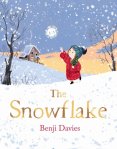 The Snowflake by Benji Davies (2020): I didn’t realize this was a Christmas story, but no matter. A snowflake starts her lonely journey down from a cloud; on Earth, Noelle hopes for snow to fall on her little Christmas tree. From motorway to town to little isolated house, Davies has an eye for colour and detail.
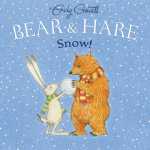 Bear and Hare: SNOW! by Emily Gravett (2014): Bear and Hare, wearing natty scarves, indulge in all the fun activities a blizzard brings: snow angels, building snow creatures, having a snowball fight and sledging. Bear seems a little wary, but Hare wins him over. The illustration style reminded me of Axel Scheffler’s work for Julia Donaldson.
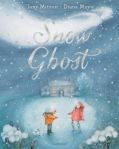 Snow Ghost by Tony Mitton [illus. Diana Mayo] (2020): Snow Ghost looks for somewhere she might rest, drifting over cities and through woods until she finds the rural home of a boy and girl who look ready to welcome her. Nice pastel art but twee couplets.
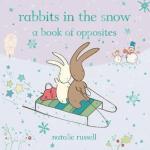 Rabbits in the Snow: A Book of Opposites by Natalie Russell (2012): A suite of different coloured rabbits explore large and small, full and empty, top and bottom, and so on. After building a snowman and sledging, they come inside for some carrot soup.
 The Snowbear by Sean Taylor [illus. Claire Alexander] (2017): Iggy and Martina build a snowman that looks more like a bear. Even though their mum has told them not to, they sledge into the woods and encounter danger, but the snow bear briefly comes alive and walks down the hill to save them. Delightful.
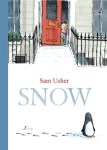
 Snow (2014) & Lost (2021) by Sam Usher: A cute pair from a set of series about a little ginger boy and his grandfather. The boy is frustrated with how slow and stick-in-the-mud his grandpa seems to be, yet he comes through with magic. In the former, it’s a snow day and the boy feels like he’s missing all the fun until zoo animals come out to frolic. There’s lots of white space to simulate the snow. In the latter, they build a sledge and help search for a lost dog. Once again, ‘wild’ animals come to the rescue. /
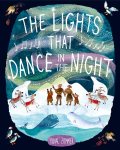 The Lights that Dance in the Night by Yuval Zommer (2021): I’ve seen Zommer speak as part of a conference panel on children’s nature writing. The Aurora Borealis unfolds across the sky above the creatures and people of the far north: “We sashayed for an Arctic fox. We swayed above an old musk ox.” I expected more anatomical accuracy (i.e., faces not flattened so that eyes appear to be next to each other on the same side of a face) but I loved how vivid and imaginative it all is.
Any snowy or icy reads (or weather) for you lately?
Book Serendipity, Mid-December 2022 to Mid-February 2023
I call it “Book Serendipity” when two or more books that I read at the same time or in quick succession have something in common – the more bizarre, the better. This is a regular feature of mine every few months. Because I usually have 20–30 books on the go at once, I suppose I’m more prone to such incidents. The following are in roughly chronological order.
My biggest overall coincidence set this time was around Korean culture, especially food:
- A demanding Korean/American mother (“Umma”) in Sea Change by Gina Chung, Camp Zero by Michelle Min Sterling, and Crying in H Mart by Michelle Zauner.
- In the Chung and Zauner, she has eyebrows tattooed on.
- In the Chung and Sterling, there’s also a mall setting.
- Winter in Sokcho by Elisa Shua Dusapin was set in South Korea and mentioned a lot of the same cultural factors and foods. KIMCHI (which I’ve never had) was inescapable in these four books.


And the rest…
- The concept of Satan as “the enemy” in God’s Ex-Girlfriend by Gloria Beth Amodeo and All of Us Together in the End by Matthew Vollmer, two 2023 memoirs I reviewed for Foreword Reviews.
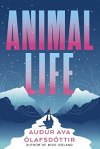
- A mention of the Newsboys (my favourite Christian rock band when I was a teenager) in God’s Ex-Girlfriend by Gloria Beth Amodeo and, of all places, Animal Life by Auður Ava Ólafsdóttir (the context: a list of songs with “Born” in the title; theirs is called – you guessed it! – “Born Again”).
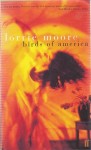
- Two Moores in my stack at once: Birds of America by Lorrie Moore and The Distance from Slaughter County by Steven Moore.
- A chapter in The Distance from Slaughter County by Steven Moore is called “Fight Night” and I was reading the early pages of Fight Night by Miriam Toews at the same time.
- A story in Birds of America by Lorrie Moore is called “Real Estate” and I was reading Real Estate by Deborah Levy at the same time.

- The Virgil quote “there are tears at the heart of things” and the theme of melancholy link Bittersweet by Susan Cain and The Heart of Things by Richard Holloway.
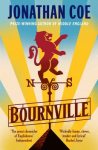
- A character who stutters in Bournville by Jonathan Coe and A Place Called Winter by Patrick Gale.

- (Werther’s) butterscotch candies are mentioned in Leila and the Blue Fox by Kiran Millwood Hargrave, Our Missing Hearts by Celeste Ng, What Napoleon Could Not Do by DK Nnuro, and How to Be Sad by Helen Russell.
- A mother who loves going to church in Bournville by Jonathan Coe and Born a Crime by Trevor Noah.
- The metaphor of a girl trapped in a block of marble ready to have her identity carved out in Sea Change by Gina Chung and Everything’s Changing by Chelsea Stickle.

- When I read a short story about a landmine-detecting rat in Everything’s Changing by Chelsea Stickle, I knew it wasn’t the first time I’d encountered that very specific setup. It took some digging, but I found out the other was in Attrib. by Eley Williams.
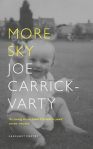
- Shane McCrae, whose forthcoming memoir Pulling the Chariot of the Sun I was also reading, is a named poetic influence/source in More Sky by Joe Varrick-Carty.

- I’m sure that after the one in Margaret Atwood’s The Door I encountered another poem about a frozen cat … but can’t now find it for the life of me.
- A character named Marnie in Martha Quest by Doris Lessing and City of Friends by Joanna Trollope.
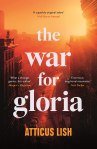
- Cape Verdean immigrants in the Boston area, then and now, in Daughters of Nantucket by Julie Gerstenblatt and The War for Gloria by Atticus Lish.

- Someone swaps green tea for coffee in Bittersweet by Susan Cain and City of Friends by Joanna Trollope.
- A half-French, half-Asian protagonist in a novella translated from the French: A Single Rose by Muriel Barbery and Winter in Sokcho by Elisa Shua Dusapin.
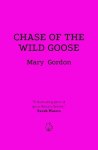
- A (semi-)historical lesbian couple as a subject of historical fiction in Daughters of Nantucket by Julie Gerstenblatt and Chase of the Wild Goose by Mary Gordon.
- A lesbian couple with a ten-year age gap breaks up because the one partner wants a baby and the other does not in My Mother Says by Stine Pilgaard and City of Friends by Joanna Trollope.
- After I specifically read three Frost Fairs books … 18th-century frolics on the frozen Thames were mentioned in The Secret Diaries of Charles Ignatius Sancho by Paterson Joseph.

- As I was reading The Secret Diaries of Charles Ignatius Sancho by Paterson Joseph, I saw him briefly mentioned in How to Be Sad by Helen Russell.
- From one 139-page book about a foreigner’s wanderings in Kyoto (often taking in temples) to another: I followed up A Single Rose by Muriel Barbery with How Kyoto Breaks Your Heart by Florentyna Leow.


- Persimmon jam is mentioned in Winter in Sokcho by Elisa Shua Dusapin and How Kyoto Breaks Your Heart by Florentyna Leow.
- A brave post-tragedy trip to a mothers and babies group ends abruptly when people are awkward or rude in All My Wild Mothers by Victoria Bennett and How to Be Sad by Helen Russell.


 As I was reading What We Talk about when We Talk about Love by Raymond Carver, I encountered a snippet from his poetry as a chapter epigraph in Bittersweet by Susan Cain.
- Sexologist Havelock Ellis inspired one of the main characters in The New Life by Tom Crewe and is mentioned in passing in Martha Quest by Doris Lessing.
What’s the weirdest reading coincidence you’ve had lately?
The 2023 Releases I’ve Read So Far
Some reviewers and book bloggers are constantly reading three to six months ahead of what’s out on the shelves, but I tend to get behind on proof copies and read from the library instead. (Who am I kidding? I’m no influencer.)
In any case, I happen to have read a number of pre-release books, generally for paid review for Foreword, Shelf Awareness, etc. Most of my reviews haven’t been published yet; I’ll give very brief excerpts and ratings here to pique the interest.
Early in January I’ll follow up with my 20 Most Anticipated titles of the coming year.
My top recommendations so far:
(In alphabetical order)
 Shoot the Horses First by Leah Angstman [Feb. 28, Kernpunkt Press]: Sixteen sumptuous historical stories ranging from flash to novella length depict outsiders and pioneers who face disability and prejudice with poise.
 The House Is on Fire by Rachel Beanland [April 4, Simon & Schuster]: Four characters – two men and two women; two white people and two Black slaves – are caught up in the Richmond Theater Fire of 1811. Painstakingly researched and a propulsive read.
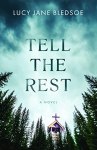 Tell the Rest by Lucy Jane Bledsoe [March 7, Akashic Books]: A high school girl’s basketball coach and a Black poet, both survivors of a conversion therapy camp in Oregon, return to the site of their spiritual abuse, looking for redemption.
 All of Us Together in the End by Matthew Vollmer [April 4, Hub City Press]: A pensive memoir investigates the blinking lights that appeared in his family’s woods soon after his mother’s death from complications of Alzheimer’s and Parkinson’s in 2019.
Other 2023 releases I’ve read:
(In publication date order; links to the few reviews that are already available online)
 Pusheen the Cat’s Guide to Everything by Claire Belton [Jan. 10, Gallery Books]: Good-natured and whimsical comic scenes delight in the endearing quirks of Pusheen, everyone’s favorite cartoon cat since Garfield. Belton creates a family and pals for her, too.
Everything’s Changing by Chelsea Stickle [Jan. 13, Thirty West]: The 20 weird flash fiction stories in this chapbook are like prizes from a claw machine: you never know whether you’ll pluck a drunk raccoon or a red onion the perfect size to replace a broken heart.
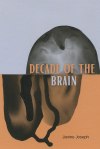 Decade of the Brain by Janine Joseph [Jan. 17, Alice James Books]: With formal variety and thematic intensity, this second collection by the Philippines-born poet ruminates on her protracted recovery from a traumatic car accident and her journey to U.S. citizenship.
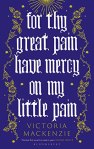 For Thy Great Pain Have Mercy on My Little Pain by Victoria Mackenzie [Jan. 19, Bloomsbury]: Two female medieval mystics, Julian of Norwich and Margery Kempe, are the twin protagonists of Mackenzie’s debut. She allows each to tell her life story through alternating first-person strands that only braid together very late on.
 The Faraway World by Patricia Engel [Jan. 24, Simon & Schuster]: These 10 short stories contrast dreams and reality. Money and religion are opposing pulls for Latinx characters as they ponder whether life will be better at home or elsewhere.
 Your Hearts, Your Scars by Adina Talve-Goodman [Jan. 24, Bellevue Literary Press]: The author grew up a daughter of rabbis in St. Louis and had a heart transplant at age 19. This posthumous collection gathers seven poignant autobiographical essays about living joyfully and looking for love in spite of chronic illness.
 God’s Ex-Girlfriend: A Memoir About Loving and Leaving the Evangelical Jesus by Gloria Beth Amodeo [Feb. 21, Ig Publishing]: In a candid memoir, Amodeo traces how she was drawn into Evangelical Christianity in college before coming to see it as a “common American cult” involving unhealthy relationship dynamics and repressed sexuality.
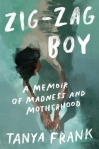 Zig-Zag Boy: A Memoir of Madness and Motherhood by Tanya Frank [Feb. 28, W. W. Norton]: A wrenching debut memoir ranges between California and England and draws in metaphors of the natural world as it recounts a decade-long search to help her mentally ill son.
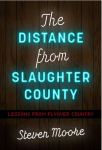 The Distance from Slaughter County by Steven Moore [March 7, The University of North Carolina Press]: An Iowan now based in Oregon, Moore balances nostalgia and critique to craft nuanced, hypnotic autobiographical essays about growing up in the Midwest. The piece on Shania Twain is a highlight.
Currently reading:
(In release date order)
 My What If Year: A Memoir by Alisha Fernandez Miranda [Feb. 7, Zibby Books]: “On the cusp of turning forty, Alisha Fernandez Miranda … decides to give herself a break, temporarily pausing her stressful career as the CEO of her own consulting firm … she leaves her home in London to spend one year exploring the dream jobs of her youth.”
 Sea Change by Gina Chung [April 11, Vintage]: “With her best friend pulling away to focus on her upcoming wedding, Ro’s only companion is Dolores, a giant Pacific octopus who also happens to be Ro’s last remaining link to her father, a marine biologist who disappeared while on an expedition when Ro was a teenager.”
Additional pre-release books on my shelf:
(In release date order)
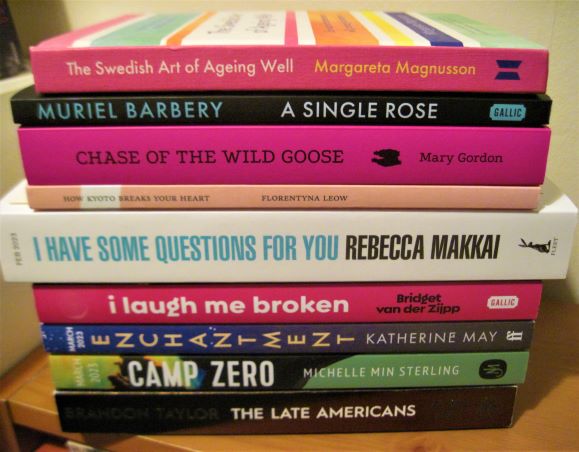
Will you look out for one or more of these?
Any 2023 reads you can recommend already?
 Bookish Beck = Rebecca Foster. American transplant to England. Freelance proofreader and book reviewer.
 Bookish Beck