20 Books of Summer, 3–4: Cheri & All Things Are Too Small
A cancer story that treads the line between biography and fiction, and a set of high-brow essays about popular culture and modern life.
Cheri by Jo Ann Beard (2023)
{SPOILERS IN THIS ONE}
Claire Keegan helped popularize the trend of publishing stand-alone stories as small hardback volumes. It was my first time reading Beard, and her style does in fact remind me of Keegan, along with Denis Johnson and Ann Patchett. This originally appeared in the literary magazine Tin House in 2002. It is the life story of Cheri Tremble, a real woman who was born in 1950 and died in 1997 via an illegal assisted suicide conducted by Dr. Jack Kevorkian. I’d heard a lot about Cheri, but his name was never mentioned – to avoid spoilers, of course, yet it’s key.
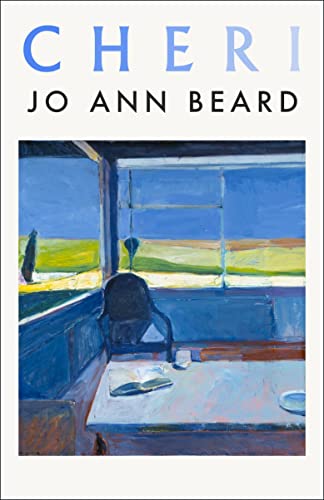 Cheri is an Amtrak ticket-taker who’s diagnosed with breast cancer in her mid-forties. After routine reconstructive surgery goes wrong and she’s left disabled, she returns to the Midwest and buys a home in Iowa. Here she’s supported by her best friends Linda and Wayne, and visited by her daughters Sarah and Katy. “Others have lived. She won’t be one of them. She feels it in her bones, quite literally.” When she hears the cancer has metastasized, she refuses treatment and starts making alternative plans. She’s philosophical about it; “Forty-six years is a long time if you look at it a certain way. Ursa is her seventh dog.”
Beard recounts all of this matter-of-factly (“the diminished lung capacity, the clangorous pain”), drawing on what is known of Cheri Tremble’s life and only adding her own stamp by making up memories that fuel flashbacks as Cheri drifts through pain-filled half-waking. One of these, of falling through the ice on a frozen pond as a child, appears early in the book and recurs at her moment of death. Beard also contrasts onlookers’ compassion or lack thereof.
It’s a potent portrait of everyday suffering and heroism and, in its way, an argument for assisted dying, which mustn’t be cloaked in secrecy as it was for Cheri – “They leave under cover of darkness, like duck hunters or criminals” to meet ‘Dr. Death’ in another state. I finished the story feeling underwhelmed; maybe I’ve simply read too much around the topic, but I couldn’t see how granting the subject interiority (which is what fiction is all about, yes, though the best biographies can do it, too) was enough to set it apart. (New purchase with birthday voucher, Hungerford Bookshop)
All Things Are Too Small: Essays in Praise of Excess by Becca Rothfeld (2024)
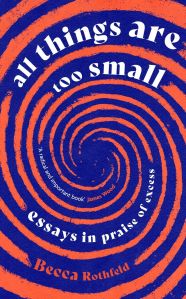 Rothfeld, the Washington Post’s nonfiction book reviewer, is on hiatus from a philosophy PhD at Harvard. Her academic background is clear from her vocabulary. The more accessible essays tend to be ones that were previously published in periodicals. Although the topics range widely – decluttering, true crime, consent, binge eating, online stalking – she’s assembled them under a dichotomy of parsimony versus indulgence. And you know from the title that she errs on the side of the latter. Luxuriate in lust, wallow in words, stick two fingers up to minimalism and mindfulness and be your own messy self. You might boil the message down to: Love what you love, because that’s what makes you an individual. And happy individuals – well, ideally, in an equal society that gives everyone the same access to self-fulfillment and art – make for a thriving culture. That, with some Barthes and Kant quotes.
The writing has verve, from the alliterative word choice to the forcefulness of Rothfeld’s opinions. But in places her points of reference (from classic cinema, especially) are so obscure that I had no way in and the pieces felt like they would never end. My two favourites were “More Is More,” in which she’s as down on fragmentary autofiction (Jenny Offill et al.) as she is on Marie Kondo; and “Normal Novels,” about how she finds Sally Rooney’s self-deprecation and communism problematic. I knew the subject matter well enough to follow the arguments here, even if I ultimately disagreed with them.
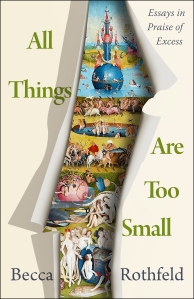
The U.S. cover featuring a Bosch painting is so much better!
Rothfeld is worth reading as a cultural critic, at least in small doses. She is clearly not interested in being a personal essayist, however, as the intimacy she keeps discussing in theory is almost completely absent. A piece on mental health, “Wherever You Go, You Could Leave,” opens with one tantalizing autobiographical line – “My first year of college, I attempted suicide and was promptly hastened home by an ominously smiling administrator” – then proceeds to poke fun at meditation for most of its 40 pages. It was interesting to see her fan-girl over her favourite novel, which I would even try if it wasn’t 480 pages: “I want to be reading Mating [by Norman Rush] constantly; I want to have been reading Mating forever, but always for the first time; I want everything in my life to be Mating and nothing but Mating”. Keep an eye out for the sequel: Actually, Moderation Is Cool: How I Learned to Temper My Expectations.
With thanks to Virago Press for the free copy for review.
The Best Books from the First Half of 2023
Yes, it’s that time of year already! It remains to be seen how many of these will make it onto my overall best-of year list, but for now, these are my 20 highlights. Plus, I sneakily preview another great novel that won’t release until September. (For now I’m highlighting 2023 releases, whereas at the end of the year I divide my best-of lists into current year and backlist. I’ve read 86 current-year releases so far and am working on another 20, so I’m essentially designating a top 20% here.) I give review excerpts and link to the full text from this site or elsewhere. Pictured below are the books I read in print; all the others were e-copies.

Fiction
 Shoot the Horses First by Leah Angstman: In 16 sumptuous historical stories, outsiders and pioneers face disability and prejudice with poise. The flash entries crystallize moments of realization, often about health. Longer pieces shine as their out-of-the-ordinary romances have space to develop. In the novella Casting Grand Titans, a botany professor in 1850s Iowa learns her salary is 6% of a male colleague’s. She strives for intellectual freedom, reporting a new-to-science species of moss, while working towards liberation for runaway slaves.
 The House Is on Fire by Rachel Beanland: Moving at a propulsive pace, Beanland’s powerful second novel rotates through the perspectives of these main characters – two men and two women; two white people and two enslaved Black people – caught up in the Richmond Theater Fire of 1811 (one of the deadliest events in early U.S. history) and its aftermath. Painstakingly researched and full of historical detail and full-blooded characters, it dramatizes the range of responses to tragedy and how people rebuild their lives.
 The New Life by Tom Crewe: Two 1890s English sex researchers (based on John Addington Symonds and Havelock Ellis) write a book called Sexual Inversion drawing on ancient Greek history and containing case studies of homosexual behaviour. Oscar Wilde’s trial puts everyone on edge; not long afterwards, their own book becomes the subject of an obscenity trial, and each man has to decide what he’s willing to give up in devotion to his principles. This is deeply, frankly erotic stuff, and, on the sentence level, just exquisite writing.
 Daughters of Nantucket by Julie Gerstenblatt: (Yes, another historical fire novel, and I reviewed both for Shelf Awareness!) This engrossing debut explores the options for women in the mid-19th century. Metaphorical conflagrations blaze in the background in the days leading up to the great Nantucket fire of 1846: each of three female protagonists (a whaling captain’s wife, a museum curator, and a pregnant Black entrepreneur) holds a burning secret and longs for a more expansive, authentic life. Tense and sultry; for Sue Monk Kidd fans.
 I Have Some Questions for You by Rebecca Makkai: When an invitation comes from her boarding school alma mater, Granby, to teach a two-week course on podcasting, Bodie indulges her obsession with the 1995 murder of her former roommate. Makkai has taken her cues from the true crime genre and constructed a convincing mesh of evidence and theories. She so carefully crafts her pen portraits, and so intimately involves us in Bodie’s psyche, that it’s impossible not to get invested. This is timely, daring, intelligent, enthralling storytelling.
 Sidle Creek by Jolene McIlwain: In this debut collection of 22 short stories, loosely linked by their location in the Appalachian hills in western Pennsylvania and a couple of recurring minor characters, McIlwain softens the harsh realities of addiction, poverty and violence with the tender bruises of infertility and lost love. Grief is a resonant theme in many of the stories, with pregnancy or infant loss a recurring element. At times harrowing, always clear-eyed, these stories are true to life and compassionate about human foibles and animal pain.
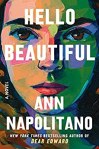 Hello Beautiful by Ann Napolitano: Oprah’s 100th book club pick. It’s a family story spanning three decades and focusing on the Padavanos, a working-class Italian American Chicago clan with four daughters. Julia meets melancholy basketball player William Waters while at Northwestern in the late 1970s. There is such warmth and intensity to the telling, and brave reckoning with bereavement, mental illness, prejudice and trauma. I love sister stories in general, and the subtle echoes of Leaves of Grass and Little Women add heft.
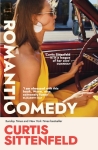 Romantic Comedy by Curtis Sittenfeld: Through her work as a writer for a sketch comedy show modelled on Saturday Night Live, Sally Milz meets Noah Brewster, a pop star with surfer-boy good looks. Plain Jane getting the hot guy – that never happens, right? In fact, Sally has a theory about this very dilemma… As always, Sittenfeld’s inhabiting of a first-person narrator is flawless, and Sally’s backstory and Covid-lockdown existence endeared her to me. Could this be called predictable? Well, what does one want from a romcom?
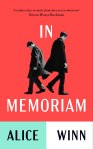 In Memoriam by Alice Winn: Heartstopper on the Western Front; swoon! Will Sidney Ellwood and Henry Gaunt both acknowledge that this is love and not just sex, as it is for so many teenage boys at their English boarding school? And will one or both survive the trenches of the First World War? Winn depicts the full horror of war, but in between there is banter, friendship and poetry. Some moments are downright jolly. This debut is obsessively researched, but Winn has a light touch with it. Engaging, thrilling, and, yes, romantic.
A bonus:
 The Vaster Wilds by Lauren Groff (Riverhead/Hutchinson Heinemann, 12 September): Groff’s fifth novel combines visceral detail and magisterial sweep as it chronicles a runaway Jamestown servant’s struggle to endure the winter of 1610. Flashbacks to traumatic events seep into her mind as she copes with the harsh reality of life in the wilderness. The style is archaic and postmodern all at once. Evocative and affecting – and as brutal as anything Cormac McCarthy wrote. A potent, timely fable as much as a historical novel. (Review forthcoming for Shelf Awareness.)
Nonfiction
 All My Wild Mothers by Victoria Bennett: A lovely memoir about grief and gardening, caring for an ill child and a dying parent. The book is composed of dozens of brief autobiographical, present-tense essays, each titled after a wildflower with traditional healing properties. The format realistically presents bereavement and caring as ongoing, cyclical challenges rather than one-time events. Sitting somewhere between creative nonfiction and nature essays, it’s a beautiful read for any fan of women’s life writing.
 Monsters by Claire Dederer: The question posed by this hybrid work of memoir and cultural criticism is “Are we still allowed to enjoy the art made by horrible people?” It begins, in the wake of #MeToo, by reassessing the work of film directors Roman Polanski and Woody Allen. The book is as compassionate as it is incisive. While there is plenty of outrage, there is also much nuance. Dederer’s prose is forthright and droll; lucid even when tackling thorny issues. Erudite, empathetic and engaging from start to finish.
 Womb by Leah Hazard: A wide-ranging and accessible study of the uterus, this casts a feminist eye over history and future alike. Blending medical knowledge and cultural commentary, it cannot fail to have both personal and political significance for readers of any gender. The thematic structure of the chapters also functions as a roughly chronological tour of how life with a uterus might proceed: menstruation, conception, pregnancy, labour, caesarean section, ongoing health issues, menopause. Inclusive and respectful of diversity.
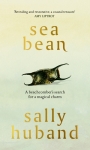 Sea Bean by Sally Huband: Stories of motherhood, the quest to find effective treatment in a patriarchal medical system, volunteer citizen science projects, and studying Shetland’s history and customs mingle in a fascinating way. Huband travels around the archipelago and further afield, finding vibrant beachcombing cultures. In many ways, this is about coming to terms with loss, and the author presents the facts about climate crisis with sombre determination. She writes with such poetic tenderness in this radiant debut memoir.
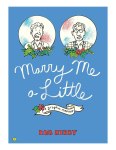 Marry Me a Little by Robert Kirby: Hopping around in time, this graphic memoir tells the story of how the author and his partner John decided to get married in 2013. The blue and red color scheme is effective at evoking a polarized America and the ebb and flow of emotions, with blue for calm, happy scenes and concentrated red for confusion or anger. This is political, for sure, but it’s also personal, and it balances those two aims well by tracing the history of gay marriage in the USA and memorializing his own relationship.
 All of Us Together in the End by Matthew Vollmer: In 2019, Vollmer’s mother died of complications of Alzheimer’s and Parkinson’s. Months later, his father reported blinking lights in the woods near the family cemetery. Although Vollmer had left the Seventh-Day Adventist Church in college, his religious upbringing influenced his investigation, which overlapped with COVID-19. Grief, mysticism, and acceptance of the unexplained are resonant themes. An unforgettable record of “a collision with the ineffable.”
 Eggs in Purgatory by Genanne Walsh: This autobiographical essay tells the story of the last few months of her father’s life. Aged 89, he lived downstairs from Walsh and her wife in San Francisco. He was quite the character: idealist, stubborn, outspoken; a former Catholic priest. Although he had no terminal conditions, he was sick of old age and its indignities and ready to exit. The task of a memoir is to fully mine the personal details of a situation but make of it something universal, and that’s just what she does here. Stunning.
Poetry
 More Sky by Joe Carrick-Varty: In this debut collection, the fact of his alcoholic father’s suicide is inescapable. The poet alternates between an intimate “you” address and third-person scenarios, auditioning coping mechanisms. His frame of reference is wide: football, rappers, Buddhist cosmology. The word “suicide” itself is repeated to the point where it becomes just a sibilant collection of syllables. The tone is often bitter, as is to be expected, but there is joy in the deft use of language.
 Lo by Melissa Crowe: This incandescent autobiographical collection delves into the reality of sexual abuse and growing up in rural poverty. Guns are insidious, used for hunting or mass shootings. Trauma lingers. “Maybe home is what gets on you and can’t / be shaken loose.” The collection is so carefully balanced in tone that it never feels bleak. In elegies and epithalamiums (poems celebrating marriage), Crowe honors family ties that bring solace. The collection has emotional range: sensuality, fear, and wonder at natural beauty.
 Standing in the Forest of Being Alive by Katie Farris: This debut collection addresses the symptoms and side effects of breast cancer treatment at age 36, but often in oblique or cheeky ways – it can be no mistake that “assistance” appears two lines before a mention of haemorrhoids, for instance, even though it closes an epithalamium distinguished by its gentle sibilance (Farris’s husband is Ukrainian American poet Ilya Kaminsky.) She crafts sensual love poems, and exhibits Japanese influences. (Review forthcoming at The Rumpus.)
 The House of the Interpreter by Lisa Kelly: Kelly is half-Danish and has single-sided deafness, and her second collection engages with questions of split identity. One section ends with the Deaf community’s outrage that the Prime Minister’s Covid briefings were not translated into BSL. Bizarre but delightful is the sequence of alliteration-rich poems about fungi, followed by a miscellany of autobiographical poems full of references to colour, nature and travel.
What are some of the best books you’ve read so far this year?
What 2023 releases should I catch up on right away?
June Releases by K Patrick, Brandon Taylor and More
These two sensual, campus-set queer novels were perfect additional reading for Pride Month. As a bonus, I read a recently reissued postcolonial poetry collection.
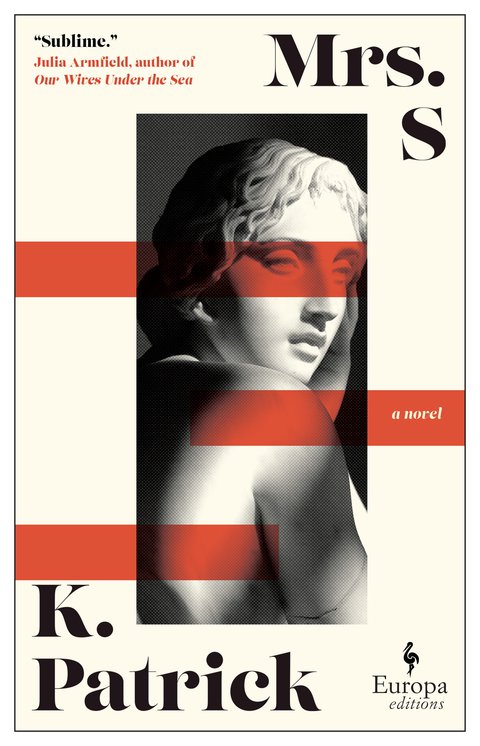
Mrs S by K Patrick
Like Tom Crewe’s The New Life, this was one of the Guardian’s 2023 debuts to look out for, and both are seriously sexy. Patrick’s unnamed narrator is an early-twenties Australian, shunned by her family, who has come to England to be a matron at a girls’ boarding school. No other characters are named, either, with The Girls discussed in aggregate and the whole institution – a tradition-bound place that issues a classical education – in thrall to the memory of “the dead author,” an Emily Brontë-like figure whose genius is both inspiration and burden.
The narrator is butch and wears a binder, and in fact, we soon learn, is not the only lesbian on staff. She and the Housemistress become drinking buddies, even venturing into the nearest large town to frequent a gay bar. But there’s also Mrs S, the headmaster’s wife, perhaps 20 years her senior, whose attention initially seems maternal – as they tend the rose garden, lead an art lesson together and fill in for a play performance – but gradually becomes more erotic when they go wild swimming and meet in the kitchen during a dinner party.
A heat wave gives the novel a sultry atmosphere as hints give way to explicit scenes. The Girls’ little dramas (one punches a boy and breaks his nose at a campus party; one group gets drunk while another gets high on mushrooms) pale in comparison to the steamy secrets. Summer romances can never last, but their intensity is legendary, and this feels like an instant standard of the type. Given the pre-Internet clues, it likely dates to the 1990s, and Mrs S and the narrator are on different pages about gender roles; had it been today, the narrator would surely have been frankly nonbinary like Patrick.
Her heterosexuality, public-facing. Its cosy violence. Who does she want to be? If I ask her that, she might fall apart. If I ask her that, I must be willing to live through the answer. … She is trying to be two people, I am not. Maybe I was. Not anymore.
The author takes the no-speech-marks thing to another level, the dialogue all in paragraph form with no new lines for each speaker. That and the under-punctuation are deliberate choices that make this somehow hyper-contemporary and a throwback to the Bloomsbury modernists all at once – what with the metaphors of propagating roses and garden fecundity, I couldn’t help but think of Virginia Woolf and Vita Sackville-West. Mrs S isn’t your average coming-of-age story, seduction narrative, or cougar stereotype. It’s a new queer classic.
With thanks to Europa Editions for the free copy for review. Released in the UK by Fourth Estate.
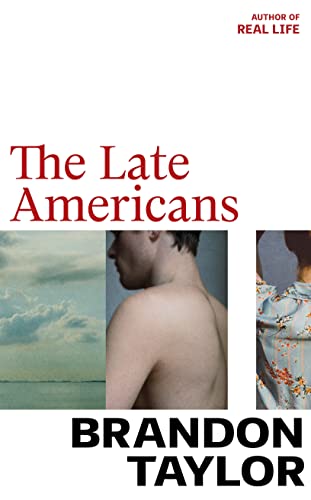
The Late Americans by Brandon Taylor
I was a huge fan of Taylor’s debut novel, the Booker-shortlisted Real Life, and also admired his follow-up linked story collection, Filthy Animals. This third book falls somewhere between the two in style. Although it’s been marketed as a novel, the nine close third person chapters are so discrete as to be more like short stories, all orbiting a group of students at the University of Iowa: many BIPOC, most gay; lots of them current or former ballet dancers.
 Seamus is the subject of the opening title story and “Gorgon’s Head,” so he felt to me like the core of the novel and I would happily have had him as the protagonist throughout. He’s a spiky would-be poet who ends up offending his classmates with his snobby opinions (“her poems were, in the words of a fictional Robert Lowell in an Elizabeth Bishop biopic, ‘observations broken into lines’ … she lacked a poetic intelligence”) and funds his studies by working in the kitchen at a hospice, where he meets a rough local named Bert and they have a sexual encounter that shades into cruelty.
Other characters include on-again, off-again homosexual couples Fyodor and Timo, and Ivan and Goran. Their fundamental differences account for why they so often spar: Fyodor works in a meat-packing plant, while Timo is vegetarian; Goran lives off family wealth, whereas Ivan has to get by on his own, and starts making amateur pornography for money. Noah, too, has the misfortune to get involved with Bert; most of the men, in fact, sleep with one or more of the other men. It’s hard to believe in the durability of this incestuous group. They’re all facing transitions as their studies come to an end, looking for jobs or internships, sometimes switching fields and deciding whether to leave relationships behind. Two late chapters from the perspectives of women, Noah’s neighbour Bea and dancer Fatima, who experiences sexualized shaming, were refreshing. Overall, I’m torn: Taylor’s writing can be stunning:
Iowa was a kind of cultural winter—they had all come to this speck of a city in the middle of a middle state in order to study art, to hone themselves and their ideas like perfect, terrifying weapons, and in the monastic kind of deprivation they found here, they turned to one another. Every dying species sought its own kind of comfort.
They were all posturing all the time. Everything they did was a posture, defensive or offensive, meant to demonstrate something to the outside world, perhaps that they were worthy or good or all right, perhaps to imply that they were in on the joke, that they were nothing and all they had were these crude choreographies of the self.
But it can also be laughable:
There was a resinous, burning taste in Noah’s mouth, and he wondered if it was from the semen or the cigarette or the pepper on the trout at dinner.
And even when it’s sublime, it feels a bit wasted on repetitive stories of meaningless hook-ups, assault, and resentment. This ended up being something of a disappointment from my Most Anticipated list. After three books about angsty homosexuals at midwestern universities, the author is in real danger of being perceived as a one-trick pony. I hope he’ll stretch himself and try something different with his next book.
With thanks to Jonathan Cape for the proof copy for review. Released in the USA by Riverhead.
And a bonus:
The Fat Black Woman’s Poems by Grace Nichols (1984)
 I discovered Grace Nichols a few years ago when I reviewed Passport to Here and There for Wasafiri. One of “Five Gold Reads” to mark Virago’s 50th anniversary, this was the Guyanese-British poet’s second collection (the reissue also includes a few poems from her first book, I Is a Long-Memoried Woman).
The title character is a woman of pleasures, jovial and sensual, but not without cliches (“Come up and see me sometime // My breasts are huge exciting / amnions of watermelon”). I preferred the later sections of the book about childhood memories and the expat’s dilemma: what you miss haunts you, even if what you gained in leaving was objectively better.
In London
every now and then
I get this craving
for my mother’s food
I leave art galleries
in search of plantains
These islands
not picture postcards
for unravelling tourist
you know
…
Poverty is the price we pay for the sun
The patois reminded me of work I’ve read by Bernardine Evaristo and Jackie Kay, and I might recommend the collection as a whole to readers of Fire Rush or Cane, Corn & Gully. But it didn’t spark much for me compared with Nichols’ more recent poetry.
With thanks to Virago for the free copy for review.
Short Stories in September, Part I: Nam Le, Deesha Philyaw, Dan Rhodes
Part of my annual project to read as many short story collections as possible in September. Here’s the first three.
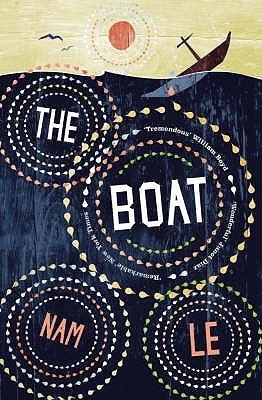
The Boat by Nam Le (2008)
Le, who was born in Vietnam and raised in Australia, won the Dylan Thomas Prize for this collection of seven stories. The opener, “Love and Honor and Pity and Pride and Compassion and Sacrifice” – the title being William Faulkner’s advice for what authors should write about – knocked my socks off. It’s a crisp slice of autofiction about his father coming to visit him while he is a student at the Iowa Writers’ Workshop. Nam (the character) is ambivalent about whether to write about his family’s history of escaping Vietnam by boat, but as a deadline looms he decides to go for it, no matter what his father might think. There’s a coy remark here from one of his friends: “you could just write about Vietnamese boat people all the time. … You could totally exploit the Vietnamese thing. But instead, you choose to write about lesbian vampires [not in this collection!] and Colombian assassins, and Hiroshima orphans—and New York painters with hemorrhoids.”
 So there you have four of the story plots in a nutshell. “Cartagena” is an interesting enough inside look at a Colombian gang, but Le’s strategy for revealing that these characters would be operating in a foreign language is to repeatedly use the construction “X has Y years” for giving ages, which I found annoying. “Meeting Elise” is the painter-with-hemorrhoids one (though I would have titled it “A Big Deal”) and has Henry nervously awaiting his reunion with his teenage daughter, a cello prodigy. There’s a Philip Roth air to that one. “Hiroshima” is brief and dreamy, and works because of the dramatic irony between what readers know and the narrator does not. “The Boat,” the final story, is the promised Vietnam adventure, but took forever to get to. I skimmed/skipped two stories of 50+ pages, “Halflead Bay,” set among Australian teens, and “Tehran Calling.”
It’s a shame that the rest of the book didn’t live up to the first story. The settings and styles felt too disparate overall, with no linking theme. I know that authors are supposed to be able to write about whatever they want, rather than just sticking to their own heritage – a provincial attitude the above quote is mocking, surely – but I had to wonder why these stories mattered to the author, and thus why they should matter to me. As far as I can tell, this is all Le has published. He won another five awards for it, and landed on the National Book Foundation’s 5 under 35 list in 2008. What happened after that?? (Public library) 
The Secret Lives of Church Ladies by Deesha Philyaw (2020)
I’d heard such good things about this collection after its U.S. release (it was a National Book Award finalist and won a Los Angeles Times Book Prize, PEN/Faulkner Award and more), so was delighted to learn that it was coming to the UK earlier this year. These nine stories, mostly set among Black women in the Southern USA, are bold and sexy. The opening pair is a particularly provocative one-two punch. In “Eula,” two friends with benefits meet up in a hotel on New Year’s Eve 2000, as they do every year; narrator Caroletta is committed to this relationship, while Eula is only killing time until she can marry a man as everyone expects. In “Not-Daniel,” a man and woman have sex in a car parked behind a hospice to try to forget that their mothers are dying inside.
 “How to Make Love to a Physicist,” told in the second person, is about an art teacher scared to embark on a relationship with a seemingly perfect man she meets at a conference. “Dear Sister,” in the form of a long, gossipy letter, is about a tangled set of half-siblings. “Jael” alternates a young teen’s diary entries and her great-grandmother’s fretting over what to do with her wild ward. (The biblical title takes on delicious significance later on.) Multiple characters clash with authority figures about church attendance, with the decision to leave the fold coinciding with claiming autonomy or rejecting hypocrisy.
“Peach Cobbler” and “Snowfall” were my two favourites. In the former, reminiscent of Tayari Jones’s Silver Sparrow, Olivia’s mother has been having a long-term affair with the pastor, for whom she bakes a special dessert she denies her own daughter (“I’m not going to raise [my child] to go through life expecting it to be sweet, when for her, it ain’t going to be”). The latter has Arletha and Rhonda suffering through a Midwest winter and dreaming of a Southern crab boil, but fearing they can never go home to mothers who stubbornly refuse to acknowledge their bond as anything other than friendship (“like a beautiful quilt in summertime, my mother’s love was the suffocating kind”).
The insight into familial and romantic relationships, the frank bisexuality, the allusions to scripture and churchgoing traditions, and the folksy foods and metaphors all made this stand out for me. The collection tails off with two unmemorable stories, but the previous seven are more than compelling enough for me to recommend this to your attention. 
With thanks to Pushkin Press (the ONE imprint) for the proof copy for review.
Anthropology: and a Hundred Other Stories by Dan Rhodes (2000)
 I should have known, after reading When the Professor Got Stuck in the Snow (an obvious satire on Richard Dawkins’s atheism) in 2017, that Dan Rhodes’s humour wasn’t for me. However, I generally love flash fiction so thought I might as well give these 101 stories – all about 100 words, or one paragraph, long – a go when I found a copy in a giveaway box across the street. Each has a one-word title, proceeding alphabetically from A to W, and many begin “My girlfriend…” as an unnamed bloke reflects on a relationship. Most of the setups are absurd; the girlfriends’ names (Foxglove, Miracle, Nightjar) tell you so, if nothing else.
There’s a kind of ‘nothing sacred’ approach here, with death, disability, race and gender the fodder for any number of gags. For example, in the title story the ex-girlfriend “went to Mongolia to study the gays. … It breaks my heart to think of her herding those yaks in the freezing hills, … nothing but a handlebar moustache to keep her top lip warm.” Or “Taxidermy”: “Columbine broke her neck by mistake. I took her to the taxidermist, and they delivered to my house a fortnight later. When I unwrapped the package I found the wrong girl.” I marked out a couple that I liked, “Beauty” and “Eggs,” but 2/101 is a poor return. Flippant, repetitive and ridiculous; best avoided. (Free from a neighbour) 
Currently reading: The Dinner Party by Joshua Ferris, Delicate Edible Birds by Lauren Groff, Hearts & Bones by Niamh Mulvey
Up next: The Quarry by Ben Halls, The High Places by Fiona McFarlane, Birds of America by Lorrie Moore
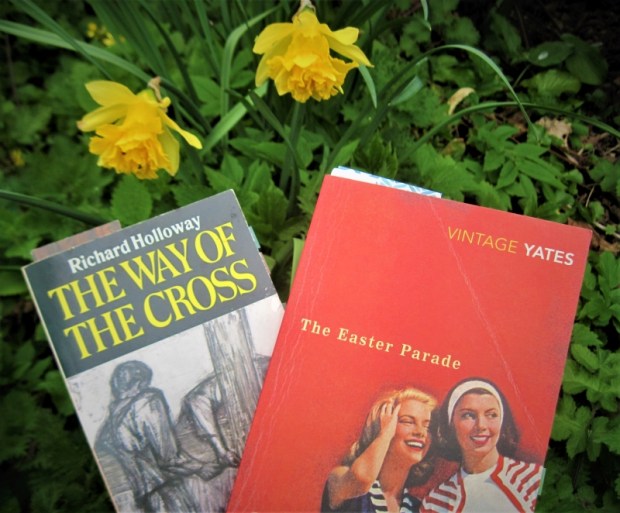
Easter Reading from Richard Holloway and Richard Yates
I found a lesser-known Yates novel on my last trip to our local charity warehouse and saved it up for the titular holiday. I also remembered about a half-read theology book I’d packed away with the decorative wooden Easter egg and tin with a rabbit on in the holiday stash behind the spare room bed. And speaking of rabbits…
 (I also gave suggestions of potential Easter reading, theological or not, in 2015, 2017, and 2018.)
The Easter Parade by Richard Yates (1976)
Yates sets out his stall with the first line: “Neither of the Grimes sisters would have a happy life, and looking back, it always seemed that the trouble began with their parents’ divorce.” I’d seen the film of Revolutionary Road, and my impression of Yates’s work was confirmed by this first taste of his fiction: an atmosphere of mid-century (sub)urban ennui, with the twin ills of alcoholism and adultery causing the characters to drift inexorably towards tragedy.
The novel follows Sarah and Emily Grimes from the 1930s to the 1970s. Emily, four years younger, has always known that her sister is the pretty one. Twenty-year-old Sarah is tapped to model traditional Chinese dress during an Easter parade and be photographed by the public relations office of United China Relief, for whom she works in fundraising. Sarah had plans with her fiancé, Tony Wilson, and is unenthusiastic about taking part in the photo shoot, while Emily thinks what she wouldn’t give to appear in the New York Times.
 The mild rivalry resurfaces in the years to come, though the sisters take different paths: Sarah marries Tony, has three sons, and moves to the Wilson family home out on Long Island; in New York City, Emily keeps up an unending stream of lovers and English-major jobs: bookstore clerk, librarian, journal editor, and ad agency copywriter. Sarah envies Emily’s ability to live as a free spirit, while Emily wishes she could have Sarah’s loving family home – until she learns that it’s not as idyllic as it appears.
What I found most tragic wasn’t the whiskey-soused poor decisions so much as the fact that both sisters have unrealized ambitions as writers. They long to follow in their headline-writing father’s footsteps: Emily starts composing a personal exposé on abortion, and later a witty travel guide to the Midwest when she accompanies a poet boyfriend to Iowa so he can teach in the Writers’ Workshop; Sarah makes a capable start on a book about the Wilson family history. But both allow their projects to wither, and their promise is unfulfilled.
Yates’s authentic characterization, forthright prose, and incisive observations on the futility of modern life and the ways we choose to numb ourselves kept this from getting too depressing – though I don’t mind bleak books. Much of the novel sticks close to Emily, who can, infuriatingly, be her own worst enemy. Yet the ending offers her the hand of grace in the form of her nephew Peter, a minister. I read the beautiful final paragraphs again and again.
A readalike I’ve reviewed (sisters, one named Sarah!): A Summer Bird-Cage by Margaret Drabble
My rating:
The Way of the Cross by Richard Holloway (1986)
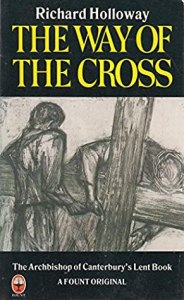 Each year the Archbishop of Canterbury commissions a short book for the Anglican Communion to use as Lenten reading. This study of the crucifixion focuses on seven of the Stations of the Cross, which are depicted in paintings or sculptures in most Anglo-Catholic churches, and emphasizes Jesus’s humble submission and the irony that the expected Son of God came as an executed criminal rather than an exalted king. Holloway weaves scripture passages and literary quotations through each chapter, and via discussion questions encourages readers to apply the themes of power, envy, sin, and the treatment of women to everyday life – not always entirely naturally, and the book does feel dated. Not a stand-out from a prolific author I’ve enjoyed in the past (e.g., Waiting for the Last Bus).
Favorite lines:
“the yearly remembrance of the life of Christ is a way of actualizing and making that life present now, in the universal mode of sacramental reality.”
“Powerlessness is the message of the cross”
My rating:
Recently read for book club; I’ll throw it in here for its dubious thematic significance (the protagonist starts off as an innocently blasphemous child and, disappointed with God as she’s encountered him thus far, gives that name to her pet rabbit):
When God Was a Rabbit by Sarah Winman (2011)
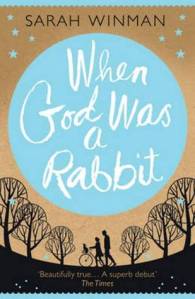 I’d enjoyed Winman’s 2017 Tin Man so was very disappointed with this one. You can tell it was a debut novel because she really threw the kitchen sink in when it comes to quirkiness and magic realism. Secondary characters manage to be more engaging than the primary ones though they are little more than a thumbnail description: the lesbian actress aunt, the camp old lodger, etc. I also hate the use of 9/11 as a plot device, something I have encountered several times in the last couple of years, and stupid names like Jenny Penny. Really, the second part of this novel just feels like a rehearsal for Tin Man in that it sets up a close relationship between two gay men and a woman.
Two major themes, generally speaking, are intuition and trauma: characters predict things that they couldn’t know by ordinary means, and have had some awful things happen to them. Some bottle it all up, only for it to explode later in life; others decide not to let childhood trauma define them. This is a worthy topic, certainly, but feels at odds with the carefully cultivated lighthearted tone. Winman repeatedly introduces something sweet or hopeful only to undercut it with a tragic turn of events.
The title phrase comes from a moment of pure nostalgia for childhood, and I think the novel may have been better if it had limited itself to that rather than trying to follow all the characters into later life and sprawling over nearly 40 years. Ultimately, I didn’t feel that I knew much about Elly, the narrator, or what makes her tick, and Joe and Jenny Penny almost detract from each other. Pick one or the other, brother or best friend, to be the protagonist’s mainstay; both was unnecessary.
My rating: 
“All to Do with the Moon”: Four Books with Moon in the Title
I happened to read two books with the word moon in their titles within a couple of weeks in September, which prompted me to ransack my shelves and find two more. While these four are in completely different genres – one women’s fiction, one poetry, one memoir and one Booker-winning literary novel – they are all by women (naturally more in touch with the moon?) and all worth reading. In the weeks that I was undertaking this mini reading project, I couldn’t get Krista Detor’s song “All to Do with the Moon” out of my head (on this video, a live recording of the entire “Night Light” suite of three songs, it starts at about 6:15). She’s one of our favorite singer-songwriters, though, so this was no problem.
The Pull of the Moon by Elizabeth Berg (1996)
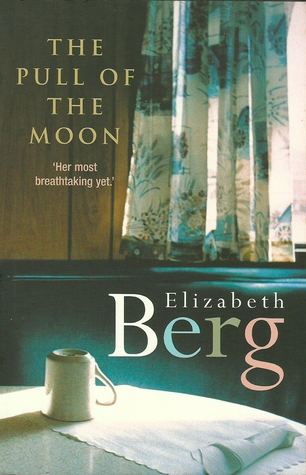 This is my second contemporary novel from Berg. I find her work effortlessly readable. She’s comparable to those other Elizabeths, McCracken and Strout, but also to Alice Hoffman and Anne Tyler. This one reminded me most of Tyler’s Ladder of Years in that both are about a middle-aged woman who takes a break from her marriage to figure out what she wants from life. Nan, “a fifty-year-old runaway,” takes off from her suburban Boston home and drives west, stopping at motels and cabins, eating at diners, and meeting the locals; eventually she gets as far as South Dakota. Her narration is in the form of letters to her husband, Martin, alternated with italicized passages from her journal. She reflects on everything that has made up her life – her upbringing, her marriage and other sexual encounters, raising her daughter, Ruthie – as well as on the small-town folk she meets in Iowa and Minnesota. The moon is a symbol of the femininity Nan fears she’s losing through menopause and hopes to reclaim on this journey.
The Moon Is Almost Full by Chana Bloch (2017)
 This was a lucky find in the clearance section at Blackwell’s on my Oxford day with Annabel. It’s a beautifully produced book from Autumn House, the small Pittsburgh press that released my favorite poetic work of last year: The Small Door of Your Death by Sheryl St. Germain. This was Bloch’s sixth and final book of poetry, published in the year of her death. She writes in the awareness that this cancer will be her end and doesn’t gloss over losses of function and dignity, but still finds delight in life through her family, writing and Jewish rituals: “Never forget / you were put on earth to gather joy // with melancholy hands” (from “Instructions for the Bridegroom”). A favorite poem was “The Will,” in which she imagines how the physical and intangible relics of her life will be distributed (“My plans and projects I hereby bequeath to the air / of which they were conceived. … Let the doctors pack up my heart / and keep it humming for the right customer.”).
Off-topic note: This was typeset in Mrs Eaves, which may well be one of my favorite fonts.
To the Moon and Back: A Childhood under the Influence by Lisa Kohn (2018)
 My special interest in women’s religious memoirs led me to list this among my most anticipated titles of 2018. I had it on my wish list for quite a while and then, when I saw it available for a bargain price online, snapped it up for myself. Lisa Kohn grew up in the New York City environs, the child of hippie parents she called Mimi and Danny rather than Mom and Dad. After their parents divorced, she and her brother lived in New Jersey with their mother and went into the City to visit their father, who was very lax about things like drugs. By the time Kohn was 10, her mother had gotten caught up in Reverend Moon’s Unification Church.
I knew next to nothing about the “Moonies,” so I found it fascinating to learn about this cult led by a South Korean reverend who let it be assumed that he was the new incarnation of Jesus Christ and the flourishing of his family on Earth would usher in God’s Kingdom. The Church became Kohn’s whole life until internal questioning set in during high school, and by the time she went to college she was adrift and into drugs instead. The book recreates scenes and dialogue well, but I found myself losing interest once the cult itself stopped being the main focus.
Readalikes: Small Fry by Lisa Brennan-Jobs and In the Days of Rain by Rebecca Stott
Moon Tiger by Penelope Lively (1987)
 Seventy-six-year-old Claudia Hampton, on her deathbed in a nursing home, determines to write a history of the world – or at least, the world as she’s seen it. She’s been an author of popular history books (one of which, on Mexico, was made into a film), but she’s also been a daughter, a sister, a lover and a mother. As the book shifts between the first person and the third person, the present and the past, we learn volumes about Claudia and how her memory has preserved the layers of her personal history. There are a couple of big reveals, about her relationship with her brother Gordon and her time as a Second World War correspondent in Egypt, but what’s more impressive than these plot surprises is how Lively packs the whole sweep of a life into just 200 pages, all with such rich, wry commentary on how what we remember constructs our reality.
I made the fine choice to start reading this on holiday at the Jurassic coast in Dorset, which was fitting because Claudia grew up in Dorset and uses ammonites and rock strata as recurring metaphors. This won a well-deserved Booker Prize and is the best of the five Lively books I’ve read. I wasn’t particularly taken with the first couple I read by her, so I’m glad I tried again this year (with Heat Wave and then this). It’s just a shame that the copy I found in the free bookshop where I volunteer has such a dreadfully inappropriate cover, making it look like contemporary chick lit rather than serious literature. 
Some favorite lines:
“Argument, of course, is the whole point of history. Disagreement; my word against yours; this evidence against that. If there were such a thing as absolute truth the debate would lose its lustre. I, for one, would no longer be interested.”
“In life as in history the unexpected lies waiting, grinning from around corners. Only with hindsight are we wise about cause and effect.”
“Once it is all written down we know what really happened.”
A note on the title: From the context, it seems that a moon tiger was a special inflammatory device, maybe like a citronella candle, used to repel mosquitoes and other insects.
 Other ‘Moon’ books I have happened to review:
Crossing the Moon by Paulette Bates Alden
The Moon and Sixpence by W. Somerset Maugham
Reviews Roundup, April–May
One of my goals with this blog is to have one convenient place where I can gather together all my writing that has appeared in disparate online locations. To that end, once a month – or maybe more often – I’ll provide links to all the book reviews I’ve published elsewhere, with a rating and a short taster so you can decide whether to click to read more. (A couple of exceptions: I won’t point out my Kirkus Indie or BlueInk reviews since I don’t get a byline.)
[I seem to have done more ‘free’ than ‘required’ reading this past month, which I attribute to having been on vacation in America for about two weeks of that time.]
BookBrowse
 The Turner House by Angela Flournoy [subscription service, but an excerpt is available for free on the website]: In Flournoy’s debut novel, the 13 grown children of Francis and Viola Turner must put aside their own personal baggage and decide what will become of their parents’ Detroit house during the financial crisis.

The Bookbag
Mother of Eden by Chris Beckett: This sequel to 2012’s Arthur C. Clarke Award-winning science fiction novel Dark Eden sees Gela’s descendants splitting into factions and experimenting with different political systems. Starlight Brooking emerges as a Messiah figure, spreading a secret message of equality. Releases June 4th.
 Sophie and the Sibyl by Patricia Duncker: In Duncker’s sixth novel, a playful Victorian pastiche, George Eliot’s interactions with her German publisher and his feisty young wife provide fodder for Daniel Deronda. Consciously modeled on John Fowles’s The French Lieutenant’s Woman, this is a postmodern blending of history, fiction, and metafictional commentary.
We Love This Book
 The Gracekeepers by Kirsty Logan: This inventive debut novel imagines a circus traveling through a flooded future world. Humanity is divided into two races, landlockers and damplings. Fear and prejudice distance these groups but the novel imagines them drawn together through a meeting between two young women, Callanish and North.

Foreword Reviews
 The Organ Broker by Stu Strumwasser: “There is no shortage of organs; there is only a shortage of organs in America.” The antihero of this debut novel finds organs on the international market and sells them for huge profits to Americans on transplant waiting lists. With snappy dialogue and a lovable hustler protagonist, it explores ethical ambiguities.
BookTrib
I chose my top four mother–daughter memoirs (by Alice Eve Cohen, Abigail Thomas, Alison Bechdel and Jeanette Winterson) for this Mother’s Day article.
I also post reviews of most of my casual reading on Goodreads.
Mademoiselle Chanel by C.W. Gortner: A writer of Tudor-era mysteries turns to more recent history with this novel about Coco Chanel. Detailing every business venture and love affair, he makes some parts a real chronological slog. I always associate Chanel with the 1950s–60s, so it was interesting to learn that she was born in the 1880s and experienced both world wars.
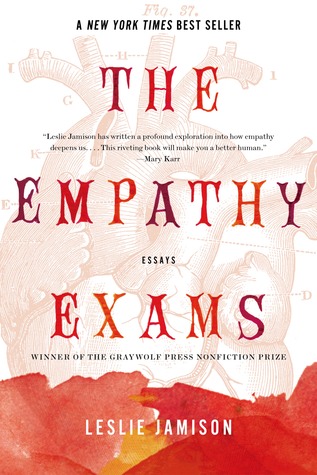 The Empathy Exams by Leslie Jamison: I liked the medical-related pieces – attending a Morgellons disease conference, working as a medical actor – but not the Latin American travel essays or the character studies. The overarching theme of empathy was not as strong as I thought it would be; really, the book is more about how experiences mark the body.
The Real Thing: Lessons on Love and Life from a Wedding Reporter’s Notebook by Ellen McCarthy: McCarthy writes about weddings and relationships for The Washington Post. This is a collection of short pieces about modern dating, breakups, wedding ceremonies, marriage, and making love last. The style is breezy and humorous, largely anecdote- and interview-based, with some heartfelt moments. If you’re a wedding junkie you’ll definitely enjoy it, but I didn’t think it broke new ground.

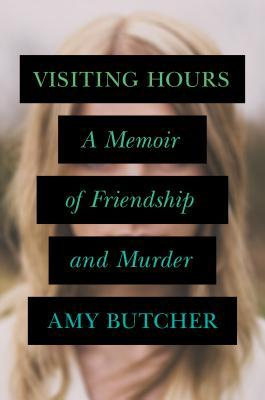 Visiting Hours: A Memoir of Friendship and Murder by Amy E. Butcher: The facts are simple: one night towards the end of their senior year at Gettysburg College, Kevin Schaeffer walked Butcher home from a drunken outing, then stabbed his ex-girlfriend to death. This book has elements of a true crime narrative, detailing the crime and speculating on possible causes for Kevin’s psychotic episode, but it’s more about how the crime affected Butcher. This is a concise and gripping narrative reminiscent of Half a Life by Darin Strauss.
A Reunion of Ghosts by Judith Claire Mitchell: Vee, Lady and Delph are the fourth generation of Alters, a Jewish family cursed with a rash of suicides. Indeed, the majority of the novel is the middle-aged sisters’ collective suicide note, narrated in the first-person plural. They reach back into the past to give the stories of their ancestors, including great-grandparents Iris and Lenz Alter, the latter of whom had the ironic distinction of being the Jewish creator of Zyklon gas (based on a real figure).

Beloved Strangers: A Memoir by Maria Chaudhuri: Islam versus Christianity is a background note, but the major theme is East versus West – specifically, Chaudhuri’s native Bangladesh set against America, where she attended university and later lived and worked. Religion, sexuality, dreams and second chances at love are all facets of the author’s search for a sense of home and family in a life of shifting loyalties. (My full review will appear in the autumn 2015 issue of Wasafiri literary magazine.)
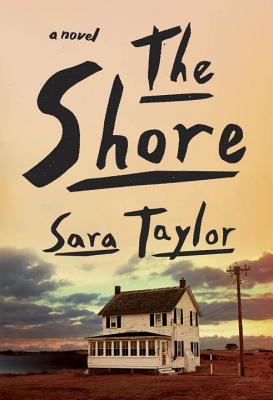 The Shore by Sara Taylor: Gritty and virtuosic, this novel-in-13-stories imagines 250 years of history on a set of islands off the coast of Virginia. As a Maryland native, I think of Chincoteague and Assateague as vacation destinations, but Taylor definitely focuses on their dark side here: industrial-scale chicken farms, unwanted pregnancies, domestic violence, bootleg liquor, gang rape, murders and meth labs.
Echoes of Heartsounds: A Memoir by Martha Weinman Lear: Longtime New York City journalist Lear’s first husband, a doctor named Hal, died after a series of heart attacks. Ironically, 30 years later she was admitted to the same hospital for a heart attack – an event that presents completely differently in women. As a sequel to her previous memoir, Heartsounds (1980), this explores life’s odd parallels and repetitions.
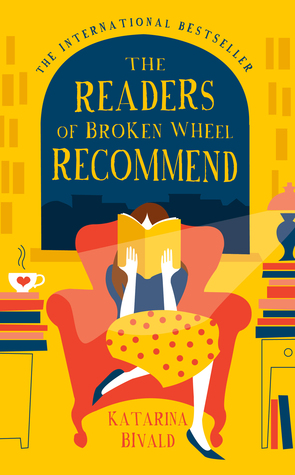 The Readers of Broken Wheel Recommend by Katarina Bivald: A Swedish tourist opens a bookstore in small-town Iowa. Given that she’d never visited the States at the time she wrote this novel (published in her native Sweden in 2013), Bivald has painted a remarkably accurate picture of a Midwestern town peopled with fundamentalists, gays, rednecks and a gun-toting diner owner. A cute read for book lovers, provided you can stomach a bit of chick lit / romance.
Life From Scratch: A Memoir of Food, Family, and Forgiveness by Sasha Martin: Martin writes well and I enjoyed this book overall, but at times you may become frustrated and ask “where’s the food?!” That’s because the makeup of this book is: Misery Memoir – 70% / Global Table Adventure blog – 30%. Martin had the idea to cook dishes from every country of the world. At the rate of one feast per weekend, the blog project took four years. She manages to give a fairly comprehensive overview of the cooking she did over that time.
Plumb Line by Steve Luttrell: Disappointingly average poems about nature and memory. The situations and sentiments are relatable but the language so plain that nothing sticks out.

The Sixth Extinction: An Unnatural History by Elizabeth Kolbert: The picture Kolbert paints of our environmental situation is depressing. I already knew the facts of climate change and animal extinction, but according to Kolbert the prognosis is even worse than I was aware. As a longtime New Yorker journalist, she writes at a good level for laymen: not talking down, nor assuming any specialist knowledge. Luckily, there are spots of humor to lighten the tone.
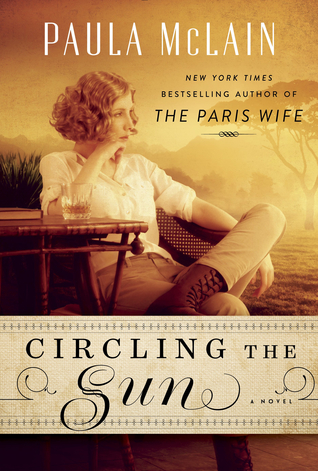 Circling the Sun by Paula McLain: This is just as good as The Paris Wife – if not better. I didn’t think I was very interested in aviatrix Beryl Markham, but McLain proved me wrong. The love triangle between her, Karen Blixen (Isak Dinesen) and Denys Finch Hatton forms the kernel of the book. McLain describes her African settings beautifully, and focuses as much on the small emotional moments that make a life as she does on the external thrills, though there are plenty of those.
The Size of Our Bed by Jacqueline Tchakalian: Well-structured and grouped into thematic sections, these poems are primarily about motherhood, the death of a much-loved husband from cancer, and adjusting to the reality of war. Alliteration and assonance stand in for traditional rhymes. Tchakalian is especially good with colors and flowers, which combine to create memorable metaphors. Releases September 15th.
 Bookish Beck = Rebecca Foster. American transplant to England. Freelance proofreader and book reviewer.
 Bookish Beck