Three on a Theme for Mother’s Day: Baker, Diski and Sampson
It’s Mothering Sunday in the UK today, so, like last year, I’m featuring three very different books about mothers and motherhood: a memoir, a novel and a poetry anthology. There are complex emotions at play in the first two due to grief, abuse and disability. The poems are cheerier (thankfully) and reflect on the experience of motherhood but also of being mothered. On that last point, I’ve added my response to a relevant short story I happened to read today.
Reading My Mother Back: A memoir in childhood animal stories by Timothy C. Baker (2022)
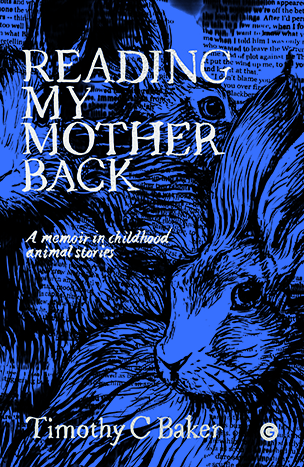 Baker is a lecturer in Scottish literature at the University of Aberdeen. His first non-academic publication is a curiously beguiling novella-length reappraisal of favourite children’s books. “To misquote Heraclitus, you cannot read the same book twice.” While he’s sheepish about including so many 19th- and early-20th-century white male authors, he can’t do otherwise as these are the texts that first taught him about death, loneliness and friendship: Charlotte’s Web, The Wind in the Willows, The Magician’s Nephew and Watership Down. (Also The Secret Garden.) Baker grew up in Maryland and Vermont, lonesome and closeted, with parents who briefly joined a cult. In his memory, his mother (who had been abused) always suffered with chronic illness and pain. In each chapter, he weaves together a discussion of a plot with stories from his early life and critical opinion on the value of rereading. It helped that I was familiar with six of the nine books Baker features (and others by Gallico, though not The Man Who Was Magic); I’d not even heard of Merle the High Flying Squirrel or The Book of the Dun Cow.
I spotted this in the Wigtown Festival Shop* on our 2023 visit to Scotland’s Book Town and could hardly believe it existed because it seemed so perfectly suited to me: I loved animal books, especially Watership Down, as a child; I’ll read any bereavement memoir going; I grew up 30 miles from Baltimore, where Baker spent his early life; he and I both had strict religious upbringings; and his mother experienced kidney failure (after eating a foxglove??), a link to my family’s history of kidney disease. There are plentiful differences, too, of course, but Baker emphasises connection. “If reading these books has taught me anything,” he concludes, “it is that all of my stories are individual, and all of them are universal. What we share is the unshareability of our grief … [but also] the joy of knowing that we have loved.” And for such a seemingly niche book (from Goldsmiths Press), I have actually found myself mentioning it to two blogger friends in recent days, so that’s proof he was right. 
[*As to how the book finally came into my possession: I added it to my wishlist and an acquaintance (a former mayor of Newbury, in fact) bought it for me for my 40th birthday. However, he forgot to bring the gift to our joint party and it took another 2+ years to extract it from him – through explicit reminders when we invited him to join us on a quiz team.]
Like Mother by Jenny Diski (1988)
I’ve enjoyed the late Jenny Diski’s travel memoirs (Skating to Antarctica and Stranger on a Train) and essays (On Trying to Keep Still). This novella was my first taste of her fiction and, while it’s dark as hell, I admired the psychological acuity and playfulness with narration. Occasional chapters introduce a dialogue between Nony and an imaginary interlocutor whose role is to listen to the story of her mother, Frances, a former dancer. That family history is the substance of the rest of the book, which is in an omniscient third person. The artificiality of the setup is blatant, though; Nony can neither think nor speak, having been born without a brain (hydranencephaly). Nony’s full name is thus Frances’s cruel joke.
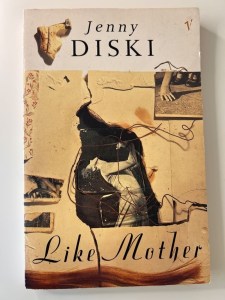
By necessity, the story stretches back to Frances’s parents, Ivy and Gerald, whose postwar optimism soon ceded to the reality of addiction, adultery and the attrition of love. A semiferal Frances escaped her unhappy home for the streets of London and engaged in sex play with Stuart on a bombsite. This went on for years. For Stuart, it blossomed into genuine love, but the numb Frances could never return his feelings and only used him. There are some really painful scenes here, such as Stuart stealing ether from the chemistry supply cupboard so she can huff herself into temporary oblivion, and a drunk Ivy molesting adolescent Frances. “Like mother, like daughter” is a bitter confirmation of inherited trauma. Nony might well be a symbolic manifestation of Frances’s desire to cultivate nothingness. To the extent that she is a literal baby – I’m really not sure – Frances does seem to love her and care for her physical needs, even as she’s grateful that the relationship will be short-lived.
Diski draws attention to the falsity of her narrative technique at the very end. It’s a disturbing yet intriguing novel that I think must be trying to make a wider point about postwar disillusionment. (Enough to make one question one’s growing antipathy towards Boomers?) I was reminded faintly of Nutshell by Ian McEwan, which is from the perspective of a fetus, and I Am Clarence by Elaine Kraf, a troubling story of a mentally ill mother and her disabled son. I have another novella plus a short story collection by Diski on the shelf, and I daresay after those I’ll have to seek out everything else she wrote. (University library) 
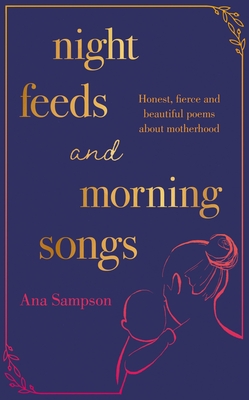
Night Feeds and Morning Songs, ed. Ana Sampson (2021)
“I crossed the border into the Republic of Motherhood
and found it a queendom, a wild queendom.”
~Liz Berry
It would have been easy to make such an anthology samey and sentimental, so kudos to Sampson for curating a solid mix of contemporary and period work. The poems are grouped into loose categories covering pregnancy, the sleepless nights of early motherhood, the power of womanly solidarity, the legacy (or absence) of one’s own mother, and the milestones of life as a child grows up and moves away. (Jackie Kay marvels that her baby boy is now a 6-foot-2 world traveller.) However, there are almost as many emotional approaches and poetic forms as there are contributors. Exhilaration meets exhaustion; guilt and grief threaten to overwhelm the good times. Sometimes the infant is addressed directly. The tone might be sombre, outraged or satirical. A few excerpts:
from “Labour Ward Prayer” by Vicky Thomas
Give us this day our daily miracle.
Exchange our offering of sweat and tears
and, most of all, of blood,
for new life, crumpled as a new leaf bud.
 from “The Visitor” by Idra Novey
…more dragon
than spaniel, more flammable
than fluid …
All wet mattress to my analysis,
he’s stayed the loudest and longest
of any houseguest
from “What My Kids Will Write about Me in Their Future Tell-All Book” by January Gill O’Neil
They will say that no was my favourite word,
More than stop, or eat, or love.
That some morning, I’d rather stay in bed,
laptop on lap, instead of making breakfast
…
They will say they have seen me naked.
Front side, back side – none of which
were my good side.
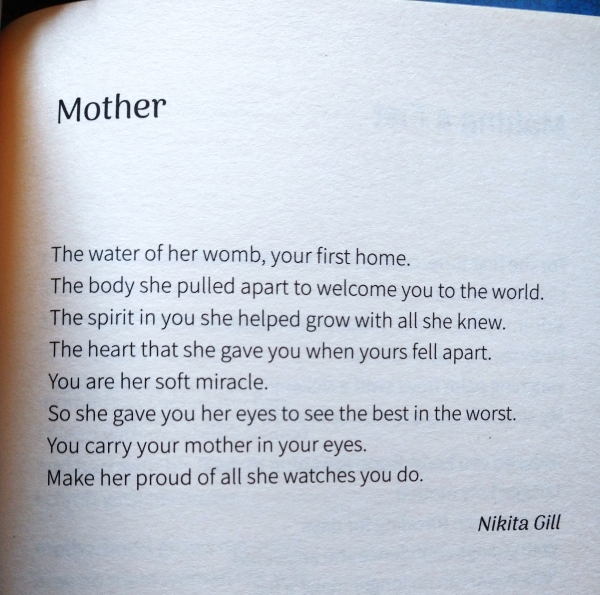
I enjoyed re-encountering work by some personal favourite poets such as Caroline Bird, though most entries were new to me. Sampson’s section introductions aren’t particularly illuminating and often reference poems that aren’t actually in the part in question. Some of the 19th-century and earlier material is quaintly twee, but I did love discovering Christina Rossetti’s “To My First Love, My Mother.” This is the poem that made me cry, though:
(Little Free Library)
And a bonus short story:
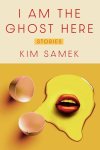 “Egg Mother” by Kim Samek (from I Am the Ghost Here): I’m two stories into Samek’s gently surreal collection. This second story combines the themes of parenting and grief prevalent above. Her openings are knockout: “At thirty-six I turn into a scrambled egg. It happens a few months after I give birth.” In therapy, the narrator discovers that she’s been repressing her grief over her mother, who died of cancer when the narrator was 13. The therapist suggests that she and her husband hold a joint ‘funeral’ for her mother and her younger self in a graveyard. But even after the ritual, she doesn’t return to herself. It’s a sobering but realistic message: some things one just doesn’t get over.
“Every story that I read becomes the story of my mother.”
~Timothy C. Baker
Last night, we saw Brooklyn expat singer-songwriter Annie Dressner (and Sean Duggan of Steady Habits) in concert at a church hall. I was mostly underwhelmed by her quirky confessional songs and little-girl voice, but a couple of songs stood out for me. One, “I Just Realized,” includes the line “And I hope that I can be just like my mother.”
Today was a more emotional day than I was expecting. I got a sweet posy from church, but having a whole service focussed on mothers and mothering was hard for me. I had to mostly switch off to get through it.
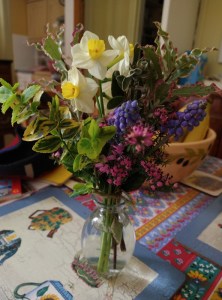
Just in my current stack, there are so many books about mothers or mothering…
 the loss of a mother (Eva Luna by Isabel Allende; The Memory of Borrowed Books by Meg Anderson; The Curious Incident of the Dog in the Night-Time by Mark Haddon; Late Migrations by Margaret Renkl; I Capture the Castle by Dodie Smith) – so common an element in novels that I have to think it’s shorthand for a character who has to pluckily rely on their own psychological resources
- mothers’ protective instinct (The Benefactors by Wendy Erskine)
- emotional distance from an unstable mother (Carrie by Stephen King; First Rain in Paradise by Gwyneth Lewis; Blonde by Joyce Carol Oates; The First Day of Spring by Nancy Tucker, which also includes the struggle to be a good mother in turn)
- mixed feelings about the inability to have a child (Mare by Emily Haworth-Booth)
- a mother’s grief at the loss of a child (Ordinary Saints by Niamh Ni Mhaoileoin)
I know it’s a subject I’ll be reading and thinking about for the rest of my life.
Spring Reading: Simon Barnes, Jackie Kay, and Michael Morpurgo
With all the roses in full bloom and the swifts back and nesting in the corner of our eaves, it’s been feeling more like summer than high spring as we approach the end of May. I didn’t amass many spring-themed books this year, but managed to piece together the below trio of library books. They feel quite England- (and Scotland-) specific; I wonder how well these authors are known outside the UK. All: 
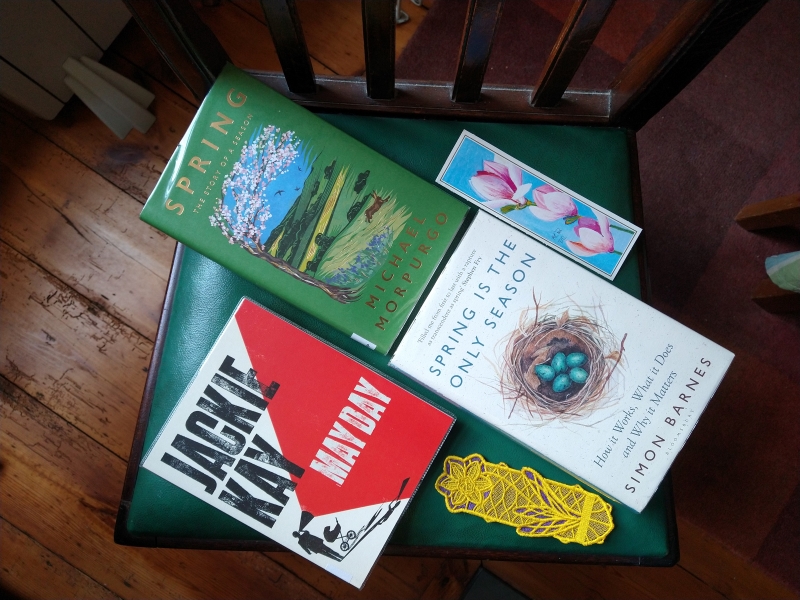
May Day by Jackie Kay (2024)
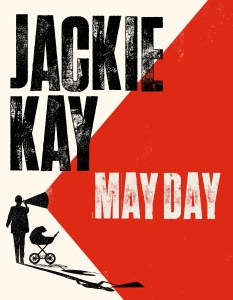 May Day is a traditional celebration for the first day of May, but it’s also a distress signal – as the megaphone and stark font on the cover reflect. Aptly, there are joyful verses as well as calls to arms here. Kay devotes poems to several of her role models, such as Harry Belafonte, Paul Robeson, Peggy Seeger and Nina Simone. But the real heroes of the book are her late parents, who were very politically active, standing up for workers’ rights and socialist values. Kay followed in their footsteps as a staunch attendee of protests. Her mother’s death during the Covid pandemic looms large. There is a touching triptych set on Mother’s Day in three consecutive years; even though her mum is gone for the last two, Kay still talks to her. Certain birds and songs will always remind her of her mum, and “Grief as Protest” links past and future. The bereavement theme resonated with me, but much of the rest made no mark (especially not the poems in dialect) and I don’t find much to admire poetically. I love Kay’s memoir, Red Dust Road, which has been among our most popular book club reads so far, but I’ve not particularly warmed to her poetry despite having read four collections now.
Spring: The Story of a Season by Michael Morpurgo (2025)
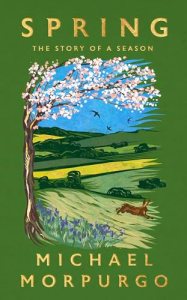 I’d not read Morpurgo before. He’s known primarily as a children’s author; if you’ve heard of one of his works, it will likely be War Horse, which became a play and then a film. This is a small hardback, scarcely 150 pages and with not many words to a page, plus woodcut illustrations interspersed. As revered English nature authors such as John Lewis-Stempel and Richard Mabey have also done, he depicts a typical season through a diary of several months of life on his land. For nearly 50 years, his Devon farm has hosted the Farms for City Children charity he founded. He believes urban living cuts people off from the rhythm of the seasons and from nature generally; “For so many reasons, for our wellbeing, for the planet, we need to revive that connection.” Now in his eighties, he lives with his wife in a small cottage and leaves much of the day-to-day work like lambing to others. But he still loves observing farm tasks and spotting wildlife (notably, an otter and a kingfisher) on his walks. This is a pleasant but inconsequential book. I most appreciated how it captures the feeling of seasonal anticipation – wondering when the weather will turn, when that first swallow will return.
And a skim:
Spring Is the Only Season: How It Works, What It Does, and Why It Matters by Simon Barnes (2025)
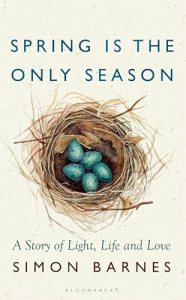 This 400+-page tome has an impressive scope. Like Mark Cocker does in One Midsummer’s Day, Barnes retreats all the way back to the Big Bang and then slowly zooms in, via the evolution of plants and the phenology of birds and insects. He also covers every possible topic you could think of relating to spring: religious festivals, mythology, literature, art, farming, and so on. Had I never read another book on spring, perhaps I would find this compendium satisfying, but it is rather meandering and too many of its points of reference are familiar. Moreover, the overall project is too similar to Tim Dee’s extraordinary Greenery. Alas, Barnes isn’t half the writer Dee is, so this ends up being a rather workmanlike survey. I most enjoyed the chapter-ending “Signs of Spring” lists from his Norfolk home. These more than illustrate how seasonality has gone awry due to climate change; a whole chapter wasn’t necessary to spell it out.
June Releases by K Patrick, Brandon Taylor and More
These two sensual, campus-set queer novels were perfect additional reading for Pride Month. As a bonus, I read a recently reissued postcolonial poetry collection.
Mrs S by K Patrick
Like Tom Crewe’s The New Life, this was one of the Guardian’s 2023 debuts to look out for, and both are seriously sexy. Patrick’s unnamed narrator is an early-twenties Australian, shunned by her family, who has come to England to be a matron at a girls’ boarding school. No other characters are named, either, with The Girls discussed in aggregate and the whole institution – a tradition-bound place that issues a classical education – in thrall to the memory of “the dead author,” an Emily Brontë-like figure whose genius is both inspiration and burden.
The narrator is butch and wears a binder, and in fact, we soon learn, is not the only lesbian on staff. She and the Housemistress become drinking buddies, even venturing into the nearest large town to frequent a gay bar. But there’s also Mrs S, the headmaster’s wife, perhaps 20 years her senior, whose attention initially seems maternal – as they tend the rose garden, lead an art lesson together and fill in for a play performance – but gradually becomes more erotic when they go wild swimming and meet in the kitchen during a dinner party.
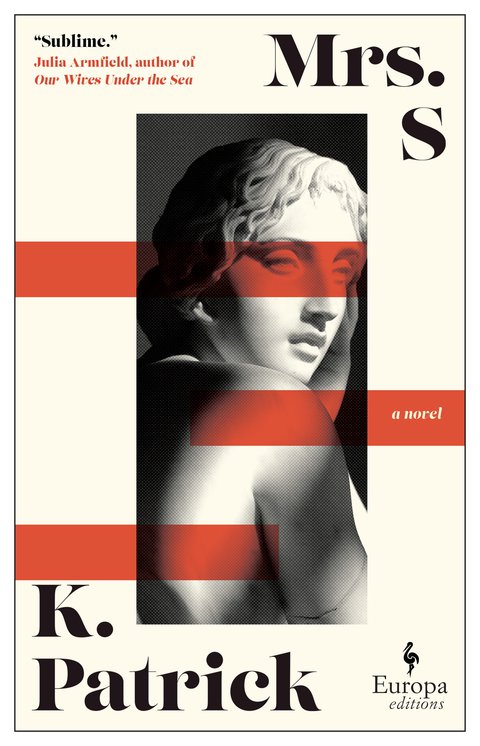
A heat wave gives the novel a sultry atmosphere as hints give way to explicit scenes. The Girls’ little dramas (one punches a boy and breaks his nose at a campus party; one group gets drunk while another gets high on mushrooms) pale in comparison to the steamy secrets. Summer romances can never last, but their intensity is legendary, and this feels like an instant standard of the type. Given the pre-Internet clues, it likely dates to the 1990s, and Mrs S and the narrator are on different pages about gender roles; had it been today, the narrator would surely have been frankly nonbinary like Patrick.
Her heterosexuality, public-facing. Its cosy violence. Who does she want to be? If I ask her that, she might fall apart. If I ask her that, I must be willing to live through the answer. … She is trying to be two people, I am not. Maybe I was. Not anymore.
The author takes the no-speech-marks thing to another level, the dialogue all in paragraph form with no new lines for each speaker. That and the under-punctuation are deliberate choices that make this somehow hyper-contemporary and a throwback to the Bloomsbury modernists all at once – what with the metaphors of propagating roses and garden fecundity, I couldn’t help but think of Virginia Woolf and Vita Sackville-West. Mrs S isn’t your average coming-of-age story, seduction narrative, or cougar stereotype. It’s a new queer classic.
With thanks to Europa Editions for the free copy for review. Released in the UK by Fourth Estate.
The Late Americans by Brandon Taylor
I was a huge fan of Taylor’s debut novel, the Booker-shortlisted Real Life, and also admired his follow-up linked story collection, Filthy Animals. This third book falls somewhere between the two in style. Although it’s been marketed as a novel, the nine close third person chapters are so discrete as to be more like short stories, all orbiting a group of students at the University of Iowa: many BIPOC, most gay; lots of them current or former ballet dancers.
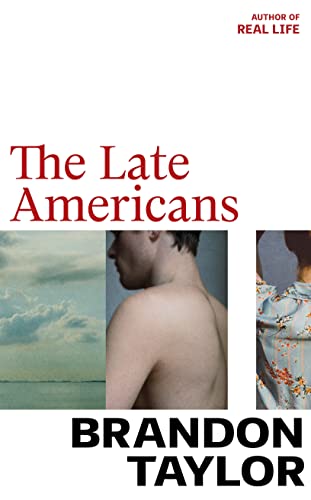 Seamus is the subject of the opening title story and “Gorgon’s Head,” so he felt to me like the core of the novel and I would happily have had him as the protagonist throughout. He’s a spiky would-be poet who ends up offending his classmates with his snobby opinions (“her poems were, in the words of a fictional Robert Lowell in an Elizabeth Bishop biopic, ‘observations broken into lines’ … she lacked a poetic intelligence”) and funds his studies by working in the kitchen at a hospice, where he meets a rough local named Bert and they have a sexual encounter that shades into cruelty.
Other characters include on-again, off-again homosexual couples Fyodor and Timo, and Ivan and Goran. Their fundamental differences account for why they so often spar: Fyodor works in a meat-packing plant, while Timo is vegetarian; Goran lives off family wealth, whereas Ivan has to get by on his own, and starts making amateur pornography for money. Noah, too, has the misfortune to get involved with Bert; most of the men, in fact, sleep with one or more of the other men. It’s hard to believe in the durability of this incestuous group. They’re all facing transitions as their studies come to an end, looking for jobs or internships, sometimes switching fields and deciding whether to leave relationships behind. Two late chapters from the perspectives of women, Noah’s neighbour Bea and dancer Fatima, who experiences sexualized shaming, were refreshing. Overall, I’m torn: Taylor’s writing can be stunning:
Iowa was a kind of cultural winter—they had all come to this speck of a city in the middle of a middle state in order to study art, to hone themselves and their ideas like perfect, terrifying weapons, and in the monastic kind of deprivation they found here, they turned to one another. Every dying species sought its own kind of comfort.
They were all posturing all the time. Everything they did was a posture, defensive or offensive, meant to demonstrate something to the outside world, perhaps that they were worthy or good or all right, perhaps to imply that they were in on the joke, that they were nothing and all they had were these crude choreographies of the self.
But it can also be laughable:
There was a resinous, burning taste in Noah’s mouth, and he wondered if it was from the semen or the cigarette or the pepper on the trout at dinner.
And even when it’s sublime, it feels a bit wasted on repetitive stories of meaningless hook-ups, assault, and resentment. This ended up being something of a disappointment from my Most Anticipated list. After three books about angsty homosexuals at midwestern universities, the author is in real danger of being perceived as a one-trick pony. I hope he’ll stretch himself and try something different with his next book.
With thanks to Jonathan Cape for the proof copy for review. Released in the USA by Riverhead.
And a bonus:
The Fat Black Woman’s Poems by Grace Nichols (1984)
 I discovered Grace Nichols a few years ago when I reviewed Passport to Here and There for Wasafiri. One of “Five Gold Reads” to mark Virago’s 50th anniversary, this was the Guyanese-British poet’s second collection (the reissue also includes a few poems from her first book, I Is a Long-Memoried Woman).
The title character is a woman of pleasures, jovial and sensual, but not without cliches (“Come up and see me sometime // My breasts are huge exciting / amnions of watermelon”). I preferred the later sections of the book about childhood memories and the expat’s dilemma: what you miss haunts you, even if what you gained in leaving was objectively better.
In London
every now and then
I get this craving
for my mother’s food
I leave art galleries
in search of plantains
These islands
not picture postcards
for unravelling tourist
you know
…
Poverty is the price we pay for the sun
The patois reminded me of work I’ve read by Bernardine Evaristo and Jackie Kay, and I might recommend the collection as a whole to readers of Fire Rush or Cane, Corn & Gully. But it didn’t spark much for me compared with Nichols’ more recent poetry.
With thanks to Virago for the free copy for review.
Rathbones Folio Prize Fiction Shortlist: Sheila Heti and Elizabeth Strout
I’ve enjoyed engaging with this year’s Rathbones Folio Prize shortlists, reading the entire poetry shortlist and two each from the nonfiction and fiction lists. These two I accessed from the library. Both Sheila Heti and Elizabeth Strout featured in the 5×15 event I attended on Tuesday evening, so in the reviews below I’ll weave in some insights from that.
Pure Colour by Sheila Heti
 Sheila Heti is a divisive author; I’m sure there are those who detest her indulgent autofiction, though I’ve loved it (How Should a Person Be? and especially Motherhood). But this is another thing entirely: Heti puts two fingers up to the whole notion of rounded characterization or coherent plot. This is the thinnest of fables, fascinating for its ideas and certainly resonant for me what with the themes of losing a parent and searching for purpose in life on an earth that seems doomed to destruction … but is it a novel?
My summary for Bookmarks magazine gives an idea of the ridiculous plot:
Heti imagines that the life we live now—for Mira, studying at the American Academy of American Critics, working in a lamp store, grieving her father, and falling in love with Annie—is just God’s first draft. In this creation myth of sorts, everyone is born a “bear” (lover), “bird” (achiever), or “fish” (follower). Mira has a mystical experience in which she and her dead father meet as souls in a leaf, where they converse about the nature of time and how art helps us face the inevitability of death. If everything that exists will soon be wiped out, what matters?
The three-creature classification is cute enough, but a copout because it means Heti doesn’t have to spend time developing Mira (a bird), Annie (a fish), or Mira’s father (a bear), except through surreal philosophical dialogues that may or may not take place whilst she is disembodied in a leaf. It’s also uncomfortable how Heti uses sexual language for Mira’s communion with her dead dad: “she knew that the universe had ejaculated his spirit into her”.
Heti explained that the book came to her in discrete chunks, from what felt like a more intuitive place than the others, which were more of an intellectual struggle, and that she drew on her own experience of grief over her father’s death, though she had been writing it for a year beforehand.
Indeed, she appears to be tapping into primordial stories, the stuff of Greek myth or Jewish kabbalah. She writes sometimes of “God” and sometimes of “the gods”: the former regretting this first draft of things and planning how to make things better for himself the second time around; the latter out to strip humans of what they care about: “our parents, our ambitions, our friendships, our beauty—different things from different people. They strip some people more and others less. They strip us of whatever they need to in order to see us more clearly.” Appropriately, then, we follow Mira all the way through to her end, when, stripped of everything but love, she rediscovers the two major human connections of her life.
Given Ali Smith’s love of the experimental, it’s no surprise that she as a judge shortlisted this. If you’re of a philosophical bent, don’t mind negligible/non-existent plot in your novels and aren’t turned off by literary pretension, you should be fine. If you are new to Heti or unsure about trying her, though, this is probably not the right place to start. See my Goodreads review for some sample quotes, good and bad. 
Lucy by the Sea by Elizabeth Strout
This was by far the best of the three Amgash books I’ve read. I think it must be the first time that Strout has set a book not in the past or at some undated near-contemporary moment but in the actual world with its current events, which inevitably means it gets political. I had my doubts about how successful she’d be with such hyper-realism, but this really worked.
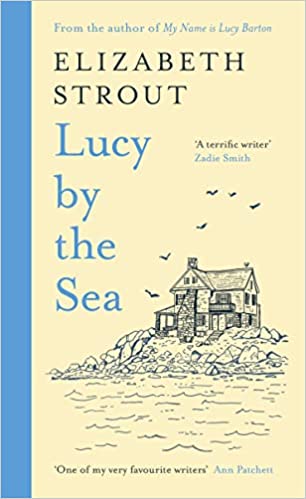 As Covid hits, William whisks Lucy away from her New York City apartment to a house at the coast in Crosby, Maine. She’s an Everywoman recounting the fear and confusion of those early pandemic days, hearing of friends and relatives falling ill and knowing there’s nothing she can do about it. Isolation, mostly imposed on her but partially chosen – she finally gets a writing studio, the first ‘room of her own’ she’s ever had – gives her time to ponder the trauma of her childhood and what went wrong in her marriage to William. She worries for her two adult daughters but, for the first time, you get the sense that the strength and wisdom she’s earned through bitter experience will help her support them in making good choices.
Here in rural Maine, Lucy sees similar deprivation to what she grew up with in Illinois and also meets real people – nice, friendly people – who voted for Trump and refuse to be vaccinated. I loved how Strout shows us Lucy observing and then, through a short story, compassionately imagining herself into the situation of conservative cops and drug addicts. “Try to go outside your comfort level, because that’s where interesting things will happen on the page,” is her philosophy. This felt like real insight into a writer’s inspirations.
Another neat thing Strout does here, as she has done before, is to stitch her oeuvre together by including references to most of her other books. So she becomes friends with Bob Burgess, volunteers alongside Olive Kitteridge’s nursing home caregiver (and I expect their rental house is supposed to be the one Olive vacated), and meets the pastor’s daughter from Abide with Me. My only misgiving is that she recounts Bob Burgess’s whole story, replete with spoilers, such that I don’t feel I need to read The Burgess Boys.
Lucy has emotional intelligence (“You’re not stupid about the human heart,” Bob Burgess tells her) and real, hard-won insight into herself (“My childhood had been a lockdown”). Readers as well as writers have really taken this character to heart, admiring her seemingly effortless voice. Strout said she does not think of this as a ‘pandemic novel’ because she’s always most interested in character. She believes the most important thing is the sound of the sentences and that a writer has to determine the shape of the material from the inside. She was very keen to separate herself from Lucy, and in fact came across as rather terse. I had somehow expected her to have a higher voice, to be warmer and softer. (“Ah, you’re not Lucy, you’re Olive!” I thought to myself.) 
Predictions
This year’s judges are Guy Gunaratne, Jackie Kay and Ali Smith. Last year’s winner was a white man, so I’m going to say in 2023 the prize should go to a woman of colour, and in fact I wouldn’t be surprised if all three category winners were women of colour. My own taste in the shortlists is, perhaps unsurprisingly, very white-lady-ish and non-experimental. But I think Amy Bloom and Elizabeth Strout’s books are too straightforward and Fiona Benson’s not edgy enough. So I’m expecting:
Fiction: Scary Monsters by Michelle de Kretser
Nonfiction: Constructing a Nervous System by Margo Jefferson
Poetry: Quiet by Victoria Adukwei Bulley (or Cane, Corn & Gully by Safiya Kamaria Kinshasa)
Overall winner: Constructing a Nervous System by Margo Jefferson (or Quiet by Victoria Adukwei Bulley)
This is my 1,200th blog post!
Book Serendipity, Mid-August to Mid-October 2022
It’s my birthday today and we’re off to Kelmscott Manor, where William Morris once lived, so I’ll start with a Morris-related anecdote even if it’s not a proper book coincidence. One of his most famous designs, the Strawberry Thief, is mentioned in Tomorrow, and Tomorrow, and Tomorrow by Gabrielle Zevin, and I happen to be using a William Morris wall calendar this year. I will plan to report back tomorrow on our visit plus any book hauls that occur.
I call it “Book Serendipity” when two or more books that I read at the same time or in quick succession have something in common – the more bizarre, the better. This is a regular feature of mine every few months. Because I usually have 20–30 books on the go at once, I suppose I’m more prone to such incidents. The following are in roughly chronological order.
 There’s a character named Verena in What Concerns Us by Laura Vogt and Summer by Edith Wharton. Add on another called Verona from Stories from the Tenants Downstairs by Sidik Fofana.
- Two novels with a female protagonist who’s given up a singing career: Brief Lives by Anita Brookner and What Concerns Us by Laura Vogt.
- Two books featuring Black characters, written in African American Vernacular English, and with elements of drug use and jail time plus rent rises driving people out of their apartments and/or to crime (I’ve basically never felt so white): Stories from the Tenants Downstairs by Sidik Fofana and Nightcrawling by Leila Mottley.

- Two books on my stack with the protagonist an African American woman from Oakland, California: Red Island House by Andrea Lee and Nightcrawling by Leila Mottley
- A middle-aged woman’s hair is described as colourless and an officious hotel staff member won’t give the protagonist a cup of coffee/glass of wine in Brief Lives by Anita Brookner and Oh William! by Elizabeth Strout.
- There’s a central Switzerland setting in Mountain Song by Lucy Fuggle and What Concerns Us by Laura Vogt.
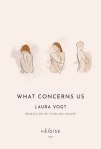
- On the same day, I encountered two references to Mary Oliver’s famous poem “The Summer Day” (“what is it you plan to do / with your one wild and precious life?”): in Mountain Song by Lucy Fuggle and This Beauty by Nick Riggle. (Fuggle and Riggle – that makes me laugh!)
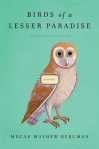
- In the same evening I found mentions of copperhead snakes in Demon Copperhead by Barbara Kingsolver (no surprise there), but also on the very first page of Birds of a Lesser Paradise by Megan Mayhew-Bergman.

- Crop circles are important to What Remains? by Rupert Callender and The Perfect Golden Circle by Benjamin Myers.
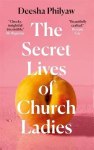
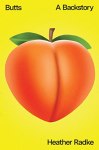
- I was reading two books with provocative peaches on the cover at the same time: The Secret Lives of Church Ladies by Deesha Philyaw and Butts: A Backstory by Heather Radke.
- A main character is pregnant but refuses medical attention in The Language of Flowers by Vanessa Diffenbaugh and What Concerns Us by Laura Vogt.
- An Australian setting and the slang “Carn” or “C’arn” for “come on” in Cloudstreet by Tim Winton and one story (“Halflead Bay”) from The Boat by Nam Le.
- Grape nuts cereal is mentioned in Leap Year by Helen Russell and This Time Tomorrow by Emma Straub.
- A character wagers their hair in a short story from Bratwurst Haven by Rachel King and one from Anthropology by Dan Rhodes.
- Just after I started reading a Jackie Kay poetry collection (Other Lovers), I turned to The Horizontal Oak by Polly Pullar and found a puff from Kay on the front cover. And then one from Jim Crumley, whose The Nature of Spring I was also reading, on the back cover! (All Scottish authors, you see.)
- Reading two memoirs that include a father’s suicide – Sinkhole by Juliet Patterson and The Horizontal Oak by Polly Pullar – at the same time.
- Middle school students reading Of Mice and Men in Ms. Hempel Chronicles by Sarah Shun-lien Bynum and Stories from the Tenants Downstairs by Sidik Fofana.
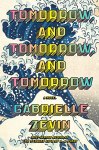
- A second novel in two months in which Los Angeles’s K-Town (Korean neighbourhood) is an important location: after Which Side Are You On by Ryan Lee Wong, Tomorrow, and Tomorrow, and Tomorrow by Gabrielle Zevin.
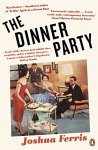
- The main character inherits his roommate’s coat in one story of The Dinner Party by Joshua Ferris, and Tomorrow, and Tomorrow, and Tomorrow by Gabrielle Zevin.
- The Groucho Marx quote “Whatever it is, I’m against it” turns up in What Remains? by Rupert Callender and Blurb Your Enthusiasm by Louise Willder (where it’s adapted to “we’re” as the motto of 3:AM Magazine).
 In Remainders of the Day by Shaun Bythell, Polly Pullar is mentioned as one of the writers at that year’s Wigtown Book Festival; I was reading her The Horizontal Oak at the same time.
- Marilyn Monroe’s death is mentioned in Sinkhole by Juliet Patterson and Tomorrow, and Tomorrow, and Tomorrow by Gabrielle Zevin.
- The types of standard plots that there are, and the fact that children’s books get the parents out of the way as soon as possible, are mentioned in And Finally by Henry Marsh and Blurb Your Enthusiasm by Louise Willder.
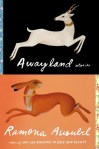
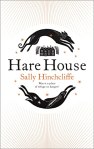
- Two books in quick succession with a leaping hare (and another leaping mammal, deer vs. dog) on the cover: Awayland by Ramona Ausubel, followed by Hare House by Sally Hinchcliffe.
- Three fingers held up to test someone’s mental state after a head injury in The House Is on Fire by Rachel Beanland and The Fear Index by Robert Harris.
- A scene where a teenage girl has to help with a breech livestock delivery (goat vs. sheep) in Belzhar by Meg Wolitzer and The Truants by Kate Weinberg.
- Two memoirs by a doctor/comedian that open with a scene commenting on the genitals of a cadaver being studied in medical school: Catch Your Breath by Ed Patrick wasn’t funny in the least, so I ditched it within the first 10 pages or so, whereas Undoctored by Adam Kay has been great so far.
What’s the weirdest reading coincidence you’ve had lately?
11 Days, 11 Books: 2020’s Reads, from Best to Worst
I happen to have finished 11 books so far this year – though a number of them were started in 2019 (one as far back as September) and several of them are novelty books and/or of novella length. Just for kicks, I’ve arranged them from best to worst. Here’s how my reading year has started off…
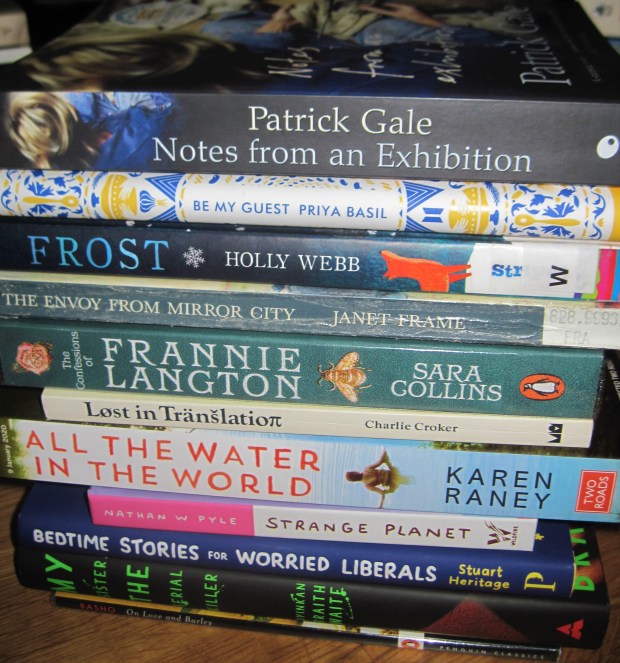
 Notes from an Exhibition by Patrick Gale – Nonlinear chapters give snapshots of the life of bipolar Cornwall artist Rachel Kelly and her interactions with her husband and four children, all of whom are desperate to earn her love. Quakerism, with its emphasis on silence and the inner light in everyone, sets up a calm and compassionate atmosphere, but also allows for family secrets to proliferate. There are two cameo appearances by an intimidating Dame Barbara Hepworth, and three wonderfully horrible scenes in which Rachel gives a child a birthday outing. The novel questions patterns of inheritance (e.g. of talent and mental illness) and whether happiness is possible in such a mixed-up family. (Our joint highest book club rating ever, with Red Dust Road. We all said we’d read more by Gale.)
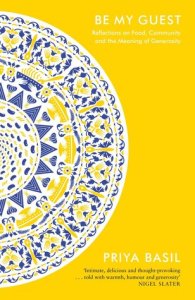 Be My Guest: Reflections on Food, Community and the Meaning of Generosity by Priya Basil – An extended essay whose overarching theme of hospitality stretches into many different topics. Part of an Indian family that has lived in Kenya and England, Basil is used to a culture of culinary abundance. Greed, especially for food, feels like her natural state, she acknowledges. However, living in Berlin has given her a greater awareness of the suffering of the Other – hundreds of thousands of refugees have entered the EU, often to be met with hostility. Yet the Sikhism she grew up in teaches unconditional kindness to strangers. She asks herself, and readers, how to cultivate the spirit of generosity. Clearly written and thought-provoking. (And typeset in Mrs Eaves, one of my favorite fonts.) See also Susan’s review, which convinced me to order a copy with my Christmas bookstore voucher.
 Frost by Holly Webb – Part of a winter animals series by a prolific children’s author, this combines historical fiction and fantasy in an utterly charming way. Cassie is a middle child who always feels left out of her big brother’s games, but befriending a fox cub who lives on scrubby ground near her London flat gives her a chance for adventures of her own. One winter night, Frost the fox leads Cassie down the road – and back in time to the Frost Fair of 1683 on the frozen Thames. I rarely read middle-grade fiction, but this was worth making an exception for. It’s probably intended for ages eight to 12, yet I enjoyed it at 36. My library copy smelled like strawberry lip gloss, which was somehow just right.
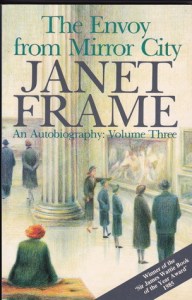 The Envoy from Mirror City by Janet Frame – This is the last and least enjoyable volume of Frame’s autobiography, but as a whole the trilogy is an impressive achievement. Never dwelling on unnecessary details, she conveys the essence of what it is to be (Book 1) a child, (2) a ‘mad’ person, and (3) a writer. After years in mental hospitals for presumed schizophrenia, Frame was awarded a travel fellowship to London and Ibiza. Her seven years away from New Zealand were a prolific period as, with the exception of breaks to go to films and galleries, and one obsessive relationship that nearly led to pregnancy out of wedlock, she did little else besides write. The title is her term for the imagination, which leads us to see Plato’s ideals of what might be.
 The Confessions of Frannie Langton by Sara Collins – Collins won the first novel category of the Costa Awards for this story of a black maid on trial in 1826 London for the murder of her employers, the Benhams. Margaret Atwood hit the nail on the head in a tweet describing the book as “Wide Sargasso Sea meets Beloved meets Alias Grace” (she’s such a legend she can get away with being self-referential). Back in Jamaica, Frances was a house slave and learned to read and write. This enabled her to assist Langton in recording his observations of Negro anatomy. Amateur medical experimentation and opium addiction were subplots that captivated me more than Frannie’s affair with Marguerite Benham and even the question of her guilt. However, time and place are conveyed convincingly, and the voice is strong.
(The next one is a book my husband received for Christmas, as are the Heritage and Pyle, further down, which were from me. Yes, I read them as well. What of it?)
 Lost in Translation by Charlie Croker – This has had us in tears of laughter. It lists examples of English being misused abroad, e.g. on signs, instructions and product marketing. China and Japan are the worst repeat offenders, but there are hilarious examples from around the world. Croker has divided the book into thematic chapters, so the weird translated phrases and downright gobbledygook are grouped around topics like food, hotels and medical advice. A lot of times you can see why mistakes came about, through the choice of almost-but-not-quite-right synonyms or literal interpretation of a saying, but sometimes the mind boggles. Two favorites: (in an Austrian hotel) “Not to perambulate the corridors in the hours of repose in the boots of ascension” and (on a menu in Macao) “Utmost of chicken fried in bother.”
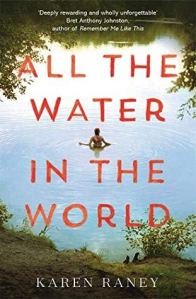 All the Water in the World by Karen Raney – Like The Fault in Our Stars (though not YA), this is about a teen with cancer. Sixteen-year-old Maddy is eager for everything life has to offer, so we see her having her first relationship – with Jack, her co-conspirator on an animation project to be used in an environmental protest – and contacting Antonio, the father she never met. Sections alternate narration between her and her mother, Eve. I loved the suburban D.C. setting and the e-mails between Maddy and Antonio. Maddy’s voice is sweet yet sharp, and, given that the main story is set in 2011, the environmentalism theme seems to anticipate last year’s flowering of youth participation. However, about halfway through there’s a ‘big reveal’ that fell flat for me because I’d guessed it from the beginning.
This was published on the 9th. My thanks to Two Roads for the proof copy for review.
 Strange Planet by Nathan W. Pyle – I love these simple cartoons about aliens and the sense they manage to make of Earth and its rituals. The humor mostly rests in their clinical synonyms for everyday objects and activities (parenting, exercise, emotions, birthdays, office life, etc.). Pyle definitely had fun with a thesaurus while putting these together. It’s also about gentle mockery of the things we think of as normal: consider them from one remove, and they can be awfully strange. My favorites are still about the cat. You can also see his work on Instagram.

 Bedtime Stories for Worried Liberals by Stuart Heritage – I bought this for my husband purely for the title, which couldn’t be more apt for him. The stories, a mix of adapted fairy tales and new setups, are mostly up-to-the-minute takes on US and UK politics, along with some digs at contemporary hipster culture and social media obsession. Heritage quite cleverly imitates the manner of speaking of both Boris Johnson and Donald Trump. By its nature, though, the book will only work for those who know the context (so I can’t see it succeeding outside the UK) and will have a short shelf life as the situations it mocks will eventually fade into collective memory. So, amusing but not built to last. I particularly liked “The Night Before Brexmas” and its all-too-recognizable picture of intergenerational strife.
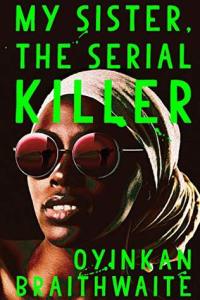 My Sister, the Serial Killer by Oyinkan Braithwaite – The Booker Prize longlist and the Women’s Prize shortlist? You must be kidding me! The plot is enjoyable enough: a Nigerian nurse named Korede finds herself complicit in covering up her gorgeous little sister Ayoola’s crimes – her boyfriends just seem to end up dead somehow; what a shame! – but things get complicated when Ayoola starts dating the doctor Korede has a crush on and the comatose patient to whom Korede had been pouring out her troubles wakes up. My issue was mostly with the jejune writing, which falls somewhere between high school literary magazine and television soap (e.g. “My hands are cold, so I rub them on my jeans” & “I have found that the best way to take your mind off something is to binge-watch TV shows”).
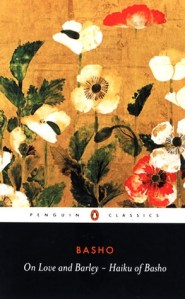 On Love and Barley – Haiku of Basho [trans. from the Japanese by Lucien Stryk] – These hardly work in translation. Almost every poem requires a contextual note on Japan’s geography, flora and fauna, or traditions; as these were collected at the end but there were no footnote symbols, I didn’t know to look for them, so by the time I read them it was too late. However, here are two that resonated, with messages about Zen Buddhism and depression, respectively: “Skylark on moor – / sweet song / of non-attachment.” (#83) and “Muddy sake, black rice – sick of the cherry / sick of the world.” (#221; reminds me of Samuel Johnson’s “tired of London, tired of life” maxim). My favorite, for personal relevance, was “Now cat’s done / mewing, bedroom’s / touched by moonlight.” (#24)
Any of these you have read or would read?
Onwards with the 2020 reading!
My Best Backlist Reads of 2019
Like many book bloggers, I’m irresistibly drawn to the shiny new books released each year. However, I consistently find that many of my most memorable reads were published years or even decades ago.
These selections, in alphabetical order by author name, account for the rest of my 5-star ratings of the year, plus a handful of 4.5 and high 4 ones.
Fiction
 Faces in the Water by Janet Frame: The best inside picture of mental illness I’ve read. Istina Mavet, in and out of New Zealand mental hospitals between ages 20 and 28, undergoes regular shock treatments. Occasional use of unpunctuated, stream-of-consciousness prose is an effective way of conveying the protagonist’s terror. Simply stunning writing.
 The Monsters of Templeton by Lauren Groff: Groff wrote this in homage to Cooperstown, New York, where she grew up. We hear from leading lights in the town’s history and Willie’s family tree through a convincing series of first-person narratives, letters and other documents. A charming way to celebrate where you come from with all its magic and mundanity.
 The Poisonwood Bible by Barbara Kingsolver: What an amazing novel about the ways that right and wrong, truth and pain get muddied together. Some characters are able to acknowledge their mistakes and move on, while others never can. Christianity and colonialism have a lot to answer for. A masterpiece.
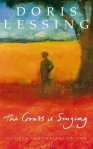 The Grass Is Singing by Doris Lessing: Begins with the words “MURDER MYSTERY”: a newspaper headline announcing that Mary, wife of Rhodesian farmer Dick Turner, has been found murdered by their houseboy. The breakdown of a marriage and the failure of a farm form a dual tragedy that Lessing explores in searing psychological detail.
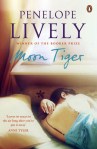 Moon Tiger by Penelope Lively: Seventy-six-year-old Claudia Hampton, on her deathbed in a nursing home, determines to write a history of the world as she’s known it. More impressive than the plot surprises is how Lively packs the whole sweep of a life into just 200 pages, all with such rich, wry commentary on how what we remember constructs our reality.
 The Friend by Sigrid Nunez: The narrator is a writer and academic who has stepped up to care for her late friend’s aging Great Dane, Apollo. It feels like Nunez has encapsulated everything she’s ever known or thought about, all in just over 200 pages, and alongside a heartwarming little plot. (Animal lovers need not fear.)
 There There by Tommy Orange: Orange’s dozen main characters are urban Native Americans converging on the annual Oakland Powwow. Their lives have been difficult, to say the least. The novel cycles through most of the characters multiple times, so gradually we work out the links between everyone. Hugely impressive.
 In the Driver’s Seat by Helen Simpson: The best story collection I read this year. Themes include motherhood, death versus new beginnings, and how to be optimistic in a world in turmoil. Gentle humor and magic tempers the sadness. I especially liked “The Green Room,” a Christmas Carol riff, and “Constitutional,” set on a woman’s one-hour lunch break walk.
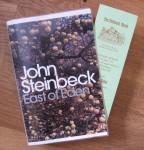 East of Eden by John Steinbeck: Look no further for the Great American Novel. Spanning from the Civil War to World War I and crossing the country from New England to California, this is just as wide-ranging in its subject matter, with an overarching theme of good and evil as it plays out in families and in individual souls.
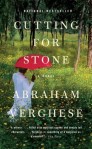 Cutting for Stone by Abraham Verghese: The saga of conjoined twins born of a union between an Indian nun and an English surgeon in 1954. Ethiopia’s postcolonial history is a colorful background. I thrilled to the accounts of medical procedures. I can’t get enough of sprawling Dickensian stories full of coincidences, minor characters, and humor and tragedy.
 Extinctions by Josephine Wilson: The curmudgeonly antihero is widower Frederick Lothian, at age 69 a reluctant resident of St Sylvan’s Estate retirement village. It’s the middle of a blistering Australian summer and he has plenty of time to drift back over his life. He’s a retired engineering expert, but he’s been much less successful in his personal life.
Poetry
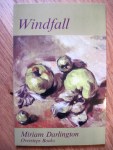 Windfall by Miriam Darlington: I’d had no idea that Darlington had written poetry before she turned to nature writing. The verse is rooted in the everyday. Multiple poems link food and erotic pleasure; others make nature the source of exaltation. Lots of allusions and delicious alliteration. Pick this up if you’re still mourning Mary Oliver.
 Girls Are Coming Out of the Woods by Tishani Doshi: The third collection by the Welsh–Gujarati poet and dancer is vibrant and boldly feminist. The tone is simultaneously playful and visionary, toying with readers’ expectations. Several of the most arresting poems respond to the #MeToo movement. She also excels at crafting breath-taking few-word phrases.
 Where the Road Runs Out by Gaia Holmes: A major thread of the book is caring for her father at home and in the hospital as he was dying on the Orkney Islands – a time of both wonder and horror. Other themes include pre-smartphone life and a marriage falling apart. There are no rhymes, just alliteration and plays on words, with a lot of seaside imagery.
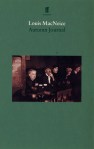 Autumn Journal by Louis MacNeice: MacNeice wrote this long verse narrative between August 1938 and the turn of the following year. Everyday life for the common worker muffles political rumblings that suggest all is not right in the world. He reflects on his disconnection from Ireland; on fear, apathy and the longing for purpose. Still utterly relevant.
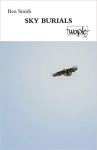 Sky Burials by Ben Smith: I discovered Smith through the 2018 New Networks for Nature conference. He was part of a panel discussion on the role poetry might play in environmental activism. This collection shares that environmentalist focus. Many of the poems are about birds. There’s a sense of history but also of the future.
Nonfiction
 Crow Planet: Essential Wisdom from the Urban Wilderness by Lyanda Lynn Haupt: During a bout of depression, Haupt decided to start paying more attention to the natural world right outside her suburban Seattle window. Crows were a natural place to start. A charming record of bird behavior and one woman’s reawakening, but also a bold statement of human responsibility to the environment.
 All Things Consoled: A Daughter’s Memoir by Elizabeth Hay: Hay’s parents, Gordon and Jean, stumbled into their early nineties in an Ottawa retirement home. There are many harsh moments in this memoir, but almost as many wry ones, with Hay picking just the right anecdotes to illustrate her parents’ behavior and the shifting family dynamic.
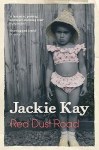 Red Dust Road by Jackie Kay: Jackie Kay was born out of the brief relationship between a Nigerian student and a Scottish nurse in Aberdeen in the early 1960s. This memoir of her search for her birth parents is a sensitive treatment of belonging and (racial) identity. Kay writes with warmth and a quiet wit. The nonlinear structure is like a family photo album.
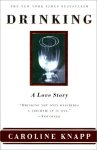 Drinking: A Love Story by Caroline Knapp: An excellent addiction memoir that stands out for its smooth and candid writing. For nearly 20 years, Knapp was a high-functioning alcoholic who maintained jobs in Boston-area journalism. The rehab part is often least exciting, but I appreciated how Knapp characterized it as the tortured end of a love affair.
 The Trauma Cleaner: One Woman’s Extraordinary Life in Death, Decay and Disaster by Sarah Krasnostein: I guarantee you’ve never read a biography quite like this one. It’s part journalistic exposé and part “love letter”; it’s part true crime and part ordinary life story. It considers gender, mental health, addiction, trauma and death. Simply a terrific read.
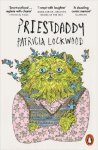 Priestdaddy by Patricia Lockwood: A memoir of growing up in a highly conservative religious setting, but not Evangelical Christianity as you or I have known it. Her father, a married Catholic priest, is an unforgettable character. This is a poet’s mind sparking at high voltage and taking an ironically innocent delight in dirty and iconoclastic talk.
 The Snow Leopard by Peter Matthiessen: For two months in 1973, Matthiessen joined a zoologist on a journey from the Nepalese Himalayas to the Tibetan Plateau in hopes of spotting the elusive snow leopard. Recently widowed, Matthiessen put his Buddhist training to work as he pondered impermanence and acceptance. The writing is remarkable.

This Sunrise of Wonder: Letters for the Journey by Michael Mayne: Mayne’s thesis is that experiencing wonder is what makes us human. He believes poets, musicians and painters, in particular, reawaken us to awe by encouraging us to pay close attention. Especially with the frequent quotations and epigraphs, this is like a rich compendium of wisdom from the ages.
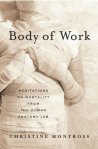 Body of Work: Meditations on Mortality from the Human Anatomy Lab by Christine Montross: When she was training to become a doctor, Montross was assigned an older female cadaver, Eve, who taught her everything she knows about the human body. Montross is also a poet, as evident in this lyrical, compassionate exploration of working with the dead.
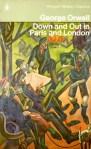 Down and Out in Paris and London by George Orwell: An excellent first-hand account of the working and living conditions of the poor in two world cities. Orwell works as a dishwasher and waiter in Paris hotel restaurants for up to 80 hours a week. The matter-of-fact words about poverty and hunger are incisive, while the pen portraits are glistening.
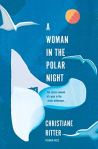 A Woman in the Polar Night by Christiane Ritter: In 1934, Ritter, an Austrian painter, joined her husband Hermann for a year in Spitsbergen. I was fascinated by the details of Ritter’s daily tasks, but also by how her perspective on the landscape changed. No longer a bleak wilderness, it became a tableau of grandeur. A travel classic worth rediscovering.
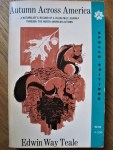 Autumn Across America by Edwin Way Teale: In the late 1940s Teale and his wife set out on a 20,000-mile road trip from Cape Cod on the Atlantic coast to Point Reyes on the Pacific to track the autumn. Teale was an early conservationist. His descriptions of nature are gorgeous, and the scientific explanations are at just the right level for the average reader.
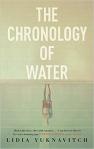 The Chronology of Water by Lidia Yuknavitch: This blew me away. Reading this nonlinear memoir of trauma and addiction, you’re amazed the author is still alive, let alone a thriving writer. The writing is truly dazzling, veering between lyrical stream-of-consciousness and in-your-face informality. The watery metaphors are only part of what make it unforgettable.

(Books not pictured were read from the library or on Kindle.)
And if I really had to limit myself to just two favorites – my very best fiction and nonfiction reads of the year – they would be Moon Tiger by Penelope Lively and Priestdaddy by Patricia Lockwood.
What were your best backlist reads this year?
Other 2019 Superlatives and Some Statistics
My best discoveries of the year: The poetry of Tishani Doshi; Penelope Lively and Elizabeth Strout (whom I’d read before but not fully appreciated until this year); also, the classic nature writing of Edwin Way Teale.


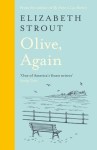
The authors I read the most by this year: Margaret Atwood and Janet Frame (each: 2 whole books plus parts of 2 more), followed by Doris Lessing (2 whole books plus part of 1 more), followed by Miriam Darlington, Paul Gallico, Penelope Lively, Rachel Mann and Ben Smith (each: 2 books).
Debut authors whose next work I’m most looking forward to: John Englehardt, Elizabeth Macneal, Stephen Rutt, Gail Simmons and Lara Williams.
My proudest reading achievement: A 613-page novel in verse (Mary Ann Sate, Imbecile by Alice Jolly) + 2 more books of over 600 pages (East of Eden by John Steinbeck and Cutting for Stone by Abraham Verghese).


Best book club selection: Red Dust Road by Jackie Kay was our first nonfiction book and received our highest score ever.
Some best first lines encountered this year:
- “What can you say about a twenty-five-year old girl who died?” (Love Story by Erich Segal)
- “The women of this family leaned towards extremes” (Away by Jane Urquhart)
- “The day I returned to Templeton steeped in disgrace, the fifty-foot corpse of a monster surfaced in Lake Glimmerglass.” (from The Monsters of Templeton by Lauren Groff)
The downright strangest book I read this year: Lanny by Max Porter
The 2019 books everybody else loved (or so it seems), but I didn’t: Fleishman Is in Trouble by Taffy Brodesser-Akner, The Topeka School by Ben Lerner, Underland by Robert Macfarlane, The Boy, The Mole, The Fox and The Horse by Charlie Mackesy, Three Women by Lisa Taddeo and The Nickel Boys by Colson Whitehead
 The year’s major disappointments: Cape May by Chip Cheek, We Are the Weather: Saving the Planet Begins at Breakfast by Jonathan Safran Foer, Letters to the Earth: Writing to a Planet in Crisis, ed. Anna Hope et al., Bowlaway by Elizabeth McCracken, Rough Magic: Riding the World’s Loneliest Horse Race by Lara Prior-Palmer, The Lager Queen of Minnesota by J. Ryan Stradal, The Knife’s Edge by Stephen Westaby and Frankissstein by Jeanette Winterson
The worst book I read this year: Jonathan Livingston Seagull by Richard Bach
Some statistics on my 2019 reading:
Fiction: 45.4%
Nonfiction: 43.4%
Poetry: 11.2%
(As usual, fiction and nonfiction are neck and neck. I read a bit more poetry this year than last.)
Male author: 39.4%
Female author: 58.9%
Nonbinary author (the first time this category has been applicable for me): 0.85%
Multiple genders (anthologies): 0.85%
(I’ve said this the past three years: I find it interesting that female authors significantly outweigh male authors in my reading; I have never consciously set out to read more books by women.)
E-books: 10.3%
Print books: 89.7%
(My e-book reading has been declining year on year, partially because I’ve cut back on the reviewing gigs that involve only reading e-books and partially because I’ve done less traveling; also, increasingly, I find that I just prefer to sit down with a big stack of print books.)
Work in translation: 7.2%
(Lower than I’d like, but better than last year’s 4.8%.)
Where my books came from for the whole year:
- Free print or e-copy from publisher: 36.8%
- Public library: 21.3%
- Secondhand purchase: 13.8%
- Free (giveaways, The Book Thing of Baltimore, the free mall bookshop, etc.): 9.2%
- Downloaded from NetGalley, Edelweiss or Project Gutenberg: 7.8%
- Gifts: 4.3%
- University library: 2.9%
- New purchase (usually at a bargain price): 2.9%
- Church theological library: 0.8%
- Borrowed: 0.2%
(Review copies accounted for over a third of my reading; I’m going to scale way back on this next year. My library reading was similar to last year’s; my e-book reading decreased in general; I read more books that I either bought new or got for free.)
Number of unread print books in the house: 440
(Last thing I knew the figure was more like 300, so this is rather alarming. I blame the free mall bookshop, where I volunteer every Friday. Most weeks I end up bringing home at least a few books, but it’s often a whole stack. Surely you understand. Free books! No strings attached!)
 Bookish Beck = Rebecca Foster. American transplant to England. Freelance proofreader and book reviewer.
 Bookish Beck