Better Late than Never: The Nix by Nathan Hill
I was wary of Nathan Hill’s debut novel, The Nix, as I always am of big ol’ books. Six hundred and twenty pages of small print: was it going to be worth it? Luckily, the answer was a resounding yes. If you’ve loved The World According to Garp, City on Fire, The Goldfinch, and/or Your Heart Is a Muscle the Size of a Fist, you should pick this one up right away. From the first few pages onwards, I was impressed by Hill’s carefully honed sentences. He mixes up the paragraph arrangement in a particularly effective way, such that long thoughts are punctuated by a killer one-liner given a paragraph of its own. Here’s one: “How easily a simple façade can become your life, can become the truth of your life.”
In 2011 Samuel Anderson and his estranged mother, Faye, find themselves in strange situations. Samuel is an assistant English professor at a small suburban Chicago college. Once the Next Big Thing, feted by Granta for a brilliant short story, he has never delivered his contracted novel and spends more time in the World of Elfscape online game than he does engaging in real life. Now Laura Pottsdam, a student he caught plagiarizing a Hamlet essay, is on a mission to take Samuel down. Meanwhile Faye is awaiting trial for throwing rocks at Governor Packer, a conservative presidential hopeful from Wyoming. It’s been 23 years since Faye walked out on Samuel and his father, but her lawyer still hopes Samuel will be willing to write a character reference to be used in her defense, prompting their awkward reunion.
 This is a rich, multi-layered story about family curses and failure, and how to make amends for a life full of mistakes. Along with 2011, the two main time periods are 1968, when Faye was a would-be radical caught up in student violence; and 1988, the summer before Faye left, when Samuel met twins Bishop and Bethany Fall, two friends who would still be having an impact on his life decades later even though they moved away after a few months. Although most of the action takes place in Iowa and Chicago, there’s also a brief interlude set in Norway when Faye tries to track down the ghosts of her father’s homeland. He’d told her stories of the nisse and the Nix, a house spirit and a water spirit in the form of a giant horse: both lead greedy children to their doom, a terrifying prospect for an anxious girl like Faye.
Political protest is a thread running all through the novel, though it never drowns out the centrality of the mother–son relationship: the 1968 Grant Park protest Faye attends in Chicago, the anti-Iraq War march Samuel and Bethany go on in 2004, the Occupy demonstrations taking place in 2011, and Faye’s odd transformation into the Packer Attacker. Hill makes cogent comments on contemporary America, where the “pastime is no longer baseball. Now it’s sanctimony.” Young people parcel emotions into easy categories for social media, which also markets ready-made heroes (pop singer Molly Miller) and villains (Faye).
Hill is a funny and inventive writer; a few of his more virtuosic moments include an argument with headings indicating its logical fallacies, a relationship presented as a Choose Your Own Adventure story, and a nearly-eleven-page sentence in which a character has a health crisis. These sections are almost too long – Come now, you’re just showing off, I thought. But changing up the structure like that does mean that the novel is never boring, and its reflections on self-knowledge and how we get lost, stuck in patterns of our own creating, made me think deeply. This is one debut that really does live up to the hype; look out for it, and for the upcoming television adaptation directed by J.J. Abrams and starring Meryl Streep.
My rating:
First published in August 2016, The Nix was released in the UK in paperback on September 21st. My thanks to Picador for the free copy for review.
Three Recommended March Releases
Here are three enjoyable novels due out next month that I was lucky enough to read early. The first two are debuts, while the third is by an author I’ve had good luck with before. I’ve pulled 250-word extracts from my full reviews and hope you’ll be tempted by one or more of these.
Spaceman of Bohemia by Jaroslav Kalfař
(Coming on March 7th from Little, Brown and Company [USA] and March 9th from Sceptre [UK])
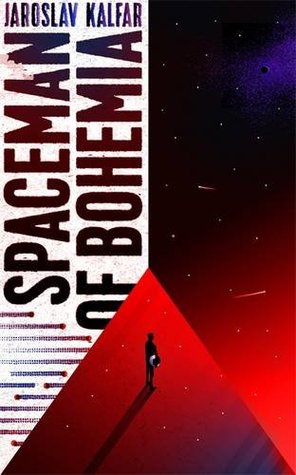 Call this a cross between Everything Is Illuminated (Jonathan Safran Foer) and The Book of Strange New Things (Michel Faber). In April 2018 Czech astronaut Jakub Procházka is launched to investigate cosmic dust storm “Chopra,” but realizes he can never escape his family history or the hazards of his own mind. Amid the drudgery of daily life onboard the JanHus1 space shuttle, he makes a friend: a giant, alien spider he names Hanuš. Jakub has the sense that Hanuš is sifting through his memories, drawing out the central tragedies that form his motivation for going to space, including the shame and persecution that resulted from his father being a Party loyalist and member of the Secret Police prior to the Velvet Revolution.
This debut novel is a terrific blend of the past and the futuristic, Earth and space. There is much to enjoy: Jakub’s sometimes baroque narrative voice (“What good am I, a thin purse of brittle bones and spoiling meat?”) – all the more impressive because Jaroslav Kalfař is in his late twenties and has only spoken English for about 13 years; the mixture of countryside rituals and the bustle of Prague; and the uncertainty about whether Jakub has a viable future, with or without his wife Lenka. The book goes downhill in Part Two and doesn’t quite pull everything together before its end. However, it’s still one of the best debuts I’ve encountered in recent years, and I’ll be eager to see what Kalfař will come up with next.
My rating: 
The Idiot by Elif Batuman
(Coming on March 14th from Penguin [USA] and June 1st from Jonathan Cape [UK])
 An odd but very funny anti-Bildungsroman. This is Selin Hanim’s account of her freshman year at Harvard (circa 1995) and the summer of European travel that follows. A daughter of Turkish immigrants, she wants to become a writer, but even as she minutely records every happening and thought she doubts the point of it. In Russian and linguistics classes, in interactions with her roommates and her Serbian friend Svetlana, and in her growing obsession with Ivan, a senior math major from Hungary, she includes a Knausgaardian amount of mundane detail yet always remains at an emotional distance from events. The tone is so very deadpan that you may never warm to Selin. However, it feels appropriate for what the novel is attempting: a commentary on the difficulty of having real, meaningful conversations when language breakdown is rife.
Once again Batuman has borrowed a Dostoevsky title (her 2010 memoir was called The Possessed). I suspect her debut novel is generally indebted to Eastern European literature in the randomness of the incidents and the way they are bluntly recounted rather than explained. This can be problematic for the story line: it feels like things keep happening that serve no purpose in the grander scheme. It’s as if Batuman is subverting the whole idea of a simple coming-of-age trajectory. At the same time, she convincingly captures what it’s like to be young and confused. This reminded me of my college and study abroad experience; that familiarity plus the off-the-wall humor kept me reading.
Sample lines:
(On a plane) “I opened the foil lid and looked at the American meal. I couldn’t tell what it was. The man in the seat ahead of me started tossing and turning. His pillow fell into my dessert. The pink whipped foam formed meaningful-looking patterns on the white fabric. I saw a bird—that meant travel.”
“Spiderwebs attached themselves, like long trails of agglutinative suffixes, onto our arms and faces.”
My rating: 
My Darling Detective by Howard Norman
(Coming on March 28th from Houghton Mifflin)
 When Jacob Rigolet’s mother Nora, former head of Halifax Free Library, throws ink on a photograph during an art auction in 1977, it sparks an unusual quest into his past. Jacob’s fiancee Martha Crauchet, the detective of the title, learns two startling facts from Nora’s police file: Jacob was born in the Halifax library; and Bernard Rigolet had been serving overseas for more than a year before his birth in 1945, so can’t be his father. Three years ago Nora’s obsession with World War II led to a breakdown she calls her “fall from grace”; she’s been confined to a rest home ever since. As Jacob gives up being an art buyer to attend library school, Martha gets involved in a cold case that involves his real father. The film noir atmosphere is enhanced by a hardboiled detective radio program he and Martha are hooked on: set in the year of Jacob’s birth, Detective Levy Detects keeps overlapping with real life.
This offbeat mystery reminded me of The World According to Garp. I could see it working as a low-budget indie movie or TV special. I loved how climactic things kept happening at the library, and enjoyed glimpses of bad borrower behavior: selling the library’s art books to a secondhand bookstore and a 105-year overdue loan found in someone’s attic. I have a suspicion this novel won’t linger long in my mind, but it was a fun weekend read. (Historical note: one character’s mother was killed in the Halifax Explosion.)
My rating:
Have you read any March releases you would recommend?
Reading Goals for 2017
I’ve set just a few modest goals for the coming year’s reading:
- As always, I’d like to focus on reading more of the books I actually own. I went around and did an inventory of unread books in the house and came up with 221. That could easily fill two-thirds or more of next year, yet I know I’m unlikely to cut down on my library borrowing or NetGalley and Edelweiss requests. I think the strategy will be to always have two of my own books on the go at all times, one fiction and one nonfiction, no matter how many other public library or Kindle books I’m reading.
- Some of the books I most want to tackle have 500+ pages. I wonder if I have enough really long books to sustain a Doorstopper of the Month feature? To get a head start on this goal, this past week I started City on Fire by Garth Risk Hallberg and Titus Groan by Mervyn Peake. Also on the shelf are A Suitable Boy, This Thing of Darkness, An Instance of the Fingerpost, Until I Find You, and a few chunky biographies; I’m also sure to get some long books from the library and NetGalley.
-

The classics bookcase.
I read very few classics in 2016, just a couple short books by Jerome K. Jerome, a Stefan Zweig novella, Tender Is the Night, and two rediscovered 1930s works from the Apollo Classics series. So that’s something to rectify in 2017. Three classics from the list of “Books to Read in Your 30s” in The Novel Cure are calling to me, and it’s also high time I read some more Dickens (maybe I’ll finally return to Dombey and Son?), Trollope (at least The Warden, if not more of the Barsetshire series), Brontë (Anne, in this case) and Woolf (The Voyage Out). Maybe I’ll also start a Classic of the Month feature?
Regarding my career…
I’d like to replace some of my individual book reviewing with longer articles. For instance, this past year Foreword magazine invited me to write three articles surveying new and upcoming books in various genres: young adult, climate change and middle grade. It’s more rewarding (and remunerative) to prioritize full-length articles.
Regarding the blog…
I’d love to get involved in more blog tours and collaborative challenges. I also hope to continue maintaining a balance between straightforward reviews/lists and different stuff, whether that’s travel reports or more introspective pieces. My dream is still to judge a literary prize, even if that’s just as part of a shadow panel.
What are some of your goals for 2017 – reading-related or otherwise?
Tomorrow: Some final statistics on my reading for the year.
Watch the Movie or Read the Book?
It’s a risky business, adapting a well-loved book into a film. I’m always curious to see how a screenwriter and director will pull it off. The BBC generally does an admirable job with the classics, but contemporary book adaptations can be hit or miss. I’ve racked my brain to think of cases where the movie was much better than the book or vice versa, but to my surprise I’ve found that I can only think of a handful of examples. Most of the time I think the film and book are of about equal merit, whether that’s pretty good or excellent.
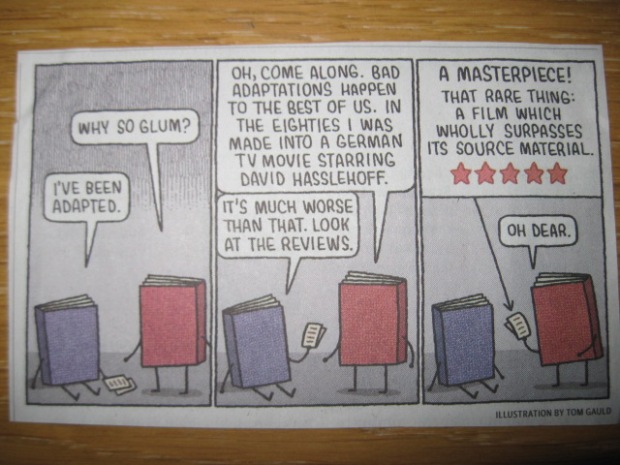
From one of my favorite Guardian cartoonists.
Watch the Movie Instead:
Birdsong [Sebastian Faulks] – Eddie Redmayne, anyone? The book is a slog, but the television miniseries is lovely.
One Day [David Nicholls] – Excellent casting (though Rafe Spall nearly steals the show). Feels less formulaic and mawkish than the novel.
 Father of the Bride and its sequel [Edward Streeter] – The late 1940s/early 1950s books that served as very loose source material are hopelessly dated.
This Is Where I Leave You [Jonathan Tropper] – Again, perfect casting. Less raunchy and more good-natured than the book.
Read the Book Instead:
 Possession [A.S. Byatt] – This is one of my favorite novels of all time. It has a richness of prose and style (letters, poems, etc.) that simply cannot be captured on film. Plus Aaron Eckhart couldn’t act his way out of a paper bag.
Everything Is Illuminated [Jonathan Safran Foer] – The movie’s not bad, but if you want to get a hint of Foer’s virtuosic talent you need to read the novel he wrote at 25.
A Prayer for Owen Meany [John Irving] – The film version, Simon Birch, was so mediocre that Irving wouldn’t let his character’s name be associated with it.
It’s Pretty Much Even:
Decent book and movie: Harry Potter and the Sorcerer’s Stone, The Help, The Hours, Memoirs of a Geisha, Never Let Me Go, The Remains of the Day
 Terrific book and movie: The Fault in Our Stars, The Hundred-Year-Old Man Who Climbed out of the Window and Disappeared (Swedish language), The Orchid Thief / Adaptation (both great but in very different ways!), Tamara Drewe (based on a graphic novel, which itself is based on Far From the Madding Crowd)
If I’m interested in a story, my preference is always to watch the movie before I read the book. If you do it the other way round, you’re likely to be disappointed with the adaptation. Alas, this means that the actors’ and actresses’ faces will be ineradicably linked with the characters in your head when you try to read the book. I consider this a small disadvantage. Reading the book after you’ve already enjoyed the storyline on screen means you get to go deeper with the characters and the plot, since subplots are often eliminated in movie versions.
 So although I’ve seen the films, I’m still keen to read Half of a Yellow Sun and The Kite Runner. I’m eager to both see and read The English Patient and The Shipping News (which would be my first by Proulx). All four of these I own in paperback. I’m also curious about two war novels being adapted this year, Billy Lynn’s Long Halftime Walk and The Yellow Birds. There’s every chance I’d like these better as movies than I did as books.
 As to books I’m interested in seeing on the big screen, the first one that comes to mind is Kitchens of the Great Midwest by J. Ryan Stradal. It might also be interesting to see how the larger-than-life feminist heroines of Siri Hustvedt’s The Blazing World and Brian Morton’s Florence Gordon would translate for cinema. Can you think of any others?
What film adaptations have impressed or disappointed you recently? Do you watch the movie first, or read the book first?
Return to Bookbarn
Sounds like a summer blockbuster, doesn’t it? There was certainly plenty of tension on our drive from the Reading area to Somerset this past Friday, as traffic on the M4 built up and our time for book shopping ticked down from a planned hour and a half to just 35 minutes before store closing. It had been almost exactly one year since my last trip to Bookbarn International, and after weeks of wheedling I’d finally persuaded my husband to make the detour on our way to visit friends in Bristol.
Despite the tight deadline, I enjoyed my browsing and scored some good finds. As usual, it seemed like a terrific bargain: £14.50 for 15 books. One’s a gift for our nephew in America, four are nature books my husband chose, and the rest are mine! Bonus: a few days later it occurred to me to ask after the collectible books I left behind last year for Bookbarn to sell for me and it turns out I have nearly £21 coming to me – so in effect our shopping was free!
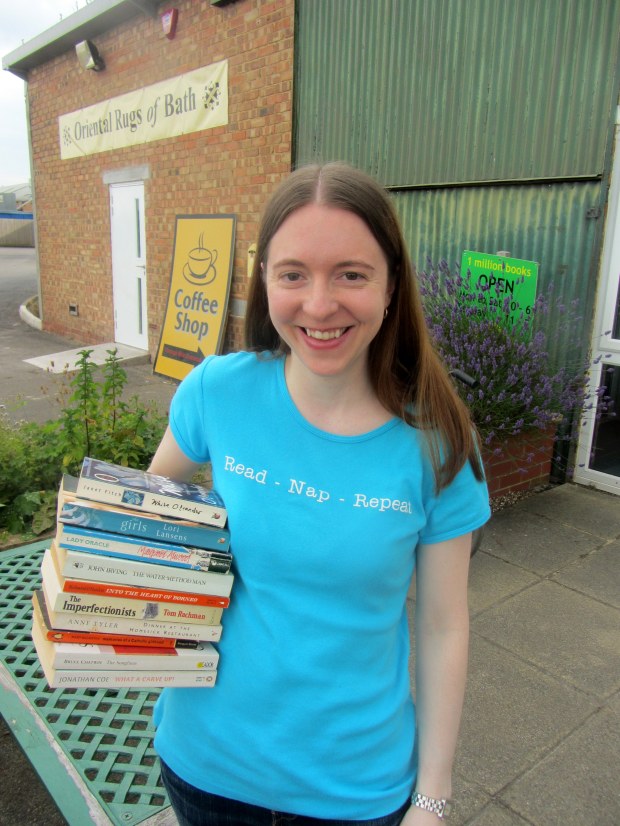
In case you can’t read the titles in the photo, here’s my haul:
Travel books:
The Songlines, Bruce Chatwin
Into the Heart of Borneo, Redmond O’Hanlon
[I featured both of the world-class travel writers in a recent article for Bookmarks, so it’s only proper that I actually read something by them.]
Memoir:
Memories of a Catholic Girlhood, Mary McCarthy [I’m a sucker for religious memoirs.]
Fiction:
Lady Oracle, Margaret Atwood [It’s been a while since I tried one from her back catalogue.]
What a Carve Up!, Jonathan Coe [I enjoyed the recent ‘sequel’, Number 11.]
White Oleander, Janet Fitch [An Oprah favorite I’ve long meant to read.]
The Water-Method Man, John Irving [Let’s hope for better things from his second novel.]
The Girls, Lori Lansens [I can’t resist a conjoined twins story.]
The Imperfectionists, Tom Rachman [Already read some years back, but worth owning.]
Dinner at the Homesick Restaurant, Anne Tyler [To continue my run of Tyler classics.]
Had any secondhand book coups lately?
Six Books I Abandoned Recently
Sigh. It keeps happening. A book that looks unmissable ends up disappointing me and I abandon it partway through. Here’s six I dropped recently: two from the library, two e-copies I was meant to review but found I couldn’t recommend, and two that couldn’t hold my interest on our European holiday. Below I give brief write-ups of the abandonees. As always, I’d be interested to hear if you’ve read any of them and thought they were worth persisting with.
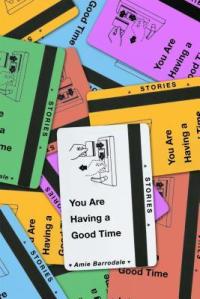 You Are Having a Good Time: Stories by Amie Barrodale
I only managed the first two stories. Barrodale writes in a flat, affectless style full of unconnected sentences; her themes are of Hollywood and the emptiness of modern life. This reminded me most of Miranda July, so if you’re a big fan of hers I’d say go for it. Otherwise, don’t bother. [Read the first 21%.]
My rating: 
 Sweet Home by Carys Bray
These gently magical short stories equate parenthood with peril: a child is always somehow lost or on the verge of being lost. “Just in Case” is wonderfully macabre, and I was glad to discover how A Song for Issy Bradley got its start (with “Scaling never”). The fragility of memory is another theme, with one story narrated by a woman with dementia. The title story has a Hansel and Gretel fairytale feel to it. I enjoyed the first half well enough, but didn’t feel compelled to continue; I definitely prefer Bray’s full-length work, and this needed to go back to the library anyway. [Read the first 96 pages out of 178.]
My rating: 
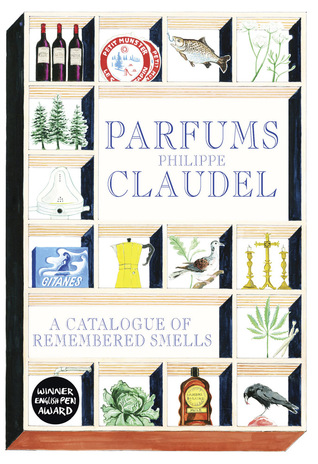 Parfums: A Catalogue of Remembered Smells by Philippe Claudel
[translated from the French by Euan Cameron]
I loved the idea behind this: a memoir in the form of short essays built around scent memories. Cinnamon brings the Christmas season to mind, aftershave reminds him of his father, and garlic and cannabis dredge up different aspects of his growing-up years. There’s some beautifully poetic language here. A favorite line was “The child that I am is allowed to breathe in these smells of dead pollen, widowed woolens and orphaned linen so that one day he can piece them together into a narrative and resurrect lives lost through wars, illnesses and accidents.” But ultimately I got a bit tired of more of the same. Perhaps if I’d kept it as a bedside book and just read a few pieces at a time instead of attempting to read it straight through, it would have worked better for me. [Read the first 86 pages out of 173.]
My rating:
 Absalom’s Daughters by Suzanne Feldman
Three generations of black women – Cassie, Lil Ma and Grandmother – live on Negro Street above the laundry where they work in Heron-Neck, Mississippi. Cassie learns that her father is a white man, William Forrest, whose daughter Judith is near her age. They know they’re sisters and when they hear their worthless pater has received an inheritance they concoct a scheme to go get their nest egg. Alas, the Southern dialect feels false to me, and I wasn’t taken with any of the characters. (Great piece of trivia: Feldman used to write science fiction under the pen name “Severna Park,” which is a town in Maryland.) [Read the first 18%.]
My rating: 
 The Hemingway Thief by Shaun Harris
I thought this would be a fun, light-hearted literary mystery to read on European trains. Henry Cooper, a writer of vampire romances, takes a sabbatical to Mexico to figure out what he really wants to do. Here he unexpectedly wanders into intrigue when a Hemingway manuscript turns up in a small-time criminal’s hotel room. I never warmed to the uninspired hardboiled-lite style and it took far too long for the story to get going. [Read the first 17%.]
My rating:
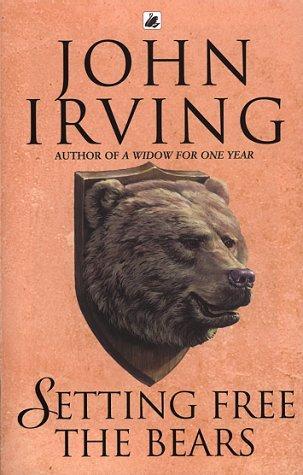 Setting Free the Bears by John Irving
This was Irving’s debut, and although you can see seeds of the Dickensian characterization at which he excels in his best work, it was just not good overall. Neither Siggy nor Graff held my interest, and the dialogue feels stiff and unrealistic. There’s also some downright strange wording: “I could peek how the helmet nearly covered her eyes”; “the rain still puddled the courtyard”; “When his spongy ribs whomped the cobbles, the horse said, ‘Gnif!’” I couldn’t decide if this was Irving trying to show that the story is set abroad or if it was just evidence of bad writing. My husband is enough of an Irving fan to have gobbled the book up by the time we reached Austria, but I decided it wasn’t going to get much better. That’s a shame, as I would have liked to get to them, you know, actually setting free the bears at the Vienna Zoo. [Read the first 75 pages out of 384.]
My rating:
European Holiday Reading – A (Temporary) Farewell
Tomorrow we’re off to continental Europe for two weeks of train travel, making stops in Brussels, Freiburg (Germany), two towns in Switzerland, and Salzburg and Vienna in Austria. This will be some of the most extensive travel I’ve done in Europe in the 11 or so years that I’ve lived here – and the first time I’ve been to Switzerland or Austria – so I’m excited. I’ve been working like a fiend recently to catch up and/or get ahead on reviews and blogs, so it will be particularly good to spend two weeks away from a computer. It’s also nice that our adventure doesn’t have to start with going to an airport.
Here’s what I’ve packed:
- Setting Free the Bears by John Irving (his first novel; set in Vienna)
- Diary of a Pilgrimage by Jerome K. Jerome (about a train journey from England to Germany)
- Me and Kaminski by Daniel Kehlmann (the author is Austrian)
- A Whole Life by Robert Seethaler (a novella set in the Austrian Alps)
+ Enchanting Alpine Flowers & the Rough Guide to Vienna
Also on the e-readers, downloaded from Project Gutenberg:
- Three Men on the Bummel by Jerome K. Jerome (further humorous antics in Germany)
- Burning Secret by Stefan Zweig (a novella; the author is Austrian)
+ another 250+ Kindle books from a wide variety of genres and topics – I’ll certainly have no shortage of reading material!
(Looking back now, it occurs to me that this all skews rather towards Austria! Oh well. Vienna is one of our longer stops.)

I’m supposed to be making my way through the books we already own, but on Saturday I was overcome with temptation at our local charity shop when I saw that all paperbacks were on sale – 5 for £1. I’m in the middle of one of the novels I bought that day, June by Gerbrand Bakker, along with The Accidental Tourist by Anne Tyler, and need to decide whether to put them on hold while I’m away or take one or both with me. Either way I’ll try to finish June this month; it’s just too appropriate not to!
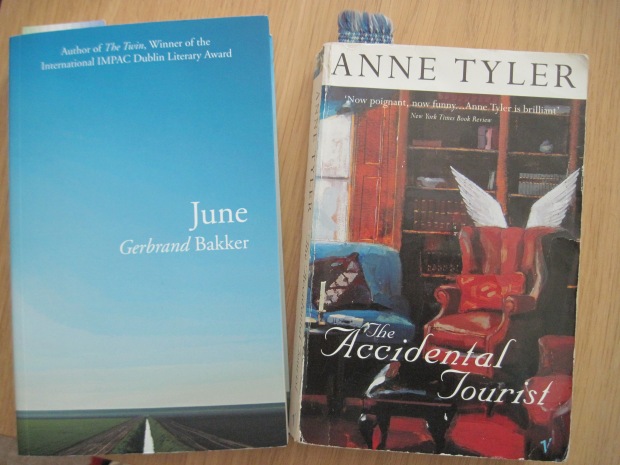
I was also overcome with temptation at the thought of a new Eowyn Ivey novel coming out in August, so requested a copy for review.

It’s an odd time here in the UK. Readers from North America or elsewhere might be unaware that we’re gearing up for a referendum to decide whether to remain in the European Union. By the time we pass back through Brussels (‘capital’ of the European Union) on the 24th, there’s every chance the UK might no longer be an official member of Europe. I haven’t taken British citizenship so am ineligible to cast a vote; I won’t court debate by elaborating on a comparison of “Brexit” with the specter of Trump in the States. My husband has sent in his postal vote, so collectively we’ve done all we can do and now just have to wait and see.
We’re not back until late on the 24th, but I’ve scheduled a few posts for while we’re away. I will only have sporadic Internet access during these weeks, so won’t be replying to blog comments or reading fellow bloggers’ posts, but I promise to catch up when we get back.
Happy June reading!
The Best Fiction of 2015: My Top 15
2015 was a great year for fiction, largely dominated by doorstoppers (like Death & Mr. Pickwick and City on Fire, in addition to the Franzen and Yanagihara listed below) and Harper Lee. I’ve decided to pass on Go Set a Watchman, but I’ve read plenty of the year’s big-name fiction, as well as some more obscure titles I’d like to bring to your attention.
As difficult as it is to pit books against each other and come up with a numbered list, I’ve given it a go and come up with my top 15 fiction works of the year. To keep it simple for myself and straightforward for potential readers, I’m limiting myself to two sentences per title: the first is a potted summary; the second tells you why you should read it. I also link to any full reviews.
Let the countdown begin!
- The Shore
 by Sara Taylor: Gritty and virtuosic, this debut novel-in-13-stories imagines 250 years of history on a set of islands. Every region needs a literary chronicler, and I reckon Taylor – channeling David Mitchell with her cross-centuries approach – is it for the Eastern Shore of Maryland and Virginia’s islands.
 Gold Fame Citrus by Claire Vaye Watkins: Gold, fame, citrus: reasons people once came to California; now, only a desperate remnant remains in the waterless wasteland. As a smart, believable dystopian with a family at its heart, this trumps any of last year’s efforts (like Station Eleven or California).
 Preparation for the Next Life by Atticus Lish: Like West Side Story, this debut novel is an updated Romeo and Juliet narrative – a tragedy-bound love story with a grimy contemporary setting and a sobering message about racism and the failure of the American dream. The matter-of-fact style somehow manages to elevate the everyday and urban into an art form. (Reviewed for Third Way magazine in August.)
- Circling the Sun
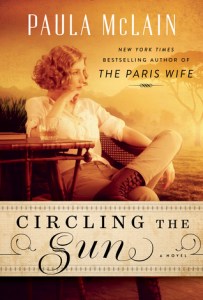 by Paula McLain: Before she ever thought of flying solo across the Atlantic, aviatrix Beryl Markham was just Beryl Clutterbuck: raised in Kenya, one of Africa’s first female horse trainers, its first professional female pilot, and the other side of the love triangle featuring Karen Blixen (Isak Dinesen) and Denys Finch Hatton. McLain describes her African settings beautifully, and focuses as much on the small emotional moments that make a life as she does on its external thrills.
 Kitchens of the Great Midwest by J. Ryan Stradal: One of my favorite debuts of the year: a culinary-themed collection of short stories loosely linked through the character of Eva Thorvald, a young chef with an unfortunate past and a rare palate. Read it for a glimpse of how ordinary, flawed Americans live – no fairytale endings here.
 Hausfrau by Jill Alexander Essbaum: This arresting debut reads like a modern retelling of Madame Bovary, with its main character a desperate American housewife in Zurich. Watch Anna’s trajectory with horror, but you cannot deny there is a little of her in you.
 The Versions of Us by Laura Barnett: In this impressively structured, elegantly written debut, Barnett chronicles the romantic lives of two Cambridge graduates through three-quarters of a century, giving three options for how their connection might play out. There is no one perfect person or story: unsentimental this may be, but it feels true to how life works. (Reviewed for Third Way magazine in July.)
 Fates and Furies by Lauren Groff: An incisive study of a marriage, beautifully written and rich with allusions to Shakespeare and Greek mythology. Groff makes it onto a short list of women I expect to produce the Great American Novel (along with Curtis Sittenfeld, Jennifer Egan, and Hanya Yanagihara).
 Purity by Jonathan Franzen: East Germany, Bolivia and Oakland, California: Franzen doesn’t quite pull all his settings and storylines together, but this is darn close to a 5-star Dickensian read. It’s strong on the level of character and theme, with secrecy, isolation and compassion as recurring topics.
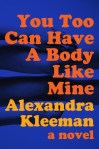 You Too Can Have a Body Like Mine by Alexandra Kleeman: Kleeman’s first novel is a full-on postmodern satire bursting with biting commentary on consumerism and conformity. Think of her as an heir to Dave Eggers and Douglas Coupland, with a hefty dollop of Margaret Atwood thrown in.
 The Animals by Christian Kiefer: Kiefer’s second novel contrasts wildness and civilization through the story of a man who runs an animal refuge to escape from his criminal past. A tough opening sequence establishes themes that will be essential to the novel: the fine line between instincts and decisions, the moral dilemmas involved in environmentalism, and the seeming inescapability of violence.
 The Tsar of Love and Techno by Anthony Marra: A collection of tightly linked short stories giving an intimate look at Russia and Chechnya in wartime and afterwards – revealing how politics, family, and art intertwine. Just as he did in his first novel, Marra renders unspeakable tragedies bearable through his warm and witty writing.
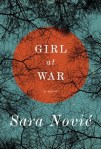 Girl at War by Sara Nović: This pitch-perfect debut novel is an inside look at the Yugoslavian Civil War and its aftermath, from the perspective of a young girl caught up in the fighting. The way Nović recreates a child’s perspective on the horrors of war is masterful: Ana’s viewpoint is realistic and matter-of-fact, without the melodrama an omniscient narrator might inject.
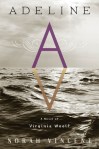 Adeline by Norah Vincent: Set in 1925–1941 and structured like a five-act play, the novel revolves around Virginia Woolf’s philosophical conversations with Leonard Woolf, Lytton Strachey and his lover Carrington, T.S. and Valerie Eliot, W.B. Yeats, and her doctor, Octavia Wilberforce. Vincent has produced a remarkable picture of mental illness from the inside.
- A Little Life
 by Hanya Yanagihara: Jude St. Francis: Dickensian orphan, patron saint of lost causes, Christlike Man of Sorrows, and one of the most memorable characters in recent fiction. This novel is an attempt to tackle the monolithic question of what makes life worth living; among the potential answers: love (though it doesn’t conquer all), friendship, creativity, and the family you create for yourself.
Best Discoveries of the Year: Mary Lawson (Road Ends), Daniel Kehlmann (F: A Novel), Jonathan Evison (This Is Your Life, Harriet Chance!) and Jonathan Coe (Number 11).
Debut Novelists Whose Next Work I’m Most Looking Forward to: Jessamyn Hope (Safekeeping – reviewed here in June) and Carmiel Banasky (The Suicide of Claire Bishop – reviewed for Foreword’s Fall 2015 issue).
 The Year’s Biggest Disappointments: Etta and Otto and Russell and James by Emma Hooper; Where My Heart Used to Beat by Sebastian Faulks and Avenue of Mysteries by John Irving (both rehash the authors’ familiar themes; I couldn’t make it past 15% in the latter).
Novels I Most Wish I’d Gotten to in 2015: Nell Zink’s Mislaid, Sara Baume’s Spill Simmer Falter Wither, and the final two volumes of Jane Smiley’s “Last Hundred Years” trilogy.
What are the best novels you read this year? Any new favorite books or authors? Your comments are always welcome.
I’ll be back tomorrow with my top 15 nonfiction books I read this year (most of them not published in 2015, however – I seem to have been a nonfiction slacker!)
Small Books Are Good, Too
Last week I wrote in praise of doorstoppers – books over 500 pages. But I also love really short books: there’s just as much writing skill involved in making a narrative concise, and it can be supremely satisfying to pick up a book and polish it off within a couple hours, especially if you’re in a situation of captured attention as on a plane. Being honest and slightly selfish for a moment, short books are also a great way to build up a flagging year list.
Below I highlight poetry collections, memoirs, short stories and novellas that should be on your agenda if you’re looking for a quick read (number of pages in brackets after each title):
Poetry
I try to always have a book of contemporary poetry on the go, usually by a British poet since I pluck these at random from my local public library shelves. Poetry collections aren’t always ‘quick’ reads, nor should they be, because you often have to read a poem more than once to understand it or truly appreciate its techniques. Still, with most poetry books numbering somewhere between 45 and 90 pages, even if you parcel them out over days or weeks they’ll take much less time than a novel. Pick up something by Mark Doty, Kathleen Jamie, David Harsent or Christopher Reid and you’ll have plenty of beautiful verse to ponder.
Recently reviewed and recommended:
- Learning to Make an Oud in Nazareth by Ruth Padel [80]
- All One Breath by John Burnside [96]
- Praise in Which I Live and Move and Have My Being by Paul Durcan [176]
Short Memoirs
Depending on how thorough they are, autobiographies can often hover around 300 or 400 pages. Looking through my shelves, though, I’ve spotted a few in the 140–160 page range: My Movie Business by John Irving [158], The Diving-Bell and the Butterfly by Jean-Dominique Bauby [139], and Winter by Rick Bass [162]. Another short one well worth reading is the unusual The Sound of a Wild Snail Eating by Elisabeth Tova Bailey [170], a story about debilitating illness and taking comfort from nature.
Abigail Thomas, one of my favorite memoirists, writes in an episodic style that makes her 200-page books fly by as if they were half that length. Also, Anne Lamott has written two very short faith memoirs that would serve as a good introduction to her style and content for those who haven’t read Traveling Mercies et al.: Help Thanks Wow [102] and Stitches [112].
Recently reviewed and recommended:
- The Two Kinds of Decay by Sarah Manguso [192]
- The Light of the World by Elizabeth Alexander [208]
- What Comes Next and How to Like It by Abigail Thomas [240] – also included on my BookTrib list of mother–daughter memoirs to read for Mother’s Day
Short Stories
I used to shy away from short stories because I didn’t think they were worth the emotional investment, but recently I’ve decided I really like the rhythm of picking up a set of characters, a storyline and a voice and then, after 20 or so pages, following an epiphany or an aporia (or utter confusion), trading them in for a whole new scenario. Short stories are also the perfect length for reading during a quick meal or car ride. Two short story collections made it onto my “Best of 2014” list: White Man’s Problems by Kevin Morris and The Heaven of Animals by David James Poissant.
Recently reviewed and recommended (no page numbers listed here because each story can stand alone):
- Wallflowers by Eliza Robertson
- Funny Once by Antonya Nelson
- Thunderstruck and Other Stories by Elizabeth McCracken
Novellas
With some credits for free Penguin books I got hold of Borges and the Eternal Orang-Utans by Luis Fernando Verissimo (translated from the Portuguese by Margaret Jull Costa) [135], a book I’d been hankering to read ever since I came across that terrific title. It’s an enjoyable academic comedy and locked room mystery, with nods to Borges and Poe (though I probably didn’t get them all).
I also recently discovered Peirene Press, which exclusively publishes novellas in translation. Their motto is “Contemporary European Literature. Thought provoking, well designed, short.” They publish the novellas in thematic trilogies, with headings such as “Male Dilemma: Quests for Intimacy” and “Small Epic: Unravelling Secrets.” The book I own from Peirene (scored from a secondhand bookshop in Henley-on-Thames for £1), from the “Turning Point: Revolutionary Moments” series, is Mr. Darwin’s Gardener by Kristina Carlson [122] (translated from the Finnish by Emily and Fleur Jeremiah).
It’s an odd little book, with a mixture of past and present tense and first-, third- and first-person plural narration. Set in the village of Downe, it’s peripherally about the title character, Charles Darwin’s gardener Thomas Davies, a new widower with two children, one of whom has Duchenne muscular dystrophy (newly identified). It’s thin on plot, it must be said. Daniel Lewis, the verger of Downe for five years, was dismissed for stealing from the church and is beaten up when he comes back to town; some characters think and talk about Darwin’s theory and Davies’s bereavement; there’s an overturned cart.
My favorite section, “At the Anchor,” is composed of conversations at the village pub, and my favorite individual lines reflect on Darwin’s influence on contemporary thought:
“Mr Darwin is a tree that spreads light, Thomas Davies thinks.”
“Great men are remembered, like Mr Darwin, a genuine monolith. We small folk are mere sand, washed by the waves as they go back and forth.”
“People in future decades and centuries will react to our ideas superciliously, as if we were children playing at thinking. We shall look most amusing in the light of new thoughts and inventions.”
If you’re looking to get through a classic in an afternoon, why not try one of these (full text available for free online through Project Gutenberg or other initiatives): Animal Farm by George Orwell [95], Ethan Frome by Edith Wharton [181] or Flush by Virginia Woolf (her spoof ‘biography’ of Elizabeth Barrett Browning’s cocker spaniel) [108]. E. M. Forster’s novels also read very quickly, and several of John Steinbeck’s novels are quite short. Whether or not you’ve seen the Audrey Hepburn movie, you’ll want to read the sparkling, bittersweet Breakfast at Tiffany’s by Truman Capote [100]; my edition also includes several of his best known short stories, including the wonderful “A Christmas Memory.”
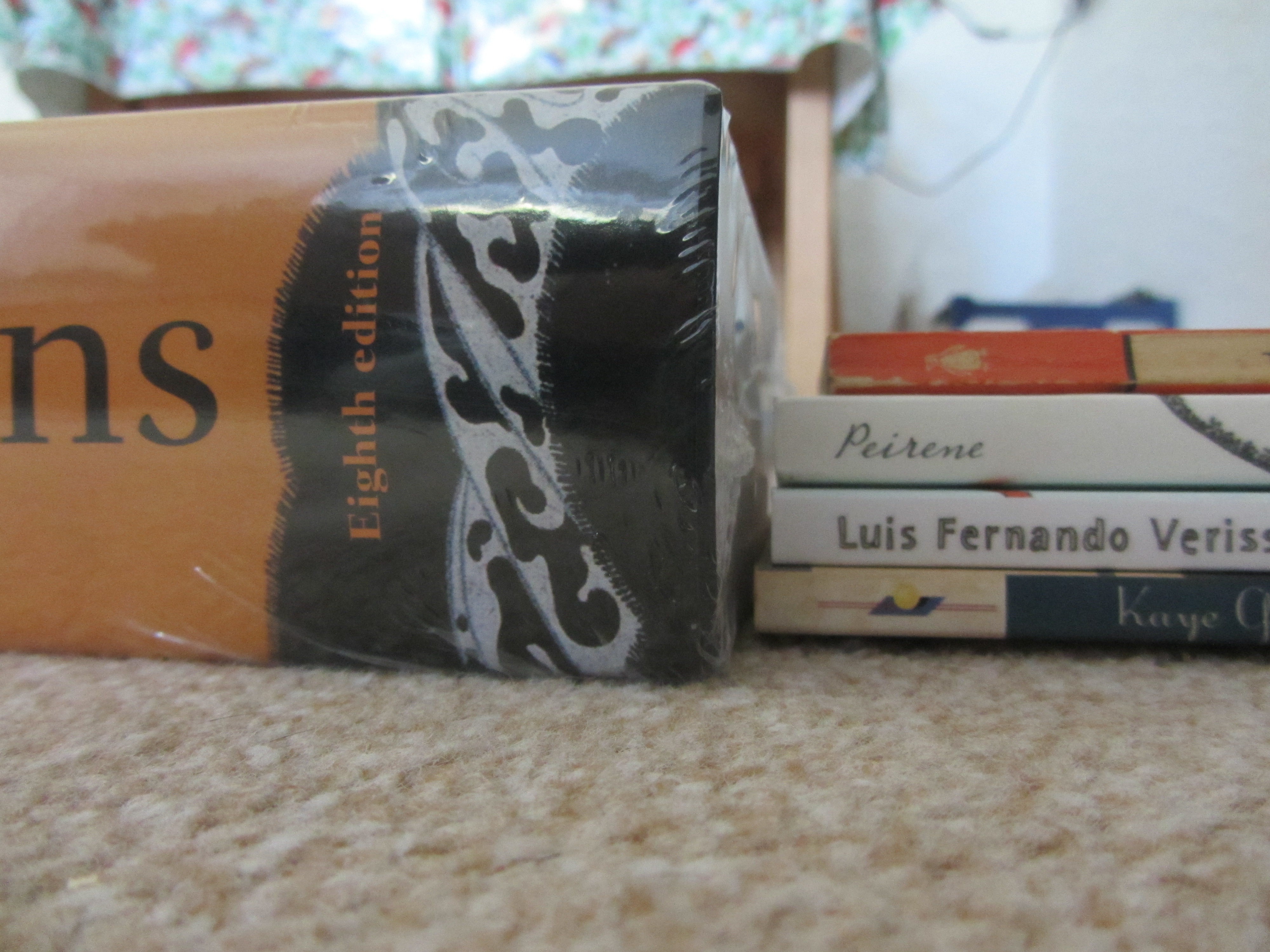
Even four novellas put together don’t stack up very far compared to the Oxford Dictionary of Quotations.
I recently finished The Bookshop by Penelope Fitzgerald [123]; all her books are similarly concise, so you may want to give her a try. The next novella on the pile for me is Ellen Foster by Kaye Gibbons [126]. I had never heard of the author, but the title and description lured me into buying it from a library book sale on a trip back to America (for 25 cents, why not?!). It’s a Southern Gothic story with an eleven-year-old narrator whom Walker Percy likened to Holden Caulfield. The alluring first line: “When I was little I would think of ways to kill my daddy.”
For more ideas, see these two Publishers Weekly’s lists:
“10 Best Books Shorter than 150 Pages” (only repeats one of my suggestions)
“10 Best Short Story Collections You’ve Never Read”
Off topic, but today is a milestone for me: it marks exactly two years that I’ve been a freelance writer!
Are you fond of short books? Do you prefer them to doorstoppers? What are some of your favorite novellas? All comments welcome!
I Like Big Books and I Cannot Lie
You can never get a cup of tea large enough or a book long enough to suit me.
~ C. S. Lewis

My best friend got me this tote bag for my 30th birthday. Rarely has there been a better slogan.
 Here’s to doorstoppers! Books of 500 pages or more [the page count is in brackets for each of the major books listed below] can keep you occupied for entire weeks of a summer – or for just a few days if they’re gripping enough. There’s something delicious about getting wrapped up in an epic story and having no idea where the plot will take you. Doorstoppers are the perfect vacation companions, for instance. I have particularly fond memories of getting lost in Jonathan Strange and Mr. Norrell by Susanna Clarke [782] on a week’s boating holiday in Norfolk with my in-laws, and of devouring The Crimson Petal and the White by Michel Faber [835] on a long, queasy ferry ride to France.
I have an MA in Victorian Literature, so I was used to picking up novels that ranged between 600 and 900 pages. Of course, one could argue that the Victorians were wordier than necessary due to weekly deadlines, the space requirements of serialized stories, and the popularity of subsequent “triple-decker” three-volume publication. Still, I think Charles Dickens’s works, certainly, stand the test of time. His David Copperfield [~900] is still my favorite book. I adore his sprawling stories crammed full of major and minor characters. Especially in a book like David Copperfield that spans decades of a character’s life, the sheer length allows you time to get to know the protagonist intimately and feel all his or her struggles and triumphs as if they were your own.

Nothing ‘little’ about this review copy.
I felt the same about A Little Life by Hanya Yanagihara [720], which I recently reviewed for Shiny New Books. Jude St. Francis is a somewhat Dickensian character anyway, for his orphan origins at least, and even though the novel is told in the third person, it is as close a character study as you will find in contemporary literature. I distinctly remember two moments in my reading, one around page 300 and one at 500, when I looked up and thought, “where in the world will this go?!” Even as I approached the end, I couldn’t imagine how Yanagihara would leave things. That, I think, is one mark of a truly masterful storyteller.

Slow but steady progress.
Speaking of Dickensian novels, in recent years I’ve read two Victorian pastiches that have an authentically Victorian page count, too: The Luminaries by Eleanor Catton [848] and Death and Mr. Pickwick by Stephen Jarvis [816]. The Luminaries, which won the 2013 Booker Prize, has an intricate structure (based on astrological charts) that involves looping back through the same events – making it at least 200 pages too long.
It was somewhat disappointing to read Jarvis’s debut novel in electronic format; without the physical signs of progress – a bookmark advancing through a huge text block – it’s more difficult to feel a sense of achievement. Once again one might argue that the book’s digressive nature makes it longer than necessary. But with such an accomplished debut that addresses pretty much everything ever written or thought about The Pickwick Papers, who could quibble?

I was initially rather daunted by the heft of The Luminaries.
John Irving’s novels are Dickensian in their scope as well as their delight in characters’ eccentricities, but fully modern in terms of themes – and sexual explicitness. Along with Dickens, he’s a mutual favorite author for my husband and me, and his A Prayer for Owen Meany [637] numbers among our collective favorite novels. Most representative of his style are The World According to Garp and The Cider House Rules.
Here are a handful of other long novels I’ve read and reviewed within the last few years (the rating is below each description):
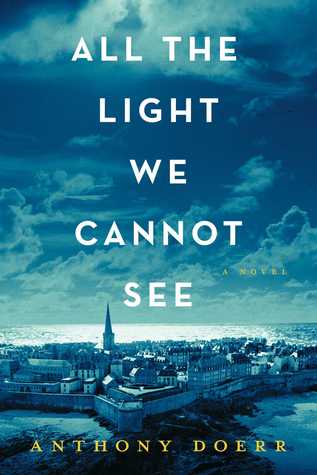 All the Light We Cannot See by Anthony Doerr [531] – The 2015 Pulitzer Prize winner; set in France and Germany during World War II.

In the Light of What We Know by Zia Haider Rahman [555] – Digressive intellectualizing about race, class and war as they pertain to British immigrants.

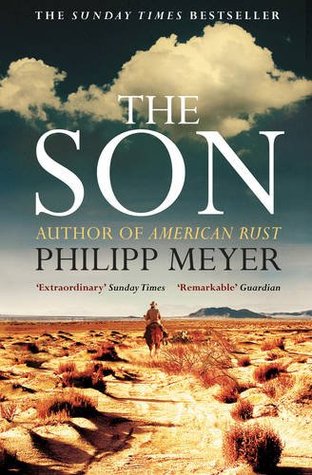 The Son by Philipp Meyer [561] – An old-fashioned Western with hints of Cormac McCarthy.

The Art of Fielding by Chad Harbach [512] – Baseball is a window onto modern life in this debut novel about homosocial relationships at a small liberal arts college.
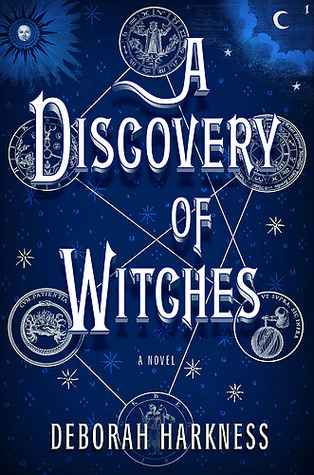 “A Discovery of Witches” fantasy trilogy by Deborah Harkness: A Discovery of Witches [579], Shadow of Night [584], and The Book of Life [561] – Thinking girl’s vampire novels, with medieval history and Oxford libraries thrown in.
/  /
/ 
And here’s the next set of doorstoppers on the docket:
Of Human Bondage by W. Somerset Maugham [766] – A Dickensian bildungsroman about a boy with a clubfoot who pursues art, medicine and love.
The Goldfinch by Donna Tartt [864] – I have little idea of what this is actually about. A boy named Theo, art, loss, drugs and 9/11? Or just call it life in general. I’ve read Tartt’s other two books and was enough of a fan to snatch up a secondhand paperback for £1.
A Brief History of Seven Killings by Marlon James [686] (as with A Little Life, the adjective in the title surely must be tongue-in-cheek!) – The starting point is an assassination attempt on Bob Marley in the late 1970s, but this is a decades-sweeping look at Jamaican history. I won a copy in a Goodreads giveaway.
A Suitable Boy by Vikram Seth [1,474!] – A sprawling Indian family saga. Apparently he’s at work on a sequel entitled A Suitable Girl.
This Thing of Darkness by Harry Thompson [744] – A novel about Charles Darwin and his relationship with Robert FitzRoy, captain of the Beagle.
The Last Chronicle of Barset by Anthony Trollope [891] – As the title suggests, this is the final novel in Trollope’s six-book “Chronicles of Barsetshire” series. Alas, reading this one requires reading the five previous books, so this is more like a 5,000-page commitment…
Now, a confession: sometimes I avoid long books because they just seem like too much work. It’s sad but true that a Dickens novel takes me infinitely longer to read than a modern novel of similar length. The prose is simply more demanding, there’s no question about it. So if I’m faced with a choice between one 800-page novel that I know could take me months of off-and-on reading and three or four 200–300-page contemporary novels, I’ll opt for the latter every time. Part of this also has to do with meeting my reading goals for the year: when you’re aiming for 250 titles, it makes more sense to read a bunch of short books than a few long ones. I need to get better about balancing quality and quantity.
How do you feel about long books? Do you seek them out or shy away? Comments welcome!
 Bookish Beck = Rebecca Foster. American transplant to England. Freelance proofreader and book reviewer.
 Bookish Beck