German Lit Month: The Tobacconist by Robert Seethaler
I don’t participate in a lot of blogger challenges (though I’ll be doing “Novellas in November” on Monday); it’s more of a coincidence that I finished Austrian writer Robert Seethaler’s excellent The Tobacconist (translated from the German by Charlotte Collins) towards the end of German literature month.
You may recall that I read Seethaler’s previous novel, A Whole Life, on my European travels this past summer, and didn’t think too much of it. I’d read so much praise for its sparse style, but I couldn’t grasp the appeal. Here’s what I wrote about it at the time: “This novella set in the Austrian Alps is the story of Andreas Egger – at various times a farmer, a prisoner of war, and a tourist guide. Various things happen to him, most of them bad. I have trouble pinpointing why Stoner is a masterpiece whereas this is just kind of boring. There’s a great avalanche scene, though.”
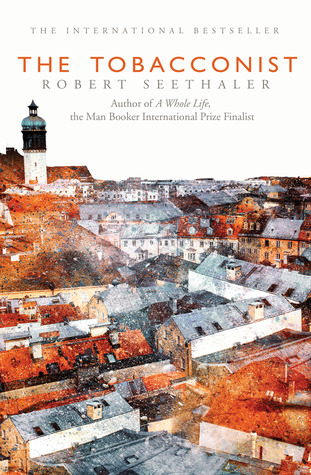 But I’m very glad that I tried again with Seethaler, because The Tobacconist is one of the few best novels I’ve read this year, and very much a book for our times despite being set in 1937–8.
Seventeen-year-old Franz Huchel’s life changes for good when his mother sends him away from his quiet lakeside village to work for her old friend Otto Trsnyek, a Vienna tobacconist. “In [Franz’s] mind’s eye the future appeared like the line of a far distant shore materializing out of the morning fog: still a little blurred and unclear, but promising and beautiful, too.”
Though the First World War left him with only one leg, Trsnyek is a firebrand. Instead of keeping his head down while selling his cigars and newspapers, he makes his political opinions known. This sees him branded as a “Jew lover” and persecuted accordingly. One of the Jews he dares to associate with is Sigmund Freud, who is a regular customer even though he already has throat cancer and will die just two years later.
Especially after he falls in love with Anezka, a flirtatious but mercurial Bohemian girl, Franz turns to Professor Freud for life advice. “So I’m asking you: have I gone mad? Or has the whole world gone mad?” The professor replies, “yes, the world has gone mad. And … have no illusions, it’s going to get a lot madder than this.”
Through free indirect speech, the thought lives of the various characters, and the postcards and letters that pass between Franz and his mother, Seethaler gradually and subtly reveals the deepening worry over the rise of Hitler and the situation of the Jews. This novel is so many things: a coming-of-age story, a bittersweet romance, an out-of-the-ordinary World War II/Holocaust precursor, and a perennially relevant reminder of the importance of finding the inner courage to stand up to oppressive systems.
Freud and his family had enough money and influence to buy their way to England. So many did not escape Hitler’s regime. I knew that, but discovered it anew in this outstanding novel.
Some favorite passages:
Dear Mother,
I’ve been here in the city for quite a while now, yet to be honest it seems to me that everything just gets stranger. But maybe it’s like that all through life—from the moment you’re born, with every single day, you grow a little bit further away from yourself until one day you don’t know where you are any more. Can that really be the way it is?
And as more than twenty thousand supporters bellowed their assent into the clear Tyrolean mountain air, Adolf Hitler was probably sitting beside the radio somewhere in Berlin, licking his lips. Austria lay before him like a steaming schnitzel on a plate. Now was the time to carve it up. … People were cosseting their faint-hearted troubles and hadn’t even noticed yet that the earth beneath their feet was burning.
(from a letter from Mama) Just imagine, Hitler hangs on the wall even in the restaurant and the school now. Right next to Jesus. Although we have no idea what they think of each other.
Freud: “Most paths do at least seem vaguely familiar to me. But it’s not actually our destiny to know the paths. Our destiny is precisely not to know them. We don’t come into this world to find answers, but to ask questions. We grope around, as it were, in perpetual darkness, and it’s only if we’re very lucky that we sometimes see a little flicker of light. And only with a great deal of courage or persistence or stupidity—or, best of all, all three at once—can we make our mark here and there, indicate the way.”
My rating: 
Happy Thanksgiving to all my American readers! In previous years we’ve been able to find canned pumpkin in the UK to make a pumpkin pie, but alas, this year there have been supply issues (my husband blames Brexit). Nor can we find a real pumpkin – they disappear from the shops after Halloween. Without pumpkin pie it doesn’t feel much like Thanksgiving.
At any rate, here’s a flashback to the seasonal posts I wrote last year, one about five things I was grateful for as a freelance writer (they all still hold true!) and a list of recommended Thanksgiving reading.
Vincent van Gogh’s Life as a Graphic Novel
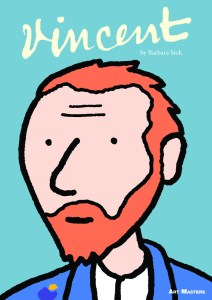 Dutch artist and writer Barbara Stok’s Vincent is the second graphic novel I’ve read from SelfMadeHero’s “Art Masters” series, after reviewing Munch last month. It’s another biographical study of an artist, in this case of Vincent van Gogh. Oddly, though, the drawing style and the subject’s vibrant shock of red hair reminded me most of Agatha.
The book focuses primarily on the time van Gogh spent in the South of France. He settled in Arles, staying first in a hotel and then in a large rental house he hoped to turn into an artists’ colony – he temporarily attracted Paul Gauguin before driving him away with his strict, workaholic ways and his temper.
In presumably authentic letters to his younger brother Theo (an art dealer who supported him financially) back in Paris, van Gogh details his progress and tells of his fondness for the Provence scenery. I particularly love the panels where you can spot the direct inspiration for some of van Gogh’s most famous paintings: wheat fields, cypress trees, sunflowers, irises, a starry night sky, and even his cluttered bedroom.
We also get insights into the philosophy behind van Gogh’s work: “An artist has to put character and emotion into his work, not just paint whatever sells,” he insists to an art dealer who expects him to pander to public taste. “I use lots of different techniques, all mixed together. I like to exaggerate the colors in order to capture the soul of the subject,” he explains to a couple of fellow painters who take an interest in him. He used thick, confident brush strokes and painted quickly, making him annoyingly prolific in others’ eyes.
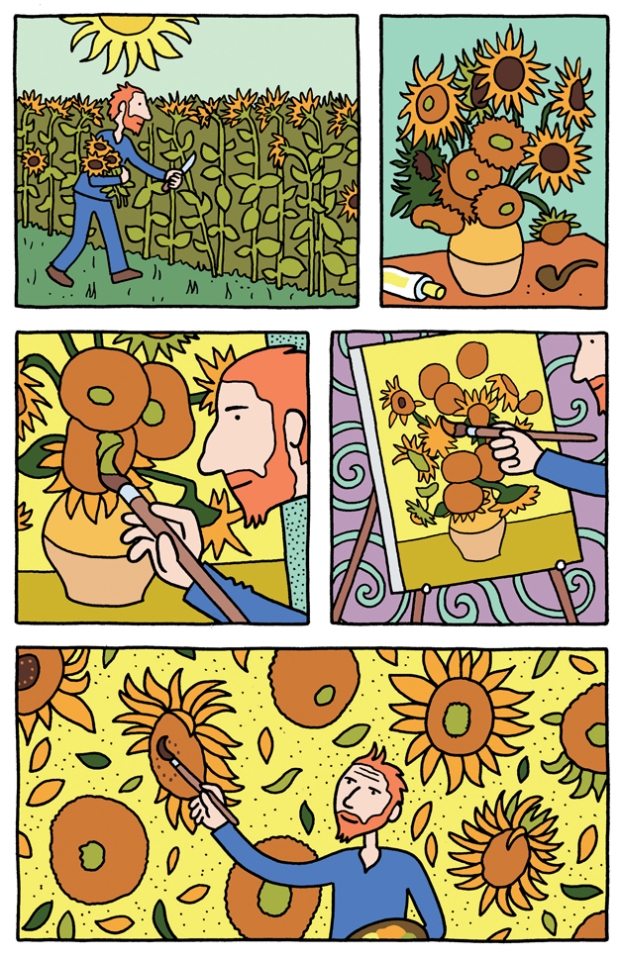
Stok does a wonderful job of depicting van Gogh as a misunderstood genius who drove people away with his lack of social skills, and sensitively introduces the breakdown during which he famously cut off his ear. He admitted himself to a mental hospital, where he could be treated for his epileptic attacks and continued to paint natural scenes under supervision.

Striking colors in the breakdown scene.
The book closes on what seems to be a fairly positive note: van Gogh voluntarily leaves the hospital and moves to Auvers-sur-Oise, near Paris, where he can be closer to Theo and his young family. “I foresee a future full of problems, but I’m not pessimistic,” he declares to his brother. And yet the final page shows a pair of gravestones: Vincent died in 1890 at age 37 and Theo just a year later, at 33.
Turn back one page and you see what might actually be a rather ominous scene: van Gogh has been painting in a wheat field; in one last two-page spread, he has disappeared from view and a flock of crows has taken off and filled the sky. Were they startled by the gunshot of his attempted suicide? While still true to the facts of van Gogh’s life, it’s a refreshingly subtle ending.
Stok perfectly captures van Gogh’s personality amid the warm colors of the French countryside, and whetted my appetite to read his letters for myself. I’d recommend this to anyone with an interest in the lives of artists, whether you think you’re a fan of graphic novels or not.
With thanks to the publisher, SelfMadeHero, for the free copy for review. Translated from the Dutch by Laura Watkinson.
My rating: 
Her Father’s Daughter (Peirene)
Originally issued in 2005, Her Father’s Daughter was French author Marie Sizun’s first of seven novels, published when she was 65. It’s an autobiographical reflection on a painful experience from her childhood: in 1945, when she was four and a half, the father she had never met returned from the war and reentered the family, only to leave again two years later. That is the essential storyline of this spare novella, told from the perspective of a four-year-old girl whose name is France but who is usually just referred to as “the child.”
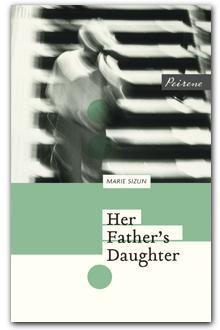 “Of the outside world, the child still knows pretty much nothing.” Her universe is limited to her Paris neighborhood and apartment; her mother, Liliane (Li), is the star around which she orbits. Li gives her daughter free rein, even leaving her alone in the apartment while she goes shopping. When the child learns that her father, a prisoner of war, is soon to return from Germany, she is anxious and resentful. The “secret, intimate world” she has with her mother looks fragile, and she is jealous of anyone who tries to encroach. Meanwhile her father and grandmother both think France has been spoiled and seek to instill a new sense of discipline.
There’s a secret at the heart of the book, something big that the mother and grandmother are covering up. It involves a trip to Normandy, yet whenever the girl tries to speak of the event later on, they deny it and tell her she’s only dreaming. My favorite passages of the book recount her helpless anger as she tries to expose their lies: “Fury from the child, who ploughs on, incredulous. Protests. Persists. In vain.” All she can do in retaliation for this deception and the increasing tension between her parents is pour her mother’s perfumes down the sink.
Sizun’s style is characterized by short, simple phrases. The child is not the narrator, yet the prose imitates the straightforward language that a child might use: “A very strange thing for the child, having a father. A father who’s there. At home. All the time. Morning, noon and night.” The compact chapters chronicle the family’s descent into silence, ignoring each other and walking away – which eventually the father does for good.
Peirene issues books in trios. This one is part of the “Fairy Tale: End of Innocence” series, along with The Man I Became by Peter Verhelst. It’s interesting to think about the book in that context, with the Eden of the mother and daughter being shattered by the entry of the father. “Fathers are found in fairy tales, and they’re always slightly unreal and not very kind,” the child thinks. Unfortunately, I found this novella to be slightly monotonous, with a particularly flat ending. I’ll leave you with a few words from the author about what she was trying to do with the book:
I needed to tell this story. To speak about that wound. … As my writing progressed and the book took shape, I felt this therapy wasn’t only for my personal use but spoke to everyone who, like me, may have been immersed in misunderstandings, in emotional distortions with loved ones, for example being forced to choose between a father and a mother.
It’s not exactly a cheery Father’s Day read, but an intriguing little book all the same.
Translated from the French by Adriana Hunter. With thanks to Peirene Press for the free copy.
My rating: 
Note: I’m traveling until the 24th so won’t be responding to comments right away, but will be sure to catch up soon after I’m back. I always welcome your thoughts!
The Man I Became (Peirene)
The latest book from Peirene Press is narrated by a gorilla. That’s no secret: it’s an explicit warning given in the blurb. Yet the narrator doesn’t remain a gorilla. The clue is in the title: in The Man I Became, the eleventh novel by Belgian Flemish author Peter Verhelst (translated from the Dutch by David Colmer), various species are captured and forcibly humanized. Our narrator – whose name we never know – remembers his happy life in Africa:
We caught termites by pushing long twigs, as flexible as blades of grass, into their mounds and then licking the twigs clean. … We hung from branches one-handed to show off our muscles. We felt like princes and princesses. We were young and beautiful and our bliss was never going to end.
But soon his fellows start disappearing, and eventually the riders come for him too. He’s captured and marched across the desert to the sea to be shipped to the New World. The gorillas’ training begins soon after they arrive.
We learned to walk upright. ‘Faster! Taller!’ said the human. … Then we learned how to shave. … We learned a new language word by word. We learned to eat from a bowl and then with knife and fork. … We learned to powder our skin to make it lighter.
 At this point I started to get a bit nervous about the book’s racial connotations. Especially as the gorillas-in-transition become sexual objects, I wondered what Verhelst could be attempting to say about the notions of the noble savage and the purification of the race.
The creatures’ progress is carefully documented. They carry phones that function as identification as well as an external memory. The art of conversation is something they practice at cocktail parties, where the narrator learns that he and his kind are not the only ones; giraffes, buffalo, leopards, parrots, lions and bonobos have all been subjected to the same experiment. With all of them together in the same room, the animals have to suppress their natural fear reactions.
The narrator becomes an animal trainer for the evolution-in-action show at Dreamland, an amusement park with roller coasters and fast food. There are different classes of animals, you see; some remain animals and do menial duties, while a chosen few are transformed into humans. He halfheartedly looks for his brother and has a brief affair with Emily. When a violent incident leaves several dead and the narrator’s human is caught acquiring animals through the black market, Dreamland’s very existence is threatened. (If you know the history of the real Dreamland, a longtime Coney Island attraction, you may have an inkling.)
This novella is scarcely 120 pages. Short books can be wonderful, but that’s not the case if there’s no space to craft a believable plot. The pace is so quick here that there’s no chance to bed into scenes and settings, and the narrator is never entirely convincing – whether as a gorilla, a man or something in between. Too much of the book feels dreamlike and fragmentary.
Meanwhile, the ideology bothered me. Is this simply a social satire à la Animal Farm, to which it’s compared in the prefatory material? A sort of ‘some animals are more equal than others’ message? If so, then, well, that’s been done before. Nor is there any shortage of books mocking caste systems and eugenic experimentation. Apart from a handful of memorable lines, the prose is quite simplistic, and the overall storyline doesn’t feel original.
Verhelst has written that he was inspired by three things: a troop of cheeky baboons encountered in South Africa, the history of the early-twentieth-century Dreamland, and news of the completed human genome project. “What is a human? Is it a creature that can smile while walking on two legs? A creature with a signature and a mobile phone?” he asks. These are interesting questions, certainly, but I felt they were not explored with particular depth or panache here.
The Man I Became was my third Peirene book, after The Looking-Glass Sisters. This one was a disappointment, but I will not let that deter me from trying more, including the other two in the “Fairy Tale series: End of Innocence”: Marie Sizun’s Her Father’s Daughter and Linda Stift’s The Empress and the Cake.
With thanks to Peirene Press for the free copy.
My rating: 
Airmail: Books that Lasted All of 2015 #2
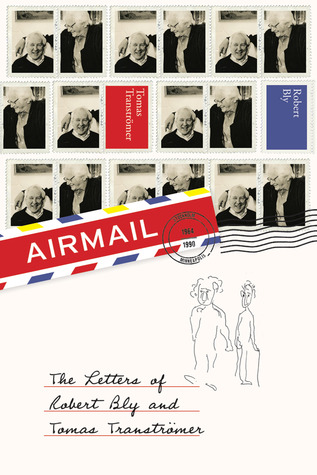 Airmail: The Letters of Robert Bly and Tomas Tranströmer was my first-ever Goodreads giveaway win. Way back in the summer of 2013, the good people of Graywolf Press spent a small fortune to send this tremendous book all the way from Minnesota to my tiny then-house on the outskirts of Reading, England. It took me an unconscionably long time first to pick it up, then to read it, and finally to review it. But here we are.
This is the first time I’d read a literary correspondence, and I absolutely loved it. I knew very little about either poet before picking this up, though I recognized Bly as the translator of the copy of Knut Hamsun’s Hunger I had read a few years back. The two first corresponded in 1964 when Tranströmer requested a copy of the poetry journal The Sixties from Bly’s small press. At this point Tranströmer was already an established poet in his native Sweden, but in decades to come Bly was responsible for making his reputation in English translation.
“Friendships have their rhythms and seasons, fat times and lean times,” editor Thomas R. Smith writes in his introduction. One of the pleasures of this book is watching a friendship develop, as salutations go from “Dear Mr. Tranströmer” and “Best wishes” to “Your friend” and “With deep fondness always.”
Their relationship was both professional and personal: they translated each other’s poems into their respective languages so discussed intricacies of meaning as well as publication details and reading tours, but they also visited each other and became ever deeper confidants through deaths in the family and Bly’s painful divorce. They also commiserate over the debacle of the Vietnam War (as a protestor Bly was once arrested alongside Dr. Spock and Allen Ginsberg) and the Nixon–Reagan affronts to liberalism.
These letters sparkle with humor, especially from Tranströmer, who paints a Micawber-ish picture of his impecunious family, initially supported through his day job as a psychologist at a boys’ prison. My impression of him was of an impish joker.
Our shortage of money is comical—toward the end of the month we go around and shake all our old clothes in the hope that a stray coin might fall out.
We drank some champagne, which makes you think very clearly—my head turned into an aquarium with goldfish who were mumbling sentences of Marcus Aurelius.
Bly’s a witty sort, too:
I’ll send you the most insulting review I’ve ever gotten—it’s wonderful, he objects to everything about me except the size of my shoes!
I carefully set aside these free days which are known as Introvert Days, and are to be spent in solitary anxious, obstinate, confused ectomorph brooding.
Forgive my new typewriter—its mother was frightened by a Latin manuscript, and it doesn’t believe in pauses…
You don’t have to have any interest in poetry to read this with enjoyment. In fact, I didn’t care for most of the poem extracts. In the 1960s and 70s, at least – the heyday for the letters – they both wrote free verse poems that alternate matter-of-fact observations with abstractions. Lacking in sound techniques, they struck me as flat and artless. They weren’t to my taste apart from this one stanza of Tranströmer’s that instantly jumped out to me:
Two truths approach each other. One comes from inside, the other from outside, and where they meet we have a chance to catch sight of ourselves. (from “Preludes”)
However, Bly, at least, became “positively form-mad” in his later years; “[I] now have to eat all my words praising free verse as the only food conceivable for true Christian folk,” he wrote in 1981. He even created his own form, the “ramage” of 85 syllables. Perhaps I’ll like their later work better – I’m game for trying a full collection from each of them.
For anyone interested in the nitty-gritty of translation, there are many fascinating passages here where the poets wrestle with vocabulary and nuances. “Poems are best when there are incredible mysteries in them,” Bly declares, and all the more difficult to retain that mystery as they passed back and forth between Swedish and English. “I think it was something unexplainable, something water-like or flowing in our approach to poetry that made our translations of each other full of feeling even with occasional mistakes,” Bly wrote to their Swedish editor.
These selected letters continue through 1990, when Tranströmer had a stroke and their correspondence inevitably declined. Tomas Tranströmer would go on to win the Nobel Prize in 2011 and died in March 2015. Robert Bly is still going at age 89 and has recently been the subject of a biopic. Stealing Sugar from the Castle, a volume of his new and selected poems, was published in 2013.
After this I’d be keen to try out more authors’ correspondence volumes. I love letters whether they appear in epistolary fiction or in nonfiction, and here they form a touching picture of a friendship that sustained their writers for decades. In 1978 Bly wrote: “Thank you for receiving my grief and my uncertainties and my shadowy complications without running out the door.” That’s the mark of a true friend.
With thanks to Graywolf Press for the free copy, won in a Goodreads giveaway.
My rating: 
Review: The Looking-Glass Sisters, Gøhril Gabrielsen
Since discovering Peirene Press, a publisher of novellas in English translation (see my “Small Books Are Good, Too” post for a mini-review of one of their previous titles), I’ve been keen to try more of their little gems. This is the second of four novels from Gøhril Gabrielsen, a Norwegian author who lives in the far north of the country in a region called Finnmark. It’s an isolated place she uses to good effect in this novel about two sisters whose lives change – and not for the better – when one of them gets married.
I reign as queen in my room, in spite of the dust and the dirt. I have the silence, my pen and books, and, not least, I own the hours when Ragna is away.
 Our unnamed narrator is paralyzed from the waist down and keeps to her bed in a home she shares with her older sister, Ragna. Their parents had her late in life and died early, so Ragna has looked after her since they were 19 and 24. They are now in middle age, so for years have rubbed along reasonably well, although there have been small acts of cruelty on either side – for instance, as a child the narrator planted chewing gum in Ragna’s bed so she’d have her luxurious hair cut off, and Ragna stays in the bathroom so long one morning that the narrator, making her tortuous way downstairs on crutches, has an accident in the hallway.
Our unnamed narrator is paralyzed from the waist down and keeps to her bed in a home she shares with her older sister, Ragna. Their parents had her late in life and died early, so Ragna has looked after her since they were 19 and 24. They are now in middle age, so for years have rubbed along reasonably well, although there have been small acts of cruelty on either side – for instance, as a child the narrator planted chewing gum in Ragna’s bed so she’d have her luxurious hair cut off, and Ragna stays in the bathroom so long one morning that the narrator, making her tortuous way downstairs on crutches, has an accident in the hallway.
A short prologue tells us things have gotten worse: Ragna and her husband of less than one year, Johan, now keep the sister locked up in the attic. In the novella’s core section the narrator returns to the previous year, when Ragna and Johan were courting, to track the decline of this strange “little family with pus and pain in our cuts and scratches.” It all starts with her finding a letter Ragna wrote to a nursing home about committing her sister – and replacing it with a sheet of blank paper.
Our discontented narrator has a compulsion to remind everyone of her inconvenient existence: “I’m here. And I’m bloody hungry!” Whenever Ragna and Johan have friends visit, she is sure to make a scene. Her other acts of resistance are largely passive, though: writing snarky messages in the blank pages of encyclopedia volumes, listening on disapprovingly as Ragna and Johan have sex on the other side of the wall, and cursing Johan by burning his hair. Ragna follows suit by pettishly withholding library books and hot meals.
What we have here is essentially a psychological thriller with a claustrophobic domestic setting. Because we see everything from the narrator’s perspective, we share her sense of outrage at how Johan has upset her comfortable life and “sabotaged our sisterly pact.” At the same time, Gabrielsen implants tiny, clever clues that this is an unreliable narrator:
Can it be that I, the helpless one, have bred the anger in her by making myself more pathetic than I am? And can it be that I, in my struggle to gain the inviolable position of victim, have forged and fashioned Ragna the violator?
Furthermore, can it be that I, after years of exaggerated care needs, have robbed her of the ability to think, to create a living, inner life?
I can once more carry on my most precious occupation: lie on the pillows and twist the world exactly as I like.
Ultimately we have to wonder whether the person who has been telling us this whole story might be mentally compromised. How much of her mistreatment and present condition is she imagining? The way Gabrielsen counterbalances inherent trust in a narrator with skepticism as the story proceeds is remarkable. “I am reduced to an observing eye,” the protagonist tells us – and as readers we both see out of that eye and seek an objective outside view. It’s a gently thrilling book I’d recommend to you in the run-up to Halloween.
Peirene issues books in trios: this is part of the “Chance Encounter series: Meeting the Other,” along with Aki Ollikainen’s White Hunger and Raymond Jean’s Reader for Hire.
With thanks to Peirene Press for the free copy.
My rating: 
Reviews Roundup, May–June
One of my goals with this blog is to have one convenient place where I can gather together all my writing that has appeared in disparate online locations. To that end, once a month – or maybe more often – I’ll provide links to all the book reviews I’ve published elsewhere, with a rating and a short taster so you can decide whether to click to read more. (A couple of exceptions: I won’t point out my Kirkus Indie or BlueInk reviews since I don’t get a byline.)
BookBrowse
Girl at War by Sara Nović [subscription service; excerpt available to non-subscribers]: This pitch-perfect debut novel is an inside look at the Yugoslavian Civil War and its aftermath, from the perspective of a young girl caught up in the fighting. The careful structure is what keeps it from becoming just another ordinary, chronological war story. The recreation of a child’s perspective on the horrors of war is stunning. In fact, I can barely think of a negative thing to say about this concise novel. It strikes a perfect balance between past and present, tragic and hopeful.

 Church of Marvels by Leslie Parry [subscription service; excerpt available to non-subscribers]: With settings ranging from a Coney Island theater to an opium den and a mental asylum, this is a gritty look at late-nineteenth-century outsiders. Circus and sideshow themes have been very popular in fiction in recent years, and this is a great example of a novel that uses those elements as background but goes beyond the incidentals of the carnival lifestyle to examine sexuality and societal outcasts. A very atmospheric and accomplished debut novel.
The Bookbag
Secrets of the Pomegranate by Barbara Lamplugh (& interview): In the aftermath of the 2004 Madrid train bombings, the secrets harbored by two English sisters, one of them settled in Granada, will come out into the open and affect the entire family. Lamplugh does a great job of unveiling a little at a time – but still maintaining tension until the surprise of the final revelation. The novel shifts easily between the central narrative and Deb’s diary entries, and between Alice’s and Mark’s perspectives. A strong debut novel.
An Account of the Decline of the Great Auk, According to One Who Saw It by Jessie Greengrass: An unusual mixture of historical, contemporary and dystopian short stories. A number of the first-person narratives feel like vague interior monologues, though there are some universal sentiments. When Greengrass picks one genre (but which will it be?) and sticks with it for the length of a whole book, she should have the time and space for the deep characterizations I thought were missing here. (But you can’t beat this book’s title, can you?)

 From the Mixed-Up Files of Mrs. Basil E. Frankweiler by E.L. Konigsburg: This was one of the key books of my American childhood. All these years later, phrases were still familiar to me, such as Jamie’s frequent exclamation of “Oh, boloney!” I clearly remembered the delicious overall sense of adventure and secrecy. Konigsburg captures school group chatter and brother/sister banter perfectly. The museum and archive settings are a great way to get children interested in art, history and library research. This was the original Night at the Museum before that franchise was ever dreamed up.
The Hunt for the Golden Mole by Richard Girling: From Victorian animal collecting to present-day poaching, Girling surveys the contradictory human instincts toward exploitation and preservation of mammals. The book is rather scattered, with too little about the actual quest for the mole, but the message about species extinction is powerful. (The Somali golden mole has never been seen in the wild, except as a few bones in an owl pellet found by an Italian zoologist in 1964. For some reason, it captured Girling’s imagination, becoming a symbol of rarity and fragility.)

Nudge
Road Ends by Mary Lawson: Contrasting rural Canada and London in the 1960s, Lawson’s third novel is a powerful story about how people deal with a way of life ending. She creates a perfect balance between her two plot strands, and the evocation of both locations is flawless, perhaps because they have autobiographical worth for her – she grew up on a farm in Ontario but moved to England in 1968. One remarkable thing about the novel is how she traces every decision back to a traumatic event in a character’s past.
 The Wolf Border by Sarah Hall: Rachel Caine has run Idaho’s Chief Joseph wolf preserve for nearly a decade, but her roots are in England’s Lake District. Her two worlds unexpectedly collide when an earl asks for her help reintroducing wolves near the Scottish border. Alongside the story of the wolves’ release runs Rachel’s decision to become a mother. The twin plot strands – one environmental and the other personal – ask what can be salvaged from the past.
Italian Ways by Tim Parks: Parks, an Englishman, has lived and worked in northern Italy for over 30 years. To start with he saw his train travel as an everyday source of woes about ticket queues, late running, officious staff, and so on, but as years passed he decided to interrogate Italy’s rail system as a metaphor for the country itself. He structures this book around seven train journeys. It’s better suited to train spotters than to armchair travelers: there is quite a lot about train schedules and not enough about the countryside itself.
 Landmarks by Robert Macfarlane: This new classic of nature writing zeroes in on the language we use to talk about our environment, both individual words – which Macfarlane celebrates in nine mini-glossaries alternating with the prose chapters – and the narratives we build around places, via discussions of the work of nature writers he admires. Whether poetic (“heavengravel,” Gerard Manley Hopkins’s term for hailstones), local and folksy (“wonty-tump,” a Herefordshire word for a molehill), or onomatopoeic (on Exmoor, “zwer” is the sound of partridges taking off), his vocabulary words are a treasure trove.
Penelope Fitzgerald: A Life by Hermione Lee: A thorough and sympathetic appreciation of an underrated author, and another marvelously detailed biography from Lee. Fitzgerald is, like Diana Athill, a reassuring examples of an author who did not find success until well into middle age. Although she always guarded literary ambitions, she was not able to pursue her work wholeheartedly until she had reared three children and nursed her hapless husband through his last illness. The approach is largely chronological, though Lee pauses at key moments to investigate the biographical origins of each of Fitzgerald’s books.
Saint Mazie by Jami Attenberg: Mazie Phillips-Gordon, a real ticket-taker at The Venice movie theatre, barely gets a footnote in history. Here we see all sides of this bold, brassy broad through Attenberg’s fragmented, epistolary narrative. The novel intersperses Mazie’s fictional diary entries (1907 to 1939) with excerpts from her unpublished autobiography and interviews with people who knew her. This is historical fiction – but not as we’re accustomed to it. Attenberg shows how fragile and incomplete the documentary record can be. A hard-nosed heroine with a heart of gold, Mazie will leave her mark on you.
 A Buzz in the Meadow by Dave Goulson: As Goulson did in his book about bees, A Sting in the Tale, he treats readers like friends he is taking on a gentle tour to have everyday encounters with nature. The low-key, humorous anecdotes are reminiscent of the writings of Gerald Durrell, but – like Durrell – Goulson has a serious environmental agenda. Some of the most amusing chapters are about the sexual habits of insects and plants. This is less focused than his previous book, though, and repeats some of the material. The main draw, as always, is Goulson’s infectious enthusiasm and excellent explanations of science.
We Love This Book
War of the Encyclopaedists by Christopher Robinson and Gavin Kovite: In this postmodern satire, two Seattle hipsters must face reality when one of them leaves to fight in the Iraq War. From now on they keep in touch by updating their pretentious Wikipedia article. While Hal applies literary criticism to Star Wars and tries to make amends to his ex-girlfriend, Mickey is in life-and-death situations, looking for car bombs and overseeing local elections. Robinson and Kovite (an Iraq War veteran) alternate their settings in a fairly seamless whole.
The Edible Atlas by Mina Holland: Food lovers and armchair travelers alike will savor this tour through the world’s regional cuisines and trademark dishes. In her first book, the editor of the Guardian’s Cook supplement introduces 39 cuisines with larder lists, a rundown of crucial flavors, and one to four recipes. Maps show which spices and chilies are used in different areas, while sidebars present key ingredients. The book strives for a balance of common imports and unknown dishes, prioritizing authenticity and reproducibility at home.
 Hollow Heart by Viola di Grado: Twenty-five-year-old Dorotea Giglio slit her wrists in the bathtub in July 2011 and expired in “a grim mojito of mint bubble bath and blood.” Over the next four years she chronicles her physical decomposition as well as her spirit’s enduring search for love. In alternately clinical and whimsical language, with fresh metaphors that have survived translation from Italian admirably, di Grado’s second novel examines the secret sadness passed down through families.
Foreword Reviews
Auschwitz #34207: The Joe Rubinstein Story by Nancy Sprowell Geise: This eye-opening account of a Polish Jew’s life before, during, and after Auschwitz deposits readers right into concentration camp horrors. Instead of presenting this as a third-person biography, Geise writes as Rubinstein, using extensive interviews and documentary research to recreate his perspective. While the story is necessarily a bit less dramatic after the chapters on the Holocaust, the fact that Rubinstein survived and later became a successful shoe designer in New York is inspiring.
The Contaminants by Devin K. Smyth: Two teens aboard a spacecraft hold out hope for new life on post-apocalyptic Earth in this believable YA science fiction novel. Composed of two solid first-person narratives and based around two father-child relationships, this is a novel that prizes emotions as much as it does technology. The novel is on the thin side; it could have done with another subplot or two to add some complexity. However, the subtle eugenics theme will give teen readers plenty to think about while they follow the fast-paced story.
 The Loneliness Cure by Kory Floyd: A professor of communication tackles the loneliness epidemic with stories and science. Floyd explains the problems associated with chronic affection deprivation and suggests practical strategies for getting more of the human contact we naturally crave. Two-thirds of the text goes to preliminaries, but the subtitle’s six strategies are worth waiting for. Like the best self-help books, this convinces readers that “it pays to reach out for help when you need it” and gives the confidence and tactics to do so.
BookTrib
In this article I give a more in-depth preview of Circling the Sun by Paula McLain, her fictionalized biography of Beryl Markham.
I also post reviews of most of my casual reading and skimming on Goodreads.
Insomnia by Linda Pastan: Excellent free verse poems infused with images of weather, heavenly bodies, the night sky, art history, and travels. No rhymes to speak of, but plenty of alliteration and repetition – like in “Necklace,” where nearly every line ends with “pearl” or “pearls.” Historical and mythological references are frequent and highbrow. Especially in Part 3, the main theme is facing old age and illness. Linda Pastan has been writing poetry for nearly half a century; I’ll be sure to seek out more of her collections. Releases October 26th.
The Kindness by Polly Samson: This very subtle novel reminds me of works by Tessa Hadley and Lucy Caldwell. It takes one seemingly perfect couple – Julia and Julian – and parses out what went wrong between them and the aftermath. The book is so elegantly structured; characters drift in and out of flashbacks with none of the customary warnings. Instead Samson leaves it to readers to piece together the jigsaw puzzle of how they met and raised their daughter, Mira, and then how everything fell apart.
 The Versions of Us by Laura Barnett: In this impressive debut, Barnett chronicles the romantic lives of two Cambridge graduates through three-quarters of a century, giving three options for how their connection might play out. She juggles her storylines and moves through decades with ease. Less mawkish than One Day; less gimmicky than Life After Life – though there are shades of both. The message seems to be: there is no one perfect person, no one perfect story. Unsentimental this may be, but it feels true to how life works. (My full review will appear in the July 2015 issue of Third Way magazine.)
Eating Appalachia: Rediscovering Regional American Flavors by Darrin Nordahl: Nordahl travels through Ohio, West Virginia, Kentucky and North Carolina in search of truly indigenous local ingredients. He highlights ramsons, pawpaw, elk (leaner and richer than beef), squirrel, hickory nuts and black walnuts, sumac, spicebush berry, sassafras, and persimmons. There are a few recipes and photographs in each chapter, although this is more of a narrative than a cookbook. I loved how he brought it all together with an imagined Appalachian Thanksgiving feast.
Eating Rome: Living the Good Life in the Eternal City by Elizabeth Minchilli: Minchilli’s parents moved the family from America to Rome when she was 12. Over the years she kept going back to Italy: to Florence as a graduate student, and then to stay when she married Domenico. Here, through recipes and personal stories, she shares her enthusiasm for Italian food and for Rome in particular. She finishes each chapter with a list of favorite eateries, so this is a practical guide anyone would benefit from taking along on a trip to Rome.
Some Churches by Tasha Cotter: I loved the first two poems but felt a number of the rest were lacking in artistry. Almost all are written in complete sentences, some in paragraph blocks, and alliteration isn’t always enough to differentiate them from prose. Favorite lines (from “Blood Orange”): “People think that either the red or the orange should go, because to blend the two / alienates some readers. / … I, too, am having an identity crisis, / just like the blood orange. Now that we’ve peeled back / the artifice, you’re inviting me in anyway”.
South Toward Home: Travels in Southern Literature by Margaret Eby: This tour through Southern literature is a great introduction for someone whose familiarity with Southern authors is minimal. Starting off in her home state of Mississippi, Eby travels through Georgia, Alabama, Louisiana, and back to Mississippi in a roughly circular road trip. My favorite chapter was on Flannery O’Connor, but I was also interested to learn about Harry Crews, who I’d never heard of before – it certainly sounds like he was a character. Releases September 8th.
 Post-Traumatic Church Syndrome: A Memoir of Humor and Healing by Reba Riley: I could relate to much of Riley’s story. She was a Pentecostal-leaning fundamentalist through high school, but now even setting foot in a church made her feel nauseous. Yet she retained a strong spiritual compass that helped her tap into the energy of the “Godiverse.” Aged 29, Riley had the idea of experiencing 30 different religious traditions before 30. She writes in a chatty, girlfriend-to-girlfriend style, as if you’ve joined her book club for a glass of pinot grigio.
Reviews Roundup, March–April
One of my goals with this blog is to have one convenient place where I can gather together all my writing that has appeared in disparate online locations. To that end, once a month – or maybe more often – I’ll provide links to all the book reviews I’ve published elsewhere, with a short taster and a rating (below) so you can decide whether to click to read more. (A couple of exceptions: I won’t point out my Kirkus Indie or BlueInk reviews since I don’t get a byline.)
BookBrowse
 The Animals by Christian Kiefer [BookBrowse is a subscription service, but an excerpt is available for free on the website]: Kiefer’s second novel contrasts wildness and civilization through the story of a man who runs an animal refuge to escape from his criminal past.
The Bookbag
 The Sunlit Night by Rebecca Dinerstein: A debut novel as charming as it is quirky. Two young adults from Brooklyn meet in the far north of Norway, where one is an artist’s apprentice and the other is burying a beloved father. Bittersweet family backstories and burgeoning romance make this a winner.
Beauty and Chaos: Slices and Morsels of Tokyo Life by Michael Pronko (& interview): The pleasant and diverse travel essays in this collection draw on Pronko’s 15 years living in Japan. A long-term resident but still an outsider, he is perfectly placed to notice the many odd and wonderful aspects of Tokyo life.
The Blind Man of Hoy: A True Story by Red Szell: Red Széll started losing his sight at age 19. In 2013 he became the first blind person to climb the Old Man of Hoy, off the Orkney Islands. An inspirational rock-climbing adventure.
 Adeline: A Novel of Virginia Woolf by Norah Vincent: Set in 1925–1941 and focusing on Virginia Woolf’s marriage and later career, this is a remarkable picture of mental illness from the inside. For the depth of its literary reference and psychological insight, this is my favorite novel of 2015 so far.
Nudge
On Immunity: An Inoculation by Eula Biss: This wide-ranging work of nonfiction explores the facts, myths and metaphors of vaccination. Biss powerfully captures the modern phenomenon of feeling simultaneously responsible and powerless.
Chaplin and Company by Mave Fellowes: An aspiring mime buys a London canal boat and finds her father in this debut novel. Fellowes writes good descriptive passages and handles past and present capably. However, I was unsure whether Chaplin and Company overall has much narrative verve. What I will take away is an offbeat, bittersweet coming-of-age story.

 Gorsky by Vesna Goldsworthy: An updated version of The Great Gatsby set amongst contemporary London’s über-rich Russians. The novel is wise about the implications of class and immigration. However, as a whole it doesn’t work as well as some updated classics, such as The Innocents (Francesca Segal). In a sense, Goldsworthy’s literary debt is too obvious.
Quite a Good Time to Be Born: A Memoir, 1935-1975 by David Lodge [more personal musings and an overview of the book’s content]: David Lodge, one of Britain’s most celebrated comic novelists, surveys 40 years of personal and social change.
Better Than Before: Mastering the Habits of Our Everyday Lives by Gretchen Rubin: The author of The Happiness Project returns with a thorough guide to making and breaking habits, offering different strategies for different personality types.
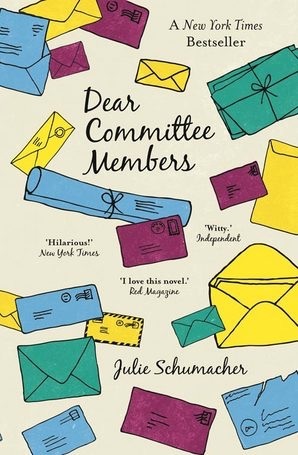 Dear Committee Members by Julie Schumacher: A very funny epistolary novel in the form of letters of recommendation written by a grouchy English professor. English graduates and teachers in particular will get a kick out of this, but I daresay anyone who has ever been fed up with bureaucracy at work will sympathize with Fitger.
The Last Asylum: A Memoir of Madness in Our Time by Barbara Taylor: Taylor was once a mental patient at Friern Hospital. This is an arresting vision of madness from the inside, as well as a history of England’s asylum system.
We Love This Book
 It’s What I Do: A Photographer’s Life of Love and War by Lynsey Addario: Photojournalist Lynsey Addario remembers a decade on the frontline of conflicts in the Middle East and Africa and strives for balance in her work and personal life. Journalists face real danger every day. It’s all here: bombs, car accidents, dehydration, beatings, and sexual assault. Yet all the risks over the years have been worth it “to convey beauty in war.”
Hausfrau by Jill Alexander Essbaum: Essbaum’s arresting debut novel reads like a modern retelling of Madame Bovary, with its main character a desperate housewife in Zurich. As deplorable as Anna’s actions may be, she is an entirely sympathetic tragic heroine. Watch her trajectory with horror but you cannot deny there is a little of Anna in you.
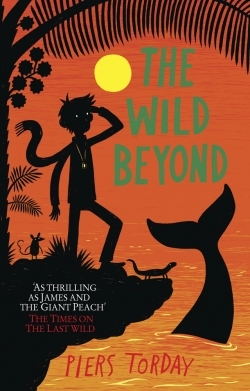 The Wild Beyond by Piers Torday: the suspenseful finale to “The Last Wild,” a fantasy trilogy for younger readers. The environmentalist message is not subtle but it is powerful and should inspire older children. Blending hints of Pullman and Tolkien with up-to-the-minute dystopian themes, this is an inventive take on the classic quest narrative.
The Time in Between: A Memoir of Hunger and Hope by Nancy Tucker: Nancy Tucker suffered from anorexia and bulimia for nearly a decade. Written in an original blend of styles, her eating disorder memoir is wrenching but utterly absorbing. You won’t find epiphanies or happy endings here, just a messy, ongoing recovery process – but 21-year-old Tucker narrates it exquisitely.
Quadrapheme literary magazine
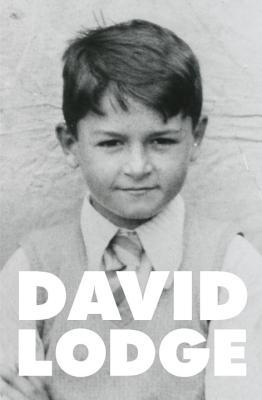 Quite a Good Time to Be Born: A Memoir, 1935-1975 by David Lodge [more of an essay about the context and sociological themes]: Even readers less familiar with Lodge’s work may be interested in the book’s insights into the social changes of post-war Britain. Lodge has not had a conventionally exciting life, and he knows it. From the title onward, his focus is more on his time period than his own uniqueness. He appears as an Everyman who superseded his working-class origins and expectations through hard work and luck.
Shiny New Books
 Reading the World: Confessions of a Literary Explorer by Ann Morgan: Not just another bibliomemoir. A better balance could have been struck between recycled blog content and academic musings on postcolonial literature and censorship. An interest in the politics of literature in translation would be a boon to anyone attempting this.
Foreword Reviews (self-published titles)
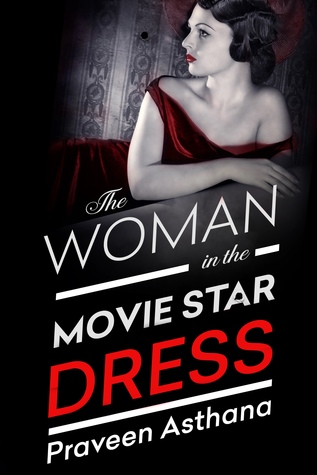 The Woman in the Movie Star Dress by Praveen Asthana: In this carefully plotted novel, a young Native American finds self-assurance and explores her sexuality by trying on the clothing – and personae – of Hollywood actresses. Spirited characters and dialogue make this an enjoyable read for classic film lovers.
Silence by Deborah Lytton: Lytton’s second novel for young adults concerns the unlikely match between a Broadway-bound singer who experiences temporary deafness after an accident and a pianist with a speech impediment and a traumatic past. It is a touching story about the forces that so often threaten us into silence and the struggle to find a voice anyway.
 Woody Allen: Reel to Real by Alex Sheremet: Woody Allen fans will prize this comprehensive, readable rundown of his oeuvre. This is an exhaustive study, ideal for established Allen enthusiasts and film students rather than the average moviegoer looking for an introduction.
I also post reviews of most of my casual reading on Goodreads.
The Mermaid’s Child by Jo Baker: This was Baker’s second novel, originally published in 2004. It doesn’t nearly live up to Longbourn, but it’s a fairly intriguing blend of historical fiction and fantasy. Malin’s father was a ferryman; her absent mother, so he swears, was a mermaid. Curiously timeless and placeless.
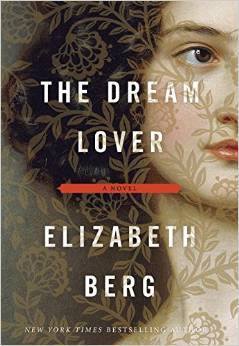 The Dream Lover: A Novel of George Sand by Elizabeth Berg: This historical novel about George Sand is a real slow burner. Berg makes the mistake of trying to be too comprehensive about Sand’s life; it would be better to just choose illustrative vignettes or representative love affairs (e.g. with Chopin) rather than include them all. There are two different timelines, 1831–1876 and 1804–1831, but together they’re still just a chronological slog.
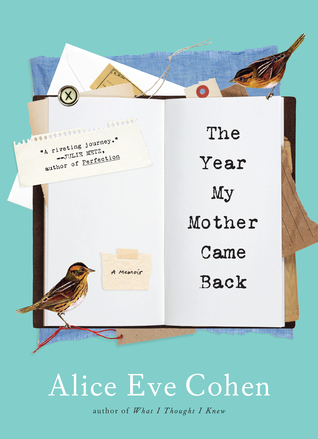 The Year My Mother Came Back by Alice Eve Cohen: There’s some gentle magic realism to this mother-daughter memoir. In the difficult year that forms the kernel of the memoir, Cohen’s younger daughter, Eliana, had a leg-lengthening surgery; her adopted older daughter, Julia, met her birth mother, Zoe; and Cohen herself underwent a lumpectomy and radiation for breast cancer. During radiation sessions, when she had to lie face-down, perfectly still, for 10 minutes at a time, her mother – dead for 20 years – would appear and talk to her.
A Sting in the Tale: My Adventures with Bumblebees by Dave Goulson: A wholly engaging tour through everything we know and are still trying to learn about bumblebees. I saw Goulson, founder of the UK’s Bumblebee Conservation Trust, speak at a nature conference in November and found him to be just as enthusiastic and well-informed in person. His occasional anthropomorphisms are unfailingly endearing.
 Black River by S.M. Hulse: Back in the town of Black River, Montana after his wife’s agonizing death, Wesley Carver must face the trauma he experienced as a prison guard when he was held hostage and tortured during an inmate riot. Now his attacker is up for parole, and Wes plans to attend the hearing and discourage the jury. At first you might think you’re reading a revenge story, but this is something subtler and sweeter than that. (What a shame that Hulse had to go by her initials, rather than Sarah, to be taken seriously in this genre, even though she’s on a level with Philipp Meyer.)
Trumbull Ave. by Michael Lauchlan: I didn’t like this quite as much as the other Made in Michigan books I’ve read, but Lauchlan does a good job of contrasting pastoral and post-industrial views of Detroit through free verse, as in “Detroit Pheasant,” the poem that gives the collection its cover image.
What Ridiculous Things We Could Ask of Each Other by Jeffrey Schultz: I enjoyed these poems set in a seemingly post-apocalyptic urban wasteland. They’re full of black humor, sarcasm and realistically pessimistic views of the American future. They’re very densely structured, usually in complete sentences of free verse.
 Bookish Beck = Rebecca Foster. American transplant to England. Freelance proofreader and book reviewer.
