Random 2020 Superlatives and Statistics
My top ‘discoveries’ of the year: Chimamanda Ngozi Adichie (4 books), Octavia E. Butler, Tim Dee (3 books each, read or in progress), and Louise Erdrich (2 books, one in progress).


Also the publisher Little Toller Books: I read four of their releases this year and they were fantastic.
The authors I read the most by this year: Carol Shields tops the list at 6 books (3 of these were rereads) thanks to my buddy reads with Buried in Print, followed by Paul Auster with 5 due to Annabel’s reading week in February, then Chimamanda Ngozi Adichie with 4, and finally Anne Lamott with 3 comfort rereads.


Debut authors whose next work I’m most looking forward to: Naoise Dolan, Bess Kalb, Dara McAnulty, Mary South, Brandon Taylor, and Madeleine Watts
My proudest reading achievement: 16 rereads, which must be a record for me. Also, I always say I’m not really a short story person … and yet somehow I’ve read 19 collections of them this year (and one stand-alone story, plus another collection currently on the go)!
My proudest (non-reading) bookish achievement: Conceiving of and coordinating the Not the Wellcome Prize blog tour.
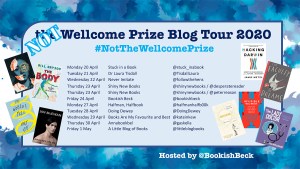
Five favorite blog posts of the year: Love, Etc. – Some Thematic Reading for Valentine’s Day; Polio and the Plague: Epidemics in Fiction; Thinking about the Future with David Farrier & Roman Krznaric (Hay Festival); Three Out-of-the-Ordinary Memoirs: Kalb, Machado, McGuinness; Asking What If? with Rodham by Curtis Sittenfeld (I had a lot of fun putting the current post together, too!)
The bookish experience that most defined my year: Watching the Bookshop Band’s live shows from their living room. Between their Friday night lockdown performances and one-offs for festivals and book launches, I think I saw them play 33 times in 2020!

Biggest book read this year: Going by dimensions rather than number of pages, it was the oversize hardback The Lost Words by Robert Macfarlane and Jackie Morris.
vs.
Smallest book read this year: Pocket-sized and only about 60 pages: No One Is Too Small to Make a Difference by Greta Thunberg.

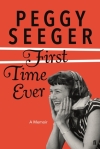 Oldest author read this year: Peggy Seeger was 82 when her memoir First Time Ever was published. I haven’t double-checked the age of every single author, but I think second place at 77 is a tie between debut novelist Arlene Heyman for Artifact and Sue Miller for Monogamy. (I don’t know how old Michael McCarthy, Jeremy Mynott and Peter Marren, the joint authors of The Consolation of Nature, are; Mynott may actually be the oldest overall, and their combined age is likely over 200.)
vs.
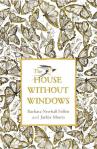 Youngest author read this year: You might assume it was 16-year-old Dara McAnulty with Diary of a Young Naturalist, which won the Wainwright Prize (as well as the An Post Irish Book Award for Newcomer of the Year, the Books Are My Bag Reader Award for Non-Fiction, and the Hay Festival Book of the Year!) … or Thunberg, above, who was 16 when her book came out. They were indeed tied for youngest until, earlier in December, I started reading The House without Windows (1927) by Barbara Newhall Follett, a bizarre fantasy novel published when the child prodigy was 12.
Most As on a book cover: Americanah by Chimamanda Ngozi Adichie
vs.
Most Zs on a book cover: The Hiding Place by Trezza Azzopardi. I haven’t read it yet, but a neighbor passed on a copy she was getting rid of. It was nominated for both the Booker Prize and the Orange Prize.

 The book that made me laugh the most: Kay’s Anatomy by Adam Kay
Books that made me cry: Writers and Lovers by Lily King, Monogamy by Sue Miller, First Time Ever by Peggy Seeger, and Catalogue Baby: A Memoir of (In)fertility by Myriam Steinberg (coming out in March 2021)
 The book that put a song in my head every single time I looked at it, much less read it: I Am an Island by Tamsin Calidas (i.e., “I Am a Rock” by Simon and Garfunkel, which, as my husband pointed out, has very appropriate lyrics for 2020: “In a deep and dark December / I am alone / Gazing from my window to the streets below … Hiding in my room / Safe within my womb / I touch no one and no one touches me.”)
Best book club selections: Notes from an Exhibition by Patrick Gale and The Wife by Meg Wolitzer tied for our highest score ever and gave us lots to talk about.

 Most unexpectedly apt lines encountered in a book: “People came to church wearing masks, if they came at all. They’d sit as far from each other as they could.” (Gilead by Marilynne Robinson. Describing not COVID-19 times but the Spanish flu.)
 Most ironic lines encountered in a book: “September 12—In the ongoing hearings, Senator Joseph Biden pledges to consider the Bork nomination ‘with total objectivity,’ adding, ‘You have that on my honor not only as a senator, but also as the Prince of Wales.’ … October 1—Senator Joseph Biden is forced to withdraw from the Democratic presidential race when it is learned that he is in fact an elderly Norwegian woman.” (from the 1987 roundup in Dave Barry’s Greatest Hits – Biden has been on the U.S. political scene, and mocked, for 3.5+ decades!)
 Best first line encountered this year: “And then there was the day when Addie Moore made a call on Louis Waters.” (Our Souls at Night by Kent Haruf)
Best last lines encountered this year:
- “my childhood falls silently to the bottom of my memory, that library of the soul from which I will draw knowledge and experience for the rest of my life.” (Childhood by Tove Ditlevsen)
- “What I want to say is: I misremember all this so vividly it’s as if it only happened yesterday.” (Other People’s Countries: A Journey into Memory by Patrick McGuinness)
- “these friends would forever be her stitches, her scaffold, her ballast, her home.” (The Dearly Beloved by Cara Wall)
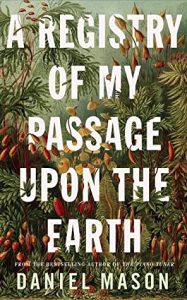
My favorite title and cover combo of the year: A Registry of My Passage Upon the Earth by Daniel Mason
The book I wish had gotten a better title and cover: Tennis Lessons by Susannah Dickey – I did enjoy this second-person novel about a young woman who is her own worst enemy, to the tune of 3.5 stars, but the title says nothing about it and the cover would have been a turnoff had I not won a signed copy from Mslexia.

The most unfortunate typos I found in published works: In English Pastoral by James Rebanks, “sewn” where he meant “sown” (so ironic in a book about farming!) versus, in Mr Wilder & Me by Jonathan Coe, “sown” in place of “sewn.” Also “impassible” where it should read “impassable” in Apeirogon by Colum McCann. This is what proofreaders like myself are for. We will save you from embarrassing homophone slips, dangling modifiers, and more!
The 2020 books that everybody else loved, but I didn’t: The Mirror and the Light by Hilary Mantel, Hamnet by Maggie O’Farrell, and Shuggie Bain by Douglas Stuart


The year’s biggest disappointments: I don’t like to call anything “worst” (after all, I didn’t read anything nearly as awful as last year’s Jonathan Livingston Seagull), but my lowest ratings went to A Traveller at the Gates of Wisdom by John Boyne and At Hawthorn Time by Melissa Harrison, and I was disappointed that When the Lights Go Out by Carys Bray was misleadingly marketed.
 The downright strangest books I read this year: Enter the Aardvark by Jessica Anthony, A Traveller at the Gates of Wisdom by John Boyne, The House Without Windows by Barbara Newhall Follett, and The Child in Time by Ian McEwan
The people and themes that kept turning up in my reading: Rachel Carson and Henry David Thoreau; curlews and plagues; how we define and relate to history; childhood memoirs (seven of them).

Some of my 2020 curlew reading. (Two more books with curlews on the cover were borrowed from the library.)
Some statistics on my 2020 reading:
Fiction: 57.2%
Nonfiction: 36.8%
Poetry: 6%
(Fiction reigned supreme this year! Last year my F:NF ratio was roughly 1:1. Poetry was down by ~5% this year compared to 2019.)
Male author: 34.1%
Female author: 63.8%
Nonbinary author: 0.3% (= 1 author, Jay Bernard)
Multiple genders (anthologies): 1.8%
(Women dominated by an extra ~5% this year over 2019. I’ve said this for four years now: I find it intriguing that female authors significantly outweigh male authors in my reading because I have never consciously set out to read more books by women; it must be a matter of being interested in the kinds of stories women tell and how they capture their experiences in nonfiction.)
E-books: 10.6%
Print books: 89.4%
(Almost exactly the same as last year. My e-book reading has been declining, partially because I’ve cut back on the reviewing gigs that involve only reading e-books and partially because I’ve done less traveling. Increasingly, I prefer to sit down with a big stack of print books.)
Books by BIPOC: 14.7%
Literature in translation: 6.6%
(Down from last year’s 7.2%; how did this happen?! This will be something to address in 2021.)
Where my books came from for the whole year:
- Free print or e-copy from publisher: 25.6%
- Public library: 25.6%
- Free (giveaways, The Book Thing of Baltimore, the free mall bookshop, etc.): 14.9%
- Secondhand purchase: 11.6%
- Downloaded from NetGalley, Edelweiss or Project Gutenberg: 6.7%
- New purchase (sometimes at a bargain price): 6.3%
- Gifts: 5.5%
- University library: 3.8%
I promised to scale back on review copies this year, and I did: last year they accounted for nearly 37% of my reading. My library reading was higher than last year’s, despite the challenges of lockdowns; my e-book reading decreased in general. I bought more than twice as many new books as usual this year, and read lots that I either bought secondhand or got for free.
Number of unread print books in the house: 435
At the end of last year this figure was at 440 after lots of stock-ups from the free mall bookshop, which has since closed. So even though it might look like I have only read five books of my own, I have in fact read loads from my shelves this year … but also acquired many more books, both new and secondhand.
In any case, the overall movement has been downward, so I’m calling it a win!
Completing the Women’s Prize Winners Reading Project and Voting
In this 25th anniversary year of the Women’s (previously Orange/Baileys) Prize, people have been encouraged to read all of the previous winners. I duly attempted to catch up on the 11 winners I hadn’t yet read, starting with Fugitive Pieces by Anne Michaels; Half of a Yellow Sun by Chimamanda Ngozi Adichie and A Crime in the Neighborhood by Suzanne Berne as part of a summer reading post; and When I Lived in Modern Times by Linda Grant, Property by Valerie Martin and Larry’s Party by Carol Shields (a reread) in this post.
This left just four for me to read before voting for my all-time favorite in the web poll. I managed two as recent buddy reads but had to admit defeat on the others, giving them just the barest skim before sending them back to the library.
The Idea of Perfection by Kate Grenville (1999; 2001 prize)
(Buddy read with Laura T.; see her review here)
 This is essentially an odd-couple romance, but so awkward I don’t think any of its scenes could accurately be described as a meet-cute. Harley Savage, a thrice-married middle-aged widow, works for the Applied Arts Museum in Sydney. The tall, blunt woman is in Karakarook, New South Wales to help the little town launch a heritage museum. Douglas Cheeseman is a divorced engineer tasked with tearing down a local wooden bridge and building a more suitable structure in its place. Their career trajectories are set to clash, but the novel focuses more on their personal lives. From the moment they literally bump into each other outside Douglas’ hotel, their every meeting is so embarrassing you have to blush – she saves him from some angry cows, while he tends to her after a bout of food poisoning.
Grenville does well to make the two initially unappealing characters sympathetic, primarily by giving flashes of backstory. Douglas is the posthumous child of a war hero, but has never felt he’s a proper (macho) Australian man. In fact, he has a crippling fear of heights, which is pretty inconvenient for someone who works on tall bridges. Harley, meanwhile, is haunted by the scene of her last husband’s suicide and is also recovering from a recent heart attack.
The title is, I think, meant to refer to how the protagonists fail to live up to ideals or gender stereotypes. However, it more obviously applies to the subplot about Felicity Porcelline, a stay-at-home mother who has always sought to be flawless – a perfect pregnancy, an ageless body (“Sometimes she thought she would rather be dead than old”), the perfect marriage – but gets enmired in a dalliance with the town butcher. I was never convinced Felicity’s storyline was necessary. Without it, the book might have been cut from 400 pages to 300.
Still, this was a pleasant narrative of second chances and life’s surprises. The small-town setting reminded Laura of Olive Kitteridge in particular, and I also thought frequently of Anne Tyler and her cheerfully useless males (“There was a lot to be said for being boring, and it was something [Douglas] was good at”). But I suspect the book won’t remain vivid in my memory, especially with its vague title that doesn’t suggest the contents. I enjoyed Grenville’s writing, though, so will try her again. In my mind she’s more known for historical fiction. I have a copy of The Secret River, so will see if she lives up to that reputation.
My rating: 
How to Be Both by Ali Smith (2014)
(Buddy read with Marcie of Buried in Print.)
 A book of two halves, one of which I thoroughly enjoyed; the other I struggled to engage with. I remembered vaguely as I was reading it that this was published in two different versions. As it happened, my library paperback opened with the contemporary storyline.
New Year’s Day marks the start of George’s first full year without her mother, a journalist who died at age 50. Her mother’s major project was “Subvert,” which used Internet pop-ups to have art to comment on politics and vice versa. George remembers conversations with her mother about the nature of history and art, and a trip to Italy. She’s now in therapy, and has a flirty relationship with Helena (“H”), a mixed-race school friend.
Smith’s typical wordplay comes through in the book’s banter, especially in George and H’s texts. George is a whip-smart grammar pedant. Her story was, all in all, a joy to read. There is even a hint of mystery here – is it possible that her mother was being monitored by MI5? When George skips school to gaze at her mother’s favorite Francesco del Cossa painting in the National Gallery, she thinks she sees Lisa Goliard, her mother’s intense acquaintance, who said she was a bookbinder but acted more like a spy…
The second half imagines a history for Francesco del Cossa, who rises from a brick-making family to become a respected portrait and fresco painter. The artist shares outward similarities with George, such as a dead mother and homoerotic leanings. There are numerous tiny connections, too, some of which I will have missed as my attention waned. The voice felt all wrong for the time period; I sensed that Smith wasn’t fully invested in the past, so I wasn’t either. (In dual-timeline novels, I pretty much always prefer the contemporary one and am impatient to get back to it; at least in books like Unsheltered and The Liar’s Dictionary there are alternate chapters to look forward to if the historical material gets tedious.)
An intriguing idea, a very promising first half, then a drift into pretension. Or was that my failure to observe and appreciate? Smith impishly mocks: “If you notice, it changes everything about the picture.” With her format and themes, she questions accepted binaries. There are interesting points about art, grief and gender, even without the clever links across time. But had the story opened with the other Part 1, I may never have gotten anywhere.
My rating: 
Skims
I made the mistake of leaving the three winners that daunted me the most stylistically – McBride, McInerney and Smith – for last. I eventually made it through the Smith, though the second half was quite the slog, but quickly realized these two were a lost cause for me.
 A Girl Is a Half-formed Thing by Eimear McBride: I’d glanced at the first few pages in a shop before and found the style immediately off-putting. When I committed to this #ReadingWomen project, I diligently requested a copy from the university library even though I seriously doubted I’d have the motivation to read it. It turns out my first impression was correct: I would have to be paid much more than I’ve ever been paid for writing about a book just to get through this one. From the first paragraph on, it’s deliberately impenetrable in a sub-Joycean way. Ron Charles, the Washington Post book critic and one of my literary heroes/gurus, found the subject matter relentlessly depressing and the obfuscating style elitist. (Might it work as an audiobook? I can’t say; I’ve never listened to one.)
 The Glorious Heresies by Lisa McInerney: Not as stylistically difficult as expected, though there is mild dialect and long passages in italics (one of my reading pet peeves). But I’m not drawn to gangster stories, and after a couple of chapters didn’t feel like pushing myself through the book. I did enjoy the setup of Maureen killing an intruder with a holy stone, eliciting this confession: “I crept up behind him and hit him in the head with a religious ornament. So first I suppose God would have to forgive me for killing one of his creatures and then he’d have to forgive me for defiling one of his keepsakes.” For Anna Burns and Donal Ryan fans, perhaps?
It’s been many years since I’ve read some of these novels, such that all I have to go on is my vague memories and Goodreads ratings, and there are a handful there towards the bottom that I couldn’t get through at all, but I still couldn’t resist having a go at ranking the 25 winners, from best to least. My completely* objective list:
(*not at all)
Larry’s Party by Carol Shields
Half of a Yellow Sun by Chimamanda Ngozi Adichie
We Need to Talk about Kevin by Lionel Shriver
An American Marriage by Tayari Jones
The Tiger’s Wife by Téa Obreht
On Beauty by Zadie Smith
Home Fire by Kamila Shamsie
A Crime in the Neighborhood by Suzanne Berne
The Road Home by Rose Tremain
When I Lived in Modern Times by Linda Grant
The Idea of Perfection by Kate Grenville
Fugitive Pieces by Anne Michaels
The Lacuna by Barbara Kingsolver
Bel Canto by Ann Patchett
May We Be Forgiven by A.M. Homes
Property by Valerie Martin
Small World by Andrea Levy
Home by Marilynne Robinson
How to Be Both by Ali Smith
The Power by Naomi Alderman
Hamnet by Maggie O’Farrell
A Spell of Winter by Helen Dunmore
The Glorious Heresies by Lisa McInerney
The Song of Achilles by Madeline Miller
A Girl Is a Half-formed Thing by Eimear McBride
You can see the arbitrary nature of prizes at work here: some authors I love have won for books I don’t consider their best (Adichie, Kingsolver, O’Farrell, Patchett), while some exceptional female authors have been nominated but never won (Toni Morrison, Elizabeth Strout, Anne Tyler). Each year the judges are different, and there are no detailed criteria for choosing the winner, so it will only ever be the book that five people happen to like the best.
As she came out top of the heap with what is, coincidentally, the only one of the winning novels that I have managed to reread, my vote goes to Carol Shields for Larry’s Party. (People’s memory for prize winners is notoriously short, so I predict that one of the last two years’ winners, Tayari Jones or Maggie O’Farrell, will win the public’s best of the best vote.)

You have until midnight GMT on Sunday November 1st to vote for your favorite winner at this link. That’s less than a week away now, so get voting!
Note: If you’re interested in tracking your Women’s Prize reading over the years, check out Rachel’s extremely helpful list of all the nominees. It comes in spreadsheet form for you to download and fill out. I have read 138 nominees (out of 477) and DNFed another 19 so far.
Who gets your vote?
Book Serendipity in 2020: Part III
I call it Book Serendipity when two or more books that I read at the same time or in quick succession have something pretty bizarre in common. Because I have so many books on the go at once (usually around 20), I suppose I’m more prone to such incidents than some. I also list these occasional reading coincidences on a Twitter thread.
The following are in chronological order. (January to March’s incidents appeared in this post, and April to July’s here.)
- Reading two books whose covers feature Audubon bird paintings.
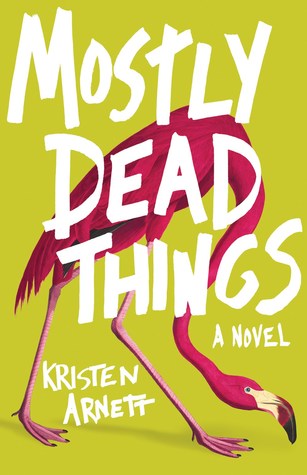
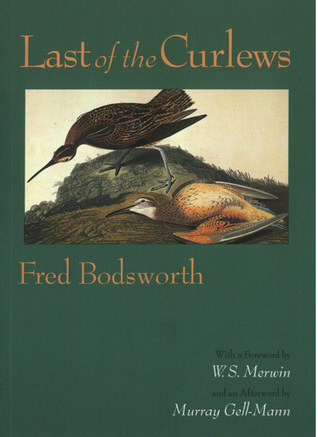
- A 19th-century female character inherits a house but knows it will pass instantly to her spouse in Property by Valerie Martin and Islands of Mercy by Rose Tremain.
- A bag/sack of potatoes as a metaphor in Other People’s Pets by R.L. Maizes and Redhead by the Side of the Road by Anne Tyler.
- Nipple rings get a mention in Addition by Toni Jordan and Other People’s Pets by R.L. Maizes.
- Taxidermy is an element (most major in the first one) in Mostly Dead Things by Kristen Arnett, Wild Child by Patrick Barkham and Into the Tangled Bank by Lev Parikian.
- A discussion of bartenders’ habit of giving out free drinks to get big tips (a canny way of ‘stealing’ from the employer) in Kitchen Confidential by Anthony Bourdain and Other People’s Pets by R.L. Maizes.
- Characters named Seamus in Addition by Toni Jordan and Mother’s Milk by Edward St. Aubyn.
- Wild boar mentioned in Mostly Dead Things by Kristen Arnett, Other People’s Pets by R.L. Maizes and My Berlin Kitchen by Luisa Weiss.
- A fastidious bachelor who’s always cleaning his living space in Other People’s Pets by R.L. Maizes and Redhead by the Side of the Road by Anne Tyler.
- A character is a blogger in Americanah by Chimamanda Ngozi Adichie, Other People’s Pets by R.L. Maizes and My Berlin Kitchen by Luisa Weiss.
- Norfolk settings in Wild Child by Patrick Barkham and Bird Therapy by Joe Harkness (and both were on the Wainwright Prize longlist).
- A close aunt‒niece relationship in Mostly Dead Things by Kristen Arnett and Addition by Toni Jordan.
- A guy does dumb accents when talking about food, and specifically a French accent for “hamburger,” in Addition by Toni Jordan and Redhead by the Side of the Road by Anne Tyler.
- Recipes for a potato salad that is dressed with oil and vinegar rather than mayonnaise in Tender at the Bone by Ruth Reichl and My Berlin Kitchen by Luisa Weiss.
- Mentions of the Watergate hearings in A Crime in the Neighborhood by Suzanne Berne and Tender at the Bone by Ruth Reichl.
- Twins in Half of a Yellow Sun by Chimamanda Ngozi Adichie, A Crime in the Neighborhood by Suzanne Berne and The Yonahlossee Riding Camp for Girls by Anton DiSclafani.
- Characters nicknamed “Lefty” in Middlesex by Jeffrey Eugenides and Modern Lovers by Emma Straub.
- Characters named Abir/Abeer in A Traveller at the Gates of Wisdom by John Boyne and Apeirogon by Colum McCann.
- Kayaking in Scotland in The Frayed Atlantic Edge by David Gange and Summerwater by Sarah Moss.
- The military coup in Nigeria features in Half of a Yellow Sun by Chimamanda Ngozi Adichie and The Shadow of the Sun by Ryszard Kapuściński.
- The song “White Christmas” is quoted in Mudbound by Hillary Jordan and Tales of the City by Armistead Maupin.
- The fact that fingerprints are formed by the fetus touching the uterine wall appears in Marrow by Elizabeth Lesser and You Will Never Be Forgotten by Mary South.
- Orkney as a setting in Close to Where the Heart Gives Out by Malcolm Alexander and The Frayed Atlantic Edge by David Gange. I’m hankering to go back!
- Teresa of Ávila is mentioned in Marrow by Elizabeth Lesser and You Will Never Be Forgotten by Mary South.
- A dog named Bingo in Half of a Yellow Sun by Chimamanda Ngozi Adichie and Modern Lovers by Emma Straub. (B-I-N-G-O!)
- Four sisters are given a joint name in A Crime in the Neighborhood by Suzanne Berne (Fran-Claire-Lois-Ada) and Marrow by Elizabeth Lesser (KaLiMaJo).
- The same Lilla Watson quote (“If you have come to help me, you are wasting your time. But if you have come because your liberation is bound up with mine, then let us work together”) appears in both The Gospel of Trees by Apricot Irving and Marrow by Elizabeth Lesser.
- An Irish author and Hong Kong setting for Exciting Times by Naoise Dolan and The Distance Between Us by Maggie O’Farrell.

- The Dorothy Parker quote “Men seldom make passes at girls who wear glasses” appears in both What Are You Going Through by Sigrid Nunez and First Time Ever by Peggy Seeger.
What’s the weirdest reading coincidence you’ve had lately?
Wainwright & Women’s Prize Predictions
A quick second post from me today since tonight is the announcement of the winners of the Wainwright Prize and tomorrow, September 9th, will be the announcement of the winner of the Women’s Prize for Fiction.
Wainwright Prize
I’d read 10 of the nominees before the shortlists were announced (see my mini-reviews and predictions). Since then I’ve managed to read one-third each of the two other books on the UK nature writing shortlist (I correctly predicted four of the seven on it), The Frayed Atlantic Edge by David Gange and On the Red Hill by Mike Parker. This is the first year that I’ve read nearly an entire Wainwright shortlist before the announcement. Even though I’m only partway through it … for its interdisciplinary approach – folklore, geology, history, nature writing and more, all wrapped up in a rollicking, well-written travelogue as he kayaks down the western coasts of the British Isles – I feel Gange should win, but the judges pretty much never pick what I think is the best book.


I’ve only read one of the books from the new global conservation shortlist, so I can’t make any kind of informed prediction. However, as it was my top nonfiction book of last year, I’d be delighted to see Irreplaceable by Julian Hoffman win.
Women’s Prize
It feels like an age since this shortlist was announced. I think the reason for delaying the winner announcement from early June to September was for there to be a chance of the ceremony going ahead as normal (though of course it will be online after all); it also gave people a chance to read the Mantel. If I’m being cynical, it was to drum up more interest and publicity in this 25th anniversary year, but I think that may have backfired – I was quite excited early on (see my thoughts on the longlist; my wish list correctly predicted four of the six on the shortlist), but long ago wearied of hearing about the Prize. It seems forever ago that I read some of the nominees.
I don’t think Cruz or Haynes has a chance of winning, but I could see a case for any of the other four taking the Prize. I’d love for it to go to Jenny Offill’s sharp, timely Weather; I’d be perfectly happy for it to go to Bernardine Evaristo’s stylish, multivocal Girl, Woman, Other; I’d not be surprised at all if it went to Hilary Mantel’s accomplished epic, The Mirror & The Light, though I think her work more suited to the Booker Prize; and I personally did not rate Hamnet (which has something of a pandemic theme) but would still be glad to see some recognition for Maggie O’Farrell. Evaristo or O’Farrell thus seems like the safest bet to me.


August Releases: Fiction Advocate, Kingsolver Poetry, Sarah Moss & More
My five new releases for August include two critical responses to contemporary classics; two poetry books, one a debut collection from Carcanet Press and the other by an author better known for fiction; and a circadian novel by one of my favorite authors.
I start with two of the latest releases from Fiction Advocate’s “Afterwords” series. The tagline is “Essential Readings of the New Canon,” and the idea is that “acclaimed writers investigate the contemporary classics.” (I reviewed the monographs on Blood Meridian, Fun Home, and The Year of Magical Thinking in this post.)
Dear Knausgaard: Karl Ove Knausgaard’s My Struggle by Kim Adrian
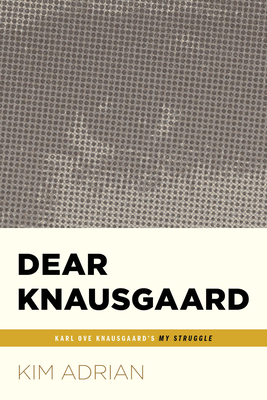 Karl Ove Knausgaard turned his pretty ordinary life into thousands of pages of autofiction that many readers have found addictive. Adrian valiantly grapples with his six-volume exploration of identity, examining the treatment of time and the dichotomies of intellect versus emotions, self versus other, and life versus fiction. She marvels at the ego that could sustain such a project, and at the seemingly rude decision to use all real names (whereas in her own family memoir she assigned aliases to most major figures). At many points she finds the character of “Karl Ove” insufferable, especially when he’s a teenager in Book 4, and the books’ prose dull. Knausgaard’s focus on male novelists and his stereotypical treatment of feminine qualities, here and in his other work, frequently madden her.
So why is My Struggle compelling nonetheless? It occupies her mind and her conversations for years. Is it something about the way that Knausgaard extracts meaning from seemingly inconsequential details? About how he stretches and compresses time in a Proustian manner to create a personal highlights reel? She frames her ambivalent musings as a series of letters written as if to Knausgaard himself (or “KOK,” as she affectionately dubs him) between February and September 2019. Cleverly, she mimics his style in both the critical enquiry and the glimpses into her own life, including all its minutiae – the weather, daily encounters, what she sees out the window and what she thinks about it all. It’s bold, playful and funny, and, all told, I enjoyed it more than Knausgaard’s own writing.
(I myself have only read Book 1, A Death in the Family, and wasn’t planning on continuing with My Struggle, but I think I will make an exception for Book 3 because of my recent fascination with childhood memoirs. I had better luck with Knausgaard’s Seasons Quartet, of which I’ve read all but Spring. I’ve reviewed Summer and Winter.)
My rating: 
My thanks to Fiction Advocate for the free e-copy for review.
The Wanting Was a Wilderness: Cheryl Strayed’s Wild and the Art of Memoir by Alden Jones
Hiking is boring, yet Cheryl Strayed turned it into a beloved memoir. Jones explores how Wild works: how Strayed the author creates “Cheryl,” likeable despite her drug use and promiscuity; how the fixation on the boots and the backpack that carry her through her quest reflect the obsession over the loss of her mother; how the flashbacks break up the narrative and keep you guessing about whether she’ll reach her literal and emotional destinations.
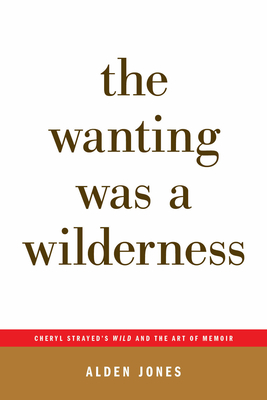 Jones also considers the precedents of wilderness literature and the 1990s memoir boom that paved the way for Wild. I most enjoyed this middle section, which, like Mary Karr’s The Art of Memoir, surveys some of the key publications from a burgeoning genre. Another key point of reference is Vivian Gornick, who draws a distinction between “the situation” (the particulars or context) and “the story” (the message) – sometimes the map or message comes first, and sometimes you only discover it as you go along.
I was a bit less interested in Jones’s reminiscences of her own three-month wilderness experience during college, when, with Outward Bound, she went to North Carolina and Mexico and hiked part of the Appalachian Trail and a volcano. This was the trip on which she faced up to her sexuality and had a short-lived relationship with a fellow camper, Melissa. But working out that she was bisexual and marrying a woman were both, as presented here, false endings. The real ending was her decision to leave her marriage – even though they had three children; even though the relationship was often fine. She attributes her courage to go, believing something better was possible, to Strayed’s work. And that’s the point of this series: rereading a contemporary classic until it becomes part of your own story.
My rating: 
My thanks to Fiction Advocate for the free e-copy for review.
Two poetry releases:
Growlery by Katherine Horrex
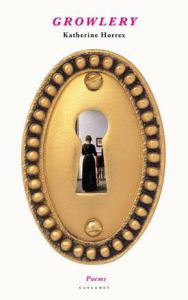 As in Red Gloves by Rebecca Watts, released by Carcanet in June, I noted the juxtaposition of natural and industrial scenes. Horrex’s “Four Muses” include a power plant and a steelworks, and she writes about pottery workers and the Manchester area, but she also explores Goat Fell on foot. Two of my favorite poems were nature-based: “Omen,” about corpse flowers, and “Wood Frog.” Alliteration, metaphors and smells are particularly effective in the former. Though I quailed at the sight of an entry called “Brexit,” it’s a subtle offering that depicts mistrust and closed minds – “People personable as tents zipped shut”. By contrast, “House of Other Tongues” revels in the variety of languages and foods in an international student dorm. A few poems circle around fertility and pregnancy. The linking themes aren’t very strong across the book, but there are a few gems.
My rating:
My thanks to Carcanet Press for the free e-copy for review.
How to Fly (in Ten Thousand Easy Lessons) by Barbara Kingsolver
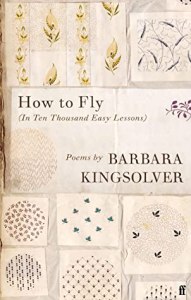 Kingsolver may not be well known for her poetry, but this is actually her second collection of verse after the bilingual Another America/Otra America (1992). The opening segment, “How to Fly,” is full of folk wisdom from nature and the body’s intuitive knowledge. “Pellegrinaggio” is a set of travel poems about accompanying her Italian mother-in-law back to her homeland. “This Is How They Come Back to Us” is composed of elegies for the family’s dead; four shorter remaining sections are inspired by knitting, literature, daily life, and concern for the environment. As with The Undying by Michel Faber, the book’s themes are stronger than its poetic techniques, but Kingsolver builds striking natural imagery and entrancing rhythms.
Two favorite passages to whet your appetite:
How to drink water when there is wine— / Once I knew all these brick-shaped things, / took them for the currency of survival. / Now I have lived long and I know better.
Tiptoe past the dogs of the apocalypse / asleep in the shade of your future. / Pay at the window. You’ll be surprised: you / can pass off hope like a bad check. You still / have time, that’s the thing. To make it good.
(To be reviewed in full, in conjunction with other recent/upcoming poetry releases, including Dearly by Margaret Atwood, for Shiny New Books.)
My rating:
I read an advanced e-copy via Edelweiss. (I’m unsure of the line breaks above because of the formatting.)
And finally, a much-anticipated release – bonus points for it having “Summer” in the title!
Summerwater by Sarah Moss
This is nearly as compact as Moss’s previous novella, Ghost Wall, yet contains a riot of voices. Set on one long day at a Scottish holiday park, it moves between the minds of 12 vacationers disappointed by the constant rain – “not that you come to Scotland expecting sun but this is a really a bit much, day after day of it, torrential” – and fed up with the loud music and partying that’s come from the Eastern Europeans’ chalet several nights this week. In the wake of Brexit, the casual xenophobia espoused by several characters is not surprising, but still sobering, and paves the way for a climactic finale that was not what I expected after some heavy foreshadowing involving a teenage girl going off to the pub through the woods.
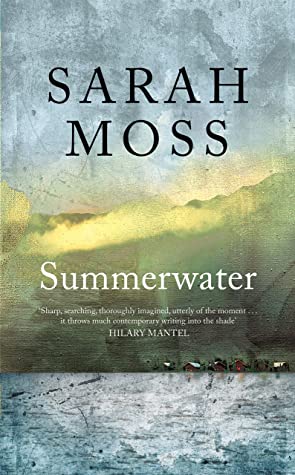 The day starts at 5 a.m. with Justine going for a run, despite a recent heart health scare, and spends time with retirees, an engaged couple spending most of their time in bed, a 16-year-old kayaker, a woman with dementia, and more. We see different aspects of family dynamics as we revisit a previous character’s child, spouse or sibling. I had to laugh at Milly picturing Don Draper during sex with Josh, and at Claire getting an hour to herself without the kids and having no idea what to do with it beyond clean up and make a cup of tea. Moss gets each stream-of-consciousness internal monologue just right, from a frantic mum to a sarcastic teen.
Yet I had to wonder what it all added up to; this feels like a creative writing student exercise, with the ending not worth waiting for. Cosmic/nature interludes are pretentious à la Reservoir 13. It’s not the first time this year that I’ve been disappointed by the latest from a favorite author (see also Hamnet). But my previous advice stands: If you haven’t read Sarah Moss, do so immediately.
My rating:
My thanks to Picador for the free copy for review.
What August releases can you recommend?
Women’s Prize Longlist 2020 Thoughts & Other Prize Reading Projects
Next Wednesday the 22nd, the Women’s Prize shortlist will be revealed. However, the winner announcement has been delayed until September 9th, so we all get extra time to read the finalists (which is handy since the 900-page Hilary Mantel is a shoo-in). I happen to have gotten through half of the longlist so far. There were some books I cared for more than others. Of the remainder, I plan to pick up a few more once my library reopens.
Here’s how I’ve fared this year, in categories from best to worst, with excerpts and links to any I’ve reviewed in full:
Loved! (5)
 Dominicana by Angie Cruz: In 1965, 15-year-old Ana Canción, married off to an older man, leaves the Dominican Republic for New York City. With not a word of English, she feels trapped in her apartment and in this abusive relationship. Yet Ana is such a plucky and confiding narrator that you’re drawn into her world and cheer for her as she figures out what she wants from her life. This compassionate novel is proof that not all the immigration stories have been told yet.
 Girl, Woman, Other by Bernardine Evaristo: A terrific linked short story collection about 12 black women in twentieth-century and contemporary Britain balancing external and internal expectations and different interpretations of feminism to build lives of their own. The prose is more like poetry: a wry, radical stream of consciousness. A warm, spirited book, it never turns strident. It’s timely and elegantly constructed – and, it goes without saying, a worthy Booker Prize winner. To win the Women’s Prize too would be unprecedented, I think? But no surprise.
 Weather by Jenny Offill: Could there be a more perfect book for 2020? It’s a blunt, unromanticized but wickedly funny novel about how eco-anxiety permeates everyday life. Set either side of Trump’s election, it amplifies many voices prophesying doom, from environmentalists to Bible-thumpers. Lizzie’s sardonic narration is an ideal way of capturing relatable feelings of anger and helplessness. Don’t expect to come away with your worries soothed, though there is some comfort to be found in the feeling that we’re all in this together.
 The Dutch House by Ann Patchett: A memorable exploration of family secrets and memories. Maeve and Danny Conroy are an inseparable brother-and-sister pair. When their father dies, they become like Hansel and Gretel: cast out into the wilds by an evil stepmother who takes possession of the only home they’ve ever known, a suburban Philadelphia mansion built on the proceeds of the VanHoebeek cigarette empire. Patchett always captures the psychology of complicated families, and her sharp prose never fails to hit the nail on the head.
 Red at the Bone by Jacqueline Woodson: Like a family saga in miniature, this short novel stretches backward from Melody’s 16th birthday party, held in Brooklyn in 2001, to explore previous generations of the African American experience. Chapters alternate between first- and third-person narration, highlighting the perspectives of all the major family members. I raced through to see who would follow in family footsteps, or not. The title is apt: the book is sometimes raw and sometimes tender. It’s an emotionally engaging story of loss and memory.
Currently skimming (1)
 The Mirror and the Light by Hilary Mantel: I’ve stalled around page 200. I’ll be totally engrossed for a few pages of exposition and Cromwell one-liners, but then everything gets talky or plotty and I skim for 20‒30 pages and put it down. My constant moving between 10‒20 books and the sudden loss of a deadline have not served me well: I feel overwhelmed by the level of detail and the cast of characters, and haven’t built up momentum. Still, I can objectively recognize the prose as top-notch.
Did not particularly enjoy (3)
 Fleishman Is in Trouble by Taffy Brodesser-Akner: To me this didn’t stand out at all from the sea of fiction about crumbling marriages and upper-middle-class angst.
- Actress by Anne Enright: A slow-burning backstory of trauma and mental illness. I found I wasn’t warming to the voice or main characters and mostly skimmed this.
- Hamnet by Maggie O’Farrell: In comparison with other historical fiction, this fell short. Overall, I found the prose flat and repetitive, which diluted the portrait of grief.

Attempted but couldn’t get through (1)
 Djinn Patrol on the Purple Line by Deepa Anappara – I’m wary of child narrators anyway, and the voice didn’t grab me within the first few pages.
Still plan to read (3)
 Queenie by Candice Carty-Williams
- How We Disappeared by Jing-Jing Lee
- The Most Fun We Ever Had by Claire Lombardo
Not interested (3)
 Nightingale Point by Luan Goldie: Sounds subpar.
- A Thousand Ships by Natalie Haynes: Say no to updated Greek classics.
- Girl by Edna O’Brien: I don’t care for O’Brien’s writing. Though this was well received by the critics, it’s not finding much love among my trusted bloggers. (Plus there’s the cultural appropriation issue.)
My ideal shortlist
(A wishlist based on my reading and what I want to read)
 Dominicana by Angie Cruz
Girl, Woman, Other by Bernardine Evaristo
How We Disappeared by Jing-Jing Lee
The Mirror and the Light by Hilary Mantel
Weather by Jenny Offill
The Dutch House by Ann Patchett
vs.
My predicted shortlist
 Queenie by Candice Carty-Williams
Actress by Anne Enright
Girl, Woman, Other by Bernardine Evaristo
The Mirror and the Light by Hilary Mantel
Girl by Edna O’Brien OR Hamnet by Maggie O’Farrell
The Dutch House by Ann Patchett
Callum, Eric, Laura and Rachel have been posting lots of reviews and thoughts related to the Women’s Prize. Have a look at their blogs!
In this 25th anniversary year of the Women’s Prize, readers are also being encouraged to catch up on previous winners.
- I’ve read 13 so far (and am currently rereading On Beauty by Zadie Smith).
 I already had Half of a Yellow Sun by Chimamanda Ngozi Adichie and The Idea of Perfection by Kate Grenville on my shelves, plus The Song of Achilles by Madeline Miller on my Nook.
- I recently found a copy of A Crime in the Neighborhood by Suzanne Berne at the free bookshop where I volunteer.
- On my current library stack are When I Lived in Modern Times by Linda Grant, Property by Valerie Martin and Fugitive Pieces by Anne Michaels.
I can’t promise to be a completist about this project because the prospect of reading A Girl Is a Half-formed Thing and The Glorious Heresies fills me with dread, but we’ll see…
Other Prize Reading Projects
 I’d been trying to make my way through some previous Wellcome Book Prize winners and nominees, but have been scuppered by my library’s closure. At the moment I have Adam Rutherford’s A Brief History of Everyone Who Ever Lived (2017 longlist; passed on from my father-in-law) and Steve Silberman’s Neurotribes (2016 shortlist; from the library) on my pile to read or, more likely, skim.
 I also had the idea to read all the Bellwether Prize winners because I loved The Leavers so much. (Known in full as the PEN/Bellwether Prize for Socially Engaged Fiction, it is a biennial award given by PEN America and Barbara Kingsolver, who created and funds the prize, “to a U.S. citizen for a previously unpublished work of fiction that address issues of social justice.”) This project did not start particularly well as I DNFed Running the Rift by Naomi Benaron. However, I own copies of Mudbound by Hillary Jordan and The Girl Who Fell from the Sky by Heidi W. Durrow and hope I’ll have better luck with them.
What prize lists or other reading projects are keeping you busy?
Polio and the Plague: Epidemics in Fiction
Back in January I had the idea to catch up as much as I can on previous Wellcome Book Prize long- and shortlists while the Prize is on hiatus. I decided to start with a pair of novels about polio from my public library system: The Golden Age by Joan London and Nemesis by Philip Roth. The latter, especially, has taken on new significance due to its evocation of a time of panic over a public health crisis (see this article, but beware spoilers). On a fellow book reviewer’s recommendation, I also took Year of Wonders by Geraldine Brooks off the shelf and read it at the same time as the Roth.
The Golden Age by Joan London (2014)
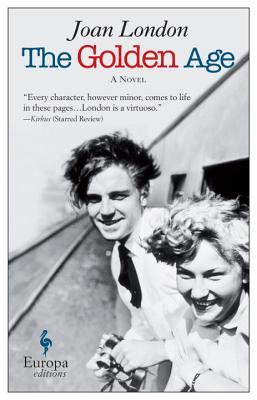 [First published in the UK in 2016; on the Wellcome Book Prize 2017 longlist]
The Golden Age was a real children’s polio hospital in Western Australia, but London has peopled it with her own fictional cast. In 1953–4, Frank Gold and Elsa Briggs, polio patients aged 12 going on 13, fall in love in the most improbable of circumstances: “The backs of their hands brushed as they walked side by side on their crutches. Their bloodstreams recharged by exercise and fresh air, they experienced a fiery burst of pleasure.”
Frank is much the more vibrant character thanks to his family’s wartime past in Hungary and his budding vocation as a poet, which was spurred on by his friendship with Sullivan, a fellow inmate at his previous rehabilitation center. The narrative spends time with the nurses, parents and other patients but keeps coming back to Frank and Elsa. However, Chapter 7, with Frank and his mother Ida still back in Budapest, was my favorite.
I was reminded of Tracy Farr’s work (The Life and Loves of Lena Gaunt), especially the look back from decades later. This has a strong premise and some great lines, but for me there was something slightly lacking in the execution.
Favorite lines:
There was beauty everywhere, strange beauty, even—especially?—in a children’s polio hospital.
Polio is like love, Frank says … Years later, when you think you have recovered, it comes back.
My rating:
Nemesis by Philip Roth (2010)
[On the Wellcome Book Prize 2011 shortlist]
 In the summer of 1944 Newark, New Jersey is hit hard by polio. As a local playground director, 23-year-old Bucky Cantor is distressed when several of his charges become ill; a couple of them even die within a matter of days.
At first Bucky, whose poor eyesight kept him out of the War, sees his job as his own field of duty, but gradually fear and helplessness drive him away. He escapes to the Pocono Mountains to join his fiancée, Marcia, as a summer camp counselor, but soon realizes the futility of trying to outrun a virus. Unable to accept the randomness of bad luck, he blames God – and himself – for the epidemic’s spread.
Despite our better general understanding of epidemiology today, there were still many passages in this novel that rang true for me as they picture life proceeding as normal until paranoia starts to take hold:
Despite polio’s striking in the neighborhood, the store-lined main street was full of people out doing their Saturday grocery shopping…
(Bucky) Look, you mustn’t be eaten up with worry … What’s important is not to infect the children with the germ of fear. We’ll come through this, believe me. We’ll all do our bit and stay calm and do everything we can to protect the children, and we’ll all come through this together.
The important thing, he said, was always to wash your hands after you handled paper money or coins. What about the mail, someone else said … What are you going to do, somebody retorted, suspend delivering the mail? The whole city would come to a halt. Six or seven weeks ago they would have been talking about the war news.
Roth really captures the atmosphere of alarm and confusion, but doesn’t always convey historical and medical information naturally, sometimes resorting to paragraphs of context and representative conversations like in the last quote above. I also wasn’t sure about the use of a minor character (revealed on page 108 to be one of Bucky’s playground kids and a polio patient) as the narrator. This seemed to me to make Bucky more of a symbolic hero than a genuine character. Still, this was a timely and riveting read.
My rating:

A period warning about polio reprinted at the back of Paul Auster’s Report from the Interior.
Year of Wonders by Geraldine Brooks (2001)
 In 1665, with the Derbyshire village of Eyam in the grip of the Plague, the drastic decision was made to quarantine it. A benevolent landowner arranged for regular deliveries of food and other supplies to just outside the parish boundaries. The villagers made an oath that no one would leave until the pestilence was eradicated. One year later, two-thirds of its residents were dead. Brooks imagines that the “plague seeds” came to the village in a bolt of cloth that was delivered from London to the tailor George Viccars, who lodged with widow Anna Frith. Viccars is the first victim and the disease quickly spreads outward from Anna’s home.
Anna barely has time to grieve her own losses before she’s called into service: along with the minister’s wife, Elinor Mompellion, she steps in as a midwife, herbal healer and even a miner. The village succumbs to several sobering trajectories. Suspicion of women’s traditional wisdom leads some to take vigilante action against presumed witches. Unscrupulous characters like Anna’s father, who sets up as a gravedigger, try to make a profit out of others’ suffering. Frustration with the minister’s apparent ineffectuality attracts others to forms of religious extremism. Like Bucky, people cannot help but see the hand of God here.
Perhaps what I was most missing in the London and Roth novels (and in Hamnet, which bears such striking thematic similarities to Year of Wonders) was intimate first-person narration, which is just what you get here from Anna. The voice and the historical recreation are flawless, and again there were so many passages that felt apt:
Stay here, in the place that you know, and in the place where you are known. … Stay here, and here we will be for one another.
the current times did seem to ask us all for every kind of sacrifice
(once they start meeting for church in a meadow) We placed ourselves so that some three yards separated each family group, believing this to be sufficient distance to avoid the passing of infection.
Yet it is a good day, for the simple fact that no one died upon it. We are brought to a sorry state, that we measure what is good by such a shortened yardstick.
I’ve docked a half-star only because of a far-fetched ending that reminded me of that to The Wonder by Emma Donoghue. Apart from that, this is just what I want from my historical fiction.
My rating: 
Are you doing any reading about epidemics?
Hamnet by Maggie O’Farrell (Blog Tour Review)

I’ve been a huge admirer of Maggie O’Farrell’s work ever since I read The Hand that First Held Mine, which won the Costa Novel Award, in 2011. I was intrigued by the premise of her new book, in which she delves further back into history than she has before to imagine the context of the death of William Shakespeare’s son Hamnet and the effect it had on the playwright’s work – including, four years later, Hamlet.
Curiously, O’Farrell has decided never to mention Shakespeare by name in her novel, so he remains a passive, shadowy figure seen only in relation to his wife and children – he’s referred to as “the father,” “the Latin tutor” or “her husband.” Instead, the key characters are his wife Agnes (most will know her as Anne, but Agnes was the name her father, Richard Hathaway, used for her in his will) and Hamnet himself.

As the novel opens, 11-year-old Hamnet is alone in his grandfather’s glove workshop. His twin sister Judith has a fever and lumps at her neck and he is frantically trying to find an adult. But with his father in London, his mother off tending her bees and his grandfather’s indifference all too ready to shade into violence, there is no one to help. Although it’s Judith who appears to be ill with the Plague, readers know from the scant historical record that it is Hamnet who dies. Somehow, even though we see this coming, it’s still a heavy blow. Hamnet is a story of the moments that change everything, of regrets that last forever: Agnes will ever after be afflicted with a sense of having neglected her children just when they needed her.
Short chapters set in that summer of 1596 alternate with longer ones from 15 years before, when WS was engaged as a Latin tutor to the sons of a sheep farmer to pay off his father’s debts. Soon he became captivated by a young woman with a kestrel whom he assumed to be the family’s maid but learned was actually the unconventional daughter of the household, Agnes. She had a reputation as a herbal healer and was known to have second sight – just by holding someone’s hand, she could see into their past or predict their future.
There are some wonderfully vivid scenes in this earlier story line, including a tryst in the apple shed and Agnes going off alone into the forest to give birth to their first child, Susanna. My favourite chapter of all, though, is the central one that traces the journey of the pestilence from a glassmaker’s studio in Italy to the small Warwickshire village. The medical subplot of Hamnet has taken on a new significance that O’Farrell surely never predicted when she was immersing herself in the time period by undertaking falconry and mudlarking.
Although I remain a big fan, Hamnet is the least successful of the six books of O’Farrell’s that I’ve read. Her trademark third person omniscient voice and present tense narration, which elsewhere exude confidence and immediacy, here create detachment and even vagueness (“A boy is coming down a flight of stairs”; “Look. Agnes is pouring water into a pan”). The strategy for evoking the 16th century seems to be to throw in the occasional period prop, but the dialogue and vocabulary can feel anachronistic, as in “Boys! Stop that this instant! Or I’ll come up there and give you something to wail about”.
In comparison with historical fiction I’ve read recently by Geraldine Brooks and Hilary Mantel, this fell short. Overall, I found the prose flat and repetitive, which diluted the portrait of grief. My reaction was lukewarm, but this should not deter readers from trying this wonderful writer – if not this book, then any one of her previous five.
My thanks to Midas PR and Tinder Press for the free copy for review.
Book Serendipity: 2020, Part I
I call it serendipitous when two or more books that I’m reading at the same time or in quick succession have something pretty bizarre in common. Because I have so many books on the go at once – usually between 10 and 20 – I guess I’m more prone to such incidents. I also post these occasional reading coincidences on Twitter. (The following are in rough chronological order.)
- A Wisconsin setting in three books within a month (Shotgun Lovesongs by Nickolas Butler, This Is How It Always Is by Laurie Frankel and Crossing to Safety by Wallace Stegner)
- I came across a sculpture of “a flock of 191 silver sparrows” in Dear Edward by Ann Napolitano while also reading Silver Sparrow by Tayari Jones.
- Characters nearly falling asleep at the wheel of a car in Crossing to Safety by Wallace Stegner and In the Dream House by Carmen Maria Machado
- There’s no escaping Henry David Thoreau! Within the span of a week I saw him mentioned in The Library of Ice by Nancy Campbell, The Snow Tourist by Charlie English, Losing Eden by Lucy Jones and Crossing to Safety by Wallace Stegner. Plus I’d just read the whole graphic novel Thoreau and Me by Cédric Taling.


- Discussions of the work of D.H. Lawrence in Unfinished Business by Vivian Gornick and The Offing by Benjamin Myers
- That scientific study on patient recovery in hospital rooms with a window view vs. a view of a brick wall turns up in both Dear Life by Rachel Clarke and Losing Eden by Lucy Jones.
- The inverted teardrop shapes mirror each other on these book covers:
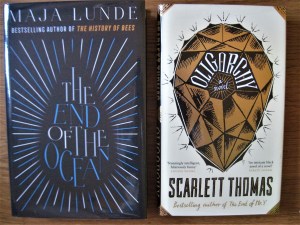
- Punchy, one-word titles on all these books I was reading simultaneously:

- Polio cases in The Golden Age by Joan London, Nemesis by Philip Roth and Crossing to Safety by Wallace Stegner
- An Italian setting and the motto “Pazienza!” in Dottoressa by Susan Levenstein and Crossing to Safety by Wallace Stegner
- Characters named Lachlan in The Ninth Child by Sally Magnusson and The Inland Sea by Madeleine Watts


- Mentions of the insecticide Flit in Nemesis by Philip Roth and Sacred Country by Rose Tremain
- A quoted Leonard Cohen lyric in Traveling Mercies by Anne Lamott; Cohen as a character in A Theatre for Dreamers by Polly Samson
- Plague is brought to an English village through bolts of cloth from London in Year of Wonders by Geraldine Brooks and Hamnet by Maggie O’Farrell; both also feature a woman who is a herbal healer sometimes mistaken for a witch (and with similar names: Anys versus Agnes)

- Gory scenes of rats being beaten to death in Hamnet by Maggie O’Farrell and Nemesis by Philip Roth
- Homemade mobiles in a baby’s room in A Theatre for Dreamers by Polly Samson and Sacred Country by Rose Tremain
- Speech indicated by italics rather than the traditional quotation marks in Pew by Catherine Lacey and Red at the Bone by Jacqueline Woodson
What’s the weirdest reading coincidence you’ve had lately?
Paul Auster Reading Week: Winter Journal & The New York Trilogy
Before this year, I’d read only one book by Paul Auster: Timbuktu, which fit into last year’s all-animal 20 Books of Summer for its canine main character. This year I’ve enjoyed having Annabel’s Paul Auster Reading Week as an excuse to binge on more Auster, including one of his memoirs, Winter Journal, and his most famous set of novels, the New York Trilogy. I’m reading another two Auster books, one fiction and nonfiction, and will see if I can finish and write them up before the week ends.

Winter Journal (2012)
This is one of the most remarkable memoirs I’ve ever read. Approaching age 64 and the winter of his life, Auster decided to assemble his most visceral memories. Here he parades them past in a seemingly random order yet manages to give a sense of the sweep of his life. The use of the second person draws readers in to (re-)experience things along with the author, while also creating an artistic distance between the subject and his reminiscences. Auster describes his aim thus:
Time is running out, after all. Perhaps it is just as well to put aside your stories for now and try to examine what it has felt like to live inside this body from the first day you can remember being alive until this one. A catalogue of sensory data. What one might call a phenomenology of breathing.
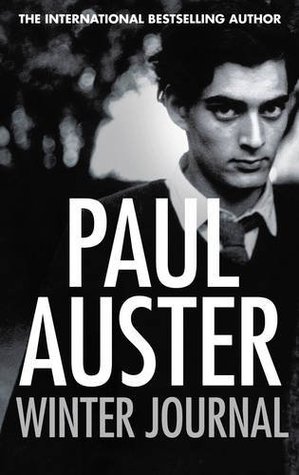 His life reappears through scars, through accidents and near-misses, through what his hands felt and his eyes observed. A three-year-old rips his cheek open on a protruding nail in a department store. A teenager slowly builds up a portfolio of sexual experiences. A young man lives and works in Paris and the South of France. A marriage to one fellow author (Lydia Davis) ends and a relationship with another (Siri Hustvedt) begins. A fiftysomething rushing to get home to the toilet makes an ill-advised turn against traffic and totals his car – luckily, he and his family escape unhurt. Numbness after his mother’s death cedes to a panic attack.
I particularly enjoyed the 53-page section in which Auster gives tours through the 21 places he’s lived since infancy, recounting the details he remembers of the dwellings and what happened during his time there. It’s impressive how much he can condense, but also how much he can convey in just a few pages on each home. This is the sort of format I could imagine borrowing for a short autobiographical piece – it would be a way of redeeming that involuntarily nomadic period when my husband and I moved every six to 18 months.
Reading this alongside the New York Trilogy allowed me to spot the ways, big and small, in which those novels draw on Auster’s life story. I’m now keen to read more of his nonfiction, especially The Invention of Solitude, which offended his relatives by revealing the shameful family story of how his grandmother shot and killed his grandfather in their kitchen. 
Annabel says: “The book is written in the second person – addressing himself; it gives a real sense of intimacy to his story. … Auster is an unconventional, analytical and eloquent writer, and this unconventional memoir was a delight to read, he can look with humour at himself as well as being serious.”
Laura F. says: “You know how people say they’d read anything by their favourite author, even a grocery list? Winter Journal gets pretty close to that territory. … I’ve never read a memoir like this, and though focused on the physical, it’s a fully emotional experience.”
Some favorite lines:
“as long as you continue to travel, the nowhere that lies between the here of home and the there of somewhere else will continue to be one of the places where you live.”
“We are all aliens to ourselves, and if we have any sense of who we are, it is only because we live inside the eyes of others.”
“you can only conclude that every life is marked by a number of close calls, that everyone who manages to reach the age you have come to now has already wriggled out of a number of potentially absurd, nonsensical deaths. All in the course of what you would call ordinary life.”
Readalikes: I Am, I Am, I Am by Maggie O’Farrell & The Lost Properties of Love by Sophie Ratcliffe
The New York Trilogy
(also my Doorstopper of the Month at 580 pages)
City of Glass (1985)
 A metafictional mystery about a crime writer named Daniel Quinn who turns private investigator when he gets a phone call asking for the Paul Auster Detective Agency. This is one of those books where what actually happens is a lot less important than the atmosphere it creates. So what feels essential to me here is the sense of a labyrinthine New York City and a confusion of languages and relationships. Quinn, who is helpfully untethered after the death of his wife and son, is hired to tail Peter Stillman’s father, who has recently been released from a mental hospital, where he was sentenced after being judged insane for keeping his son in isolation in a dark apartment for nine years.
Feral children, maps, eggs, the Tower of Babel and Don Quixote are some of the recurring sources of metaphors in a deliberately disorienting and intertextually rich short novel that kept me turning the pages even when I didn’t know precisely what was going on. We get a glimpse of Auster himself, and are invited to muse on such tiny subjects as destiny, the limitations of language, the purpose of books, and the nature of truth. I’m curious to see whether the other two novels follow on from the story at all or just resemble it thematically.
Ghosts (1986)
I jumped straight into this from City of Glass, and it suffered by comparison. It is not a sequel per se, because it has different characters and is set in the late 1940s instead of the early 1980s, but it shares some of the same concerns (with literature, identity, doubling, the essential otherness of the writer, and so on) and again is a sort of metafictional mystery.
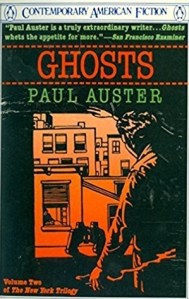 Part of why I couldn’t take this novella entirely seriously is the silly naming: White hires Blue to trail Black (really; all of the secondary characters are named after colors, too). It turns out Black is a writer who does little besides sit in his apartment, writing. Only when Blue disguises himself as a tramp and then as a salesman and meets Black in various other contexts does he realize that Black, too, is an investigator … writing up a case of following a writer who hardly leaves his desk.
While I appreciated the circularity and the uncertainty over whether these accidental twins would destroy each other, as well as the literary references to Whitman, Thoreau and Hawthorne, the whole felt slightly inconsequential (“Blue watches Black, and little of anything happens.”). Plotlessness is part of the point, but makes for only a moderately interesting read.
[There is one coded reference to Auster here: the fact that the book opens on February 3, 1947, the day he was born.]
The Locked Room (1986)
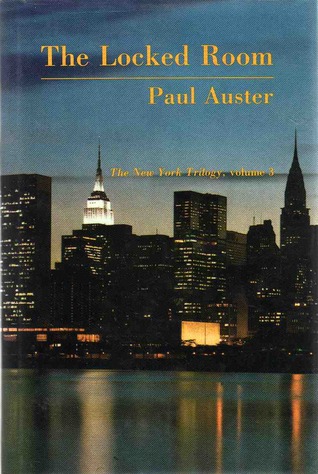 While most of the New York Trilogy is told in the third person, this is a first-person narrative that seems to pick up where City of Glass left off. It begins in 1977, when the unnamed narrator gets a letter from Sophie Fanshawe, the wife of his childhood best friend, telling him that Fanshawe disappeared six months ago, and despite the best efforts of a detective, Quinn (in another link to CoG, the narrator encounters Peter Stillman on a later trip to Paris), no trace can be found. The narrator has been named Fanshawe’s literary executor and takes it upon himself to get the man’s unpublished work out into the world: plays are produced, novels are published. He also starts writing a biography of the friend he always envied.
Except it’s more like he’s becoming Fanshawe, especially when he marries Sophie. Doubling has been a major theme of the trilogy, and here the metaphorical kill-or-be-killed situation seems to turn literal at the conclusion, which I didn’t particularly understand (e.g. he acquires and destroys a red notebook – is this in some way meant to be the same red notebook Quinn left behind at the end of CoG?). The narrator presents himself as the author of all three books, and asserts, “These three stories are finally the same story, but each one represents a different stage in my awareness of what it is about. I don’t claim to have solved any problems.”
The metafictional aspect of this novel is that Fanshawe’s early life is a lot like Auster’s as revealed in Winter Journal, while Sophie’s resembles his wife Siri Hustvedt’s (and the pair would later name their daughter Sophie).
 Themes of the trilogy:
- Identity complications, including disguises, doubles and substitutes
- Writers and writing; the creator versus characters
- The limits of language (e.g. Stillman’s monologue in CoG is astonishing)
- Freedom/randomness versus fate
One representative passage from each volume:
- “New York was an inexhaustible space, a labyrinth of endless steps, and no matter how far he walked, no matter how well he came to know its neighbourhoods and streets, it always left him with the feeling of being lost. Lost, not only in the city, but within himself as well. … New York was the nowhere he had built around himself” (City of Glass)
- “Writing is a solitary business. It takes over your life. In some sense, a writer has no life of his own. Even when he’s there, he’s not really there. / Another ghost. / Exactly.” (Ghosts)
- “In the end, each life is no more than the sum of contingent facts, a chronicle of chance intersections, of flukes, of random events that divulge nothing but their own lack of purpose.” (The Locked Room)
My rating for the trilogy as a whole:
 Bookish Beck = Rebecca Foster. American transplant to England. Freelance proofreader and book reviewer.
 Bookish Beck