April Releases by Chung, Ellis, Gaige, Lutz, McAlpine and Rubin
April felt like a crowded publishing month, though May looks to be twice as busy again. Adding this batch to my existing responses to books by Jean Hannah Edelstein & Emily Jungmin Yoon plus Richard Scott, I reviewed nine April releases. Today I’m featuring a real mix of books by women, starting with two foodie family memoirs, moving through a suspenseful novel about a lost hiker, a sparse Scandinavian novella, and a lovely poetry collection with themes of nature and family, and finishing up with a collection of aphorisms. I challenged myself to write just a paragraph on each for simplicity and readability.

Chinese Parents Don’t Say I Love You: A memoir of saying the unsayable with food by Candice Chung
“to love is to gamble, sometimes gastrointestinally … The stomach is a simple animal. But how do we settle the heart—a flailing, skittish thing?”
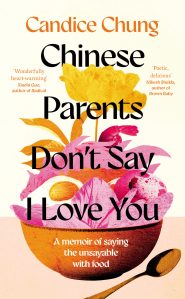 I got Caroline Eden (Cold Kitchen) and Nina Mingya Powles (Tiny Moons) vibes from this vibrant essay collection spotlighting food and family. The focus is on 2019–2021, a time of huge changes for Chung. She’s from Hong Kong via Australia, and reconnects with her semi-estranged parents by taking them along on restaurant review gigs for a Sydney newspaper. Fresh from a 13-year relationship with “the psychic reader,” she starts dating again and quickly falls in deep with “the geographer.” Sharing meals in restaurants and at home kindles closeness and keeps their spirits up after Covid restrictions descend. But when he gets a job offer in Scotland, they have to make decisions about their relationship sooner than intended. Although there is a chronological through line, the essays range in time and style, including second-person advice column (“Faux Pas”) and choose-your-own adventure (“Self-Help Meal”) segments alongside lists, message threads and quotes from the likes of Deborah Levy. My favourite piece was “The Soup at the End of the Universe.” Chung delicately contrasts past and present, singleness and being partnered, and different mental health states. The essays meld to capture a life in transition and the tastes and bonds that don’t alter.
With thanks to Elliott & Thompson for the free copy for review.
Chopping Onions on My Heart: On Losing and Preserving Culture by Samantha Ellis
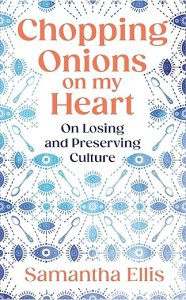 Ellis was distressed to learn that her refugee parents’ first language, Judeo-Iraqi Arabic, is in danger of extinction. Her own knowledge of it is piecemeal, mostly confined to its colourful food-inspired sayings – for example, living “eeyam al babenjan (in the days of the aubergines)” means that everything feels febrile and topsy-turvy. She recounts her family’s history with conflict and displacement, takes a Zoom language class, and ponders what words, dishes, and objects she would save on an imaginary “ark” that she hopes to bequeath to her son. Along the way, she reveals surprising facts about Ashkenazi domination of the Jewish narrative. “Did you know the poet [Siegfried Sassoon] was an Iraqi Jew?” His great-grandfather even invented a special variety of mango pickle. All of the foods described sound delicious, and some recipes are given. Ellis’s writing is enthusiastic and she braids the book’s various strands effectively. I wasn’t as interested in the niche history as I wanted to be, but I did appreciate learning about an endangered culture and language.
With thanks to Chatto & Windus (Vintage/Penguin) for the proof copy for review.
Heartwood by Amity Gaige
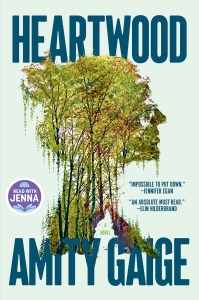 This was on my Most Anticipated list after how much I’d enjoyed Sea Wife when we read it for Literary Wives club. In July 2022, 42-year-old nurse Valerie Gillis, nicknamed “Sparrow,” goes missing in the Maine woods while hiking the Appalachian Trail. An increasingly desperate search ensues as the chances of finding her alive diminish with each day. The shifting formats – letters, transcripts, news reports, tip line messages – hold the interest. However, the chapters voiced by Lt. Bev, the warden who heads the mission, are much the most engaging, and it’s a shame that her delightful interactions with her sisters and nieces are so few and come so late. The third-person passages about Lena Kucharski in her Connecticut retirement home are intriguing but somehow feel like they belong in a different book. Gaige attempts to bring the threads together through three mother–daughter pairs, which struck me as heavy-handed. Mostly, this hits the sweet spot between mystery and literary fiction (apart from some red herrings), but because I wasn’t particularly invested in the characters, even Valerie, this fell a little short of my expectations. (Read via Edelweiss)
Wild Boar by Hannah Lutz (2016; 2025)
[Translated from Swedish by Andy Turner]
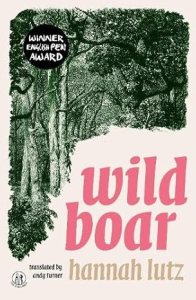 “I have seen them, the wild boar, they have found their way into my dreams!” Ritve travels from Finland to the forests of southern Sweden to track the creatures. Glenn, who appraises project applications for the council, has boar wander onto his property in the middle of the night. Mia, recipient of a council grant for her Recollections of a Sigga Child proposal, brings her ailing grandfather to record his memories for the local sound archive. As midsummer approaches, these three characters plus a couple of their partners will have encounters with the boar and with each other. Short sections alternate between their first-person perspectives. There is a strong sense of place and how migration poses challenges for both the human and more-than-human worlds. But it’s over before it begins. I found myself frustrated by how little happens, how stingily the characters reveal themselves, and how the boar, ultimately, are no more than a metaphor or plot device – a frequent complaint of mine when animals are central to a narrative. This might appeal to fans of Melissa Harrison’s fiction. In any case, I congratulate The Emma Press on their first novel, which won an English PEN Award.
With thanks to The Emma Press for the free copy for review.
Small Pointed Things by Erica McAlpine
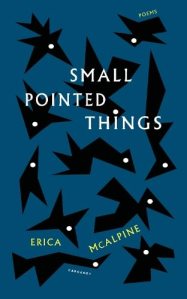 McAlpine is an associate professor of English at Oxford. Her second poetry collection is full of flora and fauna imagery. The title phrase comes from the opening poem, “Bats and Swallows” – in the “gloaming,” it’s hard to tell the difference between the flying creatures. The verse is bursting with alliteration and end rhymes, as just this first one shows (emphasis mine): “we couldn’t see / from where we stood in soft shadows / any signs that they were swallows // or bats”; “One seemed almost iridescent / as I tried to track / its crescent / flight across the hill.” Other poems consider moths, manatees, bees, swans and ladybirds; snowdrops and a cedar tree. Part II expands the view through conversations, theories and travel. What-ifs, consequences and regrets seep in. Parts III and IV incorporate mythical allusions, elegies and the concerns of motherhood. Sometimes the rhyme scheme adheres to a particular form. For instance, I loved “Triolet on My Mother’s 74th Birthday” – “You cannot imagine one season in another. … You cannot imagine life without your mother.” This is just my sort of poetry, sweet on the ear and rooted in nature and the everyday. A sample poem:
“Clementines”
New Year’s Day – another turning
of the sphere, with all we planned
in yesteryear as close to hand
as last night’s coals left unmanned
in the fire, still orange and burning.
It is the season for clementines
and citrus from Seville
and whatever brightness carries us until
leaves and petals once more fill
the treetops and the vines.
If ever you were to confess
some cold truth about love’s
dwindling, now would be the time – less
in order for things to improve
than for the half-bitter happiness
of peeling rinds
during mid-winter
recalling days that are behind
us and doors we cannot re-enter
and other doors we couldn’t find.
With thanks to Carcanet Press for the advanced e-copy for review.
Secrets of Adulthood: Simple Truths for Our Complex Lives by Gretchen Rubin
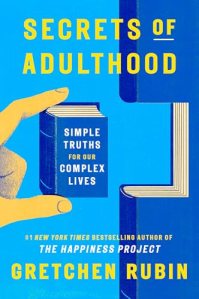 Rubin is one of the best self-help authors out there: Her books are practical, well-researched and genuinely helpful. She understands human nature and targets her strategies to suit different personality types. If you know her work, you’re likely aware of her fondness for aphorisms. “Sometimes, a single sentence can provide all the insight we need,” she believes. Here she collects her own pithy sayings relating to happiness, self-knowledge, relationships, work, creativity and decision-making. Some of the aphorisms were familiar to me through her previous books or her social media. They’re straightforward and sensible, distilling down to a few words truths we might be aware of but hadn’t truly absorbed. Like the great aphorists throughout history, Rubin relishes alliteration, repetition and contrasts. Some examples:
Accept yourself, and expect more from yourself.
I admire nature, and I am also nature. I resent traffic, and I am also traffic.
Work is the play of adulthood. If we’re not failing, we’re not trying hard enough.
Don’t wait until you have more free time. You may never have more free time.
This is not as meaty as her other work, and some parts feel redundant, but that’s the nature of the project. It would make a good bedside book for nibbles of inspiration. (Read via Edelweiss)
Which of these appeal to you?
July Releases, II: Howard Norman, Andrés N. Ordorica, Neil D. A. Stewart
Three more July releases after yesterday’s Disability Pride Month special. Today is all fiction, but with rather different settings: Atlantic Canada, upstate New York and Mexico, and a London restaurant. The time period ranges from the last days of the First World War to 2013. The themes? Murder, plagues, accidental deaths and gourmet food in addition to those perennial subjects of finding love and coming to terms with identity.
Come to the Window by Howard Norman
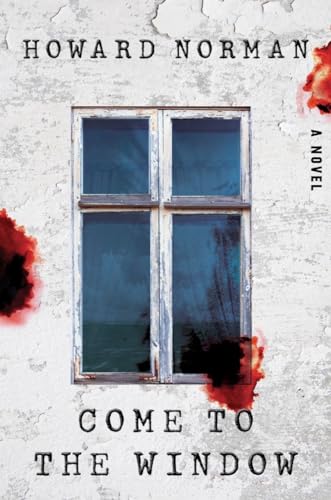 This was my eighth book by Norman and felt most similar to My Darling Detective and Next Life Might Be Kinder. Nothing much happens in the Nova Scotia fishing village of Parrsboro – until the night in April 1918 that Elizabeth Frame shoots dead her husband of 11 hours and throws the revolver into the blowhole of a beached whale. The story is a boon for Toby Havenshaw, a journalist with the Halifax Evening Mail, and quickly becomes an obsession. It’s never a whodunit so much as a why as Toby reports on the trial and follows Elizabeth when she goes on the lam. The sordid case just keeps getting stranger, drawing in bigamy, illegitimate pregnancy, and so on.
But Norman never treats all this too seriously; it is almost a tragicomic foil to the more consequential matters of world war and an influenza pandemic, which soon has Atlantic Canada in its grip as well. Toby’s wife, Amelia, is a hospital surgeon operating on returning veterans. She’s so quietly capable she makes Toby look a dunce, and their everyday rapport and unusual road to parenthood in their late thirties are charming. I also enjoyed Norman’s Dickensian naming (Bevel Cousins, Dr. S. S. Particulate) and literary references: the title phrase is from Matthew Arnold, and L. M. Montgomery gets a mention.
No doubt Norman wrote this as a Covid response; the parallel with the Spanish flu has been irresistible for many. He really captures the feeling of living through a uniquely terrible world situation. However, I’m not sure this short novel will prove memorable. Such has been true for his other recent novels, which pale in comparison with The Bird Artist. (Read via Edelweiss)
How We Named the Stars by Andrés N. Ordorica
I learned about this through the Observer’s 10 best new novelists feature and requested a copy via a Northern Fiction Alliance online showcase. There’s a sweet Heartstopper vibe to the story of an unlikely romance blooming between Daniel de la Luna and Sam Morris, his roommate at the University of Cayuga (= Cornell). Sam is a hunky jock while Daniel is a nervous would-be writer who has only just become comfortable with calling himself gay.
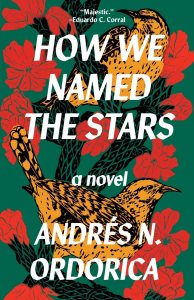 Ordorica, also a poet, immediately sets an elegiac tone by revealing Sam’s untimely death soon after the end of their freshman year. To cope with losing the love of his life, Daniel writes this text as if it’s an extended letter to Sam, recounting the course of their relationship – from strangers to best friends to secret lovers – and telling of his summer spent in Mexico exploring his family history, especially the parallels between his life and that of his late uncle and namesake, who was brave enough to be openly gay in the early days of the AIDS crisis.
Unfortunately, solid ideas and a warm-hearted approach are swamped by a host of problems. Ordorica writes a pretty good sex scene but the rest is clichéd, purple or awkward prose (“I snapped photo after photo of you, laughing all the while from your infectious elation”; “I felt unmoored, unsettled, and utterly liminal, in a state of flux”; “I sank into my pillows, muffling my tears as my mind floundered into even deeper waves of sadness”) and stiff dialogue. The cultural references and terminology feel all wrong for 2011, let alone for the 1988 diary entries of Uncle Daniel’s. The Mexico subplot is too tidy and Daniel’s breakdown after news of Sam’s death, which appears to involve full-blown alcohol addiction, is implausibly resolved within a chapter. The characterization of the secondary figures, particularly Daniel’s trio of queer Cayuga friends, is tissue thin.
It seems likely that Ordorica channeled much of his own experience into this queer coming-of-age narrative. He may have been aiming for star-crossed lovers and a groundbreaking own voices story, but this is run-of-the-mill stuff – more like a college student’s first draft than a finished book.
With thanks to Saraband for the proof copy for review.
Test Kitchen by Neil D. A. Stewart
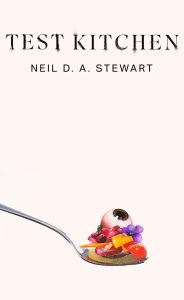 I spied this in one of Susan’s monthly previews. (If you haven’t already subscribed to her blog, do so at once. You’ll never be short of ideas for what to read.) Midgard is a fine dining restaurant with a tree in the middle whose multiple small courses evoke childhood memories and disguise one foodstuff as another. The London establishment earned two Michelin stars and has a perpetual waiting list, but as a news piece at the start presages, it will be forced to close its doors within five years after a series of disasters. Every other chapter introduces another set of diners, table by table: a first date, a reunion of old friends, a 12-year-old foodie trying to forestall his parents’ divorce, a restaurant critic and her freeloading acquaintances, and a solitary man who should really get that face wound seen to.
Many of these situations aren’t what they seem; the same goes for the intervening glimpses into the kitchen. Our host for these is Marley, the most recently hired waitress, who fled a chaotic home life in Melbourne. She didn’t show for work today; she’s in hiding, yet knows everything about the staff dynamics so is a perfect tour guide. There’s a mixture of nerves and bravado running through the kitchen as dinner starts. A knife accident, a food allergy, and a champagne cork hitting a customer are only the beginning of the evening’s mishaps. While I was initially drawn to the structure, which is almost like a linked short story collection, and I can’t resist a restaurant setting, the narrative trickery and the way that the mood evolves from slapstick to grotesque put me off. I enjoyed individual vignettes, but the whole didn’t come together as satisfyingly as in Sweetbitter or Service, among others.
With thanks to Corsair (Hachette) for the free copy for review.
Any July releases you’d recommend?
20 Books of Summer, 7–9: Furies, The Earthquake Bird, and Greta & Valdin
It might seem that I’m very behind on 20 Books of Summer, and I am, but that’s mostly because I’ve done my usual trick of starting loads of books at once so that I’m currently in the middle of another nine with no prospect of finishing any particularly soon. I will eventually review more, but probably all in a rush and on the later side. It doesn’t help that quite a few happen to be lacklustre reads, such that I have to push myself through them instead of enjoying spending time with the stack. For today, though, I have a pretty readable trio made up of feminist short stories, a mild Japan-set mystery, and a highly random queer dysfunctional family novel that rose from indie obscurity in New Zealand. (Also a DNF.)
Furies: Stories of the Wicked, Wild and Untamed (2023)
It was my second attempt at this Virago anthology; I borrowed it from the library last year but never opened it, as far as I can remember. Each story is named after a synonym for “virago,” so the focus is on strong and unconventional women, but given that brief there is huge variety, including memoir (Ali Smith’s “Spitfire,” about her late mother’s WAAF service), historical research (CN Lester on sexology and early trans figures, Emma Donoghue on early-twentieth-century activist and lesbian Kathlyn Oliver, Stella Duffy on menopause) and even one graphic short, the mother–daughter horror story “She-Devil” by comics artist Eleanor Crewes.
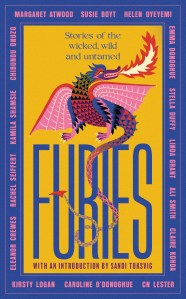 As with any anthology, some pieces stand out more than others. Caroline O’Donoghue, Helen Oyeyemi and Kamila Shamsie’s contributions were unlikely to convert me into a fan. Margaret Atwood is ever sly and accessible, with “Siren” opening with the line “Today’s Liminal Beings Knitting Circle will now be called to order.” I was surprised to get on really well with Kirsty Logan’s “Wench,” about girls ostracized by their religious community because of their desire for each other – I’ll have to read Now She Is Witch, as it’s set in the same fictional world – and Chibundu Onuzo’s “Warrior,” about Deborah, an Israelite leader in the book of Judges. And while I doubt I need to read a whole novel by Rachel Seiffert, I did enjoy “Fury,” about a group of Polish women who fended off Nazi invaders.
A few of my favourites were “Harridan” by Linda Grant, about an older woman who frightens the young couple who share her flat’s garden during lockdown (“this old lady, this hag she sees, this bitter travesty of her celestial youth and beauty is not her. Inside she’s a flame, she’s a pistol”); “Muckraker” by Susie Boyt, in which a woman makes conquests of breast cancer widowers; and “Tygress” by Claire Kohda, where the stereotype of the Asian ‘tiger mother’ turns literal. Duffy’s “Dragon” closes the collection with a very interesting blend of autofiction, interviews and medical reportage about different experiences of objectification in youth and invisibility in ageing. It brings the whole together nicely: “Tell me your tale and, in the telling, feel it all drop away. You are, and you are not, your story. Keep what serves you now, make space for new maybes.” (Free from a neighbour) 
The Earthquake Bird: A Novel of Mystery by Susanna Jones (2001)
 Susanna Jones’s When Nights Are Cold is one of my favourite novels that no one else has ever heard of, so I jumped at the chance to buy a bargain copy of her debut back in 2020. Lucy Fly has lived in Tokyo for ten years, working as a translator of machinery manuals. She wanted to get as far away as possible from her conventional family of six brothers, so she’s less than thrilled to meet fellow Yorkshire lass Lily Bridges, a nurse new to the country and looking for someone to help her find an apartment and learn some basic Japanese. Lucy is a prickly loner with only a few friends – and a lover, photographer Teiji – but she reluctantly agrees to be Lily’s guide.
We know from the start that Lucy is in custody being questioned about events leading up to Lily’s murder. She refuses to tell the police anything, but what we are reading is her confession, in which she does eventually tell all. We learn that there have already been three accidental deaths among her family and acquaintances – she seems cursed to attract them – and that her feelings about Lily changed over the months she showed the woman around. This short and reasonably compelling book gives glimpses of mountain scenery, noodle bars, and spartan apartments. Perhaps inevitably, it reminded me a bit of Murakami. It’s hard to resist an unreliable narrator. However, I felt Jones’s habit of having Lucy speak of herself in the third person was overdone. (Secondhand – Broad Street Book Centre, Hay-on-Wye) 
Greta & Valdin by Rebecca K Reilly (2021; 2024)
 The title characters are a brother and sister in their late twenties who share a flat and a tendency to sabotage romantic relationships. Both are matter-of-factly queer and biracial (Māori/Russian). The novel flips back and forth between their present-tense first-person narration with each short chapter. It takes quite a while to pick up on who is who in the extended Vladisavljevic clan and their New Zealand university milieu (their father is a science professor and Greta an English department PhD and tutor), so I was glad of the character list at the start.
I was expecting a breezy, snarky read and to an extent that’s what I got. Not a whole lot happens; situations advance infinitesimally through quirky dialogue thick with pop culture references. There are some quite funny one-liners, but the plot is so meandering and the voices so deadpan that I struggled to remain engaged. (On her website, Reilly, who is Māori, ascribes the book’s randomness to her neurodivergence.)
The protagonists seem so affectedly cynical that when they exhibit strong feelings for new partners, you’re a bit taken aback. Really, Reilly can do serious? One of the siblings is reunited with a former partner and starts to think about settling down and even adopting a child. This is the last novel I would have expected to end with a wedding, but so it does. If you’re a big fan of Elif Batuman and Naoise Dolan, this might be up your street. Below are some sample lines that should help you make up your mind (quotes unattributed to minimize spoilers).
I don’t really feel like anything these days, just a beautiful husk filled with opinions about globalism and a strong desire to go out for dinner.
I don’t think you’re the weirdest person I’ve ever met even though you do sometimes talk like a philosophical narrator in an independent film.
I’m trying to write my wedding speech, so I don’t go off on a tangent and start listing my favourite Arnold Schwarzenegger movies. I was thinking I could write an acrostic poem, but I’ve made the foolish decision of marrying someone whose name begins with X.
With thanks to Hutchinson Heinemann (Penguin Random House) for the free copy for review.
And a DNF:
 The Lost Love Songs of Boysie Singh by Ingrid Persaud – I thought Persaud’s debut novel, Love after Love, was fantastic, but I was right to be daunted by the length of this follow-up. The strategy is similar to that in Mrs. Hemingway by Naomi Wood: giving sideways looks at a famous man through the women he collected around him. John Boysie Singh was a real-life Trinidadian gangster who was hanged for his crimes in 1957 (as the article reprinted on the first page reveals). The major problem here is that all four of the dialect voices sound much the same, so I couldn’t tell them apart. Each time I opened the book, I had to look back at the blurb to be reminded that Popo was his prostitute mistress while Mana Lala was the mother of his son Chunksee. In the 103 pages I read (less than one-fifth of the total), there were so few chapters by Doris and Rosie that I never got a handle on who they were. Nor did I come to understand, or care about, Boysie. The editor needed to make drastic changes to this to ensure widespread readability. (Signed copy won in a Faber Instagram giveaway)
The Complete Short Stories of A. A. Milne (Blog Tour)
Like many readers, I only knew A. A. Milne (1882–1956) for his Winnie-the-Pooh stories and had no idea of how much he wrote for adults: novels, plays, journalism, screenplays, and yes, short stories. This doorstopper of a collection includes some never-before-published material – undated and fragmentary stories. The stories span virtually his entire career, from 1914 to 1953.
I was daunted by the heft of the book when it arrived so got in touch with Simon Thomas (Stuck in a Book) because I remembered that Milne is his favourite author. With his direction, I decided to focus on the later stories originally published in the volume The Birthday Party and Other Stories (some of which originally had different titles).
Even within this subset, I found a lot of variety. One of my favourites was “In Vino Veritas,” a tricksy mystery story for fans of classic crime whether Sherlock Holmes, Agatha Christie or Raymond Chandler. The narrator is a writer of detective stories which are often inspired by cases recounted to him by his police superintendent friend Frederick Mortimer. Mortimer tells him of a murder accomplished using a poisoned bottle of wine. But “I could almost feel the murderer behind us, pushing us along the way he wanted us to go,” Mortimer says. The evidence seemed almost too neat, and a replication plus a couple of switchbacks reveal that everything was not as it appeared for the superintendent, or for our narrator.
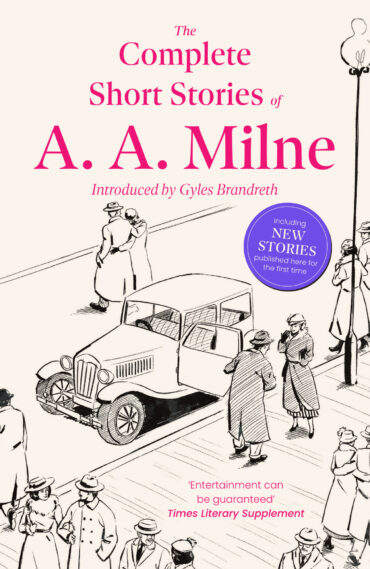
Milne plays with genre and history here. “The Secret” is a skewed fairy tale that even opens with “Once upon a time.” “The Lost Diary of Shakespeare” turns the authorship controversy on its head. “The General Takes off his Helmet” inhabits the time of Hannibal. “A.V. and R.V.” has a little girl distressed at a biblical account of mass death and her mother parroting an unsatisfactory mainline interpretation about punishment for sin and the need for faith; then we parachute into King David’s court and see him conspiring to blame it all on a woman.
But the stand-out for me was “The Birthday Party.” William Henry Baker, brimming with emotion after the birth of his first child, David Alistair Shawn, early one April morning, sets off by train for his office in the City. His wife has told him to have a good dinner and drink to the baby’s health, so after keeping his happy secret from his colleagues all day, he heads to the Savoy for a blowout meal. Just as he’s worried that he won’t be able to pay the large bill, a pair of diners takes him under their wing to form part of a harmless deception. He’s carried out Maggie’s instructions, but perhaps not in the way she might have imagined. Setting aside the injustice of his shell-shocked wife having to stay at home with an infant while he gets on with his normal life and has a luxurious meal (it was 1948, after all), this was a sweet straight-man-in-bizarre-circumstances story, the kind that might spark a screwball comedy.
There’s so much to discover just in this volume, and five other Milne titles have also been reissued in the last year or so. Soon adult readers will be saying, Winnie the who?
With thanks to Random Things Tours and Farrago (Duckworth Books) for the free copy for review.
Buy The Complete Short Stories of A. A. Milne from Bookshop.org [affiliate link]
I was happy to be part of the blog tour for the release of this book. See below for details of where other reviews have appeared or will be appearing soon.

Literary Wives Club: Mrs. March by Virginia Feito (2021)
{SPOILERS IN THIS REVIEW!}
What a deliciously odd debut novel, reminiscent of Patricia Highsmith’s work for how it places a neurotic outsider at the heart of an unlikely murder investigation. George March is a popular author whose latest novel stars Johanna, a prostitute so ugly that men feel sorry for her and can’t bear to sleep with her. Meanwhile, the news cycle is consumed with the strangling of a young woman named Sylvia Gibbler in Gentry, Maine, where George goes on hunting trips with his editor. Mrs. March takes two misconceptions – that George modeled Johanna on her, and that he was somehow involved in Sylvia’s death because he kept newspaper clippings about it on his desk – and runs with them, to catastrophic effect.
Mrs. March’s usual milieu is the New York City apartment she shares with George and their son, Jonathan. Martha, the housekeeper, keeps the daily details under control, leaving Mrs. March with little to do. She doesn’t seem very interested in her son, and resents George. Each morning she walks to the bakery to buy olive bread. Every so often she’ll host an extravagant dinner party. But there is plenty of time in between to fill with flashbacks to shameful memories (having an imaginary friend, wetting the bed, her mother’s favoritism towards her sister, being raped in Cádiz) and hallucinations (a dead pigeon in the bathtub, cockroaches scuttling around the apartment). She decides to travel to Maine herself to investigate Sylvia’s death; it’s not what she finds there but what she returns to that changes things forever.

There are so many intriguing factors. One is the nebulous time period: what with Mrs. March’s fur coat and head scarf, the train cars and payphone calls, it could be the 1950s; but then there are more modern references (a washing machine, holiday flights) that made me inclined to point to the 1980s. It couldn’t be the present day unless Feito is deliberately setting the story in an alternative world without much tech. As in Highsmith, we get mistaken identity and disguises. Feito really ramps up the psychological elements, interrogating how trauma, paranoia and extreme body issues may have led to dissociation in her protagonist. Mrs. March is both obsessed with and repulsed by bodily realities. It’s only through other characters’ reactions, though, that we see just how mentally disturbed she is. Worryingly, patterns seem to be repeating with her son, who is suspended for ‘doing something’ to a girl.
I can see how this would be a divisive read: the characters are thoroughly unlikable and it can be difficult to decide what is real and what is not. Incidents I took at face value may well be symbolic, or psychological manifestations of trauma. But I found it morbidly fascinating. I never knew what was going to happen next. (Public library/NetGalley) 
The main question we ask about the books we read for Literary Wives is:
What does this book say about wives or about the experience of being a wife?
In terms of Literary Wives reads, this reminded me most of The Harpy by Megan Hunter because of its eventual focus on adultery and revenge. Notably, until the very last sentence, we only know Mrs. March’s identity through her relationship to her husband. (Her first name is finally revealed to be Agatha, which of course made me think of Agatha Christie and detection, but its meaning is “good” or “honorable” – there was a martyred saint by the name.) What I took from that is that defining oneself primarily through marriage is dangerous because personality and control can be lost. This character was in need of a wider purpose to take her outside of her home and family – though those would always be her refuge to return to. Even setting Mrs. March’s mental problems aside, it is frighteningly easy to indulge in delusions about oneself or one’s spouse, so getting a reality check via communication is key.
See Kay’s and Naomi’s reviews, too!
We’ve recently acquired a new member – welcome to Kate of Books Are My Favourite and Best! – and chosen our books for the next two and a bit years. Anyone is welcome to join us in reading them. Here’s the club page on Kay’s blog, and our schedule through the end of 2026:
June 2024 Recipe for a Perfect Marriage by Karma Brown
Sept. 2024 Their Eyes Were Watching God by Zora Neale Hurston
Dec. 2024 Euphoria by Elin Culhed
March 2025 Lessons in Chemistry by Bonnie Garmus
June 2025 The Constant Wife by W. Somerset Maugham
Sept. 2025 Novel about My Wife by Emily Perkins
Dec. 2025 The Soul of Kindness by Elizabeth Taylor
March 2026 Mrs. Bridge by Evan S. Connell
June 2025 Interpreter of Maladies by Jhumpa Lahiri
Sept. 2026 Family Family by Laurie Frankel
Dec. 2026 The Eden Test by Adam Sternbergh
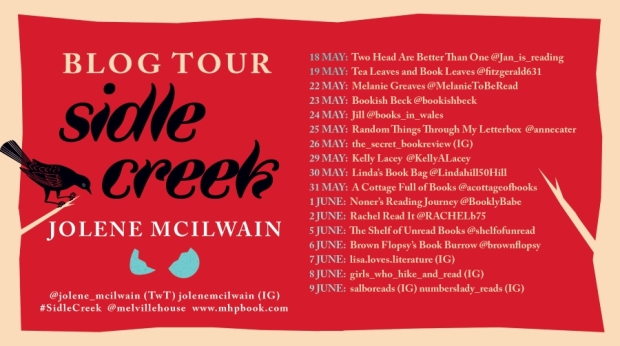
Sidle Creek by Jolene McIlwain (Blog Tour)
I’m a sucker for “dirty realism,” a term coined in the 1980s to encompass gritty stories of blue-collar Americana: Ron Rash, David Vann, Daniel Woodrell et al. (I wrote a whole article about it in 2013). It’s less common, certainly, to find women writing in this subgenre, and that feminine touch is part of what makes Sidle Creek unique. In this debut collection of 22 short stories, loosely linked by their location in the Appalachian hills in western Pennsylvania and a couple of recurring minor characters, Jolene McIlwain softens the harsh realities of addiction, poverty and violence with the tender bruises of infertility and lost love.
The title story, which opens the book, has a shifting first-person point-of-view, first telling us about and then putting us into the mind of Esme Andersen, who’s 20 in 1975. Various diagnoses have plagued her family, medical words that repeat as chants: hemorrhage, endometriosis. Superstitions around the creek cast it alternately as a potential site of harm or healing as her single father tries to help her deal with her severe periods. The cover image comes from “Shell,” in which Tiller Shanty reads signs in the markings on red-winged blackbird eggs. He learned his skill of divination from his Vietnamese wife, but conceals from her a portent about her future. It turns out there’s more than one way to lose a beloved.
Grief is a resonant theme in so many of the stories. “The Fractal Geometry of Grief” is a shining example. Hubert Ashe, a widowed mathematician, becomes obsessed with a doe and sets up trail cams and a feeding station to watch her. It’s not clear whether he believes the animal is a reincarnation of his wife or not, but it’s unwise to get so attached in a hunting area. In “Seeds,” a man finds a photograph of his dying wife as a girl and revisits the sadness of her life. “Steer,” one of the most affecting stories, has a middle-aged man hit by anxiety, unable to forget the death of one of their cattle back when he was 16. As horrific as the experience was, it made him receptive to both beauty and pain.
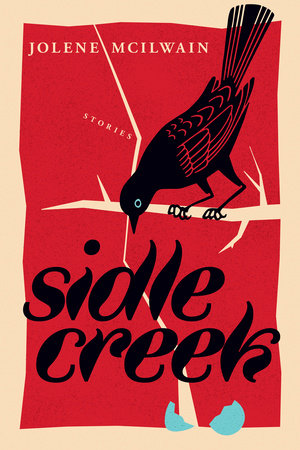
Animal suffering is indeed frequent – something that seems important to mention, as I know a lot of readers who avoid scenes of it whenever possible. In “Eminent Domain,” the electricity shed where teenagers used to go drinking is found to be full of slaughtered cats. It’s the prompt the protagonist needs to escape this dead-end town. “Loosed” is a masterpiece in the vein of Demon Copperhead (though much more violent) about a man who makes money on increasingly cruel sport: cock fighting, then dog fighting, then dirty fights between his own four sons. The flash forward that ends this one is devastating. I, too, am sensitive to reading about animal deaths, but the animal suffering only matches the human here. The nastiness of “The Less Said” makes that plain.
Pregnancy or infant loss is a recurring element. In just three pages, “Seed to Full” expresses a world of sorrow as a woodworker crafts a coffin for his infant son. Even where it is not a central subject, infertility is mentioned in a number of stories. In “You Four Are the One,” four adolescent neighbor girls help Cinta Johns out around the house, hoping with her that this fifth pregnancy will be the one that lasts. “The Steep Side,” a memorable closer that shifts between past and future, has a teen coming across a crashed van, a heavily pregnant woman, and an older woman claiming to be a nurse. What he sees haunts him into adulthood.
There’s an air of mystery to that one, and particularly in “Those Red Boots,” about the disappearance of a waitress who worked at a Hooters-style joint where all the comely staff wear the same uniforms and perform titillating dances. My preference was for longer stories like this where you get greater depth of characterization and more scenes and dialogue. I might have considered cutting a handful of the flash-length stories. However, even in these micro-fictions, there are still interesting setups. My favorite among them was “The Fourth,” in which Independence Day fireworks are triggering for shell-shocked Uncle Ron.
At times harrowing, always clear-eyed, these stories are true to life and compassionate about human foibles and animal pain. I would highly recommend them to readers of Kent Haruf and Jayne Anne Phillips. McIlwain has such an established voice that this hardly seems like a first book. I can’t wait to read whatever she writes next.
With thanks to Melville House for the proof copy for review.
Buy Sidle Creek from Bookshop.org [affiliate link]
I was delighted to be invited to participate in the blog tour for Sidle Creek. See below for details of where other reviews have appeared or will be appearing soon.
Daphne du Maurier Reading Week: Rebecca Reread & Forster Biography
It’s been a couple of years since I took part in HeavenAli’s annual Daphne du Maurier Reading Week (the last time was with a review of My Cousin Rachel; this year, links are being hosted by Liz here).
My last-minute and meagre contribution comprises an attempted reread (which ended up being a skim) of Rebecca for book club last month, and a partial, ongoing read of Margaret Forster’s cracking biography of DDM.
Rebecca (1938)
 I must have first read this in my early twenties, and remembered it as spooky and atmospheric. I had completely forgotten that the action opens not at Manderley (despite the exceptionally famous first line, which forms part of a prologue-like first chapter depicting the place empty without its master and mistress to tend to it) but in Monte Carlo, where the unnamed narrator meets Maxim de Winter while she’s a lady’s companion to bossy Mrs. Van Hopper. This section functions to introduce Max and his tragic history via hearsay, but I found the first 60 pages so slow that I had trouble maintaining momentum thereafter, especially through the low-action and slightly repetitive scenes as the diffident second Mrs de Winter explores the house and tries to avoid Mrs Danvers, so I ended up skimming most of it.
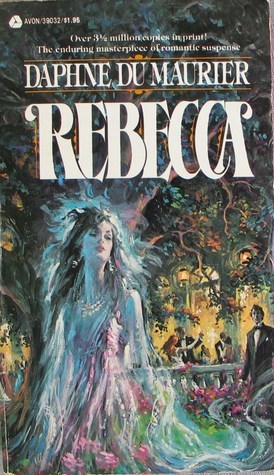
However, it was satisfying to rediscover the Jane Eyre parallels and there are deliciously chilling scenes, like with Mrs Danvers at the window and the way she then sabotages her young mistress at the costume ball. This was one of four rereads for book club already this year, which has the benefit of reducing pressure and sometimes increasing the comfort-read factor. We have two Rebeccas in my book club, so it seemed an appropriate choice. Others found the book as gripping as ever, with one member reading it in a day thanks to long hospital waits. Would you believe, I hadn’t at all remembered the truth of what happened to Rebecca! So there was that surprise awaiting me. In our discussion we remarked that though this has the trappings of a romance novel or mystery (e.g. see my dreadful paperback cover above!), it also has enduring literary weight – it won the National Book Award, for instance.
Daphne du Maurier by Margaret Forster (1993)
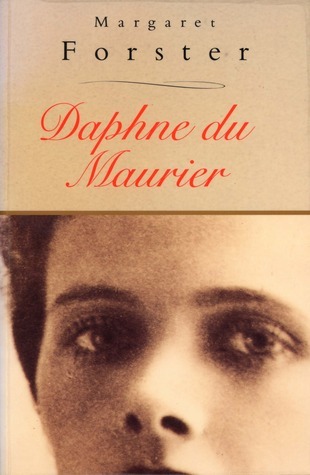 I read my first work by Forster, My Life in Houses, last year, and adored it, so the fact that she was the author was all the more reason to read this when I found a copy in a library secondhand book sale. I started it immediately after our meeting about Rebecca, but I find biographies so dense and daunting that I’m still only a third of the way into it even though I’ve been liberally skimming.
So far I have noted: du Maurier’s artistic pedigree, including her grandfather’s authorship of Trilby and her parents meeting through stage acting; her frank engagement in sexual activity, and presumed bisexuality (so far only evident through a requited crush on a teacher at her French finishing school, though perhaps there will be more to come); her first publications of short stories (“inspired by her three favourite short story writers, Maugham, Mansfield and Maupassant”) and the early novels, including one from a male point of view; her close relationship with her father and the crushing blow of his death; her determination to escape London for Cornwall; and her marriage to a soldier and ambivalent motherhood.
The last chapter I got to was all about the success of Rebecca. Though the critical reaction was generally favourable, reviewers also deemed it melodramatic … fair?
#DDMReadingWeek
October Releases by Rachel Mann, Sigrid Nunez and Ruth Janette Ruck
A calmer month for new releases after September’s bumper crop. I read a sophisticated mystery set at a theological college, a subtle novel about empathy and being a good friend, and a memoir of raising one of Britain’s first llamas.
The Gospel of Eve by Rachel Mann
Last year I dipped into Mann’s poetry (A Kingdom of Love) and literary criticism/devotional writing (In the Bleak Midwinter); this year I was delighted to be offered an early copy of her debut novel. The press materials are full of comparisons to Donna Tartt’s The Secret History; it’s certainly an apt point of reference for this mystery focusing on clever, Medieval-obsessed students training for the priesthood at a theological college outside Oxford.
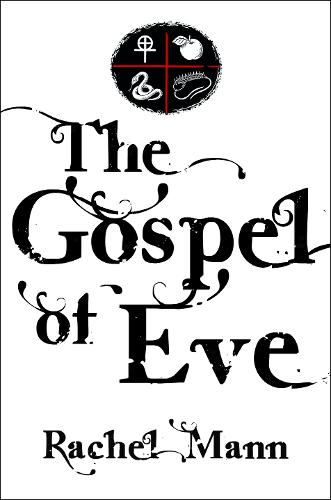 It’s 1997 and Catherine Bolton is part of the first female intake at Littlemore College. She has striven to rid herself of a working-class accent and recently completed her PhD on Chaucer, but feels daunted by her new friends’ intelligence and old-money backgrounds: Ivo went to Eton, Charlie is an heiress, and so on. But Kitty’s most fascinated with Evie, who is bright, privileged and quick with a comeback – everything Kitty wishes she could be.
If you think of ordinands as pious and prudish, you’ll be scandalized by these six. They drink, smoke, curse and make crude jokes. In seminars with Professor Albertus Loewe, they make provocative mention of feminist theory and are tempted by his collection of rare books. Soon sex, death and literature get all mixed up as Kitty realizes that her friends’ devotion to the Medieval period goes as far as replicating dangerous rituals. We know from the first line that one of them ends up dead. But what might it have to do with the apocryphal text of the title?
I didn’t always feel the psychological groundwork was there to understand characters’ motivations, but I still found this to be a beguiling story, well plotted and drenched in elitism and lust. Mann explores a theology that is more about practice, about the body, than belief. Kitty’s retrospective blends regret and nostalgia: “We were the special ones, the shining ones,” and despite how wrong everything went, part of her wouldn’t change it for the world.
My thanks to publicist Hannah Hargrave for the proof copy for review. Published today by Darton, Longman & Todd Ltd.
What Are You Going Through by Sigrid Nunez
A perfect follow-up to The Friend and very similar in some ways: again we have the disparate first-person musings of an unnamed narrator compelled to help a friend. In Nunez’s previous novel, the protagonist has to care for the dog of a man who recently killed himself; here she is called upon to help a terminally ill friend commit suicide. The novel opens in September 2017 in the unfamiliar town she’s come to for her friend’s cancer treatments. While there she goes to a talk by an older male author who believes human civilization is finished and people shouldn’t have children anymore. This prophet of doom is her ex.
 His pessimism is echoed by the dying friend when she relapses. The narrator agrees to accompany her to a rental house where she will take a drug to die at a time of her choosing. “Lucy and Ethel Do Euthanasia,” the ex jokes. And there is a sort of slapstick joy early in this morbid adventure, with mishaps like forgetting the pills and flooding the bathroom.
As in Rachel Cusk’s Outline trilogy, the voice is not solely or even primarily the narrator’s but Other: her friend speaking about her happy childhood and her estrangement from her daughter; a woman met at the gym; a paranoid neighbor; a recent short story; a documentary film. I felt there was too much recounting of a thriller plot, but in general this approach, paired with the absence of speech marks, reflects how the art we consume and the people we encounter become part of our own story. Curiosity about other lives fuels empathy.
With the wry energy of Jenny Offill’s Weather, this is a quiet novel that sneaks up to seize you by the heartstrings. “Women’s stories are often sad stories,” Nunez writes, but “no matter how sad, a beautifully told story lifts you up.” Like The Friend, which also ends just before The End, this presents love and literature as ways to bear “witness to the human condition.”
With thanks to Virago for the proof copy for review.
Along Came a Llama: Tales from a Welsh Hill Farm by Ruth Janette Ruck
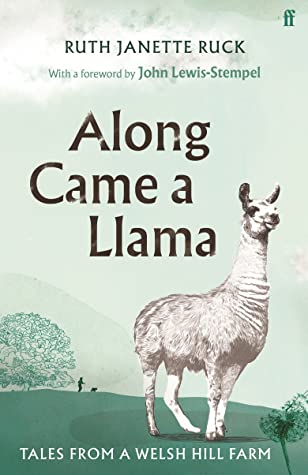 Originally published in 1978 (now reissued with a foreword by John Lewis-Stempel), this is an enjoyably animal-stuffed memoir reminiscent of Gerald Durrell and especially Doreen Tovey. Ruck (d. 2006) and her family – which at times included her ill sister, her elderly mother and/or her sister-in-law – lived on a remote farm in the hills of North Wales. On a visit to Knaresborough Zoo, Ruck was taken with the llamas and fancied buying one to add to their menagerie of farm animals. It was as simple as asking the zoo director and then taking the young female back to Wales in a pony box. At that time, hardly anyone in the UK knew anything about llamas or the other camelids. No insurance company would cover their llama in transit; no one had specialist knowledge on feeding or breeding. Ruck had to do things the old-fashioned way, finding books and specialist scientific papers.
But they mostly learned about Ñusta (the Quechua word for princess) by spending time with her. At holidays they discovered her love of chocolate Easter eggs and cherry brandy. The cud-chewing creature sometimes gave clues to what else she’d been eating, as when she regurgitated plum stones. She didn’t particularly like being touched or trailed by an orphaned lamb, but followed Ruck around dutifully and would sit sociably in the living room. Life with animals often involves mild disasters: Ñusta jumps in a pool and locks Ruck’s husband in the loo, and the truck breaks down on the way to mate her with the male at Chester Zoo.

A vintage cover I found on Goodreads.
From spitting to shearing, there was a lot to get used to, but this account of the first three years of llama ownership emphasizes the delights of animal companionship. There were hardships in Ruck’s life, including multiple sclerosis and her sister’s death, but into the “austere but soul-rewarding life of a hill firm … like a catalyst or a touch of magic, the llama came along.” I was into llamas and alpacas well before the rest of the world – in high school I often visited a local llama farm, and I led a llama in a parade and an alpaca in a nativity play – so that was my primary reason for requesting this, but it’s just right for any animal lover.
With thanks to Faber & Faber for the free copy for review.
What recent releases can you recommend?
Some Books I Was Surprised to Love
Like most fiction readers, I generally stick with what I’m pretty sure I’ll like. For me that means that, unless I’ve heard very good feedback that makes me think the book will stand out from its peers, I tend to avoid science fiction, fantasy, and mystery novels (or genre fiction in general). I’m also leery of magic realism and allegories, as these techniques can so often be cringe-inducing. But occasionally a book will come along that proves me wrong.
 For instance, last week I finished To Say Nothing of the Dog by Connie Willis. Time travel would normally be a turnoff for me, but Willis manages it perfectly in this uproarious blend of science fiction and pitch-perfect Victorian pastiche (boating, séances and sentimentality, oh my!). Once I got into it, I read it extremely quickly – finishing the final 230 pages on one Sunday afternoon and evening – and it provoked a continuous stream of snorts. I can hardly think of anyone I wouldn’t recommend it to.
This got me thinking about some other pleasantly surprising books that took me outside of my usual reading comfort zone in recent years:
 Dark Eden by Chris Beckett: Six generations ago a pair of astronauts landed on the planet Eden and became matriarch and patriarch of a new race of eerily primitive humans. A young leader, John Redlantern, rises up within the group, determined to free his people from their limited worldview by demythologizing their foundational story. Through events that mirror many of the accounts in Genesis and Exodus, Beckett provides an intriguing counterpoint to the ways Jews and Christians relate to the biblical narrative. Page-turning science fiction with deep theological implications. I liked each of the two sequels less than the book that went before, but they’re still worth reading.
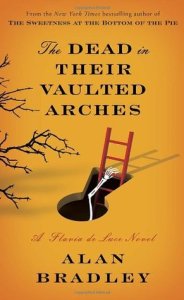 The Flavia de Luce mysteries by Alan Bradley: Normally I shy away from series and tire of child narrators – and yet I find the Flavia de Luce novels positively delightful. Why? Well, Canadian author Alan Bradley’s quaintly authentic mysteries are set at Buckshaw, a crumbling country manor house in 1950s England, where the titular eleven-year-old heroine, also the narrator, performs madcap chemistry experiments and solves small-town murders. The Dead in Their Vaulted Arches (#6) is the best yet. In this installment, Flavia finally learns of her unexpected inheritance from her mother. The most recent, Thrice the Brinded Cat Hath Mew’d (#8), is a close second.
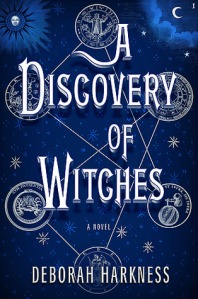 A Discovery of Witches by Deborah Harkness: The thinking gal’s Twilight. Harkness, a historian of science, draws on her knowledge of everything from medieval alchemy to recent DNA mapping. The main character, reluctant witch Diana Bishop, is studying alchemical treatises at the Bodleian Library. She calls up an enchanted manuscript from Ashmole’s original collection, presumed missing since 1859. There are three excised pages, and the book instantly draws attention from the myriad “creatures” (non-humans) plaguing Oxford. Enter Matthew Clairmont, a mega-hot vampire with a conscience. From rural France to upstate New York, he and Diana fight off rival vampires and the witches who killed Diana’s parents. As with Beckett’s books, the two sequels are a bit of a letdown, but the first book is great fun.
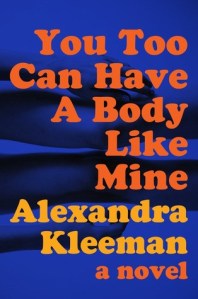 You Too Can Have a Body Like Mine by Alexandra Kleeman: A full-on postmodern satire bursting with biting commentary on body image, consumerism and conformity. The narrator, known only as A, lives in a shared suburban apartment. She and her roommate, B, are physically similar and emotionally dependent, egging each other on to paranoid anorexia. Television and shopping are the twin symbolic pillars of a book about the commodification of the body. In a culture of self-alienation where we compulsively buy things we don’t need, have no idea where our food comes from and worry about keeping up a facade of normalcy, Kleeman’s is a fresh voice advocating the true sanity of individuality.
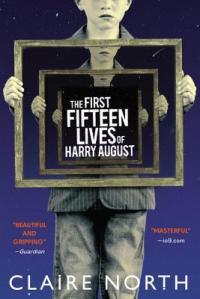 The First Fifteen Lives of Harry August by Claire North: The theme of a character reliving the same life over and over will no doubt have you thinking of Kate Atkinson’s Life After Life, but I liked this book so much better. Perhaps simply because of the first-person narration, I developed much more of a fondness for Harry August and his multiple life stories than I ever did for Ursula Todd. Harry, the illegitimate son of a servant girl, is born in the same manner each time – on New Year’s Day 1919, in the ladies’ restroom at Berwick-upon-Tweed rail station! – but becomes many people in his different lives.
 Bookish Beck = Rebecca Foster. American transplant to England. Freelance proofreader and book reviewer.
 Bookish Beck