Some 2024 Reading Superlatives
Longest book read this year: The Bee Sting by Paul Murray

Shortest books read this year: The Wood at Midwinter by Susanna Clarke – a standalone short story (unfortunately, it was kinda crap); After the Rites and Sandwiches by Kathy Pimlott – a poetry pamphlet
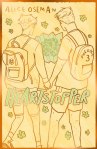 Authors I read the most by this year: Alice Oseman (5 rereads), Carol Shields (3 rereads); Margaret Atwood, Rachel Cusk, Pam Houston, T. Kingfisher, Sarah Manguso, Maggie O’Farrell, and Susan Allen Toth (2 each)
Publishers I read the most from: (Besides the ubiquitous Penguin Random House and its myriad imprints,) Carcanet (15), Bloomsbury & Faber (12 each), Alice James Books & Picador/Pan Macmillan (9 each)
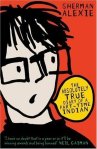
My top author ‘discoveries’ of the year: Sherman Alexie and Bernardine Bishop

Proudest bookish achievements: Reading almost the entire Carol Shields Prize longlist; seeing The Bookshop Band on their huge Emerge, Return tour and not just getting my photo with them but having it published on both the Foreword Reviews and Shelf Awareness websites

Most pinching-myself bookish moment: Getting a chance to judge published debut novels for the McKitterick Prize
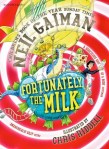
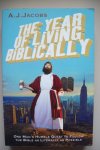
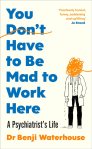
Books that made me laugh: Lots, but particularly Fortunately, the Milk… by Neil Gaiman, The Year of Living Biblically by A.J. Jacobs, and You Don’t Have to Be Mad to Work Here by Benji Waterhouse
Books that made me cry: On Chesil Beach by Ian McEwan, My Good Bright Wolf by Sarah Moss
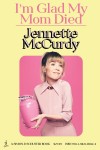 Two books that hit the laughing-and-crying-at-the-same-time sweet spot: The Absolutely True Diary of a Part-Time Indian by Sherman Alexie and I’m Glad My Mom Died by Jennette McCurdy
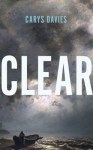
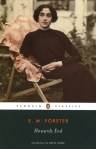
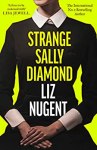
Best book club selections: Clear by Carys Davies, Howards End by E.M. Forster, Strange Sally Diamond by Liz Nugent
Best first lines encountered this year:
- From Cocktail by Lisa Alward: “The problem with parties, my mother says, is people don’t drink enough.”
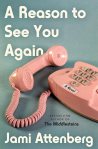
- From A Reason to See You Again by Jami Attenberg: “Oh, the games families play with each other.”
- From The Snow Queen by Michael Cunningham: “A celestial light appeared to Barrett Meeks in the sky over Central Park, four days after Barrett had been mauled, once again, by love.”

Best last lines encountered this year:
 From The Ministry of Time by Kaliane Bradley: “Forgiveness and hope are miracles. They let you change your life. They are time-travel.”
- From Mammoth by Eva Baltasar: “May I know to be alert when, at the stroke of midnight, life sends me its cavalry.”
- From Private Rites by Julia Armfield: “For now, they stay where they are and listen to the unwonted quiet, the hush in place of rainfall unfamiliar, the silence like a final snuffing out.”
- From Come to the Window by Howard Norman: “Wherever you sit, so sit all the insistences of fate. Still, the moment held promise of a full life.”
- From Intermezzo by Sally Rooney: “It doesn’t always work, but I do my best. See what happens. Go on in any case living.”
- From Barrowbeck by Andrew Michael Hurley: “And she thought of those Victorian paintings of deathbed scenes: the soul rising vaporously out of a spent and supine body and into a starry beam of light; all tears wiped away, all the frailty and grossness of a human life transfigured and forgiven at last.”
- From Small Rain by Garth Greenwell: “Pure life.”

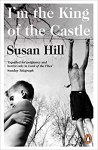
Books that put a song in my head every time I picked them up: I’m the King of the Castle by Susan Hill (“Crash” by Dave Matthews Band); Y2K by Colette Shade (“All Star” by Smashmouth)
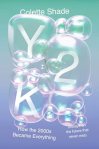
Shortest book titles encountered: Feh (Shalom Auslander) and Y2K (Colette Shade), followed by Keep (Jenny Haysom)
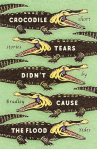 Best 2024 book titles: And I Will Make of You a Vowel Sound, I Can Outdance Jesus, Zombie Vomit Mad Libs, Crocodile Tears Didn’t Cause the Flood, This Is Why We Can’t Have Nice Things
Best book titles from other years: Recipe for a Perfect Wife, Tripping over Clouds, Waltzing the Cat, Dressing Up for the Carnival, The Met Office Advises Caution
Favourite title and cover combo of the year: I’m Mostly Here to Enjoy Myself by Glynnis MacNicol

Best punning title (and nominative determinism): Knead to Know: A History of Baking by Dr Neil Buttery
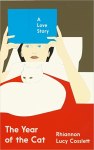 Biggest disappointments: The Glassmaker by Tracy Chevalier (I didn’t get past the first chapter because of all the info dumping from her research); The Year of the Cat by Rhiannon Lucy Cosslett; milk and honey by Rupi Kaur (that … ain’t poetry); 2 from the Observer’s 10 best new novelists feature (here and here)
A couple of 2024 books that everyone was reading but I decided not to: Creation Lake by Rachel Kushner, You Are Here by David Nicholls
 The worst books I read this year: Mammoth by Eva Baltasar, A Spy in the House of Love by Anaïs Nin
The downright strangest books I read this year: Zombie Vomit Mad Libs, followed by The Peculiar Life of a Lonely Postman. All Fours by Miranda July (I am at 44% now) is pretty weird, too.
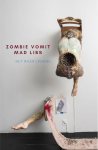

R.I.P. Reads, Part I: Magrs Buddy Read; Hynes, Johnson, Oates
This is my third year participating in R.I.P. (Readers Imbibing Peril), now in its 15th year. I read my first novel by Paul Magrs as a buddy read with Liz of Adventures in reading, running and working from home, and coincidentally had Daisy Johnson’s creepy second novel out from the library. Rounding out this first post are a novella by James Hynes and a short story by Joyce Carol Oates, by whom I still haven’t managed to read a whole book. For my planned Part II, I’m working on historical suspense novels by Michelle Paver (a constant on my R.I.P. lists, it seems) and Laura Purcell, and trying my first Henning Mankell.

666 Charing Cross Road by Paul Magrs (2011)
 Apart from Dracula, my only previous experience of vampire novels was Deborah Harkness’s books. My first book from Paul Magrs ended up being a great choice because it’s pretty lighthearted and as much about the love of books as it is about supernatural fantasy – think of a cross between Jasper Fforde and Neil Gaiman. The title is a tongue-in-cheek nod to Helene Hanff’s memoir, 84 Charing Cross Road. Like Hanff, Aunt Liza sends letters and money to a London bookstore in exchange for books that suit her tastes. A publisher’s reader in New York City, Liza has to read new stuff for work but not-so-secretly prefers old books, especially about the paranormal – a love she shares with her gay bookseller friend, Jack.
One day the bookstore (actual address: 66b) sends a gruesome treasure, a grimoire soaked in vampire blood. In the wrong hands, it returns the vampiric spirit to life and sets off a chain reaction as each victim bites and infects others. I couldn’t help but think of the pandemic; indeed, Magrs uses the word “disease” at one point. Vampirism always has erotic overtones, though, making it seem more like an STD. As it happens, the vampires’ New York leader is Liza’s niece Shelley’s boyfriend, Daniel. Meanwhile, the star exhibit at the Museum of Outsider Art where Shelley works, a Scottish Bride effigy nicknamed Bessie, has come to life. Bessie leads Liza and Jack to London in the fight against Daniel and his kind.
Set between Halloween and Christmas, this is a pacy and quick-witted story that is easy to follow even as it gets more complicated and adds in ever more secondary characters. Hints about Liza’s past experience of the supernatural and an open ending leave room for a prequel or sequel. There were a few melodramatic moments and I wasn’t always convinced by Liza’s New Yawk accent. (I also wanted to stick up for Liza and another character about her age, Consuela – Magrs often refers to one or both as “the old woman,” when in the context they can’t be far past 60!) But these are minor niggles about a book that was so much fun to read. I’ll try something else by Magrs, probably Exchange and/or one of the Brenda and Effie series – who could resist that premise of the Bride of Frankenstein running a B&B in Whitby? (See also Liz’s review.)
My rating: 
The rest…
Queen of the Jungle (from Publish and Perish: Three Tales of Tenure and Terror) by James Hynes (1997)
 I read the first of this volume’s three suspense novellas and will save the others for future years of R.I.P. or Novellas in November. At 95 pages, it feels like a complete, stand-alone plot with solid character development and a believable arc. Paul and Elizabeth are academics marooned at different colleges: Paul is finishing up his postdoc and teaches menial classes at an English department in Iowa, where they live; Elizabeth commutes long-distance to spend four days a week in Chicago, where she’s on track for early tenure at the university.
The couple’s cat, Charlotte, starts acting up, peeing in random places around the apartment. The animal psychic they hire says it’s because a woman keeps coming and going, disturbing the cat’s routines. Elizabeth assumes it’s her fault, feels terrible, and redoubles her efforts to get her boss to offer Paul a job on the basis of his bizarre literary/pop culture mash-up thesis chapters. But readers soon learn the real reason for the cat’s unease: Paul is carrying on an affair with Kymberly, a graduate student from the communications department. Charlotte is preternaturally determined to terrorize Kym and broadcast Paul’s secret. It’s an amusing battle of wills that comes to have greater stakes. Mentions of computer and telephone technology made this seem slightly dated, but I liked Hynes’s writing.
My rating:
Sisters by Daisy Johnson (2020)
 Teenagers September and July were born just 10 months apart, with July always in thrall to her older sister. September can pressure her into anything, no matter how risky or painful, in games of “September Says.” But one time things went too far. That was the day they went out to the tennis courts to confront the girls at their Oxford school who had bullied July.
For much of this short novel, Johnson keeps readers guessing about what happened that day and why the girls’ mother, Sheela, took them away to Settle House, her late husband’s family home in the North York Moors. Despite the new setting, July finds it impossible to shrug off her sister’s influence. Their psychic connection is such that she feels she’s losing her own virginity as she watches September have sex with a local boy on the beach. September’s is so much the dominant personality that July admits she feels like no more than “an appendage.”
Emotionally used and physically harmed, July starts to doubt her sanity. This was most evident for me in the scene where she goes up to a soggy-looking wall of Settle House and puts a hand through it, hearing “the rustle and gurgle of motion, the shuttering of thousands of wings.” (Presuming that’s a deliberate word choice and not a typo for shuddering.) Ants start pouring out of the wall, followed by a bird. But when she goes back to look at the wall later that day, it’s intact. I was reminded of The Haunting of Hill House, with its picture of a malevolent house preying on its inhabitants’ fears.

Sisters is a book that depends entirely on its late twist, so I shall say no more. About halfway through, I had a vague idea of what the surprise might be, but convinced myself I was wrong. “What if? … Nah, couldn’t be.” I wonder how early you’ll catch on. I adore the U.S. cover, but the UK cover contains more of a hint. I think I liked Everything Under, Johnson’s Booker-shortlisted debut novel, that little bit more, but my bottom line for that one goes for this, too: “As mesmerizing as it is unsettling.” Johnson is such a talented young author, and she also has the best author photo out there at the moment, a black-and-white image of her reflected in a train window.
My rating: 
“The Woman in the Window” (from Night-Gaunts and Other Tales of Suspense) by Joyce Carol Oates (2018)
 Oates was inspired by Edward Hopper’s 1926 painting, Eleven A.M. (The striking cover image is from a photographic recreation by Richard Tuschman. Very faithful except for the fact that Hopper’s armchair was blue.) A secretary pushing 40 waits in the New York City morning light for her married lover to arrive. She’s tired of him using her and keeps a sharp pair of sewing shears under her seat cushion. We bounce between the two characters’ perspectives as their encounter nears. He’s tempted to strangle her. Will today be that day, or will she have the courage to plunge those shears into his neck before he gets a chance? In this room, it’s always 11 a.m. The tension is well maintained, but the punctuation kind of drove me crazy. I might try the rest of the book next year.
Have you been reading anything fantastical or spooky this October?
Most Anticipated Releases of the Second Half of 2020
Although over 100 books from the second half of the year are already on my radar, I’ve limited myself here to the 15 July to November releases that I’m most excited about.
The modest number is a cheat in that I’ve already read seven books from this period in advance (plus I’m currently reading another three), and I haven’t listed any that I already have access to via proofs, promised finished copies, NetGalley, Edelweiss, or library preorders. Some of these that I intend to read are A Traveler at the Gates of Wisdom by John Boyne, D (A Tale of Two Worlds): A Modern-Day Dickensian Fable by Michel Faber, Bringing Back the Beaver by Derek Gow, Just Like You by Nick Hornby, How to Fly (poems) by Barbara Kingsolver, Vesper Flights by Helen Macdonald, Utopia Avenue by David Mitchell, Summerwater by Sarah Moss, Lake Life by David James Poissant, Dear Reader by Cathy Rentzenbrink, Jack by Marilynne Robinson and The Wild Silence by Raynor Winn.

(Meanwhile, two of my overall most anticipated 2020 releases have been pushed back to 2021, at least in the UK: Transcendent Kingdom by Yaa Gyasi and The Anthill by Julianne Pachico.)


The following are in release date order, within sections by genre; the quoted descriptions are from the publisher blurbs on Goodreads. For most I’ve added a note on why I want to read it. Nonfiction dominates: this seems to be the way of 2020 for me. Lots of flora and fauna on the covers and in the themes. Look out for antlers x 2.
Fiction

I love the U.S. cover.
Artifact by Arlene Heyman [July 9, Bloomsbury] “A sweeping debut novel about love, sex, motherhood, and ambition that follows a gifted and subversive scientist’s struggle to reach beyond cultural constraints for the life she wants. … Artifact is an intimate and propulsive portrait of a whole woman.” Susan of A life in books put me onto this one; here’s her review.
I love the U.S. cover.
Sisters by Daisy Johnson [Aug. 13, Jonathan Cape / Aug. 25, Riverhead] “After a serious case of school bullying becomes too much to bear, sisters July and September move across the country with their mother to a long-abandoned family home. … With its roots in psychological horror, Sisters is a taut, powerful and deeply moving account of sibling love.” I loved Johnson’s Booker-shortlisted debut, Everything Under.
 Piranesi by Susanna Clarke [Sept. 15, Bloomsbury] “Piranesi’s house is no ordinary building: its rooms are infinite, its corridors endless. … For readers of Neil Gaiman’s The Ocean at the End of the Lane … Piranesi introduces an astonishing new world.” It feels like forever since we had a book from Clarke. I remember devouring Jonathan Strange & Mr Norrell during a boating holiday on the Norfolk Broads in 2006. But whew: this one is only 272 pages.
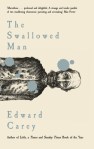 The Swallowed Man by Edward Carey [Nov. 5, Gallic / Oct. 27, Riverhead] “A beautiful and haunting imagining of the years Geppetto spends within the belly of a sea beast. Drawing upon the Pinocchio story while creating something entirely his own, Carey tells an unforgettable tale of fatherly love and loss, pride and regret, and of the sustaining power of art and imagination.” His Little was one of my favorite novels of 2018.
Poetry
 Dearly: New Poems by Margaret Atwood [Nov. 10, Chatto & Windus / Ecco / McClelland & Stewart] “By turns moving, playful and wise, the poems … are about absences and endings, ageing and retrospection, but also about gifts and renewals. They explore bodies and minds in transition … Werewolves, sirens and dreams make their appearance, as do various forms of animal life and fragments of our damaged environment.”
Nonfiction
 Bright Precious Thing: A Memoir by Gail Caldwell [July 7, Random House] “In a voice as candid as it is evocative, Gail Caldwell traces a path from her west Texas girlhood through her emergence as a young daredevil, then as a feminist.” I’ve enjoyed two of Caldwell’s previous books, especially Let’s Take the Long Way Home. Also, I’ve been reading a lot of childhood memoirs and I like comparing them to see how authors capture that time of life.
 The Fragments of My Father by Sam Mills [July 9, Fourth Estate] A memoir of being the primary caregiver for her father, who had schizophrenia; with references to F. Scott Fitzgerald and Leonard Woolf, who also found themselves caring for people struggling with mental illness. “A powerful and poignant memoir about parents and children, freedom and responsibility, madness and creativity and what it means to be a carer.”
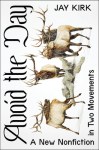 Avoid the Day: A New Nonfiction in Two Movements by Jay Kirk [July 28, Harper Perennial] Transylvania, Béla Bartók’s folk songs, an eco-tourist cruise in the Arctic … “Avoid the Day is part detective story, part memoir, and part meditation on the meaning of life—all told with a dark pulse of existential horror.” It was Helen Macdonald’s testimonial that drew me to this: it “truly seems to me to push nonfiction memoir as far as it can go.”
 World of Wonders: In Praise of Fireflies, Whale Sharks, and Other Astonishments by Aimee Nezhukumatathil [Aug. 3, Milkweed Editions] “From beloved, award-winning poet Aimee Nezhukumatathil comes a debut work of nonfiction—a collection of essays about the natural world, and the way its inhabitants can teach, support, and inspire us. … Even in the strange and the unlovely, Nezhukumatathil finds beauty and kinship.” Who could resist that title or cover?
 Antlers of Water: Writing on the Nature and Environment of Scotland, edited by Kathleen Jamie [Aug. 6, Canongate] Contributors include Amy Liptrot, musician Karine Polwart and Malachy Tallack. “Featuring prose, poetry and photography, this inspiring collection takes us from walking to wild swimming, from red deer to pigeons and wasps, from remote islands to back gardens … writing which is by turns celebratory, radical and political.”
 The Good Ancestor: How to Think Long Term in a Short-Term World by Roman Krznaric [Aug. 27, W.H. Allen] “Drawing on radical solutions from around the world, Krznaric celebrates the innovators who are reinventing democracy, culture and economics so that we all have the chance to become good ancestors and create a better tomorrow.” I’ve been reading a fair bit around this topic. I got a sneak preview of this one from Krznaric’s Hay Festival talk.
 Eat the Buddha: The Story of Modern Tibet through the People of One Town by Barbara Demick [Sept. 3, Granta / July 28, Random House] “Illuminating a culture that has long been romanticized by Westerners as deeply spiritual and peaceful, Demick reveals what it is really like to be a Tibetan in the twenty-first century, trying to preserve one’s culture, faith, and language.” I read her book on North Korea and found it eye-opening. I’ve read a few books about Tibet over the years; it is fascinating.
 Entangled Life: How Fungi Make Our Worlds, Change Our Minds and Shape Our Futures by Merlin Sheldrake [Sept. 3, Bodley Head / May 12, Random House] “Entangled Life is a mind-altering journey into this hidden kingdom of life, and shows that fungi are key to understanding the planet on which we live, and the ways we think, feel and behave.” I like spotting fungi. Yes, yes, the title and cover are amazing, but also the author’s name!! – how could you not want to read this?
 Between Light and Storm: How We Live with Other Species by Esther Woolfson [Sept. 3, Granta] “Woolfson considers prehistoric human‒animal interaction and traces the millennia-long evolution of conceptions of the soul and conscience in relation to the animal kingdom, and the consequences of our belief in human superiority.” I’ve read two previous nature books by Woolfson and have done some recent reading around deep time concepts. This is sure to be a thoughtful and nuanced take.
 The Stubborn Light of Things: A Nature Diary by Melissa Harrison [Nov. 5, Faber & Faber] “Moving from scrappy city verges to ancient, rural Suffolk, where Harrison eventually relocates, this diary—compiled from her beloved “Nature Notebook” column in The Times—maps her joyful engagement with the natural world and demonstrates how we must first learn to see, and then act to preserve, the beauty we have on our doorsteps.” I love seeing her nature finds on Twitter. I think her writing will suit this format.
Which of these do you want to read, too?
What other upcoming 2020 titles are you looking forward to?
Reading Ireland Month 2019: Jess Kidd and Jane Urquhart
Last month I picked out this exchange from East of Eden by John Steinbeck:
“But the Irish are said to be a happy people, full of jokes.”
“They’re not. They’re a dark people with a gift for suffering way past their deserving. It’s said that without whisky to soak and soften the world, they’d kill themselves. But they tell jokes because it’s expected of them.”
There’s something about that mixture of darkness and humor, isn’t there? I also find that Irish art (music as well as literature) has a lot of heart. I only read two Ireland-related historical novels this month, but they both have that soulful blend of light and somber. Both:
Things in Jars by Jess Kidd (2019)
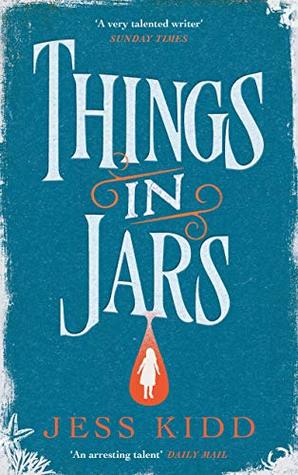
In the autumn of 1863 Bridie Devine, female detective extraordinaire, is tasked with finding the six-year-old daughter of a baronet. Problem is, this missing girl is no ordinary child, and collectors of medical curiosities and circus masters alike are interested in acquiring her.
In its early chapters this delightful Victorian pastiche reminded me of a cross between Sarah Waters’s Fingersmith and Neil Gaiman’s The Graveyard Book, and that comparison played out pretty well in the remainder. Kidd paints a convincingly gritty picture of Dickensian London, focusing on an underworld of criminals and circus freaks: when Bridie first arrived in London from Dublin, she worked as an assistant to a resurrectionist; her maid is a 7-foot-tall bearded lady; and her would-be love interest, if only death didn’t separate them, is the ghost of a heavily tattooed boxer.
Medicine (surgery – before and after anesthesia) and mythology (mermaids and selkies) are intriguing subplots woven through, such that this is likely to appeal to fans of The Way of All Flesh and The Mermaid and Mrs Hancock. Kidd’s prose is spry and amusing, particularly in her compact descriptions of people (but also in her more expansive musings on the dirty, bustling city): “a joyless string of a woman, thin and pristine with a halibut pout,” “In Dr Prudhoe’s countenance, refinement meets rogue,” and “People are no more than punctuation from above.”
I’ll definitely go back and read Kidd’s two previous novels, Himself and The Hoarder. I didn’t even realize she was Irish, so I’m grateful to Cathy for making me aware of that in her preview of upcoming Irish fiction. [Trigger warnings: violence against women and animals.] (Out from Canongate on April 4th.)
Away by Jane Urquhart (1993)
I was enraptured from the first line: “The women of this family leaned towards extremes” – starting with Mary, who falls in love with a sailor who washes up on the Irish coast in the 1840s amid the cabbages, silver teapots and whiskey barrels of a shipwreck and dies in her arms. Due to her continued communion with the dead man, people speak of her being “away with the fairies,” even after she marries the local schoolteacher, Brian O’Malley.
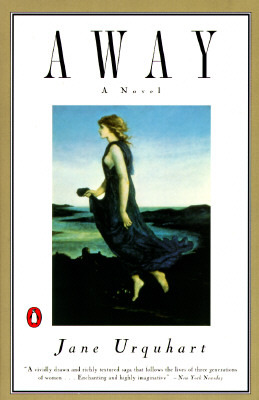 With their young son, Liam, they join the first wave of emigration to Canada during the Potato Famine, funded by their landlords, the Sedgewick brothers of Puffin Court (amateur naturalist Osbert and poet Granville). No sooner have the O’Malleys settled and had their second child, Eileen, than Mary disappears. As she grows, Eileen takes after her mother, mystically attuned to portents and prone to flightiness, while Liam is a happily rooted Great Lakes farmer. Like Mary, Eileen has her own forbidden romance, with a political revolutionary who dances like a dream.
I’ve been underwhelmed by other Urquhart novels, Sanctuary Line and The Whirlpool, but here she gets it just right, wrapping her unfailingly gorgeous language around an absorbing plot – which is what I felt was lacking in the others. The Ireland and Canada settings are equally strong, and the spirit of Ireland – the people, the stories, the folk music – is kept alive abroad. I recommend this to readers of historical fiction by Margaret Atwood, A.S. Byatt and Hannah Kent.
Some favorite lines:
Osbert says of Mary: “There’s this light in her, you see, and it must not be put out.”
“When summer was finished the family was visited by a series of overstated seasons. In September, they awakened after night frosts to a woods awash with floating gold leaves and a sky frantic with migrating birds – sometimes so great in number that they covered completely with their shadows the acre of light and air that Brian had managed to create.”
“There are five hundred and forty different kinds of weather out there, and I respect every one of them. White squalls, green fogs, black ice, and the dreaded yellow cyclone, just to mention a few.”
It’s my second time participating in Reading Ireland Month, run each March by Cathy of 746 Books and Niall of Raging Fluff.
Did you manage to read any Irish literature this month?
R.I.P. Reads, Part II: Cox, Gaiman, Paver
Happy Halloween! I enjoyed taking part in R.I.P. for the first time this year. My top two choices out of the six fantastical and/or spooky books I managed to read would be The Loney and The Graveyard Book (see below). For this second installment I’ve been reading eerie short stories that take place in the English countryside, a young adult fantasy novel set mostly in a graveyard, and a ghost story that unfolds in the Himalayas of the 1930s.

Help the Witch by Tom Cox (2018)
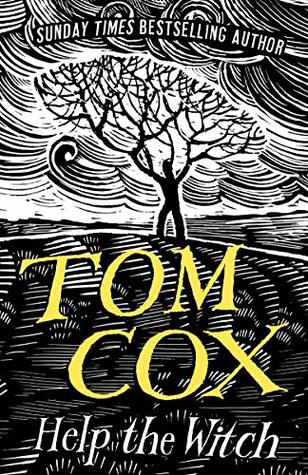 I knew Tom Cox for his witty books about his many cats, including The Good, the Bad and the Furry. His first foray into fiction was published by Unbound earlier this month; I pre-ordered it on a Kindle deal for £1. The settings are dilapidated cottages, moorland and villages, mostly in the North of England. Even in the spookier stories, there’s always a welcome touch of humor. “Seance” raises the ghost of a cyclist who was killed on his bike and now is destined to cycle evermore. He doesn’t, at first, realize that he’s dead. “‘Morning!’ he called to a middle-aged couple with a labradoodle, cheerfully, as he cycled past Whiddon Scrubs. They ignored him. ‘Shitbags,’ he said under his breath.”
The three sets of flash fictions, “Listings,” “Nine Tiny Stories about Houses,” and “Folk Tales of the Twenty-third Century,” particularly made me laugh, though each perhaps overstays its welcome a bit. My two favorites were proper ghost stories: “Speed Awareness,” about a peculiar mix-up with the course teacher, and “Just Good Friends,” in which a woman’s Internet dating experiences turn strange when she meets someone with inside knowledge about her past. I could see the latter being anthologized. These are enjoyable enough stories to flip through around Halloween.
My rating: 
The Graveyard Book by Neil Gaiman (2008)
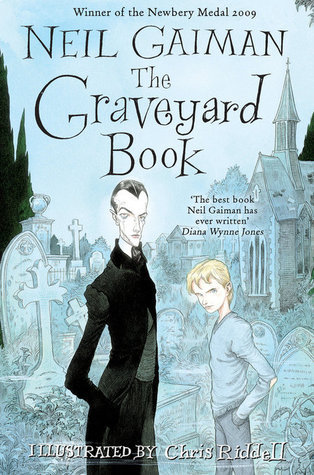 Nobody “Bod” Owens has lived in a graveyard ever since the night he climbed out of his cot and toddled there – the same night that a man named Jack murdered his parents and older sister. He was the only member of his family to survive the slaughter. Although he passes a happy childhood among the graveyard’s witches, ghouls and ghosts from many centuries, he knows he’s different. He’s alive; he has to eat and craves human friendship. As valuable as his lessons in Fading and Dreamwalking prove to be, he longs to attend school and discover more of the world outside – provided he can keep his head down and avoid notice; previous trips beyond the cemetery walls, such as to a pawnshop, have bordered on the disastrous.
Bod’s japes with his returning friend Scarlett turn more serious when he learns that Jack is still after him. This is quite a dark book for its young teen audience, but as I remember from the only other Gaiman book I’ve read, The Ocean at the End of the Lane, he’s a master at balancing sadness with humor and magic. The illustrations by Chris Riddell are terrific, too.
Favorite lines:
Silas, Bod’s guardian: “You’re alive, Bod. That means you have infinite potential. You can do anything, make anything, dream anything. If you change the world, the world will change.”
“Mother Slaughter’s headstone [was] so cracked and worn and weathered that all it said now was:
LAUGH
which had puzzled the local historians for over a hundred years.”
My rating: 
Thin Air: A Ghost Story by Michelle Paver (2016)
 In 1935 Dr. Stephen Pearce and his brother Kits are part of a five-man mission to climb the most dangerous mountain in the Himalayas, Kangchenjunga. Thirty years before, Sir Edmund Lyell led an ill-fated expedition up the same mountain: more than one man did not return, and the rest lost limbs to frostbite. “I don’t want to know what happened to them. It’s in the past. It has nothing to do with us,” Dr. Pearce tells himself, but from the start it feels like a bad omen that they, like Lyell’s party, are attempting the southwest approach; even the native porters are nervous. And as they climb, they fall prey to various medical and mental crises; hallucinations of ghostly figures on the crags are just as much of a danger as snow blindness.
This is pacey, readable historical fiction with a good sense of period and atmosphere. I enjoyed Pearce’s narration, and the one-upmanship type of relationship with his brother adds an interesting dimension to the expedition dynamics. However, I never submitted sufficiently to Paver’s spell to find anything particularly scary. I’ll try again with her other ghost story, Dark Matter, about an Arctic expedition from the same time period.
Favorite passage:
“The Sherpas are wrong. This mountain has no spirit, no sentience and no intent. It’s not trying to kill us. It simply is.” [famous last words…]
My rating:
Have you been reading anything fantastical or spooky this October?
Today Is World Read Aloud Day
 An unprecedented second post in one day for me. I recently learned from Ron Charles’s article in the Washington Post that today, February 1st, is World Read Aloud Day, an annual celebration hosted by LitWorld to draw attention to ongoing literacy challenges. I mentioned in my write-up of my bibliotherapy experience that one recommendation I was given was to try reading aloud with my husband. To that end, I got hold of the three suggested books below and we’ve dipped into all of them on recent evenings. At the moment we’re managing to do a bit of reading aloud every few days, which isn’t so bad for a start.
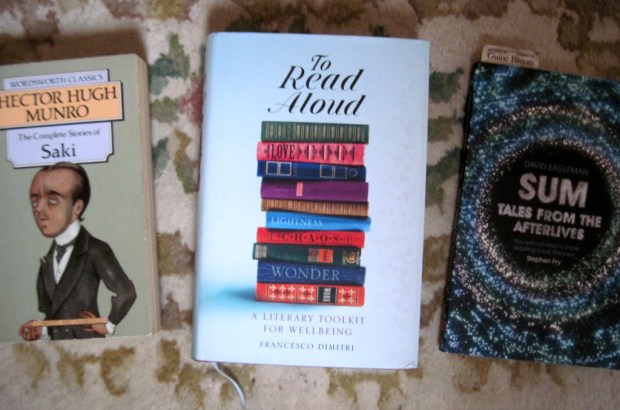
Dimitri’s book includes extracts by everyone from Neil Gaiman to Robert Macfarlane, all arranged under thematic headings. A special index at the back of the book orders the pieces according to how long they are estimated to take to read, ranging from three minutes to more like 15. So far we’ve tackled a handful of the shorter pieces; any of the longer ones we’ll probably split and each take half.
David Eagleman’s flash fiction collection is billed as being about the afterlife. The first story was a laugh-out-loud inventory of all the time the average human spends on different activities. Thirty-three hours sleeping versus 14 minutes experiencing pure joy. That kind of thing. I look forward to the rest.
Ella Berthoud particularly recommended Saki’s short story “Tobermory” since it’s about a talking cat (but is rather dark!), so we started with that one. Many of the others are only a couple of small-print pages. Have you read any Saki? What can you recommend?
Apart from classroom experiences, the last time I remember doing concerted reading aloud was with my mother when I was in my early teens. After I got home from school in the afternoons we’d convene on her bed to read Mark Twain short stories like “The Celebrated Jumping Frog of Calaveras County.”
 Bookish Beck = Rebecca Foster. American transplant to England. Freelance proofreader and book reviewer.
 Bookish Beck