Reading Ireland Month, I: Donoghue, Longley, Tóibín
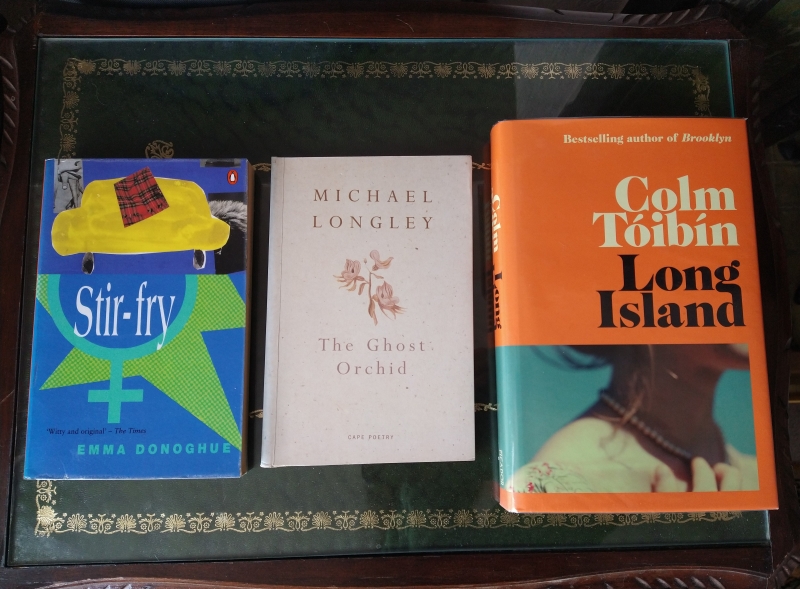
St. Patrick’s Day is a good occasion to compile my first set of contributions to Cathy’s Reading Ireland Month. Today I have an early novel by a favourite author, a poetry collection inspired by nature and mythology, and a sequel that I read for book club.
Stir-Fry by Emma Donoghue (1994)
After enjoying Slammerkin so much last year, I decided to catch up on more of Donoghue’s way-back catalogue. She tends to alternate between contemporary and historical settings. I have a slight preference for the former, but she can excel at both; it really depends on the book. I reckon this was edgy for its time. Maria (whose name rhymes with “pariah”) arrives in Dublin for university at age 17, green in every way after a religious upbringing in the countryside. In response to a flat-share advert stipulating “NO BIGOTS,” she ends up living with Ruth and Jael (pronounced “Yale”), two mature students. Ruth is the mother hen, doing all the cooking and fretting over the others’ wellbeing; Jael is a wild, henna-haired 30-year-old prone to drinking whisky by the mug-full. Maria attends lectures, takes a job cleaning office buildings, and finds a friend circle through her backstage student theatre volunteering. She’s mildly interested in American exchange student Galway and then leather-clad Damien (until she realizes he has a boyfriend), but nothing ever goes further than a kiss.
 It’s obvious to readers that Ruth and Jael are a couple, but Maria doesn’t work it out until a third of the way into the book. At first she’s mortified, but soon the realization is just one more aspect of her coming of age. Maria’s friend Yvonne can’t understand why she doesn’t leave – “how can you put up with being a gooseberry?” – but Maria insists, “They really don’t make me feel left out … I think they need me to absorb some of the static. They say they’d be fighting like cats if I wasn’t around to distract them.” Scenes alternate between the flat and the campus, which Donoghue depicts as a place where radicalism and repression jostle for position. Ruth drags Maria to a Tuesday evening Women’s Group meeting that ends abruptly: “A porter put his greying head in the door to comment that they’d have to be out in five minutes, girls, this room was booked for the archaeologists’ cheese ’n’ wine.” Later, Ruth’s is the Against voice in a debate on “That homosexuality is a blot on Irish society.”
Mostly, this short novel is a dance between the three central characters. The Irish-accented banter between them is a joy. Jael’s devil-may-care attitude contrasts with Ruth and Maria’s anxiety about how they are perceived by others. Ruth and Jael are figures in the Hebrew Bible and their devotion/boldness dichotomy is applicable to the characters here, too. The stereotypical markers of lesbian identity haven’t really changed, but had Donoghue written this now I think she would at least have made Maria a year older and avoided negativity about Damien and Jael’s bisexuality. At heart this is a sweet romance and an engaging picture of early 1990s feminism, but it doesn’t completely steer clear of predictability and I would have happily taken another 50–70 pages if it meant she could have fleshed out the characters and their interactions a little more. [Guess what was for my lunch this afternoon? Stir fry!] (Secondhand – Awesomebooks.com) 
The Ghost Orchid by Michael Longley (1995)
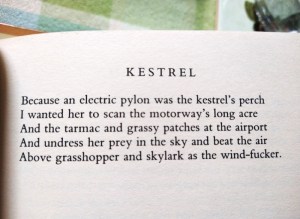
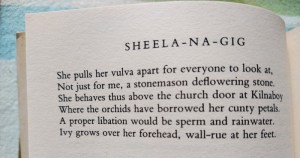
 Longley’s sixth collection draws much of its imagery from nature and Greek and Roman classics. Seven poems incorporate quotations and free translations of the Iliad and Odyssey; elsewhere, he retells the story of Baucis and Philemon and other characters from Ovid. The Orient and the erotic are also major influences; references to Hokusai bookend poems about Chinese artefacts. Poppies link vignettes of the First and Second World Wars. Longley’s poetry is earthy in its emphasis on material objects and sex. Alliteration and slant rhymes are common techniques and the vocabulary is always precise. This was the third collection I’ve read by the late Belfast poet, and with its disparate topics it didn’t all cohere for me. My two favourite poems are naughty indeed:
(Secondhand – Green Ink Booksellers, Hay-on-Wye) 
Long Island by Colm Tóibín (2024)
{SPOILERS in this one}
 I read Brooklyn when it first came out and didn’t revisit it (via book or film) before reading this. While recent knowledge of the first book isn’t necessary, it probably would make you better able to relate to Eilis, who is something of an emotional blank here. She’s been married for 20 years to Tony, a plumber, and is a mother to two teenagers. His tight-knit Italian American family might be considered nurturing, but for her it is more imprisoning: their four houses form an enclave and she’s secretly relieved when her mother-in-law tells her she needn’t feel obliged to join in the Sunday lunch tradition anymore.
When news comes that Tony has impregnated a married woman and the cuckolded husband plans to leave the baby on the Fiorellos’ doorstep when the time arrives, Eilis checks out of the marriage. She uses her mother’s upcoming 80th birthday as an excuse to go back to Ireland for the summer. Here Eilis gets caught up in a love triangle with publican Jim Farrell, who was infatuated with her 20 years ago and still hasn’t forgotten her, and Nancy Sheridan, a widow who runs a fish and chip shop and has been Jim’s secret lover for a couple of years. Nancy has a vision of her future and won’t let Eilis stand in her way.
I felt for all three in their predicaments but most admired Nancy’s pluck. Ironically given the title, the novel spends more of its time in Ireland and only really comes alive there. There’s also a reference to Nora Webster – cute that Tóibín is trying out the Elizabeth Strout trick of bringing multiple characters together in the same fictional community. But, all told, this was just a so-so book. I’ve read 10 or so works by Tóibín now, in all sorts of genres, and with its plain writing this didn’t stand out at all. It got an average score from my book club, with one person loving it, a couple hating it, and most fairly indifferent. (Public library)
Another batch will be coming up before the end of the month!
The Moomins and the Great Flood (#Moomins80) & Poetry (#ReadIndies)
To mark the 80th anniversary of Tove Jansson’s Moomins books, Kaggsy, Liz et al. are doing a readalong of the whole series, starting with The Moomins and the Great Flood. I received a copy of Sort Of Books’ 2024 reissue edition for Christmas, so I was unknowingly all set to take part. I also give quick responses to a couple of collections I read recently from two favourite indie poetry publishers in the UK, The Emma Press and Carcanet Press. These are reads 9–11 for Kaggsy and Lizzy Siddal’s Reading Independent Publishers Month challenge.

The Moomins and the Great Flood by Tove Jansson (1945; 1991)
[Translated from the Swedish by David McDuff]
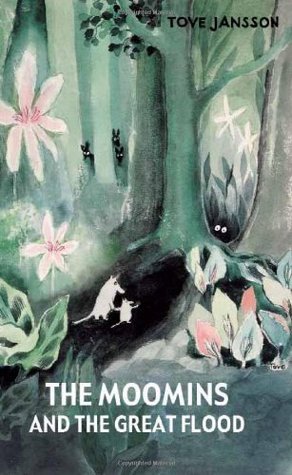 Moomintroll and Moominmamma are the only two Moomins who appear here. They’re nomads, looking for a place to call home and searching for Moominpappa, who has disappeared. With them are “the creature” (later known as Sniff) and Tulippa, a beautiful flower-girl. They encounter a Serpent and a sea-troll and make a stormy journey in a boat piloted by the Hattifatteners. My favourite scene has Moominmamma rescuing a cat and her kittens from rising floodwaters. The book ends with the central pair making their way to the idyllic valley that will be the base for all their future adventures. Sort Of and Frank Cottrell Boyce, who wrote an introduction, emphasize how (climate) refugees link Jansson’s writing in 1939 to today, but it’s a subtle theme. Still, one always worth drawing attention to.
I read my first Moomins tale in 2011 and have been reading them out of order and at random ever since; only one remains unread. Unfortunately, I did not find it rewarding to go right back to the beginning. At barely 50 pages (padded out by the Cottrell-Boyce introduction and an appendix of Jansson’s who’s-who notes), this story feels scant, offering little more than a hint of the delightful recurring characters and themes to come. Jansson had not yet given the Moomins their trademark rounded hippo-like snouts; they’re more alien and less cute here. It’s like seeing early Jim Henson drawings of Garfield before he was a fat cat. That just ain’t right. I don’t know why I’d assumed the Moomins are human-size. When you see one next to a marabou stork you realize how tiny they are; Jansson’s notes specify 20 cm tall. (Gift)
The Emma Press Anthology of Homesickness and Exile, ed. by Rachel Piercey and Emma Wright (2014)
 This early anthology chimes with the review above, as well as more generally with the Moomins series’ frequent tone of melancholy and nostalgia. A couple of excerpts from Stephen Sexton’s “Skype” reveal a typical viewpoint: “That it’s strange to miss home / and be in it” and “How strange home / does not stay as it’s left.” (Such wonderfully off-kilter enjambment in the latter!) People are always changing, just as much as places – ‘You can’t go home again’; ‘You never set foot in the same river twice’ and so on. Zeina Hashem Beck captures these ideas in the first stanza of “Ten Years Later in a Different Bar”: “The city has changed like cities do; / the bar where we sang has closed. / We have changed like cities do.”
Departures, arrivals; longing, regret: these are classic themes from Ovid (the inspiration for this volume) onward. Holly Hopkins and Rachel Long were additional familiar names for me to see in the table of contents. My two favourite poems were “The Restaurant at One Thousand Feet” (about the CN Tower in Toronto) by John McCullough, whose collections I’ve enjoyed before; and “The Town” by Alex Bell, which personifies a closed-minded Dorset community – “The town wraps me tight as swaddling … When I came to the town I brought things with me / from outside, and the town took them / for my own good.” Home is complicated – something one might spend an entire life searching for, or trying to escape. (New purchase from publisher)
Gold by Elaine Feinstein (2000)
 I’d enjoyed Feinstein’s poetry before. The long title poem, which opens the collection, is a monologue by Lorenzo da Ponte, a collaborator of Mozart. Though I was not particularly enraptured with his story, there were some great lines here:
I wanted to live with a bit of flash and brio,
rather than huddle behind ghetto gates.
The last two stanzas are especially memorable:
Poor Mozart was so much less fortunate.
My only sadness is to think of him, a pauper,
lying in his grave, while I became
Professor of Italian literature.
Nobody living can predict their fate.
I moved across the cusp of a new age,
to reach this present hour of privilege.
On this earth, luck is worth more than gold.
Politics, manners, morals all evolve
uncertainly. Best then to be bold.
Best then to be bold!
Of the discrete “Lyrics” that follow, I most liked “Options,” about a former fiancé (“who can tell how long we would have / burned together, before turning to ash?”) and “Snowdonia,” in which she’s surprised when a memory of her father resurfaces through a photograph. Talking to the Dead was more consistently engaging. (Secondhand purchase – Bridport Old Books, 2023)
Catching Up on Review Books: Antlers, Arnett, E. Williams, Yamboliev
Four July–August releases: Scottish nature writing, the quirky story of a family taxidermy business in Florida, a dual-timeline novel set at an unusual dictionary’s headquarters, and a critical and personal response to Jeffrey Eugenides’ Middlesex.
Antlers of Water: Writing on the Nature and Environment of Scotland, edited by Kathleen Jamie
 This nature writing anthology of essays, poems and visual art drew me because of contributor names like GP Gavin Francis (reviewed: Shapeshifters), Amy Liptrot (the Wainwright Prize-winning memoir The Outrun), singer/songwriter Karine Polwart, and Shetland chronicler Malachy Tallack (reviewed: The Un-Discovered Islands and The Valley at the Centre of the World), not to mention editor Kathleen Jamie. Archaeology and folk music evoke the past, while climate change scenarios inject a sense of a menacing future. Seabirds circle and coastal and island scenery recurs. Entries from Alec Finlay’s “A Place-Aware Dictionary” disguise political points under tongue-in-cheek language, as in a definition of foraging: “Later sometimes referred to as the Brexit Diet.” The (sub)urban could be more evident, and I didn’t need two bouts of red deer sex, but there’s still a nice mix of tones and approaches here.
Six best pieces (out of 24): Chris Powici on wind turbines and red kites at the Braes of Doune; Jacqueline Bain on how reduced mobility allows her to observe wasps closely; Jim Crumley on sea eagle reintroductions and the ancient sky burials that took place at the Tomb of the Eagles; Jen Hadfield on foraging for whelks at the ocean’s edge, in a run-on hybrid narrative; Sally Huband on how persecution of ravens and of women (still not allowed to take part in Up Helly Aa festivities) continues on Shetland; and Liptrot on how wild swimming prepared her for childbirth and helped her to recover a sense of herself separate from her baby. And if I had to pick just one, the Huband – so brave and righteously angry.
Favorite lines:
“Compromises need to be made. An overlap between the wild and the human has to be negotiated and managed. … So let’s play merry hell with the distinction between what counts as wild and what counts as human, between what’s condemned as a visual obscenity and what’s seen as a marvel of the age. Let’s mess up the boundaries and get a new measure of ourselves as a species.” (Powici)
inspiration to get out walking again: “Don’t wait / thinking you’ve seen it all already … don’t wait thinking you need better boots / or a waterproof that’ll keep out the rain. / It won’t. Don’t wait.” (“Water of Ae” by Em Strang)
My rating: 
My thanks to Canongate for the free copy for review.
Mostly Dead Things by Kristen Arnett
“We couldn’t ever leave roadkill behind. Something inside us always made us stop to pick up dead things.”
 After her father’s suicide, Jessa-Lynn Morton takes over the family taxidermy business in central Florida. Despite her excessive drinking and grief over both her father and her best friend and long-time on-and-off girlfriend (also, inconveniently, her brother’s wife) Brynn, who recently took off, she’s just about holding it together. That is, until 1) her mother takes to composing interspecies orgies and S&M scenes in the shop window and 2) her niece and nephew, Lolee and Bastien, start bringing in specimens for taxidermy that they haven’t exactly obtained legally. Gallery owner Lucinda Rex takes an interest in her mother’s ‘art’ and is soon a new romantic interest for Jessa. But the entire family is going to have to face its issues before her professional and love life can be restored.
This debut novel’s title, cover and premise were utterly irresistible to me, and though I loved the humid Florida setting, it was all a bit too much. At 200 pages this could have been a razor-sharp new favorite, but instead there was a lot of sag in its 350+ pages. Alternating chapters based around mounting particular animals give glimpses into the family’s past but mostly have Jessa mooning over Brynn. Her emotional journey starts to feel belabored; it’s as if an editor tried to rein in Arnett’s campy glee at the dysfunctional family’s breakdown and made her add in some amateur psychoanalysis, and for me this diluted the quirky joy.
Skinning and sex scenes are equally explicit here. This never bothered me, but it should go without saying that it is not a book for the squeamish. It’s when sex and taxidermy mix that things get a little icky, as in her mother’s X-rated tableaux and a line like “Often I found myself comparing the limber body of a deer with the long line of [Lucinda’s] legs or the strong cord of her neck.” Believe it or not, this is not the first queer taxidermy novel I’ve read. The other one, English Animals by Laura Kaye, was better. I’d wanted another Swamplandia! but got something closer to Black Light instead.
My rating: 
My thanks to Corsair for the free copy for review.
The Liar’s Dictionary by Eley Williams
 Mallory is five years into an internship at Swansby House, the London headquarters of Swansby’s dictionary. The dictionary is known for being unfinished – too many of its lexicographers left for WWI and never returned – and for having made-up words. In 1899, Peter Winceworth, the butt of jokes among his colleagues, started composing mountweazels (fake entries) and inserting them into the dictionary. In the contemporary story line, Mallory’s job is to remove the mountweazels as the dictionary is prepared for digitization. But her attention is distracted by anonymous bomb threats and by lingering shame about her sexuality – Mallory thinks she’s “out enough,” but her girlfriend Pip begs to differ.
Chapters are headed with vocabulary words running from A to Z, and alternate between Mallory’s first-person narration and a third-person account of Winceworth’s misadventures at the turn of the twentieth century. In any book with this kind of structure I seem to prefer the contemporary strand and itch to get back to it, though there is a quite astounding scene in which Winceworth intervenes to help a choking pelican. Events at Swansby House resonate and mirror each other across the dozen decades, with both main characters emerging with a new sense of purpose after an epiphany that life is about more than work. Though silly in places, this has a winning love of words and characters you’ll care about.
A favorite made-up word: “Mammonsomniate: to dream that money might make anything possible.”
Readalikes: Enter the Aardvark by Jessica Anthony and Boxer, Beetle by Ned Beauman
My rating:
My thanks to William Heinemann for the proof copy for review.
Looking Was Not Enough: Jeffrey Eugenides’ Middlesex by Irena Yamboliev
 When I worked in a university library and read Middlesex during quiet evenings on the circulation desk in 2009, a colleague asked me, “Is that about the London borough?” My reply: “Er, no, it’s about a hermaphrodite.” That’s an off-putting, clinical sort of word, but it does appear in the first paragraph of this family saga with a difference, after the mythological intensity and medical necessity implied by the killer opening line: “I was born twice: first, as a baby girl, on a remarkably smogless Detroit day in January of 1960; and then again, as a teenage boy, in an emergency room near Petoskey, Michigan, in August of 1974.”
Cal, born Calliope but now living as a man and working in the Foreign Service, recounts three generations of family history, from Greece to Detroit to Berlin. “Because … their parents were dead and their village destroyed, because no one in Smyrna knew who they were,” brother and sister Lefty and Desdemona became lovers and got married on the boat over to America. They were his grandparents. Add to that his parents’ first-cousin marriage and you see how inbreeding played genetic havoc and made way for Callie/Cal.
 I intended to reread Middlesex, which I consider one of my all-time favorite books, but only made it through 60 pages on this occasion. Still, Yamboliev, a Bulgarian-American who teaches at Stanford, reminded me of everything I love about it: the medical theme, the exploration of selfhood, the playful recreation of the past. Drawing parallels with her own family’s move to America, she ponders the disconnection from the home country and the creation of a new life story. “To tell ourselves where we come from—to narrate—is to find a pattern retroactively.” She also looks at literary precursors like Ovid’s Metamorphoses, Herculine Barbin’s memoir, and Balzac’s and Barthes’s writings on a castrato. “Does transformation make the self discontinuous?” is one of her central questions, and she likens Cal’s situation to that of trans men who have to train themselves to speak, dress and act in a convincingly masculine way.
This is part of Fiction Advocate’s “Afterwords” series; all its monographs do a wonderful job of blending literary criticism, enthusiastic appreciation, and autobiographical reflection as life dovetails with (re)reading. I’ve previously reviewed the Fiction Advocate books on Blood Meridian, Fun Home, and The Year of Magical Thinking in this post, and the ones on Karl Ove Knausgaard’s My Struggle and Cheryl Strayed’s Wild in this one.
My rating: 
My thanks to Fiction Advocate for the free e-copy for review.
What recent releases can you recommend?
Recent and Upcoming Poetry Releases from Carcanet Press
Many thanks to the publisher for free print or e-copies of these three books for review.
In Nearby Bushes by Kei Miller
 “Are there stories you have heard about Jamaica? / Well here are the stories underneath.” The last two lines of “The Understory” reveal Miller’s purpose in this, his fifth collection of poetry. The title is taken from Jamaican crime reports, which often speak of a victim’s corpse being dumped in, or perpetrators escaping to, “nearby bushes.” It’s a strange euphemism that calls to mind a dispersed underworld where bodies are devalued. Miller persistently contrasts a more concrete sense of place with that iniquitous nowhere. Most of the poems in the first section open with the word “Here,” which is also often included in their titles and repeated frequently throughout Part I. Jamaica is described with shades of green: a fertile, feral place that’s full of surprises, like an escaped colony of reindeer.
As usual, Miller slips in and out of dialect as he reflects on the country’s colonial legacy and the precarious place of homosexuals (“A Psalm for Gay Boys” is a highlight). Although I enjoyed this less than the other books I’ve read by Miller, I highly recommend his work in general; the collection The Cartographer Tries to Map a Way to Zion is a great place to start.
Some favorite lines:
“Here that cradles the earthquakes; / they pass through the valleys // in waves, a thing like grief, / or groaning that can’t be uttered.” (from “Hush”)
“We are insufficiently imagined people from an insufficiently imagined place.” (from “Sometimes I Consider the Names of Places”)
“Cause woman is disposable as that, / and this thing that has happened is … common as stone and leaf and breadfruit tree. You should have known.” (from “In Nearby Bushes” XIII.III)
My rating: 
In Nearby Bushes was published on 29th August.
So Many Rooms by Laura Scott
 Art, Greek mythology, the seaside, the work of Tolstoy, death, birds, fish, love and loss: there are lots of repeating themes and images in this debut collection. While there are a handful of end rhymes scattered through, what you mostly notice is alliteration and internal rhyming. The use of color is strong, and not just in the poems about paintings. A few of my favorites were “Mulberry Tree” (“My mother made pudding with its fruit, / white bread drinking / colour just as the sheets waited / for the birds to stain them purple.”), “Direction,” and “A Different Tune” (“oh my heavy heart how can I / make you light again so I don’t have to // lug you through the years and rooms?”). There weren’t loads of poems that stood out to me here, but I’ll still be sure to look out for more of Scott’s work.
My rating:
So Many Rooms was published on 29th August.
A Kingdom of Love by Rachel Mann
Rachel Mann, a transgender Anglican priest, was Poet-in-Residence at Manchester Cathedral from 2009 to 2017 and is now a Visiting Fellow in Creative Writing and English at Manchester Metropolitan University. Her poetry is full of snippets of scripture and liturgy (both English and Latin), and the cadence is often psalm-like. The final five poems are named after some of the daily offices, and “Christening” and “Extreme Unction” are two stand-outs that describe performing rituals for the beginning and end of life. The poet draws on Greek myth as well as on the language of Christian classics from St. Augustine to R.S. Thomas.
 Human fragility is an almost comforting undercurrent (“Be dust with me”), with the body envisioned as the site of both sin and redemption. A focus on words leads to a preoccupation with mouths and the physical act of creating and voicing language. There is surprisingly anatomical vocabulary in places: the larynx, the palate. Mann also muses on Englishness, and revels in the contradictions of ancient and modern life: Chaucer versus a modern housing development, “Reading Ovid on the Underground.” She undertakes a lot of train rides and writes of passing through stations, evoking the feeling of being in transit(ion).
You wouldn’t know the poet had undergone a sex change unless you’d already read about it in the press materials or found other biographical information, but knowing the context one finds extra meaning in “Dress,” about an eight-year-old coveting a red dress (“To simply have known it was mine / in those days”) and “Give It a Name,” about the early moments of healing from surgery.
This is beautiful, incantatory free verse that sparkles with alliteration and allusions that those of a religious background will be sure to recognize. It’s sensual as well as headily intellectual. Doubt, prayer and love fuel many of my favorite lines:
“Love should taste of something, / The sea, I think, brined and unsteady, / Of scale and deep and all we crawled out from.” (from “Collect for Purity”)
“I don’t know what ‘believe in’ means / In the vast majority of cases, / Which is to say I think it enough // To acknowledge glamour of words – / Relic, body, bone – I think / Mystery is laid in syllables, syntax” (from “Fides Quarens”)
“Offer the fact of prayer – a formula, / And more: the compromise of centuries / Made valid.” (from “A Kingdom of Love (2)”)
Particularly recommended for readers of Malcolm Guite and Christian Wiman.
My rating:
Official release date: September 26th – but already available from the Carcanet website.
 Bookish Beck = Rebecca Foster. American transplant to England. Freelance proofreader and book reviewer.
 Bookish Beck