Book Serendipity, September through Mid-November
I call it “Book Serendipity” when two or more books that I read at the same time or in quick succession have something in common – the more bizarre, the better. This is a regular feature of mine every couple of months. Because I usually have 20–30 books on the go at once, I suppose I’m more prone to such incidents. People frequently ask how I remember all of these coincidences. The answer is: I jot them down on scraps of paper or input them immediately into a file on my PC desktop; otherwise, they would flit away.
Thanks to Emma and Kay for posting their own Book Serendipity moments! (Liz is always good about mentioning them as she goes along, in the text of her reviews.)
The following are in roughly chronological order.
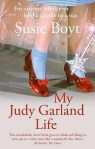
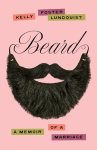
- An obsession with Judy Garland in My Judy Garland Life by Susie Boyt (no surprise there), which I read back in January, and then again in Beard: A Memoir of a Marriage by Kelly Foster Lundquist.
- Leaving a suicide note hinting at drowning oneself before disappearing in World War II Berlin; and pretending to be Jewish to gain better treatment in Aimée and Jaguar by Erica Fischer and The Lilac People by Milo Todd.
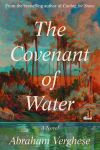
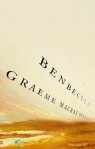
- Leaving one’s clothes on a bank to suggest drowning in The Covenant of Water by Abraham Verghese, read over the summer, and then Benbecula by Graeme Macrae Burnet.
- A man expecting his wife to ‘save’ him in Amanda by H.S. Cross and Beard: A Memoir of a Marriage by Kelly Foster Lundquist.
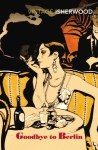 A man tells his story of being bullied as a child in Goodbye to Berlin by Christopher Isherwood and Beard by Kelly Foster Lundquist.
- References to Vincent Minnelli and Walt Whitman in a story from Touchy Subjects by Emma Donoghue and Beard by Kelly Foster Lundquist.
- The prospect of having one’s grandparents’ dining table in a tiny city apartment in Beard by Kelly Foster Lundquist and Wreck by Catherine Newman.
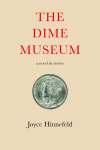
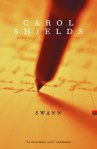
- Ezra Pound’s dodgy ideology was an element in The Dime Museum by Joyce Hinnefeld, which I reviewed over the summer, and recurs in Swann by Carol Shields.
- A character has heart palpitations in Andrew Miller’s story from The BBC National Short Story Award 2025 anthology and Endling by Maria Reva.
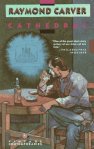
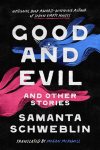
- A (semi-)nude man sees a worker outside the window and closes the curtains in one story of Cathedral by Raymond Carver and one from Good and Evil and Other Stories by Samanta Schweblin.
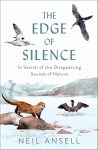
- The call of the cuckoo is mentioned in The Edge of Silence by Neil Ansell and Of All that Ends by Günter Grass.
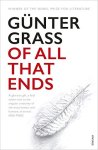 A couple in Italy who have a Fiat in Of All that Ends by Günter Grass and Caoilinn Hughes’s story from The BBC National Short Story Award 2025 anthology.
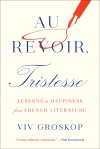
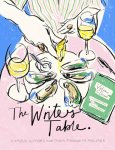
- Balzac’s excessive coffee consumption was mentioned in Au Revoir, Tristesse by Viv Groskop, one of my 20 Books of Summer, and then again in The Writer’s Table by Valerie Stivers.
- The main character is rescued from her suicide plan by a madcap idea in The Wedding People by Alison Espach and Endling by Maria Reva.
- The protagonist is taking methotrexate in Sea, Poison by Caren Beilin and Wreck by Catherine Newman.

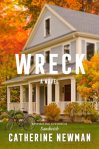
- A man wears a top hat in Benbecula by Graeme Macrae Burnet and one story of Cathedral by Raymond Carver.
- A man named Angus is the murderer in Benbecula by Graeme Macrae Burnet and Swann by Carol Shields.
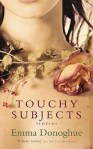 The thing most noticed about a woman is a hair on her chin in the story “Pluck” in Touchy Subjects by Emma Donoghue and Swann by Carol Shields.
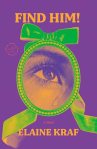
- The female main character makes a point of saying she doesn’t wear a bra in Sea, Poison by Caren Beilin and Find Him! by Elaine Kraf.
- A home hairdressing business in one story of Cathedral by Raymond Carver and Emil & the Detectives by Erich Kästner.
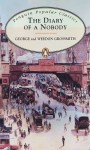
- Painting a bathroom fixture red: a bathtub in The Diary of a Nobody by George Grossmith, one of my 20 Books of Summer; and a toilet in Find Him! by Elaine Kraf.
- A teenager who loses a leg in a road accident in individual stories from A Wild Swan by Michael Cunningham and the Racket anthology (ed. Lisa Moore).
- Digging up the casket of a loved one in the wee hours features in Pet Sematary by Stephen King, one of my 20 Books of Summer; and one story of Pretty Monsters by Kelly Link.
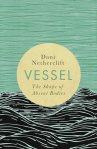
- A character named Dani in the story “The St. Alwynn Girls at Sea” by Sheila Heti and The Silver Book by Olivia Laing; later, author Dani Netherclift (Vessel).
 Obsessive cultivation of potatoes in Benbecula by Graeme Macrae Burnet and The Martian by Andy Weir.
- The story of Dante Gabriel Rossetti digging up the poems he buried with his love is recounted in Sharon Bala’s story in the Racket anthology (ed. Lisa Moore) and one of the stories in Pretty Monsters by Kelly Link.
- Putting French word labels on objects in Alone in the Classroom by Elizabeth Hay and Find Him! by Elaine Kraf.
 A man with part of his finger missing in Find Him! by Elaine Kraf and Lessons from My Teachers by Sarah Ruhl.
- In Minor Black Figures by Brandon Taylor, I came across a mention of the Italian film director Pier Paolo Pasolini, who is a character in The Silver Book by Olivia Laing.
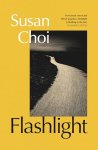
- A character who works in an Ohio hardware store in Flashlight by Susan Choi and Buckeye by Patrick Ryan (two one-word-titled doorstoppers I skimmed from the library). There’s also a family-owned hardware store in Alone in the Classroom by Elizabeth Hay.
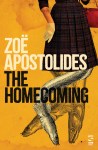
- A drowned father – I feel like drownings in general happen much more often in fiction than they do in real life – in The Homecoming by Zoë Apostolides, Flashlight by Susan Choi, and Vessel by Dani Netherclift (as well as multiple drownings in The Covenant of Water by Abraham Verghese, one of my 20 Books of Summer).
- A memoir by a British man who’s hard of hearing but has resisted wearing hearing aids in the past: first The Quiet Ear by Raymond Antrobus over the summer, then The Edge of Silence by Neil Ansell.
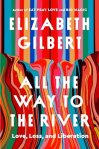 A loved one is given a six-month cancer prognosis but lives another (nearly) two years in All the Way to the River by Elizabeth Gilbert and Lessons from My Teachers by Sarah Ruhl.
- A man’s brain tumour is diagnosed by accident while he’s in hospital after an unrelated accident in Flashlight by Susan Choi and Saltwash by Andrew Michael Hurley.
- Famous lost poems in What We Can Know by Ian McEwan and Swann by Carol Shields.
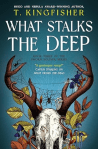
- A description of the anatomy of the ear and how sound vibrates against tiny bones in The Edge of Silence by Neil Ansell and What Stalks the Deep by T. Kingfisher.
- Notes on how to make decadent mashed potatoes in Beard by Kelly Foster Lundquist, Death of an Ordinary Man by Sarah Perry, and Lessons from My Teachers by Sarah Ruhl.
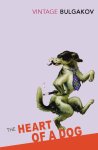
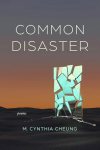
- Transplant surgery on a dog in Russia and trepanning appear in The Heart of a Dog by Mikhail Bulgakov and the poetry collection Common Disaster by M. Cynthia Cheung.
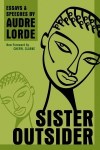
- Audre Lorde, whose Sister Outsider I was reading at the time, is mentioned in Lessons from My Teachers by Sarah Ruhl. Lorde’s line about the master’s tools never dismantling the master’s house is also paraphrased in Spent by Alison Bechdel.
- An adult appears as if fully formed in a man’s apartment but needs to be taught everything, including language and toilet training, in The Heart of a Dog by Mikhail Bulgakov and Find Him! by Elaine Kraf.
 Two sisters who each wrote a memoir about their upbringing in Spent by Alison Bechdel and Vessel by Dani Netherclift.
- The fact that ragwort is bad for horses if it gets mixed up into their feed was mentioned in Ghosts of the Farm by Nicola Chester and Understorey by Anna Chapman Parker.
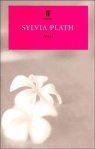
- The Sylvia Plath line “the O-gape of complete despair” was mentioned in Vessel by Dani Netherclift, then I read it in its original place in Ariel later the same day.
- A mention of the Baba Yaga folk tale (an old woman who lives in the forest in a hut on chicken legs) in Common Disaster by M. Cynthia Cheung and Woman, Eating by Claire Kohda. [There was a copy of Sophie Anderson’s children’s book The House with Chicken Legs in the Little Free Library around that time, too.]
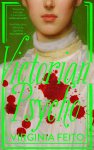
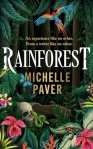
- Coming across a bird that seems to have simply dropped dead in Victorian Psycho by Virginia Feito, Vessel by Dani Netherclift, and Rainforest by Michelle Paver.
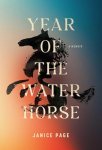
- Contemplating a mound of hair in Vessel by Dani Netherclift (at Auschwitz) and Year of the Water Horse by Janice Page (at a hairdresser’s).
- Family members are warned that they should not see the body of their loved one in Vessel by Dani Netherclift and Rainforest by Michelle Paver.
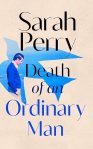
- A father(-in-law)’s swift death from oesophageal cancer in Year of the Water Horse by Janice Page and Death of an Ordinary Man by Sarah Perry.
- I saw John Keats’s concept of negative capability discussed first in My Little Donkey by Martha Cooley and then in Understorey by Anna Chapman Parker.
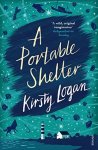
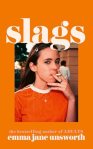
- I started two books with an Anne Sexton epigraph on the same day: A Portable Shelter by Kirsty Logan and Slags by Emma Jane Unsworth.
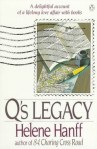
- Mentions of Martin Luther King, Jr.’s assassination in Q’s Legacy by Helene Hanff and Sister Outsider for Audre Lorde, both of which I was reading for Novellas in November.
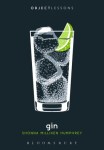
- Mentions of specific incidents from Samuel Pepys’s diary in Q’s Legacy by Helene Hanff and Gin by Shonna Milliken Humphrey, both of which I was reading for Nonfiction November/Novellas in November.
- Starseed (aliens living on earth in human form) in Beautyland by Marie-Helene Bertino and The Conspiracists by Noelle Cook.
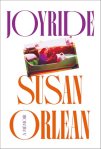
- Reading nonfiction by two long-time New Yorker writers at the same time: Life on a Little-Known Planet by Elizabeth Kolbert and Joyride by Susan Orlean.

- The breaking of a mirror seems like a bad omen in The Spare Room by Helen Garner and The Bell Jar by Sylvia Plath.
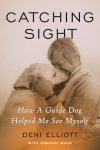 The author’s husband (who has a name beginning with P) is having an affair with a lawyer in Catching Sight by Deni Elliott and Joyride by Susan Orlean.
- Mentions of Lewis Hyde’s book The Gift in Lessons from My Teachers by Sarah Ruhl and The Serviceberry by Robin Wall Kimmerer; I promptly ordered the Hyde secondhand!
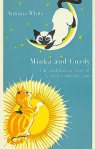
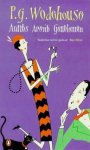
- The protagonist fears being/is accused of trying to steal someone else’s cat in Minka and Curdy by Antonia White and Aunts Aren’t Gentlemen by P.G. Wodehouse, both of which I was reading for Novellas in November.
What’s the weirdest reading coincidence you’ve had lately?
Reading with the Seasons: Summer 2021, Part I
I’m more likely to choose lighter reads and dip into genre fiction in the summer than at other times of year. The past few weeks have felt more like autumn here in southern England, but summer doesn’t officially end until September 22nd. So, if I get a chance (there’s always a vague danger to labelling something “Part I”!), before then I’ll follow up with another batch of summery reads I have on the go: Goshawk Summer, Klara and the Sun, Among the Summer Snows, A Shower of Summer Days, and a few summer-into-autumn children’s books.
For this installment I have a quaint picture book, a mystery, a travel book featured for its title, and a very English classic. I’ve chosen a representative quote from each.
Summer Story by Jill Barklem (1980)
 One of a quartet of seasonal “Brambly Hedge” stories in small hardbacks. It wouldn’t be summer without weddings, and here one takes place between two mice, Poppy Eyebright and Dusty Dogwood (who work in the dairy and the flour mill, respectively), on Midsummer’s Day. I loved the little details about the mice preparing their outfits and the wedding feast: “Cool summer foods were being made. There was cold watercress soup, fresh dandelion salad, honey creams, syllabubs and meringues.” We’re given cutaway views of various tree stumps, like dollhouses, and the industrious activity going on within them. Like any wedding, this one has its mishaps, but all is ultimately well, like in a classical comedy. This reminded me of the Church Mice books or Beatrix Potter’s works: very sweet, quaint and English.
Source: Public library
My rating: 
These next two give a real sense of how heat affects people, physically and emotionally.
Heatstroke by Hazel Barkworth (2020)
“In the heat, just having a human body was a chore. Just keeping it suitable for public approval was a job”
 From the first word (“Languid”) on, this novel drips with hot summer atmosphere, with its opposing connotations of discomfort and sweaty sexuality. Rachel is a teacher of adolescents as well as the mother of a 15-year-old, Mia. When Lily, a pupil who also happens to be one of Mia’s best friends, goes missing, Rachel is put in a tough spot. I mostly noted how Barkworth chose to construct the plot, especially when to reveal what. By the one-quarter point, Rachel works out what’s happened to Lily; by halfway, we know why Rachel isn’t telling the police everything.
The dynamic between Rachel and Mia as they decide whether to divulge what they know is interesting. This is not the missing person mystery it at first appears to be, and I didn’t sense enough literary quality to keep me wanting to know what would happen next. I ended up skimming the last third. It would be suitable for readers of Rosamund Lupton, but novels about teenage consent are a dime a dozen these days and this paled in comparison to My Dark Vanessa. For a better sun-drenched novel, I recommend A Crime in the Neighborhood.
Source: Public library
My rating: 
The Shadow of the Sun: My African Life by Ryszard Kapuściński (1998; 2001)
[Translated from the Polish by Klara Glowczewska]
“Dawn and dusk—these are the most pleasant hours in Africa. The sun is either not yet scorching, or it is no longer so—it lets you be, lets you live.”
 The Polish Kapuściński was a foreign correspondent in Africa for 40 years and lent his name to an international prize for literary reportage. This collection of essays spans decades and lots of countries, yet feels like a cohesive narrative. The author sees many places right on the cusp of independence or in the midst of coup d’états. Living among Africans rather than removed in a white enclave, he develops a voice that is surprisingly undated and non-colonialist. While his presence as the observer is undeniable – especially when he falls ill with malaria and then tuberculosis – he lets the situation on the ground take precedence over the memoir aspect. I read the first half last year and then picked the book back up again to finish this year. The last piece, “In the Shade of a Tree, in Africa” especially stood out. In murderously hot conditions, shade and water are two essentials. A large mango tree serves as an epicenter of activities: schooling, conversation, resting the herds, and so on. I appreciated how Kapuściński never resorts to stereotypes or flattens differences: “Africa is a thousand situations, varied, distinct, even contradictory … everything depends on where and when.”
Along with Patrick Leigh Fermor’s A Time of Gifts and the Jan Morris anthology A Writer’s World, this is one of the best few travel books I’ve ever read.
Source: Free bookshop
My rating: 
August Folly by Angela Thirkell (1936)
“The sun was benignantly hot, the newly mown grass smelt sweet, bees were humming in a stupefying way, Gunnar was purring beside him, and Richard could hardly keep awake.”
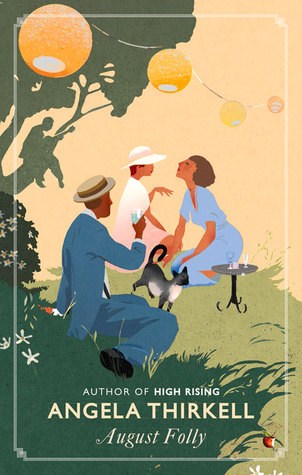 I’d been curious to try Thirkell, and this fourth Barsetshire novel seemed as good a place to start as any. Richard Tebben, not the best and brightest that Oxford has to offer, is back in his parents’ village of Worsted for the summer and dreading the boredom to come. That is, until he meets beautiful Rachel Dean and is smitten – even though she’s mother to a brood of nine, most of them here with her for the holidays. He sets out to impress her by offering their donkey, Modestine, for rides for the children, and rather accidentally saving her daughter from a raging bull. Meanwhile, Richard’s sister Margaret can’t decide if she likes being wooed, and the villagers are trying to avoid being roped into Mrs Palmer’s performance of a Greek play. The dialogue can be laughably absurd. There are also a few bizarre passages that seem to come out nowhere: when no humans are around, the cat and the donkey converse.
This was enjoyable enough, in the same vein as books I’ve read by Barbara Pym, Miss Read, and P.G. Wodehouse, though I don’t expect I’ll pick up more by Thirkell. (No judgment intended on anyone who enjoys these authors. I got so much flak and fansplaining when I gave Pym and Wodehouse 3 stars and dared to call them fluffy or forgettable, respectively! There are times when a lighter read is just what you want, and these would also serve as quintessential English books revealing a particular era and class.)
Source: Public library
My rating:
As a bonus, I have a book about how climate change is altering familiar signs of the seasons.
Forecast: A Diary of the Lost Seasons by Joe Shute (2021)
“So many records are these days being broken that perhaps it is time to rewrite the record books, and accept the aberration has become the norm.”
 Shute writes a weather column for the Telegraph, and in recent years has reported on alarming fires and flooding. He probes how the seasons are bound up with memories, conceding the danger of giving in to nostalgia for a gloried past that may never have existed. However, he provides hard evidence in the form of long-term observations (phenology) such as temperature data and photo archives that reveal that natural events like leaf fall and bud break are now occurring weeks later/earlier than they used to. He also meets farmers, hunts for cuckoos and wildflowers, and recalls journalistic assignments.
The book deftly recreates its many scenes and conversations, and inserts statistics naturally. It also delicately weaves in a storyline about infertility: he and his wife long for a child and have tried for years to conceive, but just as the seasons are out of kilter, there seems to be something off with their bodies such that something that comes so easily for others will not for them. A male perspective on infertility is rare – I can only remember encountering it before in Native by Patrick Laurie – and these passages are really touching. The tone is of a piece with the rest of the book: thoughtful and gently melancholy, but never hopeless (alas, I found The Eternal Season by Stephen Rutt, on a rather similar topic, depressing).
Forecast is wide-ranging and so relevant – the topics it covers kept coming up and I would say to my husband, “oh yes, that’s in Joe Shute’s book.” (For example, he writes about the Ladybird What to Look For series and then we happened on an exhibit of the artwork at Mottisfont Abbey.) I can see how some might say it crams in too much or veers too much between threads, but I thought Shute handled his material admirably.
Source: Public library
My rating: 
Have you been reading anything particularly fitting for summer this year?
Classic of the Month: Carry On, Jeeves by P.G. Wodehouse (1925)
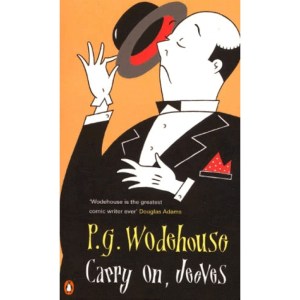 I’d never read any P.G. Wodehouse before, but of course I was familiar with his two most famous creations, empty-headed aristocrat Bertie Wooster and his omniscient manservant, Jeeves. Many people are turning to cheerful, witty reads during lockdown, so this seemed like a perfect time to give one of the books a try. The bio in my secondhand paperback calls this the first set of Jeeves and Wooster tales, while Goodreads lists it as the third book in a 14-strong series. I didn’t realize when I bought this or picked it up to read that it was a collection of 10 short stories, but that makes sense – these are such silly, inconsequential plots that they couldn’t possibly be sustained for more than about 20 pages each.
It doesn’t take long to get the hang of a Jeeves and Wooster story. Bertie or one of his rich, vapid pals will get into a spot of trouble, usually because of an aunt’s expectations, and a madcap plan – swapping places, impersonation, kidnapping or the like – is required to get out of it and/or get the girl. Jeeves has a brilliant idea and saves the day, all while commenting disapprovingly on Bertie’s fashion choices. Most of the stories are set in London and its environs, but a few also have the pair transplanted to New York City, where Bertie seems to have nothing better to do than lend his chums money. The first nine tales are narrated by Bertie, while the final one has Jeeves as narrator – on a visit to a girls’ school he plays a rather wicked prank to disabuse Bertie of the notion that he might like to adopt a daughter.
These stories were amusing enough, yet quickly blended into one. Pretty much as soon as I finished a story, I forgot what it was about. Looking back, not even the story titles can spark a memory. I made the mistake of not taking notes, so I’ve retained only general impressions. I enjoyed Bertie’s voice and the period slang as well as the dynamic between master and servant – it’s clear who’s really in charge here. “[T]his was obviously a cove of rare intelligence, and it would be a comfort in a lot of ways to have him doing the thinking for me,” Bertie says. “It’s a rummy thing, but when you come down to it Jeeves is always right.” Though I’ve never seen the adaptations, I couldn’t get the faces of Hugh Laurie and Stephen Fry out of my head. That’s no problem, though, as the casting couldn’t be more perfect.
I’m not sure if I’ll bother picking up another Wodehouse book, as I expect that his work is all of a piece. However, you could certainly do worse if you’re after a lighthearted read.
My rating:
Mini-Reviews of Three Recent Releases: Chariandy, Dean & Tallack
Brother by David Chariandy
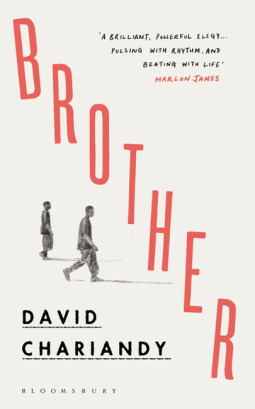 Canadian author David Chariandy’s second novel was longlisted for the Giller Prize and won the Rogers Writers’ Trust Fiction Prize. Narrator Michael and his older brother Francis grew up in the early 1980s in The Park, a slightly dodgy area of Toronto. Their single mother, Ruth, is a Trinidadian immigrant who worked long shifts as a cleaner to support the family after their father left early on. From the first pages we know that Francis is an absence, but don’t find out why until nearly the end of the book. The short novel is split between the present, as Michael and Ruth try to proceed with normal life, and vignettes from the past, culminating in the incident that took Francis from them 10 years ago.
The title is literal, of course, but also street slang for friends or comrades. Michael looked up to street-smart Francis, who fell in with a gang of “losers and neighbourhood schemers” and got expelled from school at age 18. Francis tried to teach his little brother how to carry himself: “You’ve got to be cooler about things, and not put everything out on your face all the time.” Yet the more we hear about Francis staying with friends at a barber shop and getting involved with preparations for a local rap DJ competition, the more his ideal of aloof masculinity starts to sound ironic, if not downright false.
I came into the book with pretty much no idea of what it was about. It didn’t fit my narrow expectations of Canadian fiction (sweeping prairie stories or hip city ones); instead, it reminded me of The Corner by David Simon, We, the Animals by Justin Torres, and Another Day in the Death of America by Gary Younge. It undoubtedly gives a powerful picture of immigrant poverty and complicated grief. Yet the measured prose somehow left me cold.
My rating:
Brother was published in the UK by Bloomsbury on March 8th. My thanks to the publisher for the free copy for review.
Sharp by Michelle Dean
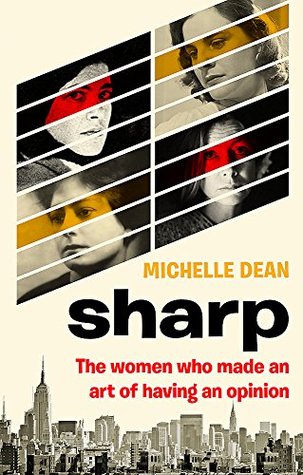 “People have trouble with women who aren’t ‘nice,’ … who have the courage to sometimes be wrong in public.” In compiling 10 mini-biographies of twentieth-century women writers and cultural critics who weren’t afraid to be unpopular, Dean (herself a literary critic) celebrates their feminist achievements and insists “even now … we still need more women like this.” Her subjects include Rebecca West, Mary McCarthy, Susan Sontag, Joan Didion, Nora Ephron and Renata Adler. She draws on the women’s correspondence and published works as well as biographies to craft concise portraits of their personal and professional lives.
You’ll get the most out of this book if a) you know nothing about these women and experience this as a taster session; or b) you’re already interested in at least a few of them and are keen to learn more. I found the Dorothy Parker and Hannah Arendt chapters most interesting because, though I was familiar with their names, I knew very little about their lives or works. Parker’s writing was pulled from a slush pile in 1914 and she soon replaced P.G. Wodehouse as Vanity Fair’s drama critic. Her famous zingers masked her sadness over her dead parents and addict husband. “This was her gift,” Dean writes: “to shave complex emotions down to a witticism that hints at bitterness without wearing it on the surface.”
Unfortunately, such perceptive lines are few and far between, and the book as a whole lacks a thesis. Chance meetings between figures sometimes provide transitions, but the short linking chapters are oddly disruptive. In one, by arguing that Zora Neale Hurston would have done a better job covering a lynching than Rebecca West, Dean only draws attention to the homogeneity of her subjects: all white and middle-class; mostly Jewish New Yorkers. I knew too much about Sontag and Didion to find their chapters interesting, but enjoyed reading more about Ephron. I’ll keep the book to refer back to when I finally get around to reading Mary McCarthy. It has a terrific premise, but I found myself asking what the point was.
My rating: 
Sharp was published in the UK by Fleet on May 3rd. My thanks to the publisher for a proof copy for review.
The Valley at the Centre of the World by Malachy Tallack
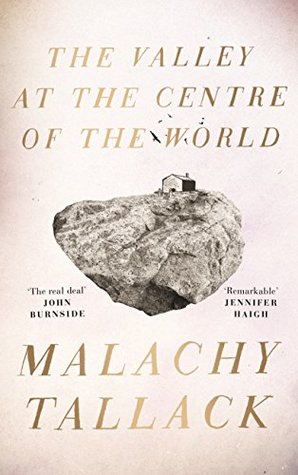 I’d previously enjoyed Malachy Tallack’s two nonfiction books, Sixty Degrees North and The Undiscovered Islands. In his debut novel he returns to Shetland, where he spent some of his growing-up and early adult years, to sketch out a small community and the changes it undergoes over about ten months. Sandy has lived in this valley for three years with Emma, but she left him the day before the action opens. Unsure what to do now, he sticks around to help her father, David, butcher the lambs. After their 90-year-old neighbor, Maggie, dies, Sandy takes over her croft. Other valley residents include Ryan and Jo, a troubled young couple; Terry, a single dad; and Alice, who moved here after her husband’s death and is writing a human and natural history of the place, The Valley at the Centre of the World. (This strand reminded me of Annalena McAfee’s Hame.)
The prose is reminiscent of the American plain-speaking style of books set in the South or Appalachia – Richard Ford, Walker Percy, Ron Rash and the like. We dive deep into this tight-knit community and its secrets. It’s an offbeat blend of primitive and modern: the minimalism of the crofting life contrasts with the global reach of Facebook, for instance. When Ryan and Jo host a housewarming party, all the characters are brought together at about the halfway point, and some relationships start to shift. Overall, though, this is a slow and meandering story. Don’t expect any huge happenings, just some touching reunions and terrific scenes of manual labor. David is my favorite character, an almost biblical patriarch who seems “to live in a kind of eternal present, looking neither forward nor backward but always, somehow, towards the land.”
Tallack has taken a risk by writing in phonetic Shetland dialect. David’s speech is particularly impenetrable. The dialect does rather intrude; the expository passages are a relief. I’ve been to Shetland once, in 2006. This quiet story of belonging versus being an outsider is one to reread there some years down the line: I reckon I’d appreciate it more on location.
My rating: 
The Valley at the Centre of the World was published by Canongate on May 3rd. My thanks to the publisher for the free copy for review.
The Diary of a Bookseller by Shaun Bythell
So you think you’d like to run a bookshop? Here’s a book to tempt and deter you in equal measure. In 2001 Shaun Bythell acquired The Bookshop, the flagship bookstore in Wigtown, the Book Town in Galloway in the southwest of Scotland. Here he gives a one-year snapshot of life at the shop, from February 2014 to February 2015. At the start you can feel the winter chill in the old granite building, and as months pass you sense mounting excitement at preparations for the annual Book Festival (going on now) and the Scottish referendum. It’s a pleasure to spend a vicarious year at the shop. This would make a great bedside book for a bookish type to parcel out 5–10 pages at a time (another Christmas gift idea?).
 Bythell frequently ventures out to buy book collections in auctions and from estates, and occasionally goes fishing with his father or friends. But mostly we see what daily life is like for a bookshop owner. He can’t afford full-time staff, so gets sporadic help from university-age gals; his most “reliable” part-timer is Nicky, a ski suit-wearing, Dumpster-diving Jehovah’s Witness who blithely ignores much of what he asks her to do.
Every entry opens and closes with statistics on the day’s takings and online orders. Profits range from £5 to £500 a day, rising in the summer and peaking around £1200 during the festival. Also listed is the number of customers who make purchases, which represents only one-fifth of daily footfall. Nowadays most bookstores sell online too, and The Bookshop reluctantly partners with Amazon as a marketplace seller. There’s also ABE and eBay; as a last-ditch option, some outfits take books in bulk, even if just to recycle them. Alongside online sales, it’s essential for bookstores to have sidelines. Bythell does video production and sells furniture, antiques and walking sticks carved by “Sandy, the tattooed pagan.”
As with Wendy Welch’s The Little Bookstore of Big Stone Gap, I enjoyed the nitty-gritty details about acquiring and pricing books, especially the serendipitous moments of coming across real treasures, like a book signed by Sir Walter Scott and a 1679 edition of the Decameron with an interesting provenance. The book is also full of quirky customer behavior, the kind of stuff that fills The Bookshop’s Facebook feed. Bythell cultivates a curmudgeonly persona – he once shot a broken Kindle and mounted it on the bookshop wall – and maintains a tone that’s somewhere between George Orwell (excerpts from whose “Bookshop Memories” serve as monthly epigraphs) and Jen Campbell (Weird Things Customers Say in Bookshops et al.). Here’s a few of the best encounters:
a whistling customer with a ponytail and what I can only assume was a hat he’d borrowed from a clown bought a copy of Paolo Coelho’s The Alchemist, I suspect deliberately to undermine my faith in humanity and dampen my spirits further.
A man smelling of TCP [antiseptic] was the only customer in the shop for the first hour of opening, during which time I attempted to put out fresh stock. He had an uncanny ability to be standing in front of every shelf to which I needed access, regardless of the subject or where in the shop the relevant shelves were.
While I was repairing a broken shelf in the crime section, I overheard an elderly customer confusing E. L. James and M. R. James while discussing horror fiction with her friend. She is either going to be pleasantly surprised or deeply shocked when she gets home with the copy of Fifty Shades of Grey she bought.
I’ve been to Hay-on-Wye six times now but haven’t made it to Wigtown yet. It’s high on my bookish wish list. I had two additional reasons for wanting to read this particular book: I’d read Three Things You Need to Know about Rockets, a memoir by Bythell’s former partner, the American Jessica Fox (here known as “Anna”; in her book he’s “Ewan”), about coming to Scotland on a whim and falling in love with a bookshop owner; and I’m awfully fond of The Bookshop Band, a folky husband–wife musical duo who this year relocated from Bath to Wigtown. It was such fun to read about their first time playing in Wigtown and their stay as the inaugural guests/temporary store managers via The Open Book Airbnb project.

Colin Kinnear [CC BY-SA 2.0 (https://creativecommons.org/licenses/by-sa/2.0)%5D, via Wikimedia Commons.
The Book Shop trivia:
- December is by far the quietest month. (“The few people who give second-hand books as gifts for Christmas are usually eccentric” – count me as one of them!)
- Railway books sell best.
- Terry Pratchett, John Buchan, P.G. Wodehouse and E.F. Benson books are also perennial best sellers.
- You’ll be amazed at how many customers try to haggle over prices. It’s a shop, not a rummage sale, for goodness’ sake! I can’t imagine ever having the cheek to offer less than the advertised price.
My rating:
The Diary of a Bookseller was released in the UK on September 28th. My thanks to Profile Books for the free review copy.
 Bookish Beck = Rebecca Foster. American transplant to England. Freelance proofreader and book reviewer.
 Bookish Beck