Recent Poetry Releases by Clarke, Galleymore, Hurst, and Minick
All caught up on March releases now. There’s a lot of nature and environmental awareness in these four poetry collections, but also pandemic lockdown experiences, folklore, travel, and an impasse over whether to have children. Three are from Carcanet Press, my UK poetry mainstay; one was my introduction to Madville Publishing (based in Lake Dallas, Texas). After my thoughts, I’ll give one sample poem from each book.
The Silence by Gillian Clarke
Clarke was the National Poet of Wales from 2008 to 2016. I ‘discovered’ her just last year through Making the Beds for the Dead, which shares with this eleventh collection a plague theme: there, the UK’s foot and mouth disease outbreak of 2001; here, Covid-19. Forced into stillness and attention to the wonders near home, the poet tracks nature through the seasons and hymns trees, sunsets and birds. Many poems are titled after months or calendar points such as Midsummer and Christmas Eve. She also commemorates Welsh landmarks and remembers her mother, a nurse.

The verse is full of colours and names of flora:
May-gold’s gone to seed, yellows fallen –
primrose, laburnum, Welsh poppy.
June is rose, magenta, purple,
pink clematis, mopheads of chives,
cranesbill flowering where it will,
a migration of foxgloves crossing the field.
(from “Late June”)
Even as she revels in beauty, though, she bears in mind suffering elsewhere:
There is time and silence
to tell the names of the dying, the dead,
under empty skies unscarred
by transatlantic planes.
(from “Spring Equinox, 2020”)
I noted alliteration (“At the tip of every twig, / a water-bead with the world in it”) and end rhymes (“After long isolation, in times like these, / in the world’s darkness, let us love like trees.”). All told, I found this collection lovely but samey and lacking bite. But Clarke is in her late eighties and has a large back catalogue for me to explore.

With thanks to Carcanet Press for the free copy for review.
Baby Schema by Isabel Galleymore
 I knew Galleymore’s name from her appearance at the New Networks for Nature conference in 2018. The University of Birmingham lecturer’s second collection is a slant-wise look at environmental crisis and an impending decision about motherhood. The title comes from Konrad Lorenz’s identification of features that invite nurture. Galleymore edges towards the satirical fantasies of Caroline Bird or Patricia Lockwood as she imagines alternative scenarios of caregiving and contrasts sentimentality with indifference.
What is worthy of maternal concern? There are poems about a houseplant, a childhood doll, a soft toy glimpsed through a car window. A research visit to Disneyland Paris in the centenary year of the Walt Disney Company leads to marvelling at the surreality of consumerism. Does cuteness merit survival?
Because rhinos haven’t adopted the small
muscle responsible for puppy dog eyes,
the species goes bankrupt.
Its regional stores close down.
(from “The Pitch”)
The speaker acknowledges how gooey she goes over dogs (“Morning”) and kittens (“So Adorable”). But “Mothers” and “Chosen” voice ambivalence or even suspicion about offspring, and “Fable” spins a mild nightmare of infants taking over (“babies nesting in other babies / of cliff and reef and briar”). By the time, in “More and More,” she pictures a son, “a sticky-fingered, pint-sized / version of myself toddling through the aisles,” she concludes that we live in a depleted “world better off without him.”
Extinction and eco-grief on the one hand, yes, but the implacability of biological cycles on the other:
That night, when I got home, I learnt
a tree frog species had been lost
and my body was releasing its usual sum of blood.
I only had a few years left, my mother
often warned
(from “Release”)
Sardonic yet humane, and reassuringly indecisive, this is a poetry highlight of the year so far for me. I’ll go back and find her debut, Significant Other, too.

With thanks to Carcanet Press for the free e-copy for review.
The Iron Bridge by Rebecca Hurst
Manchester-based Hurst’s debut full-length collection struck me first for its gorgeous nature poetry arising from a series of walks. Most of these are set in Southern England in the current century, but date and location stamps widen the view as far as 1976 in the one case and Massachusetts in the other. The second section entices with its titles drawn from folklore and mythology: “How the Fox Lost His Brush,” “The Animal Bridegroom,” “The Needle Prince,” “And then we saw the daughter of the minotaur.”

An unexpected favourite, for its alliteration, assonance and book metaphors in the first stanza, was “Cabbage”:
Slung from a trug it rumbles across
the kitchen table, this flabby magenta fist
of stalk and leaf, this bundle of pages
flopping loose from their binding
this globe cleaved with a grunt leaning hard
on the blade
Part III, “Night Journeys,” has more nature verse and introduces a fascination with Russia that continues through the rest of the book. I loved the mischievous quartet of “Field Notes” prose poems about “The careless lover,” “The theatrical lover,” “The corresponding lover,” and “The satisfying lover” – three of them male and one female. The final section, “An Explorer’s Handbook,” includes found poems adapted from the published work of travel writers contemporary (Christina Dodwell) and Victorian (nurse Kate Marsden). Another series, “The Emotional Lives of Soviet Objects,” gives surprising power to a doily, a slipper and a potato peeler.
There’s a huge range of form and subject matter here, but the language is unfailingly stunning. Another standout from 2024 and a poet to watch. From my other Carcanet reading, I’d liken this most to work by Laura Scott and Helen Tookey.

With thanks to Carcanet Press for the free e-copy for review.
The Intimacy of Spoons by Jim Minick
 A new publisher and author for me. Minick has also published fiction and nonfiction; this is his third poetry collection. Between the opener, “To Spoon,” and the title piece that closes the book, there are five more spoon-themed poems that create a pleasing thematic throughline. Why spoons? Unlike potentially violent knives and forks, which cut and spear, spoons are gentle. They’re also reflective surfaces, and because of their concavity, they can hold things and nestle together. In “The Oldest Spoon,” they even bring to mind a guiding constellation.
The rest of the book is full of North American woodland and coastal scenes and wildlife. Minick displays genuine affection for and familiarity with birds. He is also realistic in noting all that is lost with habitat destruction and dwindling populations. “Lasts” describes the bittersweet sensation of loving what is disappearing: “Goodbye, we always say too late, / or we never get a chance to say at all.” He wrestles with human mortality, too, through elegies and minor concerns about his own ageing body. I loved the seasonal imagery and alliteration in “Spangled” and the Rolling Stones refrain to “Gas,” about boat-tailed grackles encountered in the parking lot at a Georgia truck stop.
Why not embrace all that is ugly
& holy & here—the grackle’s song
that isn’t a song, a breadcrumb dropped,
the shiny ribbon of gasoline
that will get me closer to home.
For something a bit different, I appreciated the true-crime monologue of “Tim Slack, the Fix-It Man.” With playfulness and variety, Minick gives us new views on the everyday – which is exactly why it is worth reading poetry.

With thanks to Madville Publishing for the free e-copy for review.
Some 2023 Reading Superlatives
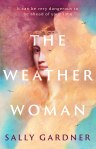 Longest book read this year: The Weather Woman by Sally Gardner (457 pages) – not very impressive compared to last year’s 720-page To Paradise. That means I didn’t get through a single doorstopper this year. D’oh!
Shortest book read this year: Pitch Black by Youme Landowne and Anthony Horton (40 pages)
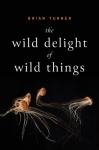
Authors I read the most by this year: Margaret Atwood, Deborah Levy and Brian Turner (3 books each); Amy Bloom, Simone de Beauvoir, Tove Jansson, John Lewis-Stempel, W. Somerset Maugham, L.M. Montgomery and Maggie O’Farrell (2 books each)


Publishers I read the most from: (Setting aside the ubiquitous Penguin and its many imprints) Carcanet (11 books) and Picador/Pan Macmillan (also 11), followed by Canongate (7).
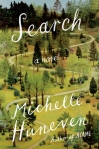
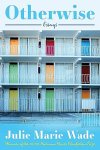
My top author discoveries of the year: Michelle Huneven and Julie Marie Wade
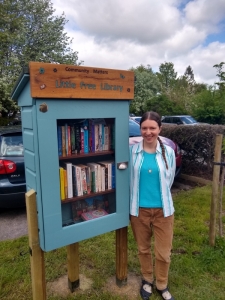
My proudest bookish accomplishment: Helping to launch the Little Free Library in my neighbourhood in May, and curating it through the rest of the year (nearly daily tidying; occasional culling; requesting book donations)
Most pinching-myself bookish moments: Attending the Booker Prize ceremony; interviewing Lydia Davis and Anne Enright over e-mail; singing carols after-hours at Shakespeare and Company in Paris

Books that made me laugh: Notes from a Small Island by Bill Bryson, The Librarianist by Patrick deWitt, two by Katherine Heiny, Motherland Fatherland Homelandsexuals by Patricia Lockwood
Books that made me cry: A Heart that Works by Rob Delaney, Lucy by the Sea by Elizabeth Strout, Family Meal by Bryan Washington
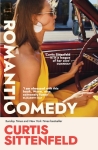 The book that was the most fun to read: Romantic Comedy by Curtis Sittenfeld
Best book club selections: By the Sea by Abdulrazak Gurnah and The Woman in Black by Susan Hill
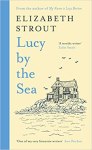 Best last lines encountered this year: “And I stood there holding on to this man as though he were the very last person left on this sweet sad place that we call Earth.” (Lucy by the Sea, Elizabeth Strout)
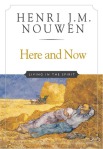 A book that put a song in my head every time I picked it up: Here and Now by Henri Nouwen (Aqualung song here)
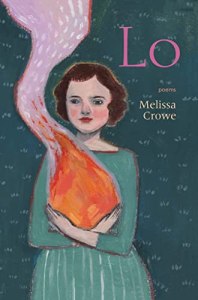
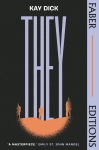
Shortest book title encountered: Lo (the poetry collection by Melissa Crowe), followed by Bear, Dirt, Milk and They



Best 2023 book titles: These Envoys of Beauty and You Bury the Birds in My Pelvis
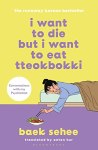 Best book titles from other years: I Want to Die but I Want to Eat Tteokbokki, Before You Suffocate Your Own Fool Self, A Down Home Meal for These Difficult Times, The Cats We Meet Along the Way, We All Want Impossible Things
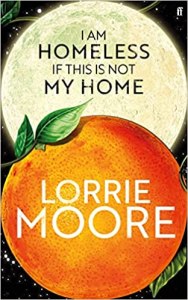
Favourite title and cover combo of the year: I Am Homeless If This Is Not My Home by Lorrie Moore (shame the contents didn’t live up to it!)
Biggest disappointment: Speak to Me by Paula Cocozza
A 2023 book that everyone was reading but I decided not to: Prophet Song by Paul Lynch

The worst books I read this year: Monica by Daniel Clowes, They by Kay Dick, Swallowing Geography by Deborah Levy and Self-Portrait in Green by Marie Ndiaye (1-star ratings are extremely rare for me; these were this year’s four)
The downright strangest book I read this year: Motherland Fatherland Homelandsexuals by Patricia Lockwood
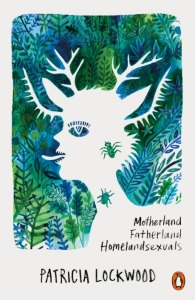
Books of Summer, 6–8: Elizabeth Berg, Patricia Lockwood & Wendy Mitchell
Although I have foodie lit as a background theme for the summer’s reading, my main goal is simply to read books that I own, especially recent acquisitions and long-time shelf-sitters (whereas last year, in slavish conformity to a theme, I substituted in a bunch of library books, review books and e-books). My latest batch includes a slightly twee novel, an outlandish poetry collection, and an uneven nonfiction swan song.
The Year of Pleasures by Elizabeth Berg (2005)
 From the cover, I was expecting this to be more foodie than it was. The protagonist does enjoy cooking for other people and reading cookbooks, though. Betta Nolan, 55 and recently widowed by cancer, drives from Boston to the Midwest and impulsively purchases a house in a Chicago suburb, something she and her late husband had fantasized about doing in retirement. It’s the kind of sweet little town where the only realtor is a one-woman operation and Betta as a newcomer automatically gets invited onto the local radio show. She also reconnects with her college roommates, tries dating, and mulls over her dream of opening a women’s boutique that sells silk scarves, handmade journals, essential oils and brownies.
While Berg is true to the shifting emotions that accompany grief, and gives Betta plenty of cute opportunities to make friends across the generations – with Lydia, the nonagenarian former owner of her house, now in a nursing home; Matthew, the fickle young man who does some odd jobs for her; and Benny, the next-door neighbor’s nine-year-old boy – I found the subplot about Matthew’s messy house and relationships silly, and Betta’s “What a Woman Wants” shop idea is so stereotyping I could feel myself rolling my eyes. Still, Berg’s novels, of which this was my fifth, are always reliably light and pleasant reads in an Anne Tyler vein. (Secondhand – 2nd & Charles) 
Motherland Fatherland Homelandsexuals by Patricia Lockwood (2014)
One of the more bizarre books I’ve ever read. I loved both Priestdaddy and No One Is Talking About This, but had no idea what to expect from Lockwood’s poems. They’re somewhere between absurdist monologues and thought experiments, often choosing an object or abstraction to animate (“A Recent Transformation Tries to Climb the Stairs”) and generally sexualized to the max (“Nessie Wants to Watch Herself Doing It”). Though they’re in stanzas, they aren’t heavy on poetic techniques. Some tangential topics are Bambi, Canada, basketball, waterfalls, King Kong adaptations, American poetry, Shirley Temple, and childhood hobbies like Animorphs, Egyptology and Magic Eye puzzles.
But really, her poetry is only “about” things in the loosest sense; the repetition, wordplay and snark are paramount. If you’ve heard of one, it’s likely to be the lengthy “Rape Joke,” which went as viral as it’s possible for a poem to and is, ironically, probably the sincerest entry here. Presumably based on her own bad experience with a teenage boyfriend, it is heartbreakingly banal: “The rape joke is that he was your father’s high school student … The rape joke is that come on, you should have seen it coming. … The rape joke is that you asked why he did it. The rape joke is he said he didn’t know, like what else would a rape joke say?”
A couple of my favourites were “List of Cross-Dressing Soldiers” and “He Marries the Stuffed-Owl Exhibit at the Indiana Welcome Center”; “The Father and Mother of American Tit-Pics,” in which a resurrected Emily Dickinson and Walt Whitman swap genders, had some of the more outrageous lines: “Walt Whitman is the Number Two Beach Body every year, because look at the way he snapped back into shape only months after giving birth to American Poetry.” Not really like any other poetry I’ve ever read. (New purchase with Christmas money) 
One Last Thing: Conversations on Life, Death and Assisted Dying by Wendy Mitchell with Anna Wharton (2023)
“We talk so often about prolonging life, but we are actually prolonging death by not discussing the suffering part of it.”
Wendy Mitchell’s first two books, Somebody I Used to Know and What I Wish People Knew About Dementia, are valuable peeks into daily life with young-onset Alzheimer’s. She has been a dedicated activist and educator in the nine years since her diagnosis, and I admire the work she’s done to get dementia services into the public eye.
 The problem with her final book is that I’ve read so much about preparations for dying and the question of assisted suicide and she doesn’t bring much new to the discussion – apart from the specific viewpoint of someone deciding when and how to end their life when they don’t know what the future course of their illness looks like. Mitchell believes people should have this choice, but current UK law does not allow for assisted dying. A loophole is voluntarily stopping eating and drinking (VSED), which she deems her best option. She stopped attending assessments in 2017 and has filed forms with her GP refusing treatment – her nightmare situation is being reliant on care in hospital and she doesn’t want to become that future, dependent Wendy.
Like Henry Marsh’s farewell book, And Finally, this gives the impression of having been written in a hurry and rushed into print, and so could have been edited more. As it is, it’s fairly scattered, repetitive and unpolished. The interviews could all be streamlined and tidied up, and the one with Kathryn Mannix is split up in a confusing way.
For readers new to the topic, however, this could be a useful introduction to the issues. It’s up-to-date in that Mitchell attends a Death Café, meets an end-of-life doula, and talks through the different forms (power of attorney, advance directive and so on) with experts. I also thought the epilogue was a lovely touch: after going for a ‘wing walking’ airplane adventure, she imagines that, having taken a bus into York, she sees her pre-diagnosis self and tells her everything she would want her to know, good and bad, about the challenges to come. (Proof copy from Hungerford Bookshop Summer Reading Celebration) [Different subtitle on finished edition?] 
#ReadIndies and Review Catch-up: Hazrat, Nettel, Peacock, Seldon
Another four selections for Read Indies month. I’m particularly pleased that two from this latest batch are “just because” books that I picked up off my shelves; another two are catch-up review copies. A few more indie titles will appear in my February roundup on Tuesday. For today, I have a fun variety: a history of the exclamation point, a Mexican novel about choosing motherhood versus being childfree, a memoir of a decades-long friendship between two poets, and a posthumous poetry collection with themes of history, illness and nature.

An Admirable Point: A brief history of the exclamation mark by Florence Hazrat (2022)
I’m definitely a punctuation geek. (My favourite punctuation mark is the semicolon, and there’s a book about it, too: Semicolon: The Past, Present, and Future of a Misunderstood Mark by Cecelia Watson, which I have on my Kindle.) One might think that strings of exclamation points are a pretty new thing – rounding off phrases in (ex-)presidential tweets, for instance – but, in fact, Hazrat opens with a Boston Gazette headline from 1788 that decried “CORRUPTION AND BRIBERY!!!” in relation to the adoption of the new Constitution.
 The exclamation mark as we know it has been around since 1399, and by the 16th century its use for expression and emphasis had been codified. I was reminded of Gretchen McCulloch’s discussion of emoji in Because Internet, which also considers how written speech signifies tone, especially in the digital age. There have been various proposals for other “intonation points” over the centuries, but the question mark and exclamation mark are the two that have stuck. (Though I’m currently listening to an album called interrobang – ‽, that is. Invented by Martin Speckter in 1962; recorded by Switchfoot in 2021.)
I most enjoyed Chapter 3, on punctuation in literature. Jane Austen’s original manuscripts, replete with dashes, ampersands and exclamation points, were tidied up considerably before they made it into book form. She’s literature’s third most liberal user of exclamation marks, in terms of the number per 100,000 words, according to a chart Ben Blatt drew up in 2017, topped only by Tom Wolfe and James Joyce.
There are also sections on the use of exclamation points in propaganda and political campaigns – in conjunction with fonts, which brought to mind Simon Garfield’s Just My Type and the graphic novel ABC of Typography. It might seem to have a niche subject, but at just over 150 pages this is a cheery and diverting read for word nerds.
With thanks to Profile Books for the proof copy for review.
Still Born by Guadalupe Nettel (2020; 2022)
[Translated from the Spanish by Rosalind Harvey]
This was the Mexican author’s fourth novel; she’s also a magazine director and has published several short story collections. I’d liken it to a cross between Motherhood by Sheila Heti and (the second half of) No One Is Talking About This by Patricia Lockwood. Thirtysomething friends Laura and Alina veer off in different directions, yet end up finding themselves in similar ethical dilemmas. Laura, who narrates, is adamant that she doesn’t want children, and follows through with sterilization. However, when she becomes enmeshed in a situation with her neighbours – Doris, who’s been left by her abusive husband, and her troubled son Nicolás – she understands some of the emotional burden of motherhood. Even the pigeon nest she watches on her balcony presents a sort of morality play about parenthood.
 Meanwhile, Alina and her partner Aurelio embark on infertility treatment. Laura fears losing her friend: “Alina was about to disappear and join the sect of mothers, those creatures with no life of their own who, zombie-like, with huge bags under their eyes, lugged prams around the streets of the city.” They eventually have a daughter, Inés, but learn before her birth that brain defects may cause her to die in infancy or be severely disabled. Right from the start, Alina is conflicted. Will she cling to Inés no matter her condition, or let her go? And with various unhealthy coping mechanisms to hand, will her relationship with Aurelio stay the course?
Laura alternates between her life and her friends’ circumstances, taking on an omniscient voice on Nettel’s behalf – she recounts details she couldn’t possibly be privy to, at least not at the time (there’s a similar strategy in The Group by Lara Feigel). The question of what is fated versus what is chosen, also represented by Laura’s interest in tarot and palm-reading, always appeals to me. This was a wry and sharp commentary on women’s options. (Giveaway win from Bookish Chat on Twitter)
Still Born was published by Fitzcarraldo Editions in the UK and is forthcoming from Bloomsbury in the USA on August 8th.
A Friend Sails in on a Poem by Molly Peacock (2022)
I’ve read one of Peacock’s poetry collections, The Analyst, as well as her biography of Mary Delany, The Paper Garden. I was delighted when she got in touch to offer a review copy of her latest memoir, which reflects on her nearly half a century of friendship with fellow poet Phillis Levin. They met in a Johns Hopkins University writing seminar in 1976, and ever since have shared their work in progress over meals. They are seven years apart in age and their careers took different routes – Peacock headed up the Poetry Society of America’s subway poetry project and then moved to Toronto, while Levin taught at the University of Maryland – but over the years they developed “a sense of trust that really does feel familial … There is a weird way, in our conversations about poetry, that we share a single soul.” For a time they were both based in New York City and had the same therapist; more recently, they arranged annual summer poetry retreats in Cazenovia (recalled via diary entries), with just the two attendees. Jobs and lovers came and went, but their bond has endured.
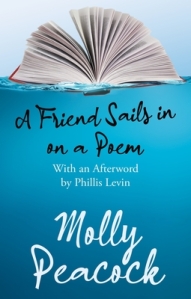 The book traces their lives but also their development as poets, through examples of their verse. Her friend is “Phillis” in real life, but “Levin” when it’s her work is being discussed – and her own poems are as written by “Peacock.” Both women became devoted to the sonnet, an unusual choice because at the time that they were graduate students free verse reigned and form was something one had to learn on one’s own time. Stanza means “room,” Peacock reminds readers, and she believes there is something about form that opens up space, almost literally but certainly metaphorically, to re-examine experience. She repeatedly tracks how traumatic childhood events, as much as everyday observations, were transmuted into her poetry. Levin did so, too, but with an opposite approach: intellectual and universal where Peacock was carnal and personal. That paradox of difference yet likeness is the essence of the friendships we sail on. What a lovely read, especially if you’re curious about ‘where poems come from’; I’d particularly recommend it to fans of Ann Patchett’s Truth and Beauty.
With thanks to Molly Peacock and Palimpsest Press for the free e-copy for review.
The Bright White Tree by Joanna Seldon (Worple Press, 2017)
This appeared the year after Seldon died of cancer; were it not for her untimely end and her famous husband Anthony (a historian and political biographer), I’m not sure it would have been published, as the poetry is fairly mediocre, with some obvious rhymes and twee sentiments. I wouldn’t want to speak ill of the dead, though, so think of this more like a self-published work collected in tribute, and then no problem. Some of the poems were written from the Royal Marsden Hospital, with “Advice” a useful rundown of how to be there for a friend undergoing cancer treatment (text to let them know you’re thinking of them; check before calling, or visiting briefly; bring sanctioned snacks; don’t be afraid to ask after their health).
 Seldon takes inspiration from history (the story of Kitty Pakenham, the bombing of the Bamiyan Buddhas), travels in England and abroad (“Robin in York” vs. “Tuscan Garden”), and family history. Her Jewish heritage is clear from poems about Israel, National Holocaust Memorial Day and Rosh Hashanah. Her own suffering is put into perspective in “A Cancer Patient Visits Auschwitz.” There are also ekphrastic responses to art and literature (a Gaugin, A Winter’s Tale, Jane Eyre, and so on). I particularly liked “Conker,” a reminder of a departed loved one “So is a good life packed full of doing / That may grow warm with others, even when / The many years have turned, and darkness filled / Places where memory shone bright and strong. / I feel the conker and feel he is here.” (New bargain book from Waterstones online sale with Christmas book token)
There are haikus dotted through the collection; here’s one perfect for the season:
“Snowdrops Haiku”
Maids demure, white tips to
Mob caps… Look now! They’ve
Splattered the lawn with snow
Have you discovered any new-to-you independent publishers recently?
Six Degrees: From No One Is Talking About This to The White Garden
This month marks two years that I’ve been participating in the Six Degrees meme. I’m an off-and-on contributor – I skipped last month – but this month’s starting book hooked me in. We begin with No One Is Talking About This by Patricia Lockwood, critically acclaimed but divisive among regular readers. It made my Best of 2021 list. (See Kate’s opening post.)

 #1 No one is talking about the danger/allure of social media and the real-life moments that matter so much more … or maybe everyone is by now? What else is ‘everyone’ up to? Well, according to an appealing 2021 title from my TBR, Everyone Dies Famous in a Small Town (a YA linked short story collection by Bonnie-Sue Hitchcock). My library has a copy, so I need to catch up.
 #2 I did a search of my Goodreads library to find other small-town stories and FOUR of the results were unread nonfiction books by Heather Lende, set in Alaska (where lots of the Hitchcock stories are set as well). Now, my rule is that I can only have ONE book by an untried author on my virtual TBR; only if I read and enjoy a book of theirs can I add further titles. So I culled the other three but kept Find the Good, about the simple lessons Lende learned from writing obituaries in her small town.
 #3 I’ve read a few books with a lemon on the cover, but the one that was most about, you know, lemons, was The Land Where Lemons Grow by Helena Attlee. I chose it as one of my location-appropriate reads – written up here – during a vacation to Tuscany in 2014, my first time in Italy. It contains (more than) all you ever wanted to know about lemons.
 #4 A less apt read for time spent in Florence, but I distinctly remember lying in bed in our hotel room, which was basically part of a medieval villa, and reading it on my Nook when I couldn’t sleep because of the noisy nightlife out the window: Dirty Daddy by the late comedian Bob Saget. I rarely choose celebrity memoirs and this one was kinda crummy, but I’d requested it from Edelweiss because of my fond memories of the 1990s sitcom Full House.
 #5 Full house? How about A House Full of Daughters, a family memoir by Juliet Nicolson (sister of Adam)? It covers seven generations of women, including her grandmother, Vita Sackville-West. I loved my visits to Sissinghurst Castle and Knole Park, two of Vita’s homes, and have devoured Adam Nicolson and Sarah Raven’s writings about their work at Sissinghurst. When a neighbour was giving away a copy of this book, I snatched it up. It’s packed in a box and will be awaiting me after our move (coming up in March, we hope).
 #6 During the lockdown spring I wrote about a silly novel called The White Garden by Stephanie Barron, which imagines that Virginia Woolf did not commit suicide upon her disappearance in March 1941, but hid with Vita at Sissinghurst. An American garden designer tasked with recreating Sackville-West’s famous White Garden at a wealthy client’s upstate New York estate ends up investigating what happened. My interest in the historical figures involved was enough to keep me going through a rather frothy book.
From one contemporary novel that swaps farce for poignancy to another that descends into ridiculousness, my chain has travelled via Alaska, Italy and Hollywood to Kent, England. The overarching theme has been fame: on the Internet, in small towns, in show business, and (my kind of celebrity) in the literary world.
Where will your chain take you? Join us for #6Degrees of Separation, hosted on the first Saturday of each month by Kate W. of Books Are My Favourite and Best. Next month’s starting point is The End of the Affair by Graham Greene, my perfect excuse to finally review it (I finished it more than a year ago!).
Have you read any of my selections? Tempted by any you didn’t know before?
The 2022 Dylan Thomas Prize Longlist
The Swansea University International Dylan Thomas Prize recognizes the best published work in the English language written by an author aged 39 or under. The 12-strong longlist for the 2022 prize, announced this morning, features lots of women and diverse voices. All literary genres are eligible. There are eight novels, two poetry collections and two short story collections in the running:

- A Passage North by Anuk Arudpragasam (Granta)
- What Noise Against the Cane by Desiree Bailey (Yale University Press)
- Keeping the House by Tice Cin (And Other Stories)
- Auguries of a Minor God by Nidhi Zak/Aria Eipe (Faber)
- The Sweetness of Water by Nathan Harris (Tinder Press/Headline)
- No One Is Talking About This by Patricia Lockwood (Bloomsbury Circus)
- Milk Blood Heat by Dantiel W. Moniz (Atlantic Books)
- Hot Stew by Fiona Mozley (John Murray Press)
- Open Water by Caleb Azumah Nelson (Viking, Penguin General)
- Acts of Desperation by Megan Nolan (Jonathan Cape)
- Peaces by Helen Oyeyemi (Faber)
- Filthy Animals by Brandon Taylor (Daunt Books Publishing)
 Coming just a week and a half after the Young Writer of the Year Award shortlist news, the longlist repeats two of its titles, Open Water and Acts of Desperation. No One Is Talking About This was shortlisted for the Booker and Women’s Prizes last year. A Passage North was also Booker shortlisted, while The Sweetness of Water was on the longlist.
 I happen to have already read and reviewed No One Is Talking About This, Open Water, and Filthy Animals; I DNFed Hot Stew (some thoughts here). I am being sent a copy of Acts of Desperation for my Young Writer of the Year Award reading.
Of the rest, I’m most interested in reading the short story collection Milk Blood Heat and the two poetry nominees, What Noise Against the Cane and Auguries of a Minor God. I’m hoping that review copies of these few, perhaps as part of a longlist blog tour, will be a possibility.
Looking at the longlist, Brandon Taylor immediately jumps out to me as a deserving winner. I feel like his debut novel and follow-up story collection establish him as a confident writer with a mature voice and style that will be with us for the long haul.
This year’s judges are novelist and Swansea University lecturer Alan Bilton, Jaipur Literature Festival founder and director Namita Gokhale (chair), poet Luke Kennard, and novelists Irenosen Okojie and Rachel Trezise.
The shortlist will be announced on 31 March and the winner on 12 May.
(My previous Dylan Thomas Prize coverage: I reviewed a few nominees for the blog tours in 2019 and 2020, and introduced the shortlist in 2021.)
Have you read any of the nominated titles? Which ones appeal to you?
Best Books of 2021: Fiction and Poetry
I’ve chosen my 15 fiction and 15 nonfiction favourites (coming up tomorrow) from 2021, along with a few poetry selections at the end of this post. Two of my picks are graphic novels!
 Under the Blue by Oana Aristide: Fans of Station Eleven, this one’s for you: the best dystopian novel I’ve read since Mandel’s. Aristide started writing in 2017, and unknowingly predicted a much worse pandemic than Covid-19. In July 2020, Harry and sisters Ash and Jessie are among mere thousands of survivors worldwide. Their plan is to flee England for Uganda, out of range of Europe’s at-risk nuclear reactors. An epic road trip ensues. A propulsive cautionary tale that also reminded me of work by Louisa Hall and Maja Lunde.
 The Push by Ashley Audrain: Blythe Connor, living alone with her memories, ponders what went wrong with her seemingly perfect family: a handsome architect husband, Fox, and their daughter Violet and baby son Sam. How much of what happened was because of Violet’s nature, and how much was Blythe’s fault for failing to be the mother the girl needed? The fact that her experience with Sam was completely different makes her feel ambivalent about motherhood. A cracking psychological thriller with an unreliable narrator.
 Site Fidelity by Claire Boyles: A love for their Colorado homeland inspires women’s environmental activism in a linked short story collection. Hope and perseverance are watchwords for Boyles’s characters, many of whom are single mothers or unmarried women. Nearly half of the stories center on a trio of feisty sisters. This reminded me most of Love Medicine by Louise Erdrich, as well as Barbara Kingsolver’s early fiction set in the Southwest. It got me eagerly awaiting whatever Boyles writes next.
 A Lie Someone Told You About Yourself by Peter Ho Davies: Davies’ minimalist approach – short sections skating over the months and years, wryly pulling out representative moment – crystallizes fatherhood, illuminating its daily heartaches and joys. The tone is just right in this novella, showing both sides of parenthood and voicing things you aren’t allowed to think, or at least not to admit to, starting with abortion, which would-be fathers aren’t expected to have strong feelings about. I loved the rumination on the role that chance plays in a life.
 The Living Sea of Waking Dreams by Richard Flanagan: Extinction, personal and global, is at the heart of this timely and enchanting story. It starts off as a family drama. Francie, the 86-year-old matriarch, is in a Tasmanian hospital after a brain bleed. Her three middle-aged children can’t bear to let her go. In an Australia blighted by bushfires, species loss mirrors Francie’s physical and mental crumbling. Smartphone addiction threatens meaningful connection. And then characters start to literally disappear, part by part…
 Mrs Death Misses Death by Salena Godden: Grief Is the Thing with Feathers meets Girl, Woman, Other would be my marketing shorthand for this one. Poet Salena Godden’s debut novel is a fresh and fizzing work, passionate about exposing injustice but also about celebrating simple joys, and in the end it’s wholly life-affirming despite a narrative stuffed full of deaths real and imagined. The novel balances the cosmic and the personal through Wolf’s family story. Unusual, musical, and a real pleasure to read.
 Early Morning Riser by Katherine Heiny: This tickled my funny bone. A cross between Kitchens of the Great Midwest and Olive Kitteridge, it’s built of five extended episodes, crossing nearly two decades in the lives of Jane and Duncan and lovingly portraying the hangers-on who compose their unusual family constellation in Boyne City, Michigan. All the characters are incorrigible but wonderful. Bad things happen, but there’s a core of love as Heiny explores marriage and parenting. A good-natured book that feels wise and bittersweet.
No One Is Talking About This by Patricia Lockwood: This starts as a flippant skewering of modern life. A woman who became a social media star by tweeting quips like “Can a dog be twins?” reflects on life on “the portal” and under “the dictator.” Midway through the book, she gets a wake-up call when her mother summons her back to the Midwest for a family emergency. It’s the about-face that makes this novel, forcing readers to question the value of a digital existence based on glib pretence. Funny, but with an ache behind it.
 When the Stars Go Dark by Paula McLain: I almost never pick up a thriller, but my love for McLain’s earlier fiction attracted me and I ended up loving this. Really, I can’t imagine a better take on the genre. Anna Hart is a detective who, fleeing tragedies from her past, throws herself into the linked mystery of three missing girls in California. The book is rich in atmosphere: McLain’s love of the coast and forests is clear, and the fact that the book is set in 1993 means that Anna has to rely on old-fashioned policework rather than technology.
 In by Will McPhail: Alternately laugh-out-loud funny and gentle. This debut graphic novel is a spot-on picture of modern life in a generic city. Nick never knows the right thing to say. The bachelor artist’s well-intentioned thoughts remain unvoiced; all he can manage is small talk. That starts to change when he meets Wren, a Black doctor who sees past his pretence. If only he can find the magic words that elicit honesty, he might make real connections with other human beings. A good old-fashioned story, with a wide emotional range.
 Heartstopper, Volume 4 by Alice Oseman: This super-cute series was my summer crush. I liked this best of the first four. I admired how Oseman works in serious issues teens might face but has still created something so full of queer joy. While Charlie has been figuring out when to tell Nick he loves him, Nick has been working out how to confront Charlie about his anorexia. They learn that love doesn’t solve everything, but that a friend or boyfriend can be there to listen. Oseman really brings out the supporting cast in this volume, too.
 Detransition, Baby by Torrey Peters: A sparkling, sexy comedy with a tender heart beneath the zingers. Peters has set herself up as the Jane Austen of the trans community, tracing the ins and outs of relationships with verve and nuance. For me this was a valuable book simply for normalizing trans sexuality. The themes are universal, after all: figuring out who you are and what the shape of your life will be. I admire when authors don’t pander to readers by making things easy for those who are unfamiliar with a culture. Great lines abound.
 Brood by Jackie Polzin: Polzin’s debut is a quietly touching story of a woman in the Midwest raising chickens and coming to terms with the shape of her life. The unnamed narrator is Everywoman and no one at the same time. At one point she reveals, with no fanfare, that she miscarried four months into pregnancy in the bathroom of one of the houses she cleans. There is a bittersweet tone to this short work. It’s a low-key, genuine portrait of life in the in-between stages and how it can be affected by fate or by other people’s decisions.
 Bewilderment by Richard Powers: As environmentally aware as The Overstory, but with a more intimate scope, focusing on a father and son who journey together in memory and imagination as well as in real life. Neurodivergent Robin is a scientific marvel and an environmental activist. Theo studies other planets that rival an ailing Earth, and another state allows Robin to reconnect with his late mother. When I came to the end, I felt despondent and overwhelmed. But as time has passed, the book’s feral beauty has stuck with me.

In the Company of Men: The Ebola Tales by Véronique Tadjo: This creative and compassionate work takes on various personae to plot the course of the Ebola outbreak in West Africa in 2014–16. The suffering is immense, and there are ironic situations that only compound the tragedy. Tadjo flows freely between all the first-person voices, even including non-human narrators such as baobab trees and a fruit bat. Local legends and songs, along with a few of her own poems, also enter into the text.
If I had to pick my novel of the year, it would be The Living Sea of Waking Dreams.

Books not pictured were from the library or read electronically.
Poetry
 Pilgrim Bell by Kaveh Akbar: An Iranian American poet imparts the experience of being torn between cultures and languages, as well as between religion and doubt, in this gorgeous collection of confessional verse. Food, plants, animals, and the body supply the book’s imagery. Wordplay and startling juxtapositions lend lightness to a wistful, intimate collection that seeks belonging and belief. (Reviewed for Shelf Awareness.)
 Field Requiem by Sheri Benning: Benning employs religious language to structure her solemn meditations on the degraded landscape of Saskatchewan, a place where old ways have been replaced by impersonal, industrial-scale farming. You can hear the rhythms of psalms and the echoes of the requiem mass. Alliteration pops out from lists of crops and the prairie species their cultivation has pushed to the edge of extinction. This is deeply place based writing. With its ecological conscience and liturgical sound, it’s just my kind of poetry.
 Eat or We Both Starve by Victoria Kennefick: In this audacious debut collection, the body is presented as a battleground: for the brain cancer that takes the poet’s father; for disordered eating that entwines with mummy issues; for the restructuring of pregnancy. Families break apart and fuse into new formations. Cannibalism and famine metaphors dredge up emotional states and religious doctrines. There’s a pleasingly morbid cast to the book, but it also has its lighter moments. Rich with imagery and alliteration, this is also just my kind of poetry.
What are some of the best books you’ve read so far this year?
What 2021 releases do I need to catch up on right away?
Booker Prize 2021: Longlist Reading and Shortlist Predictions
The 2021 Booker Prize shortlist will be announced tomorrow, September 14th, at 4 p.m. via a livestream. I’ve managed to read or skim eight of 13 from the longlist, only one of which I sought out specifically after it was nominated (An Island – the one no one had heard of; it turns out it was released by a publisher based just 1.5 miles from my home!). I review my four most recent reads below, followed by excerpts of reviews of ones I read a while ago and my brief thoughts on the rest, including what I expect to see on tomorrow’s shortlist.
Klara and the Sun by Kazuo Ishiguro
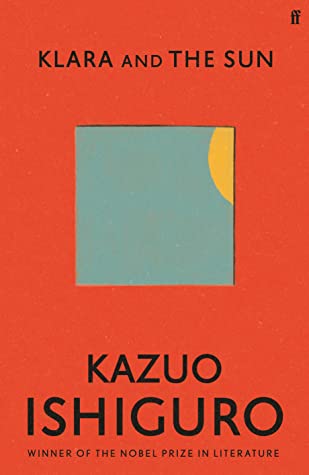 Why ever did I put this on my Most Anticipated list of the year and pre-order a signed copy?! I’m a half-hearted Ishiguro fan at best (I love Nocturnes but am lukewarm on the other four I’ve read, including his Booker winner) and should have known that his take on AI would be no more inspiring than Ian McEwan’s (Machines Like Me) a couple of years back.
Klara is an Artificial Friend purchased as part of an effort to combat the epidemic of teenage loneliness – specifically, to cheer up her owner, Josie, who suffers from an unspecified illness and is in love with her neighbour, Rick, a bright boy who remains excluded. Klara thinks of the sun as a god, praying to it and eventually making a costly bargain to try to secure Josie’s future health.
Part One’s 45 pages are slow and tedious; the backstory could have been dispensed with in five fairy tale-like pages. There’s a YA air to the story: for much of the length I might have been rereading Everything, Everything. In fact, when I saw Ishiguro introduce the novel at a Guardian/Faber launch event, he revealed that it arose from a story he wrote for children. The further I got, the more I was sure I’d read it all before. That’s because the plot is pretty much identical to the final story in Mary South’s You Will Never Be Forgotten.
Klara’s highly precise diction, referring to everyone in the third person, also gives this the feeling of translated fiction. While that is part of Ishiguro’s aim, of course – to explore the necessarily limited perspective and speech of a nonhuman entity (“Her ability to absorb and blend everything she sees around her is quite amazing”) – it makes the prose dull and belaboured. The secondary characters include various campy villains, the ‘big reveals’ aren’t worth waiting for, and the ending is laughably reminiscent of Toy Story. This took me months and months to force myself through. What a slog! (New purchase) 
An Island by Karen Jennings (2019)
 Seventy-year-old Samuel has been an island lighthouse keeper for 14 years when a brown-skinned stranger washes up on his beach. Sole survivor from a sunken refugee boat, the man has no English, so they communicate through gestures. Jennings convincingly details the rigors of the isolated life here: Samuel dug his own toilet pipes, burns his trash once a week, and gets regular deliveries from a supply boat. Nothing is wasted and everything is appreciated here, even the thirdhand magazines and videotapes he inherits from the mainland.
Although the core action takes place in just four days, Samuel is so mentally shaky that his memories start getting mixed up with real life. We learn that he has been a father, a prisoner and a beggar. Jennings is South African, and in this parallel Africa, racial hierarchy still holds sway and a general became a dictator through a military coup. Samuel’s father was involved in the independence movement, while Samuel himself was arrested for resisting the dictator.
The novella’s themes – jealousy, mistrust, possessiveness, suspicion, and a return to primitive violence – are of perennial relevance. Somehow, it didn’t particularly resonate for me. It’s not dissimilar in style to J. M. Coetzee’s vague but brutal detachment, and it’s a highly male vision à la Doggerland. Though highly readable, it’s ultimately a somewhat thin fable with a predictable message about xenophobia. Still, I’m glad I discovered it through the Booker longlist. 
My thanks to Holland House for the free copy for review.
Bewilderment by Richard Powers
 This has just as much of an environmentalist conscience as The Overstory, but a more intimate scope, focusing on a father and son who journey together in memory and imagination as well as in real life. The novel leaps between spheres: between the public eye, where neurodivergent Robin is a scientific marvel and an environmental activist, and the privacy of family life; between an ailing Earth and the other planets Theo studies; and between the humdrum of daily existence and the magic of another state where Robin can reconnect with his late mother. When I came to the end, I felt despondent and overwhelmed. But as time has passed, the book’s feral beauty has stuck with me. The pure sense of wonder Robin embodies is worth imitating. (Review forthcoming for BookBrowse.)
China Room by Sunjeev Sahota
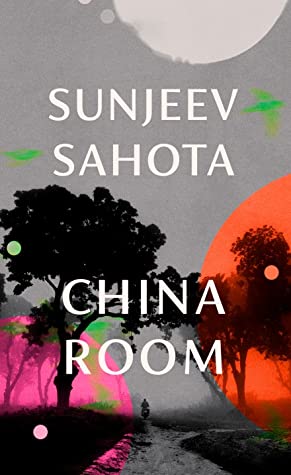 Sahota appeared on Granta’s list of Best Young British Novelists in 2013 and was previously shortlisted for The Year of the Runaways, a beautiful novel tracking the difficult paths of four Indian immigrants seeking a new life in Sheffield.
Three brides for three brothers: as Laura notes, it sounds like the setup of a folk tale, and there’s a timeless feel to this short novel set in the Punjab in the late 1920s and 1990s – it also reminded me of biblical stories like those of Jacob and Leah and David and Bathsheba. Mehar is one of three teenage girls married off to a set of brothers. The twist is that, because they wear heavy veils and only meet with their husbands at night for procreation, they don’t know which is which. Mehar is sure she’s worked out which brother is her husband, but her well-meaning curiosity has lasting consequences.
In the later storyline, a teenage addict returns from England to his ancestral estate to try to get clean before going to university and becomes captivated by the story of his great-grandmother and her sister wives, who were confined to the china room. The characters are real enough to touch, and the period and place details make the setting vivid. The two threads both explore limitations and desire, and the way the historical narrative keeps surging back in makes things surprisingly taut. See also Susan’s review. (Read via NetGalley)
Other reads, in brief:
(Links to my full reviews)
 Second Place by Rachel Cusk: Significantly more readable than the Outline trilogy and with psychological depths worth pondering, though Freudian symbolism makes it old-fashioned. M’s voice is appealing, as is the marshy setting and its isolated dwellings. This feels like a place outside of time. The characters act and speak in ways that no real person ever would – the novel is most like a play: melodramatic and full of lofty pronouncements. Interesting, but nothing to take to heart; Cusk’s work is always intimidating in its cleverness.
 A Town Called Solace by Mary Lawson: In 1972, Clara, a plucky seven-year-old, sits vigil for the return of her sixteen-year-old sister, who ran away from home; and their neighbour, who’s in the hospital. One day Clara sees a strange man moving boxes in next door. This is Liam Kane, who inherited the house from a family friend. Like Lawson’s other works, this is a slow burner featuring troubled families. It’s a tender and inviting story I’d recommend to readers of Tessa Hadley, Elizabeth Strout and Anne Tyler.
No One Is Talking About This by Patricia Lockwood: This starts as a flippant skewering of modern life. A woman who became a social media star by tweeting quips like “Can a dog be twins?” reflects on life on “the portal” and under “the dictator.” Midway through the book, she gets a wake-up call when her mother summons her back to the Midwest for a family emergency. It’s the about-face that makes this novel, forcing readers to question the value of a digital existence based on glib pretence. Funny, but with an ache behind it.
 Light Perpetual by Francis Spufford: While I loved the premise, the execution didn’t live up to it. Spufford calls this an act of “literary resurrection” of five figures who survive a South London bombing. But these particular characters don’t seem worth spending time with; their narratives don’t connect up tightly, as expected, and feel derivative, serving only as ways to introduce issues (e.g. mental illness, sexual assault, racial violence, eating disorders) and try out different time periods. I would have taken a whole novel about Ben.
 This leaves five more: Great Circle (by Maggie Shipstead) I found bloated and slow when I tried it in early July, but I’m going to give it another go when my library hold comes in. The Sweetness of Water (Nathan Harris) I might try if my library acquired it, but I’m not too bothered – from Eric’s review on Lonesome Reader, it sounds like it’s a slavery narrative by the numbers. I’m not at all interested in the novels by Anuk Arudpragasam, Damon Galgut, or Nadifa Mohamed but can’t say precisely why; their descriptions just don’t excite me.
Here’s what I expect to still be in the running after tomorrow. Clear-eyed, profound, international; bridging historical and contemporary; much that’s unabashedly highbrow.
- Second Place by Rachel Cusk
 The Promise by Damon Galgut (will win)
- No One Is Talking About This by Patricia Lockwood
- Bewilderment by Richard Powers
- China Room by Sunjeev Sahota
- Light Perpetual by Francis Spufford
What have you read from the longlist? What do you expect to be shortlisted?
The Best Books from the First Half of 2021
Hard to believe we’ve already crossed the midpoint of the year. My top 20 releases of 2021 thus far, in alphabetical order within genre (fiction is dominating this year!), are below. I link to those I’ve already reviewed in full here or on Goodreads:
Fiction
Under the Blue by Oana Aristide: Fans of Station Eleven, this one’s for you: the best dystopian novel I’ve read since Mandel’s. Aristide started writing in 2017, and unknowingly predicted a much worse pandemic than Covid-19. In July 2020, Harry and sisters Ash and Jessie are among mere thousands of survivors worldwide. Their plan is to flee England for Uganda, out of range of Europe’s at-risk nuclear reactors. An epic road trip ensues. A propulsive cautionary tale that also reminded me of work by Louisa Hall and Maja Lunde.
The Push by Ashley Audrain: Blythe Connor, living alone with her memories, ponders what went wrong with her seemingly perfect family: a handsome architect husband, Fox, and their daughter Violet and baby son Sam. How much of what happened was because of Violet’s nature, and how much was Blythe’s fault for failing to be the mother the girl needed? The fact that her experience with Sam was completely different makes her feel ambivalent about motherhood. A cracking psychological thriller with an unreliable narrator.
A Lie Someone Told You About Yourself by Peter Ho Davies: Davies’ minimalist approach – short sections skating over the months and years, wryly pulling out representative moment – crystallizes fatherhood, illuminating its daily heartaches and joys. The tone is just right in this novella, showing both sides of parenthood and voicing things you aren’t allowed to think, or at least not to admit to, starting with abortion, which would-be fathers aren’t expected to have strong feelings about. I loved the rumination on the role that chance plays in a life.
The Living Sea of Waking Dreams by Richard Flanagan: Extinction, personal and global, is at the heart of this timely and enchanting story. It starts off as a family drama. Francie, the 86-year-old matriarch, is in a Tasmanian hospital after a brain bleed. Her three middle-aged children can’t bear to let her go. In an Australia blighted by bushfires, species loss mirrors Francie’s physical and mental crumbling. Smartphone addiction threatens meaningful connection. And then characters start to literally disappear, part by part…
Mrs Death Misses Death by Salena Godden: Grief Is the Thing with Feathers meets Girl, Woman, Other would be my marketing shorthand for this one. Poet Salena Godden’s debut novel is a fresh and fizzing work, passionate about exposing injustice but also about celebrating simple joys, and in the end it’s wholly life-affirming despite a narrative stuffed full of deaths real and imagined. The novel balances the cosmic and the personal through Wolf’s family story. Unusual, musical, and a real pleasure to read.
Early Morning Riser by Katherine Heiny: This tickled my funny bone. A cross between Kitchens of the Great Midwest and Olive Kitteridge, it’s built of five extended episodes, crossing nearly two decades in the lives of Jane and Duncan and lovingly portraying the hangers-on who compose their unusual family constellation in Boyne City, Michigan. All the characters are incorrigible but wonderful. Bad things happen, but there’s a core of love as Heiny explores marriage and parenting. A good-natured book that feels wise and bittersweet.
No One Is Talking About This by Patricia Lockwood: This starts as a flippant skewering of modern life. A woman who became a social media star by tweeting quips like “Can a dog be twins?” reflects on life on “the portal” and under “the dictator.” Midway through the book, she gets a wake-up call when her mother summons her back to the Midwest for a family emergency. It’s the about-face that makes this novel, forcing readers to question the value of a digital existence based on glib pretence. Funny, but with an ache behind it.
In by Will McPhail: Alternately laugh-out-loud funny and gentle. This debut graphic novel is a spot-on picture of modern life in a generic city. Nick never knows the right thing to say. The bachelor artist’s well-intentioned thoughts remain unvoiced; all he can manage is small talk. That starts to change when he meets Wren, a Black doctor who sees past his pretence. If only he can find the magic words that elicit honesty, he might make real connections with other human beings. A good old-fashioned story, with a wide emotional range.
Detransition, Baby by Torrey Peters: A sparkling, sexy comedy with a tender heart beneath the zingers. Peters has set herself up as the Jane Austen of the trans community, tracing the ins and outs of relationships with verve and nuance. For me this was a valuable book simply for normalizing trans sexuality. The themes are universal, after all: figuring out who you are and what the shape of your life will be. I admire when authors don’t pander to readers by making things easy for those who are unfamiliar with a culture. Great lines abound.
Brood by Jackie Polzin: Polzin’s debut is a quietly touching story of a woman in the Midwest raising chickens and coming to terms with the shape of her life. The unnamed narrator is Everywoman and no one at the same time. At one point she reveals, with no fanfare, that she miscarried four months into pregnancy in the bathroom of one of the houses she cleans. There is a bittersweet tone to this short work. It’s a low-key, genuine portrait of life in the in-between stages and how it can be affected by fate or by other people’s decisions.
Nonfiction
 The Circling Sky by Neil Ansell: Hoping to reclaim an ancestral connection, Ansell visited the New Forest some 30 times between January 2019 and January 2020, observing the unfolding seasons and the many uncommon and endemic species its miles house. He weaves together his personal story, the shocking history of forced Gypsy relocation into forest compounds starting in the 1920s, and the unfairness of land ownership in Britain. The New Forest is a model of both wildlife-friendly land management and freedom of human access.
 The Inevitable by Katie Engelhart: Engelhart spends time with doctors and patients who are caught up in the assisted dying argument, chiefly in Western Europe and the United States. Each case is given its own long chapter, like an extended magazine profile. The stories are wrenching, but compassionately told. The author explores the nuances of each situation, crafting expert portraits of suffering people and the medical professionals who seek to help them, and adding much in the way of valuable context. A voice of reason and empathy.
 The Screaming Sky by Charles Foster: A Renaissance man as well versed in law and theology as he is in natural history, Foster is obsessed with swifts and ashamed of his own species: for looking down at their feet when they could be watching the skies; for the “pathological tidiness” that leaves birds and other creatures no place to live. He delivers heaps of information on the birds but refuses to stick to a just-the-facts approach. The book quotes frequently from poetry and the prose is full of sharp turns of phrase and whimsy.
 Intensive Care by Gavin Francis: Francis, an Edinburgh physician, reflects on “the most intense months I have known in my twenty-year career.” He journeys back through 2020, from the January day when he received a bulletin about a “novel Wuhan coronavirus” to November, when he learned of promising vaccine trials but also a rumored third wave and winter lockdown. An absorbing first-hand account of a medical crisis, it compassionately bridges the gap between experts and laymen. The best Covid chronicle so far.
 A Still Life by Josie George: Over a year of lockdowns, many of us became accustomed to spending most of the time at home. But for Josie George, social isolation is nothing new. Chronic illness long ago reduced her territory to her home and garden. The magic of A Still Life is in how she finds joy and purpose despite extreme limitations. Opening on New Year’s Day and travelling from one winter to the next, the book is a window onto George’s quiet existence as well as the turning of the seasons. (Reviewed for TLS.)
 Dusk, Night, Dawn by Anne Lamott: Lamott’s best new essays in nearly a decade. The central theme is how to have hope in God and in other people even when the news – Trump, Covid, and climate breakdown – only heralds the worst. One key thing that has changed for her is getting married for the first time, in her mid-sixties, to a Buddhist. In thinking of marriage, she writes about friendship, constancy, and forgiveness, none of which comes easy. Opportunities for maintaining quiet faith in spite of the circumstances arise all the time.
 A Braided Heart by Brenda Miller: Miller, a professor of creative writing, delivers a master class on the composition and appreciation of autobiographical essays. In 18 concise pieces, she tracks her development as a writer and discusses the “lyric essay”—a form as old as Seneca that prioritizes imagery over narrative. These innovative and introspective essays, ideal for fans of Anne Fadiman, showcase the interplay of structure and content. (Coming out on July 13th from the University of Michigan Press. My first review for Shelf Awareness.)
 Sanctuary by Emily Rapp Black: A continuation of The Still Point of the Turning World, about the author’s son Ronan, who died of Tay-Sachs disease at age three. In the months surrounding his death, she split from her husband and raced into another relationship that led to her daughter, Charlie. Rapp Black questions the sorts of words she got branded with: “brave,” “resilient.” Sanctuary is full of allusions and flashbacks, threading life’s disparate parts into a chaotic tapestry. It’s measured and wrought, taming fire into light and warmth.
Poetry
Pilgrim Bell by Kaveh Akbar: An Iranian American poet imparts the experience of being torn between cultures and languages, as well as between religion and doubt, in this gorgeous collection of confessional verse. Food, plants, animals, and the body supply the book’s imagery. Wordplay and startling juxtapositions lend lightness to a wistful, intimate collection that seeks belonging and belief. (Coming out on August 3rd from Graywolf Press. Reviewed for Shelf Awareness.)
Eat or We Both Starve by Victoria Kennefick: In this audacious debut collection, the body is presented as a battleground: for the brain cancer that takes the poet’s father; for disordered eating that entwines with mummy issues; for the restructuring of pregnancy. Families break apart and fuse into new formations. Cannibalism and famine metaphors dredge up emotional states and religious doctrines. There’s a pleasingly morbid cast to the book, but it also has its lighter moments. Rich with imagery and alliteration, this is just my kind of poetry.
What are some of the best books you’ve read so far this year?
What 2021 releases do I need to catch up on right away?
An Embarrassment of Riches at the (Digital) Hay Festival 2021
There was a phenomenal program for this year’s digital Hay Festival. I signed up to a whopping eight events and enjoyed them all. If you missed watching live, it’s not too late to donate and catch up on the archived talks. For three of these, the host-cum-interviewer appeared in person on a studio stage, with the guest(s) joining, perhaps from thousands of miles away, on a large screen mounted on the wall behind them. I thought this was a neat hybrid approach. The rest of my sessions had interviewer and interviewee appearing remotely on a split screen. Let me know which, if any, events you attended and how you found them.
Richard Flanagan
Flanagan’s The Living Sea of Waking Dreams is my novel of 2021 so far (my review), so it was a delight to hear him say more (and in that fantastic accent) about it in the course of a conversation with Stephanie Merritt. Tasmania, where he lives, had always seemed like an ark for species, but now they are vanishing. Ninety percent of the kelp forest has disappeared within the last 20 years because of warming oceans; there are only 300 swift parrots remaining; and the bushfires of 2018–19 were unprecedented in severity. Although he had already roughed out the novel by the time of the fires, Flanagan said he rewrote it in response to the sense of accelerating environmental collapse.

The novel’s twin themes are species extinction and personal extinction, with an elderly family matriarch being kept alive at all costs. Flanagan spoke of the “evasions of the soul” that make us ignore the environmental losses around us and refuse to die – “the final avoidance of life.” He thinks the pandemic has forced people to rethink these ideas and ponder the meaning of life. At age 21, he nearly drowned while kayaking, and ever since he has been frightened not of death, but of the pain of dying. He is not optimistic per se, but hopeful because the world is still so beautiful – on the island he goes to for writing, he is surrounded by wild creatures.
Merritt asked about the novel’s magic realist element and how stylistically different his novels have been from each other. He was glad she found the book funny, as “life is tragicomic.” In an effort not to get stuck in a rut, he deliberately ‘breaks the mould’ after each book and starts over. This has not made him popular with his publisher!
Three take-aways:
- The one obligation of a writer? “Not to be boring.”
- Novels are not about messages; “that’s what Twitter is for.”
- “To despair is rational, but to hope is the very essence of what it means to be human.”
Rachel Clarke interviewing Jim Down and Michael Rosen
All three authors have written books about the coronavirus pandemic (I have reviewed Clarke’s Breathtaking and Rosen’s Many Different Kinds of Love). Clarke said that the belief foundational to the NHS is that all lives have equal value, but as an ICU doctor Down found that the question of who would benefit most from the use of ventilation was creeping in as there was a risk that there would be more patients than there was equipment to treat them with. With decisions needing to be made very quickly, his hospital adopted the “three wise people” collaborative method. The element that often felt lost, however, was the patient’s wishes, since they might be unresponsive and no family or other visitors were around.

Rosen, who contracted Covid-19 in March 2020 and was in an induced coma for six weeks, included letters from his medical team in his book to give a 360° view of NHS treatment. He thinks of the NHS as being almost in the role of parents, giving altruistic care and support. “Tell the truth about herd immunity” was his pithy message to the government. He read the poem “These Are the Hands,” which he wrote for the 60th anniversary of the NHS, to close.


Bryan Washington and Raven Leilani
 Last year’s Dylan Thomas Prize winner interviewed this year’s winner, and it was clear that the mutual admiration was strong. Though I had mixed feelings about Luster (my review), I was blown away by this high-level intellectual discussion. Both authors are invested in the debate around what it means to be a Black artist. Leilani said she did not want to make concessions in the form of Edie comporting herself better; this character is open about her wants, giving the novel a libidinal flavour. She said she almost envies her protagonist her autonomy, and thinks of the novel as a letter to her old self, granting permission and reassuring herself that “the mess has merit.”

Three take-aways:
- Writing offers Leilani a sanctuary or sense of control.
- While Washington sees works full of strife, grief, and malice as most likely to be considered the pinnacle of American literary fiction, he admires Luster for its theme of communion (especially via the character Akila).
- Leilani sees her novel as being in conversation with Queenie, Sula, The New Me, and Detransition, Baby.
Maggie Shipstead
Shipstead (also a Dylan Thomas Prize winner) echoed something Leilani had said: that she starts a novel with questions, not answers. Such humility is refreshing, and a sure way to avoid being preachy in fiction. Her new novel, Great Circle, is among my most anticipated books of the year and tells the stories of a fictional female pilot from the golden age of aviation and the actress playing her in a biopic. The book was long in the gestation: In 2012 Shipstead saw a sculpture commemorating a female pilot in Auckland, and in 2014 she started researching. She came to appreciate the miracle of flight and read many books by and about female pilots. The book is dedicated to her brother, recently retired from 20 years in the Air Force. She told Sameer Rahim that, although she used to say this is not a love story, she has since changed her mind.

Three take-aways:
- Shipstead was a competitive show jumper and applied to a creative writing program on a whim.
- She has made a name for herself as a travel writer, too, often combining magazine assignments with her research for the novel (e.g., various trips to Antarctica).
- While she has appreciated the year off from Covid, she is looking forward to getting back to travelling; her first booking is a women’s wilderness experience in Alaska.
Patricia Lockwood
Lockwood is the only novelist to be included on the Atlantic’s roster of best tweets. She and Nina Stibbe, who interviewed her, agreed that 1) things aren’t funny when they try too hard and 2) the Internet used to be a taboo subject for fiction – producing time-stamped references that editors used to remove. “I had so many observations and I didn’t know where to put them,” Lockwood said, and it seems to her perverse to not write about something that is such a major part of our daily lives. The title of her Women’s Prize-shortlisted novel, No One Is Talking About This (my review), refers to many things, including this reticence to grant the Internet a place in our discourse.

Lockwood said she has been delighted by the high-quality literary pieces coming out about her book, often in comparison with Lauren Oyler’s Fake Accounts. The timing of the publication meant that her initial (U.S.) media interviews ended up being more about Trump than she would have liked. “I think I’m not a natural fiction writer,” she said; it’s true that the novel is so autobiographical it can only be described as autofiction – the second half is all true and all sincere, she was careful to point out – but it’s a gem.
Julianne Pachico
 Like Lockwood, Pachico was part of the “10 @ 10” series featuring debut novelists (though her first book, the linked story collection The Lucky Ones, was marketed as a novel in the USA). Her new book, The Anthill, another of my most anticipated books of the year, is about a young woman returning to Medellín, Colombia, where Pachico spent her formative years. Although she is not a citizen and only goes back on a tourist visa, it feels like going home each time. For her, writing fiction has been a way of sorting out her feelings about the place. She wrote 50,000 words of the novel at her sister’s apartment in Medellín. Pachico told Rosie Goldsmith that, though she considers herself part of the Latin American literary tradition, she is conscious of presenting the country to English-speaking readers: a politically divided place that has gentrified in pockets, but is still plagued by extreme poverty and hardship. She described The Anthill as “a ghost story without ghosts.” I can’t wait to dive into my copy.

Brit Bennett
 Speaking to Arifa Akbar about The Vanishing Half, Bennett admitted that she was worried a historical setting was a cop-out, but reassured herself that she was not writing out of nostalgia and that she did not allow readers a sense of distance – the characters are so ordinary that we know we’d do the same sorts of things. She thinks of passing as a distinctly American project of self-reinvention but acknowledged that we have no definitive statistics on it because, if someone succeeds, they disappear. Some of Stella’s psychology – a very interior character who makes decisions that are difficult to understand – came from her reading of Playing Dead by Elizabeth Greenwood. She loves writing about small towns because they force people to interact with each other. Akbar noted that passing is a double-edged sword, involving subterfuge but also offering liberation (e.g. for a trans character later in the book).

Three take-aways:
- “That’s the most exciting place to be, writing into a mystery.”
- “Race is a fiction, but racism is a reality.”
- An HBO adaptation is in the works, but Bennett doesn’t know if it will cast real twins, two actors, or meld separate people using CGI.
Rachel Cusk and Sheila Heti
I’ve read more of and gotten on better with Heti’s work than Cusk’s, so this was a rare case of being perhaps more interested in interviewer than interviewee. Heti said that, compared with the Outline trilogy, Cusk’s new novel Second Place feels wilder and more instinctual. Cusk, speaking from the Greek island of Tinos, where she is researching marble quarrying, described her book in often vague yet overall intriguing terms: it’s about exile and the illicit, she said; about femininity and entitlement to speak; about the domestic space and how things are legitimized; about the adoption of male values and the “rightness of the artist.”

Ironically, given that Cusk initially hesitated over revealing her debt to Mabel Dodge Luhan’s memoir Lorenzo in Taos, much of the discussion ended up revolving around Luhan and D.H. Lawrence, about whom Cusk now considers herself an amateur scholar. In his personal writings he reserved special scorn for Luhan, with whom he stayed in New Mexico in the 1920s. This was something Cusk wanted to explore: misogyny and Luhan’s “voice of obscurity.” She hopes that her book will contribute to a better understanding of Luhan’s; not vice versa.
Three take-aways:
- A reviewer noted the use of exclamation points, counting 189 of them in the novel. Cusk equates an exclamation point to a laying down of arms – proof that someone (especially her protagonist, M) means to be nonthreatening.
- Cusk thinks of this book as being like a play: staged and in the moment.
- A woman observing but not being noticed is, like in the Outline trilogy, Cusk’s basic framework.
 Bookish Beck = Rebecca Foster. American transplant to England. Freelance proofreader and book reviewer.
 Bookish Beck