May Graphic Novels by Alison Bechdel, Peter Kuper & Craig Thompson
May has been chock-full of new releases for me! For this first batch of reviews, I’m featuring three fantastic graphic novels that have made it onto my Best of 2025 (so far) list. I don’t read graphic books as often as I’d like to – my library tends to major on superhero comics and manga, which aren’t my cup of tea – but I sometimes get a chance to access them for paid review purposes. (The first two below are ones I was sent for potential Shelf Awareness reviews, but I missed the deadlines.) Reading these took me back to the early 2010s when I worked for a university library in South London and would walk to Lambeth Library on my lunch breaks to borrow huge piles of books, mostly taking advantage of their excellent graphic novel selection. That was where my education and fascination began.
Spent: A Comic Novel by Alison Bechdel
 I’ve read all but one of Bechdel’s works now. Fun Home was among the first graphic books I read and is a great choice if you’re new to this form of storytelling. It’s a family memoir about her father’s funeral home business and closeted lifestyle, which emerged shortly after her own coming-out – and shortly before his accidental death. In Spent, Alison and her handy wife Holly live on a Vermont pygmy goat farm. Alison has writer’s block and is struggling financially despite her famous memoir about her taxidermist father having been made into a successful TV series, Death & Taxidermy. Mostly, she’s consumed with anxiety about the state of the world, what with the ongoing pandemic, her sister’s right-wing opinions, and the litany of awful headlines. “Who can draw when the world is burning?” she exclaims.
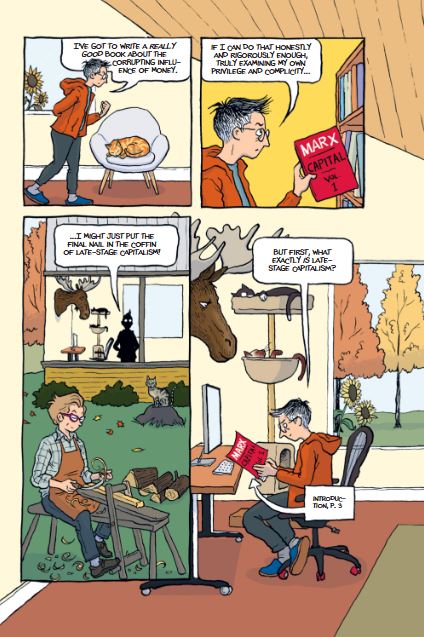
Then Alison has an idea for a book – or maybe a reality TV series – called $UM that will wean people off of capitalism. That creative journey is mirrored in Spent, which is composed of 12 “episodes” titled after Marxist terminology. Through Alison’s ageing hippie friends and their kids, Bechdel showcases alternative ways of living: a commune, a throuple, nonbinary identity, unpaid internships, Just Stop Oil demos, and the influencer lifestyle versus rejection of technology. It’s (auto)fiction exaggerated to the brink of absurdity, with details changed enough to mock but not enough to hide (e.g., she’s published by “Megalopub,” the hardware store is “Home Despot,” her show airs on “Schmamazon”).

Tiny details in the drawings reward close attention, such as Alison and Holly’s five cats’ antics during their morning routine, and a stuffed moose head rolling its eyes. It’s the funniest I can remember Bechdel being, with much broad humour derived from the outrageous screen mangling of her book – cannibalism, volcanoes and dragons come out of nowhere – and her middle-class friends’ hand-wringing over their liberal credentials. Even the throwaway phrases are hilarious. It’s a gleeful and zeitgeist-y satire, yet draws to a touching close as Alison has the epiphany that she can’t fix everything herself so must simply do what she can, “with a little help from her annoying, tender-hearted, and utterly luminous friends.”
Accessed as an e-book from Mariner Books. Published in the UK by Jonathan Cape (Penguin).
Insectopolis: A Natural History by Peter Kuper
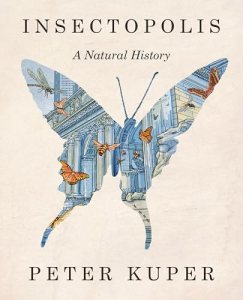 Nearly a decade ago, I reviewed Peter Kuper’s Ruins, which features monarch migration and has as protagonist a laid-off Natural History Museum entomologist. Here insects have even more of a starring role. The E. O. Wilson epigraph sets the stage: “If all mankind were to disappear, the world would regenerate back to the rich state of equilibrium that existed ten thousand years ago. If insects were to vanish, the environment would collapse into chaos.” We follow an African American brother-and-sister pair, the one dubious and the other eager, as they walk downtown to the New York Public Library. The sister, who holds a PhD in entomology, promises that its exhibition on insects is going to be amazing. But just before they reach the building, a red alert flashes up on every smartphone and sirens start blaring. A week later, the city is a ruin of overturned cabs and debris. Only insects remain and, group by group, they guide readers through the empty exhibit, interacting within and across species.


It’s a sly blend of science, history, stories and silliness. I loved the scenes of mosquitoes and ants railing against how they’ve been depicted as villainous, and dignified dung beetles resisting scatological jokes and standing up for their importance in ecosystems. There are interesting interludes about insects in literature (not just Kafka and Nabokov, but the Japanese graphic novel The Book of Human Insects by Osamu Tezuka), and unsung heroines of entomology get their moment in the sun. The pages in which Margaret Collins, an African American termite researcher in the 1950s, and Rachel Carson appear to a dragonfly as ghosts and tell their stories of being dismissed by male researchers were among my favourites. Informative and entertaining at once; what could be better? Welcome our insect overlords!
Accessed as an e-book from W. W. Norton & Company.
Ginseng Roots by Craig Thompson
 I’d read several of Thompson’s works and especially enjoyed his previous graphic memoir, Blankets, about his first love and loss of faith. When I read this blurb, I worried the niche subject couldn’t possibly sustain my attention for nearly 450 pages. But I was wrong; this is a vital book about everything, by way of ginseng. It begins with childhood summers working on American ginseng farms with his siblings in Marathon, Wisconsin. Theirs was a blue collar and highly religious family, but Thompson and his little brother Phil were allowed to spend their earnings from the back-breaking labour of weeding and picking rocks as they pleased. Each hour, each dollar, meant a new comic from the pharmacy. “Comics helped me survive my childhood. But what will help me survive my adulthood?” Thompson asks.

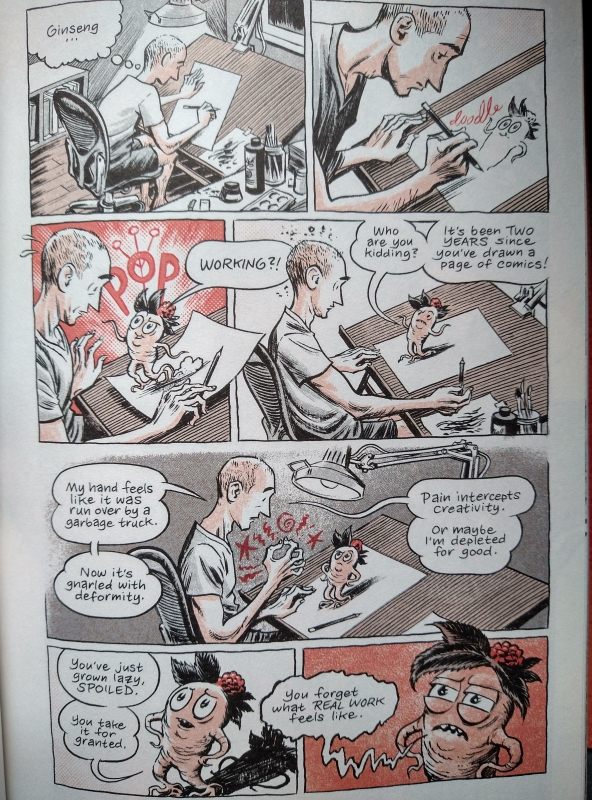
Together with Phil, he travels first to Midwest ginseng farms and festivals and then through China and Korea to learn about the plant’s history, cultivation practices, lore, and medicinal uses. As he meets producers – including a Hmong man whose early life mirrors his own – he feels sheepish about how he makes a living: “I carry this working-class guilt – what I do isn’t real work.” When his livelihood is threatened by worsening autoimmune conditions, he tries everything from acupuncture to psychotherapy to save his hands and his creativity.
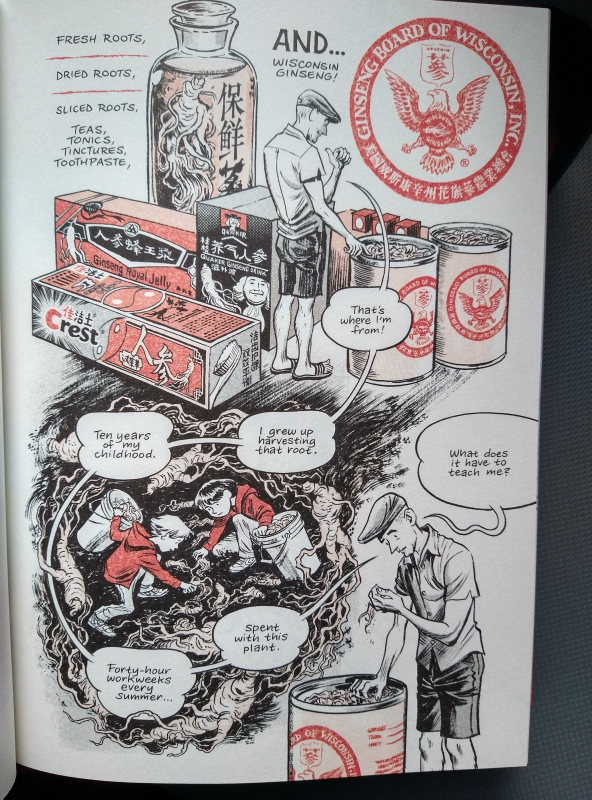
This chunky book has an appealing earth-tones palette and shifts smoothly between locations and styles, memories and research. When interviewing growers and Chinese medicine practitioners, the depictions are almost photorealistic, but there are also superhero pastiche panels and a cute ginseng mascot who pops up throughout the book. Like Spent, this pulls in class and economic issues in a lighthearted way and also explores its own composition process.
The story of ginseng is often sobering, involving the exploitation of immigrants (in the Notes, Thompson regrets that he was unable to speak with any of the Mexican migrant workers on whom the American ginseng harvest now depends), soil degradation, and pesticide pollution. The roots of the title are both literal and symbolic of the family story that unfolds in parallel. Both strands are captivating, but especially the autobiographical material: Thompson’s relationship with Phil, his new understanding but ongoing frustration with his parents, and the way all three siblings exhibit the damage of their upbringing – Phil’s marriage is crumbling; their sister Sarah, who has moved 26 times as an adult, wonders what she’s running from. A conversation with a Chinese herbal pharmacist gets to the heart of the matter: “I learned home is not WHERE I am. Home is HOW I am.”
Both expansive and intimate, this is a surprising gem from one of the best long-form graphic storytellers out there.
With thanks to Faber for the free copy for review. Published in the USA by Pantheon (Penguin).
#ReadIndies Wrap-Up: February Releases (Jukes, Spence) & Review Catch-Up (Buttery, Foust)
Good riddance to February, which added insult to injury on its final day when my in-laws’ neighbour reversed into the car we were borrowing from a book club friend and smashed the driver’s-side window. The blue skies and crocuses of recent days have been most welcome. The best I can say for the month just departed is that I managed to review 15 books for Kaggsy and Lizzy Siddal’s Reading Independent Publishers Month challenge. These came from 10 splendid publishers: Atlantic Books, Backbone Press, Carcanet Press, Counterpoint, Elliott & Thompson, The Emma Press, Faber, Icon Books, Saraband and Sort Of Books.
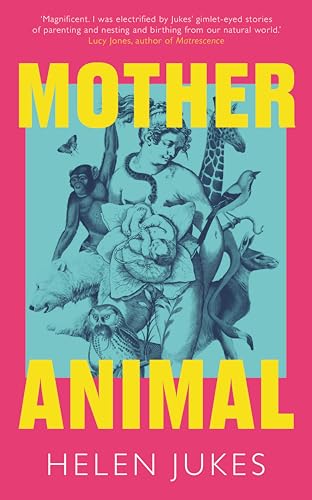
Mother Animal by Helen Jukes
When she found out she was pregnant, Jukes (author of A Honeybee Heart Has Five Openings) lost herself in research, looking for parallels in the natural world. A friend had told her that “childbirth puts you more in touch with your animal side.” Her daughter was born at the start of the pandemic and so early motherhood was perhaps more than usually isolated and emotionally challenging for her. She had an unexpected C-section after the placenta failed to nourish her daughter sufficiently, and then struggled to breastfeed. “I was, I realised, a little afraid of the baby. I’d expected to feel a sense of recognition – to see in her face some sign of familiarity,” but that wasn’t the case. “She was so … other.”
The long thematic chapters present Jukes’s experiences in parallel to those of other mothering creatures with pregnancy, birth, lactation, making a home (nesting) and enlisting the help of the community. Peppered throughout are trivia she shares with boyfriend, baby and readers. Such as that burying beetles lay eggs on a carcass so their babies feed on carrion from day one. That bonobo females attend births, acting as midwives for each other. That Madrid’s storks have started eating and lining their nests with what they find in landfill instead of migrating to Africa. The “Did you know?” litany quickly becomes precious. The details are not that interesting in themselves, and not sufficiently synthesized to be meaningful. The same factoid about leopard tree iguanas is repeated seven pages apart. A significant amount of information comes from Bitch by Lucy Cooke, which I would recommend instead.
As hybrid scientific memoirs of motherhood go, Lucy Jones’s Matrescence can’t be beat. For its social and political engagement, Jennifer Case’s We Are Animals is a valuable companion. Jukes’s offering pales by comparison because her story – not having the delivery she wanted, struggling to connect with her baby, her relationship with the father falling apart – is all too common, and she doesn’t have the scientific bona fides for readers to accept her as a valid source of zoological facts.
I would make an exception, though, for the central chapter, “Forever Milk,” which might be condensed and published in a big-name newspaper as a Rachel Carson-like exposé about endocrine disruptors and forever chemicals. Like any mother, Jukes wants nothing more than to protect her daughter, but how can she when household products (waterproof clothing, non-stick pans, cleaning sprays) contain toxic chemicals and her breastmilk is sure to be contaminated? Add in microplastics and the situation is bleak. We don’t know singly, let alone collectively, what these pollutants are doing to species in the long term, but most likely they interfere with reproduction and alter behaviour. The central message of this chapter, and the book as a whole, is that animals are amazing but vulnerable. “What is this world if nowhere is separate – nowhere safe?” If you think about this stuff much, you can’t bear it. Yet it’s a truth we all have to live with. It’s a brave author who dares sit with the unthinkable.
With thanks to Elliott & Thompson for the free copy for review.
Daughter of the Sun by Rachel Spence
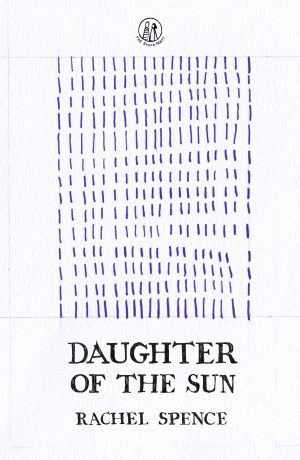 The Emma Press has published poetry pamphlets before, but this is their inaugural full-length work. Rachel Spence’s second collection is in two parts: first is “Call & Response,” a sonnet sequence structured as a play and considering her relationship with her mother. Act 1 starts in 1976 and zooms forward to key moments when they fell out and then reversed their estrangement. The next section finds them in the new roles of patient and carer. “Your final check-up. August. Nimbus clouds / prised open by Delft blue. Waiting is hard.” In Act 3, death is near; “in that quantum hinge, we made / an alphabet from love’s ungrammared stutter.” The poems of the last act are dated precisely, not just to a month and year as earlier but down to the very day, hour and minute. Whether in Ludlow or Venice, Spence crystallizes moments from the ongoingness of grief, drawing images from the natural world.
The second part of the book, “Medea’s Song,” is looser in style and more dispersed across the page. It’s a feminist reinterpretation that refuses to make of Medea a simple murderess, instead redeeming her as a wise woman. “Do not call them seers or sisters // They are the owls of history // nightfliers outliers”. I’m not drawn to Greek myth updates but I expect this would be rewarding for fans of similar projects by Fiona Benson and Anne Carson. Some of the specific vocabulary from the first section recurs, linking the two in a satisfying way.
With thanks to The Emma Press for the free copy for review.
I’m also catching up on two 2024 releases from indie publishers that I was sent for review:
Knead to Know: A History of Baking by Neil Buttery
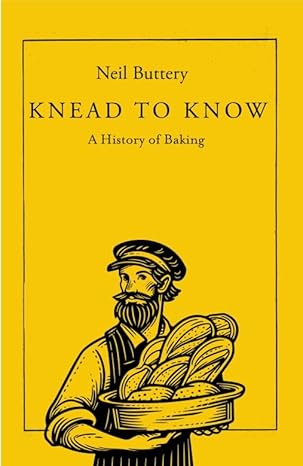 Not only the pun-tastic title, but also the excellent nominative determinism of chef and food historian Dr Neil Buttery’s name, earned this a place in my 2024 Superlatives post. In not quite 240 pages, it achieves the improbable, producing an exhaustive history of baked goods through miniature essays about every conceivable subcategory. Although the focus is on British baking, the story begins in ancient times with the first grains and the earliest cooking technique of making griddlecakes on a hearthstone. (Speaking of which, make sure you’re prepared for Pancake Day, aka Shrove Tuesday, this week!) Across multi-part chapters about bread, biscuits and cakes, pies and puddings, and patisserie, Buttery spotlights regional specialties, many of them familiar (Cornish pasties and Eccles cakes); a few have fallen into obscurity (Gloucester pancakes and Yorkshire Christmas pyes). Some dishes’ origin stories are apocryphal, while others can be traced back to historical cookbooks.
I was fascinated by the evolution of traditional holiday bakes. “The long tapering shape of the stollen is supposed to represent the infant Christ wrapped in His swaddling.” In general, there is just the right amount of chemistry, and while in places the writing is shaky or at least poorly edited (“populous” instead of populace!), there are good quips, too: “dried fruit haters do have a miserable time at Christmas to be fair.” I read the book in bites across a number of months, which felt appropriate because it’s more a reference text for the kitchen shelf than a narrative to read straight through. Good for picking up now and then over a cup of tea.
With thanks to Icon Books for the free copy for review.
You Are Leaving the American Sector: Love Poems by Rebecca Foust
 Foust’s fifth collection – at 41 pages, the length of a long chapbook – is in conversation with the language and storyline of 1984. George Orwell’s classic took on new prescience for her during Donald Trump’s first presidential term, a period marked by a pandemic as well as by corruption, doublespeak and violence. “Rally Insurrection” is a clever erasure poem illustrating how a propagandist might rebrand the storming of the Capitol on 6 January 2021: instead of “a mob came to Washington to / disrupt the peaceful transfer of power,” the Ministry of Truth bulletin would read “a crowd came to Washington to fight / for their country”. “Language Matters” insists that “language / is the most dangerous weapon in any totalitarian arsenal” and warns “A dictator / might do these things, but surely not // a president.” How much more strongly does this resonate in 2025.
The second and third sections engage directly with the story of Julia and Winston – the collection takes its seemingly inapt subtitle from Foust’s appreciation of 1984’s “idea of love as a subversive act affirming free will, expression, and personal privacy”. Her bold verse also confronts the repeal of abortion rights (“Breaking News”) and toxic masculinity (“Consent: A Primer”). There are some internal rhymes and slant rhymes, as well as a few end rhymes all the more striking for their rarity. I only wish this had been published a few years sooner, when its message might have seemed timelier – though, unfortunately, it is still apropos.
Some favorite lines:
“How can a future exist if we can erase or revise the past?”
“2016, dark year / of the ascension / of our Lord the Mad Clown”
“It’s happening now, / somewhere. Not here, // not yet. But so long as Big Brother is out there— / & he will always be out there—it could, // & one day, maybe it will.”
Published by Backbone Press in the USA. With thanks to the author for the e-copy for review.
Which of these appeal to you? What indie publishers have you read from recently?
2025 Releases Read So Far, Including a Review of Aerth by Deborah Tomkins
I’ve gotten to 22 books with a 2025 publication date so far, most of them for paid reviews for Foreword Reviews or Shelf Awareness. I give review excerpts, links where available, and ratings below to pique your interest. (I’ll follow up on Friday with a list of my 25 Most Anticipated titles for the first half of the year!) First, though, it’s time to introduce you to the joint winner of the inaugural Weatherglass Novella Prize, as chosen by Ali Smith – I reviewed the other winner, Astraea by Kate Kruimink, as part of Novellas in November.
Aerth by Deborah Tomkins
At Weatherglass Books’ “The Future of the Novella” event in September (my write-up is here), I was intrigued to learn about this sci-fi novella in flash set on alternative Earths. The draft title was “First, Do No Harm,” referring to one of the five mantras for life on Aerth, a peaceful matriarchal planet that has been devastated by a pandemic. Magnus, the Everyman protagonist, is his parents’ only surviving offspring after their first nine children died of the virus. We meet Magnus in what seems an idyllic childhood of seasonal celebrations and his mother’s homemade cakes. But the weight of his parents’ expectations is too much, and after his relationship with Tilly disintegrates, he decides to fulfil a long-held ambition of becoming an astronaut and travelling to Urth. Here he starts off famous – a sought-after talking head in the media with the ear of the prime minister – but public opinion eventually turns against him.

Urth could be modelled on contemporary London: polluted, capitalist and celebrity-obsessed. But it would be oversimplifying to call Aerth a pre-industrial foil; although at first its lifestyle seems more wholesome, later revelations force us to question why it developed in this way. The planets are twins with potentially parallel environmental and societal trajectories and some exact counterparts; the hints about this “mirrorverse” are eerie. It all could have added up to an unsubtle allegory in which Aerth represents what we should aspire to and Urth symbolizes what we must resist, but Tomkins makes it more nuanced than that. Magnus’s homesickness when he fears he’s trapped on Urth is a heart-rending element, and the diverse styles and formats (such as lists, documents, and second-person sections) keep things interesting. The themes of parenting and loneliness are particularly potent.
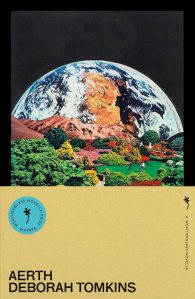 Tomkins first wrote this for the Bath Prize in 2018 and was longlisted. She initially sent the book out to science fiction publishers but was told that it wasn’t ‘sci-fi enough’. I can see how it could fall into the gap between literary fiction and genre fiction: though it’s set on other planets and involves space travel, its speculative nature is understated; it feels more realist. A memorable interrogation of longing and belonging, this novella ponders the value of individuals and their choices in the midst of inexorable planetary trajectories.
(Wowee, Aerth made it onto Eric of Lonesome Reader’s Top Ten list for 2024!)
With thanks to Weatherglass Books for the free copy for review. Aerth will be released on 25 January.
My top recommendations so far for 2025:
(in alphabetical order) All: 
 Save Me, Stranger by Erika Krouse (Flatiron Books, January 21): These 12 first-person narratives are voiced by people in crisis, for whom encounters with strangers tender the possibility of transformation. In the title story, the narrator is taken hostage in a convenience store hold-up. Krouse frequently focuses on young women presented with dilemmas. In “The Pole of Cold,” Vera meets Theo, the son of the American weather researchers who died in the same Siberian plane crash that killed her reindeer herder father. Travel is a recurring element, with stories set in Thailand and Japan as well as various U.S. states. The book exhibits tremendous range, imagining a myriad places, minds, and situations. Krouse often eschews tidy endings, leaving characters on the brink and allowing readers to draw inferences about what they will decide. Fans of Danielle Evans and Lauren Groff have a treat in store.
 Immemorial by Lauren Markham (Transit Books, February 4): This outstanding book-length essay compares language, memorials, and rituals as strategies for coping with climate anxiety and grief. The dichotomies of the physical versus the abstract and the permanent versus the ephemeral are explored; the past, present, and future dance through the text. With language not changing at the pace of the climate, Markham turns to the “Bureau of Linguistical Reality” for help coining a new term for anticipatory ecological grief. The title is one candidate, “premation” another. Forthright, wistful, and determined, the book treats grief as a positive, as “fuel” or a “portal.” Hope is not theoretical in this setup, but solidified in action. In Markham’s case, becoming a parent embodied her trust in the future. Immemorial is an elegant meditation on memory and impermanence in an age of climate crisis.
 Y2K: How the 2000s Became Everything (Essays on the Future that Never Was) by Colette Shade (out today from Dey Street Books!): Shade’s debut collection contains 10 perceptive essays that contrast the promise and political pitfalls of “the Y2K Era” (1997–2008). The author was an adolescent at the turn of the millennium and recalls the thrill of early Internet use and celebrity culture. Consumerism was a fundamental doctrine but the financial crash prompted a loss of faith in progress. It’s a feast of millennial nostalgia but also a hard-hitting work of cultural criticism.
 Show Don’t Tell by Curtis Sittenfeld (Random House, February 25; Transworld, 27 February): Sittenfeld’s second collection features characters negotiating principles and privilege in midlife. The 12 stories spotlight everyday marital and parenting challenges. Dual timelines offer opportunities for hindsight on the events of decades ago. College and boarding school experiences, in particular, remain pivotal. The arbitrary nature of wealth and celebrity is a central theme. Warm, witty, and insightful.
Other 2025 releases:
(in publication date order)
 How Isn’t It Going? Conversations after October 7 by Delphine Horvilleur [trans. from the French by Lisa Appignanesi] (out today from Europa Editions!): There is by turns a stream of consciousness or folktale quality to the narrative as Horvilleur enacts 11 dialogues – some real and others imagined – with her late grandparents, her children, or even abstractions. She draws on history, scripture and her own life, wrestling with thoughts that come during insomniac early mornings. It’s a lament for the Jewish condition, and a warning of the continuing and insidious nature of antisemitism. But it’s not all mourning; there is sometimes a wry sense of humour that feels very Jewish.
 Cold Kitchen: A Year of Culinary Travels by Caroline Eden (Out in UK since May 2024; U.S. release: Bloomsbury, January 14): Eden cooks and writes in the basement kitchen of her Edinburgh apartment. When wanderlust strikes, she revisits favorite places via their cuisine. Her sumptuous fourth book journeys across Central Asia and Eastern Europe, harvesting memories and recipes. (Plus my Shelf Awareness interview)
 North of Ordinary by John Rolfe Gardiner (Bellevue Literary Press, January 14): I read 5 of 10 stories about young men facing life transitions and enjoyed the title one set at a thinly veiled Liberty University but found the rest dated in outlook; all have too-sudden endings.
 If Nothing by Matthew Nienow (Alice James Books, January 14): Straightforward poems about giving up addiction and seeking mental health help in order to be a good father.
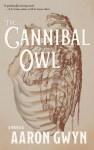 The Cannibal Owl by Aaron Gwyn (Belle Point Press, January 28): An orphaned boy is taken in by the Comanche in 1820s Texas in a brutal novella for fans of Cormac McCarthy.
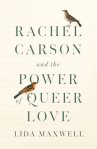 Rachel Carson and the Power of Queer Love by Lida Maxwell (Stanford University Press, January 28): Maxwell’s enthusiastic academic study reappraises scientist Rachel Carson’s motivations in light of ecological crisis and queer studies.
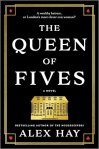 The Queen of Fives by Alex Hay (Graydon House, January 21; Headline, 30 January): Quinn Le Blanc, the latest in a dynasty of London con artists, resolves to pose as a debutante and marry a duke for his fortune – all in just five days in 1898. Like The Housekeepers, it’s a playful romp featuring strong female characters.
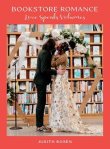 Bookstore Romance: Love Speaks Volumes by Judith Rosen (Brandeis University Press, February 1): A bibliophile’s time capsule and an enduring record of love and literary obsessions, this is a swoon-worthy coffee table book about couples who formalized their relationships in bookstores.
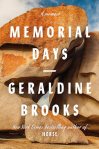 Memorial Days by Geraldine Brooks (Viking, February 4): This elegant bereavement memoir chronicles the sudden death of Brooks’s husband (journalist Tony Horwitz) in 2019 and her grief retreat to Flinders Island, Australia.
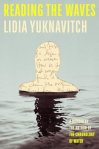 Reading the Waves by Lidia Yuknavitch (Riverhead, February 4): Yuknavitch’s bold memoir-in-essays focuses on pivotal scenes and repeated themes from her life as she reckons with trauma and commemorates key relationships. (A little too much repeated content from The Chronology of Water for me.)
 The Book of Flaco: The World’s Most Famous Bird by David Gessner (Blair, February 11): Gessner’s engaging nature book tells the story of the escaped Central Park Zoo Eurasian eagle-owl. It’s a touching tribute and a subtle challenge to reconsider human effects on wildlife.
 We Would Never by Tova Mirvis (Avid Reader Press, February 11): Mirvis’s fourth novel, inspired by real-life headlines, tells the taut story of an acrimonious divorce case gone horribly wrong. It explores the before and after of a murder, as the victim’s soon-to-be-ex-wife comes under suspicion and her family huddles around to protect her.
 The Café with No Name by Robert Seethaler [trans. from the German by Katy Derbyshire] (Europa Editions, 25 February): Set in 1960s and 1970s Vienna, where World War II still reverberates, this tender novel about a restaurateur’s interactions with acquaintances and customers meditates on the passage of time and bonds that last.
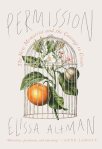 Permission: The New Memoirist and the Courage to Create by Elissa Altman (David R. Godine, March 4): Full of stories drawn from Altman’s life and other authors’ experience, this is an inspirational guide to defusing shame through self-disclosure and claiming the time and focus to write.
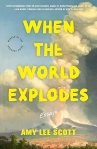 When the World Explodes: Essays by Amy Lee Scott (Mad Creek Books, March 6): Eleven inquisitive pieces set personal crises alongside natural disasters and gun violence. Scott was adopted as a baby from Korea; motherhood and adoption are potent themes across the book.
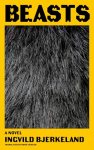 Beasts by Ingvild Bjerkeland [trans. from the Norwegian by Rosie Hedger] (Levine Querido, April 1): In this chilling young adult novella, a teenager tries to keep his little sister safe and reunite with their father in a hazardous postapocalyptic world.
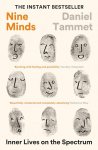 Nine Minds: Inner Lives on the Spectrum by Daniel Tammet (Out in UK since July 2024; U.S. release: The Experiment, April 1): A biographical mosaic of neurodivergence built of stories of individuals whose struggles and achievements defy the clichés surrounding autism. (Notable inclusions: actor Dan Aykroyd, novelist Naoise Dolan.)
Will you look out for one or more of these?
Any other 2025 reads you can recommend?
Book Serendipity, November to December 2024
I call it “Book Serendipity” when two or more books that I read at the same time or in quick succession have something in common – the more bizarre, the better. This is a regular feature of mine every couple of months. Because I usually have 20–30 books on the go at once, I suppose I’m more prone to such incidents. People frequently ask how I remember all of these coincidences. The answer is: I jot them down on scraps of paper or input them immediately into a file on my PC desktop; otherwise, they would flit away! The following are in roughly chronological order.
- Characters who were in a chess club and debating society in high school/college in Playground by Richard Powers and Intermezzo by Sally Rooney.
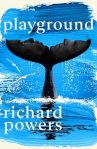
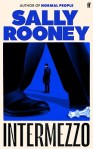
- Pondering the point of a memorial and a mention of hiring mourners in Immemorial by Lauren Markham and Basket of Deplorables by Tom Rachman.
- A mention of Rachel Carson, and her The Sea Around Us in particular, in Playground by Richard Powers, while I was also reading for review Rachel Carson and the Power of Queer Love by Lida Maxwell.
- A character pretends to be asleep when someone comes into the room to check on them in Knulp by Hermann Hesse and Rental House by Weike Wang.
- A mention of where a partner puts his pistachio shells in After the Rites and Sandwiches by Kathy Pimlott and Rental House by Weike Wang.
 A character who startles very easily (in the last two cases because of PTSD) in Life before Man by Margaret Atwood, A History of Sound by Ben Shattuck, and Disconnected by Eleanor Vincent.
- The husband is named Nate in Life before Man by Margaret Atwood and Rental House by Weike Wang.
- In People Collide by Isle McElroy, there’s a mention of Elizabeth reading “a popular feminist book about how men explained things to women.” The day I finished reading the novel, I started reading the book in question: Men Explain Things to Me by Rebecca Solnit.
- I learned about the “he’s-at-home” (19th-century dildo) being used by whalers’ wives on Nantucket while the husbands are away at sea through historical fiction – Daughters of Nantucket by Julie Gerstenblatt, which I read last year – and encountered the practice again through an artefact found in the present day in The History of Sound by Ben Shattuck. Awfully specific!
- A week after I finished reading Station Eleven by Emily St. John Mandel, it turned up in a discussion of Vancouver Island in Island by Julian Hanna.
- A Cape Cod setting in Sandwich by Catherine Newman (earlier in the year) plus The History of Sound by Ben Shattuck and Rental House by Weike Wang.
- A gay character references Mulder and Scully (of The X-Files) in the context of determining sexual preference, and there’s a female character named Kit, in The Old Haunts by Allan Radcliffe and one story of Show Don’t Tell by Curtis Sittenfeld.
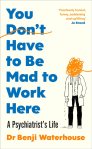
- A mention of The Truman Show in the context of delusions in The Year of Living Biblically by A.J. Jacobs and You Don’t Have to Be Mad to Work Here by Benji Waterhouse.
- St. Lucia is mentioned in Beasts by Ingvild Bjerkeland, Brightly Shining by Ingvild Rishøi (two Norwegian authors named Ingvild there!), and Mudhouse Sabbath by Lauren Winner.
- A pet named Darwin: in Levels of Life by Julian Barnes it’s Sarah Bernhardt’s monkey; in Cold Kitchen by Caroline Eden it’s her beagle. Within days I met another pet beagle named Darwin in Island by Julian Hanna. (It took me a moment to realize why it’s a clever choice!)
- A character named Henrik in The Place of Tides by James Rebanks and one story of Show Don’t Tell by Curtis Sittenfeld, and a Hendrik in The Safekeep by Yael van der Wouden.
- A hat with a green ribbon in The Safekeep by Yael van der Wouden and one story of Show Don’t Tell by Curtis Sittenfeld (in which it’s an emoji).
- Romanian neighbours who speak very good English in Island by Julian Hanna and Rental House by Weike Wang.
- A scene of returning to a house one used to live in in Hyper by Agri Ismaïl, The Old Haunts by Allan Radcliffe, and one story of Show Don’t Tell by Curtis Sittenfeld.
- A woman has had three abortions in The House of Dolls by Barbara Comyns and Without Exception by Pam Houston.
- Household items keep going missing and there’s broken china in The House of Dolls by Barbara Comyns and The Safekeep by Yael van der Wouden.
- Punctuated equilibrium (a term from evolutionary biology) is used as a metaphor in Hyper by Agri Ismaïl and Men Explain Things to Me by Rebecca Solnit.
 The author’s mother repeatedly asked her daughter a rhetorical question along the lines of “Do you know what I gave up to have you?” in Permission by Elissa Altman and Without Exception by Pam Houston.
- The author/character looks in the mirror at the end of a long day and hardly recognizes him/herself in The Place of Tides by James Rebanks, You Don’t Have to Be Mad to Work Here by Benji Waterhouse, and Amphibian by Tyler Wetherall.
- A man is afraid to hold his boyfriend’s hand in public in another country because he’s unsure about the cultural attitudes towards homosexuality in Clinical Intimacy by Ewan Gass and Small Rain by Garth Greenwell.
- The author’s mother is a therapist/psychologist and the author her/himself is undergoing some kind of mental health treatment in Unattached by Reannon Muth and You Don’t Have to Be Mad to Work Here by Benji Waterhouse.
- A man declares that dying in one’s mid-40s is nothing to complain about in A Beginner’s Guide to Dying by Simon Boas and Small Rain by Garth Greenwell.
- A woman ponders whether her ongoing anxiety is related to the stressful circumstances of her birth in Unattached by Reannon Muth and When the World Explodes by Amy Lee Scott.
What’s the weirdest reading coincidence you’ve had lately?
Nonfiction November Book Pairings: Autistic Husbands & The Ocean
Liz is the host for this week’s Nonfiction November prompt. The idea is to choose a nonfiction book and pair it with a fiction title with which it has something in common.
I came up with these two based on my recent reading:
An Autistic Husband
The Rosie Effect by Graeme Simsion (also The Rosie Project and The Rosie Result)
&
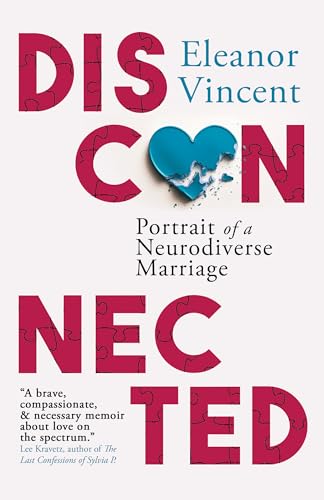
Disconnected: Portrait of a Neurodiverse Marriage by Eleanor Vincent
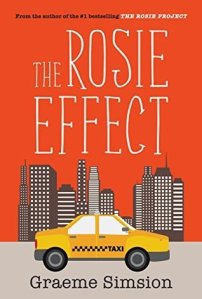 Graeme Simsion’s Don Tillman trilogy tells the odd-couple story of an autistic professor and how he falls in love with and marries a wholly unsuitable neurotypical woman. He turns this situation into romantic comedy. For Eleanor Vincent, it wasn’t so funny. She met her third husband, computer scientist Lars (a pseudonym), through Zydeco dancing when she was in her sixties. Though aware that he could be unemotional and act strangely, she found him chivalrous and sweet. They dated for a time but he hurt and confused her by asking for his apartment keys back. After a five-year period she calls their “Interregnum,” the two got back together and married. Despite their years of friendship, she was completely unprepared for what living with him would be like. “At the age of seventy-one, I had married a stranger,” she writes.
It didn’t help that Covid hit partway through their four-year marriage, nor that they each received a cancer diagnosis (cervical vs. prostate). But the problems were more with their everyday differences in responses and processing. During their courtship, she ignored some bizarre things he did around her family: he bit her nine-year-old granddaughter as a warning of what would happen if she kept antagonizing their cat, and he put a gift bag over his head while they were at the dinner table with her siblings. These are a couple of the most egregious instances, but there are examples throughout of how Lars did things she didn’t understand. Through support groups and marriage counselling, she realized how well Lars had masked his autism when they were dating – and that he wasn’t willing to do the work required to make their marriage succeed. The book ends with them estranged but a divorce imminent.
 If this were purely carping about a husband’s weirdness, it might have been tedious or depressing. But Vincent doesn’t blame Lars, and she incorporates so much else in this short memoir, including a number of topics that are of particular interest to me. There’s her PTSD from a traumatic upbringing, her parents’ identity as closeted gay people, the complications around her father’s death, the tragedy of her older daughter’s death, as well as the more everyday matters of being a working single parent, finding an affordable property in California’s Bay Area, and blending households.
Vincent crafts engaging scenes with solid recreated dialogue, and I especially liked the few meta chapters revealing “What I Left Out” – a memoir is always a shaped narrative, while life is messy; this shows both. She is also honest about her own failings and occasional bad behavior. I probably could have done with a little less detail on their sex life, however.
This had more relevance to me than expected. While my sister and I were clearing our mother’s belongings from the home she shared with her second husband for the 16 months between their wedding and her death, our stepsisters mentioned to us that they suspected their father was autistic. It was, as my sister said, a “lightbulb” moment, explaining so much about our respective parents’ relationship, and our interactions with him as well. My stepfather (who died just 10 months after my mother) was a dear man, but also maddening at times. A retired math professor, he was logical and flat of affect. Sometimes his humor was off-kilter and he made snap, unsentimental decisions that we couldn’t fathom. Had they gotten longer together, no doubt many of the issues Vincent experienced would have arisen. (Read via BookSirens)
[173 pages]
The Ocean
Playground by Richard Powers
&
Rachel Carson and the Power of Queer Love by Lida Maxwell
The Blue Machine by Helen Czerski
Under the Sea Wind by Rachel Carson
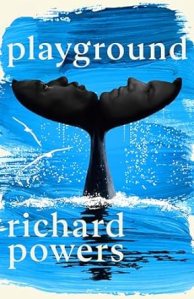 While I was less than enraptured with its artificial intelligence theme and narrative trickery, I loved the content about the splendour of the ocean in Richard Powers’s Booker Prize-longlisted Playground. Most of this comes via Evelyne Beaulieu, a charismatic French Canadian marine biologist (based in part on Sylvia Earle) who is on the first all-female submarine mission and is still diving in the South Pacific in her nineties. Powers explicitly references Rachel Carson’s The Sea Around Us. Between that and the revelation of Evelyne as a late-bloomer lesbian, I was reminded of Rachel Carson and the Power of Queer Love, a forthcoming novella-length academic study by Lida Maxwell that I have assessed for Foreword Reviews. Maxwell’s central argument is that Carson’s romantic love for a married woman, Dorothy Freeman, served as an awakening to wonder and connection and spurred her to write her greatest works.
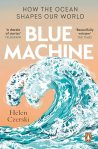
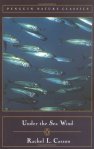
After reading Playground, I decided to place a library hold on Blue Machine by Helen Czerski (winner of the Wainwright Writing on Conservation Prize this year), which Powers acknowledges as an inspiration that helped him to think bigger. I have also pulled my copy of Under the Sea Wind by Rachel Carson off the shelf as it’s high time I read more by her.
Previous book pairings posts: 2018 (Alzheimer’s, female friendship, drug addiction, Greenland and fine wine!) and 2023 (Hardy’s Wives, rituals and romcoms).
#1962Club: A Dozen Books I’d Read Before
I totally failed to read a new-to-me 1962 publication this year. I’m disappointed in myself as I usually manage to contribute one or two reviews to each of Karen and Simon’s year clubs, and it’s always a good excuse to read some classics.

My mistake this time was to only get one option: Pale Fire by Vladimir Nabokov, which I had my husband borrow for me from the university library. I opened it up and couldn’t make head or tail of it. I’m sure it’s very clever and meta, and I’ve enjoyed Nabokov before (Pnin, in particular), but I clearly needed to be in the right frame of mind for a challenge, and this month I was not.
Looking through the Goodreads list of the top 100 books from 1962, and spying on others’ contributions to the week, though, I can see that it was a great year for literature (aren’t they all?). Here are 12 books from 1962 that I happen to have read before, most of which I’ve reviewed here in the past few years. I’ve linked to those and/or given review excerpts where I have them, and the rest I describe to the best of my muzzy memory.
 The Wolves of Willoughby Chase by Joan Aiken – The snowy scene on the cover and described in the first two paragraphs drew me in and the story, a Victorian-set fantasy with notes of Oliver Twist and Jane Eyre, soon did, too. Dickensian villains are balanced out by some equally Dickensian urchins and helpful adults, all with hearts of gold. There’s something perversely cozy about the plight of an orphan in children’s books: the characters call to the lonely child in all of us; we rejoice to see how ingenuity and luck come together to defeat wickedness. There are charming passages here in which familiar smells and favourite foods offer comfort. This would make a perfect stepping stone from Roald Dahl to one of the Victorian classics.
 Instead of a Letter by Diana Athill – This was Athill’s first book, published when she was 45. An unfortunate consequence of my not having read the memoirs in the order in which they are written is that much of the content of this one seemed familiar to me. It hovers over her childhood (the subject of Yesterday Morning) and centres in on her broken engagement and abortion, two incidents revisited in Somewhere Towards the End. Although Athill’s careful prose and talent for candid self-reflection are evident here, I am not surprised that the book made no great waves in the publishing world at the time. It was just the story of a few things that happened in the life of a privileged Englishwoman. Only in her later life has Athill become known as a memoirist par excellence.
 The Drowned World by J.G. Ballard – (Read in October 2011.) Quite possibly the first ‘classic’ science fiction work I’d ever read. I found Ballard’s debut dated, with passages of laughably purple prose, poor character development (Beatrice is an utter Bond Girl cliché), and slow plot advancement. It sounded like a promising environmental dystopia – perhaps a forerunner of Oryx and Crake – but beyond the plausible vision of a heated-up and waterlogged planet, the book didn’t have much to offer. The most memorable passage was when Strangman drains the water and Kerans discovers Leicester Square beneath; he walks the streets and finds them uninhabited except by sea creatures clogging the cinema entrances. That was quite a potent, striking image. But the scene that follows, involving stereotyped ‘Negro’ guards, seemed like a poor man’s Lord of the Flies rip-off.
 Silent Spring by Rachel Carson – Carson’s first chapter imagines an American town where things die because nature stops working as it should. Her main target was insecticides that were known to kill birds and had presumed negative effects on human health through the food chain and environmental exposure. Although the details may feel dated, the literary style and the general cautions against submitting nature to a “chemical barrage” remain potent.
 We Have Always Lived in the Castle by Shirley Jackson – I loved the offbeat voice and unreliable narration, and the way that the Blackwood house is both a refuge and a prison for the sisters. “Where could we go?” Merricat asks Constance when she expresses concern that she should have given the girl a more normal life. “What place would be better for us than this? Who wants us, outside? The world is full of terrible people.” As the novel goes on, you ponder who is protecting whom, and from what. There are a lot of great scenes, all so discrete that I could see this working very well as a play with just a few backdrops to represent the house and garden. It has the kind of small cast and claustrophobic setting that would translate very well to the stage.
 Tales from Moominvalley by Tove Jansson – Moomintroll discovers a dragon small enough to be kept in a jar; laughter brings a fearful child back from literal invisibility. But what struck me more was the lessons learned by neurotic creatures. In “The Fillyjonk who believed in Disasters,” the title character fixates on her belongings, but when a gale and a tornado come and sweep it all away, she experiences relief and joy. My other favourite was “The Hemulen who loved Silence.” After years as a fairground ticket-taker, he can’t wait to retire and get away from the crowds and the noise, but once he’s obtained his precious solitude he realizes he needs others after all. In “The Fir Tree,” the Moomins, awoken midway through hibernation, get caught up in seasonal stress and experience Christmas for the first time.
The Snowy Day by Ezra Jack Keats – A perennial favourite from my childhood, with a paper-collage style that has influenced many illustrators. Just looking at the cover makes me nostalgic for the sort of wintry American mornings when I’d open an eye to a curiously bright aura from around the window, glance at the clock and realize my mom had turned off my alarm because it was a snow day and I’d have nothing ahead of me apart from sledding, playing boardgames and drinking hot cocoa with my best friend. There was no better feeling.

 A Wrinkle in Time by Madeleine L’Engle – (Reread in 2021.) I probably picked this up at age seven or so, as a follow-on from the Chronicles of Narnia. Interplanetary stories have never held a lot of interest for me. As a child, I was always more drawn to talking-animal stuff. Again I found the travels and settings hazy. It’s admirable of L’Engle to introduce kids to basic quantum physics, and famous quotations via Mrs. Who, but this all comes across as consciously intellectual rather than organic and compelling. Even the home and school talk feels dated. I most appreciated the thought of a normal – or even not very bright – child like Meg saving the day through bravery and love. This wasn’t for me, but I hope that for some kids, still, it will be pure magic.
 The Golden Notebook by Doris Lessing – I read this feminist classic in my early twenties, in the days when I was working at a London university library. Lessing wrote autofiction avant la lettre, and the gist of this novel is that ‘Anna’, a writer, divides her life into four notebooks of different colours: one about her African upbringing, another about her foray into communism, a third containing an autobiographical novel in progress, and the fourth a straightforward journal. The fabled golden notebook is the unified self she tries to create as her romantic life and mental health become more complicated. Julianne Pachico read this recently and found it very powerful. I think I was too young for this and so didn’t appreciate it at the time. Were I to reread it, I imagine I would get a lot more out of it.
 The Pumpkin Eater by Penelope Mortimer – More autofiction. Like a nursery rhyme gone horribly wrong, this is the story of a woman who can’t keep it together. She’s the woman in the shoe, the wife whose pumpkin-eating husband keeps her safe in a pumpkin shell, the ladybird flying home to find her home and children in danger. Aged 31 and already on her fourth husband, the narrator, known only as Mrs. Armitage, has an indeterminate number of children. Her current husband, Jake, is a busy filmmaker whose philandering soon becomes clear, starting with the nanny. A breakdown at Harrods is the sign that Mrs. A. isn’t coping. Most chapters begin in medias res and are composed largely of dialogue, including with Jake or her therapist. The book has a dark, bitter humour and brilliantly recreates a troubled mind.
 One Day in the Life of Ivan Denisovich by Aleksandr Solzhenitsyn – This was required reading in high school, a novella and circadian narrative depicting life for a prisoner in a Soviet gulag. And that’s about all I can tell you about it. I remember it being just as eye-opening and depressing as you might expect, but pretty readable for a translated classic.
 A Cat in the Window by Derek Tangye – Tangye wasn’t a cat fan to start with, but Monty won him over. He lived with newlyweds Derek and Jeannie first in the London suburb of Mortlake, then on their flower farm in Cornwall. When they moved to Minack, there was a sense of giving Monty his freedom and taking joy in watching him live his best life. They were evacuated to St Albans and briefly lived with Jeannie’s parents and Scottie dog, who became Monty’s nemesis. Monty survived into his 16th year, happily tolerating a few resident birds. Tangye writes warmly and humorously about Monty’s ways and his own development into a man who is at a cat’s mercy. This was really the perfect chronicle of life with a cat, from adoption through farewell. Simon thought so, too.
Here’s hoping I make a better effort at the next year club!
Six Degrees of Separation: Second Place to Woman on the Edge of Time
The last Six Degrees of Separation post I did was back in April; I’ve fallen out of the habit since then. But this month an idea seized me and I’m back! This time we begin with Second Place by Rachel Cusk, which is on the Booker Prize longlist. (See Kate’s opening post.)

When I saw Cusk speak at the online Hay Festival, I learned that Second Place (my review) was loosely inspired by Mabel Dodge Luhan’s 1932 memoir Lorenzo in Taos, about the time when D.H. Lawrence came to visit her in New Mexico. Thoughts of Lawrence in Taos inevitably take me back to my first (and only) academic conference in 2005, hosted by the D.H. Lawrence Society of North America in Santa Fe, with a fieldtrip out to his Taos ranch.
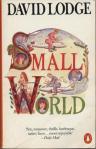 #1 One of the books I read ‘in preparation’ for attending that conference was Small World by David Lodge, a comedic novel about professors on the international conference circuit. I’ve included it as one of the Landmark Books of My Life.
 #2 Flights and “small world” connections also fill the linked short story collection Turbulence by David Szalay.
 #3 If you can bear to remember the turbulence of recent history, UnPresidented by Jon Sopel is a breezy diary of the 2020 U.S. election. We were lucky enough to have the author, a BBC presenter and brother of one of our members, join our book club discussion on Zoom.
 #4 That punning title reminded me of A Sting in the Tale by Dave Goulson, his first and probably best work of popular science – all of his books since have been very similar, but that’s no problem because his enthusiasm for insect life is infectious and he writes with the wit and charm of Gerald Durrell.
#5 Goulson’s latest book, which I’ve recently reviewed for Shelf Awareness, is called Silent Earth, about the grave threats that insects face (pesticides, invasive species, climate change and much more). It’s the second book I’ve read in recent years (the first was Losing Eden by Lucy Jones) that is explicitly based on or inspired by Silent Spring by Rachel Carson. Like Carson’s book, these seek to effect real societal change.


#6 Carson, Goulson and Jones all conjure up dystopian scenarios of unimaginable natural loss to spur readers into action. A feminist classic my book club read earlier in the year, Woman on the Edge of Time by Marge Piercy, contrasts utopian and dystopian scenes experienced by a Latina woman who’s been confined to a mental hospital. Will society evolve into a utopian vision of subsistence living and absolute gender equality, or move towards further isolation and urban barrenness? It’s an unusual and fascinating novel with hints of science fiction, but grounded in the real world. I still haven’t managed to review it, but next month’s 1976 Club may be just the excuse I need. Do give it a try!

Cycling round from one feminist novel to another, I’ve also featured a couple of personal favourites, some recent works, and a classic of nature writing.
Where will your chain take you? Join us for #6Degrees of Separation! (Hosted on the first Saturday of each month by Kate W. of Books Are My Favourite and Best.) Next month’s R.I.P.-appropriate starting point is the short story “The Lottery” by Shirley Jackson.
Have you read any of my selections? Are you tempted by any you didn’t know before?
Random 2020 Superlatives and Statistics
My top ‘discoveries’ of the year: Chimamanda Ngozi Adichie (4 books), Octavia E. Butler, Tim Dee (3 books each, read or in progress), and Louise Erdrich (2 books, one in progress).


Also the publisher Little Toller Books: I read four of their releases this year and they were fantastic.
The authors I read the most by this year: Carol Shields tops the list at 6 books (3 of these were rereads) thanks to my buddy reads with Buried in Print, followed by Paul Auster with 5 due to Annabel’s reading week in February, then Chimamanda Ngozi Adichie with 4, and finally Anne Lamott with 3 comfort rereads.


Debut authors whose next work I’m most looking forward to: Naoise Dolan, Bess Kalb, Dara McAnulty, Mary South, Brandon Taylor, and Madeleine Watts
My proudest reading achievement: 16 rereads, which must be a record for me. Also, I always say I’m not really a short story person … and yet somehow I’ve read 19 collections of them this year (and one stand-alone story, plus another collection currently on the go)!
My proudest (non-reading) bookish achievement: Conceiving of and coordinating the Not the Wellcome Prize blog tour.
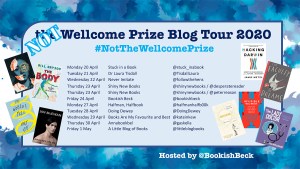
Five favorite blog posts of the year: Love, Etc. – Some Thematic Reading for Valentine’s Day; Polio and the Plague: Epidemics in Fiction; Thinking about the Future with David Farrier & Roman Krznaric (Hay Festival); Three Out-of-the-Ordinary Memoirs: Kalb, Machado, McGuinness; Asking What If? with Rodham by Curtis Sittenfeld (I had a lot of fun putting the current post together, too!)
The bookish experience that most defined my year: Watching the Bookshop Band’s live shows from their living room. Between their Friday night lockdown performances and one-offs for festivals and book launches, I think I saw them play 33 times in 2020!

Biggest book read this year: Going by dimensions rather than number of pages, it was the oversize hardback The Lost Words by Robert Macfarlane and Jackie Morris.
vs.
Smallest book read this year: Pocket-sized and only about 60 pages: No One Is Too Small to Make a Difference by Greta Thunberg.

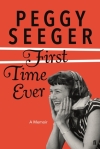 Oldest author read this year: Peggy Seeger was 82 when her memoir First Time Ever was published. I haven’t double-checked the age of every single author, but I think second place at 77 is a tie between debut novelist Arlene Heyman for Artifact and Sue Miller for Monogamy. (I don’t know how old Michael McCarthy, Jeremy Mynott and Peter Marren, the joint authors of The Consolation of Nature, are; Mynott may actually be the oldest overall, and their combined age is likely over 200.)
vs.
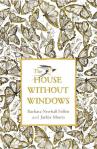 Youngest author read this year: You might assume it was 16-year-old Dara McAnulty with Diary of a Young Naturalist, which won the Wainwright Prize (as well as the An Post Irish Book Award for Newcomer of the Year, the Books Are My Bag Reader Award for Non-Fiction, and the Hay Festival Book of the Year!) … or Thunberg, above, who was 16 when her book came out. They were indeed tied for youngest until, earlier in December, I started reading The House without Windows (1927) by Barbara Newhall Follett, a bizarre fantasy novel published when the child prodigy was 12.
Most As on a book cover: Americanah by Chimamanda Ngozi Adichie
vs.
Most Zs on a book cover: The Hiding Place by Trezza Azzopardi. I haven’t read it yet, but a neighbor passed on a copy she was getting rid of. It was nominated for both the Booker Prize and the Orange Prize.

 The book that made me laugh the most: Kay’s Anatomy by Adam Kay
Books that made me cry: Writers and Lovers by Lily King, Monogamy by Sue Miller, First Time Ever by Peggy Seeger, and Catalogue Baby: A Memoir of (In)fertility by Myriam Steinberg (coming out in March 2021)
 The book that put a song in my head every single time I looked at it, much less read it: I Am an Island by Tamsin Calidas (i.e., “I Am a Rock” by Simon and Garfunkel, which, as my husband pointed out, has very appropriate lyrics for 2020: “In a deep and dark December / I am alone / Gazing from my window to the streets below … Hiding in my room / Safe within my womb / I touch no one and no one touches me.”)
Best book club selections: Notes from an Exhibition by Patrick Gale and The Wife by Meg Wolitzer tied for our highest score ever and gave us lots to talk about.

 Most unexpectedly apt lines encountered in a book: “People came to church wearing masks, if they came at all. They’d sit as far from each other as they could.” (Gilead by Marilynne Robinson. Describing not COVID-19 times but the Spanish flu.)
 Most ironic lines encountered in a book: “September 12—In the ongoing hearings, Senator Joseph Biden pledges to consider the Bork nomination ‘with total objectivity,’ adding, ‘You have that on my honor not only as a senator, but also as the Prince of Wales.’ … October 1—Senator Joseph Biden is forced to withdraw from the Democratic presidential race when it is learned that he is in fact an elderly Norwegian woman.” (from the 1987 roundup in Dave Barry’s Greatest Hits – Biden has been on the U.S. political scene, and mocked, for 3.5+ decades!)
 Best first line encountered this year: “And then there was the day when Addie Moore made a call on Louis Waters.” (Our Souls at Night by Kent Haruf)
Best last lines encountered this year:
- “my childhood falls silently to the bottom of my memory, that library of the soul from which I will draw knowledge and experience for the rest of my life.” (Childhood by Tove Ditlevsen)
- “What I want to say is: I misremember all this so vividly it’s as if it only happened yesterday.” (Other People’s Countries: A Journey into Memory by Patrick McGuinness)
- “these friends would forever be her stitches, her scaffold, her ballast, her home.” (The Dearly Beloved by Cara Wall)
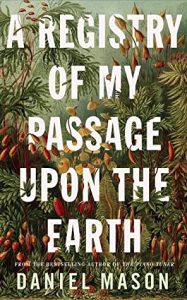
My favorite title and cover combo of the year: A Registry of My Passage Upon the Earth by Daniel Mason
The book I wish had gotten a better title and cover: Tennis Lessons by Susannah Dickey – I did enjoy this second-person novel about a young woman who is her own worst enemy, to the tune of 3.5 stars, but the title says nothing about it and the cover would have been a turnoff had I not won a signed copy from Mslexia.

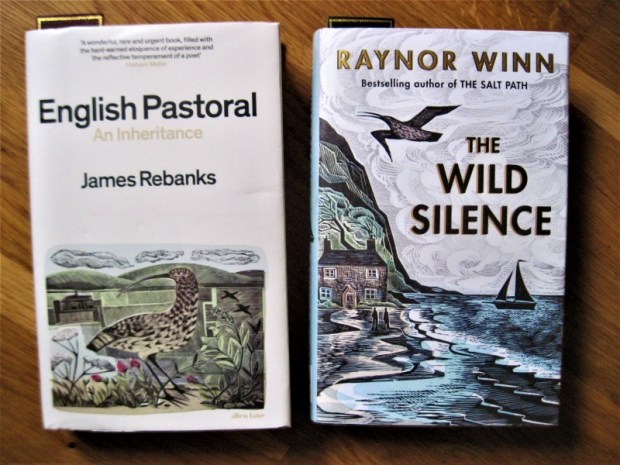
The most unfortunate typos I found in published works: In English Pastoral by James Rebanks, “sewn” where he meant “sown” (so ironic in a book about farming!) versus, in Mr Wilder & Me by Jonathan Coe, “sown” in place of “sewn.” Also “impassible” where it should read “impassable” in Apeirogon by Colum McCann. This is what proofreaders like myself are for. We will save you from embarrassing homophone slips, dangling modifiers, and more!
The 2020 books that everybody else loved, but I didn’t: The Mirror and the Light by Hilary Mantel, Hamnet by Maggie O’Farrell, and Shuggie Bain by Douglas Stuart


The year’s biggest disappointments: I don’t like to call anything “worst” (after all, I didn’t read anything nearly as awful as last year’s Jonathan Livingston Seagull), but my lowest ratings went to A Traveller at the Gates of Wisdom by John Boyne and At Hawthorn Time by Melissa Harrison, and I was disappointed that When the Lights Go Out by Carys Bray was misleadingly marketed.
 The downright strangest books I read this year: Enter the Aardvark by Jessica Anthony, A Traveller at the Gates of Wisdom by John Boyne, The House Without Windows by Barbara Newhall Follett, and The Child in Time by Ian McEwan
The people and themes that kept turning up in my reading: Rachel Carson and Henry David Thoreau; curlews and plagues; how we define and relate to history; childhood memoirs (seven of them).

Some of my 2020 curlew reading. (Two more books with curlews on the cover were borrowed from the library.)
Some statistics on my 2020 reading:
Fiction: 57.2%
Nonfiction: 36.8%
Poetry: 6%
(Fiction reigned supreme this year! Last year my F:NF ratio was roughly 1:1. Poetry was down by ~5% this year compared to 2019.)
Male author: 34.1%
Female author: 63.8%
Nonbinary author: 0.3% (= 1 author, Jay Bernard)
Multiple genders (anthologies): 1.8%
(Women dominated by an extra ~5% this year over 2019. I’ve said this for four years now: I find it intriguing that female authors significantly outweigh male authors in my reading because I have never consciously set out to read more books by women; it must be a matter of being interested in the kinds of stories women tell and how they capture their experiences in nonfiction.)
E-books: 10.6%
Print books: 89.4%
(Almost exactly the same as last year. My e-book reading has been declining, partially because I’ve cut back on the reviewing gigs that involve only reading e-books and partially because I’ve done less traveling. Increasingly, I prefer to sit down with a big stack of print books.)
Books by BIPOC: 14.7%
Literature in translation: 6.6%
(Down from last year’s 7.2%; how did this happen?! This will be something to address in 2021.)
Where my books came from for the whole year:
- Free print or e-copy from publisher: 25.6%
- Public library: 25.6%
- Free (giveaways, The Book Thing of Baltimore, the free mall bookshop, etc.): 14.9%
- Secondhand purchase: 11.6%
- Downloaded from NetGalley, Edelweiss or Project Gutenberg: 6.7%
- New purchase (sometimes at a bargain price): 6.3%
- Gifts: 5.5%
- University library: 3.8%
I promised to scale back on review copies this year, and I did: last year they accounted for nearly 37% of my reading. My library reading was higher than last year’s, despite the challenges of lockdowns; my e-book reading decreased in general. I bought more than twice as many new books as usual this year, and read lots that I either bought secondhand or got for free.
Number of unread print books in the house: 435
At the end of last year this figure was at 440 after lots of stock-ups from the free mall bookshop, which has since closed. So even though it might look like I have only read five books of my own, I have in fact read loads from my shelves this year … but also acquired many more books, both new and secondhand.
In any case, the overall movement has been downward, so I’m calling it a win!
Book Serendipity in the Final Months of 2020
I call it Book Serendipity when two or more books that I read at the same time or in quick succession have something pretty bizarre in common. Because I have so many books on the go at once (20+), I suppose I’m more prone to such incidents than some. I also list these occasional reading coincidences on Twitter. (Earlier incidents from the year are here, here, and here.)
- Eel fishing plays a role in First Love, Last Rites by Ian McEwan and The Gospel of the Eels by Patrik Svensson.
- A girl’s body is found in a canal in First Love, Last Rites by Ian McEwan and Carrying Fire and Water by Deirdre Shanahan.
- Curlews on covers by Angela Harding on two of the most anticipated nature books of the year, English Pastoral by James Rebanks and The Wild Silence by Raynor Winn (and both came out on September 3rd).
- Thanksgiving dinner scenes feature in 666 Charing Cross Road by Paul Magrs and Such a Fun Age by Kiley Reid.
- A gay couple has the one man’s mother temporarily staying on the couch in 666 Charing Cross Road by Paul Magrs and Memorial by Bryan Washington.
- I was reading two “The Gospel of…” titles at once, The Gospel of Eve by Rachel Mann and The Gospel of the Eels by Patrik Svensson (and I’d read a third earlier in the year, The Gospel of Trees by Apricot Irving).

- References to Dickens’s David Copperfield in The Cider House Rules by John Irving and Mudbound by Hillary Jordan.
- The main female character has three ex-husbands, and there’s mention of chin-tightening exercises, in The Idea of Perfection by Kate Grenville and The Pumpkin Eater by Penelope Mortimer.
- A Welsh hills setting in On the Red Hill by Mike Parker and Along Came a Llama by Ruth Janette Ruck.


- Rachel Carson and Silent Spring are mentioned in A Year on the Wing by Tim Dee, The Frayed Atlantic Edge by David Gange, English Pastoral by James Rebanks and The Gospel of the Eels by Patrik Svensson. SS was also an influence on Losing Eden by Lucy Jones, which I read earlier in the year.
- There’s nude posing for a painter or photographer in The Glass Hotel by Emily St. John Mandel, How to Be Both by Ali Smith, and Adults by Emma Jane Unsworth.
- A weird, watery landscape is the setting for The Swallowed Man by Edward Carey and Piranesi by Susanna Clarke.
- Bawdy flirting between a customer and a butcher in The Idea of Perfection by Kate Grenville and Just Like You by Nick Hornby.


- Corbels (an architectural term) mentioned in The Idea of Perfection by Kate Grenville and Wakenhyrst by Michelle Paver.
- Near or actual drownings (something I encounter FAR more often in fiction than in real life, just like both parents dying in a car crash) in The Idea of Perfection, The Glass Hotel, The Gospel of Eve, Wakenhyrst, and Love and Other Thought Experiments.
- Nematodes are mentioned in The Gospel of the Eels by Patrik Svensson and Real Life by Brandon Taylor.
- A toxic lake features in The New Wilderness by Diane Cook and Real Life by Brandon Taylor (both were also on the Booker Prize shortlist).


- A black scientist from Alabama is the main character in Transcendent Kingdom by Yaa Gyasi and Real Life by Brandon Taylor.
- Graduate studies in science at the University of Wisconsin, and rivals sabotaging experiments, in Artifact by Arlene Heyman and Real Life by Brandon Taylor.
- A female scientist who experiments on rodents in Transcendent Kingdom by Yaa Gyasi and Artifact by Arlene Heyman.
- There are poems about blackberrying in Dearly by Margaret Atwood, Passport to Here and There by Grace Nichols, and How to wear a skin by Louisa Adjoa Parker. (Nichols’s “Blackberrying Black Woman” actually opens with “Everyone has a blackberry poem. Why not this?” – !)


What’s the weirdest reading coincidence you’ve had lately?
Nonfiction Catch-Up: Long-Term Thinking, Finding a Home in Wales, Eels
Not long now until Nonfiction November. I’m highlighting three nonfiction books I’ve read over the last few months; any of them would be well worth your time if you’re still looking for some new books to add to the pile. I’ve got a practical introduction to the philosophy and politics of long-term/intergenerational planning, a group biography about the two gay couples who inhabited a house in the Welsh hills in turn, and a wide-ranging work on eels.
The Good Ancestor: How to Think Long Term in a Short-Term World by Roman Krznaric
 I saw Krznaric introduce this via a digital Hay Festival session back in May. He is an excellent speaker and did an admirable job of conveying all the major ideas from his recent work within a half-hour presentation. Unfortunately, this meant that reading the book itself didn’t add much for me, although it goes deeper into his propositions and is illustrated with unique, helpful figures.
Without repeating from my write-up of the Festival talk, then, I’ll add in points and quotes that struck me:
- “some of the fundamental ways we organise society, from nation states and representative democracy to consumer culture and capitalism itself, are no longer appropriate for the age we live in.”
- 100 years as the minimum timeframe to think about (i.e., a long human life) – “taking us beyond the ego boundary of our own mortality so we begin to imagine futures that we can influence yet not participate in ourselves.”
- “The phones in our pockets have become the new factory clocks, capturing time that was once our own and offering in exchange a continuous electronic now full of infotainment, advertising and fake news. The distraction industry works by cleverly tapping into our ancient mammalian brains: our ears prick up at the ping of an arriving message … Facebook is Pavlov, and we’re the dogs.”
- The Intergenerational Solidarity Index as a way of assessing governments’ future preparation: long-term democracies tend to perform better, though they aren’t perfect; Iceland scores the highest of all, followed by Sweden.
- Further discussion of Doughnut Economics (a model developed by Krznaric’s wife, Kate Raworth), which pictures the sweet spot humans need to live in between a social foundation and the ecological ceiling; failures lead to overshoot or shortfall.
- Four fundamental barriers to change: outdated institutional designs (our basic political systems), the power of vested interests (fossil fuel companies, Amazon, et al.), current insecurity (refugees), and “insufficient sense of crisis” – we’re like frogs in a gradually boiling pot, he says, and need to be jolted out of our complacency.
This is geared more towards economics and politics than much of what I usually read, yet fits in well with other radical visions of the future I’ve engaged with this year (some of them more environmentalist in approach), including Footprints by David Farrier, The Future Earth by Eric Holthaus, and Notes from an Apocalypse by Mark O’Connell.
With thanks to WH Allen for the free copy for review.
On the Red Hill: Where Four Lives Fell into Place by Mike Parker (2019)
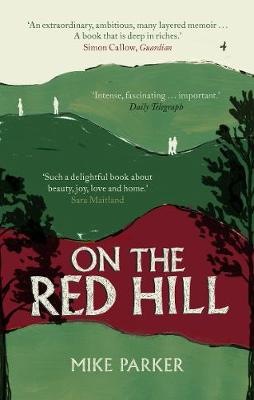 I ordered a copy from Blackwell’s after this made it through to the Wainwright Prize shortlist – it went on to be named the runner-up in the UK nature writing category. It’s primarily a memoir/group biography about Parker, his partner Peredur, and George and Reg, the couple who previously inhabited their home of Rhiw Goch in the Welsh Hills and left it to the younger pair in their wills. In structuring the book into four parts, each associated with an element, a season, a direction of the compass and a main character, Parker focuses on the rhythms of the natural year. The subtitle emphasizes the role Rhiw Goch played, providing all four with a sense of belonging in a rural setting not traditionally welcoming to homosexuals.
Were George and Reg the ‘only gays in the village,’ as the Little Britain sketch has it? Impossible to say, but when they had Powys’ first same-sex civil partnership ceremony in February 2006, they’d been together nearly 60 years. By the time Parker and his partner took over the former guesthouse, gay partnerships were more accepted. In delving back into his friends’ past, then, he conjures up another time: George fought in the Second World War, and for the first 18 years he was with Reg their relationship was technically illegal. But they never rubbed it in any faces, preferring to live quietly, traveling on the Continent and hosting guests at their series of Welsh B&Bs; their politics was conservative, and they were admired locally for their cooking and hospitality (Reg) and endurance cycling (George).
There are lots of in-text black-and-white photographs of Reg and George over the years and of Rhiw Goch through the seasons. Using captioned photos, journal entries, letters and other documents, Parker gives a clear impression of his late friends’ characters. There is something pitiable about both: George resisting ageing with nude weightlifting well into his sixties; Reg still essentially ashamed of his sexuality as well as his dyslexia. I felt I got to know the younger protagonists less well, but that may simply be because their stories are ongoing. It’s remarkable how Welsh Parker now seems: though he grew up in the English Midlands, he now speaks decent Welsh and has even stood for election for the Plaid Cymru party.
It’s rare to come across something in the life writing field that feels genuinely sui generis. There were moments when my attention waned (e.g., George’s feuds with the neighbors), but so strong is the overall sense of time, place and personality that this is a book to prize.
The Gospel of the Eels: A Father, a Son and the World’s Most Enigmatic Fish by Patrik Svensson
[Translated from the Swedish by Agnes Broomé]
“When it comes to eels, an otherwise knowledgeable humanity has always been forced to rely on faith to some extent.”
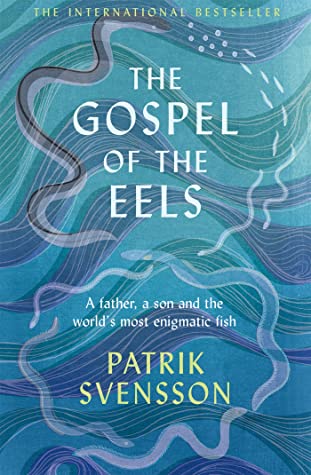 We know the basic facts of the European eel’s life cycle: born in the Sargasso Sea, it starts off as a larva and then passes through three stages that are almost like separate identities: glass eel, yellow eel, silver eel. After decades underwater, it makes its way back to the Sargasso to spawn and die. Yet so much about the eel remains a mystery: why the Sargasso? What do the creatures do for all the time in between? Eel reproduction still has not been observed, despite scientists’ best efforts. Among the famous names who have researched eels are Aristotle, Sigmund Freud and Rachel Carson, all of whom Svensson discusses at some length. He even suggests that, for Freud, the eel was a suitable early metaphor for the unconscious – “an initial insight into how deeply some truths are hidden.”
But there is a more personal reason for Svensson’s fascination with eels. As a boy he joined his father in eel fishing on Swedish summer nights. It was their only shared hobby; the only thing they ever talked about. His father was as much a mystery to him as eels are to science. And it was only as his father was dying of a cancer caused by his long road-paving career that Svensson came to understand secrets he’d kept hidden for decades.
Chapters alternate between this family story and the story of the eels. The book explores eels’ place in culture (e.g., Günter Grass’ The Tin Drum) and their critically endangered status due to factors such as a herpes virus, nematode infection, pollution, overfishing and climate change. A prior curiosity about marine life would be helpful to keep you going through this, but the prose is lovely enough to draw in even those with a milder interest in nature writing.
With thanks to Picador for the free copy for review.
One of my recent borrows from the public library’s children’s section was the picture book Think of an Eel by Karen Wallace. Her unrhymed, alliterative poetry and the paintings by Mike Bostock beautifully illustrate the eel’s life cycle and journey.

You simply must hear folk singer Kitty Macfarlane’s gorgeous song “Glass Eel” – literally about eels, it’s also concerned with migration, borders and mystery.
 Bookish Beck = Rebecca Foster. American transplant to England. Freelance proofreader and book reviewer.
 Bookish Beck