Best Books of 2024: My Top 20
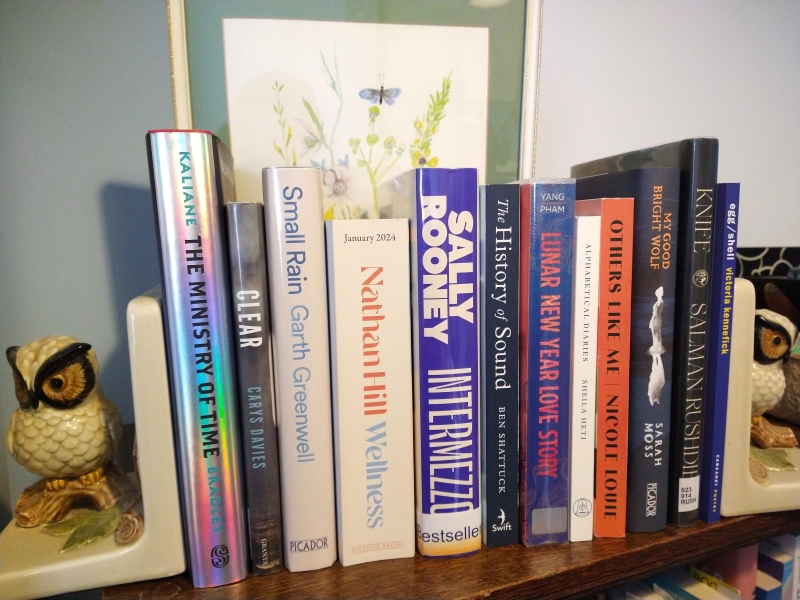
I’m keeping it simple again this year with one post covering all genres: these are the 20 current-year releases that stood out the most for me. (No rankings.) Those that aren’t repeated from my Best Books from the First Half of 2024 post didn’t quite make the cut but should be considered as runners-up well worth your time. Unsurprisingly, health is a common theme across many of my selections, especially as it touches women’s lives. Pictured below are the books I read in print; the others were all electronic copies. Links are to my full reviews where available.
Fiction
 The Worst Journey in the World, Volume 1: Making Our Easting Down: The Graphic Novel by Sarah Airriess: The thrilling opening to a cinematically vivid adaptation of Apsley Cherry-Garrard’s 1922 memoir. He was an assistant zoologist on Robert Falcon Scott’s perilous 1910-13 Terra Nova expedition to the South Pole. The book resembles a full-color storyboard for a Disney-style maritime adventure film. There is jolly camaraderie as the men sing sea shanties to boost morale. The next volume can’t arrive soon enough.
 The Ministry of Time by Kaliane Bradley: This nuanced debut alternately goes along with and flouts the tropes of spy fiction and time travel sci-fi, making clever observations about how we frame stories of empire and progress. The narrator is a “bridge” helping to resettle a Victorian polar explorer in near-future London. You just have to suspend disbelief and go with it. Bradley’s descriptive prose is memorable but never quirky for the sake of it. I haven’t had so much fun with a book since Romantic Comedy. A witty, sexy, off-kilter gem.
 Behind You Is the Sea by Susan Muaddi Darraj: Darraj’s novel-in-stories is a shimmering composite portrait of a Palestinian American community in Baltimore. Across nine stellar linked stories, she explores the complex relationships between characters divided by—or connected despite—class, language, and traditional values. Each of the stories (four in the first person, five in the third person) spotlights a particular character. The book depicts the variety of immigrant and second-generation experience, especially women’s.
 Clear by Carys Davies: Depicts the Highland Clearances in microcosm though Ivar, last resident of a remote Scottish island between Shetland and Norway. John is a minister sent by the landowner to remove Ivar. Mary, John’s wife, journeys from the mainland to rescue him. Davies writes striking scenes that bring the island scenery to life. Her deceptively simple prose captures the slow building of emotion and moments that change everything. For a trio that seemed on course for tragedy, there is the grace of a happier ending.
 Small Rain by Garth Greenwell: A poet and academic (who both is and is not Greenwell) endures a Covid-era medical crisis that takes him to the brink of mortality and the boundary of survivable pain. Over two weeks, we become intimately acquainted with his every test, intervention, setback and fear. Experience is clarified precisely into fluent language that also flies far above a hospital bed, into a vibrant past, a poetic sensibility, a hoped-for normality. I’ve never read so remarkable an account of what it is to be a mind in a fragile body.
 Wellness by Nathan Hill: A state-of-the-nation story filtered through one Chicago family experiencing midlife and marital crises: underperforming academic Jack; his wife Elizabeth, a placebo researcher at Wellness; and their YouTube-obsessed son Toby. They’ve recently invested their life savings in a new condo. The addictive and spot-on novel asks questions about authenticity, purpose, and nurture. Is love itself a placebo? Hill is clearly fascinated with psychological experimentation but also questions it to humorous effect.
 Intermezzo by Sally Rooney: Twenty- and thirtysomethings having lots of sex, yes, but now a solemn tone: Characters’ suffering and failures have deepened their thinking, sense of self, and ability to feel for others. Peter and Ivan lost their father to cancer; Sylvia is in chronic pain after an accident; Naomi is evicted and aimless; Margaret is ashamed of having an estranged alcoholic husband. Chess is a clever metaphor for their interactions; the depiction of grief rings true. A stylistic leap forward, too. Her best, most mature work by a mile.
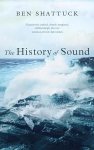 The History of Sound by Ben Shattuck: A dozen stories form a “hook-and-chain” formation of five couplets, bookended by a first and last story related to each other. Links are satisfyingly overt: A pair takes place in the same New England house in different centuries; a companion piece fills in the history of the characters from the previous. All are historically convincing, and the very human themes of lust, parenthood, sorrow and frustrated ambition resonate across centuries and state lines. Really beautiful (and better than North Woods).
 Lunar New Year Love Story by Gene Luen Yang (illus. LeUyen Pham): A super-cute teen graphic novel with gorgeous illustrations prioritizing pink and red to suit the theme. We follow Vietnamese American Valentina through high school as she plays host to an internal debate between cynicism and romanticism. Ever since her mother left, she’s longed to believe in romance but feared that love is a doomed prospect for her family. The Asian community of Oakland, California and a new hobby of lion dancing provide engrossing cultural detail.
Nonfiction
 Grief Is for People by Sloane Crosley: A bereavement memoir like no other. Heart-wrenching yet witty, it bears a unique structure and offers fascinating glimpses into the New York City publishing world. Crosley’s Manhattan apartment was burgled exactly a month before the suicide of her best friend and former boss, Russell. Throughout, the whereabouts of her family jewelry is as much of a mystery as the reason for Russell’s death, and investigating the stolen goods in parallel serves as a displacement activity for her.
 Alphabetical Diaries by Sheila Heti: Heti put 10 years of diary contents into a spreadsheet, alphabetizing each sentence, and then ruthlessly culled the results. The recurring topics are familiar from the rest of her oeuvre: obsessive cogitating about relationships, art and identity, but also the practicalities of trying to make a living as a woman in a creative profession. Heti transcends the quotidian by exploding chronology. Amazingly, the collage approach produces a genuine, crystalline vision of the self. A sui generis work of life writing.
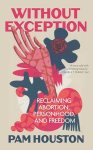 Without Exception: Reclaiming Abortion, Personhood, and Freedom by Pam Houston: If you’re going to read a polemic, make sure it’s as elegantly written and expertly argued as this one. Houston responds to the overturning of Roe v. Wade with 60 micro-essays – one for each full year of her life – about what it means to be in a female body in a country that seeks to control and systematically devalue women. The cycling of topics makes for an exquisite structure. Houston is among my recommendations for top-notch authors you might not know.
 The Body Alone: A Lyrical Articulation of Chronic Pain by Nina Lohman: Chronic Daily Headaches: Having a clinical term for extreme pain did nothing to solve it; no treatment Lohman has tried over a decade has helped much either. Medical professionals and friends alike downplay her experience because she is able to pass as well and raise two children. The fragmentary pieces read like poems. Bodily realities defy language, yet she employs words exquisitely. The tone flows from enraged to resigned to cynical and back.
 Others Like Me: The Lives of Women without Children by Nicole Louie: This impassioned auto/biographical collage combines the strengths of oral history, group biography and a fragmented memoir. “Motherhood as the epicentre of women’s lives was all I’d ever witnessed” via her mother and grandmother, Louie writes, so finding examples of women living differently was key. As readers, we watch her life, her thinking and the book all take shape. It’s warm and empathetic, with layers of stories that reflect diversity of experience.
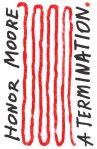 A Termination by Honor Moore: A fascinatingly discursive memoir that circles a 1969 abortion and contrasts societal mores across her lifetime. Moore was a 23-year-old drama student; the termination was “my first autonomous decision,” she insists, a way of saying, “I want this life, not that life.” Family and social factors put her life into perspective. The concise text is composed of crystalline fragments, incorporating occasional second- and third-person narration. The kaleidoscopic yet fluid approach is stunning.
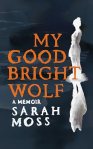 My Good Bright Wolf by Sarah Moss: Moss effectively contrasts the would-be happily ever after of generally getting better after eight years of disordered eating with her anorexia returning with a vengeance at age 46. The mood shifts so that what threatens to be slightly cloying in the childhood section turns academically curious and then, somehow, despite distancing pronouns (mostly second- but also some third-person narration), intimate. Shape-shifting, devastating, staunchly pragmatic; a unique model for converting life into art.
 Knife: Meditations after an Attempted Murder by Salman Rushdie: I’ve not had much success with Rushdie’s fiction, but this is excellent, with intriguing side tendrils and many quotable lines. It traces lead-up and aftermath; unexpected echoes, symbolism and ironies. Although Rushdie goes into some medical detail about his recovery, you get the sense of him more as an unchanging mind and a resolute will. The most noteworthy section imagines dialogues he might have with the imprisoned assailant, probing his beliefs and motivations.
Poetry
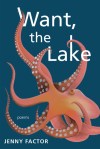 Want, the Lake by Jenny Factor: Factor’s long, intricate poetry collection showcases the tension between past and present and envisions womanhood as a tug of war between desire and constraint. “Elegy for a Younger Self” poems string together vivid reminiscences. In “Sapphics on Nursing” and elsewhere, romantic friendships edge toward homoeroticism; heterosexual marriage and motherhood represent either delightful intimacy or a snare. Allusion and experience, slant rhymes and wordplay craft a lavish tapestry.
 Inconsolable Objects by Nancy Miller Gomez: This debut collection recalls a Midwest girlhood of fairground rides and lake swimming, tornadoes and cicadas. But her Kansas isn’t all rose-tinted nostalgia; there’s an edge of sadness and danger. “Missing History” notes how women’s stories, such as her grandmother’s, are lost to time. In “Tilt-A-Whirl,” her older sister’s harmless flirtation with a ride operator becomes sinister. She also takes inspiration from headlines. The alliteration and slant rhymes are to die for.
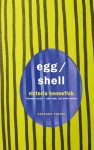 Egg/Shell by Victoria Kennefick: Motherhood and the body are overarching themes. The speaker has multiple miscarriages and names her lost children after plants. Becoming a mother is a metamorphosis all its own, while another long section is about her husband’s transition. Bird metaphors are inescapable. The structure varies throughout: columns, stanzas; a list, a recipe. Amid the sadness, there is dark humour and one-line rejoinders. If you’re wondering how life can be captured in achingly beautiful poetry, look no further.
If I had to choose just one of each? This trio trying out complementary strategies for transmuting life into literature: Small Rain, Alphabetical Diaries and Egg/Shell.


Have you read any of these? Or might you now, based on my recommendation?
Book Serendipity, June to Mid-August 2024
I call it “Book Serendipity” when two or more books that I read at the same time or in quick succession have something in common – the more bizarre, the better. This is a regular feature of mine every couple of months. Because I usually have 20–30 books on the go at once, I suppose I’m more prone to such incidents. People frequently ask how I remember all of these coincidences. The answer is: I jot them on scraps of paper or input them immediately into a file on my PC desktop; otherwise, they would flit away!
The following are in roughly chronological order.
- A self-induced abortion scene in Recipe for a Perfect Wife by Karma Brown and Sleeping with Cats by Marge Piercy.
- A woman who cleans buildings after hours, and a character named Tova who lives in the Seattle area in A Reason to See You Again by Jami Attenberg and Remarkably Bright Creatures by Shelby Van Pelt.
- Flirting with a surf shop employee in Sandwich by Catherine Newman and Remarkably Bright Creatures by Shelby Van Pelt.
- Living in Paris and keeping ticket stubs from all films seen in Paris Trance by Geoff Dyer and The Invention of Hugo Cabret by Brian Selznick.
- A schefflera (umbrella tree) is mentioned in Cheri by Jo Ann Beard and Company by Shannon Sanders.
- The Plague by Albert Camus is mentioned in Knife by Salman Rushdie and Stowaway by Joe Shute.
- Making egg salad sandwiches is mentioned in Cheri by Jo Ann Beard and Sandwich by Catherine Newman.
- Pet rats in Stowaway by Joe Shute and Happy Death Club by Naomi Westerman. Rats are also mentioned in Mammoth by Eva Baltasar, The Tale of Despereaux by Kate DiCamillo, and The Colour by Rose Tremain.
- Eels feature in Our Narrow Hiding Places by Kristopher Jansma, Late Light by Michael Malay, and The Colour by Rose Tremain.
- Atlantic City, New Jersey is a location in Florence Adler Swims Forever by Rachel Beanland and Company by Shannon Sanders.
 The father is a baker in Florence Adler Swims Forever by Rachel Beanland and Our Narrow Hiding Places by Kristopher Jansma.
- A New Zealand setting (but very different time periods) in Greta & Valdin by Rebecca K Reilly and The Colour by Rose Tremain.
- A mention of Melanie Griffith’s role in Working Girl in I’m Mostly Here to Enjoy Myself by Glynnis MacNicol and Happy Death Club by Naomi Westerman.
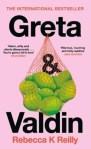 Ermentrude/Ermyntrude as an imagined alternate name in Greta & Valdin by Rebecca K Reilly and a pet’s name in Stowaway by Joe Shute.
- A poet with a collection that was published on 6 August mentions a constant ringing in the ears: Joshua Jennifer Espinoza (I Don’t Want to Be Understood) and Keith Taylor (What Can the Matter Be?).
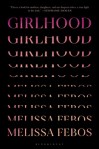
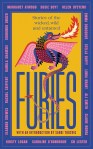
- A discussion of the original meaning of “slut” (a slovenly housekeeper) vs. its current sexualized meaning in Girlhood by Melissa Febos and Sandi Toksvig’s introduction to the story anthology Furies.
- An odalisque (a concubine in a harem, often depicted in art) is mentioned in I’m Mostly Here to Enjoy Myself by Glynnis MacNicol and The Shark Nursery by Mary O’Malley.
- Reading my second historical novel of the year in which there’s a disintegrating beached whale in the background of the story: first was Whale Fall by Elizabeth O’Connor, then Come to the Window by Howard Norman.
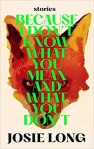 A short story in which a woman gets a job in online trolling in Because I Don’t Know What You Mean and What You Don’t by Josie Long and in the Virago Furies anthology (Helen Oyeyemi’s story).
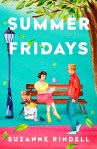
- Her partner, a lawyer, is working long hours and often missing dinner, leading the protagonist to assume that he’s having an affair with a female colleague, in Recipe for a Perfect Wife by Karma Brown and Summer Fridays by Suzanne Rindell.
- A fierce boss named Jo(h)anna in Summer Fridays by Suzanne Rindell and Test Kitchen by Neil D.A. Stewart.
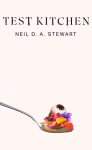
- An OTT rendering of a Scottish accent in Greta & Valdin by Rebecca K Reilly and Test Kitchen by Neil D.A. Stewart.
- A Padstow setting and a mention of Puffin Island (Cornwall) in The Cove by Beth Lynch and England as You Like It by Susan Allen Toth.
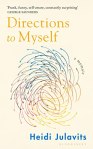
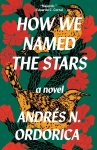
- A mention of the Big and Little Dipper (U.S. names for constellations) in Directions to Myself by Heidi Julavits and How We Named the Stars by Andrés N. Ordorica.
- A mention of Binghamton, New York and its university in We Are Animals by Jennifer Case and We Would Never by Tova Mirvis.
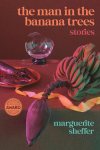
- A character accidentally drinks a soapy liquid in We Would Never by Tova Mirvis and one story of The Man in the Banana Trees by Marguerite Sheffer.
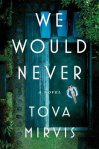 The mother (of the bride or groom) takes over the wedding planning in We Would Never by Tova Mirvis and Summer Fridays by Suzanne Rindell.
- The ex-husband’s name is Jonah in The Mourner’s Bestiary by Eiren Caffall and We Would Never by Tova Mirvis.
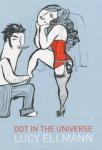
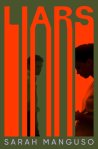
- The husband’s name is John in Dot in the Universe by Lucy Ellmann and Liars by Sarah Manguso.
- An affair is discovered through restaurant receipts in Summer Fridays by Suzanne Rindell and Test Kitchen by Neil D.A. Stewart.
- A mention of eating fermented shark in The Museum of Whales You Will Never See by A. Kendra Greene and Test Kitchen by Neil D.A. Stewart.
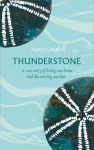
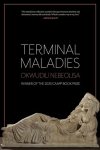
- A mention of using one’s own urine as a remedy in Thunderstone by Nancy Campbell and Terminal Maladies by Okwudili Nebeolisa.
- The main character tries to get pregnant by a man even though one of the partners is gay in Mammoth by Eva Baltasar and Until the Real Thing Comes Along by Elizabeth Berg.
- Motherhood is for women what war is for men: this analogy is presented in We Are Animals by Jennifer Case, Parade by Rachel Cusk, and Want, the Lake by Jenny Factor.
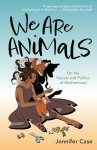 Childcare is presented as a lifesaver for new mothers in We Are Animals by Jennifer Case and Liars by Sarah Manguso.
- A woman bakes bread for the first time in Mammoth by Eva Baltasar and A Year of Biblical Womanhood by Rachel Held Evans.
- A gay couple adopts a Latino boy in Greta & Valdin by Rebecca K Reilly and one story of There Is a Rio Grande in Heaven by Ruben Reyes, Jr.
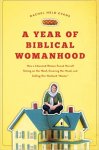 A husband who works on film projects in A Year of Biblical Womanhood by Rachel Held Evans and Liars by Sarah Manguso.
- A man is haunted by things his father said to him years ago in Parade by Rachel Cusk and one story in There Is a Rio Grande in Heaven by Ruben Reyes, Jr.
- Two short story collections in a row in which a character is a puppet (thank you, magic realism!): The Man in the Banana Trees by Marguerite Sheffer, followed by There Is a Rio Grande in Heaven by Ruben Reyes, Jr.
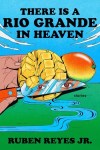
- A farm is described as having woodworm in Mammoth by Eva Baltasar and Parade by Rachel Cusk.
- Sebastian as a proposed or actual name for a baby in Signs, Music by Raymond Antrobus and Birdeye by Judith Heneghan.
What’s the weirdest reading coincidence you’ve had lately?
The Best Books from the First Half of 2024
Hard to believe, but it’s that time of year already! It’s the eighth year in a row that I’ve been making a first-half superlatives list. It remains to be seen how many of these will make it onto my overall best-of year rundown, but for now, these are my 18 favourite 2024 releases that I’ve read so far (representing the top 20% of my current-year reading). One is a bonus in that it won’t actually be published until August; six happen to be books I reviewed for Shelf Awareness. Pictured below are the ones I read in print; all the others were e-copies. Links are to my full reviews where available.


Fiction
The Ministry of Time by Kaliane Bradley: This nuanced debut novel alternately goes along with and flouts the tropes of spy fiction and time travel sci-fi, making clever observations about how we frame stories of empire and progress. The narrator is a “bridge” helping to resettle a Victorian polar explorer in near-future London. You just have to suspend disbelief and go with it. Bradley’s descriptive prose is memorable but never quirky for the sake of it. I haven’t had so much fun with a book since Romantic Comedy. A witty, sexy, off-kilter gem.
Behind You Is the Sea by Susan Muaddi Darraj: Darraj’s second novel-in-stories is a shimmering composite portrait of a Palestinian American community in Baltimore. Across nine stellar linked stories, she explores the complex relationships between characters divided by—or connected despite—class, language, and traditional values. Each of the stories (four in the first person, five in the third person) spotlights a particular character. The book depicts the variety of immigrant and second-generation experience, especially women’s.
 Piglet by Lottie Hazell: The protagonist works for a cookbook publisher, loves to cook, and has a history of overeating during psychological distress. When her fiancé blindsides her with a confession 13 days before their wedding, she returns to binge eating, dress fittings be damned. Food is also a sign of her education and class pretensions. Uncomfortable themes, but I kept reading in fascinated horror because Hazell writes absolutely incredible scenes. This is also about what women are allowed to want, and how they are expected to settle.
Wellness by Nathan Hill: A state-of-the-nation novel filtered through one Chicago family experiencing midlife and marital crises: underperforming academic Jack; his wife Elizabeth, a placebo researcher at Wellness; and their YouTube-obsessed son Toby. They’ve recently invested their life savings in a new condo. The addictive and spot-on novel asks questions about authenticity, purpose, and nurture. Is love itself a placebo? Hill is clearly fascinated with psychological experimentation but also turns it to humorous effect.
 Happiness Falls by Angie Kim: Over 2.5 days in June 2020, a Korean American family (mother Hannah and 20-year-old twins Mia and John, home from college for the lockdown) investigates, on their own and with the help of police and tip-offs, what happened to the father, Adam, who’d been at River Falls Park with the severely disabled 14-year-old son, Eugene, who is autistic and has mosaic Angelman syndrome. Mia narrates, and it’s a pleasure spending time with her quick, systematic brain as she considers each theory and red herring.
 Company by Shannon Sanders: This energetic debut novel in 13 linked stories traces several generations of the Collins clan, whose experiences at once exemplify African American gentrification and evoke timeless patterns of parental legacy and sibling jealousy. Sisters Cassandra, Fay, Lee and Suzette grew up at their parents’ Atlantic City jazz club before going their separate ways. We revisit relatives at different points in their lives, mostly between the 1990s and the present day. Celebration scenes make for memorable moments.
Lunar New Year Love Story by Gene Luen Yang (illus. LeUyen Pham): A super-cute teen story with gorgeous illustrations, including lots of pink and red to suit the theme. We follow Vietnamese-American Valentina through high school as she plays host to an internal debate between cynicism and romanticism. Ever since her mother left, she’s longed to believe in romance but feared that love is a doomed prospect for her family. The Asian community of Oakland, California and a new hobby of lion dancing provide engrossing cultural detail.
Nonfiction
 Intervals by Marianne Brooker: An extended essay about her mother’s protracted death with multiple sclerosis and the issues it brought up around disability, poverty, and inequality of access to medical care and services. Brooker decries the injustice of the wealthy having the option of travelling to Dignitas in Switzerland for an assisted death, whereas her single mother had so such relief in sight. Brooker’s description of the vigil of the last days, like her account of her vivacious mother’s life, is both tender and unflinching.
Grief Is for People by Sloane Crosley: A bereavement memoir like no other. Heart-wrenching yet witty, it bears a unique structure and offers fascinating glimpses into the New York City publishing world. Crosley’s Manhattan apartment was burgled exactly a month before the suicide of her best friend and former boss, Russell. Throughout the book, the whereabouts of her family jewelry is as much of a mystery as the reason for Russell’s death, and investigating the stolen goods in parallel serves as a displacement activity for her.
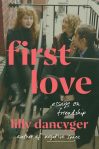 First Love: Essays on Friendship by Lilly Dancyger: Poignant interlocking essays about female friendship. Love and death coexist here. Dancyger’s first best friend was her cousin Sabina, who was raped and murdered at age 20. “Sad Girls” takes on Sylvia Plath fandom. Dancyger also maps her bisexuality and ponders whether to have a child. She is nostalgic for the freedom of being young and unsupervised in New York City and Europe. A sensitive interrogation of women’s relationships, perfect for fans of Melissa Febos and Emma Straub.
Alphabetical Diaries by Sheila Heti: Heti put 10 years of diary contents into a spreadsheet, alphabetizing each sentence, and then ruthlessly culled the results. The recurring topics are familiar from the rest of her oeuvre: obsessive cogitating about relationships, art and identity, but also the practicalities of trying to make a living as a woman in a creative profession. Heti transcends the quotidian by exploding chronology. Remarkably, the collage approach produces a genuine, crystalline vision of the self. A sui generis work of life writing.
Others Like Me: The Lives of Women without Children by Nicole Louie: This impassioned auto/biographical collage combines the strengths of oral history, group biography and a fragmented memoir. “Motherhood as the epicentre of women’s lives was all I’d ever witnessed” via her mother and grandmother, Louie writes, so finding examples of women living differently was key. As readers, we watch her life, her thinking and the book all take shape. It’s intimate and empathetic, with layers of stories that reflect diversity of experience.
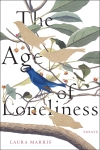 The Age of Loneliness: Essays by Laura Marris: A perceptive, moving collection of nine braided essays linking personal experience of loss with the climate crisis. “Cancerine” is a strong example. Cancer, the sign of the crab, was her father’s cause of death; horseshoe crabs were ground into fertilizer in the 19th century, and their blood is still harvested for biomedical testing. Driven by curiosity and environmental conscience, these reflective pieces reminiscent of Helen Macdonald’s longform journalism ponder human responsibility and resilience. [Graywolf Press, 6 August]
Knife: Meditations after an Attempted Murder by Salman Rushdie: I’ve not had much success with Rushdie’s fiction, but this is excellent, with intriguing side tendrils and lots of quotable lines. It traces lead-up and aftermath; unexpected echoes, symbolism and ironies. Although Rushdie goes into some medical detail about his recovery, you get the sense of him more as an unchanging mind and a resolute will. The most remarkable section imagines dialogues between him and his imprisoned assailant, probing his beliefs and motivations.
Poetry
 Theophanies by Sarah Ghazal Ali: In this poised debut collection by a Muslim poet, spiritual enlightenment is a female, embodied experience, mediated by the matriarchs of the Abrahamic faiths. Ali’s poems hymn women’s bodies, desire, and motherhood. She blurs the line between human and divine with her allusions to the Quran. Ambivalence towards faith is clear in the alliteration-laden verse that recalls Kaveh Akbar’s. Wordplay, floral metaphors, and multiple ghazals make for dazzling language.
 Baby Schema by Isabel Galleymore: A slant-wise look at environmental crisis and an impending decision about motherhood. The title comes from Konrad Lorenz’s identification of features that invite nurture. Galleymore edges towards the satirical fantasies of Caroline Bird or Patricia Lockwood as she imagines alternative scenarios of caregiving. What is worthy of maternal concern? Does cuteness merit survival? Extinction and eco-grief on the one hand, yes, but the implacability of biological cycles on the other. Sardonic yet humane.
Inconsolable Objects by Nancy Miller Gomez: This debut collection recalls a Midwest girlhood of fairground rides and lake swimming, tornadoes and cicadas. But her Kansas isn’t all rose-tinted nostalgia; there’s an edge of sadness and danger. “Missing History” notes how women’s stories, such as her grandmother’s, are lost to time. In “Tilt-A-Whirl,” her older sister’s harmless flirtation with a ride operator turns sinister. She also takes inspiration from headlines. The alliteration and slant rhymes are to die for. (Full review to come.)
Egg/Shell by Victoria Kennefick: Motherhood and the body are overarching themes. The speaker experiences multiple miscarriages and names her lost children after plants. Becoming a mother is a metamorphosis all its own, while the second long section is about her husband transitioning. Bird metaphors are inescapable. The structure varies throughout: columns, stanzas; a list, a recipe. Amid the sadness, there is dark humour and one-line rejoinders. If you’re wondering how life can be captured in achingly beautiful poetry, look no further.
Two of the novels above were among my Most Anticipated books of the year. I’ve now read 10 of the 12 on that list and DNFed another (the Sarah Perry), which just leaves Memory Piece by Lisa Ko to find – though others’ responses make me think it might not be worthwhile to do so. I sometimes wonder if designating a book as anticipated or a priority is a kiss of death, as I was at least somewhat disappointed with over half of my choices this time.
In the second part of the year, I’m looking forward to new releases from Rachel Clarke, Sarah Manguso, Charlotte Mendelson, Richard Powers, Sally Rooney, Elizabeth Strout and Evie Wyld.
What 2024 releases should I catch up on? What’s in your sights for the rest of the year?
Wendell Berry’s “Why I Am Not Going to Buy a Computer” & Why I Acquired My First Smartphone at Age 40.5
Wendell Berry is an American treasure: the 89-year-old Kentucky farmer is also a philosopher, poet, theologian, and writer of fiction, and many of his pronouncements bear the timeless wisdom of a biblical prophet. I’ve read his work from several genres and was curious to see how this 1987 essay – originally published in Harper’s Magazine and reprinted, along with some letters to the editor in response, plus extra commentary in the form of a 1990 essay, by Penguin in 2018 as the 50th and final entry in their Penguin Modern pamphlet series – might resonate with my own reluctance to adopt current technology.
The title essay is brief, barely filling 4.5 pages of a small-format paperback. It’s so concise that it would be difficult to summarize in many fewer words, but I’ll run through the points he makes across the initial essay, the replies to the correspondence, and a follow-up piece entitled “Feminism, the Body and the Machine” (1989). Berry laments his reliance on energy corporations and wants to limit that as much as possible. He decries consumerism in general; he isn’t going to acquire something just to be ‘keeping up with the times’. He doesn’t believe a computer will make his work better, and it doesn’t meet his criteria for a useful tool (smaller, cheaper and less energy-intensive than what it replaces; sourced locally and easily repaired by a non-specialist). He is perfectly happy with his current arrangement: he writes his work by hand and his wife types it up for him. He is loath to lose this human touch.

The letters to the editor, predictably, accuse him of self-righteousness for depicting his choice as the more virtuous one. The correspondents also felt they had to stand up for Berry’s wife, who might have better things to do than act as her husband’s secretary. This is the only time the author becomes slightly defensive, basically saying, ‘you don’t know anything about me, my wife or my marriage … maybe she wants to!’ He doubles down on the environmental harm caused by technology and consumerism, acknowledging his continued dependence on fossil fuels and vowing to avoid them, and unnecessary purchases, where possible.
If some technology does damage to the world, … then why is it not reasonable, and indeed moral, to try to limit one’s use of that technology?
To the extent that we consume, in our present circumstances, we are guilty. To the extent that we guilty consumers are conservationists, we are absurd. … can we do something directly to solve our share of the problem? … Why then is not my first duty to reduce, so far as I can, my own consumption?
If the use of a computer is a new idea, then a newer one is not to use one.
He even appears to speak prophetically to the rise of artificial intelligence:
My wish simply is to live my life as fully as I can. … And in our time this means that we must save ourselves from the products that we are asked to buy in order, ultimately, to replace ourselves. The danger most immediately to be feared in ‘technological progress’ is the degradation and obsolescence of the body.
Certain of his arguments felt relevant to me as I ponder my own relationship to technology. I compose all my reviews on a 19-year-old personal computer that’s not connected to the Internet. I don’t listen to the radio and have seen maybe three films in the past two years. We’ve been television-free for a decade and I have never regretted it (Berry: “It is easy – it is even a luxury – to deny oneself the use of a television set, and I zealously practice that form of self-denial. Every time I see television (at other people’s houses), I am more inclined to congratulate myself on my deprivation.”).
I find it so hard to adjust to new tech that my reluctance may have shaded into suspicion. I’m certainly no early adopter, but I’d also object to the label “Luddite”: since 2013 I’ve been using e-readers, which are invaluable in my reviewing work. But for 15 years or more I have been looking at other people and their smartphones with disdain. I prided myself on my resistance. Stubbornness seemed like a virtue when the alternative was spending a lot of money on something I didn’t need.

Receiving my first cell phone in July 2004 (with my dad at left; at Dulles airport).
Two months ago, though, I finally gave in and accepted a hand-me-down Motorola Android phone from my father-in-law, after nearly 20 years of using an old-style mobile phone. As we were renegotiating our phone and Internet contract, I got virtually unlimited minutes and data on this device for £6/month, with no initial outlay. Had I been forced to make a purchase, I think I would still be holding out. But I had gotten to the point where refusal was cutting off my nose to spite my face. Why keep martyring myself – saying I couldn’t make important household phone calls because they drained my pay-as-you-go credit; learning complex workarounds to post to Instagram from my PC; taking crap photos on a digital camera held together with a rubber band? Why resist utility just for the sake of it?
To be clear, this was not a matter of saving time. I’m not a busy person. Plus I believe there is value in slowing down and acting deliberately. (See this book-based article I wrote for the Los Angeles Review of Books in 2018 on the benefits of “wasting time.”) Mindless scrolling is as much a temptation on a PC as on a phone, so avoiding social media was not a motive for me; others with addictive tendencies may decide otherwise. Nor did I view convenience as reason enough per se. However, I admit I was attracted to the efficiency of a pocket-sized device that can at once replace a computer, pager, telephone, Rolodex, phonebook, camera, photo album, television screen, music player, camcorder, Dictaphone, stopwatch, calculator, map, satnav, flashlight, encyclopaedia, Kindle library, calendar, diary, Post-It notes, notebook, alarm clock and mirror. (Have I missed anything?) Talk about multi-tasking!

Out with the old, in with the new?
I would still say that I object to tech serving as a status symbol or a basis for self-importance, and I’d be pretty dubious about it ever being a worthwhile hobby. Should this phone fail me in future, I’ll copy my husband’s habit of buying a secondhand handset for £60–80. I wouldn’t acquire something that represented new extraction of rare resources. Treating things (or people) as disposable is anathema to me, something about which I know Berry would agree. I’m naturally parsimonious, obsessive about keeping things going for as long as possible and recycling them responsibly when they reach their end of life.
It’s one reason why I’ve gotten involved in the Repair Café movement. I volunteer for our local branch, which started up in February, on the admin and publicity side of things. The old-fashioned, make-do-and-mend ethos appeals to me. It’s the same spirit evoked in the lyrics of American singer-songwriter Mark Erelli’s “Analog Hero”:
He’s the fix-it man, the fix-it man
If he can’t put it back together, then it was never worth a damn
Maybe he’s crazy for trying to save what’s already gone
Now it ain’t even broken and we’re going for the upgrade
Nobody thinks twice ’bout what we’re really throwing away
It’s out with the old, in with the new…
I can imagine Wendell Berry still pecking out his words on a typewriter on his Kentucky farm. He’s an analogue hero, too. And he doesn’t go nearly as far as Mark Boyle, whose radical life experiment is recounted in The Way Home: Tales from a life without technology, which I reviewed for Shiny New Books in 2019.
I have pretty much made my peace with owning a smartphone. I have few apps and am still more likely to work at my PC or on paper. I’ll concede that I enjoy being able to post to X or Instagram wherever I am, and to keep up with messages on the go. (I used to have to say cryptic things to friends like, “once I leave the house, I will be unavailable except by text.”) Mostly, I’m relieved to have shed the frustrations of outmoded tech. Though I still keep my Nokia brick by my bedside as a trusty alarm clock – and a torch for when the cat wakes me between 2 and 5 each morning.

Ultimately, I feel, a smartphone is a tool like any other. It’s how you use it. Salman Rushdie comes to much the same conclusion about the would-be murder weapon wielded against him: “a knife is a tool, and acquires meaning from the use we make of it. It is morally neutral” (from Knife).
Berry’s argument about overreliance on energy remains a good one, but we are all so complicit in so many ways – even more so than in the late 1980s when he was writing – that avoiding the computer, and now the smartphone, doesn’t seem to hold particular merit. While this pamphlet will be but a quaint curio piece for most readers (rather than a parallel to the battle of wills I’ve conducted with myself), it is engaging and convincing, and the societal issues it considers are still ones to be wrestled with.
My copy was purchased with part of a £30 voucher I received free from Penguin UK for being part of their “Bookmarks” online community – answering polls, surveys, etc.
Book Serendipity, April to May 2024
I call it “Book Serendipity” when two or more books that I read at the same time or in quick succession have something in common – the more bizarre, the better. Of course, the truer term would be synchronicity, but the branding has stuck. In Liz Jensen’s Your Wild and Precious Life, she mentions that Carl Jung coined the term “synchronicity” for what he described as “a meaningful coincidence of two or more events where something other than the probability of chance is involved.” I like thinking that it’s not just a matter of luck.
This is a regular feature of mine every couple of months. I would normally have waited until the end of June, but I had way too many coincidences stored up! Because I usually have 20–30 books on the go at once, I suppose I’m more prone to finding them. People frequently ask how I remember all of these incidents. The answer is: I jot them down on scraps of paper or input them immediately into a file on my PC desktop; otherwise, they would flit away.
The following are in roughly chronological order.
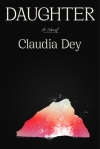
- Reading two King Lear updates at the same time: Private Rites by Julia Armfield and Daughter by Claudia Dey. The former has been specifically marketed as a “lesbian Lear,” but I had no idea that the latter also features two sisters plus a younger half-sister and their interactions with a larger-than-life father.

- Eating beans straight out of the tin in The Waterfall by Margaret Drabble and Of Mice and Men by John Steinbeck.
- Dead mice in Of Mice and Men by John Steinbeck and Stone Yard Devotional by Charlotte Wood.

-

- Screenshot
- Cloth holding the jaw of a corpse closed in one story from Barcelona by Mary Costello and A Woman’s Story by Annie Ernaux.
- Others see a character’s wife as a whore but the husband is oblivious in The Shipping News by E. Annie Proulx and Of Mice and Men by John Steinbeck.
 Setting up a game of solitaire in The Snow Hare by Paula Lichtarowicz and Of Mice and Men by John Steinbeck.
- Main character called Mona in Daughter by Claudia Dey and Mona of the Manor by Armistead Maupin.
- Being surprised at an older man still having his natural hair colour in one story of Barcelona by Mary Costello (where he’s aged 76) and Life in the Balance by Jim Down (where it’s Alan Bennett, at 84!).
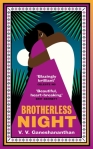
- A character named Anjali in Brotherless Night by V.V. Ganeshananthan and Moral Injuries by Christie Watson.

- A character named Cherry in Daughter by Claudia Dey and one story of This Is Why We Can’t Have Nice Things by Naomi Wood.
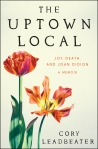
- My second memoir in two months in which a twentysomething son dies suddenly of a presumed heart problem: Fi by Alexandra Fuller, followed by Your Wild and Precious Life by Liz Jensen. (And a third in which his young friend died in the same way: The Uptown Local by Cory Leadbeater.) Also, Fuller and Jensen both see signs of their sons’ continued presence in bird sightings.
- Scratches on the inside of a coffin as proof of being buried alive in one story of Barcelona by Mary Costello and Life in the Balance by Jim Down.


- Surprise that one didn’t know the exact moment that a loved one died in one story of Barcelona by Mary Costello and Your Wild and Precious Life by Liz Jensen.
- Discussion of the meaning of brain stem death and a mention of meningococcal sepsis in Life in the Balance by Jim Down and Moral Injuries by Christie Watson.
- A scene set in a Denny’s diner in The Whole Staggering Mystery by Sylvia Brownrigg and After Dark by Haruki Murakami.


- A description of halal butchery in Barcelona by Mary Costello and Between Two Moons by Aisha Abdel Gawad.
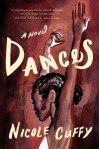
- A mention of ballet choreographer George Balanchine in Dances by Nicole Cuffy and The Uptown Local by Cory Leadbeater.
- A woman has an affair with a female postal worker in Mona of the Manor by Armistead Maupin and The Shipping News by Annie Proulx, both of which I DNFed.
- A character named Magdalena in Cloistered by Catherine Coldstream and The Snow Hare by Paula Lichtarowicz. The latter goes by Lena, which is also the name of the main character in Jungle House by Julianne Pachico. And there’s a character named Lina in Between Two Moons by Aisha Abdel Gawad.


- Being presented with powdered milk in Cloistered by Catherine Coldstream and Whale Fall by Elizabeth O’Connor.
- First I read a novel about a convent plagued by mice (Stone Yard Devotional by Charlotte Wood). Then I read a memoir about a convent plagued by feral cats (Cloistered by Catherine Coldstream).
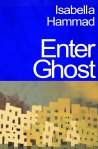
- Buffalo, New York as a setting in Consent by Jill Ciment and The Age of Loneliness by Laura Marris. It’s also mentioned in Enter Ghost by Isabella Hammad.

- Watching pigeons on one’s balcony in Keep by Jenny Haysom, Your Wild and Precious Life by Liz Jensen, and The Uptown Local by Cory Leadbeater.
 The family’s pet chicken is cooked for dinner in Coleman Hill by Kim Coleman Foote and The Snow Hare by Paula Lichtarowicz.
- The mother is named Gloria in Consent by Jill Ciment and Cold Spring Harbor by Richard Yates (and The War for Gloria by Atticus Lish, a DNF).
- A character named Anton in The Snow Hare by Paula Lichtarowicz and Jungle House by Julianne Pachico.
- A cat named Dog in The Door-to-Door Bookstore by Carsten Henn and a dog named Tiger in Jungle House by Julianne Pachico.
- Two nature books that feature wild cold-water swimming (though don’t they all these days?!): In All Weathers by Matt Gaw and Your Wild and Precious Life by Liz Jensen.

- Two nature books that mention W.H. Hudson: In All Weathers by Matt Gaw and North with the Spring by Edwin Way Teale.
 A large anonymous donation to a church in Slammerkin by Emma Donoghue and Excellent Women by Barbara Pym (£10–11, which was much more in the 18th century of the former than in the 1950s of the latter).
- A mention of Poughkeepsie, New York in Birdeye by Judith Heneghan and Woman of Interest by Tracy O’Neill.
- A 1950s scene of perusing a lipstick display in Recipe for a Perfect Wife by Karma Brown and Excellent Women by Barbara Pym.

- A woman with a broken leg worries about how her garden will fare in Recipe for a Perfect Wife by Karma Brown and Remarkably Bright Creatures by Shelby Van Pelt.
- The same silent film image of a spaceship entering the moon’s eye (from Georges Méliès’s A Trip to the Moon) appears in Knife by Salman Rushdie and The Invention of Hugo Cabret by Brian Selznick. (I think this is the uncanniest coincidence of all this time!)

- A cleric who wears a biretta in Excellent Women by Barbara Pym and Daughters of the House by Michèle Roberts.
- A Black single mother who believes in the power of crystals in Company by Shannon Sanders and Another Word for Love by Carvell Wallace.

- An older woman really doesn’t want to leave her home but is moving into a retirement facility in Keep by Jenny Haysom and Remarkably Bright Creatures by Shelby Van Pelt. (There’s also a young woman who refuses to leave her house in Recipe for a Perfect Wife by Karma Brown.)
 A man throws his tie over his shoulder before eating in Recipe for a Perfect Wife by Karma Brown and Keep by Jenny Haysom.
- A mother writing a bad check becomes an important plot point in Remarkably Bright Creatures by Shelby Van Pelt and Another Word for Love by Carvell Wallace.
 A scene of self-induced abortion in Recipe for a Perfect Wife by Karma Brown and Sleeping with Cats by Marge Piercy.
- The Yiddish word feh (an expression of disappointment) appears in Feh by Shalom Auslander (no surprise there!) but also in A Reason to See You Again by Jami Attenberg, both of which are pre-release books I am reading for Shelf Awareness reviews.

What’s the weirdest reading coincidence you’ve had lately?
My (Not the) Booker Prize Reading
A week from today, on the 14th (my birthday, as well as Susan’s – be sure to wish her a happy one!), this year’s Booker Prize will be announced. The Prize’s longlist didn’t contain much that piqued my interest this time around; I read one book from it and didn’t get on with it well at all, and I also DNFed another three.
Read
Frankissstein by Jeanette Winterson
 Winterson does her darndest to write like Ali Smith here (no speech marks, short chapters and sections, random pop culture references). Cross Smith’s Seasons quartet with the vague aims of the Hogarth Shakespeare project and Margaret Atwood’s The Heart Goes Last and you get this odd jumble of a novel that tries to combine the themes and composition of Frankenstein with the modern possibilities of transcending bodily limitations. Her contemporary narrator is Ry Shelley, a transgender doctor sponsored by the Wellcome Trust who supplies researcher Victor Stein with body parts for his experiments in Manchester. In Memphis for a tech expo, Ry meets Ron Lord, a tactless purveyor of sexbots.
Their interactions alternate with chapters narrated by Mary Shelley in the 1810s; I found this strand much more engaging and original, perhaps because I haven’t read that much about Shelley and her milieu, whereas it feels like I’ve read a lot about machine intelligence and transhumanism recently (To Be a Machine, Murmur, Machines Like Me). I think Winterson’s aim was to link the two time periods through notions of hybridness and resistance to death. It never really came together for me. 
DNFed
 Night Boat to Tangier by Kevin Barry – I read the first 76 pages. The other week two grizzled Welsh guys came to deliver my new fridge. Their barely comprehensible banter reminded me of that between Maurice and Charlie, two ageing Irish gangsters. The long first chapter is terrific. At first these fellas seem like harmless drunks, but gradually you come to realize just how dangerous they are. Maurice’s daughter Dilly is missing, and they’ll do whatever is necessary to find her. Threatening to decapitate someone’s dog is just the beginning – and you know they could do it. “I don’t know if you’re getting the sense of this yet, Ben. But you’re dealing with truly dreadful fucken men here,” Charlie warns at one point. I loved the voices; if this was just a short story it would have gotten a top rating, but I found I had no interest in the backstory of how these men got involved in heroin smuggling.
The Wall by John Lanchester – I lost interest in it and wasn’t drawn in by the first pages.
 The Man Who Saw Everything by Deborah Levy – I read the first 35 pages. There’s a lot of repetition; random details seem deliberately placed as clues. I’m sure there’s a clever story in here somewhere, but apart from a few intriguing anachronisms (in 1988 a smartphone is just “A small, flat, rectangular object … lying in the road. … The object was speaking. There was definitely a voice inside it”) there is not much plot or character to latch onto. I suspect there will be many readers who, like me, can’t be bothered to follow Saul Adler from London’s Abbey Road, where he’s hit by a car in the first paragraph, to East Berlin.
 There’s only one title from the Booker shortlist that I’m interested in reading: Girl, Woman, Other by Bernardine Evaristo. I’ll be reviewing it later this month as part of a blog tour celebrating the Aké Book Festival, but as a copy hasn’t yet arrived from either the publisher or the library I won’t have gotten far into it before the Prize announcement.
As for the other five on the shortlist…
- I’m a conscientious objector to Margaret Atwood’s The Testaments. I haven’t appreciated her previous dystopian sequels, and I’ve never really understood all the hype around The Handmaid’s Tale.
- I don’t plan on reading Lucy Ellmann’s Ducks, Newburyport – unless some enterprising soul produces an abridged version of no more than 250 pages.*

Ducks, Newbury
- I didn’t rate The Fishermen highly enough to give Chigozie Obioma’s An Orchestra of Minorities a try.
- I forced myself through Midnight’s Children some years back. What a pointless slog! Lukewarm reviews of his recent work mean I’m now doubly determined to avoid Salman Rushdie’s Quichotte.
- Although the setup appeals to me (a prostitute’s whole life spooling out in front of her in the moments before her death) and I enjoyed her previous novel well enough, I’ve not heard enough good things to pick up Elif Shafak’s 10 Minutes 38 Seconds in this Strange World.
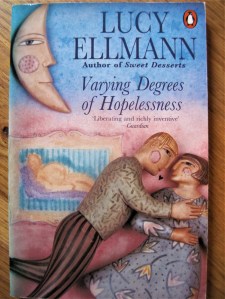 *However, I was delighted to find a copy of her 1991 novel, Varying Degrees of Hopelessness (just 182 pages, with short chapters often no longer than a paragraph and pithy sentences) in a 3-for-£1 sale at our local charity warehouse. Isabel, a 31-year-old virgin whose ideas of love come straight from the romance novels of ‘Babs Cartwheel’, hopes to find Mr. Right while studying art history at the Catafalque Institute in London (a thinly veiled Courtauld, where Ellmann studied). She’s immediately taken with one of her professors, Lionel Syms, whom she dubs “The Splendid Young Man.” Isabel’s desperately unsexy description of him had me snorting into my tea:
He had a masculinity.
His broad shoulders and narrow hips gave him a distinctive physique.
He held seminars and wore red socks.
To hold seminars seemed to indicate a wish to develop a rapport with his students.
The red socks seemed to indicate testosterone.
I swooned in admiration of him.
Unfortunately, the Splendid Young Man is more interested in Isabel’s portly flatmate, Pol. There’s a screwball charm to this campus novel full of love triangles and preposterous minor characters. I laughed at many of Ellmann’s deadpan lines, and would recommend this to fans of David Lodge’s academic comedies. But if you wish to, you could read this as a cautionary tale about the dangers of romantic fantasies. Ellmann even offers two alternate endings, one melodramatic and one more prosaic but believable. I’ll seek out the rest of her back catalogue – so thanks to the Booker for putting her on my radar. 
In the meantime, I did a bit better with the “Not the Booker Prize” (administered by the Guardian) shortlist, reading three out of their six:
Flames by Robbie Arnott
 This strange and somewhat entrancing debut novel is set in Arnott’s native Tasmania. The women of the McAllister family are known to return to life – even after a cremation, as happened briefly with Charlotte and Levi’s mother. Levi is determined to stop this from happening again, and decides to have a coffin built to ensure his 23-year-old sister can’t ever come back from the flames once she’s dead. The letters that pass between him and the ill-tempered woodworker he hires to do the job were my favorite part of the book. In other strands, we see Charlotte traveling down to work at a wombat farm in Melaleuca, a female investigator lighting out after her, and Karl forming a close relationship with a seal. This reminded me somewhat of The Bus on Thursday by Shirley Barrett and Orkney by Amy Sackville. At times I had trouble following the POV and setting shifts involved in this work of magic realism, though Arnott’s writing is certainly striking.
A favorite passage:
“The Midlands droned on, denuded hill after denuded hill, until I rolled into sprawling suburbs around noon. Here’s a list of the places I’d choose to visit before the capital: hell, anywhere tropical, the Mariana Trench, a deeper pit of hell, my mother’s house.”
My thanks to Atlantic Books for the free paperback copy for review.
See Susan’s review for a more enthusiastic response.
 The Unauthorised Biography of Ezra Maas by Daniel James: A twisty, clever meta novel about “Daniel James” trying to write a biography of Ezra Maas, an enigmatic artist who grew up a child prodigy in Oxford and attracted a cult following in 1960s New York City, where he was a friend of Warhol et al. (See my full review.)
Supper Club by Lara Williams: A great debut novel with strong themes of female friendship and food. The Supper Club Roberta and Stevie create is performance art, but it’s also about creating personal meaning when family and romance have failed you. (See my full review.)
The other three books on the shortlist are:
- Skin by Liam Brown: A dystopian novel in which people become allergic to human contact. I think I’ll pass on this one.
 Please Read This Leaflet Carefully by Karen Havelin: A debut novel by a Norwegian author that proceeds backwards to examine the life of a woman struggling with endometriosis and raising a young daughter. I’m very keen to read this one.
- Spring by Ali Smith: I’ve basically given up on Ali Smith – and certainly on the Seasons quartet, after DNFing Winter.
(The Not the Booker Prize will be announced on the Guardian website this Friday the 11th.)
Have you read something from the (Not the) Booker shortlist(s)? Any predictions for next week?
March’s Doorstopper: Cutting for Stone by Abraham Verghese (2009)
I’m squeaking in here on the 31st with the doorstopper I’ve been reading all month. I started Cutting for Stone in an odd situation on the 1st: We’d attempted to go to France that morning but were foiled by a fatal engine failure en route to the ferry terminal, so were riding in the cab of a recovery vehicle that was taking us and our car home. My poor husband sat beside the driver, trying to make laddish small talk about cars, while I wedged myself by the window and got lost in the early pages of Indian-American doctor Abraham Verghese’s saga of twins Marion and Shiva, born of an unlikely union between an Indian nun, Sister Mary Joseph Praise, and an English surgeon, Thomas Stone, at Missing Hospital in Addis Ababa in 1954.
 What with the flashbacks and the traumatic labor, it takes narrator Marion over 100 pages to get born. That might seem like a Tristram Shandy degree of circumlocution, but there was nary a moment when my interest flagged during this book’s 50-year journey with a medical family starting in a country I knew nothing about. I was reminded of Midnight’s Children, in that the twin brothers are born loosely conjoined at the head and ever after have a somewhat mystical connection, understanding each other’s thoughts even when they’re continents apart.
When Sister Mary Joseph Praise dies in childbirth and Stone absconds, the twins are raised by the hospital’s blunt obstetrician, Hema, and her husband, a surgeon named Ghosh. Both brothers follow their adoptive parents into medicine and gain knowledge of genitourinary matters. We observe a vasectomy, a breech birth, a C-section, and the aftermath of female genital mutilation. While Marion relocates to an inner-city New York hospital, Shiva stays in Ethiopia and becomes a world expert on vaginal fistulas. The novel I kept thinking about was The Cider House Rules, which is primarily about orphans and obstetrics, and I was smugly confirmed by finding Verghese’s thanks to his friend John Irving in the acknowledgments.
Ethiopia’s postcolonial history is a colorful background, with Verghese giving a bystander’s view of the military coup against the Emperor and the rise of the Eritrean liberation movement. Like Marion, the author is an Indian doctor who came of age in Ethiopia, a country he describes as a “juxtaposition of culture and brutality, this molding of the new out of the crucible of primeval mud.” Marion’s experiences in New York City and Boston then add on the immigrant’s perspective on life in the West in the 1980s onwards.
Naomi of Consumed by Ink predicted long ago that I’d love this, and she was right. Of course I thrilled to the accounts of medical procedures, such as an early live-donor liver transplant (this was shortlisted for the Wellcome Book Prize in 2009), but that wasn’t all that made Cutting for Stone such a winner for me. I can’t get enough of sprawling Dickensian stories in which coincidences abound (“The world turns on our every action, and our every omission, whether we know it or not”), minor characters have heroic roles to play, and humor and tragedy balance each other out, if ever so narrowly. (Besides Irving, think of books like The Heart’s Invisible Furies by John Boyne.) What I’m saying, as I strive to finish this inadequate review in the last hour of the last day of the month, is that this was just my sort of thing, and I hope I’ve convinced you that it might be yours, too.
Favorite lines:
Hema: “The Hippocratic oath is if you are sitting in London and drinking tea. No such oaths here in the jungle. I know my obligations.”
“Doubt is a first cousin to faith”
“A childhood at Missing imparted lessons about resilience, about fortitude, and about the fragility of life. I knew better than most children how little separate the world of health from that of disease, living flesh from the icy touch of the dead, the solid ground from treacherous bog.”
Page count: 667
My rating: 
Next month: Since Easter falls in April and I’ve been wanting to read it for ages anyway, I’ve picked out The Resurrection of Joan Ashby by Cherise Wolas to start tomorrow.
March Reading Plans and Books to Look out For
My apologies if you’ve already heard this story on social media: I was supposed to be in France this past weekend, but for the fourth time in a row we’ve been plagued by transport problems on a holiday: a flat tire in Wigtown, a cancelled train to Edinburgh, a cancelled flight to the States, and now car trouble so severe we couldn’t get on the ferry to Normandy. Though we made it all the way to the ferry port in Poole, our car was by then making such hideous engine noises that it would have been imprudent to drive it any further. We got a tow back to the auto shop where our car is usually serviced and currently await its prognosis. If it can be fixed, we may be able to reschedule our trip for this coming weekend.
The good news about our strange (non-)travel day: I got a jump on my Doorstopper of the Month, Cutting for Stone by Abraham Verghese, a terrific read that reminds me of a cross between Midnight’s Children and The Cider House Rules, and also started Priestdaddy by Patricia Lockwood – though my husband made me stop reading it because I couldn’t stop sniggering while he was trying to make important phone calls about the car. We ended up having a nice weekend at home anyway: going out for Nepalese food, gelato and a screening of The Favorite; doing some gardening and getting bits of work and writing done; and (of course) doing plenty of reading. Waking up with a purring cat on my legs and tucking into a stack of pancakes with maple syrup, I thought to myself, being home is pretty great, too.
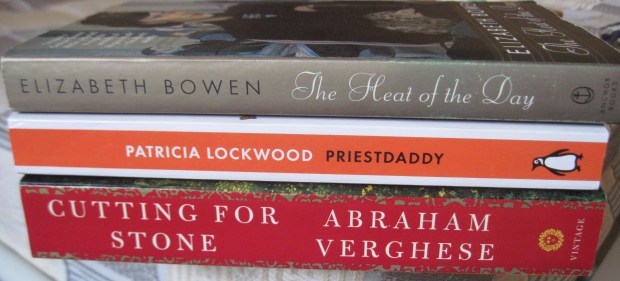
What I packed to read in France.
Reading Ireland Month 2019
This will be my second time participating in the annual challenge hosted by Cathy of 746 Books. I recently started The Heat of the Day by Elizabeth Bowen and I’m also currently reading two nonfiction books by Irish women: a review copy of Vagina: A Re-Education by Lynn Enright (which releases on March 7th) and the essay collection Notes to Self by Emilie Pine, on my Kindle. I have several other novels to choose from – two of which are set in Ireland rather than by Irish authors – plus a classic travel book by Dervla Murphy.
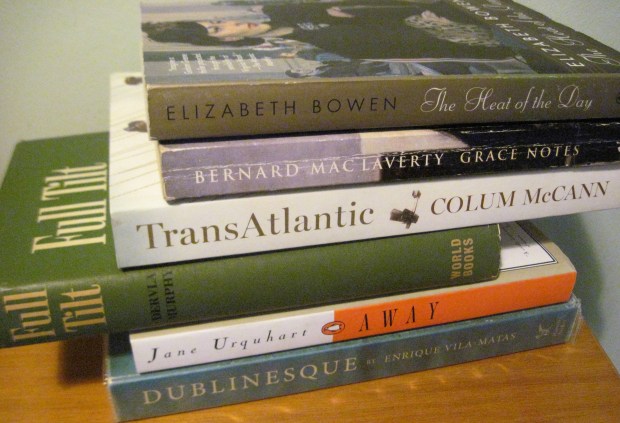
Irish selections.
Wellcome Book Prize
The second of my ‘assigned’ longlist reviews will be going up on Wednesday. I’m currently reading another three books from the longlist and will post some brief thoughts on them if I manage to finish them before the shortlist announcement on the 19th. At that point I will have read 10 out of the 12 books on the longlist, so should feel pretty confident about making predictions (or at least stating wishes) for what will go through to the next round.
Blog Tours
I have two blog tours coming up later in the month, including the official one that’s being run for the Dylan Thomas Prize longlist.
Review Books
I’ve got a pile-up of review copies that came out in February or are releasing early this month – 9, I think? Some I’ve already read and some are still in progress. So I will be doing my best to group these sensibly and write short reviews, but you may well notice a lot of posts from me.
Blog Anniversary
This Friday marks four years that I’ve been blogging about books!
Here are a few March releases I’ve read that you may want to look out for:
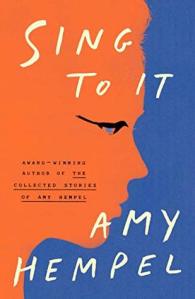 Sing to It: New Stories by Amy Hempel [releases on the 26th]: “When danger approaches, sing to it.” That Arabian proverb provides the title for Amy Hempel’s fifth collection of short fiction, and it’s no bad summary of the purpose of the arts in our time: creativity is for defusing or at least defying the innumerable threats to personal expression. Only roughly half of the flash fiction achieves a successful triumvirate of character, incident and meaning. The author’s passion for working with dogs inspired the best story, “A Full-Service Shelter,” set in Spanish Harlem. A novella, Cloudland, takes up the last three-fifths of the book and is based on the case of the “Butterbox Babies.” (Reviewed for the Pittsburgh Post-Gazette.)
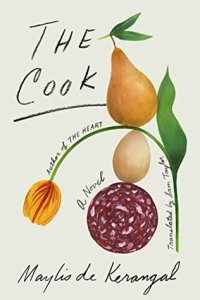 The Cook by Maylis de Kerangal (translated from the French by Sam Taylor) [releases on the 26th]: This is a pleasant enough little book, composed of scenes in the life of a fictional chef named Mauro. Each chapter picks up with the young man at a different point as he travels through Europe, studying and working in various restaurants. If you’ve read The Heart / Mend the Living, you’ll know de Kerangal writes exquisite prose. Here the descriptions of meals are mouthwatering, and the kitchen’s often tense relationships come through powerfully. Overall, though, I didn’t know what all these scenes are meant to add up to. Kitchens of the Great Midwest does a better job of capturing a chef and her milieu.
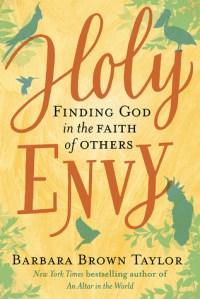 Holy Envy: Finding God in the Faith of Others by Barbara Brown Taylor [releases on the 12th]: After she left the pastorate, Taylor taught Religion 101 at Piedmont College, a small Georgia institution, for 20 years. This book arose from what she learned about other religions – and about Christianity – by engaging with faith in an academic setting and taking her students on field trips to mosques, temples, and so on. She emphasizes that appreciating other religions is not about flattening their uniqueness or looking for some lowest common denominator. Neither is it about picking out what affirms your own tradition and ignoring the rest. It’s about being comfortable with not being right, or even knowing who is right.
 Bookish Beck = Rebecca Foster. American transplant to England. Freelance proofreader and book reviewer.
 Bookish Beck