My Patchy Experience with Book Clubs
I know that a number of you have long-term, faithful book clubs. Boy, am I envious! You might find it surprising that I’ve only ever been in one traditional book club, and it wasn’t a resounding success. Partway through my time working for King’s College, London, an acquaintance from another library branch started the club. A group of five to eight of us from Library Services aimed to meet after work one evening a month at a Southbank venue or a staff room to discuss our latest pick. By poring over old e-mails and my Goodreads library, I’ve managed to remember 10 of the books we read between November 2011 and June 2013:
- Do Androids Dream of Electric Sheep?, Philip K. Dick [classic science fiction]
- The Little Shadows, Marina Endicott [Canadian historical fiction]
- A Spot of Bother, Mark Haddon [contemporary fiction]
- The Talented Mr. Ripley, Patricia Highsmith [classic suspense]
- The Vintner’s Luck, Elizabeth Knox [bizarre historical fiction/magic realism]
- What Was Lost, Catherine O’Flynn [contemporary fiction]
- Franny and Zooey, J.D. Salinger [classic short fiction]
- The Rabbi’s Cat, Joann Sfar [graphic novel in translation]
- Girl Meets Boy, Ali Smith [an update of Greek myth]
- Angel, Elizabeth Taylor [an obscure English classic]
That may well be the complete list. Although I was a member for 20 months until I quit to go freelance, we often only managed to meet every other month because we couldn’t find a mutually convenient free evening or no one had read the book in time. I was consistently frustrated that – even when our selections were only about 200 pages long – I was often one of the only people to have read the whole book.
Overall, the quality of books we chose struck me as mediocre: I rated half of these books 2 stars, and the rest 3 stars. (I think I was a harsher rater then, but it’s not a good sign, is it?) Perhaps this is part of the inevitable compromising that goes with book clubs, though: You humor other people in their choices and hope they’ll be kind about yours? My suggestion, for the record, was the pretty dismal Little Shadows, for which I got a free set of book club copies to review for Booktime magazine. But I also voted in favor of most of the above list.
Looking back, I am at least impressed by how varied our selections were. People were interested in trying out different genres, so we ranged from historical fiction to sci-fi, and even managed a graphic novel. But when we did get together for discussion there was far too much gossipy chat about work, and when we finally got around to the book itself the examination rarely went deeper than “I liked it” or “I hated all the characters.”
If it was profound analysis I was after, I got that during the years I volunteered at Greenbelt, an annual summer arts festival with a progressive Christian slant. I eagerly read the eclectic set of three books the literature coordinator chose for book club meetings in 2010 – Star of the Morning: The Extraordinary Life of Lady Hester Stanhope by Kirsten Ellis, The First Person and Other Stories by Ali Smith, and The Bridge of San Luis Rey by Thornton Wilder – and then as a literature volunteer for the next three years I read and prepared copious notes and questions about our festival “Big Read.” We did Exile by Richard North Patterson in 2011, Dark Eden by Chris Beckett in 2012 and So Many Ways to Begin by Chris Beckett in 2013, and each time I offered to chair the book club meetings.
Unfortunately, due at least in part to logistical considerations, these were run in the way many festival events are: a panel of two to five talking heads with microphones was at the front of the tent, sometimes on a raised dais, while the audience of whatever size sat towards the back. This created a disconnect between the “experts” and the participants, and with the exception of the McGregor meeting I don’t recall much audience input. I’ve mostly blanked out the events – as I tend to for anything that entails public speaking and nervous preparation for something you can’t control – but I was pleased to be involved and I should probably make more of this on my CV. It wasn’t your average book club setting, that’s for sure.
In recent years the closest thing I’ve had to a book club has been online buddy reading. The shadow panels for the Wellcome Book Prize and Sunday Times Young Writer of the Year Award fall into this category, as do online readalongs I’ve done for several Iris Murdoch novels and for C.S. Lewis’s Mere Christianity with various female family members. A few of us book bloggers chatted about Andrea Levy’s Small Island in an online document earlier this year, and my mom and I e-mailed back and forth while reading W. Somerset Maugham’s The Painted Veil in May. I’m also doing my last three of the #20BooksofSummer as online buddy reads, checking in occasionally on Twitter.
Of course, there are some inherent limitations to this kind of discussion – people read at different paces and don’t want to spoil the plot for others, and at some point the back-and-forth fizzles out – but it’s always been easier for me to organize my thoughts in writing, so I likely feel more comfortable contributing than I might in an in-person meeting.
This is all context for my decision to join my neighborhood book club next month. The club arose some months back out of our community’s Facebook group, a helpful resource run by a go-getting lady a few doors down from us. So far it’s turning out to be a small group of thirty- and fortysomething women who alternate meetings at each other’s houses, and the name they’ve chosen gives an idea of the tone: “Books, Booze and Banter.”
I made the mistake of not getting involved right at the start; I wanted to hang back and see what kind of books they’d choose. This means I wasn’t part of the early process of putting titles in a hat, so I’ve looked on snobbishly for several months as they lurched between crime and women’s fiction, genres I generally avoid. (Still, there were actually a couple books I might have joined them for had I not been in America and had they been readily available at the public library.) For many people a book club selection will be the only book they get through that month, so I can understand how they’d want it to be something ‘readable’ that they’d be happy to pick up anyway. Even though statistically I read 27 books a month, I’m still jealously protective of my reading time; I want everything I read to be worthwhile.
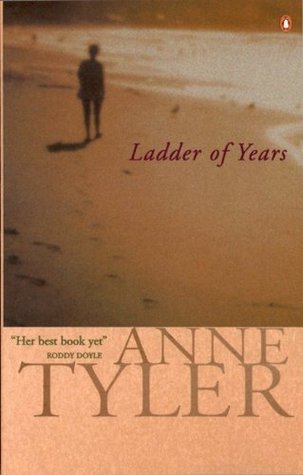 So for September I managed to steer the group away from a poorly received historical novel of over 400 pages and the new Joël Dicker and onto Ladder of Years by Anne Tyler, which the bookstore chain Waterstones has been promoting heavily as one of their books of the month. I already had a charity shop copy in hand and the others liked the sound of it, so we’re all set for September 12th! Future months’ literary fiction choices look promising, too, so provided I enjoy the discussion and the camaraderie I plan to stick with it: a backlist Pat Barker novel I’ve not read, and Kirsty Logan and Jonathan Coe novels I’ve read before and won’t reread but will remind myself about briefly before the meetings.
I’m out of practice with this book club thing. My mother tells me that I have a lot to contribute but that I must also be open to what I’ll learn from other people – even if I don’t expect to. So I don’t want to set myself up as some kind of expert. In fact, I probably won’t even mention that I’m a freelance book reviewer and book blogger. Mostly I’m hoping to find some friendly faces around the neighborhood, because even though we’ve lived here just over two years I still only know a handful of names and keep myself to myself as I work from home. Even if I have to read books I wouldn’t normally, it’ll be worth it to meet more people.
What has your experience with book clubs (in person and online) been?
Wellcome Book Prize Shortlist: To Be a Machine by Mark O’Connell
The topic of this shortlisted book didn’t particularly appeal to me, so I was pleasantly surprised to enjoy it. Transhumanism is about using technology to help us overcome human limitations and radically extend our lifespan. Many of the strategies O’Connell, a Dublin-based freelance writer with a literature background, profiles are on the verge of science fiction. Are we looking at liberation from the rules of biology, or enslavement to technology? His travels take him to the heart of this very American, and very male, movement.
Cryogenic freezing: The first person was cryogenically frozen in 1966. Max More’s Alcor Life Extension Foundation in Scottsdale, Arizona offers whole-body or head-only (“neuro”) options for $200,000 or $80,000. More argues that the residents of Alcor are somewhere between living and dead. These entities are held in suspension in the belief that technology will one day allow us to upload the contents of the mind into a new vessel.
- This approach seems to conceive of the human mind/consciousness as pure information to be computed.
 Cyborgs: Grindhouse Wetware, near Pittsburgh, aims to turn people into literal cyborgs. Tim Cannon had a Circadia device the size of a deck of cards implanted in his arm for three months to take biometric measurements. Other colleagues have implanted RFID chips. He intends to have his arms amputated and replaced by superior prostheses as soon as the technology is available.
- That may seem extreme, but think how bound people already are to machines: O’Connell calls his smartphone a “mnemonic prosthesis” during his research travels.
Mortality as the enemy: Many transhumanists O’Connell meets speak of aging and death as an affront to human dignity. We mustn’t be complacent, they argue, but must oppose these processes with all we’re worth. One of the key people involved in that fight is Aubrey de Grey of SENS (“Strategies for Engineered Negligible Senescence”), and Google has also gotten in on it with their “Calico” project.
- O’Connell recounts explaining aging and death to his three-year-old son; his wife chipped in that – according to “Dada’s book” – perhaps by the time the boy is grown up death will no longer be a problem.
The Singularity: Posited by Ray Kurzweil, the Singularity is the future point at which artificial intelligence will surpass humanity. O’Connell likens it to the Christian idea of the Rapture, itself a moment of transcendence. At a conference on transhumanism and religion in Piedmont, California, he encounters Terasem, a religion founded recently by a transhumanist and transgender person.
- To my surprise, To Be a Machine makes frequent reference to religious ideas: O’Connell thinks of transhumanism as an attempt to reverse the Fall and become godlike, and he often describes the people he meets as zealots or saints, driven by the extremity of their beliefs. Both religion and transhumanism could be seen as a way of combating nihilism and insisting on the meaning of human life.
O’Connell’s outsider position helped me to engage with the science; he’s at least as interested, if not more so, in the deeper philosophical questions that transhumanism raises. I would caution that a grounding in religion and philosophy could be useful, as the points of reference used here range from the Gnostic gospels and St. Augustine to materialism and Nietzsche. But anyone who’s preoccupied with human nature should find the book intriguing.
You could also enjoy this purely as a zany travelogue along the lines of Elif Batuman’s The Possessed and Donovan Hohn’s Moby-Duck. The slapstick antics of the robots at the DARPA Robotics Challenge and the road trip in Zoltan Istvan’s presidential campaign Immortality Bus are particularly amusing. O’Connell’s Dickensian/Wildean delight in language is evident, and I also appreciated his passing references to William Butler Yeats.
It could be argued, however, that O’Connell was not the ideal author of this book. He is not naturally sympathetic to transhumanism; he’s pessimistic and skeptical, often wondering whether the proponents he meets are literally insane (e.g., to think that they are in imminent danger of being killed by robots). Most of the relevant research, even when conducted by Europeans, is going on in the USA, particularly in the Bay Area. So why would an Irish literary critic choose transhumanism as the subject for his debut? It’s a question I asked myself more than once, though it never stopped me from enjoying the book.
The title (from an Andy Warhol quote) may reference machines, but really this is about what it means to be human. O’Connell even ends with a few pages on his own cancer scare, a reminder that our bodies are flawed machines. I encourage you to give this a try even if you think you have no particular interest in technology or science fiction. It could also give a book club a lot to discuss.
Favorite lines:
“We exist, we humans, in the wreckage of an imagined splendor. It was not supposed to be this way: we weren’t supposed to be weak, to be ashamed, to suffer, to die. We have always had higher notions of ourselves. … The frailty is the thing, the vulnerability. This infirmity, this doubtful convalescence we refer to, for want of a better term, as the human condition.”
My rating:
See what the rest of the shadow panel has to say about this book:
Annabel’s review: “I loved this book from the front cover to the back, starting with its title. … He writes with empathy and a good deal of humour which makes the text always readable and entertaining, while provoking his readers to think deeply about their own beliefs.”
Clare’s review: “O’Connell’s prose style is wordy and ironic. He is pleasingly sceptical about many aspects of transhumanism. … It is an entertaining book which provides a lot of food for thought for a layperson like myself.”
Laura’s review: “Often, I found that his description of his own internal questions would mirror mine. This is a really fantastic book, and for me, a clear front runner for the Wellcome Book Prize.”
Paul’s review: “An interesting book that hopefully will provoke further discussion as we embrace technology and it envelops us.”
My gut feeling: Though they highlight opposite approaches to death – transcending it versus accepting it – this and Kathryn Mannix’s With the End in Mind seem to me the two shortlisted books of the most pressing importance. I’d be happy to see either of them win. To Be a Machine is an awful lot of fun to read, and it seems like a current favorite for our panel.
Shortlist strategy:
- I’m coming close to the end of my skim of The Vaccine Race by Meredith Wadman.
- I’m still awaiting a review copy of Mayhem by Sigrid Rausing, which I’ll be featuring as part of the official Wellcome Book Prize shortlist blog tour.
Young Writer of the Year Award: Shortlist Readings Event
On Saturday I attended an exclusive bloggers’ event at the Groucho Club in London with four of the authors shortlisted for the Sunday Times / Peters Fraser + Dunlop Young Writer of the Year Award (Sally Rooney was unable to make it from Dublin). Also in attendance were fellow shadow panelists Annabel and Clare and some other notable names from the UK blogging community, including Eric Karl Anderson and Naomi Frisby. It was lovely to meet them, and Annabel, for the first time, and to have time to chat with the shortlisted authors.

That’s me with Clare and Annabel. Thanks to Eric Karl Anderson for taking the photo.
The event was chaired by Robert Collins, a former deputy literary editor of the Sunday Times now with Intelligence Squared. Each author gave a short reading from their book and answered questions from the chair and the audience. In every case, what I heard helped me appreciate the work and the author more. All four writers were so funny and warm, and seemed equally humbled and delighted to be in the running for this award.
Minoo Dinshaw reminded me of an Oxford don twice his age. (Indeed, his father is an Oxford don, and his mother is Scottish writer Candia McWilliam, so he has a proud literary pedigree.) He first became aware of Steven Runciman as a child when he and his mother spotted the wizened old man in a hotel lobby in Edinburgh, where they had traveled for the book festival. He then read Runciman’s Crusades books at school, and when in 2011 he met Runciman’s niece and she asked him to write the biography, he said he couldn’t think of anything else he wanted to do. (And still can’t.) Reading from his Kindle as “I didn’t want to break my wrist” (!), he chose a late passage featuring Steven in his nineties. Dinshaw said that while writing about Runciman he felt by turns flirted with and accused. Living in his subject’s house, working in his library, even sleeping in his bed (just the once), he felt he “had a very strange ghost in my life.” Dinshaw said the project captured his attention because he’s romantic and competitive, but that he’d like to try writing fiction in the future.
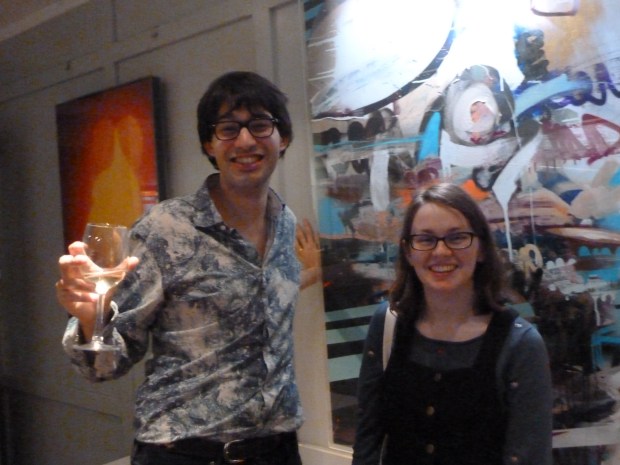
Clare with Minoo Dinshaw. Photo by Annabel Gaskell.
Julianne Pachico read a party scene from “The Tourists,” as it’s approaching the festive season. I was intrigued to learn that the interlinking structure of her book only emerged late on in the editing process; she’d originally meant to write a post-apocalyptic novel set all in one house, but found that setting too limiting. “I sort of work it out as I go along,” she said. So is it short stories or a novel? She’s sick of this question! Really she just wanted to write the kind of book she likes to read, citing Jennifer Egan’s A Visit from the Goon Squad and David Mitchell’s Ghostwritten as examples. Asked about her mentors, Pachico cited her mother, who told her “you’ll never be lonely, you’ll never be bored” as long as you read; and her first tutor, Andrew Cowan, who told her no one out there was writing anything like her story “Junkie Rabbit” – just the affirmation she needed. With all that’s happened in 2017, Pachico said she plans to turn to writing as a way “to outcreate the abyss” (a phrase from her twin sister, who’s also a writer). Pachico also teaches creative writing at Sheffield Hallam.

Julianne Pachico signing my book. Photo by Annabel Gaskell.
(As Sally Rooney was not in attendance, Collins read on her behalf a passage about Frances and Bobbi’s early friendship at school.)
 Claire North, aka “Cat” (real name: Catherine Webb; her fantasy and science fiction books are under various names) was in a way the odd one out at this event. Collins opened by saying that this award is all about getting in on the ground level with these writers, several of whom are debut authors. But North is a teen phenom who published her first book at age 14 and is set to release #20 next year. All along her parents called her a freak and demanded that she get her GCSEs and go to uni because writing “isn’t a proper job” (“but we’re very proud of you!” they’d usually append). She’s experienced the full gamut of responses over the years: some swore she wouldn’t have anything to say until age 40; others sighed that once she turned 18 she could no longer be marketed as “young.” She read the perfect passage from The End of the Day: a frantic, bravura account of the riders of the apocalypse together on a plane. She loves that science fiction “makes the extraordinary domestic” and playing with death appealed to her “flippant nature.” Charlie is, she thinks, the kindest character she’s ever written.
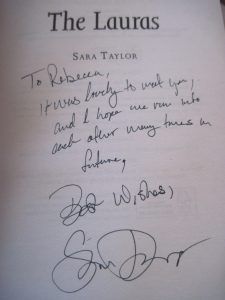 Sara Taylor read from one of Ma’s earliest stories about how her parents met. She wrote The Lauras while she was supposed to be completing her PhD thesis on censorship in American literature. At the time she was coming to terms with the fact that she was going to be staying in the UK, as well as remembering family road trips and aspects of her relationship with her mother that she wishes were otherwise. Her agent wasn’t comfortable with the focus on an “agender” character, but Taylor held firm. She’s used to ignoring the advice her (older, male) professors and advisors tend to give her. Instead, she gets tips from her ten-years-younger sister back in the States, who knows exactly how to “fix” her work. Taylor feels the USA is 5–10 years behind the UK on gender issues, and revealed that The Lauras is a response to the novel Love Child (1971) by Maureen Duffy. She has recently finished her third novel and hopes to get back into teaching since writing non-stop for nine months makes her “go a little funny.”
This was such a special event. There were no more than 20 people in the room, and at the end I got a chance to speak to each of the authors as they signed my books. I normally get shy in such situations, but everyone was completely approachable. (Sara Taylor and I confirmed that we were indeed on the same study abroad program to England, a few years apart, so spent some time reminiscing about Reading and our formerly women-only colleges. Her mother went to Hood College, my alma mater – thus the brief mention of it in The Lauras.)


Important upcoming dates:
- November 24th: shadow panel meeting in London
- November 27th: deadline for shadow panel winner decision
- November 29th: shadow panel winner announced on STPFD website
- December 3rd: shadow panel winner announced in Sunday Times
- December 7th: prize-giving ceremony at the London Library
I’ll be aiming to post my last couple of reviews on Wednesday.
Young Writer of the Year Award shortlist
Now that the shortlist has been announced in the Sunday Times, I can also share it here:
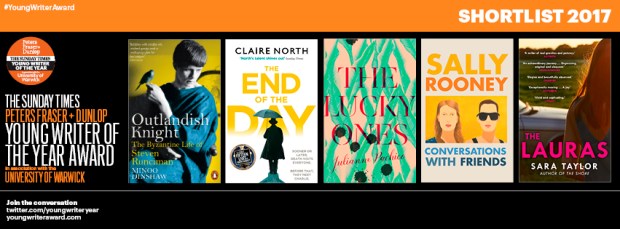
For the first time ever, the judges have chosen five titles, having apparently found it just too difficult to decide on four!
- Outlandish Knight: The Byzantine Life of Steven Runciman, Minoo Dinshaw (biography)
- The End of the Day, Claire North (science fiction novel)
- The Lucky Ones, Julianne Pachico (linked short stories)
- Conversations with Friends, Sally Rooney (contemporary novel)
- The Lauras, Sara Taylor (contemporary novel)
My initial thoughts: I only predicted Sally Rooney, and am surprised not to see Fiona Mozley here. My only other disappointment is that no poetry has been recognized this year.
There is great variety on this list, ranging as it does from sci fi lite to biography/history. I have only read part of one of the books: an unsuccessful attempt with The Lauras last December, though I am more than happy to try again because I loved The Shore so much. I am now halfway through.
I enjoyed the one book I read by Claire North very much (The First Fifteen Lives of Harry August) so look forward to trying another, and I have heard a lot about the Sally Rooney book and read various reviews (it seems to be a polarizing read, though).
I think we are all feeling a bit daunted by the 640-page biography about a historian I had never heard of. However, I have been getting more into biographies so will be interested to see how the author shapes this life story. I am a few chapters in so far, but have a feeling I will be reading it right up until our decision meeting.
I will be posting 1+ shortlist review per week in November, starting with The Lauras.
Some Books I Was Surprised to Love
Like most fiction readers, I generally stick with what I’m pretty sure I’ll like. For me that means that, unless I’ve heard very good feedback that makes me think the book will stand out from its peers, I tend to avoid science fiction, fantasy, and mystery novels (or genre fiction in general). I’m also leery of magic realism and allegories, as these techniques can so often be cringe-inducing. But occasionally a book will come along that proves me wrong.
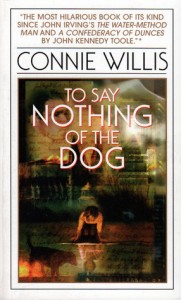 For instance, last week I finished To Say Nothing of the Dog by Connie Willis. Time travel would normally be a turnoff for me, but Willis manages it perfectly in this uproarious blend of science fiction and pitch-perfect Victorian pastiche (boating, séances and sentimentality, oh my!). Once I got into it, I read it extremely quickly – finishing the final 230 pages on one Sunday afternoon and evening – and it provoked a continuous stream of snorts. I can hardly think of anyone I wouldn’t recommend it to.
This got me thinking about some other pleasantly surprising books that took me outside of my usual reading comfort zone in recent years:
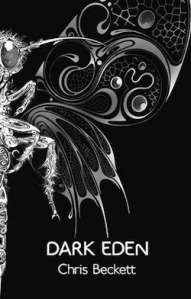 Dark Eden by Chris Beckett: Six generations ago a pair of astronauts landed on the planet Eden and became matriarch and patriarch of a new race of eerily primitive humans. A young leader, John Redlantern, rises up within the group, determined to free his people from their limited worldview by demythologizing their foundational story. Through events that mirror many of the accounts in Genesis and Exodus, Beckett provides an intriguing counterpoint to the ways Jews and Christians relate to the biblical narrative. Page-turning science fiction with deep theological implications. I liked each of the two sequels less than the book that went before, but they’re still worth reading.
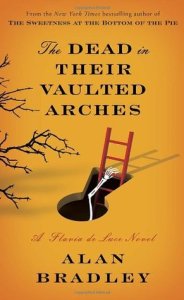 The Flavia de Luce mysteries by Alan Bradley: Normally I shy away from series and tire of child narrators – and yet I find the Flavia de Luce novels positively delightful. Why? Well, Canadian author Alan Bradley’s quaintly authentic mysteries are set at Buckshaw, a crumbling country manor house in 1950s England, where the titular eleven-year-old heroine, also the narrator, performs madcap chemistry experiments and solves small-town murders. The Dead in Their Vaulted Arches (#6) is the best yet. In this installment, Flavia finally learns of her unexpected inheritance from her mother. The most recent, Thrice the Brinded Cat Hath Mew’d (#8), is a close second.
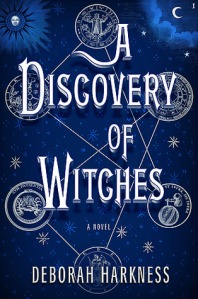 A Discovery of Witches by Deborah Harkness: The thinking gal’s Twilight. Harkness, a historian of science, draws on her knowledge of everything from medieval alchemy to recent DNA mapping. The main character, reluctant witch Diana Bishop, is studying alchemical treatises at the Bodleian Library. She calls up an enchanted manuscript from Ashmole’s original collection, presumed missing since 1859. There are three excised pages, and the book instantly draws attention from the myriad “creatures” (non-humans) plaguing Oxford. Enter Matthew Clairmont, a mega-hot vampire with a conscience. From rural France to upstate New York, he and Diana fight off rival vampires and the witches who killed Diana’s parents. As with Beckett’s books, the two sequels are a bit of a letdown, but the first book is great fun.
 You Too Can Have a Body Like Mine by Alexandra Kleeman: A full-on postmodern satire bursting with biting commentary on body image, consumerism and conformity. The narrator, known only as A, lives in a shared suburban apartment. She and her roommate, B, are physically similar and emotionally dependent, egging each other on to paranoid anorexia. Television and shopping are the twin symbolic pillars of a book about the commodification of the body. In a culture of self-alienation where we compulsively buy things we don’t need, have no idea where our food comes from and worry about keeping up a facade of normalcy, Kleeman’s is a fresh voice advocating the true sanity of individuality.
 The First Fifteen Lives of Harry August by Claire North: The theme of a character reliving the same life over and over will no doubt have you thinking of Kate Atkinson’s Life After Life, but I liked this book so much better. Perhaps simply because of the first-person narration, I developed much more of a fondness for Harry August and his multiple life stories than I ever did for Ursula Todd. Harry, the illegitimate son of a servant girl, is born in the same manner each time – on New Year’s Day 1919, in the ladies’ restroom at Berwick-upon-Tweed rail station! – but becomes many people in his different lives.
What books were you surprised to love recently?
Review: The Heart Goes Last, Margaret Atwood
 Last month an unsolicited e-copy of The Heart Goes Last landed in my inbox: a random Thursday afternoon present for this Margaret Atwood fan. I was meant to review it for one of the websites I write for, but a misunderstanding meant the book was also assigned to someone else. So while I won’t be getting paid for my review (Boooooo!), I was still grateful for the opportunity to read the book early.
Atwood’s last project before this was the Maddaddam dystopian trilogy, and while there are still some dystopian elements here, she is blending speculative elements with realist social commentary in a way that makes me hope she is leaving some of the overt absurdity of her science-fiction scenarios behind.
 I didn’t dislike the Maddaddam books per se, but nor did I feel that it was necessary to turn Oryx and Crake into a trilogy, especially when the two following novels only re-examined events from different perspectives, filling in backstory rather than adding new present action (see my Maddaddam review on For Books’ Sake). It felt like a fairly indulgent ten-year project distracting Atwood from producing potential gems along the lines of The Blind Assassin, one of my favorites.
The Heart Goes Last began as four Positron short stories that appeared on the Byliner website between 2012 and 2013. We’re in a vague post-financial crisis, post-environmental apocalypse world, a little like California or The Road but not quite as drastic. Stan and Charmaine are a married couple reduced to living in their car. Charmaine works in a bar, but Stan has lost his job and won’t quite stoop to his brother Conor’s level of moving money around offshore. (It’s no coincidence his brother’s nickname is “Con.”)
One day Charmaine sees an ad for the Positron Project and convinces Stan to sign them up. Participants spend every other month working in the model community of Consilience…and every other month in prison. “DO TIME NOW, BUY TIME FOR OUR FUTURE!” one slogan reads. They share their home with another couple on an alternate schedule.
It’s a little like Pleasantville or The Truman Show: Consilience is stuck somewhere between the 1950s and a sustainable future. Doris Day and Bing Crosby play over the speakers (“The past is so much safer, because whatever’s in it has already happened”), but everyone rides scooters and cheerfully goes about their jobs – Stan as a poultry inspector, and Charmaine in hospital procurement.
Yet Positron has some sordid and even sinister side-projects. With an echo of Animal Farm, Atwood emphasizes how seductive this ultimately oppressive community can seem:
“Hey. Everyone’s different.” / “But some are more different than others.”
Things get weird as foul-mouthed Stan becomes obsessed with the sex lives of their alternates, Max and Jasmine. He imagines their lovemaking to be so much more passionate than his with Charmaine. Yet Charmaine, so seemingly bland and innocent (her worst curse is “Darn it to heck”), is up to something. What is she doing sneaking around derelict houses, and what is her top-secret job within the prison?
Gradually both Stan and Charmaine, separately, get caught up in a conspiracy to take Positron down from the inside. The wacky plot involves “prostibot” sex dolls (tagline: “Better than real”), Elvis Presley and Marilyn Monroe impersonators, and a Midsummer Night’s Dream-esque procedure that reprograms people so they fall in love with the first creature they see after they wake up.
This is all reasonably good fun, but, as with the Maddaddam books, the technology and naming tip over into pure silliness, and here there’s an added layer of raunchiness I’m not accustomed to seeing from Atwood. In distinguishing the fake from the real, the novel goes deep into unpleasant themes of fetishism and voyeurism.
I’m not as down on the book as the Kirkus reviewer (their hatchet job is quite amusing), but I did find it problematic. Charmaine is whiny and annoying throughout, as well as implausibly naïve. All the characters are similarly one-dimensional, even those with secrets. Moreover, the plot takes plenty of unexpected turns with some Shakespearean comedy reversals, but it’s downright ludicrous at times. There’s even a situation straight out of Ted, one of the worst movies I’ve had the bad luck to sample.
In short, a somewhat disappointing one-off from Atwood. Almost the best thing about it is the title, which refers to both biological death and the difficulty of faking true love. I long for the doyenne of Canadian fiction to return to contemporary realism or even historical fiction. There’s just as much scope in those genres for serious social commentary as there is in speculative fiction. Or maybe I should just delve into her extensive back catalogue instead.
My rating: 
Have you read Atwood’s recent books? What’s your take?
Reviews Roundup, May–June
One of my goals with this blog is to have one convenient place where I can gather together all my writing that has appeared in disparate online locations. To that end, once a month – or maybe more often – I’ll provide links to all the book reviews I’ve published elsewhere, with a rating and a short taster so you can decide whether to click to read more. (A couple of exceptions: I won’t point out my Kirkus Indie or BlueInk reviews since I don’t get a byline.)
BookBrowse
Girl at War by Sara Nović [subscription service; excerpt available to non-subscribers]: This pitch-perfect debut novel is an inside look at the Yugoslavian Civil War and its aftermath, from the perspective of a young girl caught up in the fighting. The careful structure is what keeps it from becoming just another ordinary, chronological war story. The recreation of a child’s perspective on the horrors of war is stunning. In fact, I can barely think of a negative thing to say about this concise novel. It strikes a perfect balance between past and present, tragic and hopeful.

 Church of Marvels by Leslie Parry [subscription service; excerpt available to non-subscribers]: With settings ranging from a Coney Island theater to an opium den and a mental asylum, this is a gritty look at late-nineteenth-century outsiders. Circus and sideshow themes have been very popular in fiction in recent years, and this is a great example of a novel that uses those elements as background but goes beyond the incidentals of the carnival lifestyle to examine sexuality and societal outcasts. A very atmospheric and accomplished debut novel.

The Bookbag
Secrets of the Pomegranate by Barbara Lamplugh (& interview): In the aftermath of the 2004 Madrid train bombings, the secrets harbored by two English sisters, one of them settled in Granada, will come out into the open and affect the entire family. Lamplugh does a great job of unveiling a little at a time – but still maintaining tension until the surprise of the final revelation. The novel shifts easily between the central narrative and Deb’s diary entries, and between Alice’s and Mark’s perspectives. A strong debut novel.
An Account of the Decline of the Great Auk, According to One Who Saw It by Jessie Greengrass: An unusual mixture of historical, contemporary and dystopian short stories. A number of the first-person narratives feel like vague interior monologues, though there are some universal sentiments. When Greengrass picks one genre (but which will it be?) and sticks with it for the length of a whole book, she should have the time and space for the deep characterizations I thought were missing here. (But you can’t beat this book’s title, can you?)
 From the Mixed-Up Files of Mrs. Basil E. Frankweiler by E.L. Konigsburg: This was one of the key books of my American childhood. All these years later, phrases were still familiar to me, such as Jamie’s frequent exclamation of “Oh, boloney!” I clearly remembered the delicious overall sense of adventure and secrecy. Konigsburg captures school group chatter and brother/sister banter perfectly. The museum and archive settings are a great way to get children interested in art, history and library research. This was the original Night at the Museum before that franchise was ever dreamed up.
The Hunt for the Golden Mole by Richard Girling: From Victorian animal collecting to present-day poaching, Girling surveys the contradictory human instincts toward exploitation and preservation of mammals. The book is rather scattered, with too little about the actual quest for the mole, but the message about species extinction is powerful. (The Somali golden mole has never been seen in the wild, except as a few bones in an owl pellet found by an Italian zoologist in 1964. For some reason, it captured Girling’s imagination, becoming a symbol of rarity and fragility.)

Nudge
Road Ends by Mary Lawson: Contrasting rural Canada and London in the 1960s, Lawson’s third novel is a powerful story about how people deal with a way of life ending. She creates a perfect balance between her two plot strands, and the evocation of both locations is flawless, perhaps because they have autobiographical worth for her – she grew up on a farm in Ontario but moved to England in 1968. One remarkable thing about the novel is how she traces every decision back to a traumatic event in a character’s past.
 The Wolf Border by Sarah Hall: Rachel Caine has run Idaho’s Chief Joseph wolf preserve for nearly a decade, but her roots are in England’s Lake District. Her two worlds unexpectedly collide when an earl asks for her help reintroducing wolves near the Scottish border. Alongside the story of the wolves’ release runs Rachel’s decision to become a mother. The twin plot strands – one environmental and the other personal – ask what can be salvaged from the past.
Italian Ways by Tim Parks: Parks, an Englishman, has lived and worked in northern Italy for over 30 years. To start with he saw his train travel as an everyday source of woes about ticket queues, late running, officious staff, and so on, but as years passed he decided to interrogate Italy’s rail system as a metaphor for the country itself. He structures this book around seven train journeys. It’s better suited to train spotters than to armchair travelers: there is quite a lot about train schedules and not enough about the countryside itself.
 Landmarks by Robert Macfarlane: This new classic of nature writing zeroes in on the language we use to talk about our environment, both individual words – which Macfarlane celebrates in nine mini-glossaries alternating with the prose chapters – and the narratives we build around places, via discussions of the work of nature writers he admires. Whether poetic (“heavengravel,” Gerard Manley Hopkins’s term for hailstones), local and folksy (“wonty-tump,” a Herefordshire word for a molehill), or onomatopoeic (on Exmoor, “zwer” is the sound of partridges taking off), his vocabulary words are a treasure trove.
Penelope Fitzgerald: A Life by Hermione Lee: A thorough and sympathetic appreciation of an underrated author, and another marvelously detailed biography from Lee. Fitzgerald is, like Diana Athill, a reassuring examples of an author who did not find success until well into middle age. Although she always guarded literary ambitions, she was not able to pursue her work wholeheartedly until she had reared three children and nursed her hapless husband through his last illness. The approach is largely chronological, though Lee pauses at key moments to investigate the biographical origins of each of Fitzgerald’s books.
Saint Mazie by Jami Attenberg: Mazie Phillips-Gordon, a real ticket-taker at The Venice movie theatre, barely gets a footnote in history. Here we see all sides of this bold, brassy broad through Attenberg’s fragmented, epistolary narrative. The novel intersperses Mazie’s fictional diary entries (1907 to 1939) with excerpts from her unpublished autobiography and interviews with people who knew her. This is historical fiction – but not as we’re accustomed to it. Attenberg shows how fragile and incomplete the documentary record can be. A hard-nosed heroine with a heart of gold, Mazie will leave her mark on you.
 A Buzz in the Meadow by Dave Goulson: As Goulson did in his book about bees, A Sting in the Tale, he treats readers like friends he is taking on a gentle tour to have everyday encounters with nature. The low-key, humorous anecdotes are reminiscent of the writings of Gerald Durrell, but – like Durrell – Goulson has a serious environmental agenda. Some of the most amusing chapters are about the sexual habits of insects and plants. This is less focused than his previous book, though, and repeats some of the material. The main draw, as always, is Goulson’s infectious enthusiasm and excellent explanations of science.
We Love This Book
War of the Encyclopaedists by Christopher Robinson and Gavin Kovite: In this postmodern satire, two Seattle hipsters must face reality when one of them leaves to fight in the Iraq War. From now on they keep in touch by updating their pretentious Wikipedia article. While Hal applies literary criticism to Star Wars and tries to make amends to his ex-girlfriend, Mickey is in life-and-death situations, looking for car bombs and overseeing local elections. Robinson and Kovite (an Iraq War veteran) alternate their settings in a fairly seamless whole.
The Edible Atlas by Mina Holland: Food lovers and armchair travelers alike will savor this tour through the world’s regional cuisines and trademark dishes. In her first book, the editor of the Guardian’s Cook supplement introduces 39 cuisines with larder lists, a rundown of crucial flavors, and one to four recipes. Maps show which spices and chilies are used in different areas, while sidebars present key ingredients. The book strives for a balance of common imports and unknown dishes, prioritizing authenticity and reproducibility at home.
 Hollow Heart by Viola di Grado: Twenty-five-year-old Dorotea Giglio slit her wrists in the bathtub in July 2011 and expired in “a grim mojito of mint bubble bath and blood.” Over the next four years she chronicles her physical decomposition as well as her spirit’s enduring search for love. In alternately clinical and whimsical language, with fresh metaphors that have survived translation from Italian admirably, di Grado’s second novel examines the secret sadness passed down through families.
Foreword Reviews
Auschwitz #34207: The Joe Rubinstein Story by Nancy Sprowell Geise: This eye-opening account of a Polish Jew’s life before, during, and after Auschwitz deposits readers right into concentration camp horrors. Instead of presenting this as a third-person biography, Geise writes as Rubinstein, using extensive interviews and documentary research to recreate his perspective. While the story is necessarily a bit less dramatic after the chapters on the Holocaust, the fact that Rubinstein survived and later became a successful shoe designer in New York is inspiring.
The Contaminants by Devin K. Smyth: Two teens aboard a spacecraft hold out hope for new life on post-apocalyptic Earth in this believable YA science fiction novel. Composed of two solid first-person narratives and based around two father-child relationships, this is a novel that prizes emotions as much as it does technology. The novel is on the thin side; it could have done with another subplot or two to add some complexity. However, the subtle eugenics theme will give teen readers plenty to think about while they follow the fast-paced story.
 The Loneliness Cure by Kory Floyd: A professor of communication tackles the loneliness epidemic with stories and science. Floyd explains the problems associated with chronic affection deprivation and suggests practical strategies for getting more of the human contact we naturally crave. Two-thirds of the text goes to preliminaries, but the subtitle’s six strategies are worth waiting for. Like the best self-help books, this convinces readers that “it pays to reach out for help when you need it” and gives the confidence and tactics to do so.
BookTrib
In this article I give a more in-depth preview of Circling the Sun by Paula McLain, her fictionalized biography of Beryl Markham.
I also post reviews of most of my casual reading and skimming on Goodreads.
Insomnia by Linda Pastan: Excellent free verse poems infused with images of weather, heavenly bodies, the night sky, art history, and travels. No rhymes to speak of, but plenty of alliteration and repetition – like in “Necklace,” where nearly every line ends with “pearl” or “pearls.” Historical and mythological references are frequent and highbrow. Especially in Part 3, the main theme is facing old age and illness. Linda Pastan has been writing poetry for nearly half a century; I’ll be sure to seek out more of her collections. Releases October 26th.
The Kindness by Polly Samson: This very subtle novel reminds me of works by Tessa Hadley and Lucy Caldwell. It takes one seemingly perfect couple – Julia and Julian – and parses out what went wrong between them and the aftermath. The book is so elegantly structured; characters drift in and out of flashbacks with none of the customary warnings. Instead Samson leaves it to readers to piece together the jigsaw puzzle of how they met and raised their daughter, Mira, and then how everything fell apart.
 The Versions of Us by Laura Barnett: In this impressive debut, Barnett chronicles the romantic lives of two Cambridge graduates through three-quarters of a century, giving three options for how their connection might play out. She juggles her storylines and moves through decades with ease. Less mawkish than One Day; less gimmicky than Life After Life – though there are shades of both. The message seems to be: there is no one perfect person, no one perfect story. Unsentimental this may be, but it feels true to how life works. (My full review will appear in the July 2015 issue of Third Way magazine.)
Eating Appalachia: Rediscovering Regional American Flavors by Darrin Nordahl: Nordahl travels through Ohio, West Virginia, Kentucky and North Carolina in search of truly indigenous local ingredients. He highlights ramsons, pawpaw, elk (leaner and richer than beef), squirrel, hickory nuts and black walnuts, sumac, spicebush berry, sassafras, and persimmons. There are a few recipes and photographs in each chapter, although this is more of a narrative than a cookbook. I loved how he brought it all together with an imagined Appalachian Thanksgiving feast.
Eating Rome: Living the Good Life in the Eternal City by Elizabeth Minchilli: Minchilli’s parents moved the family from America to Rome when she was 12. Over the years she kept going back to Italy: to Florence as a graduate student, and then to stay when she married Domenico. Here, through recipes and personal stories, she shares her enthusiasm for Italian food and for Rome in particular. She finishes each chapter with a list of favorite eateries, so this is a practical guide anyone would benefit from taking along on a trip to Rome.
Some Churches by Tasha Cotter: I loved the first two poems but felt a number of the rest were lacking in artistry. Almost all are written in complete sentences, some in paragraph blocks, and alliteration isn’t always enough to differentiate them from prose. Favorite lines (from “Blood Orange”): “People think that either the red or the orange should go, because to blend the two / alienates some readers. / … I, too, am having an identity crisis, / just like the blood orange. Now that we’ve peeled back / the artifice, you’re inviting me in anyway”.
South Toward Home: Travels in Southern Literature by Margaret Eby: This tour through Southern literature is a great introduction for someone whose familiarity with Southern authors is minimal. Starting off in her home state of Mississippi, Eby travels through Georgia, Alabama, Louisiana, and back to Mississippi in a roughly circular road trip. My favorite chapter was on Flannery O’Connor, but I was also interested to learn about Harry Crews, who I’d never heard of before – it certainly sounds like he was a character. Releases September 8th.
 Post-Traumatic Church Syndrome: A Memoir of Humor and Healing by Reba Riley: I could relate to much of Riley’s story. She was a Pentecostal-leaning fundamentalist through high school, but now even setting foot in a church made her feel nauseous. Yet she retained a strong spiritual compass that helped her tap into the energy of the “Godiverse.” Aged 29, Riley had the idea of experiencing 30 different religious traditions before 30. She writes in a chatty, girlfriend-to-girlfriend style, as if you’ve joined her book club for a glass of pinot grigio.
Reviews Roundup, April–May
One of my goals with this blog is to have one convenient place where I can gather together all my writing that has appeared in disparate online locations. To that end, once a month – or maybe more often – I’ll provide links to all the book reviews I’ve published elsewhere, with a rating and a short taster so you can decide whether to click to read more. (A couple of exceptions: I won’t point out my Kirkus Indie or BlueInk reviews since I don’t get a byline.)
[I seem to have done more ‘free’ than ‘required’ reading this past month, which I attribute to having been on vacation in America for about two weeks of that time.]
BookBrowse
 The Turner House by Angela Flournoy [subscription service, but an excerpt is available for free on the website]: In Flournoy’s debut novel, the 13 grown children of Francis and Viola Turner must put aside their own personal baggage and decide what will become of their parents’ Detroit house during the financial crisis.
The Bookbag
Mother of Eden by Chris Beckett: This sequel to 2012’s Arthur C. Clarke Award-winning science fiction novel Dark Eden sees Gela’s descendants splitting into factions and experimenting with different political systems. Starlight Brooking emerges as a Messiah figure, spreading a secret message of equality. Releases June 4th.
 Sophie and the Sibyl by Patricia Duncker: In Duncker’s sixth novel, a playful Victorian pastiche, George Eliot’s interactions with her German publisher and his feisty young wife provide fodder for Daniel Deronda. Consciously modeled on John Fowles’s The French Lieutenant’s Woman, this is a postmodern blending of history, fiction, and metafictional commentary.
We Love This Book
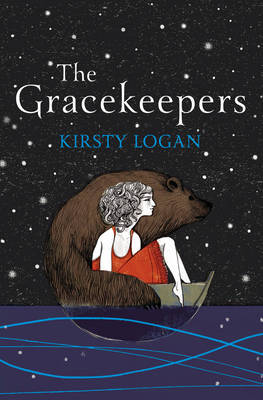 The Gracekeepers by Kirsty Logan: This inventive debut novel imagines a circus traveling through a flooded future world. Humanity is divided into two races, landlockers and damplings. Fear and prejudice distance these groups but the novel imagines them drawn together through a meeting between two young women, Callanish and North.
Foreword Reviews
 The Organ Broker by Stu Strumwasser: “There is no shortage of organs; there is only a shortage of organs in America.” The antihero of this debut novel finds organs on the international market and sells them for huge profits to Americans on transplant waiting lists. With snappy dialogue and a lovable hustler protagonist, it explores ethical ambiguities.
BookTrib
I chose my top four mother–daughter memoirs (by Alice Eve Cohen, Abigail Thomas, Alison Bechdel and Jeanette Winterson) for this Mother’s Day article.
I also post reviews of most of my casual reading on Goodreads.
Mademoiselle Chanel by C.W. Gortner: A writer of Tudor-era mysteries turns to more recent history with this novel about Coco Chanel. Detailing every business venture and love affair, he makes some parts a real chronological slog. I always associate Chanel with the 1950s–60s, so it was interesting to learn that she was born in the 1880s and experienced both world wars.
 The Empathy Exams by Leslie Jamison: I liked the medical-related pieces – attending a Morgellons disease conference, working as a medical actor – but not the Latin American travel essays or the character studies. The overarching theme of empathy was not as strong as I thought it would be; really, the book is more about how experiences mark the body.
The Real Thing: Lessons on Love and Life from a Wedding Reporter’s Notebook by Ellen McCarthy: McCarthy writes about weddings and relationships for The Washington Post. This is a collection of short pieces about modern dating, breakups, wedding ceremonies, marriage, and making love last. The style is breezy and humorous, largely anecdote- and interview-based, with some heartfelt moments. If you’re a wedding junkie you’ll definitely enjoy it, but I didn’t think it broke new ground.

 Visiting Hours: A Memoir of Friendship and Murder by Amy E. Butcher: The facts are simple: one night towards the end of their senior year at Gettysburg College, Kevin Schaeffer walked Butcher home from a drunken outing, then stabbed his ex-girlfriend to death. This book has elements of a true crime narrative, detailing the crime and speculating on possible causes for Kevin’s psychotic episode, but it’s more about how the crime affected Butcher. This is a concise and gripping narrative reminiscent of Half a Life by Darin Strauss.
A Reunion of Ghosts by Judith Claire Mitchell: Vee, Lady and Delph are the fourth generation of Alters, a Jewish family cursed with a rash of suicides. Indeed, the majority of the novel is the middle-aged sisters’ collective suicide note, narrated in the first-person plural. They reach back into the past to give the stories of their ancestors, including great-grandparents Iris and Lenz Alter, the latter of whom had the ironic distinction of being the Jewish creator of Zyklon gas (based on a real figure).
Beloved Strangers: A Memoir by Maria Chaudhuri: Islam versus Christianity is a background note, but the major theme is East versus West – specifically, Chaudhuri’s native Bangladesh set against America, where she attended university and later lived and worked. Religion, sexuality, dreams and second chances at love are all facets of the author’s search for a sense of home and family in a life of shifting loyalties. (My full review will appear in the autumn 2015 issue of Wasafiri literary magazine.)
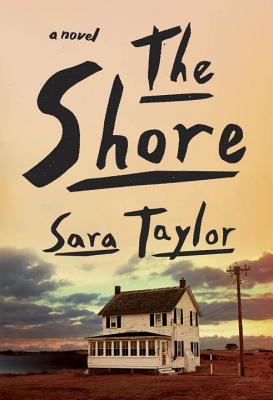 The Shore by Sara Taylor: Gritty and virtuosic, this novel-in-13-stories imagines 250 years of history on a set of islands off the coast of Virginia. As a Maryland native, I think of Chincoteague and Assateague as vacation destinations, but Taylor definitely focuses on their dark side here: industrial-scale chicken farms, unwanted pregnancies, domestic violence, bootleg liquor, gang rape, murders and meth labs.
Echoes of Heartsounds: A Memoir by Martha Weinman Lear: Longtime New York City journalist Lear’s first husband, a doctor named Hal, died after a series of heart attacks. Ironically, 30 years later she was admitted to the same hospital for a heart attack – an event that presents completely differently in women. As a sequel to her previous memoir, Heartsounds (1980), this explores life’s odd parallels and repetitions.
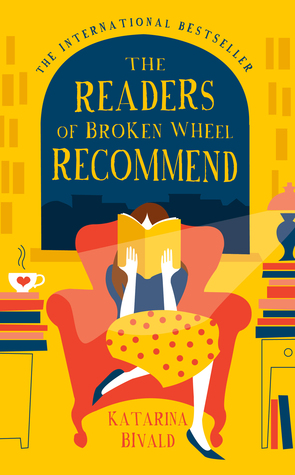 The Readers of Broken Wheel Recommend by Katarina Bivald: A Swedish tourist opens a bookstore in small-town Iowa. Given that she’d never visited the States at the time she wrote this novel (published in her native Sweden in 2013), Bivald has painted a remarkably accurate picture of a Midwestern town peopled with fundamentalists, gays, rednecks and a gun-toting diner owner. A cute read for book lovers, provided you can stomach a bit of chick lit / romance.
Life From Scratch: A Memoir of Food, Family, and Forgiveness by Sasha Martin: Martin writes well and I enjoyed this book overall, but at times you may become frustrated and ask “where’s the food?!” That’s because the makeup of this book is: Misery Memoir – 70% / Global Table Adventure blog – 30%. Martin had the idea to cook dishes from every country of the world. At the rate of one feast per weekend, the blog project took four years. She manages to give a fairly comprehensive overview of the cooking she did over that time.
Plumb Line by Steve Luttrell: Disappointingly average poems about nature and memory. The situations and sentiments are relatable but the language so plain that nothing sticks out.

The Sixth Extinction: An Unnatural History by Elizabeth Kolbert: The picture Kolbert paints of our environmental situation is depressing. I already knew the facts of climate change and animal extinction, but according to Kolbert the prognosis is even worse than I was aware. As a longtime New Yorker journalist, she writes at a good level for laymen: not talking down, nor assuming any specialist knowledge. Luckily, there are spots of humor to lighten the tone.
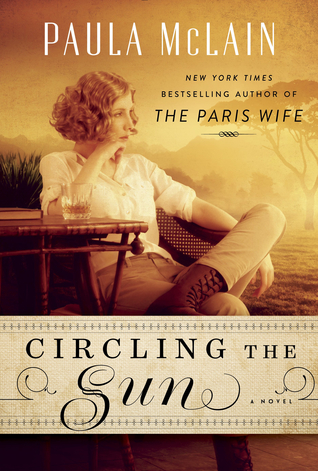 Circling the Sun by Paula McLain: This is just as good as The Paris Wife – if not better. I didn’t think I was very interested in aviatrix Beryl Markham, but McLain proved me wrong. The love triangle between her, Karen Blixen (Isak Dinesen) and Denys Finch Hatton forms the kernel of the book. McLain describes her African settings beautifully, and focuses as much on the small emotional moments that make a life as she does on the external thrills, though there are plenty of those.
The Size of Our Bed by Jacqueline Tchakalian: Well-structured and grouped into thematic sections, these poems are primarily about motherhood, the death of a much-loved husband from cancer, and adjusting to the reality of war. Alliteration and assonance stand in for traditional rhymes. Tchakalian is especially good with colors and flowers, which combine to create memorable metaphors. Releases September 15th.
 Bookish Beck = Rebecca Foster. American transplant to England. Freelance proofreader and book reviewer.
