Classic of the Month: Carry On, Jeeves by P.G. Wodehouse (1925)
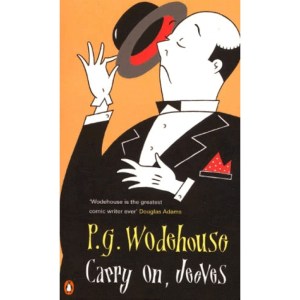 I’d never read any P.G. Wodehouse before, but of course I was familiar with his two most famous creations, empty-headed aristocrat Bertie Wooster and his omniscient manservant, Jeeves. Many people are turning to cheerful, witty reads during lockdown, so this seemed like a perfect time to give one of the books a try. The bio in my secondhand paperback calls this the first set of Jeeves and Wooster tales, while Goodreads lists it as the third book in a 14-strong series. I didn’t realize when I bought this or picked it up to read that it was a collection of 10 short stories, but that makes sense – these are such silly, inconsequential plots that they couldn’t possibly be sustained for more than about 20 pages each.
It doesn’t take long to get the hang of a Jeeves and Wooster story. Bertie or one of his rich, vapid pals will get into a spot of trouble, usually because of an aunt’s expectations, and a madcap plan – swapping places, impersonation, kidnapping or the like – is required to get out of it and/or get the girl. Jeeves has a brilliant idea and saves the day, all while commenting disapprovingly on Bertie’s fashion choices. Most of the stories are set in London and its environs, but a few also have the pair transplanted to New York City, where Bertie seems to have nothing better to do than lend his chums money. The first nine tales are narrated by Bertie, while the final one has Jeeves as narrator – on a visit to a girls’ school he plays a rather wicked prank to disabuse Bertie of the notion that he might like to adopt a daughter.
These stories were amusing enough, yet quickly blended into one. Pretty much as soon as I finished a story, I forgot what it was about. Looking back, not even the story titles can spark a memory. I made the mistake of not taking notes, so I’ve retained only general impressions. I enjoyed Bertie’s voice and the period slang as well as the dynamic between master and servant – it’s clear who’s really in charge here. “[T]his was obviously a cove of rare intelligence, and it would be a comfort in a lot of ways to have him doing the thinking for me,” Bertie says. “It’s a rummy thing, but when you come down to it Jeeves is always right.” Though I’ve never seen the adaptations, I couldn’t get the faces of Hugh Laurie and Stephen Fry out of my head. That’s no problem, though, as the casting couldn’t be more perfect.
I’m not sure if I’ll bother picking up another Wodehouse book, as I expect that his work is all of a piece. However, you could certainly do worse if you’re after a lighthearted read.
My rating: 
Announcing the Not the Wellcome Prize Shortlist
After deliberation and two rounds of voting, we as a shadow panel (Annabel of Annabookbel, Clare of A Little Blog of Books, Laura of Dr. Laura Tisdall, Paul of Halfman, Halfbook and I) have reduced the 19 longlisted titles to a shortlist of six books. A few of these were clear standouts on which we all agreed, while the others required more difficult decisions.
Exhalation by Ted Chiang
Invisible Women by Caroline Criado Perez
Constellations by Sinéad Gleeson
The Nocturnal Brain by Guy Leschziner
The Remarkable Life of the Skin by Monty Lyman
War Doctor by David Nott
We’re pleased with the quality and variety we’ve come up with here. While nonfiction dominates, we have included science fiction stories that raise questions about artificial intelligence and human development. The other books address gender inequality; cancer, chronic pain, and disability; circadian rhythms and sleep; anatomy; and surgery in war zones.
The shadow panel members will vote this coming weekend to choose a winner. In the meantime, I have set up a Twitter poll to run through Saturday, the results of which will serve as one additional weighted vote. Our winner will be announced one week from today, on the morning of Monday the 11th. Go forth and vote!
Which book(s) are you rooting for?
Six Degrees of Separation: From Stasiland to The End of the Point
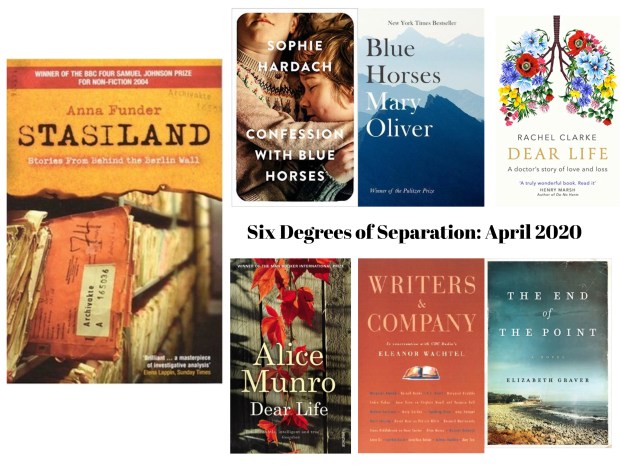
It’s my third time participating in Kate’s Six Degrees of Separation meme (see her introductory post). The challenge starts with Stasiland (2003) by Anna Funder, which I also happened to read recently. While working part-time for an overseas television service in what was once West Berlin, Funder started gathering stories of how ordinary people were put under surveillance and psychologically terrorized by the Stasi, the East German secret police. She molds her travels and her interviewees’ testimonies into riveting stories – though this won the Samuel Johnson Prize for nonfiction in 2004, it’s as character-driven as any novel.
#1 My interest in Stasiland was piqued by reading Sophie Hardach’s Costa Prize-shortlisted novel Confession with Blue Horses (2019). When Ella’s parents, East German art historians under Stasi surveillance, were caught trying to defect during a ‘vacation’ to Hungary in 1987, their three children were taken from them and only two were returned. Ella is determined to find her brother, whom they’ve had no word of since, via a correspondence with the Stasi archive. It’s an emotionally involving story of one ordinary family’s losses and reconstruction.

 #2 Blue Horses (2014) is one of Mary Oliver’s lesser poetry collections. I found it to be a desperately earnest and somewhat overbaked set of nature observations and pat spiritual realizations. There are a few poems worth reading (e.g., “After Reading Lucretius, I Go to the Pond” and Part 3 of “The Fourth Sign of the Zodiac”), and lines here and there fit for saving, but overall this is so weak that I’d direct readers to Oliver’s landmark 1980s work instead.
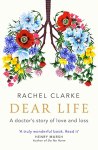
#3 Oliver’s poetry, especially “Wild Geese” and “The Summer Day,” gets quoted everywhere. The latter’s most famous lines, “Tell me, what is it you plan to do / with your one wild and precious life?” appears in Dear Life by Rachel Clarke, my book of 2020 so far. Clarke specializes in palliative medicine and alternates her patients’ stories with her own in a completely natural way. A major theme is her relationship with her late father, also a doctor, and his lessons of empathy and dedication. A passionate yet practical book, this aims to get people talking about end-of-life issues.
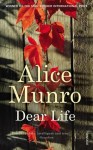
#4 I have meant to read Dear Life by Alice Munro (2012) since before she won the Nobel Prize. I was sent a free paperback copy for a Nudge review, but as the site already had a review of the book up, I let it slip and never followed through. More than once I’ve put this short story collection onto a reading stack, but I have never quite gotten past the first page or two. At some point this must be rectified.
#5 Alice Munro is one of the authors featured in Writers & Co. by Eleanor Wachtel (1993), a terrific collection of interviews from Wachtel’s weekly Canadian Broadcasting Corporation radio program. Whether I’d read anything by these authors (or even heard of them) or not, I found each Q&A chock-full of priceless nuggets of wisdom about creativity, mothers and daughters, drawing on autobiographical material, the writing process, and much more.

#6 My first-ever author Q&A, for Bookkaholic in 2013, was related to The End of the Point by Elizabeth Graver. (Alas that the site is now defunct, so the interview only exists as a file on my computer.) In an astonishing historical sweep, from Massachusetts’s first colonial settlers through the cultural upheavals of the twentieth century, Graver’s family saga with a difference questions parent‒child ties, environmental responsibility, and the dictates of wealth and class. Her complex, elegiac tale, reminiscent of Virginia Woolf’s To the Lighthouse and Liza Klaussmann’s Tigers in Red Weather, offers multiple points of view in a sympathetic gaze at a vanishing way of life – but an enduring sense of place.
Join us for #6Degrees of Separation if you haven’t already!
Have you read any of my selections? Are you tempted by any you didn’t know before?
Six Degrees of Separation: From Wolfe Island to Riverine
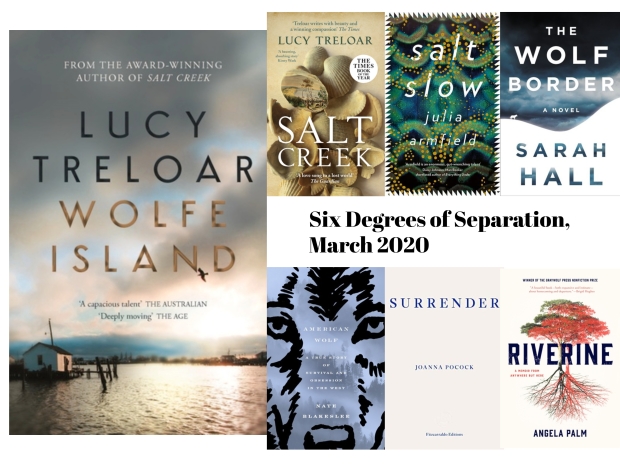
It’s my second month participating in Kate’s Six Degrees of Separation meme (see her introductory post). This time the challenge starts with Wolfe Island by Lucy Treloar. Alas, as far as I can tell this hasn’t yet been published outside of Australia. Which is such a shame, because I absolutely adored…
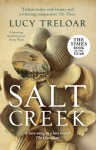
#1 Salt Creek, Treloar’s debut novel. I read it in 2018 and deemed it “one of the very best works of historical fiction I’ve read.” A widowed teacher settled in England looks back on the eight ill-fated years her family spent at an outpost in South Australia in the 1850s–60s. It’s a piercing story of the clash of cultures and the secret prejudices that underpin our beliefs.
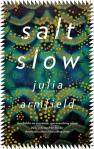
#2 I recently saw someone on Twitter remarking on the apparent trend for book titles to have the word “Salt” in them. Of the few examples he mentioned, I’ve read and enjoyed Salt Slow by Julia Armfield, which was on the Young Writer of the Year Award shortlist last year. The book’s nine short stories are steeped in myth and magic, but often have a realistic shell.
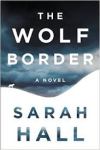
#3 One story in Salt Slow, “Formerly Feral,” is about a teenager who has a wolf for a stepsister. So, to get back to the literal wording of our starting point (a homonym, anyway; I didn’t know whether to take this in the Salt direction or the Wolf direction; now I’ve done both!), another work of fiction I read that incorporated wolves was The Wolf Border by Sarah Hall, a fantastic novel to which Scottish independence and rewilding form a backdrop.
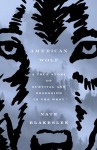
#4 The controversy over the reintroduction of wolves to Yellowstone National Park – and the decision to remove their endangered status, thus declaring open season for hunters – is at the heart of the nonfiction study American Wolf by Nate Blakeslee. “The West was caught up in a culture war, and for some people it was more than just a metaphor,” he writes.
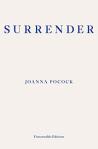
#5 Wolves and rewilding in the American West also come into the memoir-in-essays Surrender by Joanna Pocock, about the two years of loss and change she spent in Missoula, Montana and her sense of being a foreigner both there and on her return to London.
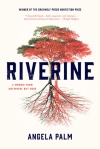
#6 A wonderful memoir-in-essays that was criminally overlooked in 2016 was Riverine by Angela Palm (my BookBrowse review). It has such a strong sense of place, revealing how traces of the past are still visible in the landscape and how our environment shapes who we are. Palm reflects on the winding course of her life in the Midwest and the people who meant most to her along the way, including a friend who was later sentenced to life in prison for murdering their elderly neighbors. In keeping with the watery imagery, there is a stream-of-consciousness element to the writing.
Join us for #6Degrees of Separation if you haven’t already!
Have you read any of my selections? Are you tempted by any you didn’t know before?
Dylan Thomas Prize Blog Tour: Things We Say in the Dark by Kirsty Logan
It’s an honour to be kicking off the official Swansea University International Dylan Thomas Prize 2020* blog tour with a post introducing and giving an excerpt from one of this year’s longlisted titles, the short story collection Things We Say in the Dark by Kirsty Logan.

Many of these 20 stories twist fairy tale imagery into nightmarish scenarios, enumerating fears of bodies and pregnancies going wrong. Body parts are offered as tokens of love or left behind as the sole evidence of an abduction. Ghosts and corpses are frequent presences. I also recognized some of the same sorts of Celtic sea legends that infuse Logan’s debut novel, The Gracekeepers.
Some stories are divided into multiple parts by headings or point-of-view changes. Others are in unusual formats like footnotes, a questionnaire, bullet-pointed lists, or a couple’s contrasting notes on house viewings. The titles can be like mini-tales in their own right, e.g. “Girls Are Always Hungry when All the Men Are Bite-Size” and “The Only Thing I Can’t Tell You Is Why.”
In between the stories are italicized passages that seem to give context on Logan’s composition process, including her writing retreat in Iceland – but it turns out that this is a story, too, split into pieces and shading from autobiography into fiction.
Full of magic realism and gentle horror, this is a book for fans of Salt Slow and The Doll’s Alphabet.
My favourite story was “Things My Wife and I Found Hidden in Our House,” about a series of objects Rain and her wife Alice find in the derelict house Alice’s granny has left them. Here’s an excerpt from the story to whet your appetite:
- A KNIFE
I wasn’t surprised when Alice and I found the long thin silver knife wrapped in blackened grot beneath the floorboards. It wasn’t easy: to find it we’d had to pull up just about every rotting, stinking board in the house, our hands slick with blood and filth. Alice had told me that a silver knife through the heart is the only way to kill a kelpie, so if Alice’s gran really had killed it, the knife was likely to be there somewhere. Her mistake, her haunting, was in keeping the thing. As proof? A memento? We’d never know. Then again, we knew that her bathtub drowning was due to a stroke. So I guess you can never really know anything.
Alice and I gathered up the ring and the paper and the horse and the pearls and the hair and the glass jar and the knife, and we put them all in a box. We drove for hours until we got to the coast, to the town where Alice’s gran and her grandad and the first wife had all lived, and we climbed to the highest cliff and we threw all the things into the sea.
Together we drove back to the house, holding hands between the front seats. A steady calm grew in our hearts; we knew that it was over, that we had cleansed the house and ourselves, that we had proven women’s love was stronger than women’s hate.
- MORE
Approaching the front door, key outstretched, hands still held, hearts grown sweet, Alice and I stopped. Our hands unlinked. The doorknob was wrapped all around with layers of long black hair.
My thanks to Midas PR for the free copy for review, and to Harvill Secker for permission to reprint an excerpt.
*The Swansea University International Dylan Thomas Prize recognizes the best published work in the English language written by an author aged 39 or under. All literary genres are eligible, so there are poetry collections nominated as well as novels and short stories. The other 11 books on this year’s longlist are:
- Surge, Jay Bernard
- Flèche, Mary Jean Chan (my review)
- Exquisite Cadavers, Meena Kandasamy
- Black Car Burning, Helen Mort
- Virtuoso, Yelena Moskovich
- Inland, Téa Obreht
- Stubborn Archivist, Yara Rodrigues Fowler (my review)
- If All the World and Love Were Young, Stephen Sexton
- The Far Field, Madhuri Vijay
- On Earth We’re Briefly Gorgeous, Ocean Vuong
- Lot, Bryan Washington
The official blog tour runs this month and into April, with multiple bloggers covering each book. At the end of March, I’ll also be reviewing the poetry collection by Stephen Sexton.
Adventures in Rereading: A. S. Byatt and Abigail Thomas
At the end of last year, I picked out a whole shelf’s worth of books I’ve been meaning to reread. I know that others of you are devoted re-readers, returning to childhood favorites for comfort or poring over admired novels two or three times to figure out how they work. Alas, I’m usually resistant to rereading because I feel like it takes away time that I could be spending reading new or at least new-to-me books. Yet along with the nostalgia there is also a certain relief to returning to a favorite: here’s a book that is guaranteed not to disappoint.
So far this year I’ve finished two rereads, and I’m partway through a third. I’m not managing the one-every-other-week pace I would need to keep up to get through the whole shelf this year, but for me this is still good progress. I’ll report regularly on my experience of rereading.
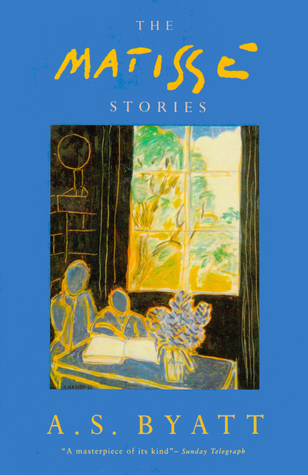
The Matisse Stories by A. S. Byatt (1993)
Byatt is my favorite author. My memory for individual short stories is pitiful, yet I have never forgotten the first of three stories in this volume, so I focus on it here with a close rereading. In “Medusa’s Ankles,” a middle-aged woman goes berserk in a hair salon but it all turns out fine. I remember imagining what that would be like: to let go, to behave badly with no thought for others’ opinions, to act purely on instinct – and for there to be no consequences.
I’d forgotten all the particulars of the event. Susannah, a linguist, is drawn to the salon by the Rosy Nude reproduction she sees through the window. She becomes a reluctant receptacle for her stylist Lucian’s stories, including tales of his wife’s fat ankles and his mistress’ greater appeal. He confides in her his plan to run away. “I don’t want to put the best years of my life into making suburban old dears presentable. I want something more.”
 Susannah holds in all her contempt for Lucian and his hip shop redesign until the day he fobs her off on another stylist – even though she’s said she needs an especially careful job this time because she is to appear on TV to accept the Translator’s Medal. When Deirdre is done, Susannah forgets about English politeness and says just what she thinks: “It’s horrible. I look like a middle-aged woman with a hair-do.” (Never mind that that’s exactly what she is.)
In a whirlwind of fury, she trashes the salon. Byatt describes the aftermath, indulging her trademark love of colors: “It was a strange empty battlefield, full of glittering fragments and sweet-smelling rivulets and puddles of venous-blue and fuchsia-red unguents, patches of crimson-streaked foam and odd intense spills of orange henna or cobalt and copper.”
You can just imagine the atmosphere in the salon: everyone exchanging horrified looks and cautiously approaching Susannah as if she’s a dangerous dog. Lucian steps in to reassure her: “We all feel like that, sometimes. Most of us don’t dare. … The insurance’ll pay. Don’t worry. … You’ve done me a good turn in a way.” Maybe he’ll go off with his girlfriend and start a new business, after all. Predictably, the man has made it all about him.
The ironic kicker to this perfect story about middle age and female rage comes after Susannah goes home to a husband we hadn’t heard about yet. “He saw her. (Usually he did not.) ‘You look different. You’ve had your hair done. I like it. You look lovely. It takes twenty years off you. You should have it done more often.’”
“Art Work” briefly, unnecessarily, uses a Matisse painting as a jumping-off point. A bourgeois couple, a painter and magazine design editor, hire Mrs. Brown, a black woman, to clean their house and are flabbergasted when she turns out to be an artist in her own right. “The Chinese Lobster,” the final story, is the only one explicitly about Matisse. An academic dean invites her colleague out to lunch at a Chinese restaurant to discuss a troubled student he’s supervising. This young woman has eating disorders and is doing a portfolio of artwork plus a dissertation on Matisse’s treatment of female bodies. Her work isn’t up to scratch, and now she’s accused her elderly supervisor of sexual harassment. The racial and sexual politics of these two stories don’t quite hold up, though both are well constructed.
I reread the book in one morning sitting last week.
My original rating (c. 2005): 
My rating now: 
A Three Dog Life by Abigail Thomas (2006)
In April 2000 Thomas’s husband Rich was hit by a car and incurred a traumatic brain injury when their dog Harry got off the leash and Rich ran out into the road near their New York City home to save him. It was a miracle that Rich lived, but his disability was severe enough that he had to be moved to an upstate nursing home. This is one of the first memoirs I ever remember reading, and it made a big impression. I don’t think I realized at the time that it was written in discrete essays, many of which were first published in magazines and anthologies. It represents an advance on the highly fragmentary nature of her first memoir, Safekeeping.
 Thomas maintains a delicate balance of emotions: between guilt every time she bids Rich goodbye in the nursing home and relief that she doesn’t have to care for him 24/7; between missing the life they had and loving the cozy one she’s built on her own with her three dogs. (The title is how Aborigines refer to the coldest nights.) As in One Hundred Names for Love and All Things Consoled, Rich’s aphasia produces moments of unexpectedly poetic insight.
Before rereading I remembered one phrase and one incident (though I’d thought the latter was from Safekeeping): doctors described Rich’s skull as “shattered like an eggshell,” and Thomas remembers a time she was driving and saw the car ahead hit a raccoon; she automatically swerved to avoid the animal, but saw in her rearview mirror that it was still alive and realized the compassionate thing would have been to run it over again. I’ve never forgotten these disturbing images.
Unassuming and heart on sleeve, Thomas wrote one of the most beautiful books out there about loss and memory. I’d recommend this to fans of Anne Lamott and readers of bereavement memoirs in general. This is what I wanted from the rereading experience: to find a book that was even better the second time around.
My original rating (c. 2006):
My rating now: 
Currently rereading: Flaubert’s Parrot by Julian Barnes
Considering rereading next: On Beauty by Zadie Smith
Done any rereading lately?
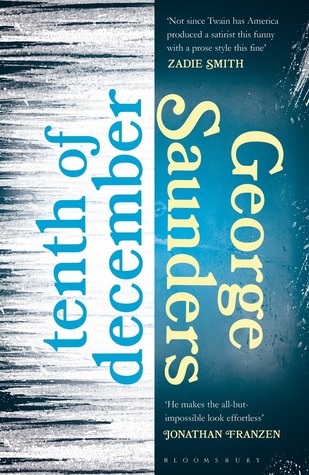
Tenth of December by George Saunders
Even before George Saunders won the Man Booker Prize for the truly astounding Lincoln in the Bardo, I wanted to read Tenth of December (2013), the short story collection that won him the inaugural Folio Prize. The 10 stories, set in a recognizable contemporary or near-future suburban America, feature a mixture of realist and science fiction scenarios and a gently satirical tone.
 At times the narration seems to reflect a new form of human speech, almost like shorthand, with the characters only lapsing into old-fashioned garrulousness under the influence of specially designed pharmaceuticals. I found the language most amusing in “The Semplica Girl Diaries,” narrated by a lower-middle-class dad who’s trying to keep up with the Joneses and please his daughters. “Have to do better! Be kinder. Start now. Soon they will be grown and how sad, if only memory of you is testy stressed guy in bad car.”
However, notably absent from the entertaining definitions he drops in for posterity (Whac-a-Mole, in case future readers are unfamiliar: “Plastic mole emerges, you whack with hammer, he dies, falls, another emerges, you whack, kill?”) is one for the SGs. Only gradually do you realize, with some horror, that “Semplica girls,” who have left the developing world for a chance at a better life, are a trendy lawn ornament, strung along a wire through their brains. From this article, included as an introduction to the Bloomsbury paperback, I learned that this story arose from a dream Saunders had. That accounts for how matter-of-factly bizarre it is.
Although it runs a bit long, this story was one of my favorites, along with “Victory Lap,” about a geeky high schooler improbably saving a classmate from a sexual assault, and “Sticks,” which in under two pages captures a family’s entire decades-long dynamic. None of the rest were quite as memorable for me, so I’m not sure I’ll seek out more of Saunders’s stories. I just couldn’t resist the urge to read and review this book in time for the day in the title after I found it on clearance at my local Waterstones.
My rating:
Young Writer of the Year Award: Shortlist Reviews and Predictions
Being on the shadow panel for the Sunday Times Young Writer of the Year Award was a bookish highlight of 2017 for me. I’m pleased for this year’s shadow panelists, a couple of whom are blogging friends (one I’ve met IRL), to have had the same opportunity, and I look forward to attending the prize ceremony at the London Library on December 5th.
I happened to have already read two of the shortlisted titles, the poetry collection The Perseverance by Raymond Antrobus and the debut novel Stubborn Archivist by Yara Rodrigues Fowler, which was one of my specific wishes/predictions. The kind folk of FMcM Associates sent me the other two shortlisted books, a short story collection and another debut novel, for blog reviews so that I could follow along with the shadow panel’s deliberations.
Salt Slow by Julia Armfield (2019)
These nine short stories are steeped in myth and magic, but often have a realistic shell. Only gradually do the fantastical or dystopian elements emerge, with the final paragraph delivering a delicious surprise. For instance, the narrator of “Mantis” attends a Catholic girls’ school and is caught up in a typical cycle of self-loathing and obsessing over boys. It’s only at the very end that we realize her extreme skin condition is actually a metamorphosis that enables her to protect herself. The settings are split between the city and the seaside; the perspective is divided almost perfectly down the middle between the first and third person. The body is a site of transformation, or a source of grotesque relics, as in “The Collectables,” in which a PhD student starts amassing body parts she could only have acquired via grave-robbing.
 Two favorites for me were “Formerly Feral,” in which a 13-year-old girl acquires a wolf as a stepsister and increasingly starts to resemble her; and the final, title story, a post-apocalyptic one in which a man and a pregnant woman are alone in a fishing boat, floating above a drowned world and living as if outside of time. This one is really rather terrifying. I also liked “Cassandra After,” in which a dead girlfriend comes back – it reminded me of Margaret Atwood’s The Robber Bride, which I’m currently reading for #MARM. “Stop Your Women’s Ears with Wax,” about a girl group experiencing Beatles-level fandom on a tour of the UK, felt like the odd one out to me in this collection.
Armfield’s prose is punchy, with invented verbs and condensed descriptions that just plain work: “Jenny had taken to poltergeisting round the house”; “skin like fork-clawed cottage cheese,” “the lobster shells gleam a slick vermilion” and “The sky is gory with stars.” There’s no shortage of feminist fantasy stories out there nowadays – Aimee Bender, Kelly Link, Carmen Maria Machado and Karen Russell are just a few others working in this vein – but the writing in Salt Slow really grabbed me even when the plots didn’t. I’ll be following Armfield’s career with interest.
Testament by Kim Sherwood (2018)
Eva Butler is a 24-year-old MA student specializing in documentary filmmaking. She is a live-in carer for her grandfather, the painter Joseph Silk (real name: József Zyyad), in his Fitzroy Park home. When Silk dies early on in the book, she realizes that she knows next to nothing about his past in Hungary. Learning that he wrote a testament about his Second World War experiences for the Jewish Museum in Berlin, she goes at once to read it and is distressed at what she finds. With the help of Felix, the museum’s curator, who did his PhD on Silk’s work, she travels to Budapest to track down the truth about her family.
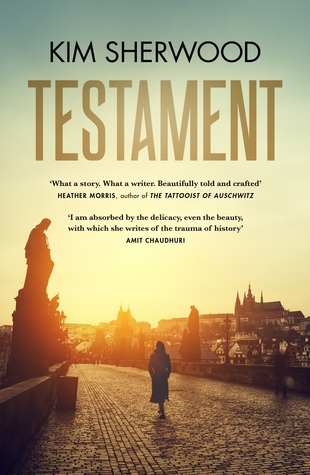 Sherwood alternates between Eva’s quest and a recreation of József’s time in wartorn Europe. Cleverly, she renders the past sections more immediate by writing them in the present tense, whereas Eva’s first-person narrative is in the past tense. Although József escaped the worst of the Holocaust by being sentenced to forced labor instead of going to a concentration camp, his brother László and their friend Zuzka were in Theresienstadt, so readers get a more complete picture of the Jewish experience at the time. All three wind up in the Lake District after the war, rebuilding their lives and making decisions that will affect future generations.
It’s almost impossible to write anything new about the Holocaust these days, and overfamiliarity was certainly a roadblock for me here. I was especially reminded of Julie Orringer’s The Invisible Bridge, what with its focus on the Hungarian Jewish experience. However, I did appreciate the way Sherwood draws on her family history – her grandmother is a Hungarian Holocaust survivor – to consider how trauma still affects the second and third generation. This certainly doesn’t feel like a debut novel. It’s highly readable, and the emotional power of the story cannot be denied. The Young Writer of the Year Award is great for highlighting books that risk being overlooked: in a year dominated by The Testaments, poor Testament was otherwise likely to sink without notice.
Note: “Testament” is also the title of the poem written by Sherwood’s great-grandfather that she recited at her grandfather’s funeral – just as Eva does in the novel. It opens this Telegraph essay (paywalled, but reprinted in the paperback of Testament) that Sherwood wrote about her family history.
General thoughts and predictions:
Any of these books would be a worthy winner. However, as Raymond Antrobus has already won this year’s £30,000 Rathbones Folio Prize as well as the 2018 Geoffrey Dearmer Award from the Poetry Society, The Perseverance has had sufficient recognition – plus it’s a woman’s turn. Testament is accomplished, and likely to hold the widest appeal, but it strikes me as the safe choice. Salt Slow would be an edgier selection, and feels quite timely and fresh. But Stubborn Archivist has stuck with me since I reviewed it in March. I called it “Knausgaard for the Sally Rooney generation” and wrote that “the last book to have struck me as truly ‘novel’ in the same way was Lincoln in the Bardo.” From a glance at the shadow panel’s reviews thus far, I fear it may prove too divisive for them, though.
Based on my gut instincts and a bit of canny thinking about the shadow panelists and judges, here are my predictions:
Shadow Panel:
- What they will pick: Testament [but they might surprise me and go with Salt Slow or Stubborn Archivist]
- What they should pick: Salt Slow
Official Judging Panel:
- What they will pick: Stubborn Archivist [but they might surprise me and go with Salt Slow]
- What they should pick: Stubborn Archivist
I understand that the shadow panel is meeting today for their in-person deliberations. I wish them luck! Their pick will be announced on the 28th. I’ll be intrigued to see which book they select, and how it compares with the official winner on December 5th.
Have you read anything from this year’s shortlist?
Getting Real about My “Set Aside Temporarily” Shelf
Mid-November, and I’ve been thinking about how many of the books I currently have on the go I will be able to finish before the end of the year – not to mention whether I can squeeze in any more 2019 releases, or get a jump on early 2020 releases (ha!).
In the back of my mind, however, is some mild, self-induced anxiety. You see, the other year I started an exclusive Goodreads shelf (i.e., one that doesn’t fall into one of the three standard categories, “Read,” “Currently Reading” or “Want to Read”) called “Set Aside Temporarily,” on which I place a book I have put on hiatus for whatever reason, whether I’d read a handful of pages or 200. Maybe a few library holds came in that I needed to finish before a strict due date, or I took on a last-minute review assignment and needed to focus on that book instead.
Usually, though, it’s just a case of having started too many books at once. I’m addicted to finishing books, but also to starting them – often a fresh stack of four or five in one sitting, to add to my 10 or more already on the go. I always used to say that I read 10‒15 books at a time, but in the latter half of this year that has crept up to 20‒25. Sometimes I can manage it; other times it feels like too much, and a few books from the stack fall by the wayside and get stuck with that polite label of “set aside.” It doesn’t necessarily mean that I wasn’t enjoying them, just that they were less compelling than some other reads.

Some of my “set aside” reads, stacked up next to my reading armchair.
So as I contemplated this virtual shelf, which as of the 12th had 33 titles on it, I figured I have the following alternatives for each book: pick it back up immediately and finish it as soon as possible, ideally this year (especially if it’s a 2019 release, so it can be in the running for my Best Of lists); regretfully mark it as a DNF; put it back on the shelf, with or without a place marker, to read some other time; skim to the end if I wasn’t getting on with it particularly well yet want to know what happens; or keep it in limbo for now and maybe read it in 2020.
I told myself it was decision time on all of these. Here’s how it played out:
(* = 2019 release)
Currently reading:
- Let’s Hope for the Best by Carolina Setterwall*
- Savage Pilgrims: On the Road to Santa Fe by Henry Shukman
To resume soon:
- The Easternmost House by Juliet Blaxland* (as soon as my library hold comes in)
- Fleishman Is in Trouble by Taffy Brodesser-Akner*
- The Spirit of Christmas: Stories, Poems, Essays by G.K. Chesterton
- The River Capture by Mary Costello*
- The Scar by Mary Cregan*
- The Envoy from Mirror City by Janet Frame
- Deep Creek: Finding Hope in the High Country by Pam Houston*
- Two-Part Invention: The Story of a Marriage by Madeleine L’Engle
- The Way through the Woods: Of Mushrooms and Mourning by Long Litt Woon*
- Kinds of Love by May Sarton
- All the Lives We Ever Lived: Seeking Solace in Virginia Woolf by Katharine Smyth*
- Dancing with Bees by Brigit Strawbridge Howard*
- A Three Dog Life by Abigail Thomas (a re-read)
- The Dearly Beloved by Cara Wall*
DNFed:
- The Manticore by Robertson Davies – A different perspective isn’t enough to keep me interested in a recounting of the events from Fifth Business.
- The Dovekeepers by Alice Hoffman (even though I’d read 250 pages of the danged thing) – Painstaking but worthy historical fiction.
- Then She Found Me by Elinor Lipman – The first 100 or so pages were pleasant reading during a beer festival, but I had no impetus to pick it up afterwards.
- A Door in the Earth by Amy Waldman* – The first 12% didn’t grab me. Never say never, but I don’t plan on picking it back up soon. Sad, as this was one of my most anticipated releases of the year.
- The Voyage Out by Virginia Woolf – I really tried. It was the third Woolf novel I’d picked up (and put down) in quick succession this year. She’s just such hard work.
Returned to the shelf for another time:
- Ship Fever by Andrea Barrett
- Emerald City by Jennifer Egan
- The Liars’ Club by Mary Karr
- Cider with Rosie by Laurie Lee
- Wait Till I Tell You by Candia McWilliam
- The Seven Storey Mountain by Thomas Merton
- Full Tilt: Ireland to India with a Bicycle by Dervla Murphy
- A Few Short Notes on Tropical Butterflies by John Murray
- Saint Maybe by Anne Tyler
To skim:
- The Yellow House by Sarah M. Broom* – Although very well written, this is dense with family detail, more than I really need.
Still set aside:
- In the Springtime of the Year by Susan Hill – to finish off next spring!
- Bodies in Motion and at Rest: On Metaphor and Mortality by Thomas Lynch (a university library book) – It’s in discrete essays so can be picked up and put down at will.
Some general observations: Recently I’ve lacked staying power with short story collections. However, I find it’s not usually a problem to read a few stories (or essays) and then return to a collection some months later. Memoirs, travel books and quiet fiction can also withstand an interruption. If I’ve put aside a plotty or style-heavy novel, however, that’s a bad sign that I will probably end up DNFing it.
Do you have a physical or virtual shelf of books that are partly read and languishing? How have you tackled it in the past?
Novellas in November, Part 1: 3 Nonfiction, 2 Super-Short Fiction
Short books; short reviews.
Nonfiction:
The Measure of My Days by Florida Scott-Maxwell (1968)
[150 pages]
 I learned about this from one of May Sarton’s journals, which shares its concern with ageing and selfhood. The author was an American suffragist, playwright, mother and analytical psychologist who trained under Jung and lived in England and Scotland with her Scottish husband. She kept this notebook while she was 82, partly while recovering from gallbladder surgery. It’s written in short, sometimes aphoristic paragraphs. While I appreciated her thoughts on suffering, developing “hardihood,” the simplicity that comes with giving up many cares and activities, and the impossibility of solving “one’s own incorrigibility,” I found this somewhat rambly and abstract, especially when she goes off on a dated tangent about the equality of the sexes. (Free from The Book Thing of Baltimore)
Hope in the Dark: Untold Histories, Wild Possibilities by Rebecca Solnit (2004)
[143 pages]
 “Activism is not a journey to the corner store, it is a plunge into the unknown. The future is always dark.” This resonated with the Extinction Rebellion handbook I reviewed earlier in the year. Solnit believes in the power of purposeful individuals working towards social justice, even in the face of dispiriting evidence (the largest protests the world had seen didn’t stop the Iraq War). Instead of perfectionism, she advises flexibility and resilience; things could be even worse had we not acted. At first I thought it depressing that 15 years on we’re still dealing with many of the issues she mentions here, and the environmental crisis has only deepened. But her strong and stirring writing is a reminder that, though injustice is always with us, so is everyday heroism. (Free from The Book Thing of Baltimore)
Lama by Derek Tangye (1966)
[160 pages]
 Tangye wrote a series of cozy animal books similar to Doreen Tovey’s. He and his wife Jean ran a flower farm in Cornwall and had a succession of cats, along with donkeys and a Muscovy duck named Boris. After the death of their beloved cat Monty, Jean wanted a kitten for Christmas but Tangye, who considered himself a one-cat man rather than a wholesale cat lover, hesitated. The matter was decided for them when a little black stray started coming round and soon made herself at home. (Her name is a tribute to the Dalai Lama’s safe flight from Tibet.) Mild adventures ensue, such as Lama going down a badger sett and Jeannie convincing herself that she’s identified another stray as Lama’s mother. Pleasant, if slight; I’ll read more by Tangye. (From Kennet Centre free bookshop)
Fiction:
The Small Miracle by Paul Gallico (1951)
[47 pages]
 Like Tangye, Gallico is known for writing charming animal books, but fables rather than memoirs. Set in postwar Assisi, Italy, this stars Pepino, a 10-year-old orphan boy who runs errands with his donkey Violetta to earn his food and board. When Violetta falls ill, he dreads losing not just his livelihood but also his only friend in the world. But the powers that be won’t let him bring her into the local church so that he can pray to St. Francis for her healing. Pepino takes to heart the maxim an American corporal gave him – “don’t take no for an answer” – and takes his suit all the way to the pope. This story of what faith can achieve just manages to avoid being twee. (From Kennet Centre free bookshop)
Birthday Girl by Haruki Murakami (2002; English translation by Jay Rubin, 2003)
[42 pages]
 Reprinted as a stand-alone pamphlet to celebrate the author’s 70th birthday, this is about a waitress who on her 20th birthday is given the unwonted task of taking dinner up to the restaurant owner, who lives above the establishment. He is taken with the young woman and offers to grant her one wish. We never hear exactly what that wish was. It’s now more than 10 years later and she’s recalling the occasion for a friend, who asks her if the wish came true and whether she regrets what she requested. She surveys her current life and says that it remains to be seen whether her wish will be fulfilled; I could only assume that she wished for happiness, which is shifting and subjective. Encountering this in a larger collection would be fine, but it wasn’t particularly worth reading on its own. (Public library)
I’ve also had a number of novella DNFs so far this month, alas: Atlantic Winds by William Prendiville (not engaging in the least), By Grand Central Station I Sat Down and Wept by Elizabeth Smart (fascinating autobiographical backstory; pretentious prose) and The Dream Life of Balso Snell by Nathanael West (even more bizarre and crass than I’m used to from him).
Onwards!
 Bookish Beck = Rebecca Foster. American transplant to England. Freelance proofreader and book reviewer.
 Bookish Beck