Final Reading Statistics for 2025 & Goals for 2026
Happy New Year! We went to a neighbours’ party again this year and played silly games and chased their kittens until 1:30 a.m. It was a fun, low-key way to see in 2026.
I read 313 books last year. (2024’s total of 352 will never be topped!) Initially, I set a goal of 350, but by midyear I downgraded it to 300 and it was easy to reach. I can’t pinpoint a particular reason for the decline. In general, I felt like I was chasing my tail all year, despite having less work on than ever (but increased volunteering commitments). Often, I struggled with fatigue or being on the verge of illness. What a fun guessing game: is it long Covid or perimenopause?
Goodreads was glitchy for me all year, randomly counting books two or three times and falsely inflating my total by a whole extra 33 books at one point. It also has a lot of annoying, automatically generated book records that duplicate ISBNs or add the publisher to the title field. So I’m thinking about moving over to StoryGraph this year – I just imported my Goodreads library – though I always quail at learning new online systems. It would also be the next logical step in divesting from Am*zon.
The year that was…
2025’s notable happenings:
- Twice assessing the ‘proper’ (published) books as a McKitterick Prize judge
- Adopting crazy Benny (though that was after losing our precious Alfie)
- Acquiring a secondhand electric car for the household
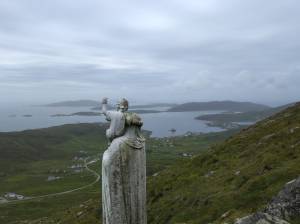
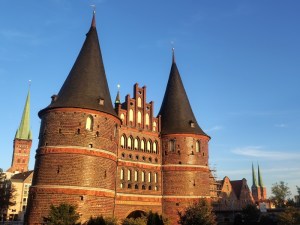
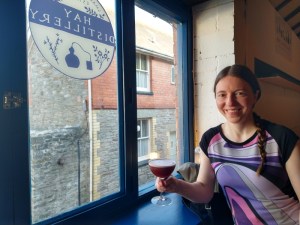
- Holidays in Hay-on-Wye; the Outer Hebrides; Suffolk; Berlin and Lübeck, Germany
- A summer visit from my sister and brother-in-law
- Having the windows and door replaced in the back of our house; and the hall and stairwell/landing redecorated
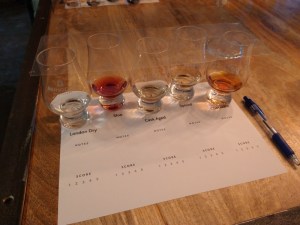
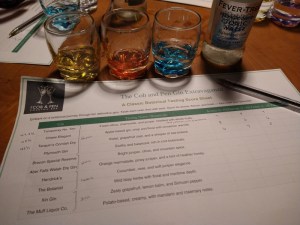
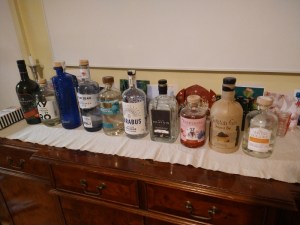
- I got ever more into gin and cocktails, with tastings in Abingdon and Wantage (and in December I led two informal tastings for friends). I also acquired the taste for rum!



The reading statistics, as compared to 2024:
Fiction: 54.7% (↑3.3%)
Nonfiction: 31.6% (↓0.2%)
Poetry: 13.7% (↓3.1%)
Female author: 67.7% (↓0.2%)
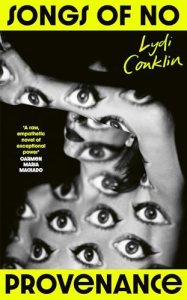
Lydi Conklin was one of 10 nonbinary authors I read from this year. Had I read their novel earlier, this would have made it into my Cover Love post!
Nonbinary author: 3.2% (↑2.1%)
BIPOC author: 18.5% (↑0.1%)
How to get it to 25% or more??
LGBTQ: 20.4% (↓1.1%)
(Author’s identity or a major theme in the work.) It’s the first time this has decreased since 2021, but I’m still pleased with the figure overall.
Work in translation: 9.6% (↑3.6%)
Going the right way with this trend! 10% seems like a good minimum to aim for. I find I have to make a conscious effort by accepting translated review copies or picking them off my shelves to tie in with particular reading challenges.
German (6) – mainly because of our trip in September
French (5)
Swedish (4)
Korean (3)
 Italian (2)
Japanese (2)
Spanish (2)
Chinese (1)
Dutch (1)
Norwegian (1)
Polish (1)
Portuguese (1)
Russian (1)
2025 (or pre-release 2026) books: 55.6% (↑3.2%)
Backlist: 44.4%
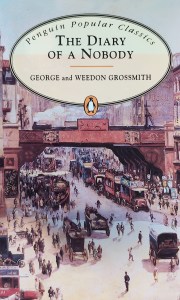
But a lot of that ‘backlist’ stuff was still from the 2020s; I only read eight pre-1950 books, the oldest being Diary of a Nobody from 1892.
E-books: 35.5% (↑3.4%)
Print books: 64.5%
I almost exclusively read e-books for BookBrowse, Foreword and Shelf Awareness reviews. The number of overall Shelf Awareness reviews will be decreasing because of changes to their publishing model, so this figure may well change by next year.
Rereads: 11, vs. last year’s 18
I managed nearly one a month. Like last year, three of my rereads ended up being among my most memorable reading experiences of the year, so I should really reread more often.
And, courtesy of Goodreads:
- 69,616 pages read
- Average book length: 221 pages (just one off of last year’s 220; in previous years it has always been 217–225, driven downward by poetry collections and novellas)
- Average rating for 2025: 6 (identical to the last three years)
Where my books came from for the whole year, compared to 2024:
- Free print or e-copy from publisher: 33.9% (↓10.9%)
- Public library: 18.8% (↑0.4%)
- Free (gifts, giveaways, Little Free Library/free bookshop, from friends or neighbours): 15.3% (↑2.9%)
- Downloaded from NetGalley, Edelweiss or BookSirens: 15% (↑7.2%)
- Secondhand purchase: 12.8% (↑1.3%)
- New purchase (often at a bargain price; includes Kindle purchases): 2.6% (↓0.5%)
- University library: 1.3% (↓0.7%)
- Other (church theological library): 0.3% (↑0.3%)


I’m pleased that 30.3% of my reading was from my own shelves, versus last year’s 24%. It looks like I mainly achieved this through a reduction in review copies. In 2026, I’d like to read even more backlist material from my own shelves (including rereads). This will be a particular focus in January, and then I’ll plan how to incorporate it for the rest of the year.
I have an absurd number of review books to catch up on (42), some stretching back to 2022 – the year of my mother’s death, which put me off my stride in many ways – as well as part-read books (116) to get real about and either finish or call DNFs and clear from my shelves. Dealing with these can be part of the reading-from-my-shelves initiative.
What trends did you see in your year’s reading? What is your plan for 2026?
Some 2025 Reading Superlatives
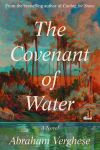
Longest book read this year: The Covenant of Water by Abraham Verghese (724 pages)
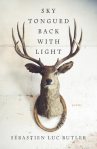
Shortest book read this year: Sky Tongued Back with Light by Sébastien Luc Butler (a 38-page poetry chapbook coming out in 2026)
Authors I read the most by this year: Paul Auster and Emma Donoghue (3) [followed by Margaret Atwood, Chloe Caldwell, Michael Cunningham, Mairi Hedderwick, Christopher Isherwood, Rebecca Kauffman, Stephen King, Elaine Kraf, Maggie O’Farrell, Sylvia Plath and Jess Walter (2 each)]
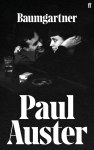
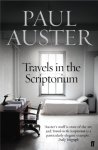
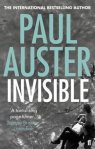
Publishers I read the most from: (Besides the ubiquitous Penguin Random House and its myriad imprints) Faber (14), Canongate (12), Bloomsbury (11), Fourth Estate (7); Carcanet, Picador/Pan Macmillan and Virago (6)
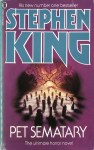
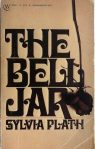
My top author ‘discoveries’ of the year (I’m very late to the party on some of these!): poet Amy Gerstler, Christopher Isherwood, Stephen King, Elaine Kraf, Sylvia Plath, Chloe Savage’s children’s picture books (women + NB characters, science, adventure, dogs), Robin Stevens’s middle-grade mysteries, Jess Walter
Proudest book-related achievement: Clearing 90–100 books from my shelves as part of our hallway redecoration. Some I resold, some I gave to friends, some I put in the Little Free Library, and some I donated to charity shops.
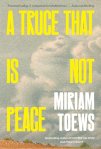
Most pinching-myself bookish moment: Miriam Toews’ U.S. publicist e-mailing me about my Shelf Awareness review of A Truce That Is Not Peace to say, “saw your amazing review! Thank you so much for it – Miriam loved it!”
Books that made me laugh: LOTS, including Spent by Alison Bechdel (which I read twice), The Wedding People by Alison Espach, Victorian Psycho by Virginia Feito, Is This My Final Form? by Amy Gerstler, The Diary of a Nobody by George Grossmith, The Sacred Diary of Adrian Plass Aged 37 ¾, and Slags by Emma Jane Unsworth
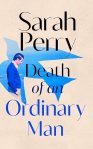
A book that made me cry: Death of an Ordinary Man by Sarah Perry
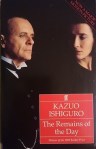
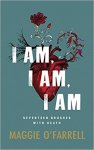
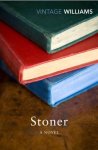
Best book club selections: Leave the World Behind by Rumaan Alam; The Remains of the Day by Kazuo Ishiguro, I Am, I Am, I Am by Maggie O’Farrell and Stoner by John Williams (these three were all rereads)
Best first line encountered this year:
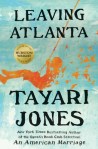
- From Leaving Atlanta by Tayari Jones: “Hard, ugly, summer-vacation-spoiling rain fell for three straight months in 1979.”
Best last lines encountered this year:
- Is a River Alive? by Robert Macfarlane: “Death and love and life, all mingled in the flow.”
(Two quite similar rhetorical questions:)
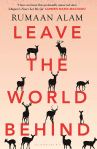 Leave the World Behind by Rumaan Alam: “If they didn’t know how it would end—with night, with more terrible noise from the top of Olympus, with bombs, with disease, with blood, with happiness, with deer or something else watching them from the darkened woods—well, wasn’t that true of every day?”
&
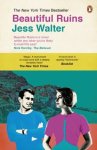
- Beautiful Ruins by Jess Walter: “And even if they don’t find what they’re looking for, isn’t it enough to be out walking together in the sunlight?”
- Wreck by Catherine Newman: “You are still breathing.”
 The Irish Goodbye by Beth Ann Fennelly: “Dear viewer of my naked body, Enjoy the bunions.”
- A Certain Smile by Françoise Sagan: “It was a simple story; there was nothing to make a fuss about.”
- Book of Lives by Margaret Atwood: “We scribes and scribblers are time travellers: via the magic page we throw our voices, not only from here to elsewhere, but also from now to a possible future. I’ll see you there.”
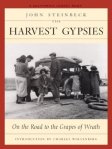
Book that put a song in my head every time I picked it up: The Harvest Gypsies by John Steinbeck (see Kris Drever’s song of the same name). Also, one story of Book of Exemplary Women by Diana Xin mentioned lyrics from “Wild World” by Cat Stevens (“Oh, baby, baby, it’s a wild world. And I’ll always remember you like a child, girl”).
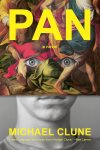
Shortest book titles encountered: Pan (Michael Clune), followed by Gold (Elaine Feinstein) & Girl (Ruth Padel); followed by an 8-way tie! Spent (Alison Bechdel), Billy (Albert French), Carol (Patricia Highsmith), Pluck (Adam Hughes), Sleep (Honor Jones), Wreck (Catherine Newman), Ariel (Sylvia Plath) & Flesh (David Szalay)
Best 2025 book titles: Chopping Onions on My Heart by Samantha Ellis [retitled, probably sensibly, Always Carry Salt for its U.S. release], A Truce That Is Not Peace by Miriam Toews [named after a line from a Christian Wiman poem – top taste there] & Calls May Be Recorded for Training and Monitoring Purposes by Katharina Volckmer.
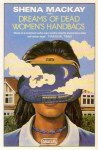
Best book titles from other years: Dreams of Dead Women’s Handbags by Shena Mackay
Biggest disappointments: Dream Count by Chimamanda Ngozi Adichie – so not worth waiting 12 years for – and Heart the Lover by Lily King, which kind of retrospectively ruined her brilliant Writers & Lovers for me.

The 2025 books that it seemed like everyone was reading but I decided not to: Helm by Sarah Hall, The Persians by Sanam Mahloudji, What We Can Know by Ian McEwan (I’m 0 for 2 on his 2020s releases)
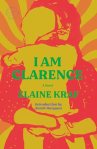
The downright strangest books I read this year: Both by Elaine Kraf: I Am Clarence and Find Him! (links to my Shelf Awareness reviews) are confusing, disturbing, experimental in language and form, but also ahead of their time in terms of their feminist content and insight into compromised mental states. The former is more accessible and less claustrophobic.
Reporting Back on My Most Anticipated Reads of 2025
Most years I’ve combined this topic with a rundown of my DNFs for the year; this time I can’t be bothered to list them. There have probably not been as many as usual; generally, I’ve given a sentence or two about each DNF in a Love Your Library post. In any case, I hereby give you blanket permission to drop that book you’ve been struggling with. I absolve you of all potential guilt. It makes no difference if it has been nominated for or won a major prize, or if everyone else seems to love it. If for any reason a book isn’t connecting with you, move onto something else; you can always come back to try it another time, or not. Life is short.
So, on to those Most Anticipated books. In January, I picked the 25 new releases I was most looking forward to in the first half of the year, and followed it up in July with another 15 for the second half. Here’s how I fared with them:
Read and enjoyed: 14 (some will appear on my Best-of list!)
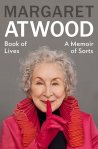 Book of Lives: A Memoir of Sorts by Margaret Atwood
- Spent: A Comic Novel by Alison Bechdel
- Victorian Psycho by Virginia Feito
- Heartwood by Amity Gaige
- Poets Square: A Memoir in Thirty Cats by Courtney Gustafson
- Lifelines: Searching for Home in the Mountains of Greece by Julian Hoffman
- The Silver Book by Olivia Laing
- Ripeness by Sarah Moss
- Joyride by Susan Orlean
- Are You Happy?: Stories by Lori Ostlund
- Ghosts of the Farm: Two Women’s Journeys Through Time, Land and Community by Nicola Chester
- The Lost Trees of Willow Avenue: A Story of Climate and Hope on One American Street by Mike Tidwell
- Three Days in June by Anne Tyler
- Palaver by Bryan Washington
 Read and found disappointing (i.e., 3 stars or below): 6
- Dream Count by Chimamanda Ngozi Adichie
- Breasts: A Relatively Brief Relationship by Jean Hannah Edelstein
- Mother Animal by Helen Jukes
- Heart the Lover by Lily King
- The Accidentals: Stories by Guadalupe Nettel
- Wreck by Catherine Newman
Skimmed (because it was disappointing): 1
- Somebody Is Walking on Your Grave: My Cemetery Journeys by Mariana Enríquez

 Currently reading / have read part of: 4
- Ghosts of the Farm: Two Women’s Journeys Through Time, Land and Community by Nicola Chester
- Jesusland: Stories from the Upside[-]Down World of Christian Pop Culture by Joelle Kidd
- The Girls Who Grew Big by Leila Mottley
- Minor Black Figures by Brandon Taylor
DNF: 1
- Archive of Unknown Universes by Ruben Reyes Jr.
 Owned in print but haven’t read yet (one was received for my birthday and two just now for Christmas!): 3
- Ordinary Saints by Niamh Ni Mhaoileoin
- Bread and Milk by Karolina Ramqvist
- The Antidote by Karen Russell
On my e-reader but haven’t gotten to yet: 9
- The Unworthy by Agustina Bazterrica
- Kate & Frida by Kim Fay
- Live Fast by Brigitte Giraud
- The Swell by Kat Gordon
- My Mother in Havana: A Memoir of Magic & Miracle by Rebe Huntman
- A Long Game: Notes on Writing Fiction by Elizabeth McCracken
- Tigers Between Empires: The Improbable Return of Great Cats to the Forests of Russia and China by Jonathan C. Slaght
 Elegy, Southwest by Madeleine Watts
- Alive: An Alternative Anatomy by Gabriel Weston
Haven’t managed to get hold of: 2
- O Sinners! by Nicole Cuffy
- The Forgotten Sense: The New Science of Smell by Jonas Olofsson [my library has a copy]
I can’t resist compiling this list each year. In the first week of January, I’ll be previewing my 20 Most Anticipated titles for the first half of 2026.
Do you choose Most Anticipated books each year? (Or do you prefer to be surprised?) And if you do, do they generally meet your expectations?
#NovNov25 Final Statistics & Some 2026 Novellas to Look Out For (Chapman, Fennelly, Gremaud, Miles, Netherclift & Saunders)
Novellas in November 2025 was a roaring success: In total, we had 50 bloggers contributing 216 posts covering at least 207 books! The buddy read(s) had 14 participants. If you want to take a look back at the link parties, they’re all here. It was our best year yet – thank you.
*For those who are curious, our most reviewed book was The Wax Child by Olga Ravn (4 reviews), followed by The Most by Jessica Anthony (3). Authors covered three times: Franz Kafka and Christian Kracht. Authors with work(s) reviewed twice: Margaret Atwood, Nora Ephron, Hermann Hesse, Claire Keegan, Irmgard Keun, Thomas Mann, Patrick Modiano, Edna O’Brien, Clare O’Dea, Max Porter, Brigitte Reimann, Ivana Sajko, Georges Simenon, Colm Tóibín and Stefan Zweig.*

I read and reviewed 21 novellas in November. I happen to have already read six with 2026 release dates, some of them within November and others a bit earlier for paid reviews. I’ll give a quick preview of each so you’ll know which ones you want to look out for.
The Pass by Katriona Chapman
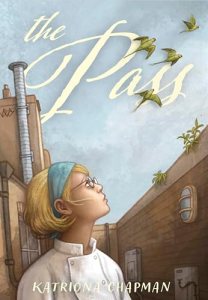 Claudia Grace is a rising star in the London restaurant world: in her early thirties, she’s head chef at Alley. But she and her small team, including sous chef Lisa, her best friend from culinary school; and Ben, the innovative Black bartender, face challenges. Lisa has a young son and disabled husband, while Ben is torn between his love of gardening and his commitment to Alley. Claudia is more stressed than ever as she prepares for a competition. All three struggle with their parents’ expectations. A financial crisis comes out of nowhere, but the greater threat is related to motivation. I was drawn to this graphic novel for the restaurant setting, but it’s more about families and romantic relationships than food. Several characters look too alike or much younger or older than they’re supposed to, while there’s a sudden ending that suggests a sequel might follow. (Fantagraphics, Jan. 20) [184 pages] (Read via Edelweiss)
The Irish Goodbye: Micro-Memoirs by Beth Ann Fennelly
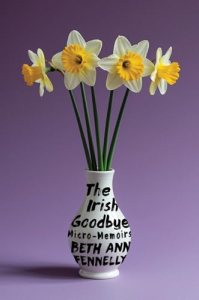 I’ve also read Fennelly’s previous collection of miniature autobiographical essays, Heating & Cooling. She takes the same approach as in flash fiction: some of these 45 pieces are as short as one sentence, remarking on life’s irony, poignancy or brevity. Again and again she loops back to her sister’s untimely death (the title reference: “without farewells, you slipped out the back door of the party of your life”); other major topics are her mother’s worsening dementia, her happy marriage, her continuing 28-year-old friendships with her college roommates, the pandemic, and her ageing body. Every so often, Fennelly experiments with third- or second-person narration, as when she recalls making a perfect gin and tonic for Tim O’Brien. One of the most in-depth pieces revisits a lonely stint teaching in Czechoslovakia in the early 1990s. Returning to the town recently, she is astounded that so many recognize her and that a time she experienced as bleak is the stuff of others’ fond memories. I also loved the long piece that closes the collection, “Dear Viewer of My Naked Body,” about being one of the 12 people in Oxford, Mississippi to pose nude for a painter in oils. Brilliant last phrase: “Enjoy the bunions.” (W.W. Norton & Company, Feb. 24) [144 pages] (Read via Edelweiss)
Generator by Rinny Gremaud (2023; 2026)
[Trans. from French by Holly James]
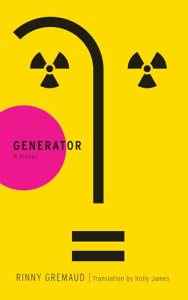 “I was born in 1977 at a nuclear power plant in the south of South Korea,” the unnamed narrator opens. She and her mother then moved to Switzerland with her stepfather. In 2017, news of Korea’s plans to decommission the Kori 1 reactor prompts her to trace her birth father, who was a Welsh engineer on the project. As a way of “walking my hypotheses,” she travels to Wales, Taiwan (where he had a wife and family), Korea, and Michigan, his last known abode. In parallel, she researches the history of nuclear power. By riffing on the possible definitions of generation, this lyrical autofiction comments on creation and legacy. Full Foreword review forthcoming. (Schaffner Press, Jan. 7) [197 pages] (PDF review copy)
Eradication: A Fable by Jonathan Miles
 This taut, powerful fable pits an Everyman against seemingly insurmountable environmental and personal problems. Who wouldn’t take a job that involves “saving the world”? Adi, the antihero of Jonathan Miles’s fourth novel, is drawn to the listing not just for the noble mission but also for the chance at five weeks alone on a Pacific island. Santa Flora once teemed with endemic birds and reptiles, but many species have gone extinct because of the ballooning population of goats. He’s never fired a gun, but the mysterious “foundation” was so desperate it hired him anyway. It’s a taut parable reminiscent of T.C. Boyle’s When the Killing’s Done. My full Shelf Awareness review is here. (riverrun, 5 Feb. / Doubleday, Feb. 10) [176 pages] (Read via Edelweiss)
Vessel: The shape of absent bodies by Dani Netherclift
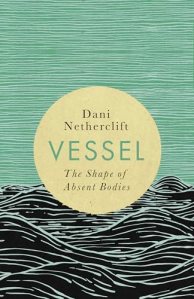 One scorching afternoon in 1993, the author’s father and brother drowned while swimming in an irrigation channel near their Australia home. A joint closed-casket funeral took place six days later. Eighteen at the time, Netherclift witnessed her relatives’ disappearance but didn’t see their bodies. Must one see the corpse to have closure? she wonders. “The presence of absence” is an overarching paradox. There are lacunae everywhere: in her police statement from the fateful day; in her journal and letters from that summer. The contradictions and ironies of the situation defy resolution. Full Foreword review forthcoming. (Assembly Press, Jan. 13) [184 pages] (PDF review copy)
Vigil by George Saunders
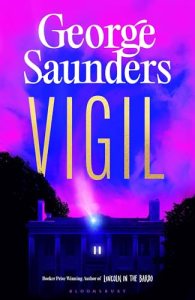 Impossible not to set this against the exceptional Lincoln in the Bardo, focused as both are on the threshold between life and death. Unfortunately, the comparison is not favourable to Vigil. A host of the restive dead visit the dying to offer comfort at the end. Jill Blaine’s life was cut short when she was murdered by a car bomb in a case of mistaken identity. Her latest “charge” is K.J. Boone, a Texas oil tycoon who not only contributed directly to climate breakdown but also deliberately spread anti-environmentalist propaganda through speeches and a documentary. As he lies dying of cancer in his mansion, he’s visited by, among others, the spirits of the repentant Frenchman who invented the engine and an Indian man whose family perished in a natural disaster. I expected a Christmas Carol-type reckoning with climate past and future; in resisting such a formula, Saunders avoids moralizing – oblivion comes for the just and the unjust. However, he instead subjects readers to a slog of repetitive, half-baked comedic monologues. I remain unsure what he hoped to achieve with the combination of an irredeemable character and an inexorable situation. All this does is reinforce randomness and hopelessness, whereas the few other Saunders works I’ve read have at least reassured with the sparkle of human ingenuity. YMMV. (Bloomsbury / Random House, 27 Jan.) [192 pages] (Read via NetGalley)
Final Reading Statistics for 2024
Happy New Year! Even though we were out at neighbours’ until 2:45 a.m. (who are these party animals?!), I’m feeling bright-eyed and bushy-tailed today and looking forward to a special brunch at our favourite Newbury establishment. Despite all evidence to the contrary in the news – politically, environmentally, internationally – I’m choosing to be optimistic about what 2025 will hold. What hope I have comes from community and grassroots efforts.
In other good news, 2024 saw my highest reading total yet! (My usual average, as in 2019–21 and 2023, is 340.) Last year I challenged myself to read 350 books and I managed it easily, even though at one point in the middle of the year I was far behind and it didn’t look possible.
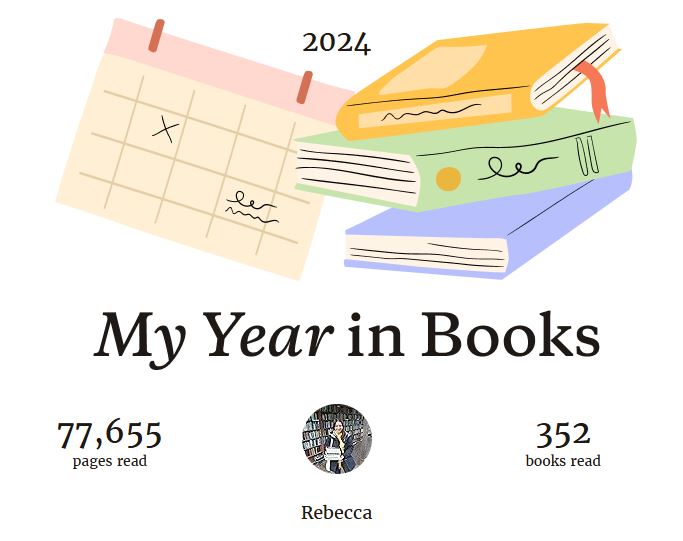
Reading a novella a day in November was certainly a major factor in meeting my goal. I also tend to prioritize poetry collections and novellas for my Shelf Awareness reviewing, and in general I consider it a bonus if a book is closer to 200 pages than 300+.
The statistics
Fiction: 51.4%
Nonfiction: 31.8% (similar to last year’s 31.2%)
Poetry: 16.8% (identical to last year!)
Female author: 67.9% (close to last year’s 69.7%)
Male author: 29.6%
Nonbinary author: 1.1%
Multiple genders (anthologies): 1.4%
BIPOC author: 18.4%
This has dropped a bit compared to previous years’ 22.4% (2023), 20.7% (2022), and 18.5% (2021). My aim will be to make it 25% or more.
LGBTQ: 21.6%
(Based on the author’s identity or a major theme in the work.) This has been increasing from 11.8% (2021), 8.8% (2022), and 18.2% (2023). I’m pleased!
Work in translation: 6%
I read only 21 books in translation last year, alas. This is an unfortunate drop from the previous year’s 10.6%. I do prefer to be closer to 10%, so I will need to make a conscious effort to borrow translated books and incorporate them in my challenges.
French (7)
German (4)
Norwegian (3)
Spanish (3)
Italian (1)
Latvian (1) – a new language for me to have read from
Swedish (1)
+ Misc. in a story anthology
2024 (or pre-release 2025) books: 52.3% (up from 44.7% last year)
Backlist: 47.7%
But a lot of that ‘backlist’ stuff was still from the 2020s; I only read five pre-1950 books, the oldest being Howards End and Kilmeny of the Orchard, both from 1910. I should definitely pick up something from the 19th century or earlier next year!
E-books: 32.1% (up from 27.4% last year)
Print books: 67.9%
I almost exclusively read e-books for BookBrowse, Foreword and Shelf Awareness reviews.
Rereads: 18
I doubled last year’s 9! I’m really happy with this 1.5/month average. Three of my rereads ended up being among my most memorable reading experiences for the year.
And, courtesy of Goodreads:
Average book length: 220 pages (in previous years it has been 217 and 225)
Average rating for 2024: 3.6 (identical to the last two years)
Where my books came from for the whole year, compared to 2023:
- Free print or e-copy from publisher: 44.8% (↑1.3%)
- Public library: 18.4% (↓5.7%)
- Secondhand purchase: 11.5% (↑1.7%)
- Free (giveaways, Little Free Library/free bookshop, from friends or neighbours): 9.8% (↑3.9%)
- Downloaded from NetGalley, Edelweiss, BookSirens or Project Gutenberg: 8.8% (↑2%)
- Gifts: 2.6% (↓1.5%)
- New purchase (often at a bargain price; includes Kindle purchases): 2.1% (↓2.6%)
- University library: 2% (↓1.2%)
So, like last year, nearly a quarter of my reading (24%) was from my own shelves. I’d like to make that more like a third to half, which would be better achieved by a reduction in the number of review copies rather than a drop in my library borrowing. It would also ensure that I read more backlist books.
What trends and changes did you see in your year’s reading?
Reporting Back on My Most Anticipated Reads of 2024
Most years I’ve combined this topic with a rundown of my DNFs for the year; this time I can’t be bothered to list them. There have maybe not been as many as usual; generally, I’ve given a sentence or two about each DNF in a Love Your Library post. In any case, I hereby give you blanket permission to drop that book you’ve been struggling with. I absolve you of all potential guilt. It makes no difference if it has been nominated for or won a major prize, or if everyone else seems to love it. If for any reason a book isn’t connecting with you, move onto something else; you can always come back to try it another time, or not. Life is short.
So, on to those Most Anticipated books! In January, I picked the 12 new releases I was most looking forward to reading in 2024. Here’s how I fared with them – links are to my reviews:
Read and enjoyed: 5 (2 will appear on my Best-of list!)
 The Ministry of Time by Kaliane Bradley
- Fi: A Memoir of My Son by Alexandra Fuller
- Rapture’s Road by Seán Hewitt
- Wellness by Nathan Hill
- Come and Get It by Kiley Reid
Read and found somewhat disappointing (i.e., 3 stars or below): 5
 Martyr! by Kaveh Akbar
- Cairn by Kathleen Jamie
- Exhibit by R.O. Kwon
- The Vulnerables by Sigrid Nunez
- The Paris Novel by Ruth Reichl
DNF: 1
 Enlightenment by Sarah Perry
Haven’t managed to get hold of, but have basically decided against anyway: 1
 Memory Piece by Lisa Ko – The reviews from Susan and Laura made me realize I probably won’t love this as much as I want to. (Plus the average rating on Goodreads is disconcertingly low.)
I’ve really come to wonder if designating a book as “Most Anticipated” is a kiss of death. Are my hopes so high that only the rare book can live up to them?!
Nonetheless, I can’t resist compiling this list each year. In the first week of January, I’ll be previewing my 25 Most Anticipated titles for the first half of 2025.
Do you choose Most Anticipated books each year? (Or do you prefer to be surprised?) And if so, do they generally meet your expectations?
Hard-Hitting Nonfiction I Read for #NovNov24: Hammad, Horvilleur, Houston & Solnit
I often play it safe with my nonfiction reading, choosing books about known and loved topics or ones that I expect to comfort me or reinforce my own opinions rather than challenge me. I wasn’t sure if I could bear to read about Israel/Palestine, or sexual violence towards women, but these four works were all worthwhile – even if they provoked many an involuntary gasp of horror (and mild expletives).
Recognising the Stranger: On Palestine and Narrative by Isabella Hammad (2024)
 This is the text of the Edward W. Said Memorial Lecture that Hammad delivered at Columbia University on September 28, 2023. She posits that, in a time of crisis, storytelling can be a way of finding things out. Characters’ epiphanies, from Oedipus onward, see them encountering an Other but learning something about themselves in the process. In turning her great-grandfather’s life into her first novel, The Parisian, Hammad knew she had to avoid the pitfalls of nostalgia and unreliable memory. Fiction is always subjective, a matter of perspectives, and history is too. Sometimes the turning points will only be understood retrospectively.
Edward Said (1935–2003) was a Palestinian American academic and theorist who helped found the field of postcolonial studies. Hammad writes that, for him, being Palestinian was “a condition of chronic exile.” She takes his humanist ideology as a model of how to “dismantle the consoling fictions of fixed identity, which make it easier to herd into groups.” About half of the lecture is devoted to the Israel/Palestine situation. She recalls meeting an Israeli army deserter a decade ago who told her how a naked Palestinian man holding the photograph of a child had approached his Gaza checkpoint; instead of shooting the man in the leg as ordered, he fled. It shouldn’t take such epiphanies to get Israelis to recognize Palestinians as human, but Hammad acknowledges the challenge in a “militarized society” of “state propaganda.”
This was, for me, more appealing than Hammad’s Enter Ghost. Though the essay might be better aloud as originally intended, I found it fluent and convincing. It was, however, destined to date quickly. Less than two weeks later, on October 7, there was a horrific Hamas attack on Israel (see Horvilleur, below). The print version of the lecture includes an afterword written in the wake of the destruction of Gaza. Hammad does not address October 7 directly, which seems fair (Hamas ≠ Palestine). Her language is emotive and forceful. She refers to “settler colonialism and ethnic cleansing” and rejects the argument that it is a question of self-defence for Israel – that would require “a fight between two equal sides,” which this absolutely is not. Rather, it is an example of genocide, supported by other powerful nations.
The present onslaught leaves no space for mourning
To remain human at this juncture is to remain in agony
It will be easy to say, in hindsight, what a terrible thing
The Israeli government would like to destroy Palestine, but they are mistaken if they think this is really possible … they can never complete the process, because they cannot kill us all.
(Read via Edelweiss) [84 pages]
How Isn’t It Going? Conversations after October 7 by Delphine Horvilleur (2025)
[Translated from the French by Lisa Appignanesi]
 Horvilleur is one of just five female rabbis in France and is the leader of the country’s Liberal Jewish Movement. Earlier this year, I reviewed her essay collection Living with Our Dead, about attitudes toward death as illustrated by her family history, Jewish traditions and teachings, and funerals she has conducted. It is important to note that she expresses sorrow for Palestinians’ situation and mentions that she has always favoured a two-state solution. Moreover, she echoes Hammad with her final line, which hopes for “a future for those who think of the other, for those who engage in dialogue one with another, and with the humanity within them.” However, this is a lament for the Jewish condition, and a warning of the continuing and insidious nature of antisemitism. Who am I to judge her lived experience and say, “she’s being paranoid” or “it’s not really like that”? My job as reader is simply to listen.
There is by turns a stream of consciousness or folktale quality to the narrative as Horvilleur enacts 11 dialogues – some real and others imagined – with her late grandparents, her children, or even abstractions (“Conversation with My Pain,” “Conversation with the Messiah”). She draws on history, scripture and her own life, wrestling with the kinds of thoughts that come to her during insomniac early mornings. It’s not all mourning; there is sometimes a wry sense of humour that feels very Jewish. While it was harder for me to relate to the point of view here, I admired the author for writing from her own ache and tracing the repeated themes of exile and persecution. It felt important to respect and engage. [125 pages] 
With thanks to Europa Editions for the advanced e-copy for review.
Without Exception: Reclaiming Abortion, Personhood, and Freedom by Pam Houston (2024)
 If you’re going to read a polemic, make sure it’s as elegantly written and expertly argued as this one. Houston responds to the overturning of Roe v. Wade with 60 micro-essays – one for each full year of her life – about what it means to be in a female body in a country that seeks to control and systematically devalue women. Roe was in force for 49 years, corresponding almost exactly to her reproductive years. She had three abortions and believes “childlessness might turn out to be the single greatest gift of my life.” Facts could serve as explanations: her grandmother died giving birth to her mother; her mother always said having her ruined her life; she was raped by her father from early childhood until she left home as a young adult; she is gender-fluid; she loves her life of adventure travel, spontaneity and chosen solitude; she adores the natural world and sees how overpopulation threatens it. But none are presented as causes or excuses. Houston is committed to nuance, recognizing individuality of circumstance and the primacy of choice.
Many of the book’s vignettes are autobiographical, but others recount statistics, track American cultural and political shifts, and reprint excerpts from the 2022 joint dissent issued by the Supreme Court. The cycling of topics makes for an exquisite structure. Houston has done extensive research on abortion law and health care for women. A majority of Americans actually support abortion’s legality, and some states have fought back by protecting abortion rights through referenda. (I voted for Maryland’s. I’ve come a long way since my Evangelical, vociferously pro-life high school and college days.) I just love Houston’s work. There are far too many good lines here to quote. She is among my top recommendations of treasured authors you might not know. I’ve read her memoir Deep Creek and her short story collections Cowboys Are My Weakness and Waltzing the Cat, and I’m already sad that I only have four more books to discover. (Read via Edelweiss) [170 pages] 
Men Explain Things to Me by Rebecca Solnit (2014)
 Solnit did not coin the term “mansplaining,” but it was created not long after the title essay’s publication in 2008 and was definitely inspired by her depiction of a male know-it-all. She was at a party in Aspen in 2003 when a man decided to tell her all about an important new book he’d heard of about Eadweard Muybridge. A friend had to interrupt him and say, “That’s her book.” A funny story, yes, but illustrative of a certain male arrogance that encourages a woman’s “belief in her superfluity, an invitation to silence” and imagines her “in some sort of obscene impregnation metaphor, an empty vessel to be filled with their wisdom and knowledge.”
This segues perfectly into “The Longest War,” about sexual violence against women, including rape and domestic violence. As in the Houston, there are some absolutely appalling statistics here. Yes, she acknowledges, it’s not all men, and men can be feminist allies, but there is a problem with masculinity when nearly all domestic violence and mass shootings are committed by men. There is a short essay on gay marriage and one (slightly out of place?) about Virginia Woolf’s mental health. The other five repeat some of the same messages about rape culture and believing women, so it is not a wholly classic collection for me, but the first two essays are stunners. (University library) [154 pages]
Have you read any of these authors? Or something else on these topics?
Thanks for Joining in with Novellas in November! #NovNov24 Statistics
Co-host Cathy and I are delighted that so many of you participated in Novellas in November again this year and helped us to celebrate the art of the short book. We had 46 participants and 173 posts covering more than 150 books.

In total, 16 friends of #NovNov reviewed our buddy read, Orbital by Samantha Harvey, which won the Booker Prize partway through the month.

Other books with multiple reviews included John Boyne’s recent novella series, The Party by Tessa Hadley, various by Claire Keegan, Astraea by Kate Kruimink, and Baron Bagge by Alexander Lernet-Holenia.
The link-up will remain open through Saturday 7 December if you would like to add in any belated reviews (I will certainly be doing so).
See you next November – but keep reading novellas and sharing the love all through the year!
20 Books of Summer 2024 Retrospective
That’s a wrap! It was my seventh year in a row participating. I managed to read and review all 20 books by yesterday. Only eight of the books I earmarked in my plans (plus two more that were DNFs) made it into my final stacks, but I don’t really consider that a problem.

With what I substituted in, I ended up achieving 1 reread and getting through 7 review copies, 3 of which had been languishing in my set-aside piles for a long time. I stuck to my pledge to read only a) books that I owned in hardback and b) books by women. I read roughly half and half fiction and non- (11 vs. 9).
Unfortunately, a lot of my selections this year happened to be lackluster: there were 5 books that I rated at 2.5 stars or below, and another 6 that merited 3 stars. Those 11 make for a pretty low average rating across the 20.
By contrast, I had a few 4-star highlights: Company by Shannon Sanders, Sleeping with Cats by Marge Piercy, and My Good Bright Wolf by Sarah Moss (if anyone in the UK would like my proof copy of this last one, let me know and I’ll post it to you).
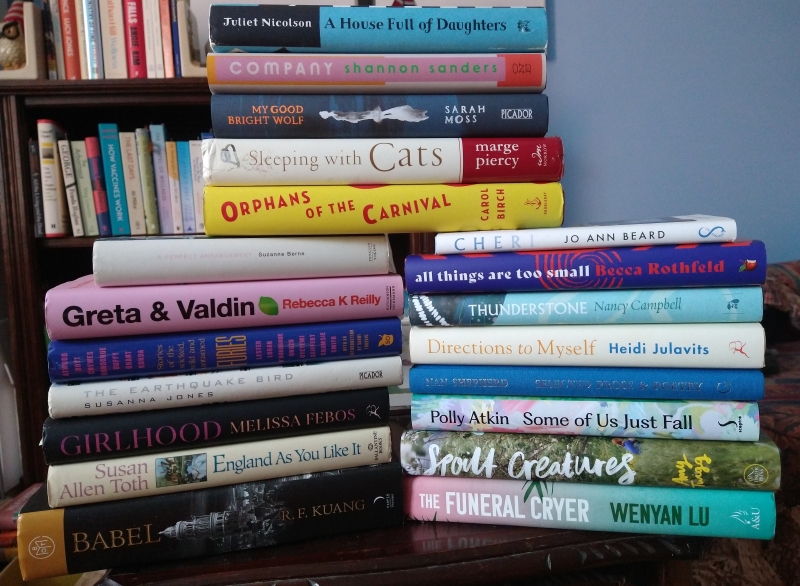
It was also fun tying into the Reading the Meow week and connecting reviews with events such as an online conference about Vita Sackville-West and the new album by the Bookshop Band.
I’ve cleared 16 of 23 (including the several DNFs) books from my shelves by reselling them or donating them to my neighbourhood Little Free Library. I’ll surely appreciate that extra space to accommodate the constant stream of incomers.
Next year I think I need to make the challenge even more open, because it seems that as soon as I ‘assign’ myself 20 books, I lose interest in most of them. Again, I want to limit myself to books from my shelves, but I won’t specify anything else. I’ll just let myself pick up whatever interests me at the time – bearing in mind that in the summers I like to indulge in juicy fiction that’s toward the popular end of literary.
How did your summer reading go?
Final Reading Statistics for 2023
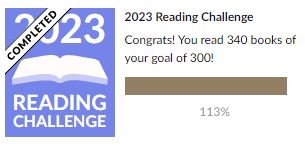
In 2022 my reading total dipped to 300, whereas in 2023 I was back up to what seems to be my natural limit of 340 books (as 2019–21 also proved).
The statistics
Fiction: 52.1%
Nonfiction: 31.2%
Poetry: 16.8%
(Poetry is up by nearly 3% and fiction and nonfiction down by a percent or so each compared to last year. I attribute this to specializing in poetry reviews for Shelf Awareness.)
Female author: 69.7%
Male author: 27.6%
Nonbinary author: 2.1%
Multiple genders (anthologies): 0.6%
(I always read more from women than from men, but was surprised to see that the percentage by men rose by 4.6% last year.)
BIPOC author: 22.4%
(The third time I have specifically tracked this figure. I’m pleased that it’s increased year on year: 18.5%, then 20.7%. I will continue to aim at 25% or more.)
LGBTQ: 18.2%
(This is a new category for me. I define it by the identity of the author and/or a major theme in the work; just having a secondary character who is gay wouldn’t count. I retrospectively looked at 2021 and 2022, which would have been at 11.8% and 8.8%.)
Work in translation: 10.6%!
(I’m delighted with this figure because the past two years were at just 5% and 8.7% and my aim was to be close to 10%. Most popular languages: Spanish (10), French (9) and Swedish (4); German (3), Italian (3), Danish (2), Dutch (2), Korean (1), Polish (1) and Welsh (1) were also represented.)
Backlist: 55.3%
2023 (or 2024 pre-release) books: 44.7%
(This is not too bad, although 17.9% of the ‘backlist’ stuff was from 2021 or 2022, so fairly recent releases I was catching up on from review copies, the library or in e-book form. My oldest reads were both from 1897, Liza of Lambeth by W. Somerset Maugham and De Profundis by Oscar Wilde.)
E-books: 27.4%
Print books: 72.6%
(On par with last year. I almost exclusively read e-books for BookBrowse, Foreword and Shelf Awareness reviews.)
Rereads: 9
(Compared to 12 each of the past two years; at least one per month would be a good aim.)
Where my books came from for the whole year, compared to last year:
- Free print or e-copy from publisher: 43.5% (↑1.5%)
- Public library: 24.1% (↓5.9%)
- Secondhand purchase: 10% (↑3.3%)
- Downloaded from NetGalley or Edelweiss: 6.8% (↓0.2%)
- Free (giveaways, Little Free Library/free bookshop, from friends or neighbours): 5.9% (↑3.3%)
- Gifts: 4.1% (↑0.1%)
- University library: 3.2% (↑0.9%)
- New purchase (often at a bargain price): 2.1% (↓2.6%)
- Borrowed: 0.3% (↓0.4%)
So nearly a quarter of my reading (22.1%) was from my own shelves. I’d like to make it more like 33–50%, achieved by a drop in review copies rather than library borrowing.
Additional statistics courtesy of Goodreads:
73,861 pages read
Average book length: 217 pages (down from 225 last year; thank you, novellas and poetry)
Average rating for 2022: 3.6 (identical to last year)
 Bookish Beck = Rebecca Foster. American transplant to England. Freelance proofreader and book reviewer.
 Bookish Beck