Reading Ireland Month, Part II: Dowd, Enright, Madden & Nugent
I’m catching up with a final set of reviews for #ReadingIrelandMonth26. I read two novels set at least partially during the Troubles, one of them for teenagers; a quiet novel about adultery and bereavement; and a thriller about consent and family legacy. I also read the first half of one more novel, a sombre one about the aftermath of a mental health crisis. Between this post and my first one, I covered 6.5 novels by Irish women, which I’ll call a win.
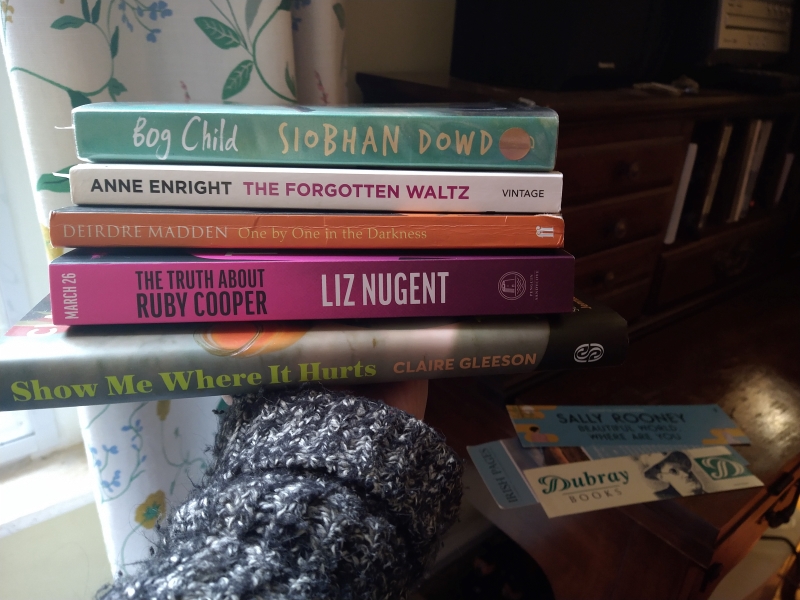
Bog Child by Siobhan Dowd (2008)
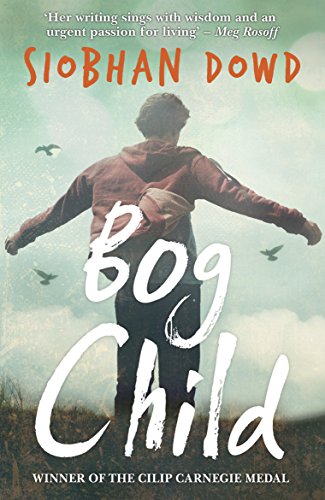 Fergus McCann is 18 and taking A levels; if he can only get three Bs, he’ll have his ticket out of Northern Ireland to study medicine at Aberdeen. This is no ordinary summer, though. He loves running on the hills at the border and here he makes a landmark discovery and embarks on a risky mission. The plot opens with Fergus and his uncle stumbling on the corpse of a girl while cutting peats. It’s a case for archaeologists rather than the police: the body is from the Iron Age and there’s evidence that the girl was sacrificed. An acquaintance then pressures Fergus into running parcels up and down the hill, right under the noses of the British at the checkpoint. He makes friends with Owain, a Welsh soldier, but gets a horrible feeling he’s partially responsible for the bombings he soon hears about on the radio. His family is enmeshed in the IRA anyway: his brother is among the hunger strikers in the local prison. There’s every chance that Joey could die before the summer is out, as much a victim of injustice as “Mel” (as Fergus names the girl from the bog, whose story he dreams).
This was Dowd’s third novel, published posthumously after her death from cancer, and won the Carnegie Medal. I’d say it’s one of the few best young adult novels I’ve ever read. (It’s shelved under Teenage Fiction at my library.) It’s an excellent peripheral glance at history ancient and modern – Fergus’s letter to Margaret Thatcher is brilliant – and effectively recreates a teen’s divided attention: friends, schooling, family drama, the future, and romance (via the daughter of the archaeologist). I searched my library catalogue for further books on bog bodies after reading Anna North’s Bog Queen and it really paid off! (Public library)
The Forgotten Waltz by Anne Enright (2011)
 I’ve only read a handful of Enright novels and wanted to experience more, so picked this one because it was shortlisted for the Orange Prize. On the face of it, it’s a fairly straightforward adultery story, but the unshowy potency of Enright’s writing and her realistic insight into relationships set it apart. While married to Conor, Gina has an affair with Seán, who’s older and married to Aileen. Seán is part of their social circle but also someone she knows through work, and business trips are an easy excuse. “The office game was another game for us to play, after the suburban couples game, and before the game of hotel assignations and fabulous, illicit lust, and neither of us thought there might come a moment when all the games would stop. It was a lot of fun.” Gina narrates matter-of-factly, rejecting cause-and-effect language. She doesn’t defend herself, or fool herself that Seán is perfect. This new relationship involves as many challenges as her marriage, what with her mother’s death and Seán’s preteen daughter, Evie, who appears to be autistic and epileptic. The short chapters are all headed with song lyrics, mostly from love songs (“Will You Love Me Tomorrow,” “Stop! In the Name of Love”) whose ironic optimism underlines the novel’s gently melancholy tone. This reminded me most of Maggie O’Farrell’s early work, and more than justified delving into Enright’s back catalogue. (Secondhand – Awesomebooks.com)
{SPOILERS IN THE REST!!}
One by One in the Darkness by Deirdre Madden (1996)
 Louise Kennedy’s Trespasses was our book club selection for March; I’d read it just two years ago, so skimmed back through and was impressed by its construction. Some were less convinced by the framing story and not emotionally engaged with Michael and Cushla’s affair, but we all appreciated it as a sideways look at Northern Irish history. One by One in the Darkness, which was also shortlisted for the Women’s (then Orange) Prize, is set close to its publication in the 1990s but returns to the Troubles through memories and flashbacks. Set over one week – Saturday to Friday – it’s the story of the three Quinn sisters. Cate is a journalist in London who flies home to Antrim to break the news that she’s pregnant out of wedlock. Helen is a lawyer and Sally a schoolteacher. They, their mother, and Uncle Brian have all gotten on with life as best they could, but their father’s murder is something they can’t forget and won’t ever get over. By saving that scene for the very last page of this novella, she keeps the horror of it fresh. Through one family’s story, she gives a sense of the scope of the country’s loss. But the book is not without a dark sense of humour, either. Madden was a new author for me. I found her work profound at the sentence level (see below for some favourite lines) rather than engaging at the plot level. (Secondhand – Awesomebooks.com)
“‘What’s wrong with Uncle Peter?’ ‘Two things,’ [Granny] said. ‘He thinks too much, and then he drinks too much.’”
“Once when [Cate] was home she’d remarked to Helen that she thought the forecasts were often inaccurate in Northern Ireland. ‘It’s probably deliberate,’ Helen had replied. ‘If they read out the average day’s news here and then said at the end of it, “Oh, and by the way, it’s going to bucket rain for the next twenty-four hours,” it might be more than people could take.’”
“Cate had remarked once that it was only when you lived away from Northern Ireland that you realised on returning how deeply divided a society it was, and how strange the effect of that could be.”
“There’d been well over three thousand people killed since the start of the Troubles, and every single one of them had parents or husbands and wives and children whose lives had been wrecked. It would be written about in the paper for two days, but as soon as the funeral was over it was as if that was the end, when it was really only the beginning.”
The Truth about Ruby Cooper by Liz Nugent (2026)
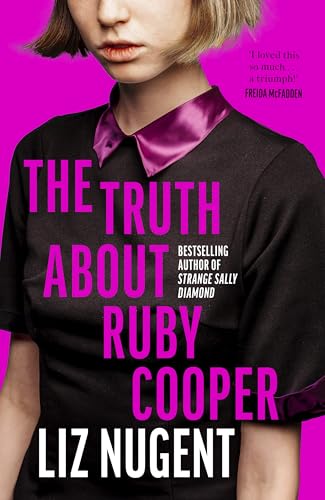 We read Nugent’s Strange Sally Diamond for book club a couple years ago and it was a great Northumberland holiday read for me, with a deliciously off-kilter narrator whose traumatized (and perhaps neurodivergent) perspective carried the novel. Here again Nugent prioritizes unreliable women’s voices and dark happenings, but Ruby is awfully hard to like. At age 16, she falsely accuses her older sister Erin’s boyfriend Milo of raping her. Milo maintains his innocence all along, but goes to jail for the crime; after all, DNA evidence can’t lie, right? Years of his life – and a heartbroken Erin’s – are stolen, his mother dies by suicide, Ruby becomes dependent on alcohol: all of this because of sisterly jealousy and an elaborate lie that their mother upholds rather than expose the family to further shame.
Narration alternates between Erin in Boston and Ruby, who’s moved back to Ireland with their mother. For Ruby’s confession to work, readers are kept in the dark about the truth of the incident, though only for 76 pages. Together the sisters give a tedious blow-by-blow of the intervening years – until Ruby’s daughter, Lucy, is raped by her boss on a drunken night out. Ruby refuses to believe her “because if it was true, that was karma coming to bit me on the ass.” This is where things finally get interesting, as Nugent explores ironies and familial patterns. But I’m sure I won’t be the only one to find the whole thing distasteful. Nugent clearly anticipates a backlash, stating in a prefatory letter, “I need to be very clear about the fact that girls and women like Ruby Cooper are extremely rare.” Was it worth undermining the #BelieveWomen campaign to explore a certain state of mind? Nah.
With thanks to Sandycove (Penguin) for the proof copy for review.
I’d also hoped to finish one more, but ran out of time. Here are my thoughts on the first half:
Show Me Where It Hurts by Claire Gleeson (2025)
 Rachel knew Tom had recurring problems with depression, but had no idea he was on the verge of a breakdown when he deliberately drove their car off the road with the intention of killing his entire family. Their two young children die in the crash but they both survive – Tom held in a psychiatric hospital and Rachel resuming her life as a nurse. The chapters alternate between “After” and “Before,” giving relative date markers in weeks, months or years out from the incident. Gleeson’s understated prose makes it possible for readers to face a tragedy so awful we’d otherwise look away; it never tips over into mawkishness.
Reading Ireland Month, Part I: Wendy Erskine and Niamh Ní Mhaoileoin
St. Patrick’s Day is a good occasion for my first set of contributions to Cathy’s Reading Ireland Month. Today I have two 2025 debut novels by women, one about the ripples caused by a sexual assault; the other about grief, queerness and unease with the Catholic Church. Both come with a Women’s Prize seal of approval. As I write, I happen to be listening to the new Foy Vance album I picked up today, which has inspired me to choose a few relevant (Northern) Irish songs to accompany each book.
The Benefactors by Wendy Erskine
I loved Erskine’s short story collection Dance Move so was looking forward to this before it appeared on the Women’s Prize longlist. We’re introduced to three middle-aged Belfast women whose 18-year-old sons are charged with sexual assault: Frankie Levine, stepmother to Chris; Miriam Abdel Salam, mother of Rami; and Bronagh Farrell, mum of Lyness or “Line-up.” Frankie grew up in care but is now rich beyond her wildest dreams, Miriam was recently widowed by a car accident, and Bronagh heads a children’s services charity. Misty, the classmate who accused the boys of the assault at a party, lives with her stepfather, cab driver Boogie. As rumours spread, the mothers have confabs to prepare a united front. At one level they’re horrified by what their sons were capable of (Rami used a bottle), but on another they’ve decided that it’s just a hullabaloo – Bronagh’s word – that will die down soon.
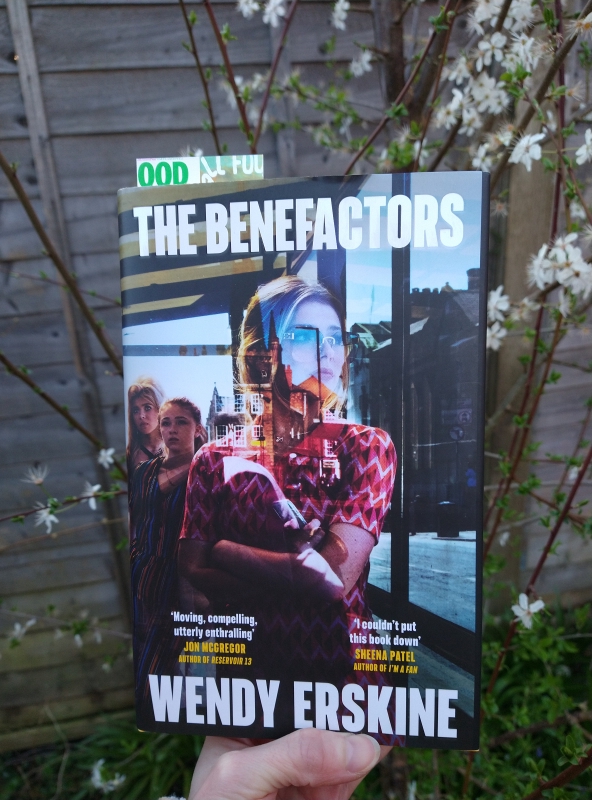
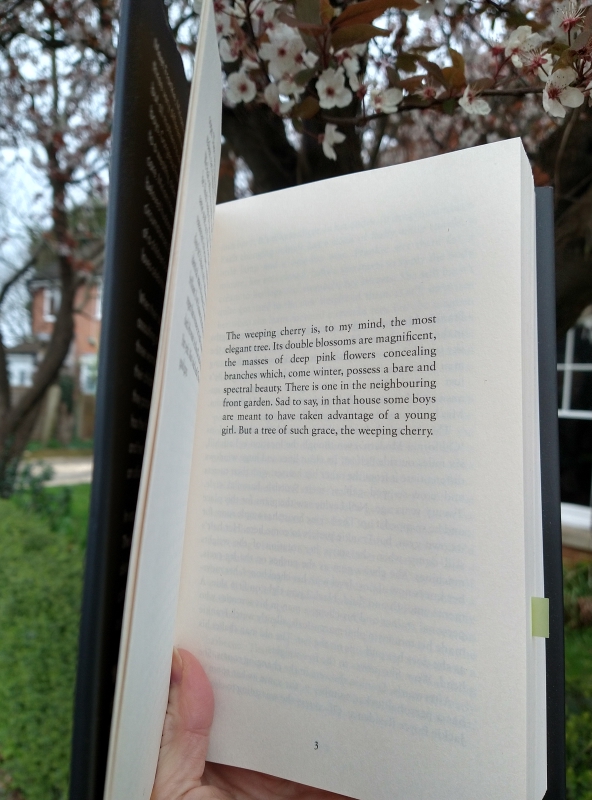
Slut-shaming of Misty starts early: she has a “Bennyz” amateur porn account and did phone or video chats, very mild stuff, with men all over the world. It’s uncomfortable, though realistic, how money and class steer what happens next. The book’s title comes from the soft-porn site, but in a wider sense invites the question of who funds lifestyles and so who’s really in control. People who have compassion in general can’t find it in this situation. Erskine intersperses short sections from anonymous voices, such as policemen and partygoers, with the narrative. These are well done, and sometimes quite funny, but Erskine’s meta joke – “There can be just too many perspectives” – proves true in that the interludes add little we haven’t already grasped about the direction of the local gossip. Apart from Misty, I felt I’d hardly gotten to know any of the characters by the end. The novel also suffered from being the second novel about the aftermath of a gang rape I’ve read in three months (after Who Killed Bambi? by Monika Fagerholm, translated from Swedish). But I reckon its blend of grit and heart is likely to please readers of Colin Barrett and Lisa McInerney.
Northern Irish songs for Misty:
- “Collect Yourself” by Iain Archer
- “At Least My Heart Was Open” by Foy Vance (beware the F-bomb)
& an Irish one: “The Blower’s Daughter” by Damien Rice
Ordinary Saints by Niamh Ní Mhaoileoin
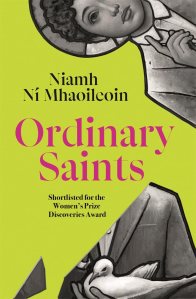 This was one of my Most Anticipated titles in 2025. It was shortlisted for the Women’s Prize Discoveries Award (for manuscripts in progress) in 2022 and won the PFD Queer Fiction Prize. Jacinta, who prefers to be known as Jay, is in her late twenties, living in London, working in marketing and half-serious about her relationship with her girlfriend, Lindsay. She tries not to think about Ireland, religion, or the past: her mother’s mental health struggles, her extended family’s casual homophobia, and the fact that her older brother, Ferdia, who was a trainee Catholic priest in Rome, died in a freak accident when she was 16. But it all comes back for her when her parents tell her that there is a campaign to have Ferdia canonized. While her mother scurries around making speeches and verifying miracles, Jay seeks the opposite for her brother: to be remembered as a normal, flawed and perhaps closeted human.
It took me ages to read this, despite the undemanding first-person, present-tense narration, because the early London material is so monotonous. Unlike the Erskine (probably because that is her third book), this felt very much like a debut, where a lot of earnest apprentice work has had to go into getting characters from A to B, literally and emotionally. Any time the author wants to advance the plot, she has Jay meet someone in a bar for a conversation. Without fail, there will be drinks involved. This felt to me like a stereotype of the Irish. It’s only really in the last quarter, as Jay has honest conversations with both parents, deals with her grief over Ferdia and accepts how much Lindsay means to her, that the book soars. For me, that was too little too late, even though the themes were irresistible.
A Northern Irish song for Jay:
- “Freewheel” by Duke Special
- and (for Jay and Lindsay) “Crack the Shutters” by Snow Patrol
& an Irish one: “The Trailing Skirts of God” by Bell X1
I loved the premise of both of these novels, but the execution left me slightly disappointed. Still, I wouldn’t discourage you from picking them up if they’ve caught your eye; I know that some blogger friends have liked one or the other much better than I did.
I’ll raise a cheeky glass of Bailey’s tonight to the greatness of Irish literature. Speaking of which, I’ll have another, bigger batch of reviews coming up before the end of the month!
Eleventh Blog Anniversary (& International Women’s Day)
Bookish Beck launched 11 years ago today. I find that hard to believe as I still feel like a newbie in the blogging world compared to veterans like Annabel, Kim, Laura, Liz and Simon; imposter syndrome (Imposter Foster!) strikes again. And yet I can’t really remember what it was like before I had a blog, nor can I imagine life without one.

Pratyya Ghosh, CC BY-SA 4.0 <https://creativecommons.org/licenses/by-sa/4.0>, via Wikimedia Commons
This is my 1594th post, which means I’m maintaining an average of 2.8 posts per week. I feel like I’m posting less often these days, with most of my reviews clumping around the end of a month as I scramble to report back on library reads and finish everything I’ve started towards particular challenges.
It’s also International Women’s Day, a coincidence I would have been unaware of when I started the blog. The Women’s Prize longlist is always announced at around this time of year, with the Carol Shields Prize longlist to follow on Tuesday. I’ve read three of the Women’s Prize nominees (Castillo, Hutchinson and King) and skimmed another (Choi). I’m currently reading Wendy Erskine’s The Benefactors, which is also just right for Reading Ireland Month.
To mark the day, I’ll reproduce my review of one of the best books I’ve read by a woman recently. It’s one of my early favourites for the year.
Brawler by Lauren Groff
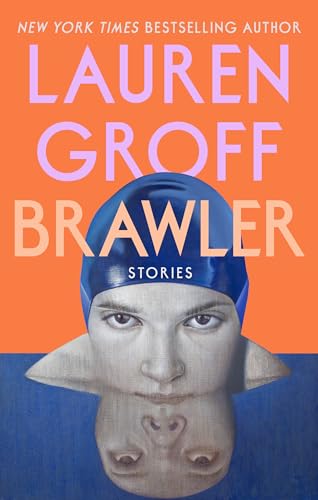 The nine short stories in Lauren Groff’s exceptional eighth book profile women in states of desperation and probe legacies of loss and violence.
Most of the stories employ third-person narration and originally appeared in the New Yorker. Often, inherited trauma binds mothers and daughters. The title character is high school swimmer Sara, who shoplifts and fights in frustration at her mother’s incurable illness. In “Under the Wave,” set after a natural disaster, a woman adopts an orphan as a replacement for her dead child—despite their racial differences. The title of “The Wind” symbolizes women’s fear and rage after an attempted escape from an abusive patriarch. Accidental harm and imagery of the Madonna and Child link the three mother–daughter pairs in “Annunciation.”
Themes of midlife reinvention and latent queerness (cf. Matrix) recur. Bisexuality is a secret between a dying woman and her friend in “Birdie.” In “Between the Shadow and the Soul,” a woman finds new hobbies following early retirement. Although she flirts with her female gardening teacher, she realizes her desire is not to leave her husband but to “brush up against the dazzling future again.”
“Such Small Islands” is a startling Jamesian fable; “To Sunland” a 1950s Southern gothic black comedy that would do Flannery O’Connor proud; and the masterful “What’s the Time, Mr. Wolf?” a suspenseful, novella-length examination of privilege and obsession.
The prose is stellar and the endings breathtaking. Groff is a first-rate novelist, but her short stories are truly peerless.
(Reposted with permission from Shelf Awareness.)
Thanks to all who support my blog by reading and commenting. You’re stars!
#DoorstoppersInDecember: Book of Lives by Margaret Atwood & The End of Mr. Y by Scarlett Thomas
Later than intended, I’m reporting back on Margaret Atwood’s memoir, which I started in late November, and a long-neglected 500+-page novel I plucked from my shelves. Both offered page-turning intrigue and a blend of history, magic, and pure weirdness. Many thanks to Laura for hosting Doorstoppers in December, which encouraged me to pick them up!
Book of Lives: A Memoir of Sorts by Margaret Atwood (2025)
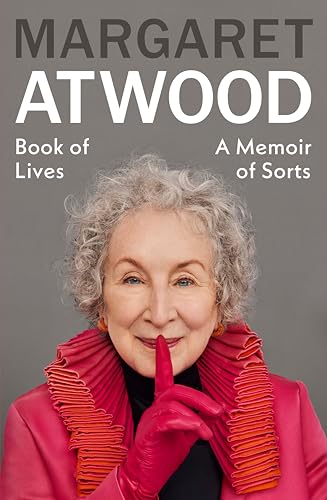 I gave some initial thoughts about the book here to tie in with Margaret Atwood Reading Month. What I said then proved true of the book as a whole: it’s delightful though dense with detail and historical context. I did get a little bogged down in the names and details of decades worth of publishing, but there is some tasty gossip, such as the fact that Margaret Laurence spread mean rumours about her (and was a drunk) but later changed her ways. It’s been a lucky window of time for Atwood to live through: she has known simplicity and the need for do-it-yourself practicality, but has also experienced privilege, even luxury (multiple homes and worldwide travel). Mostly, she had the good fortune of being at the start of Canada’s literary boom. In the early 1960s, only five Canadian novels were published per year. Through her involvement with literary magazines and House of Anansi Press and her books on Susanna Moodie and the tropes of Canadian literature, she helped create the scene.
There are frequent mentions of how people or events made their way into her fiction and poetry. Coyly, she writes, “I just have a teeming imagination. Also, like all novelists, I’m a kleptomaniac.” The page or two of context on each book is illuminating and it never becomes the tedious “I published this book … then I published this book” that she mentioned wanting to avoid in the introduction. Rather, these sections made me want to go reread lots of her books to appreciate them anew. I was also reminded how often she’s been ahead of her time, with topics and details that seem prophetic (she proposed Payback before the financial crisis hit, for instance). Some elements felt particularly timely: she experienced casual misogyny and an alarming number of near-misses – she says things like “I won’t give his name … you know who you are … though you’re probably dead” – and, through her involvement in bird conservation, she’s well aware of the disastrous environmental trajectory we’re on.
For a memoir, this is not especially forthcoming about the author’s inner life and emotions. Where it is, she masks the material in a layer of technique. So when she’s confessing to having an affair while married to Jim Polk (whom she met at Harvard), she writes it like a fairytale scene in which she went into the woods with a wolf. When she was fretting about Graeme Gibson’s reluctance to divorce her first wife and marry her, she imagines letters to her ‘inner advice columnist’. (Note: Gibson was her long-time partner and his sons were like her stepchildren but they never did marry – and he only ‘allowed’ her the one child, though she wanted two of her own. One ‘Jess Gibson’ has a speculative short story collection, The Good Eye, coming out in May 2026. No doubt her work will be compared with her mother’s, but bully for her for not using the name Atwood to try to ride her coattails.)
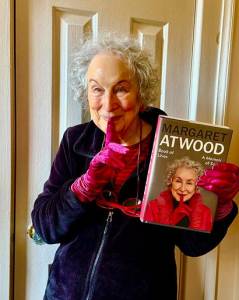
A cute pic from her Substack in November
One of the successful literary touches is the recurring “We Nearly Lose Graeme” segments about his risky behaviour and various mishaps. He had dementia and mini strokes before suffering a major one while in London with her for The Testaments tour; he died five days later. Her reflections on his death are poignant, but generic: “We can all believe three things simultaneously: The person is in the ground. The person is in the Afterlife. The person is in the next room. You keep expecting to see him. Even when you know it’s coming, a death is a shock.” At the crucial moment, she turns to the first-person plural and the second person.
I skimmed some of the bits about Graeme’s earlier life and the behind-the-scenes of publishing; I felt that he and many of her literary pals are more important to her than they are to readers. But that’s okay. The same goes for her earlier life; I noted that the account of her time as a summer camp counsellor felt more detailed than necessary. However, with her gift for storytelling, even the smallest incident can be rendered amusing. She looks for the humour, coincidence, or irony in any situation, and her summations and asides are full of dry humour. Some examples:
- “Spoiler: Jim and I eventually got married, one of the odder things to happen to both of us.”
- “After a while, the hand [at the window of her Harvard student accommodation] went away. It’s what you wish for in a disembodied hand.”
- “Eventually the iguana [inherited from her roommate] was given a new home at a zoo among other iguanas, where it was probably happier. Hard to tell.”
It’s not a book for the casual reader who kinda liked one or two Atwood novels; it’s more for the diehard fans among us, and offers a veritable trove of stories and photographs. But don’t expect a tell-all. Think of this more as a companion to her oeuvre. The title feels literal in that it’s as if she’s lived several lives: the wilderness kid, the literary ingénue, the family and career woman, the philanthropist and elder stateswoman. She doesn’t try to pull all of her incarnations into one, instead leaving all of the threads trailing into the beyond. If anything, “Peggy Nature” (her name from summer camp) is the role that has persisted. I probably liked the childhood material most, which makes sense as it’s what she’s looking back on with most fondness. Towards the close, Atwood mentions her heart condition and seems perfectly accepting of the fact that she won’t be around for much longer. But her body of work will endure. I’m so grateful for it and for the gift of this self-disclosure, however coy. (Can I be greedy and hope for another novel?) She leaves this message: “We scribes and scribblers are time travellers: via the magic page we throw our voices, not only from here to elsewhere, but also from now to a possible future. I’ll see you there.” [570 pages] (Public library) 
The End of Mr. Y by Scarlett Thomas (2006)
 This is a mash-up of the campus novel, the Victorian pastiche, and the time travel adventure. Ariel Manto is a PhD student working on thought experiments. Inciting incidents come thick and fast: her supervisor disappears, the building that houses her office partially collapses as it’s on top of an old railway tunnel, and she finds a copy of Thomas Lumas’s vanishingly rare The End of Mr. Y in a box of mixed antiquarian stock going for £50 at a secondhand bookshop. Rumour has it the book is cursed, and when Ariel realises that the key page – giving a Victorian homoeopathic recipe for entering the “Troposphere,” a dream/thought realm where one travels through time and space – has been excised, she knows the quest has only just begun. It will involve the book within a book, Samuel Butler novels, a theologian and a shrine, lab mice plus the God of Mice, and a train line whose destinations are emotions.
The plot is pretty bonkers and I’m not sure I can satisfactorily explain its internal logic now, but as is true of the best doorstoppers, it absorbed me completely. I read it very quickly (for me) and even read 120 pages in one sitting thanks to my cat pinning me to the sofa. It also felt prescient in discussing “machine consciousness” – a topic adjacent to artificial intelligence. Ariel is a Disaster Woman avant la lettre, living on noodles and cut-price wine. Her current ‘relationship’ consisting of rough sex with a married professor is the latest in a string of unhealthy connections. But time travel offers the possibility not just of reversing her own mistakes, but of going right back to the start of humanity. Verging on steampunk, this was much better than the other Thomas novels I’ve read, The Seed Collectors and Oligarchy. It was longlisted for the Orange (Women’s) Prize and would be a great choice for readers of Nicola Barker and Susanna Clarke. [502 pages] (Secondhand – Book-Cycle, Exeter; it’s been on my shelves since 2016!) 
Carol Shields Prize Reads: Pale Shadows & All Fours
Later this evening, the Carol Shields Prize will be announced at a ceremony in Chicago. I’ve managed to read two more books from the shortlist: a sweet, delicate story about the women who guarded Emily Dickinson’s poems until their posthumous publication; and a sui generis work of autofiction that has become so much a part of popular culture that it hardly needs an introduction. Different as they are, they have themes of women’s achievements, creativity and desire in common – and so I would be happy to see either as the winner (more so than Liars, the other one I’ve read, even though that addresses similar issues). Both: 
Pale Shadows by Dominique Fortier (2022; 2024)
[Translated from French by Rhonda Mullins]
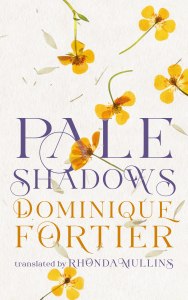 This is technically a sequel to Paper Houses, which is about Emily Dickinson, but I had no trouble reading this before its predecessor. In an Author’s Note at the end, Fortier explains how, during the first Covid summer, she was stalled on multiple fiction projects and realized that all she wanted was to return to Amherst, Massachusetts – even though her subject was now dead. The poet’s presence and language haunt the novel as the characters (which include the author) wrestle over her words. The central quartet comprises Lavinia, Emily’s sister; Susan, their brother Austin’s wife; Mabel, Austin’s mistress; and Millicent, Mabel’s young daughter. Mabel is to assist with editing the higgledy-piggledy folder of handwritten poems into a volume fit for publication. Thomas Higginson’s clear aim is to tame the poetry through standardized punctuation, assigned titles, and thematic groupings. But the women are determined to let Emily’s unruly genius shine through.
The short novel rotates through perspectives as the four collide and retreat. Susan and Millicent connect over books. Mabel considers this project her own chance at immortality. At age 54, Lavinia discovers that she’s no longer content with baking pies and embarks on a surprising love affair. And Millicent perceives and channels Emily’s ghost. The writing is gorgeous, full of snow metaphors and the sorts of images that turn up in Dickinson’s poetry. It’s a lovely tribute that mingles past and present in a subtle meditation on love and legacy.
Some favourite lines:
“Emily never writes about any one thing or from any one place; she writes from alongside love, from behind death, from inside the bird.”
“Maybe this is how you live a hundred lives without shattering everything; maybe it is by living in a hundred different texts. One life per poem.”
“What Mabel senses and Higginson still refuses to see is that Emily only ever wrote half a poem; the other half belongs to the reader, it is the voice that rises up in each person as a response. And it takes these two voices, the living and the dead, to make the poem whole.”
With thanks to The Carol Shields Prize Foundation for the free e-copy for review.
All Fours by Miranda July (2024)
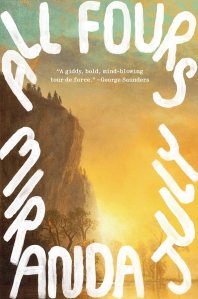 Miranda July’s The First Bad Man is one of the first books I ever reviewed on this blog back in 2015, after an unsolicited review copy came my way. It was so bizarre that I didn’t plan to ever read anything else by her, but I was drawn in by the hype machine and started this on my Kindle in September, later switching to a library copy when I got stuck at 65%. The narrator sets off on a road trip from Los Angeles to New York to prove to her husband, Harris, that she’s a Driver, not a Parker. But after 20 minutes she pulls off the highway and ends up at a roadside motel. She blows $20,000 on having her motel room decorated in the utmost luxury and falls for Davey, a younger man who works for a local car rental chain – and happens to be married to the decorator. In his free time, he’s a break dancer, so the narrator decides to choreograph a stunning dance to prove her love and capture his attention.
I got bogged down in the ridiculous details of the first two-thirds, as well as in the kinky stuff that goes on (with Davey, because neither of them is willing to technically cheat on a spouse; then with the women partners the narrator has after she and Harris decide on an open marriage). However, all throughout I had been highlighting profound lines; the novel is full to bursting with them (“maybe the road split between: a life spent longing vs. a life that was continually surprising”). I started to appreciate the story more when I thought of it as archetypal processing of women’s life experiences, including birth trauma, motherhood and perimenopause, and as an allegory for attaining an openness of outlook. What looks like an ending (of career, marriage, sexuality, etc.) doesn’t have to be.
Whereas July’s debut felt quirky for the sake of it, showing off with its deadpan raunchiness, I feel that here she is utterly in earnest. And, weird as the book may be, it works. It’s struck a chord with legions, especially middle-aged women. I remember seeing a Guardian headline about women who ditched their lives after reading All Fours. I don’t think I’ll follow suit, but I will recommend you read it and rethink what you want from life. It’s also on this year’s Women’s Prize shortlist. I suspect it’s too divisive to win either, but it certainly would be an edgy choice. (NetGalley/Public library)
(My full thoughts on both longlists are here.) The other two books on the Carol Shields Prize shortlist are River East, River West by Aube Rey Lescure and Code Noir by Canisia Lubrin, about which I know very little. In its first two years, the Prize was awarded to women of South Asian extraction. Somehow, I can’t see the jury choosing one of three white women when it could be a Black woman (Lubrin) instead. However, Liars and All Fours feel particularly zeitgeist-y. I would be disappointed if the former won because of its bitter tone, though Manguso is an undeniable talent. Pale Shadows? Pure literary loveliness, if evanescent. But honouring a translation would make a statement, too. I’ll find out in the morning!
10th Blogging Anniversary! & Thoughts on the Women’s Prize and Carol Shields Prize Longlists
I can hardly believe I’ve been blogging for a decade. It seems like no time ago that I started this site on a whim early in my freelance career, soon after my main online publication folded and my brother-in-law died. This is now my 1,486th blog post (so close to that 1,500 milestone!), which means I average 12 posts a month. Between reviews, challenges, memes, book lists, and prize reactions, I maintain a very active blog. I’ve long since stopped caring about numbers of views and likes; I’ll never be a top influencer but I offer quality, thoughtful content for those who are similarly serious about books. The blog has also become a place where I can write about personal things in response to losses and other life changes.

I’m pleased that my blog anniversary happens to coincide with International Women’s Day, around when the Women’s Prize and Carol Shields Prize longlists are announced. I don’t plan to shadow either prize in a concerted way, partly because I’m too busy with reading debut novels in my role as a McKitterick Prize judge, but there are some books that appeal.
Women’s Prize Longlist
Read
- The Ministry of Time by Kaliane Bradley
- Tell Me Everything by Elizabeth Strout

- The Safekeep by Yael van der Wouden

Reading
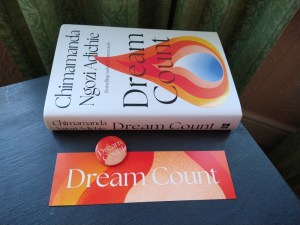 Dream Count by Chimamanda Ngozi Adichie
- All Fours by Miranda July
Already Wanted to Read
- Birding by Rose Ruane – For the cover if nothing else (it made my Cover Love post last year)
- The Artist by Lucy Steeds – Susan of A life in books rates it highly: see her review.
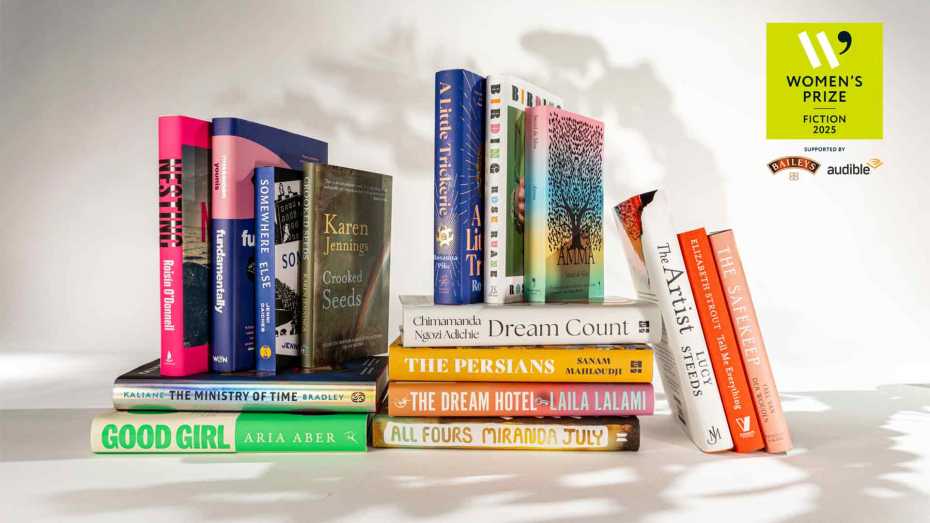
Unsure
- A Little Trickerie by Rosanna Pike – The premise is reasonably appealing (an orphan who pretends to be an angel) but I am very much not keen on medieval settings. I’ll wait and see if it’s shortlisted.
Decided Against
- Crooked Seeds by Karen Jennings – I read the Booker-longlisted An Island and it was fine but I don’t need to try anything else by her.
- Nesting by Roisín O’Donnell – 400 pages on an Irish domestic violence situation sounds like A Lot. Reviews have been very favourable, saying it’s as pacey as a thriller. Again, I’ll wait to see if it’s shortlisted.
Not Interested (for now)
- Good Girl by Aria Aber
- Somewhere Else by Jenni Daiches
- Amma by Saraid de Silva (but well done to Weatherglass Books!)
- The Dream Hotel by Laila Lalami
- The Persians by Sanam Mahloudji
- Fundamentally by Nussaibah Younis
The blurbs for these don’t attract me, but I’d be willing to change my mind if I see an enthusiastic review or two.
[Shortlist: 2 April; winner: 12 June]
Stab-in-the-dark shortlist predictions: Good Girl, Dream Count, The Dream Hotel, Nesting, The Artist, Tell Me Everything
Carol Shields Prize Longlist
Read
- Liars by Sarah Manguso
DNF
- Cicada Summer by Erica McKeen – I read the first 15% last summer. In 2020, Husha has recently lost her mother and is locked down with her grandfather at his Ontario lake house. I recall that the prose was vague and somewhat obnoxiously poetic.
Reading
- All Fours by Miranda July – The only overlap with the WP. I don’t think that, as happened last year, the repeated title will be the winner. It’s too offbeat and divisive.
Want to Read
- The Hearing Test by Eliza Barry Callahan – Novella-length autofiction about adapting to disability.
- Curiosities by Anne Fleming – A historian becomes obsessed with the story told by five 17th-century manuscripts. Sounds like a queer Possession with a dash of North Woods.
- Pale Shadows by Dominique Fortier, translated by Rhonda Mullins – A Québécois author takes on the legacy of Emily Dickinson via the three women who first brought her poetry into print.
- Obligations to the Wounded by Mubanga Kalimamukwento – Linked short stories about Zambians and Zambian émigrés.
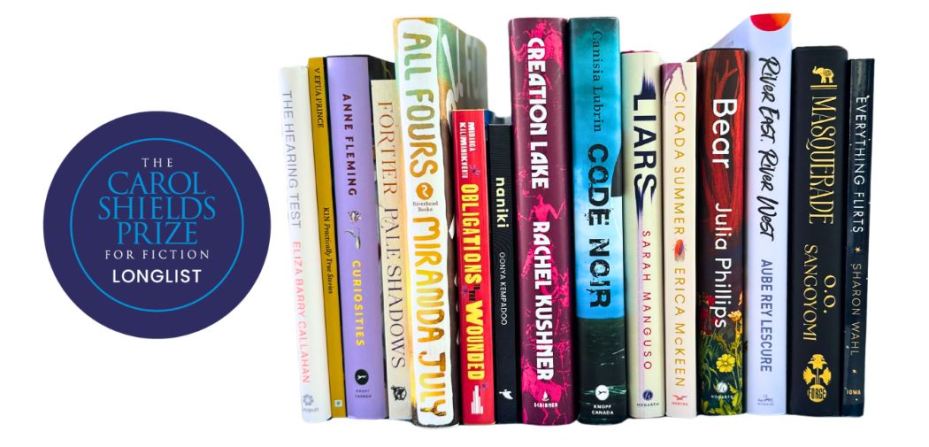
Unsure
- Bear by Julia Phillips – After reading Bear by Marian Engel, I don’t think I need any more bear legend-inspired romances in my life. (I already discounted Eowyn Ivey’s latest.)
- Kin: Practically True Stories by V Efua Prince – I’ve had good luck with other books from Wayne State University Press’ Made in Michigan series but can’t quite work out what this would be like.
- Everything Flirts: Philosophical Romances by Sharon Wahl – Could be intriguing; could be pretentious. At least it’s only novella length. All I can do is try an excerpt.
Not Interested (for now)
- Naniki by Oonya Kempadoo – Someone on Goodreads described this as being like spoken word at a sci-fi convention.
- Creation Lake by Rachel Kushner – I wasn’t keen when it was shortlisted for the Booker, and I haven’t changed my mind.
- River East, River West by Aube Rey Lescure – Ditto but from last year’s WP list.
- Code Noir by Canisia Lubrin – Normally I like linked short stories but a 400+ page count and the heavy subject matter of slavery regulations sound overwhelming.
- Masquerade by O.O. Sangoyomi – I struggle with fantasy at the best of times.
[Shortlist: 3 April; winner: 1 May]
Last year Laura T. and I covered most of the longlist between us and really enjoyed the project. (Marcie of Buried in Print also reviewed a lot of the longlist later in the year.) This year we’ll reassess at the shortlist stage and maybe request a few review copies from the publicist. See Laura’s prize longlist reactions here.
Stab-in-the-dark shortlist predictions: Curiosities, Obligations to the Wounded, Creation Lake, Code Noir, Masquerade
What have you read, or might you read, from these longlists?
Thoughts on the Women’s Prize and Carol Shields Prize Longlists
Yesterday was my 9th blog anniversary! I love that it coincides with International Women’s Day.

It’s traditionally also been the day of the Women’s Prize longlist announcement, but the past two years they’ve brought it forward to pre-empt news of the Carol Shields Prize for Fiction longlist. It’s hard not to see these prizes as being in competition, though the CSP is only for U.S. and Canadian residents; also considers short story collections, graphic novels, and work in translation; and is more deliberate about including trans and nonbinary authors.
Like last year, their lists are extremely different. In 2023 there was no crossover; this year only one novel appears on both (Brotherless Night). Although it’s easier for me to feel engaged with the WP, I’m drawn to reading much more from the CSP list.
Women’s Prize
Of my predictions, only 1 was correct, compared to last year’s 4. I got none of my personal wishes, as in 2023. I guess making a wish list is a kiss of death! Once again, we have a mix of new and established authors, with a full half of the list being debut work. Nine of the authors are BIPOC. I’ve read 2 of the nominees and would be agreeable to reading up to 6 more. My library always buys the entire longlist, so I’ll eventually get the chance to read them, but not soon enough to add to the conversation.

Read:
 The Wren, The Wren by Anne Enright (CORRECT PREDICTION): Enright’s astute eighth novel traces the family legacies of talent and trauma through the generations descended from a famous Irish poet. The novel switches between Nell’s funny, self-deprecating narration and third-person vignettes about her mother, Carmel. Cycles of abandonment and abuse characterize the McDaraghs. Enright convincingly pinpoints the narcissism and codependency behind their love-hate relationships.
 Western Lane by Chetna Maroo: Easy to warm to even if you’ve never played and know nothing about squash. A debut novella that is illuminating on what is expected of young Gujarati women in England; on sisterhood and a bereaved family’s dynamic; but especially on what it is like to feel sealed off from life by grief. This offbeat, delicate coming-of-age story eschews literary fireworks. In place of stylistic flair is the sense that each word and detail has been carefully placed.
Will read:
Enter Ghost by Isabella Hammad – requested from the library
8 Lives of a Century-Old Trickster by Mirinae Lee – on my Kindle from NetGalley
Interested in reading:
In Defence of the Act by Effie Black – queer novella, suicide theme
And Then She Fell by Alicia Elliott – Indigenous Canadian, postpartum depression theme
Soldier Sailor by Claire Kilroy – Irish author, new motherhood theme
The Blue, Beautiful World by Karen Lord – Black sci-fi author
Maybe:
Brotherless Night by V.V. Ganeshananthan – see below
Not interested in reading:
Hangman by Maya Binyam – meh
The Maiden by Kate Foster – not keen on historical mysteries, and this looks very commercial
Restless Dolly Maunder by Kate Grenville – will read more Grenville, but not this one any time soon
River East, River West by Aube Rey Lescure – have read mixed reviews
Nightbloom by Peace Adzo Medie – disliked her debut novel
Ordinary Human Failings by Megan Nolan – enjoyed her first novel, but DNFed this
A Trace of Sun by Pam Williams – nah
See also the reactions posts from Eric and Laura.
Predictions:
I’d expect to see two or three of the Irish writers on the shortlist, plus probably Western Lane, Enter Ghost, and a couple of other wildcards (but not the SF novel). Enter Ghost, set in Palestine, would certainly be a timely winner…
What comes next:
Shortlist (6 titles) on 24 April and winner on 13 June.
Carol Shields Prize
After I badgered the administrators for six months about Q&A responses that never materialized, they kindly offered me digital review copies of any of the nominees that I’m not able to easily access in the UK. This is, in general, a more rigorous list of highbrow literary fiction, with some slight genre diversity thanks to Catton and Makkai (plus a mixture of historical and contemporary fiction, three story collections, and one book in translation); 10 of 15 authors are BIPOC. There are further details about all the nominees on the website.

Read:
 I Have Some Questions for You by Rebecca Makkai – When an invitation comes from her boarding school alma mater, Granby, to teach a two-week course on podcasting, Bodie indulges her obsession with the 1995 murder of her former roommate. Makkai has taken her cues from the true crime genre and constructed a convincing mesh of evidence and theories. She so carefully crafts her pen portraits, and so intimately involves us in Bodie’s psyche, that it’s impossible not to get invested. This is timely, daring, intelligent, enthralling storytelling. (Delighted to see this nominated as I hoped the WP would recognize it last year.)
Skimmed and didn’t care for:
Birnam Wood by Eleanor Catton
Loot by Tania James
Will read:
Land of Milk and Honey by C. Pam Zhang – requested from the library
Know little or nothing about but will happily read if I get a chance:
Cocktail: Stories by Lisa Alward
Dances by Nicole Cuffy
Daughter by Claudia Dey
Between Two Moons by Aisha Abdel Gawad
You Were Watching from the Sand: Short Stories by Juliana Lamy
The Future by Catherine Leroux, translated by Susan Ouriou – has just won Canada Reads
A Council of Dolls by Mona Susan Power
Chrysalis: Stories by Anuja Varghese
Less interested in reading:
Brotherless Night by V. V. Ganeshananthan – Sri Lankan civil war setting
Coleman Hill by Kim Coleman Foote – Fictionalized family memoir with 9 POVs
A History of Burning by Janika Oza – Big Indian-Ugandan multigenerational story
Predictions:
Not the first clue. Come back to me after I’ve read a few more.
What comes next:
Shortlist (5 titles) on 9 April and winner on 13 May.
What have you read, or might you read, from the longlists?
Women’s Prize 2024: Longlist Predictions vs. Wishes
This is the fourth year in a row that I’ve made predictions for the Women’s Prize longlist (the real thing comes out on Tuesday, 6 p.m. GMT). It shows how invested I’ve become in this prize in recent years. Like I did last year, I’ll give predictions, then wishes (no overlap this time!). My wishes are based on what I have already read and want to read. Although I kept tabs on publishers and ‘free entries’ for previous winners and shortlistees, I didn’t let quotas determine my selections. And while I kept in mind that there are two novelists on the judging panel, I don’t know enough about any of these judges’ taste to be able to tailor my predictions. My only thought was that they will probably appreciate good old-fashioned storytelling … but also innovative storytelling.
(There are two books – The List of Suspicious Things by Jennie Godfrey (= Joanna Cannon?) and Jaded by Ela Lee (this year’s Queenie) – that I only heard about as I was preparing this post and seem pretty likely, but I felt that it would be cheating for me to include them.)
Predictions
The Three of Us, Ore Agbaje-Williams
The Future, Naomi Alderman
The Storm We Made, Vanessa Chan
Penance, Eliza Clark


The Wren, The Wren, Anne Enright
A House for Alice, Diana Evans
Piglet, Lottie Hazell
Pineapple Street, Jenny Jackson


Yellowface, R. F. Kuang
Biography of X, Catherine Lacey
Julia, Sandra Newman
The Vulnerables, Sigrid Nunez


Tom Lake, Ann Patchett
In Memory of Us, Jacqueline Roy
The Fraud, Zadie Smith
Land of Milk and Honey, C. Pam Zhang


Wish List
Family Lore, Elizabeth Acevedo
The Sleep Watcher, Rowan Hisayo Buchanan
The Unfortunates, J. K. Chukwu
The Three Graces, Amanda Craig


Learned by Heart, Emma Donoghue
Service, Sarah Gilmartin
The Vaster Wilds, Lauren Groff
Reproduction, Louisa Hall


Happiness Falls, Angie Kim
Bright Young Women, Jessica Knoll
A Sign of Her Own, Sarah Marsh
The Fetishist, Katherine Min


Hello Beautiful, Ann Napolitano
Mrs S, K Patrick
Romantic Comedy, Curtis Sittenfeld
Absolutely and Forever, Rose Tremain


If I’m lucky, I’ll get a few right from across these two lists; no doubt I’ll be kicking myself over the ones I considered but didn’t include, and marvelling at the ones I’ve never heard of…
What would you like to see on the longlist?
Appendix
(A further 50 novels that were on my radar but didn’t make the cut. Like last year, I made things easy for myself by keeping an ongoing list of eligible novels in a file on my desktop.)
Everything Is Not Enough, Lola Akinmade Akerstrom
The Wind Knows My Name, Isabel Allende
Swanna in Love, Jennifer Belle
The Sisterhood, Katherine Bradley
The Fox Wife, Yangsze Choo
The Guest, Emma Cline
Speak to Me, Paula Cocozza
Talking at Night, Claire Daverley
Clear, Carys Davies
Bellies, Nicola Dinan
The Happy Couple, Naoise Dolan
In Such Tremendous Heat, Kehinde Fadipe
The Memory of Animals, Claire Fuller
Anita de Monte Laughs Last, Xochitl Gonzalez
Normal Women, Ainslie Hogarth
Sunburn, Chloe Michelle Howarth
Loot, Tania James
The Half Moon, Mary Beth Keane
Morgan Is My Name, Sophie Keetch
Soldier Sailor, Claire Kilroy
8 Lives of a Century-Old Trickster, Mirinae Lee
August Blue, Deborah Levy
Winter Animals, Ashani Lewis
Rosewater, Liv Little
The Couples, Lauren Mackenzie
Tell Me What I Am, Una Mannion
She’s a Killer, Kirsten McDougall
The Misadventures of Margaret Finch, Claire McGlasson
Nightbloom, Peace Adzo Medie
I Am Homeless If This Is Not My Home, Lorrie Moore
The Lost Wife, Susanna Moore
Okay Days, Jenny Mustard
Parasol against the Axe, Helen Oyeyemi
The Human Origins of Beatrice Porter and Other Essential Ghosts, Soraya Palmer
The Lodgers, Holly Pester
Night Wherever We Go, Tracey Rose Peyton
The Mars House, Natasha Pulley
Playing Games, Huma Qureshi
Come and Get It, Kiley Reid
High Time, Hannah Rothschild
Commitment, Mona Simpson
Death of a Bookseller, Alice Slater
Bird Life, Anna Smail
Stealing, Margaret Verble
Help Wanted, Adelle Waldman
Temper, Phoebe Walker
Hang the Moon, Jeannette Walls
Moral Injuries, Christie Watson
Ghost Girl, Banana, Wiz Wharton
Speak of the Devil, Rose Wilding
This and That (The January Blahs)
The January blahs have well and truly arrived. The last few months of 2023 (December in particular) were too full: I had so much going on that I was always rushing from one thing to the next and worrying I didn’t have the time to adequately appreciate any of it. Now my problem is the opposite: very little to do, work or otherwise; not much on the calendar to look forward to; and the weather and house so cold I struggle to get up each morning and push past the brain fog to settle to any task. As I kept thinking to myself all autumn, there has to be a middle ground between manic busyness and boredom. That’s the head space where I’d like to be living, instead of having to choose between hibernation and having no time to myself.
At least these frigid January days are good for being buried in books. Unusually for me, I’m in the middle of seven doorstoppers, including King by Jonathan Eig (perfect timing as Monday is Martin Luther King Jr. Day), Wellness by Nathan Hill, and Babel by R.F. Kuang (a nominal buddy read with my husband).
Another is Carol Shields’s Collected Short Stories for a buddy rereading project with Marcie of Buried in Print. We’re partway through the first volume, Various Miracles, after a hiccup when we realized my UK edition had a different story order and, in fact, different contents – it must have been released as a best-of. We’ll read one volume per month in January–March. I also plan to join Heaven Ali in reading at least one Margaret Drabble book this year. I have The Waterfall lined up, and her Arnold Bennett biography lurking. Meanwhile, the Read Indies challenge, hosted by Karen and Lizzy in February, will be a great excuse to catch up on some review books from independent publishers.
Literary prize season will be heating up soon. I put all of the Women’s Prize (fiction and nonfiction!) dates on my calendar and I have a running list, in a file on my desktop, of all the novels I’ve come across that would be eligible for this year’s race. I’m currently reading two memoirs from the Nero Book Awards nonfiction shortlist. Last year it looked like the Folio Prize was set to replace the Costa Awards, giving category prizes and choosing an overall winner. But then another coffee chain, Caffè Nero, came along and picked up the mantle.
This year the Folio has been rebranded as The Writers’ Prize, again with three categories, which don’t quite overlap with the Costa/Nero ones. The Writers’ Prize shortlists just came out on Tuesday. I happen to have read one of the poetry nominees (Chan) and one of the fiction (Enright). I’m going to have a go at reading the others that I can source via the library. I’ll even try The Bee Sting given it’s on both the Nero and Writers’ shortlists (ditto the Booker) and I have a newfound tolerance of doorstoppers.
As for my own literary prize involvement, my McKitterick Prize manuscript longlist is due on the 31st. I think I have it finalized. Out of 80 manuscripts, I’ve chosen 5. The first 3 stood out by a mile, but deciding on the other 2 was really tricky. We judges are meeting up online next week.
I’m listening to my second-ever audiobook, an Audible book I was sent as a birthday gift: There Plant Eyes by M. Leona Godin. My routine is to find a relatively mindless data entry task to do and put on a chapter at a time.
There are a handful of authors I follow on Substack to keep up with what they’re doing in between books: Susan Cain, Jean Hannah Edelstein, Catherine Newman, Anne Boyd Rioux, Nell Stevens (who seems to have gone dormant?), Emma Straub and Molly Wizenberg. So far I haven’t gone for the paid option on any of the subscriptions, so sometimes I don’t get to read the whole post, or can only see selected posts. But it’s still so nice to ‘hear’ these women’s voices occasionally, right in my inbox.
My current earworms are from Belle and Sebastian’s Late Developers album, which I was given for Christmas. These lyrics from the title track – saved, refreshingly, for last; it’s a great strategy to end on a peppy song (an uplifting anthem with gospel choir and horn section!) instead of tailing off – feel particularly apt:
Live inside your head
Get out of your bed
Brush the cobwebs off
I feel most awake and alive when I’m on my daily walk by the canal. It’s such a joy to hear the birdsong and see whatever is out there to be seen. The other day there was a red kite zooming up from a field and over the houses, the sun turning his tail into a burnished chestnut. And on the opposite bank, a cuboid rump that turned out to belong to a muntjac deer. Poetry fragments from two of my bedside books resonated with me.
This is the earnest work. Each of us is given
only so many mornings to do it—
to look around and love
the oily fur of our lives,
the hoof and the grass-stained muzzle.
Days I don’t do this
I feel the terror of idleness
like a red thirst.
That is from “The Deer,” from Mary Oliver’s House of Light, and reminds me that it’s always worthwhile to get outside and just look. Even if what you’re looking at doesn’t seem to be extraordinary in any way…
Importance leaves me cold,
as does all the information that is classed as ‘news’.
I like those events that the centre ignores:
small branches falling, the slow decay
of wood into humus, how a puddle’s eye
silts up slowly, till, eventually,
the birds can’t bathe there. I admire the edge;
the sides of roads where the ragwort blooms
low but exotic in the traffic fumes;
the scruffy ponies in a scrubland field
like bits of a jigsaw you can’t complete;
the colour of rubbish in a stagnant leat.
There are rarest enjoyments, for connoisseurs
of blankness, an acquired taste,
once recognised, it’s impossible to shake,
this thirst for the lovely commonplace.
(from “Six Poems on Nothing,” III by Gwyneth Lewis, in Parables & Faxes)
This was basically a placeholder post because who knows when I’ll next finish any books and write about them … probably not until later in the month. But I hope you’ve found at least one interesting nugget!
What ‘lovely commonplace’ things are keeping you going this month?
Women’s Prize Longlist Reviews (Croft, Grudova, O’Farrell) & Shortlist Predictions
The Women’s Prize shortlist will be announced on Wednesday the 26th. I’ve managed to read a few more novels from the longlist and started another (Fire Rush by Jacqueline Crooks), which would take me up to 6 read out of 16. I have a couple of others on order from the library (Kennedy and Patel), but will only bother to read them if they are shortlisted.
Homesick by Jennifer Croft
I was intrigued by the publication history of this one: Croft first wrote it in Spanish, then produced an English-language version which, in the USA, was marketed as a memoir illustrated with her own photographs. Here in the UK, though, Charco Press published it as part of their new range of untranslated fiction – with no photos, alas. So, it’s clear that this is thinly veiled autobiography; literally all that may have been changed is the character names.
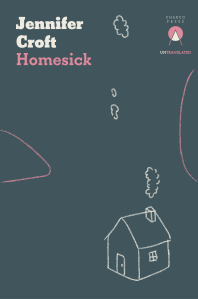 The protagonist is ‘Amy’, who lives in a tornado-ridden Oklahoma and whose sister, ‘Zoe’ – a handy A to Z of growing up there – has a mysterious series of illnesses that land her in hospital. The third person limited perspective reveals Amy to be a protective big sister who shoulders responsibility: “There is nothing in the world worse than Zoe having her blood drawn. Amy tries to show her the pictures [she’s taken of Zoe’s dog] at just the right moment, just right before the nurse puts the needle in”.
The girls are home-schooled and Amy, especially, develops a genius for languages, receiving private tutoring in Russian from Sasha, a Ukrainian former student of their father’s. Both sister are more than a little in love with Sasha. They alternate between competing for attention and indulging their joint passions – such as for the young Russian figure-skating couple who sweep the Winter Olympics. Amy starts college at 15, which earns her unwanted attention among her classmates, and struggles with her mental health before deciding to see the world. Despite periods of estrangement, her relationship with Zoe is what grounds her.
In a sense this is a simple chronological story, told in a matter-of-fact way. Yet each of its vignettes – some just a paragraph long – is perfectly chosen to reveal the family dynamic and the moment in American history. Detailed chapter headings continue the narrative and sometimes contain a shocking truth. What Croft does so brilliantly is to chart the accretion of ordinary and landmark events that form a life; Amy realizes this as she looks back at a packet of her photographs: “laid out step by step like this, more or less in order, the pictures also form a kind of path.”
Initially, I had my doubts as to whether this should have been eligible for the Women’s Prize. In the end it didn’t matter whether it was presented as memoir or autofiction, so true was it to the experience of 1990s girlhood, as well as to sisterhood and coming of age at any time in history. It reminded me strongly of Very Cold People by Sarah Manguso, but felt that little bit more universal in how it portrays family ties, ambition, and life’s winding path. (See also Annabel’s review for Shiny New Books.) 
With thanks to Charco Press for the free copy for review.
Children of Paradise by Camilla Grudova
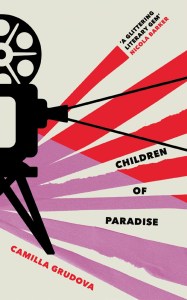 In 2017 I reviewed Grudova’s surreal story collection, The Doll’s Alphabet, describing its tales as “perverted fairytales or fragmentary nightmares.” Okay then, let’s continue in that perverted, nightmarish vein. Holly, new to the country/city, finds a room in a shared flat and a job as an usher at the Paradise Cinema, which shows a random assortment of art films and cult classics. The building is so low-rent it’s almost half derelict, and the staff take full advantage of the negligent management to get up to all sorts of sexual shenanigans, as well as drinking and drug-taking, while on duty. Holly and her co-workers are truly obsessed with the cinema, watching every showing at work but also hosting all-night movie marathons in their apartments. “The outside world, all of its news, faded away, and the movies became my main mirror of the world,” she confesses. “They were a necessary evil, customers, so that we, the true devotees, could have access to the screen, our giant godlike monument.”
The title is simultaneously ironic and an homage to Les Enfants du Paradis (1945), and the chapters are named after particular films. A change of ownership forces the Paradise to become more mainstream – hello, Marvel flicks and hipster snacks – but a series of horrific accidents and deliberate acts makes it seem like a cursed place. Aping movie genres, perhaps, Children of Paradise starts off as an offbeat stoner comedy and by the end approaches horror to an extent I didn’t expect. The content becomes increasingly sordid, visceral, with no opportunity missed to mention bodily fluids and excretions. I’m not notably opposed to gross-out humour, but the whole thing felt quite distasteful as well as miserable. (Public library e-book) 
My general feeling about these first two books, and probably a few others from the longlist (Crooks, McKenzie, Paull, et al.), is that the judges are trying to showcase the breadth of women’s writing: ‘Hey, guys, women can write autofiction and horror and humour and patois and speculative fiction and everything in between!’ But I don’t think these more niche or genre fiction representatives will make it any further in the race, especially because each may have been championed by a different judge.
Where the judges will find common ground will be on the standard stuff that always gets shortlisted: fairly run-of-the-mill character- and issue-driven contemporary or historical fiction. That makes it sound like I’m being dismissive, but in fact I do generally like much of the fiction that gets shortlisted for the WP: it’s readable book club fodder. It’s just maybe not inventive in the way that certain longlist titles can be. On which note, er, see the below!
The Marriage Portrait by Maggie O’Farrell
What a relief it was to wholeheartedly enjoy this sumptuous work of historical fiction, after the disappointment that was Hamnet (though perhaps I’ll feel more kindly towards the latter when I reread it for Literary Wives in November).
 Lucrezia di Cosimo de’ Medici is a historical figure who died at age 16, having been married off from her father’s Tuscan palazzo as a teenager to Alfonso II d’Este, Duke of Ferrara. She was reported to have died of a “putrid fever” but the suspicion has persisted that her husband actually murdered her, a story perhaps best known via Robert Browning’s poem “My Last Duchess.”
The focus is on the final year of Lucrezia’s life, but in flashbacks we meet her as a rebellious girl with a talent for drawing and a fascination with animals. At first it appears that Alfonso esteems her for her spiritedness – he gives her a painting of a stone marten as a betrothal gift, after all, and has her depicted with paintbrush in hand – but as the gradual storyline meets up with the 1561 spotlight, it becomes clear that she is only valued for her ability to produce an heir. However spacious and opulent they are, it is impossible to forget that Lucrezia, as a noblewoman, is confined to the edifices owned by her father or her husband.
O’Farrell’s usual present-tense narration is engaging throughout, and the two long chapters either side of the midpoint, one concerning her wedding day and the other the preparation for her portrait, are particularly absorbing. I was convinced I knew how this story would end, yet the author pulls off a delicious surprise. This is ripe for the miniseries treatment, not least because it is so attentive to visuals: the architecture of the main buildings, the lavish clothing, the colours, and the eye for what makes a good painting. Scenes are even described in terms of a spatial arrangement appreciated from afar: how three figures form a triangle in the centre of a room; how two people on a balcony bisect the view from a window.
Despite the length, this was thoroughly engrossing and one I’d recommend to readers of Geraldine Brooks and Tracy Chevalier. (See also Laura’s review.) (Public library)
The other nominees I’ve read are:
Demon Copperhead by Barbara Kingsolver
Black Butterflies by Priscilla Morris
My ideal shortlist (a wish list based on my reading and what I still want to read):
Homesick by Jennifer Croft
Fire Rush by Jacqueline Crooks
Black Butterflies by Priscilla Morris
The Marriage Portrait by Maggie O’Farrell
I’m a Fan by Sheena Patel
Memphis by Tara M. Stringfellow
vs.
My predicted shortlist:
Trespasses by Louise Kennedy
Demon Copperhead by Barbara Kingsolver
Stone Blind by Natalie Haynes
The Marriage Portrait by Maggie O’Farrell
Memphis by Tara M. Stringfellow
Wandering Souls by Cecile Pin
An overall winner? Perhaps Trespasses by Louise Kennedy, or an unprecedented repeat win from Barbara Kingsolver or Maggie O’Farrell.
(See also Laura’s predictions post.)
What have you read from the longlist so far? Which of these books are calling to you?
 Bookish Beck = Rebecca Foster. American transplant to England. Freelance proofreader and book reviewer.
 Bookish Beck