My Best Backlist Reads of 2019
Like many book bloggers, I’m irresistibly drawn to the shiny new books released each year. However, I consistently find that many of my most memorable reads were published years or even decades ago.
These selections, in alphabetical order by author name, account for the rest of my 5-star ratings of the year, plus a handful of 4.5 and high 4 ones.
Fiction
 Faces in the Water by Janet Frame: The best inside picture of mental illness I’ve read. Istina Mavet, in and out of New Zealand mental hospitals between ages 20 and 28, undergoes regular shock treatments. Occasional use of unpunctuated, stream-of-consciousness prose is an effective way of conveying the protagonist’s terror. Simply stunning writing.
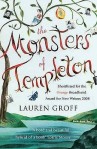 The Monsters of Templeton by Lauren Groff: Groff wrote this in homage to Cooperstown, New York, where she grew up. We hear from leading lights in the town’s history and Willie’s family tree through a convincing series of first-person narratives, letters and other documents. A charming way to celebrate where you come from with all its magic and mundanity.
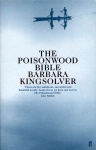 The Poisonwood Bible by Barbara Kingsolver: What an amazing novel about the ways that right and wrong, truth and pain get muddied together. Some characters are able to acknowledge their mistakes and move on, while others never can. Christianity and colonialism have a lot to answer for. A masterpiece.
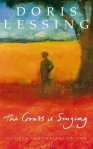 The Grass Is Singing by Doris Lessing: Begins with the words “MURDER MYSTERY”: a newspaper headline announcing that Mary, wife of Rhodesian farmer Dick Turner, has been found murdered by their houseboy. The breakdown of a marriage and the failure of a farm form a dual tragedy that Lessing explores in searing psychological detail.
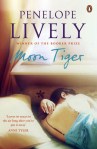 Moon Tiger by Penelope Lively: Seventy-six-year-old Claudia Hampton, on her deathbed in a nursing home, determines to write a history of the world as she’s known it. More impressive than the plot surprises is how Lively packs the whole sweep of a life into just 200 pages, all with such rich, wry commentary on how what we remember constructs our reality.
 The Friend by Sigrid Nunez: The narrator is a writer and academic who has stepped up to care for her late friend’s aging Great Dane, Apollo. It feels like Nunez has encapsulated everything she’s ever known or thought about, all in just over 200 pages, and alongside a heartwarming little plot. (Animal lovers need not fear.)
 There There by Tommy Orange: Orange’s dozen main characters are urban Native Americans converging on the annual Oakland Powwow. Their lives have been difficult, to say the least. The novel cycles through most of the characters multiple times, so gradually we work out the links between everyone. Hugely impressive.
 In the Driver’s Seat by Helen Simpson: The best story collection I read this year. Themes include motherhood, death versus new beginnings, and how to be optimistic in a world in turmoil. Gentle humor and magic tempers the sadness. I especially liked “The Green Room,” a Christmas Carol riff, and “Constitutional,” set on a woman’s one-hour lunch break walk.
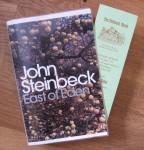 East of Eden by John Steinbeck: Look no further for the Great American Novel. Spanning from the Civil War to World War I and crossing the country from New England to California, this is just as wide-ranging in its subject matter, with an overarching theme of good and evil as it plays out in families and in individual souls.
 Cutting for Stone by Abraham Verghese: The saga of conjoined twins born of a union between an Indian nun and an English surgeon in 1954. Ethiopia’s postcolonial history is a colorful background. I thrilled to the accounts of medical procedures. I can’t get enough of sprawling Dickensian stories full of coincidences, minor characters, and humor and tragedy.
 Extinctions by Josephine Wilson: The curmudgeonly antihero is widower Frederick Lothian, at age 69 a reluctant resident of St Sylvan’s Estate retirement village. It’s the middle of a blistering Australian summer and he has plenty of time to drift back over his life. He’s a retired engineering expert, but he’s been much less successful in his personal life.
Poetry
 Windfall by Miriam Darlington: I’d had no idea that Darlington had written poetry before she turned to nature writing. The verse is rooted in the everyday. Multiple poems link food and erotic pleasure; others make nature the source of exaltation. Lots of allusions and delicious alliteration. Pick this up if you’re still mourning Mary Oliver.
 Girls Are Coming Out of the Woods by Tishani Doshi: The third collection by the Welsh–Gujarati poet and dancer is vibrant and boldly feminist. The tone is simultaneously playful and visionary, toying with readers’ expectations. Several of the most arresting poems respond to the #MeToo movement. She also excels at crafting breath-taking few-word phrases.
 Where the Road Runs Out by Gaia Holmes: A major thread of the book is caring for her father at home and in the hospital as he was dying on the Orkney Islands – a time of both wonder and horror. Other themes include pre-smartphone life and a marriage falling apart. There are no rhymes, just alliteration and plays on words, with a lot of seaside imagery.
 Autumn Journal by Louis MacNeice: MacNeice wrote this long verse narrative between August 1938 and the turn of the following year. Everyday life for the common worker muffles political rumblings that suggest all is not right in the world. He reflects on his disconnection from Ireland; on fear, apathy and the longing for purpose. Still utterly relevant.
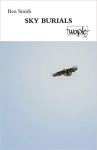 Sky Burials by Ben Smith: I discovered Smith through the 2018 New Networks for Nature conference. He was part of a panel discussion on the role poetry might play in environmental activism. This collection shares that environmentalist focus. Many of the poems are about birds. There’s a sense of history but also of the future.
Nonfiction
 Crow Planet: Essential Wisdom from the Urban Wilderness by Lyanda Lynn Haupt: During a bout of depression, Haupt decided to start paying more attention to the natural world right outside her suburban Seattle window. Crows were a natural place to start. A charming record of bird behavior and one woman’s reawakening, but also a bold statement of human responsibility to the environment.
 All Things Consoled: A Daughter’s Memoir by Elizabeth Hay: Hay’s parents, Gordon and Jean, stumbled into their early nineties in an Ottawa retirement home. There are many harsh moments in this memoir, but almost as many wry ones, with Hay picking just the right anecdotes to illustrate her parents’ behavior and the shifting family dynamic.
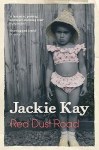 Red Dust Road by Jackie Kay: Jackie Kay was born out of the brief relationship between a Nigerian student and a Scottish nurse in Aberdeen in the early 1960s. This memoir of her search for her birth parents is a sensitive treatment of belonging and (racial) identity. Kay writes with warmth and a quiet wit. The nonlinear structure is like a family photo album.
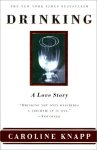 Drinking: A Love Story by Caroline Knapp: An excellent addiction memoir that stands out for its smooth and candid writing. For nearly 20 years, Knapp was a high-functioning alcoholic who maintained jobs in Boston-area journalism. The rehab part is often least exciting, but I appreciated how Knapp characterized it as the tortured end of a love affair.
 The Trauma Cleaner: One Woman’s Extraordinary Life in Death, Decay and Disaster by Sarah Krasnostein: I guarantee you’ve never read a biography quite like this one. It’s part journalistic exposé and part “love letter”; it’s part true crime and part ordinary life story. It considers gender, mental health, addiction, trauma and death. Simply a terrific read.
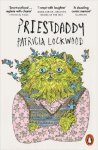 Priestdaddy by Patricia Lockwood: A memoir of growing up in a highly conservative religious setting, but not Evangelical Christianity as you or I have known it. Her father, a married Catholic priest, is an unforgettable character. This is a poet’s mind sparking at high voltage and taking an ironically innocent delight in dirty and iconoclastic talk.
 The Snow Leopard by Peter Matthiessen: For two months in 1973, Matthiessen joined a zoologist on a journey from the Nepalese Himalayas to the Tibetan Plateau in hopes of spotting the elusive snow leopard. Recently widowed, Matthiessen put his Buddhist training to work as he pondered impermanence and acceptance. The writing is remarkable.

This Sunrise of Wonder: Letters for the Journey by Michael Mayne: Mayne’s thesis is that experiencing wonder is what makes us human. He believes poets, musicians and painters, in particular, reawaken us to awe by encouraging us to pay close attention. Especially with the frequent quotations and epigraphs, this is like a rich compendium of wisdom from the ages.
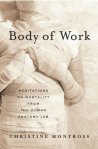 Body of Work: Meditations on Mortality from the Human Anatomy Lab by Christine Montross: When she was training to become a doctor, Montross was assigned an older female cadaver, Eve, who taught her everything she knows about the human body. Montross is also a poet, as evident in this lyrical, compassionate exploration of working with the dead.
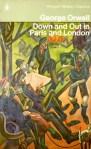 Down and Out in Paris and London by George Orwell: An excellent first-hand account of the working and living conditions of the poor in two world cities. Orwell works as a dishwasher and waiter in Paris hotel restaurants for up to 80 hours a week. The matter-of-fact words about poverty and hunger are incisive, while the pen portraits are glistening.
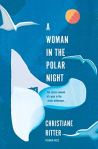 A Woman in the Polar Night by Christiane Ritter: In 1934, Ritter, an Austrian painter, joined her husband Hermann for a year in Spitsbergen. I was fascinated by the details of Ritter’s daily tasks, but also by how her perspective on the landscape changed. No longer a bleak wilderness, it became a tableau of grandeur. A travel classic worth rediscovering.
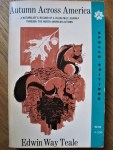 Autumn Across America by Edwin Way Teale: In the late 1940s Teale and his wife set out on a 20,000-mile road trip from Cape Cod on the Atlantic coast to Point Reyes on the Pacific to track the autumn. Teale was an early conservationist. His descriptions of nature are gorgeous, and the scientific explanations are at just the right level for the average reader.
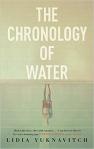 The Chronology of Water by Lidia Yuknavitch: This blew me away. Reading this nonlinear memoir of trauma and addiction, you’re amazed the author is still alive, let alone a thriving writer. The writing is truly dazzling, veering between lyrical stream-of-consciousness and in-your-face informality. The watery metaphors are only part of what make it unforgettable.

(Books not pictured were read from the library or on Kindle.)
And if I really had to limit myself to just two favorites – my very best fiction and nonfiction reads of the year – they would be Moon Tiger by Penelope Lively and Priestdaddy by Patricia Lockwood.
What were your best backlist reads this year?
Best of 2019: Nonfiction
For me, 2019 has been a more memorable year for nonfiction than for fiction. Like I did last year, I’ve happened to choose 12 favorite nonfiction books – though after some thematic grouping this has ended up as a top 10 list. Bodies, archaeology, and the environmental crisis are recurring topics, reflecting my own interests but also, I think, something of the zeitgeist.
Let the countdown begin!
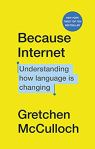 Because Internet: Understanding how language is changing by Gretchen McCulloch: Surprisingly fascinating stuff, even for a late adopter of technology. The Internet popularized informal writing and quickly incorporates changes in slang and cultural references. The book addresses things you may never have considered, like how we convey tone of voice through what we type and how emoji function as the gestures of the written word. Bursting with geeky enthusiasm.
-
 Surfacing by Kathleen Jamie: A fusion of autobiography with nature and travel writing – two genres that are too often dominated by men. Jamie has a particular interest in birds, islands, archaeology and the oddities of the human body, all subjects that intrigue me. There is beautiful nature writing to be found in this volume, as you might expect, but also relatable words on the human condition.
-
 Mother Ship by Francesca Segal: A visceral diary of the first eight weeks in the lives of the author’s daughters, who were born by Caesarean section at 29 weeks in October 2015 and spent the next two months in the NICU. Segal describes with tender precision the feeling of being torn between writing and motherhood, and crafts twinkly pen portraits of others she encountered in the NICU, including the staff but especially her fellow preemie mums.
-
 Surrender: Mid-Life in the American West by Joanna Pocock: Prompted by two years spent in Missoula, Montana and the disorientation felt upon a return to London, this memoir-in-essays varies in scale from the big skies of the American West to the smallness of one human life and the experience of loss and change. This is an elegantly introspective work that should engage anyone interested in women’s life writing and the environmental crisis.
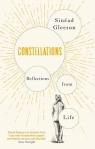
- (A tie) Constellations by Sinéad Gleeson / The Undying by Anne Boyer / Notes Made while Falling by Jenn Ashworth: Trenchant autobiographical essays about female pain. All three feel timely and inventive in how they bring together disparate topics to explore the possibilities and limitations of women’s bodies. A huge theme in life writing in the last couple of years and a great step toward trauma and chronic pain being taken seriously. (See also Notes to Self by Emilie Pine and the forthcoming Pain Studies by Lisa Olstein.)


-
 Time Song: Searching for Doggerland by Julia Blackburn: Deep time is another key topic this year. Blackburn follows her curiosity wherever it leads as she does research into millions of years of history, including the much shorter story of human occupation. The writing is splendid, and the dashes of autobiographical information are just right, making her timely/timeless story personal. This would have been my Wainwright Prize winner.
-
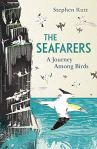 The Seafarers: A Journey among Birds by Stephen Rutt: The young naturalist travelled the length and breadth of the British Isles – from Skomer to Shetland – courting encounters with seabirds. Discussion of the environmental threats that hit these species hardest, such as plastic pollution, makes for a timely tie-in to wider issues. The prose is elegantly evocative, and especially enjoyable because I’ve been to a lot of the island locations.
-
 Once More We Saw Stars by Jayson Greene: In 2015 the author’s two-year-old daughter, Greta, was fatally struck in the head by a brick that crumbled off an eighth-story Manhattan windowsill. Music journalist Greene explores all the ramifications of grief. I’ve read many a bereavement memoir and can’t remember a more searing account of the emotions and thoughts experienced moment to moment. The whole book has an aw(e)ful clarity to it.
-
 The Body: A Guide for Occupants by Bill Bryson: Bryson is back on form indulging his layman’s curiosity. Without ever being superficial or patronizing, he gives a comprehensive introduction to every organ and body system. He delights in our physical oddities, and his sense of wonder is contagious. Shelve this next to Being Mortal by Atul Gawande in a collection of books everyone should read – even if you don’t normally choose nonfiction.
-
 Irreplaceable: The Fight to Save Our Wild Places by Julian Hoffman: Species and habitat loss are hard to comprehend even when we know the facts. This exquisitely written book is about taking stock, taking responsibility, and going beyond the numbers to tell the stories of front-line conservation work. Irreplaceable is an elegy of sorts, but, more importantly, it’s a call to arms. It places environmentalism in the hands of laypeople and offers hope that in working together in the spirit of defiance we can achieve great things. So, if you read one 2019 release, make it this one.
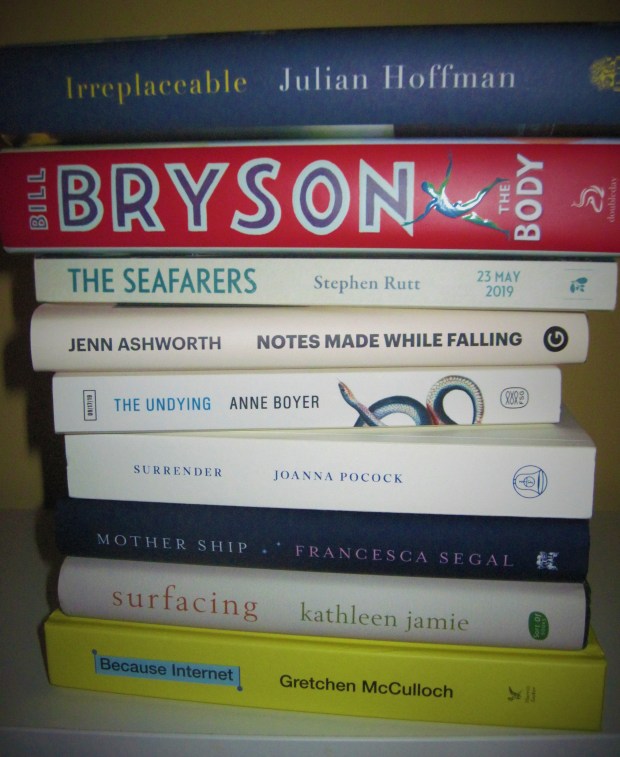
(Books not pictured were read from the library or on Kindle.)
What were some of your top nonfiction reads of the year?
Upcoming posts:
28th: Runners-up
29th: Other superlatives and some statistics
30th: Best backlist reads
31st: The final figures on my 2019 reading
Best of 2019: Fiction and Poetry
I’ve managed to whittle my favorite releases of 2019 down to 20 in total: 12 nonfiction (that’s for tomorrow), 5 fiction and 3 poetry. It felt like a particular achievement to limit myself to five top novels, though plenty more turn up on my runners-up list, due Saturday.
Let the countdown begin!
Fiction
-
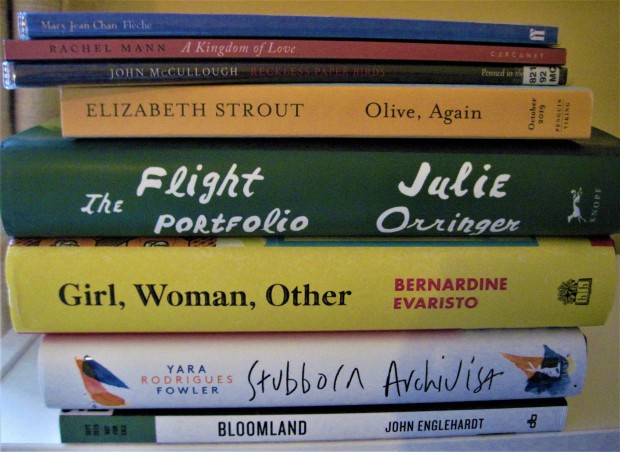
 Bloomland by John Englehardt: Subtle and finely crafted literary fiction about a mass shooting at a fictional Arkansas university. The second-person narration draws the reader into the action, inviting ‘you’ to extend sympathy to three very different characters: Rose, a student who becomes romantically involved with one of the injured; Eddie, a professor whose wife dies in the massacre; and Eli, the shooter. Englehardt writes a gorgeous sentence, too.
-
 Stubborn Archivist by Yara Rodrigues Fowler: Autofiction in fragments, like a pure stream of memory and experience. Navigating between two cultures and languages, being young and adrift, and sometimes seeing her mother in herself: there’s a lot to sympathize with in the Brazilian–English main character. What a hip, fresh approach to fiction. I’d hoped to see Fowler on the Women’s Prize longlist and winning the Young Writer of the Year Award.
-
 Girl, Woman, Other by Bernardine Evaristo: A terrific linked short story collection about 12 black women in twentieth-century and contemporary Britain balancing external and internal expectations and different interpretations of feminism to build lives of their own. It’s a warm, funny book, never strident in its aims yet unabashedly obvious about them. It’s timely and elegantly constructed – and, it goes without saying, a worthy Booker Prize winner.
-
 The Flight Portfolio by Julie Orringer: Every day the Emergency Rescue Committee in Marseille interviews 60 refugees and chooses 10 to recommend to the command center in New York City. Varian Fry and his staff arrange bribes, fake passports, and exit visas to get celebrated Jewish artists and writers out of the country via the Pyrenees or various sea routes. The story of an accidental hero torn between impossible choices is utterly compelling. This is richly detailed historical fiction at its best.
-
 Olive, Again by Elizabeth Strout: Crosby, Maine feels like a microcosm of modern society, with Olive as our Everywoman guide. She hasn’t lost her faculties or her spirit, but the approach of death lends added poignancy to her story. Strout is a master of psychological acuity and mixing hope with the darkness. Those who are wary of sequels need not fear: Olive, Again is even better than Olive Kitteridge. (I revisited the book for BookBrowse, whose subscribers likewise voted it the 2019 Best Fiction Award Winner.)
Poetry
-
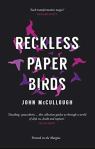 Reckless Paper Birds by John McCullough: From the Costa Awards shortlist. I was struck by the hard-hitting, never-obvious verbs, and the repeating imagery. Flashes of nature burst into a footloose life in Brighton. The poems are by turns randy, neurotic, playful and nostalgic. In “Flock of Paper Birds,” one of my favorites, the poet tries to reconcile the faith he grew up in with his unabashed sexuality.
-
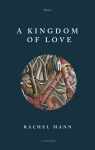 A Kingdom of Love by Rachel Mann: The Anglican priest’s poetry is full of snippets of scripture and liturgy (both English and Latin), and the cadence is often psalm-like. This is beautiful, incantatory free verse that sparkles with alliteration and allusions that those of a religious background will be sure to recognize. It’s sensual as well as headily intellectual. Doubt, prayer and love fuel many of my favorite lines.
-
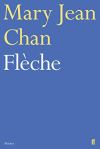 Flèche by Mary Jean Chan: Exquisite poems of love and longing, with the speaker’s loyalties always split between head and heart, flesh and spirit. Over it all presides the figure of a mother – not just Chan’s mother, who had difficulty accepting that her daughter was a lesbian, but also the relationship to the mother tongue (Chinese) and the mother country (Hong Kong). Fencing terms are used for structure. I was impressed by how clearly Chan sees how others perceive her, and by how generously she imagines herself into her mother’s experience. I’ve read 3.5 of the 4 nominees now and this is my pick to win the Costa Award.
What were some of your top fiction (or poetry) reads of the year?
Tomorrow I’ll be naming my favorite nonfiction of 2019.
Nonfiction Recommendations from Carolyn Oliver
I ‘met’ poet Carolyn Oliver through her much-missed blog, Rosemary & Reading Glasses. (She’s on Twitter as @CarolynROliver and Instagram as @carolynroliver.) Back in 2017 I asked for her top fiction picks; this year she’s contributed another guest blog listing the best nonfiction she’s read this year. It’s a fascinating selection of memoirs, essays, science and nature, and current events. I scurried to add the ones I hadn’t already heard of to my TBR. Which ones tempt you?
My favorite nonfiction reads from this year (though many are backlist):
 The Butchering Art, Lindsey Fitzharris: Fascinating medical history of Lister’s antiseptic breakthrough.
 Braiding Sweetgrass, Robin Wall Kimmerer: Reflective ecology from the perspective of a Native botanist. Probably my favorite essay collection of the decade.
 The Book of Delights, Ross Gay: Just as the title says. Mini-essays on myriad topics. When you’ve finished, pick up his Catalog of Unabashed Gratitude (poems).
 Atlas of Poetic Botany, Francis Halle: Bite-sized excursions into the worlds of unusual flora, with drawings. Meant for adults, I think, but a huge hit with my eight-year-old.
 Stamped from the Beginning: The Definitive History of Racist Ideas in America, Ibram X. Kendi: Just as the title says. Incisive, eye-opening, necessary.
 The Art Detective, Philip Mould: A romp through the art world with an enthusiastic, knowledgeable guide (Mould is the co-host of the BBC’s Fake or Fortune).
 How We Fight for Our Lives, Saeed Jones: The bildungsroman America needs. Beautiful writing.
 In the Dream House, Carmen Maria Machado: The most formally inventive memoir I’ve ever read. Brilliant and necessary.
 Coventry, Rachel Cusk: I was entranced by Cusk’s voice, even when I didn’t share her conclusions; reading this collection (with the exception of the book reviews added at the end), I felt I was witnessing the writer’s mind in the act of thinking.
My 10 Favorite Books from the Past Decade
I make no claims to objectivity here. These are simply 10 books that stand out to me from the past decade. I narrowed the list down from about 25 titles, trying not to agonize over it for too long. I’m pleased that it happens to be half female, with two POC and one work in translation. (Could be more diverse, but not too bad.)
You can see the seeds of my interest in memoirs and medical books, and the variety of fiction I love, from absurdist comedy (Auslander) to Greek-level tragedy (Vann).
In alphabetical order by author surname:
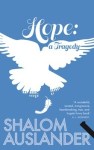


Hope: A Tragedy by Shalom Auslander (2012)
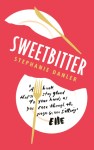
Sweetbitter by Stephanie Danler (2016)
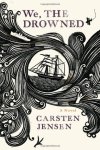
We, the Drowned by Carsten Jensen (English translation, 2010)
Priestdaddy by Patricia Lockwood (2017)
H Is for Hawk by Helen Macdonald (2014)
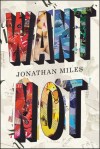
Want Not by Jonathan Miles (2013)
The Emperor of All Maladies: A Biography of Cancer by Siddhartha Mukherjee (2010)
A Tale for the Time Being by Ruth Ozeki (2013)
The Immortal Life of Henrietta Lacks by Rebecca Skloot (2010)
Caribou Island by David Vann (2010)


These selections skew early in the decade; 2010‒13 happened to be particularly memorable reading years for me. All of these are books I would like to reread, sooner rather than later.
(Five of these are repeated from the list of favorite books I drew up for my 35th birthday.)
Do we overlap on any favorites?
Which books of the 2010s were standouts for you?
My Most Anticipated Releases of the Second Half of 2019
Although over 90 books from the second half of the year are already on my radar, I’ve managed to narrow it down to the 15 July to November releases that I’m most excited about. I have access to a few of these already, and most of the rest I will try requesting as soon as I’m back from Milan. (These are given in release date order within thematic sections; the quoted descriptions are from the publisher blurbs on Goodreads.)
[By the way, here’s how I did with my most anticipated releases of the first half of the year:
- 16 out of 30 read; of those 9 were somewhat disappointing (i.e., 3 stars or below) – This is such a poor showing! Is it a matter of my expectations being too high?
- 10 I still haven’t managed to find
- 1 print review copy arrived recently
- 1 I have on my Kindle to read
- 1 I skimmed
- 1 I lost interest in]
Fiction
 The Lager Queen of Minnesota by J. Ryan Stradal [July 23, Pamela Dorman Books] Stradal’s Kitchens of the Great Midwest (2015) is one of my recent favorites. This one has a foodie theme again, and sounds a lot like Louise Miller’s latest – two sisters: a baker of pies and a founder of a small brewery. “Here we meet a cast of lovable, funny, quintessentially American characters eager to make their mark in a world that’s often stacked against them.”
 Hollow Kingdom by Kira Jane Buxton [August 6, Grand Central Publishing / Headline Review] As soon as I heard that this was narrated by a crow, I knew I was going to have to read it. (And the Seattle setting also ties in with Lyanda Lynn Haupt’s book.) “Humanity’s extinction has seemingly arrived, and the only one determined to save it is a foul-mouthed crow whose knowledge of the world around him comes from his TV-watching education.”
 Inland by Téa Obreht [August 13, Random House / Weidenfeld & Nicolson] However has it been eight years since her terrific debut novel?! “In the lawless, drought-ridden lands of the Arizona Territory in 1893, two extraordinary lives collide. … [L]yrical, and sweeping in scope, Inland subverts and reimagines the myths of the American West.” The synopsis reminds me of Eowyn Ivey’s latest.
 A Door in the Earth by Amy Waldman [August 27, Little, Brown and Company] I loved The Submission, Waldman’s 2011 novel about a controversial (imagined) 9/11 memorial. “Parveen Shamsa, a college senior in search of a calling, feels pulled between her charismatic and mercurial anthropology professor and the comfortable but predictable Afghan-American community in her Northern California hometown [and] travels to a remote village in the land of her birth to join the work of his charitable foundation.” (NetGalley download)
Bloomland by John Englehardt [September 10, Dzanc Books] “Bloomland opens during finals week at a fictional southern university, when a student walks into the library with his roommate’s semi-automatic rifle and opens fire. In this richly textured debut, Englehardt explores how the origin and aftermath of the shooting impacts the lives of three characters.” (print review copy from publisher)
 The Dutch House by Ann Patchett [September 25, Harper / Bloomsbury UK] I’m more a fan of Patchett’s nonfiction, but will keep reading her novels thanks to Commonwealth. “At the end of the Second World War, Cyril Conroy combines luck and a single canny investment to begin an enormous [Philadelphia] real estate empire … Set over … five decades, The Dutch House is a dark fairy tale about two smart people who cannot overcome their past.”
Medical themes
 Will My Cat Eat My Eyeballs?: Big Questions from Tiny Mortals about Death by Caitlin Doughty [September 10, W.W. Norton / September 19, Weidenfeld & Nicolson] I’ve read Doughty’s previous books about our modern attitude towards mortality and death customs around the world. She’s wonderfully funny and iconoclastic. Plus, how can you resist this title?! Although it sounds like it’s geared towards children, I’ll still read the book. “Doughty blends her mortician’s knowledge of the body and the intriguing history behind common misconceptions … to offer factual, hilarious, and candid answers to thirty-five … questions.”
 The Undying: Pain, Vulnerability, Mortality, Medicine, Art, Time, Dreams, Data, Exhaustion, Cancer, and Care by Anne Boyer [September 17, Farrar, Straus and Giroux] “A week after her forty-first birthday, the acclaimed poet Anne Boyer was diagnosed with highly aggressive triple-negative breast cancer. … A genre-bending memoir in the tradition of The Argonauts, The Undying will … show you contemporary America as a thing both desperately ill and occasionally, perversely glorious.” (print review copy from publisher)

From the author’s Twitter page.
Breaking and Mending: A doctor’s story of burnout and recovery by Joanna Cannon [September 26, Wellcome Collection] I haven’t gotten on with Cannon’s fiction, but a memoir should hit the spot. “A frank account of mental health from both sides of the doctor-patient divide, from the bestselling author of The Trouble with Goats and Sheep and Three Things About Elsie, based on her own experience as a doctor working on a psychiatric ward.”
 The Body: A Guide for Occupants by Bill Bryson [October 3, Doubleday / Transworld] His last few books have been somewhat underwhelming, but I’d read Bryson on any topic. He’s earned a reputation for making history, science and medicine understandable to laymen. “Full of extraordinary facts and astonishing stories, The Body: A Guide for Occupants is a brilliant, often very funny attempt to understand the miracle of our physical and neurological makeup.”
 The Depositions: New and Selected Essays on Being and Ceasing to Be by Thomas Lynch [November 26, W.W. Norton] Lynch is such an underrated writer. A Michigan undertaker, he crafts essays and short stories about small-town life, the Irish-American experience and working with the dead. I discovered him through Greenbelt Festival some years back and have read three of his books. Some of what I’ve already read will likely be repeated here, but will be worth a second look anyway.
Other Nonfiction
 Confessions of a Bookseller by Shaun Bythell [August 29, Profile Books] The Diary of a Bookseller was a treat in 2017. I’ve read the first two-thirds of this already while in Milan, and I wish I was in Wigtown instead! This sequel picks up in 2015 and is very much more of the same – the daily routines of buying and selling books and being out and about in a small town – so it’s up to you whether that sounds boring or comforting. I’m finding it strangely addictive. (NetGalley download)
 We Are the Weather: Saving the Planet Begins at Breakfast by Jonathan Safran Foer [September 17, Farrar, Straus and Giroux / October 10, Hamish Hamilton] Foer’s Eating Animals (2009) was a hard-hitting argument against eating meat. In this follow-up he posits that meat-eating is the single greatest contributor to climate change. “With his distinctive wit, insight and humanity, Jonathan Safran Foer presents this essential debate as no one else could, bringing it to vivid and urgent life, and offering us all a much-needed way out.”
 Surfacing by Kathleen Jamie [September 19, Sort of Books] Jamie is a Scottish poet who writes exquisite essays about the natural world. I’ve read her two previous essay collections, Findings and Sightlines, as well as a couple of volumes of her poetry. “From the thawing tundra linking a Yup’ik village in Alaska to its hunter-gatherer past to the shifting sand dunes revealing the impressively preserved homes of neolithic farmers in Scotland, Jamie explores how the changing natural world can alter our sense of time.”
 Unfollow by Megan Phelps-Roper [October 8, Farrar, Straus and Giroux / riverrun] Ties in with my special interest in women’s religious memoirs. “In November 2012, at the age of twenty-six, [Phelps-Roper] left [Westboro Baptist Church], her family, and her life behind. Unfollow is a story about the rarest thing of all: a person changing their mind. It is a fascinating insight into a closed world of extreme belief, a biography of a complex family, and a hope-inspiring memoir of a young woman finding the courage to find compassion.”
Which of these do you want to read, too?
What other upcoming 2019 titles are you looking forward to?
Upcoming Reading Plans: Milan Trip and Summer Books
“Centre of fashion, business and finance,” “muggy and mosquito-ridden in summer” – from the guidebook descriptions it could hardly sound less like our kind of place, and yet Milan is where we’re off to tomorrow. While it wouldn’t be our first-choice destination, my husband is attending a landscape ecology conference there and presenting a paper; I’m going along for the week to have a holiday. It’s Italy. Why not?! I doubt the northern plain will be as much to our taste as Tuscany, which we explored on a wonderfully memorable trip in April 2014 (on which I first drank coffee), but there will still be history and culture around every corner, and we plan on eating very well and getting out of the city to see some of the Lakes region, too.
We’re traveling the slow way: a train to London; the Eurostar to Paris, where we’ll stay for one night; and a seven-hour train ride to Milan the following day. If the weather remains as hot as it has been in Continental Europe (e.g. 40°C / 105°F in Paris this week – ugh!), I’m not sure I’ll be up for a lot of solo sightseeing. I’ll put in a much-reduced work load for the week, but for much of the rest of the time when my husband is at the conference I may just lounge around our Airbnb, with a stack of print books, in front of the USB-powered fan I’ve ordered.
So of course I’ve been having great fun thinking about what reading material I might pack. I’ve assembled a main stack, and a subsidiary stack, of books that seem appropriate for one or more reasons.
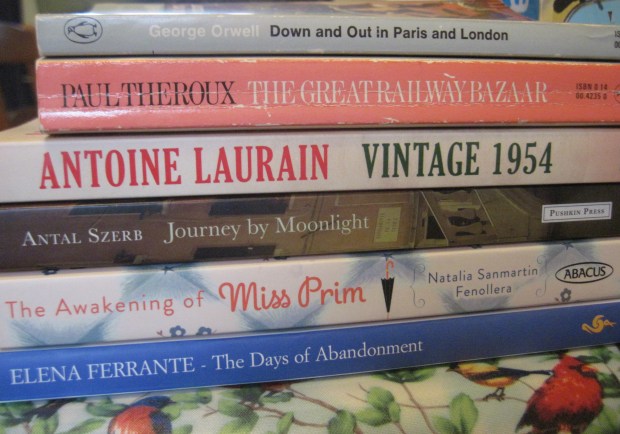
Down and Out in Paris and London, George Orwell – To read on the Eurostar between London and Paris. Orwell’s first book and my first try with his nonfiction: an account of the living conditions of the poor in two world cities.
Bonus goal it fulfills: Classic of the month
Vintage 1954, Antoine Laurain – For a Nudge review; to read en route to and in Paris. Drinking a 1954 Beaujolais transports a Parisian and his neighbors – including an Airbnb guest – back to the 1950s. Sounds like good fun.
Bonus goal it fulfills: Lit in translation
The Great Railway Bazaar, Paul Theroux – To read on the long train ride to Milan. Theroux travels from London to Tokyo on trains, then returns via the Trans-Siberian Express. I’ve always meant to try his work.
Bonus goal it fulfills: Travel classics
Journey by Moonlight, Antal Szerb – A Hungarian novel set on an Italian honeymoon. Try to resist these first lines: “On the train everything seemed fine. The trouble began in Venice, with the back-alleys.”
Bonus goals it fulfills: Lit in translation; 20 Books of Summer substitute (horse on the cover)
The Awakening of Miss Prim, Natalia Sanmarin Fenollera – Promises to be a cozy, fluffy novel about what happens when librarian Prudencia Prim arrives in a small village. I had the feeling it was set in Italy, but maybe it’s actually Spain? I’ll find out.
Bonus goal it fulfills: Lit in translation
The Days of Abandonment, Elena Ferrante – I’ve tried two Ferrante novels and not been too impressed, yet still I keep trying. This one’s set during a heat wave. Maybe I’ll get on with it better than I did with My Brilliant Friend or The Lost Daughter?
Bonus goal it fulfills: Lit in translation
The extra stack:
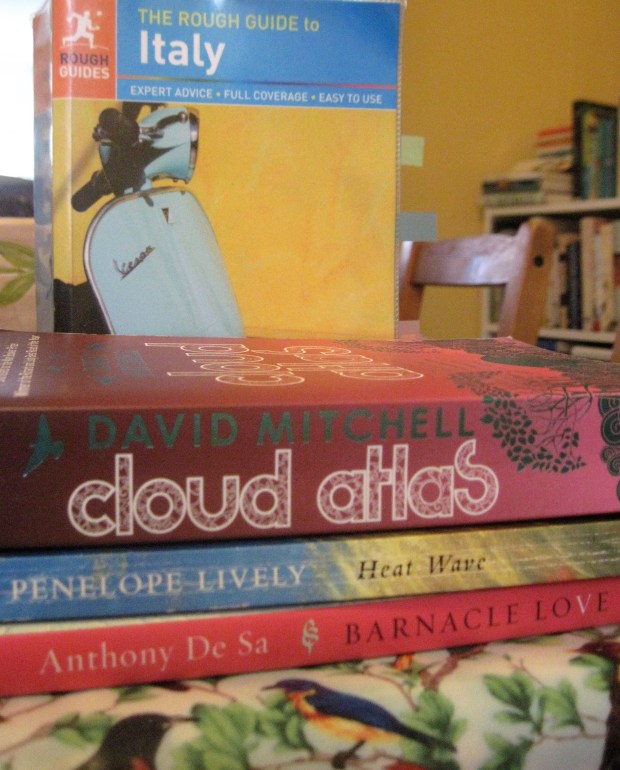
Heat Wave, Penelope Lively – The title says it all.
Bonus goal it fulfills: Reading with the seasons
Barnacle Love, Anthony De Sa – An extra animal book for 20 Books of Summer.
Cloud Atlas, David Mitchell – A novel I’ve meant to read for years. I’ve earmarked it for our super-long day of travel back to the UK.
Bonus goal it fulfills: Doorstopper of the Month
Considering getting from the library:
The Last Supper, Rachel Cusk – I’ve only made it through one of the three Cusk books I’ve attempted, but perhaps a travel memoir is a more surefire selection?
On my Kindle:
 The Fourth Shore, Virginia Baily – There’s an Italian flavor to this WWII novel, as there was to Baily’s previous one, Early One Morning. However, I’ve heard that this is mostly set in Tripoli, so I won’t make it a priority.
From Scratch, Tembi Locke – An actress’s memoir of falling in love with an Italian chef and her trips to his family home in Sicily with their adopted daughter. (Foodie and bereavement themes!)
I’ll read the first few pages of lots of these to make sure they ‘take’ and will try to pack a sensible number. (Which probably means all but one or two!) We’ll be packing light in general, since there’s only so many clothes one can wear in such heat, so I don’t mind carrying a backpack full of books – I’m used to it from weekly treks to the library and flights to America, and I know that I don’t find reading on Kindle as satisfying, though it certainly is convenient for when you’re on the go.
If you’d like to put in a good word for any of the above options, or want to dissuade me from a book I might not find worthwhile, let me know.
Meanwhile, I’ve been slow out of the gate with my 20 Books of Summer, but I finally have a first set of mini-reviews coming up tomorrow.
Other summer-themed books that I have on hand or will get from the library soon include One Summer: America, 1927 by Bill Bryson, The Go-Between by L.P. Hartley, The Sun Does Shine by Anthony Ray Hinton, The Summer Book by Tove Jansson, and Sunburn by Laura Lippman.
How’s your summer reading going?
Will you do any reading ‘on location’ this year?
The Best Books from the First Half of 2019
My top 10 releases of 2019 thus far, in no particular order, are:

Not pictured: one more book read from the library; the Kindle represents two NetGalley reads.
General / Historical Fiction
Stubborn Archivist by Yara Rodrigues Fowler: What a hip, fresh approach to fiction. Broadly speaking, this is autofiction: like the author, the protagonist was born in London to a Brazilian mother and an English father. The book opens with fragmentary, titled pieces that look almost like poems in stanzas. The text feel artless, like a pure stream of memory and experience. Navigating two cultures (and languages), being young and adrift, and sometimes seeing her mother in herself: there’s a lot to sympathize with in the main character.
 The Flight Portfolio by Julie Orringer: Every day the Emergency Rescue Committee in Marseille interviews 60 refugees and chooses 10 to recommend to the command center in New York City. Varian and his staff arrange bribes, fake passports, and exit visas to get celebrated Jewish artists and writers out of the country via the Pyrenees or various sea routes. The story of an accidental hero torn between impossible choices is utterly compelling. This is richly detailed historical fiction at its best. My top book of 2019 so far.
 Daisy Jones and The Six by Taylor Jenkins Reid: This story of the rise and fall of a Fleetwood Mac-esque band is full of verve and heart, and it’s so clever how Reid delivers it all as an oral history of pieced-together interview fragments, creating authentic voices and requiring almost no footnotes or authorial interventions. It’s pure California sex, drugs, and rock ’n roll, but there’s nothing clichéd about it. Instead, you get timeless rivalry, resentment, and unrequited or forbidden love; the clash of personalities and the fleeting nature of fame.
Victorian Pastiche
 Things in Jars by Jess Kidd: In the autumn of 1863 Bridie Devine, female detective extraordinaire, is tasked with finding the six-year-old daughter of a baronet. Kidd paints a convincingly stark picture of Dickensian London, focusing on an underworld of criminals and circus freaks. Surgery before and after anesthesia and mythology (mermaids and selkies) are intriguing subplots woven through. Kidd’s prose is spry and amusing, particularly in her compact descriptions of people but also in more expansive musings on the dirty, bustling city.
 The Doll Factory by Elizabeth Macneal: Iris Whittle dreams of escaping Mrs Salter’s Doll Emporium and becoming a real painter. Set in the early 1850s and focusing on the Great Exhibition and Pre-Raphaelite Brotherhood, this also reveals the everyday world of poor Londoners. It’s a sumptuous and believable fictional world, with touches of gritty realism. If some characters seem to fit neatly into stereotypes (fallen woman, rake, etc.), be assured that Macneal is interested in nuances. A terrific debut full of panache and promise.
Graphic Novel
 The Lady Doctor by Ian Williams: Dr. Lois Pritchard works at a medical practice in small-town Wales and puts in two days a week treating embarrassing ailments at the local hospital’s genitourinary medicine clinic. The tone is wonderfully balanced: there are plenty of hilarious, somewhat raunchy scenes, but also a lot of heartfelt moments as Lois learns that a doctor is never completely off duty and you have no idea what medical or personal challenge will crop up next. The drawing style reminds me of Alison Bechdel’s.
Medical Nonfiction
 Constellations by Sinéad Gleeson: Perfect for fans of I Am, I Am, I Am by Maggie O’Farrell, this is a set of trenchant autobiographical essays about being in a female body, especially one wracked by pain. Gleeson ranges from the seemingly trivial to life-and-death matters as she writes about hairstyles, blood types, pregnancy, the abortion debate in Ireland and having a rare type of leukemia. The book feels timely and is inventive in how it brings together disparate topics to explore the possibilities and limitations of women’s bodies.
 Hard Pushed: A Midwife’s Story by Leah Hazard: An empathetic picture of patients’ plights and medical professionals’ burnout. Visceral details of sights, smells and feelings put you right there in the delivery room. Excerpts from a midwife’s official notes – in italics and full of shorthand and jargon – are a neat window into the science and reality of the work. This is a heartfelt read as well as a vivid and pacey one, and it’s alternately funny and sobering. If you like books that follow doctors and nurses down hospital hallways, you’ll love it.
Mother Ship by Francesca Segal: A visceral diary of the first eight weeks in the lives of her daughters, who were born by Caesarean section at 29 weeks in October 2015 and spent the next two months in the NICU. As well as portraying her own state of mind, Segal crafts twinkly pen portraits of the others she encountered in the NICU, including the staff but especially her fellow preemie mums. Female friendship is thus a subsidiary theme in this exploration of desperate love and helplessness.
Poetry
 Thousandfold by Nina Bogin: This is a lovely collection whose poems devote equal time to interactions with nature and encounters with friends and family. Birds – along with their eggs and feathers – are a frequent presence. Often a particular object will serve as a totem as the poet remembers the most important people in her life. Elsewhere Bogin greets a new granddaughter and gives thanks for the comforting presence of her cat. Gentle rhymes and half-rhymes lend a playful or incantatory nature. I recommend it to fans of Linda Pastan.
The three 4.5- or 5-star books that I read this year (and haven’t yet written about on here) that were not published in 2019 are:
Girls Are Coming Out of the Woods by Tishani Doshi [poetry]
Faces in the Water by Janet Frame
Priestdaddy: A Memoir by Patricia Lockwood
What are some of the best books you’ve read so far this year?
What 2019 releases do I need to catch up on right away?
My Most Anticipated 2019 Releases, Part I
The past two years I’ve done biannual roundups of the 30 or so new releases I’m most interested in reading in that half of the year. I’m a bit behind on this year’s preview, so in the interest of not missing my moment I’m giving it in pictorial format, and cheating a bit by not including in the 30 these books that I already own in print.

The 2019 (UK) releases I already own in print and will be looking forward to reading.
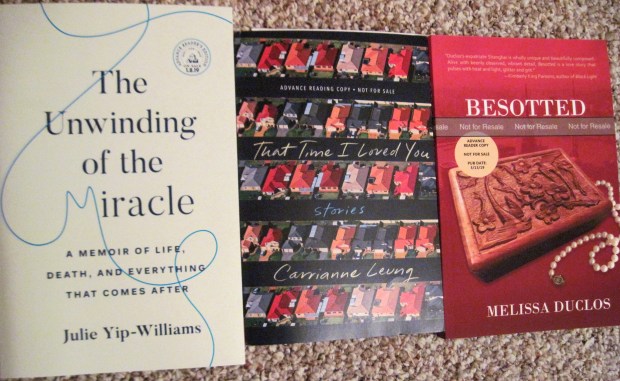
Plus a few ARCs I brought back from America. The Leung stories came out in Canada last year.
For a complete list of my 30 most anticipated titles, from which you can access full publication details by clicking on any cover image or title, see my dedicated Goodreads shelf.
Not pictured below but well worth mentioning are new novels from Elizabeth McCracken and Ian McEwan. THE book I’m most looking forward to, after so loving The Invisible Bridge over the summer, is Julie Orringer’s Flight Portfolio, another doorstopper that brings Holocaust history to life (coming from Knopf on May 7th).
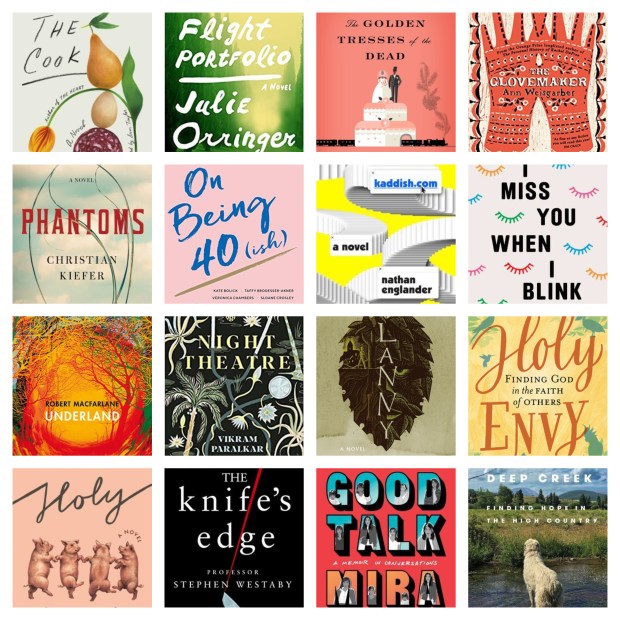
Some of my most anticipated titles.
Beyond these, I have another nearly 100 titles on my radar for the first half of 2019!

Plus some additional 2019 releases that are worth looking into simply for the terrific covers!
Other lists of enticing 2019 releases that might give you some ideas:
Book Riot (general) & Book Riot (mostly nonfiction, through February)
Guardian (UK, nonfiction and fiction)
Which 2019 books are you looking forward to? Do any of my choices interest you?
Best Backlist Reads of 2018
Like a lot of book bloggers, I’m irresistibly drawn to the shiny new books released each year. However, I’ve noticed recently that many of my most memorable reads were published years or even decades ago. In 2018 I even came across a handful of books that are for me among the very best representatives of their genre, whether that’s nature, travel, family memoir, historical fiction or science fiction. The below selections are in alphabetical order by author name, and account for all the rest of my 4.5- and 5-star ratings of the year (another 27!).

My best backlist reads of the year (most of the ones I own in print, anyway).
Fiction
 March by Geraldine Brooks (2005): The best Civil War novel I’ve read. The best slavery novel I’ve read. One of the best historical novels I’ve ever read, period. Brooks’s second novel uses Little Women as its jumping-off point but is very much its own story. The whole is a perfect mixture of what’s familiar from history and literature and what Brooks has imagined.
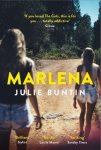 Marlena by Julie Buntin (2017): The northern Michigan setting pairs perfectly with the novel’s tone of foreboding: you have a sense of these troubled teens being isolated in their clearing in the woods, and from one frigid winter through a steamy summer and into the chill of the impending autumn, they have to figure out what in the world they are going to do with their terrifying freedom. It’s basically a flawless debut, one I can’t recommend too highly.
 Reading in the Dark by Seamus Deane (1996): Ireland’s internecine violence is the sinister backdrop to this family’s everyday sorrows, including the death of a child and the mother’s shaky mental health. The book captures all the magic, uncertainty and heartache of being a child, in crisp scenes I saw playing out in my mind.
 The Life and Loves of Lena Gaunt by Tracy Farr (2013): Lena Gaunt: early theremin player, grande dame of electronic music, and opium addict. I loved how Farr evokes the strangeness and energy of theremin music, and how sound waves find a metaphorical echo in the ocean’s waves – swimming is Lena’s other great passion.
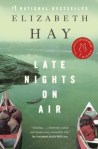 Late Nights on Air by Elizabeth Hay (2007): A tight-knit cast gathers around the local radio station in Yellowknife, a small city in Canada’s Northwest Territories: Harry and Gwen, refugees from Ontario starting new lives; Dido, an alluring Dutch newsreader; Ralph, the freelance book reviewer; menacing Eddie; and pious Eleanor. This is a marvellous story of quiet striving and dislocation; I saw bits of myself in each of the characters, and I loved the extreme setting, both mosquito-ridden summer and bitter winter.
 The Leavers by Lisa Ko (2017): An ambitious and satisfying novel set in New York and China, with major themes of illegal immigration, searching for a mother and a sense of belonging, and deciding what to take with you from your past. This was hand-picked by Barbara Kingsolver for the 2016 PEN/Bellwether Prize for Socially Engaged Fiction.
 The Invisible Bridge by Julie Orringer (2010): Hungarian Jew Andras Lévi travels from Budapest to Paris to study architecture, falls in love with an older woman who runs a ballet school, and – along with his parents, brothers, and friends – has to adjust to the increasingly strict constraints on Jews across Europe in 1937–45. It’s all too easy to burn out on World War II narratives these days, but this is among the very best I’ve read.
 The Sparrow by Mary Doria Russell (1996): For someone like me who struggles with sci-fi at the best of times, this is just right: the alien beings are just different enough from humans for Russell to make fascinating points about gender roles, commerce and art, but not so peculiar that you have trouble believing in their existence. All of the crew members are wonderful, distinctive characters, and the novel leaves you with so much to think about: unrequited love, destiny, faith, despair, and the meaning to be found in life.
 Salt Creek by Lucy Treloar (2015): Hester Finch is looking back from the 1870s – when she is a widowed teacher settled in England – to the eight ill-fated years her family spent at Salt Creek, a small (fictional) outpost in South Australia, in the 1850s–60s. This is one of the very best works of historical fiction I’ve read; it’s hard to believe it’s Treloar’s debut novel.
 Christmas Days: 12 Stories and 12 Feasts for 12 Days by Jeanette Winterson (2016): I treated myself to this new paperback edition with part of my birthday book token and it was a perfect read for the week leading up to Christmas. The stories are often fable-like, some spooky and some funny. Most have fantastical elements and meaningful rhetorical questions. Winterson takes the theology of Christmas seriously. A gorgeous book I’ll return to year after year.
Poetry
 Available Light by Marge Piercy (1988): The subjects are diverse: travels in Europe, menstruation, identifying as a Jew as well as a feminist, scattering her father’s ashes, the stresses of daily life, and being in love. Some of my favorites were about selectively adhering to the lessons her mother taught her, how difficult it is for a workaholic to be idle, and wrestling the deity for words.
Nonfiction
 Deep Country: Five Years in the Welsh Hills by Neil Ansell (2011): One of the most memorable nature/travel books I’ve ever read; a modern-day Walden. Ansell’s memoir is packed with beautiful lines as well as philosophical reflections on the nature of the self and the difference between isolation and loneliness.
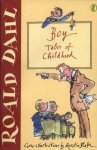 Boy by Roald Dahl (1984): Pranks and larks and holidays: these are all here; so is crushing homesickness and a bitter sense of injustice at being at the mercy of sadistic adults. Nearly 60 years later, Dahl could use memory and imagination to fully inhabit his childhood self and give a charming survey of the notable events of his life up to age 20.
 This Cold Heaven: Seven Seasons in Greenland by Gretel Ehrlich (2001): I thoroughly enjoyed my armchair trek across a frigid island nation in the company of Gretel Ehrlich, who traveled here repeatedly between 1995 and 2001 and intersperses her journeys with those of her historical model, Inuit–Danish explorer Knud Rasmussen, whose seven Arctic expeditions took in the west coast of Greenland and the far north of the North American continent. Every time she finds a fresh way to write about ice and sun glare and frigid temperatures.
 Ali: A Life by Jonathan Eig (2017): It’s a riveting account of outliving segregation and developing a personal style and world-beating confidence; it’s a sobering tale of facing consequences and having your own body fail you. I’m the furthest thing from a sports fan you could imagine, but I approached this as a book about a cultural icon and read it with a spirit of curiosity about how Eig would shape this life story and separate the facts from the legend. I loved it.
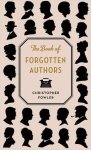 The Book of Forgotten Authors by Christopher Fowler (2017): A charming introduction to 99 more or less obscure writers. Each profile is a perfectly formed mini-biography with a survey of the author’s major work: in just two or three pages, Fowler is able to convey all a writer’s eccentricities and why their output is still worth remembering.
 To the Is-Land: An Autobiography by Janet Frame (1982): This is some of the best writing about childhood and memory that I’ve ever read, infused with music, magic and mystery. The prose alternates between dreamy and matter-of-fact as Frame describes growing up in New Zealand one of five children in the Depression and interwar years.
 Leaving Before the Rains Come by Alexandra Fuller (2015): This poignant sequel to Don’t Let’s Go to the Dogs Tonight is a portrait of Fuller’s two-decade marriage, from its hopeful beginnings to its acrimonious end. What I most appreciated about the book was Fuller’s sense of being displaced: she no longer feels African, but nor does she feel American.
 West With the Night by Beryl Markham (1942): Markham writes so vividly about the many adventures of her life in Africa: hunting lions, training race horses, and becoming one of the continent’s first freelance pilots, delivering mail and locating elephant herds. Whether she’s reflecting on the many faces of Africa or the peculiar solitude of night flights, the prose is just stellar.
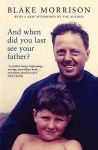 And When Did You Last See Your Father? by Blake Morrison (1993): An extraordinary memoir based around the author’s relationship with his father. Alternating chapters give glimpses into earlier family life and narrate Morrison’s father’s decline and death from cancer. This is simply marvelously written, not a bad line in the whole thing.
 The Seabird’s Cry: The Lives and Loves of Puffins, Gannets and Other Ocean Voyagers by Adam Nicolson (2017): This is an extraordinarily well-written and -researched book (a worthy Wainwright Prize winner) about the behavior, cultural importance, and current plight of the world’s seabirds. Each chapter takes up a different species and dives deep into everything from its anatomy to the legends surrounding it, simultaneously conveying the playful, intimate real lives of the birds and their complete otherness.
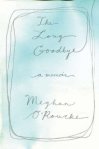 The Long Goodbye: A Memoir of Grief by Meghan O’Rourke (2011): I read a whole lot of bereavement memoirs; this has been one of the very best. O’Rourke tells her story with absolute clarity – a robust, plain-speaking style that matches her emotional transparency. The heart of the book is her mother’s death from colorectal cancer on Christmas Day 2008, but we also get a full picture of the family life that preceded it and the first couple of years of aftermath.
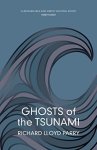 Ghosts of the Tsunami: Death and Life in Japan’s Disaster Zone by Richard Lloyd Parry (2017): Eighteen and a half thousand people died in the earthquake and tsunami that hit Japan in March 2011. It’s not really possible to get your head around a tragedy on that scale so, wisely, Parry focuses on a smaller story within the story: 74 died at Okawa primary school because the administration didn’t have a sufficient disaster plan in place. This is a stunning portrait of a resilient people, but also a universal story of the human spirit facing the worst.
 Lots of Candles, Plenty of Cake by Anna Quindlen (2012): A splendid memoir-in-essays that dwells on aging, parenting and female friendship. Some of its specific themes are marriage, solitude, the randomness of life, the process of growing into your own identity, and the special challenges her generation (roughly my mother’s) faced in seeking a work–life balance. Her words are witty and reassuring, and cut right to the heart of the matter in every case.
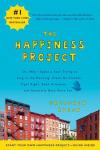 The Happiness Project: Or, Why I Spent a Year Trying to Sing in the Morning, Clean My Closets, Fight Right, Read Aristotle, and Generally Have More Fun by Gretchen Rubin (2009): Probably the best self-help book I’ve read; dense (in the best possible way) with philosophy, experience and advice. What I appreciated most is that her approach is not about undertaking extreme actions to try to achieve happiness, but about finding contentment in the life you already have by adding or tweaking small habits – especially useful for pessimists like me.
 In the Days of Rain: A daughter. A father. A cult by Rebecca Stott (2017): This was a perfect book for my interests, and just the kind of thing I would love to write someday. It’s a bereavement memoir that opens with Stott’s father succumbing to pancreatic cancer and eliciting her promise to help finish his languishing memoir; it’s a family memoir that tracks generations through England, Scotland and Australia; and it’s a story of faith and doubt, of the absolute certainty experienced inside the Exclusive Brethren (a Christian sect that numbers 45,000 worldwide) and how that cracked until there was no choice but to leave.
 Writers & Company by Eleanor Wachtel (1993): Erudite and fascinating author interviews from Wachtel’s weekly Canadian Broadcasting Corporation radio program. Whether I’d read anything by these authors (or even heard of them) or not, I found each Q&A chock-full of priceless nuggets of wisdom about creativity, mothers and daughters, drawing on autobiographical material, the writing process, and much more.
And if I really had to limit myself to just two books – my very best fiction and nonfiction reads of the year – they would be March by Geraldine Brooks and And When Did You Last See Your Father? by Blake Morrison.

 Bookish Beck = Rebecca Foster. American transplant to England. Freelance proofreader and book reviewer.
 Bookish Beck