Christmas and Snow Reading: George Mackay Brown & More
I’ve never had a Christmas Day without my immediate family or in-laws before, but when West Berkshire leapt into the Tier 4 (highest) COVID-19 risk category on Saturday it was clear that even our modest plans to spend 48 hours at my parents-in-law’s home by the coast would be dashed. How we’d looked forward to seeing other people and going somewhere else! Nothing dramatic; just a change of scene and an excuse to pack an overnight bag and a giant tote full of books. The bright side, if there is one, is that we can choose exactly how to spend the holidays, and my husband – a fantastic cook – will have total control over the feast.
To keep our spirits up, we’ve done more Christmas decorating than usual. Our lounge is dominated by the biggest tree we’ve had yet, there’s holly all over, and we strung colored fairy lights across one wall. After Saturday’s bad news, we brought forward our annual viewing of Elf. And of course, I have a stack of seasonally appropriate books at the ready.
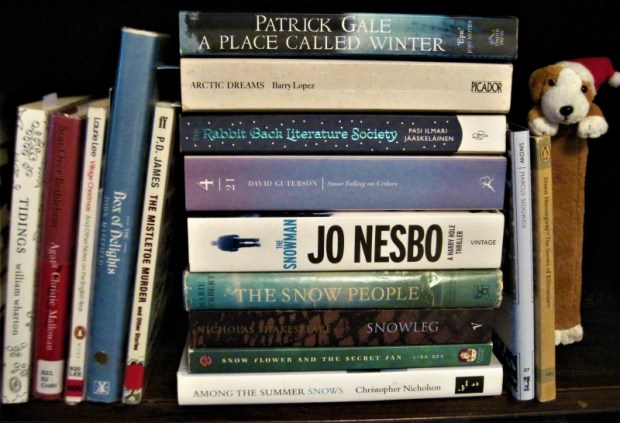
Here’s the first two I managed to read for review:
Christmas Stories by George Mackay Brown
 Many of these 30 short stories originally appeared in publications like the Scotsman, Tablet and Glasgow Herald between the 1940s and 1990s, with some also reprinted in previous Mackay Brown story volumes. This posthumous collection of seasonal tales by Orkney’s best-known writer runs the gamut from historical fiction to timeless fable, and travels from the Holy Land to Scotland’s islands. Often, Orkney is contrasted with Edinburgh, as in one of my favorites, “A Christmas Exile,” in which a boy is sent off to Granny’s house in Orkney one winter while his mother is in hospital and longs to make it home in time for Christmas.
Although the main characters are usually crofters, fishermen and lairds, they take on other roles in Nativity and Christmas Carol-like setups. For instance, a skipper, a miller, and a shepherd play the part of the Three Kings, while a greedy general merchant who won’t close his shop for Christmas Day is like Ebenezer Scrooge. Biblical and Dickensian figures merge in “An Epiphany Tale,” in which a deaf-blind-mute boy is visited by three strangers who give him back each of his senses, in turn, for one magical day. Characters get visions of the past or glimpses of how the other half live (“The Poor Man in His Castle”). Children are disabused of the idea of Santa Claus, but the unexplained still fuels a sense of wonder, as in Jeanette Winterson’s holiday stories. Even the poor have small gifts and pleasures to look forward to.
As editor William S. Peterson notes in his introduction, Calvinism had erased much of the joy from Christmas in Scotland, but in Mackay Brown’s lifetime he saw Yule traditions returning and was keen to emphasize that Christmas was not just about one day of celebration but was a whole season running from Advent through to Epiphany. The story “I Saw Three Ships…” remembers an oppressed past, though: set at the end of the Civil War, after King Charles I was beheaded, it is set at a time when the government declared “‘There will be no more Christmas. Christmas is abolished and forbid in the islands here, as it has been put down everywhere in this commonwealth. We will have no more of such ancient mummery.’ … Men reckoned that that was the longest coldest dreichest winter ever known in Orkney.” Those words might feel gloomily appropriate, but let’s celebrate all the more in defiance.
With thanks to Galileo Publishers for the free copy for review.
Fifty Words for Snow by Nancy Campbell
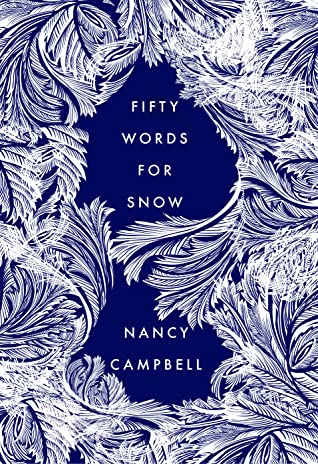 Words for snow exist in most of the world’s languages – even those spoken in countries where it rarely, if ever, snows. For instance, Thai has “hima” at the ready even though there were only once claims of a snow flurry in Thailand, in 1955. Campbell meanders through history, legend, and science in these one- to five-page essays. I was most taken by the pieces on German “kunstschnee” (the fake snow used on movie sets), Icelandic “hundslappadrifa” (snowflakes big as a dog’s paw, a phrase used as a track title on one of Jónsi’s albums – an excuse for discussing the amazing Sigur Rós), and Estonian “jäätee” (the terrifying ice road that runs between the mainland and the island of Hiiumaa – only when the ice is 22 cm thick, and with cars traveling 2 minutes apart and maintaining a speed of 25–40 km/hour).
The white and blue tendrils of the naked hardback’s cover creep over onto the endpapers, each essay is headed by a Wilson Bentley photograph of a snowflake, and the type is in a subtle dark blue ink rather than black. Too many of the essays are thin or dull, such that the contents don’t live up to the gorgeous physical object they fill. Still, I imagine you have a snow-loving relative who would appreciate a copy as a seasonal coffee table book.
With thanks to Elliott & Thompson for the free copy for review.
And a bonus:
“The Burglar’s Christmas” by Willa Cather (1896)
 This Renard Press pamphlet supporting the Three Peas charity (in aid of Europe’s refugees) was sent to me as a Christmas card alternative by Annabel/Shiny New Books. A young man wanders the slushy streets of Chicago one Christmas Eve. On this, his 24th birthday, he laments how low he has sunk that he has to rob the rich in order to get money to eat. But in this take on the Prodigal Son story, there is a second chance at forgiveness and a good life. I was reminded of the high society atmosphere of Edith Wharton’s work and the moral fables of O. Henry. The lovely little story has a William Morris design on the cover. I’ll keep it with my small collection of Christmas books and bring it out to reread in future years.
Are you reading any Christmas or wintry books?
What are your plans for the holidays?
Three Women and a Boat by Anne Youngson
“Does being grown up mean we are all doomed to be ordinary?”
One of my favorite things about where I live is the opportunity to walk along the Kennet & Avon canal, which runs by the bottom of our garden. Just a 10-minute stroll on the towpath takes us into Newbury’s town center, but someone with more time and motivation could take the canal all the way from London to Bristol. We have a small population of permanent boat dwellers beside one of the bridges, but many more vessels pass through or moor up for a night or a week. Even more so than gazing through a lit house window on a dark, cold night, looking at canal-boats sparks my imagination, making me wonder what life is like for the people (and cats) who live on them. How do they store everything, especially books??
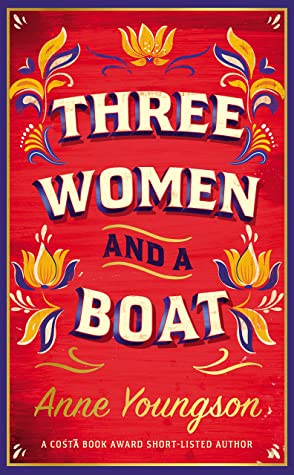 My curiosity about canal living and my love for Meet Me at the Museum (2018), Anne Youngson’s charming, bittersweet debut novel in letters between a farmer’s wife in England and a curator at the Denmark museum that houses the Tollund Man, were two strong motives to request her follow-up; a third was the title’s nod to the delightful Victorian classic Three Men in a Boat (although, for its 2021 U.S. release, it has been renamed The Narrowboat Summer; Jerome K. Jerome must be too niche a reference for the average American reader.)
On a towpath not far from London, two women are drawn to the Number One by the sound of a dog howling. Eve Warburton has just been made redundant after 30 years at a corporate job, and Sally Allsop has just decided to leave her impassive husband. Distressed at the animal’s unearthly cries, they break down the boat door to check on it and it promptly runs away. Luckily, it’s not long until the boat owner, Anastasia, returns, followed by Noah the terrier.
Anastasia is a no-nonsense woman but takes kindly to Eve and Sally. Her situation is thus: she needs to go into hospital soon for cancer treatment, but she has no money for moorings or necessary repairs on the Number One, her only home. She needs someone to pilot her boat to Chester, where she knows someone who will carry out the maintenance for free, and back. Conveniently, Eve and Sally, free of the commitments that once defined them, now have all the time in the world. Anastasia will live in Eve’s flat during her treatment. In a matter of days, Eve and Sally learn the basics about canal-boats and set off on their journey. Along the way they’ll meet drifters, craftspeople and storytellers, and rethink what they want from life.
Youngson perches halfway between Rachel Joyce and Carol Shields in this one. Much like Meet Me at the Museum, it’s about second chances in the second half of life, with relatable situations and an open, hopeful ending. I liked the details of the journey – makeshift meals, Scrabble games, transcripts of blunt phone calls with Anastasia – but Eve and Sally remained a bit blank for me, such that I did not care equally about all the protagonists’ fates. Still, this is a pleasant amble of a novel and one that I expect to be popular with my local book club. (See also: Susan’s review.)
A favorite passage:
Anyone can use the canal, for holidays, for living, for plying a trade. They’ve always been a bit alternative. An alternative to a horse and cart, then an alternative to a railway, then an alternative to a caravan holiday, an alternative to a house. I like that. I like that it’s not fixed. No one owns it. And I like that it is slow, which is exactly what made the search for alternatives essential. The canals were wide enough to cope with a boat moving at the walking pace of a horse. Any faster, and they break apart. That’s the only thing that needs to be preserved: the banks, the locks, the bridges. And what would destroy them is speed.
Three Women and a Boat was published in the UK by Doubleday on November 12th. My thanks to the publisher for the proof copy for review.
It will be published as The Narrowboat Summer in the USA by Flatiron Books on January 26, 2021.
Recent Reviews for Shiny New Books: Poetry, Fiction and Nature Writing
First up was a rundown of my five favorite poetry releases of the year, starting with…
Dearly by Margaret Atwood
 Dearly is a treasure trove, twice the length of the average poetry collection and rich with themes of memory, women’s rights, environmental crisis, and bereavement. It is reflective and playful, melancholy and hopeful. I can highly recommend it, even to non-poetry readers, because it is led by its themes; although there are layers to explore, these poems are generally about what they say they’re about, and more material than abstract. Alliteration, repetition, internal and slant rhymes, and neologisms will delight language lovers and make the book one to experience aloud as well as on paper. Atwood’s imagery ranges from the Dutch masters to The Wizard of Oz. Her frame of reference is as wide as the array of fields she’s written in over the course of over half a century.
I’ll let you read the whole article to discover my four runners-up. (They’ll also be appearing in my fiction & poetry best-of post next week.)
Next was one of my most anticipated reads of the second half of 2020. (I was drawn to it by Susan’s review.)
Artifact by Arlene Heyman
 Lottie’s story is a case study of the feminist project to reconcile motherhood and career (in this case, scientific research). In the generic more than the scientific meaning of the word, the novel is indeed about artifacts – as in works by Doris Lessing, Penelope Lively and Carol Shields, the goal is to unearth the traces of a woman’s life. The long chapters are almost like discrete short stories. Heyman follows Lottie through years of schooling and menial jobs, through a broken marriage and a period of single parenthood, and into a new relationship. There were aspects of the writing that didn’t work for me and I found the book as a whole more intellectually noteworthy than engaging as a story. A piercing – if not notably subtle – story of women’s choices and limitations in the latter half of the twentieth century. I’d recommend it to fans of Forty Rooms and The Female Persuasion.
Finally, I contributed a dual review of two works of nature writing that would make perfect last-minute Christmas gifts for outdoorsy types and/or would be perfect bedside books for reading along with the English seasons into a new year.
The Stubborn Light of Things by Melissa Harrison
 This collects five and a half years’ worth of Harrison’s monthly Nature Notebook columns for The Times. The book falls into two rough halves, “City” and “Country”: initially based in South London, Harrison moved to the Suffolk countryside in late 2017. In the grand tradition of Gilbert White, she records when she sees her firsts of a year. Often, she need look no further than her own home and garden. I appreciated how hands-on and practical she is: She’s always picking up dead animals to clean up and display the skeletons, and she never misses an opportunity to tell readers about ways they can create habitat for wildlife (e.g. bat and bird nest boxes that can be incorporated into buildings) and get involved in citizen science projects like moth recording.
The book’s final two entries were set during the UK’s first COVID-19 lockdown in spring 2020 – a notably fine season. This inspired me to review it alongside…
The Consolation of Nature by Michael McCarthy, Jeremy Mynott and Peter Marren
 A tripartite diary of the coronavirus spring kept by three veteran nature writers based in southern England (all of them familiar to me through their involvement with New Networks for Nature and its annual Nature Matters conferences). The entries, of a similar length to Harrison’s, are grouped into chronological chapters from 21 March to 31 May. While the authors focus in these 10 weeks on their wildlife sightings – red kites, kestrels, bluebells, fungal fairy rings and much more – they also log government advice and death tolls. They achieve an ideal balance between current events and the timelessness of nature, enjoyed all the more in 2020’s unprecedented spring because of a dearth of traffic noise.
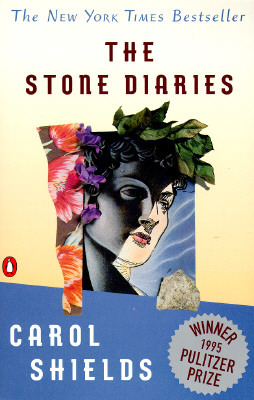
The Stone Diaries by Carol Shields (Blog Tour Review)
Is it possible to capture the complete course of a life, whether looking from the outside or telling it from the inside? What is set in stone and what is fleeting? These are questions Carol Shields addresses in her 1995 Pulitzer Prize winner, which plays with perspective and forms of storytelling as it conveys the extra/ordinary life of Daisy Stone Goodwill Flett. What with the family tree and section of black-and-white photographs, you might expect this to be a family saga; with the chronological chapters proceeding from “Birth” in 1905 to “Death” in the 1990s, you might expect an objective faux-biography. But The Stone Diaries is neither.
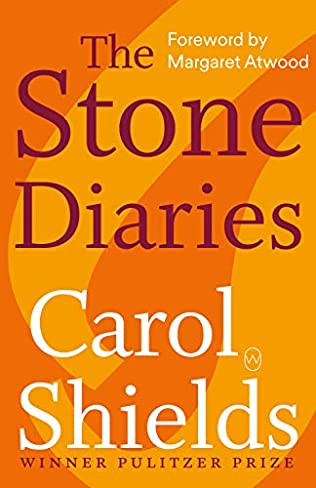 The facts are these. Daisy’s mother, Mercy, dies giving birth to her in rural Manitoba. Raised by a neighbor, Daisy later moves to Indiana with her stonecutter father, Cuyler. After a disastrously short first marriage, Daisy returns to Canada to marry Barker Flett. Their three children and Ottawa garden become her life. She temporarily finds purpose in her empty-nest years by writing a “Mrs. Green Thumb” column for a local newspaper, but her retirement in Florida is plagued by illness and the feeling that she has missed out on what matters most.
What makes this surprising life story so remarkable is its unpicking of (auto)biographical authenticity: Shields switches between the first and third person, between Daisy’s point of view and a feigned omniscience. Some sections foreground others’ opinions: Chapter 6 is composed entirely of letters Daisy receives, while Chapter 7 collects short first-person narratives from her children and friends as they speculate on why she has fallen into a depression.
As in Shields’s Happenstance and Larry’s Party, which I’ve also reread this year, I was struck by the role that chance plays in any life:
History indeed! As though this paltry slice of time deserves such a name. Accident, not history, has called us together, and what an assembly we make. What confusion, what a clamor of inadequacy and portent.
Talk of bias, gaps and unreliability undermines the narrative:
Well, a childhood is what anyone wants to remember of it. It leaves behind no fossils, except perhaps in fiction. Which is why you want to take Daisy’s representation of events with a grain of salt, a bushel of salt.
Daisy herself almost disappears from the parts of the book where she is voiceless, consumed by her roles – by the end she is universally known as “Grandma Flett.” This meant that other characters stood out as more memorable to me: Cuyler for his obsessive building of stone monuments and streams of words, Barker for his love of plants and long-deferred sexual fulfillment, Daisy’s friend Fraidy Hoyt for her careful chronicling of fast living, and Magnus, Barker’s father, who lives long past his 100th birthday after his return to the Orkney Islands.
 As in Moon Tiger, one of my absolute favorites, the author explores how events and memories turn into artifacts. The meta approach also, I suspect, tips the hat to other works of Canadian literature: in her introduction, Margaret Atwood mentions that the poet whose story inspired Shields’s Mary Swann had a collection entitled A Stone Diary, and surely the title’s similarity to Margaret Laurence’s The Stone Angel (1964) can’t be pure coincidence.
Experiencing the novel again after 14 years, I was impressed by the experimentation but ultimately somewhat detached from the story. It was admiration rather than love; I enjoyed earlier chapters more than the last few. But isn’t that just like life, to keep going past the point where it’s fun? And isn’t that the point, that the meaning you long for may not be there at all?
Marcie (Buried in Print) and I have reread – or, in my case for half of them, read for the first time – six Shields novels together in 2020. I hope I’ll find time to respond to the rest of them in the next few weeks. It has been so rewarding to observe how her themes recur and interlock. How heartening to see that, 17 years after her death, Shields is still being read and remembered, through the World Editions reissues (three more are coming in 2021) and through the Carol Shields Prize for Fiction, a new $100,000 annual award for North American women’s writing.
The Stone Diaries was reissued in the UK by World Editions on December 3rd. My thanks to the publisher for the free copy for review.
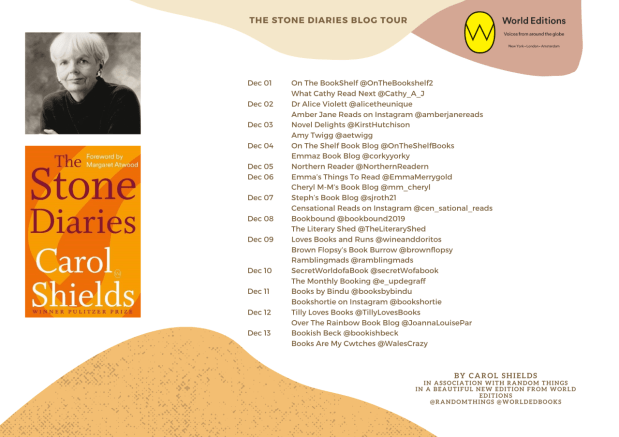
I was delighted to be invited to help close out the blog tour for The Stone Diaries. See below for details of where other reviews have appeared.
Review Book Catch-Up: Gange, Mann, O’Donoghue
The end of the year is fast approaching, and one of my main reading goals is to follow through on all the rest of the review books I’ve received from publishers. I have another handful on the go, including a few holiday- and snow-themed ones I’ll review together.
Today, I have a history-rich travelogue that explores the Atlantic coast of Britain and Ireland, a memoir by an Anglican priest who has transitioned and experienced chronic illness, and a humorous, offbeat novel about finding the real Ireland.
The Frayed Atlantic Edge: A Historian’s Journey from Shetland to the Channel by David Gange (2019)
 This was one of the 2020 Wainwright Prize finalists. Having now experienced the entire nature writing shortlist, I stick with my early September pronouncement that it should have won. I was consistently impressed with the intricacy of the interdisciplinary approach. While kayaking down the western coast of the British Isles and Ireland, Gange delved into the folklore, geology, history, local language and wildlife of each region and island group. From the extreme north of Scotland at Muckle Flugga to the southwest tip of Cornwall, he devoted a month to each Atlantic-facing area, often squeezing in expeditions between commitments as a history lecturer at Birmingham.
Gange’s thesis is that the sea has done more to shape Britain and Ireland than we generally recognize, and that to be truly representative history books must ascribe the same importance to coastal communities that they do to major inland cities. Everywhere he goes he meets locals, trawls regional archives and museums, and surveys the art and literature (especially poetry) that a place has produced. Though dense with information, the book is a rollicking travelogue that – in words no less than in the two sections of stunning colour photographs – captures the elation and fear of an intrepid solo journey. He hunkers on snowy cliffs in his sleeping bag and comes face to face with otters, seals and seabirds in his kayak; at the mercy of the weather, he has deep respect for the Atlantic waves’ power.
I enjoyed revisiting places I’ve seen in person (Shetland, the Orkney Islands, Skomer) and getting a taste of others I’ve not been to but would like to go (like the Western Isles and the west coast of Ireland). Gange’s allusive writing reminds me of Tim Dee’s and Adam Nicolson’s, and Madeleine Bunting’s Love of Country is a similar read I also loved.
With thanks to William Collins for the free copy for review.
Dazzling Darkness: Gender, sexuality, illness and God by Rachel Mann (2012; 2020)
 I’ve so enjoyed discovering Rev. Rachel Mann’s work: poetry collection A Kingdom of Love, Advent devotional In the Bleak Midwinter, and novel The Gospel of Eve. This is a revised edition of her memoir, which is less an autobiographical blow-by-blow of becoming a trans priest in the Church of England than it is a vibrant theological meditation based around keywords like loneliness, reconciliation and vocation. She reflects on the apparent contradictions of her life: she was a typical boy who loved nothing more than toy guns, and then a young man obsessed with drugs and guitars; as ‘Nick’, she was married to a woman at the time of coming out, but continued to have relationships with women after transitioning and undergoing reassignment surgery, so considers herself a lesbian.
Ambiguities like this make us uncomfortable, Mann notes, but change and loss, and making the best of impossible situations, are all a part of the human condition. I appreciated how she characterizes herself as a perennial beginner: having to face the world anew after the second adolescence of becoming a woman as well as after the end of a long-term relationship and the last in a series of hospitalizations for severe Crohn’s disease.
While I’ve read other trans memoirs (Amateur by Thomas Page McBee and Conundrum by Jan Morris), this is my first from a Christian perspective, apart from the essays in The Book of Queer Prophets. Mann describes her early faith as intense but shallow, like falling in love; later it became deeper but darker as she followed Jesus’s path of suffering. Ministry has been a gift but is not without challenges: At synod meetings she is unsure whether to speak out or remain silent, but at least she bears witness to the presence of trans people in the Church.
With thanks to Wild Goose Publications for the free copy for review.
Scenes of a Graphic Nature by Caroline O’Donoghue (2020)
 Charlotte “Charlie” Regan is a 29-year-old filmmaker based in London. Her father has had cancer on and off for four years, but he got his ‘survivor’ label in a different way: when he was a child on an island off the western coast of Ireland, his teacher and 18 classmates died of carbon monoxide poisoning from the faulty secondhand oil burner in the schoolhouse; he was the only one left alive. Although her film commemorates this story, Charlie has never actually been to Ireland, so an invitation to Cork Film Festival is the perfect opportunity to see the place before her father dies. Travelling with her is her former best friend and roommate, Laura Shingle. There’s sexual tension between these two: Charlie is a lesbian, but Laura is determined to think of herself as straight even though she and Charlie would occasionally share a bed. To prove herself, Laura goes too far the other way, making homophobic comments about strangers.
If initially Charlie thinks this trip to Ireland will be about shamrock-green nostalgia, she soon snaps out of her idealism as she has to face some tough truths about the film and her family’s history. Charlie is a companionable narrator, but, while I enjoyed the pub scenes and found some of the one-liners very funny (“Everything in our room is a faint brown, as though it were daubed very gently by a child with a teabag” and “He had an X-ray and there’s legumes all over it.” / “Legumes? Do you mean lesions?”), I was underwhelmed overall. My interest peaked at the halfway point and waned thereafter. This is one I might recommend to fans of Caoilinn Hughes.
With thanks to Virago for the free copy for review.
Would you be interested in reading one or more of these?
Young Writer of the Year Award 2020: Shortlist Reviews and Predictions
Being on the shadow panel for the Sunday Times Young Writer of the Year Award was a bookish highlight of 2017 for me. I’m pleased for this year’s panelists, especially blogging friend Marina Sofia, to have had the same opportunity, and I look forward to hearing who they choose as their shadow panel winner on December 3rd and then attending the virtual prize ceremony on December 10th.

At the time of the shortlisting, I happened to have already read Exciting Times by Naoise Dolan and was halfway through Catherine Cho’s memoir Inferno. I got the poetry collection Surge by Jay Bernard out from the library to have another go (after DNFing it last year), and the kind folk of FMcM Associates sent me the other two shortlisted books, a poetry collection and a novel, so that I could follow along with the shadow panel’s deliberations. Here are my brief thoughts on all five nominees.
Surge by Jay Bernard (2019)
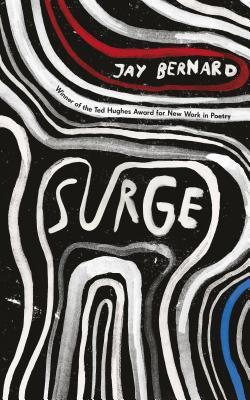 As a writer-in-residence at the George Padmore Institute, a research centre for radical Black history, in 2016, Bernard investigated the New Cross Massacre, a fire that killed 13 young people in 1981. In 2017, the tragedy found a horrific echo in the Grenfell Tower fire, which left 72 dead. This debut poetry collection bridges that quarter-century through protest poems from various perspectives, giving voice to victims and their family members and exploring the interplay between race, sexuality and violence. Patois comes in at several points, most notably in “Songbook.” I especially liked “Peg” and “Pride,” and the indictment of government indifference in “Blank”: “It-has-nothing-to-do-with-us today issued this statement: / those involved have defended their actions and been … acquitted / retired with full pay”. On the whole, I found it difficult to fully engage with this collection, but I am reliably informed that Bernard’s protest poems have more impact when performed aloud.
Readalikes: In Nearby Bushes by Kei Miller, A Portable Paradise by Roger Robinson and Don’t Call Us Dead by Danez Smith
My rating:
Inferno by Catherine Cho (2020)
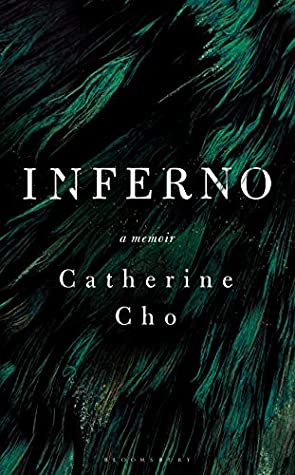 Cho, a Korean American literary agent based in London, experienced stress-induced postpartum psychosis after the birth of her son. She and her husband had returned to the USA when Cato was two months old to introduce him to friends and family, ending with a big Korean 100-day celebration at her in-laws’ home. Almost as soon as they got to her in-laws’, though, she started acting strangely: she was convinced cameras were watching their every move, and Cato’s eyes were replaced with “devil’s eyes.” She insisted they leave for a hotel, but soon she would be in a hospital emergency room, followed by a mental health ward. Cho alternates between her time in the mental hospital and a rundown of the rest of her life before the breakdown, weaving in her family history and Korean sayings and legends. Twelve days: That was the length of her hospitalization in early 2018, but Cho so painstakingly depicts her mindset that readers are fully immersed in an open-ended purgatory. She captures extremes of suffering and joy in this vivid account. (Reviewed in full here.)
Readalikes: An Angel at My Table by Janet Frame and Dear Scarlet by Teresa Wong
My rating:
Exciting Times by Naoise Dolan (2020)
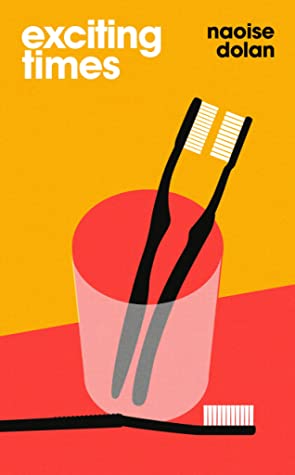 At 22, Ava leaves Dublin to teach English as a foreign language to wealthy preteens in Hong Kong and soon comes to a convenient arrangement with her aloof banker friend, Julian, who lets her live with him without paying rent and buys her whatever she wants. They have sex, yes, but he’s not her boyfriend per se, so when he’s transferred to London for six months, there’s no worry about hard feelings when her new friendship with Edith Zhang turns romantic. It gets a little more complicated, though, when Julian returns and she has to explain these relationships to her two partners and to herself. On the face of it, this doesn’t sound like it would be an interesting plot, and the hook-up culture couldn’t be more foreign to me. But with Ava Dolan has created a funny, deadpan voice that carries the entire novel. I loved the psychological insight, the playfulness with language, and the zingy one-liners (“I wondered if Victoria was a real person or three Mitford sisters in a long coat”). (Reviewed in full here.)
Readalikes: Besotted by Melissa Duclos and Conversations with Friends by Sally Rooney
My rating:
Tongues of Fire by Seán Hewitt (2020)
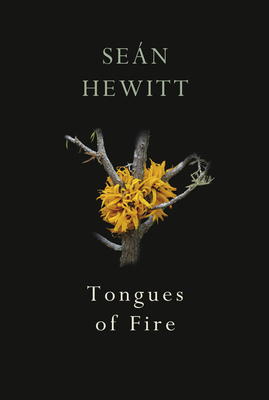 In the title poem, the arboreal fungus from the cover serves as “a bright, ancestral messenger // bursting through from one realm to another” like “the cones of God, the Pentecostal flame”. This debut collection is alive with striking imagery that draws links between the natural and the supernatural. Sex and grief, two major themes, are silhouetted against the backdrop of nature. Fields and forests are loci of meditation and epiphany, but also of clandestine encounters between men: “I came back often, // year on year, kneeling and being knelt for / in acts of secret worship, and now / each woodland smells quietly of sex”. Hewitt recalls travels to Berlin and Sweden, and charts his father’s rapid decline and death from an advanced cancer. A central section of translations of the middle-Irish legend “Buile Suibhne” is less memorable than the gorgeous portraits of flora and fauna and the moving words dedicated to the poet’s father: “You are not leaving, I know, // but shifting into image – my head / already is haunted with you” and “In this world, I believe, / there is nothing lost, only translated”.
Readalikes: Physical by Andrew McMillan and If All the World and Love Were Young by Stephen Sexton
My rating:
Nightingale by Marina Kemp (2020)
 Marguerite Demers, a 24-year-old nurse, has escaped Paris to be a live-in carer for elderly Jérôme Lanvier in southern France. From the start, she senses she’s out of place here – “She felt, as always in this village, that she was being observed”. She strikes up a friendship with a fellow outsider, an Iranian émigrée named Suki, who, in this story set in 2002, stands out for wearing a hijab. Everyone knows everyone here, and everyone has history with everyone else – flirtations, feuds, affairs, and more. Brigitte Brochon, unhappily married to a local farmer, predicts Marguerite will be just like the previous nurses who failed to hack it in service to the curmudgeonly Monsieur Lanvier. But Marguerite sticks up for herself and, though plagued by traumatic memories, makes her own bid for happiness. The novel deals sensitively with topics like bisexuality, euthanasia, and family estrangement, but the French provincial setting and fairly melodramatic plot struck me as old-fashioned. Still, the writing is strong enough to keep an eye out for what Kemp writes next. (U.S. title: Marguerite.)
Readalikes: French-set novels by Joanne Harris and Rose Tremain; The Hoarder by Jess Kidd
My rating:
General thoughts:
After last year’s unexpected winner – Raymond Antrobus for his poetry collection The Perseverance – I would have said that it’s time for a novel by a woman to win. However, I feel like a Dolan win would be too much of a repeat of 2017’s win (for Sally Rooney), and Kemp’s debut novel isn’t quite up to scratch. Much as I enjoyed Inferno, I can’t see it winning over these judges (three of whom are novelists: Kit de Waal, Sebastian Faulks and Tessa Hadley), though it would be suited to the Wellcome Book Prize if that comes back in 2021. So, to my surprise, I think it’s going to be another year for poetry.
I’ve been following the shadow panel’s thoughts via Marina’s blog and the others’ Instagram accounts and it looks like they are united in their admiration for the poetry collections, particularly the Hewitt. That would be my preference, too: I respond better to theme and style in poetry (Hewitt) than to voice and message (Bernard). However, I think that in 2020 the Times may try to trade its rather fusty image for something more woke, bearing in mind the Black Lives Matter significance and the unprecedented presence of a nonbinary author.
My predictions:
Shadow panel winner: Tongues of Fire by Seán Hewitt
Official winner: Surge by Jay Bernard
Have you read anything from this year’s shortlist?
Miscellaneous Novellas: Murdoch, Read & Spark; Comics; Art Books
Novellas in November will be coming to a close on Monday and has been a great success in terms of blogger engagement. I’ve been adding review links to the master post nearly every day of the month, and I’m sure there are some I have missed. Although I still have a couple of novellas on the go, I don’t see myself finishing them this month, so I’m going to end with this set: three short classics to continue the week’s theme, two graphic novels, and a pair of nature/art/music/poetry books.
Classics:
Something Special by Iris Murdoch (1957)
[51 pages]
 A Murdoch rarity, this appeared in a 1950s anthology and in an English-language textbook in Japan, but was not otherwise published in the author’s lifetime. I think it’s her only short story. I’m counting it as a novella because it was published as a stand-alone volume by Vintage Classics in 2000. Twenty-four-year-old Yvonne Geary doesn’t know precisely what she wants from life, but hopes there might be more for her than a conventional marriage to Sam, her beau. “Can’t I live my life as I please since it’s the only thing I have?” she asks her hen-pecking mother. “I can’t see him as something special and I won’t marry him if I can’t.” Maybe she’ll escape to England. But for now she’s off for a night on the town in Dublin with Sam, going from a rowdy pub to the quiet of a locked-up park. Sam may be dull, but he seems sensitive, solicitous and well-meaning. Yvonne’s feelings for him flip-flop over the course of the evening. I’ve noticed before that Murdoch is a bit funny about Jewishness, but this is still a brisk, bittersweet story in the direct lineage of Sally Rooney’s Normal People. (With striking black-and-white woodcut-style illustrations by Michael McCurdy.)
The Fairacre Festival by ‘Miss Read’ (1968)
[80 pages]
 I’m not sure why I’d never tried anything by ‘Miss Read’ (the pseudonym of Dora Jessie Saint, a teacher turned author who was based not far from me in Berkshire) until now. She wrote two series of quaint novels set in the fictional villages of Fairacre and Thrush Green; this is #7 in the Fairacre series. Miss Read, her narrator, is a schoolteacher who records her wry observations of all the local happenings. After an autumn storm damages the church roof, the parishioners are dismayed to learn the renovations could cost £2000. No amount of jumble sales, concerts and tea dances will raise that much. So they set their sights higher, to an Edinburgh-style festival with a light show and an appearance from a famous opera singer. But it’s not going to be smooth sailing now, is it? This was cozy, quaint fun, and if I wished it had been a full-length book, that means I’ll just have to begin at the beginning with 1955’s Village School.
The Driver’s Seat by Muriel Spark (1970)
[107 pages]
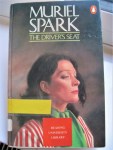 Lise has her “glad rags” on – bright new clothes in clashing patterns that strangers can’t help commenting on. The 34-year-old single woman has worked in an accounting office for the last 16 years and is now off to the South (Italy?) for a long-awaited vacation. This will be no blissful holiday, though. Just 11 pages in, we get our first hint that things are going to go wrong, and in the opening line of Chapter 3 Spark gives the game away. Clearly, her intention is to subordinate what happens to why it happens, so the foreshadowing of the early chapters is twisted to ironic effect later on. Lise is an unappealing character, haughty and deceitful, and the strangers she meets on the flight and at the hotel, including a man obsessed with the macrobiotic diet, are little better. I felt I didn’t have enough time to change my mind about Lise before we’re asked to have pity. Of course, this is meant to be a black comedy, but it was a little abrasive for my taste. This was my third and probably last from Spark, as I haven’t particularly enjoyed any of her work; I do love this pithy description of The Ballad of Peckham Rye, though: “An entertaining tale of satanism in South London.”
Graphic Novels:
Why Don’t You Write My Eulogy Now So I Can Correct It? A Mother’s Suggestions by Patricia Marx, illus. Roz Chast (2019)
[81 pages]
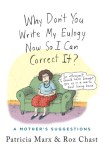 I loved Chast’s graphic memoir Can’t We Talk about Something More Pleasant? and figured this would have the same witty approach to an elderly parent’s decline. Apart from a brief introduction to her mother (from Philadelphia, outspoken, worked as a guidance counselor and for her husband’s office supplies company), there is hardly any text; the rest is just illustrated one-liners, sayings her mother had or opinions she espoused. Many of these have to do with fashion no-nos, dinner party etiquette, grammar pedantry, avoiding the outdoors and exercise, and childrearing. “My mother never hesitates to say what other mothers would not even think to think. She calls it constructive criticism.” She reminds me of Bess Kalb’s grandmother in Nobody Will Tell You This but Me, an overall much funnier and more complete picture of an entertaining figure.
The Exciting World of Churchgoing by Dave Walker (2010)
[90 pages]
 A third set of Church Times comics, not as memorable as the original Dave Walker Guide to the Church. Once again, Walker pokes fun at bureaucracy, silly traditions, closed-mindedness, and the oddities of church buildings and parishioners’ habits. You really need to be familiar with the UK churchgoing scene, and specifically with Anglican churches, to get much out of the cartoons. I loved “According to legend, there is a lady who changes the teatowels in the church kitchen from time to time” and the “Infestations” spread that starts with bats and wasps and moves on to Charismatics. Most striking are two pages on church proceedings during swine flu – what was meant to be a joke doesn’t seem so funny now that it literally describes in-person services during COVID-19: “Shaking hands during the peace should be replaced by a friendly wave,” “Administration of anti-bacterial gel should take place,” etc.
Art Books:
The Lost Words: A Spell Book by Robert Macfarlane, illus. Jackie Morris (2017)
[112 pages]
 Macfarlane’s work has been hit or miss for me and I was suspicious of this project in general, thinking it would be twee or juvenile, but the beauty of the artwork and playful energy of the poems won me over. It’s common knowledge that this book arose as a response to news that many words to do with nature had been removed from the latest version of a junior dictionary published in the UK, to be replaced by technology vocabulary. Macfarlane spotlights these omitted words through acrostic poems alive with alliteration (“Fern’s first form is furled, / Each frond fast as a fiddle-head”), wordplay and internal rhymes. He peppers in questions, both rhetorical and literal-minded, and exclamations. Conker, Dandelion, Lark and Otter are highlights. Morris’s wildlife paintings are superb, with a Giotto-like gilt portrait facing each poem and two-page in situ tableaux in between.
The Lost Words Spell Songs (2019)
[112 pages]
 I followed up immediately with this companion book to the 14-track album a group of eight folk musicians made in response to The Lost Words. We were already fans of Kris Drever (mostly via Lau), Karine Polwart and Beth Porter (via the Bookshop Band), and became familiar with a few more of the artists (Kerry Andrew, Julie Fowlis and Rachel Newton) earlier this year through the online Folk on Foot festivals. This volume includes six additional poems, four of which directly inspired songs on the album, plus brief bios and words on the project from each artist (each portrayed by Morris as a relevant bird, with the musician serving as the “spirit human” for the bird) the complete lyrics with notes from whoever took the lead on a particular song, and short essays by Macfarlane, Morris (also an interview) and Polwart.
It was interesting to compare the different approaches to the project: five songs directly set Macfarlane’s poetry to music, two of them primarily in spoken word form; five are based on Macfarlane “extras,” like the new spells and the “charm against harm” he wrote during anti-tree felling campaigns like the one in Sheffield; a few are essentially pop songs based around major lines from Dandelion, Goldfinch and Lark (these plus “Selkie-Boy,” based on Grey Seal, ended up being my favorites); one is a traditional song from Seckou Keita’s native Senegal that also incorporates the bilingual Fowlis’s Gaelic to mourn the words that are lost with the past; and one is a final blessing song that weaves in bits from multiple spells. The artists all bring their individual styles, but the collaborations are strong, too.

Are you squeezing in any more novellas this month?
Do you like the sound of any of the ones I’ve read?
Novellas in November: 10 Favorite Classic Novellas
For this final week of Novellas in November, we’re focusing on classic literature. The more obscure the better, as far as I’m concerned. Maybe a few of the favorites I feature below will be new to you? (The two not pictured were read from the library.)

 Giovanni’s Room by James Baldwin [150 pages]: David, a penniless American, came to Paris to find himself. His second year there he meets Giovanni, an Italian barman. They fall in love and move in together. There’s a problem, though: David has a fiancée. We know from the first pages that David has fled to the south of France and that Giovanni faces the guillotine in the morning, but throughout Baldwin maintains the tension as we wait to hear why he has been sentenced to death. Deeply sad, but also powerful and brave.
 The Darling Buds of May by H.E. Bates [137 pages]: “Perfick” reading for an afternoon sitting or two; The Novel Cure even prescribes it as a tonic for cynicism. Just like tax inspector Cedric Charlton, you’ll find yourself drawn into the orbit of junk dealer Pop Larkin, Ma, and their six children at their country home in Kent – indomitably cheery hedonists, the lot of them. Ma and Pop are more calculating than they let on, but you can’t help but love them. Plus Bates writes so evocatively about the British countryside in late spring.
 Breakfast at Tiffany’s by Truman Capote [91 pages]: Whether you’ve seen the Audrey Hepburn film or not, this is delightful. Holly Golightly has remade herself as a New York City good-time girl, but her upstairs neighbor discovers her humble origins. This was from my pre-reviewing days, so I have no more detail to add. But whenever I think of its manic cocktail party scenes, I think of a holiday do from my final year of college: packed like sardines, everyone talking over each other, and my professor couldn’t stop shaking my hand.
 A Month in the Country by J.L. Carr [108 pages]: Summer 1920: Tom Birkin, a WWI veteran, arrives in North Yorkshire to uncover a local church’s medieval wall painting of the Judgment Day. With nothing awaiting him back in London, he gives himself over to the rhythms of working, eating and sleeping. Also embarked on a quest into the past is Charles Moon, searching for the grave of their patroness’ 14th-century ancestor in the churchyard. Moon, too, has a war history he’d rather forget. A Hardyesque, tragicomic romance.
 The Pumpkin Eater by Penelope Mortimer [144 pages]: Aged 31 and already on her fourth husband, the narrator, known only as Mrs. Armitage, has an indeterminate number of children. A breakdown at Harrods is the sign that Mrs. A. isn’t coping, and she starts therapy. Meanwhile, her filmmaker husband is having a glass tower built as a countryside getaway, allowing her to contemplate an escape from motherhood. A razor-sharp period piece composed largely of dialogue, it gives a sense of a woman overwhelmed by responsibility.
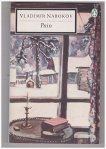 Pnin by Vladimir Nabokov [177 pages]: A comic novel about a Russian professor on an American college campus. In this episodic narrative spanning 1950–4, Timofey Pnin is a figure of fun but also of pathos: from having all his teeth pulled out and entertaining the son his ex-wife had by another man to failing to find and keep a home of his own, he deserves the phrase Nabokov originally thought to use as a title, “My Poor Pnin”. There are shades of Lucky Jim here – I laughed out loud at some of Pnin’s verbal gaffes and slapstick falls.
 No Signposts in the Sea by Vita Sackville-West [156 pages]: Sackville-West’s last novel, published a year before her death, was inspired by world cruises she and her husband, Harold Nicolson, took in later life. Fifty-year-old Edmund Carr, a journalist with a few months to live, has embarked on a cruise ship voyage to be close to the woman he loves, 40-year-old war widow Laura Drysdale. He dares to hope she might return his feelings … but doesn’t tell her of his imminent demise. The novel is presented as Edmund’s diary, found after his death.
 The Catcher in the Rye by J.D. Salinger [192 pages]: Believe it or not, I didn’t read this until December 2018! From the start I found Holden Caulfield’s voice funny and surprising, so drenched in period American slang you can never forget when and where it’s set. He’s a typical lazy teenager, flunking four subjects when he’s kicked out of Pencey Prep. The first part is a languorous farewell tour to classmates and teachers before he takes the train back to NYC. Once there, he lives it up in a hotel for a few days. A shocker of an ending is to come.
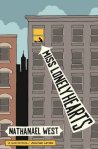 Miss Lonelyhearts by Nathanael West [110 pages]: Like The Great Gatsby, this is a very American tragedy and state-of-the-nation novel. “Miss Lonelyhearts” is a male advice columnist for the New York Post-Dispatch. His letters come from a pitiable cross section of humanity: the abused, the downtrodden and the unloved. Not surprisingly, these second-hand woes start to get him down, and he turns to drink and womanizing for escape. West’s picture of how beleaguered compassion can turn to indifference feels utterly contemporary.
 Ethan Frome by Edith Wharton [181 pages]: Unlike Wharton’s NYC society novels, this has a rural setting, but the plot is not dissimilar to that of The Age of Innocence, with extra tragic sauce. The title character makes the mistake of falling in love with his wife’s cousin, and the would-be lovers are punished one New England winter. A quarter of a century later, the narrator learns what happened to this sad old man. It’s probably been 15 years since I’ve read this, and I like the catharsis of a good old-fashioned tragedy. Maybe I’ll reread it soon.
Not enough women on my list! I should redress that by reading some more Jean Rhys…
Keep in touch via Twitter (@bookishbeck / @cathy746books) and Instagram (@bookishbeck / @cathy_746books). We’ll keep adding your review links in to our master posts. Feel free to use the terrific feature image Cathy made and don’t forget the hashtag #NovNov.
Any suitably short classics on your shelves?
Five Novellas in Translation
We’re coming to the close of Literature in Translation week of Novellas in November. Cathy and I have both noted that novellas seem more common in other languages, with the work more likely to take on experimental forms. We wondered why this is – do foreign languages and cultures somehow lend themselves to concise storytelling that takes more risks? However, a commenter on a post of Cathy’s suggested that economic realities may have something to do with it: translating short works is faster and cheaper. In a recent blog post, Louise Walters, whose indie publishing imprint is preparing to release its shortest book yet (In the Sweep of the Bay by Cath Barton, 22,000 words), confirms that production and shipping costs are lower for novellas, so she has the chance of recouping her investment.
I’ve gotten to five short translated works this month: three fiction and two nonfiction. (Or should that be four fiction and one nonfiction? With autofiction it’s hard to tell.)
Dependency by Tove Ditlevsen (1971; 2019)
[Translated from the Danish by Michael Favala Goldman]
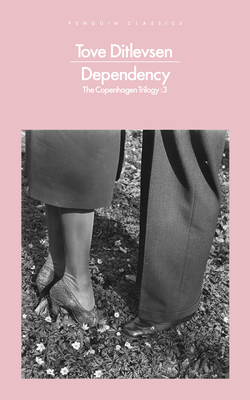 The final volume of the autobiographical Copenhagen Trilogy, after Childhood and Youth. Ditlevsen recalls her upbringing in poverty and her early success as a poet. By the end of the second book, she’s engaged to a much older literary editor. A series of marriages and affairs follows: Viggo, Ebbe, Carl and Victor are the major names, with some others in between. She produces stories and poems as well as a daughter and a son, but also has two abortions. Carl performs one of these and gives her a Demerol shot; ever afterwards, she takes advantage of his obsession with her chronic ear infection to beg for painkiller shots. “Then time ceases to be relevant. An hour could be a year, and a year could be an hour. It all depends on how much is in the syringe.” Addiction interferes with her work and threatens her relationships, but it’s an impulse that never leaves her even when she swaps the harder stuff for alcohol.
I only skimmed this one because from the other volumes I knew how flat and detached the prose is, even when describing desperate circumstances. I can admire this kind of writing – the present-tense scenes, the lack of speech marks, the abrupt jumps between time periods and emotional states, all coldly expressed – but I’m not sure I’ll ever love it. Of the three books, I liked Childhood the best for its universal observations.
La Symphonie Pastorale by André Gide (1919; 1931)
[Translated from the French by Dorothy Bussy]
“Love is blindness / I don’t want to see” (U2)
 I had a secondhand French copy when I was in high school, always assuming I’d get to a point of fluency where I could read it in its original language. It hung around for years unread and was a victim of the final cull before my parents sold their house. Oh well! There’s always another chance with books. In this case, a copy of this plus another Gide novella turned up at the free bookshop early this year. A country pastor takes Gertrude, the blind 15-year-old niece of a deceased parishioner, into his household and, over the next two years, oversees her education as she learns Braille and plays the organ at the church. He dissuades his son Jacques from falling in love with her, but realizes that he’s been lying to himself about his own motivations. This reminded me of Ethan Frome as well as of other French classics I’ve read (Madame Bovary and Thérèse Raquin). Melodramatic, maybe, but I loved the religious and medical themes (deaf-blind Laura Bridgman gets a mention; when the preacher and Gertrude attend the title symphony, he encourages her synesthetic thinking).
Stammered Songbook: A Mother’s Book of Hours by Erwin Mortier (2011; 2015)
[Translated from the Dutch by Paul Vincent]
 In fragmentary vignettes, some as short as a few lines, Belgian author Mortier chronicles his mother’s Alzheimer’s, which he describes as a “twilight zone between life and death.” His father tries to take care of her at home for as long as possible, but it’s painful for the family to see her walking back and forth between rooms, with no idea of what she’s looking for, and occasionally bursting into tears for no reason. Most distressing for Mortier is her loss of language. As if to compensate, he captures her past and present in elaborate metaphors: “Language has packed its bags and jumped over the railing of the capsizing ship, but there is also another silence … I can no longer hear the music of her soul”. He wishes he could know whether she feels hers is still a life worth living. There are many beautifully meditative passages, some of them laid out almost like poetry, but not much in the way of traditional narrative; it’s a book for reading piecemeal, when you have the fortitude.
Bonjour Tristesse by Françoise Sagan (1954; 1955)
[Translated from the French by Irene Ash]
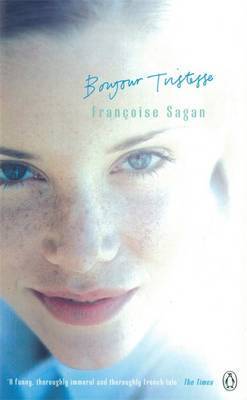 Like The Go-Between and Atonement, this is overlaid with regret about childhood caprice that has unforeseen consequences. That Sagan, like her protagonist, was only a teenager when she wrote it only makes this 98-page story the more impressive. Although her widower father has always enjoyed discreet love affairs, seventeen-year-old Cécile has basked in his undivided attention until, during a holiday on the Riviera, he announces his decision to remarry a friend of her late mother. Over the course of one summer spent discovering the pleasures of the flesh with her boyfriend, Cyril, Cécile also schemes to keep her father to herself. Dripping with sometimes uncomfortable sensuality, this was a sharp and delicious read.
The Order of the Day by Éric Vuillard (2017; 2018)
[Translated from the French by Mark Polizzotti]
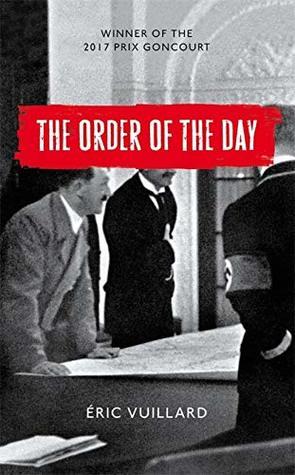 February 1933: 24 German captains of industry meet with Hitler to consider the advantages of a Nazi government. I loved the pomp of the opening chapter: “Through doors obsequiously held open, they stepped from their huge black sedans and paraded in single file … they doffed twenty-four felt hats and uncovered twenty-four bald pates or crowns of white hair.” As the invasion of Austria draws nearer, Vuillard recreates pivotal scenes featuring figures who will one day commit suicide or stand trial for war crimes. Reminiscent in tone and contents of HHhH, The Tobacconist, and the film Downfall, this starts off promisingly and ends with clear relevance to the present moment (“a mysterious respect for lies. Political manoeuvring tramples facts”) and a brilliant final paragraph, but in between was dull. You’d have to have more interest in history than I do to love this Prix Goncourt winner.
Publishers that specialize in novellas in translation:
Charco Press – I’ve reviewed:
 The Wind that Lays Waste by Selva Almada
Fish Soup by Margarita García Robayo
Die, My Love by Ariana Harwicz
Peirene Press – I’ve reviewed:
Mr. Darwin’s Gardener by Kristina Carlson
The Looking-Glass Sisters by Gøhril Gabrielsen
Ankomst by Gøhril Gabrielsen
 Dance by the Canal by Kerstin Hensel
The Last Summer by Ricarda Huch
Snow, Dog, Foot by Claudio Morandini
Her Father’s Daughter by Marie Sizun
The Orange Grove by Larry Tremblay
The Man I Became by Peter Verhelst
A few more favorite novellas in translation:
The Plimsoll Line by Juan Gracia Armendáriz
 Silk by Alessandro Baricco
Agatha by Anne Cathrine Bomann
Swallowing Mercury by Wioletta Greg
Next week, we’re closing out Novellas in November with a focus on short classics. I’ll introduce the week’s theme with some of my favorite examples on Monday.
Any theories as to why so many novellas are from other languages?
What are some of your favorites?
Being the Expert for #NonficNov / Three on a Theme: “Care”
The Being/Becoming/Asking the Expert week of the month-long Nonfiction November challenge is hosted by Rennie of What’s Nonfiction. This is my second entry for the week after Monday’s post on postpartum depression, as well as the second installment in my new “Three on a Theme” series, where I review three books that have something significant in common and tell you which one to pick up if you want to read into the topic for yourself.

It will be no surprise to regular readers that both of my ‘expert’ posts have been on a health theme: I have an amateur’s love of medical memoirs and works of medical history, and I’ve followed the Wellcome Book Prize closely for a number of years – participating in official blog tours, creating a shadow panel, and running this past year’s Not the Wellcome Prize.
The three books below are linked by the word “Care” in the title or subtitle; all reflect, in the wake of COVID-19, on the ongoing crisis in UK healthcare and the vital role of nurses.
Labours of Love: The Crisis of Care by Madeleine Bunting
 Bunting’s previous nonfiction work could hardly be more different: Love of Country was a travel memoir about the Scottish Hebrides. It was the first book I finished reading in 2017, and there could have been no better start to a year’s reading. With a background in history, journalism and politics, the author is well placed to comment on current events. Labours of Love arose from five years of travel to healthcare settings across the UK: care homes for the elderly and disabled, hospitals, local doctors’ surgeries, and palliative care units. Forget the Thursday-night clapping and rainbows in the windows: the NHS is perennially underfunded and its staff undervalued, by conservative governments as well as by people who rely on it.
We first experience bodily care as infants, Bunting notes, and many of the questions that run through her book originated in her early days of motherhood. Despite all the advances of feminism, parental duties follow the female-dominated pattern evident in the caring careers:
By the age of fifty-nine, women will have a fifty-fifty chance of being, or having been, a carer for a sick or elderly person. At the same time, many are still raising their teenage children and almost half of those over fifty-five are providing regular care for grandchildren.
Women dominate caring professions such as nursing (89 per cent), social work (75 per cent) and childcare (98 per cent). They now form the majority of GPs (54 per cent) and three out of four teachers are female. And they provide the vast bulk of the army of healthcare workers in the NHS (80 per cent) and social-care workers (82 per cent) for the long-term sick, disabled and frail elderly.
These are things we know intuitively, but seeing the numbers laid out so plainly is shocking. I most valued the general information in Bunting’s introduction and in between her interviews, while I found that the bulk of the book alternated between dry statistics and page after page of interview transcripts. However, I did love hearing more from Marion Coutts, the author of the 2015 Wellcome Book Prize winner, The Iceberg, about her husband’s death from brain cancer. (Labours of Love was longlisted for the Baillie Gifford Prize for Non-Fiction 2020.)
My thanks to Granta for the free copy for review.
Duty of Care: One NHS Doctor’s Story of Courage and Compassion on the COVID-19 Frontline by Dr Dominic Pimenta
 We’re going to see a flood of such books; I’m most looking forward to Dr Rachel Clarke’s Breathtaking (coming in January). Given how long it takes to get a book from manuscript to published product, I was impressed to find this on my library’s Bestsellers shelf in October. Pimenta’s was an early voice warning of the scale of the crisis and the government’s lack of preparation. He focuses on a narrow window of time, from February – when he encountered his first apparent case of coronavirus – to May, when, in protest at a government official flouting lockdown (readers outside the UK might not be familiar with the Cummings affair), he resigned his cardiology job at a London hospital to focus on his new charity, HEROES, which supports healthcare workers via PPE, childcare grants, mental health help and so on.
It felt uncanny to be watching events from earlier in the year unfold again: so clearly on a trajectory to disaster, but still gripping in the telling. Pimenta’s recreated dialogue and scenes are excellent. He gives a real sense of the challenges in his personal and professional lives. But I think I’d like a little more distance before I read this in entirety. Just from my skim, I know that it’s a very fluid book that reads almost like a thriller, and it ends with a sober but sensible statement of the situation we face. (All royalties from the book go to HEROES.)
The Courage to Care: A Call for Compassion by Christie Watson
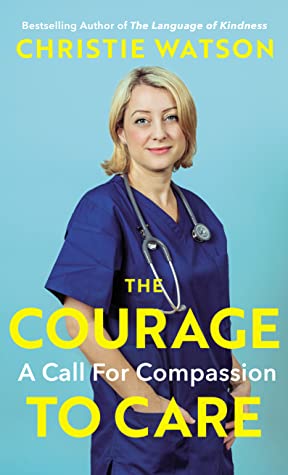 I worried this would be a dull work of polemic; perhaps the title, though stirring, is inapt, as the book is actually a straightforward sequel to Watson’s 2018 memoir about being a nurse, The Language of Kindness. Although, like Bunting, Watson traveled widely to research the state of care in the country, she mostly relies on her own experience of various nursing settings over two decades: a pediatric intensive care unit, home healthcare for the elderly, a children’s oncology day center, a residential home for those with severe physical and learning disabilities, a community mental-health visiting team, and the emergency room. She also shadows military nurses and prison doctors.
With a novelist’s talent for scene-setting and characterization, Watson weaves each patient and incident into a vibrant story. Another strand is about parenthood: giving birth to her daughter and the process of adopting her son – both are now teenagers she raises as a single mother. She affirms the value of everyday care delivered by parents and nurses alike. I was especially struck by the account of a teenage girl who contracted measles (then pneumonia, meningitis and encephalitis) and was left blind and profoundly disabled, all because her parents were antivaxxers. In general, I’ve wearied of doctors’ memoirs composed of obviously anonymized case studies, but I’ll always make an exception for Clarke and Watson because of their gorgeous writing.
Note: Watson had left nursing to write full-time, but explains in an afterword that she returned to critical care in a London hospital during COVID-19.
What I learned:
Empathy is a key term for all three authors. They emphasize that the skills of compassion and listening are just as important as the ability to perform the required medical procedures.
A chilling specific fact I learned: 43,000 people died in the Blitz* in the UK. Pimenta cited that figure and warned that COVID-19 could be worse. And indeed, as of now, over 63,000 people have died of COVID-19 in the UK. The American death toll is even more alarming.
Here are some passages that stood out for me from each book:
Bunting: “Good care is as much an art as a skill, as much competence as tact. … Care is where we make profound collective decisions about the worth of an individual life. … There is no tradition of ageing wisely in the West, unlike in many Asian and African cultures where age has prestige, status and is associated with wisdom … We need to speak about care in a different language, instead of the relentless macho repetition of words such as ‘efficiency’, ‘quality’, ‘driving’, ‘choice’, ‘delivery’ and productivity.’”
Pimenta: “this will be akin to the Blitz*, and … we need to start thinking of it like that. A marathon, not a sprint. … The challenges to come – a second or even third wave, a global recession, climate change, mass misinformation … and political and societal upheaval … – will all require more from all of us if we hope to meet them. The challenge of our generation is not behind us, it is only just beginning. I plan to continue doing something about it, and perhaps now you do as well. So stay informed, stay safe and be kind.”
Watson: “So much of nursing, I think to myself, seems obvious, and yet seeing that need in the first place is difficult and takes experience, training and something extra. … The mundanity of human existence is where I find the most beauty … It takes my breath away: how fragile, extraordinary and vulnerable, how full of hatred and love and obsession and complexity we all are – every single one of us.”
*I highly recommend all of folk artist Kris Drever’s latest album, Where the World Is Thin, but especially the song “Hunker Down / That Old Blitz Spirit,” which has become my lockdown anthem.

If you read just one, though… Make it The Courage to Care by Christie Watson.
 Bookish Beck = Rebecca Foster. American transplant to England. Freelance proofreader and book reviewer.
 Bookish Beck