Margaret Atwood Reading Month: The Door (#MARM)
It’s my fifth year participating in the annual Margaret Atwood Reading Month (#MARM), hosted by indomitable Canadian blogger Marcie of Buried in Print. In previous years for this challenge, I’ve read Surfacing and The Edible Woman, The Robber Bride and Moral Disorder, and Wilderness Tips; and reread The Blind Assassin. Today is Atwood’s 83rd birthday, so what better time to show her some love?
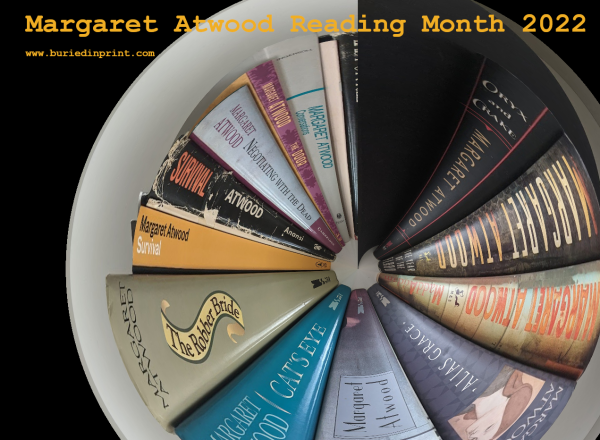
Like the Beatles, she’s worked in so many different genres and styles that I don’t see how anyone could say they don’t like her – you just haven’t explored her oeuvre deeply enough. Although she’s best known for her fiction, she started off as a poet, with a whole five collections published in the 1960s before her first novel appeared. I’d previously read her Eating Fire: Selected Poetry 1965–1995 and Dearly, my top poetry read of 2020.
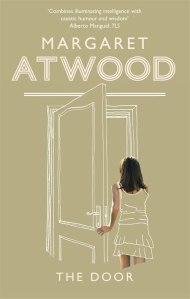 The Door (2007) was at that point her first poetry release in 12 years and features a number of the same themes that permeate her novels and nonfiction: memory, writing, ageing, travel and politics. I particularly like the early poems where she reinhabits memories of childhood and early adulthood, often through objects. Such artifacts are “pocketed as pure mementoes / of some once indelible day,” she writes in “Year of the Hen.”
These are followed by a trilogy about the death of the family’s pet cat, Blackie. “We get too sentimental / over dead animals. / We turn maudlin,” she acknowledges in “Mourning for Cats,” yet “Blackie in Antarctica” injects some humour as she remembers how her sister kept the cat’s corpse in the freezer until she could come home to bury it. Also on the lighter side is a long “where are they now?” update for the Owl and the Pussycat.
There are also meta reflections on poetry, slightly menacing observations on the weather (an implacable, fate-like force) and the seasons (autumn = hunting), virtual visits to the Arctic, mild complaints about the elderly not being taken seriously, and thoughts on duty.
Four in a row muse about war – the Vietnam War in particular, I think? “The Last Rational Man” is a sinister standout, depicting a figure who is doomed under Caligula’s reign. Whoever she may have had in mind when she wrote this, it’s just as relevant 15 years later.
In the final, title poem, which appears to be modelled on the Seven Ages of Man, a door is a metaphor for life’s transitions and, ultimately, for death.
The door swings open:
O god of hinges,
god of long voyages,
you have kept faith.
It’s dark in there.
You confide yourself to the darkness.
You step in.
The door swings closed.
Apart from a few end rhymes, Atwood relies more on theme than on sonic technique or form. That, I think, makes her poetry accessible to those who are new to or suspicious of verse. Happy birthday, M.A., and thank you for your literary wisdom and innovation! (Little Free Library) 
October Poetry Releases: Bergin, Draycott, Lopez, Rizwan, Skoulding
It was a prolific month for poetry. There is so much variety here in form and topic, from the tongue-in-cheek aphorisms of Tara Bergin’s Savage Tales to the maritime and ornithological portrait of Anglesey in Zoë Skoulding’s A Marginal Sea. Something for everyone, I’d like to think, and I hope these capsule reviews and sample poems give you a taste.
Savage Tales by Tara Bergin
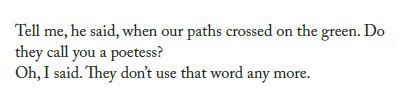
 This is the third collection by the Irish poet; I’d previously read her The Tragic Death of Eleanor Marx. Grouped into nine thematic sections, these very short poems take the form of few-sentence aphorisms or riddles, with the titles, printed in the bottom corner, often acting as something of a punchline – especially because I had them on my e-reader and they only appeared after I’d turned the digital ‘page’. Some appear to be autobiographical, about life for a female academic. Others are political (I loved “Tenants and Landlords”), or about wolves or blackbirds. The verse in “Constructions” takes different shapes on the page. Here are “The Subject Field” and “The Actor”:

With thanks to Carcanet Press for the free e-copy for review.
The Kingdom by Jane Draycott
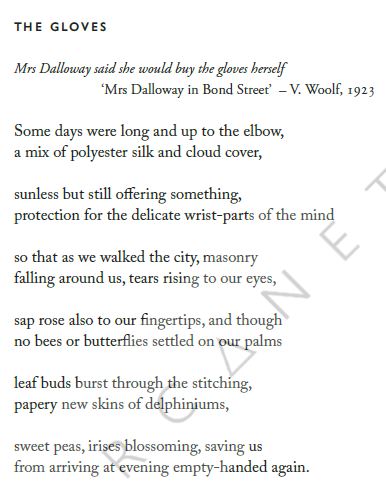
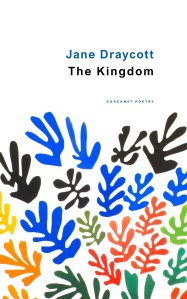 I love the Matisse cut-outs on the cover of Draycott’s fifth collection. The title poem’s archaic spelling (“hyther,” “releyf”) contrast with its picture of a modern woman seeking respite from “the men coming on to you / the taxi drivers saying here jump in no / no you don’t need no money.” Country vs. city, public vs. private, pastoral past and technological future are some of the dichotomies the verse plays with. I enjoyed the alliteration and references to an old English herbarium, Derek Jarman and polar regions. However, it was hard to find overall linking themes to latch onto.
With thanks to Carcanet Press for the free e-copy for review.
We Borrowed Gentleness by J. Estanislao Lopez
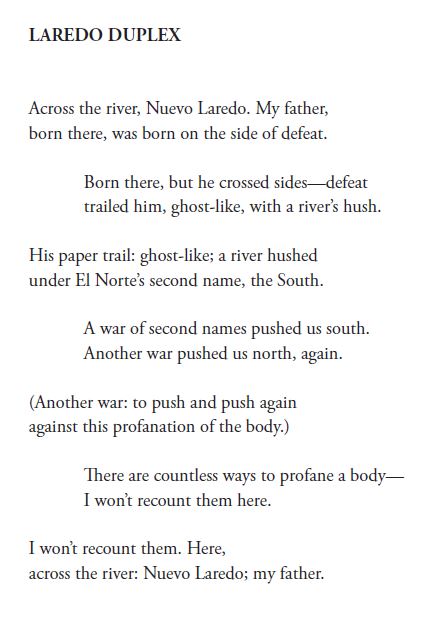
 Brimming with striking metaphors and theological echoes, the first poetry collection by the Houston-based writer is an elegant record of family life on both sides of the Mexican border. “Laredo Duplex” (below) explains how violence prompted the family’s migration. “The Contract” recalls acting as a go-between for a father who didn’t speak English; in “Diáspora” the speaker is dubious about assimilation: “I am losing my brother to whiteness.” The tone is elevated and philosophical (“You take the knife of epistemology and the elegiac fork”), with ample alliteration. Flora and fauna and the Bible are common sources of unexpected metaphors. Lopez tackles big issues of identity, loss and memory in delicate verse suited to readers of Kaveh Akbar. (My full review is on Shelf Awareness.)
With thanks to Alyson Sinclair PR for the free e-copy for review.
Europe, Love Me Back by Rakhshan Rizwan
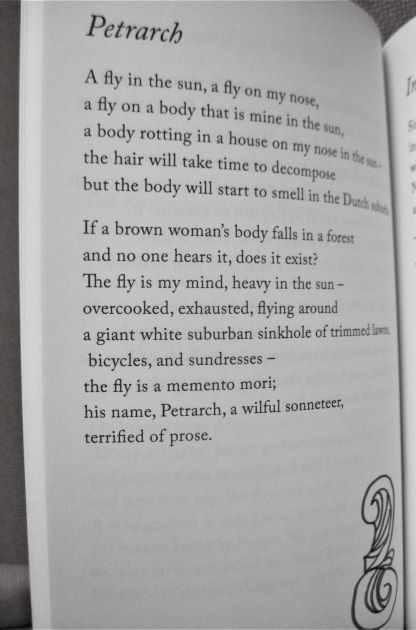
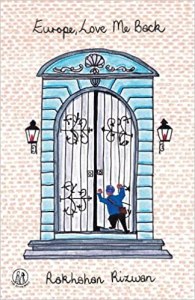 This debut collection has Rizwan juxtaposing East and West, calling out European countries for the prejudice she has experienced as a Muslim Pakistani in academia. She has also lived in the UK and USA, but mostly reflects on time spent in Germany and the Netherlands, where her imperfect grasp of the language was an additional way of standing out. “Adjunct” is the source of the cover image: she knocks and knocks for admittance, but finds herself shut out still. Rizwan takes extended metaphors from marriage, motherhood and women’s health: in “My house is becoming like my country,” she imagines her husband instituting draconian laws; in “I have found in my breast,” a visit to a doctor about a lump only exposes her own exoticism (“Basically, the Muslims are metastasizing”). In “Paris Proper,” she experiences the city differently from a friend because of the colonial history of the art. (See also Liz’s review.)
Some favourite lines:
“my breasts harden / with milk, that peculiar ache of women’s bodies / which do only half the sin / but carry all the history” (from “Half the Sin”)
With thanks to The Emma Press for the proof copy for review.
A Marginal Sea by Zoë Skoulding
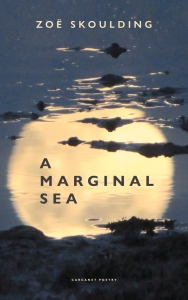 Skoulding’s collection is said to be all about Anglesey in Wales, but from that jumping-off point the poems disperse to consider maps, maritime vocabulary, seabirds, islands, tides and much more. There are also translations from the French, various commissions and collaborations, and pieces about the natural vs. the manmade. Some are in paragraph form and there’s a real variety to how lines and stanzas are laid out on the page. I especially liked “Red Squirrels in Coed Cyrnol.” I’ll read more by Skoulding.
 With thanks to Carcanet Press for the free e-copy for review.
Read any good poetry recently?
September Releases by John Clegg & Tom Gauld (Lots More to Come!)
There aren’t enough hours in the day, or days left in this month, to write up all the terrific September releases I’ve read. The nonfiction fell into two broad thematic camps: books about books (Remainders of the Day by Shaun Bythell and Blurb Your Enthusiasm by Louise Willder still to come), or books about death (What Remains? by Rupert Callender, And Finally by Henry Marsh, and Sinkhole by Juliet Patterson still to come). However, I’ll start off with the two I happen to have written about so far, which are (the odd one out) poetry about science and watery travel, and bookish cartoons. Both:
Aliquot by John Clegg
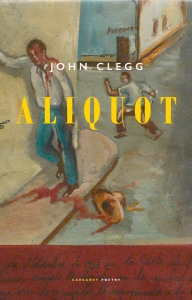 This is the second Carcanet collection by the London bookseller. An aliquot is a sample, a part that represents the whole; a scientific counterpart to synecdoche. It’s a perfect word for what poetry can do: point at larger truths through the pinpricks of meaning found in the everyday. The title poem juxtaposes two moments where the poet muses on the part/whole dichotomy: watching a catering school student and teacher transferring peas from one container to another and spotting two cellists on a tube train. Drawn in by detail, we observe the inevitable movement from separation to togetherness.
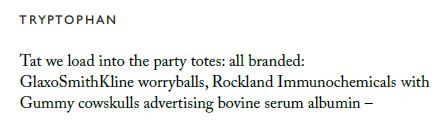
A high point is “A Gene Sequence,” about an administrator working behind the scenes at a genomics conference on a Cambridge campus: each poem is named after a different amino acid and the lines (sometimes with the help of extreme enjambment) always begin with the arrangement of A, C, G, and T that encodes them. Here’s an example:
Much of the imagery is maritime, with the occasional reference to a desert (“Language as Sonora”) or settlement (“Dormer Windows” and “Quebec City”). The locations include a science campus and a storm-threatened hotel (“Hurricane Joaquin,” one of my favourites). A proverb is described as being as potent as a raw onion. Here’s a lynx you’ll never see – but she will see you. Like in a Caroline Bird collection, there’s many an absurd or imagined situation. The vocabulary is unusual, sometimes lofty: “their cursory repertoire of query.” Alliteration teems, as in “The High Lama Explains How Items Are Procured for Shangri-La.” Overall, a noteworthy and unique collection that I’d recommend.
A favourite, apropos of nothing stanza from “Lucan – The Waterline”:
There is a kind of crab known to devour human flesh.
There is a shelf five storeys undersea
Where small yachts pile up like bric-a-brac.
There is a town in Maryland called Alibi.
With thanks to Carcanet for the advanced e-copy for review.
Revenge of the Librarians by Tom Gauld
You have probably seen Gauld’s cartoons in the Guardian, New Scientist or New Yorker. I’ve saved clippings of my favourite bookish ones over the years. They’re full of literary in-jokes and bibliophile problems, and divided about equally between a writer’s perspective and a reader’s: the struggle for inspiration and novelty on the one hand, and the battle with the TBR and the impulse to read what one feels one should versus what one enjoys on the other. He pokes holes in the pretensions on either side. Jane Austen features frequently.
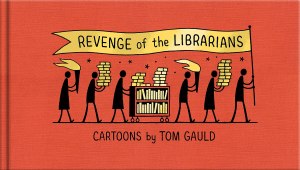
Gauld’s figures are usually blocky stick figures without complete facial features (or books or ghosts), and he often makes use of multiple choice and choose your own adventure structures. Elsewhere he plays around with book titles and typical plots, or stages mild-mannered arguments between authors and their editors or publicists, who generally have quite different notions of quality and marketability.
Lest you dismiss cartoons as being out of touch, the effect of the pandemic on bookshops, libraries and literary events is mentioned a few times. Librarians are depicted as old-time gangsters peddling books while their buildings are closed: “Overdue books are dealt with swiftly and mercilessly” it reads under a panel of a fedora-wearing, revolver-toting figure warning, “The boss says if you ain’t finished ‘The Mirror and the Light’ by tomorrow, it’s curtains!”
Some more favourite lines:
- “1903: Henry James writes a sentence so long and circuitous that he becomes lost inside it for three days.”
- (says one pigeon to another) “I’ve become a psychogeographer. It’s mainly walking around disapproving of gentrification.”
- “A horrible feeling crept over Elaine that perhaps the problems with her novel couldn’t be overcome by changing the font.”
Two spreads that are too good not to share in full (I feel seen!):
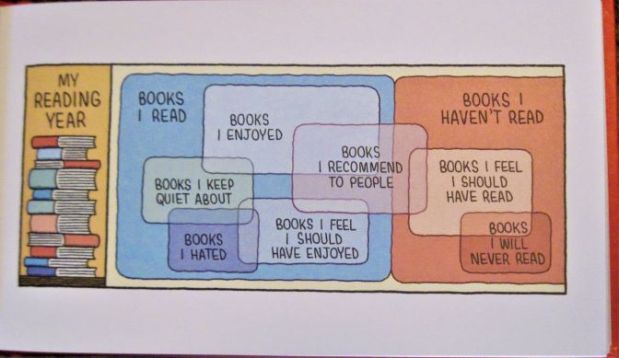

And would you look at this attention to detail on the inside cover!
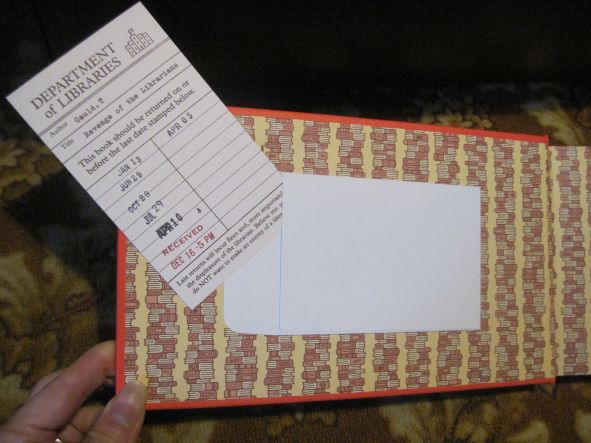
This is destined for many a book-lover’s Christmas stocking.
With thanks to Canongate for the free copy for review.
Tempted to read one of these?
What other September releases can you recommend?
Summery Reads from Holly Hopkins, Sarah McCoy, Phil Stamper and Edith Wharton
Every season, I try to choose a few books that feel appropriate for their settings or titles. A few of these I’ve already mentioned briefly, as part of my heat wave reading suggestions. Much as I love autumn, the end of summer tends to coincide with gloomy musings for me. However, it’s farewell to August with four reasonably cheerful books: a poetry collection about England then and now, city and country; an escapist novel set on the Caribbean island of Mustique in the 1970s; the story of four gay friends going their separate ways for a high school summer of adventure; and a less-tragic-than-expected American classic.
The English Summer by Holly Hopkins (2022)
 Colour, geology and history are major sources of imagery in this debut full-length collection. Churches and cemeteries, museums and manor houses, versus hospitals and rental flats: this is the stuff of a country that has swapped its illustrious past for the dismal reality of the everyday. The collection closes with “England, Where Did You Go?” which ends, “should I get out in search of you, … / I’d be left wandering down dual carriageways, / looking across bean fields and filthy ditches.” Hopkins imagines a government that decides to address climate change by assigning weekly community service hours – nearly twice as many for women, who always bear the greater burden for domestic work.
It’s mostly alliteration, repetition, and internal or slant rhymes here. I particularly liked the pair “Rows of Differently Coloured Houses,” which contrasts bright seaside facades with the “Lakes of postwar pebbledash / grey on grey on grey on grey” seen from a Megabus, and “Stratigraphy,” about the archaeologist’s work. Not many standouts otherwise, but it was still worth a try. (New purchase – the publisher, Penned in the Margins, lured me with a sale)
Mustique Island by Sarah McCoy (2022)
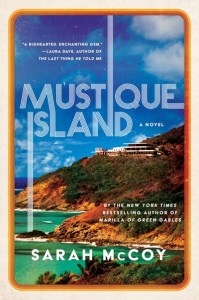 Mustique is a private island in the St. Vincent archipelago that became a playground of the rich and famous in the 1970s, with Princess Margaret and Mick Jagger regular visitors. In McCoy’s novel – inspired by real events and people, and featuring cameos from the aforementioned celebrities as well as the island’s owners at the time, the baron Colin Tennant and his wife, Lady Anne Glenconner (who, I was amused to spot at the library the other day, has written her own fictional tribute to the island, Murder on Mustique) – Willy May, a Texan with a small fortune at her disposal thanks to her divorce from an English brewing magnate, sails in on a private boat and decides to build her own villa on Mustique. She’s uncomfortable with the way locals, who only have service jobs, are sometimes paraded out for colonial displays of pomp. Her two young adult daughters, Hilly and Joanne, later join her. The one has been a model in Paris, where she became addicted to amphetamines.
Love is on the cards for all three main female characters, but there’s heartache along the way as well. Closer to women’s fiction than I generally choose, this was a frothy indulgence that was fun to read but could be shorter and needn’t have tried so hard to make serious points about motherhood and to evoke the time period, e.g., with a list of what’s on the radio. I have also reviewed McCoy’s Marilla of Green Gables. (Offered by publicist via NetGalley)
Golden Boys by Phil Stamper (2022)
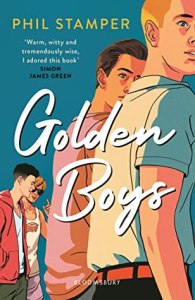 Four gay high schoolers in small-town Ohio look forward to a summer of separate travels for jobs and internships and hope their friendships will stay the course. We have Gabriel, a nature lover off to volunteer for a Boston save-the-trees non-profit; Sal, his friend with benefits, who dreams of bypassing college for a career in politics so interns at his local senator’s office in Washington, DC; Reese, headed to Paris for a fashion design course; and Heath, escaping his parents’ divorce and moving chaos to stay with an aunt and cousin in Florida and work at their beach café. With alternating first-person passages from all four characters, plus transcriptions of their conversation threads, this moves quickly.
Reese has been secretly infatuated with Heath for ages, but three of the four will consider new dating opportunities this summer (the fourth just becomes a workaholic). Secondary characters are pansexual and nonbinary – it’s a whole new world from when I was in high school! Initially, I found the inner monologues too one-note, but I think Stamper’s aim was to recreate the teenage struggle for self-confidence and individuality and has captured that life stage’s inherent anxiety. I also would have trimmed the preparatory stuff; nearly 100 pages before the first of them leaves Ohio is a bit much. This YA novel was a sweet, fun page turner and the perfect replacement to the Heartstopper series as my summer crush. However, I don’t think I was taken enough with the characters to read next year’s projected sequel. (Public library)
Summer by Edith Wharton (1917)
 Charity Royall was born into poverty but brought down the mountain and adopted by a kindly couple into respectable North Dormer society. Mrs. Royall has died before the action starts, but as a young woman Charity still lives with Lawyer Royall, her guardian, and works at the library. When a stranger, Mr. Harney, arrives in their New England town to survey the local architecture, it’s clear right away that he’ll be a romantic prospect for her. “She had always thought of love as something confused and furtive, and he made it as bright and open as the summer air.” However, shame over her lowly origins – she is so snobbish every time she comes into contact with someone from the mountain – continues to plague her.
Although Harney returns her affections and they set up a little love nest in an abandoned house in the woods, uncertainty lingers as to whether he’ll consider marriage to Charity beneath him. This skirts Tess of the d’Urbervilles territory but doesn’t turn nearly as tragic as Ethan Frome (apparently, Wharton called this a favourite among her works, and referred to it as “the Hot Ethan”). Charity isn’t as vain as another Hardy heroine, Bathsheba Everdene; she’s an endearing blend of innocent and worldly, and her realistic reaction to what fate seems to decree feels like about the best one can expect for her time. Melodrama aside, I truly enjoyed the descriptions of a quintessential American summer with picnics and Fourth of July fireworks. Ethan fan or not, you should definitely read this one. (University library)
20 Books of Summer, 14–16: Barba, Bersweden and Solnit
I’m all about flowers today: American wildflowers in poetry and prose, a year of hunting down the flora of the British Isles, and a discursive account of a famous English author’s life and times through the prism of his rose garden.
American Wildflowers: A Literary Field Guide, ed. Susan Barba; illus. Leanne Shapton (2022)
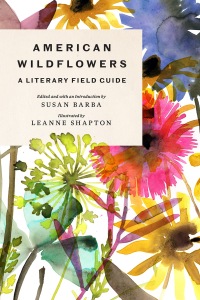 This comes out from Abrams Press in the USA on 8 November and I’ll be reviewing it for Shelf Awareness, so I’ll just give a few brief thoughts for now. Barba is a poet and senior editor for New York Review Books. She has collected pieces from a wide range of American literature, including essays, letters and early travel writings as well as poetry, which dominates.
Apart from a closing section on various/anonymous wildflowers, where particular species are named they are grouped into families, which are arranged alphabetically. The Asteraceae section is particularly strong, with poems on dandelions and sunflowers, a typically prophetic Aldo Leopold fragment about the decline of native flora, and “Asters and Goldenrod,” an extract from Robin Wall Kimmerer’s Braiding Sweetgrass (itself one of my 20 Books of Summer – review to come in the week) that I think was also excerpted in This Book Is a Plant.
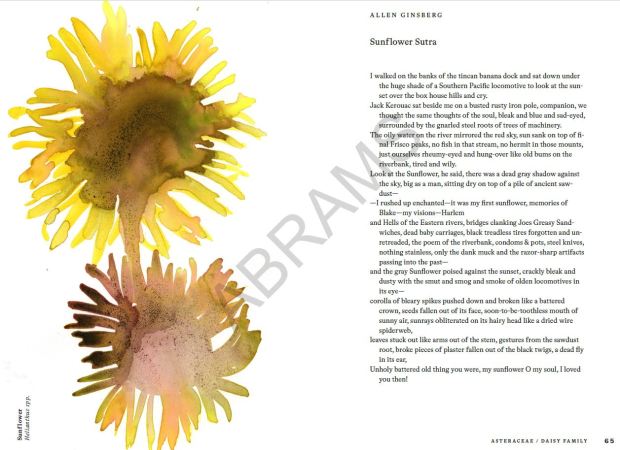
Sample two-page spread with a Leanne Shapton watercolor and part of an Allen Ginsberg poem.
In general, I engaged more with the poetry than with the prose. Barba has ensured a real variety of styles, with good representation for BIPOC. What draws it all together into a beautiful whole I wish I could see as a physical object is Leanne Shapton’s watercolor illustrations, painted from pressed flowers. “What a gift to stare at flowers—these ephemeral miracles of color and synthesis and botany,” she writes in an opening note. This would be a perfect coffee table book for any gardener or nature lover. (E-review copy)
Where the Wildflowers Grow: My Botanical Journey through Britain and Ireland by Leif Bersweden (2022)
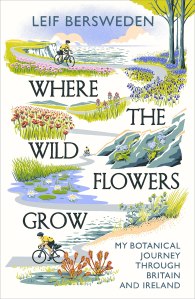 A good case of nominative determinism – the author’s name is pronounced “leaf” – and fun connections abound: during the course of his year-long odyssey, he spends time plant-hunting with Jon Dunn and Sophie Pavelle, whose books featured earlier in my flora-themed summer reading: Orchid Summer and Forget Me Not. With Dunn on Unst, Shetland, he sees not only rare flowers but close-up orcas. Like Pavelle, who he meets up with in Cornwall, he has an eye to how species will be affected by climate change and commits to doing his hunting by train and bike; there’s only so much you can see when zooming by in a car. Bersweden makes a case for spending time with plants – after all, they don’t move, so once you’ve found them you can commune in a way you can’t during, say, a fleeting mammal encounter.
He starts 2021 with a New Year Plant Hunt in central London with his mother – more is in bloom in January than ever before, at least in part due to climate warming. Even when the weather is foul on his travels, there is plenty to be seen. Everywhere he goes, he meets up with fellow experts and plant enthusiasts to marvel at bluebell woodlands or ancient pine forests, alpine or bog species. The floral circuit (documented in full on the book’s website through chapter-by-chapter photographs; there are two small sections of colour plates in the hardback) is also a chance to tour the British Isles, from Kent to Cork, coast to mountaintop.
Bersweden has been in love with plants ever since childhood; he believes they have nostalgia value for many people, and can be an easy way into appreciation of nature. “A wildflower growing from a crack in the wall is an everyday miracle.” His casual writing style and clear zeal for his subject – his author photo is of him hugging a tree, and another has such a cute caption: “Being given the opportunity to hold a Greater Bladderwort (Utricularia vulgaris) was one of the best things that’s ever happened to me!” – make this a pleasure even though it’s a bit overlong at points. (Public library)
Orwell’s Roses by Rebecca Solnit (2021)
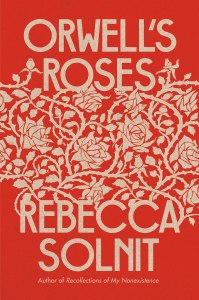 I was fascinated by the concept behind this one. “In the spring of 1936 a writer planted roses” is Solnit’s refrain; from there sprawls a book that’s somehow about everything: botany, geology, history, politics and war – as well as, of course, George Orwell’s life and works (with significant overlap with the graphic novel biography of him that I read last year). On a trip to England with a friend who is a documentary filmmaker, Solnit had the impulse to go find what might be left of Orwell’s garden. When she arrived in the Hertfordshire village of Wallington, the current owners of his home kindly showed her round. His fruit trees had long since been cut down, but the rosebushes were still going strong some 80 years later.
This goes down as a skim for me: though I read the first 30%, after that I just browsed to the end. Some side tracks lost me, e.g. Tina Modotti’s presentation of roses in her photographs; Orwell’s interest in mining, which leads Solnit to investigate how coal is formed; much history; and a week spent observing the rose-growing industry in Colombia. I most enjoyed the book when it stayed close to Orwell’s biography and writings, positing gardening as his way of grounding his ideas in the domestic and practical. “Pursuits like that can bring you back to earth from the ether and the abstractions.” I also liked – briefly, at least – thinking about the metaphorical associations of roses, and flowers in general.
If you’ve read Solnit before, you’ll know that her prose is exquisite, but I think this was the stuff of a long article rather than a full book. As it is, it’s a pretty indulgent project. (Kaggsy reviewed this recently and came to somewhat similar conclusions.) (NetGalley)
20 Books of Summer #11, Review Catch-up, and Wainwright Children’s Picks
Comparing my January–April reading totals with my May–July average, I see that my reading is down 57% over the last few months (at least in terms of number of books finished), and I can only blame the stress and time-consuming processes of moving house and DIY. I feel like I’ve slowed to a crawl through my various challenges, including my 20 Books.
With increasingly apocalyptic news filling my feeds, I find that I simultaneously a) want to retreat into books all the more and b) wonder what the point of all this compulsive reading is. For now, I’m taking as back-up Gretchen Rubin’s motto shared on National Book Lovers Day (“Reading is my tree house and my cubicle, my treadmill and my snow day” – what a perfect summary! It’s playtime, escape, mental exercise, indulgence but also, in some cases, work) and the premise of San Diego philosopher Nick Riggle’s upcoming This Beauty, which I’m reading for an early review: the purpose of life is to participate in and replicate beauty.
20 Books of Summer, #11
From the hedgerows: A collection of short stories on the wildlife, places and people of Newbury District by Lew Lewis (2008)
 The love and appreciation of natural beauty starts at home, and we are lucky here in West Berkshire to have a very good newspaper that still hosts a nature column (currently by beloved local author Nicola Chester). This collection of Newbury Weekly News articles spans 1979 to 1996, with the majority of the pieces from 1990–5. They were contributed by 17 authors, but most are by Lew Lewis (including under a pseudonym).
If you regularly read the Guardian Country Diary feature, you’ll find the format familiar. The general idea is to pick a natural phenomenon that’s seasonal or timely in some way, and write a short essay on it that incorporates context, personal observation, a political conscience and sometimes whimsical or nostalgic musing. Many pieces are about bird sightings; a few are about plants and insects; others celebrate the unique landscapes we have here, like heath and chalk downland. Some are quaint, like an introduction to “ticking” (birders’ list-keeping).
It was faintly depressing to see that we’ve been noting these habitat and species losses and their causes (generally, intensified agriculture) for over 30 years, and haven’t done enough to reverse them. But there are some good news stories, too, like “Return of the Red Kite,” one of our flagship species. This is basically self-published and could have done with some extra proofreading, but the black-and-white illustrations, most by Richard Allen, are charming. I was so pleased to find this on my library reshelving trolley one day. It’s an important artefact of a nature-lover’s heritage. There should be a follow-up volume or two! (Public library)
Review Book Catch-up
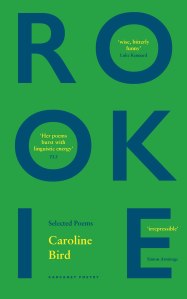 Rookie: Selected Poems by Caroline Bird (2022)
I discovered Caroline Bird early last year through In These Days of Prohibition and her latest collection, The Air Year, was one of my favourite reads of 2021. Part of the joy of working my way through this chronological volume was finding the traces of Bird’s later surrealism. Her first collection, Looking through Letterboxes, was written when she was just 14 and published when she was 16, but you’d never guess that from reading these poems of family, fairy tales and unspecified longing. I particularly liked the first stanza of “Passing the Time”:
Thirty paperclip statues on every table in the house
and things are slightly boring without you.
I’ve knitted a multi-coloured jacket for every woodlouse
in the park. But what can you do?
Trouble Came to the Turnip has some cheeky and randy fare, with the title poem offering a beleaguered couple various dubious means of escape. Watering Can pits monogamy and marriage against divorce and the death of love, via some twisted myths and fairy tales (e.g., Narcissus and Red Riding Hood). “Last Tuesday” is a stand-out. The Hat-Stand Union has more of what I most associate with Bird’s verse: dreams and the surreal. “How the Wild Horse Stopped Me” was a favourite. Mostly, I’m glad I own this so I can have access to the material from her two latest collections, but it was also fun to encounter her earlier style. In an afterword, she writes: “I chose poetry because it let me hide and, once hidden, I could be brave, roll my heart in sequins and chuck it out, glittering, into the street.”
With thanks to Carcanet Press for the free copy for review.
Getting through It: My Year of Cancer during Covid by Helen Epstein (2022)
 Given my love of medical memoirs and my recent obsession with Covid chronicles, this was always going to appeal to me. Epstein, an arts journalist and nonfiction author born in Prague and based in Massachusetts, was diagnosed with endometrial cancer in June 2020. She documents the next year or so in a matter-of-fact diary format, never shying away from the details of symptoms, medical procedures and side effects. Her husband Patrick’s e-mail updates sent out to friends and family, and occasional medical reports, fill in the parts she was less clear on due to fatigue and brain fog – including two small strokes she suffered. Surgery was followed by chemo and then the fraught decision of whether to decline brachytherapy (internal radiation). And, of course, all this was happening at a time when people were less able to see loved ones and rely on their regular diversions. The apt cover conjures up the outdoor chaise longue where Epstein would hold court and receive visitors.
In my mind, cancer patients fall into two camps: those who want to read everything they can about their illness so they know what to expect, and those who avoid thinking about it at all costs. For those in the former group, a no-nonsense book like this will be invaluable. I particularly appreciated Epstein’s attention to her husband’s experience, which she had to dig a little deeper to understand, and her realization that having female cancer brought back memories of childhood sexual molestation. She is also candid about how other people’s emotional demands (e.g., recounting a family member’s illness, or expecting effusive gratitude for small thoughtful acts) weighed on her. A forthright Everywoman’s narrative.
With thanks to the author for the free e-copy for review. Full disclosure: We are acquaintances through a Facebook group for book reviewers.
Wainwright Children’s Prize shortlist
I’ve now read 4 of 7 books on the Wainwright Prize’s Children’s Nature and Conservation Writing shortlist. I’m unlikely to have a chance to read the other three before the winner is announced unless my library system acquires them quickly. Any of the ones I’ve read would make a deserving winner, but the two I review below really grabbed me by the heartstrings and I would be particularly delighted to see one or the other take this inaugural award.
One World: 24 Hours on Planet Earth by Nicola Davies, illus. Jenni Desmond (2022)
 It’s one minute to midnight in London. Two Brown sisters are awake and looking at the moon. A journey of the imagination takes them through the time zones to see the natural spectacles the world has to offer: polar bears hunting at the Arctic Circle, baby turtles scrambling for the sea on an Indian beach, humpback whales breaching in Hawaii, and much more. Each spread has no more than two short paragraphs of text to introduce the landscape and fauna and explain the threats each ecosystem faces due to human influence. As the girls return to London and the clock chimes to welcome in 22 April, Earth Day, the author invites us to feel kinship with the creatures pictured: “They’re part of us, and every breath we take. Our world is fragile and threatened – but still lovely. And now it’s the start of a new day: a day when I’ll speak about these wonders, shout them out”.

A lot of research went into ensuring accuracy, and the environmentalist message is clear but not overstated. Fantastic! (Public library) 
Julia and the Shark by Kiran Millwood Hargrave, illus. Tom de Freston (2021)
 I could never have predicted when I read The Way Past Winter that Hargrave would become one of my favourite contemporary writers. Julia and her parents (and not forgetting the cat, Noodle) are off on an island adventure to Unst, in the north of Shetland, where her father will keep the lighthouse for a summer and her mother, a marine biologist, will search for the Greenland shark, a notably long-lived species she’s researching in hopes of discovering clues to human longevity – a cause close to her heart after her own mother’s death with dementia. Julia makes friends with Kin, a South Asian boy whose family run the island laundromat-cum-library. They watch stars and try to evade local bullies together. But one thing Julia can’t escape is her mother’s mental health struggle (late on named as bipolar: “Mum sometimes bounced around like Tigger, and other times she was mopey like Eeyore”). Julia thinks that if she can find the shark, it might fix her mother.
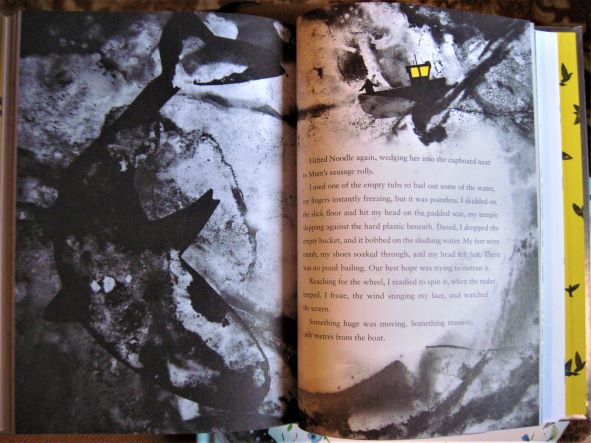
Hargrave treats the shark as both a real creature and a metaphor for all that lurks – all that we fear and don’t understand. It and murmurations of starlings are visual motifs throughout the book, which has a yellow and black colour scheme. Like One World, it’s as beautifully illustrated as it is profound in its messages. Julia is no annoyingly precocious child narrator, just a believable one who shows us her struggling family and the love and magic that get them through. I could see this becoming a modern children’s classic. (Public library)
Review Catch-Up: Herreros, Onyebuchi and Tookey
Quick snapshot reviews as I work through a backlog.
One each today from fiction, nonfiction and poetry: a graphic novel about the life of Georgia O’Keeffe, a personal response to Chimamanda Ngozi Adichie’s Americanah, and a beautiful collection of place-centric verse.
Georgia O’Keeffe by Maria Herreros (2021; 2022)
[Translated from the Spanish by Lawrence Schimel]
 This is the latest in SelfMadeHero’s “Art Masters” series (I’ve also reviewed Gauguin, Munch and Vincent). Madrid-based illustrator Herreros renders O’Keeffe’s life story in an abstract style that feels in keeping with the artist’s own. The book opens in 1915 with O’Keeffe still living in her family home in Virginia and working as an art teacher. Before she ever meets Alfred Stieglitz, she is fascinated by his photography. They fall in love at a distance via a correspondence and later live together in New York City. Their relationship ebbs as she spends more and more time in New Mexico, a desert landscape that inspires many of her most famous paintings. Much of the narrative is provided by O’Keeffe’s own letters (with idiosyncrasies retained); the additional summary text is unfortunately generic, and the urge to cover many years leads to skating over long periods. Still, the erotic attention to detail and the focus on the subject’s dedication to independence made it worthwhile.

With thanks to SelfMadeHero for the free copy for review.
(S)kinfolk: Chimamanda Ngozi Adichie’s Americanah by Tochi Onyebuchi (2021)
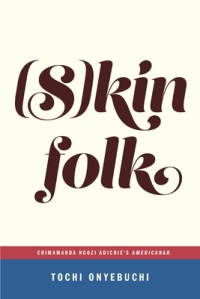 I’ve reviewed six previous releases from Fiction Advocate’s “Afterwords” series (on Blood Meridian, Fun Home, and The Year of Magical Thinking; My Struggle and Wild; and Middlesex). In these short monographs, “acclaimed writers investigate the contemporary classics,” weaving literary criticism into memoir as beloved works reverberate through their lives. Onyebuchi, a Nigerian American author of YA dystopian fiction, chose one of my favourite reads of recent years: Americanah. When he read the novel as a lawyer in training, it was the first time he sensed recognition of his own experiences in literature. He saw his immigrant mother’s situation, the collective triumph of Obama’s election, and his (re)discovery of Black beauty and spaces. Like Ifemelu: he was an outsider to African American identity and had to learn it gradually; and he makes a return trip to Nigeria at the end. I enjoyed this central thread but engaged less with asides about a 2013 visit to the West Bank (for a prisoners’ rights organization) and Frantz Fanon’s work on Algeria.
With thanks to Fiction Advocate for the free e-copy for review.
In the Quaker Hotel by Helen Tookey (2022)
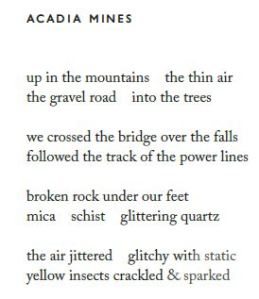
 Tookey’s third collection brings its variety of settings – an austere hotel, Merseyside beaches and woods, the fields and trees of Southern France (via Van Gogh’s paintings), Nova Scotia (she completed a two-week residency at the Elizabeth Bishop House in 2019) – to life as vibrantly as any novel or film could. In recent weeks I’ve taken to pulling out my e-reader as I walk home along the canal path from library volunteering, and this was a perfect companion read for the sunny waterway stroll, especially the poem “Track.” Whether in stanzas, couplets or prose paragraphs, the verse is populated by meticulous images and crystalline musings.
not a loss
something like a clarifying
becoming something you can’t name
There are evanescent encounters (“Leapfrog”) and deep time (“Natural History”); playing with language (“Concession à Perpetuité”) and erasures (“Pool / Other Body”). You’ll find alliteration and ampersands (a trend in contemporary poetry?), close observation of nature, and no trace of cliché. Below are the opening stanzas of a couple of poems to give a flavour:

With thanks to Carcanet Press for the free e-copy for review.
Would you be interested in reading one or more of these?
The Best Books from the First Half of 2022
Yes, it’s that time of year already! At first I thought I wouldn’t have enough 2022-released standouts to fill a post, but the more I looked through my list the more I realized that, actually, it has been a pretty good reading year. It remains to be seen, of course, how many of these will make it onto my overall best-of year list, but for now, these are my highlights. I made it up to an even 20 by including one that doesn’t release until July. Fiction is winning thus far! I give review excerpts below and link to the full text here or elsewhere.
Fiction
 Our Wives under the Sea by Julia Armfield: Miri is relieved to have her wife back when Leah returns from an extended deep-sea expedition. Something went wrong with the craft when it was too late to evacuate, though. Chapters alternate between Miri describing their new abnormal and Leah recalling the voyage. As Miri tries to tackle life admin for both of them, she feels increasingly alone. This is a sensitive study of love, grief and dependency. Armfield gives an increasingly eerie story line a solid emotional foundation.
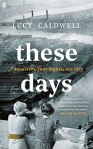 These Days by Lucy Caldwell: A beautiful novel set in Belfast in April 1941. We see the Second World War mostly through the eyes of the Bell family – especially daughters Audrey, engaged to be married to a young doctor, and Emma, in love with a fellow female first aider. The evocation of a time of crisis is excellent. The lack of speech marks, fluid shifting between perspectives, and alternation between past and present tense keep the story from seeming too familiar or generic. All of the female characters have hidden depths.
 Groundskeeping by Lee Cole: In Cole’s debut novel, two aspiring writers meet on a Kentucky college campus and form a romantic connection despite very different backgrounds. There are stereotypes to be overcome as Owen introduces Alma to Kentucky culture and slang. Trump’s election divides families and colleagues. The gentle satire on the pretensions of writing programs is another enjoyable element. Three-dimensional characters, vivid scenes ripe for the Netflix treatment, timely themes and touching relationships: alright!
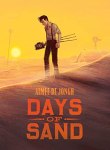 Days of Sand by Aimée de Jongh: This Great Depression-era story was inspired by the work of photographers such as Dorothea Lange. John Clark is following in his father’s footsteps as a photographer, leaving NYC for the Oklahoma panhandle. Locals are suspicious of John as an outsider, especially when they learn he is working to a checklist. Whether a cityscape or the midst of a dust storm, de Jongh’s scenes are stark and evocative. It’s rare for me to find the story and images equally powerful in a graphic novel, but that’s definitely the case here.
 Dance Move by Wendy Erskine: The 11 stories in Erskine’s second collection do just what short fiction needs to: dramatize an encounter, or a moment, that changes life forever. Her characters are ordinary, moving through the dead-end work and family friction that constitute daily existence, until something happens, or rises up in the memory, that disrupts the tedium. Erskine being from Belfast, evidence of the Troubles is never far away. Her writing is blunt and edgy, with no speech marks plus flat dialogue and slang.
 Antipodes by Holly Goddard Jones: Riveting stories of contemporary life in the American South and Midwest. Some have pandemic settings; others are gently magical. All are true to the anxieties of modern careers, marriage and parenthood. Endings elicit a gasp, particularly the audacious inconclusiveness of “Exhaust,” a tense tale of a quarreling couple driving through a blizzard. Worry over environmental crises fuels “Ark,” about a pyramid scheme for doomsday preppers. Nickolas Butler and Lorrie Moore fans will find much to admire.
 Sea of Tranquility by Emily St. John Mandel: This dazzlingly intricate novel blends historical fiction, up-to-the-minute commentary and science-fiction predictions. In 2401, the Time Institute hires Gaspery-Jacques Roberts to investigate a recurring blip in time. Fans of The Glass Hotel will recognize some characters, and those familiar with Station Eleven will find similarities in a pandemic plot that resonates with the Covid-19 experience. How does Mandel do it? One compulsively readable hit after another.
 Very Cold People by Sarah Manguso: The aphoristic style of some of Manguso’s previous books continues here as discrete paragraphs and brief vignettes build to a gloomy portrait of Ruthie’s archetypical affection-starved childhood in the fictional Massachusetts town of Waitsfield in the 1980s and 90s. The depiction of Ruthie’s narcissistic mother is especially acute. So much resonated with me. This is the stuff of girlhood – if not universally, then certainly for the (largely pre-tech) American 1990s as I experienced them.
 How High We Go in the Dark by Sequoia Nagamatsu: Just the right blend of literary fiction and science fiction. Opening in 2031 and stretching another 70 years into the future, this linked short story collection imagines how a pandemic reshapes the world and how communication and connection might continue after death. All but one story are in the first person, so they feel like personal testimonies. The whole is greater than the sum of the parts. The focus on illness and bereavement, but also on the love that survives, made this a winner.
 The Swimmers by Julie Otsuka: Otsuka’s third novel of the Japanese American experience again employs the first-person plural, as well as the second person – rarer perspectives that provide stylistic novelty. The first two chapters are set at a pool that, for the title swimmers, serves as a locus of escape and safety. On the first page we’re introduced to Alice, whose struggle with dementia becomes central. I admired Otsuka’s techniques for moving readers through the minds of the characters, alternating range with profundity and irony with sadness.
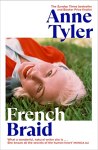 French Braid by Anne Tyler: My 17th from Tyler, and easily her best new work in 18 years. It joins my other favourites such as Dinner at the Homesick Restaurant which reveal a dysfunctional family’s quirks through a close look, in turn, at the various members. Mercy is a painter and essentially moves into her studio, but without announcing it, and her husband Robin spends the next 25+ years pretending they still share a home. Other surprises from Tyler this time: a mild sex scene and a gay character. A return to form. Brava!
Nonfiction
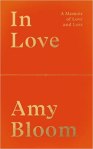 In Love by Amy Bloom: Bloom’s husband, Brian Ameche, was diagnosed with early-onset Alzheimer’s in his mid-60s, having exhibited mild cognitive impairment for several years. Brian quickly resolved to make a dignified exit while he still, mostly, had his faculties. This achieves the perfect tone, mixing black humour with teeth-gritted practicality as Bloom chronicles their relationship, the final preparations, his assisted suicide at Dignitas in Switzerland, and the aftermath. An essential, compelling read.
 Everything Is True by Roopa Farooki: Second-person, present-tense narration drops readers right into the life of a junior doctor. In February 2020, Farooki’s sister Kiron died of breast cancer. During the first 40 days of the initial UK lockdown, she continues to talk to Kiron. Grief opens the door for magic realism. There is also wry humour, wordplay, slang and cursing. A hybrid work that reads as fluidly as a novel while dramatizing real events, this is sure to appeal to people who wouldn’t normally pick up a bereavement or medical memoir.
 Body Work by Melissa Febos: A boldly feminist essay collection that explores how autobiographical writing can help one face regrets and trauma and extract meaning from the “pliable material” of memory. “In Praise of Navel Gazing” affirms the importance of women airing their stories of abuse and thereby challenging the power structures that aim to keep victims silent. “A Big Shitty Party” warns of the dangers of writing about real people. “The Return” employs religious language for the transformation writing can achieve.
 All Down Darkness Wide by Seán Hewitt: This poetic memoir about love and loss in the shadow of mental illness blends biography, queer history and raw personal experience. The book opens, unforgettably, in a Liverpool graveyard where Hewitt has assignations with anonymous men. His secret self, suppressed during teenage years in the closet, flies out to meet other ghosts: of his college boyfriend; of men lost to AIDS during his 1990s childhood; of English poet George Manley Hopkins; and of a former partner who was suicidal. (Coming out on July 12th from Penguin/Vintage (USA) and July 14th from Jonathan Cape (UK). My full review is forthcoming for Shelf Awareness.)
Poetry
 Thorpeness by Alison Brackenbury: This tenth collection features abundant imagery of animals and the seasons. Alliteration is prominent, but there is also a handful of rhymes. Family history and the perhaps-idyllic rural underpin the verse set in Lincolnshire and Gloucestershire as Brackenbury searches for ancestral graves and delivers elegies. I especially loved “Aunt Margaret’s Pudding,” a multipart poem about her grandmother’s life. There are also playful meetings between historical figures.
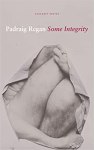 Some Integrity by Padraig Regan: The sensual poems in this debut collection are driven by curiosity, hunger and queer desire. Flora and foods are described as teasing mystery, with cheeky detail. An unusual devotion to ampersands; an erotic response to statuary; alternating between bold sexuality and masochism to the point of not even wanting to exist; a central essay on the Orlando nightclub shooting and videogames – the book kept surprising me. I loved the fertile imagery, and appreciated Regan’s exploration of a nonbinary identity.
 Love Poems in Quarantine by Sarah Ruhl: Having read Ruhl’s memoir Smile, I recognized the contours of her life and the members of her family. Cooking and laundry recur: everyday duties mark time as she tries to write and supervises virtual learning for three children. “Let this all be poetry,” she incants. Part 2 contains poems written after George Floyd’s murder, the structure mimicking the abrupt change in focus for a nation. Part 3’s haiku and tanka culminate in a series on the seasons. A welcome addition to the body of Covid-19 literature.
 Rise and Float by Brian Tierney: Although it tackles heavy subjects like grief and mental health, the collection’s candor and stunning images transform the melancholy into the sublime. Much of the verse is in the first person, building an intimate portrait of the poet and his relationships. A family history of mental illness and electroshock treatment occasions a visit to a derelict psychiatric hospital. Recurring metaphors of holes dramatize a struggle against the void. Tierney’s close attention lends beauty to bleak scenes.
 Vinegar Hill by Colm Tóibín: I didn’t realize when I started that this was Tóibín’s debut collection; so confident is his verse, I assumed he’d been publishing poetry for decades. There’s a wide range of tone, structures and topics. Bereavements and chemotherapy are part of a relatable current events background. Irish-Catholic nostalgia animates a witty sequence from “The Nun” to “Vatican II.” Come along on armchair travels. Poems are based around anecdotes or painterly observations. The line breaks are unfailingly fascinating.
What are some of the best books you’ve read so far this year?
What 2022 releases do I need to catch up on right away?
The Poet by Louisa Reid (Blog Tour Review)
The Poet lured me with the prospect of a novel in verse (Girl, Woman, Other and Mary Ann Sate, Imbecile are two others I would recommend) and the theme of a female poet caught up in a destructive relationship with her former professor. Emma Eliot published a poetry collection at age 21 before embarking on an abandoned PhD on Charlotte Mew. Tom Abbot, a charming Oxford don in his early forties, left his wife and daughters for her, but Emma has found that the housewife existence doesn’t suit her and longs to return to academia. Tom relies on Emma to boost his ego, play stepmum and help him with his publications, but scorns her working-class upbringing and can’t conceive of her having her own life and desires.

Tom’s students and ex-wife commiserate with Emma over his arrogance, but in the end it’s up to her whether she’ll break free. She tells her story of betrayal, gaslighting and the search for revenge in free verse that flows effortlessly. Sometimes her words are addressed to Tom:
Miles of misunderstanding waver
between us
Anything would be better than the stink
of your
superiority.
– and other times to the reader.
Give me the confidence of a mediocre white man
who thinks he has the right to
a woman’s work –
her words
and womb –
and everything else.
if the bed seems too big
then perhaps that is because I have shrunk
to fit the space,
or am lost in the wasteland of what was.
There are a few poetry in-jokes like that one, with Emma quoting Emily Dickinson and Tom likening her early work to Sylvia Plath’s. Usually this feels like reading fiction rather than poetry, though the occasional passage where alliteration and internal rhymes bloom remind you that Emma is meant to be an accomplished poet.
I wanted to sit in a book-lined room
wombed in words.
I didn’t see the tomb that waited
for the woman
who underrated herself.
That said, I didn’t particularly rate this qua poetry, and the storytelling style wasn’t really enough to make a rather thin story stand out. Still, I’d recommend it to poetry-phobes, as well as to readers of The Wife by Meg Wolitzer and especially Here Is the Beehive by Sarah Crossan (who, like Reid, wrote YA fiction before producing an adult novel in verse).
My thanks to Doubleday and Anne Cater of Random Things Tours for my proof copy for review.
I was delighted to be part of the blog tour for The Poet. See below for details of where other reviews have appeared or will be appearing soon.
20 Books of Summer, 1–3: Hargrave, Powles & Stewart
Plants mirror minds,
Healing, harming powers
Growing green thoughts.
(First stanza of “Plants Mirror Minds” from The Facebook of the Dead by Valerie Laws)
Here are my first three selections for my flora-themed summer reading. I hope to get through more of my own books, as opposed to library books and review copies, as the months go on. Today I have one of each from fiction, nonfiction and poetry, with the settings ranging from 16th-century Alsace to late-20th-century Spain.
The Dance Tree by Kiran Millwood Hargrave (2022)
 Kiran Millwood Hargrave is one of my favourite new voices in historical fiction (she had written fiction for children and young adults before 2020’s The Mercies). Both novels hit the absolute sweet spot between the literary and women’s fiction camps, choosing a lesser-known time period and incident and filling in the background with sumptuous detail and language. Both also consider situations in which women, queer people and other cultural minorities were oppressed, and imagine characters pushing against those boundaries in affirming but authentic-feeling ways.
The setting is Strasbourg in the sweltering summer of 1518, when a dancing plague (choreomania) hit and hundreds of women engaged in frenzied public dancing, often until their feet bled or even, allegedly, until 15 per day dropped dead. Lisbet observes this all at close hand through her sister-in-law and best friend, who get caught up in the dancing. In the final trimester of pregnancy at last after the loss of many pregnancies and babies, Lisbet tends to the family beekeeping enterprise while her husband is away, but gets distracted when two musicians (brought in to accompany the dancers; an early strategy before the council cracked down), one a Turk, lodge with her and her mother-in-law. The dance tree, where she commemorates her lost children, is her refuge away from the chaos enveloping the city. She’s a naive point-of-view character who quickly has her eyes opened about different ways of living. “It takes courage, to love beyond what others deem the right boundaries.”
This is likely to attract readers of Hamnet; I was also reminded of The Sleeping Beauties, in that the author’s note discusses the possibility that the dancing plagues were an example of a mass hysteria that arose in response to religious restrictions. (Public library)
Magnolia by Nina Mingya Powles (2020)
 (Powles also kicked off my 2020 food-themed summer reading.) This came out from Nine Arches Press and a small New Zealand press two years ago but is being published in the USA by Tin House in August. I’ve reviewed it for Shelf Awareness in advance of that release. Those who are new to Powles’s work should enjoy her trademark blend of themes in this poetry collection. She’s mixed race and writes about crossing cultural and language boundaries – especially trying to express herself in Chinese and Hakka. Often, food is her way of embodying split loyalties and love for her heritage. I noted the alliteration in “Layers of silken tofu float in the shape of a lotus slowly opening under swirls of soy sauce.” Magnolia is the literal translation of “Mulan,” and that Disney movie and a few other films play a major role here, as do writers Eileen Chang and Robin Hyde. My issue with the book is that it doesn’t feel sufficiently different from her essay collections that I’ve read – the other is Small Bodies of Water – especially given that many of the poems are in prose paragraphs. [Update: I dug out my copy of Small Bodies of Water from a box and found that, indeed, one piece had felt awfully familiar for a reason: that book contains a revised version of “Falling City” (about Eileen Chang’s Shanghai apartment), which first appeared here.] (Read via Edelweiss)
A Parrot in the Pepper Tree by Chris Stewart (2002)
 It’s at least 10 years ago, probably nearer 15, that I read Driving over Lemons, the first in Stewart’s eventual trilogy about buying a remote farm in Andalusia. His books are in the Peter Mayle vein, low-key and humorous: an Englishman finds the good life abroad and tells amusing anecdotes about the locals and his own mishaps.
This sequel stood out for me a little more than the previous book, if only because I mostly read it in Spain. It’s in discrete essays, some of which look back on his earlier life. He was a founding member of Genesis and very briefly the band’s drummer; and to make some cash for the farm he used to rent himself out as a sheep shearer, including during winters in Sweden.
To start with, they were really very isolated, such that getting a telephone line put in revolutionized their lives. By this time, his first book had become something of a literary sensation, so he reflects on its composition and early reception, remembering when the Mail sent a clueless reporter out to find him. Spanish bureaucracy becomes a key element, especially when it looks like their land might be flooded by the building of a dam. Despite that vague sense of dread, this was good fun. (Public library) 

 Bookish Beck = Rebecca Foster. American transplant to England. Freelance proofreader and book reviewer.
 Bookish Beck