Other 2019 Superlatives and Some Statistics
My best discoveries of the year: The poetry of Tishani Doshi; Penelope Lively and Elizabeth Strout (whom I’d read before but not fully appreciated until this year); also, the classic nature writing of Edwin Way Teale.


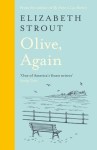
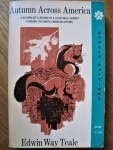
The authors I read the most by this year: Margaret Atwood and Janet Frame (each: 2 whole books plus parts of 2 more), followed by Doris Lessing (2 whole books plus part of 1 more), followed by Miriam Darlington, Paul Gallico, Penelope Lively, Rachel Mann and Ben Smith (each: 2 books).
Debut authors whose next work I’m most looking forward to: John Englehardt, Elizabeth Macneal, Stephen Rutt, Gail Simmons and Lara Williams.
My proudest reading achievement: A 613-page novel in verse (Mary Ann Sate, Imbecile by Alice Jolly) + 2 more books of over 600 pages (East of Eden by John Steinbeck and Cutting for Stone by Abraham Verghese).


Best book club selection: Red Dust Road by Jackie Kay was our first nonfiction book and received our highest score ever.
Some best first lines encountered this year:
 “What can you say about a twenty-five-year old girl who died?” (Love Story by Erich Segal)
- “The women of this family leaned towards extremes” (Away by Jane Urquhart)
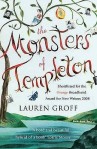
- “The day I returned to Templeton steeped in disgrace, the fifty-foot corpse of a monster surfaced in Lake Glimmerglass.” (from The Monsters of Templeton by Lauren Groff)
The downright strangest book I read this year: Lanny by Max Porter
The 2019 books everybody else loved (or so it seems), but I didn’t: Fleishman Is in Trouble by Taffy Brodesser-Akner, The Topeka School by Ben Lerner, Underland by Robert Macfarlane, The Boy, The Mole, The Fox and The Horse by Charlie Mackesy, Three Women by Lisa Taddeo and The Nickel Boys by Colson Whitehead
 The year’s major disappointments: Cape May by Chip Cheek, We Are the Weather: Saving the Planet Begins at Breakfast by Jonathan Safran Foer, Letters to the Earth: Writing to a Planet in Crisis, ed. Anna Hope et al., Bowlaway by Elizabeth McCracken, Rough Magic: Riding the World’s Loneliest Horse Race by Lara Prior-Palmer, The Lager Queen of Minnesota by J. Ryan Stradal, The Knife’s Edge by Stephen Westaby and Frankissstein by Jeanette Winterson
The worst book I read this year: Jonathan Livingston Seagull by Richard Bach
Some statistics on my 2019 reading:
Fiction: 45.4%
Nonfiction: 43.4%
Poetry: 11.2%
(As usual, fiction and nonfiction are neck and neck. I read a bit more poetry this year than last.)
Male author: 39.4%
Female author: 58.9%
Nonbinary author (the first time this category has been applicable for me): 0.85%
Multiple genders (anthologies): 0.85%
(I’ve said this the past three years: I find it interesting that female authors significantly outweigh male authors in my reading; I have never consciously set out to read more books by women.)
E-books: 10.3%
Print books: 89.7%
(My e-book reading has been declining year on year, partially because I’ve cut back on the reviewing gigs that involve only reading e-books and partially because I’ve done less traveling; also, increasingly, I find that I just prefer to sit down with a big stack of print books.)
Work in translation: 7.2%
(Lower than I’d like, but better than last year’s 4.8%.)
Where my books came from for the whole year:
- Free print or e-copy from publisher: 36.8%
- Public library: 21.3%
- Secondhand purchase: 13.8%
- Free (giveaways, The Book Thing of Baltimore, the free mall bookshop, etc.): 9.2%
- Downloaded from NetGalley, Edelweiss or Project Gutenberg: 7.8%
- Gifts: 4.3%
- University library: 2.9%
- New purchase (usually at a bargain price): 2.9%
- Church theological library: 0.8%
- Borrowed: 0.2%
(Review copies accounted for over a third of my reading; I’m going to scale way back on this next year. My library reading was similar to last year’s; my e-book reading decreased in general; I read more books that I either bought new or got for free.)
Number of unread print books in the house: 440
(Last thing I knew the figure was more like 300, so this is rather alarming. I blame the free mall bookshop, where I volunteer every Friday. Most weeks I end up bringing home at least a few books, but it’s often a whole stack. Surely you understand. Free books! No strings attached!)
Final Book Serendipity Incidents to Close out 2019
Just a short post this time. I call it serendipitous when two or more books that I’m reading at the same time or in quick succession have something pretty bizarre in common. Because I have so many books on the go at once – usually between 10 and 20 – I guess I’m more prone to such incidents. I post these occasional reading coincidences on Twitter. What’s the weirdest one you’ve had lately? (The following are in rough chronological order.)
[Previous 2019 Book Serendipity posts covered April, July and October.]
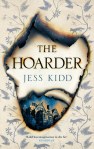
- Characters sit for a portrait in The Confession by Jessie Burton and The Hoarder by Jess Kidd.
- An obsession with saints in Fifth Business by Robertson Davies and The Hoarder by Jess Kidd.

- A mention of the urban myth regarding why our fingertips prune in water (something about an outdated evolutionary strategy for gripping underwater) in The Body by Bill Bryson and Humiliation: Stories by Paulina Flores.
- Memories of childhood trips to Martha’s Vineyard in Chances Are by Richard Russo and The Dearly Beloved by Cara Wall.
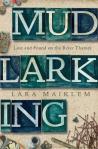
- The River Thames is the setting for Mudlarking by Lara Maiklem and Once Upon a River by Diane Setterfield.

- Mentions of pelicans being clubbed to death in God Unbound: Theology in the Wild by Brian McLaren and Autumn Across America by Edwin Way Teale.
- A character who speaks and writes backwards words in The Poisonwood Bible and The Robber Bride.
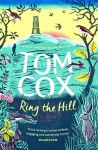
- Epigraphs containing folk names for the hare, and soon enough a dead hare, in Ring the Hill by Tom Cox and Starve Acre by Andrew Michael Hurley.

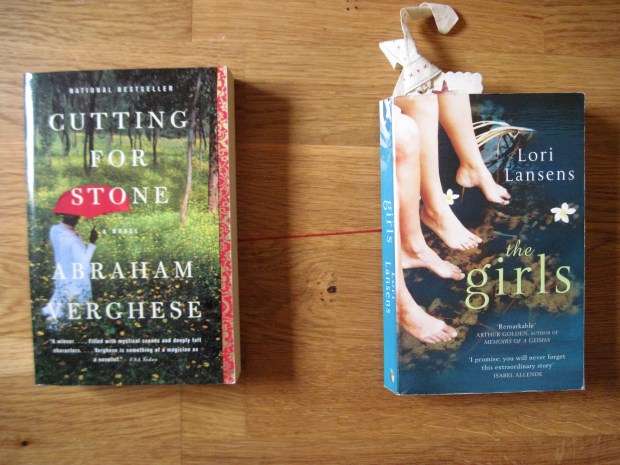
- An unexpected THIRD set of conjoined twins encountered this year (after Cutting for Stone and The Girls) in Fall on Your Knees by Ann-Marie Macdonald.
- The song “Oh My Darling, Clementine” is quoted in The Robber Bride and Fall on Your Knees.
- Warming an orphaned lamb in a low oven in Moral Disorder by Margaret Atwood and The Dig by Cynan Jones.
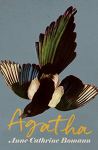
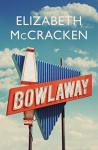
- A character is presumed incapable of laughter in Agatha by Anne Cathrine Bomann and Bowlaway by Elizabeth McCracken.
- Marilynne Robinson’s Housekeeping is mentioned in The River Capture by Mary Costello and Surrender by Joanna Pocock.
America Reading & Book Haul, Etc.
The wedding of a college friend – who I calculated I’ve known at least half my life – was the excuse we needed to book a trip back to the States for the last two weeks of May. Along with the classy nuptials in the Fell’s Point area of Baltimore, we enjoyed a day’s sightseeing in Philadelphia, a couple of outings to watch birds and other wildlife on Cape May (a migration hotspot in New Jersey), two meet-ups with other friends, and plenty of relaxation time with my mom and sister, including a Memorial Day picnic at my mom’s retirement community and a tour of Antietam Battlefield. It was much hotter than anticipated, including some days in the high 80s or even 90s, and the hayfever, ticks and mosquitoes were bad, too, but we survived.


While back in Maryland I continued the intermittent downsizing process I’ve been going through for a while now. After being on the market for nearly a year, my family home finally sold and went to closing while we were over there. So that provided a scrap of closure, but my current estrangement from my father (we don’t even know where he’s living) means there’s a lot of continuing uncertainty.
In any case, I managed to reduce the number of boxes I’m storing with my sister from 29 to 20 by recycling lots of my old schoolwork, consolidating my mementos, reselling one box of books and donating another, donating a box of figurines and decorative bottles to a thrift store, displaying some at my mom’s place, giving away a few trinkets to a friend’s kids, and packing a bunch of stuff – photo albums and decorations as well as 64 books – in our various suitcases and hand luggage to take back to the UK.


And I also acquired more books, of course! A whopping 46 of these were free: eight review copies were waiting for me at my mom’s place; three were from the outdoor free bin at 2nd & Charles, a secondhand bookstore; one was found in a Little Free Library near our friends’ place in New Jersey (Emerald City by Jennifer Egan, not pictured); and the rest were from The Book Thing of Baltimore, a legendary volunteer-run free bookshop. I mostly raided the biography section for an excellent selection of women’s life writing; the fiction is unalphabetized so harder to find anything in, but I picked up a few novels, too. My only purchases were new (remainder) copies of one novel and one memoir from Dollar Tree. Total book spending on the trip: just $2.12.
What I Read:
Two that I’d already started but finished on the plane ride over:
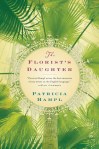 The Florist’s Daughter by Patricia Hampl: (As featured in my spring reading list.) “Love and flowers, death and flowers.” Poetic writing about small-town Minnesota life, a tense relationship with her late mother, and her late father’s flower shop.
- The Girls by Lori Lansens: I love reading about sister relationships, and the Darlen girls’ situation is an extreme case of love and jealousy given that they literally can’t get away from each other. Not as good as the two other conjoined-twin novels I’ve read, Chang and Eng by Darin Strauss and Cutting for Stone by Abraham Verghese, but I would read more from Lansens, a solid Oprah Book Club sort of author.

Three review books that will be featuring here in the near future:
- Goulash by Brian Kimberling

- Sorry I’m Late, I Didn’t Want to Come: An Introvert’s Year of Living Dangerously by Jessica Pan
- Mother Ship by Francesca Segal
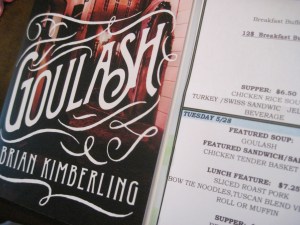
A few quick reads:
 A Certain Loneliness: A Memoir by Sandra Gail Lambert: (A proof copy passed on by an online book reviewing friend.) A memoir in 29 essays about living with the effects of severe polio. Most of the pieces were previously published in literary magazines. While not all are specifically about the author’s disability, the challenges of life in a wheelchair seep in whether she’s writing about managing a feminist bookstore or going on camping and kayaking adventures in Florida’s swamps. I was reminded at times of Constellations by Sinéad Gleeson.
  No Happy Endings: A Memoir by Nora McInerny: (Borrowed from my sister.) I didn’t appreciate this as much as the author’s first memoir, It’s Okay to Laugh, though it’s in the same style: lots of short, witty but bittersweet essays reflecting on life’s losses. Within a year of being widowed by cancer, she met a new partner and soon was – surprise! – pregnant with his baby. Together they formed a blended family of four children ranging from 0 to 15 and two wounded adults. McInerny also writes about her newfound spirituality and feminism. The problem with the essay format is that she cycles through aspects of the same stories multiple times.
  Native Guard by Natasha Trethewey: (Free from 2nd & Charles.) Trethewey writes beautifully disciplined verse about her mixed-race upbringing in Mississippi, her mother’s death and the South’s legacy of racial injustice. She occasionally rhymes, but more often employs forms that involve repeated lines or words. The title sequence concerns a black Civil War regiment in Louisiana. Two favorites from this Pulitzer-winning collection by a former U.S. poet laureate were “Letter” and “Miscegenation”; stand-out passages include “In my dream, / the ghost of history lies down beside me, // rolls over, pins me beneath a heavy arm” (from “Pilgrimage”) and “I return / to Mississippi, state that made a crime // of me — mulatto, half-breed” (from “South”).
 I also read the first half or more of: The Music Shop by Rachel Joyce, my June book club book; Hungry by Jeff Gordinier, a journalist’s travelogue of his foodie journeys with René Redzepi of Noma fame, coming out in July; and the brand-new novel In West Mills by De’Shawn Charles Winslow – these last two are for upcoming BookBrowse reviews.
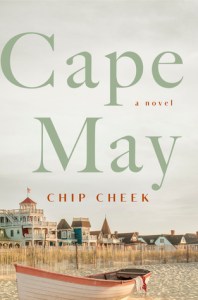
But the book I was most smug to have on my reading list for the trip was the recent novel Cape May by Chip Cheek. What could be more perfect for reading on location? I asked myself. Unfortunately, it stood out for the wrong reasons. In October 1957 a young pair of virgins, Effie and Henry, travel from Georgia to New Jersey for an off-season honeymoon in her uncle’s vacation home. They’re happy enough with each other but underwhelmed with the place (strangely, this matched my experience of Cape May), and even consider going home early until they fall in with Clara, a friend of Effie’s cousin; Clara’s lover, Max; and Max’s younger sister, Alma. Effie and Henry join the others for nightly drunken revelry.
[SPOILERS!] As the weeks pass Effie, ill and dejected, almost seems to disappear as Cheek delves into Henry’s besotted shenanigans, described in unnecessarily explicit sexual detail. When Effie makes a bid or two for her own sexual freedom late on, it only emphasizes the injustice of spending so much time foregrounding Henry’s perspective. Despite the strength of the period atmosphere and seaside location, this ends up being dull and dated. If you’re after a typically ‘trashy’ beach read and don’t mind lots of sex scenes, you may get on with it better than I did. 

Reading a few pages of Cape May over an ice-cold G&T at the wedding reception.
Bonus bookishness:
Vineland, New Jersey was on the way from our friends’ house to Cape May, so we stopped to take my proof copy of Barbara Kingsolver’s Unsheltered to its spiritual home. Alas, Vineland is an utterly boring small American town. However, Mary Treat at least appears on a painted mural on a building on the main street. The Historical Society, where Kingsolver did her research, was closed, but we photographed the outside.


What’s the last book you read ‘on location’? Did it work out well for you?
One Book Leads to Another (Including Shepherds’ Memoirs)
Reading about a particular topic, time period or type of character often leads me to want to read more about the same thing. This isn’t the same as what I call “book serendipity,” when such connections happen purely coincidentally; instead, it’s a deliberate way of following a thread of interest further. I keep meaning to read more about lighthouses, butterflies and Virginia Woolf, for instance. Some attempts are more successful than others, though.
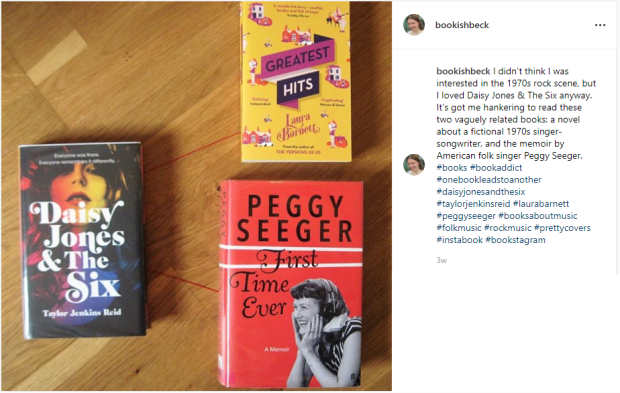
Alas, I had to return the Peggy Seeger memoir to the library unread because it was requested after me, and I haven’t found the immediate spur to pick up Greatest Hits yet.
However, soon after I finished one novel about conjoined twins, Abraham Verghese’s Cutting for Stone, I launched straight into another one, Lori Lansens’ The Girls. I’m halfway through and it’s great so far. (Another I’d recommend is Chang and Eng by Darin Strauss, about the original “Siamese twins.”)
This spring I realized that I’d read four and a bit shepherds’ memoirs in 17 months, which is quite the concentration considering I’m not a countryside gal. Here’s how I’d rank the five:
#1: A Farmer’s Diary: A Year at High House Farm by Sally Urwin
 Urwin is a charming guide to a year in the life of her working farm in Northumberland. Just don’t make the mistake of dismissing her as “the farmer’s wife.” She may only be 4 foot 10 (her Twitter handle is @pintsizedfarmer and her biography describes her as “(probably) the shortest farmer in England”), but her struggles to find attractive waterproofs don’t stop her from putting in hard labor to tend to the daily needs of a 200-strong flock of sheep.
From mating the ewes to preparing the next year’s lambs for market, we see the whole cycle once through and about to start again. Lambing is a fraught couple of months that form the heart of the book, but there are plenty of other challenges, including stolen sheep, fallen trees, and constant financial concerns that lead to a petition to the Royal Agricultural Benevolent Institution for help paying the gas bill and keeping food on the table for their two kids.
Despite the year’s setbacks, Urwin has an indomitable spirit and writes in a chatty, chin-up style that reflects the book’s origin in blog posts from 2017 to 2018. She gets a lot of comic mileage out of her yo-yo dieting, the many escapades of Candy the fat pony, and quirky English traditions like the village fete. I enjoy reading about people’s daily habits through a diary, and all the better when it’s a lifestyle that’s totally foreign to me.
#2: The Sheep Stell by Janet White
 First published in 1991, The Sheep Stell taps into a widespread feeling that we have become cut off from the natural world and that existing in communion with animals is a healthier lifestyle. White’s pleasantly nostalgic memoir tells of finding contentment in the countryside, first on her own and later with a dearly loved family. It is both an evocative picture of a life adapted to seasonal rhythms and an arresting account of the casual sexism – and even violence – White experienced in a traditionally male vocation when she emigrated to New Zealand in 1953. From solitary youthful adventures that recall Gerald Durrell’s and Patrick Leigh Fermor’s to a more settled domestic life with animals reminiscent of the writings of James Herriot and Doreen Tovey, White’s story is unfailingly enjoyable. (I reviewed it for the Times Literary Supplement last year.)
#3: On Sheep: Diary of a Swedish Shepherd by Axel Lindén
(translated from the Swedish by Frank Perry)
 Axel Lindén left his hipster Stockholm existence behind to take on his parents’ rural collective. On Sheep documents two years in his life as a shepherd aspiring to self-sufficiency and a small-scale model of food production. The diary entries range from a couple of words (“Silage; wet”) to several pages, and tend to cluster around busy times on the farm. The author expresses genuine concern for the sheep’s wellbeing. However, he cannily avoids anthropomorphism, insisting that his loyalty must be to the whole flock rather than to individual animals. The brevity and selectiveness of the diary keep the everyday tasks from becoming tiresome. Instead, the rural routines are comforting, even humbling.
 #4: The Shepherd’s Life by James Rebanks
My husband valued this more as a memoir than as a cultural document; the opposite was true for me. As a memoir it’s fairly unexceptional, but it’s valuable as a picture of a rare and dwindling way of life in the British countryside.
#5: Heida: A Shepherd at the Edge of the World by Steinunn Sigurðardóttir
(translated from the Icelandic by Philip Roughton)
 DNF after 53 pages. I was offered a proof copy by the publisher on Twitter. I thought it would be interesting to hear about a female Icelandic shepherd who was a model before taking over her family farm and then reluctantly went into politics to try to block a hydroelectric power station on her land. Unfortunately, though, the book is scattered and barely competently written. It doesn’t help that the proof is error-strewn. [This mini-review has been corrected to reflect the fact that, unlike what is printed on the proof copy, the sole author is Steinunn Sigurðardóttir, who has written the book as if from Heiða Ásgeirsdóttir’s perspective.]
What’s the last major reading theme you’ve had?
Can I tempt you with a sheep-herding memoir?
We’re off to America tomorrow for two weeks for a holiday plus family time and a college friend’s wedding. While I won’t be particularly communicative on others’ blogs or social media, I’m scheduling a few blogs per week that we’re away. Back on June 3rd – just in time for the start of 20 Books of Summer!

Here’s the stack of books I’ve packed – with plenty more waiting for me over there and my Kindle providing some 400 backups.
Book Serendipity Incidents of 2019 (So Far)
I’ve continued to post my occasional reading coincidences on Twitter and/or Instagram. This is when two or more books that I’m reading at the same time or in quick succession have something pretty bizarre in common. Because I have so many books on the go at once – usually between 10 and 20 – I guess I’m more prone to such serendipitous incidents. (The following are in rough chronological order.)
What’s the weirdest coincidence you’ve had lately?
- Two titles that sound dubious about miracles: There Will Be No Miracles Here by Casey Gerald and The Unwinding of the Miracle: A Memoir of Life, Death, and Everything that Comes After by Julie Yip-Williams

- Two titles featuring light: A Light Song of Light by Kei Miller and The Age of Light by Whitney Scharer
- Grey Poupon mustard (and its snooty associations, as captured in the TV commercials) mentioned in There Will Be No Miracles Here by Casey Gerald and Drinking: A Love Story by Caroline Knapp
 “I Wanna Dance with Somebody” (the Whitney Houston song) referenced in There Will Be No Miracles Here by Casey Gerald and Don’t Call Us Dead by Danez Smith
- Two books have an on/off boyfriend named Julian: Drinking: A Love Story by Caroline Knapp and Extinctions by Josephine Wilson
- There’s an Aunt Marjorie in When I Had a Little Sister by Catherine Simpson and Extinctions by Josephine Wilson


- Set (at least partially) in a Swiss chalet: This Sunrise of Wonder by Michael Mayne and Crazy for God by Frank Schaeffer
- A character named Kiki in The Sacred and Profane Love Machine by Iris Murdoch, The Age of Light by Whitney Scharer, AND Improvement by Joan Silber
 Two books set (at least partially) in mental hospitals: Mind on Fire by Arnold Thomas Fanning and Faces in the Water by Janet Frame
- Two books in which a character thinks the saying is “It’s a doggy dog world” (rather than “dog-eat-dog”): The Friend by Sigrid Nunez and The Octopus Museum by Brenda Shaughnessy
- Reading a novel about Lee Miller (The Age of Light by Whitney Scharer), I find a metaphor involving her in My Year of Rest and Relaxation by Ottessa Moshfegh: (the narrator describes her mother) “I think she got away with so much because she was beautiful. She looked like Lee Miller if Lee Miller had been a bedroom drunk.” THEN I come across a poem in Clive James’s Injury Time entitled “Lee Miller in Hitler’s Bathtub”

- On the same night that I started Siri Hustvedt’s new novel, Memories of the Future, I also started a novel that had a Siri Hustvedt quote (from The Blindfold) as the epigraph: Besotted by Melissa Duclos
- In two books “elicit” was printed where the author meant “illicit” – I’m not going to name and shame, but one of these instances was in a finished copy! (the other in a proof, which is understandable)
- Three books in which the bibliography is in alphabetical order BY BOOK TITLE! Tell me this is not a thing; it will not do! (Vagina: A Re-education by Lynn Enright; Let’s Talk about Death (over Dinner) by Michael Hebb; Telling the Story: How to Write and Sell Narrative Nonfiction by Peter Rubie)
 References to Gerard Manley Hopkins in Another King, Another Country by Richard Holloway, This Sunrise of Wonder by Michael Mayne and The Point of Poetry by Joe Nutt (these last two also discuss his concept of the “inscape”)
- Creative placement of words on the page (different fonts; different type sizes, capitals, bold, etc.; looping around the page or at least not in traditional paragraphs) in When Death Takes Something from You Give It Back by Naja Marie Aidt [not pictured below], How Proust Can Change Your Life by Alain de Botton, Stubborn Archivist by Yara Rodrigues Fowler, Alice Iris Red Horse: Selected Poems of Yoshimasu Gozo and Lanny by Max Porter

- Twin brothers fall out over a girl in Cutting for Stone by Abraham Verghese and one story from the upcoming book Meteorites by Julie Paul
- Characters are described as being “away with the fairies” in Lanny by Max Porter and Away by Jane Urquhart
 Schindler’s Ark/List is mentioned in In the Beginning: A New Reading of the Book of Genesis by Karen Armstrong and Telling the Story: How to Write and Sell Narrative Nonfiction by Peter Rubie … makes me think that I should finally pick up my copy!
March’s Doorstopper: Cutting for Stone by Abraham Verghese (2009)
I’m squeaking in here on the 31st with the doorstopper I’ve been reading all month. I started Cutting for Stone in an odd situation on the 1st: We’d attempted to go to France that morning but were foiled by a fatal engine failure en route to the ferry terminal, so were riding in the cab of a recovery vehicle that was taking us and our car home. My poor husband sat beside the driver, trying to make laddish small talk about cars, while I wedged myself by the window and got lost in the early pages of Indian-American doctor Abraham Verghese’s saga of twins Marion and Shiva, born of an unlikely union between an Indian nun, Sister Mary Joseph Praise, and an English surgeon, Thomas Stone, at Missing Hospital in Addis Ababa in 1954.
 What with the flashbacks and the traumatic labor, it takes narrator Marion over 100 pages to get born. That might seem like a Tristram Shandy degree of circumlocution, but there was nary a moment when my interest flagged during this book’s 50-year journey with a medical family starting in a country I knew nothing about. I was reminded of Midnight’s Children, in that the twin brothers are born loosely conjoined at the head and ever after have a somewhat mystical connection, understanding each other’s thoughts even when they’re continents apart.
When Sister Mary Joseph Praise dies in childbirth and Stone absconds, the twins are raised by the hospital’s blunt obstetrician, Hema, and her husband, a surgeon named Ghosh. Both brothers follow their adoptive parents into medicine and gain knowledge of genitourinary matters. We observe a vasectomy, a breech birth, a C-section, and the aftermath of female genital mutilation. While Marion relocates to an inner-city New York hospital, Shiva stays in Ethiopia and becomes a world expert on vaginal fistulas. The novel I kept thinking about was The Cider House Rules, which is primarily about orphans and obstetrics, and I was smugly confirmed by finding Verghese’s thanks to his friend John Irving in the acknowledgments.
Ethiopia’s postcolonial history is a colorful background, with Verghese giving a bystander’s view of the military coup against the Emperor and the rise of the Eritrean liberation movement. Like Marion, the author is an Indian doctor who came of age in Ethiopia, a country he describes as a “juxtaposition of culture and brutality, this molding of the new out of the crucible of primeval mud.” Marion’s experiences in New York City and Boston then add on the immigrant’s perspective on life in the West in the 1980s onwards.
Naomi of Consumed by Ink predicted long ago that I’d love this, and she was right. Of course I thrilled to the accounts of medical procedures, such as an early live-donor liver transplant (this was shortlisted for the Wellcome Book Prize in 2009), but that wasn’t all that made Cutting for Stone such a winner for me. I can’t get enough of sprawling Dickensian stories in which coincidences abound (“The world turns on our every action, and our every omission, whether we know it or not”), minor characters have heroic roles to play, and humor and tragedy balance each other out, if ever so narrowly. (Besides Irving, think of books like The Heart’s Invisible Furies by John Boyne.) What I’m saying, as I strive to finish this inadequate review in the last hour of the last day of the month, is that this was just my sort of thing, and I hope I’ve convinced you that it might be yours, too.
Favorite lines:
Hema: “The Hippocratic oath is if you are sitting in London and drinking tea. No such oaths here in the jungle. I know my obligations.”
“Doubt is a first cousin to faith”
“A childhood at Missing imparted lessons about resilience, about fortitude, and about the fragility of life. I knew better than most children how little separate the world of health from that of disease, living flesh from the icy touch of the dead, the solid ground from treacherous bog.”
Page count: 667
My rating: 
Next month: Since Easter falls in April and I’ve been wanting to read it for ages anyway, I’ve picked out The Resurrection of Joan Ashby by Cherise Wolas to start tomorrow.
March Reading Plans and Books to Look out For
My apologies if you’ve already heard this story on social media: I was supposed to be in France this past weekend, but for the fourth time in a row we’ve been plagued by transport problems on a holiday: a flat tire in Wigtown, a cancelled train to Edinburgh, a cancelled flight to the States, and now car trouble so severe we couldn’t get on the ferry to Normandy. Though we made it all the way to the ferry port in Poole, our car was by then making such hideous engine noises that it would have been imprudent to drive it any further. We got a tow back to the auto shop where our car is usually serviced and currently await its prognosis. If it can be fixed, we may be able to reschedule our trip for this coming weekend.
The good news about our strange (non-)travel day: I got a jump on my Doorstopper of the Month, Cutting for Stone by Abraham Verghese, a terrific read that reminds me of a cross between Midnight’s Children and The Cider House Rules, and also started Priestdaddy by Patricia Lockwood – though my husband made me stop reading it because I couldn’t stop sniggering while he was trying to make important phone calls about the car. We ended up having a nice weekend at home anyway: going out for Nepalese food, gelato and a screening of The Favorite; doing some gardening and getting bits of work and writing done; and (of course) doing plenty of reading. Waking up with a purring cat on my legs and tucking into a stack of pancakes with maple syrup, I thought to myself, being home is pretty great, too.
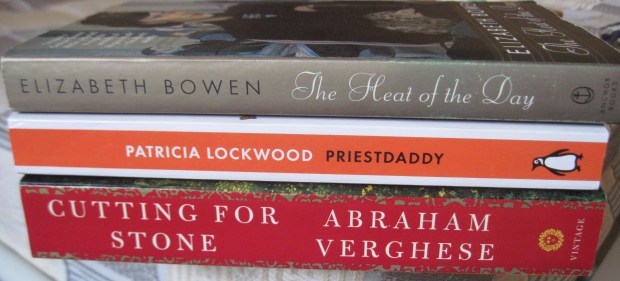
What I packed to read in France.
Reading Ireland Month 2019
This will be my second time participating in the annual challenge hosted by Cathy of 746 Books. I recently started The Heat of the Day by Elizabeth Bowen and I’m also currently reading two nonfiction books by Irish women: a review copy of Vagina: A Re-Education by Lynn Enright (which releases on March 7th) and the essay collection Notes to Self by Emilie Pine, on my Kindle. I have several other novels to choose from – two of which are set in Ireland rather than by Irish authors – plus a classic travel book by Dervla Murphy.
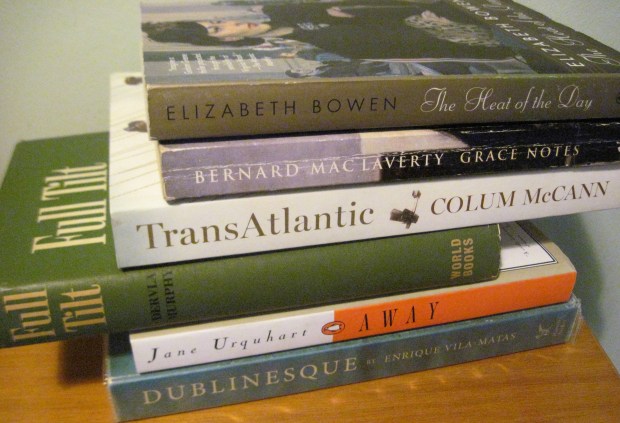
Irish selections.
Wellcome Book Prize
The second of my ‘assigned’ longlist reviews will be going up on Wednesday. I’m currently reading another three books from the longlist and will post some brief thoughts on them if I manage to finish them before the shortlist announcement on the 19th. At that point I will have read 10 out of the 12 books on the longlist, so should feel pretty confident about making predictions (or at least stating wishes) for what will go through to the next round.
Blog Tours
I have two blog tours coming up later in the month, including the official one that’s being run for the Dylan Thomas Prize longlist.
Review Books
I’ve got a pile-up of review copies that came out in February or are releasing early this month – 9, I think? Some I’ve already read and some are still in progress. So I will be doing my best to group these sensibly and write short reviews, but you may well notice a lot of posts from me.
Blog Anniversary
This Friday marks four years that I’ve been blogging about books!
Here are a few March releases I’ve read that you may want to look out for:
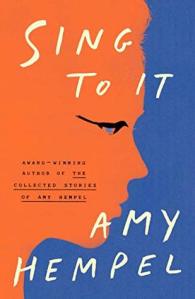 Sing to It: New Stories by Amy Hempel [releases on the 26th]: “When danger approaches, sing to it.” That Arabian proverb provides the title for Amy Hempel’s fifth collection of short fiction, and it’s no bad summary of the purpose of the arts in our time: creativity is for defusing or at least defying the innumerable threats to personal expression. Only roughly half of the flash fiction achieves a successful triumvirate of character, incident and meaning. The author’s passion for working with dogs inspired the best story, “A Full-Service Shelter,” set in Spanish Harlem. A novella, Cloudland, takes up the last three-fifths of the book and is based on the case of the “Butterbox Babies.” (Reviewed for the Pittsburgh Post-Gazette.)
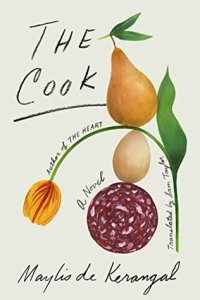 The Cook by Maylis de Kerangal (translated from the French by Sam Taylor) [releases on the 26th]: This is a pleasant enough little book, composed of scenes in the life of a fictional chef named Mauro. Each chapter picks up with the young man at a different point as he travels through Europe, studying and working in various restaurants. If you’ve read The Heart / Mend the Living, you’ll know de Kerangal writes exquisite prose. Here the descriptions of meals are mouthwatering, and the kitchen’s often tense relationships come through powerfully. Overall, though, I didn’t know what all these scenes are meant to add up to. Kitchens of the Great Midwest does a better job of capturing a chef and her milieu.
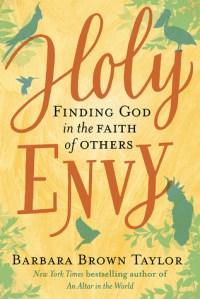 Holy Envy: Finding God in the Faith of Others by Barbara Brown Taylor [releases on the 12th]: After she left the pastorate, Taylor taught Religion 101 at Piedmont College, a small Georgia institution, for 20 years. This book arose from what she learned about other religions – and about Christianity – by engaging with faith in an academic setting and taking her students on field trips to mosques, temples, and so on. She emphasizes that appreciating other religions is not about flattening their uniqueness or looking for some lowest common denominator. Neither is it about picking out what affirms your own tradition and ignoring the rest. It’s about being comfortable with not being right, or even knowing who is right.
What’s on your reading docket for March?
My Bibliotherapy Appointment at the School of Life
 I’ve been interested in bibliotherapy for years, and I love The Novel Cure (see my review), the learned and playful advice book from Ella Berthoud and Susan Elderkin, two of the bibliotherapists at Alain de Botton’s London School of Life. Earlier this month I had the tremendous opportunity to have a personalized bibliotherapy appointment with Ella Berthoud at the School of Life. She’d put out a call on Twitter for volunteers to come for a free session (usually £100) to be observed by a journalist from La Repubblica writing about bibliotherapy – the translation of The Novel Cure has sold remarkably well in Italy. The feature will be part of a special color supplement in February, and I look forward to seeing if my story makes the cut! That is, if I can decipher any of the Italian.
Now, you might not think I’m the kind of person who needs a bibliotherapy assessment since I already find 300+ books per year I want to read; I worried that too, and felt a little bit guilty, but in the end I couldn’t pass up the chance, and Ella was happy to have me.

I took my copy of The Novel Cure along for Ella to sign.
Before my appointment I’d been asked to complete a two-page questionnaire about my reading habits and likes/dislikes, along with what’s going on in my life in general (the ‘therapy’ aspect is real). Once we were set up in the basement therapy room with hot drinks, Ella asked me more about how I read. I’d told her my reading was about two-thirds print books and one-third e-books. Had I ever tried audiobooks or reading aloud, she asked? The answer to both of those is no, I’m afraid. There’s no obvious place for audiobooks in my life because I work from home. However, as I’d mentioned I haven’t been able to get through a Dickens novel in five years, Ella suggested I try listening to one – abridged, it can be more like eight hours long instead of 42, and you still get a terrific story. She also highly recommended New Yorker and Guardian podcasts based around short stories and discussion.
 For reading aloud with my husband, Ella prescribed one short story per evening sitting – a way for me to get through short story collections, which I sometimes struggle to finish, and a different way to engage with books. We also talked about the value of rereading childhood favorites such as Watership Down and Little Women, which I haven’t gone back to since I was nine and 12, respectively. In this anniversary year, Little Women would be the ideal book to reread (and the new television adaptation is pretty good too, Ella thinks).
One other reading habit Ella is adamant about is keeping a physical reading journal in which you record the title of each book you read, where you read it, and about a paragraph of thoughts about it. It’s not meant to be a comprehensive response to every book; more like an aide-mémoire that you can get off the shelf in years to come to remind yourself of what you thought about a book. Specifically, Ella thinks writing down the location of your reading (e.g., on a train to Scotland) allows you to put yourself back in the moment. I tend to note where I bought a book, but not necessarily where I read it – for that, I would probably have to cross-reference my annual book list against a calendar. Since 2010 I’ve kept my book lists and responses in computer files, and I also keep full records via Goodreads, but I can see why having a physical journal would be a good back-up as well as a more pleasant representation of my reading. I’ll think about starting one.
 Various books came up over the course of our conversation: Abraham Verghese’s Cutting for Stone [appearance in The Novel Cure: The Ten Best Novels to Cure the Xenophobic, but Ella brought it up because of the medical theme], Tom Robbins’ Jitterbug Perfume [cure: ageing, horror of], and Julia Cameron’s The Artist’s Way, a nonfiction guide to thinking creatively about your life, chiefly through 20-minute automatic writing exercises every morning. We agreed that it’s impossible to dismiss a whole genre, even if I do find myself weary of certain trends, like dystopian fiction (I introduced Ella to Claire Vaye Watkins’ Gold Fame Citrus, one of my favorite recent examples).
 I came away with two instant prescriptions: Heligoland by Shena Mackay [cure: moving house], about a shell-shaped island house that used to be the headquarters of a cult. It’s a perfect short book, Ella tells me, and will help dose my feelings of rootlessness after moving more than 10 times in the last 10 years. She also prescribed Family Matters by Rohinton Mistry [cure: ageing parents] and an eventual reread of Jonathan Franzen’s The Corrections. As we discussed various other issues, such as my uncertainty about having children, Ella said she could think of 20 or more books to recommend me. “That’s a good thing, right?!” I asked.


Before I left, I asked Ella if she would ever prescribe nonfiction. She said they have been known to do so, usually if it’s written in a literary style (e.g. Robert Macfarlane and Alain de Botton). We chatted about medical memoirs and reading with the seasons for a little while, and then I thanked her and headed on my way. I walked around the corner to Skoob Books but, alas, didn’t find any of the books Ella had mentioned during our session. On the way back to the Tube station, though, I stopped at Judd Books and bought several secondhand and remaindered goodies, including these two:


(Imagine my surprise when I spotted The Year of the Hare in The Novel Cure under midlife crisis! Age seemed to be the theme of the day.)
 As soon as I got back from London I ordered secondhand copies of Heligoland, Jitterbug Perfume and The Artist’s Way, and borrowed Family Matters from the public library the next day. Within a few days four further book prescriptions arrived for me by e-mail. Ella did say that her job is made harder when her clients read a lot, so kudos to her for prescribing books I’d not read – with the one exception of Sebastian Barry’s Days Without End, which I love.
I’ve put in another order for Maggie and Me, the memoir by Damian Barr, plus (for reading aloud) Sum: Forty Tales from the Afterlives by David Eagleman and the collected short stories of Saki. I’m also keen to find The Victorian Chaise-Longue by Marghanita Laski, Ella’s final prescription, but as the Persephone Books reprint is pricey at the moment I may hold off and hope to chance upon a secondhand copy later in the year. Ella has been very generous with her recommendations, especially considering that I didn’t pay a penny. I certainly have plenty to be getting on with for now! I’ll report back later on in the year when I’ve had the chance to read some of these prescriptions.

The prescribed books I have gotten hold of so far.
Wellcome Prize Shortlist, Part 1: de Kerangal and Kalanithi
I’m delighted to announce the final members of our Wellcome Book Prize 2017 shadow panel:
Ruby blogs at My Booking Great Blog.
GrrlScientist is an ornithologist and science journalist who was on the judging panel for the 2016 Royal Society Insight Investment Science Book Prize.
Along with Paul and Amy, this brings us up to five people – the same number as the official judging panel.
Luckily, I’ve already read two of the shortlisted titles, one quite recently and one nearly a year and a half ago. Here are the reviews I published on Goodreads at the time. I’ll be getting both books back out of the library soon to have another look before we choose our winner.
Mend the Living by Maylis de Kerangal
(translated from the French by Jessica Moore; published in the USA as The Heart)
[This is the French author’s second novel to be translated into English. It has been made into a film and won the Prix Orange du Livre and the Grand prix RTL du livre. It was also recently shortlisted for the Albertine Prize, an American readers’ choice award for contemporary French fiction. If you’re based in the States, feel free to vote by April 30th!]
 Nineteen-year-old Simon Limbeau is declared brain dead in a French hospital after a car accident, but his heart lives on: metaphorically through the love of his parents, sister, friends, and girlfriend; but also literally, in the recipient of his organ donation. Again and again de Kerangal makes a distinction between the physical reality of organs and what they represent: “Simon’s eyes are not just his nervous retina, his taffeta iris, his pupil of pure black in front of the crystalline – they are also his gaze; his skin isn’t just the threaded mesh of his epidermis, his porous cavities – it’s his light and his touch, the living sensors of his body.”
The novel spends time with Simon’s family, especially his mother, but also with the transplant coordinator, the surgeons, the nurse, and so on. I was reminded of ER as well as the French TV show The Returned – this would work really well on screen, and would be a way of avoiding the more off-putting aspects of the author’s style. She writes long, run-on sentences: sometimes half a page, sometimes even stretching to two pages, and stuffs her prose with abstruse vocabulary (or at least that’s how the translator has rendered it), a lot of it medical but some of it simply inaccessible: “emollient conjugality” plus at least a dozen English words I’d never encountered (e.g. abulic, tumid, atony, claudicant, auscultation, precellence, torticollis, naevi, scialytic).
The worst example of the unnecessary opacity is “the digitigrade gait of the sardana dancer when he’s nearing a quintal, the corpulence of an ex-obese man calibrating him in thickness, in fullness, but without visible excrescence” – in plain English, the guy is stocky.
Read in November 2016.
My rating: 
My gut feeling: The novel gives a vivid sense of the fragility of life and imbues parts of the body with metaphorical meaning. However, I think the style makes it too inaccessible and I can’t see its appeal ever being more than niche.
More reviews:
Annabel’s at Shiny New Books
Carolyn’s at Rosemary and Reading Glasses
When Breath Becomes Air by Paul Kalanithi
[The first posthumous nominee for the Wellcome Book Prize. I’ll be interested to see what I make of this one when I revisit it.]
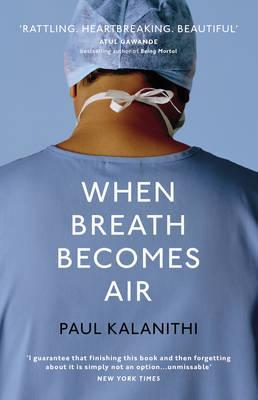 Paul Kalanithi was 36 and just completing his neurosurgery residency in Stanford, California when he was diagnosed with advanced lung cancer that did not respond well to treatment. It came as a complete surprise to this non-smoker, and set his life on a new course. He and his coterie of doctors managed his symptoms so he could operate for as long as possible, but when the time came he knew he wanted to devote his last year to writing this memoir. In addition, he would get a brief, sweet taste of fatherhood: he and his wife Lucy, also in the medical field, decided to have a child, a daughter named Cady.
Kalanithi grew up the son of Indian immigrants in Arizona. “I was driven less by achievement than by trying to understand, in earnest: What makes human life meaningful?” he recalls. Degrees in English literature and human biology were disparate attempts to find an answer. Like Henry Marsh (Do No Harm), he has a surgeon’s knowledge of the anatomy of reasoning, but realizes that does not provide the full picture. He recognizes the responsibility of holding others’ lives in the balance, and regrets occasional failures of empathy.
Those burdens are what make medicine holy and wholly impossible: in taking up another’s cross, one must sometimes get crushed by the weight.
It’s intriguing to see religious language in that statement – indeed, Kalanithi saw his work as a calling, and one with moral connotations. Christian imagery shows up repeatedly:
Instead of being the pastoral figure aiding a life transition, I found myself the sheep, lost and confused.
Openness to human relationality does not mean revealing grand truths from the apse; it means meeting patients where they are, in the narthex or nave, and bringing them as far as you can.
When’s the last time you encountered the word “narthex”?! The vocabulary is striking throughout, as in another favorite passage: “A tureen of tragedy was best allotted by the spoonful. Only a few patients demanded the whole at once; most needed time to digest.”
Kalanithi died in March 2015. In addition to the foreword by Abraham Verghese, there’s a lovely epilogue from his widow, who’s more than competent to carry on his legacy.
I appreciate stories lived on the knife edge of life and death, but I would recommend this to those who don’t normally choose to read illness narratives, simply for the beauty of its prose – a fine blend of literature and medicine – and the wholehearted picture of a life cut short.
Read in October 2015 (Random House were looking for early readers via NetGalley).
My rating: 
My gut feeling: I suspect this is by far the most popular and best-selling title on this year’s shortlist. So many people have taken it to their hearts. It will take a truly special book to knock it from the top spot.
More reviews:
Shadow panelist Paul’s at Nudge
Shadow panelist Ruby’s at My Booking Great Blog
Susan’s at A life in books
Shortlist strategy:
Currently reading: The Tidal Zone by Sarah Moss – about halfway through.
Up next: Whichever of the remaining nonfiction titles turns up to the library for me first!
I’ve also sent off an emergency e-mail to Bodley Head asking for a copy of Ed Yong’s I Contain Multitudes; it’s on loan through my library system until April 19th, which gives me no time to read it even if it comes back on time.
 Bookish Beck = Rebecca Foster. American transplant to England. Freelance proofreader and book reviewer.
 Bookish Beck