20 Books of Summer, #1–4: Adichie, de Bernières, Egan, and Styron
The first four books for this summer’s colour theme took me from Australia to New York City to Nigeria, and into a mind plagued by depression.
Purple Hibiscus by Chimamanda Ngozi Adichie (2003)
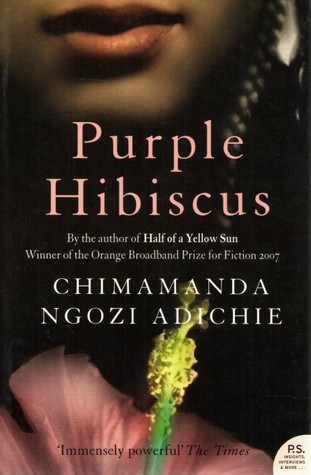 This was my last remaining unread book by Adichie, and that probably goes a long way toward explaining why I found it underwhelming. In comparison to her two later novels, and even her short stories (of which this reminded me the most), the canvas is small and the emotional scope limited. Kambili is a Nigerian teenager caught between belief systems: her grandfather’s traditional (“pagan”) ancestor worship versus the strict Catholicism that is the preserve of her abusive father, but also of the young priest on whom she has a crush. She and her brother try to stay out of their father’s way, but they are held to such an impossibly high standard of behaviour that it seems inevitable that they will disappoint him.
Adichie’s debt to her literary hero, Chinua Achebe, is evident from the first line onward: “Things started to fall apart at home when my brother, Jaja, did not go to communion and Papa flung his heavy missal across the room and broke the figurines on the étagère.” It also sets up, with a certain lack of subtlety, the way in which religion is wielded as a weapon in the novel. Meanwhile, the title suggests rarity, beauty, and fragile hope. Had this been my first taste of Adichie’s fiction, I probably would have stopped there, so in a way I’m glad that I read her first book last. Now I just have to wait with tapping fingers for the next one… (Free from a neighbour) 
Blue Dog by Louis de Bernières (2016)
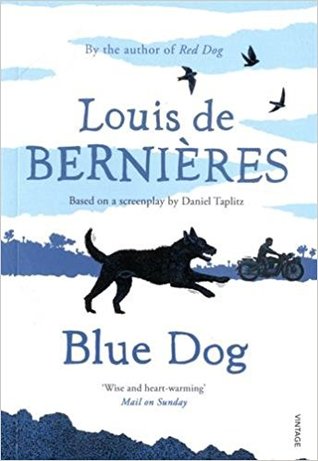 A sweet coming-of-age novella about a boy moving to the Australian Outback to live with his grandfather in the 1960s and adopting a stray dog – a red cloud kelpie, but named Blue. I didn’t realize that this is a prequel (to Red Dog), and based on a screenplay. It was my third book by de Bernières, and it was interesting to read in the afterword that he sees this one as being suited to 12-year-olds, yet most likely to be read by adults.
Mick’s father is dead and his mother has had a breakdown, so Granpa is the only one around to look after him, though out at the cattle station the boy mostly fends for himself, having adventures with stinging lizards and cyclones and bushfires and cursed caves. All along, Blue and his motorcycle are constant companions. Taylor Pete, a wry Aboriginal man, and Betty Marble, a pretty blonde hired as his teacher, are two amusing secondary characters.
This reminded me of Gerald Durrell’s writing about his childhood, and was pleasant airport and plane reading for me: light and fun, but not fluffy, and offering an armchair traveling opportunity. I especially liked the Australian lingo and the blue and black illustrations at the head and foot of each chapter, with a flipbook-style cartoon of a running dog in the upper right corner of each odd-numbered page. (Public library) 
Emerald City by Jennifer Egan (1993)
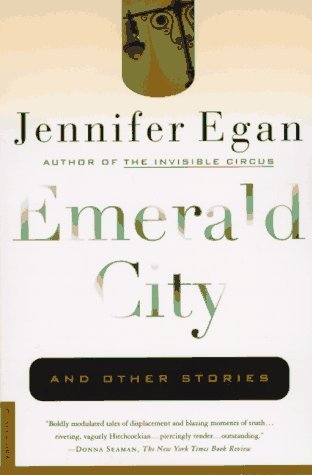 Each of these 11 stories has a fantastic first line – my favorite, from “Sacred Heart,” being “In ninth grade I was a great admirer of Jesus Christ” – but often I felt that these stories of relationships on the brink did not live up to their openers. Most take place in a major city (Chicago, New York, San Francisco) or a holiday destination (Bora Bora, China, Mexico, Spain), but no matter the setting, the terrain is generally a teen girl flirting with danger or a marriage about to implode because the secret of a recent or long-ago affair has come out into the open.
Recurring elements include models/stylists/fashion photographers and people getting conned out of money. The title story is set in New York, described as “a place that glittered from a distance even when you reached it.”
To me the best story, for offering something a bit different, was “One Piece,” about a brother who seems to hurt everything he touches but comes through for his sister when it counts. Egan’s characters are caught between emotional states: remembering a golden age, regretting a moment that changed everything, or hoping that the best is yet to come. “The Stylist” was the one story that reminded me most of A Visit from the Goon Squad. As soon as I closed the book, I found that I had trouble remembering details of any of the stories. (Little Free Library in suburban Philadelphia, May 2019)
Darkness Visible: A Memoir of Madness by William Styron (1990)
 (Visible darkness must have a colour, right?) I had long wanted to read this and finally came across a secondhand copy the other day. What I never realized was that, at 84 pages, it is essentially an extended essay: It started life as a lecture given at Johns Hopkins in 1989, was expanded into a Vanity Fair essay, and then further expanded into this short book.
Approaching age 60 and on his way to Paris to accept a prestigious award, Styron could feel his depression worsening. Rather than being proud or grateful, he could only doubt his own talent. The pills his doctor prescribed him for insomnia exacerbated his feelings of despair. When he threw away the journal he had been keeping, he knew it was a potential prelude to suicide. Hearing a piece by Brahms on a movie soundtrack was the one thing that reminded him of the beauty of the world and the richness of his life, enough for him to reach out and get seven weeks of treatment at a mental hospital, which was what saved him. These experiences, recounted in sections VI and VII, are the highlight of the book.
Styron also muses on the creative temperament and the ubiquity of suicide among writers, especially those who, like him, had an early trauma (his mother died when he was 13). The prose is forthright and intimate, ably evoking a psychic pain that is “quite unimaginable to those who have not suffered it.” This made me want to try his fiction, too. (Secondhand purchase, June 2021) 
Favourite lines:
“each day’s pattern of distress exhibits fairly predictable alternating periods of intensity and relief. The evening’s relief for me—an incomplete but noticeable letup, like the change from a torrential downpour to a steady shower—came in the hours after dinnertime and before midnight, when the pain lifted a little and my mind would become lucid enough to focus on matters beyond the immediate upheaval convulsing my system.”
“Alcohol was an invaluable senior partner of my intellect, besides being a friend whose ministrations I sought daily—sought also, I now see, as a means to calm the anxiety and incipient dread that I had hidden away for so long somewhere in the dungeons of my spirit.”
Next two in progress: A Pair of Blue Eyes by Thomas Hardy and Ruby by Ann Hood.
Read any of these? Interested?
Snow and Winter Reads, Part I
We’ve only had a couple of inches of snow, plus another afternoon of flurries, so far this winter, but January was the UK’s coldest month since 2013. As usual, I’m charting the season’s passage through books as well as by taking walks and looking out the window. I have a few more wintry books on the go that I’ll hope to report on at the end of the month. Today I have a few short works, ranging from poetry to nonfiction, plus a novel set partly in frigid Nebraska.

“The Snows of Kilimanjaro” by Ernest Hemingway (1936)
 During a laughably basic New Testament class in college, a friend and I passed endless notes back and forth, discussing everything but the Bible. I found these the last time I was back in the States going through boxes. My friend’s methodical cursive looked so much more grown-up than my off-topic scrawls. Though she was only two years older, I saw her as a kind of mentor, and when she told me the gist of this Hemingway story I took heed. We must have been comparing our writing ambitions, and I confessed a lack of belief in my ability. She summed up the point of this story more eloquently than Hem himself: if you waited until you were ready to write something perfectly, you’d never write it at all. Well, 19 years later and I’m still held back by lack of confidence, but I have, finally, read the story itself. It’s about a writer on safari in Africa who realizes he is going to die of this gangrene in his leg.
Now he would never write the things that he had saved to write until he knew enough to write them well. Well, he would not have to fail at trying to write them either. Maybe you could never write them, and that was why you put them off and delayed the stating. Well, he would never know, now.
he had always thought that he would write it finally. There was so much to write. He had seen the world change; not just the events; although he had seen many of them and had watched the people, but he had seen the subtler change and he could remember how the people were at different times. He had been in it and he had watched it and it was his duty to write of it; but now he never would.
This duty: to be a witness, to crystallize your perspective and experience as a way of giving back to the world that has sustained you – it’s a compelling vision. Of course, Hemingway was a chauvinist and so the protagonist is annoyingly dismissive of the woman in his life; she might as well be a servant. I still found this everyday tragedy affecting. I couldn’t, however, be bothered to read any further in the volume (mostly Nick Adams autobiographical stories). 
The World Before Snow by Tim Liardet (2015)
 I couldn’t resist the title and creepy Magritte cover, so added this to my basket during the Waterstones online sale at the start of the year. Liardet’s name was unfamiliar to me, though this was the Bath University professor’s tenth poetry collection. Most of the unusual titles begin with “Self-Portrait” – for instance, “Self-Portrait as the Nashua Girl’s Reverse Nostalgia” and “Self-Portrait with Blind-Hounding Viewed in Panoramic Lens.” Apparently there is a throughline here, but if it weren’t for the blurb I would have missed it entirely. (“During a record-breaking blizzard in Boston, two poets met, one American and one English. This meeting marked the beginning of a life-transforming love affair.”) There were some turns of phrase and alliteration I liked, but overall I preferred the few poems that were not part of that pretentious central plot, e.g. “Ommerike” (part I) about mysterious mass deaths of birds and fish, “Nonagenaria,” a portrait of an old woman, and “The Guam Fever,” voiced by an ill soldier.
The Magician’s Assistant by Ann Patchett (1997)
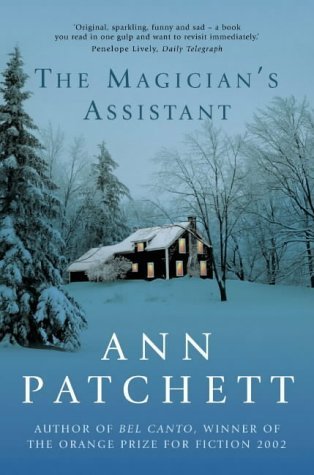 I’d only seen covers with a rabbit and top hat, so was confused that the secondhand copy I ordered with a birthday voucher featured a lit-up farmhouse set back into snowy woods. The first third of the novel takes place in Los Angeles, where Sabine lived with her husband Parsifal, the magician she assisted for 20 years, but the rest is set in winter-encased Nebraska. The contrast between the locations forms a perfect framework for a story of illusions versus reality.
SPOILERS FOLLOW – impossible to avoid them.
Patchett opens with the terrific lines “Parsifal is dead. That is the end of the story.” Ironically, his brain aneurysm burst while he was inside a hospital MRI machine, but it’s a mercy that he died quickly; he could have lingered for years with AIDS – like his lover, Phan, who died 14 months before. You see, while Parsifal while Sabine’s best friend, and in some ways the love of her life, their marriage was only a formality so that she could receive his assets. She knows little of his past; in taking on the name and persona of Parsifal the magician, he created a new life for himself. Only after his death does she learn from the will that his real name was Guy Fetters and that he has a mother, Dot, and sisters, Kitty and Bertie, back in Nebraska.
Dot and Bertie come out to L.A. to see how Guy lived and pay their respects at the cemetery, and then Sabine, lost without a magician to assist, flies out to Nebraska to stay with them for the week leading up to Bertie’s wedding. There is a tacit understanding among the family that Guy was gay, and Sabine assumes that’s why he was sent off to a boys’ reformatory. In fact, it’s because he was involved in his father’s accidental death. This kitchen has seen more than its fair share of climactic events.
END OF SPOILERS
The long section set in Nebraska went in directions I wasn’t expecting. It’s mostly based around late-night kitchen table and bedroom conversations; it’s a wonder it doesn’t become tedious. Patchett keeps the tension high as revelations emerge about what went on in this family. There are two moments when threat looks poised to spill into outright violence, in an echo of previous domestic violence.
For a long time I didn’t know what to make of the novel. It’s odd that all the consequential events happened before the first page and that we never truly meet Parsifal. Yet I loved the way that Sabine’s dreams and flashbacks widen the frame. Magic initially appears to be an arbitrary career choice, but gradually becomes a powerful metaphor of deception and control. Parsifal’s family are obsessed with a Johnny Carson performance he and Sabine once gave: they watch the video recording nightly, longing for the magic to be real. Maybe it is in the end? 
Snow by Marcus Sedgwick (2016)
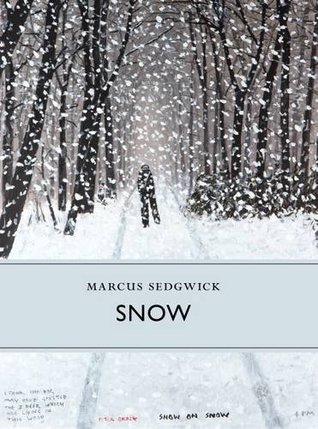 This Little Toller book is, at just over 100 pages, the perfect read for a wintry afternoon. It’s a lot like The Snow Tourist by Charlie English, though that book is travel-based, whereas for this one Sedgwick stayed put at his home in the Haute-Savoie, an alpine region of eastern France (and was even snowed in for part of the time), and wandered in his memory instead.
He writes that snow is “a form of nostalgia” for him, bringing back childhood days off school when he could just stay home and play – he loves it for “the freedom it represented.” He asks himself, “did it snow more when I was young, or is it just my desire and recreated memory?” Looking at weather statistics from Kent, he is able to confirm that, yes, it really did snow more in the 1960s and 70s.
Sedgwick briefly considers the science, history, art, and literature of snow, including polar expeditions and film, music, and paintings as well as Thomas Mann’s The Magic Mountain et al. He also likens the blank page to a snow-covered field, such that writers should not be daunted by it but excited by the possibility of creation.
In the Winter Dark by Tim Winton (1988)
 A taut early novella (just 110 pages) set in an Australian valley called the Sink. Animals have been disappearing: a pet dog snatched from its chain; livestock disemboweled. Four locals are drawn together by fear of an unidentified killer. Maurice Stubbs is the only one given a first-person voice, but passages alternate between his perspective and those of his wife Ida, Murray Jaccob, and Veronica, a pregnant teen. These are people on the edge, reckless and haunted by the past. The malevolent force comes to take on a vengeful nature. I was reminded of Andrew Michael Hurley’s novels. My first taste of Winton’s fiction has whetted my appetite to read more by him – I have Cloudstreet on the shelf.
Have you been reading anything particularly wintry this year?
Completing the Women’s Prize Winners Reading Project and Voting
In this 25th anniversary year of the Women’s (previously Orange/Baileys) Prize, people have been encouraged to read all of the previous winners. I duly attempted to catch up on the 11 winners I hadn’t yet read, starting with Fugitive Pieces by Anne Michaels; Half of a Yellow Sun by Chimamanda Ngozi Adichie and A Crime in the Neighborhood by Suzanne Berne as part of a summer reading post; and When I Lived in Modern Times by Linda Grant, Property by Valerie Martin and Larry’s Party by Carol Shields (a reread) in this post.
This left just four for me to read before voting for my all-time favorite in the web poll. I managed two as recent buddy reads but had to admit defeat on the others, giving them just the barest skim before sending them back to the library.
The Idea of Perfection by Kate Grenville (1999; 2001 prize)
(Buddy read with Laura T.; see her review here)
 This is essentially an odd-couple romance, but so awkward I don’t think any of its scenes could accurately be described as a meet-cute. Harley Savage, a thrice-married middle-aged widow, works for the Applied Arts Museum in Sydney. The tall, blunt woman is in Karakarook, New South Wales to help the little town launch a heritage museum. Douglas Cheeseman is a divorced engineer tasked with tearing down a local wooden bridge and building a more suitable structure in its place. Their career trajectories are set to clash, but the novel focuses more on their personal lives. From the moment they literally bump into each other outside Douglas’ hotel, their every meeting is so embarrassing you have to blush – she saves him from some angry cows, while he tends to her after a bout of food poisoning.
Grenville does well to make the two initially unappealing characters sympathetic, primarily by giving flashes of backstory. Douglas is the posthumous child of a war hero, but has never felt he’s a proper (macho) Australian man. In fact, he has a crippling fear of heights, which is pretty inconvenient for someone who works on tall bridges. Harley, meanwhile, is haunted by the scene of her last husband’s suicide and is also recovering from a recent heart attack.
The title is, I think, meant to refer to how the protagonists fail to live up to ideals or gender stereotypes. However, it more obviously applies to the subplot about Felicity Porcelline, a stay-at-home mother who has always sought to be flawless – a perfect pregnancy, an ageless body (“Sometimes she thought she would rather be dead than old”), the perfect marriage – but gets enmired in a dalliance with the town butcher. I was never convinced Felicity’s storyline was necessary. Without it, the book might have been cut from 400 pages to 300.
Still, this was a pleasant narrative of second chances and life’s surprises. The small-town setting reminded Laura of Olive Kitteridge in particular, and I also thought frequently of Anne Tyler and her cheerfully useless males (“There was a lot to be said for being boring, and it was something [Douglas] was good at”). But I suspect the book won’t remain vivid in my memory, especially with its vague title that doesn’t suggest the contents. I enjoyed Grenville’s writing, though, so will try her again. In my mind she’s more known for historical fiction. I have a copy of The Secret River, so will see if she lives up to that reputation.
My rating:
How to Be Both by Ali Smith (2014)
(Buddy read with Marcie of Buried in Print.)
 A book of two halves, one of which I thoroughly enjoyed; the other I struggled to engage with. I remembered vaguely as I was reading it that this was published in two different versions. As it happened, my library paperback opened with the contemporary storyline.
New Year’s Day marks the start of George’s first full year without her mother, a journalist who died at age 50. Her mother’s major project was “Subvert,” which used Internet pop-ups to have art to comment on politics and vice versa. George remembers conversations with her mother about the nature of history and art, and a trip to Italy. She’s now in therapy, and has a flirty relationship with Helena (“H”), a mixed-race school friend.
Smith’s typical wordplay comes through in the book’s banter, especially in George and H’s texts. George is a whip-smart grammar pedant. Her story was, all in all, a joy to read. There is even a hint of mystery here – is it possible that her mother was being monitored by MI5? When George skips school to gaze at her mother’s favorite Francesco del Cossa painting in the National Gallery, she thinks she sees Lisa Goliard, her mother’s intense acquaintance, who said she was a bookbinder but acted more like a spy…
The second half imagines a history for Francesco del Cossa, who rises from a brick-making family to become a respected portrait and fresco painter. The artist shares outward similarities with George, such as a dead mother and homoerotic leanings. There are numerous tiny connections, too, some of which I will have missed as my attention waned. The voice felt all wrong for the time period; I sensed that Smith wasn’t fully invested in the past, so I wasn’t either. (In dual-timeline novels, I pretty much always prefer the contemporary one and am impatient to get back to it; at least in books like Unsheltered and The Liar’s Dictionary there are alternate chapters to look forward to if the historical material gets tedious.)
An intriguing idea, a very promising first half, then a drift into pretension. Or was that my failure to observe and appreciate? Smith impishly mocks: “If you notice, it changes everything about the picture.” With her format and themes, she questions accepted binaries. There are interesting points about art, grief and gender, even without the clever links across time. But had the story opened with the other Part 1, I may never have gotten anywhere.
My rating:
Skims
I made the mistake of leaving the three winners that daunted me the most stylistically – McBride, McInerney and Smith – for last. I eventually made it through the Smith, though the second half was quite the slog, but quickly realized these two were a lost cause for me.
 A Girl Is a Half-formed Thing by Eimear McBride: I’d glanced at the first few pages in a shop before and found the style immediately off-putting. When I committed to this #ReadingWomen project, I diligently requested a copy from the university library even though I seriously doubted I’d have the motivation to read it. It turns out my first impression was correct: I would have to be paid much more than I’ve ever been paid for writing about a book just to get through this one. From the first paragraph on, it’s deliberately impenetrable in a sub-Joycean way. Ron Charles, the Washington Post book critic and one of my literary heroes/gurus, found the subject matter relentlessly depressing and the obfuscating style elitist. (Might it work as an audiobook? I can’t say; I’ve never listened to one.)
 The Glorious Heresies by Lisa McInerney: Not as stylistically difficult as expected, though there is mild dialect and long passages in italics (one of my reading pet peeves). But I’m not drawn to gangster stories, and after a couple of chapters didn’t feel like pushing myself through the book. I did enjoy the setup of Maureen killing an intruder with a holy stone, eliciting this confession: “I crept up behind him and hit him in the head with a religious ornament. So first I suppose God would have to forgive me for killing one of his creatures and then he’d have to forgive me for defiling one of his keepsakes.” For Anna Burns and Donal Ryan fans, perhaps?
It’s been many years since I’ve read some of these novels, such that all I have to go on is my vague memories and Goodreads ratings, and there are a handful there towards the bottom that I couldn’t get through at all, but I still couldn’t resist having a go at ranking the 25 winners, from best to least. My completely* objective list:
(*not at all)
Larry’s Party by Carol Shields
Half of a Yellow Sun by Chimamanda Ngozi Adichie
We Need to Talk about Kevin by Lionel Shriver
An American Marriage by Tayari Jones
The Tiger’s Wife by Téa Obreht
On Beauty by Zadie Smith
Home Fire by Kamila Shamsie
A Crime in the Neighborhood by Suzanne Berne
The Road Home by Rose Tremain
When I Lived in Modern Times by Linda Grant
The Idea of Perfection by Kate Grenville
Fugitive Pieces by Anne Michaels
The Lacuna by Barbara Kingsolver
Bel Canto by Ann Patchett
May We Be Forgiven by A.M. Homes
Property by Valerie Martin
Small World by Andrea Levy
Home by Marilynne Robinson
How to Be Both by Ali Smith
The Power by Naomi Alderman
Hamnet by Maggie O’Farrell
A Spell of Winter by Helen Dunmore
The Glorious Heresies by Lisa McInerney
The Song of Achilles by Madeline Miller
A Girl Is a Half-formed Thing by Eimear McBride
You can see the arbitrary nature of prizes at work here: some authors I love have won for books I don’t consider their best (Adichie, Kingsolver, O’Farrell, Patchett), while some exceptional female authors have been nominated but never won (Toni Morrison, Elizabeth Strout, Anne Tyler). Each year the judges are different, and there are no detailed criteria for choosing the winner, so it will only ever be the book that five people happen to like the best.
As she came out top of the heap with what is, coincidentally, the only one of the winning novels that I have managed to reread, my vote goes to Carol Shields for Larry’s Party. (People’s memory for prize winners is notoriously short, so I predict that one of the last two years’ winners, Tayari Jones or Maggie O’Farrell, will win the public’s best of the best vote.)

You have until midnight GMT on Sunday November 1st to vote for your favorite winner at this link. That’s less than a week away now, so get voting!
Note: If you’re interested in tracking your Women’s Prize reading over the years, check out Rachel’s extremely helpful list of all the nominees. It comes in spreadsheet form for you to download and fill out. I have read 138 nominees (out of 477) and DNFed another 19 so far.
Who gets your vote?
September Releases: Gyasi, McKay, Sheldrake, Tremain, Woolfson
September is always a big month in the publishing world, but even more so this year because of all the titles delayed from the spring and summer – apparently 600 books were published in the first week of September in the UK alone.
Still, I only ended up with my usual, manageable five new releases (with a few more on the way from the library). I read a beautiful novel about addiction and religion in contemporary America, speculative fiction about communication with wildlife in mid-pandemic (!) Australia, everything you ever wanted to know about fungi, historical fiction about outsiders in England and Borneo, and a study of our broken relationship with other animals.
Two of these are from my most anticipated list for the second half of 2020. Four of the five can be linked by the tenet that humans are only one species among many others necessary to life on this Earth, and not in some way above and beyond.
Transcendent Kingdom by Yaa Gyasi
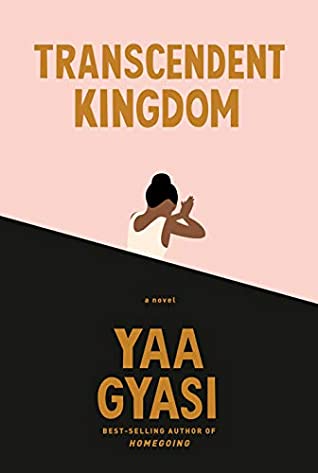 This follow-up to Gyasi’s dazzling, centuries-spanning linked story collection, Homegoing, won’t be out in the UK until March 2021, but I couldn’t resist reading an e-copy of the American edition (Knopf) from Edelweiss. It’s altogether a more subdued and subtle book, but its treatment of themes of addiction, grief, racism and religion is so spot on that it packs a punch. Gifty is a PhD student at Stanford, researching pleasure and reward circuits in the mouse brain. She gets mice hooked on a sugary drink and then performs experiments to see if she can turn off their compulsion to keep pressing a lever for more. Sometimes when they press the lever they get an electric shock. Certain mice give up; others never will. Why?
People who know Gifty well assume she chose her field because of a personal tragedy. When she was 10, her 16-year-old brother, Nana, a high school basketball star in this Ghanaian-American family’s Alabama town, died of an opiate overdose. He’d gotten addicted to prescription drugs after a sports injury. At one level, Gifty acknowledges she is trying to atone for her brother’s death, but she won’t see it in those terms. An intensely private person, she shoulders almost impossible burdens of grief and responsibility for her mother, who has plunged into depression and, when she comes to live with Gifty, spends all her time in bed.
The most compelling aspect of the novel for me was Gifty’s attitude towards the religion of her childhood. Though they were the only black family at their Pentecostal church, she was a model believer, writing prayers in her journal, memorizing scriptures, and never doubting that everything happens for a reason. Nana’s death shattered it all. Though she now looks to science for answers, she misses the certainty she once had: that she was saved, that humans are special, that someone was looking out for her and her family, that it all mattered. I highlighted dozens of passages, but it’s possible the book won’t mean quite as much to readers for whom there’s no personal resonance. The complex mother–daughter relationship is an asset, and musings on love and risk are tenderly expressed. I wanted a more climactic conclusion to take this into 5-star territory, but I’ve still added it to my Best of 2020 shelf.
Favorite lines:
the species Homo sapiens, the most complex animal, [is] the only animal who believed he had transcended his Kingdom, as one of my high school biology teachers used to say.
At times, my life now feels so at odds with the religious teachings of my childhood that I wonder what the little girl I once was would think of the woman I’ve become … I am looking for new names for old feelings. My soul is still my soul, even if I rarely call it that.
the more I do this work the more I believe in a kind of holiness in our connection to everything on Earth. Holy is the mouse.
My rating:
I read an advanced e-copy via Edelweiss.
The Animals in That Country by Laura Jean McKay
 McKay has a PhD in literary animal studies and serves as an animal expert and presenter on Australia’s ABC radio show Animal Sound Safari. Pair her academic background with the fact that this shares a title with a Margaret Atwood poetry collection and you’ll have some idea of what to expect here: mysterious but mostly believable speculative fiction that hinges on human communication with animals.
Jean Bennett isn’t your average grandma: a wise-cracking alcoholic, she drives the tourist train through the Australian wildlife park her daughter-in-law manages but wishes she could be a fully fledged ranger. Her ex-husband, Graham, left her and went down south, and eventually their only son Lee did the same. Now all Jean has left is Kim, her six-year-old granddaughter. Jean entertains Kim by imagining voices for the park’s animals. This no longer seems like a game, though, when news filters through of the “zooflu,” which has hit epidemic levels and has as a main symptom the ability to understand what animals say.
When Kim is kidnapped, Jean steals a camper van and takes Sue the dingo along to help her find her granddaughter. “There’s a new normal now,” a bus driver tells her. “And around here, not wearing a mask means you’ve gone animal. I’d put on my protective if I was you. Put that mutt in a cage.” It was uncanny reading this in the midst of a pandemic, but the specifics of McKay’s novel are hard to grasp. The animal language isn’t audible, necessarily, but a combination of smells, noises and body language. For a long time, they seem like pure nonsense, but gradually they resemble a sort of rough poetry. Here’s one example from Sue:
My front end
takes the food
quality.
Muzzle
for the Queen
(Yesterday).
(Sue usually calls Jean “Queen” or “Mother,” showing that she respects her authority, and “Yesterday” is frequently used to suggest a primitive sense of the past or of an older person.)
As entertaining a protagonist as Jean is, I lost interest in her road trip. If you focus on the journey into the wilderness and don’t mind a sudden ending, you may find this a worthwhile heir to Hollow Kingdom by Kira Jane Buxton and The Road by Cormac McCarthy.
My rating:
I read a proof copy for a Nudge review, but it’s never shown up on their website.
Entangled Life: How Fungi Make Our Worlds, Change Our Minds, and Shape Our Futures by Merlin Sheldrake
 I first heard about Sheldrake through Robert Macfarlane’s Underland. He struck me as a mad genius – an impression that was only strengthened by reading his detailed, enthusiastic book about fungi. Sheldrake researches fungal life in the tropical forests of Panama, accompanies truffle hunters in Italy, takes part in a clinical study on the effects of LSD (derived from a fungus), observes lichens off the coast of British Columbia, and attends a conference in Oregon on Radical Mycology. But more than a travel memoir, this is a work of science – there are over 100 pages devoted to notes, bibliography and index.
Basic information you’ll soon learn: mushrooms are only the fruiting bodies of fungi; under the ground is the material bulk, the mycelium, a sprawling network of hyphae. In what’s sometimes called the “Wood Wide Web,” fungal networks link the trees in a forest, and join up with plants, such as in lichens. “I feel a … sense of vertigo when I think about the complexity of mycorrhizal relationships – kilometers of entangled life – jostling beneath my feet,” Sheldrake confesses. He gives examples of fungi navigating and solving problems – what of our concept of intelligence if a creature without a brain can do such things?
Fungi are very adaptable to extreme conditions. Research is underway to grow edible mushrooms on some of our most troublesome waste, such as used diapers (nappies) and cigarette butts. And, of course, for millennia we’ve relied on certain fungi – yeasts – to create products like bread and beer. Sheldrake is a very hands-on writer: When he wants to know something, he does it, whether that’s scrumping Isaac Newton’s apples in Cambridge and fermenting the juice into cider at home or growing mushrooms on a copy of this very book.
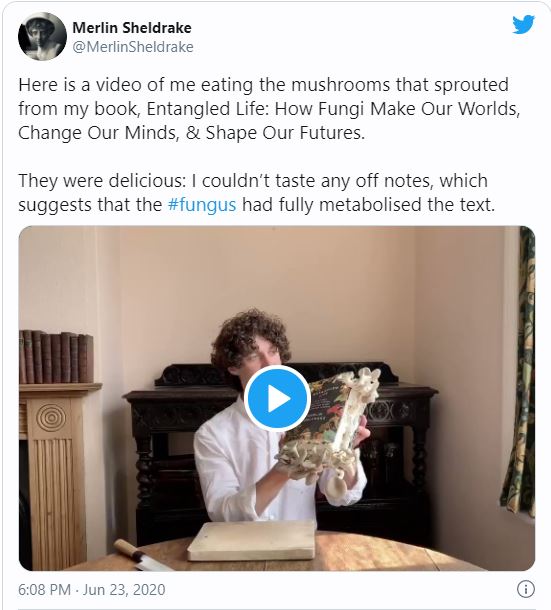
During the month I was reading this, I felt like I kept coming across references to fungi. (I even had a patch of ringworm!)

It’s a perspective-altering text, but one that requires solid concentration. I’ll confess that at times it went over my head and I wished for a glossary and diagrams. A greater than average interest in biology and/or botany would thus be a boon to a potential reader. But if you can keep up, the book will elicit many a cry of “wow!” and “what?!” I kept launching “did you know?” questions at my husband, especially about the zombie fungi that parasitize insects. What a strange and wonderful world.
Favorite lines: “Paying more attention to animals than plants contributes to humans’ plant-blindness. Paying more attention to plants than fungi makes us fungus-blind.”
My rating:
My thanks to Bodley Head for the free copy for review.
Islands of Mercy by Rose Tremain
 I read this back in June to prepare for writing a profile of Tremain for a forthcoming issue of Bookmarks magazine. Here’s the summary I wrote: “In Bath, England in 1865, 24-year-old nurse Jane Adeane is nicknamed ‘The Angel of the Baths’ for her healing touch. If she marries Dr. Valentine Ross, a colleague of her surgeon father, she can earn respectability – but will have to hide her love for Julietta, a married woman. Meanwhile, Dr. Ross’s brother, Edmund, a naturalist following in the footsteps of Alfred Russel Wallace, has journeyed to Borneo. Ill with malaria, he is taken in by British eccentric Sir Ralph Savage, a lover of native men and benevolent local rajah who funds infrastructure projects like a paved road and a hospital. Exiled or inwardly tortured for loving the wrong people, Tremain’s characters search for moments of wonder and comfort – whether those come in a primitive hut in the Malay Archipelago or in a cozy tearoom in Bath.”
It’s a slightly odd title, but tells you a lot about what Tremain is doing in this 14th novel. Often at the mercy of forces internal and external, her outcast characters look for places where they can find rest and refuge after a time of suffering. Will they, in turn, extend mercy? The split perspective and the focus on people who have to hide their sexuality are most similar to Sacred Country. The Victorian tip of the hat is mostly directed, I think, to George Eliot; of recent work, I was reminded of The Doll Factory and The Essex Serpent. I especially liked Jane’s painter aunt, Emmeline, and Clorinda, the Irish woman whose opening of a tearoom sets the plot going. The settings are surprising and vivid, and if Tremain doesn’t quite bring them and their story lines together seamlessly, she is still to be applauded for her ambition. This is probably my joint favorite of her novels that I’ve read so far, with The Road Home.
Favorite lines:
We must be unconventional in our joys and find them wherever we can.
life, so often so cruel in the way it thrust the human soul into prisons from which there seemed to be no escape, could sometimes place it athwart an open door.
My rating:
I read an advanced e-copy via NetGalley.
Between Light and Storm: How We Live with Other Species by Esther Woolfson
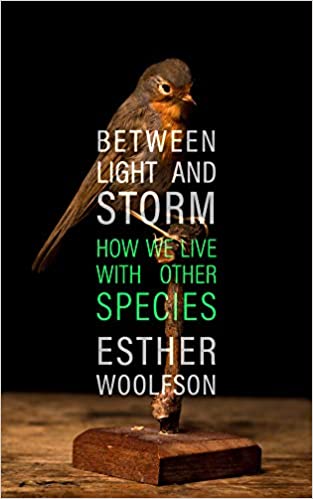 If you’ve read Woolfson’s Corvus, you’ve already met Chicken, an orphaned rook she raised. For over 31 years, Chicken was a constant presence in her home. The recently departed bird is the dedicatee of her new book, feted as “Colleague, companion, friend.” (No mere pet.) Relationships with these creatures with whom she shared her life led her to think differently about how we as humans conceive of the animal world in general. “If I had ever believed humans to be the only ones to live profound and interconnected lives, I couldn’t any more. … If we’re the gods now, shouldn’t we be better than we are?” From her introduction, it’s clear that her sympathy toward the more-than-human world extends even to spiders, and her language throughout – using words like “who” and “his” in reference to animals, rather than “that” or “its” – reinforces the view that all species are equally valuable.
Or, at least, should be. But our attitudes are fundamentally distorted, Woolfson believes, and have been since the days of Aristotle (whose Ladder of Nature is an origin of the ideas that nature is there for man to use) and the Old Testament writers (one of the two creation accounts in Genesis established the idea of “dominion”). From cave paintings to animal sacrifice, intensive farming to fur coats, taxidermy to whaling, she surveys what others have thought and said about how animals are, or should be, perceived. There was more of an academic tone to this book than I expected, and in early chapters I found too much overlap with other works I’ve read about deep time (Time Song, Surfacing, Underland again!).
I most appreciated the fragments of nature writing and memoir and would have liked more in the way of personal reflection. Woolfson’s perspective – as a Jewish woman in Scotland – is quite interesting. She is clearly troubled by how humans exploit animals, but mostly recounts others’ reasoning rather than coming to conclusions of her own. (Though there is a brilliant takedown of the gender politics of Watership Down.) It’s a book that demands more time and attention than I was able to give just now. As I only skimmed it, I’m going to refrain from assigning a rating and will pass this on to my husband and return to it one day. [I do wish the title, on its own (subtitle aside), was more indicative of the contents.]
My thanks to Granta for the free copy for review.
Which of those 600+ September releases can you recommend?
Doorstopper of the Month: The Emperor’s Children by Claire Messud (2006)
My impression of Claire Messud is that she’s admired by critics but unpopular with ordinary readers (e.g. this novel has a catastrophically low average rating on Goodreads, probably because of that “unlikable characters” chestnut). I fit into both categories, so was curious to see where I would fall on the appreciation spectrum. Doubly intrigued by Susan’s inclusion of The Emperor’s Children on her list of top New York novels, I finally picked up the copy I’d gotten from the free mall bookshop where I volunteered weekly in ordinary times.
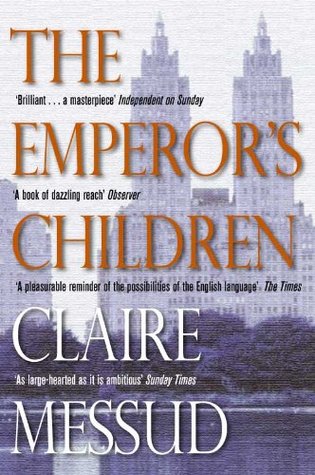 I don’t think it’s a spoiler to tell you that this is a 9/11 novel. It opens in March 2001 and covers the next eight months, with “the towers” first getting a mention at the halfway point. There’s heavy irony in one character commenting to another in the first week of September, “Whatever else they may be, our times are almost criminally uninteresting. The dullest times ever.” As in a couple of novels I read last year (not naming them in case that is a spoiler), the terrorist attacks wake the main characters up from a stupor of entitlement and apathy.
The trio of protagonists, all would-be journalists aged 30, have never really had to grow up. Marina still lives with her parents, social worker Annabel and respected cultural pundit Murray Thwaite. She got an advance to write a book on children’s fashions, but the project has languished for years. Her best friend Danielle is a documentary maker mired in an affair with an older man. Their other close pal is half-Vietnamese Julius, whose new boyfriend keeps him in the luxurious lifestyle to which he’s become accustomed.
The arrival of two young men sets the plot in motion. Through Danielle, Marina meets Ludovic Seeley, who has moved from Australia to New York City to launch a magazine, The Monitor, for which he is soliciting cutting-edge cultural exposés. Meanwhile, Murray’s nephew, college dropout Frederick Tubb, who has the unfortunate nickname of “Bootie,” has moved to the City to seek his fortune. Murray offers him a job as his amanuensis, but what Bootie learns leads him to wish he could expose his idolized uncle as an intellectual fraud.
For these characters, leaving an extended childhood behind means getting out from under the shadow of a previous generation and reassessing what is admirable and who is expendable. As Marina’s book title (The Emperor’s Children Have No Clothes) indicates, appearance and substance do not always match. I won’t give away what 9/11 means for this fictional world, though I’d be interested in discussing it in the comments with anyone who’s read the book. Bootie was my favorite, and what happens with him is particularly interesting.
This was thoroughly engrossing: richly textured and intellectually satisfying in a way that might call to mind George Eliot and Edith Wharton – or, more recently, Jennifer Egan and Zadie Smith. Great American Novel territory, for sure. I’ll be keen to read more by Messud.
Page count: 581
My rating: 
Thinking about the Future with David Farrier & Roman Krznaric (Hay Festival)
My last of three digital Hay Festival* talks this year was by Roman Krznaric, a School of Life philosopher with a background in politics and gardening. I discovered him through Greenbelt Festival eight years ago and have since enjoyed several of his books on the topics of empathy, finding purposeful work, and models for living well. His talk on his upcoming book, The Good Ancestor: How to Think Long Term in a Short Term World, was an ideal follow-up to one of the top three 2020 nonfiction works I’ve read so far:
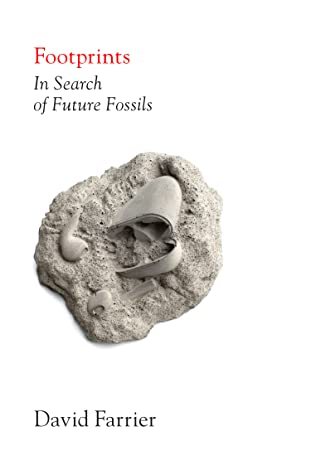
Footprints: In Search of Future Fossils by David Farrier
Look on my Works, ye Mighty, and despair!
Nothing beside remains. Round the decay
Of that colossal Wreck, boundless and bare
The lone and level sands stretch far away.
~from “Ozymandias” by Percy Bysshe Shelley
In May 2013 a set of fossil human footprints was found at Happisburgh in Norfolk. At 850,000 years old, they were the oldest outside of Africa. In the same month, atmospheric CO2 passed 400 ppm for the first time. It’s via such juxtapositions of past and future, and longevity versus precariousness, that Farrier’s book – a sophisticated lattice of human and planetary history, environmental realism and literary echoes – tells the story of the human impact on the Earth.
Unusually, Farrier is not a historian or a climate scientist, but a senior lecturer in English literature at the University of Edinburgh specializing in nature and place writing, especially in relation to the Anthropocene. That humanities focus allowed him to craft a truly unique, interdisciplinary work in which the canon both foreshadows and responds to environmental collapse. On a sabbatical in Australia, he also gets to hold an ice core taken by an icebreaker, swim above coral reefs and visit a uranium mine exempted from protection in a national park.
 He travels not just through space, but also through time, tracing a plastic bottle from algal bloom to oil to factory to river/landfill to ocean; he thinks about how cultural memory can preserve vanished landscapes; he imagines propitiatory rites arising around radioactive waste to explain poisoned lakes and zinc-lined coffins; and he wonders how to issue appropriate warnings to the future when we don’t even know if English, or language in general, will persist (a nuclear waste storage site in Carlsbad uses a combination of multilingual signs, symbols, monoliths and planned oral tradition, while one in Finland is unmarked).
Each chapter is an intricate blend of fact, experience and story. For example, “The Insatiable Road” is about cars and the concrete landscapes they zip through – all made possible by oil. Farrier wins a chance to be among the first to cross the new Forth Bridge on foot and finds himself awed by the human achievement. Yet he knows that, in a car, the bridge will be crossed in seconds and soon taken for granted. Whether as a driver or a passenger, we have become detached from the journey and from the places we are travelling through. The road trip, a standard element of twentieth-century art and literature, has lost its lustre. “Really, we have conceded so much,” he writes. “Most of us live and wander only where road networks permit us to, creeping along their edges and lulled into deafness by their constant roar.” Ben Okri’s legend provides the metaphor of a famished road that swallows all in its path.
What will the human species leave behind? “The entire atmosphere now bears the marks of our passage … Perhaps no one will be around to read our traces, but nonetheless we are, everywhere, constantly, and with the most astonishing profligacy, leaving a legacy that will endure for hundreds of thousands or even hundreds of millions of years to come.” That legacy includes the concrete foundations of massive road networks, the remnants of megacities on coastal plains, plastics that will endure for many centuries, carbon and methane locked up in permafrost, the 2300-km fossil of the dead Great Barrier Reef, nuclear waste in isolation plants, jellyfish-dominated oceans and decimated microbial life.
Thinking long term doesn’t come naturally. In the same way that multiple books of 2019 (Time Song, Surfacing, Underland) helped us think about the place of humanity in reference to deep time, Footprints offers an invaluable window onto the deep future. Its dichotomies of hubris and atonement, and culpability versus indifference, are essential to ponder. It was always going to be sobering to read about how we have damaged our only home, but I never found this to be a needlessly depressing book; it is clear-eyed and forthright, but also meditative and beautifully constructed. Life on the planet continues in spite of our alterations, but all the diminishment was unavoidable, and perhaps some of it is remediable still.
My rating: 
 Related reading: Notes from an Apocalypse by Mark O’Connell. I’m only up to page 36 and at the moment it’s just him watching loads of crackpot preppers’ videos on YouTube, but already I think that Footprints should have had this book’s spot on the Wainwright Prize for Writing on Global Conservation longlist (a new prize run in addition to the standard UK nature writing one) for being more directly engaged with conservation issues rather than just humorously commenting on the end-of-the-world mindset.
Roman Krznaric at Hay Festival
 Krznaric’s discussion of being a “good ancestor” resonated in connection with the long-term thinking of Farrier’s book. “This is the age of the tyranny of the now,” he began, but “humankind has colonized the future” as well, treating it as a tempus nullius where we can dump our ecological waste and tech failures. Yet long-termism is needed more than ever as a way of planning for environmental challenges (and pandemics and the like). Future generations have no say in the decisions we make now that will affect them. To put this in perspective, he showed an image of three spheres, proportionally sized: one represented the 100 billion dead, one was the 7.7 billion currently living, and one was the 6.75 trillion in unborn generations (if the current birth rate continues).
It was Jonas Salk, creator of the polio vaccine, who asked, “Are we being good ancestors?” Krznaric invited the audience to come up with examples (in the chat window on the sidebar) of long-term projects through which people are trying to help future generations, such as the Svalbard Seed Depository, the Green New Deal, the 10,000-Year Clock (inside a mountain in the Texas desert), the Long Play piece of music to last 1,000 years, rewilding, archives and libraries, and tree planting. He had also opened the talk with his own modest contribution: he and his partner ‘gave’ their 11-year-old twins their votes in the latest election.
Krznaric elaborated on four of his book’s six ways of thinking about the future: 1) Rethink human nature by using the “acorn brain” (long-term thinking) rather than the “marshmallow brain” (instant gratification). 2) Embark on projects with long time horizons (“cathedral thinking”). 3) Think in terms of legacies, whether familial or transcendent – leaving a gift to the citizens of the future (e.g. The Future Library of 100 books not published or read until 2114). 4) Create a politics for the future, e.g. the citizen assembly movement.
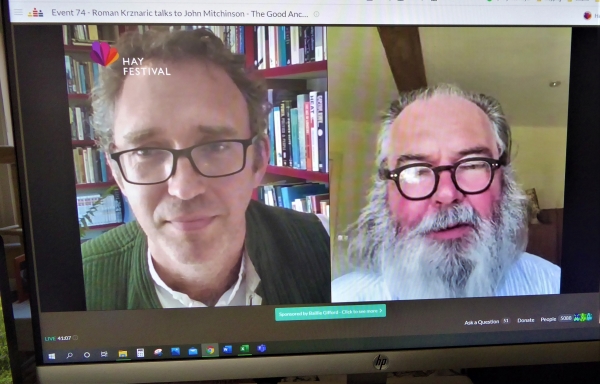
Roman Krznaric at the digital Hay Festival. Q&A led by John Mitchinson (right).
In the case of the UK, Krznaric advocates abolishing the House of Lords, replacing it with a citizens’ assembly and a Minister for the Future, and establishing legal rights for future generations. He noted that globally we’re at a “devil’s fork” where there’s a danger of authoritarian regulations continuing around the world after quarantine ends, endangering the future of social democracy. Instead, we need grassroots activism and “doughnut economics.” He pictures devolution of power away from central governments, with progressive cities becoming new loci of power. Individual actions like vowing not to fly and installing solar panels can inspire peers, but only collective action can tackle environmental breakdown.
 Related reading: I’ll be reviewing Eric Holthaus’s forthcoming book The Future Earth: A Radical Vision for What’s Possible in the Age of Warming for BookBrowse later this month. The meteorologist and science journalist fleshes out some of Krznaric’s ideas, such as a citizen assembly and the cyclical economy, in his proposal for the drastic changes needed over the next three decades.
*You can access the recorded Hay Festival talks by paying a £10 annual subscription here.
Have you read anything about the deep future?
Polio and the Plague: Epidemics in Fiction
Back in January I had the idea to catch up as much as I can on previous Wellcome Book Prize long- and shortlists while the Prize is on hiatus. I decided to start with a pair of novels about polio from my public library system: The Golden Age by Joan London and Nemesis by Philip Roth. The latter, especially, has taken on new significance due to its evocation of a time of panic over a public health crisis (see this article, but beware spoilers). On a fellow book reviewer’s recommendation, I also took Year of Wonders by Geraldine Brooks off the shelf and read it at the same time as the Roth.
The Golden Age by Joan London (2014)
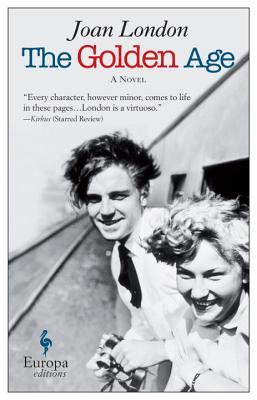 [First published in the UK in 2016; on the Wellcome Book Prize 2017 longlist]
The Golden Age was a real children’s polio hospital in Western Australia, but London has peopled it with her own fictional cast. In 1953–4, Frank Gold and Elsa Briggs, polio patients aged 12 going on 13, fall in love in the most improbable of circumstances: “The backs of their hands brushed as they walked side by side on their crutches. Their bloodstreams recharged by exercise and fresh air, they experienced a fiery burst of pleasure.”
Frank is much the more vibrant character thanks to his family’s wartime past in Hungary and his budding vocation as a poet, which was spurred on by his friendship with Sullivan, a fellow inmate at his previous rehabilitation center. The narrative spends time with the nurses, parents and other patients but keeps coming back to Frank and Elsa. However, Chapter 7, with Frank and his mother Ida still back in Budapest, was my favorite.
I was reminded of Tracy Farr’s work (The Life and Loves of Lena Gaunt), especially the look back from decades later. This has a strong premise and some great lines, but for me there was something slightly lacking in the execution.
Favorite lines:
There was beauty everywhere, strange beauty, even—especially?—in a children’s polio hospital.
Polio is like love, Frank says … Years later, when you think you have recovered, it comes back.
My rating:
Nemesis by Philip Roth (2010)
[On the Wellcome Book Prize 2011 shortlist]
 In the summer of 1944 Newark, New Jersey is hit hard by polio. As a local playground director, 23-year-old Bucky Cantor is distressed when several of his charges become ill; a couple of them even die within a matter of days.
At first Bucky, whose poor eyesight kept him out of the War, sees his job as his own field of duty, but gradually fear and helplessness drive him away. He escapes to the Pocono Mountains to join his fiancée, Marcia, as a summer camp counselor, but soon realizes the futility of trying to outrun a virus. Unable to accept the randomness of bad luck, he blames God – and himself – for the epidemic’s spread.
Despite our better general understanding of epidemiology today, there were still many passages in this novel that rang true for me as they picture life proceeding as normal until paranoia starts to take hold:
Despite polio’s striking in the neighborhood, the store-lined main street was full of people out doing their Saturday grocery shopping…
(Bucky) Look, you mustn’t be eaten up with worry … What’s important is not to infect the children with the germ of fear. We’ll come through this, believe me. We’ll all do our bit and stay calm and do everything we can to protect the children, and we’ll all come through this together.
The important thing, he said, was always to wash your hands after you handled paper money or coins. What about the mail, someone else said … What are you going to do, somebody retorted, suspend delivering the mail? The whole city would come to a halt. Six or seven weeks ago they would have been talking about the war news.
Roth really captures the atmosphere of alarm and confusion, but doesn’t always convey historical and medical information naturally, sometimes resorting to paragraphs of context and representative conversations like in the last quote above. I also wasn’t sure about the use of a minor character (revealed on page 108 to be one of Bucky’s playground kids and a polio patient) as the narrator. This seemed to me to make Bucky more of a symbolic hero than a genuine character. Still, this was a timely and riveting read.
My rating:

A period warning about polio reprinted at the back of Paul Auster’s Report from the Interior.
Year of Wonders by Geraldine Brooks (2001)
 In 1665, with the Derbyshire village of Eyam in the grip of the Plague, the drastic decision was made to quarantine it. A benevolent landowner arranged for regular deliveries of food and other supplies to just outside the parish boundaries. The villagers made an oath that no one would leave until the pestilence was eradicated. One year later, two-thirds of its residents were dead. Brooks imagines that the “plague seeds” came to the village in a bolt of cloth that was delivered from London to the tailor George Viccars, who lodged with widow Anna Frith. Viccars is the first victim and the disease quickly spreads outward from Anna’s home.
Anna barely has time to grieve her own losses before she’s called into service: along with the minister’s wife, Elinor Mompellion, she steps in as a midwife, herbal healer and even a miner. The village succumbs to several sobering trajectories. Suspicion of women’s traditional wisdom leads some to take vigilante action against presumed witches. Unscrupulous characters like Anna’s father, who sets up as a gravedigger, try to make a profit out of others’ suffering. Frustration with the minister’s apparent ineffectuality attracts others to forms of religious extremism. Like Bucky, people cannot help but see the hand of God here.
Perhaps what I was most missing in the London and Roth novels (and in Hamnet, which bears such striking thematic similarities to Year of Wonders) was intimate first-person narration, which is just what you get here from Anna. The voice and the historical recreation are flawless, and again there were so many passages that felt apt:
Stay here, in the place that you know, and in the place where you are known. … Stay here, and here we will be for one another.
the current times did seem to ask us all for every kind of sacrifice
(once they start meeting for church in a meadow) We placed ourselves so that some three yards separated each family group, believing this to be sufficient distance to avoid the passing of infection.
Yet it is a good day, for the simple fact that no one died upon it. We are brought to a sorry state, that we measure what is good by such a shortened yardstick.
I’ve docked a half-star only because of a far-fetched ending that reminded me of that to The Wonder by Emma Donoghue. Apart from that, this is just what I want from my historical fiction.
My rating:
Are you doing any reading about epidemics?
Recommended March Releases: Magnusson, May, Moor and More
March has been a huge month for new releases. With so many authors feeling let down about book tours and events being cancelled, it’s a great time for bloggers to step in and help. I attended two virtual book launches on Twitter on the 19th and have another one coming up on the 31st. I also have three more March releases on order from my local indie bookstore: Greenery by Tim Dee, tracking the arrival of spring; Footprints by David Farrier, about the fossil traces modern humans will leave behind; and The Bass Rock by Evie Wyld, a novel about violence against women set on the Scottish coast in three different time periods.
Today I have short reviews of five March releases I recommend (plus a bonus one now out in paperback): a Victorian pastiche infused with Scottish folklore, an essay collection about disparate experiences of motherhood, a thriller about victims of domestic violence, poems in graphic novel form, a novel about natural and personal disasters in Australia, and a lovely story of friendship and literature changing a young man’s life forever. All:
The Ninth Child by Sally Magnusson
(Published by Two Roads on the 19th)
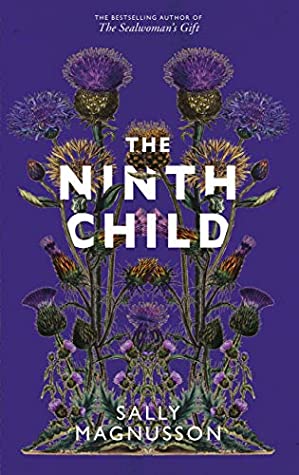 Like Hannah Kent’s The Good People and Sarah Perry’s The Essex Serpent, this is an intense, convincing work of fiction that balances historical realism with magical elements. In mid-1850s Britain, in the wake of a cholera epidemic, there is a drive to ensure clean water. Alexander Aird, hired as the on-site physician for the Glasgow waterworks, moves to the Loch Katrine environs with his wife, Isabel, who has had eight miscarriages or stillbirths. With no living babies requiring her care, Isabel spends her days wandering the hills and meets a strange scarecrow of a man, Reverend Robert Kirke … who died in 1692.
A real-life Episcopalian minister, Kirke wrote a book about fairies and other Celtic supernatural beings and, legend has it (as recounted by Sir Walter Scott and others), was taken into the faery realm after his death and continued to walk the earth looking for rest. It takes a while for Isabel to learn the truth about Kirke – though her servant, Kirsty McEchern, immediately intuits that something isn’t right about the man – and longer still to understand that he wants something from her. “Whatever else, Robert Kirke could be relied on to ruffle this mind of hers that was slowly opening to experience again, and to thinking, and to life.”
This was a rollicking read that drew me in for its medical elements (premature birth, a visit to Joseph Lister, interest in Florence Nightingale’s nursing methods) as well as the plot. It often breaks from the omniscient third-person voice to give testimonies from Kirsty and from Kirke himself. There are also amusing glimpses into the Royal household when Victoria and Albert stay at Balmoral and return to open the waterworks during the “heaviest, windiest, most umbrella-savaging, face-slashing deluge that Scotland had experienced in twenty years.” Best of all, it gives a very different picture of women’s lives in the Victorian period.
My thanks to the publisher for the proof copy for review.
The Best Most Awful Job: Twenty Writers Talk Honestly about Motherhood, edited by Katherine May
(Published by Elliott & Thompson on the 19th)
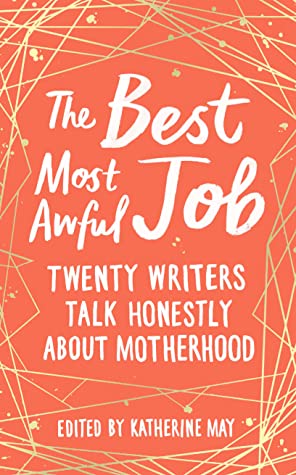 These are essays for everyone who has had a mother – not just everyone who has been a mother. I enjoyed every piece separately, but together they form a vibrant collage of women’s experiences. Care has been taken to represent a wide range of situations and attitudes. The reflections are honest about physical as well as emotional changes, with midwife Leah Hazard (author of Hard Pushed) kicking off with an eye-opening rundown of the intimate scarring some mothers will have for the rest of their lives. We hear from a mother of six who’s “addicted” to pregnancy (Jodi Bartle), but also from a woman who, after an ectopic pregnancy, realized “there are lots of ways to mother, even if your body won’t let you” (Peggy Riley, in one of my two favorite pieces in the book).
Women from BAME communities recount some special challenges related to cultural and family expectations, but others that are universal. An autistic mother (Joanne Limburg) has to work out how to parent a neurotypical child; queer parents (including author Michelle Tea) wonder how to raise a son at a time of toxic masculinity. There are also several single mothers, one of them disabled (Josie George – hers was my other favorite essay; do follow her on Twitter via @porridgebrain if you don’t already).
What I most appreciated is that these authors aren’t saying what they think they should say about motherhood; they’re willing to admit to boredom, disappointment and rage: “motherhood is an infinite, relentless slog from which there is no rest or recuperation … a ceaseless labour, often devoid of acknowledgment, recognition and appreciation” (Javaria Akbar); “I step barefoot on a rogue piece of Lego and it’s game over. I scream” (Saima Mir). These are punchy, distinctive slices of life writing perfectly timed for Mother’s Day. I plan to pass the book around my book club; mothers or not, I know everyone will appreciate it.
My thanks to the publisher for the proof copy for review.
Keeper by Jessica Moor
(Published by Viking/Penguin on the 19th)
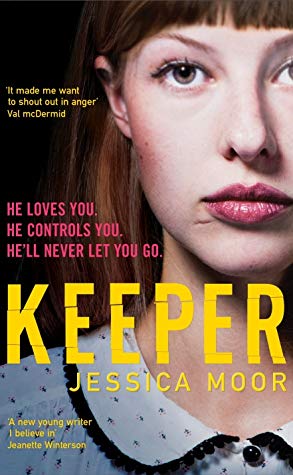 Val McDermid and Jeanette Winterson are among the fans of this, Penguin’s lead debut title of 2020. When a young woman is found drowned at a popular suicide site in the Manchester area, the police plan to dismiss the case as an open-and-shut suicide. But the others at the women’s shelter where Katie Straw worked aren’t convinced, and for nearly the whole span of this taut psychological thriller readers are left to wonder if it was suicide or murder.
The novel alternates between chapters marked “Then” and “Now”: in the latter story line, we follow the police investigation and meet the women of the refuge; in the former, we dive into Katie’s own experience of an abusive relationship back in London. While her mother was dying of cancer she found it comforting to have a boyfriend who was so attentive to her needs, but eventually Jamie’s obsessive love became confining.
I almost never pick up a mystery, but this one was well worth making an exception for. I started suspecting the twist at maybe the two-thirds point, but that didn’t detract from my enjoyment. Based on Moor’s year working in the violence against women sector, it’s a gripping and grimly fascinating story of why women stay with their abusers and what finally drives them to leave.
I picked up a proof copy at a Penguin Influencers event.
 Poems to See by: A Comic Artist Interprets Great Poetry by Julian Peters
(To be published by Plough Publishing House on the 31st)
Peters is a comics artist based in Montreal. Here he has chosen 24 reasonably well-known poems by the likes of e.e. cummings, Emily Dickinson, Robert Frost, Seamus Heaney, Langston Hughes, Edgar Allan Poe, Christina Rossetti and W.B. Yeats and illustrated each one in a markedly different fashion. From black-and-white manga to a riot of color and music, from minimalist calligraphy-like Japanese watercolor to imitations of Brueghel, there is such a diversity of style here that at first I presumed there were multiple artists involved (as in one of my favorite graphic novels of last year, ABC of Typography, where the text was written by one author but each chapter had a different illustrator). But no, this is all Peters’ work; I was impressed by his versatility.
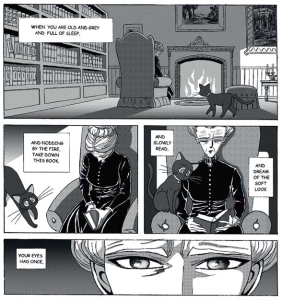
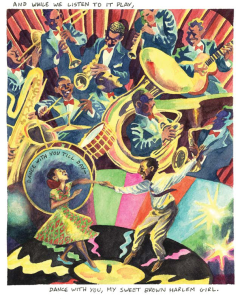
The illustrations range from realistic to abstract, with some more obviously cartoon-like. A couple of sequences reminded me of the style of Raymond Briggs. For “Caged Bird” by Maya Angelou, lines are inlaid on the squares of a painted patchwork quilt. Other sets look to have been done via wood engraving, or with old-fashioned crayons. You could quibble with the more obvious poetry selections, but I encountered a few that were new to me, including “Buffalo Dusk” by Carl Sandburg and “Conscientious Objector” by Edna St. Vincent Millay. Peters has grouped them into six thematic categories: self, others, art, nature, time and death. Teenagers, especially, will enjoy the introduction to a variety of poets and comics styles.
I read an e-copy via NetGalley.
The Inland Sea by Madeleine Watts
(Published by ONE/Pushkin on the 5th)
 “Emergency police fire, or ambulance?” The young female narrator of this debut novel lives in Sydney and works for Australia’s emergency call service. Over her phone headset she gets appalling glimpses into people’s worst moments: a woman cowers from her abusive partner; a teen watches his body-boarding friend being attacked by a shark. Although she strives for detachment, her job can’t fail to add to her anxiety – already soaring due to the country’s flooding and bush fires.
Against that backdrop of natural disasters, a series of minor personal catastrophes play out. The narrator is obsessed with a rape/murder case that’s dominating the television news, and narrowly escapes sexual assault herself. She drinks to excess, keeps hooking up with her ex-boyfriend, Lachlan, even after he gets a new girlfriend, and seems to think abortion and the morning after pill are suitable methods of birth control. Irresponsible to the point of self-sabotage, she’s planning a move to London but in the meantime is drifting through life, resigned to the fact that there is no unassailable shelter and no surefire way to avoid risk.
The title comes from the quest of John Oxley (presented here as the narrator’s ancestor), who in 1817 searched for a water body in the Australian interior. Quotations from his journals and discussions of the work of Patrick White, the subject of Lachlan’s PhD thesis, speak to the search for an Australian identity. But the inland sea is also the individual psyche, contradictory and ultimately unknowable. Like a more melancholy version of Jenny Offill’s Weather or a more cosmic autofiction than Yara Rodrigues Fowler’s Stubborn Archivist, this is a timely, quietly forceful story of how women cope with concrete and existential threats.
My thanks to the publisher for the PDF copy for review.
And a bonus…
The Offing by Benjamin Myers (2019)
(Paperback published by Bloomsbury on the 5th)
 With the Second World War only recently ended and nothing awaiting him apart from the coal mine where his father works, sixteen-year-old Robert Appleyard sets out on a journey. From his home in County Durham, he walks southeast, doing odd jobs along the way in exchange for food and lodgings. One day he wanders down a lane near Robin Hood’s Bay and gets a surprisingly warm welcome from a cottage owner, middle-aged Dulcie Piper, who invites him in for tea and elicits his story. Almost accidentally, he ends up staying for the rest of the summer, clearing scrub and renovating her garden studio.
Dulcie is tall, outspoken and unconventional – I pictured her as (Meryl Streep as) Julia Child in the movie Julie & Julia. She introduces Robert to whole new ways of thinking: that not everyone believes in God, that Germans might not be all bad, that life can be about adventure and pleasure instead of duty. “The offing” is a term for the horizon, as well as the title of a set of poems Robert finds in the dilapidated studio, and both literature and ambition change his life forever. Bright, languid and unpredictable, the novel delights in everyday sensual pleasures like long walks with a dog, dips in the ocean and an abundance of good food. I can’t think of another book I’ve read that’s quite like it – how refreshing is that?
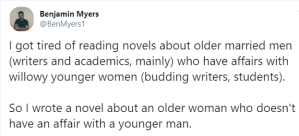
I pre-ordered the paperback using a Waterstones voucher I got for Christmas.
What recent releases can you recommend?
Six Degrees of Separation: From Wolfe Island to Riverine
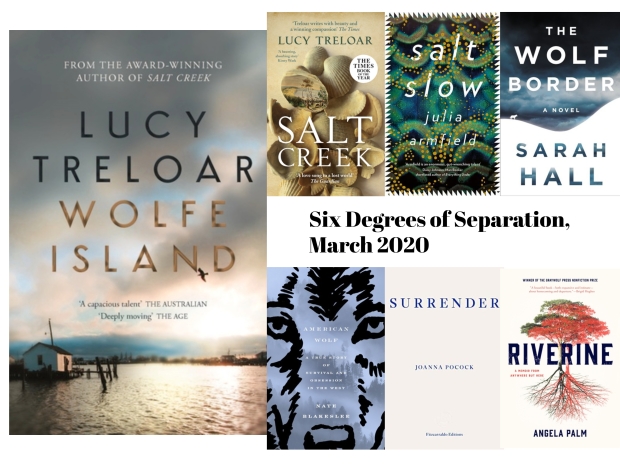
It’s my second month participating in Kate’s Six Degrees of Separation meme (see her introductory post). This time the challenge starts with Wolfe Island by Lucy Treloar. Alas, as far as I can tell this hasn’t yet been published outside of Australia. Which is such a shame, because I absolutely adored…
#1 Salt Creek, Treloar’s debut novel. I read it in 2018 and deemed it “one of the very best works of historical fiction I’ve read.” A widowed teacher settled in England looks back on the eight ill-fated years her family spent at an outpost in South Australia in the 1850s–60s. It’s a piercing story of the clash of cultures and the secret prejudices that underpin our beliefs.
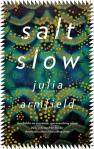
#2 I recently saw someone on Twitter remarking on the apparent trend for book titles to have the word “Salt” in them. Of the few examples he mentioned, I’ve read and enjoyed Salt Slow by Julia Armfield, which was on the Young Writer of the Year Award shortlist last year. The book’s nine short stories are steeped in myth and magic, but often have a realistic shell.
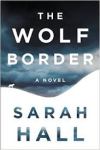
#3 One story in Salt Slow, “Formerly Feral,” is about a teenager who has a wolf for a stepsister. So, to get back to the literal wording of our starting point (a homonym, anyway; I didn’t know whether to take this in the Salt direction or the Wolf direction; now I’ve done both!), another work of fiction I read that incorporated wolves was The Wolf Border by Sarah Hall, a fantastic novel to which Scottish independence and rewilding form a backdrop.
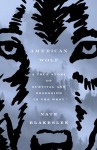
#4 The controversy over the reintroduction of wolves to Yellowstone National Park – and the decision to remove their endangered status, thus declaring open season for hunters – is at the heart of the nonfiction study American Wolf by Nate Blakeslee. “The West was caught up in a culture war, and for some people it was more than just a metaphor,” he writes.
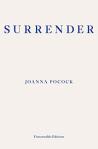
#5 Wolves and rewilding in the American West also come into the memoir-in-essays Surrender by Joanna Pocock, about the two years of loss and change she spent in Missoula, Montana and her sense of being a foreigner both there and on her return to London.
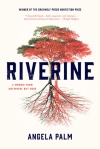
#6 A wonderful memoir-in-essays that was criminally overlooked in 2016 was Riverine by Angela Palm (my BookBrowse review). It has such a strong sense of place, revealing how traces of the past are still visible in the landscape and how our environment shapes who we are. Palm reflects on the winding course of her life in the Midwest and the people who meant most to her along the way, including a friend who was later sentenced to life in prison for murdering their elderly neighbors. In keeping with the watery imagery, there is a stream-of-consciousness element to the writing.
Join us for #6Degrees of Separation if you haven’t already!
Have you read any of my selections? Are you tempted by any you didn’t know before?
Three Recommended July Releases: Starling Days, Hungry, Supper Club
While very different, these three books tie together nicely with their themes of the hunger for food, adventure and/or love.
Starling Days by Rowan Hisayo Buchanan
(Coming on July 11th from Sceptre [UK])
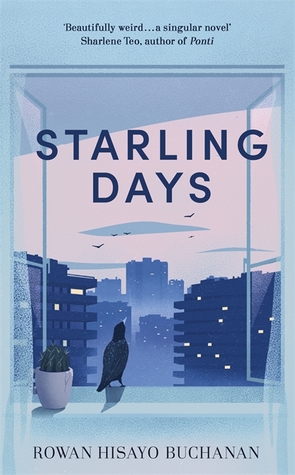 Buchanan’s second novel reprises many of the themes from her first, Harmless Like You, including art, mental illness, and having one’s loyalties split across countries and cultures. Oscar and Mina have been together for over a decade, but their marriage got off to a bad start six months ago: on their wedding night Mina took an overdose, and Oscar was lucky to find her in time. The novel begins and ends with her contemplating suicide again; in between, Oscar takes her from New York City to England, where he grew up, for a change of scenery and to work on getting his father’s London flats ready to sell. For Mina, an adjunct professor and Classics tutor, it will be labeled a period of research on her monograph about the rare women who survive in Greek and Roman myth. But when work for his father’s Japanese import company takes Oscar back to New York, Mina is free to pursue her fascination with Phoebe, the sister of Oscar’s childhood friend.
Both Oscar and Mina have Asian ancestry and complicated, dysfunctional family histories. For Oscar, his father’s health scare is a wake-up call, reminding him that everything he has taken for granted is fleeting, and Mina’s uncertain mental and reproductive health force him to face the fact that they might never have children. Although I found this less original and compelling than Buchanan’s debut, I felt true sympathy for the central couple. It’s a realistic picture of marriage: you have to keep readjusting your expectations for a relationship the longer you’re together, and your family situation is inevitably going to have an impact on how you envision your future. I also admired the metaphors and the use of color.
The title is, I think, meant to refer to a sort of time outside of time when wishes can come true; in Mina’s case that’s these few months in London. Bisexuality is something you don’t encounter too often in fiction, so I guess that’s reason enough for it to be included here as a part of Mina’s story, though I wouldn’t say it adds much to the narrative. If it had been up to me, instead of birds I would have picked up on the repeated peony images (Mina has them tattooed up her arms, for instance) for the title and cover.
Hungry: Eating, Road-Tripping, and Risking It All with the Greatest Chef in the World by Jeff Gordinier
(Coming on July 9th from Tim Duggan Books [USA] and on October 3rd from Icon Books [UK])
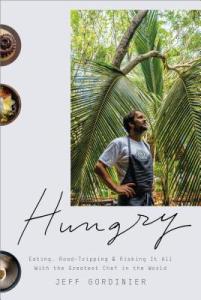 Noma, René Redzepi’s restaurant in Copenhagen, Denmark, has widely been considered the best in the world. In 2013, though, it suffered a fall from grace when some bad mussels led to a norovirus outbreak that affected dozens of customers. Redzepi wanted to shake things up and rebuild Noma’s reputation for culinary innovation, so in the four years that followed he also opened pop-up restaurants in Tulum, Mexico and Sydney, Australia. Journalist Jeff Gordinier, food and drinks editor at Esquire magazine, went along for the ride and reports on the Noma team’s adventures, painting a portrait of a charismatic, driven chef. For foodies and newbies alike, it’s a brisk, delightful tour through world cuisine as well as a shrewd character study. (Full review coming soon to BookBrowse.)
Supper Club by Lara Williams
(Coming on July 9th from G.P. Putnam’s Sons [USA] and July 4th from Hamish Hamilton [UK])
“What could violate social convention more than women coming together to indulge their hunger and take up space?” Roberta and Stevie become instant besties when Stevie is hired as an intern at the fashion website where Roberta has been a writer for four years. Stevie is a would-be artist and Roberta loves to cook; they decide to combine their talents and host Supper Clubs that allow emotionally damaged women to indulge their appetites. The pop-ups take place at down-at-heel or not-strictly-legal locations, the food is foraged from dumpsters, and there are sometimes elaborate themes and costumes. These bacchanalian events tend to devolve into drunkenness, drug-taking, partial nudity and food fights.
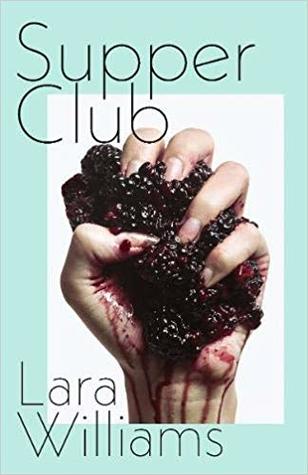 The central two-thirds of the book alternates chapters between the present day, when Roberta is 28–30, and her uni days. I don’t think it can be coincidental that Roberta and Stevie are both feminized male names; rather, we are meant to ask to what extent all the characters have defined themselves in terms of the men in their lives. For Roberta, this includes the father who left when she was seven and now thinks he can send her chatty e-mails whenever he wants; the fellow student who raped her at uni; and the philosophy professor she dated for ages even though he treated her like an inconvenient child. Supper Club is performance art, but it’s also about creating personal meaning when family and romance have failed you.
I was slightly disappointed that Supper Club itself becomes less important as time goes on, and that we never get closure about Roberta’s father. I also found it difficult to keep the secondary characters’ backstories straight. But overall this is a great debut novel with strong themes of female friendship and food. Roberta opens most chapters with cooking lore and tips, and there are some terrific scenes set in cafés. I suspect this will mean a lot to a lot of young women. Particularly if you’ve liked Sweetbitter (Stephanie Danler) and Friendship (Emily Gould), give it a taste.
With thanks to Sapphire Rees of Penguin for the proof copy for review.
 Bookish Beck = Rebecca Foster. American transplant to England. Freelance proofreader and book reviewer.
 Bookish Beck