Carol Shields Prize Longlist Reads: Cocktail & Land of Milk and Honey
Two final reviews in advance of tomorrow’s shortlist announcement: a sophisticated, nostalgic short story collection and an intense future-set novel full of the pleasures of the flesh. Both make it onto my wish list at the end of this post.
Cocktail by Lisa Alward
The 12 stories of this debut collection brought to mind Tessa Hadley and Alice Munro for their look back at chic or sordid 1960s–1980s scenes and dysfunctional families or faltering marriages. They’re roughly half and half first-person and third-person (five versus seven). The title story opens the book with a fantastic line: “The problem with parties, my mother says, is people don’t drink enough.” Later, the narrator elaborates:
Her meaning is that if people drank more, they’d loosen up. Parties would be more fun, like they used to be. And I laugh along. Yes, I say, letting her top up my glass of Chardonnay. That’s it, not enough booze. But I’m thinking about Tom Collins.
 Not the drink, but an alias a party guest used when he stumbled into her bedroom looking for a toilet. She was about eleven at this point and she and her brother vaguely resented being shut away from their parents’ parties. While for readers this is an uncomfortable moment as we wonder if she’s about to be molested, in memory it’s taken on a rosy glow for her – a taste of adult composure and freedom that she has sought with every partner and every glass of booze since. This was a pretty much perfect story, with a knock-out ending to boot.
Dependence on alcohol recurs, and “Hawthorne Yellow,” is also about a not-quite affair, between a restless stay-at-home mother and the decorator who discovers antique sketches in the old servants’ quarters of her home. “Orlando, 1974” again contrasts childhood nostalgia with seedy reality: Disney World should have been an idyll, but the narrator mostly remembers a lot of vomiting. “Old Growth” and “Bear Country” have Ray renegotiating his relationship with his son after divorcing Gwyneth. “Hyacinth Girl,” too, is about complicated stepfamilies, while “Wise Men Say” looks back at cross-class romance. The protagonist of “Maeve” feels she can’t match the title character’s perfect parenting skills; the first-person plural in “Pomegranate” portrays a group of wild convent schoolgirls.
“Little Girl Lost” was the most Hadley-meets-Munro, with an alcoholic painter’s daughter seen first as a half-feral child and later as a hippie young woman. “How the Smoke Gets in Your Eyes” was the least essential with its elderly narrator piecing things together in the aftermath of a burglary. Along with the title story, the standout for me was “Bundle of Joy,” about a persnickety grandmother going to her daughter’s place to spend time with her new grandson. She disapproves of just about every decision Erin has made (leaving the dogs’ frozen turds in the backyard all winter, for instance), but her interference threatens to have lasting consequences. Not a dud in the dozen, and a very strong voice I’ll expect to read much more from. (Read via Edelweiss; published by Biblioasis) 
Land of Milk and Honey by C Pam Zhang
We all die. We have only the choice, if we are privileged, of whether death comes with a whimper or a bang; of what worlds we taste before we go.
A real step up from How Much of These Hills Is Gold, which I read for book club last year – while it was interesting to see the queer, BIPOC spin Zhang put on the traditional Western, I found her Booker-longlisted debut bleak and strange in such a detached way that it was hard to care about. By contrast, I was fully involved in her sensuous and speculative second novel.
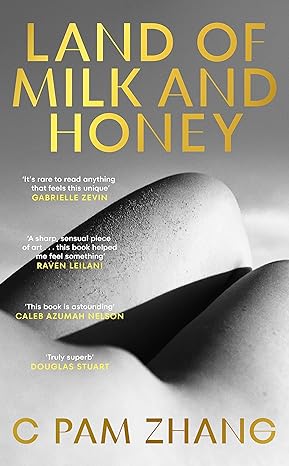 A 29-year-old Chinese American chef is exiled when the USA closes its borders while she’s working in London. On a smog-covered planet where 98% of crops have failed, scarcity reigns – but there is a world apart, a mountaintop settlement at the Italian border where money can buy any ingredient desired and threatened foods are cultivated in a laboratory setting. While peasants survive on mung bean flour, wealthy backers indulge in classic French cuisine. The narrator’s job is to produce lavish, evocative multi-course meals to bring investors on board. Foie gras, oysters, fine wines; heirloom vegetables; fruits not seen for years. But also endangered creatures and mystery meat wrested back from extinction. Her employer’s 21-year-old daughter, Aida, oversees the lab where these rarities are kept alive.
Ironically, surrounded with such delicacies, the chef loses her appetite for all but cigarettes – yet another hunger takes over. Her relationship with Aida is a passionate secret made all the more peculiar by the fact that the chef’s other role is to impersonate Aida’s dead mother, Eun-Young. It’s clear this precarious setup can’t last; ambition and technology keep moving on. The novel presents such a striking picture of desire at the end of the world. Each sentence is honed to flawlessness, with whole paragraphs of fulsome descriptions of meals. Zhang’s prose reminded me of Stephanie Danler’s and R.O. Kwon’s – no surprise, then, that they’re on the Acknowledgments list, as are a cornucopia of foods and other literary influences.
I’m not usually one for a dystopian novel, but the emotional territory keeps this one grounded even as the plot grows more sinister. My only complaint is that I would have left off the final chapter as I don’t think tracing the protagonist through four more decades of life adds much. I would rather have left this world in limbo than thought of the episode as a blip in a facile regeneration process – that’s the most unrealistic element of all. But this has still been my favourite read from the longlist so far. And there’s even a faithful pet cat, a “recalcitrant beast” that keeps coming back to the chef despite benign neglect. (Public library) 
My ideal shortlist, based on what I’ve read and still want to read, would be:


Cocktail by Lisa Alward
Dances by Nicole Cuffey
Brotherless Night by V.V. Ganeshananthan
I Have Some Questions for You by Rebecca Makkai
Land of Milk and Honey by C Pam Zhang
I wouldn’t be averse to seeing The Future or Chrysalis on there either. (Just not Loot, please!)
See Laura’s post for a recap of her reviews and her wish list. Marcie has also been reading from the longlist; see her first write-up here.
20 Books of Summer, 15–17: Bill Buford, Kristin Newman, J. Courtney Sullivan
One last foodie selection for the summer: a chef’s memoir set mostly in Lyon, France. Plus a bawdy travel memoir I DNFed halfway through, and an engaging but probably overlong contemporary novel about finances, generational conflict and women’s relationships.
Dirt: Adventures in French Cooking by Bill Buford (2020)
 Buford’s Heat was one of the highlights of my foodie summer reading in 2020. This is a sequel insomuch as it tells you what he did next, after his Italian-themed apprenticeships. The short answer is that he went to Lyon to learn French cooking in similarly obsessive fashion. Without knowing a word of French. And this time he had a wife and twin toddlers in tow. He met several celebrated French chefs – Michel Richard, Paul Bocuse, Daniel Boulud – and talked his way into training at a famous cookery school and in Michelin-starred kitchens.
These experiences are discussed in separate essays, so I rather lost track of the timeline. It’s odd that it took the author so many years to get around to publishing about it all. You’d think his sons were still young, but in fact they’re now approaching adulthood. The other slightly unusual thing is the amount of space Buford devotes to his pet theory that French cuisine (up to ragout, at least) evolved from Italian. Unsurprisingly, the French don’t favour this idea; I didn’t particularly care one way or the other.
Nonetheless, I enjoyed reading about his encounters with French bureaucracy; the stress of working in busy (and macho) restaurants, where he’s eventually entrusted with cooking the staff lunch; and his discovery of what makes for good bread: small wheat-growing operations rather than industrially produced flour – his ideal was the 90-cent baguette from his local boulangerie. This could have been a bit more focused, and I’m still more likely to recommend Heat, but I am intrigued to go to Lyon one day. (Secondhand gift, Christmas 2022) 
What I Was Doing While You Were Breeding by Kristin Newman (2014)
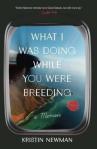 (DNF, 156/291 pages) As featured in my Six Degrees post earlier in the month. Newman is a comedy writer for film and television (That ’70s Show, How I Met Your Mother, etc.). I liked how the title unabashedly centres things other than couplehood and procreation. When she’s travelling, she can be spontaneous, open-to-experience “Kristin-adjacent,” who loves doing whatever it is that locals do. And be a party girl, of course (“If there is one thing that is my favorite thing in the world, it’s making out on a dance floor”). However, this chronological record of her sexual conquests in Amsterdam, Paris, Russia, Argentina, etc. gets repetitive and raunchy. I also felt let down when I learned that she married and had a child right after she published it. So this was just her “Pietra Pan” stage before she copied everyone else. Which is fine, but were her drunken shenanigans really worth commemorating? (Secondhand, Bas Books & Home)
Friends and Strangers by J. Courtney Sullivan (2020)
I got Emma Straub vibes from this big, juicy novel focusing on two women in upstate New York: Elisabeth, a married journalist who moved out of Brooklyn when she finally conceived via IVF; and Sam, a college art student who becomes her son Gil’s babysitter. Elisabeth misses her old crowd and doesn’t fit in with the middle-aged book club ladies in her suburban neighbourhood; Sam is almost her only friend, a confidante who’s also like a little sister (better, anyway, than Elisabeth’s real sister, who lives on tropical islands and models swimwear for inspirational Instagram posts). And Sam admires Elisabeth for simultaneously managing a career and motherhood with seeming aplomb.
 But fundamental differences between the two emerge, mostly to do with economics. Elisabeth comes from money and takes luxury products for granted, while Sam is solidly working-class and develops a surprising affinity with Elisabeth’s father-in-law, George, who is near bankruptcy after Uber killed off his car service business. His pet theory, “The Hollow Tree,” explains that ordinary Americans have been sold the lie that they are responsible for their own success, when really they are in thrall to corporations and the government doesn’t support them as it should. This message hits home for Sam, who is distressed about the precarious situation of the Latina dining hall employees she has met via her work study job. Both Elisabeth and Sam try to turn their privilege to the good, with varied results.
Although I remained engrossed in the main characters’ stories, which unfold in alternating chapters, I thought this could easily have been 300 pages instead of nearly 400. In particular, Sullivan belabours Sam’s uncertainty over her thirtysomething English fiancé, Clive, whom Elisabeth refers to as “sleazy-hot.” The red flags are more than obvious to others in Sam’s life, and to us as readers, yet we get scene after scene meant to cast shade on him. I also kept wondering if first person would have been the better delivery mode for one or both strands. Still, this was perfect literary cross-over summer reading. (Little Free Library) 
Book Serendipity, June to July 2023
I call it “Book Serendipity” when two or more books that I read at the same time or in quick succession have something in common – the more bizarre, the better.
Are all of these pure coincidence? Or, as a character says in The Year of Pleasures by Elizabeth Berg, maybe it’s true that “Sometimes serendipity is just intention, unmasked.”
This is a regular feature of mine every couple of months. Because I usually have 20–30 books on the go at once, I suppose I’m more prone to such incidents. The following are in roughly chronological order.
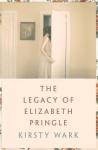
- A deadbeat boyfriend named Andrew in Yellowface by Rebecca F. Kuang and The Legacy of Elizabeth Pringle by Kirsty Wark.
- A partner’s piano playing is by turns annoying (practice) and revelatory (performance) in The Happy Couple by Naoise Dolan and The Late Americans by Brandon Taylor.

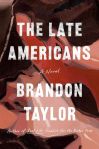
- Frequent meals of potatoes due to poverty, and a character sneaking salt in, in Music in the Dark by Sally Magnusson and How Much of These Hills Is Gold by C Pam Zhang.
- Getting close to a seal even though the character knows it might bite in Salt & Skin by Eliza Henry-Jones and one story in High-Wire Act by JoeAnn Hart.
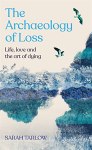
- Rev. Robert Kirk’s writings on fairies are mentioned in The Archaeology of Loss by Sarah Tarlow and The Legacy of Elizabeth Pringle by Kirsty Wark (and were also a major element in Sally Magnusson’s previous novel, The Ninth Child; I happened to be reading her most recent novel at the same time as the above two!).
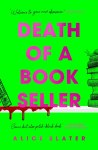
- Menthols are smoked in Death of a Bookseller by Alice Slater and The Late Americans by Brandon Taylor.
- Joan Didion’s The Year of Magical Thinking is mentioned in Death of a Bookseller by Alice Slater and The Archaeology of Loss by Sarah Tarlow.
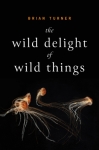 An ant farm as a metaphor in The Happy Couple by Naoise Dolan and The Wild Delight of Wild Things by Brian Turner.
- The main character, in buying a house, inherits the care of a large, elaborate garden from an older woman who kept it immaculate, in The Year of Pleasures by Elizabeth Berg and one story in High-Wire Act by JoeAnn Hart.
- A widow, despite her feminist ideals, wishes she had a man to take care of DIY and other house stuff for her in The Year of Pleasures by Elizabeth Berg and The Archaeology of Loss by Sarah Tarlow.
- A spouse’s death in 2016 and a description of cremation in The Archaeology of Loss by Sarah Tarlow and The Wild Delight of Wild Things by Brian Turner.
- A character deliberately burns a sexual partner’s cheek with a cigarette in Death of a Bookseller by Alice Slater and The Late Americans by Brandon Taylor.
- Counting down the days, then hours, until a wedding, in The Year of Pleasures by Elizabeth Berg, The Happy Couple by Naoise Dolan, and Crudo by Olivia Laing.
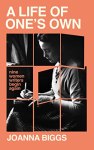
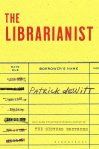
- Similar sentiments – about reading to find our own experiences expressed in a way we never would have thought to put them – in passages I encountered on the same day from A Life of One’s Own by Joanna Biggs (“I want to have that moment of recognition, finding something on the page I’ve felt but haven’t put into words”) and The Librarianist by Patrick deWitt (“the reader says to him or herself, Yes, that’s how it is, only I didn’t know it to describe it”).
- I encountered mentions of “Believe” by Cher in The Country of the Blind by Andrew Leland and House Gone Quiet by Kelsey Norris on the same evening.
- Calculating how old a newborn child will be on a certain date in the future – and fearing what the world will be like for them then – in Matrescence by Lucy Jones and Milk by Alice Kinsella.
- Moving with twin sons is a key part of the setup in Dirt by Bill Buford and Speak to Me by Paula Cocozza.


- I read scenes of a mother’s death from brain cancer in The Librarianist by Patrick deWitt and One Last Thing by Wendy Mitchell in the same evening.
- There’s a mint-green house, and a house with a rope banister (the same house in one case, but not in the other) in both Speak to Me by Paula Cocozza and The Librarianist by Patrick deWitt, two 6 July 2023 releases.
- Connective tissue in the body is compared to the threads of textiles in Cross-Stitch by Jazmina Barrera and Floppy by Alyssa Graybeal.

- The metaphorical framework of one day is used as the structure in One Midsummer’s Day by Mark Cocker and The Farmer’s Wife by Helen Rebanks.
- I’ve read two chef’s memoirs this summer with a scene of pig slaughter: A Cook’s Tour by Anthony Bourdain and Dirt by Bill Buford.
- A character who lost an arm in the First World War in The Librarianist by Patrick deWitt and Haweswater by Sarah Hall.
 I read descriptions of fried egg residue on a plate, one right after the other in the same evening, in The Dead Are Gods by Eirinie Carson and The Wren The Wren by Anne Enright.
What’s the weirdest reading coincidence you’ve had lately?
20 Books of Summer: Bourdain, Ozeki and More
Over halfway through the summer and my numbers are looking poor. It’s not that I’m not reading a ton – in general, I am – it’s just that I’m having trouble finishing any foodie books. I’m in the middle of two food-related memoirs plus Cakes and Ale by W. Somerset Maugham, and have recently started buddy-reading Mother’s Milk by Edward St Aubyn with Annabel, so more reviews will be along eventually, but I predict August will be a scramble.
Today I review an in-your-face tell-all about the life of a chef, and a novel set between Japan and the United States that exposes the seamy side of meat production. A lite road trip and an iffy California classic follow as bonuses.
Kitchen Confidential: Adventures in the Culinary Underbelly by Anthony Bourdain (2000)
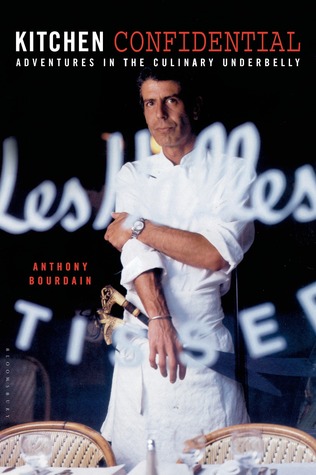 (20 Books of Summer, #5) “Get that dried crap away from my bird!” That random line about herbs is one my husband and I remember from a Bourdain TV program and occasionally quote to each other. It’s a mild curse compared to the standard fare in this flashy memoir about what really goes on in restaurant kitchens. His is a macho, vulgar world of sex and drugs. In the “wilderness years” before he opened his Les Halles restaurant, Bourdain worked in kitchens in Baltimore and New York City and was addicted to heroin and cocaine. Although he eventually cleaned up his act, he would always rely on cigarettes and alcohol to get through ridiculously long days on his feet.
From “Appetizer” to “Coffee and a Cigarette,” the book is organized like a luxury meal. Bourdain charts his development as a chef, starting with a childhood summer in France during which he ate vichyssoise and oysters for the first time and learned that food “could be important … an event” and describing his first cooking job in Provincetown and his time at the Culinary Institute of America. He also discusses restaurant practices and hierarchy, and home cook cheats and essentials. (I learned that you should never order fish in a restaurant on a Monday – it’ll be left over from Thursday’s order.) The pen portraits of his crazy sous-chef and baker are particularly amusing; other subjects include a three-star chef he envies and the dedicated Latino immigrants who are the mainstay of his kitchen staff.
My dad is not a reader but he is a foodie, and he has read Bourdain’s nonfiction (and watched all his shows), so I felt like I was continuing a family tradition in reading this. I loved my first taste of Bourdain’s writing: he’s brash, passionate, and hilariously scornful of celebrity chefs and vegetarianism (“the enemy of everything good and decent in the human spirit, an affront to all I stand for, the pure enjoyment of food”). Being in charge of a restaurant sounds manic, yet you can see why some would find it addictive. How ironic, though, to find a whole seven references to suicide in this book. Sometimes he’s joking; sometimes he’s talking about chefs he’s heard about who couldn’t take the pressure. Eighteen years after this came out, he, too, would kill himself.
(See also this article about rereading Bourdain in the 20th anniversary year of Kitchen Confidential.)
Source: Local swap shop (free)
My rating: 
(These two are linked by a late chapter in the Bourdain, “Mission to Tokyo,” in which he advises on a new Les Halles offshoot in Japan and gorges himself on seafood delights.)
My Year of Meats by Ruth Ozeki (1998)
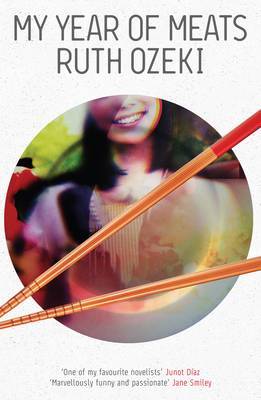 (20 Books of Summer, #6) I don’t know what took me so long to read another novel by Ruth Ozeki after A Tale for the Time Being, one of my favorite books of 2013. This is nearly as fresh, vibrant and strange. Set in 1991, it focuses on the making of a Japanese documentary series, My American Wife, sponsored by a beef marketing firm. Japanese American filmmaker Jane Takagi-Little is tasked with finding all-American families and capturing their daily lives – and best meat recipes. The traditional values and virtues of her two countries are in stark contrast, as are Main Street/Ye Olde America and the burgeoning Walmart culture.
There is a clear message here about cheapness and commodification, but Ozeki filters it through the wrenching stories of two women with fertility problems: Jane, whose reproductive system was damaged by DES, a synthetic estrogen her mother took during pregnancy to prevent a miscarriage; and Akiko, the wife of Jane’s boss, who struggles with an eating disorder and domestic violence.
Jane starts sneaking controversial subjects into her shoots: a lesbian couple, a family formed by interracial adoption, and a five-year-old who has already undergone puberty due to the hormones used on her family’s cattle feedlot. What is “natural,” and what gets branded alien or invasive? From the kudzu that strangles the South to a murdered Japanese exchange student, Ozeki probes the related issues of nativism and racism. Her two protagonists’ stories – one in the first person; the other in the third person – come together in a surprising manner as Jane decides that she has a more pressing obligation than creating a diverting television show.
This is a bold if at times discomforting novel. At first it brought to mind the exaggerated comedy of Julian Barnes’s England, England and Jane Smiley’s Moo, but as it grew darker it reminded me more of Han Kang’s The Vegetarian. It’s tricky, when a work of fiction tackles ethical or environmental matters, to balance storytelling and consciousness-raising, but Ozeki pulls it off with style. The only aspect that didn’t mean much to me, perhaps simply because of my unfamiliarity, was the excerpts from The Pillow Book of Shōnagon. How sad to think that I only have one more Ozeki awaiting me, All Over Creation. She averages a book every 5‒10 years; we can only hope that another is on the way soon.
Source: Charity shop
My rating: 
I picked up another two food-adjacent books that didn’t work for me, though I ended up skimming them to the end.
America Unchained: A Freewheeling Roadtrip in Search of Non-Corporate USA by Dave Gorman (2008)
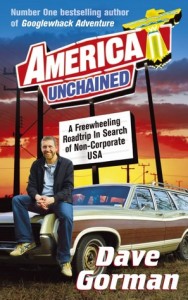 (20 Books of Summer, #7) I read the first couple of chapters, in which he plans his adventure, and then started skimming. I expected this to be a breezy read I would race through, but the voice was neither inviting nor funny. I also hoped to find more about non-chain supermarkets and restaurants – that’s why I put this on the pile for my foodie challenge in the first place – but, from a skim, it mostly seemed to be about car trouble, gas stations and fleabag motels. The only food-related moments are when Gorman (a vegetarian) downs three fast food burgers and orders of fries in 10 minutes and, predictably, vomits them all back up; and when he stops at an old-fashioned soda fountain for breakfast.
Source: Free bookshop
Tortilla Flat by John Steinbeck (1935)
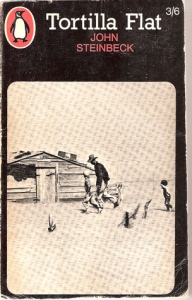 (20 Books of Summer, #8) I read the first 25 pages and then started skimming. This is a story of a group of friends – paisanos, of mixed Mexican, Native American and Caucasian blood – in Monterey, California. During World War I, Danny serves as a mule driver and Pilon is in the infantry. When discharged from the Army, they return to Tortilla Flat, where Danny has inherited two houses. He lives in one and Pilon is his tenant in the other (though Danny will never see a penny in rent). They’re a pair of loveable scamps, like Huck Finn all grown up, stealing wine and chickens left and right.
Steinbeck novels seem to fall into two camps for me. This is one of his inconsequential, largely unlikable novellas (like The Pearl and The Red Pony, which I studied in school – I’m lucky they didn’t put me off Steinbeck forever), whereas The Grapes of Wrath and East of Eden are masterful. It may also have something to do with the slight air of condescension towards characters of a different race: Steinbeck renders their speech with “thee” and “thou,” trying to imitate a Romance language’s informal pronouns, but it feels dated and alienating.
Source: Free bookshop
 Bookish Beck = Rebecca Foster. American transplant to England. Freelance proofreader and book reviewer.
 Bookish Beck