Book Serendipity, June to July
Life can have odd confluences. Esme will not say serendipity: she loathes the word. But sometimes she thinks there must be something at work, some impulse, some collision of forces, some kinks in chronology.
~The Vanishing Act of Esme Lennox by Maggie O’Farrell
Unlike Esme Lennox, I love the word serendipity! You probably know by now that I call it “Book Serendipity” when two or more books that I read at the same time or in quick succession have something in common – the more bizarre, the better. This is a regular feature of mine every couple of months. Because I usually have 20–30 books on the go at once, I suppose I’m more prone to such incidents. People frequently ask how I remember all of these coincidences. The answer is: I jot them down on scraps of paper or input them immediately into a file on my PC desktop; otherwise, they would flit away!
Thanks to Kay for posting about her own book serendipity moments here!
The following are in roughly chronological order.
- A woman gets on a flight even though she’s technically too pregnant to do so in one poem of Family Lines (ed. Armitage and Bower) and Commencement by J. Courtney Sullivan.
- A mention of a Spanish cat in one poem of Family Lines (ed. Armitage and Bower) and Tsi-Tsa by George Mikes.
- Rum and coke is mentioned in I Sing to the Greenhearts by Maggie Harris and Our Father Who Art in the Tree by Judy Pascoe.
- A character named Gladys in Blonde by Joyce Carol Oates and Our Father Who Art in the Tree by Judy Pascoe.
- A character named Celia in The Seven Husbands of Evelyn Hugo by Taylor Jenkins Reid and Commencement by J. Courtney Sullivan.
- A girl holds her breath until she faints in Lost Lambs by Madeline Cash and Our Father Who Art in the Tree by Judy Pascoe.
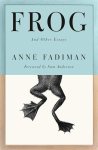 Samuel Taylor Coleridge’s performance as a father appears in one poem of Family Lines (ed. Armitage and Bower) and one essay of Frog by Anne Fadiman.
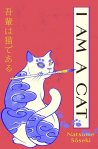
- A cat scratches a tatami mat in Letters of Note: Cats (ed. Shaun Usher) and I Am a Cat by Natsume Sōseki.
- A Freudian explanation of the collector’s obsessive impulse in The Madman’s Guide to Stamp Collecting by Robert Irwin and The Butterfly Season by Lea Korsgaard.
- A book/other arts coincidence, this: I first saw the actress Anya Taylor-Joy in The Menu, which I watched on my sister’s TV streaming system in the US, and then realized she’s pictured on the Netflix tie-in cover of a book I borrowed from the library, The Queen’s Gambit by Walter Tevis.
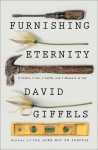
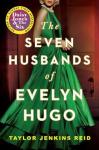
- Manhattans are drunk in Furnishing Eternity by David Giffels and The Seven Husbands of Evelyn Hugo by Taylor Jenkins Reid.
- A main character has a history of living in an orphanage in Blonde by Joyce Carol Oates, Buckeye by Patrick Ryan, and The Queen’s Gambit by Walter Tevis; and in children’s homes in Hunger and Thirst by Claire Fuller.
- An in-law named Fran(cesca) in The Vanishing Act of Esme Lennox by Maggie O’Farrell and The Things We Never Say by Elizabeth Strout.
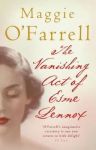
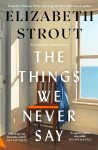
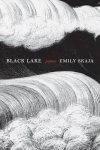
- A scene of visiting one’s grandmother in a dementia ward in The Vanishing Act of Esme Lennox by Maggie O’Farrell and Black Lake by Emily Skaja.
- Eating spoons of sugar straight from the jar/box in Depression Cooking by Sonali Menezes and The Things We Never Say by Elizabeth Strout.
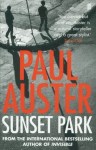
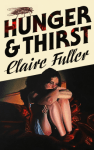
- Young people living in a squat in Sunset Park by Paul Auster and then Hunger and Thirst by Claire Fuller.
- A people-trafficking plot in Lost Lambs by Madeline Cash and The Singer’s Gun by Emily St. John Mandel.
- Someone who doesn’t want to be recognized says “I don’t know what you’re talking about” / “I have no idea what you’re talking about” when someone identifies them in Apt Pupil by Stephen King and The Seven Husbands of Evelyn Hugo by Taylor Jenkins Reid.
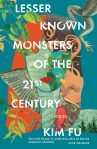
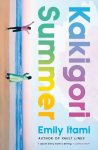
- A woman suffers from insomnia despite having done all the ‘right’ things, sleep hygiene-wise, in one story of Lesser-Known Monsters of the 21st Century by Kim Fu and Kakigori Summer by Emily Itami.
- A future blonde bombshell actress gets married off at age 15 in Blonde by Joyce Carol Oates and The Seven Husbands of Evelyn Hugo by Taylor Jenkins Reid.
- A homosexual encounter takes place in a public bathroom in What Belongs to You by Garth Greenwell and The Seven Husbands of Evelyn Hugo by Taylor Jenkins Reid. (Plus heterosexual ones in a private shower in Partita by Barbara Kingsolver.)
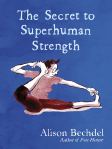
- A reference to Emerson’s “transparent eyeball” in The Secret to Superhuman Strength by Alison Bechdel and Black Lake by Emily Skaja.
- A character named Manny in Dominion by Addie E. Citchens, Partita by Barbara Kingsolver, and one story of The Typing Lady by Ruth Ozeki.
- A female character named Mick(ie) in The Heart Is a Lonely Hunter by Carson McCullers and Partita by Barbara Kingsolver. (There’s also a male Mick in Few and Far Between by Jan Carson.)
- Shoplifting takes place in Receipts from the Bookshop by Katie Clapham, The Singer’s Gun by Emily St. John Mandel, The Heart Is a Lonely Hunter by Carson McCullers, one story of The Typing Lady by Ruth Ozeki, and The Things We Never Say by Elizabeth Strout.
- The medical necessity of ironing all one’s clothing, especially nappies/underwear, is mentioned in L’Appart by David Lebovitz (a Greek person told him that) and Don’t Let’s Go to the Dogs Tonight by Alexandra Fuller (de rigueur in 1970s Rhodesia).

 Remarking on how quiet/noisy a French dishwasher is in Paris to the Moon by Adam Gopnik/L’Appart by David Lebovitz and a mention of one’s good fortune in getting a store to accept a returned appliance.
- A mention of Ludwig Bemelmans’ Madeline in Receipts from the Bookshop by Katie Clapham and Brother, I’m Dying by Edwidge Danticat.
- Characters are robbed in a motel room in Dominion by Addie E. Citchens and The New People by Andrea Uptmor.

- Living in the space above a garage in one story of The Typing Lady by Ruth Ozeki and The New People by Andrea Uptmor.
- Scenes of a woman/girl reassembling a gun, and a gun amnesty, in one story of Lesser-Known Monsters of the 21st Century by Kim Fu and Don’t Let’s Go to the Dogs Tonight by Alexandra Fuller.
- The use of a typewriter in Brother, I’m Dying by Edwidge Danticat, Apt Pupil by Stephen King, A Long Game by Elizabeth McCracken, one story of Night, Neon by Joyce Carol Oates, and The Typing Lady by Ruth Ozeki.
- Thousands of dollars being stored in/under a mattress in Brother, I’m Dying by Edwidge Danticat and The New People by Andrea Uptmor.
 The smell of vetiver: a cologne in Year of the Drought by Roland Buti and fabric softener in Brother, I’m Dying by Edwidge Danticat.
- I encountered sections on the sense of smell at about the same time in Life in Five Senses by Gretchen Rubin and Wearing God by Lauren Winner.
- A person bites someone else’s finger in Don’t Let’s Go to the Dogs Tonight by Alexandra Fuller, one story of The Typing Lady by Ruth Ozeki, and The New People by Andrea Uptmor. (And an ear in The Dud Avocado by Elaine Dundy.)
- Eating an omelette in a Paris café in The Dud Avocado by Elaine Dundy, Paris to the Moon by Adam Gopnik, and Moveable Feasts by Chris Newens. (I suppose these things will happen if I read multiple Paris-set books at once!)
- The fact that “Pas mal” (“not bad”) is high praise in French is explained in Pardon Our French by Alex Durand and Tom Carles and L’Appart by David Lebovitz.
 An insistence that the soles of a woman’s feet not be shown in A Rough Guide to the Heart by Pam Houston (etiquette in Bhutan) and Blonde by Joyce Carol Oates (when Norma Jeane Baker, aka Marilyn Monroe, is having early nude photos taken).
- A nude photo shoot takes place in The Singer’s Gun by Emily St. John Mandel and Blonde by Joyce Carol Oates. There are also nude portrait sittings in The Dud Avocado by Elaine Dundy and The Original by Nell Stevens.

- A man has glass embedded in his face in Few and Far Between by Jan Carson and The Singer’s Gun by Emily St. John Mandel.
- The idea that one will be cursed for touching a stranger’s grave appears in Don’t Let’s Go to the Dogs Tonight by Alexandra Fuller and Kakigori Summer by Emily Itami.
- I find myself rereading two childhood memoirs of wartime life at the same time: Don’t Let’s Go to the Dogs Tonight by Alexandra Fuller and Persepolis by Marjane Satrapi.
What’s the weirdest reading coincidence you’ve had lately?
Paris in July, II: Beauvais, Brown, Elkin and Lebovitz
July has been one long heat wave here in southern England. Luckily, it’s a bit cooler than it was earlier in the month, and we’re developing strategies for coping with what seems to be the new normal – until it gets worse again. My main tactic has been doing very little on most days apart from sitting on the couch or reclining on a mattress with a stack of books to hand. So it’s been good for one thing (maybe two): finishing books – and watching swifts. Following on from my first set of four Paris reads, I have another four (and five more coming up before the end of the month): a teen novel about overcoming peers’ prejudice, an essay anthology about the enduring appeal of the city for authors, a fragmentary memoir composed on a phone during a bus commute, and a record of a chef’s home renovation journey from hell.

Piglettes by Clémentine Beauvais (2014; 2017)
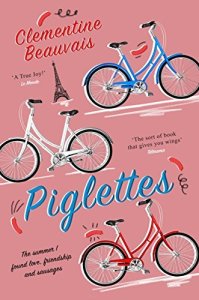 This was my second YA novel by Beauvais (after In Paris with You); she translated both herself and her proficiency in both languages allowed her to include wordplay that might have been lost otherwise (“I finally get what it means to have l’esprit de l’escalier, when I scream to her, from the bottom of the staircase…”). Mireille LaPlanche’s former friend Malo introduced a cruel annual tradition at their high school: a “Pig Pageant” in which classmates pick the fattest, ugliest girls – including her. She decides to team up with two other finalists, Astrid and Hakima, and show their persecutors what they can do. After a period of planning and training, they undertake a week-long cycle ride from their home in Bourg-en-Bresse to Paris, timed so that they’ll arrive on Bastille Day and crash the president’s garden party. Hakima’s older brother, Kader, who lost his legs in the Iraq War and uses a wheelchair, is their chaperone. They’ve dubbed themselves the “Three Little Piglettes” and tow a trailer full of sausages that they cook and sell at each stop. Soon they’re a social media phenomenon. This sweet, funny Cinderella story about defusing fatphobia includes good diversity rep and touches on lots of issues including anxiety, bullying, and unrequited love – all with an unmistakably French enthusiasm for wine, cheese and philosophy. (Edelweiss)
A Paris All Your Own: Bestselling Women Writers on the City of Light, ed. Eleanor Brown (2017)
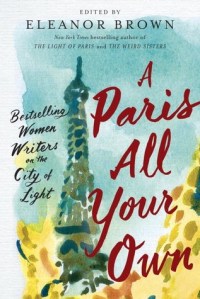 A reread that I started shortly after our trip to Paris in December 2023 but left half-finished on a shelf until this month. The roster of 18 contributors leans very much towards women’s fiction. While I probably most enjoyed the third of the book that was by authors I’d read and liked before – J. Courtney Sullivan, Susan Vreeland, Paula McLain, Julie Powell, Therese Anne Fowler and Maggie Shipstead – all of the pieces are cosy and undemanding. They tell of time spent living, working or travelling in the city. Sometimes it meets expectations; other times, mishaps and faux pas create disillusionment until a future visit grants a second chance. There are favourite foods and language struggles, art treasures and magical spots to discover, and stereotypes to confirm or overturn. The experience of Paris can vary based on who the travel companion is – an enthusiastic child, a needy parent or a soon-to-be ex. Fowler made her research trip before writing a biographical novel about Zelda Fitzgerald, while McLain only saw Hemingway’s haunts after she’d written The Paris Wife. Each essay finishes with a quickfire list of favourite Paris moments, books, sites, songs, etc. Not a bad substitute for being there! (Secondhand – 2nd & Charles)
My original rating (2017): 
My rating now:
No. 91/92: Notes on a Parisian Commute by Lauren Elkin (2021)
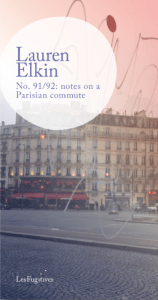 Just imagine keeping a diary of your bus journeys in the Notes app of your phone for seven months and getting a book out of it. Elkin’s mostly unedited observations are based on people-watching and her own swirling thoughts in 2014–15. She covers obnoxious behaviours on public transport (the same the world over, it seems: “Oi. Manspreader. Bouge ton cul”); her teaching work; overheard conversations; and Paris as seen in different seasons. Her mind wanders across history and theory. The bus is a melting pot: She’s thrown into false intimacy with people she’s never seen before and hopes never to encounter again. Nothing much happens until it does. First it’s the Charlie Hebdo attacks. Then she falls pregnant but it’s ectopic and she loses the baby. And, after she’s switched to Métro commuting, the Hypercacher attacks. In the prologue and epilogue, Elkin talks about only understanding major events in retrospect. She also cites lockdown diaries as being a new subgenre her project fit into. But let’s be honest: if she’d not already made a name for herself as a cultural critic, this would never have been published. While it has some value as an in-the-moment historical document, I didn’t find it nearly as profound as, say Deborah Levy’s autobiography. (Secondhand – Awesomebooks.com with SellItBack voucher)
L’appart: The Delights and Disasters of Making My Paris Home by David Lebovitz (2017)
Lebovitz is a San Francisco pastry chef who moved to Paris a couple of decades ago. We get a lot of ideas from his dessert cookbook and extensive blog archive. Like The Sweet Life in Paris, this contains lighthearted musings about cultural differences between France and the US and many tantalizing recipes (most of them sweet but also a few savoury) that I am actually likely to make. But it’s primarily about the several-year saga of buying and restoring an apartment. Lebovitz had a grand plan for the kitchen, especially: a huge space with American-style appliances that would ease his cookbook writing and testing. French bureaucracy made the purchase difficult enough as the property had to be officially reregistered as residential rather than commercial, and the seller and realtor were both antagonistic.
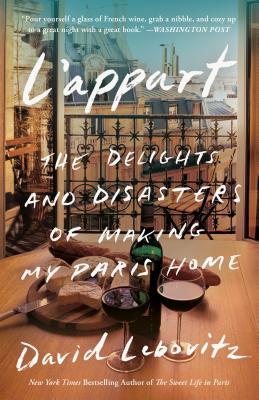 But that was nothing compared to the nightmare of the renovation. To start with, Lebovitz was friendly with his contractor and his workers. In fact, too friendly, his partner, Romain, warned. He called the builders “tu,” brought fresh-baked treats for them, and always paid their bills promptly. They started taking liberties: hardly ever showing up, failing to meet deadlines, replying to every concern with “pas de problème” but never fixing the issues. The shoddiness and incompetence are truly astounding: counters at the wrong height, an unusable faucet, melted fuses, an electricity leak, buckled floorboards, askew windows, an upside-down water softener. Every mistake cost time and money, such that the whole job was three times longer and more expensive than projected. (A lawyer dissuaded Lebovitz from suing because in the French legal system it could take five years and not even go his way.)
Depending on your own experience, this might be cathartic, or too close to home, or a cautionary tale. (We’d already long decided we won’t do any major building projects because we can’t tolerate noise, disruption or strangers and our house is good enough for our needs.) Keep in mind that Lebovitz dealt with all this in a second language and his fortitude is impressive. Scenes at Ikea and conversations with his contractor are amusingly surreal. But I confess I did find this a little overlong and repetitive, and every setback made me cringe for him. I’ll have to bake some frangipane plum-raspberry gratins and try to forget the pain. (Secondhand – Better World Books with Little Free Library voucher)
20 Books of Summer, 4–7: Fadiman; Kingsolver & O’Farrell Rereads; Sullivan
I finished several of these a while ago now, but it’s been a struggle to summon up the motivation to write about them, especially during the heat wave we’re currently experiencing in the southern half of England. You’ve heard a lot from me recently as I’ve been catching up on reviews, so I’ll try to keep these responses to one (long) paragraph each.
Frog and Other Essays by Anne Fadiman (2026)
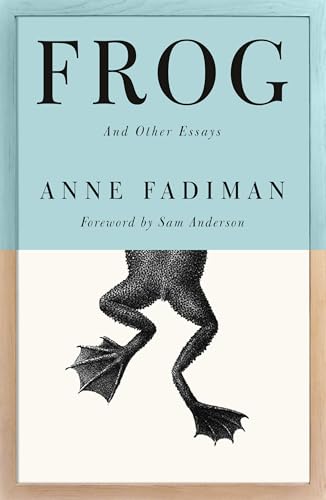 This was one of my Most Anticipated titles of the year because I’ve loved Fadiman’s nonfiction, especially the bookish Ex Libris, which I’ve read twice. Her essays are warm and fluent, braiding memoir and observation in a natural way and drawing readers in whether they share her particular preoccupations or not. “Frog” is about her guilt for not being more attentive to her children’s surprisingly long-lived pet frog, Bunky; “South Polar Times” recounts her obsession with polar exploration and what she discovered in the archives of the magazine Shackleton produced in the 1910s. At the centre of the book is a triptych on modern technology (“My Old Printer”) and language use, especially as she’s experienced it as a Yale professor trying to adjust to pandemic-era teaching (“Screen Share”) and expanded gender possibilities (“All My Pronouns,” which is mostly about getting used to “they” as a singular pronoun for nonbinary individuals). What a relief that advancing age and pedantry didn’t see her joining the anti-woke camp. The final essay, “Yes to Everything,” was – I think – the afterword to her late student Marina Keegan’s The Opposite of Loneliness (2014). For me the highlight was “The Oakling and the Oak,” about Samuel Taylor Coleridge’s disappointing son (“A penumbra of impossible expectation began to settle around Hartley’s head”). There’s a tantalizing parallel here with her own sense of needing to live up to her literary father, Clifton Fadiman, that I wish she’d explored further. So: good stuff here, but only seven essays, all of which were originally published elsewhere. It feels like scraping the barrel. And why the laudatory foreword by someone I’ve never heard of (Sam Anderson)? I ordered this while in the States to get to a free-shipping limit and I’m glad I got the chance to read it, but it’s not a must. Do seek out “Frog” and “Oak,” though. (New purchase – Target.com)
Prodigal Summer by Barbara Kingsolver (2000)
In all her life Lusa had never seen such an oversexed, muggy summer. Just breathing was a torrid proposition.
 Although I remembered this as being in Kingsolver’s top tier of novels, I recalled no details beyond a female ranger who lives in the woods, has an affair with a hunter, and studies coyotes (actually, I thought it was wolves – I was conflating Deanna’s surname, Wolfe, and Sarah Hall’s The Wolf Border, which has a similar setup). I’d forgotten that there are two other strands: Lusa, a Polish-Palestinian entomologist widowed young, inherits her husband’s family farm and tries to make a go of goat breeding despite others’ disapproval; and Garnett, a pious old man trying to resurrect the American chestnut after it was wiped out by blight, has an ongoing low-key feud with his organic orchard-keeping neighbour, Nannie. These threads rotate under the headings “Predators,” “Moth Love,” and “Old Chestnuts.” There are pleasing connections between the main characters, who are also thematically linked by ideological disagreements and the possibility of new life and romance when age or circumstances seemed to disqualify them. Kingsolver writes brilliantly about science, and although she gets a little preachy through Nannie, in a way that presages Unsheltered (“It’s glory, to be part of a bigger something. The glory of an evolving world”), her environmentalist messages are always right on. It’s depressing to note that, more than a quarter-century later, the issues she raises related to food production and pesticide use are worse rather than better. Like Margaret Atwood, she’s a literary prophet of our time. I’m nearly halfway through her upcoming novel, Partita, for a Shelf Awareness review and its protagonist, Livia, seems to be in the lineage of Deanna – an Appalachian girl who tries to exceed her origins. This was a big ol’ satisfying summer read. Whyever didn’t Kingsolver win the Women’s Prize for this one? (Little Free Library)
My original rating: 
My rating now: 
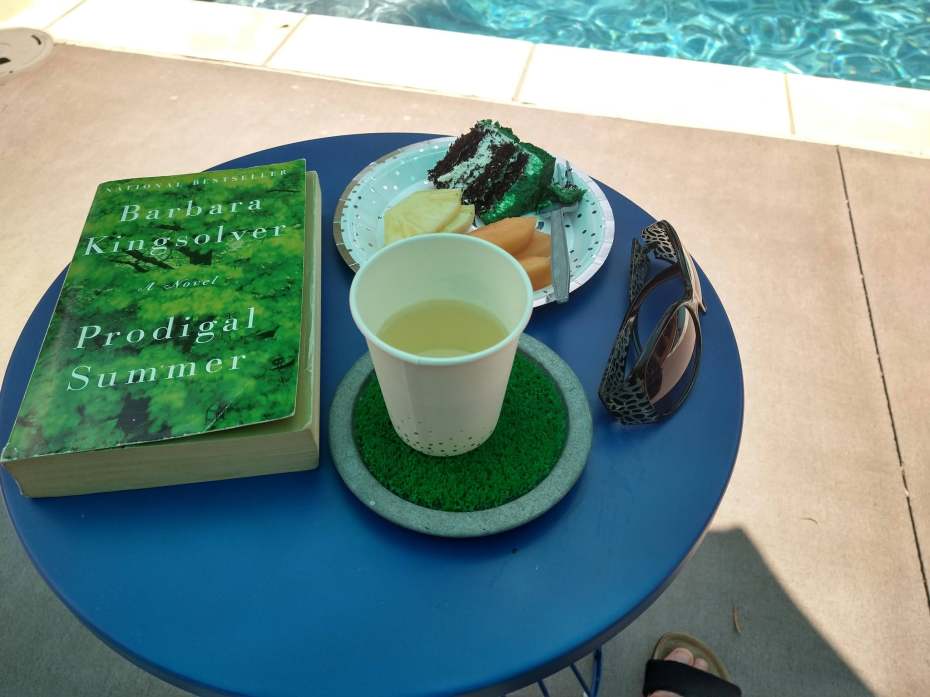
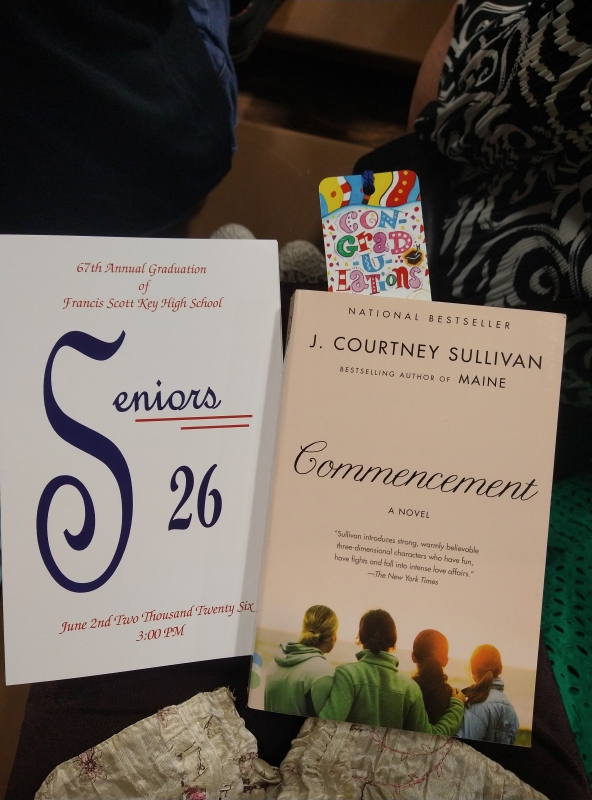
Poolside reading at my nephew’s graduation party.
The Vanishing Act of Esme Lennox by Maggie O’Farrell (2006)
Nothing is our own. We begin in the world as anagrams of our antecedents.
 Another reread. I remembered the mental hospital element but think I may have otherwise had this confused with Sebastian Barry’s The Secret Scripture, which also features historical family secrets and a great big twist. This was our book club selection for June, and although I missed the meeting (which was also our summer social) while I was back visiting my family, I wanted to catch up by reading it again – especially after it earned a perfect score from the rest of the group! In the novel’s present day, vintage clothing store owner Iris is having an affair with a married man and learns that she has a ‘mad’ great-aunt who will soon be her responsibility when the hospital Esme has called home for 60 years closes. Why did Iris’s grandmother, Kitty, hide that she had a sister? With Kitty on a dementia ward, she can’t ask outright. Instead, narration alternates between the sisters’ growing-up years in India and Edinburgh – where flighty, rebellious Esme caught boys’ eyes while obedient Kitty didn’t – and Iris and Esme embarking on a tentative relationship. The use of the present tense for both, as well as the fragments of memory we gradually work out are Kitty’s, create a continuous narrative so gripping that I could easily have consumed it in one sitting had I not had other commitments. Grief, parenting, male privilege, family legacies, and a freedom of spirit that might today be branded neurodivergence are strong elements. It’s appalling how women have been punished for breaking the rules, but the other ensuing betrayals are just as shocking. This must have one of THE best surprise endings out there. I can’t believe I’d forgotten the details. After a couple of lacklustre early novels, O’Farrell’s career truly took off with this one. Now to reread her other gems. (Borrowed from a book club friend)
My original rating:
My rating now: 
Commencement by J. Courtney Sullivan (2009)
Smith had left its mark on her, so that the place would always feel like home
 I’ve had a mixed experience with Sullivan’s novels, but this debut was a delight. Let’s start with the clever title: An American graduation ceremony is called “commencement,” so it marks both an ending and a beginning. For four friends who meet at Smith College, a women-only institution, in the late 1990s, their student experiences have effects that carry on into their ‘real’ lives afterwards. We watch how their relationships with each other, and with family members and partners, shift over the course of nearly a decade. Sally arrives on campus bereft from the death of her mother, but she doesn’t let her sadness corrode her ambition or her kind heart. Bree is engaged to a man when she comes up from Savannah but leaves in a committed relationship with a woman. April was raised by a single mother and has always been a strident feminist, but graduates with plans to go to extremes in drawing attention to the plight of sex workers. The framing story of the friends gathering for Sally’s wedding introduces us first to Celia, who is in some sense still living the student life in the small New York City apartment she brings one-night stands back to after drunken evenings. The wedding ends up in a huge fight between the four, and as the years pass they split off into pairs and trios of loyalty before a crisis brings them back together. It’s a little far-fetched how this all plays out, but I was invested enough in all four characters that I was happy to go along with it. Sullivan went to Smith (I also attended what was a women’s college at the time, Hood), so you have to wonder if anything was autobiographical for her. She weaves in various women’s issues, such as sexual assault and decisions about career and motherhood. I applaud Sullivan for mentioning support for trans men on campus, though her discussion does seem of its time and today I think the debate would be more around allowing trans women to attend. I chose this to read because my recent USA trip was for my nephew’s high school graduation. It’s perfect for Curtis Sittenfeld fans. (Secondhand purchase – 2nd & Charles)
20 Books of Summer, 17–18: Suzanne Berne and Melissa Febos
Nearly there! I’ll have two more books to review for this challenge as part of roundups tomorrow and Saturday. Today I have a lesser-known novel by a Women’s Prize winner and a set of personal essays about body image and growing up female.
A Perfect Arrangement by Suzanne Berne (2001)
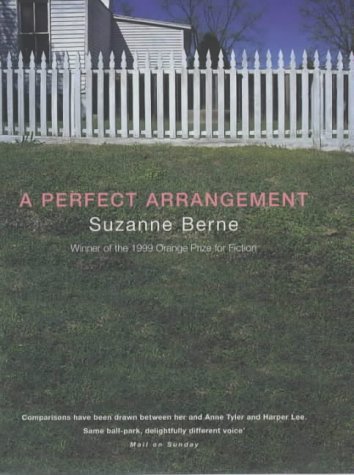 Berne won the Orange (Women’s) Prize for A Crime in the Neighbourhood in 1999. This is another slice of mild suburban suspense. The Boston-area Cook-Goldman household faces increasingly disruptive problems. Architect dad Howard is vilified for a new housing estate he’s planning, plus an affair that he had with a colleague a few years ago comes back to haunt him. Hotshot lawyer Mirella can’t get the work–life balance right, especially when she finds out she’s unexpectedly pregnant with twins at age 41. They hire a new nanny to wrangle their two under-fives, headstrong Pearl and developmentally delayed Jacob. If Randi Gill seems too good to be true, that’s because she’s a pathological liar. But hey, she’s great with kids.
It’s clear some Bad Stuff is going to happen to this family; the only questions are how bad and precisely what. Now, this is pretty much exactly what I want from my “summer reading”: super-readable plot- and character-driven fiction whose stakes are low (e.g., midlife malaise instead of war or genocide or whatever) and that veers more popular than literary and so can be devoured in large chunks. I really should have built more of that into my 20 Books plan! I read this much faster than I normally get through a book, but that meant the foreshadowing felt too prominent and I noticed some repetition, e.g., four or five references to purple loosestrife, which is a bit much even for those of us who like our wildflowers. It seemed a bit odd that the action was set back in the Clinton presidency; the references to the Lewinsky affair and Hillary’s “baking cookies” remark seemed to come out of nowhere. And seriously, why does the dog always have to suffer the consequences of humans’ stupid mistakes?!
This reminded me most of Friends and Strangers by J. Courtney Sullivan and a bit of Breathing Lessons by Anne Tyler, while one late plot turn took me right back to The Senator’s Wife by Sue Miller. While the Goodreads average rating of 2.93 seems pretty harsh, I can also see why fans of A Crime would have been disappointed. I probably won’t seek out any more of Berne’s fiction. (Secondhand – Community Furniture Project, Newbury) 
Girlhood by Melissa Febos (2021)
I was deeply impressed by Febos’s Body Work (2022), a practical guide to crafting autobiographical narratives as a way of reckoning with the effects of trauma. Ironically, I engaged rather less with her own personal essays. One issue for me was that her highly sexualized experiences are a world away from mine. I don’t have her sense of always having had to perform for the male gaze, though maybe I’m fooling myself. Another was that it’s over 300 pages and only contains seven essays, so there were several pieces that felt endless. This was especially true of “The Mirror Test” (62 pp.) which is about double standards for girls as they played out in her simultaneous lack of confidence and slutty reputation, but randomly references The House of Mirth quite a lot; and “Thank You for Taking Care of Yourself” (74 pp.), which ponders why Febos has such trouble relaxing at a cuddle party and whether she killed off her ability to give physical consent through her years as a dominatrix.
 “Wild America,” about her first lesbian experience and the way she came to love a perceived defect (freakishly large hands; they look perfectly normal to me in her author photo), and “Intrusions,” about her and other women’s experience with stalkers, worked a bit better. But my two favourites incorporated travel, a specific relationship, and a past versus present structure. “Thesmophoria” opens with her arriving in Rome for a mother–daughter vacation only to realize she told her mother the wrong month. Feeling guilty over the error, she remembers other instances when she valued her mother’s forgiveness, including when she would leave family celebrations to buy drugs. The allusions to Greek myth were neither here nor there for me, but the words about her mother’s unconditional love made me cry.
I also really liked “Les Calanques,” which again draws on her history of heroin addiction, comparing a strung-out college trip to Paris when she scored with a sweet gay boy named Ahmed with the self-disciplined routines and care for her body she’d learned by the time she returns to France for a writing retreat. This felt like a good model for how to write about one’s past self. “I spend so much time with that younger self, her savage despair and fleeting reliefs, that I start to feel as though she is here with me.” The prologue, “Scarification,” is a numbered list of how she got her scars, something Paul Auster also gives in Winter Journal. As if to insist that we can only ever experience life through our bodies.
Although I’d hoped to connect to this more, and ultimately felt it wasn’t really meant for me (and maybe I’m a deficient feminist), I did admire the range of strategies and themes so will keep it on the shelf as a model for approaching the art of the personal essay. I think I would probably prefer a memoir from Febos, but don’t need to read more about her sex work (Whip Smart), so might look into Abandon Me. If bisexuality and questions of consent are of interest, you might also like Another Word for Love by Carvell Wallace, which I reviewed for BookBrowse. (Gift (secondhand) from my Christmas wish list last year)
20 Books of Summer, 15–17: Bill Buford, Kristin Newman, J. Courtney Sullivan
One last foodie selection for the summer: a chef’s memoir set mostly in Lyon, France. Plus a bawdy travel memoir I DNFed halfway through, and an engaging but probably overlong contemporary novel about finances, generational conflict and women’s relationships.
Dirt: Adventures in French Cooking by Bill Buford (2020)
 Buford’s Heat was one of the highlights of my foodie summer reading in 2020. This is a sequel insomuch as it tells you what he did next, after his Italian-themed apprenticeships. The short answer is that he went to Lyon to learn French cooking in similarly obsessive fashion. Without knowing a word of French. And this time he had a wife and twin toddlers in tow. He met several celebrated French chefs – Michel Richard, Paul Bocuse, Daniel Boulud – and talked his way into training at a famous cookery school and in Michelin-starred kitchens.
These experiences are discussed in separate essays, so I rather lost track of the timeline. It’s odd that it took the author so many years to get around to publishing about it all. You’d think his sons were still young, but in fact they’re now approaching adulthood. The other slightly unusual thing is the amount of space Buford devotes to his pet theory that French cuisine (up to ragout, at least) evolved from Italian. Unsurprisingly, the French don’t favour this idea; I didn’t particularly care one way or the other.
Nonetheless, I enjoyed reading about his encounters with French bureaucracy; the stress of working in busy (and macho) restaurants, where he’s eventually entrusted with cooking the staff lunch; and his discovery of what makes for good bread: small wheat-growing operations rather than industrially produced flour – his ideal was the 90-cent baguette from his local boulangerie. This could have been a bit more focused, and I’m still more likely to recommend Heat, but I am intrigued to go to Lyon one day. (Secondhand gift, Christmas 2022) 
What I Was Doing While You Were Breeding by Kristin Newman (2014)
 (DNF, 156/291 pages) As featured in my Six Degrees post earlier in the month. Newman is a comedy writer for film and television (That ’70s Show, How I Met Your Mother, etc.). I liked how the title unabashedly centres things other than couplehood and procreation. When she’s travelling, she can be spontaneous, open-to-experience “Kristin-adjacent,” who loves doing whatever it is that locals do. And be a party girl, of course (“If there is one thing that is my favorite thing in the world, it’s making out on a dance floor”). However, this chronological record of her sexual conquests in Amsterdam, Paris, Russia, Argentina, etc. gets repetitive and raunchy. I also felt let down when I learned that she married and had a child right after she published it. So this was just her “Pietra Pan” stage before she copied everyone else. Which is fine, but were her drunken shenanigans really worth commemorating? (Secondhand, Bas Books & Home)
Friends and Strangers by J. Courtney Sullivan (2020)
I got Emma Straub vibes from this big, juicy novel focusing on two women in upstate New York: Elisabeth, a married journalist who moved out of Brooklyn when she finally conceived via IVF; and Sam, a college art student who becomes her son Gil’s babysitter. Elisabeth misses her old crowd and doesn’t fit in with the middle-aged book club ladies in her suburban neighbourhood; Sam is almost her only friend, a confidante who’s also like a little sister (better, anyway, than Elisabeth’s real sister, who lives on tropical islands and models swimwear for inspirational Instagram posts). And Sam admires Elisabeth for simultaneously managing a career and motherhood with seeming aplomb.
 But fundamental differences between the two emerge, mostly to do with economics. Elisabeth comes from money and takes luxury products for granted, while Sam is solidly working-class and develops a surprising affinity with Elisabeth’s father-in-law, George, who is near bankruptcy after Uber killed off his car service business. His pet theory, “The Hollow Tree,” explains that ordinary Americans have been sold the lie that they are responsible for their own success, when really they are in thrall to corporations and the government doesn’t support them as it should. This message hits home for Sam, who is distressed about the precarious situation of the Latina dining hall employees she has met via her work study job. Both Elisabeth and Sam try to turn their privilege to the good, with varied results.
Although I remained engrossed in the main characters’ stories, which unfold in alternating chapters, I thought this could easily have been 300 pages instead of nearly 400. In particular, Sullivan belabours Sam’s uncertainty over her thirtysomething English fiancé, Clive, whom Elisabeth refers to as “sleazy-hot.” The red flags are more than obvious to others in Sam’s life, and to us as readers, yet we get scene after scene meant to cast shade on him. I also kept wondering if first person would have been the better delivery mode for one or both strands. Still, this was perfect literary cross-over summer reading. (Little Free Library) 
 Bookish Beck = Rebecca Foster. American transplant to England. Freelance proofreader and book reviewer.
