11 Days, 11 Books: 2020’s Reads, from Best to Worst
I happen to have finished 11 books so far this year – though a number of them were started in 2019 (one as far back as September) and several of them are novelty books and/or of novella length. Just for kicks, I’ve arranged them from best to worst. Here’s how my reading year has started off…
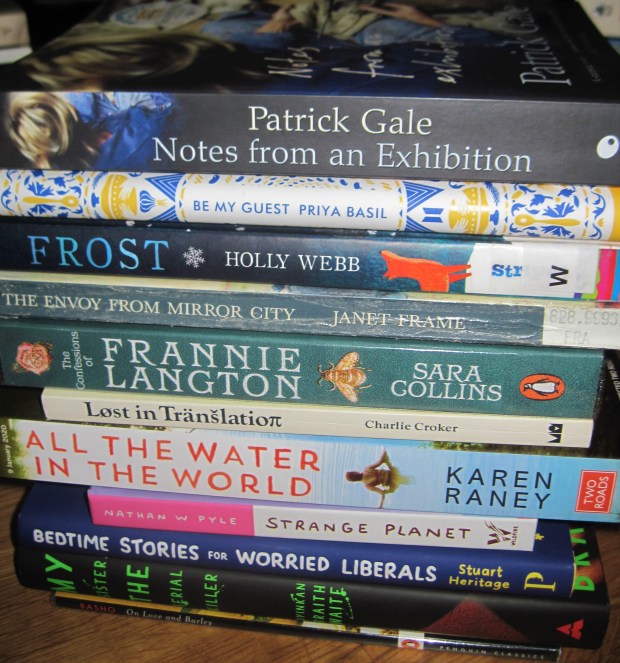
 Notes from an Exhibition by Patrick Gale – Nonlinear chapters give snapshots of the life of bipolar Cornwall artist Rachel Kelly and her interactions with her husband and four children, all of whom are desperate to earn her love. Quakerism, with its emphasis on silence and the inner light in everyone, sets up a calm and compassionate atmosphere, but also allows for family secrets to proliferate. There are two cameo appearances by an intimidating Dame Barbara Hepworth, and three wonderfully horrible scenes in which Rachel gives a child a birthday outing. The novel questions patterns of inheritance (e.g. of talent and mental illness) and whether happiness is possible in such a mixed-up family. (Our joint highest book club rating ever, with Red Dust Road. We all said we’d read more by Gale.)
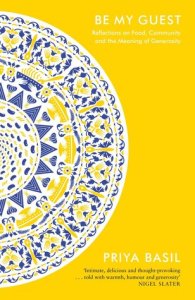 Be My Guest: Reflections on Food, Community and the Meaning of Generosity by Priya Basil – An extended essay whose overarching theme of hospitality stretches into many different topics. Part of an Indian family that has lived in Kenya and England, Basil is used to a culture of culinary abundance. Greed, especially for food, feels like her natural state, she acknowledges. However, living in Berlin has given her a greater awareness of the suffering of the Other – hundreds of thousands of refugees have entered the EU, often to be met with hostility. Yet the Sikhism she grew up in teaches unconditional kindness to strangers. She asks herself, and readers, how to cultivate the spirit of generosity. Clearly written and thought-provoking. (And typeset in Mrs Eaves, one of my favorite fonts.) See also Susan’s review, which convinced me to order a copy with my Christmas bookstore voucher.
 Frost by Holly Webb – Part of a winter animals series by a prolific children’s author, this combines historical fiction and fantasy in an utterly charming way. Cassie is a middle child who always feels left out of her big brother’s games, but befriending a fox cub who lives on scrubby ground near her London flat gives her a chance for adventures of her own. One winter night, Frost the fox leads Cassie down the road – and back in time to the Frost Fair of 1683 on the frozen Thames. I rarely read middle-grade fiction, but this was worth making an exception for. It’s probably intended for ages eight to 12, yet I enjoyed it at 36. My library copy smelled like strawberry lip gloss, which was somehow just right.
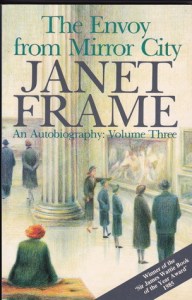 The Envoy from Mirror City by Janet Frame – This is the last and least enjoyable volume of Frame’s autobiography, but as a whole the trilogy is an impressive achievement. Never dwelling on unnecessary details, she conveys the essence of what it is to be (Book 1) a child, (2) a ‘mad’ person, and (3) a writer. After years in mental hospitals for presumed schizophrenia, Frame was awarded a travel fellowship to London and Ibiza. Her seven years away from New Zealand were a prolific period as, with the exception of breaks to go to films and galleries, and one obsessive relationship that nearly led to pregnancy out of wedlock, she did little else besides write. The title is her term for the imagination, which leads us to see Plato’s ideals of what might be.
 The Confessions of Frannie Langton by Sara Collins – Collins won the first novel category of the Costa Awards for this story of a black maid on trial in 1826 London for the murder of her employers, the Benhams. Margaret Atwood hit the nail on the head in a tweet describing the book as “Wide Sargasso Sea meets Beloved meets Alias Grace” (she’s such a legend she can get away with being self-referential). Back in Jamaica, Frances was a house slave and learned to read and write. This enabled her to assist Langton in recording his observations of Negro anatomy. Amateur medical experimentation and opium addiction were subplots that captivated me more than Frannie’s affair with Marguerite Benham and even the question of her guilt. However, time and place are conveyed convincingly, and the voice is strong.
(The next one is a book my husband received for Christmas, as are the Heritage and Pyle, further down, which were from me. Yes, I read them as well. What of it?)
 Lost in Translation by Charlie Croker – This has had us in tears of laughter. It lists examples of English being misused abroad, e.g. on signs, instructions and product marketing. China and Japan are the worst repeat offenders, but there are hilarious examples from around the world. Croker has divided the book into thematic chapters, so the weird translated phrases and downright gobbledygook are grouped around topics like food, hotels and medical advice. A lot of times you can see why mistakes came about, through the choice of almost-but-not-quite-right synonyms or literal interpretation of a saying, but sometimes the mind boggles. Two favorites: (in an Austrian hotel) “Not to perambulate the corridors in the hours of repose in the boots of ascension” and (on a menu in Macao) “Utmost of chicken fried in bother.”
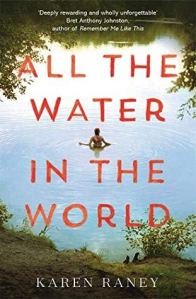 All the Water in the World by Karen Raney – Like The Fault in Our Stars (though not YA), this is about a teen with cancer. Sixteen-year-old Maddy is eager for everything life has to offer, so we see her having her first relationship – with Jack, her co-conspirator on an animation project to be used in an environmental protest – and contacting Antonio, the father she never met. Sections alternate narration between her and her mother, Eve. I loved the suburban D.C. setting and the e-mails between Maddy and Antonio. Maddy’s voice is sweet yet sharp, and, given that the main story is set in 2011, the environmentalism theme seems to anticipate last year’s flowering of youth participation. However, about halfway through there’s a ‘big reveal’ that fell flat for me because I’d guessed it from the beginning.
This was published on the 9th. My thanks to Two Roads for the proof copy for review.
 Strange Planet by Nathan W. Pyle – I love these simple cartoons about aliens and the sense they manage to make of Earth and its rituals. The humor mostly rests in their clinical synonyms for everyday objects and activities (parenting, exercise, emotions, birthdays, office life, etc.). Pyle definitely had fun with a thesaurus while putting these together. It’s also about gentle mockery of the things we think of as normal: consider them from one remove, and they can be awfully strange. My favorites are still about the cat. You can also see his work on Instagram.

 Bedtime Stories for Worried Liberals by Stuart Heritage – I bought this for my husband purely for the title, which couldn’t be more apt for him. The stories, a mix of adapted fairy tales and new setups, are mostly up-to-the-minute takes on US and UK politics, along with some digs at contemporary hipster culture and social media obsession. Heritage quite cleverly imitates the manner of speaking of both Boris Johnson and Donald Trump. By its nature, though, the book will only work for those who know the context (so I can’t see it succeeding outside the UK) and will have a short shelf life as the situations it mocks will eventually fade into collective memory. So, amusing but not built to last. I particularly liked “The Night Before Brexmas” and its all-too-recognizable picture of intergenerational strife.
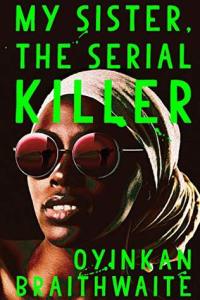 My Sister, the Serial Killer by Oyinkan Braithwaite – The Booker Prize longlist and the Women’s Prize shortlist? You must be kidding me! The plot is enjoyable enough: a Nigerian nurse named Korede finds herself complicit in covering up her gorgeous little sister Ayoola’s crimes – her boyfriends just seem to end up dead somehow; what a shame! – but things get complicated when Ayoola starts dating the doctor Korede has a crush on and the comatose patient to whom Korede had been pouring out her troubles wakes up. My issue was mostly with the jejune writing, which falls somewhere between high school literary magazine and television soap (e.g. “My hands are cold, so I rub them on my jeans” & “I have found that the best way to take your mind off something is to binge-watch TV shows”).
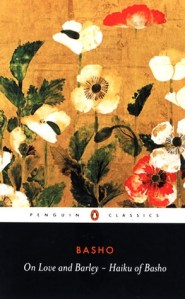 On Love and Barley – Haiku of Basho [trans. from the Japanese by Lucien Stryk] – These hardly work in translation. Almost every poem requires a contextual note on Japan’s geography, flora and fauna, or traditions; as these were collected at the end but there were no footnote symbols, I didn’t know to look for them, so by the time I read them it was too late. However, here are two that resonated, with messages about Zen Buddhism and depression, respectively: “Skylark on moor – / sweet song / of non-attachment.” (#83) and “Muddy sake, black rice – sick of the cherry / sick of the world.” (#221; reminds me of Samuel Johnson’s “tired of London, tired of life” maxim). My favorite, for personal relevance, was “Now cat’s done / mewing, bedroom’s / touched by moonlight.” (#24)
Any of these you have read or would read?
Onwards with the 2020 reading!
Best of 2019: Nonfiction
For me, 2019 has been a more memorable year for nonfiction than for fiction. Like I did last year, I’ve happened to choose 12 favorite nonfiction books – though after some thematic grouping this has ended up as a top 10 list. Bodies, archaeology, and the environmental crisis are recurring topics, reflecting my own interests but also, I think, something of the zeitgeist.
Let the countdown begin!
 Because Internet: Understanding how language is changing by Gretchen McCulloch: Surprisingly fascinating stuff, even for a late adopter of technology. The Internet popularized informal writing and quickly incorporates changes in slang and cultural references. The book addresses things you may never have considered, like how we convey tone of voice through what we type and how emoji function as the gestures of the written word. Bursting with geeky enthusiasm.
-
 Surfacing by Kathleen Jamie: A fusion of autobiography with nature and travel writing – two genres that are too often dominated by men. Jamie has a particular interest in birds, islands, archaeology and the oddities of the human body, all subjects that intrigue me. There is beautiful nature writing to be found in this volume, as you might expect, but also relatable words on the human condition.
-
 Mother Ship by Francesca Segal: A visceral diary of the first eight weeks in the lives of the author’s daughters, who were born by Caesarean section at 29 weeks in October 2015 and spent the next two months in the NICU. Segal describes with tender precision the feeling of being torn between writing and motherhood, and crafts twinkly pen portraits of others she encountered in the NICU, including the staff but especially her fellow preemie mums.
-
 Surrender: Mid-Life in the American West by Joanna Pocock: Prompted by two years spent in Missoula, Montana and the disorientation felt upon a return to London, this memoir-in-essays varies in scale from the big skies of the American West to the smallness of one human life and the experience of loss and change. This is an elegantly introspective work that should engage anyone interested in women’s life writing and the environmental crisis.
- (A tie) Constellations by Sinéad Gleeson / The Undying by Anne Boyer / Notes Made while Falling by Jenn Ashworth: Trenchant autobiographical essays about female pain. All three feel timely and inventive in how they bring together disparate topics to explore the possibilities and limitations of women’s bodies. A huge theme in life writing in the last couple of years and a great step toward trauma and chronic pain being taken seriously. (See also Notes to Self by Emilie Pine and the forthcoming Pain Studies by Lisa Olstein.)


-
 Time Song: Searching for Doggerland by Julia Blackburn: Deep time is another key topic this year. Blackburn follows her curiosity wherever it leads as she does research into millions of years of history, including the much shorter story of human occupation. The writing is splendid, and the dashes of autobiographical information are just right, making her timely/timeless story personal. This would have been my Wainwright Prize winner.
-
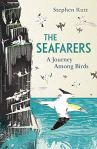 The Seafarers: A Journey among Birds by Stephen Rutt: The young naturalist travelled the length and breadth of the British Isles – from Skomer to Shetland – courting encounters with seabirds. Discussion of the environmental threats that hit these species hardest, such as plastic pollution, makes for a timely tie-in to wider issues. The prose is elegantly evocative, and especially enjoyable because I’ve been to a lot of the island locations.
-
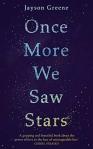 Once More We Saw Stars by Jayson Greene: In 2015 the author’s two-year-old daughter, Greta, was fatally struck in the head by a brick that crumbled off an eighth-story Manhattan windowsill. Music journalist Greene explores all the ramifications of grief. I’ve read many a bereavement memoir and can’t remember a more searing account of the emotions and thoughts experienced moment to moment. The whole book has an aw(e)ful clarity to it.
-
 The Body: A Guide for Occupants by Bill Bryson: Bryson is back on form indulging his layman’s curiosity. Without ever being superficial or patronizing, he gives a comprehensive introduction to every organ and body system. He delights in our physical oddities, and his sense of wonder is contagious. Shelve this next to Being Mortal by Atul Gawande in a collection of books everyone should read – even if you don’t normally choose nonfiction.
-
 Irreplaceable: The Fight to Save Our Wild Places by Julian Hoffman: Species and habitat loss are hard to comprehend even when we know the facts. This exquisitely written book is about taking stock, taking responsibility, and going beyond the numbers to tell the stories of front-line conservation work. Irreplaceable is an elegy of sorts, but, more importantly, it’s a call to arms. It places environmentalism in the hands of laypeople and offers hope that in working together in the spirit of defiance we can achieve great things. So, if you read one 2019 release, make it this one.
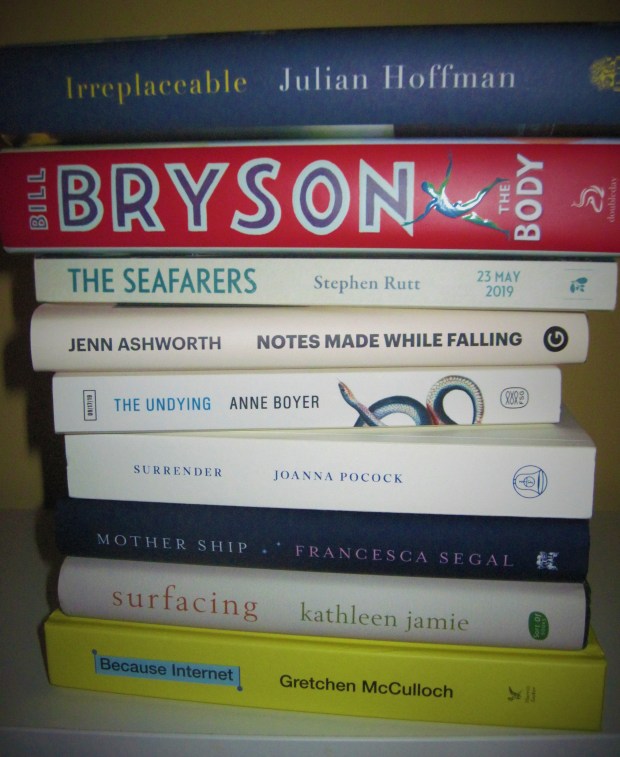
(Books not pictured were read from the library or on Kindle.)
What were some of your top nonfiction reads of the year?
Upcoming posts:
28th: Runners-up
29th: Other superlatives and some statistics
30th: Best backlist reads
31st: The final figures on my 2019 reading
Review Books Roundup: Blackburn, Bryson, Pocock, Setterwall, Wilson
I’m attempting to get through all my 2019 review books before the end of the year, so expect another couple of these roundups. Today I’m featuring a work of poetry about one of Picasso’s mistresses, a thorough yet accessible introduction to how the human body works, a memoir of personal and environmental change in the American West, Scandinavian autofiction about the sudden loss of a partner, and a novel about kids who catch on fire. You can’t say I don’t read a variety! See if one or more of these tempts you.
The Woman Who Always Loved Picasso by Julia Blackburn
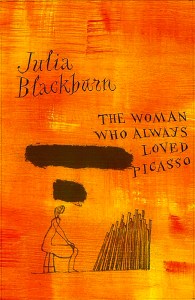 Something different from Blackburn: biographical snippets in verse about Marie-Thérèse Walter, one of Pablo Picasso’s many mistress-muses. When they met she was 17 and he was 46. She gave birth to a daughter, Maya – to his wife Olga’s fury. Marie-Thérèse’s existence was an open secret: he rented a Paris apartment for her to live in, and left his home in the South of France to her (where she committed suicide three years after his death), but unless their visits happened to overlap she was never introduced to his friends. “I lived in the time I was born into / and I kept silent, / acquiescing / to everything.”
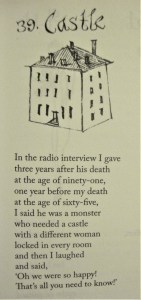 In Marie-Thérèse’s voice, Blackburn depicts Picasso as a fragile demagogue: in one of the poems that was a highlight for me, “Bird,” she describes how others would replace his caged birds when they died, hoping he wouldn’t notice – so great was his horror of death. I liked getting glimpses into a forgotten female’s life, and appreciated the whimsical illustrations by Jeffrey Fisher, but as poems these pieces don’t particularly stand out. (Plus, there are no page numbers! which doesn’t seem like it should make a big difference but ends up being annoying when you want to refer back to something. Instead, the poems are numbered.)
My rating: 
With thanks to Carcanet Press for the free copy for review. Published today.
The Body: A Guide for Occupants by Bill Bryson
 Shelve this next to Being Mortal by Atul Gawande in a collection of books everyone should read – even if you don’t normally choose nonfiction. Bryson is back on form here, indulging his layman’s curiosity. As you know, I read a LOT of medical memoirs and popular science. I’ve read entire books on organ transplantation, sleep, dementia, the blood, the heart, evolutionary defects, surgery and so on, but in many cases these go into more detail than I need and I can find my interest waning. That never happens here. Without ever being superficial or patronizing, the author gives a comprehensive introduction to every organ and body system, moving briskly between engaging anecdotes from medical history and encapsulated research on everything from gut microbes to cancer treatment.
Bryson delights in our physical oddities, and his sense of wonder is infectious. He loves a good statistic, and while this book is full of numbers and percentages, they are accessible rather than obfuscating, and will make you shake your head in amazement. It’s a persistently cheerful book, even when discussing illness, scientists whose work was overlooked, and the inevitability of death. Yet what I found most sobering was the observation that, having conquered many diseases and extended our life expectancy, we are now overwhelmingly killed by lifestyle, mostly a poor diet of processed and sugary foods and lack of exercise.
My rating: 
With thanks to Doubleday for the free copy for review.
Surrender: Mid-Life in the American West by Joanna Pocock
 Prompted by two years spent in Missoula, Montana and the disorientation felt upon a return to London, this memoir-in-essays varies in scale from the big skies of the American West to the smallness of one human life and the experience of loss and change. Then in her late forties, Pocock had started menopause and recently been through the final illnesses and deaths of her parents, but was also mother to a fairly young daughter. She explores personal endings and contradictions as a kind of microcosm of the paradoxes of the Western USA.
It’s a place of fierce independence and conservatism, but also mystical back-to-the-land sentiment. For an outsider, so much of the lifestyle is bewildering. The author attends a wolf-trapping course, observes a Native American buffalo hunt, meets a transsexual rewilding activist, attends an ecosexuality conference, and goes foraging. All are attempts to reassess our connection with nature and ask what role humans can play in a diminished planet.
This is an elegantly introspective work that should engage anyone interested in women’s life writing and the environmental crisis. There are also dozens of black-and-white photographs interspersed in the text. In 2018 Pocock won the Fitzcarraldo Editions Essay Prize for this work-in-progress. It came to me as an unsolicited review copy and hung around on my shelves for six months before I picked it up; I’m glad I finally did.
My rating: 
With thanks to Fitzcarraldo Editions for the free copy for review.
Let’s Hope for the Best by Carolina Setterwall
[Trans. from the Swedish by Elizabeth Clark Wessel]
 Although this is fiction, it very closely resembles the author’s own life. She wrote this debut novel to reflect on the sudden loss of her partner and how she started to rebuild her life in the years that followed. It quickly splits into two parallel story lines: one begins in April 2009, when Carolina first met Aksel at a friend’s big summer bash; the other picks up in October 2014, after Aksel’s death from cardiac arrest. The latter proceeds slowly, painstakingly, to portray the aftermath of bereavement. In the alternating timeline, we see Carolina and Aksel making their life together, with her always being the one to push the relationship forward.
Setterwall addresses the whole book in the second person to Aksel. When the two story lines meet at about the two-thirds point, it carries on into 2016 as she moves house, returns to work and resumes a tentative social life, even falling in love. This is a wrenching story reminiscent of In Every Moment We Are Still Alive by Tom Malmquist, and much of it resonated with my sister’s experience of widowhood. There are many painful moments that stick in the memory. Overall, though, I think it was too long by 100+ pages; in aiming for comprehensiveness, it lost some of its power. Page 273, for instance (the first anniversary of Aksel’s death, rather than the second, where the book actually ends), would have made a fine ending.
My rating: 
With thanks to Bloomsbury UK for the proof copy for review.
Nothing to See Here by Kevin Wilson
 I’d read a lot about this novel while writing a synopsis and summary of critical opinion for Bookmarks magazine – perhaps too much, as it felt familiar and offered no surprises. Lillian, a drifting twentysomething, is offered a job as a governess for her boarding school roommate Madison’s stepchildren. Madison’s husband is a Tennessee senator in the running for the Secretary of State position, so it’s imperative that they keep a lid on the situation with his 10-year-old twins, Bessie and Roland.
You see, when they’re upset these children catch on fire; flames destroy their clothes and damage nearby soft furnishings, but leave the kids themselves unharmed. Temporary, generally innocuous spontaneous combustion? Okay. That’s the setup. Wilson writes so well that it’s easy to suspend your disbelief about this, but harder to see a larger point, except perhaps creating a general allegory for the challenges of parenting. This was entertaining enough, mostly thanks to Lillian’s no-nonsense narration, but for me it didn’t soar.
My rating:
With thanks to Text Publishing UK for the PDF for review. This came out in the States in October and will be released in the UK on January 30th.
Would you be interested in reading one or more of these?
Nonfiction Review Books Roundup: Hay, Hope et al., Lee, Long, McLaren, Zuckerman
I’m continuing with the Nonfiction November focus by catching up on six nonfiction review books I’ve been sent over the last half a year. We’ve got a record of elderly parents’ decline, letters and poems written about the climate crisis, a family memoir set between Taiwan and Canada, a widow’s mushroom-hunting quest, a work of ecotheology that reflects on travels in the Galápagos Islands, and a defense of an entirely secular basis for morality. You can’t say I don’t read a variety, even within nonfiction! See if one or more of these tempts you.
All Things Consoled: A Daughter’s Memoir by Elizabeth Hay
 Gordon and Jean Hay stumbled into their early nineties in an Ottawa retirement home starting in 2009. Elizabeth Hay is one of four children, but caregiving fell to her for one reason and another, and it was a fraught task because of her parents’ prickly personalities: Jean was critical and thrifty to the point of absurdity, spooning thick mold off apple sauce before serving it and needling Elizabeth for dumping perfectly good chicken juice a year before; Gordon had a terrible temper and a history of corporal punishment of his children and of his students when he was a school principal. Jean’s knee surgery and subsequent infection finally put paid to their independence; her mind was never the same and she could no longer paint.
There are many harsh moments in this memoir, but almost as many wry ones, with Hay picking just the right anecdotes to illustrate her parents’ behavior and the shifting family dynamic. She never looks away, no matter how hard it all gets. Her father’s rage against the dying of the light contrasts with her mother’s fade into confusion – lightened by the surprisingly poetic turns of phrase she came out with despite her dementia and aphasia. The title phrase, for instance, was her attempt at “all things considered.” I would wholeheartedly recommend this to readers of Hay’s novels, but anyone can appreciate the picture of complicated love and grief. (See also Susan’s review.)
With thanks to MacLehose Press for the free copy for review.
Letters to the Earth: Writing to a Planet in Crisis, edited by Anna Hope et al.
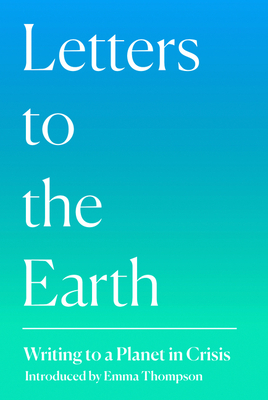 Culture Declares Emergency launched in April to bring the arts into the conversation about the climate emergency. Letters to the Earth compiles 100 short pieces by known and unknown names alike. Alongside published authors, songwriters, professors and politicians are lots of ordinary folk, including children as young as seven. The brief was broad: to write a letter in response to environmental crisis, whether to or from the Earth, to future generations (there are wrenching pieces written to children: “What can I say, now that it’s too late? … that I’m sorry, that I tried,” writes Stuart Capstick), to the government or to other species.
There are certainly relatable emotions here, especially the feeling of helplessness. “We take the train, go vegan, refuse plastic, buy less and less. But that is tiny. We are tiny,” novelist Jo Baker writes. I loved retired bishop Richard Holloway’s wry letter calling the author of Genesis to account for unhelpful language of dominion, Rob Cowen’s poem to a starling, and Anna Hope’s essay about parenting in a time of uncertainty. Unfortunately, much of the rest is twee or haranguing, e.g. “Forest fires are scorching INNOCENT wildlife. Plastic is strangling INNOCENT turtles and dolphins,” a 12-year-old writes. This was put together in a matter of months, and it shows. There is not enough tonal variety, a lot of overwriting has crept through, and errors, especially in the kids’ work, remain uncorrected. Perhaps six to 10 pieces stood out to me overall. I’d recommend the Extinction Rebellion handbook instead.
With thanks to Alison Menzies / William Collins for the free copy for review.
Two Trees Make a Forest: On Memory, Migration and Taiwan by Jessica J. Lee
 I loved Turning, Lee’s 2017 memoir about swimming in one of Berlin’s lakes per week for a year, so I jumped at the chance to read her follow-up, which delves into her maternal line’s history in Taiwan. She travels to Taipei for three months to brush up on her Chinese, write and hike. Interspersed with the lush descriptions of her walks are reflections on Taiwan’s history and on the hidden aspects of her grandfather Gong’s past that only came to light after Lee’s grandmother, Po, died and she and her mother discovered an autobiographical letter he’d written before he drifted into dementia. Nature, language, history and memory flow together in a delicate blend of genres – “I moved from the human timescale of my family’s story through green and unfurling dendrological time,” she writes.
This has got to be one of the most striking title and cover combinations of the year. Along with Chinese characters, the book includes some looping text and Nico Taylor’s maps and illustrations of Taiwanese flora and fauna. While you will likely get more out of this if you have a particular interest in Asian history, languages and culture, it’s impressive how Lee brings the different strands of her story together to form a hybrid nature memoir that I hope will be recognized by next year’s Wainwright Prize and Young Writer of the Year Award shortlists. She’d also be a perfect New Networks for Nature speaker.
With thanks to Virago for the free copy for review.
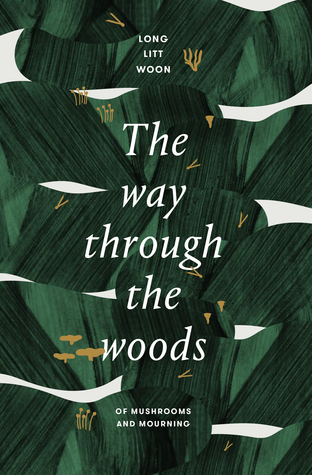
The Way through the Woods: Of Mushrooms and Mourning by Long Lit Woon
 [Trans. from the Norwegian by Barbara J. Haveland]
I couldn’t resist the sound of a bereavement memoir crossed with a mushroom hunting guide. When Long met her husband, Eiolf Olsen, she was an 18-year-old Malaysian exchange student in Stavanger, Norway. Meeting Eiolf changed the whole course of her life, keeping her in Europe for good; decades later, her life changed forever once again when Eiolf dropped dead at work one morning. “If anyone had told me that mushrooms would be my lifeline, the thing that would help me back onto my feet and quite literally back onto life’s track, I would have rolled my eyes. What had mushrooms to do with mourning?” she writes.
 The answer to that rhetorical question is nothing much, at least not inherently, so this ends up becoming a book of two parts, with the bereavement strand (printed in green and in a different font – green is for grief? I suppose) engaging me much more than the mushroom-hunting one, which takes her to Central Park and the annual Telluride, Colorado mushroom festival as well as to Norway’s woods again and again – “In Norway, outdoor life is tantamount to a religion.” But the quest for wonder and for meaning is a universal one. In addition, if you’re a mushroom fan you’ll find gathering advice, tasting notes, and even recipes. I fancy trying the “mushroom bacon” made out of oven-dried shiitakes.
With thanks to Scribe for the free copy for review.
God Unbound: Theology in the Wild by Brian McLaren
 McLaren was commissioned to launch a series that was part travel guide, part spiritual memoir and part theological reflection. Specifically, he was asked to write about the Galápagos Islands because he’d been before and they were important to him. He joins a six-day eco-cruise that tours around the island chain off Ecuador, with little to do except observe the birds, tortoises and iguanas, and swim with fish and sea turtles. For him this is a peaceful, even sacred place that reminds him of the beauty that still exists in the world despite so much human desecration. Although he avoids using his phone except to quickly check in with his wife, modernity encroaches unhelpfully through a potential disaster with his laptop.
I was surprised to see that McLaren leaves the Galápagos at the midpoint – whatever could fill the rest of the book, I wondered? He starts by reassessing Darwin, so often painted as a villain by Evangelical Christianity but actually a model of close, loving attention to nature. He also recalls how some of his most intense spiritual experiences have arisen from time in nature. McLaren’s books have been pivotal to my spiritual journey as we’ve both gradually become more liberal and environmentalist. His definition of God might horrify traditionalists, but holds appeal for me: “a centering singularity whose gravity holds me in insistent orbit, pulling me deeper into mystery, pondering who I am and what my life means.” This is an unusual but gently entrancing book full of photos and quotes from other thinkers including John Muir, Pope Francis and Richard Rohr. It’s an ideal introduction to ecotheology.
With thanks to Canterbury Press for the free copy for review.
What It Means to Be Moral: Why Religion Is Not Necessary for Living an Ethical Life by Phil Zuckerman
 From one end of the spectrum (progressive Christianity) to the other (atheism). Here’s a different perspective from a sociology professor at California’s Pitzer College. Zuckerman’s central argument is that humanism and free choice can fuel ethical behavior; since there’s no proof of God’s existence and theists have such a wide range of beliefs, it’s absurd to slap a “because God says so” label on our subjective judgments. Morals maintain the small communities our primate ancestors evolved into, with specific views (such as on homosexuality) a result of our socialization. Alas, the in-group/out-group thinking from our evolutionary heritage is what can lead to genocide. Instead of thinking in terms of ‘evil’, though, Zuckerman prefers Dr. Simon Baron-Cohen’s term, “empathy erosion.”
To tackle violent crime, Zuckerman contends, we need a more equal society, with the Scandinavian countries a model of how to achieve that through higher taxes, social services and the rehabilitation of prisoners. He uses a lot of relatable examples from history and from his own experience, as well as theoretical situations, to think through practical morality. I found his indictment of American Christianity accurate – how does it make sense for people who say they follow the way of Jesus to fight against equality, tolerance and scientific advances and instead advocate guns, the death penalty and Trump? Well, indeed.
It might seem odd for me to recommend this alongside the McLaren, but there is much to be gained from both viewpoints. Zuckerman’s work overlaps a fair bit with another I’ve read on the topic, Richard Holloway’s Godless Morality – even a bishop agrees we needn’t take our societal ethics straight from the Bible! I can’t go along fully with Zuckerman because I think progressive religion has been and can continue to be a force for good, but I would agree that atheists can be just as moral as people of faith – and often more so.
With thanks to Counterpoint Press for sending a proof copy for review.
Would you be interested in reading one or more of these?
We Are the Weather by Jonathan Safran Foer
I’ve read all of Jonathan Safran Foer’s major releases, from Everything Is Illuminated onwards, and his 2009 work Eating Animals had a major impact on me. (I included it on a 2017 list of “Books that (Should Have) Literally Changed My Life.”) It’s an exposé of factory farming that concludes meat-eating is unconscionable, and while I haven’t gone all the way back to vegetarianism in the years since I read it, I eat meat extremely rarely, usually only when a guest at others’ houses, and my husband and I often eat vegan meals at home.
 When I heard that Foer’s new book, We Are the Weather: Saving the Planet Begins at Breakfast, would revisit the ethics of eating meat, I worried it might feel redundant, but still wanted to give it a try. Here he examines the issue through the lens of climate change, arguing that slashing meat consumption by two-thirds or more (by eating vegan until dinner, i.e., for two meals a day) is the easiest way for individuals to decrease their carbon footprint. I don’t disagree with this proposal. It would be churlish to fault a reasonable suggestion that gives ordinary folk something concrete to do while waiting (in vain?) for governments to act.
My issues, then, are not with the book’s message but with its methods and structure. Initially, Foer successfully makes use of historical parallels like World War II and the civil rights movement. He rightly observes that we are at a crucial turning point and it will take self-denial and joining in with a radical social movement to protect a whole way of life. Don’t think of living a greener lifestyle as a sacrifice or a superhuman feat, Foer advises; think of it as an opportunity for bravery and for living out the convictions you confess to hold.
As the book goes on, however, the same reference points come up again and again. It’s an attempt to build on what’s already been discussed, but just ends up sounding repetitive. Meanwhile, the central topic is brought in as a Trojan horse: not until page 64 (of 224 in the main text) does Foer lay his cards on the table and admit “This is a book about the impacts of animal agriculture on the environment.” Why be so coy when the book has been marketed as being about food choices? The subtitle and blurb make the topic clear. “Our planet is a farm,” Foer declares, with animal agriculture the top source of deforestation and methane emissions.
Fair enough, but as I heard a UK climate expert explain the other week at a local green fair, you can’t boil down our response to the climate crisis to ONE strategy. Every adjustment has to work in tandem. So while Foer has chosen meat-eating as the most practical thing to change right now, the other main sources of emissions barely get a mention. He admits that car use, number of children, and flights are additional areas where personal choices make a difference, but makes no attempt to influence attitudes in these areas. So diet is up for discussion, but not family planning, commuting or vacations? This struck me as a lack of imagination, or of courage. Separating Americans from their vehicles may be even tougher than getting them to put down the burgers. But that doesn’t mean it’s not worth trying.
 Part II is a bullet-pointed set of facts and statistics reminiscent of the “Tell the Truth” section in the Extinction Rebellion handbook. It’s an effective strategy for setting things out briefly, yet sits oddly between narrative sections of analogies and anecdotes. My favorite bits of the book were about visits to his dying grandmother back at the family home in Washington, D.C. It took him many years to realize that his grandfather, who lost everything in Poland and began again with a new wife in America, committed suicide. This family history,* nestled within the canon of Jewish stories like Noah’s Ark, Masada and the Holocaust, dramatizes the conflict between resistance and self-destruction – the very battle we face now.
 Part IV, Foer’s “Dispute with the Soul,” is a philosophical dialogue in the tradition of Talmudic study, while the book closes with a letter to his sons. Individually, many of these segments are powerful in the way they confront hypocrisy and hopelessness with honesty. But together in the same book they feel like a jumble. Although it was noble of Foer to tackle the subject of climate change, I’m not convinced he was the right person to write this book, especially when we’ve already had recent works like The Uninhabitable Earth by David Wallace-Wells. Arriving at a rating has been very difficult for me because I support the book’s aims but often found it a frustrating reading experience. Still, if it wakes up even a handful of readers to the emergency we face, it will have been worthwhile.
My rating: 
A favorite passage: “Climate change is not a jigsaw puzzle on the coffee table, which can be returned to when the schedule allows and the feeling inspires. It is a house on fire.”
 *I’m looking forward to his mother Esther Safran Foer’s family memoir, I Want You to Know We’re Still Here: A Post-Holocaust Memoir, which is coming out from Tim Duggan Books on March 31, 2020.
We Are the Weather is published today, 10th October, in the UK by Hamish Hamilton (my thanks for the proof copy for review). It came out in the States from Farrar, Straus and Giroux last month.
Reviews for Shiny New Books & TLS, Plus Simon’s “My Life in Books”
I recently participated in the one-week “My Life in Books” extravaganza hosted by Simon Thomas (Stuck in a Book), where he asks bloggers to choose five books that have been important to them at different points in their reading lives. The neat twist is that he puts the bloggers in pairs and asks them to comment anonymously on their partner’s reading choices and even come up with an apt book recommendation or two. A few of my selections will be familiar from the two Landmark Books posts I wrote in 2016 (here and here), but a couple are new, and it was fun to think about what’s changed versus what’s endured in my reading taste.
Shiny New Books
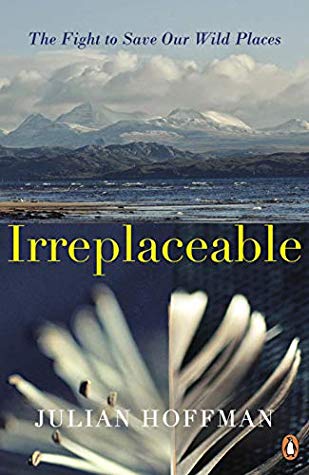 Irreplaceable by Julian Hoffman: If you read one 2019 release, make it this one. (It’s too important a book to dilute that statement with qualifiers.) Species and habitat loss are hard to comprehend even when we know the facts. This book is a way of taking stock, taking responsibility, and going beyond the numbers to tell the stories of front-line conservation work. From the Kent marshes to the Coral Triangle off Indonesia, Hoffman discovers the situation on the ground and talks to the people involved in protecting places at risk of destruction. Reassuringly, these aren’t usually genius scientists or well-funded heroes, but ordinary citizens who are concerned about preserving nearby sites that mean something to them. Irreplaceable is an elegy of sorts, but, more importantly, it’s a call to arms. It places environmentalism in the hands of laypeople and offers hope that in working together in the spirit of defiance we can achieve great things. It takes local concerns seriously, yet its scope is international. But what truly lifts Hoffman’s work above most recent nature books is the exquisite prose.
Times Literary Supplement
These three reviews are forthcoming.
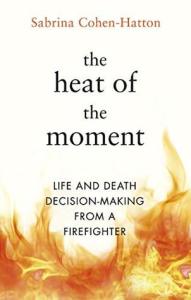 The Heat of the Moment: Life and Death Decision-Making from a Firefighter by Sabrina Cohen-Hatton: Cohen-Hatton is one of the UK’s highest-ranking female firefighters. A few perilous situations inspired her to investigate how people make decisions under pressure. For a PhD in Psychology from Cardiff University, she delved into the neurology of decision-making. Although there is jargon in the book, she explains the terms well and uses relatable metaphors. However, the context about her research can be repetitive and basic, as if dumbed down for a general reader. The book shines when giving blow-by-blow accounts of real-life or composite incidents. Potential readers should bear in mind, though, that this is ultimately more of a management psychology book than a memoir.
Henry David Thoreau’s Walden (1854), a record of his two-year experiment living alone in a cabin near a Massachusetts pond, has inspired innumerable back-to-nature adventures, including these two books I discuss together in a longer article.
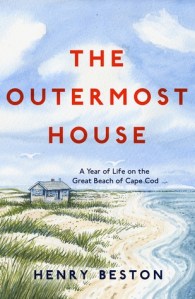 The Outermost House: A Year of Life on the Great Beach of Cape Cod by Henry Beston: Beston had a two-room wooden shack built at Cape Cod in 1925. Although he only intended to spend a fortnight of the following summer in the sixteen-by-twenty-foot dwelling, he stayed a year. The chronicle of that year, The Outermost House (originally published in 1928 and previously out of print in the UK), is a charming meditation on the turning of the seasons and the sometimes terrifying power of the sea. The writing is often poetic, with sibilance conjuring the sound of the ocean. Beston will be remembered for his statement of the proper relationship between humans and the natural world. “We need another and a wiser and perhaps a more mystical concept of animals,” he declares; “they are not underlings; they are other nations.” One word stands out in The Outermost House: “elemental” appears a dozen times, evoking the grandeur of nature and the necessity of getting back to life’s basics.
(See also Susan’s review of this one.)
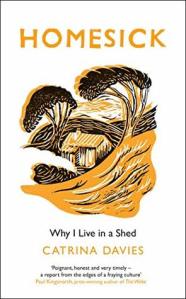 Homesick: Why I Live in a Shed by Catrina Davies: Davies crosses Thoreauvian language – many chapter titles and epigraphs are borrowed from Walden – with a Woolfian search for a room of her own. Penniless during an ongoing housing crisis and reeling from a series of precarious living situations, she moved into the shed near Land’s End that had served as her father’s architecture office until he went bankrupt. Like Raynor Winn’s The Salt Path, this intimate, engaging memoir is a sobering reminder that homelessness is not so remote, and education is no guarantee of success. There is, understandably, a sense of righteous indignation here against a land-owning class – including the lord who owns much of the area where she lives and works – and government policies that favour the wealthy.
This Is Not a Drill: An Extinction Rebellion Handbook
“There is no planet B. This is where we will live, or go extinct as a species.”
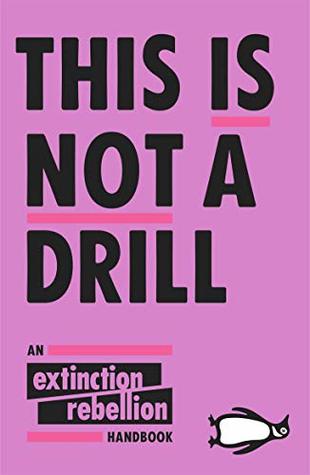 I’m periodically prone to melancholy musings on the impending end of the world (like here). Reading this punchy collection of 35 essays was a way of taking those feelings seriously and putting them to constructive use. You’ve likely heard of Extinction Rebellion: a peaceful environmental activism movement that began in the UK and has now spread worldwide, it demands that governments face the facts about the climate crisis and do something about it, now. Fittingly, the book is divided into two sections: “Tell the Truth” plainly sets out the basics of climate breakdown and the effects we expect to see, including the disproportionate toll it will have on the poor and marginalized, and on island nations like the Maldives; “Act Now” is a practical call to arms with pieces by politicians, economists and protest organizers.
Not surprisingly, experts are calling for radical societal change: we must move away from the car culture; we cannot continue to equate success with economic growth; we must reorganize how cities function. “We are not looking at adjustments any more. It’s a complete overhaul,” Leeds University’s Professor of Urban Futures, Paul Chatterton, writes. But what did surprise me about reading This Is Not a Drill is that it’s not depressing. It’s actually rather exciting to see how many great minds and ordinary folk are aware of the climate crisis and working to mitigate it. We might not have political will at the highest levels, but grassroots movements involving just 3% of the citizenry have been shown to effect social change. I want to be part of that 3%. After I finished reading I signed up to ER’s mailing list, and though it’s not at all in my comfort zone, I’m going to consider taking part in their next public disruption.
 I came away from this book with a feeling of camaraderie: we’re all in this together, and so we can only tackle it together. Post-apocalyptic fiction envisions violent, everyone-for-themselves scenarios, but it doesn’t have to be that way. ER demonstrations are said to be characterized by energy, music, laughter and good food. One word keeps appearing throughout the essays: “love.” There is righteous anger here, yes, but that’s outweighed by love – love of our planet, our only home, and the creatures it nurtures; love of the human race, the family that encompasses us all. While the authors are not unanimously optimistic, there is a sense that there is dignity in working towards positive change, whether or not we ultimately succeed. Plus, “It might just work,” former Archbishop of Canterbury Rowan Williams concludes in his afterword.
If you feel hopeless when you think about the state of the environment, I encourage you to pick this up, even if you only skim through and read a handful of the essays. The handbook achieves a fine balance between academics and laypeople; forthright assertions and creative ideas; grief and enthusiasm. It’s also strikingly designed, with the pink cover matching the ER boat and heavy use of the sorts of recurring icons and slogans you might recognize from their banners: skulls and hourglasses share space with bees, birds, butterflies and a Tree of Life. My only real quibble is that I would have liked a short bio of each contributor, either at the close of each essay or in an appendix, because while a few of these authors are household names, many are not, and it would be useful to know their bona fides.
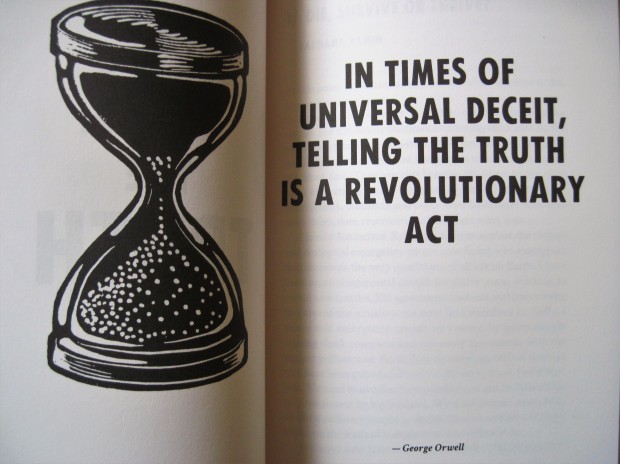
Don’t miss these pieces: “Climate Sorrow” by psychotherapist Susie Orbach, “A Political View” by Green Party MP Caroline Lucas, “A New Economics” by Oxbridge economist Kate Raworth, and “The Civil Resistance Model” by Roger Hallam of Extinction Rebellion.
Some favorite lines:
“Being human is not about individual survival or escape. It’s a team sport. Whatever future humans have, it will be together.” (from “Survival of the Fittest,” by American media theorist Douglas Rushkoff)
“It’s interesting and important to note that the people who are most effective are often the least attached to the effectiveness of their actions. Being detached from the outcome, and in love with the principles and the process, can help mitigate against burn-out.” (from “The Civil Resistance Model” by Roger Hallam)
“We may or may not escape a breakdown. But we can escape the toxicity of the mindset that has brought us here. And in so doing we can recover a humanity that is capable of real resilience.” (from the Afterword by Rowan Williams)
“if you are alive at this moment in history, it is because you are here to do a job. So what is your place in these times?” (from “What Is Your Place in These Times?” by Gail Bradbrook, co-founder of Extinction Rebellion)
My rating:
This Is Not a Drill was published on June 13th. My thanks to Penguin Random House for the free copy for review.
A Keeper of Records: What’s Worth Saving?
It’s safe to say that book bloggers love lists: not only do we keep a thorough list of everything we read in a year, but we also leap to check out every new top 5/10/50/100 or thematic book list that’s posted so we can see how many of them we’ve read. And then, at the end of any year, most of us put together our own best-of lists, often for a number of categories.
When I was younger, though, I took the list-making to an extreme. As I was going back through boxes of mementos in America a few weeks ago, I found stacks of hand-written records I’d kept. Here’s a list of what I used to list:
- every book I read
- every movie I saw
- dreams, recounted in detail
- money I found on the ground
- items I bought or sold on eBay
- gifts given or received for birthdays and Christmas
- transactions made through my mail-order music club
- all my weekday outfits, with a special shorthand designating each item of clothing
Age 14 (1997-8) was the peak of my record-keeping, and the only year when I faithfully kept a diary. I cringe to look back at all this now. Most of the dreams are populated by my crushes of the time, names and faces that mean nothing to me now. And to think that I was so self-conscious and deluded to assume people at school might notice if I wore a shirt twice within a couple of weeks! My diary isn’t particularly illuminating from this distance, either; mostly it brings back how earnest and pious I was in my teens. It’s occasionally addressed in the second person, as if to an imaginary bosom friend who would know me as well as I knew myself.
What’s clear is that I was convinced that the minutiae of my life mattered. Between us, my mother and I had kept a huge cache of my schoolwork and craft projects from kindergarten right through graduate school. I was also a devoted collector – of stamps, coins, figurines, tea sets, shells, anything with puffins or llamas – so I obviously felt that physical objects had real importance, too. It’s a wonder I didn’t become an archivist or a museum curator.
Why did I save all this stuff in the first place? Even as a teen, was I imagining an illustrious career for myself and some future biographer who would gleefully mine my records and personal writings for clues to who I really was? I’m not sure whether to admire the confidence or deplore the presumption. We all want to believe we’re living lives of significance, but when I take a long view – if I never have a child … if I never publish a book (though I think I will) … if human society does indeed collapse by 2050 (as some are predicting) – it’s hard to see what, if anything, will be preserved of my time on earth.
This is deeper than I usually get in a blog post, but these are the sorts of thoughts that preoccupy me when I’m not just drifting along in life’s routines. My nieces’ and nephews’ generation may be the last to inhabit this planet if we don’t take drastic and immediate action to deal with the environmental crisis. Many are working for change (my husband, a new Town Councillor, recently voted for the successful motion to declare a climate emergency and commit Newbury to going carbon-neutral by 2030), but some remain ignorant that there is any kind of problem and so consume and dispose like there is (literally) no tomorrow.
My home is a comfortable bubble I hardly ever leave, but more and more I feel that I need to become part of larger movements: first to ensure the continuation of human and non-human existence; then to improve the quality of human life, especially for those who have contributed least to climate change but will suffer the most from it. I have no idea what form my participation should take, but I know that focusing on outside causes will mean less time obsessing about myself and my inconsequential problems.
That’s not to say I won’t listen to the angst that’s telling me I’m not living my life as fully as I should, but I know that working with others, in whatever way, to tackle global issues will combat the lack of purpose that’s been plaguing me for years.
Appreciation for my past can only help with bolstering a healthy self-image, so I’ve kept a small selection of all those records, and a larger batch of school essays and assignments. Even if this archive is only ever for me, I like being able to look back at the well-rounded student I was – I used to get perfect scores on calculus tests and chemistry lab reports! I could write entire papers in French! – and see the seeds of the sincere, meticulous book lover I still am. As Eve Schaub writes in Year of No Clutter, “I’m not about to stop collecting my own life. It has been a source of pleasure for me ever since I can remember; it helps define me.”
A selection of favorite mementos I discovered back in the States:

In high school I started making my way through the American Film Institute’s list of Top 100 movies. I’ve now seen 89 of them.
I kept a list of new vocabulary words encountered in novels, especially Victorian ones. Note trumpery: (noun) attractive articles of little value or use; (adjective) showy but worthless – how apt!
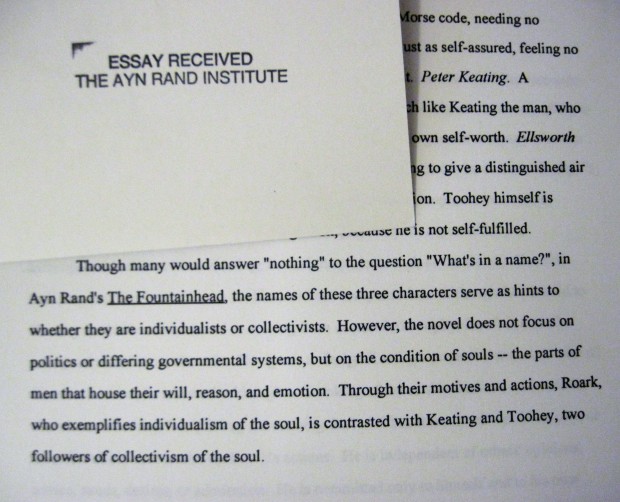
As a high school senior, I waded through Ayn Rand’s The Fountainhead to write an essay that won me an honorable mention, a point of interest on my college applications. Though I find it formulaic now, it’s a precursor to a career partially devoted to writing about books.
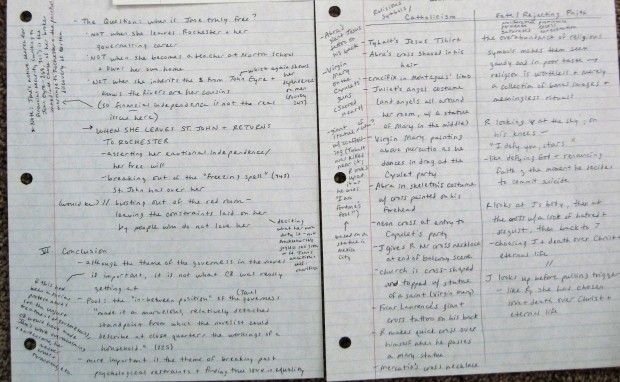
I planned my every college paper via incredibly detailed outlines. (I’m far too lazy to do this for book reviews now!) Can you work out what these essays were about?

As a college sophomore I wrote weekly essays in what looks like pretty flawless French. This one was an imagined interview with Charles Dickens and Thomas Hardy about the autobiographical and religious influences on their fiction.
Are you a list keeper? Do you have a personal ‘archive’?
How do you balance a healthy self-regard with working for the good of the world?
Magdalena Mountain by Robert Michael Pyle
“Wasn’t it Nabokov who said ‘It is astounding how little the ordinary person notices butterflies?’”
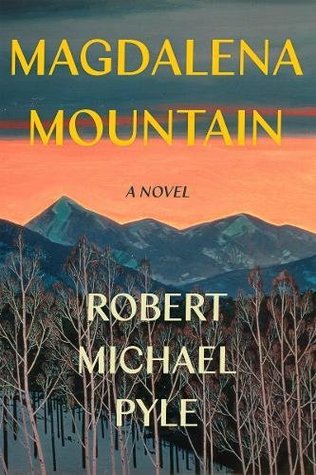 Butterflies, monks, students and teachers, prophets and saints: such is the cast of naturalist Robert Michael Pyle’s unusual and rewarding debut novel, Magdalena Mountain. It’s a golden autumn in the early 1970s as James Mead leaves Albuquerque on a Greyhound bus to travel to New Haven, Connecticut, where he will undertake a PhD in biology at Yale. He squats in a lab on campus to save money and, after some tension with his thesis advisor, decides to keep his head down, feeding the department’s giant cave roaches and becoming engrossed in the field journals written by one October Carson in 1969 during his travels out West.
Pyle presents nature as both beatific and harsh, a continuity of life that human events – like a car going over a cliff in the first chapter – barely disrupt. Occasional chapters check in on the woman who was in the car crash, Mary Glanville. Now suffering from amnesia, she believes she’s a famous figure from history. One day she escapes from her nursing home and hitchhikes into the Colorado mountains. In her weakened state she’s taken in by Attalus and Oberon, monks at a deconsecrated monastery devoted to the god Pan and the creeds of nature writers like John Burroughs, Aldo Leopold and John Muir. Attalus, a compassionless misogynist, vehemently protests Mary’s presence in their community, but Oberon soon falls in love with her.
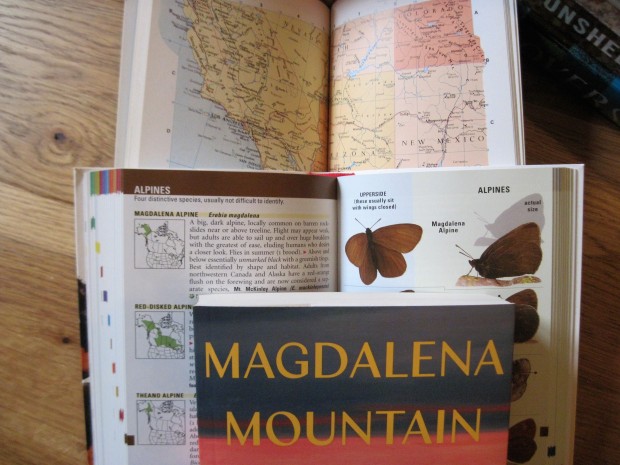
When James, disobeying his supervisor, lights out for Colorado for a summer of research at the Rocky Mountain Biological Laboratory, the stage is set for these major characters to collide on Magdalena Mountain, home to the distinctive, all-black Magdalena Alpine butterfly (Erebia magdalena). “Flight may appear weak, but adults are able to sail up and over huge boulders with the greatest of ease, eluding humans who desire a closer look. Flies in summer,” reads the description in my (Kaufman) field guide to North American butterflies. Intermittent segments of pure nature writing about Erebia’s life cycle – seven short chapters in total – establish the seasons and encourage a long view of local history, but somewhat slow down the novel’s tempo.
Pyle successfully pulls in so many different themes: academic infighting and the impulses of scientific researchers versus amateur collectors; environmentalism, especially through the threats that infestations, pesticides and off-road vehicles pose to the mountain landscape; activism, by way of the Vietnam War and nuclear weapons protests; and even sacred femininity and the myths surrounding Mary Magdalene. Mary Glanville’s name is a nice nod to history – Elinor Glanville was a seventeenth-century English collector who gave her name to the Glanville Fritillary – while Vladimir Nabokov, who was a keen lepidopterist as well as an academic and author, is mentioned several times for his real-life connections to the area.
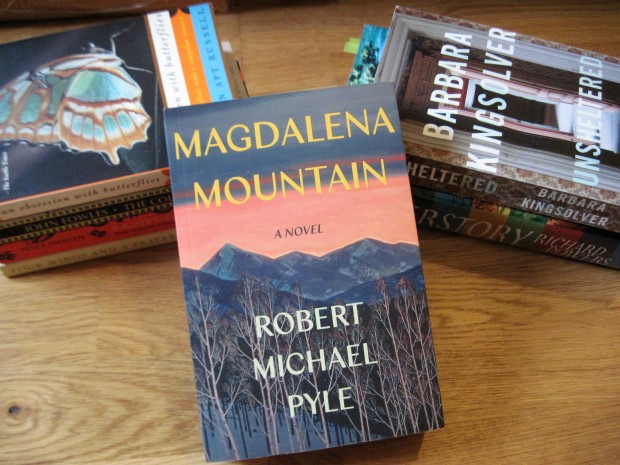
(A selection of my butterfly-themed books, read and unread, in the pile at the left.)
The quirky set of hangers-on at the monastery reminded me of an Iris Murdoch setup (thinking mostly of The Bell), while the passion for science and activism brought to mind two other excellent environmentally minded novels published this year, The Overstory and Unsheltered. Indeed, Mary preaches at one point, “Seek your shelter in nature … In love lies the only real shelter there is.” If you’re interested in the Powers and/or Kingsolver, I would commend Pyle’s book to you as well: it’s offbeat, dreamy yet fervent, with intriguing characters and elegant nature-infused language. One of my favorite descriptive scraps, so simple but so apt, was “a peeled peach of a moon.” I’m grateful to have had a chance to read this, and I will be seeking out Pyle’s nature writing, too.
My rating: 
Magdalena Mountain was published in August 2018. My thanks to the good folk of Counterpoint Press (based in Berkeley, California) for sending a free copy for review.
Books in Brief: Five I Loved Recently
The Human Age: The World Shaped by Us
By Diane Ackerman
 A perfect tonic to books like The Sixth Extinction, this is an intriguing and inspiring look at how some of the world’s brightest minds are working to mitigate the negative impacts we have had on the environment and improve human life through technology. As in David R. Boyd’s The Optimistic Environmentalist, Ackerman highlights some innovative programs that are working to improve the environment. Part 1 is the weakest – most of us are already all too aware of how we’ve trashed nature – but the book gets stronger as it goes on. My favorite chapters were the last five, about 3D printing, bionic body parts and human–animal hybrids created for medical use, and how epigenetics and the microbial life we all harbor might influence our personality and behavior more than we think.
My rating: 
I Will Find You
By Joanna Connors
 Connors was a young reporter running late for an assignment for the Cleveland Plain-Dealer when she was raped in an empty theatre on the Case Western campus. Using present-tense narration, she makes the events of 1984 feel as if they happened yesterday. It wasn’t until 2005 that Connors, about to send her daughter off to college, felt the urge to go public about her experience. “I will find you,” her rapist had warned her as he released her from the theatre, but she turned the words back on him, locating his family and learning everything she could about what made him a repeat criminal. She never uses this to explain away what he did, but it gives her the necessary compassion to visit the man’s grave. This is an excellent work of reconstruction and investigative reporting.
My rating:
One of Us: The Story of a Massacre and Its Aftermath
By Åsne Seierstad
 An utterly engrossing account of Anders Behring Breivik’s July 22, 2011 attacks on an Oslo government building (8 dead) and the political youth camp on the island of Utøya (69 killed). Over half of this hefty tome is prologue: Breivik’s life story, plus occasional chapters giving engaging portraits of his teenage victims. The massacre itself, along with initial interrogations and identification of the dead, takes up two long chapters totaling about 100 pages – best devoured in one big gulp when you’re feeling strong. It’s hard to read, but brilliantly rendered. Anyone with an interest in psychology or criminology will find the insights into Breivik’s personality fascinating. This is a book about love and empathy: what they can achieve; what happens when they are absent. It shows how wide the ripples of one person’s actions can be, but also how deep individual motivation goes. All wrapped up in a gripping true crime narrative. Doubtless one of the best books I will read this year.
My rating: 
Cold: Adventures in the World’s Frozen Places
By Bill Streever
 “Cold is a part of day-to-day life, but we often isolate ourselves from it, hiding in overheated houses and retreating to overheated climates, all without understanding what we so eagerly avoid.” In 12 chapters spanning one year, Streever covers every topic related to the cold that you could imagine: polar exploration, temperature scales, extreme weather events (especially the School Children’s Blizzard of 1888 and the “Year without Summer,” 1815), ice ages, cryogenics technology, and on and on. There’s also a travel element, with Streever regularly recording where he is and what the temperature is, starting in his home turf of Anchorage, Alaska. My favorite chapters were February and March, about the development of refrigeration and air conditioning and cold-weather apparel, respectively.
My rating:
A Series of Catastrophes and Miracles
By Mary Elizabeth Williams
 “SPOILER: I lived,” the Salon journalist begins her bittersweet memoir of having Stage 4 metastatic melanoma. In August 2010 she had a several-millimeter scab on her head surgically removed. When the cancer came back a year and a half later, this time in her lungs as well as on her back, she had the extreme good luck of qualifying for an immunotherapy trial that straight up cured her. It’s an encouraging story you don’t often hear in a cancer memoir. On the other hand, her father-in-law’s esophageal cancer and her best friend Debbie’s ovarian cancer simply went from bad to worse. As the title suggests, Williams’s tone vacillates between despair and hope, but her writing is always wry and conversational.
My rating:
(For each one, read my full Goodreads review by clicking on the title link.)
 Bookish Beck = Rebecca Foster. American transplant to England. Freelance proofreader and book reviewer.
 Bookish Beck