The 2022 Dylan Thomas Prize Longlist
The Swansea University International Dylan Thomas Prize recognizes the best published work in the English language written by an author aged 39 or under. The 12-strong longlist for the 2022 prize, announced this morning, features lots of women and diverse voices. All literary genres are eligible. There are eight novels, two poetry collections and two short story collections in the running:

- A Passage North by Anuk Arudpragasam (Granta)
- What Noise Against the Cane by Desiree Bailey (Yale University Press)
- Keeping the House by Tice Cin (And Other Stories)
- Auguries of a Minor God by Nidhi Zak/Aria Eipe (Faber)
- The Sweetness of Water by Nathan Harris (Tinder Press/Headline)
- No One Is Talking About This by Patricia Lockwood (Bloomsbury Circus)
- Milk Blood Heat by Dantiel W. Moniz (Atlantic Books)
- Hot Stew by Fiona Mozley (John Murray Press)
- Open Water by Caleb Azumah Nelson (Viking, Penguin General)
- Acts of Desperation by Megan Nolan (Jonathan Cape)
- Peaces by Helen Oyeyemi (Faber)
- Filthy Animals by Brandon Taylor (Daunt Books Publishing)
 Coming just a week and a half after the Young Writer of the Year Award shortlist news, the longlist repeats two of its titles, Open Water and Acts of Desperation. No One Is Talking About This was shortlisted for the Booker and Women’s Prizes last year. A Passage North was also Booker shortlisted, while The Sweetness of Water was on the longlist.
 I happen to have already read and reviewed No One Is Talking About This, Open Water, and Filthy Animals; I DNFed Hot Stew (some thoughts here). I am being sent a copy of Acts of Desperation for my Young Writer of the Year Award reading.
Of the rest, I’m most interested in reading the short story collection Milk Blood Heat and the two poetry nominees, What Noise Against the Cane and Auguries of a Minor God. I’m hoping that review copies of these few, perhaps as part of a longlist blog tour, will be a possibility.
Looking at the longlist, Brandon Taylor immediately jumps out to me as a deserving winner. I feel like his debut novel and follow-up story collection establish him as a confident writer with a mature voice and style that will be with us for the long haul.
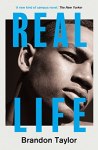
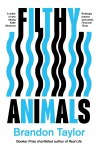
This year’s judges are novelist and Swansea University lecturer Alan Bilton, Jaipur Literature Festival founder and director Namita Gokhale (chair), poet Luke Kennard, and novelists Irenosen Okojie and Rachel Trezise.
The shortlist will be announced on 31 March and the winner on 12 May.
(My previous Dylan Thomas Prize coverage: I reviewed a few nominees for the blog tours in 2019 and 2020, and introduced the shortlist in 2021.)
Have you read any of the nominated titles? Which ones appeal to you?
Recommended March Releases: Broder, Fuller, Lamott, Polzin
Three novels that range in tone from carnal allegorical excess to quiet, bittersweet reflection via low-key menace; and essays about keeping the faith in the most turbulent of times.
Milk Fed by Melissa Broder
Rachel’s body and mommy issues are major and intertwined: she takes calorie counting and exercise to an extreme, and her therapist has suggested that she take a 90-day break from contact with her overbearing mother. Her workdays at a Hollywood talent management agency are punctuated by carefully regimented meals, one of them a 16-ounce serving of fat-free frozen yogurt from a shop run by Orthodox Jews. One day it’s not the usual teenage boy behind the counter, but his overweight older sister, Miriam. Miriam makes Rachel elaborate sundaes instead of her usual abstemious cups and Rachel lets herself eat them even though it throws her whole diet off. She realizes she’s attracted to Miriam, who comes to fill the bisexual Rachel’s fantasies, and they strike up a tentative relationship over Chinese food and classic film dates as well as Shabbat dinners at Miriam’s family home.

If you’re familiar with The Pisces, Broder’s Women’s Prize-longlisted debut, you should recognize the pattern here: a deep exploration of wish fulfilment and psychological roles, wrapped up in a sarcastic and sexually explicit narrative. Fat becomes not something to fear but a source of comfort; desire for food and for the female body go hand in hand. Rachel says, “It felt like a miracle to be able to eat what I desired, not more or less than that. It was shocking, as though my body somehow knew what to do and what not to do—if only I let it.”
With the help of her therapist, a rabbi that appears in her dreams, and the recurring metaphor of the golem, Rachel starts to grasp the necessity of mothering herself and becoming the shaper of her own life. I was uneasy that Miriam, like Theo in The Pisces, might come to feel more instrumental than real, but overall this was an enjoyable novel that brings together its disparate subjects convincingly. (But is it hot or smutty? You tell me.)
With thanks to Bloomsbury for the proof copy for review.
Unsettled Ground by Claire Fuller
At a glance, the cover for Fuller’s fourth novel seems to host a riot of luscious flowers and fruit, but look closer and you’ll see the daisies are withering and the grapes rotting; there’s a worm exiting the apple and flies are overseeing the decomposition. Just as the image slowly reveals signs of decay, Fuller’s novel gradually unveils the drawbacks of its secluded village setting. Jeanie and Julius Seeder, 51-year-old twins, lived with their mother, Dot, until she was felled by a stroke. They’d always been content with a circumscribed, self-sufficient existence, but now their whole way of life is called into question. Their mother’s rent-free arrangement with the landowners, the Rawsons, falls through, and the cash they keep in a biscuit tin in the cottage comes nowhere close to covering her debts, let alone a funeral.

During the Zoom book launch event, Fuller confessed that she’s “incapable of writing a happy novel,” so consider that your warning of how bleak things will get for her protagonists – though by the end there are pinpricks of returning hope. Before then, though, readers navigate an unrelenting spiral of rural poverty and bad luck, exacerbated by illiteracy and the greed and unkindness of others. One of Fuller’s strengths is creating atmosphere, and there are many images and details here that build the picture of isolation and pathos, such as a piano marooned halfway to a derelict caravan along a forest track and Jeanie having to count pennies so carefully that she must choose between toilet paper and dish soap at the shop.
Unsettled Ground is set in a fictional North Wessex Downs village not far from where I live. I loved spotting references to local places and to folk music – Jeanie and Julius might not have book smarts or successful careers, but they inherited Dot’s love of music and when they pick up a fiddle and guitar they tune in to the ancient magic of storytelling. Much of the novel is from Jeanie’s perspective and she makes for an out-of-the-ordinary yet relatable POV character. I found the novel heavy on exposition, which somewhat slowed my progress through it, but it’s comparable to Fuller’s other work in that it focuses on family secrets, unusual states of mind, and threatening situations. She’s rapidly become one of my favourite contemporary novelists, and I’d recommend this to you if you’ve liked her other work or Fiona Mozley’s Elmet.
With thanks to Penguin Fig Tree for the proof copy for review.
Dusk, Night, Dawn: On Revival and Courage by Anne Lamott
These are Lamott’s best new essays (if you don’t count Small Victories, which reprinted some of her greatest hits) in nearly a decade. The book is a fitting follow-up to 2018’s Almost Everything in that it tackles the same central theme: how to have hope in God and in other people even when the news – Trump, Covid, and climate breakdown – only heralds the worst.
One key thing that has changed in Lamott’s life since her last book is getting married for the first time, in her mid-sixties, to a Buddhist. “How’s married life?” people can’t seem to resist asking her. In thinking of marriage she writes about love and friendship, constancy and forgiveness, none of which comes easy. Her neurotic nature flares up every now and again, but Neal helps to talk her down. Fragments of her early family life come back as she considers all her parents were up against and concludes that they did their best (“How paltry and blocked our family love was, how narrow the bandwidth of my parents’ spiritual lives”).

Opportunities for maintaining quiet faith in spite of the circumstances arise all the time for her, whether it’s a variety show that feels like it will never end, a four-day power cut in California, the kitten inexplicably going missing, or young people taking to the streets to protest about the climate crisis they’re inheriting. A short postscript entitled “Covid College” gives thanks for “the blessings of COVID: we became more reflective, more contemplative.”
The prose and anecdotes feel fresher here than in several of the author’s other recent books. I highlighted quote after quote on my Kindle. Some of these essays will be well worth rereading and deserve to become classics in the Lamott canon, especially “Soul Lather,” “Snail Hymn,” “Light Breezes,” and “One Winged Love.”
I read an advanced digital review copy via NetGalley. Available from Riverhead in the USA and SPCK in the UK.
Brood by Jackie Polzin

Polzin’s debut novel is a quietly touching story of a woman in the Midwest raising chickens and coming to terms with the shape of her life. The unnamed narrator is Everywoman and no one at the same time. As in recent autofiction by Rachel Cusk and Sigrid Nunez, readers find observations of other people (and animals), a record of their behaviour and words; facts about the narrator herself are few and far between, though it is possible to gradually piece together a backstory for her. At one point she reveals, with no fanfare, that she miscarried four months into pregnancy in the bathroom of one of the houses she cleans. There is a bittersweet tone to this short work. It’s a low-key, genuine portrait of life in the in-between stages and how it can be affected by fate or by other people’s decisions.
See my full review at BookBrowse. I was also lucky enough to do an interview with the author.
I read an advanced digital review copy via Edelweiss. Available from Doubleday in the USA. To be released in the UK by Picador tomorrow, April 1st.
What recent releases can you recommend?
Women’s Prize 2021: Predictions & Eligible Titles
In previous years I’ve been a half-hearted follower of the Women’s Prize – often half or more of the longlist doesn’t interest me – but given that nearly two-thirds of my annual reading is by women, and that I so enjoyed catching up on the previous winners last year, I somehow feel more invested this year. Following literary prizes is among my greatest bookish joys, so this time round I’ve made more of an effort to look back through a year of UK fiction releases by women, whether I’ve read the books or not, and make some informed predictions.
Here is the scope of the prize: “Any woman writing in English – whatever her nationality, country of residence, age or subject matter – is eligible. Novels must be published in the United Kingdom between 1 April in the year the Prize calls for entries, and 31 March the following year, when the Prize is announced.” (Note: no novellas or short stories; the judges are looking for the best work by a woman – or a trans person legally defined as a woman.)
Based on the books by women that I have admired, loved, or found most relevant in 2020‒21, here are my predictions for the longlist, which will be revealed on March 10th (two weeks from today) and will contain 16 titles. I’ve aimed for a balance between new and established voices, and a mix of genres. I link to my reviews where available.


- The Vanishing Half by Brit Bennett
- Piranesi by Susanna Clarke
- Exciting Times by Naoise Dolan
- Burnt Sugar by Avni Doshi
- Mrs Death Misses Death by Salena Godden
- Transcendent Kingdom by Yaa Gyasi
- Sisters by Daisy Johnson
- Pew by Catherine Lacey
- No One Is Talking about This by Patricia Lockwood – currently reading
- A Burning by Megha Majumdar*
- The Glass Hotel by Emily St. John Mandel
- Hot Stew by Fiona Mozley**
- Outlawed by Anna North
- Love After Love by Ingrid Persaud
- The Mermaid of Black Conch by Monique Roffey***
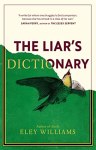
- The Liar’s Dictionary by Eley Williams
* Not read yet. It seems like this year’s Home Fire.
** Not read yet, but I loved Elmet so much that I’m confident this will be a hit with me, too.
*** Not read yet. I plan to read it, but after its Costa win there’s a long library holds queue.
Note: “The Prize only accepts novels entered by publishers, who may each submit a maximum of two titles per imprint and one title for imprints with a list of five fiction titles or fewer published in a year. Previously shortlisted and winning authors are awarded a ‘free pass’ in addition to a publisher’s general submissions.”
- Because of all the funds the publishers are expected to contribute to the Prize’s publicity at each level of judging, the process unfairly discriminates against small, independent publishers.
Bernardine Evaristo is the chair of judges this year, so I expect a strong showing from BIPOC and LGBTQ authors AND a leaning towards experimental prose, probably even more so than my above list reflects.
Other novels I considered:
Runners-up – books that I enjoyed and would be perfectly happy to see nominated:


- Milk Fed by Melissa Broder – not reviewed yet
- Here Is the Beehive by Sarah Crossan
- The Group by Lara Feigel
- Unsettled Ground by Claire Fuller – not reviewed yet
- Artifact by Arlene Heyman
- The Book of Longings by Sue Monk Kidd
- A Town Called Solace by Sue Lawson – not reviewed yet
- Monogamy by Sue Miller
- What Are You Going Through by Sigrid Nunez
- Islands of Mercy by Rose Tremain
Reads that didn’t match up for me, but would be eligible:


- When the Lights Go Out by Carys Bray
- The New Wilderness by Diane Cook
- Tennis Lessons by Susannah Dickey
- The Pull of the Stars by Emma Donoghue
- As You Were by Elaine Feeney (DNF)
- The Charmed Wife by Olga Grushin
- Miss Benson’s Beetle by Rachel Joyce
- The Animals in That Country by Laura Jean McKay
- Scenes of a Graphic Nature by Caroline O’Donoghue
- True Story by Kate Reed Petty (DNF)
- Rodham by Curtis Sittenfeld
- The Lamplighters by Emma Stonex – currently reading
- Redhead by the Side of the Road by Anne Tyler
- little scratch by Rebecca Watson
- Three Women and a Boat by Anne Youngson
Haven’t had a chance to read yet / don’t have access to, so can only list without comment (most likely alternative nominees in bold):


- Against the Loveless World by Susan Abulhawa
- You Exist Too Much by Zaina Arafat
- The Push by Ashley Audrain
- If I Had Your Face by Frances Cha
- [The Death of Vivek Oji by Akwaeke Emezi] – Update: would not be eligible according to the new requirement that trans people be legally defined as female; before that regulation was in place, Emezi was longlisted for Freshwater.
- Sea Wife by Amity Gaige
- The Wild Laughter by Caoilinn Hughes
- How We Are Translated by Jessica Gaitán Johannesson
- Consent by Annabel Lyon
- A Crooked Tree by Una Mannion
- The Last Migration by Charlotte McConaghy
- The Art of Falling by Danielle McLaughlin
- His Only Wife by Peace Adzo Medie
- A Ghost in the Throat by Doireann Ní Ghríofa
- Acts of Desperation by Megan Nolan
- Fake Accounts by Lauren Oyler
- An Ordinary Wonder by Buki Papillon
- Detransition, Baby by Torrey Peters
- Jack by Marilynne Robinson – gets a “free pass” entry as MR is a previous winner
- Belladonna by Anbara Salam
- Kololo Hill by Neema Shah
- All Adults Here by Emma Straub
- Friends and Strangers by J. Courtney Sullivan
- Saving Lucia by Anna Vaught
- We Are All Birds of Uganda by Hafsa Zayyan
- How Much of These Hills Is Gold by C. Pam Zhang
I overlapped with this Goodreads list (which I didn’t look at until after compiling mine) on 28 titles. It erroneously includes The Anthill by Julianne Pachico – not released in the UK until May 2021 – but otherwise has another nearly 50, mostly solid, ideas, such as Luster by Raven Leilani, Blue Ticket by Sophie Mackintosh, and Death in her Hands by Ottessa Moshfegh.
See also Laura’s and Rachel’s predictions.
Any predictions or wishes for the Women’s Prize longlist?
Some of My Most Anticipated Releases of 2021
Although 120+ books that will be published in 2021 are already on my radar, I’ve limited myself to the 20 I’m most excited about. The modest number is a cheat in that I’ve already read a couple of books from this period in advance (and I’m currently reading another two), and I haven’t listed any that I already own as proofs or finished copies (pictured here) or have been promised. With a couple of exceptions, these books are due out between January and June.
I’m also not counting these three forthcoming books that I’ve sponsored via Kickstarter (the Trauma anthology) or Unbound:


Two that I read as U.S. e-books but would recommend that UK-based readers look out for in 2021 are Memorial by Bryan Washington (Jan. 7, Atlantic) and Transcendent Kingdom by Yaa Gyasi (March 4, Penguin).

The following are in UK release date order, within sections by genre; the quoted descriptions are from the publisher blurbs on Goodreads. Much more fiction is catching my eye this time.
Fiction
 The Living Sea of Waking Dreams by Richard Flanagan [Jan. 14, Chatto & Windus / May 25, Knopf] “In a world of perennial fire and growing extinctions, Anna’s aged mother … increasingly escapes through her hospital window … When Anna’s finger vanishes and a few months later her knee disappears, Anna too feels the pull of the window. … A strangely beautiful novel about hope and love and orange-bellied parrots.” I’ve had mixed success with Flanagan, but the blurb draws me and I’ve read good early reviews so far. [Library hold]
 The Charmed Wife by Olga Grushin [Jan. 21, Hodder & Stoughton / Jan. 12, Putnam] “Cinderella married the man of her dreams – the perfect ending she deserved after diligently following all the fairy-tale rules. Yet now, two children and thirteen-and-a-half years later, things have gone badly wrong. One night, she sneaks out of the palace to get help from the Witch who, for a price, offers love potions to disgruntled housewives.” A feminist retelling. I loved Grushin’s previous novel, Forty Rooms. [Edelweiss download]
 The Prophets by Robert Jones Jr. [Jan. 21, Quercus / Jan. 5, G.P. Putnam’s Sons] “A singular and stunning debut novel about the forbidden union between two enslaved young men on a Deep South plantation, the refuge they find in each other, and a betrayal that threatens their existence.” Lots of hype about this one. I’m getting Days Without End vibes, and the mention of copious biblical references is a draw for me rather than a turn-off. The cover looks so much like the UK cover of The Vanishing Half! [Publisher request pending]
 Mrs Death Misses Death by Salena Godden [Jan. 28, Canongate] “Mrs Death has had enough. She is exhausted from spending eternity doing her job and now she seeks someone to unburden her conscience to. Wolf Willeford, a troubled young writer, is well acquainted with death, but until now hadn’t met Death in person – a black, working-class woman who shape-shifts and does her work unseen. Enthralled by her stories, Wolf becomes Mrs Death’s scribe, and begins to write her memoirs.” [NetGalley download / Library hold]
 No One Is Talking About This by Patricia Lockwood [Feb. 16, Bloomsbury / Riverhead] “A woman known for her viral social media posts travels the world speaking to her adoring fans … Suddenly, two texts from her mother pierce the fray … [and] the woman confronts a world that seems to contain both an abundance of proof that there is goodness, empathy and justice in the universe, and a deluge of evidence to the contrary.” Lockwood’s memoir, Priestdaddy, is an all-time favorite of mine. [NetGalley download / Publisher request pending]
 A Town Called Solace by Mary Lawson [Feb. 18, Chatto & Windus / Feb. 16, Knopf Canada] “It’s North Ontario in 1972, and seven-year-old Clara’s teenage sister Rose has just run away from home. At the same time, a strange man – Liam – drives up to the house next door, which he has just inherited from Mrs Orchard, a kindly old woman who was friendly to Clara … A beautiful portrait of a small town, a little girl and an exploration of childhood.” I’ve loved the two Lawson novels I’ve read. [Publisher request pending]
 Klara and the Sun by Kazuo Ishiguro [March 2, Faber & Faber / Knopf] Synopsis from Faber e-mail: “Klara and the Sun is the story of an ‘Artificial Friend’ who … is warned not to invest too much in the promises of humans. A luminous narrative about humanity, hope and the human heart.” I’m not an Ishiguro fan per se, but this looks set to be one of the biggest books of the year. I’m tempted to pre-order a signed copy as part of an early bird ticket to a Faber Members live-streamed event with him in early March.
 Hot Stew by Fiona Mozley [March 18, Hodder & Stoughton / April 20, Algonquin Books] “The Soho that Precious and Tabitha live and work in is barely recognizable anymore. … Billionaire-owner Agatha wants to kick the women out to build expensive restaurants and luxury flats. Men like Robert, who visit the brothel, will have to go elsewhere. … An insightful and ambitious novel about property, ownership, wealth and inheritance.” This sounds very different to Elmet, but I liked Mozley’s writing enough to give it a try.
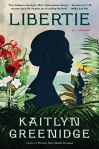 Libertie by Kaitlyn Greenidge [March 30, Algonquin Books; April 29, Serpent’s Tail] “Coming of age as a free-born Black girl in Reconstruction-era Brooklyn, Libertie Sampson” is expected to follow in her mother’s footsteps as a doctor. “When a young man from Haiti proposes, she accepts, only to discover that she is still subordinate to him and all men. … Inspired by the life of one of the first Black female doctors in the United States.” I loved Greenidge’s underappreciated debut, We Love You, Charlie Freeman. [Edelweiss download]
 An Ordinary Wonder by Buki Papillon [April 9, Dialogue Books] “Richly imagined with art, proverbs and folk tales, this moving and modern novel follows Oto through life at home and at boarding school in Nigeria, through the heartbreak of living as a boy despite their profound belief they are a girl, and through a hunger for freedom that only a new life in the United States can offer. … a powerful coming-of-age story that explores complex desires as well as challenges of family, identity, gender and culture, and what it means to feel whole.”
 Great Circle by Maggie Shipstead [May 4, Doubleday / Knopf] “In 1940s London, after a series of reckless romances and a spell flying to aid the war effort, Marian embarks on a treacherous, epic flight in search of the freedom she has always craved. She is never seen again. More than half a century later, Hadley Baxter, a troubled Hollywood starlet beset by scandal, is irresistibly drawn to play Marian Graves in her biopic.” I loved Seating Arrangements and have been waiting for a new Shipstead novel for seven years!
 The Anthill by Julianne Pachico [May 6, Faber & Faber; this has been out since May 2020 in the USA, but was pushed back a year in the UK] “Linda returns to Colombia after 20 years away. Sent to England after her mother’s death when she was eight, she’s searching for the person who can tell her what’s happened in the time that has passed. Matty – Lina’s childhood confidant, her best friend – now runs a refuge called The Anthill for the street kids of Medellín.” Pachico was our Young Writer of the Year shadow panel winner.
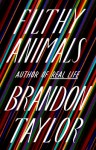 Filthy Animals: Stories by Brandon Taylor [June 24, Daunt Books / June 21, Riverhead] “In the series of linked stories at the heart of Filthy Animals, set among young creatives in the American Midwest, a young man treads delicate emotional waters as he navigates a series of sexually fraught encounters with two dancers in an open relationship, forcing him to weigh his vulnerabilities against his loneliness.” Sounds like the perfect follow-up for those of us who loved his Booker-shortlisted debut novel, Real Life.
Saturday Night at the Lakeside Supper Club by J. Ryan Stradal [USA only? Pamela Dorman Books; no cover or exact date yet, just “Summer 2021”] “Combines the comedic pathos of John Irving with the brilliant generational storytelling of Jane Smiley and the wildly rich and quirky characters of fellow Minnesotan Anne Tyler … set on a lake in Northern Minnesota, about a beloved but dying family restaurant and whether it can be saved.” I was disappointed by Stradal’s latest, but love Kitchens of the Great Midwest enough to give him another try.
Matrix by Lauren Groff [Sept. 23, Cornerstone / Riverhead; no cover yet] “Cast out of the royal court by Eleanor of Aquitaine, … seventeen-year-old Marie de France is sent to England to be the new prioress of an impoverished abbey, its nuns on the brink of starvation and beset by disease. … a mesmerizing portrait of consuming passion, aberrant faith, and a woman that history moves both through and around.” Yuck to medieval history in general as a setting, but I love Groff’s work enough to get hold of this one anyway.
Nonfiction
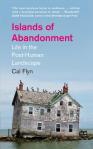 Islands of Abandonment: Nature Rebounding in the Post-Human Landscape by Cal Flyn [Jan. 21, William Collins; June 1, Viking] “A variety of wildlife not seen in many lifetimes has rebounded on the irradiated grounds of Chernobyl. A lush forest supports thousands of species that are extinct or endangered everywhere else on earth in the Korean peninsula’s narrow DMZ. … Islands of Abandonment is a tour through these new ecosystems … ultimately a story of redemption”. Good news about nature is always nice to find. [Publisher request pending]
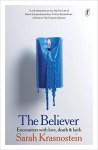 The Believer by Sarah Krasnostein [March 2, Text Publishing – might be Australia only; I’ll have an eagle eye out for news of a UK release] “This book is about ghosts and gods and flying saucers; certainty in the absence of knowledge; how the stories we tell ourselves to deal with the distance between the world as it is and as we’d like it to be can stunt us or save us.” Krasnostein was our Wellcome Book Prize shadow panel winner in 2019. She told us a bit about this work in progress at the prize ceremony and I was intrigued!
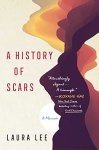 A History of Scars: A Memoir by Laura Lee [March 2, Atria Books; no sign of a UK release] “In this stunning debut, Laura Lee weaves unforgettable and eye-opening essays on a variety of taboo topics. … Through the vivid imagery of mountain climbing, cooking, studying writing, and growing up Korean American, Lee explores the legacy of trauma on a young queer child of immigrants as she reconciles the disparate pieces of existence that make her whole.” I was drawn to this one by Roxane Gay’s high praise.
 Everybody: A Book about Freedom by Olivia Laing [April 29, Picador / May 4, W. W. Norton & Co.] “The body is a source of pleasure and of pain, at once hopelessly vulnerable and radiant with power. … Laing charts an electrifying course through the long struggle for bodily freedom, using the life of the renegade psychoanalyst Wilhelm Reich to explore gay rights and sexual liberation, feminism, and the civil rights movement.” Wellcome Prize fodder from the author of The Lonely City.
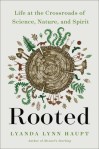 Rooted: Life at the Crossroads of Science, Nature, and Spirit by Lyanda Lynn Haupt [May 4, Little, Brown Spark; no sign of a UK release] “Cutting-edge science supports a truth that poets, artists, mystics, and earth-based cultures across the world have proclaimed over millennia: life on this planet is radically interconnected. … In the tradition of Rachel Carson, Elizabeth Kolbert, and Mary Oliver, Haupt writes with urgency and grace, reminding us that at the crossroads of science, nature, and spirit we find true hope.” I’m a Haupt fan.
Which of these do you want to read, too?
What other upcoming 2021 titles are you looking forward to?
November Reading Plans: Novellas, Margaret Atwood and More
This is my third year joining Laura Frey and others in reading novellas in November. Laura has put together a history of the challenge here; it has had various incarnations but has no particular host or rules. Join us if you like! (#NovNov) The definition of a novella seems to be loose – it’s based more on word count than page count – so it’s up to you what you’d like to classify as one. I generally limit myself to books of 150 pages or fewer, though in some cases I’d probably go as high as 180-some. I’ve trawled my shelves and library pile and have four stacks to select from: fiction, classics, novella-length nonfiction, and slightly longer novels (160–190 pages) that I’ll keep around as backups but likely won’t get to.


Between what I have in these stacks, holds I’m waiting on at the library (West by Carys Davies, The Glorious Life of the Oak by John Lewis-Stempel and Holloway by Robert Macfarlane), and some additional choices on my e-readers (Lady into Fox by David Garnett, Heart Berries by Terese Marie Mailhot and Childhood: Two Novellas by Gerard Reve), I easily have enough for a book a day. In a future year maybe I’d be able to clear my schedule such that I could indeed read one novella per day, but I have so many review books on the go that I won’t aim for that. Besides, I’m not the kind of reader who’d sit down and read a 160-page book in one sitting; I’d be more likely to read 20 pages each in eight different books.
This is the pile I’ll be starting later today. (The Evans looks long but is 164 pages of text with various full- and half-page black-and-white illustrations dotted through.)
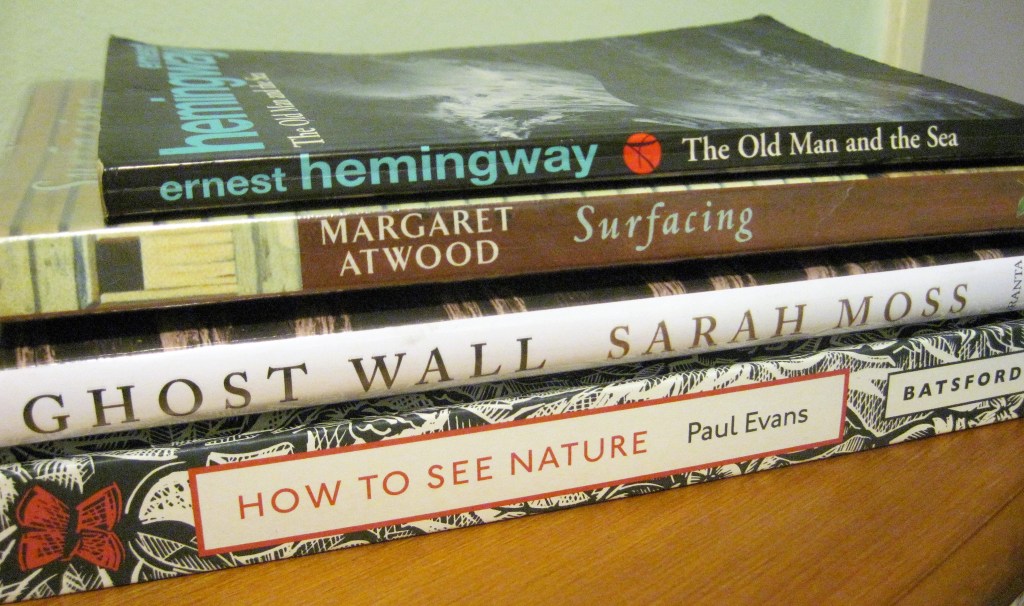
I got a headstart on Novellas in November with this Canongate volume published today.
Courage Calls to Courage Everywhere by Jeanette Winterson
 Last year it was Mary Beard’s Women and Power; in 2018 this is the Christmas gift to slip into every feminist book-lover’s stocking. Adapted from Winterson’s Richard Dimbleby Lecture and supplemented by the text of Emmeline Pankhurst’s 1913 speech “Freedom or Death,” this is a slim, attractive volume that feels timely if insubstantial. Winterson gives a potted history of suffragism and argues that female brains are not wired differently; it’s just social programming that tells us so. Gender imbalances in university admissions and the job market continued into the 1970s, so it’s no surprise, she says, that women are still catching up 40 years later – and she supports measures that could be labeled as positive discrimination.
From the #MeToo movement she makes what seems like an odd swerve into discussing AI because computer science/Silicon Valley is very male-dominated and she wants to be sure women have a respected role in the future. My reaction to this was the same as to Beard’s book and Chimamanda Ngozi Adichie’s We Should All Be Feminists: you can’t (and I don’t) dispute what the author has to say; for the most part the points are compelling and well made. Yet I don’t necessarily feel that I learned anything, or saw something familiar in a new way.
Favorite lines:
“When prejudice and bad science are no longer in the way, women always prove themselves as capable as men.”
“that’s how it is with patriarchy – we don’t notice the all-male panels, the movies where women are just the love interest, the number of male presenters on TV and radio […] and we do need parity, because women are one half of the population.”
My rating: 
Other November reading plans…
 Margaret Atwood Reading Month
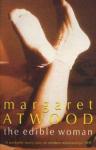
One of my longer novellas is a library copy of Surfacing (1972), which will be my first of two reads for the Margaret Atwood Reading Month hosted by Marcie and Naomi. I also own a copy of The Edible Woman (1969) and look forward to trying both of these early works.
Young Writer of the Year Award
Being involved with the Sunday Times/PFD Young Writer of the Year Award was one of my highlights of 2017. I’m excited for this year’s shadow panelists, several of whom are longtime blogging friends, and look forward to following along with the shortlist reads even though I can’t attend this year’s events. With any luck I will already have read at least one or two of the nominees (fingers crossed for Daisy Johnson and Fiona Mozley) so that there’s only a couple more to discover.
John Leonard Prize committee
In May I joined the National Book Critics Circle. One of the awards they give annually is the John Leonard Prize for the best first book in any genre. The pool of nominees is based on member recommendations, and a volunteer panel of members (as many as are interested!) then reads the 5–7 finalists and votes for a winner by January 8th. I signed up to be on the panel, so I’m committed to reading all the finalists in e-book format within about six weeks. Again, I hope to find that I’ve already read at least a few of the nominees. Regardless, it will be a fun project to keep me busy over our two weeks in America for the holidays.

Any reading plans for November? Will you be joining in with novellas or Margaret Atwood’s books?
Best Fiction of 2017, Plus Some Other Favorite Reads
Below I’ve chosen my top nine fiction releases from 2017 (seven by women!), followed by the backlist titles I loved the most this year. Many of these books have already featured on my blog in some way over the course of the year. To keep it simple for myself as well as for all of you who are figuring out whether you’re interested in these books or not, as with my nonfiction selections I’m mostly limiting myself to two sentences per title: the first is a potted summary; the second tells you why you should read it. I also link to any full reviews.
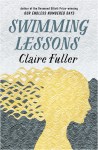 Swimming Lessons by Claire Fuller: This atmospheric novel reminiscent of Iris Murdoch is no happy family story; it’s full of betrayals and sadness, of failures to connect and communicate, yet it’s beautifully written, with all its scenes and dialogue just right. I recently caught up on Fuller’s acclaimed 2015 debut, Our Endless Numbered Days, and collectively I’m so impressed with her work, specifically the elegant way she alternates between time periods to gradually reveal the extent of family secrets and the faultiness of memory.
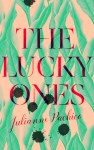 The Lucky Ones by Julianne Pachico: You may remember that our shadow panel chose this as our winner for the Sunday Times Young Writer of the Year award: we were blown away by this linked short story collection set in a drug-fueled Colombia in which violence and its aftermath are never far away. For the originality of the setup and the sheer excellence of the writing, this can’t be topped.
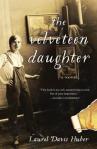 The Velveteen Daughter by Laurel Davis Huber: The name Margery Williams Bianco might not seem familiar, but chances are you remember her classic children’s book, The Velveteen Rabbit. This is about Margery and her daughter, Pamela Bianco, a painter and child prodigy troubled by mental illness, and the themes of creativity, mental health and motherhood are nestled in a highly visual debut novel full of cameos by everyone from Pablo Picasso to Eugene O’Neill.
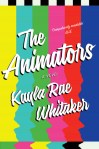 The Animators by Kayla Rae Whitaker: The cartooning world and the Kentucky–New York City dichotomy together feel like a brand new setting for a literary tragicomedy. Though it seems lighthearted, there’s a lot of meat to this story of the long friendship between two female animators as Whitaker contrasts the women’s public and private personas and imagines their professional legacy.
 In Every Moment We Are Still Alive by Tom Malmquist: While it’s being marketed as a novel, this reads more like a stylized memoir: Similar to Karl Ove Knausgaard’s books, it features the author as the central character and narrator, and the story of grief it tells is a highly personal one. Malmquist does an extraordinary job of depicting his protagonist’s bewilderment at the sudden loss of his partner and his new life as a single father.
 How to Be Human by Paula Cocozza: As much as this is about a summer of enchantment and literal brushes with urban wildlife, it’s also about a woman’s life: loneliness, the patterns we get stuck in, and those unlooked-for experiences that might just liberate us. There’s something gently magical about the way the perspective occasionally shifts to give a fox’s backstory and impressions as a neologism-rich stream.
 Elmet by Fiona Mozley: The dark horse on this past year’s Man Booker Prize longlist, this is a twisted fable about the clash of the land-owning and serf classes in contemporary England. It’s a gorgeous, timeless tale balanced between lush nature writing and Hardyesque pessimism.
-
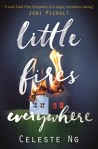 Little Fires Everywhere by Celeste Ng: A multi-layered story about many facets of motherhood: adoption, surrogacy, pregnancy, abortion; estrangement, irritation, longing and pride. Each and every character earns our sympathy here – a real triumph of characterization, housed in a tightly plotted and beautifully written novel you’ll race through.
And my fiction book of the year was:
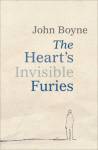 The Heart’s Invisible Furies by John Boyne: A wonderful seam of humor tempers the awfulness of much of what befalls Cyril Avery – born in Dublin in 1945 – for whom homosexuality seems a terrible curse. It’s an alternately heartbreaking and heartening portrait of a life lived in defiance of intolerance and tragedy.
My poetry read of the year was:
 All the Spectral Fractures: New and Selected Poems, Mary A. Hood: There is so much substance and variety to this poetry collection spanning the whole of Hood’s career. A professor emerita of microbiology at the University of West Florida and a former poet laureate of Pensacola, Florida, she takes inspiration from the ordinary folk of the state, the world of academic scientists, flora and fauna, and the minutiae of everyday life.
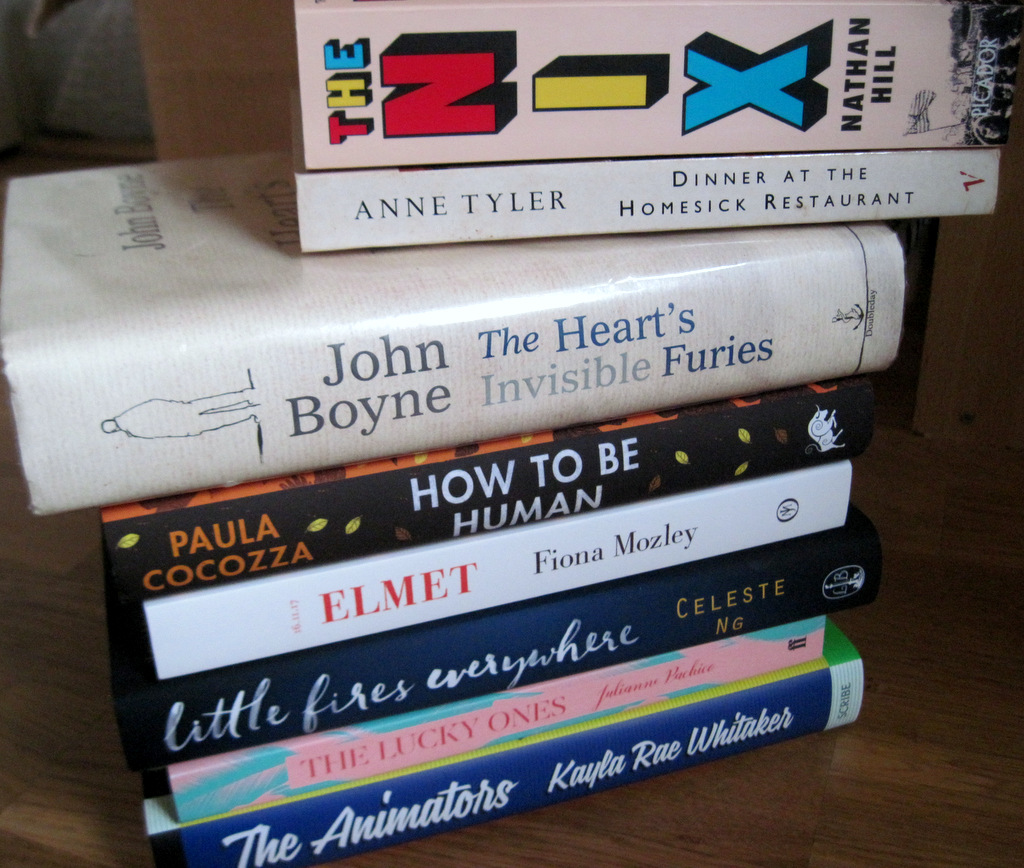
The year’s best books that I happen to have around in print.
And here’s a quick run-through of the seven best backlist titles I read this year:
-
 To Say Nothing of the Dog by Connie Willis: Time travel would normally be a turnoff for me, but Willis manages it perfectly in this uproarious blend of science fiction and pitch-perfect Victorian pastiche (boating, séances and sentimentality, oh my!).
-
 Homegoing by Yaa Gyasi: Brings together so many facets of the African and African-American experience; full of clear-eyed observations about the ongoing role race plays in American life.
-
 Days Without End by Sebastian Barry: Contains the most matter-of-fact consideration of same-sex relationships I’ve ever encountered in historical fiction. Heart-breaking, life-affirming, laugh-out-loud: those may be clichés, but it’s all these things and more.
-
 The Wind-Up Bird Chronicle by Haruki Murakami: Mesmerizing and bizarre, but in the best possible way: it questions our comfort in the everyday by contorting familiar elements like dreams do. I’m a definite Murakami convert.
-
 The Nix by Nathan Hill: A rich story about family curses and failure, and how to make amends for a life full of mistakes. Hill is a funny and inventive writer.
-
 Signs for Lost Children by Sarah Moss: Simply superb in the way it juxtaposes England and Japan in the 1880s and comments on mental illness, the place of women, and the difficulty of navigating a marriage whether the partners are thousands of miles apart or in the same room.
My overall most memorable fiction read of the year, to my great surprise, was:
-
 Dinner at the Homesick Restaurant by Anne Tyler: I’ve been lukewarm on Anne Tyler’s novels before – this is my sixth from her – but this instantly leapt onto my list of absolute favorite books. Its chapters are like perfectly crafted short stories focusing on different members of the Tull family. These vignettes masterfully convey the common joys and tragedies of a fractured family’s life. After Beck Tull leaves with little warning, Pearl must raise Cody, Ezra and Jenny on her own and struggle to keep her anger in check. Cody is a vicious prankster who always has to get the better of good-natured Ezra; Jenny longs for love but keeps making bad choices. Despite their flaws, I adored these characters and yearned for them to sit down, even just the once, to an uninterrupted family dinner of comfort food.
What were some of your top fiction reads of the year?
Tomorrow I’ll be naming some runners-up and listing a few other superlatives.
A Few Spooky Reads for Halloween
I’m not at all one for scary books; horror and even crime fiction rarely make it onto my reading agenda. But in advance of Halloween I did read a few books that would count as creepy. Maybe you’ll fancy picking one of them up today?
Ghost Stories of an Antiquary, Vol. II by M.R. James
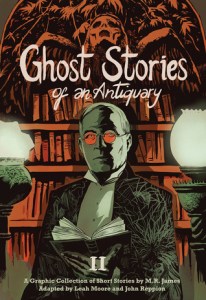 I’ve only ever read one M.R. James piece before, in an anthology of stories about libraries. This was perhaps not an ideal way to encounter his ghost stories for the first time. Though all four (“Number 13,” “Count Magnus,” “Oh, Whistle and I Will Come to You, My Lad” and “The Treasure of Abbot Thomas”) are adapted by the same pair, Leah Moore and John Reppion, each is illustrated by a different artist, so the drawing style ranges from rounded and minimalist to an angular, watercolor Marvel style. The stories have thematic links of research, travel, archaeological discovery and antiquities. Very often there are found documents that must be interpreted. Several narrators are scholars coming across unexplained phenomena: a hotel room that appears and disappears, a sarcophagus lid that opens on its own, a storm summoned by a whistle, and so on.
In a brief introduction, Jason Arnopp applauds the decision to “show readers the ghouls and ghosts,” but I disagree – to me a central problem with using the graphic form for these tales that center around nameless horror is that depicting the source of horror saps it of its power. Still, I appreciated the introduction to James’s ghost stories.
My rating:
With thanks to SelfMadeHero for the free copy for review.
Devil’s Day by Andrew Michael Hurley
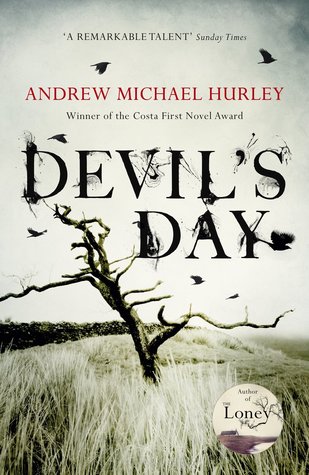 In Hurley’s Lancashire farmland setting, Devil’s Day is a regional Halloween-time ritual when the locals serve up the firstborn lamb of spring as a sacrifice to ward off the Devil’s shape-shifting appearance in the human or animal flock. Is it all a bit of fun, or necessary for surviving supernatural threat? We see the year’s turning through the eyes of John Pentecost, now settled back on his ancestral land with his wife, Kat, and their blind son, Adam. However, he focuses on two points from his past: his bullied childhood and a visit home early on in his marriage that coincided with the funeral of his grandfather, “the Gaffer”. The Endlands is a tight-knit community with a long history of being cut off from everywhere else, which makes it an awfully good place to keep secrets.
The first and last quarters of the book flew by for me, while the middle dragged a bit. The rural atmosphere and the subtle air of menace reminded me of Elmet and Bellman and Black. I’ll certainly seek out Hurley’s acclaimed debut, The Loney. [Read via NetGalley]
Favorite lines:
“Nothing changed in Underclough. Nothing happened. Not really. … elsewhere was always a place where the worst things happened. … The world outside the valley might well collapse but we wouldn’t necessarily feel the ripples here.”
My rating: 
Slade House by David Mitchell
“If I could just see a ghost, just once … Just one ghost, so I know that death’s not game over, but a door.”
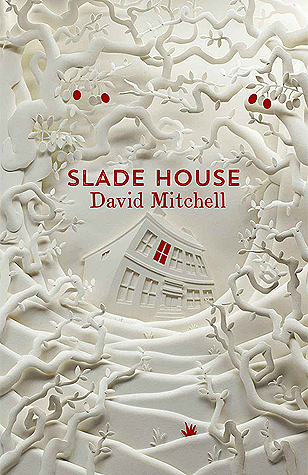 This was so cool! I feel like I’d never experienced a “real” Mitchell book before (having only read The Thousand Autumns of Jacob de Zoet, which is in some ways the odd one out), and I was impressed by how he brings everything together in this short novel. Every nine years between 1979 and 2015, a different visitor gets sucked into the treacherous world-within-a-world of the Grayer twins’ Slade House. This dilapidated mansion located off an unassuming alley morphs to fit each guest’s desires. To reveal more would spoil the fun, so I’ll just say that I love how Mitchell lulls you into a pretty horrific pattern before springing a couple of major surprises in later chapters. Each time period and narrator feels distinct and believable, and I’m told one character is from two other Mitchell novels (and the phrase “bone clock” even makes an appearance). I need to pick up Cloud Atlas soon for sure. [Public library copy]
My rating: 
Recommended spooky listening: The album That Ghost Belongs to Me by The Bookshop Band – all songs inspired by scary books.
Did you read anything scary this Halloween season?
Young Writer of the Year Award shortlist
Now that the shortlist has been announced in the Sunday Times, I can also share it here:
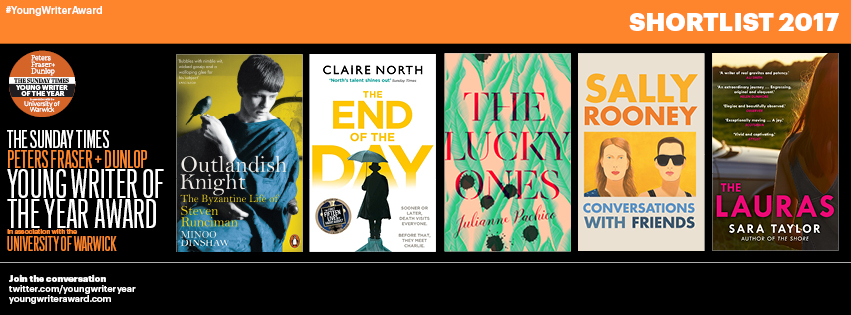
For the first time ever, the judges have chosen five titles, having apparently found it just too difficult to decide on four!
- Outlandish Knight: The Byzantine Life of Steven Runciman, Minoo Dinshaw (biography)
- The End of the Day, Claire North (science fiction novel)
- The Lucky Ones, Julianne Pachico (linked short stories)
- Conversations with Friends, Sally Rooney (contemporary novel)
- The Lauras, Sara Taylor (contemporary novel)
My initial thoughts: I only predicted Sally Rooney, and am surprised not to see Fiona Mozley here. My only other disappointment is that no poetry has been recognized this year.
There is great variety on this list, ranging as it does from sci fi lite to biography/history. I have only read part of one of the books: an unsuccessful attempt with The Lauras last December, though I am more than happy to try again because I loved The Shore so much. I am now halfway through.
I enjoyed the one book I read by Claire North very much (The First Fifteen Lives of Harry August) so look forward to trying another, and I have heard a lot about the Sally Rooney book and read various reviews (it seems to be a polarizing read, though).
I think we are all feeling a bit daunted by the 640-page biography about a historian I had never heard of. However, I have been getting more into biographies so will be interested to see how the author shapes this life story. I am a few chapters in so far, but have a feeling I will be reading it right up until our decision meeting.
I will be posting 1+ shortlist review per week in November, starting with The Lauras.
Last-Minute Booker Prize Predictions
The Man Booker Prize 2017 will be announced this evening (roughly 22:00 GMT, in my memory). Ever since the shortlist announcement I’ve felt that George Saunders is a shoo-in for Lincoln in the Bardo. I think he will win, and should. However, I’ve still only read four out of the six on the shortlist, so my predictions are not entirely based on personal knowledge of the books. I can’t say I’m hugely enthused about trying Auster or Hamid, but I’d be more likely to do so if either won.
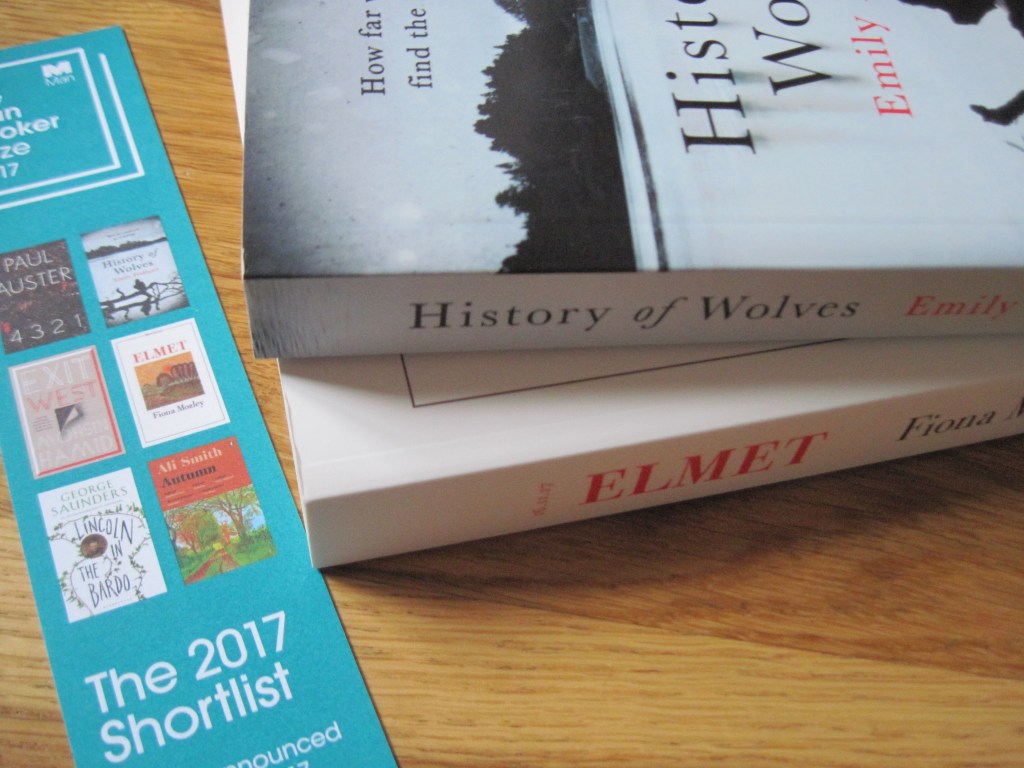
The two from the shortlist that I own + the annual bookmark, picked up from the public library.
Here, in what I predict is their descending order of likelihood to win, are the six shortlisted titles, with a pithy three words on why each one would take the prize:
Lincoln in the Bardo by George Saunders – Something actually novel.
Exit West by Mohsin Hamid – Timely re: refugees.
Autumn by Ali Smith – Timely re: Brexit.
4 3 2 1 by Paul Auster – Great American Novel.
Elmet by Fiona Mozley – Gorgeous, talented debut.
History of Wolves by Emily Fridlund – Haunting, underrated debut.
What have you managed to read from the Booker shortlist? How do your predictions match up against mine?
Final Thoughts on the Booker Longlist
On Wednesday the 13th the Man Booker Prize shortlist will be announced. I’d already reviewed six of the nominees and abandoned one; in the time since the longlist announcement I’ve only managed to read another one and a bit. That leaves four I didn’t get a chance to experience. Here’s a run-through of the 13 nominees, with my brief thoughts on each.

4 3 2 1 by Paul Auster (US) (Faber & Faber): I can’t see myself reading this one any time soon; I’ll choose a shorter work to be my first taste of Auster’s writing. I’ve heard mostly good reports, though.
Days Without End by Sebastian Barry (Ireland) (Faber & Faber): Read in March 2017. This is my overall favorite from the longlist so far. (See my BookBrowse review.) However, it’s already been recognized with the Costa Prize and the Walter Scott Prize for historical fiction, so if it doesn’t make the Booker shortlist I certainly won’t be crushed. 
History of Wolves by Emily Fridlund (US) (Weidenfeld & Nicolson): Read in March 2017. A slow-building coming-of-age story with a child’s untimely death at its climax. Fridlund’s melancholy picture of outsiders whose skewed thinking leads them to transgress moral boundaries recalls Lauren Groff and Marilynne Robinson. (Reviewed for the Times Literary Supplement; )
Exit West by Mohsin Hamid (Pakistan-UK) (Hamish Hamilton): I don’t have much interest in reading this one at this point; I didn’t get far in the one book I tried by Hamid (The Reluctant Fundamentalist) earlier this year. I’ve encountered mixed reviews.
Solar Bones by Mike McCormack (Ireland) (Canongate): If you’ve heard anything about this, it’s probably that the entire book is composed of one sentence. Now here’s an embarrassing admission: I didn’t make it past the first page.
Reservoir 13 by Jon McGregor (UK) (4th Estate): I read the first 15% last month and set it aside. I knew what to expect – lovely descriptions of the natural world and the daily life of a small community – but I guess hadn’t fully heeded the warning that nothing much happens. I won’t rule out trying this one again in the future, but for now it couldn’t hold my interest.
Elmet by Fiona Mozley (UK) (JM Originals): Read in August 2017. Simply terrific. (See my full blog review.) Overall, this dark horse selection is in second place for me. I’d love to see it make it through to the shortlist. 
The Ministry of Utmost Happiness by Arundhati Roy (India) (Hamish Hamilton): I was never a huge fan of The God of Small Things, so this is another I’m not too keen to try.
Lincoln in the Bardo by George Saunders (US) (Bloomsbury Publishing): Read in April 2017. An entertaining and original treatment of life’s transience. I enjoyed the different registers Saunders uses for his characters, but was less convinced about snippets from historical texts. So audacious it deserves a shortlist spot; I wouldn’t mind it winning.
Home Fire by Kamila Shamsie (UK-Pakistan) (Bloomsbury Circus): This is the one book from the longlist that I most wish I’d gotten a chance to read. It’s been widely reviewed in the press as well as in the blogging world (A life in books, Elle Thinks, and Heavenali), generally very enthusiastically.
Autumn by Ali Smith (UK) (Hamish Hamilton): Read in November 2016. (See my blog review.) While some of Smith’s strengths benefit from immediacy – a nearly stream-of-consciousness style (no speech marks) and jokey dialogue – I’d prefer a more crafted narrative. In places this was repetitive, with the seasonal theme neither here nor there.
Swing Time by Zadie Smith (UK) (Hamish Hamilton): Read in October 2016 for a BookBrowse review. The Africa material wasn’t very convincing, and the Aimee subplot and the way Tracey turns out struck me as equally clichéd. The claustrophobic narration makes this feel insular. A disappointment compared to White Teeth and On Beauty.
The Underground Railroad by Colson Whitehead (US) (Fleet): Read in July 2017. (See my blog review.) I’m surprised such a case has been made for the uniqueness of this novel based on a simple tweak of the historical record. I felt little attachment to Cora and had to force myself to keep plodding through her story. Every critic on earth seems to love it, though.
If I had to take a guess at which six books will make it through Wednesday and why, I’d say:
- 4 3 2 1 by Paul Auster – A chunkster by a well-respected literary lion.
- Exit West by Mohsin Hamid – A timely refugee theme and a touch of magic realism.
- Solar Bones by Mike McCormack – Irish stream-of-consciousness. Channel James Joyce and you’ll impress all the literary types.
- Lincoln in the Bardo by George Saunders – Effusive in tone and cutting-edge in form.
- Autumn by Ali Smith – Captures the post-Brexit moment.
- The Underground Railroad by Colson Whitehead – Though it’s won every prize going, the judges probably think they’d be churlish to pass it by.
By contrast, if I were asked for the six I would prefer to be on the shortlist, and why, it’d be:
- Days Without End by Sebastian Barry – Pretty much unforgettable.
- History of Wolves by Emily Fridlund – A haunting novel that deserves more attention.
- Reservoir 13 by Jon McGregor – Though it’s not my personal favorite, I support McGregor.
- Elmet by Fiona Mozley – A nearly flawless debut. Give the gal a chance.
- Lincoln in the Bardo by George Saunders – Show-offy, but such fun to read.
- Home Fire by Kamila Shamsie – Timely and well crafted, by all accounts.
That would be three men and three women, if not the best mix of countries. I’d be happy with that list.
 Bookish Beck = Rebecca Foster. American transplant to England. Freelance proofreader and book reviewer.
 Bookish Beck