The Bookshop Band in Abingdon & 20 Books of Summer, 6: Orphans of the Carnival by Carol Birch
The Bookshop Band have been among my favourite musical acts since I first saw play live at the Hungerford Literary Festival in 2014. Initially formed of three local musicians for hire, they got their start in 2010 as the house band at Mr B’s Emporium of Reading Delights in Bath, England. For their first four years, they wrote a pair of original songs about a new book, often the very day of an author’s event in the shop, and performed them on guitar, cello, and ukulele as an interlude to the evening’s reading and discussion.
Notable songs from their first 13 albums are based on Glow by Ned Beauman (“We Are the Foxes”), Don’t Let’s Go to the Dogs Tonight by Alexandra Fuller (“Bobo and the Cattle”), The Unlikely Pilgrimage of Harold Fry by Rachel Joyce (“How Not to Woo a Woman”), and Bring Up the Bodies by Hilary Mantel (“You Make the Best Plans, Thomas”). They have also written responses to classic literature, with songs inspired by Alice in Wonderland, various Shakespeare plays, and a compilation of first lines called “Once Upon a Time.”
I got to see the band live five times pre-pandemic, even after husband-and-wife-duo Ben Please and Beth Porter moved nearly 400 miles away to Wigtown, the Book Town of Scotland. During the first six months of Covid-19 lockdown, the livestream concerts from their attic were weekly treats to look forward to. They also interviewed authors for a breakfast chat show as part of the Wigtown Book Festival, which went online that year.

In the years since, the band has kept busy with other projects (not to mention two children). Porter sings and performs on the two Spell Songs albums based on Robert Macfarlane’s The Lost Words and its sequel. Together they composed the soundtrack to Aardman Animations’ short film, Robin Robin (2021) – winning Best Music at the British Animation Awards, and wrote an album of songs based on Scottish children’s literature. And they have continued writing one-off book songs, such as for the launch of Birnam Wood by Eleanor Catton. (I’m disappointed their songs about All My Wild Mothers by Victoria Bennett and The Spinning Heart by Donal Ryan still haven’t made it onto record.)
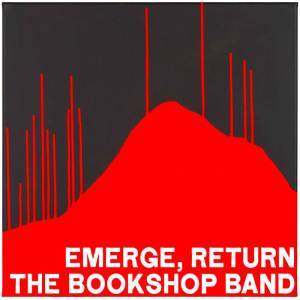 I’ve been enthusing about them for nearly a decade, but they’ve remained mostly under the radar in that time. Not so any longer; their recent album Emerge, Return was produced by Pete Townshend of The Who; the production value has notably advanced while retaining their indie spirit. Foreword Reviews kindly agreed to pay me to fangirl – er, write a blog – about Emerge, Return and the tour supporting it, so I’ll leave it there for the music criticism (their complete discography is now available on Bandcamp and Spotify). I’ll just add that a number of these ‘new’ songs have been kicking around for six to ten years but went unrecorded until now. For that reason, I worried that it might feel like a collection of cast-offs, but in fact they’ve managed to produce something sonically and thematically cohesive. It’s darker than some of their previous work, with moody minor chords and slightly sinister subjects.

Julia Pastrana after death. George Wick, Public domain, via Wikimedia Commons.
I’ve often found that the band will zero in on a detail, scene, or idea that never would have stood out to me while reading a book but, in retrospect, evokes the whole with great success. I decided to test this out by reading Carol Birch’s Orphans of the Carnival in the weeks leading up to seeing them on their months-long UK summer/autumn tour. It’s a historical novel about real-life 1850s Mexican circus “freak” Julia Pastrana, who had congenital conditions that caused her face and body to be covered in thick hair and her jaw and lips to protrude. Cruel contemporaries called her the world’s ugliest woman and warned that pregnant women should not be allowed to see her on tour lest the shock cause them to miscarry. Medical doctors posited, in all seriousness, that she was a link between humans and orangutans.
My copy of Birch’s novel was a remainder, and it is certainly a minor work compared to the Booker Prize-shortlisted Jamrach’s Menagerie. Facts about Julia’s travel itinerary and fellow oddballs quickly grow tedious, and while one of course sympathizes when children throw rocks at her, she never becomes a fully realized character rather than a curiosity.
There is also a bizarre secondary storyline set in 1983, in which Rose fills her London apartment with hoarded objects, including a doll she rescues from a skip and names Tattoo. She becomes obsessed with the idea of visiting a doll museum in Mexico. I thought that Tattoo would turn out to be Julia’s childhood doll Yatzi (similar to in A Council of Dolls by Mona Susan Power, where dolls have sentimental and magical power across the centuries), but the connection, though literal, was not as I expected. It’s more grotesque than that. And stranger than fiction, frankly.
{SPOILERS AHEAD}
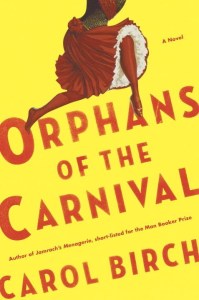 Birch sticks to the known details of Julia’s life. She had various agents, the final one being Theo Lent, who married her. (In the novel, he can’t bring himself to kiss her, but he can, you know, impregnate her.) She died of a fever soon after childbirth. Her son, Theo Junior, who inherited her hypertrichosis, also died within days. Both bodies were embalmed, sold, and exhibited. Theo then married another hairy woman, Marie Bartel of Germany, who took the name “Zenora” and posed as Julia’s sister. Theo died, syphilitic (or so Birch implies) and insane, in a Russian asylum. Julia and Theo Junior’s remains were displayed and mislaid at various points over the years, with Julia’s finally repatriated to Mexico for a proper burial in 2013. In the novel, Tattoo is, in fact, Theo Junior’s mummy.
Two Bookshop Band songs from the new album are about the novel: “Doll” and “Waggons and Wheels.” “Doll” is one of the few more lighthearted numbers on the album. It ended up being a surprise favourite track for me (along with the creepy “Eve in Your Garden,” about Margaret Atwood’s The Testaments, and “Room for Three,” a sombre yet resolute epic written for the launch of Philip Pullman’s La Belle Sauvage) because of its jaunty music-hall tempo; the pattern of repeating most nouns three times; and the hand claps, “deedily” vocal fills, unhinged recorder playing, and springy sound effects. The lyrics are almost a riddle: “When’s a doll (doll doll) not a doll (doll doll)?” They somehow avoid all spoilers while conveying something of the mental instability of a couple of characters.
The gorgeous “Waggons and Wheels” picks up on the melancholy tone and parental worries of earlier tracks from the album. The chorus has a wistful air as Julia ponders the passage of time and her constant isolation: “old friends, new deals / Winter or spring, I am hiding … Winter or spring, I’ll be travelling.” Porter’s mellow soprano tempers Julia’s outrage at mistreatment: “who are you to shout / Indecency and shame? / Shocking, I shock, so lock me out / I’m locked into this face.” She fears, too, what will happen to her child, “a beast or a boy, a monster or joy”. Listening to the song, I feel that the band saw past the specifics to plumb the universal feelings that get readers empathizing with Julia as a protagonist. They’ve gotten to the essence of the story in a way that Birch perhaps never did. Mediocre book; lovely songs. (New (bargain) purchase – Dollar Tree, Bowie, Maryland) 
I caught the Emerge, Return tour at St Nicolas’ Church in Abingdon (an event hosted by Mostly Books) last night. It was my sixth time seeing the Bookshop Band in concert – see also my write-ups of two 2016 events plus one in 2018 and another in 2019 – but the first time in person since the pandemic. I got to show off my limited-edition T-shirt. How nice it was to meet up again with blogger friend Annabel, too! Fun fact for you: Ben was born in Abingdon but hadn’t been back since he was two. Beth’s cousin turned up to the show as well. Although they have their daughters, 2 and 7, on the tour with them, they were being looked after elsewhere for the evening so the parents could relax a bit. Across the two sets, they played seven tracks from the new album, six old favourites, and two curios: one Spell Song, and an untitled song they wrote for the audiobook of Jackie Morris’s The Unwinding. It was a brilliant evening!


The 2024 Releases I’ve Read So Far
I happen to have read eight pre-release books so far, all of them for paid review; mostly for Shelf Awareness, with one for Foreword. (I also have proof copies of upcoming novels by Tania James, Margot Livesey, Sigrid Nunez and Sarah Perry on the shelf, but haven’t managed to start on them yet.) I’ve given review excerpts, links where available, and ratings below to try to pique your interest. Early in January I’ll follow up with a list of my dozen Most Anticipated titles for the coming year.
My top recommendations so far:
(in alphabetical order)
 Theophanies by Sarah Ghazal Ali [Jan. 16, Alice James Books]: In this poised debut collection by a Muslim poet, spiritual enlightenment is a female, embodied experience, mediated by matriarchs. Ali’s ambivalence towards faith is clear in alliteration-laden verse that recalls Kaveh Akbar’s. Wordplay, floral metaphors, and multiple ghazals make for dazzling language.
 Grief Is for People by Sloane Crosley [Feb. 27, MCD]: A bereavement memoir like no other. Heart-wrenching yet witty, it bears a unique structure and offers fascinating glimpses into the New York City publishing world. Crosley’s apartment was burgled exactly a month before the suicide of her best friend and former boss. Investigating the stolen goods in parallel serves as a displacement activity for her.
 Behind You Is the Sea by Susan Muaddi Darraj [Jan. 16, HarperVia]: Darraj’s second novel-in-stories is a sparkling composite portrait of a Palestinian American community in Baltimore. Across nine stellar linked stories, she explores the complex relationships between characters divided by—or connected despite—class, language, and traditional values. The book depicts the variety of immigrant and second-generation experience, especially women’s.
 The Ritual Effect by Michael Norton [April 9, Scribner]: Many use the words “habit” and “ritual” interchangeably, but the Harvard Business School behavioral scientist argues convincingly that they are very different. While a habit is an automatic, routine action, rituals are “emotional catalysts that energize, inspire, and elevate us.” He presents an engaging and commonsense précis of his research, making a strong case for rituals’ importance in the personal and professional spheres as people mark milestones, form relationships, or simply “savor the experiences of everyday life.”
Other 2024 releases I’ve read:
(in publication date order)
 House Cat by Paul Barbera [Jan. 2, Thames & Hudson]: The Australian photographer Paul Barbera’s lavish art book showcases eye-catching architecture and the pets inhabiting these stylish spaces. Whether in a Revolutionary War-era restoration or a modernist show home, these cats preside with a befitting dignity. (Shelf Awareness review forthcoming)
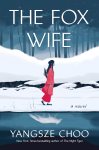 The Fox Wife by Yangsze Choo [Feb. 13, Henry Holt/Quercus]: Choo’s third novel is steeped in Chinese folklore, like her previous work, this time with a focus on tantalizing stories related to foxes, which were often worshiped at village shrines in China. Two tandem searches ramp up the level of suspense: in the winter of 1908 in Manchuria, in northeast China, a detective investigates a series of unexplained deaths; at the same time, a fox-woman masquerading as a servant plots vengeance against the man who murdered her child.
 The Only Way Through Is Out by Suzette Mullen [Feb. 13, University of Wisconsin Press]: A candid, inspirational memoir traces the events leading to her midlife acceptance of her lesbian identity and explores the aftermath of her decision to leave her marriage and build “a life where I would choose desire over safety.” The book ends on a perfect note as Mullen attends her first Pride festival aged 56. “It’s never too late” is the triumphant final line. (Foreword review forthcoming)
 36 Ways of Writing a Vietnamese Poem by Nam Le [March 5, Knopf]: A fearless poetry debut prioritizes language and voice to explore inherited wartime trauma and expose anti-Asian racism. Each poem is titled after a rhetorical strategy or analytical mode. Anaphora is one sonic technique used to emphasize the points. Language and race are intertwined. This is a prophet’s fervent truth-telling. High-concept and unapologetic, this collection from a Dylan Thomas Prize winner pulsates. (Shelf Awareness review forthcoming)
Currently reading:
(in release date order; all for Shelf Awareness review)
 God Gave Rock and Roll to You: A History of Contemporary Christian Music by Leah Payne [Jan. 4, Oxford University Press]: “traces the history and trajectory of CCM in America and, in the process, demonstrates how the industry, its artists, and its fans shaped—and continue to shape—conservative, (mostly) white, evangelical Protestantism.”
 Raised by Wolves: Fifty Poets on Fifty Poems, A Graywolf Anthology [Jan. 23, Graywolf Press]: “Graywolf poets have selected fifty poems by Graywolf poets, offering insightful prose reflections on their selections. What arises is a choral arrangement of voices and lineages across decades, languages, styles, and divergences, inspiring a shared vision for the future.”
 The Paris Novel by Ruth Reichl [April 30, Random House]: “When her estranged mother dies, Stella is left with an unusual gift: a one-way plane ticket, and a note reading ‘Go to Paris’. But Stella is hardly cut out for adventure … When her boss encourages her to take time off, Stella resigns herself to honoring her mother’s last wishes.”
Will you look out for one or more of these?
Any other 2024 reads you can recommend?
That’s it for me until later next week when I start in on my year-end round-ups (DNFs, miscellaneous superlatives, books of the year, and final statistics). Merry Christmas!
Recent Writing for BookBrowse, Foreword, Shelf Awareness, Shiny New Books, and the TLS
I’ve compiled excerpts from some reviews I’ve contributed to other websites and publications this year. I link to the full text where available. (When writing a paid review, I seek to be balanced but positive. Ratings reflect my personal response.)
BookBrowse
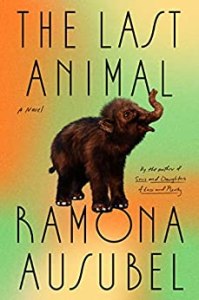 The Last Animal by Ramona Ausubel: In Ausubel’s offbeat third novel, a widowed scientist and her two daughters embark on a rogue plan to make history by resurrecting the woolly mammoth. There is a quirky combination of cosmic and domestic concerns here. A winsome sister duo is at the heart of the unusual and timely story, with priority given to the points of view of teenagers Eve and Vera, whose banter is a highlight. Ausubel has wisely chosen not to dwell on the scientific details of de-extinction, yet that means that this becomes more like speculative fiction or a fairy tale. Ironically, the fabulist-leaning novel is best when most realist, documenting struggles with bereavement, sexism and parenting teens.
 The Lost Wife by Susanna Moore: Moore’s hard-hitting novella is based in part on the memoir Six Weeks in the Sioux Tepees: A Narrative of Indian Captivity. In Moore’s version, Sarah, 25, leaves her baby behind when she flees an abusive husband, and once in Minnesota Territory marries John Brinton, who becomes a doctor on a Sioux reservation. By 1862, Sarah is friendly with the Native women. Although the Civil War is unfolding, the greater threat here is of revolt by the starving Indigenous residents. There is much of anthropological and historical interest, but Sarah’s flat storytelling, which may represent a pastiche of period style, means threatening or climactic scenes lose some of their potential gravity.
Foreword
 My Mother Says by Stine Pilgaard (trans. from the Danish by Hunter Simpson): After breaking up with her zookeeper girlfriend over their age gap and their conflicting takes on motherhood, the heroine moves back in with her father, a pastor who’s obsessed with Pink Floyd, and her stepmother. Her mother visits often, nagging her to finish her thesis. The line between her conversations and internal thoughts is thin. From her mansplaining doctor, she learns that the brain’s hippocampus is named for its seahorse shape. This inspires “Monologues of a Seahorse,” interludes of stream-of-consciousness association. Experimental and whimsical, this delivers deadpan narration of everyday woes.
 In Vitro: On Longing and Transformation by Isabel Zapata (trans. from the Spanish by Robin Myers): A Mexican poet probes the enduring mysteries of pregnancy and birth in a memoir in fragments that travels from fertility treatment through to the early weeks of pandemic-time motherhood. The clinical language of a gynecological history—late menstruation, polycystic ovary syndrome, eighteen years on the pill, and infertility—and the embryo transfer process contrasts with Zapata’s mystical thinking. The microessays integrate family stories, history, and artistic explorations. This resolute account of a personal metamorphosis alchemizes tender experiences into enchanting vignettes.
Shelf Awareness
Fiction
 Daughters of Nantucket by Julie Gerstenblatt: This engrossing debut novel explores the options for women in the mid-19th century while bringing a historical tragedy to life. Metaphorical conflagrations blaze in the background in the days leading up to the great Nantucket fire of 1846: each of three female protagonists (a whaling captain’s wife, a museum curator, and a pregnant Black entrepreneur) holds a burning secret and longs for a more expansive, authentic life. The action spans two tense weeks, one week before the fire through eight days after. The women’s lives collide in two climactic scenes. Gerstenblatt’s eye for detail results in sultry historical fiction for Sue Monk Kidd’s readers.
 Camp Zero by Michelle Min Sterling: Sterling’s brilliantly unsettling debut novel is set in mid-21st-century, post-oil North America. Prioritizing perspectives from two all-female communities, it contrasts the heights of opulence and technology with the basic instinct for survival. How the strands connect is a mystery sustained through much of the book. Characters go by multiple names and harbor ulterior motives; scenes echo each other as disparate subplots meet in unexpected ways. The background is all too plausible. Sterling also takes to its logical extreme the state of being constantly online. Compelling dystopian cli-fi with three-dimensional characters—perfect for fans of Station Eleven and To Paradise.
 Dear Chrysanthemums by Fiona Sze-Lorrain: In this elegant collection of 11 linked short stories by a poet and translator, China’s mid-20th-century political upheaval casts a long shadow. Music and food, not to mention love, bring meaning to those displaced in the aftermath of dissent. The stories—set in China, Singapore, Paris, and New York—span seven decades but always take place in a year ending in a six, a sacred number in Chinese divination. A highlight is “News from Saigon,” in which a prostitute meets Marguerite Duras in a Paris café. The connections are subtle, with the final story pulling together many strands. Ideal for readers of Madeleine Thien’s Do Not Say We Have Nothing.
Nonfiction
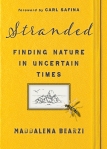 Stranded by Maddalena Bearzi: Bearzi developed a deep love for marine fauna during childhood summers in Sardinia and cofounded the Ocean Conservation Society in the 1990s. Temporarily confined to land by Covid-19 lockdowns, she adopts a different tactic for exploring animal behavior: “an urban safari in my backyard and neighborhood.” These nature essays exemplify evenhandedness, curiosity, and close observation. From wasps to night-blooming flowers, her interest is wide-ranging. Gardening is a relaxing pastime and a connection to her mother while they are separated. As a behavioral ecologist, she views even her dog as a subject of study. A passionate primer to appreciating everyday nature.
Poetry
 Lo by Melissa Crowe: This incandescent autobiographical collection travels from girlhood to marriage and motherhood in post-pandemic USA. Crowe delves into sexual abuse and growing up in rural poverty. Yet the collection is so carefully balanced in tone that it never feels bleak. The emotional range is enhanced by alliteration and botanical imagery.
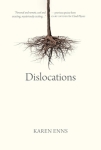 Dislocations by Karen Enns: The fourth collection by Canadian poet Enns skillfully evokes a rural upbringing and revels in the beauty of nature and music. One of its aphorisms could encapsulate the entire collection: “The ratio of love to grief / we understood as music.” Updating the pastoral tradition, the bittersweet verse also takes solace in the past.
Shiny New Books
A Fortunate Woman by Polly Morland & A Fortunate Man by John Berger: The similarities go much further than the title and subject matter: these two biographical works, both illustrated with black-and-white photographs, are set in the same English valley and the female subject of Morland’s is the next-but-one successor of the doctor who stars in Berger’s.
 Berger (1926–2017), an art critic and Booker Prize-winning novelist, spent six weeks shadowing the doctor, to whom he gives the pseudonym John Sassall, with Swiss documentary photographer Jean Mohr, his frequent collaborator. Sassall’s dedication was legendary: he attended every birth in this community, and nearly every death. Sassall’s middle-class origins set him apart from his patients. There’s something condescending about how Berger depicts the locals as simple peasants. Mohr’s photos include soft-focus close-ups on faces exhibiting a sequence of emotions, a technique that feels outdated in the age of video. Along with recording the day-to-day details of medical complaints and interventions, Berger waxes philosophical on topics such as infirmity and vocation. A Fortunate Man is a curious book, part intellectual enquiry and part hagiography.
 With its layers of local history and its braided biographical strands, A Fortunate Woman takes up many of the same heavy questions but feels more subtle and timely. It also soon delivers a jolting surprise: the doctor Berger called John Sassall was likely bipolar and, soon after the death of his beloved wife Betty, committed suicide in 1982. His story still haunts this community, where many of the older patients remember going to him for treatment. Like Berger, Morland keenly follows a range of cases. As the book progresses, we see this beautiful valley cycle through the seasons, with certain of Richard Baker’s landscape shots deliberately recreating Mohr’s scene setting. The timing of Morland’s book means that it morphs from a portrait of the quotidian for a doctor and a community to, two-thirds through, an incidental record of the challenges of medical practice during COVID-19.
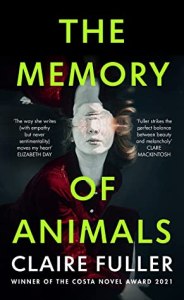 The Memory of Animals by Claire Fuller: Neffy has nothing to lose when she enrolls in a controversial vaccine trial in a familiar mid-pandemic landscape. The novel is presented as her journal. The bulk takes place in two weeks she spends on a locked unit with four fellow test subjects. In the meantime, she is introduced to an experimental technology for reliving memories. The characterisation of the four other cast members is somewhat thin, and the elements feel randomly assembled. The world-building and tech are unlikely to stand up to science fiction fans’ scrutiny, but this has just the right dose of the speculative for literary fiction readers. It also happens to fit into a recent vogue for octopus novels.
Times Literary Supplement
A late-twenties journalist sets out to survey the situation on the ground for ten British species being squeezed out by anthropogenic climate change: The mission is very similar, and both authors embody passionate dedication to conservation, but the difference in tone of these travel narratives makes them likely to appeal to separate audiences…
In Search of One Last Song by Patrick Galbraith & Forget Me Not by Sophie Pavelle:
 Galbraith’s is an elegiac tour through imperilled countryside and urban edgelands. Each chapter resembles an in-depth magazine article: a carefully crafted profile of a beloved bird species, with a focus on the specific threats it faces. Galbraith recognises the nuances of land use. However, shooting plays an outsized role. (Curious for his bio not to disclose that he is editor of the Shooting Times.) The title’s reference is to literal birdsong, but the book also celebrates birds’ cultural importance through their place in Britain’s folk music and poetry. He is clearly enamoured of countryside ways, but too often slips into laddishness, with no opportunity missed to mention him or another man having a “piss” outside. Readers could also be forgiven for concluding that “Ilka” (no surname, affiliation or job title), who briefs him on her research into kittiwake populations in Orkney, is the only female working in nature conservation in the entire country; with few exceptions, women only have bit parts: the farm wife making the tea, the receptionist on the phone line, and so on.
 Pavelle’s book is a tonic in more ways than one. Employed by Beaver Trust, she is enthusiastic and self-deprecating. Her nature quest has a broader scope, including insects like the marsh fritillary and marine species such as seagrass and the Atlantic salmon. Travelling between lockdowns in 2020–1, Pavelle took low-carbon transport wherever possible and bolsters her trip accounts with context, much of it gleaned from Zoom calls and e-mail correspondence with experts from museums and universities. Refreshingly, around half of these interviewees are women, and the animal subjects are never the obvious choices. Instead, she seeks out “underdog” species. The explanations are at a suitable level for laymen, true to her job as a science communicator. The snappy, casual prose (“the future of the bilberry bumblebee and its Aperol arse can be bright, but only if we get off our own”) could even endear her to teenage readers. As image goes, Pavelle’s cheerful naïveté holds more charm than Galbraith’s hardboiled masculinity.
 Taking Flight by Lev Parikian: Parikian’s accessible account of the animal kingdom’s development of flight exhibits a layman’s enthusiasm for an everyday wonder. He explicates the range of flying strategies and the structural adaptations that made them possible. The archaeopteryx section, chronicling the transition between dinosaurs and birds, is a highlight. Though the most science-heavy of the author’s six works, this, perhaps ironically, has fewer footnotes. His usual wit is on display: he describes the feral pigeon as “the Volkswagen Golf of birds” and penguins as “piebald blubber tubes”. This makes it a pleasure to tag along on a journey through evolutionary time, one sure to engage even history- and science-phobes.
Do any of these catch your eye?
The 2023 Releases I’ve Read So Far
Some reviewers and book bloggers are constantly reading three to six months ahead of what’s out on the shelves, but I tend to get behind on proof copies and read from the library instead. (Who am I kidding? I’m no influencer.)
In any case, I happen to have read a number of pre-release books, generally for paid review for Foreword, Shelf Awareness, etc. Most of my reviews haven’t been published yet; I’ll give very brief excerpts and ratings here to pique the interest.
Early in January I’ll follow up with my 20 Most Anticipated titles of the coming year.
My top recommendations so far:
(In alphabetical order)
 Shoot the Horses First by Leah Angstman [Feb. 28, Kernpunkt Press]: Sixteen sumptuous historical stories ranging from flash to novella length depict outsiders and pioneers who face disability and prejudice with poise.
 The House Is on Fire by Rachel Beanland [April 4, Simon & Schuster]: Four characters – two men and two women; two white people and two Black slaves – are caught up in the Richmond Theater Fire of 1811. Painstakingly researched and a propulsive read.
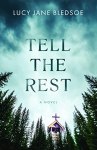 Tell the Rest by Lucy Jane Bledsoe [March 7, Akashic Books]: A high school girl’s basketball coach and a Black poet, both survivors of a conversion therapy camp in Oregon, return to the site of their spiritual abuse, looking for redemption.
 All of Us Together in the End by Matthew Vollmer [April 4, Hub City Press]: A pensive memoir investigates the blinking lights that appeared in his family’s woods soon after his mother’s death from complications of Alzheimer’s and Parkinson’s in 2019.
Other 2023 releases I’ve read:
(In publication date order; links to the few reviews that are already available online)
 Pusheen the Cat’s Guide to Everything by Claire Belton [Jan. 10, Gallery Books]: Good-natured and whimsical comic scenes delight in the endearing quirks of Pusheen, everyone’s favorite cartoon cat since Garfield. Belton creates a family and pals for her, too.
 Everything’s Changing by Chelsea Stickle [Jan. 13, Thirty West]: The 20 weird flash fiction stories in this chapbook are like prizes from a claw machine: you never know whether you’ll pluck a drunk raccoon or a red onion the perfect size to replace a broken heart.
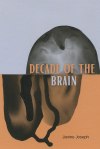 Decade of the Brain by Janine Joseph [Jan. 17, Alice James Books]: With formal variety and thematic intensity, this second collection by the Philippines-born poet ruminates on her protracted recovery from a traumatic car accident and her journey to U.S. citizenship.
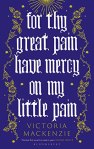 For Thy Great Pain Have Mercy on My Little Pain by Victoria Mackenzie [Jan. 19, Bloomsbury]: Two female medieval mystics, Julian of Norwich and Margery Kempe, are the twin protagonists of Mackenzie’s debut. She allows each to tell her life story through alternating first-person strands that only braid together very late on.
 The Faraway World by Patricia Engel [Jan. 24, Simon & Schuster]: These 10 short stories contrast dreams and reality. Money and religion are opposing pulls for Latinx characters as they ponder whether life will be better at home or elsewhere.
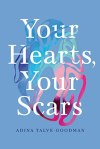 Your Hearts, Your Scars by Adina Talve-Goodman [Jan. 24, Bellevue Literary Press]: The author grew up a daughter of rabbis in St. Louis and had a heart transplant at age 19. This posthumous collection gathers seven poignant autobiographical essays about living joyfully and looking for love in spite of chronic illness.
 God’s Ex-Girlfriend: A Memoir About Loving and Leaving the Evangelical Jesus by Gloria Beth Amodeo [Feb. 21, Ig Publishing]: In a candid memoir, Amodeo traces how she was drawn into Evangelical Christianity in college before coming to see it as a “common American cult” involving unhealthy relationship dynamics and repressed sexuality.
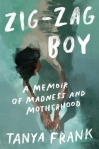 Zig-Zag Boy: A Memoir of Madness and Motherhood by Tanya Frank [Feb. 28, W. W. Norton]: A wrenching debut memoir ranges between California and England and draws in metaphors of the natural world as it recounts a decade-long search to help her mentally ill son.
 The Distance from Slaughter County by Steven Moore [March 7, The University of North Carolina Press]: An Iowan now based in Oregon, Moore balances nostalgia and critique to craft nuanced, hypnotic autobiographical essays about growing up in the Midwest. The piece on Shania Twain is a highlight.
Currently reading:
(In release date order)
 My What If Year: A Memoir by Alisha Fernandez Miranda [Feb. 7, Zibby Books]: “On the cusp of turning forty, Alisha Fernandez Miranda … decides to give herself a break, temporarily pausing her stressful career as the CEO of her own consulting firm … she leaves her home in London to spend one year exploring the dream jobs of her youth.”
 Sea Change by Gina Chung [April 11, Vintage]: “With her best friend pulling away to focus on her upcoming wedding, Ro’s only companion is Dolores, a giant Pacific octopus who also happens to be Ro’s last remaining link to her father, a marine biologist who disappeared while on an expedition when Ro was a teenager.”
Additional pre-release books on my shelf:
(In release date order)
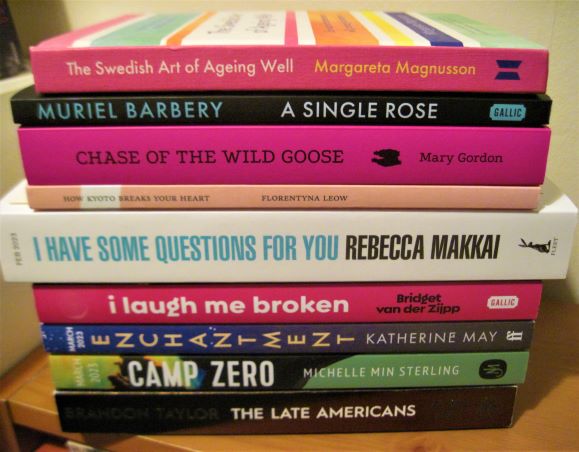
Will you look out for one or more of these?
Any 2023 reads you can recommend already?
November Releases: Dickens and Prince, Bratwurst Haven, Routes
Here are a few November books I read early for review, or that didn’t quite fit into the month’s other challenges – although, come to think of it, all are technically of novella length! (Come back tomorrow for a roundup of all the random novellas I’ve finished late in the month, and on Thursday for a retrospective of this year’s Novellas in November.)
Dickens and Prince: A Particular Kind of Genius by Nick Hornby
 This exuberant essay, a paean to energy and imagination, draws unexpected connections between two of Hornby’s heroes. Both came from poverty, skyrocketed to fame in their twenties, were astoundingly prolific/workaholic artists, valued performance perhaps more highly than finished products, felt the industry was cheating them, had a weakness for women and died at a similar age. Biographical research shares the page with shrewd cultural commentary and glimpses of Hornby’s writing life. Whether a fan of both subjects, either or none, you’ll surely admire these geniuses’ vitality, too. (Full review forthcoming in the December 30th issue of Shelf Awareness.)
Bratwurst Haven: Stories by Rachel King
 In a dozen gritty linked short stories, lovable, flawed characters navigate aging, parenthood, and relationships. Set in Colorado in the recent past, the book depicts a gentrifying area where blue-collar workers struggle to afford childcare and health insurance. As Gus, their boss at St. Anthony Sausage, withdraws their benefits and breaks in response to a recession, it’s unclear whether the business will survive. Each story covers the perspective of a different employee. The connections between tales are subtle. Overall, an endearing composite portrait of a working-class community in transition. (See my full review for Foreword.)
Routes by Rhiya Pau
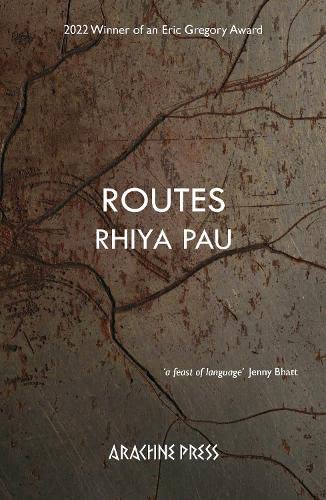 Pau’s ancestors were part of the South Asian diaspora in East Africa, and later settled in the UK. Her debut, which won one of this year’s Eric Gregory Awards (from the Society of Authors, for a collection by a British poet under the age of 30), reflects on that stew of cultures and languages. Colours and food make up the lush metaphorical palette.
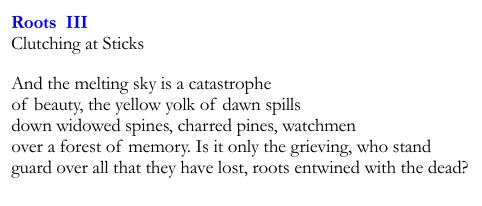
When I was small, I spoke two languages.
At school: proper English, pruned and prim,
tip of the tongue taps roof of the mouth,
delicate lips, like lace frilling rims of my white
cotton socks. At home, a heady brew:
Gujarati Hindi Swahili
swim in my mouth, tie-dye my tongue
with words like bandhani.
Alongside loads of alliteration (my most adored poetic technique)—
My goddess is a mother in marigold garland
—there are delightfully unexpected turns of phrase, almost synaesthetic in their blending of the senses:
right as I worry I have forgotten the scent
of grief, I catch the first blossom of the season
and we are back circling the Spring.
~
I am a chandelier of possibility.
Besides family history and Hindu theology, current events and politics are sources of inspiration. For instance, “We Gotta Talk About S/kincare” explores the ironies and nuances of attitudes towards Black and Brown public figures, e.g., lauding Barack Obama and Kamala Harris, but former UK Home Secretary Priti Patel? “our forever – guest of honour / would deport her own mother – if she could.” I also loved the playfulness with structure: “Ode to Corelle” employs a typically solemn form for a celebration of crockery, while the yoga-themed “Salutation” snakes across two pages like a curving spine. This reminded me of poetry I’ve enjoyed by other young Asian women: Romalyn Ante, Cynthia Miller, Nina Mingya Powles and Jenny Xie. A fantastic first book.
With thanks to Arachne Press for the proof copy for review.
Any more November releases you can recommend?
Recent Writing for Bookmarks, Foreword and Shelf Awareness
I’ve been writing for U.S. print magazine Bookmarks for an astonishing 9.5 years now, and have the title of associate editor. The upcoming November/December issue is their first to be released in digital format as well, and as a promo it’s available to read for free here. My contributions to the issue are an article on fiction and nonfiction about women in STEM (starts on p. 23), and various of the anonymous synopses/critical summaries in the New Books Guide. Each issue has one or more author profiles, one or more thematic features, reader recommendations, a book group bio, and news on prizes and upcoming releases.
Here are excerpts from a few recent or upcoming reviews of October releases that I’ve contributed elsewhere. I link to the full text where available.
Foreword Reviews
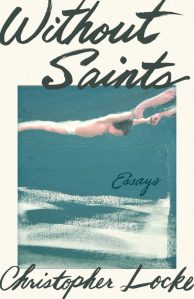 Without Saints: Essays by Christopher Locke: Fifteen flash essays present shards of a life story. Growing up in New Hampshire, Locke encountered abusive schoolteachers and Pentecostal church elders who attributed his stuttering to demon possession and performed an exorcism. By age 16, small acts of rebellion had ceded to self-harm, and his addictions persisted into adulthood. Later, teaching poetry to prisoners, he realized that he might have been in their situation had he been caught with drugs. The complexity of the essays advances alongside the chronology. Weakness of body and will is a recurrent element.
Shelf Awareness
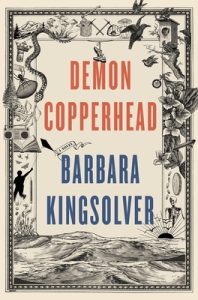 Demon Copperhead by Barbara Kingsolver: Her bighearted ninth novel follows the contours of Charles Dickens’s David Copperfield, transplanting the plot to 1990s southwest Virginia to uncover the perils of opiate addiction. Ten-year-old Damon Fields lives in a trailer home with his addict mother, who is employed at Walmart, and his new stepfather, Stoner, a mean trucker. Tragedy strikes and Damon moves between several foster homes before running away. “A kid is a terrible thing to be, in charge of nothing,” he remarks, looking back. His irrepressible, sassy voice is reminiscent of Holden Caulfield’s in this Appalachian cousin to Shuggie Bain.
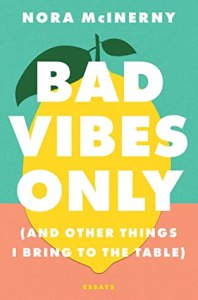 Bad Vibes Only by Nora McInerny: McInerny’s fifth book is a witty, insightful set of essays about self-worth and parenting in the social media era. Those familiar with the author’s previous autobiographical works will remember that within a few weeks in 2014, her father and first husband, Aaron, both died of cancer. After several years as a single mother, she married Matthew and they blended their families. Even when dealing with serious topics like anxiety and narrow escapes, McInerny has a light touch. She is endearingly honest, aware of her privilege and open about her contradictions. The then-and-now focus compares pre-Internet childhood with the challenges of raising kids with a constant online presence.
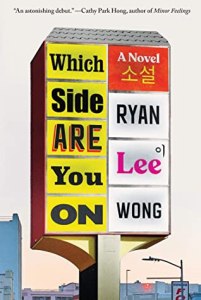 Which Side Are You On by Ryan Lee Wong: In Wong’s dynamite debut novel – set in Los Angeles, with its history of race riots – an Asian American college student committed to social justice rethinks how best to live out his ideals in the real world. Wong probes the generational gap between Reed and his parents through snappy dialogue and enjoyable scenes that constitute an incidental tour of multi-ethnic L.A. Full of vibrant characters, this punchy story offers no simple answers to ongoing racial conflicts. The portrait of a sanctimonious young man who wakes up to the reality of generational trauma and well-meaning failure is spot-on. Truly, a book for the contemporary moment.
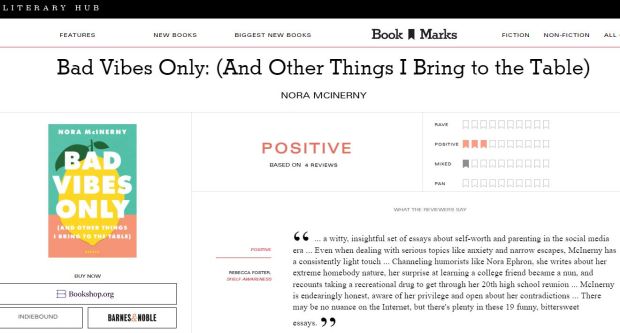
It’s always a thrill to see my words quoted as authoritative: excerpts from my Bad Vibes Only review appear on Bookshop.org and on Lit Hub’s Bookmarks page (see below), and there’s an unattributed quote from my Which Side Are You On review on the book’s Amazon page.
Do any of these books interest you?
20 Books of Summer, 4–5: Roy Dennis & Sophie Pavelle
The next two entries in my flora-themed summer reading are books I read for paid reviews, so I only give extracts from my thoughts below. These are both UK-based environmentalist travel memoirs and counted because of their titles, but do also feature plants in the text. I have various relevant books of my own and from the library on the go toward this challenge. Despite the complications of a rail strike and two cancelled trains, we have persisted in finding workarounds and making new bookings, so our trip to the Outer Hebrides is going ahead – whew! I’ll schedule a few posts for while I’m away and hope to share all that was seen and done (and read) when I’m back in early July.
Mistletoe Winter: Essays of a Naturalist throughout the Year by Roy Dennis (2021)
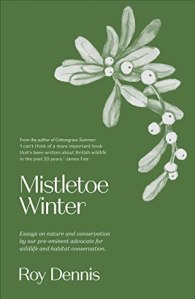 Dennis is among the UK’s wildlife conservation pioneers, particularly active in reintroducing birds of prey such as ospreys and white-tailed eagles (see also my response to his Restoring the Wild). In this essay collection, his excitement about everyday encounters with the natural world matches his zeal for momentous rewilding projects. The book entices with the wonders that can be experienced through close attention, like the dozen species’ worth of tracks identified on a snowy morning’s walk. Dennis is sober about wildlife declines witnessed in his lifetime. Practical and plain-speaking, he does not shy away from bold proposals. However, some of the pieces feel slight or dated, and it’s unclear how relevant the specific case studies will prove elsewhere. (Full review forthcoming for Foreword Reviews.)
Forget Me Not: Finding the forgotten species of climate-change Britain by Sophie Pavelle (2022)
A late-twenties science communicator for Beaver Trust, Pavelle is enthusiastic and self-deprecating. Her nature quest takes in insects like the marsh fritillary and bilberry bumblebee and marine species such as seagrass and the Atlantic salmon. Travelling between lockdowns in 2020–1, she takes low-carbon transport wherever possible and bolsters her trip accounts with context, much of it gleaned from Zoom calls and e-mail correspondence with experts from museums and universities. Refreshingly, half the interviewees are women, and her animal subjects are never obvious choices. The snappy writing – full of extended sartorial or food-related metaphors, puns and cheeky humour (the dung beetle chapter is a scatological highlight) – is a delight. (Full review forthcoming for the Times Literary Supplement.)
With thanks to Bloomsbury Wildlife for the free copy for review.
May Releases: Barrera, Cornwell, Jones, Ruhl
Greetings from the English Channel! I’m putting this quick post together on an outdoor deck as we leave Plymouth harbour on the ferry to Spain. I’ve taken a seasickness pill and am wearing acupressure bracelets, and so far I’m feeling pretty well here taking in a sea breeze; fingers crossed that it will continue to be a smooth voyage.

Have a look at all the lovely May releases above. How I wish that I’d had a chance to read some of them this month! Alas, things have been so busy with our move that I have only cracked one open so far (the Shipstead), but I’m looking forward to reading the rest soon after we get back. For now, I’ll give snippets of early reviews I’ve published elsewhere: two memoirs of pregnancy and early motherhood (the one focusing on postnatal depression), a varied short story collection, and an accessible volume of poetry written during Covid lockdowns.
Linea Nigra: An Essay on Pregnancy and Earthquakes by Jazmina Barrera
(Translated from the Spanish by Christina MacSweeney)
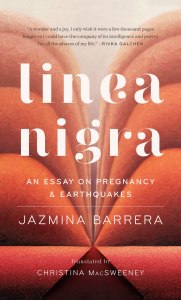 In a fragmentary work of autobiography and cultural commentary, the Mexican author investigates pregnancy as both physical reality and liminal state. The linea nigra is a stripe of dark hair down a pregnant woman’s belly. It’s a potent metaphor for the author’s matriarchal line: her grandmother was a doula; her mother is a painter. In short passages that dart between topics, Barrera muses on motherhood, monitors her health, and recounts her dreams. Her son, Silvestre, is born halfway through the book. She gives impressionistic memories of the delivery and chronicles her attempts to write while someone else watches the baby. This is both diary and philosophical appeal—for pregnancy and motherhood to become subjects for serious literature. (See my full review for Foreword.)
Birth Notes: A Memoir of Recovery by Jessica Cornwell
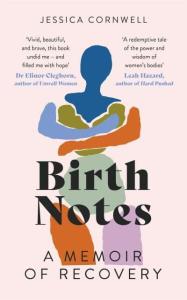 It so happens that May is Maternal Mental Health Awareness Month. Cornwell comes from a deeply literary family; the late John le Carré was her grandfather. Her memoir shimmers with visceral memories of delivering her twin sons in 2018 and the postnatal depression and infections that followed. The details, precise and haunting, twine around a historical collage of words from other writers on motherhood and mental illness, ranging from Margery Kempe to Natalia Ginzburg. Childbirth caused other traumatic experiences from her past to resurface. How to cope? For Cornwell, therapy and writing went hand in hand. This is vivid and resolute, and perfect for readers of Catherine Cho, Sinéad Gleeson and Maggie O’Farrell. (See my full review for Shiny New Books.)
With thanks to Virago for the proof copy for review.
Antipodes: Stories by Holly Goddard Jones
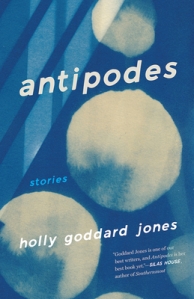 Jones’s fourth work of fiction contains 11 riveting stories of contemporary life in the American South and Midwest. Some have pandemic settings and others are gently magical; all are true to the anxieties of modern careers, marriage and parenthood. In the title story, the narrator, a harried mother and business school student in Kentucky, seeks to balance the opposing forces of her life and wonders what she might have to sacrifice. The ending elicits a gasp, as does the audacious inconclusiveness of “Exhaust,” a tense tale of a quarreling couple driving through a blizzard. Worry over environmental crises fuels “Ark,” about a pyramid scheme for doomsday preppers. Fans of Nickolas Butler and Lorrie Moore will find much to admire. (Read via Edelweiss. See my full review for Shelf Awareness.)
Love Poems in Quarantine by Sarah Ruhl
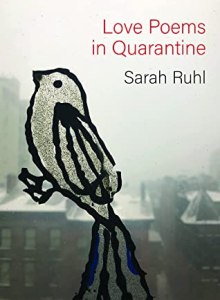 Having read Ruhl’s memoir Smile, I recognized the contours of her life and the members of her family. In early poems, cooking and laundry recur, everyday duties that mark time as she tries to write and supervises virtual learning for three children. “Let this all be poetry,” she incants. Part Two contains poems written after George Floyd’s murder, the structure mimicking how abrupt the change in focus was for a nation. Part Three moves into haiku and tanka, culminating in a series of poems reflecting on the seasons. Like Margaret Atwood’s Dearly, I would recommend this even to people who think they don’t like poetry. A welcome addition to the body of Covid-19 literature. (Read via Edelweiss. See my full review on Goodreads.)
Two favourite poems:
“Shelter”
To love a house
not because it’s perfect but because it shelters you
To love a body
not because it’s perfect but because it shelters you
“Quarantine in August, the overripe month”
I’m tired of summer. I crave fall. Luckily fall comes after summer.
And if I get tired of it all, winter will come, then spring.
Have you read anything from my tempting stack?
What other May releases can you recommend?
2022 Proof Copies & Early Recommendations (Julia Armfield’s Debut Novel, Lily King’s Short Stories)
I didn’t feel like I’d done a lot of pre-release reading yet, but put it all together and somehow it looks like a lot…
My top recommendations for 2022 (so far):
Our Wives Under the Sea by Julia Armfield
Coming on March 3rd from Picador (UK) and on July 12th from Flatiron Books (USA)
I loved Armfield’s 2019 short story collection Salt Slow, which I reviewed when it was shortlisted for the Sunday Times Young Writer of the Year Award. Her strategy in her debut novel is similar: letting the magical elements seep in gradually so that, lulled into a false sense of familiarity, you find the creepy stuff all the more unsettling.
 Miri is relieved to have her wife back when Leah returns from an extended Centre for Marine Inquiry expedition. But something went wrong with the craft while in the ocean depths and it was too late to evacuate. What happened to Leah and the rest of the small crew? Miri starts to worry that Leah – who now spends 70% of her time in the bathtub – will never truly recover. Chapters alternate between Miri describing their new abnormal and Leah recalling the voyage. As Miri tries to tackle life admin for both of them, she feels increasingly alone and doesn’t know how to deal with persistent calls from the sister of one of the crew members.
This is a really sensitive consideration of dependency and grief – Miri recently lost her mother and Leah’s father also died. I especially liked the passages about Miri’s prickly mother: it was impossible not to offend her, and she truly believed that if she resisted ageing she might never die. Leah seems shell-shocked; her matter-of-fact narration is a contrast to Miri’s snark. Armfield gives an increasingly eerie story line a solid emotional foundation, and her words about family and romantic relationships ring true. I read this in about 24 hours in early December, on my way back from a rare trip into London; it got the 2022 releases off to a fab start to me. Plus, the title and cover combo is killer. I’d especially recommend this to readers of Carmen Maria Machado and Banana Yoshimoto. (Read via NetGalley)
Five Tuesdays in Winter by Lily King
Coming on January 20th from Picador (UK); released in the USA in November 2021
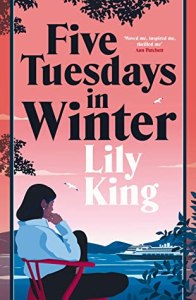 The same intimate understanding of emotions and interactions found in Euphoria and Writers & Lovers underlies King’s first short story collection. Some stories are romantic; others are retrospective coming-of-age narratives. Most are set in New England, but the time and place varies from the 1960s to the present day and from Maine to northern Europe. Several stories look back to a 1980s adolescence. “South” and “The Man at the Door” are refreshingly different, incorporating touches of magic and suspense. However, there are also a few less engaging stories, and there aren’t particularly strong linking themes. Still, the questions of love’s transience and whether any relationship can ever match up to expectations linger. I’d certainly recommend this to fans of King’s novels. (See my full review at BookBrowse. See also my related article on contemporary New England fiction.)
With thanks to Picador for the proof copy for review.
Other 2022 releases I’ve read:
(In publication date order)
 Write It All Down: How to put your life on the page by Cathy Rentzenbrink [Jan. 6, Bluebird] I’ve read all of Rentzenbrink’s books, but the last few have been disappointing. Alas, this is more of a therapy session than a practical memoir-writing guide. (Full review coming later this month.)
 Recovery: The Lost Art of Convalescence by Gavin Francis [Jan. 13, Wellcome Collection]: A short, timely book about the history and subjectivity of recovering from illness. (Full review and giveaway coming next week.)
 The Store-House of Wonder and Astonishment by Sherry Rind [Jan. 15, Pleasure Boat Studio]: In her learned and mischievous fourth collection, the Seattle poet ponders Classical and medieval attitudes towards animals. (Full review coming to Shelf Awareness soon.)
 Stepmotherland by Darrel Alejandro Holnes [Feb. 1, University of Notre Dame Press]: Holnes’s debut collection, winner of the Andrés Montoya Poetry Prize, ponders a mixed-race background and queerness through art, current events and religion. Poems take a multitude of forms; the erotic and devotional mix in provocative ways. (See my full review at Foreword.)
 Rise and Float: Poems by Brian Tierney [Feb. 8, Milkweed Editions]: A hard-hitting debut collection with themes of bereavement and mental illness – but the gorgeous imagery lifts it above pure melancholy. (Full review coming to Shelf Awareness soon.)
 Cost of Living: Essays by Emily Maloney [Feb. 8, Henry Holt]: Probing mental illness and pain from the medical professional’s perspective as well as the patient’s, 16 autobiographical essays ponder the value of life. (Full review coming to Shelf Awareness soon.)
 Circle Way: A Daughter’s Memoir, a Writer’s Journey Home by Mary Ann Hogan [Feb. 15, Wonderwell]: A posthumous memoir of family and fate that focuses on a father-daughter pair of writers. A fourth-generation Californian, Hogan followed in her father Bill’s footsteps as a local journalist. Collage-like, the book features song lyrics and wordplay as well as family anecdotes. (See my full review at Foreword.)
 Cold Enough for Snow by Jessica Au [Feb. 23, Fitzcarraldo Editions]: A delicate work of autofiction – it reads like a Chloe Aridjis or Rachel Cusk novel – about a woman and her Hong Kong-raised mother on a trip to Tokyo. (Full review coming up in a seasonal post.)
 The Carriers: What the Fragile X Gene Reveals about Family, Heredity, and Scientific Discovery by Anne Skomorowsky [May 3, Columbia UP]: Blending stories and interviews with science and statistics, this balances the worldwide scope of a disease with its intimate details. (Full review coming to Foreword soon.)
Currently reading:
(In release date order)
 This Boy We Made: A Memoir of Motherhood, Genetics, and Facing the Unknown by Taylor Harris [Jan. 11, Catapult] (Reading via Edelweiss; to review for BookBrowse)
To Paradise by Hanya Yanagihara [Jan. 11, Picador] (Blog review coming … eventually)
I Came All This Way to Meet You: Writing Myself Home by Jami Attenberg [Jan. 13, Serpent’s Tail] (Blog review coming later this month)
 Everything Is True: A Junior Doctor’s Story of Life, Death and Grief in a Time of Pandemic by Roopa Farooki [Jan. 20, Bloomsbury] (To review for Shiny New Books)
Some Integrity by Padraig Regan [Jan. 27, Carcanet] (Blog review coming later this month)
Additional proof copies on my shelf:
(In release date order; publisher blurbs from Goodreads/Amazon)

 What I Wish People Knew About Dementia by Wendy Mitchell [Jan. 20, Bloomsbury]: “When Mitchell was diagnosed with young-onset dementia at the age of fifty-eight, her brain was overwhelmed with images of the last stages of the disease – those familiar tropes, shortcuts and clichés that we are fed by the media, or even our own health professionals. … Wise, practical and life affirming, [this] combines anecdotes, research and Mitchell’s own brilliant wit and wisdom to tell readers exactly what she wishes they knew about dementia.”
 I Love You But I’ve Chosen Darkness by Claire Vaye Watkins [Came out in USA last year; UK release = Jan. 20, Quercus]: “Leaving behind her husband and their baby daughter, a writer gets on a flight for a speaking engagement in Reno, not carrying much besides a breast pump and a spiraling case of postpartum depression. … Deep in the Mojave Desert where she grew up, she meets her ghosts at every turn: the first love whose self-destruction still haunts her; her father, a member of the most famous cult in American history.”
 Beasts of a Little Land by Juhea Kim [Feb. 3, Oneworld]: “From the perfumed chambers of a courtesan school in Pyongyang to the chic cafes of a modernising Seoul and the thick forests of Manchuria, Juhea Kim’s unforgettable characters forge their own destinies as they shape the future of their nation. Immersive and elegant, firmly rooted in Korean folklore and legend, [this] unveils a world where friends become enemies, enemies become saviours, and beasts take many shapes.”

 Theatre of Marvels by Lianne Dillsworth [April 28, Hutchinson Heinemann]: “Unruly crowds descend on Crillick’s Variety Theatre. Young actress Zillah [a mixed-race orphan] is headlining tonight. … Rising up the echelons of society is everything Zillah has ever dreamed of. But when a new stage act disappears, Zillah is haunted by a feeling that something is amiss. Is the woman in danger? Her pursuit of the truth takes her into the underbelly of the city.” (Unsolicited) [Dillsworth is Black British.]
 The Secret Lives of Church Ladies by Deesha Philyaw [Came out in USA in 2020; UK release = May 5, Pushkin]: “explores the raw and tender places where Black women and girls dare to follow their desires and pursue a momentary reprieve from being good. … With their secret longings, new love, and forbidden affairs, these church ladies are as seductive as they want to be, as vulnerable as they need to be, as unfaithful and unrepentant as they care to be, and as free as they deserve to be.”
And on my NetGalley shelf:
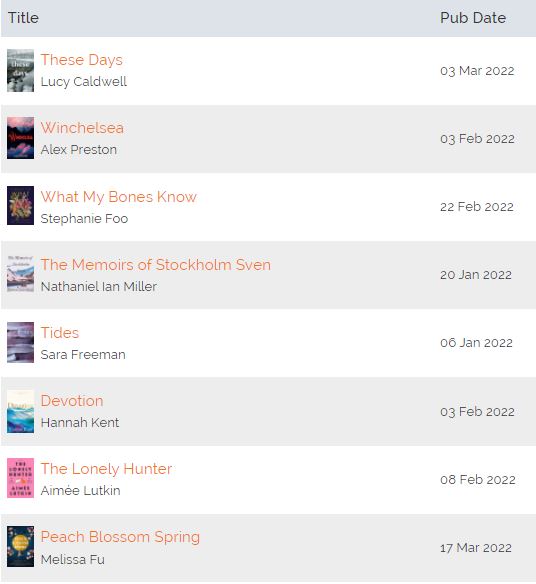
Will you look out for one or more of these titles?
Any other 2022 reads you can recommend?
The November Outlook
Normally I’d start the month off with a few recommendations for new books, but I’ve only finished one November book I can recommend (Skating on the Vertical, short stories by Jan English Leary; not yet reviewed); I DNFed another couple and skimmed one more. So instead I’ll give a quick survey of what the month holds.
- Young Writer of the Year reviews and events. I’ve read The Lauras; expect my review on Monday. I’m currently reading The Lucky Ones, Conversations with Friends, and the Steven Runciman biography, which will be my doorstopper for the month. There will be a shortlist event in London on the 18th, and on the 24th the shadow panel is meeting up to select a winner.

- I’ll be finishing up a brief climate change feature for Foreword Reviews magazine, consisting of mini-reviews of four upcoming books on an environmental theme.
- Review books I owe write-ups for: Jacob’s Room Is Full of Books by Susan Hill (released last month) and The Smell of Fresh Rain by Barney Shaw (out on the 14th). I’m fascinated by the science of smell and taste, so I’m intrigued to find out what Shaw has to say about a sense that often gets little attention.
- Blog tour for Celeste Ng’s new novel, Little Fires Everywhere, on the 14th. I haven’t started it yet but I’m looking forward to it immensely.
- You’d think with all those review books and library piles I wouldn’t be taking on any more projects…but I couldn’t resist agreeing to another “Book Wars” column (my third) for Stylist magazine, due on the 17th. I used to love reading Stylist when I worked in London; if you’re lucky enough to come across the magazine in your commuting, look out for my contribution to the Christmas-themed special.
- The Iris Murdoch Readalong begins with Under the Net. I’ll aim to squeeze it in before the end of the month. (Can I count it as my Classic?!)
- If I get a chance, I’ll also participate in German Literature Month by reading Bernhard Schlink’s The Woman on the Stairs on my Kindle.
- I’m revisiting some of my favorite Victorian pastiches for an article on neo-Victorian novels for Bookmarks magazine, due at the end of the month.
- Otherwise, I’ll be focusing on novellas for November, including some nonfiction novellas. I have a big pile of books set aside that are around 150 pages or shorter. I’ll get to as many of them as I can and summarize them in a roundup or two. They’re quick wins, true, often read in a single sitting (I read Alice Hoffman’s Survival Lessons this morning, for instance), but this doesn’t feel like a cheaty way to build up the book list because brevity is such an admirable skill.
 Bookish Beck = Rebecca Foster. American transplant to England. Freelance proofreader and book reviewer.
 Bookish Beck