20 Books of Summer, 6–7: Helen Dunmore and Stephen King
At least, I managed a pretty terrific pair, and completed half of my intended 4-in-a-row (the second row) on the Bingo card.


(Book featuring ice cream or summer foods)
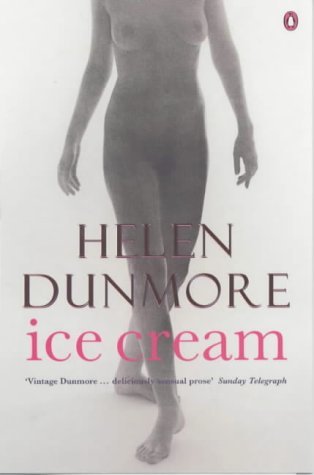
Ice Cream by Helen Dunmore (2000)
These 18 pieces are quite varied: a few have historical settings, two are written in the second person, and several return to the life of Ulli (a recurring character from Love of Fat Men), a Finnish teenager who faces an unexpected pregnancy. Even the slight-seeming ones are satisfying slices of fiction. The title story and its follow-up, “Be Vigilant, Rejoice, Eat Plenty” advocate sensual indulgence, which I guess is the reason for the cover image – which I couldn’t decide whether to hide or flaunt as I was reading it in public.
 Often, there is a hint of menace, whether the topic is salmon fishing, raspberry picking or the history of a lost ring. “The Clear and Rolling Water” has the atmosphere of a Scottish folk ballad, which made it perfect reading for our recent holiday to Scotland. “Leonardo, Michelangelo, SuperStork” and “Mason’s Mini-break” stand out for their dystopian and magic realist touches, respectively. In the former, couples are only allowed to conceive via state- sanctioned services; in the latter, an arrogant Booker Prize-winning author is patronizing when he meets a would-be writer while on holiday in Yorkshire.
Two of my favourites were “The Lighthouse Keeper’s Wife” and “Swimming into the Millennium,” which might have been written by Helen Simpson. All are of a high standard, and though they don’t fit together per se and mostly won’t stay with me, I really do rate Dunmore as a short story writer. (Secondhand – Community Furniture Project, Newbury) 
(Book from a genre you rarely read)
Pet Sematary by Stephen King (1983)
 I’d only ever read King’s On Writing and worried I wouldn’t be able to handle his fiction. I could never watch a horror film, but somehow the same content was okay in print. For half the length or more, it’s more of a mildly dread-laced, John Irving-esque novel about how we deal with the reality of death. Dr. Louis Creed and his family – wife Rachel, five-year-old daughter Ellie, two-year-old son Gage and cat Church (short for Winston Churchill) – have recently moved from Chicago to Maine for him to take up a post as head of University Medical Services. Their 83-year-old neighbour across the street, Judson Crandall, becomes a sort of surrogate father to Louis, warning them about the dangerous highway that separates their houses and initiating them with a tour of the pet cemetery and Micmac burial ground that happen to be on their property. Things start getting weird early on: Louis’s first day on the job sees a student killed by a car while jogging; the young man’s cryptic dying words are about the pet cemetery, and he then visits Louis in a particularly vivid dream.
The family surname is no coincidence. “I believe that we go on,” Louis says when Ellie asks him about what happens when we die. “But as to what it’s like, I have no opinion.” So King interrogates what it would be like for the dead to go on literally instead of just figuratively in the remembrance of loved ones. Would bringing the dead back be a cure for grief or a horrible mistake? This sleepy New England town harbours many cautionary tales, and the Creeds have more than their fair share of sorrow. Rachel witnessed her sister’s death from a long illness when she was just a child and has always repressed her memories of it.
Louis is a likable protagonist whose vortex of obsession and mental health (“He walked the balance-beam of rationality”) is gripping. As can be the case with genre fiction, King prioritizes readability over writing quality, though I did pick out an occasional glistening metaphor. It doesn’t get gruesome or schlocky until right towards the end. In the last quarter, which I read on the long train ride home from Edinburgh, I couldn’t get the book closer to my face or the pages turning any faster. It helped that it was a beat-up small-format paperback. When we arrived into London I was about six pages from the end and it was so frustrating to have to wait until I got on my next train to read the rest.


This also counted towards one of my low-key ongoing challenges: reading works published in my birth year. I could imagine the Eighties stylings of an adaptation, especially Rachel’s power suit and pumps when she’s on her race-against-the-clock flight and road trip. I did find the book dated in some of its Murakami-like descriptions (“The … double doors were set into a grassy rise of hill, a shape as natural and as attractive as the swell of a woman’s breast”) and cringey sex scenes, and I wondered if King would get away with using imagery of the Windigo these days. Still, on this evidence, I’ll seek out more of his classic horror – do give me your recommendations. So long as they’re this addictive (and no scarier), I’m game. Pet Sematary was sterling entertainment, but also surprisingly poignant. A message I took away: you just have to live with the pain of loss, not fight it or deny it. “When it started not to hurt, it started not to matter.” (Little Free Library) 
Three on a Theme for Valentine’s Day: “Love” Short Story Collections
Even though I’m really not a Valentine’s Day sort of person*, this is the seventh year in a row that I’ve put together a themed post featuring books that have “Love” or a similar word in the title in the run-up to mid-February (2017, 2018, 2019, 2020, 2021 and 2022).
I also don’t generally read short story collections if it’s not September – I seem to need that alliterative crutch to get to a dozen or so of them – but my “Birds” trio and these three were so great that I had to wonder why I don’t read them all year round.
Are these love stories? Some, to an extent. But also loss stories. Loneliness stories. Hatred stories. Abandonment stories. A few even verge on horror. In other words, realistic slivers of life. And as different as Carver’s lean, masculine tales of addiction and failure might seem from Bloom’s wry scenes of family life and Dunmore’s intimate pictures of isolation and mental illness, I found that all three resonated with each other. As for character detail, Dunmore’s “fat men” echo the overweight male protagonist in Bloom’s first story cycle.
Where the God of Love Hangs Out by Amy Bloom (2010)
One of these stories, “Sleepwalking,” was familiar to me because it is reprinted from her 1993 collection, Come to Me, and another two were originally published in 2000’s A Blind Man Can See How Much I Love You – isn’t she great at titles?! She excels at first lines, too: some from this volume are “At two o’clock in the morning, no one is to blame,” “William has gout,” “Clare can’t walk,” “No power” and “I had always planned to kill my father.”
 The book contains two quartets of linked stories and four stand-alone stories. The first set is about Clare and William, whose dynamic shifts from acquaintances to couple-friends to lovers to spouses. Bloom, a former psychotherapist, is interested in tracking how they navigate these changes over the years, and does so by switching between first- and third-person narration and adopting a different perspective for each story. She does the same with the four stories about Lionel and Julia, a Black man and his white stepmother. Over the course of maybe three decades, we see the constellations of relationships each one forms, while the family core remains. She also includes sexual encounters between characters who are middle-aged and older – when, according to stereotypes, lust should have been snuffed out.
Of the unlinked stories, the most memorable was “By-and-By,” a distressingly unemotional account of the ripple effects of a serial killer’s actions as seen by a victim’s roommate. I also loved the title story, which appears last. An older man and his daughter-in-law meet twice, by accident, in small-town eateries, the one wanting to come clean about a troubled past and the other wanting to embark on a new and surprising romance. This one reminded me of Richard Russo and early John Irving, while the collection as a whole would suit fans of Julia Glass, Tessa Hadley, Sue Miller, Lorrie Moore and Elizabeth Strout. (Secondhand – Bookbarn International)
What We Talk about When We Talk about Love by Raymond Carver (1981)
Such a famous title that it has spawned countless imitators, two of which I’ve even read (What We Talk about When We Talk about God by Rob Bell and What We Talk about When We Talk about Anne Frank by Nathan Englander). It turns out I had Carver confused with John Cheever, so I was expecting gritty stories of alcoholism in the 1950s Midwest. Yes to the alcohol abuse, but Carver was from the Pacific Northwest and was writing in the 1980s. A number of his protagonists are drunk, deadbeat dads who have been kicked out and make a scene to get back at their wives. Others are more passive, stuck in suburban ennui. Grown men fear turning into their fathers (“Sacks”). Ultimatums are defused (“Everything Stuck to Him”) and custody arrangements fought over (the Solomonic fable “Popular Mechanics”).
 The declarative simplicity of the prose, and the interest in male activities like gambling, hunting and fishing, can’t fail to recall Ernest Hemingway, yet I warmed to Carver much more than Hem. Two of these stories struck me as feminist for how they expose nonchalant male violence towards women; elsewhere I spotted tiny gender-transgressing details (a man who knits, for instance). In “Tell the Women We’re Going,” two men escape their families to play pool and drink, then make a fateful decision on the way home. I don’t think I’ve been as shocked by the matter-of-fact brutality of a short story since “The Lottery.” My favourite was also chilling, “So Much Water So Close to Home.” Both reveal how homosocial peer pressure leads to bad behaviour; this was toxic masculinity before we had that term.
Many of the stories are only 3–8 pages long, such that 17 fit into a slender volume. They’re about half and half first- and third-person, sometimes with speech marks and sometimes not. At 15 pages, the title story is the longest and a great one. Two couples are having pre-dinner drinks and discussing types of love – physical, spiritual and so on. The POV character mostly conveys monologues by his friend Mel, a cardiologist (of course he would be a heart doctor!), comparing the obsessive love of his first wife’s ex, who turned out to be a stalker, and the mature devotion he saw in an elderly couple at his hospital after a horrific car accident. There were a few flippant or less memorable stories in here, but I’m impressed enough to seek out more of Carver’s work, poetry or prose. (Secondhand – Books for Amnesty, York)
Love of Fat Men by Helen Dunmore (1997)
This was an early work by Dunmore, who was so prolific in her two-decade career that I still come across titles of hers that I’ve never heard of before. I don’t think a book by this title would get published nowadays, but I won’t hold it against her. It is literal in that Ulli, a recurring character in 10 of these 19 stories, finds comfort in sleeping with larger men. I wondered what so captured Dunmore’s imagination about Scandinavia: you can work out that Ulli is from Finland and most of the stories are set there or in nearby countries.
 Every other story returns to Ulli, but the fragments of her life miss out the connective tissue: we suspect she’s pregnant as a teen, but don’t learn what she chose to do about it; we witness some dysfunctional scenes and realize she’s estranged from her family later on, but don’t find out if there was some big bust-up that prompted it. She comes across as a loner and a nomad, apt to be effaced by stronger personalities. In “The Ice Bear,” she’s on a ferry from Sweden back to Finland and can’t escape the prattle of a male missionary. In “A Question of Latitude” she’s out for a restaurant meal with friends, one of whom diagnoses her thus: “Nothing really affects you, does it? You just smile and put it out of your mind. And you cut people out of your life the same way, when you’ve finished with them.”
Whereas in the Bloom the interconnected stories are the strongest, here my preference was for the others. “The Bridge Painter” is about a man who leaves a peculiar calling card at each bridge he visits. “Annina” paints a woman with a questionable grasp on reality after the loss of a child. Best of all is probably “North Sea Crossing,” which contrasts two father-and-son pairs. If you only know Dunmore from novels, I can recommend her poetry and short stories, too. (Secondhand – Bas Books, Newbury)
All three: 
Try all of these authors right away if you haven’t already!
*A daytrip into London on Thursday was our Valentine’s gift to selves. We toured the Tower of London and the Science Museum (the Wellcome medical collections for me) and had an exceptional late lunch at Dishoom (starters and drinks pictured below). Tonight we’ll be having chocolate prune pots in front of The Bookshop Band’s love-themed livestream concert.

Book Serendipity, September to October 2021
I call it Book Serendipity when two or more books that I read at the same time or in quick succession have something pretty bizarre in common. Because I have so many books on the go at once (usually 20–30), I suppose I’m more prone to such incidents. I’ve realized that, of course, synchronicity is really the more apt word, but this branding has stuck. This used to be a quarterly feature, but to keep the lists from getting too unwieldy I’ve shifted to bimonthly.
The following are in roughly chronological order.
- Young people studying An Inspector Calls in Somebody Loves You by Mona Arshi and Heartstoppers, Volume 4 by Alice Oseman.
- China Room (Sunjeev Sahota) was immediately followed by The China Factory (Mary Costello).


- A mention of acorn production being connected to the weather earlier in the year in Light Rains Sometimes Fall by Lev Parikian and Noah’s Compass by Anne Tyler.
- The experience of being lost and disoriented in Amsterdam features in Flesh & Blood by N. West Moss and Yearbook by Seth Rogen.
- Reading a book about ravens (A Shadow Above by Joe Shute) and one by a Raven (Fox & I by Catherine Raven) at the same time.


- Speaking of ravens, they’re also mentioned in The Elements by Kat Lister, and the Edgar Allan Poe poem “The Raven” was referred to and/or quoted in both of those books plus 100 Poets by John Carey.
- A trip to Mexico as a way to come to terms with the death of a loved one in This Party’s Dead by Erica Buist (read back in February–March) and The Elements by Kat Lister.
- Reading from two Carcanet Press releases that are Covid-19 diaries and have plague masks on the cover at the same time: Year of Plagues by Fred D’Aguiar and 100 Days by Gabriel Josipovici. (Reviews of both coming up soon.)


- Descriptions of whaling and whale processing and a summary of the Jonah and the Whale story in Fathoms by Rebecca Giggs and The Woodcock by Richard Smyth.
 An Irish short story featuring an elderly mother with dementia AND a particular mention of her slippers in The China Factory by Mary Costello and Blank Pages and Other Stories by Bernard MacLaverty.
- After having read two whole nature memoirs set in England’s New Forest (Goshawk Summer by James Aldred and The Circling Sky by Neil Ansell), I encountered it again in one chapter of A Shadow Above by Joe Shute.
- Cranford is mentioned in Corduroy by Adrian Bell and Cut Out by Michèle Roberts.
- Kenneth Grahame’s life story and The Wind in the Willows are discussed in On Gallows Down by Nicola Chester and The Elements by Kat Lister.


- Reading two books by a Jenn at the same time: Ghosted by Jenn Ashworth and The Other Mothers by Jenn Berney.
- A metaphor of nature giving a V sign (that’s equivalent to the middle finger for you American readers) in On Gallows Down by Nicola Chester and Light Rains Sometimes Fall by Lev Parikian.
- Quince preserves are mentioned in The Book of Difficult Fruit by Kate Lebo and Light Rains Sometimes Fall by Lev Parikian.
- There’s a gooseberry pie in Talking to the Dead by Helen Dunmore and The Book of Difficult Fruit by Kate Lebo.


- The ominous taste of herbicide in the throat post-spraying shows up in On Gallows Down by Nicola Chester and Damnation Spring by Ash Davidson.
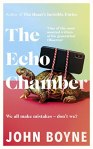
- People’s rude questioning about gay dads and surrogacy turns up in The Echo Chamber by John Boyne and the DAD anthology from Music.Football.Fatherhood.
- A young woman dresses in unattractive secondhand clothes in The Echo Chamber by John Boyne and Beautiful World, Where Are You by Sally Rooney.

- A mention of the bounty placed on crop-eating birds in medieval England in Orchard by Benedict Macdonald and Nicholas Gates and A Shadow Above by Joe Shute.
- Hedgerows being decimated, and an account of how mistletoe is spread, in On Gallows Down by Nicola Chester and Orchard by Benedict Macdonald and Nicholas Gates.
 Ukrainian secondary characters in Ghosted by Jenn Ashworth and The Echo Chamber by John Boyne; minor characters named Aidan in the Boyne and Beautiful World, Where Are You by Sally Rooney.
- Listening to a dual-language presentation and observing that the people who know the original language laugh before the rest of the audience in The Book of Difficult Fruit by Kate Lebo and Beautiful World, Where Are You by Sally Rooney.
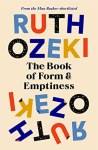
- A character imagines his heart being taken out of his chest in Tender Is the Flesh by Agustina Bazterrica and The Book of Form and Emptiness by Ruth Ozeki.

- A younger sister named Nina in Talking to the Dead by Helen Dunmore and Sex Cult Nun by Faith Jones.
- Adulatory words about George H.W. Bush in The Echo Chamber by John Boyne and Thinking Again by Jan Morris.
- Reading three novels by Australian women at the same time (and it’s rare for me to read even one – availability in the UK can be an issue): Sorrow and Bliss by Meg Mason, The Performance by Claire Thomas, and The Weekend by Charlotte Wood.


- There’s a couple who met as family friends as teenagers and are still (on again, off again) together in Sorrow and Bliss by Meg Mason and Beautiful World, Where Are You by Sally Rooney.
- The Performance by Claire Thomas is set during a performance of the Samuel Beckett play Happy Days, which is mentioned in 100 Days by Gabriel Josipovici.
 Human ashes are dumped and a funerary urn refilled with dirt in Tender Is the Flesh by Agustina Bazterrica and Public Library and Other Stories by Ali Smith.
- Nicholas Royle (whose White Spines I was also reading at the time) turns up on a Zoom session in 100 Days by Gabriel Josipovici.
- Richard Brautigan is mentioned in both The Mystery of Henri Pick by David Foenkinos and White Spines by Nicholas Royle.


- The Wizard of Oz and The Railway Children are part of the plot in The Book Smugglers (Pages & Co., #4) by Anna James and mentioned in Public Library and Other Stories by Ali Smith.
What’s the weirdest reading coincidence you’ve had lately?
Talking to the Dead x 2: Helen Dunmore and Elaine Feinstein
My fourth title-based dual review post this year (after Ex Libris, The Still Point and How Not to Be Afraid), with Betty vs. Bettyville to come in December if I can manage them both. Today I have an early Helen Dunmore novel about the secrets binding a pair of sisters and an Elaine Feinstein poetry collection written after the loss of her husband. Their shared title seemed appropriate as Halloween approaches. Both: 
Talking to the Dead by Helen Dunmore (1996)
 Nina, a photographer, has travelled to stay with her sister in Sussex after the birth of Isabel’s first child, Antony. A house full of visitors, surrounded by an unruly garden, is perfect for concealment. A current secret trades off with one from deep in the sisters’ childhood: their baby brother Colin’s death, which they remember differently. Antony and Colin function like doubles, with the sisters in subtle competition for ownership of the past and present. This was a delicious read: as close as literary fiction gets to a psychological thriller, dripping with sultry summer atmosphere and the symbols of aphrodisiac foods and blowsy flowers. From the novel’s title and opening pages, you have an inkling of what’s to come, but it still hits hard when it does. Impossible to say more about the plot without spoiling it, so just know that it’s a suspenseful story of sisters with Tessa Hadley, Maggie O’Farrell and Polly Samson vibes. I hadn’t much enjoyed my first taste of Dunmore’s fiction (Exposure), but I’m very glad that Susan’s enthusiasm spurred me to pick this up. (Secondhand purchase, Honesty bookshop outside the Castle, Hay-on-Wye)
Talking to the Dead by Elaine Feinstein (2007)
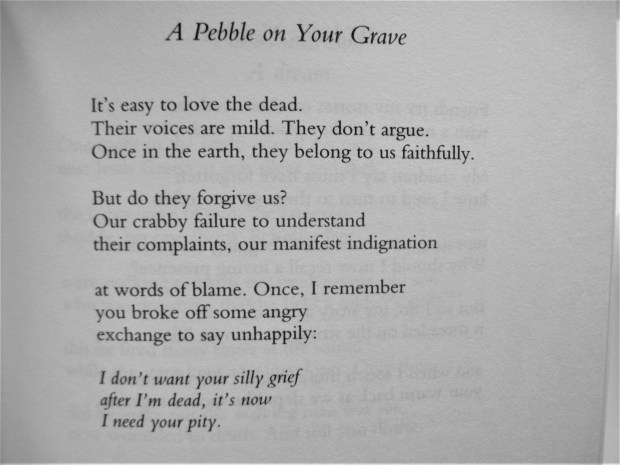
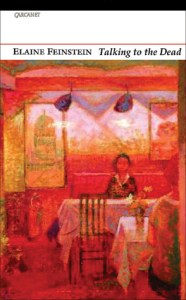 Much like Margaret Atwood’s Dearly, my top poetry release of last year, this is a tender and playful response to a beloved spouse’s death. The short verses are in stanzas and incorporate the occasional end rhyme and spot of alliteration as Feinstein marshals images and memories to recreate her husband’s funeral and moments from their marriage and travels beforehand and her widowhood afterwards – including moving out of their shared home. The poems flow so easily and beautifully from one to another; I’d happily read much more from Feinstein. This was her 13th poetry collection; before her death in 2019, she also wrote many novels, stories, biographies and translations. I’ll leave you with a poem suitable for the run-up to the Day of the Dead. (Secondhand purchase, Minster Gate Bookshop, York)
Does one or both of these appeal to you?
Love Your Library Begins: October 2021
It’s the opening month of my new Love Your Library meme! I hope some of you will join me in writing about the libraries you use and what you’ve borrowed from them recently. I plan to treat these monthly posts as a sort of miscellany.
Although I likely won’t do thorough Library Checkout rundowns anymore, I’ll show photos of what I’ve borrowed, give links to reviews of a few recent reads, and then feature something random, such as a reading theme or library policy or display.

Do share a link to your own post in the comments, and feel free to use the above image. I’m co-opting a hashtag that is already popular on Twitter and Instagram: #LoveYourLibrary.
Here’s a reminder of my ideas of what you might choose to post (this list will stay up on the project page):
- Photos or a list of your latest library book haul
- An account of a visit to a new-to-you library
- Full-length or mini reviews of some recent library reads
- A description of a particular feature of your local library
- A screenshot of the state of play of your online account
- An opinion piece about library policies (e.g. Covid procedures or fines amnesties)
- A write-up of a library event you attended, such as an author reading or book club.
If it’s related to libraries, I want to hear about it!
Recently borrowed


Stand-out reads
The Echo Chamber by John Boyne
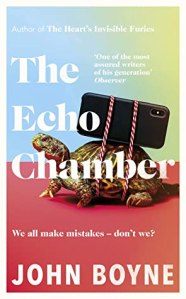 John Boyne is such a literary chameleon. He’s been John Irving (The Heart’s Invisible Furies), Patricia Highsmith (A Ladder to the Sky) and David Mitchell (A Traveller at the Gates of Wisdom). Now, with this Internet-age state-of-the-nation satire featuring variously abhorrent characters, he’s channelling the likes of Jamie Attenberg, Jonathan Coe, Patricia Lockwood, Lionel Shriver and Emma Straub. Every member of the Cleverley family is a morally compromised fake. Boyne gives his characters amusing tics, and there are also some tremendously funny set pieces, such as Nelson’s speed dating escapade and George’s public outbursts. He links several storylines through the Ukrainian dancer Pylyp, who’s slept with almost every character in the book and has Beverley petsit for his tortoise.
What is Boyne spoofing here? Mostly smartphone addiction, but also cancel culture. I imagined George as Hugh Bonneville throughout; indeed, the novel would lend itself very well to screen adaptation. And I loved how Beverley’s new ghostwriter, never given any name beyond “the ghost,” feels like the most real and perceptive character of all. Surely one of the funniest books I will read this year. (Full review). 
Beautiful World, Where Are You by Sally Rooney
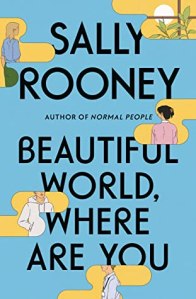 I was one of those rare readers who didn’t think so much of Normal People, so to me this felt like a return to form. Conversations with Friends was a surprise hit with me back in 2017 when I read it as part of the Sunday Times Young Writer of the Year Award shadow panel the year she won. The themes here are much the same: friendship, nostalgia, sex, communication and the search for meaning. BWWAY is that little bit more existential: through the long-form e-mail correspondence between two friends from college, novelist Alice and literary magazine editor Eileen, we imbibe a lot of philosophizing about history, aesthetics and culture, and musings on the purpose of an individual life against the backdrop of the potential extinction of the species.
Through their relationships with Felix (a rough-around-the-edges warehouse worker) and Simon (slightly older and involved in politics), Rooney explores the question of whether lasting bonds can be formed despite perceived differences of class and intelligence. The background of Alice’s nervous breakdown and Simon’s Catholicism also bring in sensitive treatments of mental illness and faith. (Full review).
This month’s feature
I spotted a few of these during my volunteer shelving and then sought out a couple more. All five are picture books composed by authors not known for their writing for children.
 Islandborn by Junot Díaz (illus. Leo Espinosa): “Every kid in Lola’s school was from somewhere else.” When the teacher asks them all to draw a picture of the country they came from, plucky Lola doesn’t know how to depict the Island. Since she left as a baby, she has to interview relatives and neighbours for their lasting impressions. For one man it’s mangoes so sweet they make you cry; for her grandmother it’s dolphins near the beach. She gathers the memories into a vibrant booklet. The 2D cut-paper style reminded me of Ezra Jack Keats.
 The Islanders by Helen Dunmore (illus. Rebecca Cobb): Robbie and his family are back in Cornwall to visit Tamsin and her family. These two are the best of friends and explore along the beach together, creating their own little island by digging a channel and making a dam. As the week’s holiday comes toward an end, a magical night-time journey makes them wonder if their wish to make their island life their real life forever could come true. The brightly coloured paint and crayon illustrations are a little bit Charlie and Lola and very cute.
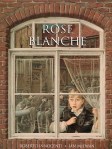 Rose Blanche by Ian McEwan (illus. Roberto Innocenti): Patriotism is assumed for the title character and her mother as they cheer German soldiers heading off to war. There’s dramatic irony in Rose being our innocent witness to deprivations and abductions. One day she follows a truck out of town and past barriers and fences and stumbles onto a concentration camp. Seeing hungry children’s suffering, she starts bringing them food. Unfortunately, this gets pretty mawkish and, while I liked some of the tableau scenes – reminiscent of Brueghel or Stanley Spencer – the faces are awful. (Based on a story by Christophe Gallaz.)
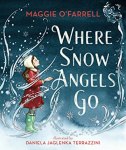 Where Snow Angels Go by Maggie O’Farrell (illus. Daniela Jaglenka Terrazzini): The snow angel Sylvie made last winter comes back to her to serve as her guardian angel, saving her from illness and accident risks. If you’re familiar with O’Farrell’s memoir I Am, I Am, I Am, this presents a similar catalogue of near-misses. For a picture book, it has a lot of words – several paragraphs’ worth on most of its 70 pages – so I imagine it’s more suitable for ages seven and up. I loved the fairy tale atmosphere, touches of humour, and drawing style.
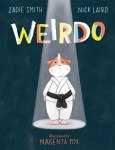 Weirdo by Zadie Smith and Nick Laird (illus. Magenta Fox): Kit’s birthday present is Maud, a guinea pig in a judo uniform. None of the other household pets – Derrick the cockatoo, Dora the cat, and Bob the pug – know what to make of her. Like in The Secret Life of Pets, the pets take over, interacting while everyone’s out at school and work. At first Maud tries making herself like the others, but after she spends an afternoon with an eccentric neighbour she realizes all she needs to be is herself. It’s not the first time married couple Smith and Laird have published an in-joke (their 2018 releases – an essay collection and a book of poems, respectively – are both entitled Feel Free): Kit is their daughter’s name and Maud is their pug’s. But this was cute enough to let them off.
Women’s Prize Winners Reading Project: Grant, Martin, Shields et al.
In this 25th anniversary year of the Women’s Prize, readers are being encouraged to catch up on all the previous winners. I’d read 14 of them (including Hamnet) as of mid-April and have managed five more since then – plus a reread, a DNF and a skim. I recently reviewed Fugitive Pieces by Anne Michaels, and Half of a Yellow Sun by Chimamanda Ngozi Adichie and A Crime in the Neighborhood by Suzanne Berne as part of this summer reading post. This leaves just four more for me to read before voting for my all-time favorite in November.
When I Lived in Modern Times by Linda Grant (2000)
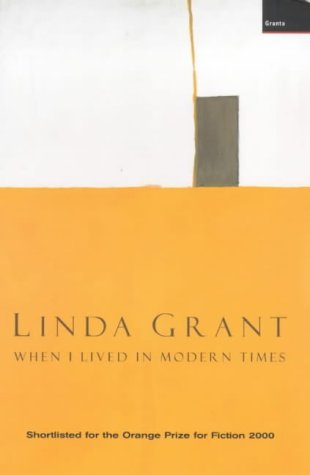 Some settings have been done to death, but here’s one I don’t think I’d ever encountered before: Israel in the final year before statehood. Grant dramatizes the contrast between Palestine, a doomed British colony, and the Jewish hope of a homeland. In 1946 twenty-year-old Evelyn Sert leaves her home in London, masquerading as a Gentile tourist (though she has Latvian Jewish ancestry) so as to jump ahead of thousands of displaced persons awaiting entry visas. With her mother recently dead of a stroke, she takes advice and money from her mother’s married boyfriend, “Uncle Joe,” a Polish Jew and Zionist, and heads to Palestine.
After six weeks on a kibbutz, Evelyn sets out to make her own life in Tel Aviv as a hairdresser and falls in with Johnny, a Jew who fought for the British. It’s safer to be part of the colonial structure here, so she once again passes as Gentile, dyeing her hair blonde and going by Priscilla Jones. In a land where all kinds of people have been thrown together by the accident of their ethnicity and the suffering it often entailed, one man’s terrorist is another’s freedom fighter. For Evelyn, who’s never known anywhere apart from suburban London and arrived in Palestine a virgin, the entire year is a journey of discovery. Will a place of ancient religious significance embrace modern architecture, technology and government? Grant really captures this period of transition for an individual and for a nascent nation of exiles. I loved the supporting characters and the nostalgic look back from half a century on.
Favorite passages:
In a country with its face turned towards the future, our stories sat on our shoulders like a second head, facing the way we had come from. We were the tribe of Janus, if there is such a thing.
With hindsight it always seems easy to do the right thing, but we were trying to decide something in those days that people don’t often get a chance to have a say in and it was this: would we be a free nation after two thousand years of wandering or would we always be a subject race? Would we be ghetto Jews or new Jews?
Property by Valerie Martin (2003)
 A compact study of slavery that unfolds through the relationship between a New Orleans plantation owner’s wife and her husband’s mistress. Manon Gaudet has never been happy in her marriage, but when their slave girl, Sarah, bears her husband a second child, she decides she has had enough of silently condoning his behavior. A slave uprising and cholera and yellow fever outbreaks provide some welcome drama, but the bulk of this short novel is an examination of the psyche of a woman tormented by hatred and jealousy. Ownership of another human being is, if not technically impossible, certainly not emotionally tenable. Manon’s situation is also intolerable because she has no rights as a woman in the early nineteenth century: any property she inherits will pass directly to her husband. Though thoroughly readable, for me this didn’t really add anything to the corpus of slavery fiction.
A reread (as well as a buddy read with Buried in Print):
Larry’s Party by Carol Shields (1997)
“The whole thing about mazes is that they make perfect sense only when you look down on them from above.”
 Larry Weller is an Everyman: sometimes hapless and sometimes purposeful; often bewildered with where life has led him, but happy enough nonetheless. From the start, Shields dwells on the role that “mistakes” have played in making Larry who he is, like a floral arts catalogue coming in the mail from the college instead of one on furnace repair and meeting Dorrie at a Halloween party he attended with a different girl. Before he knows it he and a pregnant Dorrie are getting married and he’s been at his flower shop job for 12 years. A honeymoon tour through England takes in the Hampton Court Palace maze and sparks an obsession that will change the course of Larry’s life, as he creates his first maze at their Winnipeg home and gradually becomes one of a handful of expert maze-makers.
The sweep of Larry’s life, from youth to middle age, is presented roughly chronologically through chapters that are more like linked short stories: they focus on themes (family, friends, career, sex, clothing, health) and loop back to events to add more detail and new insight. I found the repetition of basic information about Larry somewhat off-putting in that it’s as if we start over with this character with each chapter – the same might be said of Olive Kitteridge, but that book’s composition was drawn out and it involves a multiplicity of perspectives, which explains the slight detachment from Olive. Here the third-person narration sticks close to Larry but gives glimpses into other points of view, tiny hints of other stories – a man with AIDS, a woman trying to atone for lifelong selfishness, and so on.
From my first reading I remembered a climactic event involving the Winnipeg maze; a ribald chapter entitled “Larry’s Penis,” about his second marriage to a younger woman and more; and the closing dinner party, a masterful sequence composed almost entirely of overlapping dialogue (like the final wedding reception scene in her earlier novel, The Box Garden) as Larry hosts his two ex-wives, his current girlfriend, his sister and his partner, and a colleague and boss. What is it like to be a man today? someone asks, and through the responses Shields suggests a state of uneasiness, of walking on eggshells and trying not to be a chauvinist in a world whose boundaries are being redrawn by feminism. That process has continued in the decades since, though with predictable backlash from those who consider women a threat.
It seems slightly ironic that Shields won the Women’s Prize for this episodic fictional biography of a man, but I found so much to relate to in Larry’s story – the “how did I get here?” self-questioning, the search for life’s meaning, “the clutter of good luck and bad” – that I’d say Larry is really all of us.
One of Shields’s best, and quite possibly my winner of winners.
My original rating (2008?):
My rating now: 
Currently rereading: Gilead by Marilynne Robinson
A skim:
A Spell of Winter by Helen Dunmore (1995)
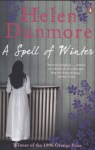 An annoying thing happened with this one: the back cover blurb gave away a central theme. It’s one I’m keen to avoid yet feel I have encountered disproportionately often in fiction, especially recently (I won’t name any titles as that would give it away instantly). Dunmore writes nicely – from my quick skim of this one it seemed very atmospheric – but I am not particularly drawn to her plots. I’ve read Exposure for book club and own two more of her novels, Talking to the Dead and Zennor in Darkness, so by the time I’ve read those I will have given her a solid try. So far I’ve preferred her poetry – I’ve read three of her collections.
A favorite passage:
“It is winter in the house. This morning the ice on my basin of water is so thick I can not break it. The windows stare back at me, blind with frost. … I can see nothing through the frost flowers on the glass. I wonder if it is snowing yet, but I think it is too cold. … I look at the house, still and breathless in the frost. I have got what I wanted. A spell of winter hangs over it, and everyone has gone.”
And a DNF:
The Song of Achilles by Madeline Miller (2011)
 Patroclus is a disappointment of a prince. He has no chance of winning Helen of Troy’s hand in marriage, and exile awaits him when he is responsible for an accidental death. As a foster child in the household of another king, he becomes obsessed with Achilles. The two young men take part in music lessons and military training, and Patroclus follows Achilles away from the palace to be taught by a centaur. That’s as far as I got before I couldn’t bear any more. The homoerotic hints are laughably unsubtle: (of a lyre) “‘You can hold it, if you like.’ The wood would be smooth and known as my own skin” & (fighting) “he rolled me beneath him, pinning me, his knees in my belly. I panted, angry but strangely satisfied.”
I got a free download from Emerald Street, the Stylist magazine e-newsletter. The ancient world, and Greek mythology in particular, do not draw me in the least, and I have had bad experiences with updates of Greek myths before (e.g. Bright Air Black by David Vann). I never thought this would be a book for me, but still wanted to attempt it so I could complete the set of Women’s Prize winners. I read 77 pages out of 278 in the e-book, but when I have to force myself to pick up a book, I know it’s a lost cause. As with the Dunmore, I think it’s safe to say this one never would have gotten my vote anyway.
The final four to complete my project:
(On the stack to read soon)
The Idea of Perfection by Kate Grenville – free from mall bookshop
The Glorious Heresies by Lisa McInerney – public library copy
How to Be Both by Ali Smith – public library copy; a planned buddy read with B.I.P.
(To get from the university library)
A Girl Is a Half-formed Thing by Eimear McBride
Read any Women’s Prize winners lately?
Six Degrees of Separation: From What I Loved to The Story of an African Farm
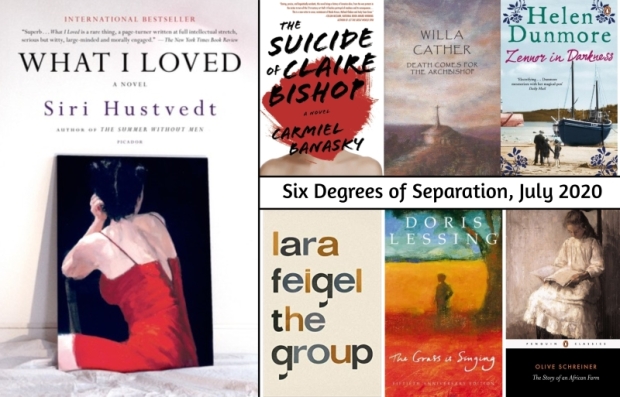
I’m a Six Degrees regular now: this is my sixth month taking part. This time (see Kate’s introductory post) we have all started with Siri Hustvedt’s What I Loved (2003). Narrated by a professor and set between the 1970s and 1990s, it’s about two New York City couples – academics and artists – and the losses they suffer over the years.
 #1 The readalike I chose when I read What I Loved for a Valentine’s Day post in 2017 was The Suicide of Claire Bishop by Carmiel Banasky, which I’d covered for Foreword Reviews in 2015 (see here); it shares the themes of modern art and mental illness.
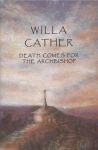
#2 Death + a “bishop” leads me to Death Comes for the Archbishop (1927), which vies with My Ántonia for the top spot from the six novels I’ve read so far by Willa Cather. It’s set in Santa Fe, New Mexico in the nineteenth century. I read it shortly after my trip to Santa Fe for the D.H. Lawrence Society of North America conference in the summer of 2005.
#3 Although I don’t think I’ve read a Lawrence novel in the past 15 years, I still enjoy reading about him, e.g. in Frieda by Annabel Abbs. My next biographical novel that includes DHL and his wife as characters will be Zennor in Darkness by Helen Dunmore (1994).
#4 Although it’s mostly set in London among university friends now in their late thirties or early forties, a few late scenes of The Group by Lara Feigel (brand new; I’ll be reviewing it in full later this month) are set in Zennor, Cornwall.

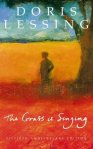
#5 The other book I’ve read by Lara Feigel is Free Woman, her bibliomemoir about marriage, motherhood and the works of Doris Lessing. My favorite of the six books I’ve read so far by Lessing is The Grass Is Singing (1950), set on a farm in Zimbabwe.
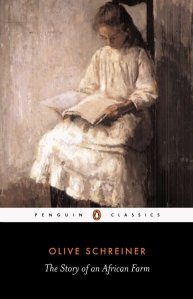 #6 The Story of an African Farm by Olive Schreiner (1883) is one of the novels I wrote about for my MA dissertation on female characters with unconventional religious views in the Victorian novel. In particular, I looked at the intersection of dissenting religious fiction and the “New Woman” novels that paved the way for Modernism. This is an obscure classic well worth picking up for its early feminist perspective; Schreiner was also a socialist and anti-war campaigner.
My chain has featured only books by women again this month: a few classics, a historical novel with real people in it, an updated modern classic (the Feigel – I’ll discuss its debt to Mary McCarthy’s The Group in my review), and more. The themes have included art, death, feminism, friendship, and religion.
Join us for #6Degrees of Separation if you haven’t already! Next month’s starting book is How to Do Nothing by Jenny Odell.
Have you read any of my selections?
Are you tempted by any you didn’t know before?
New Reading Projects! (Join Me?)
It’s only one week since we announced the Not the Wellcome Prize winner, the culmination of a month-long project that was months more in the planning. I don’t think I’ll be coordinating another blog tour anytime soon, as it was a lot of work finding participants, working out a schedule and keeping on top of the publicizing via social media. Still, it was a lot of fun, and already I’m missing the buzz and ready to get stuck into more projects.
I’d love it if you joined me for one or more of these. Some could be combined with your 20 Books of Summer or other challenges, too.
Ongoing buddy reads
 It would have been Richard Adams’s 100th birthday on the 9th. That night I started rereading his classic tale of rabbits in peril, Watership Down, which was my favorite book from childhood even though I only read it the once at age nine. I’m 80 pages in and enjoying all the local place names. Who would ever have predicted that that mousy tomboy from Silver Spring, Maryland would one day live just 6.5 miles from the real Watership Down?!
 My husband is joining me for the Watership Down read (he’s not sure he ever read it before), and we’re also doing a buddy read of Arctic Dreams by Barry Lopez. In that case, we ended up with two free copies, one from the bookshop where I volunteer and the other from The Book Thing of Baltimore, so we each have a copy on the go. Lopez’s style, like Peter Matthiessen’s, lends itself to slower, reflective reading, so I’m only two chapters in. It’s novel to journey to the Arctic, especially as we approach the summer.
I plan to take my time over these two, so tell me if you have a copy of either and feel like picking it up at any point over the next few months.
Bibliotherapy self-prescriptions
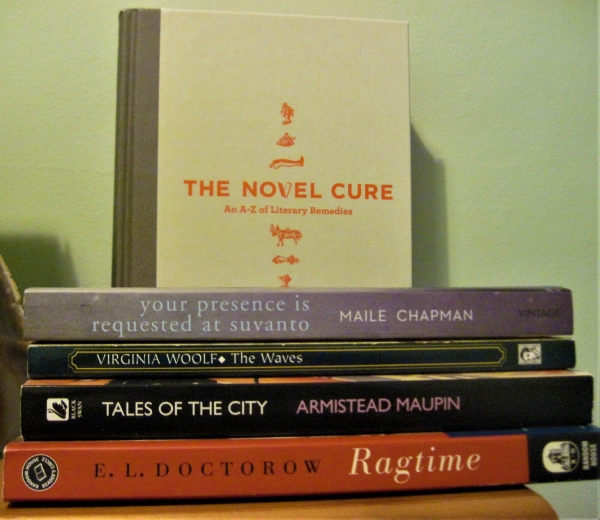
The other day I got out my copy of The Novel Cure by School of Life bibliotherapists Ella Berthoud and Susan Elderkin and browsed through the categories for some prescriptions that might feel relevant to the current situation. I found four books I own that fit the bill:
From the list of “The Ten Best Novels to Lower Your Blood Pressure”: Your Presence Is Requested at Suvanto by Maile Chapman & The Waves by Virginia Woolf (and I’ve read another three of them, including, recently, Crossing to Safety).
One of several prescriptions for Loneliness: Tales of the City by Armistead Maupin.
The cure for Zestlessness: Ragtime by E. L. Doctorow.
If you have access to one of these, or have a copy of The Novel Cure and are keen on following up on another of the prescriptions, let me know.
And now for two memes that I (think I) have created. Although I’m sure something similar has been done in the past, I couldn’t find any specific blogs about them. I don’t know about you, but I always need encouragement to pick up books from my own shelves – even though libraries are currently closed, I’m still working my way through a library stack, and I’m tempted to make another order of new books from Hungerford Bookshop. It’s great to support libraries and independent bookstores, of course, but there could be no better time to mine your own bookshelves for treasures you bought ages ago but still have never read.
Journey through the Day with Books
I enjoyed picking out 18 books from my shelves that refer to particular times of day or meals or activities associated therewith. Four of these are books I’ve already read and four are ones I’m currently reading. You can piggyback on my selections if you wish, or find your own set.
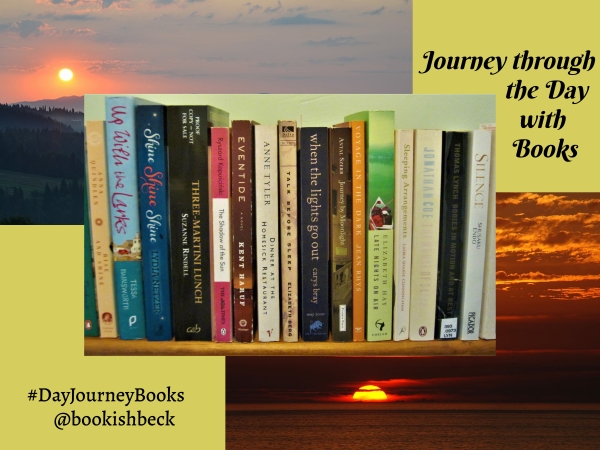
Here’s my full list:
Zennor in Darkness by Helen Dunmore
Rise and Shine by Anna Quindlen
Up with the Larks by Tessa Hainsworth
Shine Shine Shine by Lydia Netzer
Three-Martini Lunch by Suzanne Rindell
The Shadow of the Sun by Ryszard Kapuściński
Eventide by Kent Haruf
Dinner at the Homesick Restaurant by Anne Tyler
Talk before Sleep by Elizabeth Berg
When the Lights Go Out by Carys Bray
Journey by Moonlight by Antal Szerb
Voyage in the Dark by Jean Rhys
Late Nights on Air by Elizabeth Hay
Sleeping Arrangements by Laura Shaine Cunningham
The House of Sleep by Jonathan Coe
Bodies in Motion and at Rest by Thomas Lynch
Silence by Shūsaku Endō
Arctic Dreams by Barry Lopez
The Four in a Row Challenge
I’ve been contemplating this one for quite a while. It’s inspired by Phyllis Rose’s The Shelf –from LEQ to LES: Adventures in Extreme Reading (one of Simon’s favourite books – see his review), for which she picked a shelf of the New York Society Library, eliminated duplicates and repeat entries from the same author, and read the remainder – whether she’d heard of them or not; whether they were awful or not. (“Hands down the worst book on the shelf is Le Queux’s Three Knots, a mystery that reads as if it were written by an eight-year-old on Percocet.”)

This is a variation in that you’re looking at your own TBR shelves and picking a set of four books in a row. For many, that will be four novels whose authors’ surnames all start with the same letter. But if you organize your books differently (especially within nonfiction), you may find that the set of four is more arbitrary. You never know what they might have in common, though (book serendipity!).
I’m no strict challenge host, so if you want to engineer your shelf order, or if you decide to swap a book in later on, that is no problem at all. My one firm rule is only one book per author.
I’ve picked out a few appealing sets, all from my fiction shelves. F, G, L and M had particularly rich pickings. I’ll report back as I finish each set, while the “Journey through a Day” may well take me the whole rest of the year.
Still ongoing (more here): Projects to read as many Bellwether Prize, Wellcome Book Prize and Women’s Prize winners as possible, as well as Wellcome long- and shortlistees.
Can I tempt you to take part in any of these reading projects?
[Journey through the Day: Sunrise in Pieniny, Poland (Pudelek / CC BY-SA (https://creativecommons.org/licenses/by-sa/4.0)) / Sunset (Alvesgaspar / CC BY-SA (https://creativecommons.org/licenses/by-sa/3.0))
Four in a Row: Four pelicans in a row (Sheba_Also 43,000 photos / CC BY-SA (https://creativecommons.org/licenses/by-sa/2.0)) / Phone boxes, Market Place, Ripon (Tim Green from Bradford / CC BY (https://creativecommons.org/licenses/by/2.0))]
20 Books of Summer 2018
This is my first year joining in with the 20 Books of Summer challenge run by Cathy of 746 Books. I’ve decided to put two twists on it. One: I’ve only included books that I own in print, to work on tackling my mountain of unread books (300+ in the house at last count). As I was pulling out the books that I was most excited to read soon, I noticed that most of them happened to be by women. So for my second twist, all 20 books are by women. Why not? I’ve picked roughly half fiction and half life writing, so over the next 12 weeks I just need to pick one or two from the below list per week, perhaps alternating fiction and non-. I’m going to focus more on the reading than the reviewing, but I might do a few mini roundup posts.
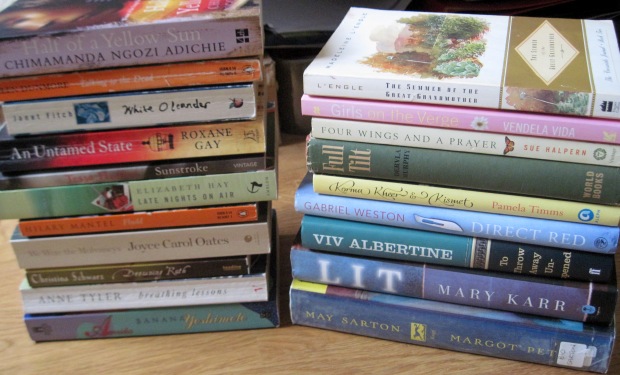
I’m doing abysmally with the goal I set myself at the start of the year to read lots of travel classics and biographies, so I’ve chosen one of each for this summer, but in general my criteria were simply that I was keen to read a book soon, and that it mustn’t feel like hard work. (So, alas, that ruled out novels by Elizabeth Bowen, Ursula K. LeGuin and Virginia Woolf.) I don’t insist on “beach reads” – the last two books I read on a beach were When Breath Becomes Air by Paul Kalanithi and Grief Cottage by Gail Godwin, after all – but I do hope that all the books I’ve chosen will be compelling and satisfying reads.
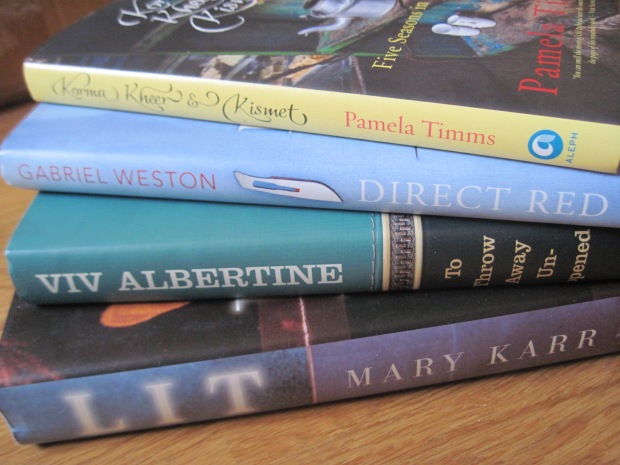
- To Throw Away Unopened by Viv Albertine – I picked up a copy from the Faber Spring Party, having no idea who Albertine was (guitarist of the all-female punk band The Slits). Everyone I know who has read this memoir has raved about it.
- Lit by Mary Karr – I’ve read Karr’s book about memoir, but not any of her three acclaimed memoirs. This, her second, is about alcoholism and motherhood.
- Korma, Kheer and Kismet: Five Seasons in Old Delhi by Pamela Timms – I bought a bargain copy at the Wigtown Festival shop earlier in the year. Timms is a Scottish journalist who now lives in India. This should be a fun combination of foodie memoir and travel book.
- Direct Red: A Surgeon’s Story by Gabriel Weston (a woman, honest!) – Indulging my love of medical memoirs here. I bought a copy at Oxfam Books earlier this year.
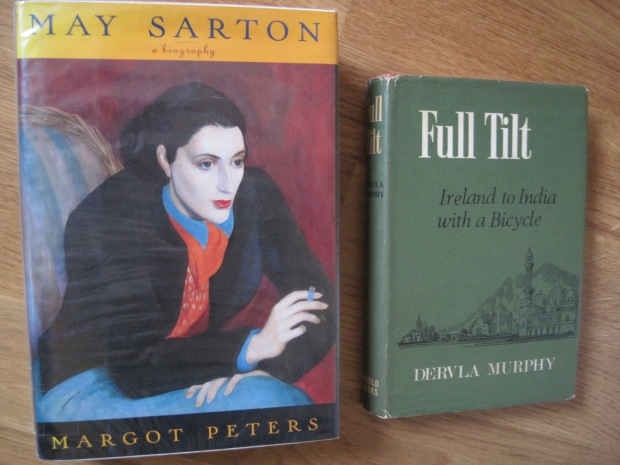 5. May Sarton by Margot Peters – I’ve been on a big May Sarton kick in recent years, so have been eager to read this 1997 biography, which apparently is not particularly favorable.
6. Full Tilt: Ireland to India with a Bicycle by Dervla Murphy – I bought this 1960s hardback from a charity shop in Cambridge a couple of years ago. It will at least be a start on that travel classics challenge.
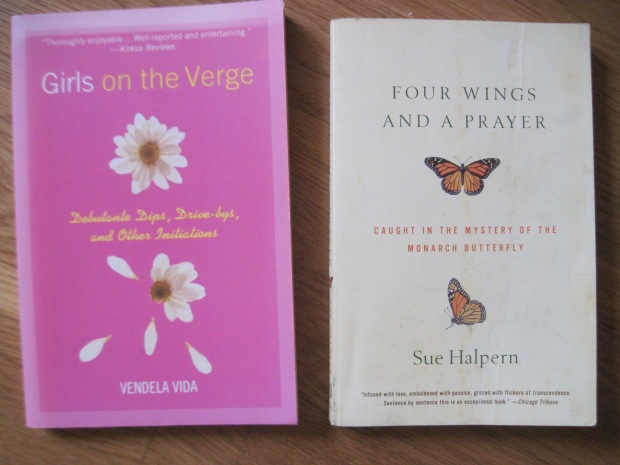
7. Girls on the Verge: Debutante Dips, Drive-bys, and Other Initiations by Vendela Vida – This was Vida’s first book. It’s about coming-of-age rituals for young women in America.
8. Four Wings and a Prayer: Caught in the Mystery of the Monarch Butterfly by Sue Halpern – Should fall somewhere between science and nature writing, with a travel element.
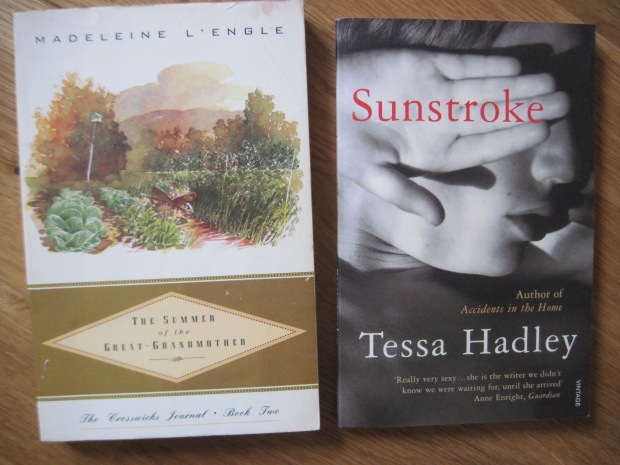
9. The Summer of the Great-Grandmother by Madeleine L’Engle – L’Engle is better known for children’s books, but she wrote tons for adults, too: fiction, memoirs and theology. I read the stellar first volume of the Crosswicks Journal, A Circle of Quiet, in September 2015 and have meant to continue the series ever since.
10. Sunstroke by Tessa Hadley – You know how I love reading with the seasons when I can. This slim 2007 volume of stories is sure to be a winner. Seven of the 10 originally appeared in the New Yorker or Granta.
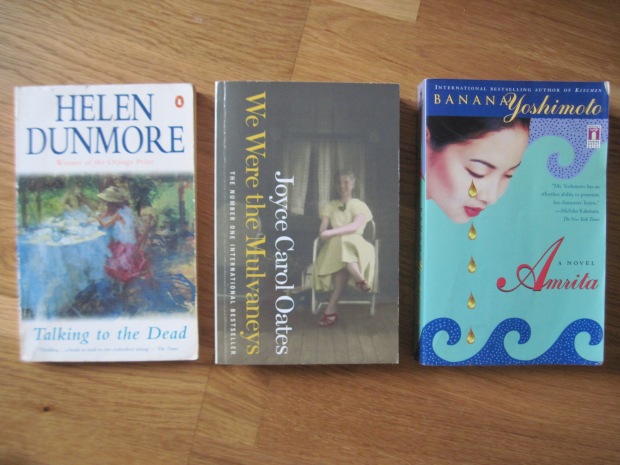
11. Talking to the Dead by Helen Dunmore – I’ve only ever read Dunmore’s poetry. It’s long past time to try her fiction. This one comes highly recommended by Susan of A life in books.
12. We Were the Mulvaneys by Joyce Carol Oates – Oates is intimidatingly prolific, but I’m finally going to jump in and give her a try.
13. Amrita by Banana Yoshimoto – A token lit in translation selection. “This is the story of [a] remarkable expedition through grief, dreams, and shadows to a place of transformation.” (Is it unimaginative to say that sounds like Murakami?)
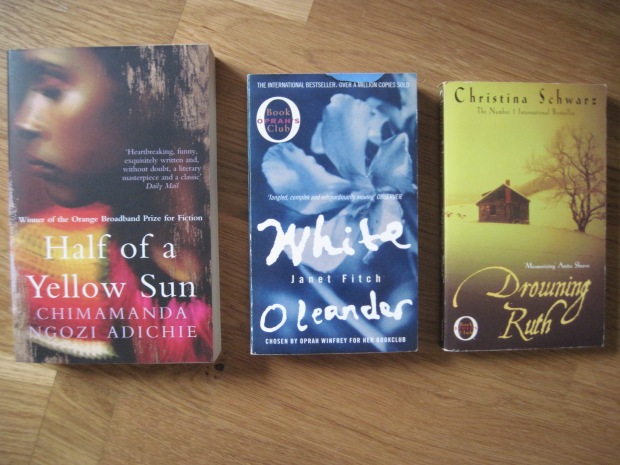
14. Half of a Yellow Sun by Chimamanda Ngozi Adichie – How have I not read any of her fiction yet?! This has been sitting on my shelf for years. I only vaguely remember the story line from the film, so it should be fairly fresh for me.
15. White Oleander by Janet Fitch – An Oprah’s Book Club selection from 1999. I reckon this would make a good beach or road trip read.
16. Drowning Ruth by Christina Schwarz – Another Oprah’s Book Club favorite from 2000. Set in Wisconsin in the years after World War I.
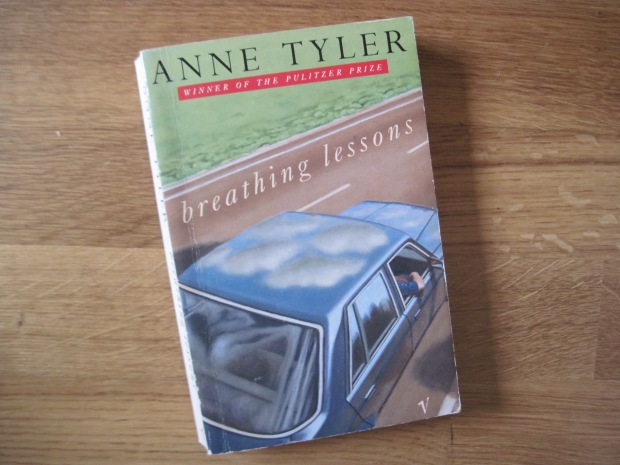
- Breathing Lessons by Anne Tyler – Tyler novels are a tonic. I have six unread on the shelf; the blurb on this one appealed to me the most. This summer actually brings two Tylers as Clock Dance comes out on July 12th – I’ll either substitute that one in, or read both!
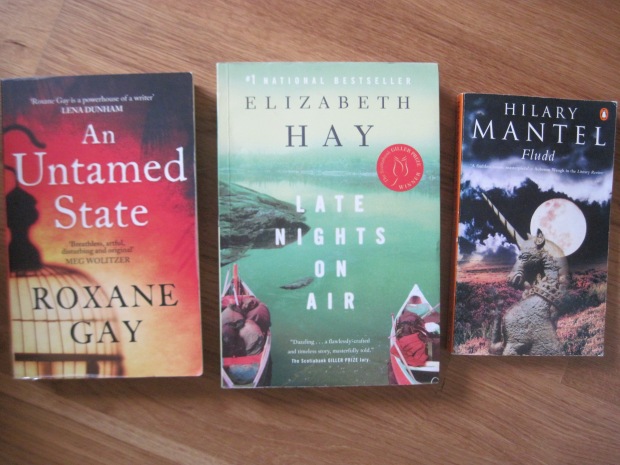
18. An Untamed State by Roxane Gay – I’ve only read Gay’s memoir, Hunger. She’s an important cultural figure; it feels essential to read all her books. I expect this to be rough.
19. Late Nights on Air by Elizabeth Hay – This has been on my radar for such a long time. After loving my first Hay novel (A Student of Weather) last year, what am I waiting for?
20. Fludd by Hilary Mantel – I haven’t read any Mantel in years, not since Bring Up the Bodies first came out. While we all await the third Cromwell book, I reckon this short novel about a curate arriving in a fictional town in the 1950s should hit the spot.
I’ll still be keeping up with my review books (paid and unpaid), blog tours, advance reads and library books over the summer. The aim of this challenge, though, is to make inroads into the physical TBR. Hopefully the habit will stick and I’ll keep on plucking reads from my shelves during the rest of the year.
Where shall I start? If I was going to sensibly move from darkest to lightest, I’d probably start with An Untamed State and/or Lit. Or I might try to lure in the summer weather by reading the two summery ones…
Which of these books have you read? Which ones appeal?
Library Checkout: May 2017
We fly to America tomorrow morning, but, as you can see, despite my best efforts I’ve managed to leave behind a sizeable pile of library books for when I get back.
And that’s not to mention this gorgeous set of review copies awaiting my return!

I’ve added in ratings and links to any reviews of books I haven’t already featured here in some way.
LIBRARY BOOKS READ
- Ashland & Vine by John Burnside
- The Otters’ Tale by Simon Cooper

- Glad of These Times by Helen Dunmore [poetry]
- The Valentine House by Emma Henderson
- Bodies of Light by Sarah Moss
- Mothering Sunday by Graham Swift

- Gizelle’s Bucket List: My Life with a Very Large Dog by Lauren Fern Watt

SKIMMED ONLY
- A Smell of Burning: The Story of Epilepsy by Colin Grant
- Sculptor’s Daughter: A Childhood Memoir by Tove Jansson
- In the Bonesetter’s Waiting-Room: Travels through Indian Medicine by Aarathi Prasad
- Where Poppies Blow: The British Soldier, Nature, the Great War by John Lewis-Stempel
CHECKED OUT, TO BE READ
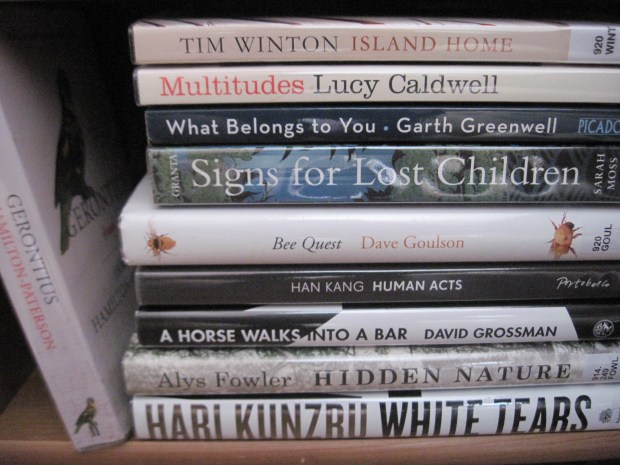
- Multitudes: Eleven Stories by Lucy Caldwell
- Hidden Nature: A Voyage of Discovery by Alys Fowler
- Bee Quest: In Search of Rare Bees by Dave Goulson
- What Belongs to You by Garth Greenwell
- A Horse Walks into a Bar by David Grossman
- Gerontius by James Hamilton-Paterson
- Human Acts by Han Kang
- White Tears by Hari Kunzru
- Signs for Lost Children by Sarah Moss
- Island Home: A Landscape Memoir by Tim Winton
As to America: I hope you would agree I have been very restrained in only requesting three books to borrow from my parents’ local public library. The Coates and Shapiro are extremely short memoirs I should have no trouble getting through, and the Strayed, a collection of advice columns, is the kind of book that I can dip in and out of. My Kindle and my personal library will more than make up for any further shortfall in reading material.
ON HOLD, TO BE CHECKED OUT
- Between the World and Me, Ta-Nehisi Coates
- Tiny Beautiful Things, Cheryl Strayed
IN THE RESERVATION QUEUE
- Hourglass, Dani Shapiro
(Hosted by Charleen of It’s a Portable Magic.)
Have you been taking advantage of your local libraries? What appeals from my lists?
 Bookish Beck = Rebecca Foster. American transplant to England. Freelance proofreader and book reviewer.
 Bookish Beck


.jpg)
.jpg)