The Winter Soldier by Daniel Mason
Though I’m often wary of war fiction – can anything new still be written about World War I? – I was drawn to The Winter Soldier by the enthusiastic American reviews and the medical theme. The protagonist of psychiatrist Daniel Mason’s third novel, Lucius Krzelewski, comes from southern Polish nobility. In the 1910s medicine was a path for those seeking social mobility, but for Lucius neurology study is a way out of his stifling aristocratic household. Under Herr Doktor Zimmer’s tutelage in Vienna, he experiments on ways to make blood vessels visible. Dismayed to learn that Zimmer believes the “mermaid” in the medical school’s anatomical museum is real, he hurries to enlist when war begins in 1914.
 As a 22-year-old medical lieutenant he’s stationed at a church turned into a regimental hospital at Lemnowice. Here Sister Margarete has been making do without a doctor in charge for two months. She’s been performing amputations and setting fractures in a lice-ridden building where hunger and typhoid are never far away. Lucius is ashamed of his ignorance compared to this skilled nurse; though he has textbook knowledge, he has no practical experience and has to learn on the job.
The following winter a Hungarian soldier suffering from “nervous shock” but no visible wounds is brought in, a sheaf of accomplished drawings padding his coat. For Lucius and Margarete, Sergeant József Horváth poses a particular challenge, which makes his recovery seem more like a resurrection: “they were both falling a little bit in love with their silent visitor or, more, with the cure that they had wrought.” Even as Lucius and Margarete fall in love and steal moments alone, they regret they couldn’t do more for Horváth. When Lucius and Margarete are separated, he vows to find her again – and make things right with Horváth.
I loved the novel’s first half, with its gallows humor, memorable scenes of gruesome medical procedures, and bleak conditions so convincing you’ll find yourself itching right along with the lice-plagued patients. But at about the halfway point the pace changes dramatically. Years pass and Lucius has various deployments and hospital positions. Curiously, although so much is happening to him outwardly, he’s stalled internally – haunted by thoughts of Margarete and Horváth. Perhaps this is why I felt the narrative slowed to a crawl. I could barely force myself to read more than five or 10 pages in a sitting, and the novel as a whole took me much longer to read than normal. Or maybe I was just missing Margarete, the most vibrant character.
Early on I was reminded of Julie Orringer’s The Invisible Bridge and Hubert Mingarelli’s A Meal in Winter, lesser-known war novels in which the stark beauty of the writing tempers the somber subject matter. Partway through I started thinking of Ambrose Parry’s The Way of All Flesh, in which an unqualified female outshines a male in medical knowledge. By the end I was recalling epic separation-filled romances like The English Patient and Birdsong.
Though the novel’s second half never matched the strength of the first, I was at least pleased that Mason avoided a clichéd, Hollywood-ready ending in favor of a more fitting one that, while still somewhat far-fetched, makes sense of the title’s emphasis. This is a moving story of the physical and psychological effects of war, and I would certainly read more by Mason.
My rating: 
The Winter Soldier was published in the UK by Mantle on October 18th. With thanks to the publisher for the free copy for review.
Marilla of Green Gables by Sarah McCoy
There’s no doubt about it: fans of Lucy Maud Montgomery’s Anne series will throng to read Sarah McCoy’s prequel. McCoy was inspired by the brief moment in Anne of Green Gables when Marilla tells Anne that John Blythe used to be her beau. Just like Anne, she wanted to know the story behind that offhand remark.
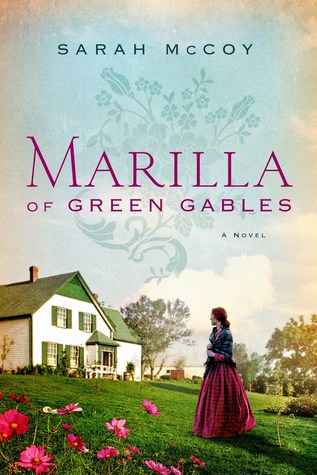 So although Marilla of Green Gables begins in 1876 with a short prologue in which Matthew and Marilla decide to ‘get a boy’ to help around the place, most of it is set in 1837–8, with Marilla taking a break from her schooling to assist her parents, Hugh and Clara (it’s no coincidence that these are the names of L.M. Montgomery’s parents), in the months before her new sibling is to arrive. Brother Matthew is 21 and testing out adulthood, but Marilla is just 13 and impressionable. John Blythe offers to bring her the school readings she’s missed out on, and later invites her to the Avonlea May Picnic. It’s clear she’s smitten.
Aunt Izzy, a dressmaker from St. Catharines, arrives in time to cheer her twin sister through the impending birth and ends up being Marilla’s new role model. She’s fanciful, exuberant and spontaneous and believes “A young girl needs as much time to dream as possible,” surely making her a deliberate precursor of Anne Shirley. Indeed, much of the fun of reading this book is in spotting the seeds of the Anne books: Clara and Izzy making their famous redcurrant wine and laughing about the time Clara lost a thumbnail in the mix; meeting Rachel White (Lynde) at a sewing circle; a visit to the orphanage in Hopetown; raspberry cordial at a picnic; the Ladies’ Aid Society; and looking to a mistake-free tomorrow.
Before long, though, personal and political upheaval take their toll at Green Gables and drive a wedge between Marilla and John. I found Part Two significantly less engaging, what with all the talk of Reformers versus Loyalists (though I did enjoy glimpses of escaped slaves’ experiences in Canada). I tend not to read anything approaching a romance novel, so I groaned to find that there’s not one but two Mr. Darcy-esque wet-shirt scenes featuring John.
This is not meant to be a substitute for reading Montgomery’s own work; if anything it’s prompted me to reread the original series as soon as I can. While I wouldn’t call Marilla a must-read for fans, then, if you enjoy women’s historical fiction set in the nineteenth century, you may want to pick up this companion volume anyway.
My rating: 
Marilla of Green Gables was published by William Morrow on October 23rd. My thanks to publicist Beth Parker for the proof copy for review. Sarah McCoy is the author of four previous works of fiction, including The Mapmaker’s Children and The Baker’s Daughter.
The Life of Madame Tussaud: Little by Edward Carey
There is a state between life and death: it’s called the waxworks.
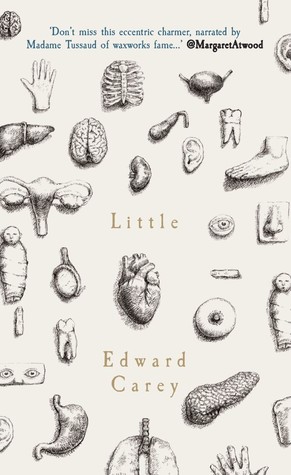 Apparently the 4th was Super Thursday: 544 books were published in the UK as part of the autumn rush leading up to Christmas. I’ve read just one of those multitudinous releases so far, but what a corker it was. Little is Edward Carey’s deliciously macabre novel about Madame Tussaud, who starts life as Anne Marie Grosholtz in Switzerland in 1761 and loses both parents by the age of six. Known as Marie, she soon picks up the nickname “Little” at the studio where she helps Dr. Philip Curtius make wax anatomical models. When the indebted Curtius flees to Paris, Marie goes with him as his servant. Along with their landlady, a tailor’s widow named Charlotte Picot, and her son Edmond, they form a makeshift family and a successful business, making wax heads and then dressing them in wigs and clothes to create whole figures of (in)famous citizens to display in their new quarters, a former monkey house.
In the years to come Marie occupies an uncomfortable in-between position: she’s treated like a servant but never paid, and though she’s fond of Curtius and falls in love with Edmond she’s made to understand that she’s not their equal. However, her fortunes change when Princess Élisabeth, on an unannounced visit to the Cabinet of Dr. Curtius, is impressed with Marie’s art and anatomy skills and invites her to be her sculpture tutor at Versailles. Marie and the young royal make wax models of local peasants’ ailments so they can pray for them. By the time Marie returns to the monkey house, the Revolution is in full swing and there’s widespread hunger not just for wax heads in cabinets, but for real decapitated ones. It will take cunning and luck for Marie and her odd little family to survive the years of upheaval.

(For a look inside the book, go to https://www.book2look.com/book/H8skBPiuJ9.)
The grimy picture of eighteenth-century Paris reminded me of Pure by Andrew Miller, and I often thought of Dickens as I was reading. Little starts off most like David Copperfield: a first-person “I am born”-style account with each chapter headed by a pithy summary. The characters have exaggerated physical features and recurring verbal tics, and there is an unmistakable message that whether a royal or a lowly servant we are all the same inside. Of course, as that pivotal July 14th approaches, the Dickensian echo is more along the lines of A Tale of Two Cities.
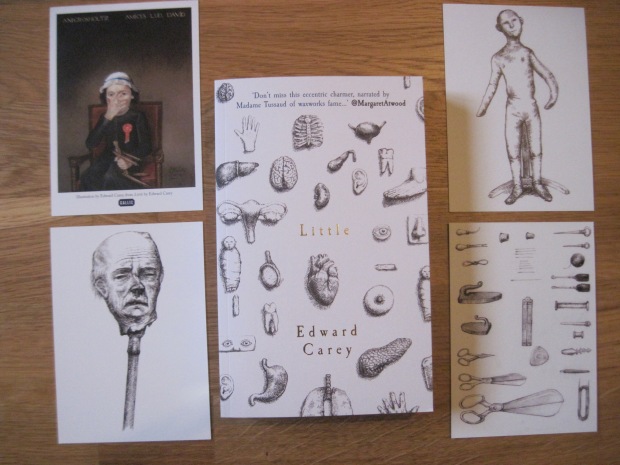
I think the novel would benefit from a more suggestive title and could stand to be a bit shorter, but it’s still a delightful piece of historical fiction and another hit from Gallic Books, responsible for two of my other favorite reads of the year so far, Salt Creek and The Life and Loves of Lena Gaunt. Part of the joy of reading it is encountering Carey’s slightly grotesque black-and-white illustrations, dozens of which appear through the text; you can see a few more of them on the postcards that accompanied my review copy.
In fact, I’ll sheepishly admit that before I read this I had Edward Carey confused for Edward Gorey, who was known for his ghoulish black-and-white drawings. Carey, an English playwright and novelist whose previous books include the Iremonger Trilogy, is married to Elizabeth McCracken and teaches at the University of Austin, Texas. After university he worked as a steward at Madame Tussaud’s in London, which is how he first came across her story. It’s an unforgettable one.
My rating: 
With thanks to the publisher for the free copy for review.
The Way of All Flesh by Ambrose Parry
This historical novel set in Edinburgh in 1847 has one of the best opening paragraphs I’ve come across in a while:
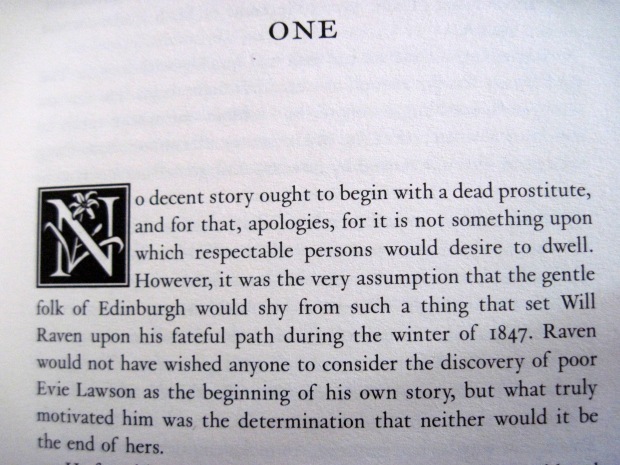
That immediately sets the tone: realistic, sly, and somewhat seedy. If the title sounds familiar, it’s because it’s borrowed from Samuel Butler’s gloomy 1903 meditation on sin and salvation in several generations of a Victorian family. I remember trudging through it on a weekend break to Strasbourg during my year abroad.
 Parry (a pseudonym for husband–wife duo Chris Brookmyre and Marisa Haetzman) uses the allusion to highlight the hidden sins of the Victorian period and hint at the fleshy concerns of their book, which contains somewhat gruesome scenes of childbirth and surgery. Ether and chloroform were recent introductions and many were still apprehensive about them or even opposed to their use on religious grounds, as Haetzman, a consultant anesthetist, learned while researching for her Master’s degree in the History of Medicine.
Into this milieu enters Will Raven, the new apprentice to Dr. Simpson, a professor of midwifery. Will is troubled by the recent loss of his friend Evie Lawson, the dead prostitute of the first paragraph, and wonders if she could have been poisoned by some bad moonshine. Only as he hears rumors about a local abortionist – no better than a serial killer – who’s been giving women quack pills and potions, followed by rudimentary operations that leave them to die of peritonitis, does he begin to wonder if Evie could have been pregnant when she died.
The novel peppers in lots of period slang and details about homeopathy, phrenology and early photography. Best of all, it has a surprise heroine: the Simpsons’ maid, Sarah Fisher, who keeps shaming Will with her practical medical know-how and ends up being something of a sidekick in his investigations. She wants to work as a druggist’s assistant, but the druggist insists that only a man can do the job. Dr. Simpson recognizes that the housemaid’s role is rather a waste of Sarah’s talents and expresses his hope that she’ll seek to be part of a widespread change for women.
The Way of All Flesh is sure to appeal to readers of Michel Faber’s The Crimson Petal and the White and Steven Price’s By Gaslight. It’s not quite as rewarding as the former, but the length and style make it significantly more engaging than the latter. It also serves as a good fictional companion to Lindsey Fitzharris’s The Butchering Art; for that reason, I wouldn’t be surprised to see it appear on next year’s Wellcome Book Prize longlist.

Victorian Edinburgh on the endpapers.
Favorite lines:
“That was Edinburgh for you: public decorum and private sin, city of a thousand secret selves.”
“‘Simpson likes to think of medicine as more than pure science,’ [Raven] countered. ‘There must also be empathy, concern, a human connection.’ ‘I suggest that both elements are required,’ offered Henry. ‘Scientific principles married to creativity. Science and art.’ If it is an art, it is at times a dark one, Raven thought, though he chose to keep this observation to himself.”
My rating:
The Way of All Flesh comes out today, August 30th, in the UK. It was published in the States by HarperCollins on the 28th. My thanks to Canongate for sending a free copy for review.
My Patchy Experience with Book Clubs
I know that a number of you have long-term, faithful book clubs. Boy, am I envious! You might find it surprising that I’ve only ever been in one traditional book club, and it wasn’t a resounding success. Partway through my time working for King’s College, London, an acquaintance from another library branch started the club. A group of five to eight of us from Library Services aimed to meet after work one evening a month at a Southbank venue or a staff room to discuss our latest pick. By poring over old e-mails and my Goodreads library, I’ve managed to remember 10 of the books we read between November 2011 and June 2013:
- Do Androids Dream of Electric Sheep?, Philip K. Dick [classic science fiction]
- The Little Shadows, Marina Endicott [Canadian historical fiction]
- A Spot of Bother, Mark Haddon [contemporary fiction]
- The Talented Mr. Ripley, Patricia Highsmith [classic suspense]
- The Vintner’s Luck, Elizabeth Knox [bizarre historical fiction/magic realism]
- What Was Lost, Catherine O’Flynn [contemporary fiction]
- Franny and Zooey, J.D. Salinger [classic short fiction]
- The Rabbi’s Cat, Joann Sfar [graphic novel in translation]
- Girl Meets Boy, Ali Smith [an update of Greek myth]
- Angel, Elizabeth Taylor [an obscure English classic]
That may well be the complete list. Although I was a member for 20 months until I quit to go freelance, we often only managed to meet every other month because we couldn’t find a mutually convenient free evening or no one had read the book in time. I was consistently frustrated that – even when our selections were only about 200 pages long – I was often one of the only people to have read the whole book.
Overall, the quality of books we chose struck me as mediocre: I rated half of these books 2 stars, and the rest 3 stars. (I think I was a harsher rater then, but it’s not a good sign, is it?) Perhaps this is part of the inevitable compromising that goes with book clubs, though: You humor other people in their choices and hope they’ll be kind about yours? My suggestion, for the record, was the pretty dismal Little Shadows, for which I got a free set of book club copies to review for Booktime magazine. But I also voted in favor of most of the above list.
Looking back, I am at least impressed by how varied our selections were. People were interested in trying out different genres, so we ranged from historical fiction to sci-fi, and even managed a graphic novel. But when we did get together for discussion there was far too much gossipy chat about work, and when we finally got around to the book itself the examination rarely went deeper than “I liked it” or “I hated all the characters.”
If it was profound analysis I was after, I got that during the years I volunteered at Greenbelt, an annual summer arts festival with a progressive Christian slant. I eagerly read the eclectic set of three books the literature coordinator chose for book club meetings in 2010 – Star of the Morning: The Extraordinary Life of Lady Hester Stanhope by Kirsten Ellis, The First Person and Other Stories by Ali Smith, and The Bridge of San Luis Rey by Thornton Wilder – and then as a literature volunteer for the next three years I read and prepared copious notes and questions about our festival “Big Read.” We did Exile by Richard North Patterson in 2011, Dark Eden by Chris Beckett in 2012 and So Many Ways to Begin by Chris Beckett in 2013, and each time I offered to chair the book club meetings.
Unfortunately, due at least in part to logistical considerations, these were run in the way many festival events are: a panel of two to five talking heads with microphones was at the front of the tent, sometimes on a raised dais, while the audience of whatever size sat towards the back. This created a disconnect between the “experts” and the participants, and with the exception of the McGregor meeting I don’t recall much audience input. I’ve mostly blanked out the events – as I tend to for anything that entails public speaking and nervous preparation for something you can’t control – but I was pleased to be involved and I should probably make more of this on my CV. It wasn’t your average book club setting, that’s for sure.
In recent years the closest thing I’ve had to a book club has been online buddy reading. The shadow panels for the Wellcome Book Prize and Sunday Times Young Writer of the Year Award fall into this category, as do online readalongs I’ve done for several Iris Murdoch novels and for C.S. Lewis’s Mere Christianity with various female family members. A few of us book bloggers chatted about Andrea Levy’s Small Island in an online document earlier this year, and my mom and I e-mailed back and forth while reading W. Somerset Maugham’s The Painted Veil in May. I’m also doing my last three of the #20BooksofSummer as online buddy reads, checking in occasionally on Twitter.
Of course, there are some inherent limitations to this kind of discussion – people read at different paces and don’t want to spoil the plot for others, and at some point the back-and-forth fizzles out – but it’s always been easier for me to organize my thoughts in writing, so I likely feel more comfortable contributing than I might in an in-person meeting.
This is all context for my decision to join my neighborhood book club next month. The club arose some months back out of our community’s Facebook group, a helpful resource run by a go-getting lady a few doors down from us. So far it’s turning out to be a small group of thirty- and fortysomething women who alternate meetings at each other’s houses, and the name they’ve chosen gives an idea of the tone: “Books, Booze and Banter.”
I made the mistake of not getting involved right at the start; I wanted to hang back and see what kind of books they’d choose. This means I wasn’t part of the early process of putting titles in a hat, so I’ve looked on snobbishly for several months as they lurched between crime and women’s fiction, genres I generally avoid. (Still, there were actually a couple books I might have joined them for had I not been in America and had they been readily available at the public library.) For many people a book club selection will be the only book they get through that month, so I can understand how they’d want it to be something ‘readable’ that they’d be happy to pick up anyway. Even though statistically I read 27 books a month, I’m still jealously protective of my reading time; I want everything I read to be worthwhile.
 So for September I managed to steer the group away from a poorly received historical novel of over 400 pages and the new Joël Dicker and onto Ladder of Years by Anne Tyler, which the bookstore chain Waterstones has been promoting heavily as one of their books of the month. I already had a charity shop copy in hand and the others liked the sound of it, so we’re all set for September 12th! Future months’ literary fiction choices look promising, too, so provided I enjoy the discussion and the camaraderie I plan to stick with it: a backlist Pat Barker novel I’ve not read, and Kirsty Logan and Jonathan Coe novels I’ve read before and won’t reread but will remind myself about briefly before the meetings.
I’m out of practice with this book club thing. My mother tells me that I have a lot to contribute but that I must also be open to what I’ll learn from other people – even if I don’t expect to. So I don’t want to set myself up as some kind of expert. In fact, I probably won’t even mention that I’m a freelance book reviewer and book blogger. Mostly I’m hoping to find some friendly faces around the neighborhood, because even though we’ve lived here just over two years I still only know a handful of names and keep myself to myself as I work from home. Even if I have to read books I wouldn’t normally, it’ll be worth it to meet more people.
What has your experience with book clubs (in person and online) been?
Blog Tour: Extract from Song by Michelle Jana Chan
 Song escapes the poverty and natural disasters of his hometown in China by sailing to Guiana. The village medicine man describes Guiana as a kind of paradise, and tells him he can earn free passage if he presents himself to the Englishmen in Guangzhou. What he doesn’t realize is that he will effectively be an indentured servant, working in the sugarcane fields for years just to pay for the voyage. From Singapore to India to Guiana, it’s a long and fraught journey, and though his new home does dazzle with its colors and wildlife, it’s not the idyll he expected. Still, Song is determined to make something of himself. “He would yet live a life that was a story worth telling.”
I have an extract from Chapter 1, about the flooding in China, to whet your appetite:
Lishui Village, China, 1878
At first they were glad the rains came early. They had already finished their planting and the seedlings were beginning to push through. The men and women of Lishui straightened their backs, buckled from years of labouring, led the buffalo away and waited for the fields to turn green. With such early rains there might be three rice harvests if the weather continued to be clement. But they quickly lost hope of that. The sun did not emerge to bronze the crop. Instead the clouds hung heavy. More rain beat down upon an already sodden earth and lakes were born where even the old people said they could not remember seeing standing water.
The Li rose higher and higher. Every morning the men of the village walked to the river to watch the water lap at its banks like flames. Sometimes they stood there for hours, their faces as grey as the flat slate light. Still the rain fell, yet no one cared about their clothes becoming wet or the nagging coughs the chill brought on. Occasionally a man lifted his arm to wipe his face. But mostly they stood still like figures in a painting, staring upstream, watching the water barrel down, bulging under its own mass.
Before the end of the week the Li had spilled over its banks. A few days later the water had covered the footpaths and cart tracks, spreading like a tide across the land and sweeping away all the fine shoots of newly planted rice. Further upstream the river broke up carts, bamboo bridges and outbuildings; it knocked over vats of clean water and seeped beneath the doors of homes. Carried on its swirling currents were splintered planks of wood, rotting food, and shreds of sacking and rattan.
Song awoke to feel the straw mat wet beneath him. He reached out his hand. The water was gently rising and ebbing as if it was breathing. His brother Xiao Bo was crying in his sleep. The little boy had rolled off his mat and was lying curled up in the water. He was hugging his knees as if to stop himself from floating away.
Song’s father was not home yet. He and the other men had been working through the night trying to raise walls of mud and rein back the river’s strength. But the earthen barriers washed away even as they built them; they could only watch, hunched over their shovels.
The men did not return that day. As the hours passed the women grew anxious. They stopped by each other’s homes, asking for news, but nobody had anything to say. Song’s mother Zhang Je was short with the children. The little ones whimpered, sensing something was wrong.
Song huddled low with his sisters and brothers around the smoking fire which sizzled and spat but gave off no heat. They had wedged among the firewood an iron bowl but the rice inside was not warming. That was all they had left to eat now. Xiao Wan curled up closer to Song. His little brother followed him everywhere nowadays. His sisters Xiao Mei and San San sat opposite him, adding wet wood to the fire and poking at the ash with a stick. His mother stood in the doorway, the silhouette of Xiao Bo strapped to her back and her large rounded stomach tight with child.
The children dipped their hands into the bowl, squeezing grains of rice together, careful not to take more than their share. Song was trying to feed Xiao Wan but he was too weak even to swallow. The little boy closed his eyes and rested his head in Song’s lap, wheezing with each breath. Their mother continued to look out towards the fields, waiting, with Xiao Bo’s head slumped unnaturally to the side as he slept.
‘I don’t think they’re coming back.’
Song could barely hear what his mother was saying.
‘They’re too late,’ she muttered.
Song wasn’t sure if she was talking to him. ‘Mama?’
Her voice was more brisk. ‘They’re not coming back, I said.’
My Most Anticipated Releases of the Second Half of 2018
Here are 30 books that are on my radar for the months of July through November (I haven’t heard about any December titles yet), plus one bonus book that I’ve already read. This is by no means a full inventory of what’s coming out, or even of what I have available through NetGalley and Edelweiss; instead, think of it as a preview of the books I actually intend to read, in release date order. The quoted descriptions are from the publisher blurbs on Goodreads. If I already have access to the book in some way, I’ve noted that.
The first half of the year seemed to be all about plants. This time around I have plenty of memoirs, some medical and some bookish; birds and watery imagery; and some religious and philosophical themes.
[By the way, here’s how I did with my most anticipated releases of the first half of the year:
- 17 out of 30 read; of those 8 were at least somewhat disappointing (d’oh!)
- 5 unfinished
- 1 currently reading
- 1 lost interest in
- 1 I still intend to read
- 5 I didn’t manage to find]
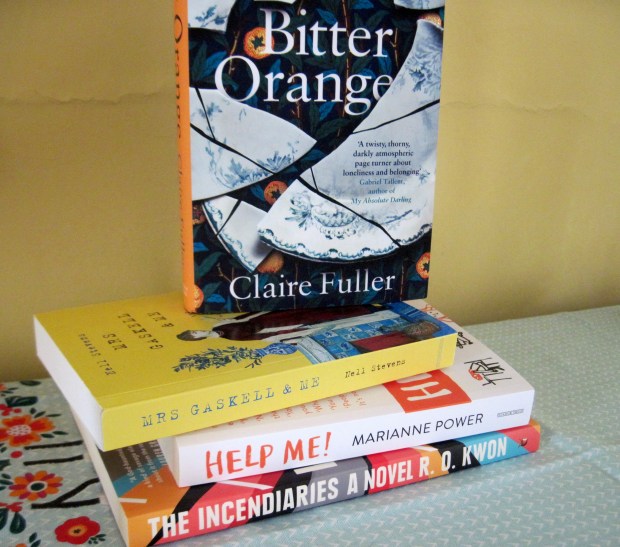
The upcoming titles I happen to own in print.
July
 No One Tells You This: A Memoir by Glynnis MacNicol [July 10, Simon & Schuster]: “If the story doesn’t end with marriage or a child, what then? This question plagued Glynnis MacNicol on the eve of her 40th birthday. … Over the course of her fortieth year, which this memoir chronicles, Glynnis embarks on a revealing journey of self-discovery that continually contradicts everything she’d been led to expect.” (NetGalley download)
 The Lost Chapters: Finding Recovery and Renewal One Book at a Time by Leslie Schwartz [July 10, Blue Rider Press]: “Leslie Schwartz’s powerful, skillfully woven memoir of redemption and reading, as told through the list of books she read as she served a 90-day jail sentence. … Incarceration might have ruined her, if not for the stories that comforted her while she was locked up.”
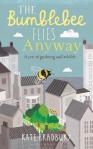 The Bumblebee Flies Anyway: Gardening and Surviving Against the Odds by Kate Bradbury [July 17, Bloomsbury Wildlife]: “Finding herself in a new home in Brighton, Kate Bradbury sets about transforming her decked, barren backyard into a beautiful wildlife garden. She documents the unbuttoning of the earth and the rebirth of the garden, the rewilding of a tiny urban space.”
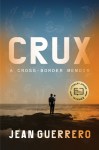 Crux: A Cross-Border Memoir by Jean Guerrero [July 17, One World]: “A daughter’s quest to find, understand, and save her charismatic, troubled, and elusive father, a self-mythologizing Mexican immigrant who travels across continents—and across the borders between imagination and reality; and spirituality and insanity—fleeing real and invented persecutors.”
 The Incendiaries by R.O. Kwon [July 31, Riverhead]: “A shocking novel of violence, love, faith, and loss, as a young woman at an elite American university is drawn into acts of domestic terrorism by a cult tied to North Korea. … The Incendiaries is a fractured love story and a brilliant examination of the minds of extremist terrorists, and of what can happen to people who lose what they love most.” (Print ARC for blog review at UK release on Sept. 6 [Virago])
August
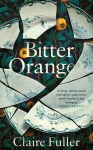 Bitter Orange by Claire Fuller [Aug. 2, Penguin Fig Tree]: I’ve loved Fuller’s two previous novels. This one is described as “a suspenseful story about deception, sexual obsession and atonement” set in 1969 in a run-down English country house. I don’t need to know any more than that; I have no doubt it’ll be brilliant in an Iris Murdoch/Gothic way. (Print ARC for blog review on release date)
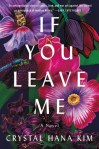 If You Leave Me by Crystal Hana Kim [Aug. 7, William Morrow]: “An emotionally riveting debut novel about war, family, and forbidden love—the unforgettable saga of two ill-fated lovers in Korea and the heartbreaking choices they’re forced to make in the years surrounding the civil war that continues to haunt us today.” This year’s answer to Pachinko? And another botanical cover to boot! (Edelweiss download)
 A River of Stars by Vanessa Hua [Aug. 14, Ballantine Books]: “In a powerful debut novel about motherhood, immigration, and identity, a pregnant Chinese woman makes her way to California and stakes a claim to the American dream. … an entertaining, wildly unpredictable adventure, told with empathy and wit” Sounds like The Leavers, which is a Very Good Thing.
 The Shakespeare Requirement by Julie Schumacher [Aug. 14, Doubleday]: A sequel to the very funny epistolary novel Dear Committee Members! “Now is the fall of his discontent, as Jason Fitger, newly appointed chair of the English Department of Payne University, takes aim against a sea of troubles, personal and institutional.” (Edelweiss download)
 Gross Anatomy: Dispatches from the Front (and Back) by Mara Altman [Aug. 21, G.P. Putnam’s Sons]: “By using a combination of personal anecdotes and fascinating research, Gross Anatomy holds up a magnifying glass to our beliefs, practices, biases, and body parts and shows us the naked truth—that there is greatness in our grossness.” (PDF from publisher; to review for GLAMOUR online)
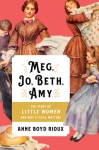 Meg, Jo, Beth, Amy: The Story of Little Women and Why It Still Matters by Anne Boyd Rioux [Aug. 21, W. W. Norton Company]: This is the bonus one I’ve already read, as part of my research for my Literary Hub article on rereading Little Women at its 150th anniversary. (That’s also the occasion for this charming book.) Rioux unearths Little Women’s origins in Alcott family history, but also traces its influence through to the present day. She also makes a strong feminist case for it. My short Goodreads review is here. (Edelweiss download)
September
 Lake Success by Gary Shteyngart [Sept. 4, Random House]: I read his memoir but am yet to try his fiction. “When his dream of the perfect marriage, the perfect son, and the perfect life implodes, a Wall Street millionaire takes a cross-country bus trip in search of his college sweetheart and ideals of youth. … [a] biting, brilliant, emotionally resonant novel very much of our times.” (Edelweiss download; for Pittsburgh Post-Gazette review)
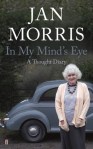 In My Mind’s Eye: A Thought Diary by Jan Morris [Sept. 6, Faber & Faber]: One of my most admired writers. “A collection of diary pieces that Jan Morris wrote for the Financial Times over the course of 2017.” I have never before in my life kept a diary of my thoughts, and here at the start of my ninth decade, having for the moment nothing much else to write, I am having a go at it. Good luck to me.
 Help Me!: One Woman’s Quest to Find Out if Self-Help Really Can Change Her Life by Marianne Power [Sept. 6, Picador]: “[F]or a year she vowed to test a book a month, following its advice to the letter, taking the surest road she knew to a perfect Marianne. As her year-long plan turned into a demented roller coaster where everything she knew was turned upside down, she found herself confronted with a different question: Self-help can change your life, but is it for the better?” (Print ARC)
 Normal People by Sally Rooney [Sept. 6, Faber & Faber]: Much anticipated follow-up to Conversations with Friends. “Connell and Marianne both grow up in the same town in rural Ireland. The similarities end there; they are from very different worlds. But they both get places to study at university in Dublin, and a connection that has grown between them despite the social tangle of school lasts long into the following years.”
 Mrs. Gaskell & Me by Nell Stevens [Sept. 6, Picador]: “In 2013, Nell Stevens is embarking on her PhD … and falling drastically in love with a man who lives in another city. As Nell chases her heart around the world, and as Mrs. Gaskell forms the greatest connection of her life, these two women, though centuries apart, are drawn together.” I was lukewarm on her previous book, Bleaker House, but I couldn’t resist the Victorian theme of this one! (Print ARC to review for Shiny New Books)
 Heart: A History by Sandeep Jauhar [Sept. 18, Farrar, Straus and Giroux]: “Deftly alternating between key historical episodes and his own work, Jauhar tells the colorful and little-known story of the doctors who risked their careers and the patients who risked their lives to know and heal our most vital organ. … Affecting, engaging, and beautifully written.” (Edelweiss download)
 To the Moon and Back: A Childhood under the Influence by Lisa Kohn [Sept. 18, Heliotrope Books]: “Lisa was raised as a ‘Moonie’—a member of the Unification Church, founded by self-appointed Messiah, Reverend Sun Myung Moon. … Told with spirited candor, [this] reveals how one can leave behind such absurdity and horror and create a life of intention and joy.”
 Ghost Wall by Sarah Moss [Sept. 20, Granta]: I’ve read Moss’s complete (non-academic) oeuvre; I’d read her on any topic. This novella sounds rather similar to her first book, Cold Earth, which I read recently. “Teenage Silvie is living in a remote Northumberland camp as an exercise in experimental archaeology. … Behind and ahead of Silvie’s narrative is the story of a bog girl, a sacrifice, a woman killed by those closest to her, and as the hot summer builds to a terrifying climax, Silvie and the Bog girl are in ever more terrifying proximity.” (NetGalley download)
 Time’s Convert (All Souls Universe #1) by Deborah Harkness [Sept. 25, Viking]: I was a sucker for Harkness’s A Discovery of Witches and its sequels, much to my surprise. (The thinking girl’s Twilight, you see. I don’t otherwise read fantasy.) Set between the American Revolution and contemporary London, this fills in the backstory for some of the vampire characters.
October
 All You Can Ever Know: A Memoir by Nicole Chung [Oct. 2, Catapult]: “Nicole Chung was born severely premature, placed for adoption by her Korean parents, and raised by a white family in a sheltered Oregon town. … With warmth, candor, and startling insight, Chung tells of her search for the people who gave her up, which coincided with the birth of her own child.” (Edelweiss download)
 Melmoth by Sarah Perry [Oct. 2, Serpent’s Tail]: Gothic fantasy / historical thriller? Not entirely sure. I just know that it’s the follow-up by the author of The Essex Serpent. (I choose to forget that her first novel exists.) Comes recommended by Eleanor Franzen and Simon Savidge, among others. (Edelweiss download)
 The Ravenmaster: Life with the Ravens at the Tower of London by Christopher Skaife [Oct. 2, 4th Estate]: More suitably Gothic pre-Halloween fare! “Legend has it that if the Tower of London’s ravens should perish or be lost, the Crown and kingdom will fall. … [A]fter decades of serving the Queen, Yeoman Warder Christopher Skaife took on the added responsibility of caring for these infamous birds.” I briefly met the author when he accompanied Lindsey Fitzharris to the Wellcome Book Prize ceremony.
 I Am Dynamite!: A Life of Friedrich Nietzsche by Sue Prideaux [Oct. 4, Faber & Faber]: “Friedrich Nietzsche’s work forms the bedrock of our contemporary thought, and yet a shroud of misunderstanding surrounds the philosopher behind these proclamations. The time is right for a new take on Nietzsche’s extraordinary life, whose importance as a thinker rivals that of Freud or Marx.” (For a possible TLS review?)
 Almost Everything: Notes on Hope by Anne Lamott [Oct. 16, Riverhead]: I haven’t been too impressed with Lamott’s recent stuff, but I’ll still read anything she publishes. “In this profound and funny book, Lamott calls for each of us to rediscover the nuggets of hope and wisdom that are buried within us that can make life sweeter than we ever imagined. … Almost Everything pinpoints these moments of insight as it shines an encouraging light forward.”
 The Library Book by Susan Orlean [Oct. 16, Simon & Schuster]: The story of a devastating fire at Los Angeles Public Library in April 1986. “Investigators descended on the scene, but over 30 years later, the mystery remains: Did someone purposefully set fire to the library—and if so, who? Weaving her life-long love of books and reading with the fascinating history of libraries and the sometimes-eccentric characters who run them, … Orlean presents a mesmerizing and uniquely compelling story as only she can.” (Edelweiss download)
 Unsheltered by Barbara Kingsolver [Oct. 18, Faber & Faber]: Kingsolver is another author I’d read anything by. “[T]he story of two families, in two centuries, who live at the corner of Sixth and Plum, as they navigate the challenges of surviving a world in the throes of major cultural shifts.” 1880s vs. today, with themes of science and utopianism – I’m excited! (Edelweiss download)
 Nine Pints: A Journey through the Money, Medicine, and Mysteries of Blood by Rose George [Oct. 23, Metropolitan Books]: “Rose George, author of The Big Necessity [on human waste], is renowned for her intrepid work on topics that are invisible but vitally important. In Nine Pints, she takes us from ancient practices of bloodletting to modern ‘hemovigilance’ teams that track blood-borne diseases.”
November
 The End of the End of the Earth: Essays by Jonathan Franzen [Nov. 13, Farrar, Straus and Giroux]: “[G]athers essays and speeches written mostly in the past five years … Whether exploring his complex relationship with his uncle, recounting his young adulthood in New York, or offering an illuminating look at the global seabird crisis, these pieces contain all the wit and disabused realism that we’ve come to expect from Franzen.”
 A River Could Be a Tree by Angela Himsel [Nov. 13, Fig Tree Books]: “How does a woman who grew up in rural Indiana as a fundamentalist Christian end up a practicing Jew in New York? … Ultimately, the connection to God she so relentlessly pursued was found in the most unexpected place: a mikvah on Manhattan’s Upper West Side. This devout Christian Midwesterner found her own form of salvation—as a practicing Jewish woman.”
 Becoming by Michelle Obama [Nov. 13, Crown]: “In her memoir, a work of deep reflection and mesmerizing storytelling, Michelle Obama invites readers into her world, chronicling the experiences that have shaped her—from her childhood on the South Side of Chicago to her years as an executive balancing the demands of motherhood and work, to her time spent at the world’s most famous address.”
Which of these do you want to read, too? What other upcoming 2018 titles are you looking forward to?
Blog Tour: Mr Peacock’s Possessions by Lydia Syson
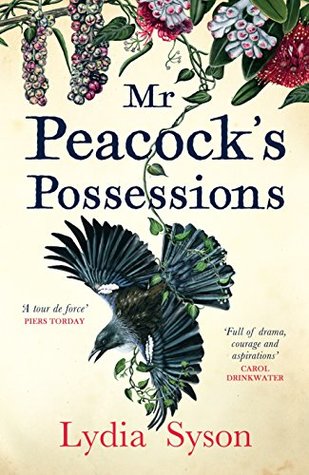 Mr Peacock’s Possessions, Lydia Syson’s first novel for adults, will be published in the UK by Zaffre on May 17th. You might think of it as a cross between Lloyd Jones’s Mister Pip and Lucy Treloar’s Salt Creek. Set in the late 1870s in New Zealand and Oceania, it’s the story of the Peacock family, who settled on Monday Island two years ago, believing it would be their own “piece of paradise.” Mr Peacock is a self-assured man of many schemes. One day fifteen-year-old Lizzie spots a ship, and a Pacific Islander jumps off it and swims ashore. This is Kalala, who learned English and gentlemanly manners from “Mr Reverend” and narrates his chapters in a charming patois. He’s here to help with manual labour, but Mr Peacock unsettles him: “he goes from light to dark like a forest walk,” as his family knows all too well. The novel is based loosely on Syson’s husband’s family history.
Today as part of the blog tour I have an extract from Kalala’s narration as he approaches the island.
In water once more, all my limbs are joyful, and my ears too, joyful with bubbling whoosh, all sluice and surge and flow, a dulled and busy quietness which is never silence. Eyes open in infinite blue. A slow-winging turtle rises. I rise myself, for air, and sink again. The sea argues: back and forth, it tests me sorely – but I know these tricks and tumbles, and I have power enough in mind and body to work these waves to my delight.
Head up and out.
The shore approaches.
I am down and under, and now give way and let the water roller me in – the rocks cry out a warning – I swim sideways with all my ebbing strength – so fast so fast – and then a mighty power throws me down, hard, in whiteness. Yet I claw for life with so much longing that nothing can pull me back. Fiercely I fight – my enemy, my friend – the suck of it, guzzling and gulping at my legs. Ploughing and pushing, now in air, gasping, now under foam, I launch my body and dive for land.
My bellowing back ups and downs, unasked. My chest is first fast and roaring, then slower and slower still. Smallest of stones print my face, embed their heat in all my body. Ears whine and sing. Foam flicks and waves reach, rush, drag at my feet, trying to lure me back into water, over and again, but I resist the sea’s entreaties, crawl from its hungry reach. My head hammers and hums and stars whirl brightly in my closed eyes. I wait for all to slow, for glow to dim, for land to cease its tipping.
And then I raise my head and look up and down the beach. Nobody. Spume slides slowly on flat wet sand where sky and clouds lie spread and wrinkled. Some scattered rocks. So much sand. On and on and on all along the shore. Out of the sea’s reach, the land dries and lightens, stretches up to a wall of rock, grass at bottom and green bushes tipping from on top. Not so high you could not climb it. There will be holes for fingers and toes in the red-brown lumps and chunks. Or I will find another way to reach the houses and the children. When I can breathe. I hardly can hold my head up yet.
Thud. Thud. Thud. As this thumping lulls in head and heart, I gather strength. Here I am, Monday Island. I have come as commanded. Now it is for you to make good your promise.
Third Blog Anniversary
Hard to believe, but I’ve only been blogging for three years as of today. It feels like something I’ve been doing forever, but at the same time I still consider myself a newbie. This is my 382nd post, so I’ve been keeping up an average of 2.5 posts a week.

By Joey Gannon from Pittsburgh, PA (Candles) [CC BY-SA 2.0 (http://creativecommons.org/licenses/by-sa/2.0)%5D, via Wikimedia Commons.
I’ve particularly enjoyed doing author Q&As and highlighting seasonal reads, novellas, books about cats, and physical book traits. I especially like writing up bookshop visits and other literary travels, and discussing literary prizes. My supply of graphic novels seems to have dried up; for new releases I focus on literary fiction, historical fiction and memoirs.
Straightforward book reviews have always been less popular than book lists and other more tangentially book-related posts. Library Checkout posts are consistently well-liked, as were the “Books in Brief” sets of five mini-reviews I used to do. As I’ve noted before, my posts on abandoned books are always perversely popular.
Some of my favorite posts from the past year were on World Kidney Day, Mother–Daughter Author Pairs, and Book Hoarding, and my review in verse of Jonathan Eig’s Ali: A Life.
The numbers of likes seem to be less than informative as they simply reflect a growing number of followers – many of my recent posts have averaged 20–25 likes – so I prefer to look at comments, as it means people are truly reading and engaging. In terms of numbers of comments, my top posts of all time appeared in the last year and were:
- Bibliotherapy appointment
- Books in Brief, May 2017 (featuring books by Sebastian Barry, Tracy Chevalier, Thomas H. Cook, Nicole Gulotta and Elizabeth Hay)
- (Tied for 3rd) Booker Longlist 2017 & Jacob’s Room Is Full of Books review
Thanks to everyone who has supported me this past year, and/or all three years, by visiting the site, commenting, re-tweeting, and so on. You’re the best!
Blog Tour: The Secret Life of Mrs. London by Rebecca Rosenberg
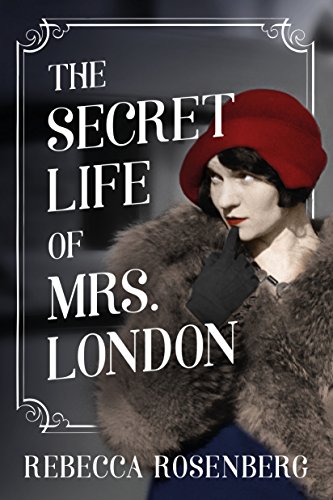
 I have a weakness for novels about history’s famous wives, whether that’s Zelda Fitzgerald, the multiple Mrs. Hemingways, or the First Ladies of the U.S. presidents. A valuable addition to that delightful sub-genre of fiction is The Secret Life of Mrs. London, the recent debut novel by California lavender farmer Rebecca Rosenberg. I’m pleased to be closing out the blog tour today with a mini review. So many thorough reviews have already appeared that I won’t attempt to compete with them, but will just share a few reasons why I found this a worthwhile read.
Set in 1915 to 1917, this is the story of the last couple of years of Jack London’s life, narrated by his second wife, Charmian, who was five years his senior. The novel opens in California at the Londons’ Beauty Ranch and Wolf House complex and also travels to Hawaii and New York City. Events are condensed and fictionalized, but true to life – thanks to the biography Charmian wrote of Jack and the author’s access to her journals and their letters.
Here are a few things I particularly liked about the novel:
 A fantastic opening scene: September 1915: Charmian decides to fix Jack’s hangover with strong coffee and a boxing match – with her! – while their Japanese servant, Nakata, and their house guests look on with bemusement. “Nothing breathes vigor into a marriage like a boxing match.”
- A glimpse into Jack London’s lesser-known writings: I’ve only ever read White Fang and The Call of the Wild, as a child. But in addition to his adventure stories he also wrote realist/sociopolitical novels and science fiction. At the time when the novel opens, he’s working on The Star Rover. This has inspired me to look into some of his more obscure work.
- The occasional clash of the spouses’ ambitions: Charmian considers it her duty to hold Jack to his promise of writing 1,000 words a day. However, she is an aspiring writer herself, and she often needles Jack to talk to his publisher about accepting her books. (She eventually published two travel books, The Log of the Snark (1915), about their years sailing the Pacific, and Our Hawaii (1917), as well as her biography of her late husband, The Book of Jack London, in 1921.)
- Charmian’s longing for motherhood: Jack London had an ex-wife and two daughters, Joan and Becky. In 1910 Charmian gave birth to a daughter, Joy, who soon died. Even though she is 43 by the time the book opens, she still wants to try again for a baby. Her hopes and disappointments are a poignant part of the story.
- Cameos from other historical figures: Harry Houdini and his wife, especially, have a large part to play in the novel, particularly in the last quarter.
I wasn’t so keen on the sex scenes, which are fairly frequent. However, I can recommend this to fans of Nancy Horan’s work.
My rating:
The Secret Life of Mrs. London was published by Lake Union Publishing on January 30th. I read an e-copy via NetGalley.
 Bookish Beck = Rebecca Foster. American transplant to England. Freelance proofreader and book reviewer.
 Bookish Beck