My Best Backlist Reads of the Year
Like many bloggers and other book addicts, I’m irresistibly drawn to the new books released each year. However, I consistently find that many memorable reads were published earlier. A few of these are from 2022 or 2023 and most of the rest are post-2000; the oldest is from 1910. These 14 selections (alphabetical within genre but in no particular rank order), together with my Best of 2024 post coming up on Tuesday, make up about the top 10% of my year’s reading. Repeated themes included adolescence, parenting (especially motherhood) and trauma. The two not pictured below were read electronically.

Fiction
Fun facts:
- I read 4 of these for book club (Forster, Mandel, Munro and Obreht)
- 3 (Mandel, McEwan and Obreht) were rereads
- I read 2 as part of my Carol Shields Prize shadowing (Foote and Zhang)
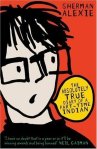 The Absolutely True Diary of a Part-Time Indian by Sherman Alexie: Groundbreaking for both Indigenous literature and YA literature, this reads exactly like a horny 14-year-old boy’s diary, but “Junior” (Arnold Spirit, Jr.) is also self-deprecating and sweetly vulnerable. Poverty, alcoholism, casinos: they don’t feel like clichés of Indian reservations because Alexie writes from experience and presents them matter-of-factly. Junior moves to a white high school and soon becomes adept at code-switching (and cartooning). Heartfelt; spot on.
 The Street by Bernardine Bishop: A low-key ensemble story about the residents of one London street: a couple struggling with infertility, a war veteran with dementia, and so on. Most touching is the relationship between Anne and Georgia, a lesbian snail researcher who paints Anne’s portrait; their friendship shades into quiet, middle-aged love. Beyond the secrets, threats and climactic moments is the reassuring sense that neighbours will be there for you. Bishop’s style reminds me most of Tessa Hadley’s. A great discovery.
 Coleman Hill by Kim Coleman Foote: Is this family memoir? Or autofiction? Foote draws on personal stories but also invokes overarching narratives of Black migration and struggle. The result is magisterial, a debut that is like oral history and a family scrapbook rolled into one, with many strong female characters. Like a linked story collection, it pulls together 15 vignettes from 1916 to 1989 and told in different styles and voices, including AAVE. The inherited trauma is clear, yet Foote weaves in counterbalancing lightness and love.
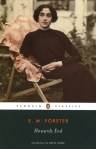 Howards End by E.M. Forster: Rereading for book club, I was so impressed by its complexities – the illustration of class, the character interactions, the coincidences, the deliberate doublings and parallels. It covers so many issues, always without a heavy touch. So many sterling sentences: depictions of places, observations of characters, or maxims that are still true of life. Well over a century later and the picture of well-meaning wealthy intellectuals’ interference making others’ lives worse is just as cutting.
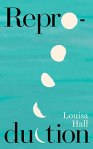 Reproduction by Louisa Hall: Procreation. Duplication. Imitation. All three connotations are appropriate for the title of an allusive novel about motherhood and doppelgangers. A pregnant writer starts composing a novel about Mary Shelley and finds the borders between fiction and (auto)biography blurring. It’s a recognisable piece of autofiction, with a sublime clarity as life is transcribed to the page exactly as it was lived. A tale of transformation – chosen or not – and peril in a country hurtling toward self-implosion. Brilliantly envisioned.
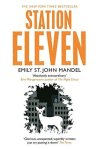 Station Eleven by Emily St. John Mandel: This has persisted as a definitive imagination of post-apocalypse life. On a reread, I was captivated by the different layers of the nonlinear story, from celebrity gossip to a rare graphic novel series, and the links between characters and storylines. Mandel also seeds subtle connections to later work. Themes that struck me were the enduring power of art and the value of the hyperlocal. It seems prescient of Covid-19, but more so of climate collapse. An ideal blend of the literary and the speculative.
 On Chesil Beach by Ian McEwan: A perfect novella. Its core is the July 1962 night when Edward and Florence attempt to consummate their marriage, but it stretches back to cover everything we need to know about them – their family dynamics, how they met, what they want from life – and forward to see their lives diverge. Is love enough? It’s a maturing of the author’s vision: tragedy is not showy and grotesque like in his early work, but quiet, hinging on the smallest action, the words not said. This absolutely flayed me emotionally on a reread.
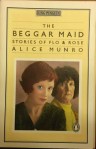 The Beggar Maid by Alice Munro: Linked short stories about a hardscrabble upbringing in small-town Ontario and a woman’s ongoing search for love. Rose’s stepmother Flo is resentful and stingy. She feels she’s always been hard done by, and takes it out on Rose. From early on, we know Rose makes it out of West Hanratty and gets a chance at a larger life, that her childhood becomes a tale of deprivation. Each story is intense, pitiless, and practically as detailed as an entire novel. Rich in insight into characters’ psychology.
 The Tiger’s Wife by Téa Obreht: Natalia, a medical worker in a war-ravaged country, learns of her grandfather’s death away from home. The only one who knew the secret of his cancer, she sneaks away from an orphanage vaccination program to reclaim his personal effects, hoping they’ll reveal something about why he went on this final trip. On this reread I was utterly entranced, especially by the sections about The Deathless Man. I had forgotten the medical element, which of course I loved. My favourite Women’s Prize winner.
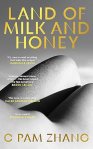 Land of Milk and Honey by C Pam Zhang: On a smog-covered planet where 98% of crops have failed, scarcity reigns – but there is a world apart, a mountaintop settlement at the Italian border where money can buy anything. The 29-year-old Chinese American chef’s job is to produce lavish, evocative multi-course meals. Her relationship with her employer’s 21-year-old daughter is a passionate secret. Each sentence is honed to flawlessness, with paragraphs of fulsome descriptions of meals. A striking picture of desire at the end of the world.
Nonfiction
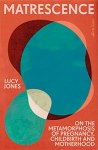 Matrescence: On the Metamorphosis of Pregnancy, Childbirth and Motherhood by Lucy Jones: A potent blend of scientific research and stories from the frontline. Jones synthesizes a huge amount of information into a tight narrative structured thematically but also proceeding chronologically through her own matrescence. The hybrid nature of the book is its genius. There’s a laser focus on her physical and emotional development, but the statistical and theoretical context gives a sense of the universal. For anyone who’s ever had a mother.
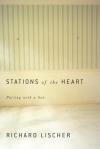 Stations of the Heart: Parting with a Son by Richard Lischer: Lischer opens by looking back on the day when his 33-year-old son Adam called to tell him his melanoma was back. Tests revealed metastases everywhere, including in his brain. The next few months were a Calvary of sorts, and Lischer, an emeritus professor at Duke Divinity School, draws deliberate parallels with biblical and liturgical preparations for Good Friday. His prose is a just right match: stately, resolute and weighted with spiritual allusion, yet never morose.
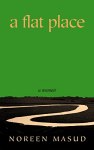 A Flat Place by Noreen Masud: A travel memoir taking in flat landscapes of the British Isles. But flatness is a psychological motif as well as a topographical reality. Growing up with a violent Pakistani father and passive Scottish mother, Masud chose the “freeze” option in fight-or-flight situations. A childhood lack of safety, belonging and love left her with complex PTSD. Her portrayals of sites and journeys are engaging and her metaphors are vibrant. Geography, history and social justice are a backdrop for a stirring personal story.
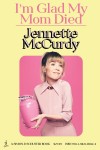 I’m Glad My Mom Died by Jennette McCurdy: True to her background in acting and directing, the book is based around scenes and dialogue, and present-tense narration mimics her viewpoint starting at age six. Much imaginative work was required to make her chaotic late-1990s California household, presided over by a hoarding Mormon cancer survivor, feel real. Abuse, eating disorders, a paternity secret: The mind-blowing revelations keep coming. So much is sad. And yet it’s a very funny book in its observations and turns of phrase.
What were some of your best backlist reads this year?
Women’s Prize 2024: Longlist Predictions vs. Wishes
This is the fourth year in a row that I’ve made predictions for the Women’s Prize longlist (the real thing comes out on Tuesday, 6 p.m. GMT). It shows how invested I’ve become in this prize in recent years. Like I did last year, I’ll give predictions, then wishes (no overlap this time!). My wishes are based on what I have already read and want to read. Although I kept tabs on publishers and ‘free entries’ for previous winners and shortlistees, I didn’t let quotas determine my selections. And while I kept in mind that there are two novelists on the judging panel, I don’t know enough about any of these judges’ taste to be able to tailor my predictions. My only thought was that they will probably appreciate good old-fashioned storytelling … but also innovative storytelling.
(There are two books – The List of Suspicious Things by Jennie Godfrey (= Joanna Cannon?) and Jaded by Ela Lee (this year’s Queenie) – that I only heard about as I was preparing this post and seem pretty likely, but I felt that it would be cheating for me to include them.)
Predictions
The Three of Us, Ore Agbaje-Williams
The Future, Naomi Alderman
The Storm We Made, Vanessa Chan
Penance, Eliza Clark


The Wren, The Wren, Anne Enright
A House for Alice, Diana Evans
Piglet, Lottie Hazell
Pineapple Street, Jenny Jackson


Yellowface, R. F. Kuang
Biography of X, Catherine Lacey
Julia, Sandra Newman
The Vulnerables, Sigrid Nunez


Tom Lake, Ann Patchett
In Memory of Us, Jacqueline Roy
The Fraud, Zadie Smith
Land of Milk and Honey, C. Pam Zhang


Wish List
Family Lore, Elizabeth Acevedo
The Sleep Watcher, Rowan Hisayo Buchanan
The Unfortunates, J. K. Chukwu
The Three Graces, Amanda Craig


Learned by Heart, Emma Donoghue
Service, Sarah Gilmartin
The Vaster Wilds, Lauren Groff
Reproduction, Louisa Hall


Happiness Falls, Angie Kim
Bright Young Women, Jessica Knoll
A Sign of Her Own, Sarah Marsh
The Fetishist, Katherine Min


Hello Beautiful, Ann Napolitano
Mrs S, K Patrick
Romantic Comedy, Curtis Sittenfeld
Absolutely and Forever, Rose Tremain
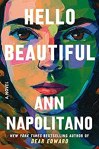


If I’m lucky, I’ll get a few right from across these two lists; no doubt I’ll be kicking myself over the ones I considered but didn’t include, and marvelling at the ones I’ve never heard of…
What would you like to see on the longlist?
Appendix
(A further 50 novels that were on my radar but didn’t make the cut. Like last year, I made things easy for myself by keeping an ongoing list of eligible novels in a file on my desktop.)
Everything Is Not Enough, Lola Akinmade Akerstrom
The Wind Knows My Name, Isabel Allende
Swanna in Love, Jennifer Belle
The Sisterhood, Katherine Bradley
The Fox Wife, Yangsze Choo
The Guest, Emma Cline
Speak to Me, Paula Cocozza
Talking at Night, Claire Daverley
Clear, Carys Davies
Bellies, Nicola Dinan
The Happy Couple, Naoise Dolan
In Such Tremendous Heat, Kehinde Fadipe
The Memory of Animals, Claire Fuller
Anita de Monte Laughs Last, Xochitl Gonzalez
Normal Women, Ainslie Hogarth
Sunburn, Chloe Michelle Howarth
Loot, Tania James
The Half Moon, Mary Beth Keane
Morgan Is My Name, Sophie Keetch
Soldier Sailor, Claire Kilroy
8 Lives of a Century-Old Trickster, Mirinae Lee
August Blue, Deborah Levy
Winter Animals, Ashani Lewis
Rosewater, Liv Little
The Couples, Lauren Mackenzie
Tell Me What I Am, Una Mannion
She’s a Killer, Kirsten McDougall
The Misadventures of Margaret Finch, Claire McGlasson
Nightbloom, Peace Adzo Medie
I Am Homeless If This Is Not My Home, Lorrie Moore
The Lost Wife, Susanna Moore
Okay Days, Jenny Mustard
Parasol against the Axe, Helen Oyeyemi
The Human Origins of Beatrice Porter and Other Essential Ghosts, Soraya Palmer
The Lodgers, Holly Pester
Night Wherever We Go, Tracey Rose Peyton
The Mars House, Natasha Pulley
Playing Games, Huma Qureshi
Come and Get It, Kiley Reid
High Time, Hannah Rothschild
Commitment, Mona Simpson
Death of a Bookseller, Alice Slater
Bird Life, Anna Smail
Stealing, Margaret Verble
Help Wanted, Adelle Waldman
Temper, Phoebe Walker
Hang the Moon, Jeannette Walls
Moral Injuries, Christie Watson
Ghost Girl, Banana, Wiz Wharton
Speak of the Devil, Rose Wilding
Three on a Theme: Matrescence Memoirs (and a Bonus Novel)
I think of pregnancy and childbirth like any extreme adventure (skydiving, polar exploration): wholly extraordinary experiences with much to recommend them – though better appreciated retrospectively than in the moment – to which my response is a hearty “no, thanks.” But just as books have taken me to deserts and the frozen north, miles above or below the earth, into many eras and cultures, they’ve long been my window onto motherhood.
Matrescence, a word coined by anthropologist Dana Raphael in the 1970s, is the process of becoming a mother. It’s a transition period, like adolescence, that involves radical physical and mental changes and has lasting effects. And as Lucy Jones reports, up to 45% of women describe childbirth as traumatic. That’s not a niche experience; it’s an epidemic. If it was men going through this, you can bet it would be at the top of international research agendas.
These three memoirs (and a bonus novel) are bold, often harrowing accounts of the metamorphosis involved in motherhood. They’re personal yet political in how they expose the lack of social support for creating and raising the next generation. All four of these 2023 releases are eye-opening, lyrical and vital; they deserve to be better known.
Matrescence: On the Metamorphosis of Pregnancy, Childbirth and Motherhood by Lucy Jones
Like Jones’s previous book, Losing Eden, about climate breakdown and the human need for nature, Matrescence is a potent blend of scientific research and stories from the frontline. She has synthesized a huge amount of information into a tight 260-some pages that are structured thematically but also proceed roughly chronologically through her own matrescence. Not long into her pregnancy with her first child, a daughter, she realised the extent to which outdated and sexist expectations still govern motherhood: concepts like “natural childbirth” and “maternal instinct,” the judgemental requirement for exclusive breastfeeding, the idea that a parent should “enjoy every minute” of their offspring’s babyhood rather than admitting depression or overwhelm. After the cataclysm of birth, loneliness set in. “Matrescence was another country, another planet. I didn’t know how to talk about the existential crisis I was facing, or the confronting, encompassing relationship I was now in.”
 Jones is now a mother of three. You might think delivery would get easier each time, but in fact the birth of her second son was worst, physically: she had to go into immediate surgery for a fourth-degree anal sphincter tear. In reflecting on her own experiences, and speaking with experts, she has become passionate about fostering open discussion about the pain and risk of childbirth, and how to mitigate them. Women who aren’t informed about what they might go through suffer more because of the shock and isolation. There’s the medical side, but also the equally important social implications: new mothers need so much more practical and mental health support, and their unpaid care work must be properly valued by society. “Yet the focus remains on individual responsibility, maintaining the illusion that we are impermeable, impenetrable machines, disconnected from the world around us.”
The hybrid nature of the book is its genius. A purely scientific approach might have been dry; a social history well-trod and worthy; a memoir too inward-looking to make wider points. Instead it’s equally committed to all three purposes. I appreciated the laser focus on her own physical and emotional development, but the statistical and theoretical context gives a sense of the universal. The literary touches – lists and word clouds, verse-like meditations and flash vignettes about natural phenomena – are not always successful, but there is a thrill to seeing Jones experimenting. Like Leah Hazard’s Womb, this is by no means a book that’s just for mothers; it’s for anyone who’s ever had a mother.
With thanks to Allen Lane (Penguin) for the free copy for review.
Milk: On Motherhood and Madness by Alice Kinsella
 Kinsella is an Irish poet who became a mother in her mid-twenties; that’s young these days. In unchronological vignettes dated in relation to her son’s birth – the number of months after; negative numbers to indicate that it happened before – she explores her personality, mental health and bodily experiences, but also comments more widely on Irish culture (the stereotype of the ‘mammy’; the only recent closure of Magdalene laundries and overturning of anti-abortion laws) and theories about motherhood.
I liked this most when the author stuck close to her own sensory and emotional life; overall, the book felt too long and I thought a late segue into an argument against the dairy industry was unnecessary. Had I been the editor, I would have cut the titled essays and just stuck to the time-stamped pieces. At its best, though, this is a poetic engagement with the tropes and reality of motherhood, sometimes delivered in paragraphs that more closely resemble verse:
+1 I have become the common myth. Mother. The sleepy hum of early memories. The smell of shampoo, of Olay, of lavender. The feeling of safety. The absence of fear.
+2 There’s a possibility,
that we are among the happiest
people in the world:
mothers.[Record freeze preserve.] Fighting death by reproducing our days. Fighting death by reproducing. Here: your life on paper. Here: their life to come.
We’re expected to be mothers the instant we lock eyes with our baby. To shed everything we were and be reborn: Madonnas.
The baby’s favourite thing to do is sit on my lap and interact with other people. This is what mothers are for, I think. Comfort, security, a place to get to know the world from.
The language is gorgeous, and while Kinsella complains of disorientation to the point of worrying about losing herself (although she had struggled with mental health earlier in life, the subtitle’s reference to ‘madness’ seemed to me like overkill compared to other memoirs I’ve read of postpartum depression, trauma or psychosis, such as Inferno by Catherine Cho and Birth Notes by Jessica Cornwell), she comes across as entirely lucid. Her goal here is to find and add to the missing literature of motherhood, in much the same way that Jazmina Barrera, another young mother and writer, attempted with Linea Nigra. This would also make a good companion read to A Ghost in the Throat by Doireann Ní Ghríofa.
Kinsella is among my predictions for the Sunday Times Charlotte Aitken Young Writer of the Year Award shortlist, along with Eliza Clark (Penance) and Tom Crewe (The New Life). (Public library)
The Unfamiliar: A Queer Motherhood Memoir by Kirsty Logan
 I’ve read one of Kirsty Logan’s novels and dipped into her short stories. I immediately knew her parenting memoir would be up my street, but wondered how her fantasy/horror style might translate into nonfiction. Second-person narration is perfect for describing her journey into motherhood: a way of capturing the bewildering weirdness of this time but also forcing the reader to experience it firsthand. It is, in a way, as feminist and surreal as her other work. “You and your partner want a baby. But your two bodies can’t make a baby together. So you need some sperm.” That opening paragraph is a jolt, and the frank present-tense storytelling carries all through.
To start with, Logan’s wife Annie tried getting pregnant. They had a known sperm donor and did home insemination, then advanced to IVF. But after three miscarriages and a failed cycle, they took a doctor’s advice and switched to the younger womb – Logan’s, by four years. As “The Planning” makes way for “The Growing,” it helps that Annie knows exactly what she’s going through. The pregnancy sticks, though the fear of something going wrong never abates, and after the alternating magic and discomfort of those nine months (“You’ve reached the ‘shoplifting a honeydew’ stage”) it’s time for “The Birth,” as horrific an account as I’ve read. The baby had shifted to be back-to-back, which required an emergency C-section, but before that there was a sense of total helplessness, abandonment to unmanaged pain.
Finally the doctor comes. She asks what you would like, and you, shaking shitting pissing bleeding, unable to see when the pain reaches its peak, not screaming, not swearing, not being rude to anyone, not begging for an epidural, … say: I’d like to try some gas and air, if that’s okay, please.
What is remarkable is how Logan recreates this time so intensely – she took notes all through the pregnancy, plus on her phone in hospital and in the early days after bringing the baby home – but can also see how, even in the first hours, she was shaping it into a narrative. “You like that it’s a story. You like that it’s Gothic and gory … and funny.” Except it wasn’t. “You thought you were going to die.” And yet. “How can the lucid, everyday world explain this? The wonder, the curiosity, the recognition. The baby has lived inside your body, and you’ve only just met. The baby is your familiar, and deeply unfamiliar.”
This reminded me of other memoirs I’ve read about queer family-making, especially small by Claire Lynch, which similarly turns on the decision about which female partner will carry the pregnancy and is written in an experimental style. The Unfamiliar is utterly absorbing and conveys so much about the author and her family, even weaving in her father’s death seven years before. I’ve signed up for Logan’s online memoir-writing course (“Where to Start and Where to End”) organised by Writers & Artists (part of Bloomsbury) for next month.
With thanks to Virago Press for the free copy for review.
And, as a bonus, a short novel that deals with many of these same themes:
Reproduction by Louisa Hall
 Procreation. Duplication. Imitation. All three connotations are appropriate for the title of an allusive novel about motherhood and doppelgangers. A pregnant writer starts composing a novel about Mary Shelley and finds the borders between fiction and (auto)biography blurring: “parts of her story detached themselves from the page and clung to my life.” The first long chapter, “Conception,” is full of biographical information about Shelley and the writing and plot of Frankenstein, chiming with Mary and the Birth of Frankenstein by Anne Eekhout, which I read last year. It’s a recognisable piece of autofiction, moving with Hall from Texas to New York to Montana to Iowa as she marries, takes on various university teaching roles and goes through two miscarriages and then, in the “Birth” section, the traumatic birth of her daughter, after which she required surgery and blood transfusions.
These first two sections are exceptional. There’s a sublime clarity to them, like life has been transcribed to the page exactly as it was lived. The change of gears to the third section, “Science Fiction,” put me off, and it took me a long time to get back into the flow. In this final part, the narrator reconnects with a friend and colleague, Anna, who is determined to get pregnant on her own and genetically engineer her embryos to minimise all risk. Here she is more like a Rachel Cusk protagonist, eclipsed by another’s story and serving primarily as a recorder. I found this tedious. It all takes place during Trump’s presidency [Laura F. told me I accidentally published with that saying pregnancy – my brain was definitely saturated with the topic after these reads!] and the Covid pandemic, heightening the strangeness of matrescence and of the lengths Anna goes to. “What, after all, in these end times we lived in, was still really ‘natural’ at all?” the narrator ponders. She casts herself as the narrating Walton, and Anna as Dr. Frankenstein (or sometimes his monster), in this tale of transformation – chosen or not – and peril in a country hurtling toward self-implosion. It’s brilliantly envisioned, and – almost – flawlessly executed. (Public library)
Additional related reading:
Notes Made while Falling by Jenn Ashworth
After the Storm by Emma Jane Unsworth
And coming out in 2025: Mother, Animal by Helen Jukes (Elliott & Thompson)
Book Serendipity, August to September 2023
I call it “Book Serendipity” when two or more books that I read at the same time or in quick succession have something in common – the more bizarre, the better.
In Diary of a Tuscan Bookshop, Alba Donati remarks on this phenomenon: “Jung called these coincidences ‘synchronicities’, postulating that the universe possessed its own form of intelligence, which generated harmonies. A universe that detects and brings together the elements it feels are seeking each other in the endless swirl of life. Chance be damned.”
This is a regular feature of mine every couple of months. Because I usually have 20–30 books on the go at once, I suppose I’m more prone to such incidents. The following are in roughly chronological order.
- A memoir that opens with a little girl being injured in a bicycle accident: Some of Us Just Fall by Polly Atkin and Pharmakon by Almudena Sánchez.
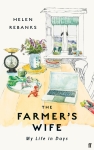
- Telling stories through embroidery in Cross-Stitch by Jazmina Barrera and The Farmer’s Wife by Helen Rebanks.

- A small boy nicknamed “Willmouse” (real name: William) in Mary and the Birth of Frankenstein by Anne Eekhout and The Greengage Summer by Rumer Godden.
- An account of a routine sonogram that ends with the technician leaving the doctor to deliver bad news in Reproduction by Louisa Hall and The Unfamiliar by Kirsty Logan.
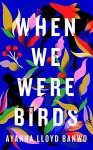
- Black dreadlocks/braid/ponytail being cut off in When We Were Birds by Ayanna Lloyd Banwo, The Wren, The Wren by Anne Enright, and Rebecca, Not Becky by Christine Platt and Catherine Wigginton Greene.
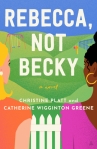
- Wondering how to arm a Black daughter against racist microaggressions in Rebecca, Not Becky by Christine Platt and Catherine Wigginton Greene and Ordinary Notes by Christina Sharpe.
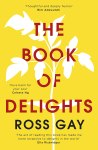
- Countering the commodification or romanticization of Black suffering in The Book of Delights by Ross Gay and Ordinary Notes by Christina Sharpe.

- An account of how the foot and mouth disease outbreak of 2001 affected the UK, especially northwest England, in Making the Beds for the Dead by Gillian Clarke and The Farmer’s Wife by Helen Rebanks.
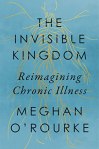
- I encountered the quote from Elaine Scarry’s The Body in Pain about pain being inexpressible in Reproduction by Louisa Hall and The Invisible Kingdom by Meghan O’Rourke on the same day. It’s also referenced in Mary Jean Chan’s Bright Fear.
- A mention of eating frogs’ legs in The Book of Delights by Ross Gay and La Vie by John Lewis-Stempel.
- I read about the effects of heavy metal pollution on the body in The Invisible Kingdom by Meghan O’Rourke and Windswept by Annie Worsley in the same evening.
- Composer Erik Satie is mentioned in Making the Beds for the Dead by Gillian Clarke and August Blue by Deborah Levy.
- Stendhal syndrome and Florence are mentioned in The Wren, The Wren by Anne Enright and Pharmakon by Almudena Sánchez.
- Swallows nesting in an old Continental building in Diary of a Tuscan Bookshop by Alba Donati and La Vie by John Lewis-Stempel.
- France being all about the rules and a “Putain de merde” exclamation to bad news in Dirt by Bill Buford and La Vie by John Lewis-Stempel.

- A character named Nomi in Friends and Strangers by J. Courtney Sullivan and one called Noemi in Diary of a Tuscan Bookshop by Alba Donati.
- Epigenetics (trauma literally determining the genetic traits that are passed on) is discussed in The Invisible Kingdom by Meghan O’Rourke and Pharmakon by Almudena Sánchez.
- Women of a certain age in Tuscany in The Three Graces by Amanda Craig and Diary of a Tuscan Bookshop by Alba Donati.
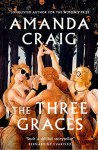
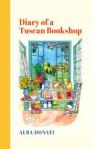
- Audre Lorde is quoted in Tremor by Teju Cole, Bibliomaniac by Robin Ince, The Invisible Kingdom by Meghan O’Rourke, Alone by Daniel Schreiber, and Ordinary Notes by Christina Sharpe.
- A Galway Kinnell poem is mentioned/quoted in The Dead Peasant’s Handbook by Brian Turner and Otherwise by Julie Marie Wade.
- The Bamiyan Buddhas are mentioned in Tremor by Teju Cole and The Dead Peasant’s Handbook by Brian Turner.


- Both The Three Graces by Amanda Craig and The Story of Lucy Gault by William Trevor open with a man shooting someone from his bedroom window.
- Linked short story collections about two children’s relationship with their Jamaican father, and mention of a devastating hurricane, in If I Survive You by Jonathan Escoffery and The Human Origins of Beatrice Porter and Other Essential Ghosts by Soraya Palmer. (Dual review coming up tomorrow!)
- Characters named Ben and Mara in The Whispers by Ashley Audrain and one story in Kate Doyle’s I Meant It Once.
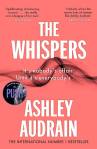
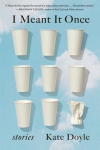
- Occasional uncut pages in my copies of I Meant It Once by Kate Doyle and The Unfamiliar by Kirsty Logan.
- A Florida setting and mention of the Publix supermarket chain in If I Survive You by Jonathan Escoffery and Arms and Legs by Chloe Lane.
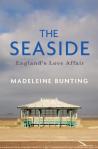
- A down-at-heel English seaside town near Scarborough features in The Seaside by Madeleine Bunting and Penance by Eliza Clark.
- A fictional northern town with “Crow” in the name: Crow-on-Sea in Penance by Eliza Clark and Crows Bank in Weyward by Emilia Hart.
- Claw-machine toys are mentioned in Penance by Eliza Clark and Directions to Myself by Heidi Julavits.
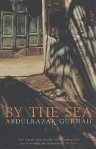
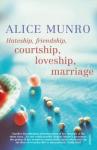
- Reading books by two Nobel Prize winners at the same time: Abdulrazak Gurnah (By the Sea) and Alice Munro (Hateship, Friendship, Courtship, Loveship, Marriage).
- Reading my second 2023 release featuring North Carolina ghost lights (after All of Us Together in the End by Matthew Vollmer, which I actually read last year): The Caretaker by Ron Rash.
- Reading my second 2023 release featuring a cat named Virginia Woolf (after Tell the Rest by Lucy Jane Bledsoe, which I actually read last year): one of the short stories in I Meant It Once by Kate Doyle.
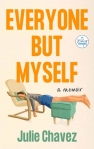
- A character named Shay in Everyone but Myself by Julie Chavez, The Human Origins of Beatrice Porter and Other Essential Ghosts by Soraya Palmer and The Caretaker by Ron Rash.

What’s the weirdest reading coincidence you’ve had lately?
Most Anticipated Releases of 2023
In real life, it can feel like I have little to look forward to. A catch-up holiday gathering and a shortened visit from my sister were over all too soon, and we have yet to book any trips for the summer months. Thankfully, there are always pre-release books to get excited about.


This list of my 20 most anticipated titles covers a bit more than the first half of the year, with the latest publication dates falling in August. I’ve already read 14 releases from 2023 (written up here), and I’m also looking forward to new work from Margaret Atwood, Rowan Hisayo Buchanan, Angie Cruz, Patrick deWitt, Naoise Dolan, Tessa Hadley, Louisa Hall, Leah Hazard, Christian Kiefer, Max Porter, Tom Rachman, Gretchen Rubin, Will Schwalbe, Jenn Shapland, Abraham Verghese, Bryan Washington, Anne Youngson and more, as well as to trying out various debut authors.
The following are in (UK) release date order, within sections by genre. U.S. details given too/instead if USA-only. Quotes are excerpts from the publisher blurbs, e.g., from Goodreads.
Fiction
 The End of Drum-Time by Hanna Pylväinen [Jan. 24, Henry Holt and Co.] I loved Pylväinen’s 2012 debut, We Sinners. This sounds like a winning combination of The Bell in the Lake and The Mercies. “A richly atmospheric saga that charts the repercussions of a scandalous nineteenth century love affair between a young Sámi reindeer herder in the Arctic Circle and the daughter of the renegade Lutheran minister whose teachings are upending the Sámi way of life.” (Edelweiss download)
Heartstopper, Volume 5 by Alice Oseman [Feb. 2, Hodder Children’s] A repeat from my 2022 Most Anticipated post. Will this finally be the year?? I devoured the first four volumes of this teen comic in 2021. Nick will be getting ready to go off to university, so I guess we’ll see how he leaves things with Charlie and whether their relationship will survive a separation. (No cover art yet.)
 I Have Some Questions for You by Rebecca Makkai [Feb. 21, Viking / Feb. 23, Fleet] Makkai has written a couple of stellar novels; this sounds quite different from her usual lit fic but promises Secret History vibes. “A fortysomething podcaster and mother of two, Bodie Kane is content to forget her past [, including] the murder of one of her high school classmates, Thalia Keith. … [But] when she’s invited back to Granby, the elite New England boarding school where she spent four largely miserable years, to teach a course, Bodie finds herself inexorably drawn to the case and its increasingly apparent flaws.” (Proof copy)
 Birnam Wood by Eleanor Catton [March 7, Granta / Farrar, Straus and Giroux] I was lukewarm on The Luminaries (my most popular Goodreads review ever) but fancy trying Catton again – though this sounds like Atwood’s Year of the Flood, redux. “Five years ago, Mira Bunting founded a guerrilla gardening group … Natural disaster has created an opportunity, a sizable farm seemingly abandoned. … Robert Lemoine, the enigmatic American billionaire, has snatched it up to build his end-times bunker. … A gripping psychological thriller … Shakespearean in its wit, drama, and immersion in character.” (NetGalley download)
 Romantic Comedy by Curtis Sittenfeld [April 4, Random House / April 6, Doubleday] Sittenfeld is one of my favourite contemporary novelists. “Sally Milz is a sketch writer for The Night Owls, the late-night live comedy show that airs each Saturday. … Enter Noah Brewster, a pop music sensation with a reputation for dating models, who signed on as both host and musical guest for this week’s show. … Sittenfeld explores the neurosis-inducing and heart-fluttering wonder of love, while slyly dissecting the social rituals of romance and gender relations in the modern age.”
 The Last Animal by Ramona Ausubel [April 18, Riverhead] “Jane is … on the cutting-edge team of a bold project looking to ‘de-extinct’ the woolly mammoth. … As Jane and her daughters ping-pong from the slopes of Siberia to a university in California, from the shores of Iceland to an exotic animal farm in Italy, The Last Animal takes readers on an expansive, bighearted journey that explores the possibility and peril of the human imagination on a changing planet, what it’s like to be a woman and a mother in a field dominated by men, and how a wondrous discovery can best be enjoyed with family. Even teenagers.”
 Saturday Night at the Lakeside Supper Club by J. Ryan Stradal [April 18, Pamela Dorman Books] Kitchens of the Great Midwest is one of my all-time favourite debuts. A repeat from my 2021 Most Anticipated post, hopefully here at last! “A story of a couple from two very different restaurant families in rustic Minnesota, and the legacy of love and tragedy, of hardship and hope, that unites and divides them … full of his signature honest, lovable yet fallible Midwestern characters as they grapple with love, loss, and marriage.” (Edelweiss download)
 The Memory of Animals by Claire Fuller [April 20, Fig Tree (Penguin) / June 6, Tin House] Fuller is another of my favourite contemporary novelists and never disappoints. “Neffy is a young woman running away from grief and guilt … When she answers the call to volunteer in a controlled vaccine trial, it offers her a way to pay off her many debts … [and] she is introduced to a pioneering and controversial technology which allows her to revisit memories from her life before.” And apparently there’s also an octopus? (NetGalley download)
 The Late Americans by Brandon Taylor [May 23, Riverhead / June 22, Jonathan Cape (Penguin)] “In the shared and private spaces of Iowa City, a loose circle of lovers and friends encounter, confront, and provoke one another in a volatile year of self-discovery. … These three [main characters] are buffeted by a cast of poets, artists, landlords, meat-packing workers, and mathematicians who populate the cafes, classrooms, and food-service kitchens … [T]he group heads to a cabin to bid goodbye to their former lives—a moment of reckoning that leaves each of them irrevocably altered.” (Proof copy)
Speak to Me by Paula Cocozza [June 8, Tinder Press] I loved her debut novel, How to Be Human, and this sounds timely. (I have never owned a smartphone.) “When Kurt’s phone rings during sex—and he reaches to pick it up—Susan knows that their marriage has passed the point of no return. … This sense of loss becomes increasingly focused on a cache of handwritten letters, from her first love, Antony, mementoes of a time when devotion seemed to spill out easily onto paper. Increasingly desperate and out of synch with the contemporary world, Susan embarks on a journey of discovery that will reconnect her to her younger self, while simultaneously revealing her future.” (No cover art yet.)
 I Am Homeless If This Is Not My Home by Lorrie Moore [June 20, Faber / Knopf] What a title! I’m keen to read more from Moore after her Birds of America got a 5-star rating from me late last year. “Finn is in the grip of middle-age and on an enforced break from work: it might be that he’s too emotional to teach history now. He is living in an America hurtling headlong into hysteria, after all. High up in a New York City hospice, he sits with his beloved brother Max, who is slipping from one world into the next. But when a phone call summons Finn back to a troubled old flame, a strange journey begins, opening a trapdoor in reality.”
 A Manual for How to Love Us by Erin Slaughter [July 5, Harper Collins] “A debut, interlinked collection of stories exploring the primal nature of women’s grief. … Slaughter shatters the stereotype of the soft-spoken, sorrowful woman in distress, queering the domestic and honoring the feral in all of us. … Seamlessly shifting between the speculative and the blindingly real. … Set across oft-overlooked towns in the American South.” Linked short stories are irresistible for me, and I like the idea of a focus on grief.
 Learned by Heart by Emma Donoghue [Aug. 24, Pan Macmillan / Aug. 29, Little, Brown] Donoghue’s contemporary settings have been a little more successful for me, but she’s still a reliable author whose career I am happy to follow. “Drawing on years of investigation and Anne Lister’s five-million-word secret journal, … the long-buried love story of Eliza Raine, an orphan heiress banished from India to England at age six, and Anne Lister, a brilliant, troublesome tomboy, who meet at the Manor School for young ladies in York in 1805 … Emotionally intense, psychologically compelling, and deeply researched”.
Nonfiction
 The Year of the Cat: A Love Story by Rhiannon Lucy Cosslett [Jan. 19, Tinder Press] “When Rhiannon fell in love with, and eventually married her flatmate, she imagined they might one day move on. … The desire for a baby is never far from the surface, but … after a childhood spent caring for her autistic brother, does she really want to devote herself to motherhood? Moving through the seasons over the course of lockdown, [this] nimbly charts the way a kitten called Mackerel walked into Rhiannon’s home and heart, and taught her to face down her fears and appreciate quite how much love she had to offer.”
 Fieldwork: A Forager’s Memoir by Iliana Regan [Jan. 24, Blackstone] “As Regan explores the ancient landscape of Michigan’s boreal forest, her stories of the land, its creatures, and its dazzling profusion of plant and vegetable life are interspersed with her and Anna’s efforts to make a home and a business of an inn that’s suddenly, as of their first full season there in 2020, empty of guests due to the COVID-19 pandemic. … Along the way she struggles … with her personal and familial legacies of addiction, violence, fear, and obsession—all while she tries to conceive a child that she and her immune-compromised wife hope to raise in their new home.” (Edelweiss download)
 Enchantment: Reawakening Wonder in an Exhausted Age by Katherine May [Feb. 28, Riverhead / March 9, Faber] I was a fan of her previous book, Wintering. “After years of pandemic life—parenting while working, battling anxiety about things beyond her control, feeling overwhelmed by the news-cycle and increasingly isolated—Katherine May feels bone-tired, on edge and depleted. Could there be another way to live? One that would allow her to feel less fraught and more connected, more rested and at ease, even as seismic changes unfold on the planet? Craving a different path, May begins to explore the restorative properties of the natural world”. (Proof copy)
 Monsters: A Fan’s Dilemma by Claire Dederer [April 25, Knopf / May 25, Sceptre] “What do we do with the art of monstrous men? Can we love the work of Roman Polanski and Michael Jackson, Hemingway and Picasso? Should we love it? Does genius deserve special dispensation? Is history an excuse? What makes women artists monstrous? And what should we do with beauty, and with our unruly feelings about it? Dederer explores these questions and our relationships with the artists whose behaviour disrupts our ability to apprehend the work on its own terms. She interrogates her own responses and her own behaviour, and she pushes the fan, and the reader, to do the same.”
 Undercurrent: A Cornish Memoir of Poverty, Nature and Resilience by Natasha Carthew [May 25, Hodder Studio] Carthew hangs around the fringes of UK nature writing, mostly considering the plight of the working class. “Carthew grew up in rural poverty in Cornwall, battling limited opportunities, precarious resources, escalating property prices, isolation and a community marked by the ravages of inequality. Her world existed alongside the postcard picture Cornwall … part-memoir, part-investigation, part love-letter to Cornwall. … This is a journey through place, and a story of hope, beauty, and fierce resilience.”
Grief Is for People by Sloane Crosley [June 25, MCD Books] According to Crosley, this is “a five-part book about many kinds of loss.” The press release adds to that: “Telling the interwoven story of a burglary, the suicide of Crosley’s closest friend, and the onset of Covid in New York City, [this] is the first full-length work of nonfiction by a writer best known for her acclaimed, bestselling books of essays.” (No cover art yet.)
Poetry
Bright Fear by Mary Jean Chan [Aug. 23, Faber] Their debut collection, Flèche, was my top poetry release in 2019. “These piercing poems fearlessly explore intertwined themes of queer identity, multilingualism and postcolonial legacy: interrogating acts of Covid racism, instances of queerphobia and the hegemony of the English language. Questions of acceptance and assimilation are further explored through a family’s evolving dynamics over time, or through the specious jargon of ‘Equality, Diversity and Inclusion’.” (No cover art yet.)
Other lists for more ideas:
What catches your eye here? What other 2023 titles do I need to know about?
20 Books of Summer, #6–8: Aristide, Hood, Lamott
This latest batch of colour-themed summer reads took me from a depleted post-pandemic landscape to the heart of dysfunctional families in Rhode Island and California.
Under the Blue by Oana Aristide (2021)
Fans of Station Eleven, this one’s for you: the best dystopian novel I’ve read since Mandel’s. Aristide started writing this in 2017, and unknowingly predicted a much worse pandemic than Covid-19. In July 2020, Harry, a middle-aged painter inhabiting his late nephew’s apartment in London, finally twigs that something major is going on. He packs his car and heads to his Devon cottage, leaving its address under the door of the cute neighbour he sometimes flirts with. Hot days stack up and his new habits of rationing food and soap are deeply ingrained by the time the gal from #22, Ash – along with her sister, Jessie, a doctor who stocked up on medicine before fleeing her hospital – turn up. They quickly sink into his routines but have a bigger game plan: getting to Uganda, where their mum once worked and where they know they will be out of range of Europe’s at-risk nuclear reactors. An epic road trip ensues.
 It gradually becomes clear that Harry, Ash and Jessie are among mere thousands of survivors worldwide, somehow immune to a novel disease that spread like wildfire. There are echoes of Cormac McCarthy’s The Road in the way that they ransack the homes of the dead for supplies, and yet there’s lightness to their journey. Jessie has a sharp sense of humour, provoking much banter, and the places they pass through in France and Italy are gorgeous despite the circumstances. It would be a privilege to wander empty tourist destinations were it not for fear of nuclear winter and not finding sufficient food – and petrol to keep “the Lioness” (the replacement car they steal; it becomes their refuge) going. While the vague sexual tension between Harry and Ash persists, all three bonds are intriguing.
In an alternating storyline starting in 2017, Lisa and Paul, two computer scientists based in a lab at the Arctic Circle, are programming an AI, Talos XI. Based on reams of data on history and human nature, Talos is asked to predict what will happen next. But when it comes to questions like the purpose of art and whether humans are worth saving, the conclusions he comes to aren’t the ones his creators were hoping for. These sections are set out as transcripts of dialogues, and provide a change of pace and perspective. Initially, I was less sure about this strand, worrying that it would resort to that well-worn trope of machines gone bad. Luckily, Aristide avoids sci-fi clichés, and presents a believable vision of life after the collapse of civilization.
The novel is full of memorable lines (“This absurd overkill, this baroque wedding cake of an apocalypse: plague and then nuclear meltdowns”) and scenes, from Harry burying a dead cow to the trio acting out a dinner party – just in case it’s their last. There’s an environmentalist message here, but it’s subtly conveyed via a propulsive cautionary tale that also reminded me of work by Louisa Hall and Maja Lunde. (Public library) 
Ruby by Ann Hood (1998)
Olivia had the perfect life: fulfilling, creative work as a milliner; a place in New York City and a bolthole in Rhode Island; a new husband and plans to try for a baby right away. But then, in a fluke accident, David was hit by a car while jogging near their vacation home less than a year into their marriage. As the novel opens, 37-year-old Olivia is trying to formulate a letter to the college girl who struck and killed her husband. She has returned to Rhode Island to get the house ready to sell but changes her mind when a pregnant 15-year-old, Ruby, wanders in one day.
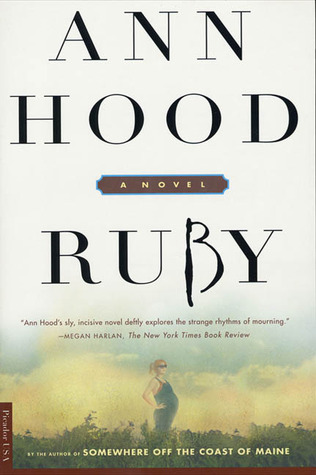 At first, I worried that the setup would be too neat: Olivia wants a baby but didn’t get a chance to have one with David before he died; Ruby didn’t intend to get pregnant and looks forward to getting back her figure and her life of soft drugs and petty crime. And indeed, Olivia suggests an adoption arrangement early on. But the outworkings of the plot are not straightforward, and the characters, both main and secondary (including Olivia’s magazine writer friend, Winnie; David’s friend, Rex; Olivia’s mother and sister; a local lawyer who becomes a love interest), are charming.
It’s a low-key, small-town affair reminiscent of the work of Anne Tyler, and I appreciated how it sensitively explores grief, its effects on the protagonist’s decision-making, and how daunting it is to start over (“The idea of that, of beginning again from nothing, made Olivia feel tired.”). It was also a neat touch that Olivia is the same age as me, so in some ways I could easily imagine myself into her position.
This was the ninth book I’ve read by Hood, an author little known outside of the USA – everything from grief memoirs to a novel about knitting. Ironically, its main themes of adoption and bereavement were to become hallmarks of her later work: she lost her daughter in 2002 and then adopted a little girl from China. (Secondhand purchase, June 2021)
[I’ve read another novel titled Ruby – Cynthia Bond’s from 2014.]
Blue Shoe by Anne Lamott (2002)
I’m a devoted reader of Lamott’s autobiographical essays about faith against the odds (see here), but have been wary of trying her fiction, suspecting I wouldn’t enjoy it as much. Well, it’s true that I prefer her nonfiction on the whole, but this was an enjoyably offbeat novel featuring the kind of frazzled antiheroine who wouldn’t be out of place in Anne Tyler’s work.
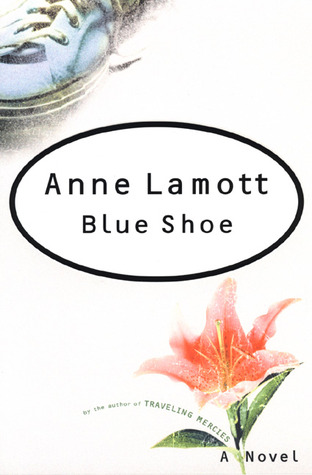 Mattie Ryder has left her husband and returned to her Bay Area family home with her young son and daughter. She promptly falls for Daniel, the handyman she hires to exterminate the rats, but he’s married, so she keeps falling into bed with her ex, Nicky, even after he acquires a new wife and baby. Her mother, Isa, is drifting ever further into dementia. A blue rubber shoe that Mattie finds serves as a totem of her late father – and his secret life. She takes a gamble that telling the truth, no matter what the circumstances, will see her right.
As in Ruby, I found the protagonist relatable and the ensemble cast of supporting characters amusing. Lamott crafts some memorable potted descriptions: “She was Jewish, expansive and yeasty and uncontained, as if she had a birthright for outrageousness” and “He seemed so constrained, so neatly trimmed, someone who’d been doing topiary with his soul all his life.” She turns a good phrase, and adopts the same self-deprecating attitude towards Mattie that she has towards herself in her memoirs: “She usually hoped to look more like Myrna Loy than an organ grinder’s monkey when a man finally proclaimed his adoration.”
At a certain point – maybe two-thirds of the way through – my inward reply to a lot of the novel’s threads was “okay, I get it; can we move on?” Yes, the situation with Isa is awful; yes, something’s gotta give with Daniel and his wife; yes, the revelations about her father seem unbearable. But with a four-year time span, it felt like Mattie was stuck in the middle for far too long. It’s also curious that she doesn’t apply her zany faith (a replica of Lamott’s) to questions of sexual morality – though that’s true of more liberal Christian approaches. All in all, I had some trouble valuing this as a novel because of how much I know about Lamott’s life and how closely I saw the storyline replicating her family dynamic. (Secondhand purchase, c. 2006 – I found a signed hardback in a library book sale back in my U.S. hometown for $1.) 
Hmm, altogether too much blue in my selections thus far (4 out of 8!). I’ll have to try to come up with some more interesting colours for my upcoming choices.
Next books in progress: The Other’s Gold by Elizabeth Ames and God Is Not a White Man by Chine McDonald.
Read any of these? Interested?
The Best Books from the First Half of 2021
Hard to believe we’ve already crossed the midpoint of the year. My top 20 releases of 2021 thus far, in alphabetical order within genre (fiction is dominating this year!), are below. I link to those I’ve already reviewed in full here or on Goodreads:
Fiction
 Under the Blue by Oana Aristide: Fans of Station Eleven, this one’s for you: the best dystopian novel I’ve read since Mandel’s. Aristide started writing in 2017, and unknowingly predicted a much worse pandemic than Covid-19. In July 2020, Harry and sisters Ash and Jessie are among mere thousands of survivors worldwide. Their plan is to flee England for Uganda, out of range of Europe’s at-risk nuclear reactors. An epic road trip ensues. A propulsive cautionary tale that also reminded me of work by Louisa Hall and Maja Lunde.
 The Push by Ashley Audrain: Blythe Connor, living alone with her memories, ponders what went wrong with her seemingly perfect family: a handsome architect husband, Fox, and their daughter Violet and baby son Sam. How much of what happened was because of Violet’s nature, and how much was Blythe’s fault for failing to be the mother the girl needed? The fact that her experience with Sam was completely different makes her feel ambivalent about motherhood. A cracking psychological thriller with an unreliable narrator.
 A Lie Someone Told You About Yourself by Peter Ho Davies: Davies’ minimalist approach – short sections skating over the months and years, wryly pulling out representative moment – crystallizes fatherhood, illuminating its daily heartaches and joys. The tone is just right in this novella, showing both sides of parenthood and voicing things you aren’t allowed to think, or at least not to admit to, starting with abortion, which would-be fathers aren’t expected to have strong feelings about. I loved the rumination on the role that chance plays in a life.
 The Living Sea of Waking Dreams by Richard Flanagan: Extinction, personal and global, is at the heart of this timely and enchanting story. It starts off as a family drama. Francie, the 86-year-old matriarch, is in a Tasmanian hospital after a brain bleed. Her three middle-aged children can’t bear to let her go. In an Australia blighted by bushfires, species loss mirrors Francie’s physical and mental crumbling. Smartphone addiction threatens meaningful connection. And then characters start to literally disappear, part by part…
 Mrs Death Misses Death by Salena Godden: Grief Is the Thing with Feathers meets Girl, Woman, Other would be my marketing shorthand for this one. Poet Salena Godden’s debut novel is a fresh and fizzing work, passionate about exposing injustice but also about celebrating simple joys, and in the end it’s wholly life-affirming despite a narrative stuffed full of deaths real and imagined. The novel balances the cosmic and the personal through Wolf’s family story. Unusual, musical, and a real pleasure to read.
 Early Morning Riser by Katherine Heiny: This tickled my funny bone. A cross between Kitchens of the Great Midwest and Olive Kitteridge, it’s built of five extended episodes, crossing nearly two decades in the lives of Jane and Duncan and lovingly portraying the hangers-on who compose their unusual family constellation in Boyne City, Michigan. All the characters are incorrigible but wonderful. Bad things happen, but there’s a core of love as Heiny explores marriage and parenting. A good-natured book that feels wise and bittersweet.
 No One Is Talking About This by Patricia Lockwood: This starts as a flippant skewering of modern life. A woman who became a social media star by tweeting quips like “Can a dog be twins?” reflects on life on “the portal” and under “the dictator.” Midway through the book, she gets a wake-up call when her mother summons her back to the Midwest for a family emergency. It’s the about-face that makes this novel, forcing readers to question the value of a digital existence based on glib pretence. Funny, but with an ache behind it.
 In by Will McPhail: Alternately laugh-out-loud funny and gentle. This debut graphic novel is a spot-on picture of modern life in a generic city. Nick never knows the right thing to say. The bachelor artist’s well-intentioned thoughts remain unvoiced; all he can manage is small talk. That starts to change when he meets Wren, a Black doctor who sees past his pretence. If only he can find the magic words that elicit honesty, he might make real connections with other human beings. A good old-fashioned story, with a wide emotional range.
 Detransition, Baby by Torrey Peters: A sparkling, sexy comedy with a tender heart beneath the zingers. Peters has set herself up as the Jane Austen of the trans community, tracing the ins and outs of relationships with verve and nuance. For me this was a valuable book simply for normalizing trans sexuality. The themes are universal, after all: figuring out who you are and what the shape of your life will be. I admire when authors don’t pander to readers by making things easy for those who are unfamiliar with a culture. Great lines abound.
 Brood by Jackie Polzin: Polzin’s debut is a quietly touching story of a woman in the Midwest raising chickens and coming to terms with the shape of her life. The unnamed narrator is Everywoman and no one at the same time. At one point she reveals, with no fanfare, that she miscarried four months into pregnancy in the bathroom of one of the houses she cleans. There is a bittersweet tone to this short work. It’s a low-key, genuine portrait of life in the in-between stages and how it can be affected by fate or by other people’s decisions.
Nonfiction
 The Circling Sky by Neil Ansell: Hoping to reclaim an ancestral connection, Ansell visited the New Forest some 30 times between January 2019 and January 2020, observing the unfolding seasons and the many uncommon and endemic species its miles house. He weaves together his personal story, the shocking history of forced Gypsy relocation into forest compounds starting in the 1920s, and the unfairness of land ownership in Britain. The New Forest is a model of both wildlife-friendly land management and freedom of human access.
 The Inevitable by Katie Engelhart: Engelhart spends time with doctors and patients who are caught up in the assisted dying argument, chiefly in Western Europe and the United States. Each case is given its own long chapter, like an extended magazine profile. The stories are wrenching, but compassionately told. The author explores the nuances of each situation, crafting expert portraits of suffering people and the medical professionals who seek to help them, and adding much in the way of valuable context. A voice of reason and empathy.
 The Screaming Sky by Charles Foster: A Renaissance man as well versed in law and theology as he is in natural history, Foster is obsessed with swifts and ashamed of his own species: for looking down at their feet when they could be watching the skies; for the “pathological tidiness” that leaves birds and other creatures no place to live. He delivers heaps of information on the birds but refuses to stick to a just-the-facts approach. The book quotes frequently from poetry and the prose is full of sharp turns of phrase and whimsy.
 Intensive Care by Gavin Francis: Francis, an Edinburgh physician, reflects on “the most intense months I have known in my twenty-year career.” He journeys back through 2020, from the January day when he received a bulletin about a “novel Wuhan coronavirus” to November, when he learned of promising vaccine trials but also a rumored third wave and winter lockdown. An absorbing first-hand account of a medical crisis, it compassionately bridges the gap between experts and laymen. The best Covid chronicle so far.
 A Still Life by Josie George: Over a year of lockdowns, many of us became accustomed to spending most of the time at home. But for Josie George, social isolation is nothing new. Chronic illness long ago reduced her territory to her home and garden. The magic of A Still Life is in how she finds joy and purpose despite extreme limitations. Opening on New Year’s Day and travelling from one winter to the next, the book is a window onto George’s quiet existence as well as the turning of the seasons. (Reviewed for TLS.)
 Dusk, Night, Dawn by Anne Lamott: Lamott’s best new essays in nearly a decade. The central theme is how to have hope in God and in other people even when the news – Trump, Covid, and climate breakdown – only heralds the worst. One key thing that has changed for her is getting married for the first time, in her mid-sixties, to a Buddhist. In thinking of marriage, she writes about friendship, constancy, and forgiveness, none of which comes easy. Opportunities for maintaining quiet faith in spite of the circumstances arise all the time.
 A Braided Heart by Brenda Miller: Miller, a professor of creative writing, delivers a master class on the composition and appreciation of autobiographical essays. In 18 concise pieces, she tracks her development as a writer and discusses the “lyric essay”—a form as old as Seneca that prioritizes imagery over narrative. These innovative and introspective essays, ideal for fans of Anne Fadiman, showcase the interplay of structure and content. (Coming out on July 13th from the University of Michigan Press. My first review for Shelf Awareness.)
 Sanctuary by Emily Rapp Black: A continuation of The Still Point of the Turning World, about the author’s son Ronan, who died of Tay-Sachs disease at age three. In the months surrounding his death, she split from her husband and raced into another relationship that led to her daughter, Charlie. Rapp Black questions the sorts of words she got branded with: “brave,” “resilient.” Sanctuary is full of allusions and flashbacks, threading life’s disparate parts into a chaotic tapestry. It’s measured and wrought, taming fire into light and warmth.
Poetry
 Pilgrim Bell by Kaveh Akbar: An Iranian American poet imparts the experience of being torn between cultures and languages, as well as between religion and doubt, in this gorgeous collection of confessional verse. Food, plants, animals, and the body supply the book’s imagery. Wordplay and startling juxtapositions lend lightness to a wistful, intimate collection that seeks belonging and belief. (Coming out on August 3rd from Graywolf Press. Reviewed for Shelf Awareness.)
 Eat or We Both Starve by Victoria Kennefick: In this audacious debut collection, the body is presented as a battleground: for the brain cancer that takes the poet’s father; for disordered eating that entwines with mummy issues; for the restructuring of pregnancy. Families break apart and fuse into new formations. Cannibalism and famine metaphors dredge up emotional states and religious doctrines. There’s a pleasingly morbid cast to the book, but it also has its lighter moments. Rich with imagery and alliteration, this is just my kind of poetry.
What are some of the best books you’ve read so far this year?
What 2021 releases do I need to catch up on right away?
Reviews Roundup, August–September
One of my goals with this blog is to have one convenient place where I can gather together all my writing that has appeared in disparate online locations. To that end, once a month I’ll provide links to all the book reviews I’ve published elsewhere, with a rating (below each description) and a short taster so you can decide whether to click to read more. A couple of exceptions: I won’t point out my Kirkus Indie or BlueInk reviews since I don’t get a byline.
The Bookbag
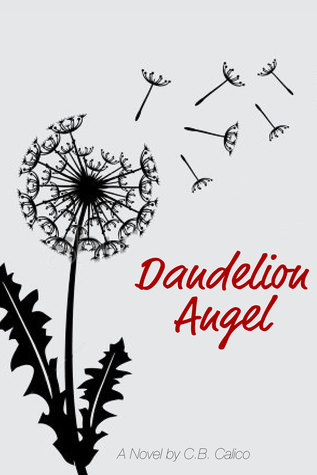 Dandelion Angel by C.B. Calico (& interview): This was inspired by a non-fiction work, Understanding the Borderline Mother by Christine Ann Lawson. The four mother/daughter relationships in this Germany-set novel – all marked to some extent by dysfunction, physical and/or verbal abuse, and borderline personality disorder – are based on Lawson’s metaphorical classifications: the hermit, the queen, the waif, and the witch. Looping back through her four storylines in three complete cycles, Calico shows how mental illness is rooted in childhood experiences and can go on to affect a whole family.

The Last Pilot by Benjamin Johncock: Cinematic descriptions of the California desert setting plus excellent characters and dialogue enliven this debut novel about a fictional test pilot and his family troubles during America’s Space Race. Johncock is British, but you can tell he’s taken inspiration from stories about the dawn of the astronaut age. If I allowed myself small points of criticism, I would say that it’s a challenge to accept the passage of time in the final 50 pages, and that a keen interest in astronauts is probably a boon to keep readers going through the test flight portions, which to me were less compelling than the domestic drama of Jim, Grace and Florence.
 Home Is Burning by Dan Marshall: At age 25, Dan Marshall went home to Salt Lake City to care for a father with ALS and a mother with leukemia. He and his four hapless siblings (a Sedaris-like clan) approached caregiving with sarcasm and dirty humor. Gleefully foul-mouthed, his memoir lacks introspective depth. He hardly ventures deeper than initial descriptions like “My gay brother, Greg” and “My adopted Native American sister, Michelle.” And even when his sentiments about his father are sincere, they are conveyed via what sound like clichés: “I wanted my poor dad to get better, not worse.” But to my surprise, Marshall made me cry in the end.

Of Orcas and Men by David Neiwert: Inspired by personal sightings near his home in Seattle, Neiwert set out to learn everything he could about orcas. The result is a thorough study of whales’ behavior and interactions with humanity from native mythology through modern-day aquarium shows. Some specialist interest would probably be helpful to those attempting this book, although there are plenty of black-and-white photographs to keep even casual readers interested. “Recovering our humanity may be the real gift of the orcas, what they can teach us. It’s our choice whether to listen.”

BookBrowse
 This Is Your Life, Harriet Chance! by Jonathan Evison [a subscription service, but an excerpt is available for free]: A widow in her seventies relives the ups and downs of her life while on an Alaskan cruise to scatter her husband’s ashes. Chapters alternate between a third-person account of the cruise and a second-person survey of Harriet’s past, delivered in the format of TV’s This Is Your Life. The narration is fresh and effective because the gradual revelations undermine Harriet’s elderly persona in such surprising ways. She is an out-of-the-ordinary but believable protagonist who, like all of us, has a mixture of victories and disappointments behind her. This is a charming novel about learning to reckon with the past.
 Speak by Louisa Hall [subscription service, but the full text of my review will be available for free during the week starting September 25th as part of Editor’s Choice]: Hall interweaves disparate time periods and voices to track the development of artificial intelligence. The fact that all six narratives are in different documentary formats – memoirs, letters, the transcript of a dialogue, a diary, and so on – means they are easy to distinguish. One might argue that two of them (Alan Turing’s letters and Mary’s shipboard diary) are unnecessary, and yet these are by far the most enjoyable. They prove Hall has an aptitude for historical fiction, a genre she might choose to pursue in the future. A remarkable book interrogating how the languages we converse in and the stories we tell make us human.
BookTrib
 You Too Can Have a Body Like Mine by Alexandra Kleeman: Think of Alexandra Kleeman as an heir to Dave Eggers and Douglas Coupland, with a hefty dollop of Margaret Atwood thrown in. Her first novel is a full-on postmodern satire bursting with biting commentary on consumerism and conformity. Television and shopping are the twin symbolic pillars of a book about the commodification of the body. In a culture of self-alienation where we buy things we don’t need, have no idea where food comes from and desperately keep up the façade of normalcy, Kleeman’s is a fresh voice advocating the true sanity of individuality. Don’t miss her incredible debut.

Foreword Reviews
Conflict Communication by Rory Miller: Based on “ConCom,” the police verbal de-escalation program Miller developed with Marc MacYoung, this book aims to introduce readers to more conscious methods of verbal communication that will sidestep instinctive reactions and promote peaceful solutions. The advice is practical and intuitive, yet picks up on tiny details that most people would not notice. Concise, helpful, and well-organized, this is strongly recommended for readers interested in the psychology of violence and improving communication skills.
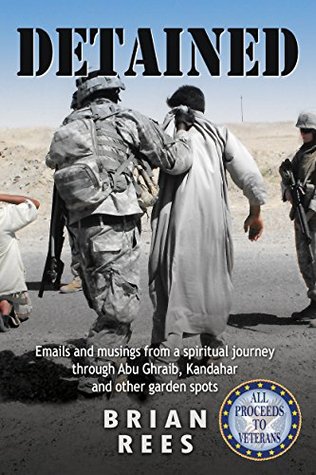 Detained by Brian Rees: Rees intersperses witty e-mail updates from his tours of Iraq and Afghanistan with clued-in commentary about war tactics, terrorism, Islam, and the benefits of transcendental meditation (TM) for soldiers with PTSD. The mixture of formats and topics generally works well, though the spiritual material deserves its own book. There’s no denying Rees’s expertise, and his fluid writing keeps the pages turning. This could make a fascinating companion volume for fans of recent war fiction such as The Yellow Birds, Redeployment, and War of the Encyclopaedists.
 Talk to Me of Love by Julia Anne Bernhardt: The poems in Bernhardt’s first collection range from erotic to spiritual as they investigate love in all its forms. Repetition, rhyme, and mantras produce hypnotic sonic effects and support the central message of the epigraph: “God is in the detail.” The everyday and the eternal mix here. This well-structured collection celebrates different types of love through meditative verse. The themes’ strength is enough to recommend it to readers of Jo Shapcott and Julia Copus.
The Hidden Treasure of Dutch Buffalo Creek by Jackson Badgenoone: Otherworldly ghost writers (the “Neverborn”) compose biographies for ordinary people in this playfully metafictional novel. James is a strong central character whose memories from the 1950s through the present give a sense of history’s sweep, while vivid descriptive language enlivens the settings. Although well written, the book as a whole is an unusual amalgam of spiritualism, historical nostalgia, and technology. James’s story might have been better told as a simple coming-of-age novel with flashbacks.
Nudge
 Common Ground by Rob Cowen: An unassuming patch of edge-land outside Harrogate is Cowen’s nature paradise, providing him with wildlife encounters and imaginative scenarios. Essentially, what Cowen does is give profiles of the edge-land’s inhabitants: animal and human, himself included. For instance, he creates an account of the life and death of a fox; elsewhere, he crafts a first-person narrative by a deer being hunted in medieval times. These fictions emulating Watership Down or Tarka the Otter, though well written, are out of place. When the book avoids melodramatic anthropomorphizing, it is very beautiful indeed.
We Love This Book
 Where My Heart Used to Beat by Sebastian Faulks: In Faulks’s thirteenth novel, his trademark themes of war, love and memory coalesce through the story of a middle-aged psychiatrist discovering the truth about his father’s death. Reminiscent of Birdsong as well as John Fowles’s The Magus and Ernest Hemingway’s A Farewell to Arms, this does not have the power of Faulks’s previous work but is a capable study of how war stories and love stories translate into personal history. [A few extra thoughts at Goodreads.]

I also post reviews of most of my casual reading and skimming on Goodreads.
 How to Write a Novel by Melanie Sumner: Our would-be novelist is Aris (short for Aristotle) Thibodeau, 12.5 years old and as precocious as Flavia de Luce. Diane is her single mother, and Max her downright weird younger brother. Using Write a Novel in 30 Days!, Aris is turning her family’s life story into fiction. In some ways they are very out of place here in Kanuga, Georgia. The child’s wry look at family dysfunction reminded me of Sue Townsend’s The Secret Diary of Adrian Mole, Aged 13 ¾. I would probably read something else from Sumner, so long as it wasn’t quite as silly and YA geared as this.
The Art of Memoir by Mary Karr: I would recommend this to anyone who reads and/or secretly wants to write memoirs; for the latter group, there is a wealth of practical advice here, on topics such as choosing the right carnal details (not sexual – or not only sexual – but physicality generally), correcting your facts and misconceptions, figuring out a structure, and settling on your voice. Along the way Karr discusses a number of favorite memoirs in detail, sometimes even line by line: Wild by Cheryl Strayed, Stop-Time by Pat Conroy, A Childhood by Harry Crews, Maya Angelou’s books, Speak, Memory by Nabokov, and so on.

Emblems of the Passing World: Poems after Photographs by August Sander by Adam Kirsch: A charming mix of historical photographs (1910s–1950s Germany) and poems. Kirsch uses his poetry to bring these one-dimensional figures to life, imagining the stories behind their generic titles (“Office Worker” or “Farming Family”) and sometimes slyly questioning the political and status connotations of such designations. One of my favorites was “Student of Philosophy.” This book could draw people whose interests usually run more to nonfiction – especially social history – into giving poetry a try. Releases November 17th.
 Browsings by Michael Dirda: Dirda wrote this pleasant set of bibliophilic essays for the American Scholar website in 2012–13. He’s the American equivalent of the UK’s John Sutherland: an extremely well-read doyen of the classics with a special love for Victorian and Edwardian genre fiction, often as revived by small presses and specialist societies. At times Dirda’s interests can be a bit obscure for the average reader, and some of the essays feel redundant. Still, it’s easy to relate to his addictive book purchasing and hoarding.
The Communist Manifesto by Karl Marx and Friedrich Engels: I read this on the train to Manchester, appropriate reading when approaching one of the UK’s biggest centers of Victorian industry and the place where Marx and Engels met to discuss ideas in the mid-1840s. Like Darwin’s Origin of Species, another seminal Victorian text, this has so many familiar lines and wonderful metaphors that have entered into common discourse that I simply assumed it was composed in English. My eyes glaze over at politics or economics, so I valued this more for its language than for its ideas. Part II, “Proletarians and Communists,” is the most focused part if you want to sample it.
 Number 11 by Jonathan Coe: This is a funny and mildly disturbing state-of-England and coming-of-age novel. I’d only read one previous book by Coe, Expo 58; this is a better example of his usual pattern: multiple, loosely linked storylines. Here the theme is the absurdity of modern culture, encompassing many aspects: unjust wars, the excesses of the uber-rich, the obsession with celebrity, and suspicion and exclusion of those who are different from us. The number 11 keeps popping up, too. My favorite parts were a Survivor-type reality television show and a laughably over-the-top prize ceremony banquet. Releases November 11th.
 My Family and Other Superheroes by Jonathan Edwards: Edwards displays his proud Welsh heritage with poems reflecting on his family tree and the country’s landscape. One of my favorites was “View of Valleys Village from a Hill,” in which the narrator, with a God’s-eye view of his family, envisions messing around with them. The witty “In John F. Kennedy International Airport” imagines that Wales has been abolished and recreated in miniature in a small Kansas museum (a bit like Julian Barnes’s England, England).
The Whole & Rain-domed Universe by Colette Bryce: Many of these poems are about the author’s Irish family inheritance, both literal and figurative, as in “Heritance”: “From her? Resilience. Generosity. / A teacher’s gravitas. / Irish stew. A sense / of the ridiculous. High ceilings.” I loved the first line of “Signature” – “When I finally gave up and became my mother.” It’s particularly nice how enjambment often makes the thought go just that one line beyond what you expect. I’d read more from Bryce.
 Bookish Beck = Rebecca Foster. American transplant to England. Freelance proofreader and book reviewer.
 Bookish Beck