The 2025 McKitterick Prize Winner & SoA Awards Ceremony
Yesterday the Society of Authors’ awards were announced and the prizes handed out at a ceremony in London. As a McKitterick Prize judge, I was asked last month to give a 50-word blurb on the shortlist as a whole—
Each of these six novels has a fully realized style. So confident and inviting are they that it’s hard to believe they are debuts. With nuanced characters and authentic settings and dilemmas, they engage the mind and delight the emotions. I will be following these authors’ careers with keen interest.
—and on each individual shortlisted title:
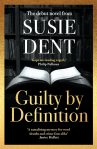 Etymology and Shakespeare studies are the keys to solving a cold case in Susie Dent’s clever, engrossing mystery, Guilty by Definition.
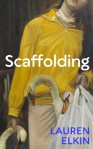 Psychoanalysis, motherhood, and violence against women are resounding themes in Lauren Elkin’s Scaffolding. As history repeats itself one sweltering Paris summer, the personal and political structures undergirding the protagonists’ parallel lives come into question. This fearless, sophisticated work ponders what to salvage from the past—and what to tear down.
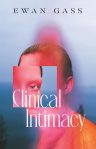 Clinical Intimacy’s mysterious antihero comes to life through interviews with his family, friends and clients. The brilliant oral history format builds a picture of isolation among vulnerable populations, only alleviated by care and touch—especially during Covid-19. Ewan Gass’s intricate story reminds us of the ultimate unknowability of other people.
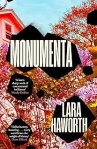
In Monumenta, Lara Haworth braids satire, magic realism, and metafiction into a compact and surprising meditation on how we seek to memorialise the tragedies of history.
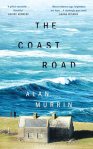
Set in small-town Ireland, The Coast Road is a subtle, compassionate novel in which the characters learn to write their own stories rather than bow to convention and fate. Alan Murrin is a must-read author for fans of Claire Keegan, Louise Kennedy, and Colm Tóibín.
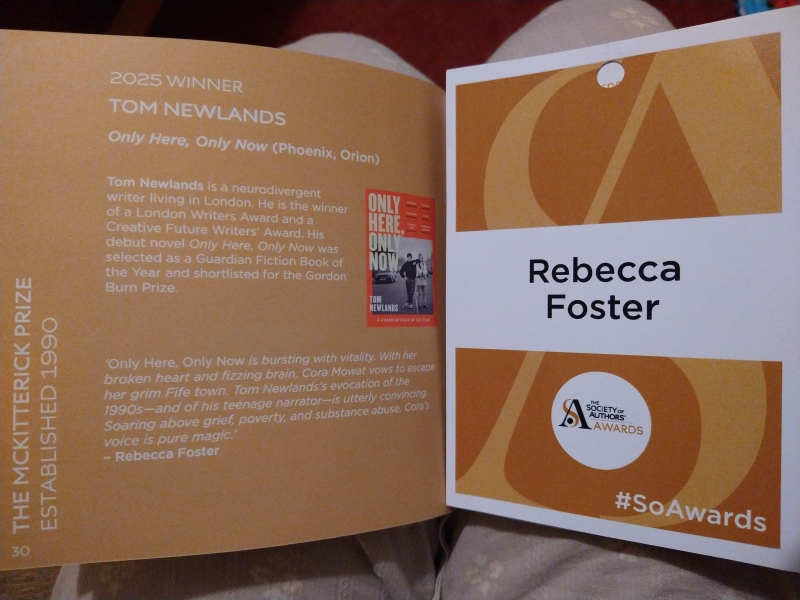
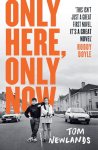 Only Here, Only Now is bursting with vitality. With her broken heart and fizzing brain, Cora Mowat vows to escape her grim Fife town. Tom Newlands’s evocation of the 1990s—and of his teenage narrator—is utterly convincing. Soaring above grief, poverty, and substance abuse, Cora’s voice is pure magic.
Our winner was Tom Newlands for Only Here, Only Now and our runner-up was Lauren Elkin for Scaffolding. (What an honour to have my blurb for the former used in the winners press release, the ceremony programme, and social media publicity.)


Newlands was also a runner-up for the ADCI Literary Prize “for a disabled or chronically ill writer, for an outstanding novel containing a disabled or chronically ill character or characters.” Here’s an excerpt from his statement for the press release:
To have my debut novel recognised in these two categories is particularly meaningful for me because they are linked by my experience. I didn’t start writing until the age of 40, in large part because growing up neurodivergent I didn’t feel my thought processes or methods of working were compatible with the production of a novel. There were no role models out there publishing stories like mine, and in the end, I wrote Only Here, Only Now because I couldn’t find the novel I wanted to read – a warm, vivid and funny story that examined poverty, disability and belonging, and that featured characters rarely found in British fiction.
Looking back to early on in this prize journey (which started back in November) … here was some of my early reading:
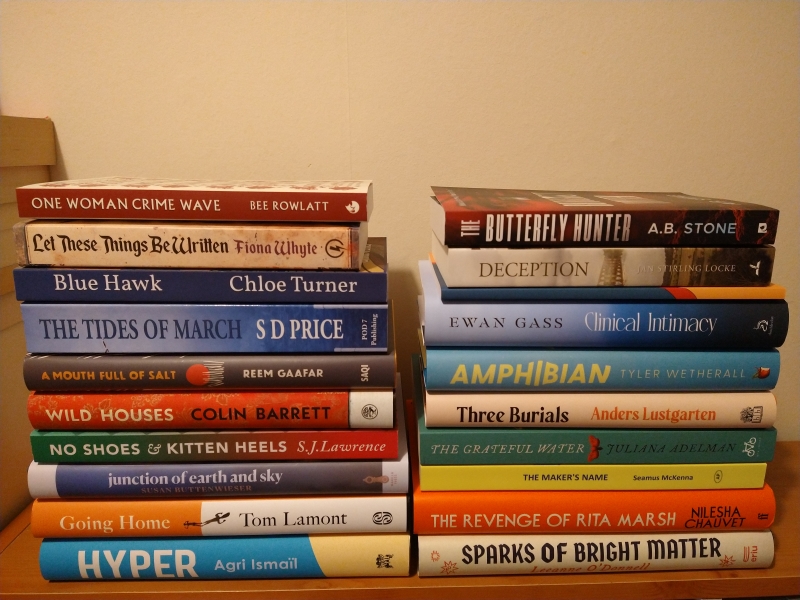
And our longlist:
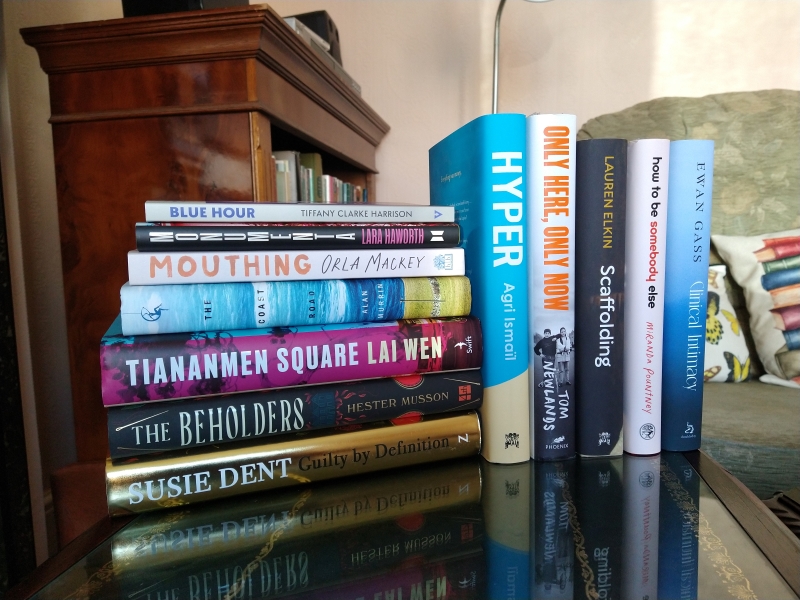
A couple of my favourite books from my reading that didn’t make the shortlist were:
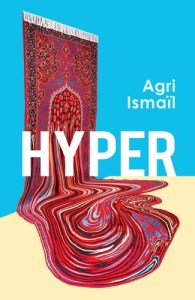 Hyper by Agri Ismaïl [I longlisted it – and then shortlisted it – but was outvoted]
Following a Kurdish family across several decades, this is a zeitgeist-y story that examines questions of national and personal autonomy. With its Dubai, Baghdad, London, and New York settings, it sets the second generation’s luxury, high finance, and fully online worlds against their parents’ bitter experience of exile after a failed independence movement. With its themes of dysfunction and failures and the long view of how we got here from there, it reminded me of Jonathan Franzen’s body of work.
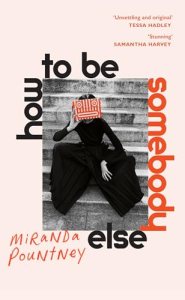 How to Be Somebody Else by Miranda Pountney [It had two votes to make the shortlist, but because it was so similar to Scaffolding in its basics (a thirtysomething woman in a big city, the question of motherhood, and pregnancy loss) we decided to cut it.]
This is the addictively readable story of Dylan, a late-thirties English woman who gives up her New York City advertising job and ponders authorship and motherhood while house-sitting an acquaintance’s apartment—and carrying on an affair with the married downstairs neighbour. As we see her interact with family and friends, we come to appreciate her not as some stereotypical ‘sad girl’ or ‘disaster woman’, but as an Everywoman seeking the time and space to become herself. It’s a sharp and witty novel for fans of Sally Rooney.
For the first time, I got to attend the SoA Awards ceremony in person yesterday. It was a hot day to be travelling in London, and after the oven of the Bakerloo line I was grateful to escape into the cool of Southwark Cathedral and its grounds. It was such a juxtaposition between the sleek City architecture and the ancient refuge of a church.
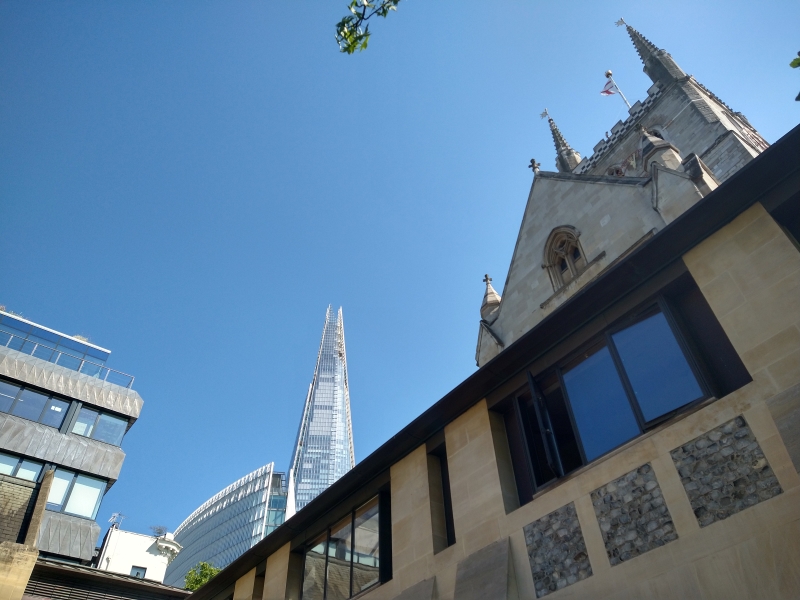
I worried that on such a warm and then busy day Hodge the cathedral cat wouldn’t show himself, but as I picked up my name badge he was asking to be let inside from the courtyard. He didn’t seem interested in strokes so I followed him at a respectful distance and let him settle in for a watchful rest.


Nominated authors and judges were treated to an exceptional afternoon tea, followed by the ceremony and drinks reception. It was lovely to meet my fellow judges Anietie Isong and Kathy O’Shaughnessy (author of the fantastic In Love with George Eliot, which won the SoA’s Paul Torday Memorial Prize) in the flesh as I’d only met them on Zoom before. We chatted a good bit with Lara Haworth, one of our shortlistees, and with Anne Booth, one of the Queen’s Knickers Award (children’s books) nominees, and also got to briefly meet Tom Newlands when he arrived for the ceremony. I always look out for literary ‘celebrities’ at such events and yesterday spotted Naomi Alderman, Caroline Bird, Joanne Harris and Alice Jolly.
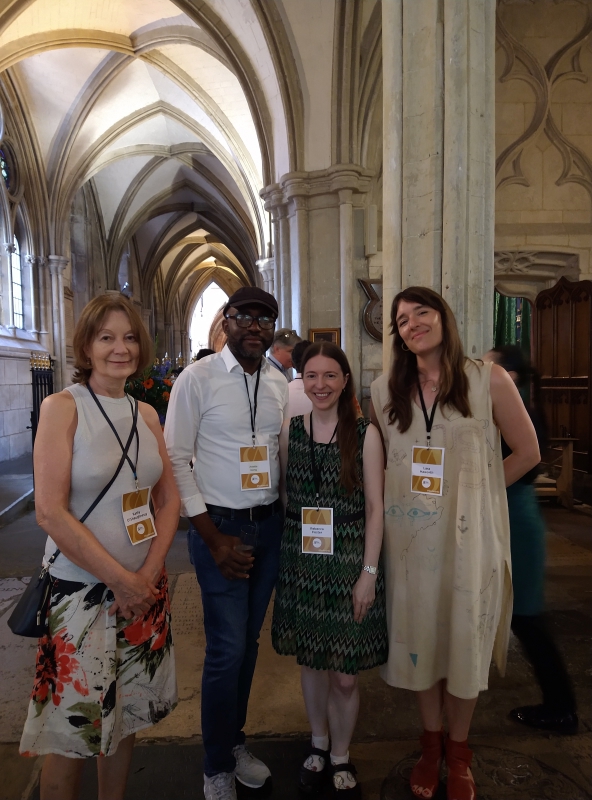


Dean Rev. Mark Oakley gave a welcome address via video, praising authors for bringing “resonance” rather than just “relevance.” He exhorted us, in the words of David Copperfield, to “read as if for life.” Joseph Coelho then gave a terrific keynote speech celebrating words written by humans (as opposed to an inaccurate AI-written bio of himself that he once encountered) and encouraging shortlistees, especially, to take time to bask in their achievement. Rejection is an ongoing, annual thing for him even at this stage of his career – he still remembers the £50 poetry gigs, changing in library toilets and school staff rooms; and the 12 years he spent trying to get published – even after he became the youngest-ever children’s laureate in 2022. “Wait for no one,” he challenged us: no one is going to give you permission or come save you, so go out there and do what you’re meant to do.
What an all-round fantastic experience this was! I’m so grateful to the Society of Authors for the opportunity.
Other notable winners announced yesterday included:
- Ashani Lewis (the only double winner): the Betty Trask Prize and Somerset Maugham award for Winter Animals
- Hisham Matar & Elif Shafak: the Gordon Bowker Volcano Prize (for a novel focusing on the experience of travel away from home), joint winners for My Friends and There Are Rivers in the Sky
Reading Ireland Month, Part II: Barrett, More Donoghue, O’Farrell x 2
My second set of contributions to Cathy’s Reading Ireland Month. Emma Donoghue also appeared in my first instalment of reviews. Today I’m featuring her latest novel, published just a couple of weeks ago, and taking a quick look at a few other Irish books I’ve read recently: a light-hearted debut featuring small-town criminals, and two by Maggie O’Farrell: a reread of her only nonfiction work to date (for book club), and her newest children’s book.
Wild Houses by Colin Barrett (2024)
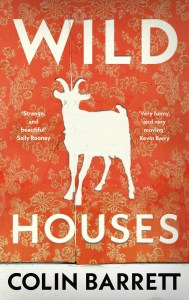 When Doll English is kidnapped by the Ferdia brothers in revenge for a huge loss on a drug deal, his girlfriend, mother and brother must go to unexpected lengths to set him free. There’s plenty of cursing and violence in this small-town crime caper, yet Barrett has a light touch; the dialogue, especially, is funny. The dialect is easy enough to decipher. Nicky, Doll’s girlfriend, lost both parents young and works in a hotel bar. She’s a strong character reminiscent of the protagonist in Trespasses. Overall, I felt that this was nicely written but that Barrett’s talent was somewhat wasted on a thin story. I’ve encountered similar plots in better books by Paul Murray and Donal Ryan. (Free from the publisher)
The Paris Express by Emma Donoghue
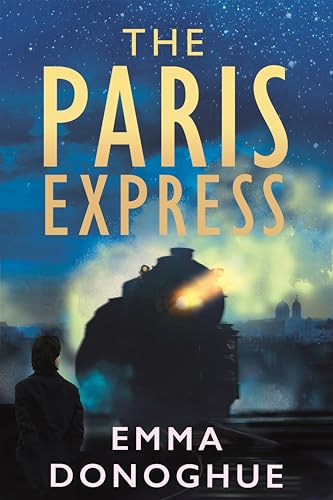 Inspired by a real-life disaster involving a train on the approach to Paris’s Montparnasse station in 1895. The Author’s Note at the end reveals the blend of characters included: people known to have been on that particular train, whether as crew or passengers; those who might have journeyed on it because they spent time in Paris at around that period (such as Irish playwright John Millington Synge); and those made up from scratch. It’s a who’s-who of historical figures, many of whom represent different movements or social issues, such as a woman medical student and an African American painter who can pass as white in certain circumstances. Donoghue clearly intends to encompass the entire social hierarchy, from a maid to a politician with a private carriage. She also crafts a couple of queer encounters.
The premise is appealing: a train hurtling toward catastrophe is in a sense a locked room, seeding much drama and intrigue. A young female radical is on board with a bomb, so all along you speculate about whether she’ll set it off and when. While I found the general thrust engaging, it was harder to develop interest in the large cast of characters. I also found the passages personifying the train (she “carries death in her belly”) hokey and thought that, as has sometimes been the case with Donoghue’s historical work, there’s too much research that’s there just for the sake of it, because she came across a fact she found fascinating and couldn’t bear to leave out (“These days every public building has three rubbish bins—one for the reclaiming of paper and cloth, the next for glass, ceramics, and oyster shells, and the last for perishables, which is where she drops the handkerchief.”). So this was enjoyable enough but not among her best.
With thanks to Picador for the proof copy for review.
I Am, I Am, I Am: Seventeen Brushes with Death by Maggie O’Farrell (2017)
 This was a reread for book club, and oh how brilliant it is. I’m more convinced than ever that the memoir-in-essays is a highly effective form because it focuses on themes or moments of great intensity and doesn’t worry about accounting for all the boring intermediate material. A few of these pieces feel throwaway, but together they form a vibrant picture of a life and also inspire awe at what the human body can withstand. No doubt on Wednesday we will each pick out different essays that resonated the most with us, perhaps because they run very close to our own experience. I imagine our discussion will start there – and with sharing our own NDEs. Stylistically, the book has a lot in common with O’Farrell’s fiction, which often employs the present tense and a complicated chronology. The present tense and a smattering of second person make the work immediate and invite readers to feel their way into her situations. Otherwise, my thoughts are as before – the last two essays are the pinnacle.
My original review from 2018:
We are, all of us, wandering about in a state of oblivion, borrowing our time, seizing our days, escaping our fates, slipping through loopholes, unaware of when the axe may fall.
O’Farrell captures fragments of her life through 17 essays on life-threatening illnesses and other narrow escapes she’s experienced. The pieces aren’t in chronological order and aren’t intended to be comprehensive. Instead, they crystallize the fear and pain of particular moments in time, and are rendered with the detail you’d expect from a scene in one of her novels. (Indeed, you can spot a lot of the real-life influences on her fiction, particularly This Must Be the Place – travels in China and Chile; eczema and stammering.)
She’s been mugged at machete point, has nearly drowned several times, had a risky first labour, and was almost the victim of a serial killer. (My life feels awfully uneventful by comparison!) But the best section of the book is its final quarter: an essay about her childhood encephalitis and its lasting effects, followed by another about her daughter’s extreme allergies. Only now, as a mother, can she understand how terrifying it must have been for her parents to wait at her side during days when she might not have survived. O’Farrell depicts parenthood better than any other author I can think of – letting those of us who haven’t experienced it do so vicariously. (Gift from my wish list)
My original rating (2018): 
My rating now: 
When the Stammer Came to Stay by Maggie O’Farrell (2024)
 This is actually her third children’s book, after Where Snow Angels Go (2020) and The Boy Who Lost His Spark (2022). All are illustrated by Daniela Jaglenka Terrazzini, who has a richly colourful and slightly old-fashioned style; she makes kids look as dignified as adults. The books are intended for slightly older children in that they’re on the longer side, have more words than pictures, and are more serious than average. They all weave in gentle magic as a way of understanding and coping with illness, a mental health challenge, or a disability.
When the Stammer Came to Stay is a perfect follow-on to I Am, I Am, I Am because it, too, draws on O’Farrell’s personal struggles. It’s the fable-like story of two sisters, Bea and Min, who share an attic room. The one is perfectly tidy; the other is a messy tomboy. When the stammer, pictured as a blob of silver ectoplasm above the shoulder, starts stealing Min’s words, they gather advice from their parents and the lodgers about how she can accept her new reality instead of fighting it or closing herself off by not speaking at all. The mycologist’s symbiosis metaphor is perhaps a bit too neat, but it contrasts with the impish connotations of the dibbuk, another useful parallel the girls discover. With this I’ve now read O’Farrell’s complete published works!
Book Serendipity, March to April 2024
I call it “Book Serendipity” when two or more books that I read at the same time or in quick succession have something in common – the more bizarre, the better. This is a regular feature of mine every couple of months. Because I usually have 20–30 books on the go at once, I suppose I’m more prone to such incidents. The following are in roughly chronological order.
- I encountered quotes from “The Second Coming” by W.B. Yeats on the same day in Immanuel by Matthew McNaught and Waiting for the Monsoon by Rod Nordland. A week or so later, I found another allusion to it – a “rough _________ slouching toward ________” – in Mothership by Greg Wrenn.
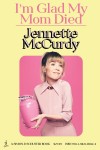
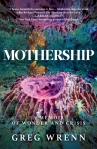
- Reading my second memoir this year in which the author’s mother bathed them until they were age 17 (in other words, way past when it ceased to be appropriate): I’m Glad My Mom Died by Jennette McCurdy was followed by Mothership by Greg Wrenn.
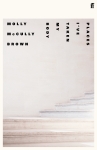
- Quoting a poem with the word “riven” in it (by Christian Wiman) in Places I’ve Taken My Body by Molly McCully Brown and (by a character in the novel) in Bright and Tender Dark by Joanna Pearson. The word “riven” (which is really not a very common one, is it?) also showed up in Sleepless by Annabel Abbs. And then “riving” in one of the poems in The Intimacy of Spoons by Jim Minick.
- East Timor as a destination in Waiting for the Monsoon by Rod Nordland and Mothership by Greg Wrenn.
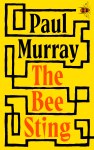
- Quoting John Donne in Places I’ve Taken My Body by Molly McCully Brown and The Bee Sting by Paul Murray (to which a Donne line is the epigraph); mimicking Donne in one poem of Fields Away by Sarah Wardle.
- “Who do you think you are?” as a question an abusive adult asks of a child in The Beggar Maid (aka Who Do You Think You Are?) by Alice Munro and Mothership by Greg Wrenn.
- Sylvia Plath is mentioned in Sleepless by Annabel Abbs and The Bee Sting by Paul Murray … and Katherine Mansfield in Sleepless by Annabel Abbs and The Beggar Maid by Alice Munro.
- Mosquitoes are mentioned in a poem in Rapture’s Road by Seán Hewitt and Divisible by Itself and One by Kae Tempest.

- Reading two memoirs that quote a Rumi poem (and that released on 9 April and that I reviewed for Shelf Awareness): Fi: A Memoir of My Son by Alexandra Fuller and Somehow: Thoughts on Love by Anne Lamott. (Rumi was also quoted as an epigraph in Viv Fogel’s poetry collection Imperfect Beginnings.)
- Bereavement memoirs that seek significance in eagle sightings (i.e. as visitations from the dead): Sleepless by Annabel Abbs and Fi: A Memoir of My Son by Alexandra Fuller.
- Snyder’s pretzels as a snack in Somehow: Thoughts on Love by Anne Lamott and Come and Get It by Kiley Reid.

- Reading two C-PTSD memoirs at the same time: A Flat Place by Noreen Masud and Mothership by Greg Wrenn.
 Information about coral reefs dying in Martyr! by Kaveh Akbar and Mothership by Greg Wrenn.
- The gay slang term “twink” appears in The Bee Sting by Paul Murray and Mothership by Greg Wrenn.
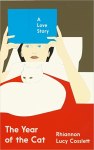
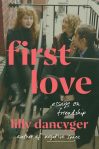
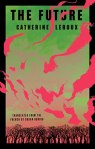
- Assisting a mother who reads tarot cards in Intervals by Marianne Brooker and The Year of the Cat by Rhiannon Lucy Cosslett. (Tarot is also read in First Love by Lilly Dancyger and The Future by Catherine Leroux.)

- An Asian American character who plays poker in a graphic novel: Advocate by Eddie Ahn and Lunar New Year Love Story by Gene Luen Yang.
- Vivian Gornick’s Fierce Attachments, which I was also reading at the time, is mentioned in Intervals by Marianne Brooker.
 An Uncle Frank in an Irish novel with no speech marks: Trespasses by Louise Kennedy and The Bee Sting by Paul Murray.
- Martin Luther King’s “I Have a Dream” speech is quoted in Some Kids I Taught & What They Taught Me by Kate Clanchy and How to Raise a Viking by Helen Russell.
- Using quarters for laundry in Come and Get It by Kiley Reid and one story from Dressing Up for the Carnival by Carol Shields.

- A scene of someone watching from a lawn chair as someone else splits wood in Martyr! by Kaveh Akbar and Becoming Little Shell by Chris La Tray.
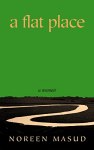 Quotes from cultural theorist Sara Ahmed in Intervals by Marianne Brooker and A Flat Place by Noreen Masud.
- I read about windows being blocked up because of high taxes on the same evening in Trespasses by Louise Kennedy and one story from Dressing Up for the Carnival by Carol Shields.
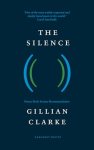
- I saw Quink ink mentioned in The Silence by Gillian Clarke and Trespasses by Louise Kennedy on the same evening.
- The song “It’s a Long Way to Tipperary” is mentioned in You’re on Your Own, Snoopy by Charles M. Schulz and Welcome to Glorious Tuga by Francesca Segal.
- A pet magpie in George by Frieda Hughes and A Council of Dolls by Mona Susan Power.

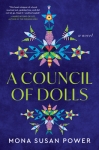
- A character tests to see what will happen (will God strike them down?) when they mess with the Host (by stealing the ciborium or dropping a wafer on the floor, respectively) in A Council of Dolls by Mona Susan Power and one story from Dressing Up for the Carnival by Carol Shields.
- Marrying the ‘wrong’ brother in The Bee Sting by Paul Murray and A Council of Dolls by Mona Susan Power.
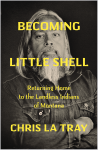 Indigenous author, Native versus Catholic religion, and descriptions of abuse and cultural suppression at residential schools in Becoming Little Shell by Chris La Tray and A Council of Dolls by Mona Susan Power.
- Teen girls obsessed with ‘sad girl’ poetry, especially by Sylvia Plath, in First Love by Lilly Dancyger and The Bee Sting by Paul Murray.
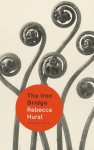
- “Hyacinth” is a poem in Solutions for the Problem of Bodies in Space by Catherine Barnett, and “Hyacinth Girl” a story in Cocktail by Lisa Alward. (Hyacinths are also mentioned in a poem in The Iron Bridge by Rebecca Hurst.)


- A character named Sissy in A Council of Dolls by Mona Susan Power and Stone Yard Devotional by Charlotte Wood.
- Harming amphibians, whether deliberately or accidentally, in a story in Barcelona by Mary Costello, a poem in Baby Schema by Isabel Galleymore, and Mothership by Greg Wrenn.
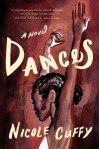
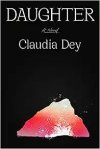
- A significant character called Paul in Dances by Nicole Cuffy, Daughter by Claudia Dey (those two were both longlisted for the Carol Shields Prize), and Moral Injuries by Christie Watson.

- Out of Africa (the film and then the book), which I was looking through for the #1937Club, is mentioned in The Whole Staggering Mystery by Sylvia Brownrigg – her writer grandfather lived in Nairobi’s “Happy Valley” in the 1930s.
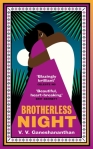
- Reading two novels at the same time in which a teen girl’s plans to study medicine are derailed by war: Brotherless Night by V.V. Ganeshananthan and The Snow Hare by Paula Lichtarowicz.

What’s the weirdest reading coincidence you’ve had lately?
Reading Ireland Month, Part II: Hughes, Kennedy, Murray
My second contribution to Reading Ireland Month after a first batch that included poetry and a novel.

Today I have a poetry collection based around science and travel, and two multi-award-winning novels, one set in the thick of the Troubles in Belfast and another about the crumbling of an ordinary suburban family.
Gathering Evidence by Caoilinn Hughes (2014)
 I bought this in the same order as Patricia Lockwood’s poetry collection, thinking a segue to another genre within an author’s oeuvre (I’d enjoyed Hughes’s 2018 debut novel, Orchid & the Wasp) might be a clever strategy. That worked out with Lockwood, but not as well here. A collection about scientific discoveries and medical advances seemed likely to be up my street. “The Moon Should Be Turned” is about the future of the HeLa cells harvested from Henrietta Lacks; poems are dedicated to the Curies and Johannes Kepler and one has Fermi as a main character. Russian nuclear force is a background menace. There are also some poems about growing up in Dublin and travels in the Andes. “Vagabond Monologue” stood out for its voice, “Marbles” for its description of childhood booty: “A netted bag of green glass marbles with aquamarine swirls / deep in the otherworld of spherical transparency (simultaneous opacity) / was the first thing I ever stole when I was three and far from the last.” Elsewhere, though, I found the precision vocabulary austere and offputting. (New purchase with Amazon voucher)
Trespasses by Louise Kennedy (2022)
Despite its many accolades, not least a shortlisting for the Women’s Prize, I couldn’t summon much enthusiasm for reading a novel about the Troubles. I don’t know why I tend to avoid this topic; perhaps it’s the insidiousness of fighting that’s not part of a war somewhere else, but ongoing domestic terrorism instead. Combine that with an affair – Cushla is a 24-year-old schoolteacher who starts sleeping with a middle-aged, married barrister she meets in her family’s pub – and it sounded like a tired, ordinary plot. But after this won last year’s McKitterick Prize (for debut authors over 40) and I was sent the whole shortlist in thanks for being a manuscript judge, I thought I should get over myself and give it a try.
 Little surprise that Kennedy’s writing – compassionate, direct, heart-rending – is what sets the book apart. With no speech marks, radio reports of everyday atrocities blend in with thoughts and conversations. We meet and develop fondness for characters across classes and the Catholic–Protestant divide: Cushla’s favourite pupil, Davy, whose father was assaulted in the street; her alcoholic mother, Gina, who knows more than she lets on, despite her inebriation; Gerry, a colleague who takes Cushla on friend dates and covers for her when she goes to see Michael. An Irish language learning circle introduces the 1970s bourgeoisie with their dinner parties and opinions.
This doesn’t read like a first novel at all, with each character fully realized and the plot so carefully constructed that I was as shocked as Cushla by a revelation four-fifths of the way through. Desire is bound up with guilt; can anyone ever be happy when violence is so ubiquitous and random? “Booby trap. Incendiary device. Gelignite. Nitroglycerine. Petrol bomb. Rubber bullets. Saracen. Internment. The Special Powers Act. Vanguard. The vocabulary of a seven-year-old child now.” But a brief framing episode set in 2015 gives hope of life beyond seemingly inescapable tragedy. (Free from the Society of Authors)
The Bee Sting by Paul Murray (2023)
“The trouble is coming from inside; from his family. And unless something happens to stop it, it will keep billowing out, worse and worse”
Another great Irish novel I nearly missed out on, despite it being shortlisted for the Booker Prize and Writers’ Prize and winning the inaugural Nero Book Awards’ Gold Prize, this one because I was daunted by its doorstopper proportions. I’d gotten it in mind that it was all about money: Dickie Barnes’s car dealership is foundering and the straitened circumstances affect his whole family (wife Imelda, teenage daughter Cass, adolescent son PJ). A belated post-financial crash novel? Again, it sounded tired, maybe clichéd.
 But actually, this turned out to be just the kind of wry, multi-perspective dysfunctional family novel that I love, such that I was mostly willing to excuse a baggy midsection. Murray opens with long sections of close third person focusing on each member of the Barnes family in turn. Cass is obsessed with sad-girl poetry and her best friend Elaine, but self-destructive habits threaten her university career before it’s begun. PJ is better at making friends through online gaming than in real life because of his family’s plunging reputation, so concocts a plan to run away to Dublin. Imelda is flirting with Big Mike, who’s taking over the dealership, but holds out hope that Dickie’s wealthy father will bail them out. Dickie, under the influence of a weird handyman named Victor, has become fixated on eradicating grey squirrels and building a bunker to keep his family safe.
There are no speech marks throughout, and virtually no punctuation in Imelda’s sections. There are otherwise no clever tricks to distinguish the points-of-view, though. The voice is consistent. Murray doesn’t have to strain to sound like a teenage girl; he fully and convincingly inhabits each character (even some additional ones towards the end). I particularly liked the final “Age of Loneliness” section, which starts rotating between the perspectives more quickly, each one now in the second person. It all builds towards a truly thrilling yet inconclusive ending. I could imagine this as a TV miniseries for sure.
SPOILERS, if you’re worried about that sort of thing:
It was all the details I didn’t pick up from my pre-reading about The Bee Sting that made it so intricate and rewarding. Imelda’s awful upbringing in macho poverty and how it seemed that Rose, then Frank, might save her. The cruelty of Frank’s accidental death and the way that, for both Imelda and Dickie, being together seemed like the only way of getting over him, even if Imelda was marrying the ‘wrong’ brother. The recurrence of same-sex attraction for Dickie, then Cass. The irony of the bee sting that never was.
BUT. Yes, it’s too long, particularly Imelda’s central section. I had to start skimming to have any hope of making it through. Trim the whole thing by 200 pages and then we’re really talking. But I will certainly read Murray again, and most likely will revisit this book in the future to give it the attention it deserves. I read it from the library’s Bestsellers collection; the story of how I own a copy as of this week is a long one…

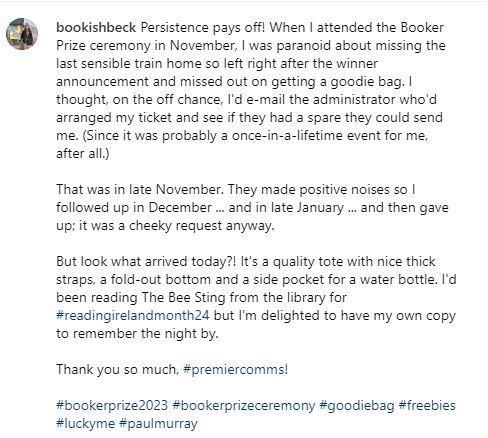
(Public library; free from the Booker Prize/Premier Comms)

I’ll be catching up on reviewing March releases in early April.
Happy Easter to those who celebrate!
Prize Updates: McKitterick Prize Winner and Wainwright Prize Longlists
It was my second year as a first-round manuscript judge for the McKitterick Prize; have a look at my rundown of the shortlist here.
 The winner, Louise Kennedy, and runner-up, Liz Hyder, were announced on 29 June. (Nominee Aamina Ahmad won a different SoA Award that night, the Gordon Bowker Volcano Prize for a novel focusing on the experience of travel away from home.) Other recipients included Travis Alabanza, Caroline Bird, Bonnie Garmus and Nicola Griffith. For more on all of this year’s SoA Award winners, see their website.


I’m a big fan of the Wainwright Prize for nature and conservation writing, and have been following it particularly closely since 2020, when I happened to read most of the nominees. In 2021 I also managed to read quite a lot from the longlists; 2022, the first year of an additional prize for children’s literature, saw me reading about a third of the total nominees.
This is the third year that I’ve been part of an “academy” of bloggers, booksellers, former judges and previously shortlisted authors asked to comment on a very long list of publisher submissions. I’m delighted that a few of my preferences made it through to the longlists.
My taste generally runs more to the narrative nature writing than the popular science or travel-based books. I find I’ve read just two from the Nature list (Bersweden and Huband) and one each from Conservation (Pavelle) and Children’s (Hargrave) so far.

The 2023 James Cropper Wainwright Prize for Nature Writing longlist:
- The Swimmer: The Wild Life of Roger Deakin, Patrick Barkham (Hamish Hamilton)
- The Flow: Rivers, Water and Wildness, Amy-Jane Beer (Bloomsbury)
- Where the Wildflowers Grow, Leif Bersweden (Hodder)
- Twelve Words for Moss, Elizabeth-Jane Burnett (Allen Lane)
- Cacophony of Bone, Kerri ní Dochartaigh (Canongate)
- Sea Bean, Sally Huband (Hutchinson)
- Ten Birds that Changed the World, Stephen Moss (Faber)
- A Line in the World: A Year on the North Sea Coast, Dorthe Nors, translated by Caroline Waight (Pushkin)
- The Golden Mole: And Other Living Treasure, Katherine Rundell, illustrated by Talya Baldwin (Faber)
- Belonging: Natural Histories of Place, Identity and Home, Amanda Thomson (Canongate)
- Why Women Grow: Stories of Soil, Sisterhood and Survival, Alice Vincent (Canongate)
- Landlines, Raynor Winn (Penguin)

The 2023 James Cropper Wainwright Prize for Writing on Conservation longlist:
- Sarn Helen: A Journey Through Wales, Past, Present and Future, Tom Bullough, illustrated by Jackie Morris (Granta)
- Beastly: A New History of Animals and Us, Keggie Carew (Canongate)
- Rewilding the Sea: How to Save Our Oceans, Charles Clover (Ebury)
- Birdgirl, Mya-Rose Craig (Jonathan Cape)
- The Orchid Outlaw, Ben Jacob (John Murray)
- Elixir: In the Valley at the End of Time, Kapka Kassabova (Jonathan Cape)
- Rooted: How Regenerative Farming Can Change the World, Sarah Langford (Viking)
- Black Ops and Beaver Bombing: Adventures with Britain’s Wild Mammals, Fiona Mathews and Tim Kendall (Oneworld)
- Forget Me Not, Sophie Pavelle (Bloomsbury)
- Fen, Bog, and Swamp: A Short History of Peatland Destruction and its Role in the Climate Crisis, Annie Proulx (Fourth Estate)
- The Lost Rainforests of Britain, Guy Shrubsole (HarperCollins)
- Nomad Century: How to Survive the Climate Upheaval, Gaia Vince (Allen Lane)

The 2023 James Cropper Wainwright Prize for Children’s Writing on Nature and Conservation longlist:
- The Earth Book, Hannah Alice (Nosy Crow)
- The Light in Everything, Katya Balen, illustrated by Sydney Smith (Bloomsbury)
- Billy Conker’s Nature-Spotting Adventure, Conor Busuttil (O’Brien)
- Protecting the Planet: The Season of Giraffes, Nicola Davies, illustrated by Emily Sutton (Walker)
- Blobfish, Olaf Falafel (Walker)
- A Friend to Nature, Laura Knowles, illustrated by Rebecca Gibbon (Welbeck)
- Spark, M G Leonard (Walker)
- A Wild Child’s Book of Birds, Dara McAnulty (Macmillan)
- Leila and the Blue Fox, Kiran Millwood Hargrave, illustrated by Tom de Freston (Hachette Children’s Group)
- The Zebra’s Great Escape, Katherine Rundell, illustrated by Sara Ogilvie (Bloomsbury)
- Archie’s Apple, Hannah Shuckburgh, illustrated by Octavia Mackenzie (Little Toller)
- Grandpa and the Kingfisher, Anna Wilson, illustrated by Sarah Massini (Nosy Crow)
It’s impressive that women writers are represented so well this year: 9/12 for Nature, 8/12 for Conservation, and 8/12 for Children’s. Amusingly, Katherine Rundell is on TWO of the lists. There are also, refreshingly, several BIPOC authors, and – I think for the first time ever – a work in translation (A Line in the World by Dorthe Nors, which I have as a set-aside proof copy and will get back into at once).
Here is where I have to admit that quite a number of the nominees, overall, are books I DNFed, authors whose work I’ve tried before and not enjoyed, or books I’ve been turned off of by the reviews. I’ll not mention these by name just now, and will leave any predictions for a future date when I’ve read a few more of the nominees. It seems that I’m most likely to catch up with the majority of the children’s longlist, if anything.
The shortlists will be announced on 10 August, and winners will be announced on 14 September at a 10th Anniversary live event held as part of the Kendal Mountain Festival in Cumbria (tickets available here).
See any nominees you’ve read? Who would you like to see shortlisted?
Introducing the 2023 McKitterick Prize Shortlist
For the second year in a row, I was a first-round judge for the McKitterick Prize (for a first novel by a writer over 40), helping to assess the unpublished manuscripts. Perhaps lockdowns gave people time to achieve a long-held goal of writing a novel, because submissions were up by 50%. None of the manuscripts made it through to the shortlist this year or last, but one day it could happen!

The Society of Authors kindly sent me a parcel with five of the shortlisted novels, and I picked up the remaining one from the library this week. Below are synopses from Goodreads and author bios from the SoA:
 The Return of Faraz Ali by Aamina Ahmad (Sceptre): “Sent back to his birthplace—Lahore’s notorious red-light district—to hush up the murder of a girl, a man finds himself in an unexpected reckoning with his past. … Profoundly intimate and propulsive, The Return of Faraz Ali is a spellbindingly assured first novel that poses a timeless question: Whom do we choose to protect, and at what price?”
Aamina Ahmad was born and raised in London, where she worked for BBC Drama and other independent television companies as a script editor. Her play The Dishonoured was produced by Kali Theatre Company in 2016. She has an MFA from the Iowa Writers’ Workshop and is a recipient of a Stegner Fellowship from Stanford University, a Pushcart Prize and a Rona Jaffe Writers Award. Her short fiction has appeared in journals including One Story, the Southern Review and Ecotone. She teaches creative writing at the University of Minnesota.
 When We Were Birds by Ayanna Lloyd Banwo (Hamish Hamilton): “Yejide and Darwin will meet inside the gates of Fidelis, Port Angeles’s largest and oldest cemetery, where the dead lie uneasy in their graves and a reckoning with fate beckons them both. A masterwork of lush imagination and immersive lyricism, When We Were Birds is a spellbinding novel about inheritance, loss, and love’s seismic power to heal.”
Ayanna Lloyd Banwo is a writer from Trinidad and Tobago. She is a graduate of the University of the West Indies and holds an MA in Creative Writing from the University of East Anglia, where she is now a Creative and Critical Writing PhD candidate. Her work has been published in Moko Magazine, Small Axe and PREE, among others, and shortlisted for the Small Axe Literary Competition and the Wasafiri New Writing Prize. When We Were Birds, Ayanna’s first novel, was shortlisted for the Jhalak Prize and won the OCM Bocas Prize for Fiction. She is now working on her second novel. Ayanna lives with her husband in London.
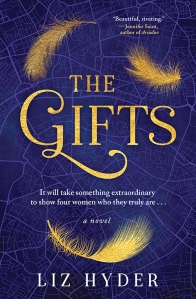 The Gifts by Liz Hyder (Manilla Press): “October 1840. A young woman staggers alone through a forest in the English countryside as a huge pair of impossible wings rip themselves from her shoulders. In London, rumours of a “fallen angel” cause a frenzy across the city, and a surgeon desperate for fame and fortune finds himself in the grips of a dangerous obsession. … [A] spellbinding tale told through five different perspectives …, it explores science, nature and religion, enlightenment, the role of women in society and the dark danger of ambition.”
Liz Hyder has been making up stories for as long she can remember. She has a BA in drama from the University of Bristol and, in early 2018, won the Bridge Award/Moniack Mhor Emerging Writer Award. Bearmouth, her debut young adult novel, won a Waterstones Children’s Book Prize, the Branford Boase Award and was chosen as the Children’s Book of the Year by The Times. Originally from London, she now lives in South Shropshire. The Gifts is her debut adult novel.
 Trespasses by Louise Kennedy (Bloomsbury Publishing): “Set in Northern Ireland during the Troubles, a shattering novel about a young woman caught between allegiance to community and a dangerous passion. … As tender as it is unflinching, Trespasses is a heart-pounding, heart-rending drama of thwarted love and irreconcilable loyalties, in a place what you come from seems to count more than what you do, or whom you cherish.”
Louise Kennedy grew up a few miles from Belfast. She is the author of the Women’s Prize-shortlisted novel Trespasses, and the acclaimed short story collection The End of the World is a Cul de Sac, and is the only woman to have been shortlisted twice for the Sunday Times Audible Short Story Award (2019 and 2020). Before starting her writing career, she spent nearly thirty years working as a chef. She lives in Sligo.
 The Whalebone Theatre by Joanna Quinn (Fig Tree): “One blustery night in 1928, a whale washes up on the shores of the English Channel. By law, it belongs to the King, but twelve-year-old orphan Cristabel Seagrave has other plans. She and the rest of the household … build a theatre from the beast’s skeletal rib cage. … As Cristabel grows into a headstrong young woman, World War II rears its head.”
Joanna Quinn was born in London and grew up in the southwest of England, where her bestselling debut novel, The Whalebone Theatre, is set. Joanna has worked in journalism and the charity sector. She is also a short story writer, published by The White Review and Comma Press, among others. She lives in a village near the sea in Dorset.
 Other Names for Love by Taymour Soomro (Harvill Secker): “A seductive coming-of-age story about queer desire, Other Names for Love is a charged, hypnotic debut novel about a boy’s life-changing summer in rural Pakistan: a story of fathers, sons, and the consequences of desire. … Decades later, Fahad is living abroad when he receives a call from his mother summoning him home. … [A] tale of masculinity, inheritance, and desire set against the backdrop of a country’s violent history, told with uncommon urgency and beauty.”
Taymour Soomro is the author of Other Names for Love and co-editor of Letters to a Writer of Colour. His writing has been published in the New Yorker, the New York Times and elsewhere. He is the recipient of fellowships from the Wisconsin Institute for Creative Writing, Bread Loaf Writers’ Conference and the Sozopol Fiction Seminars. He has degrees from Cambridge University and Stanford Law School and a PhD in creative writing from the University of East Anglia. He currently teaches on the MFA program at Bennington College.
Fellow judge Selma Dabbagh summarises the shortlist thus: “Family estates in rural Pakistan (Other Names for Love) and England (The Whalebone Theatre) fall into decline reflecting the hubris and short-sightedness of their owners[;] in The Return of Faraz Ali, it is the decaying grandeur of the courtesans of Lahore that is lovingly depicted. Whereas in both The Gifts and When We Were Birds, the otherworldly brings new possibilities to the tawdry and impoverished as mystical wings fly over the slums of Victorian London and the graveyards of Trinidad.”
I was already interested in reading a couple of these novels, and was pleased to discover a few new-to-me titles. As it’s also shortlisted for the Women’s Prize (which will be awarded on Wednesday), it seems to make sense to start with Trespasses, and I’m also particularly keen on The Gifts, which sounds like a great holiday read and right up my street, so I’m packing it for our trip to Scotland later this month. One or more of the others might end up on my 20 Books of Summer list. I’ll be sure to follow up with reviews of any I manage to read this summer.
The winner and runner-up will be announced at the SoA Awards ceremony in London on 29 June. I’ll be away at the time but will hope to watch part of the livestream. For more on all of the SoA Awards, see the press release on their website.
See any nominees you’ve read? Who would you like to see win?
Women’s Prize Longlist Reviews (Croft, Grudova, O’Farrell) & Shortlist Predictions
The Women’s Prize shortlist will be announced on Wednesday the 26th. I’ve managed to read a few more novels from the longlist and started another (Fire Rush by Jacqueline Crooks), which would take me up to 6 read out of 16. I have a couple of others on order from the library (Kennedy and Patel), but will only bother to read them if they are shortlisted.
Homesick by Jennifer Croft
I was intrigued by the publication history of this one: Croft first wrote it in Spanish, then produced an English-language version which, in the USA, was marketed as a memoir illustrated with her own photographs. Here in the UK, though, Charco Press published it as part of their new range of untranslated fiction – with no photos, alas. So, it’s clear that this is thinly veiled autobiography; literally all that may have been changed is the character names.
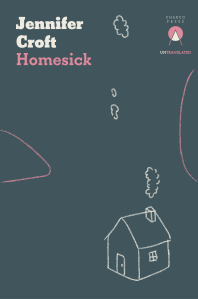 The protagonist is ‘Amy’, who lives in a tornado-ridden Oklahoma and whose sister, ‘Zoe’ – a handy A to Z of growing up there – has a mysterious series of illnesses that land her in hospital. The third person limited perspective reveals Amy to be a protective big sister who shoulders responsibility: “There is nothing in the world worse than Zoe having her blood drawn. Amy tries to show her the pictures [she’s taken of Zoe’s dog] at just the right moment, just right before the nurse puts the needle in”.
The girls are home-schooled and Amy, especially, develops a genius for languages, receiving private tutoring in Russian from Sasha, a Ukrainian former student of their father’s. Both sister are more than a little in love with Sasha. They alternate between competing for attention and indulging their joint passions – such as for the young Russian figure-skating couple who sweep the Winter Olympics. Amy starts college at 15, which earns her unwanted attention among her classmates, and struggles with her mental health before deciding to see the world. Despite periods of estrangement, her relationship with Zoe is what grounds her.
In a sense this is a simple chronological story, told in a matter-of-fact way. Yet each of its vignettes – some just a paragraph long – is perfectly chosen to reveal the family dynamic and the moment in American history. Detailed chapter headings continue the narrative and sometimes contain a shocking truth. What Croft does so brilliantly is to chart the accretion of ordinary and landmark events that form a life; Amy realizes this as she looks back at a packet of her photographs: “laid out step by step like this, more or less in order, the pictures also form a kind of path.”
Initially, I had my doubts as to whether this should have been eligible for the Women’s Prize. In the end it didn’t matter whether it was presented as memoir or autofiction, so true was it to the experience of 1990s girlhood, as well as to sisterhood and coming of age at any time in history. It reminded me strongly of Very Cold People by Sarah Manguso, but felt that little bit more universal in how it portrays family ties, ambition, and life’s winding path. (See also Annabel’s review for Shiny New Books.) 
With thanks to Charco Press for the free copy for review.
Children of Paradise by Camilla Grudova
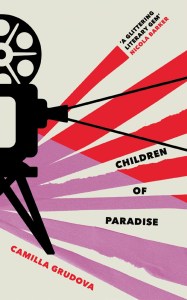 In 2017 I reviewed Grudova’s surreal story collection, The Doll’s Alphabet, describing its tales as “perverted fairytales or fragmentary nightmares.” Okay then, let’s continue in that perverted, nightmarish vein. Holly, new to the country/city, finds a room in a shared flat and a job as an usher at the Paradise Cinema, which shows a random assortment of art films and cult classics. The building is so low-rent it’s almost half derelict, and the staff take full advantage of the negligent management to get up to all sorts of sexual shenanigans, as well as drinking and drug-taking, while on duty. Holly and her co-workers are truly obsessed with the cinema, watching every showing at work but also hosting all-night movie marathons in their apartments. “The outside world, all of its news, faded away, and the movies became my main mirror of the world,” she confesses. “They were a necessary evil, customers, so that we, the true devotees, could have access to the screen, our giant godlike monument.”
The title is simultaneously ironic and an homage to Les Enfants du Paradis (1945), and the chapters are named after particular films. A change of ownership forces the Paradise to become more mainstream – hello, Marvel flicks and hipster snacks – but a series of horrific accidents and deliberate acts makes it seem like a cursed place. Aping movie genres, perhaps, Children of Paradise starts off as an offbeat stoner comedy and by the end approaches horror to an extent I didn’t expect. The content becomes increasingly sordid, visceral, with no opportunity missed to mention bodily fluids and excretions. I’m not notably opposed to gross-out humour, but the whole thing felt quite distasteful as well as miserable. (Public library e-book) 
My general feeling about these first two books, and probably a few others from the longlist (Crooks, McKenzie, Paull, et al.), is that the judges are trying to showcase the breadth of women’s writing: ‘Hey, guys, women can write autofiction and horror and humour and patois and speculative fiction and everything in between!’ But I don’t think these more niche or genre fiction representatives will make it any further in the race, especially because each may have been championed by a different judge.
Where the judges will find common ground will be on the standard stuff that always gets shortlisted: fairly run-of-the-mill character- and issue-driven contemporary or historical fiction. That makes it sound like I’m being dismissive, but in fact I do generally like much of the fiction that gets shortlisted for the WP: it’s readable book club fodder. It’s just maybe not inventive in the way that certain longlist titles can be. On which note, er, see the below!
The Marriage Portrait by Maggie O’Farrell
What a relief it was to wholeheartedly enjoy this sumptuous work of historical fiction, after the disappointment that was Hamnet (though perhaps I’ll feel more kindly towards the latter when I reread it for Literary Wives in November).
 Lucrezia di Cosimo de’ Medici is a historical figure who died at age 16, having been married off from her father’s Tuscan palazzo as a teenager to Alfonso II d’Este, Duke of Ferrara. She was reported to have died of a “putrid fever” but the suspicion has persisted that her husband actually murdered her, a story perhaps best known via Robert Browning’s poem “My Last Duchess.”
The focus is on the final year of Lucrezia’s life, but in flashbacks we meet her as a rebellious girl with a talent for drawing and a fascination with animals. At first it appears that Alfonso esteems her for her spiritedness – he gives her a painting of a stone marten as a betrothal gift, after all, and has her depicted with paintbrush in hand – but as the gradual storyline meets up with the 1561 spotlight, it becomes clear that she is only valued for her ability to produce an heir. However spacious and opulent they are, it is impossible to forget that Lucrezia, as a noblewoman, is confined to the edifices owned by her father or her husband.
O’Farrell’s usual present-tense narration is engaging throughout, and the two long chapters either side of the midpoint, one concerning her wedding day and the other the preparation for her portrait, are particularly absorbing. I was convinced I knew how this story would end, yet the author pulls off a delicious surprise. This is ripe for the miniseries treatment, not least because it is so attentive to visuals: the architecture of the main buildings, the lavish clothing, the colours, and the eye for what makes a good painting. Scenes are even described in terms of a spatial arrangement appreciated from afar: how three figures form a triangle in the centre of a room; how two people on a balcony bisect the view from a window.
Despite the length, this was thoroughly engrossing and one I’d recommend to readers of Geraldine Brooks and Tracy Chevalier. (See also Laura’s review.) (Public library) 
The other nominees I’ve read are:
Demon Copperhead by Barbara Kingsolver 
Black Butterflies by Priscilla Morris
My ideal shortlist (a wish list based on my reading and what I still want to read):
Homesick by Jennifer Croft
Fire Rush by Jacqueline Crooks
Black Butterflies by Priscilla Morris
The Marriage Portrait by Maggie O’Farrell
I’m a Fan by Sheena Patel
Memphis by Tara M. Stringfellow
vs.
My predicted shortlist:
Trespasses by Louise Kennedy
Demon Copperhead by Barbara Kingsolver
Stone Blind by Natalie Haynes
The Marriage Portrait by Maggie O’Farrell
Memphis by Tara M. Stringfellow
Wandering Souls by Cecile Pin
An overall winner? Perhaps Trespasses by Louise Kennedy, or an unprecedented repeat win from Barbara Kingsolver or Maggie O’Farrell.
(See also Laura’s predictions post.)
What have you read from the longlist so far? Which of these books are calling to you?
Eighth Blog Anniversary! & Thoughts on the Women’s Prize Longlist
Last year, in the manic busyness that preceded moving into our house, I completely forgot to mark my blog anniversary. This time (8 years!) I wanted to be sure to remember it. Why have I not noted before that it coincides with International Women’s Day?! I’m pleased with that.

By Հայկ Ափրիկյան, CC BY-SA 3.0, via Wikimedia Commons.
Yesterday evening the Women’s Prize longlist was announced.** Of my predictions, 4 were correct, which is pretty good going for me. I got none of my personal wishes, however. Of course, I would have preferred for us to have one of my lists. Still, overall, it’s a fairly interesting mix of new and established authors, with a full half of the list being debut work. Seven of the authors are BIPOC. I’ve read 2 of the nominees and would be amenable to reading up to 7 more. My library always buys the entire longlist, so I’ll eventually get the chance to read them, but not soon enough to add to the conversation.

Read:
Demon Copperhead by Barbara Kingsolver (CORRECT PREDICTION): Follows the contours of Charles Dickens’s David Copperfield, transplanting the plot to 1990s southwest Virginia to uncover the perils of opiate addiction. Ten-year-old Damon Fields lives in a trailer home with his addict mother, who works at Walmart, and his new stepfather, a mean trucker. Tragedy strikes and Damon moves between several foster homes before running away. His irrepressible, sassy voice is reminiscent of Holden Caulfield’s in this Appalachian cousin to Shuggie Bain.
Black Butterflies by Priscilla Morris: Drawing on her own family history, Morris has crafted an absorbing story set in Sarajevo in 1992, the first year of the Bosnian War. Zora, a middle-aged painter, has sent her husband, Franjo, and elderly mother off to England to stay with her daughter, Dubravka, confident that she’ll see out the fighting in the safety of their flat and welcome them home in no time. But things rapidly get much worse than she is prepared for. It was especially poignant to be reading this during the war in Ukraine.
Requested from the library:
Fire Rush by Jacqueline Crooks – Sounds good, if too much like this year’s Opal & Nev.
The Marriage Portrait by Maggie O’Farrell (CORRECT PREDICTION) – I was going to skip this because I wasn’t keen on Hamnet, but I do love O’Farrell in general, so I guess I’ll give it a try.
Interested in reading (but can’t find):
Homesick by Jennifer Croft – N.B. This was subtitled “A Memoir” at its U.S. release.
Children of Paradise by Camilla Grudova
Memphis by Tara M. Stringfellow
I’m a Fan by Sheena Patel (CORRECT PREDICTION)
Wandering Souls by Cecile Pin
Not interested in reading:
Glory by NoViolet Bulawayo – Like I said when it was nominated for the Booker, I have to wonder why we needed an extended Animal Farm remake…
Stone Blind by Natalie Haynes – I really should have predicted this one. It’s a hard pass on the Greek myth retellings for me.
Trespasses by Louise Kennedy (CORRECT PREDICTION) – I avoid anything set during The Troubles. (Sorry!)
Cursed Bread by Sophie Mackintosh – The Water Cure was awful.
The Dog of the North by Elizabeth McKenzie – The Portable Veblen was trying too hard.
Pod by Laline Paull – Her novels always sound so formulaic.
The Bandit Queens by Parini Shroff – Nah.
See also the reactions posts from Cathy, Clare, Eric and Laura.
**The announcement has traditionally been on International Women’s Day, but I’m guessing that this year they brought it forward to pre-empt news of the inaugural Carol Shields Prize for Fiction longlist. This prize is open to novels, short stories and graphic novels by women, published in calendar year 2022, with parameters otherwise quite similar to those of the WP except that it’s only for U.S. and Canadian residents. {EDITED} To be honest, I was not convinced that the literary world needed an additional prize for women’s fiction, especially as North Americans tend to do well in the WP race. However, at first glance, its longlist is a lot less obvious and more interesting, with 11/15 BIPOC and some short story collections as well as a graphic novel in the running. It remains to be seen if I’ll follow both prizes or switch allegiance. Some of the CSP books may prove difficult to access in the UK. So far I have read Brown Girls and can get The Furrows from the library. Of note: the Carol Shields Prize is worth a lot more ($150,000 U.S. vs. £30,000).
What have you read, or might you read, from the longlist?
Women’s Prize 2023: Longlist Predictions vs. Wishes
I’ve been working on a list of novels eligible for this year’s Women’s Prize since … this time last year. Unusual for me to be so prepared! It shows how invested I’ve become in this prize over the years. For instance, last year my book club was part of an official shadowing scheme, which was great fun.
We’re now less than a month out from the longlist, which will be announced on 7 March. Like last year, I’ve separated my predictions from a wish list; two titles overlap. Here’s a reminder of the parameters, taken from the website:
“Any woman writing in English – whatever her nationality, country of residence, age or subject matter – is eligible. Novels must be published in the United Kingdom between 1 April in the year the Prize calls for entries, and 31 March the following year, when the Prize is announced. … The Prize only accepts novels entered by publishers, who may each submit a maximum of two titles per imprint, depending on size, and one title for imprints with a list of ten fiction titles or fewer published in a year. Previously shortlisted and winning authors are given a ‘free pass’.”
This year I dutifully kept tabs on publisher quotas as I compiled my lists. I also attempted to bear in mind the interests of this year’s judges (also from the website): “Chair of Judges, author and journalist Louise Minchin, is joined by award-winning novelist Rachel Joyce; author, journalist and podcaster Irenosen Okojie; bestselling author and journalist Bella Mackie and MP for Hampstead and Kilburn Tulip Siddiq.”
Predictions
A Spell of Good Things, Ayọ̀bámi Adébáyọ̀
Birnam Wood, Eleanor Catton
Joan, Katherine J. Chen
Maame, Jessica George


Really Good, Actually, Monica Heisey
Trespasses, Louise Kennedy
The Night Ship, Jess Kidd (my review)
Demon Copperhead, Barbara Kingsolver (my review)


Our Missing Hearts, Celeste Ng (my review)
The Marriage Portrait, Maggie O’Farrell
I’m a Fan, Sheena Patel
Elektra, Jennifer Saint


Best of Friends, Kamila Shamsie
River Sing Me Home, Eleanor Shearer
Lucy by the Sea, Elizabeth Strout – currently reading
Tomorrow, and Tomorrow, and Tomorrow, Gabrielle Zevin (my review)


Wish List
How Not to Drown in a Glass of Water, Angie Cruz
The Weather Woman, Sally Gardner (my review)
Maame, Jessica George
The Great Reclamation, Rachel Heng


Bad Cree, Jessica Johns
I Have Some Questions for You, Rebecca Makkai – currently reading
Sea of Tranquillity, Emily St. John Mandel (my review)
The Hero of This Book, Elizabeth McCracken (my review)


Nightcrawling, Leila Mottley (my review)
We All Want Impossible Things, Catherine Newman – currently reading
Everything the Light Touches, Janice Pariat (my review)
Camp Zero, Michelle Min Sterling – review pending for Shelf Awareness


Briefly, A Delicious Life, Nell Stevens (my review)
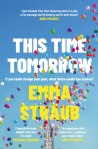
This Time Tomorrow, Emma Straub (my review)
Fight Night, Miriam Toews – currently reading
Tomorrow, and Tomorrow, and Tomorrow, Gabrielle Zevin (my review)


Of course, even if I’m lucky, I’ll still only get a few right across these two lists, and I’ll be kicking myself over the ones I considered but didn’t include, and marvelling at all the ones I’ve never heard of…
What would you like to see on the longlist?
~BREAKING NEWS: There are plans afoot to start a Women’s Prize for Non-Fiction. Now seeking funding to start in 2024. More details here.~
Appendix
(A further 99 eligible novels that were on my radar but didn’t make the cut:)
Hester, Laurie Lico Albanese
Rose and the Burma Sky, Rosanna Amaka
Milk Teeth, Jessica Andrews
Clara & Olivia, Lucy Ashe
Wet Paint, Chloë Ashby
Shrines of Gaiety, Kate Atkinson
Honey & Spice, Bolu Babalola
Hell Bent, Leigh Bardugo
Either/Or, Elif Batuman
Girls They Write Songs About, Carlene Bauer
seven steeples, Sara Baume
The Witches of Vardo, Anya Bergman
Shadow Girls, Carol Birch
Permission, Jo Bloom
Horse, Geraldine Brooks
Glory, NoViolet Bulawayo
Mother’s Day, Abigail Burdess
Instructions for the Working Day, Joanna Campbell
People Person, Candice Carty-Williams
Disorientation, Elaine Hsieh Chou
The Book of Eve, Meg Clothier
Cult Classic, Sloane Crosley
The Things We Do to Our Friends, Heather Darwent
The Bewitching, Jill Dawson
Common Decency, Susannah Dickey
Theatre of Marvels, L.M. Dillsworth
Haven, Emma Donoghue
History Keeps Me Awake at Night, Christy Edwall
The Candy House, Jennifer Egan
Dazzling, Chikodili Emelumadu
You Made a Fool of Death with Your Beauty, Akwaeke Emezi
there are more things, Yara Rodrigues Fowler
Factory Girls, Michelle Gallen
Lessons in Chemistry, Bonnie Garmus
The Illuminated, Anindita Ghose
Your Driver Is Waiting, Priya Guns
The Rabbit Hutch, Tess Gunty
The Dance Tree, Kiran Millwood Hargrave
Weyward, Emilia Hart
Other People Manage, Ellen Hawley
Stone Blind, Natalie Haynes
The Cloisters, Katy Hays
Motherthing, Ainslie Hogarth
The Unfolding, A.M. Homes
The White Rock, Anna Hope
They’re Going to Love You, Meg Howrey
Housebreaking, Colleen Hubbard
Vladimir, Julia May Jonas
This Is Gonna End in Tears, Liza Klaussmann
The Applicant, Nazli Koca
Babel, R.F. Kuang
Yerba Buena, Nina Lacour
The Swimmers, Chloe Lane
The Book of Goose, Yiyun Li
Amazing Grace Adams, Fran Littlewood
All the Little Bird Hearts, Viktoria Lloyd-Barlow
Now She Is Witch, Kirsty Logan
The Chosen, Elizabeth Lowry
The Home Scar, Kathleen MacMahon
Very Cold People, Sarah Manguso
All This Could Be Different, Sarah Thankam Mathews
Becky, Sarah May
The Dog of the North, Elizabeth McKenzie
Dinosaurs, Lydia Millet
Young Women, Jessica Moor
The Garnett Girls, Georgina Moore
Black Butterflies, Priscilla Morris
Lapvona, Ottessa Moshfegh
Someone Else’s Shoes, Jojo Moyes
The Men, Sandra Newman
True Biz, Sara Nović
Babysitter, Joyce Carol Oates
Tomorrow I Become a Woman, Aiwanose Odafen
Things They Lost, Okwiri Oduor
The Human Origins of Beatrice Porter and Other Essential Ghosts, Soraya Palmer
The Things that We Lost, Jyoti Patel
Still Water, Rebecca Pert
Stargazer, Laurie Petrou
Ruth & Pen, Emilie Pine
Delphi, Clare Pollard
The Whalebone Theatre, Joanna Quinn
The Poet, Louisa Reid
Carrie Soto Is Back, Taylor Jenkins Reid
Kick the Latch, Kathryn Scanlan
Blue Hour, Sarah Schmidt
After Sappho, Selby Wynn Schwartz
Signal Fires, Dani Shapiro
A Dangerous Business, Jane Smiley
Companion Piece, Ali Smith
Memphis, Tara M. Stringfellow
Flight, Lynn Steger Strong
Brutes, Dizz Tate
Madwoman, Louisa Treger
I Laugh Me Broken, Bridget van der Zijpp
I’m Sorry You Feel That Way, Rebecca Wait
The Schoolhouse, Sophie Ward
Sweet, Soft, Plenty Rhythm, Laura Warrell
The Odyssey, Lara Williams
A Complicated Matter, Anne Youngson
Avalon, Nell Zink
 Bookish Beck = Rebecca Foster. American transplant to England. Freelance proofreader and book reviewer.
 Bookish Beck