Reviews Roundup, September–October
One of my goals with this blog is to have one convenient place where I can gather together all my writing that has appeared in disparate online locations. To that end, once a month I’ll provide links to all the book reviews I’ve published elsewhere, with a rating (below each description) and a short taster so you can decide whether to click to read more. A couple of exceptions: I won’t point out my Kirkus Indie, BlueInk or Publishers Weekly reviews since I don’t get a byline.
The Bookbag
Rising Strong by Brené Brown: Brown, a qualitative researcher in the field of social work, encourages readers to embrace vulnerability and transform failure and shame through a simple process of re-evaluating the stories we tell ourselves. The gimmicky terminology and frequent self-referencing grated on me a bit, but I appreciated how the book made me reconsider events from my own life. It’s the ideas that carry Rising Strong, so as long as you come to it expecting a useful tool rather than a literary experience you shouldn’t be disappointed. Genuinely helpful self-help.

 Life After You by Lucie Brownlee: With honesty and humor, Brownlee reconstructs the two years following her husband’s sudden death. My sister is still a new widow, so I read this expecting it to resonate with her situation, and it certainly does. I had an issue with the title and marketing, though. When originally published last year, the book had the title Me After You. That’s been changed to sound a little less like a Jojo Moyes novel, but the cover is more chick lit than ever, which doesn’t really match the contents of the book.
The Glass Girl by Sandy Hogarth (& interview): Moving between Australia and England and spanning several decades of Ruth Bishop’s life, this debut novel explores the psychological effects of sexual trauma and betrayal. The middle of the book feels a little meandering, and the chronology is sometimes over-complicated. However, Ruth’s is a warm first-person voice, and the ending hints at welcome resolution to unanswered questions. My favorite aspect of the novel, though, is the frequent observations of the natural world.

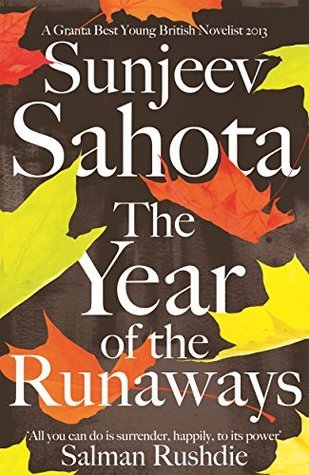 The Year of the Runaways by Sunjeev Sahota: With multilingual slang and several Sikh characters, Sahota’s second novel illuminates aspects of the South Asian experience that might be unfamiliar. Daily life is a struggle for Tochi, Randeep and Avtar: they work multiple jobs to make ends meet, serving at Crunchy Fried Chicken, cleaning sewers, or building a luxury hotel in Leeds. The fourth protagonist is Randeep’s visa-wife, Narinder. Through flashbacks we discover each one’s past. It’s a harrowing read, but you can’t help but sympathize with the four runaways as they make and dissolve connections over the year.
The Gap of Time by Jeanette Winterson: This contemporary ‘cover version’ of The Winter’s Tale links a London financier, a Parisian singer, and a blended family in New Orleans. Winterson creates clear counterparts for each Shakespeare characters, often tweaking names so they are recognizable but more modern. Inventive and true to the themes and imagery (time, adoption; angels, bears, statues) of the original, but ultimately adds little to one’s experience of Shakespeare. I’ll hope for better things from the rest of the Hogarth Shakespeare series. (Still to come: Margaret Atwood on The Tempest, Howard Jacobson on The Merchant of Venice and Anne Tyler on The Taming of the Shrew, among others.)
BookBrowse
 After the Parade by Lori Ostlund [subscription service, but the full text of my review will be available for free during the week of October 20th as part of Editor’s Choice]: Ostlund’s debut novel explores trauma and loneliness through the past and present of the protagonist, an ESL teacher who has just left his long-term partner, as well as the stories of those he meets. Although set over a six-month period, the novel is so full of flashbacks that it feels dense with the weight of the past. At times this can seem more like a set of short stories, only loosely connected through Aaron. Still, the overarching theme is strong and resonant: “after the parade,” after everything has changed irrevocably, you must keep going, pushing past the sadness to build a new life.
BookTrib
 The Best Small Fictions 2015, ed. by Tara L. Masih and Robert Olen Butler: In this very strong anthology of flash fiction, stories range from Tweet length to a few pages, but are always under 1,000 words. Titles and first lines carry a lot of weight. One of the best openers is “I didn’t recognize her without her head” (“Before She Was a Memory,” Emma Bolden). In genre the stories run the gamut from historical fiction to whimsical fantasy. You’ll be introduced to a wealth of fresh and existing talent. There are literally dozens of stand-outs here, but if I had to choose a top 3, they’d be “A Notice from the Office of Reclamation” by J. Duncan Wiley, “The Lunar Deep” by David Mellerick Lynch, and (overall favorite) “Something Overheard” by Yennie Cheung.
For Books’ Sake
 Fates and Furies by Lauren Groff: An incisive study of a marriage, beautifully written and rich with allusions to Shakespeare and Greek mythology. Short, verbless sentences pile up to create exquisite descriptions, as in “Sunset. House on the dunes like a sun-tossed conch. Pelicans thumb-tacked in the wind.” However, I was less sure about the necessity of the bracketed phrases, which seem to represent a Greek chorus giving omniscient commentary, and the use of slang and nicknames can grate. Groff makes it onto a short list of women I expect to produce the Great American Novel.
Foreword Reviews
 When All Goes Quiet by Augustinus F. Lodewyks: This religious memoir should interest those who are curious about how spiritual experience can infiltrate everyday life. “When all goes quiet, I know that Heaven is trying to show me its glory,” Lodewyks writes. In autobiographical vignettes, he vividly expresses his mystical visions, particularly those featuring Jesus, the Virgin Mary and angels, who tend to appear in times of crisis and during events of ritual significance like weddings, funerals and religious pilgrimages. Some will still object to the overt proselytizing, especially in the book’s last quarter.

The Blessing of Movement by Deborah Konrad: Konrad’s story is an inspirational memoir about life with disability and caring for dying relatives. Her sister Sandra became a quadriplegic in her twenties. Throughout the book, Konrad investigates the secret strength that underlay “the sunny disposition of the pretty paralyzed woman.” She concludes that it was all about thankfulness, as proven by Sandra’s gratitude journal. Konrad’s own life undeniably gets sidelined, though; more self-reflection would provide a good match for her insights into her sister’s character.
 DNA of Mathematics by Mehran Basti: Drawing on his academic specialty in mathematics, Basti explores how scientific theories have been used and misused through history. The book lacks focus due to frequent unrelated asides. It may be difficult to grant credibility to a scientist who dismisses the big bang because it was theorized through “semi-broken scientific methods” and seems to have a personal vendetta against Stephen Hawking. Most importantly, the mathematics that forms the book’s basis is never fully explained.

From Hell to Heaven, One Man’s Journey by Gustav Daffy: This book was inspired by an acrimonious divorce and other family troubles; although Christian faith helped Gustav adjust his thinking, many of the poems still feel like the angry outpourings of a man with an ax to grind. Moreover, formulaic rhyming and poor spelling and grammar mar this overlong collection. It would take a professional copyeditor to hone this into a concise set of linguistically and stylistically acute poems. However, the author’s in-the-moment reactions are easy to relate to.
Shiny New Books
 Grief Is the Thing with Feathers by Max Porter: It may seem perverse to twist Emily Dickinson’s words about hope into a reflection on bereavement, but Porter’s exceptional debut does just that: tweak poetic forebears – chiefly Poe’s “The Raven” and Ted Hughes’s Crow – to create a hybrid response to loss. The novella is composed of three first-person voices: Dad, Boys and Crow (the soul of the book: witty, onomatopoeic, often macabre). Dad and his two young sons are adrift in mourning; the boys’ mum died after an unspecified accident in their London flat. The three narratives resemble monologues in a play, with short lines laid out on the page more like stanzas of a poem.
We Love This Book
 A Slanting of the Sun by Donal Ryan: The Irish author of the novels The Spinning Heart (winner of the Guardian First Book Award in 2013) and The Thing About December, returns with 20 jolting, voice-driven short stories suffused with loneliness and anger. Nineteen of the 20 are in the first person, echoing the chorus of voices that made The Spinning Heart so effective. Many of the narrators speak in thick dialect and run-on sentences, which helps to immerse you in the rhythms of Irish speech. In a book full of lonely people, it is the moments of connection – however fleeting – that matter. For example, in “Long Puck,” one of the best stories, a Catholic priest posted to Syria initiates interfaith hurling matches that temporarily lift everyone’s spirits.
I also post reviews of most of my casual reading and skimming on Goodreads.
 The River by Helen Humphreys: Humphreys has lived along Ontario’s Napanee River for over a decade. I was expecting a blend of personal reflection and natural observations, but instead the book is mostly composed of brief fictional passages illuminating a handful of species. I liked the passages about the heron best – Humphreys successfully imagines the life of a plume hunter and contrasts it with the excitement of two women involved in the foundation of a bird conservation charity. However, much of the book felt like unconnected vignettes, not building to any kind of grander picture of a location.

The Mountain Can Wait by Sarah Leipciger: The novel opens and closes with a hit-and-run, but in between those momentous peaks it’s a quieter tale of a single father trying to guide his son and daughter into young adulthood in the wilds of Canada’s west and islands. Tom Berry’s work is not cutting trees down but planting them – an interesting adaptation of a traditional woodsman’s activity to a new eco age. I found the story a little sleepy but loved Leipciger’s writing, especially her account of the daily drudgery of manual labor and her descriptions of wilderness scenery.
 Decline of the Animal Kingdom by Laura Clarke: Bizarre, in-your-face poetry from a 30-year-old Canadian: business jargon, YouTube videos, fast food…and, yes, animals. Many of the poems feature mules and lions, including weird dialogues between a mule and its supervisor / domestic partner / psychiatrist. With plays on words and sexualized vocabulary, Clarke considers inter-species altruism and the inevitable slide towards extinction. Two favorite lines: “You forget you live parallel to violence” (from “Carnivora”); “The Tasmanian tiger live-tweets its extinction from the Hobart zoo in 1933” (from “Extirpation”).
Do No Harm: Stories of Life, Death and Brain Surgery by Henry Marsh: “Terrible job, neurosurgery. Don’t do it.” Lucky for us, Henry Marsh reports back from the frontlines of brain surgery so we don’t have to. He’s nearing retirement age after a career divided between a London hospital and medical missions to Ukraine. The punchy chapters are named after conditions he has treated or observed. Marsh comes across as having a hot temper, exhibiting extreme frustration with NHS bureaucracy. At the same time, he gets very emotional over his patients declining and dying, and experiences profound guilt over operations that go wrong or were ultimately unnecessary.

 In the Flesh by Adam O’Riordan: My favorite poems in O’Riordan’s debut collection were about Victorian Manchester, 1910s suffragettes and the Wordsworths, this last based on the author’s year in residence at their Lake District cottage. I also liked “The Corpse Garden” – about the outdoor forensic lab in Knoxville, Tennessee – and a couple of multi-part poems that seem to enliven family history. It’s the vocabulary and alliteration that make these poems; there are only a handful of rhyming couplets.
A Circle of Quiet by Madeleine L’Engle: If, like me, you only knew L’Engle through her Wrinkle in Time children’s series, this journal should come as a revelation. I didn’t know she wrote any nonfiction for adults. The Crosswicks books cannot be called simple memoirs, however; there’s so much more going on. In this journal (published 1972) of a summer spent at their Connecticut farmhouse, L’Engle muses on theology, purpose, children’s education, the writing life, the difference between creating stories for children and adults, neighbors and fitting into a community, and much besides.
 A View of the Harbour by Elizabeth Taylor: My third Taylor – not as good as Mrs. Palfrey, but better than Angel. It’s about the everyday family and romantic entanglements of a small English harbor village in the 1940s. Beth is a preoccupied writer who doesn’t notice that her husband, the local doctor, is carrying on an affair with her best friend, the divorcée Tory, who is also their next-door neighbor. As always, Taylor has great insight into the human psyche and unlikely relationships. The plot is low on thrills for sure, but it’s pleasant reading, especially if you’re on holiday at the seaside (I started reading it on the coast near Dublin).
Amazing Grace: A Vocabulary of Faith by Kathleen Norris: This makes the shortlist of books I would hand to skeptics to show them there might be something to this Christianity nonsense after all. Norris spent 20 years away from the faith but gradually made her way back, via the simple Presbyterianism of her Dakota relatives but also through becoming an oblate at a Benedictine monastery – two completely different expressions of the same faith. In few-page essays, she gives each word or phrase a rich backstory through anecdote, scripture and lived philosophy, ensuring that it’s not just religious jargon anymore.
 Undermajordomo Minor by Patrick deWitt: What The Sisters Brothers did for the Western, this does for the Gothic fairytale. It’s not quite as fun or successful as the previous book, but has a nicely campy Dracula or Jane Eyre feel. Lucien “Lucy” Minor, a compulsive liar, sets out to find adventure and romance as undermajordomo of a castle in the quaint German countryside. Here he meets pickpockets, a periodically insane baron, a randy maiden, and a strapping rival who’s a soldier in the absurdist local conflict. DeWitt’s understated humor is not as clearly on display here; there’s also, strangely, quite a bit of sex.
Sentenced to Life by Clive James: James, an Australian critic and all-round man of letters, was first diagnosed with leukemia in 2010. After a setback in 2013, he’s rallied, but these poems are certainly infused with a sense of imminent mortality. The incessant ABAB rhyming in the early poems set up a jaunty rhythm I didn’t find appropriate to the subject matter; I much prefer the later unrhymed poems. “Plot Points” is my favorite, artfully linking disparate historical moments.
 Gold Fame Citrus by Claire Vaye Watkins: Gold, fame, citrus: reasons people once came to California. Now, only a desperate remnant remains in this waterless wasteland. Luz and Ray squat in a starlet’s abandoned mansion and live off of Luz’s modeling money – she was once the environmental movement’s poster child, “Baby Dunn.” When they take charge of a baby called Ig, however, their priorities change. They set off for the strangely beautiful sea of dunes, the Amargosa, leaving behind the ‘frying pan’ of exposure to the elements for the ‘fire’ of a desert cult. There is some absolutely beautiful prose. This is the book that California (Edan Lepucki) wanted to be.
Satin Island by Tom McCarthy: U. is a corporate anthropologist in London, coming off the success of the Koob–Sassen contract and facing the blank page of the Great Report he’s tasked with writing. Not much happens here; the book is more about his anthropological observations and the things he fixates on, like oil spills, a sabotaged parachutist, and Satin Island – a place he encounters in a dream and then, by word association, likens to Staten Island, a destination he doesn’t quite make it to. For me the most interesting parts were about narrative. I found this too clever for its own good; not Booker Prize material.
Reviews Roundup, August–September
One of my goals with this blog is to have one convenient place where I can gather together all my writing that has appeared in disparate online locations. To that end, once a month I’ll provide links to all the book reviews I’ve published elsewhere, with a rating (below each description) and a short taster so you can decide whether to click to read more. A couple of exceptions: I won’t point out my Kirkus Indie or BlueInk reviews since I don’t get a byline.
The Bookbag
 Dandelion Angel by C.B. Calico (& interview): This was inspired by a non-fiction work, Understanding the Borderline Mother by Christine Ann Lawson. The four mother/daughter relationships in this Germany-set novel – all marked to some extent by dysfunction, physical and/or verbal abuse, and borderline personality disorder – are based on Lawson’s metaphorical classifications: the hermit, the queen, the waif, and the witch. Looping back through her four storylines in three complete cycles, Calico shows how mental illness is rooted in childhood experiences and can go on to affect a whole family.
The Last Pilot by Benjamin Johncock: Cinematic descriptions of the California desert setting plus excellent characters and dialogue enliven this debut novel about a fictional test pilot and his family troubles during America’s Space Race. Johncock is British, but you can tell he’s taken inspiration from stories about the dawn of the astronaut age. If I allowed myself small points of criticism, I would say that it’s a challenge to accept the passage of time in the final 50 pages, and that a keen interest in astronauts is probably a boon to keep readers going through the test flight portions, which to me were less compelling than the domestic drama of Jim, Grace and Florence.
 Home Is Burning by Dan Marshall: At age 25, Dan Marshall went home to Salt Lake City to care for a father with ALS and a mother with leukemia. He and his four hapless siblings (a Sedaris-like clan) approached caregiving with sarcasm and dirty humor. Gleefully foul-mouthed, his memoir lacks introspective depth. He hardly ventures deeper than initial descriptions like “My gay brother, Greg” and “My adopted Native American sister, Michelle.” And even when his sentiments about his father are sincere, they are conveyed via what sound like clichés: “I wanted my poor dad to get better, not worse.” But to my surprise, Marshall made me cry in the end.
Of Orcas and Men by David Neiwert: Inspired by personal sightings near his home in Seattle, Neiwert set out to learn everything he could about orcas. The result is a thorough study of whales’ behavior and interactions with humanity from native mythology through modern-day aquarium shows. Some specialist interest would probably be helpful to those attempting this book, although there are plenty of black-and-white photographs to keep even casual readers interested. “Recovering our humanity may be the real gift of the orcas, what they can teach us. It’s our choice whether to listen.”
BookBrowse
 This Is Your Life, Harriet Chance! by Jonathan Evison [a subscription service, but an excerpt is available for free]: A widow in her seventies relives the ups and downs of her life while on an Alaskan cruise to scatter her husband’s ashes. Chapters alternate between a third-person account of the cruise and a second-person survey of Harriet’s past, delivered in the format of TV’s This Is Your Life. The narration is fresh and effective because the gradual revelations undermine Harriet’s elderly persona in such surprising ways. She is an out-of-the-ordinary but believable protagonist who, like all of us, has a mixture of victories and disappointments behind her. This is a charming novel about learning to reckon with the past.
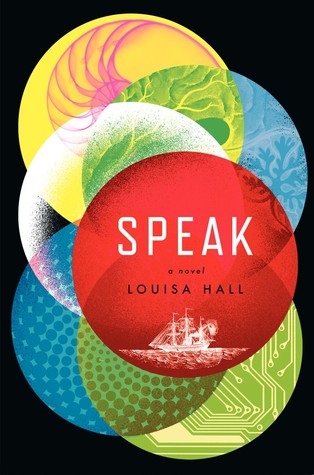 Speak by Louisa Hall [subscription service, but the full text of my review will be available for free during the week starting September 25th as part of Editor’s Choice]: Hall interweaves disparate time periods and voices to track the development of artificial intelligence. The fact that all six narratives are in different documentary formats – memoirs, letters, the transcript of a dialogue, a diary, and so on – means they are easy to distinguish. One might argue that two of them (Alan Turing’s letters and Mary’s shipboard diary) are unnecessary, and yet these are by far the most enjoyable. They prove Hall has an aptitude for historical fiction, a genre she might choose to pursue in the future. A remarkable book interrogating how the languages we converse in and the stories we tell make us human.
BookTrib
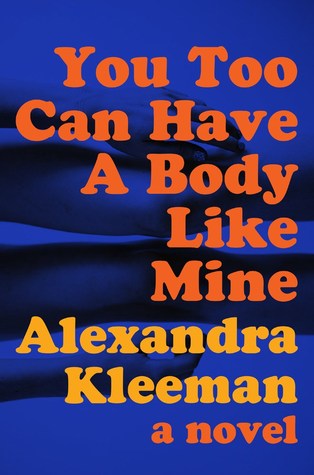 You Too Can Have a Body Like Mine by Alexandra Kleeman: Think of Alexandra Kleeman as an heir to Dave Eggers and Douglas Coupland, with a hefty dollop of Margaret Atwood thrown in. Her first novel is a full-on postmodern satire bursting with biting commentary on consumerism and conformity. Television and shopping are the twin symbolic pillars of a book about the commodification of the body. In a culture of self-alienation where we buy things we don’t need, have no idea where food comes from and desperately keep up the façade of normalcy, Kleeman’s is a fresh voice advocating the true sanity of individuality. Don’t miss her incredible debut.
Foreword Reviews
Conflict Communication by Rory Miller: Based on “ConCom,” the police verbal de-escalation program Miller developed with Marc MacYoung, this book aims to introduce readers to more conscious methods of verbal communication that will sidestep instinctive reactions and promote peaceful solutions. The advice is practical and intuitive, yet picks up on tiny details that most people would not notice. Concise, helpful, and well-organized, this is strongly recommended for readers interested in the psychology of violence and improving communication skills.
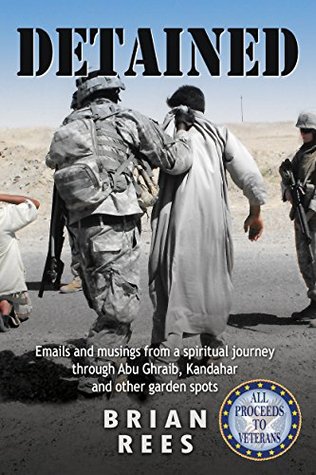 Detained by Brian Rees: Rees intersperses witty e-mail updates from his tours of Iraq and Afghanistan with clued-in commentary about war tactics, terrorism, Islam, and the benefits of transcendental meditation (TM) for soldiers with PTSD. The mixture of formats and topics generally works well, though the spiritual material deserves its own book. There’s no denying Rees’s expertise, and his fluid writing keeps the pages turning. This could make a fascinating companion volume for fans of recent war fiction such as The Yellow Birds, Redeployment, and War of the Encyclopaedists.
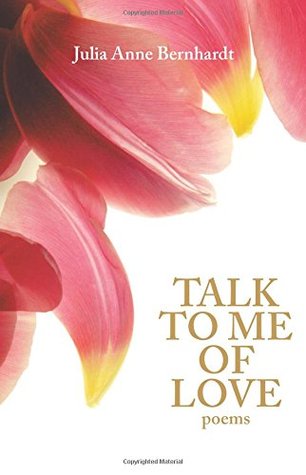 Talk to Me of Love by Julia Anne Bernhardt: The poems in Bernhardt’s first collection range from erotic to spiritual as they investigate love in all its forms. Repetition, rhyme, and mantras produce hypnotic sonic effects and support the central message of the epigraph: “God is in the detail.” The everyday and the eternal mix here. This well-structured collection celebrates different types of love through meditative verse. The themes’ strength is enough to recommend it to readers of Jo Shapcott and Julia Copus.
The Hidden Treasure of Dutch Buffalo Creek by Jackson Badgenoone: Otherworldly ghost writers (the “Neverborn”) compose biographies for ordinary people in this playfully metafictional novel. James is a strong central character whose memories from the 1950s through the present give a sense of history’s sweep, while vivid descriptive language enlivens the settings. Although well written, the book as a whole is an unusual amalgam of spiritualism, historical nostalgia, and technology. James’s story might have been better told as a simple coming-of-age novel with flashbacks.
Nudge
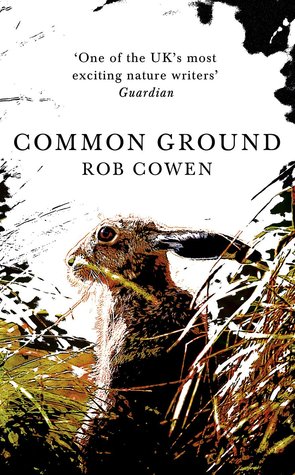 Common Ground by Rob Cowen: An unassuming patch of edge-land outside Harrogate is Cowen’s nature paradise, providing him with wildlife encounters and imaginative scenarios. Essentially, what Cowen does is give profiles of the edge-land’s inhabitants: animal and human, himself included. For instance, he creates an account of the life and death of a fox; elsewhere, he crafts a first-person narrative by a deer being hunted in medieval times. These fictions emulating Watership Down or Tarka the Otter, though well written, are out of place. When the book avoids melodramatic anthropomorphizing, it is very beautiful indeed.
We Love This Book
 Where My Heart Used to Beat by Sebastian Faulks: In Faulks’s thirteenth novel, his trademark themes of war, love and memory coalesce through the story of a middle-aged psychiatrist discovering the truth about his father’s death. Reminiscent of Birdsong as well as John Fowles’s The Magus and Ernest Hemingway’s A Farewell to Arms, this does not have the power of Faulks’s previous work but is a capable study of how war stories and love stories translate into personal history. [A few extra thoughts at Goodreads.]
I also post reviews of most of my casual reading and skimming on Goodreads.
 How to Write a Novel by Melanie Sumner: Our would-be novelist is Aris (short for Aristotle) Thibodeau, 12.5 years old and as precocious as Flavia de Luce. Diane is her single mother, and Max her downright weird younger brother. Using Write a Novel in 30 Days!, Aris is turning her family’s life story into fiction. In some ways they are very out of place here in Kanuga, Georgia. The child’s wry look at family dysfunction reminded me of Sue Townsend’s The Secret Diary of Adrian Mole, Aged 13 ¾. I would probably read something else from Sumner, so long as it wasn’t quite as silly and YA geared as this.
The Art of Memoir by Mary Karr: I would recommend this to anyone who reads and/or secretly wants to write memoirs; for the latter group, there is a wealth of practical advice here, on topics such as choosing the right carnal details (not sexual – or not only sexual – but physicality generally), correcting your facts and misconceptions, figuring out a structure, and settling on your voice. Along the way Karr discusses a number of favorite memoirs in detail, sometimes even line by line: Wild by Cheryl Strayed, Stop-Time by Pat Conroy, A Childhood by Harry Crews, Maya Angelou’s books, Speak, Memory by Nabokov, and so on.

Emblems of the Passing World: Poems after Photographs by August Sander by Adam Kirsch: A charming mix of historical photographs (1910s–1950s Germany) and poems. Kirsch uses his poetry to bring these one-dimensional figures to life, imagining the stories behind their generic titles (“Office Worker” or “Farming Family”) and sometimes slyly questioning the political and status connotations of such designations. One of my favorites was “Student of Philosophy.” This book could draw people whose interests usually run more to nonfiction – especially social history – into giving poetry a try. Releases November 17th.
 Browsings by Michael Dirda: Dirda wrote this pleasant set of bibliophilic essays for the American Scholar website in 2012–13. He’s the American equivalent of the UK’s John Sutherland: an extremely well-read doyen of the classics with a special love for Victorian and Edwardian genre fiction, often as revived by small presses and specialist societies. At times Dirda’s interests can be a bit obscure for the average reader, and some of the essays feel redundant. Still, it’s easy to relate to his addictive book purchasing and hoarding.
The Communist Manifesto by Karl Marx and Friedrich Engels: I read this on the train to Manchester, appropriate reading when approaching one of the UK’s biggest centers of Victorian industry and the place where Marx and Engels met to discuss ideas in the mid-1840s. Like Darwin’s Origin of Species, another seminal Victorian text, this has so many familiar lines and wonderful metaphors that have entered into common discourse that I simply assumed it was composed in English. My eyes glaze over at politics or economics, so I valued this more for its language than for its ideas. Part II, “Proletarians and Communists,” is the most focused part if you want to sample it.
 Number 11 by Jonathan Coe: This is a funny and mildly disturbing state-of-England and coming-of-age novel. I’d only read one previous book by Coe, Expo 58; this is a better example of his usual pattern: multiple, loosely linked storylines. Here the theme is the absurdity of modern culture, encompassing many aspects: unjust wars, the excesses of the uber-rich, the obsession with celebrity, and suspicion and exclusion of those who are different from us. The number 11 keeps popping up, too. My favorite parts were a Survivor-type reality television show and a laughably over-the-top prize ceremony banquet. Releases November 11th.
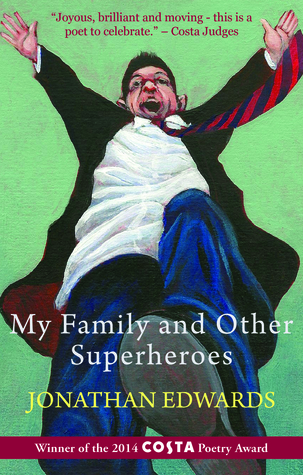 My Family and Other Superheroes by Jonathan Edwards: Edwards displays his proud Welsh heritage with poems reflecting on his family tree and the country’s landscape. One of my favorites was “View of Valleys Village from a Hill,” in which the narrator, with a God’s-eye view of his family, envisions messing around with them. The witty “In John F. Kennedy International Airport” imagines that Wales has been abolished and recreated in miniature in a small Kansas museum (a bit like Julian Barnes’s England, England).
The Whole & Rain-domed Universe by Colette Bryce: Many of these poems are about the author’s Irish family inheritance, both literal and figurative, as in “Heritance”: “From her? Resilience. Generosity. / A teacher’s gravitas. / Irish stew. A sense / of the ridiculous. High ceilings.” I loved the first line of “Signature” – “When I finally gave up and became my mother.” It’s particularly nice how enjambment often makes the thought go just that one line beyond what you expect. I’d read more from Bryce.
Small Books Are Good, Too
Last week I wrote in praise of doorstoppers – books over 500 pages. But I also love really short books: there’s just as much writing skill involved in making a narrative concise, and it can be supremely satisfying to pick up a book and polish it off within a couple hours, especially if you’re in a situation of captured attention as on a plane. Being honest and slightly selfish for a moment, short books are also a great way to build up a flagging year list.
Below I highlight poetry collections, memoirs, short stories and novellas that should be on your agenda if you’re looking for a quick read (number of pages in brackets after each title):
Poetry
I try to always have a book of contemporary poetry on the go, usually by a British poet since I pluck these at random from my local public library shelves. Poetry collections aren’t always ‘quick’ reads, nor should they be, because you often have to read a poem more than once to understand it or truly appreciate its techniques. Still, with most poetry books numbering somewhere between 45 and 90 pages, even if you parcel them out over days or weeks they’ll take much less time than a novel. Pick up something by Mark Doty, Kathleen Jamie, David Harsent or Christopher Reid and you’ll have plenty of beautiful verse to ponder.
Recently reviewed and recommended:
- Learning to Make an Oud in Nazareth by Ruth Padel [80]
- All One Breath by John Burnside [96]
- Praise in Which I Live and Move and Have My Being by Paul Durcan [176]
Short Memoirs
Depending on how thorough they are, autobiographies can often hover around 300 or 400 pages. Looking through my shelves, though, I’ve spotted a few in the 140–160 page range: My Movie Business by John Irving [158], The Diving-Bell and the Butterfly by Jean-Dominique Bauby [139], and Winter by Rick Bass [162]. Another short one well worth reading is the unusual The Sound of a Wild Snail Eating by Elisabeth Tova Bailey [170], a story about debilitating illness and taking comfort from nature.
Abigail Thomas, one of my favorite memoirists, writes in an episodic style that makes her 200-page books fly by as if they were half that length. Also, Anne Lamott has written two very short faith memoirs that would serve as a good introduction to her style and content for those who haven’t read Traveling Mercies et al.: Help Thanks Wow [102] and Stitches [112].
Recently reviewed and recommended:
- The Two Kinds of Decay by Sarah Manguso [192]
- The Light of the World by Elizabeth Alexander [208]
- What Comes Next and How to Like It by Abigail Thomas [240] – also included on my BookTrib list of mother–daughter memoirs to read for Mother’s Day
Short Stories
I used to shy away from short stories because I didn’t think they were worth the emotional investment, but recently I’ve decided I really like the rhythm of picking up a set of characters, a storyline and a voice and then, after 20 or so pages, following an epiphany or an aporia (or utter confusion), trading them in for a whole new scenario. Short stories are also the perfect length for reading during a quick meal or car ride. Two short story collections made it onto my “Best of 2014” list: White Man’s Problems by Kevin Morris and The Heaven of Animals by David James Poissant.
Recently reviewed and recommended (no page numbers listed here because each story can stand alone):
- Wallflowers by Eliza Robertson
- Funny Once by Antonya Nelson
- Thunderstruck and Other Stories by Elizabeth McCracken
Novellas
With some credits for free Penguin books I got hold of Borges and the Eternal Orang-Utans by Luis Fernando Verissimo (translated from the Portuguese by Margaret Jull Costa) [135], a book I’d been hankering to read ever since I came across that terrific title. It’s an enjoyable academic comedy and locked room mystery, with nods to Borges and Poe (though I probably didn’t get them all).
I also recently discovered Peirene Press, which exclusively publishes novellas in translation. Their motto is “Contemporary European Literature. Thought provoking, well designed, short.” They publish the novellas in thematic trilogies, with headings such as “Male Dilemma: Quests for Intimacy” and “Small Epic: Unravelling Secrets.” The book I own from Peirene (scored from a secondhand bookshop in Henley-on-Thames for £1), from the “Turning Point: Revolutionary Moments” series, is Mr. Darwin’s Gardener by Kristina Carlson [122] (translated from the Finnish by Emily and Fleur Jeremiah).
It’s an odd little book, with a mixture of past and present tense and first-, third- and first-person plural narration. Set in the village of Downe, it’s peripherally about the title character, Charles Darwin’s gardener Thomas Davies, a new widower with two children, one of whom has Duchenne muscular dystrophy (newly identified). It’s thin on plot, it must be said. Daniel Lewis, the verger of Downe for five years, was dismissed for stealing from the church and is beaten up when he comes back to town; some characters think and talk about Darwin’s theory and Davies’s bereavement; there’s an overturned cart.
My favorite section, “At the Anchor,” is composed of conversations at the village pub, and my favorite individual lines reflect on Darwin’s influence on contemporary thought:
“Mr Darwin is a tree that spreads light, Thomas Davies thinks.”
“Great men are remembered, like Mr Darwin, a genuine monolith. We small folk are mere sand, washed by the waves as they go back and forth.”
“People in future decades and centuries will react to our ideas superciliously, as if we were children playing at thinking. We shall look most amusing in the light of new thoughts and inventions.”
If you’re looking to get through a classic in an afternoon, why not try one of these (full text available for free online through Project Gutenberg or other initiatives): Animal Farm by George Orwell [95], Ethan Frome by Edith Wharton [181] or Flush by Virginia Woolf (her spoof ‘biography’ of Elizabeth Barrett Browning’s cocker spaniel) [108]. E. M. Forster’s novels also read very quickly, and several of John Steinbeck’s novels are quite short. Whether or not you’ve seen the Audrey Hepburn movie, you’ll want to read the sparkling, bittersweet Breakfast at Tiffany’s by Truman Capote [100]; my edition also includes several of his best known short stories, including the wonderful “A Christmas Memory.”
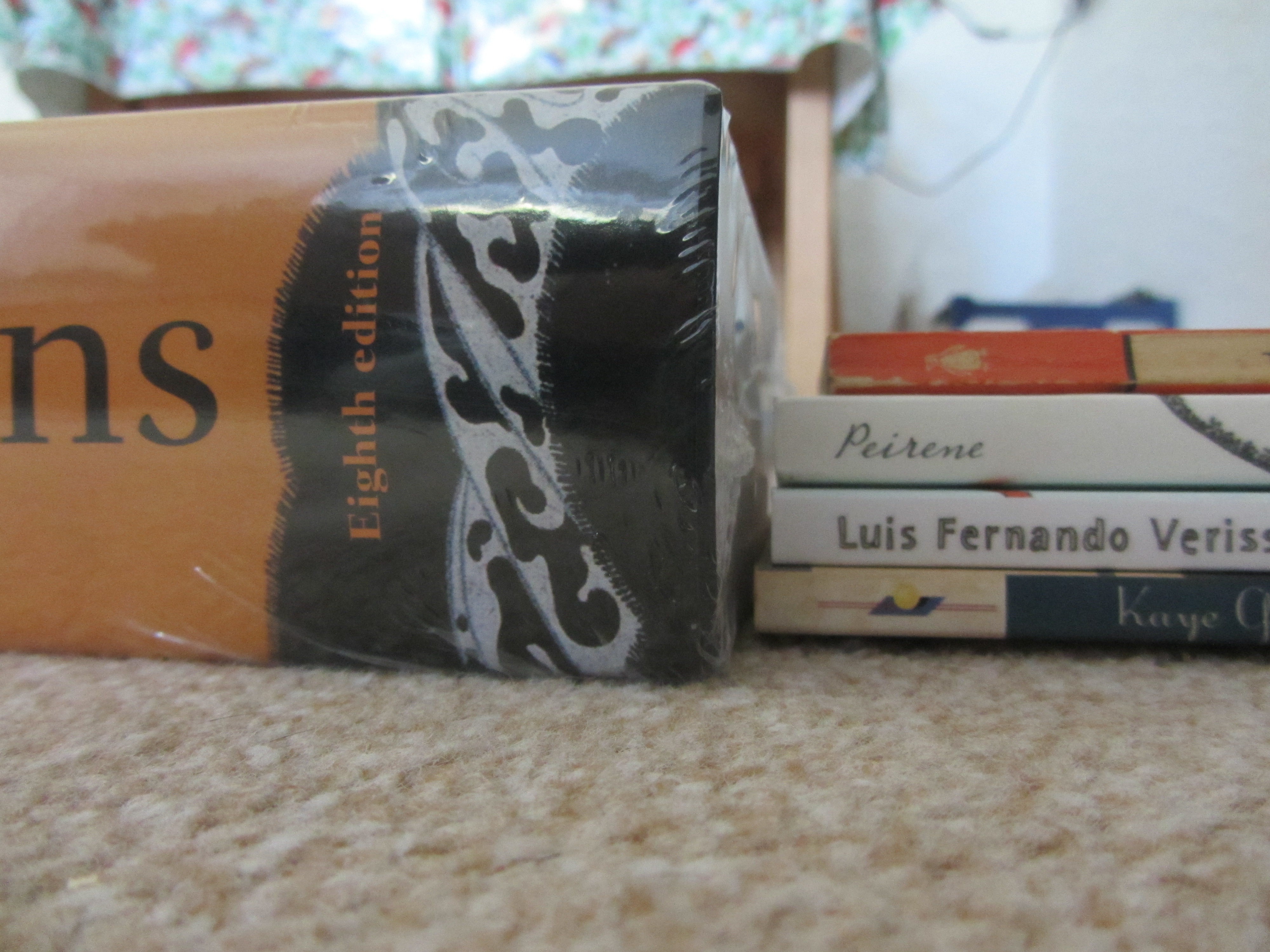
Even four novellas put together don’t stack up very far compared to the Oxford Dictionary of Quotations.
I recently finished The Bookshop by Penelope Fitzgerald [123]; all her books are similarly concise, so you may want to give her a try. The next novella on the pile for me is Ellen Foster by Kaye Gibbons [126]. I had never heard of the author, but the title and description lured me into buying it from a library book sale on a trip back to America (for 25 cents, why not?!). It’s a Southern Gothic story with an eleven-year-old narrator whom Walker Percy likened to Holden Caulfield. The alluring first line: “When I was little I would think of ways to kill my daddy.”
For more ideas, see these two Publishers Weekly’s lists:
“10 Best Books Shorter than 150 Pages” (only repeats one of my suggestions)
“10 Best Short Story Collections You’ve Never Read”
Off topic, but today is a milestone for me: it marks exactly two years that I’ve been a freelance writer!
Are you fond of short books? Do you prefer them to doorstoppers? What are some of your favorite novellas? All comments welcome!
Review: Smoke Gets in Your Eyes, by Caitlin Doughty
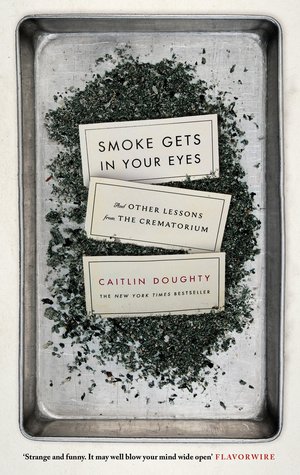 Caitlin Doughty, a funeral director in her early thirties, is on a mission. Her goal? Nothing less than completely changing how we think about death and the customs surrounding it. Her odyssey through the death industry began when she was 23 and started working at suburban San Francisco’s Westwind Crematorium. She had spent her first 18 years in Hawaii and saw her first dead body at age eight when she went to a Halloween costume contest at the mall and saw a little girl plummet 30 feet over a railing. In another century, she reflects, it would have been rare for a child to go that long before seeing a corpse; nineteenth-century tots might have experienced the death of multiple siblings, if not a parent.
“Today, not being forced to see corpses is a privilege of the developed world,” she writes. And if we do see a dead body, it will have been so prettified by mortuary workers that it might bear little resemblance to how the person looked in life. Here Doughty reveals all the tricks of the American trade – from embalming (a post-Civil War development) and heavy-duty makeup to gluing eyes closed and sewing mouths shut – that give the dead that peaceful, lifelike look we like to see at wakes. Compare our squeamishness with the openness of various Asian countries, where one might see dozens of corpses floating down the Ganges or Buddhist monks meditating on a decomposing corpse as a memento mori.
Doughty is in a somewhat awkward position: she is part of the very American death industry she is criticizing – those “professionals whose job was not ritual but obfuscation, hiding the truths of what bodies are and what bodies do.” Although she reveled in her work at the crematorium despite its occasional gruesomeness and seems to believe cremation is an efficient and responsible choice for body disposal, she also worries that it might be a further sign of people’s determination to keep bodies out of sight and out of mind. As anthropologist Geoffrey Gorer noted, “In many cases, it would appear, cremation is chosen because it is felt to get rid of the dead more completely and finally than does burial.”
Could cremation be noble instead? Doughty traces its origins to ancient Roman funeral pyres, as different as could be from the enclosed, clinical environment of a modern crematorium. Two factors led directly to cremation becoming increasingly accepted and popular after the 1960s. One was Jessica Mitford’s book The American Way of Death (1961), which mocked the same Los Angeles area cemetery Evelyn Waugh does in The Loved One, Forest Lawn. The other was Pope Paul VI overturning the Catholic Church’s ban on cremation in 1963. Doughty quotes George Bernard Shaw’s rapturous account of his mother’s cremation in 1913 as proof that it can be not only natural, but even aesthetically pleasing:
And behold! The feet burst miraculously into streaming ribbons of garnet colored lovely flame, smokeless and eager, like Pentecostal tongues, and as the whole coffin passed in it sprang into flame all over, and my mother became that beautiful fire.
It is rare, however – and, for the workers, nerve-racking – to have witnesses at a cremation. For the most part Westwind worked like a factory, cremating six bodies per weekday. Doughty experienced all sides of the work: collecting dead fetuses from hospitals for free cremation, shaving adult corpses before burning, enduring the stench of decomposing flesh, and taking delivery of a box of heads whose bodies were donated to science. She is largely unsentimental about it all; who is this fairytale witch who speaks of “tossing” babies into the oven and grinding their little bones?
“Handmaiden to the underworld,” she describes herself, and given her medieval history degree and Goth-lite looks, you can see that a certain macabre cast of mind is necessary for this line of work. She also has a good ear for arrestingly witty one-liners; my favorite was “As a general rule, if anyone ever asks you to put stockings on a ninety-year-old deceased Romanian woman with edema, your answer should be no.”
Still, Doughty recognizes the almost unbearable sadness of many of the cases the crematorium sees – the young man who traveled to California from Washington just to stand in the path of a train, the “floaters” found in the ocean, the elderly with oozing bed sores, and the homeless folk of Los Angeles who were cremated and dumped in a mass grave after they were used for embalming practice at her mortuary school. She even considered committing suicide herself on a lonely trip out to a redwood forest.
What has kept her going is the desire to combat misconceptions and superstitions about the dead. As she realized after a potentially serious car accident on the freeway, she has lost her own fear of death, and she wants to help others do the same. This will require getting people talking about death, something she is doing through her online community Order of the Good Death and her Ask a Mortician YouTube videos. She would also like to see people having involvement with dead bodies again, as they did in previous centuries, perhaps by washing their dead relatives or keeping them at home before the funeral rather than having them taken away. “It is never too early to start thinking about your own death and the deaths of those you love.” This is not morbid; it’s just planning ahead for an inevitable experience. “We can wander further into the death dystopia, denying that we will die and hiding dead bodies from our sight. Making that choice means we will continue to be terrified and ignorant of death, and the huge role it plays in how we live our lives.”
The sections of personal anecdote in this book are better than those based on anthropological research – which is not woven in entirely naturally. Ultimately, it’s a little unclear exactly how Doughty plans to change things. She speaks of designing her own welcoming crematorium, an open, airy space that doesn’t suggest a death factory. But it’s enough that she’s part of a movement in the right direction, and beneath her wry tone her passion is clear.
My rating:
Further reading suggestions: For more on how people are revolutionizing how we think about death, I highly recommend Anne Karpf’s book for the School of Life, How to Age. Other death-themed reads I have particularly enjoyed are The Undertaking by Thomas Lynch, The Removers by Andrew Meredith, and A Tour of Bones by Denise Inge. Less effective as a memoir but still interesting for its view of the funeral home business is The Undertaker’s Daughter by Kate Mayfield.
Note: I was originally going to review this book for a British website, so I received a free copy of the UK edition from Canongate. Doughty inserts British statistics and information to increase the book’s relevance to a new audience. She also astutely notes that British funerals minimize interaction with a dead body, something I have certainly found true in the two cremations I have attended in England. The Irish are famous for their wakes, but the British do not have this custom. In fact, when we attended my brother-in-law’s viewing and funeral in America earlier this year, it was the first time my husband (aged 31) had seen a dead body. Although I can see Doughty’s point about a prettified corpse not being representative of what the dead ‘should’ look like, I must also say that the funeral home had done a fantastic job of making him look happy and at peace, like he was sleeping and having pleasant dreams. He certainly didn’t look like a man who had suffered the ravages of brain cancer for four years. The same was not true for my ninety-something grandmother, however, who was nearly unrecognizable.
 Bookish Beck = Rebecca Foster. American transplant to England. Freelance proofreader and book reviewer.
 Bookish Beck