Recommended March Releases: Magnusson, May, Moor and More
March has been a huge month for new releases. With so many authors feeling let down about book tours and events being cancelled, it’s a great time for bloggers to step in and help. I attended two virtual book launches on Twitter on the 19th and have another one coming up on the 31st. I also have three more March releases on order from my local indie bookstore: Greenery by Tim Dee, tracking the arrival of spring; Footprints by David Farrier, about the fossil traces modern humans will leave behind; and The Bass Rock by Evie Wyld, a novel about violence against women set on the Scottish coast in three different time periods.
Today I have short reviews of five March releases I recommend (plus a bonus one now out in paperback): a Victorian pastiche infused with Scottish folklore, an essay collection about disparate experiences of motherhood, a thriller about victims of domestic violence, poems in graphic novel form, a novel about natural and personal disasters in Australia, and a lovely story of friendship and literature changing a young man’s life forever. All: 
The Ninth Child by Sally Magnusson
(Published by Two Roads on the 19th)
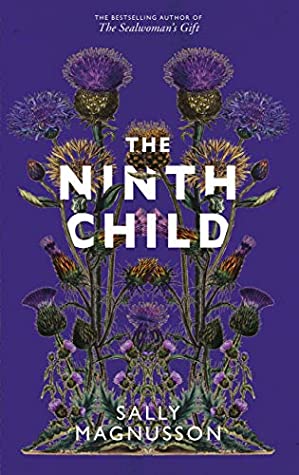 Like Hannah Kent’s The Good People and Sarah Perry’s The Essex Serpent, this is an intense, convincing work of fiction that balances historical realism with magical elements. In mid-1850s Britain, in the wake of a cholera epidemic, there is a drive to ensure clean water. Alexander Aird, hired as the on-site physician for the Glasgow waterworks, moves to the Loch Katrine environs with his wife, Isabel, who has had eight miscarriages or stillbirths. With no living babies requiring her care, Isabel spends her days wandering the hills and meets a strange scarecrow of a man, Reverend Robert Kirke … who died in 1692.
A real-life Episcopalian minister, Kirke wrote a book about fairies and other Celtic supernatural beings and, legend has it (as recounted by Sir Walter Scott and others), was taken into the faery realm after his death and continued to walk the earth looking for rest. It takes a while for Isabel to learn the truth about Kirke – though her servant, Kirsty McEchern, immediately intuits that something isn’t right about the man – and longer still to understand that he wants something from her. “Whatever else, Robert Kirke could be relied on to ruffle this mind of hers that was slowly opening to experience again, and to thinking, and to life.”
This was a rollicking read that drew me in for its medical elements (premature birth, a visit to Joseph Lister, interest in Florence Nightingale’s nursing methods) as well as the plot. It often breaks from the omniscient third-person voice to give testimonies from Kirsty and from Kirke himself. There are also amusing glimpses into the Royal household when Victoria and Albert stay at Balmoral and return to open the waterworks during the “heaviest, windiest, most umbrella-savaging, face-slashing deluge that Scotland had experienced in twenty years.” Best of all, it gives a very different picture of women’s lives in the Victorian period.
My thanks to the publisher for the proof copy for review.
The Best Most Awful Job: Twenty Writers Talk Honestly about Motherhood, edited by Katherine May
(Published by Elliott & Thompson on the 19th)
 These are essays for everyone who has had a mother – not just everyone who has been a mother. I enjoyed every piece separately, but together they form a vibrant collage of women’s experiences. Care has been taken to represent a wide range of situations and attitudes. The reflections are honest about physical as well as emotional changes, with midwife Leah Hazard (author of Hard Pushed) kicking off with an eye-opening rundown of the intimate scarring some mothers will have for the rest of their lives. We hear from a mother of six who’s “addicted” to pregnancy (Jodi Bartle), but also from a woman who, after an ectopic pregnancy, realized “there are lots of ways to mother, even if your body won’t let you” (Peggy Riley, in one of my two favorite pieces in the book).
Women from BAME communities recount some special challenges related to cultural and family expectations, but others that are universal. An autistic mother (Joanne Limburg) has to work out how to parent a neurotypical child; queer parents (including author Michelle Tea) wonder how to raise a son at a time of toxic masculinity. There are also several single mothers, one of them disabled (Josie George – hers was my other favorite essay; do follow her on Twitter via @porridgebrain if you don’t already).
What I most appreciated is that these authors aren’t saying what they think they should say about motherhood; they’re willing to admit to boredom, disappointment and rage: “motherhood is an infinite, relentless slog from which there is no rest or recuperation … a ceaseless labour, often devoid of acknowledgment, recognition and appreciation” (Javaria Akbar); “I step barefoot on a rogue piece of Lego and it’s game over. I scream” (Saima Mir). These are punchy, distinctive slices of life writing perfectly timed for Mother’s Day. I plan to pass the book around my book club; mothers or not, I know everyone will appreciate it.
My thanks to the publisher for the proof copy for review.
Keeper by Jessica Moor
(Published by Viking/Penguin on the 19th)
 Val McDermid and Jeanette Winterson are among the fans of this, Penguin’s lead debut title of 2020. When a young woman is found drowned at a popular suicide site in the Manchester area, the police plan to dismiss the case as an open-and-shut suicide. But the others at the women’s shelter where Katie Straw worked aren’t convinced, and for nearly the whole span of this taut psychological thriller readers are left to wonder if it was suicide or murder.
The novel alternates between chapters marked “Then” and “Now”: in the latter story line, we follow the police investigation and meet the women of the refuge; in the former, we dive into Katie’s own experience of an abusive relationship back in London. While her mother was dying of cancer she found it comforting to have a boyfriend who was so attentive to her needs, but eventually Jamie’s obsessive love became confining.
I almost never pick up a mystery, but this one was well worth making an exception for. I started suspecting the twist at maybe the two-thirds point, but that didn’t detract from my enjoyment. Based on Moor’s year working in the violence against women sector, it’s a gripping and grimly fascinating story of why women stay with their abusers and what finally drives them to leave.
I picked up a proof copy at a Penguin Influencers event.
 Poems to See by: A Comic Artist Interprets Great Poetry by Julian Peters
(To be published by Plough Publishing House on the 31st)
Peters is a comics artist based in Montreal. Here he has chosen 24 reasonably well-known poems by the likes of e.e. cummings, Emily Dickinson, Robert Frost, Seamus Heaney, Langston Hughes, Edgar Allan Poe, Christina Rossetti and W.B. Yeats and illustrated each one in a markedly different fashion. From black-and-white manga to a riot of color and music, from minimalist calligraphy-like Japanese watercolor to imitations of Brueghel, there is such a diversity of style here that at first I presumed there were multiple artists involved (as in one of my favorite graphic novels of last year, ABC of Typography, where the text was written by one author but each chapter had a different illustrator). But no, this is all Peters’ work; I was impressed by his versatility.
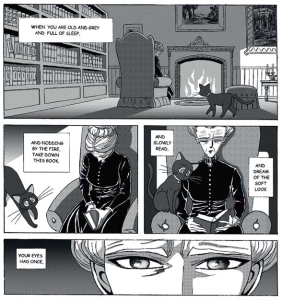
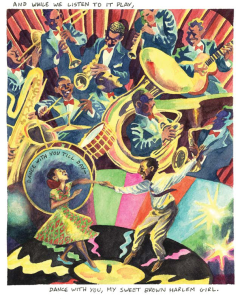
The illustrations range from realistic to abstract, with some more obviously cartoon-like. A couple of sequences reminded me of the style of Raymond Briggs. For “Caged Bird” by Maya Angelou, lines are inlaid on the squares of a painted patchwork quilt. Other sets look to have been done via wood engraving, or with old-fashioned crayons. You could quibble with the more obvious poetry selections, but I encountered a few that were new to me, including “Buffalo Dusk” by Carl Sandburg and “Conscientious Objector” by Edna St. Vincent Millay. Peters has grouped them into six thematic categories: self, others, art, nature, time and death. Teenagers, especially, will enjoy the introduction to a variety of poets and comics styles.
I read an e-copy via NetGalley.
The Inland Sea by Madeleine Watts
(Published by ONE/Pushkin on the 5th)
 “Emergency police fire, or ambulance?” The young female narrator of this debut novel lives in Sydney and works for Australia’s emergency call service. Over her phone headset she gets appalling glimpses into people’s worst moments: a woman cowers from her abusive partner; a teen watches his body-boarding friend being attacked by a shark. Although she strives for detachment, her job can’t fail to add to her anxiety – already soaring due to the country’s flooding and bush fires.
Against that backdrop of natural disasters, a series of minor personal catastrophes play out. The narrator is obsessed with a rape/murder case that’s dominating the television news, and narrowly escapes sexual assault herself. She drinks to excess, keeps hooking up with her ex-boyfriend, Lachlan, even after he gets a new girlfriend, and seems to think abortion and the morning after pill are suitable methods of birth control. Irresponsible to the point of self-sabotage, she’s planning a move to London but in the meantime is drifting through life, resigned to the fact that there is no unassailable shelter and no surefire way to avoid risk.
The title comes from the quest of John Oxley (presented here as the narrator’s ancestor), who in 1817 searched for a water body in the Australian interior. Quotations from his journals and discussions of the work of Patrick White, the subject of Lachlan’s PhD thesis, speak to the search for an Australian identity. But the inland sea is also the individual psyche, contradictory and ultimately unknowable. Like a more melancholy version of Jenny Offill’s Weather or a more cosmic autofiction than Yara Rodrigues Fowler’s Stubborn Archivist, this is a timely, quietly forceful story of how women cope with concrete and existential threats.
My thanks to the publisher for the PDF copy for review.
And a bonus…
The Offing by Benjamin Myers (2019)
(Paperback published by Bloomsbury on the 5th)
 With the Second World War only recently ended and nothing awaiting him apart from the coal mine where his father works, sixteen-year-old Robert Appleyard sets out on a journey. From his home in County Durham, he walks southeast, doing odd jobs along the way in exchange for food and lodgings. One day he wanders down a lane near Robin Hood’s Bay and gets a surprisingly warm welcome from a cottage owner, middle-aged Dulcie Piper, who invites him in for tea and elicits his story. Almost accidentally, he ends up staying for the rest of the summer, clearing scrub and renovating her garden studio.
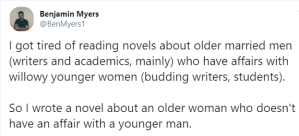
Dulcie is tall, outspoken and unconventional – I pictured her as (Meryl Streep as) Julia Child in the movie Julie & Julia. She introduces Robert to whole new ways of thinking: that not everyone believes in God, that Germans might not be all bad, that life can be about adventure and pleasure instead of duty. “The offing” is a term for the horizon, as well as the title of a set of poems Robert finds in the dilapidated studio, and both literature and ambition change his life forever. Bright, languid and unpredictable, the novel delights in everyday sensual pleasures like long walks with a dog, dips in the ocean and an abundance of good food. I can’t think of another book I’ve read that’s quite like it – how refreshing is that?
I pre-ordered the paperback using a Waterstones voucher I got for Christmas.
What recent releases can you recommend?
Three Review Books: Brian Kimberling, Jessica Pan & Francesca Segal
Three May–June releases: A fish-out-of-water comic novel about teaching English in Prague; and memoirs about acting like an extrovert and giving birth to premature twins.
Goulash by Brian Kimberling
 “Look where we are. East meets West. Communism meets capitalism.” In 1998 Elliott Black leaves Indiana behind for a couple of years to teach English in Prague. The opening sequence, in which he discovers that his stolen shoes have been incorporated into an art installation, is an appropriate introduction to a country where bizarre things happen. Elliott doesn’t work for a traditional language school; his students are more likely to be people he meets in the pub or tobacco company executives. Their quirky, deadpan conversations are the highlight of the book.
Elliott starts dating a fellow teacher from England, Amanda (she “looked like azaleas in May and she spoke like the BBC World Service”), who also works as a translator. They live together in an apartment they call Graceland. Much of this short novel is about their low-key, slightly odd adventures, together and separately, while the epilogue sees Elliott looking back at their relationship from many years later.
I was tickled by a number of the turns of phrase, but didn’t feel particularly engaged with the plot, which was inspired by Kimberling’s own experiences living in Prague. 
With thanks to Tinder Press for a proof copy to review.
Favorite passages:
“Sorrowful stories like airborne diseases made their way through the windows and under the doorframe, bubbled up like the bathtub drain. It was possible to fill Graceland with light and color and music and the smell of good food, and yet the flat was like a patient with some untreatable condition, and we got tired of palliative care.”
“‘It’s good to be out of Prague,’ he said. ‘Every inch drenched in blood and steeped in alchemy, with a whiff of Soviet body odor.’ ‘You should write for Lonely Planet,’ I said.”
Sorry I’m Late, I Didn’t Want to Come: An Introvert’s Year of Living Dangerously by Jessica Pan
 Like Jessica Pan, I’m a shy introvert (a “shintrovert”) as well as an American in the UK, so I was intrigued to see the strategies she employed and the experiences she sought out during a year of behaving like an extrovert. She forced herself to talk to strangers on the tube, give a talk at London’s Union Chapel as part of the Moth, use friendship apps to make new girlfriends, do stand-up comedy and improv, go to networking events, take a holiday to an unknown destination, eat magic mushrooms, and host a big Thanksgiving shindig.
Like Help Me!, which is a fairly similar year challenge book, it’s funny, conversational and compulsive reading that was perfect for me to be picking up and reading in chunks while I was traveling. Although I don’t think I’d copy any of Pan’s experiments – there’s definitely a cathartic element to reading this; if you’re also an introvert, you’ll feel nothing but relief that she’s done these things so you don’t have to – I can at least emulate her in initiating deeper conversations with friends and pushing myself to attend literary and networking events instead of just staying at home.
With thanks to Doubleday UK for a proof copy to review.
Mother Ship by Francesca Segal
I’m a big fan of Segal’s novels, especially The Innocents, one of the loveliest debut novels of the last decade, so I was delighted to hear she was coming out with a health-themed memoir about giving birth to premature twins. Mother Ship is a visceral diary of the first eight weeks in the lives of her daughters, who were born by Caesarean section at 29 weeks in October 2015 and spent the next two months in the NICU, “an extremely well-funded prison or perhaps more accurately a high-tech zoo.”
Segal strives to come to terms with this unnatural start to motherhood. “Taking my unready daughters from within me felt not like a birth but an evisceration,” she writes; “my children do not appear to require mothering. Instead they need sophisticated medical intervention.” She describes with tender precision the feeling of being torn: between the second novel she’d been in the middle of writing and the all-consuming nature of early parenthood; and between her two girls (known for much of the book as “A-lette” and “B-lette”), who are at one point separated in different hospitals.

Spotted at Philadelphia airport.
As well as portraying her own state of mind, Segal crafts twinkly pen portraits of the others she encountered in the NICU, including the staff but especially her fellow preemie mums, who met in a “milking shed” where they pumped breast milk for the babies they were so afraid of losing that they resisted naming. (Though it was touch and go for a while, A-lette and B-lette finally earned the names Raffaella and Celeste and came home safely.) Female friendship is a subsidiary theme in this exploration of desperate love and helplessness. The layman’s look at the inside workings of medicine would have made this one of my current few favorites for next year’s Wellcome Book Prize (which, alas, is on hiatus). After encountering some unpleasant negativity about the NHS in a recent read, I was relieved to find that Segal’s outlook is pure gratitude.
With thanks to Chatto & Windus for the free copy for review.
Would you be interested in reading one or more of these?
Best Fiction & Poetry of 2018
Below I’ve chosen my top 12 fiction releases from 2018 (eight of them happen to be by women!). Many of these books have already featured on my blog in some way over the course of the year. To keep things simple, as with my nonfiction selections, I’m limiting myself to two sentences per title: the first is a potted summary; the second tells you why you should read it. I’ve also highlighted my three favorites from the year’s poetry releases.
 Orchid & the Wasp by Caoilinn Hughes: From the Iraq War protests to the Occupy movement in New York City, we follow antiheroine Gael Foess as she tries to get her brother’s art recognized. This debut novel is a potent reminder that money and skills don’t get distributed fairly in this life.
 Bitter Orange by Claire Fuller: Fuller’s third novel tells the suspenseful story of the profligate summer of 1969 spent at a dilapidated English country house. The characters and atmosphere are top-notch; this is an absorbing, satisfying novel to swallow down in big gulps.
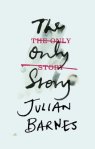 The Only Story by Julian Barnes: It may be a familiar story – a May–December romance that fizzles out – but, as Paul believes, we only really get one love story, the defining story of our lives. The picture of romantic youth shading into cynical but still hopeful middle age really resonates, as do the themes of unconventionality, memory, addiction and pity.
 The Immortalists by Chloe Benjamin: Summer 1969: four young siblings escape a sweltering New York City morning by visiting a fortune teller who can tell you the day you’ll die; in the decades that follow, they have to decide what to do with this advance knowledge: will it spur them to live courageous lives, or drive them to desperation? This compelling family story lives up to the hype.
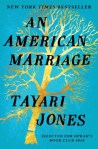 An American Marriage by Tayari Jones: Roy and Celestial only get a year of happy marriage before he’s falsely accused of rape and sentenced to 12 years in prison in Louisiana. This would make a great book club pick: I ached for all the main characters in their impossible situation; there’s a lot to probe about their personalities and motivations, and about how they reveal or disguise themselves through their narration and letters.
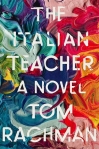 The Italian Teacher by Tom Rachman: Charles “Pinch” Bavinsky is an Italian teacher; as a boy in Rome in the 1950s–60s he believed he’d follow in the footsteps of his sculptor mother and his moderately famous father, Bear Bavinsky, who paints close-ups of body parts, but along the way something went wrong. This is a rewarding novel about the desperation to please, or perhaps exceed, one’s parents and the legacy of artists in a fickle market.
 The Incendiaries by R. O. Kwon: A sophisticated, unsettling debut novel about faith and its aftermath, fractured through the experience of three people coming to terms with painful circumstances. Kwon spent 10 years writing this book, and that time and diligence come through in how carefully honed the prose is: such precise images; not a single excess word.
 Unsheltered by Barbara Kingsolver: Kingsolver’s bold eighth novel has a dual timeline that compares the America of the 1870s and the recent past and finds that they are linked by distrust and displacement. There’s so much going on that it feels like it encompasses all of human life; it’s by no means a subtle book, but it’s an important one for our time, with many issues worth pondering and discussing.
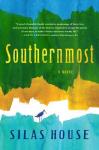 Southernmost by Silas House: In House’s sixth novel, a Tennessee preacher’s family life falls apart when he accepts a gay couple into his church. We go on a long journey with Asher Sharp: not just a literal road trip from Tennessee to Florida, but also a spiritual passage from judgment to grace in this beautiful, quietly moving novel of redemption and openness to what life might teach us.
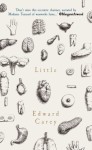 Little by Edward Carey: This is a deliciously macabre, Dickensian novel about Madame Tussaud, who started life as Anne Marie Grosholtz in Switzerland in 1761. From a former monkey house to the Versailles palace and back, Marie must tread carefully as the French Revolution advances and a desire for wax heads is replaced by that for decapitated ones.
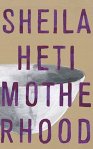 Motherhood by Sheila Heti: Chance, inheritance, and choice vie for pride of place in this relentless, audacious inquiry into the purpose of a woman’s life. The book encapsulates nearly every thought that has gone through my mind over the last decade as I’ve faced the intractable question of whether to have children.
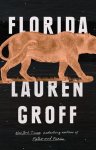 Florida by Lauren Groff: There’s an oppressive atmosphere throughout these 11 short stories, with violent storms reminding the characters of an uncaring universe, falling-apart relationships, and the threat of environmental catastrophe. Florida feels innovative and terrifyingly relevant; any one of its stories is a bracing read; together they form a masterpiece. (I never would have predicted that a short story collection would be my favorite fiction read of the year!)

My 2018 fiction books of the year (the ones I own in print, anyway).
Poetry selections:
-
 Three Poems by Hannah Sullivan: These poem-essays give fragmentary images of city life and question the notion of progress and what meaning a life leaves behind. “The Sandpit after Rain” stylishly but grimly juxtaposes her father’s death and her son’s birth.
-
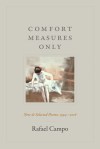 Comfort Measures Only: New and Selected Poems, 1994–2016 by Rafael Campo: Superb, poignant poetry about illness and the physician’s duty. A good bit of this was composed in response to the AIDS crisis; it’s remarkable how Campo wrings beauty out of clinical terminology and tragic situations.
-
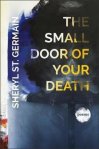 The Small Door of Your Death by Sheryl St. Germain: St. Germain’s seventh collection is in memory of her son Gray, who died of a drug overdose in 2014, aged 30. She turns her family history of alcohol and drug use into a touchpoint and affirms life’s sensual pleasures – everything from the smell of brand-new cowboy boots to luscious fruits.
What were some of your top fiction (or poetry) reads of the year?
Tomorrow I’ll be naming some runners-up (both fiction and nonfiction).
Margaret Atwood Reading Month: Surfacing and The Edible Woman
For the Margaret Atwood Reading Month hosted by Marcie and Naomi, I read her first two novels – though I didn’t realize they were so at the time, and read them in reverse order. These were my 18th and 19th Atwood books overall, and my 11th and 12th of her novels. It was particularly interesting to see the germ of her frequent themes in these early works.
Surfacing (1972)
(At 186 pages, this just about fit into Novellas for November too!) A young Canadian woman has returned to her French-speaking hometown, ostensibly to search for her missing father but really to search for herself. She’s an illustrator at work on a collection of Quebec folk tales, and in her past are a husband and child that she left behind. With her at her father’s lakeside cabin are her boyfriend Joe, whom she’s not sure she loves, and their friends David and Anna, a married couple whose dynamic is rather disturbing – David is always making demeaning sexualized jokes about Anna, who is afraid for him to see her without makeup on.
 This is a drifting, dreamy sort of book whose gorgeous nature writing (“Above the trees streaky mackerel clouds are spreading in over the sky, paint on a wet page; no wind at lake level, soft feel of the air before rain”) inures you to various threats. You’re never sure just how serious they’ll turn out to be. Will the men’s attitude to women spill over into outright assault? Will there be some big blowup with the resented Americans who are monopolizing the lake? (“We used to think they were harmless and funny and inept and faintly lovable, like President Eisenhower.”)
Meanwhile, the question of her father’s whereabouts becomes less and less important as the book goes on. The narrator seems to have closed herself off to emotion, but all that’s repressed returns dramatically in the final 20 pages (“From any rational point of view I am absurd; but there are no longer any rational points of view.”).
I suspect there may be a fair bit I missed; the book would probably benefit from future re-readings and even some exploration of secondary sources to think about all that’s going on. It’s maybe not as accessible and plot-heavy as much of Atwood’s later work, but I found it to be an intriguing and rewarding read, and it still feels timely more than four decades later. 
The Edible Woman (1969)
Marian McAlpin works for Seymour Surveys, administering questionnaires about rice pudding and a new brand of beer. She shares an apartment with Ainsley, who tests electric toothbrushes, in the home of a harridan of a landlady who monitors their every move. Marian is happy enough with her boyfriend Peter and gradually drifts into an engagement – but she can’t stop thinking about Duncan, an apathetic graduate student whom she met during her survey rounds and ran into again at the laundromat. Duncan represents a sort of strings-free relationship that contrasts with the traditional marriage she’d have with Peter. Her challenge is to overcome the inertia of convention and decide what she really wants from her life.
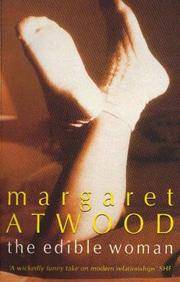 Part Two’s shift from first person to third person is a signal that Marian is dissociating from her situation. She recoils from food and pregnancy – two facts of bodily life that the book’s characters embrace greedily or turn from in horror. Gradually Marian eliminates more and more foods from her diet, starting with meat. And while Ainsley concocts a devious plan to get pregnant by Marian’s friend Len, Marian keeps in mind the cautionary tale of her college friend Clara, whose three monstrous children are always peeing on people or going off to poop in corners. Marian perceives Clara as having given up her mind in favor of her womb.
It’s unclear whether we’re meant to see Marian’s experience as a temporary eating disorder or a physical manifestation of endangered femininity. Now that veganism is mainstream, it sounds dated to hear her lamenting, “I’m turning into a vegetarian, one of those cranks; I’ll have to start eating lunch at Health Bars.” In any case, you can spot themes that will recur in Atwood’s later work, like the threat of the male gaze (Surfacing), the perception of the female body (Lady Oracle), manipulation of pregnancy (The Handmaid’s Tale) and so on. I can’t say I particularly enjoyed this novel, but I liked the food metaphors and laughed at the over-the-top language about babies. 
Have you read any of Margaret Atwood’s books recently?
My Most Anticipated Releases of the Second Half of 2018
Here are 30 books that are on my radar for the months of July through November (I haven’t heard about any December titles yet), plus one bonus book that I’ve already read. This is by no means a full inventory of what’s coming out, or even of what I have available through NetGalley and Edelweiss; instead, think of it as a preview of the books I actually intend to read, in release date order. The quoted descriptions are from the publisher blurbs on Goodreads. If I already have access to the book in some way, I’ve noted that.
The first half of the year seemed to be all about plants. This time around I have plenty of memoirs, some medical and some bookish; birds and watery imagery; and some religious and philosophical themes.
[By the way, here’s how I did with my most anticipated releases of the first half of the year:
- 17 out of 30 read; of those 8 were at least somewhat disappointing (d’oh!)
- 5 unfinished
- 1 currently reading
- 1 lost interest in
- 1 I still intend to read
- 5 I didn’t manage to find]
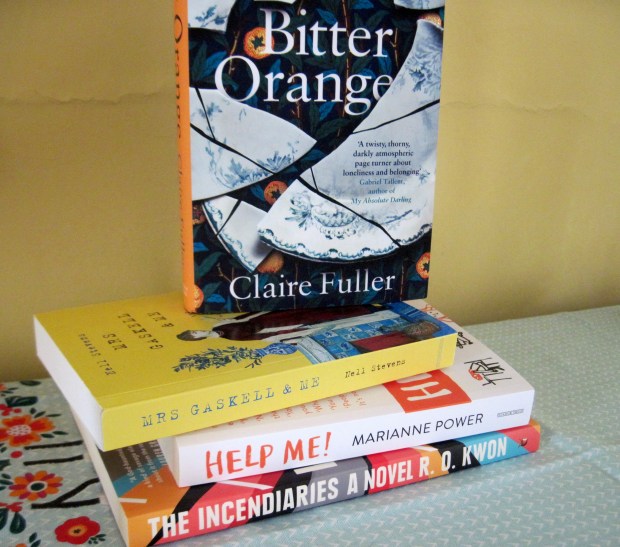
The upcoming titles I happen to own in print.
July
 No One Tells You This: A Memoir by Glynnis MacNicol [July 10, Simon & Schuster]: “If the story doesn’t end with marriage or a child, what then? This question plagued Glynnis MacNicol on the eve of her 40th birthday. … Over the course of her fortieth year, which this memoir chronicles, Glynnis embarks on a revealing journey of self-discovery that continually contradicts everything she’d been led to expect.” (NetGalley download)
 The Lost Chapters: Finding Recovery and Renewal One Book at a Time by Leslie Schwartz [July 10, Blue Rider Press]: “Leslie Schwartz’s powerful, skillfully woven memoir of redemption and reading, as told through the list of books she read as she served a 90-day jail sentence. … Incarceration might have ruined her, if not for the stories that comforted her while she was locked up.”
 The Bumblebee Flies Anyway: Gardening and Surviving Against the Odds by Kate Bradbury [July 17, Bloomsbury Wildlife]: “Finding herself in a new home in Brighton, Kate Bradbury sets about transforming her decked, barren backyard into a beautiful wildlife garden. She documents the unbuttoning of the earth and the rebirth of the garden, the rewilding of a tiny urban space.”
 Crux: A Cross-Border Memoir by Jean Guerrero [July 17, One World]: “A daughter’s quest to find, understand, and save her charismatic, troubled, and elusive father, a self-mythologizing Mexican immigrant who travels across continents—and across the borders between imagination and reality; and spirituality and insanity—fleeing real and invented persecutors.”
The Incendiaries by R.O. Kwon [July 31, Riverhead]: “A shocking novel of violence, love, faith, and loss, as a young woman at an elite American university is drawn into acts of domestic terrorism by a cult tied to North Korea. … The Incendiaries is a fractured love story and a brilliant examination of the minds of extremist terrorists, and of what can happen to people who lose what they love most.” (Print ARC for blog review at UK release on Sept. 6 [Virago])
August
 Bitter Orange by Claire Fuller [Aug. 2, Penguin Fig Tree]: I’ve loved Fuller’s two previous novels. This one is described as “a suspenseful story about deception, sexual obsession and atonement” set in 1969 in a run-down English country house. I don’t need to know any more than that; I have no doubt it’ll be brilliant in an Iris Murdoch/Gothic way. (Print ARC for blog review on release date)
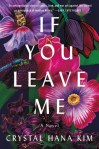 If You Leave Me by Crystal Hana Kim [Aug. 7, William Morrow]: “An emotionally riveting debut novel about war, family, and forbidden love—the unforgettable saga of two ill-fated lovers in Korea and the heartbreaking choices they’re forced to make in the years surrounding the civil war that continues to haunt us today.” This year’s answer to Pachinko? And another botanical cover to boot! (Edelweiss download)
 A River of Stars by Vanessa Hua [Aug. 14, Ballantine Books]: “In a powerful debut novel about motherhood, immigration, and identity, a pregnant Chinese woman makes her way to California and stakes a claim to the American dream. … an entertaining, wildly unpredictable adventure, told with empathy and wit” Sounds like The Leavers, which is a Very Good Thing.
 The Shakespeare Requirement by Julie Schumacher [Aug. 14, Doubleday]: A sequel to the very funny epistolary novel Dear Committee Members! “Now is the fall of his discontent, as Jason Fitger, newly appointed chair of the English Department of Payne University, takes aim against a sea of troubles, personal and institutional.” (Edelweiss download)
 Gross Anatomy: Dispatches from the Front (and Back) by Mara Altman [Aug. 21, G.P. Putnam’s Sons]: “By using a combination of personal anecdotes and fascinating research, Gross Anatomy holds up a magnifying glass to our beliefs, practices, biases, and body parts and shows us the naked truth—that there is greatness in our grossness.” (PDF from publisher; to review for GLAMOUR online)
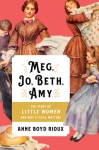 Meg, Jo, Beth, Amy: The Story of Little Women and Why It Still Matters by Anne Boyd Rioux [Aug. 21, W. W. Norton Company]: This is the bonus one I’ve already read, as part of my research for my Literary Hub article on rereading Little Women at its 150th anniversary. (That’s also the occasion for this charming book.) Rioux unearths Little Women’s origins in Alcott family history, but also traces its influence through to the present day. She also makes a strong feminist case for it. My short Goodreads review is here. (Edelweiss download)
September
 Lake Success by Gary Shteyngart [Sept. 4, Random House]: I read his memoir but am yet to try his fiction. “When his dream of the perfect marriage, the perfect son, and the perfect life implodes, a Wall Street millionaire takes a cross-country bus trip in search of his college sweetheart and ideals of youth. … [a] biting, brilliant, emotionally resonant novel very much of our times.” (Edelweiss download; for Pittsburgh Post-Gazette review)
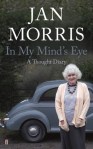 In My Mind’s Eye: A Thought Diary by Jan Morris [Sept. 6, Faber & Faber]: One of my most admired writers. “A collection of diary pieces that Jan Morris wrote for the Financial Times over the course of 2017.” I have never before in my life kept a diary of my thoughts, and here at the start of my ninth decade, having for the moment nothing much else to write, I am having a go at it. Good luck to me.
 Help Me!: One Woman’s Quest to Find Out if Self-Help Really Can Change Her Life by Marianne Power [Sept. 6, Picador]: “[F]or a year she vowed to test a book a month, following its advice to the letter, taking the surest road she knew to a perfect Marianne. As her year-long plan turned into a demented roller coaster where everything she knew was turned upside down, she found herself confronted with a different question: Self-help can change your life, but is it for the better?” (Print ARC)
 Normal People by Sally Rooney [Sept. 6, Faber & Faber]: Much anticipated follow-up to Conversations with Friends. “Connell and Marianne both grow up in the same town in rural Ireland. The similarities end there; they are from very different worlds. But they both get places to study at university in Dublin, and a connection that has grown between them despite the social tangle of school lasts long into the following years.”
 Mrs. Gaskell & Me by Nell Stevens [Sept. 6, Picador]: “In 2013, Nell Stevens is embarking on her PhD … and falling drastically in love with a man who lives in another city. As Nell chases her heart around the world, and as Mrs. Gaskell forms the greatest connection of her life, these two women, though centuries apart, are drawn together.” I was lukewarm on her previous book, Bleaker House, but I couldn’t resist the Victorian theme of this one! (Print ARC to review for Shiny New Books)
 Heart: A History by Sandeep Jauhar [Sept. 18, Farrar, Straus and Giroux]: “Deftly alternating between key historical episodes and his own work, Jauhar tells the colorful and little-known story of the doctors who risked their careers and the patients who risked their lives to know and heal our most vital organ. … Affecting, engaging, and beautifully written.” (Edelweiss download)
 To the Moon and Back: A Childhood under the Influence by Lisa Kohn [Sept. 18, Heliotrope Books]: “Lisa was raised as a ‘Moonie’—a member of the Unification Church, founded by self-appointed Messiah, Reverend Sun Myung Moon. … Told with spirited candor, [this] reveals how one can leave behind such absurdity and horror and create a life of intention and joy.”
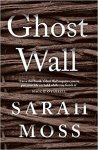 Ghost Wall by Sarah Moss [Sept. 20, Granta]: I’ve read Moss’s complete (non-academic) oeuvre; I’d read her on any topic. This novella sounds rather similar to her first book, Cold Earth, which I read recently. “Teenage Silvie is living in a remote Northumberland camp as an exercise in experimental archaeology. … Behind and ahead of Silvie’s narrative is the story of a bog girl, a sacrifice, a woman killed by those closest to her, and as the hot summer builds to a terrifying climax, Silvie and the Bog girl are in ever more terrifying proximity.” (NetGalley download)
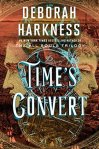 Time’s Convert (All Souls Universe #1) by Deborah Harkness [Sept. 25, Viking]: I was a sucker for Harkness’s A Discovery of Witches and its sequels, much to my surprise. (The thinking girl’s Twilight, you see. I don’t otherwise read fantasy.) Set between the American Revolution and contemporary London, this fills in the backstory for some of the vampire characters.
October
 All You Can Ever Know: A Memoir by Nicole Chung [Oct. 2, Catapult]: “Nicole Chung was born severely premature, placed for adoption by her Korean parents, and raised by a white family in a sheltered Oregon town. … With warmth, candor, and startling insight, Chung tells of her search for the people who gave her up, which coincided with the birth of her own child.” (Edelweiss download)
 Melmoth by Sarah Perry [Oct. 2, Serpent’s Tail]: Gothic fantasy / historical thriller? Not entirely sure. I just know that it’s the follow-up by the author of The Essex Serpent. (I choose to forget that her first novel exists.) Comes recommended by Eleanor Franzen and Simon Savidge, among others. (Edelweiss download)
 The Ravenmaster: Life with the Ravens at the Tower of London by Christopher Skaife [Oct. 2, 4th Estate]: More suitably Gothic pre-Halloween fare! “Legend has it that if the Tower of London’s ravens should perish or be lost, the Crown and kingdom will fall. … [A]fter decades of serving the Queen, Yeoman Warder Christopher Skaife took on the added responsibility of caring for these infamous birds.” I briefly met the author when he accompanied Lindsey Fitzharris to the Wellcome Book Prize ceremony.
 I Am Dynamite!: A Life of Friedrich Nietzsche by Sue Prideaux [Oct. 4, Faber & Faber]: “Friedrich Nietzsche’s work forms the bedrock of our contemporary thought, and yet a shroud of misunderstanding surrounds the philosopher behind these proclamations. The time is right for a new take on Nietzsche’s extraordinary life, whose importance as a thinker rivals that of Freud or Marx.” (For a possible TLS review?)
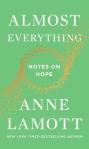 Almost Everything: Notes on Hope by Anne Lamott [Oct. 16, Riverhead]: I haven’t been too impressed with Lamott’s recent stuff, but I’ll still read anything she publishes. “In this profound and funny book, Lamott calls for each of us to rediscover the nuggets of hope and wisdom that are buried within us that can make life sweeter than we ever imagined. … Almost Everything pinpoints these moments of insight as it shines an encouraging light forward.”
 The Library Book by Susan Orlean [Oct. 16, Simon & Schuster]: The story of a devastating fire at Los Angeles Public Library in April 1986. “Investigators descended on the scene, but over 30 years later, the mystery remains: Did someone purposefully set fire to the library—and if so, who? Weaving her life-long love of books and reading with the fascinating history of libraries and the sometimes-eccentric characters who run them, … Orlean presents a mesmerizing and uniquely compelling story as only she can.” (Edelweiss download)
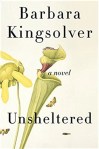 Unsheltered by Barbara Kingsolver [Oct. 18, Faber & Faber]: Kingsolver is another author I’d read anything by. “[T]he story of two families, in two centuries, who live at the corner of Sixth and Plum, as they navigate the challenges of surviving a world in the throes of major cultural shifts.” 1880s vs. today, with themes of science and utopianism – I’m excited! (Edelweiss download)
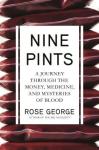 Nine Pints: A Journey through the Money, Medicine, and Mysteries of Blood by Rose George [Oct. 23, Metropolitan Books]: “Rose George, author of The Big Necessity [on human waste], is renowned for her intrepid work on topics that are invisible but vitally important. In Nine Pints, she takes us from ancient practices of bloodletting to modern ‘hemovigilance’ teams that track blood-borne diseases.”
November
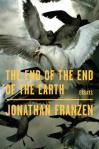 The End of the End of the Earth: Essays by Jonathan Franzen [Nov. 13, Farrar, Straus and Giroux]: “[G]athers essays and speeches written mostly in the past five years … Whether exploring his complex relationship with his uncle, recounting his young adulthood in New York, or offering an illuminating look at the global seabird crisis, these pieces contain all the wit and disabused realism that we’ve come to expect from Franzen.”
 A River Could Be a Tree by Angela Himsel [Nov. 13, Fig Tree Books]: “How does a woman who grew up in rural Indiana as a fundamentalist Christian end up a practicing Jew in New York? … Ultimately, the connection to God she so relentlessly pursued was found in the most unexpected place: a mikvah on Manhattan’s Upper West Side. This devout Christian Midwesterner found her own form of salvation—as a practicing Jewish woman.”
 Becoming by Michelle Obama [Nov. 13, Crown]: “In her memoir, a work of deep reflection and mesmerizing storytelling, Michelle Obama invites readers into her world, chronicling the experiences that have shaped her—from her childhood on the South Side of Chicago to her years as an executive balancing the demands of motherhood and work, to her time spent at the world’s most famous address.”
Which of these do you want to read, too? What other upcoming 2018 titles are you looking forward to?
How Not to Decide: Motherhood by Sheila Heti
Should one have children? No matter who’s asking the question or in what context, you’re going to get the whole gamut of replies, as proven by this recent Literary Hub survey of authors. Should I have children? Turn the question personal and, even if it’s actually rhetorical, you’ll still get an opinion from every quarter. As The Decision looms over her, the narrator of Sheila Heti’s new novel, a 37-year-old writer from Toronto, isn’t sure who to listen to. Her neurotic inner voice makes her second-guess her life. “The question of a child is a bug in the brain—it’s a bug that crawls across everything, every memory, and every sense of my own future.” Meanwhile, acquaintances and strangers alike all have their two cents to chip in. Everywhere she goes on her book tour, for instance, she hears other people’s stories and has to sift through them. She’s something like the protagonist of Rachel Cusk’s Outline trilogy, though with a stronger personality and internal commentary.
Having a child is an act of creation, and Heti’s narrator worries that she only has sufficient creative energy for one or the other: writing or breeding. Her identity as an artist is so precious to her that she is terrified of giving it up, or watering it down, to risk being a (not very good?) mother. Yet she has the sense that to remain childless she had better come up with a really good excuse. People will want to know what she is going to do with her life instead, and they’re unlikely to be satisfied by the notion that her books are like her babies.

The novel is in short, aphoristic paragraphs and is dominated by cogitation rather than scenes, though there are some concrete events and secondary characters, such as the narrator’s mother; her friend Libby, a new mother; and her partner, Miles, who has a 12-year-old daughter from a previous relationship. The sections are given headings like “PMS,” “Bleeding,” “Follicular,” and “Ovulating,” which suggest the cyclical nature of life: whether she likes it or not, this character is part of a physical process geared towards reproduction.
The cyclical workings of the female body mirror the circularity of her thoughts: she keeps revolving around the same questions, never seeming to get any closer to a decision – though by the end she does decide. The temptation is always to offload the choice onto an external, fate-like force. The narrator wants the oracular voice of the universe to answer everything for her via coin tosses. (Heti writes in a prefatory note that these were based on actual coin tosses.) She asks series of yes/no questions and reports what the coins have to say. It’s a way of avoiding responsibility for her own decision, and produces some truly hilarious passages. Oh, the absurdity of having a dialogue with an impersonal force!
Our heroine does ultimately realize how random and meaningless the coins’ yes/no answers are, but she continues to look outside herself for wisdom: to a fortune teller, psychics, dreams, and even a crazy woman in New York City who hits her up for money. Anything to bypass the wringer of her own mind. She also latches onto the biblical story of Jacob wrestling with the angel, and contrasts this with the symbol of a kitchen knife, which represents a demon that robs her of hope.
 Every woman is a daughter as well as a potential mother, and a particularly moving strand of Motherhood is the narrator’s relationship with her female ancestors. Her Hungarian grandmother, Magda, survived Auschwitz only to die of cancer at 53; her mother, a doctor, devoted herself to her career and left the traditional household and childrearing tasks to her husband. This dual legacy of suffering and professional pride helps explain the narrator’s feelings. Deep down, she believes her family line was meant to end in a concentration camp; how dare she continue it now? She also emulates her mother’s commitment to a cerebral vocation – “So I also wanted to be the brains: to be nothing but words on a page.”
Chance, inheritance, and choice vie for pride of place in this relentless, audacious inquiry into the purpose of a woman’s life. I marked out dozens of quotes that could have been downloaded directly from my head or copied from my e-mails and journal pages. The book encapsulates nearly every thought that has gone through my mind over the last decade as I’ve faced the intractable question of whether to have children. I suspect it will mean the most to people who are still unsure or have already decided against children; parents may interpret Heti’s arguments as personal barbs, even though the narrator insists her own decision is not an inherent comment on anyone else’s. It’s a book I could have written, but now don’t have to; Heti has captured brilliantly what it’s like to be in this situation in this moment in time.
Here are a few of my favorite passages. They should give you an idea of whether this book might resonate with you, or at least interest you academically:
“On the one hand, the joy of children. On the other hand, the misery of them. On the one hand, the freedom of not having children. On the other hand, the loss of never having had them—but what is there to lose?”
“for a woman of curiosity, no decision will ever feel like the right one. In both, too much is missing. What can I say, except: I forgive myself for every time I neglected to take a risk, for all the narrowings and winnowings of my life. I understand that fear beckons to a person as much as possibility does, and even more strongly.”
“I don’t have to live every possible life, or to experience that particular love. I know I cannot hide from life; that life will give me experiences no matter what I choose. Not having a child is no escape from life, for life will always put me in situations, and show me new things, and take me to darknesses I wouldn’t choose to see, and all sorts of treasures of knowledge I cannot comprehend.”
My rating: 
Motherhood was published in the UK by Harvill Secker on May 24th. My thanks to the publisher for the free copy for review. It came out in North America on May 1st (Knopf Canada / Henry Holt and Co.).
Blog Tour Review: Little Fires Everywhere by Celeste Ng
I’m delighted to be helping to close out the UK blog tour for Little Fires Everywhere. Celeste Ng has set an intriguing precedent with her first two novels, 2014’s Everything I Never Told You and this new book, the UK release of which was brought forward by two months after its blockbuster success in the USA. The former opens “Lydia is dead. But they don’t know this yet.” The latter starts “Everyone in Shaker Heights was talking about it that summer: how Isabelle, the last of the Richardson children, had finally gone around the bend and burned the house down.” From the first lines of each novel, then, we know the basics of what happens: Ng doesn’t write mysteries in the generic sense. She doesn’t want us puzzling over whodunit; instead, we need to ask why, examining motivations and the context of family secrets.
 Little Fires Everywhere opens in the summer of 1997 in the seemingly idyllic planned community of Shaker Heights, Ohio: “in their beautiful, perfectly ordered city, […] everyone got along and everyone followed the rules and everything had to be beautiful and perfect on the outside, no matter what mess lay within.” That strict atmosphere will take some getting used to for single mother Mia Warren, a bohemian artist who has just moved into town with her fifteen-year-old daughter, Pearl. They’ve been nomads for Pearl’s whole life, but Mia promises that they’ll settle down in Shaker Heights for a while.
Mia and Pearl rent a duplex owned by Elena Richardson, a third-generation Shaker resident, local reporter and do-gooder, and mother of four stair-step teens. Pearl is fascinated by the Richardson kids, quickly developing an admiration of confident Lexie, a crush on handsome Trip, and a jokey friendship with Moody. Izzy, the youngest, is a wild card, but in her turn becomes enraptured with Mia and offers to be her photography assistant. Mia can’t make a living just from her art, so takes the occasional shift in a Chinese restaurant and also starts cleaning the Richardsons’ palatial home in exchange for the monthly rent.
The novel’s central conflict involves a thorny custody case: Mia’s colleague at the restaurant, Bebe Chow, was in desperate straits and abandoned her infant daughter, May Ling, at a fire station in the dead of winter. The baby was placed with the Richardsons’ dear friends and neighbors, the McCulloughs, who yearn for a child and have suffered multiple miscarriages. Now Bebe has gotten her life together and wants her daughter back. Who wouldn’t want a child to grow up in the comfort of Shaker Heights? But who would take a child away from its mother and ethnic identity? The whole community takes sides, and the ideological division is particularly clear between Mia and Mrs. Richardson (as she’s generally known here).
For all that Shaker Heights claims to be colorblind, race and class issues have been hiding under the surface and quickly come to the forefront. Mrs. Richardson’s journalistic snooping and Mia’s warm words – she seems to have a real knack for seeing into people’s hearts – are the two driving forces behind the plot, as various characters decide to take matters into their own hands and make their own vision of right and wrong a reality. Fire is a potent, recurring symbol of passion and protest: “Did you have to burn down the old to make way for the new?” Whether they follow the rules or rebel, every character in this novel is well-rounded and believable: Ng presents no clear villains and no easy answers.

The U.S. cover
There are perhaps a few too many coincidences, and a few metaphors I didn’t love, but I was impressed at how multi-layered this story is; it’s not the simple ethical fable it might at first appear. There are so many different shards in its mosaic of motherhood: infertility, adoption, surrogacy, pregnancy, abortion; estrangement, irritation, longing, pride. “It came, over and over, down to this: What made someone a mother? Was it biology alone, or was it love?” Ng asks. I also loved the late-1990s setting. It’s a time period you don’t often encounter in contemporary fiction, and Ng brings to life the ambiance of my high school years in a way I found convincing: the Clinton controversy, Titanic, the radio hits playing at parties, and so on.
Each and every character earns our sympathy here – a real triumph of characterization, housed in a tightly plotted and beautifully written novel you’ll race through. This may particularly appeal to readers of Curtis Sittenfeld, Pamela Erens and Lauren Groff, but I’d recommend it to any literary fiction reader. One of the best novels of the year.
My rating:
Little Fires Everywhere was published by Little, Brown UK on November 9th. My thanks to Grace Vincent for the review copy.
9 Things that Surprised Me about Madame Bovary
My classic for September was one of those books that are so ingrained in the canon you most likely know the basic story line even if you’ve never read a word Gustave Flaubert wrote. I’d happened to read a fair bit about Madame Bovary (1857), mostly via Julian Barnes, and had also encountered some modern novels that might be said to be updates (Hausfrau by Jill Alexander Essbaum and perhaps even George and Lizzie by Nancy Pearl), but never picked up the book itself until earlier this month. While the essential turns of the plot were indeed familiar to me, there was also plenty that surprised me in terms of the details and the mechanics. I’ve set this out in nine points below; if you’re determined to avoid anything that seems like spoilers, I’d suggest skipping over #6–8.
#1. We open with Charles Bovary.
And in the first-person plural: “We were studying when the headmaster came in, followed by a new boy”. I suppose I assumed the book would open immediately on Emma Bovary, already married to Charles. Instead, we get a quick tour through Charles’s adolescent schooling and independent medical studies.
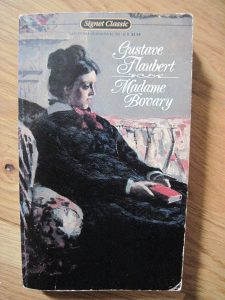 #2. There are two “Madame Bovarys” before the one we’re interested in.
The original Madame Bovary, and the only one to survive the book, is Charles’s mother. Charles also has a brief first marriage to Heloise, an older widow. Conveniently, she dies by the end of the second chapter, in which Charles met Emma when he went to set her farmer father’s broken leg.
#3. There’s a lovely Hardyesque flavor to the novel.
Flaubert’s original subtitle was “Provincial Morals,” and the scenes set among country folk – especially Emma and Charles’s wedding procession and reception and the later agricultural fair – reminded me of Far from the Madding Crowd.
#4. Emma has a child.
Despite all I’d absorbed about the book, I never knew Emma had a baby girl, Berthe. They lodge the infant with a wet nurse and servants do most of the hard work of raising her, so Berthe has only a tiny role. The scene in which Emma violently pushes the little girl away from her is meant, I think, to reflect her fundamental unfitness for motherhood.
#5. In the world of the novel, literature is a danger and religion is no balm.
On the advice of Charles’s mother, he cancels Emma’s lending library subscription lest novels exacerbate her discontent. Manual labor is what Emma needs, Old Madame Bovary proclaims. When Emma goes to the parish priest for advice about her angst, he tells her she must be ill if she benefits from all the physical comforts she could need yet cannot be happy. (An excellent and wrenching scene.)

Gustave Flaubert. (Public domain, via Wikimedia Commons.)
#6. There’s a strong medical theme.
Charles is a doctor, of course, but I didn’t know his profession would enter into the plot. There’s a crucial sequence in which he performs a groundbreaking operation on a stable boy with a clubfoot, but gangrene sets in and the leg has to be amputated. (Emma guiltily buys the boy a false leg.) Emma’s somewhat prolonged death by poisoning, and the appearance of her corpse, are also described in recognizable medical detail.
#7. Emma’s death isn’t the end.
There’s still two more chapters to go, and things only get worse. It’s as if Emma is still a negative influence after her death: pushing Charles on to extravagances he can’t afford, and sending him deeper into despair when he finds undeniable evidence of her two affairs.
#8. Homais, the arrogant pharmacist, is triumphant.
Monsieur Homais is one of the key secondary characters in Yonville, this small town near Rouen. He’s a middling community member who’s gotten above himself, yet he succeeds whereas Emma is crushed. The very last line of the novel goes to him: “He has just received the Legion of Honor.” In the introduction to my Signet Classic edition, Mary McCarthy suggests that Homais is “not just Emma’s foil; he is her alter ego.”
#9. Madame Bovary went on trial.
Appended to my copy is a 78-page transcript of the novel’s trial. As I skimmed it, I was reminded of the Lady Chatterley’s Lover obscenity case, which took place just over 100 years later (1959–60). Flaubert and his publisher were accused of “offenses against public morality and religion,” specifically of portraying Emma as lascivious and making adultery appealing compared to the banality of marriage. The defense countered that Charles receives all the reader’s sympathy and Emma all the reader’s revulsion. Flaubert was acquitted (as was Lady Chatterley), but the judge’s ruling was essentially “Naughty boy, don’t you know literature has a mission to exalt the spirit, not to hold up vice as an object of horror?”
Now for what doesn’t surprise me about Madame Bovary: the beautiful writing and the enduring power of what is ultimately a rather commonplace story line. The percentage of novels with an adultery subplot must be very high nowadays, but Madame Bovary and Anna Karenina were two of the first to consider the female experience.
Flaubert famously declared “Madame Bovary, c’est moi” (“Madame Bovary is me”), and I think every reader must see something of him-/herself in this character: the lure of a romantic and luxurious life, the boredom of the day to day, the longing to make something more out of existence, and an increasing desperation to cover up one’s mistakes. A book that has had meaning for generations, Madame Bovary is a true classic.
Some favorite lines:
“But her life was as cold as an attic with northern exposure, and boredom, that silent spider, was spinning its web in all the dark corners of her heart.”
“Mealtime was the worst of all in that tiny room on the ground floor, with the smoking oven, the creaking door, the damp walls, and the moist flagstones; all the bitterness of her existence seemed to be served up to her on her plate, and the steam from the boiled beef brought up waves of nausea from the depths of her soul.”
“No one can ever express the exact measure of his needs, or conceptions, or sorrows. The human language is like a cracked kettle on which we beat out a tune for a dancing bear, when we hope with our music to move the stars.”
(Isn’t that last sentence incredible?!)
My rating:
I read a Signet Classic edition of Mildred Marmur’s 1964 translation.
See also Susan’s review of Sophie Divry’s recent update, Madame Bovary of the Suburbs, at A life in books.
Review: After Birth by Elisa Albert
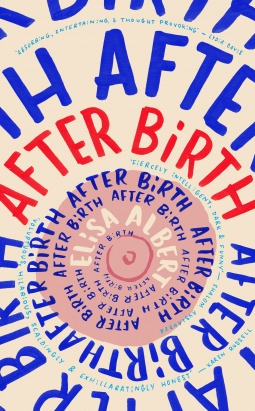 Looking for a heartwarming story about new motherhood? You won’t find it here. The narrator of Elisa Albert’s second novel, Ari, gave birth to Walker a year ago but still hasn’t gotten over the disruption to her life: the constant demands on her time and affection, the decay of her postgraduate thesis, and post-traumatic flashbacks to her caesarean section. Birth wasn’t the blissful, Earth Mother experience she wanted it to be; it was more like butchery: “nightmare blur of newborn stitches tears antibiotic awake constipation tears wound tears awake awake awake limping tears screaming tears screaming shit piss puke tears.” Now don’t get her wrong; she loves Walker: “He’s an awesome baby, a swell little guy. Still a baby, though, of which even the best are oppressive fascist bastard dictator narcissists.”
So even though Ari is reasonably happy and settled in her upstate New York home with her husband Paul (a professor 15 years her senior) and Walker, putting in the occasional shift at the local co-op and sending half-hearted ideas to her advisor, she can’t escape the thought that life isn’t as it should be. That is, until Mina Morris, bassist from a late-eighties girl band, moves to town to sublet her friends’ place while they’re on sabbatical in Rome. Ari had a girl crush on Mina before she ever met her, but when she realizes Mina is nine months’ pregnant, she sees a chance to put her new mommy expertise to good use. She’ll give Mina all the advice and support she wished she’d had. When the need arises, she’ll even breastfeed Mina’s newborn son, Zev. (Albert had a similar experience when her son was failing to thrive from breastfeeding and a friend fed him for her; see her Guardian article.)
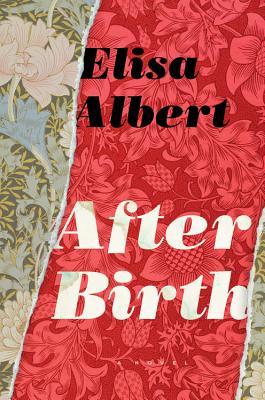 There isn’t a whole lot of plot to After Birth. Mina comes into Ari’s life for just two months and then moves on. Ari temporarily indulges her fantasy of a feminist collective where women help each other give birth and raise each other’s children; it is enough of a healing experience that she can conceive of resuming her thesis or even – ha! – having another baby. Still, she acknowledges that “the work of childbearing, done fully, done consciously, is all-consuming. So who’s gonna write about it if everyone doing it is lost forever within it? You want adventures, you want poetry and art, you want to salon it up over at Gertrude and Alice’s, you’d best leave the messy all-consuming baby stuff to someone else.”
It can be hard to warm to Ari’s sarcastic voice and jarringly short or disorientingly run-on phrases. Albert’s choice to exclude speech marks means that the whole book reads like a sort of fever dream, with past and present and different voices melding. My favorite passage is a monologue by an Oprah-like black nurse who encourages Ari in her early attempts at breastfeeding. There are also frequent flashbacks to Ari’s childhood: Jewish summer camp and the aftermath of her mother Janice’s untimely death. The memories of her mother’s illness (DES treatment leading to breast cancer) and the touches of magic realism as the dead Janice occasionally pops up alongside Ari, usually kvetching about her choices, make this uncannily similar to The Year My Mother Came Back by Alice Eve Cohen.
After Birth might not prove to be a classic of ambivalent motherhood, but if you’re in the right mood for it I reckon you’ll find it to be a striking novella.
My rating: 
 Bookish Beck = Rebecca Foster. American transplant to England. Freelance proofreader and book reviewer.
 Bookish Beck