Book Serendipity, Mid-November–Early January
This is a short set but I’ll post it now to keep things ticking over. I’ve lost nearly a week to the upper respiratory virus from hell, and haven’t felt up to sitting at my computer for any extended periods of time. I had to request extensions on a few of my work deadlines; I’ll hope to be back to normal blogging next week, too.
I call it “Book Serendipity” when two or more books that I read at the same time or in quick succession have something in common – the more bizarre, the better. This is a regular feature of mine every couple of months. Because I usually have 20–30 books on the go at once, I suppose I’m more prone to such incidents. People frequently ask how I remember all of these coincidences. The answer is: I jot them down on scraps of paper or input them immediately into a file on my PC desktop; otherwise, they would flit away! Feel free to join in with your own.
The following are in roughly chronological order.
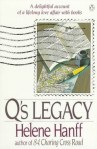
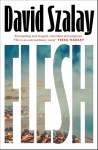
- Ayot St Lawrence as a setting in Q’s Legacy by Helene Hanff and Flesh by David Szalay.
- A man who has panic attacks in Pan by Michael Clune and All the World Can Hold by Jung Yun.
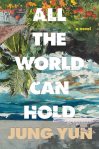
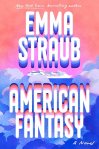
- Two of my Shelf Awareness PRO (early) reviews in a row were of 2026 novels set on a celebrity/reunion cruise: All the World Can Hold by Jung Yun, followed by American Fantasy by Emma Straub. In both, the narrative alternates between three main characters, the cruise is to celebrate a milestone birthday for a passenger’s relative, and there’s a celebrity who’s in AA.
- A teacher–student relationship develops into a friendship in The Irish Goodbye by Beth Ann Fennelly (with Molly McCully Brown, whose Places I’ve Taken My Body I’ve reviewed) and Lessons from My Teachers by Sarah Ruhl (with Max Ritvo, about whom she wrote a whole book).
 Someone becomes addicted to benzodiazepines in The Pass by Katriona Chapman and All the World Can Hold by Jung Yun (both 2026 releases).
- A New York City event scheduled to occur on September 15 or 16, 2001 is postponed because of 9/11 in Joyride by Susan Orlean (her wedding) and All the World Can Hold by Jung Yun (a cruise departure – it’s moved to Boston).
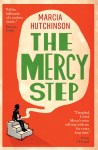
- A 1960s attempted suicide by putting one’s head in a gas oven in The Mercy Step by Marcia Hutchinson and The Soul of Kindness by Elizabeth Taylor.
- A plan to eat cheese to induce dreams in The Reservation by Rebecca Kauffman and Slags by Emma Jane Unsworth.
- An author is (at least initially) aghast at the liberties taken with an adaptation of her book in Spent by Alison Bechdel and Joyride by Susan Orlean (the film Adaptation, one of my favourites, bears little relation to her nonfiction work The Orchid Thief, which I also love).
- A North American author meets her British publishers, André Deutsch and Diana Athill, in Book of Lives by Margaret Atwood and Q’s Legacy by Helene Hanff. (Atwood also mentions Sir Arthur Quiller-Couch, the title reference in the Hanff.)
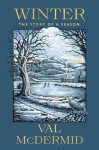
- An older white woman feels compelled to add, as an aside after a memory of slightly dodgy behaviour observed, that cultural appropriation was not a thing in those days in Book of Lives by Margaret Atwood and Winter by Val McDermid.
- I read two books in 2025 with a title taken from a Christian Wiman poem: A Truce that Is Not Peace by Miriam Toews, then Some Bright Nowhere by Ann Packer.
- A special trip undertaken for a younger sister’s milestone birthday: a road trip through Scotland in a campervan in Slags by Emma Jane Unsworth for a 40th; and a boy band reunion cruise to the Bahamas for a 45th in American Fantasy by Emma Straub.
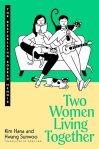
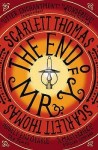
- A reference to Sartre’s “hell is other people” line (paraphrased) in Two Women Living Together by Kim Hana and Hwang Sunwoo and The End of Mr Y by Scarlett Thomas.
- The clock-drawing test as a shorthand for assessing a loved one’s dementia in Book of Lives by Margaret Atwood (her partner Graeme) and Joyride by Susan Orlean (her mother).
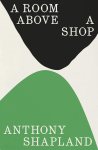 A sexual encounter between two men is presaged by them relieving themselves side by side at urinals in A Room Above a Shop by Anthony Shapland and The End of Mr Y by Scarlett Thomas.
- An older man who knows he’s having a stroke just wants to sit quietly in a chair and not be taken to hospital in Book of Lives by Margaret Atwood (her partner Graeme) and The Boy from the Sea by Garrett Carr.
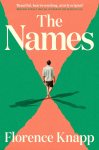
- A man who’s gone through Alcoholics Anonymous gets dangerously close to falling off the wagon: picks up a bottle of gin in a shop in The Names by Florence Knapp / buys a drink at a bar in All the World Can Hold by Jung Yun.
- I was reading two nonfiction books with built-in red ribbon bookmarks at the same time: Book of Lives by Margaret Atwood and Robin by Stephen Moss.
- Homoeopathy is an element in The Names by Florence Knapp and The End of Mr Y by Scarlett Thomas.
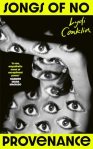
- A character named Sparrow in Spent by Alison Bechdel and Songs of No Provenance by Lydi Conklin.

- A mention of special celebrations for a Korean mother’s 70 birthday in Two Women Living Together by Kim Hana and Hwang Sunwoo and All the World Can Hold by Jung Yun.
- Some kinky practices in Songs of No Provenance by Lydi Conklin and Mr Norris Changes Trains by Christopher Isherwood.
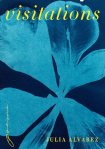
- A girl from an immigrant family reads Greek mythology for escape in Visitations by Julia Alvarez and The Mercy Step by Marcia Hutchinson.
- “View halloo” (originally a fox-hunting term) is used as a greeting in Talking It Over by Julian Barnes and Arsenic for Tea by Robin Stevens.
What’s the weirdest reading coincidence you’ve had lately?
Three on a Theme of Sylvia Plath (The Slicks by Maggie Nelson for #NonfictionNovember & #NovNov25; The Bell Jar and Ariel)
A review copy of Maggie Nelson’s brand-new biographical essay on Sylvia Plath (and Taylor Swift) was the excuse I needed to finally finish a long-neglected paperback of The Bell Jar and also get a taste of Plath’s poetry through the posthumous collection Ariel, which is celebrating its 60th anniversary. These are the sorts of works it’s hard to believe ever didn’t exist; they feel so fully formed and part of the zeitgeist. It also boggles the mind how much Plath accomplished before her death by suicide at age 30. What I previously knew of her life mostly came from hearsay and was reinforced by Euphoria by Elin Cullhed. For the mixture of nonfiction, fiction and poetry represented below, I’m counting this towards Nonfiction November’s Book Pairings week.
The Slicks: On Sylvia Plath and Taylor Swift by Maggie Nelson (2025)
 Can young women embrace fame amidst the other cultural expectations of them? Nelson attempts to answer this question by comparing two figures who turn(ed) life into art. The link between them was strengthened by Swift titling her 2024 album The Tortured Poets Department. “Plath … serves as a metonym – as does Swift – for a woman who makes art about a broken heart,” Nelson writes. “When women make the personal public, the charge of whorishness always lurks nearby.” What women are allowed to say and do has always, it seems, attracted public commentary, and “anyone who puts their work into the world, at any level, must learn to navigate between self-protectiveness and risk, becoming harder and staying soft.”
Nelson acknowledges a major tonal difference between Plath and Swift, however. Plath longed for fame but didn’t get the chance to enjoy it; she’s the patron saint of sad-girl poetry and makes frequent reference to death, whereas Swift spotlights joy and female empowerment. It’s a shame this was out of date before it went to print; my advanced copy, at least, isn’t able to comment on Swift’s engagement and the baby rumour mill sure to follow. It would be illuminating to have an afterword in which Nelson discusses the effect of spouses’ competing fame and speculates on how motherhood might change Swift’s art.
Full confession: I’ve only ever knowingly heard one Taylor Swift song, “Anti-Hero,” on the radio in the States. (My assessment was: wordy, angsty, reasonably catchy.) Undoubtedly, I would have gotten more out of this essay were I equally familiar with the two subjects. Nonetheless, it’s fluid and well argued, and I was engaged throughout. If you’re a Swiftie as well as a literary type, you need to read this.


[66 pages]
With thanks to Vintage (Penguin) for the advanced e-copy for review.
The Bell Jar by Sylvia Plath (1963)
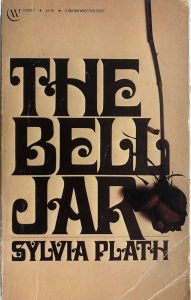 Given my love of mental hospital accounts and women’s autofiction, it’s a wonder I’d not read this before my forties. It was first published under the pseudonym “Victoria Lucas” because Plath thought it immature, “an autobiographical apprentice work which I had to write in order to free myself from the past.” Esther Greenwood is the stand-in for Plath: a talented college student who, after working in New York City during the remarkable summer of 1953, plunges into mental ill health. Chapter 13 is amazing and awful at the same time as Esther attempts suicide thrice in one day, toying with a silk bathrobe cord and ocean waves before taking 50 pills and walling herself into a corner of the cellar. She bounces between various institutional settings, undergoing electroshock therapy – the first time it’s horrible, but later, under a kind female doctor, it’s more like it’s ‘supposed’ to be: a calming reset.
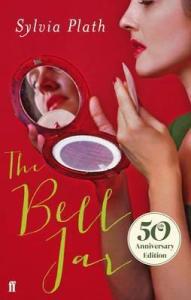 The 19-year-old is obsessed with the notion of purity. She has a couple of boyfriends but decides to look for someone else to take her virginity. Beforehand, the asylum doctor prescribes her a fitting for a diaphragm. A defiant claim to the right to contraception despite being unmarried is a way of resisting the bell jar – the rarefied prison – of motherhood. Still, Esther feels guilty about prioritizing her work over what seems like feminine duty: “Why was I so maternal and apart? Why couldn’t I dream of devoting myself to baby after fat puling baby? … I was my own woman.” Plath never reconciled parenthood with poetry. Whether that’s the fault of Ted Hughes, or the times they lived in, who can say. For her and for Esther, the hospital is a prison as well – but not so hermetic as the turmoil of her own mind. How ironic to read “I took a deep breath and listened to the old brag of my heart. I am, I am, I am” knowing that this was published just a few weeks before this literary genius ceased to be.
Apart from an unfortunate portrayal of a “negro” worker at the hospital, this was an enduringly relevant and absorbing read, a classic to sit alongside Emily Holmes Coleman’s The Shutter of Snow and Janet Frame’s Faces in the Water.
(Secondhand – it’s been in my collection so long I can’t remember where it’s from, but I’d guess a Bowie Library book sale or Wonder Book & Video / Public library – I was struggling with the small type so switched to a recent paperback and found it more readable)
Ariel by Sylvia Plath (1965)
Impossible not to read this looking for clues of her death to come:
Dying
Is an art, like everything else.
I do it exceptionally well.
(from “Lady Lazarus”)
Eternity bores me,
I never wanted it.
(from “Years”)
The woman is perfected.
Her dead
Body wears the smile of accomplishment
(from “Edge”)
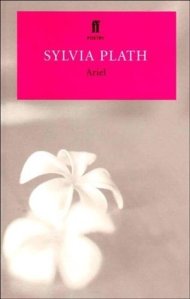 I feel incapable of saying anything fresh about this collection, which takes no prisoners. The images and vocabulary are razor-sharp. First and last lines or stanzas are particularly memorable. (“Morning Song” starts “Love set you going like a fat gold watch”; “Lady Lazarus” ends “Out of the ash / I rise with my red hair / And I eat men like air.”) Words and phrases repeat and gather power as they go. “The Applicant” mocks the obligations of a wife: “A living doll … / It can sew, it can cook. It can talk, talk, talk. … // … My boy, it’s your last resort. / Will you marry it, marry it, marry it.” I don’t know a lot about Plath’s family life, only that her father was a Polish immigrant and died after a long illness when she was eight, but there must have been some daddy issues there – after all, “Daddy” includes the barbs “Daddy, I have had to kill you” and “If I’ve killed one man, I’ve killed two— / The vampire who said he was you / And drank my blood for a year, / Seven years, if you want to know.” It ends, “Daddy, daddy, you bastard, I’m through.” Several later poems in a row, including “Stings,” incorporate bee-related imagery, and Plath’s father was an international bee expert. I can see myself reading this again and again in future, and finding her other collections, too – all but one of them posthumous. (Secondhand – RSPCA charity shop, Newbury)
20 Books of Summer, 9–10: Leave the World Behind & Leaving Atlanta
Halfway there! And I’m doing better than it might appear in that I’m in the middle of another 7 books and just have to decide what the final 3 will be. This was a sobering but satisfying pair of novels in which race and class play a part but the characters are ultimately helpless in the face of disasters and violence. Both: 
Leave the World Behind by Rumaan Alam (2020)
The title heralds a perfect holiday read, right? A New York City couple, Amanda and Clay, have rented a secluded vacation home in Long Island with their teenagers, Archie and Rose, and plan on a week of great beach weather and mild hedonism: food, drink, secret cigarettes, a hot tub, maybe some sex. But late on the first night there’s a knock on the door from the owners, sixtysomething Black couple Ruth and G. H. Something is going on; although the house still has power, all phone and Internet services have gone down. Rather than return to a potentially chaotic city, the older couple set course for their country retreat to hunker down. George is in finance and believes money solves everything, so he offers Amanda and Clay $1000 cash for the inconvenience of having their holiday interrupted.
 From an amassing herd of deer to Archie’s sudden mystery illness, everything quickly turns odd. Glimpses of what’s happening in the wider world are surrounded by a menacing haziness, but the events seem to embody modern anxieties about being cut off from information and wondering who to trust. Given the blurbs and initial foreshadowing, I expected racial tension to be a main driver of an incendiary household climax. Instead, the threat is external and largely unexplained, and the couples are forced to rely on each other as tribalism sets in. (It’s uncanny that this was written before Covid, published during.)
This was a book club read and one of the most divisive I can remember. I was among the few who thought it gripping, intriguing, and even genuinely frightening. Others found the characters unlikable, the plot implausible or silly, and the writing heavy-handed. Alam is definitely poking fun at privileged bougie families. He draws attention to the author as puppet-master, inserting shrewd hints of what is occurring elsewhere or will soon befall certain characters. Some passages skirt pomposity with their anaphora and rhetorical questioning. Alliteration, repetition, and stark pronouncements make the prose almost baroque in places. Alam’s style is theatrical, even arch, but it suits the premonitory tone. I admired how he constantly upends genre expectations, moving from literary fiction to domestic drama to dystopia to magic realism to horror. The stuff of nightmares – being naked in front of strangers, one’s teeth falling out – becomes real, or at least real in the world of the book. The reminder is that we are never as in control as we think we are; always, disasters are unfolding. What will we do, and who will we be, as the inevitable unfolds?
You demanded answers, but the universe refused. Comfort and safety were just an illusion. Money meant nothing. All that meant anything was this—people, in the same place, together. This was what was left to them.
Absorbing, timely, controversial: read it! (Free from a neighbour)
Leaving Atlanta by Tayari Jones (2002)
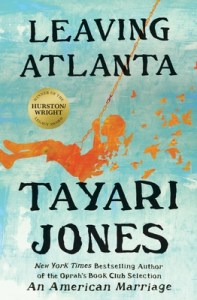 Jones’s debut novel is about the Atlanta Child Murders, a real-life serial killer spree that targeted 29 African American children between 1979 and 1982. (Two of the victims attended her elementary school.) Rather than addressing the gruesome reality, however, she takes a sideways look by considering the effect that fear has on students whose classmates start disappearing. Three sections rather like linked novellas take on the perspective of three different Oglethorpe Elementary fifth graders: LaTasha Baxter, Rodney Green, and Octavia Harrison. The POV moves from third to second to first person, a creative writing experiment that succeeds at pulling readers closer in. The AAVE-inflected dialogue and interactions feel genuine in each, and I liked the playful addition of “Tayari Jones” as a fringe character.
Even as their school is making news headlines, the children’s concerns are perennial adolescent ones: how to avoid bullying, who to sit with at lunch, how to be friendly yet not falsely encourage members of the opposite sex. And at home, all three struggle with an absent or overbearing father. At age 11, these kids are just starting to realize that their parents aren’t perfect and might not be able to keep them safe. I especially warmed to Octavia’s voice, even as her story made my heart ache: “cussing at myself for being too stupid to see that nothing lasts. That people get away from you like a handful of sweet smoke.” I preferred this offbeat, tender coming-of-age novel to Silver Sparrow and would place it on a par with An American Marriage. (Birthday gift from my wish list)
Book Serendipity, Mid-April to Mid-June
I call it “Book Serendipity” when two or more books that I read at the same time or in quick succession have something in common – the more bizarre, the better. This is a regular feature of mine every couple of months. Because I usually have 20–30 books on the go at once, I suppose I’m more prone to such incidents. People frequently ask how I remember all of these coincidences. The answer is: I jot them down on scraps of paper or input them immediately into a file on my PC desktop; otherwise, they would flit away!
The following are in roughly chronological order.
- Raising a wild animal but (mostly) calling it by its species rather than by a pet name (so “Pigeon” and “the leveret/hare”) in We Should All Be Birds by Brian Buckbee and Raising Hare by Chloe Dalton.
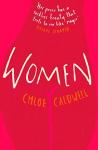
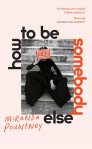
- Eating hash cookies in New York City in Women by Chloe Caldwell and How to Be Somebody Else by Miranda Pountney.
- A woman worries she’s left underclothes strewn about a room she’s about to show someone in one story of Single, Carefree, Mellow by Katherine Heiny and Days of Light by Megan Hunter.
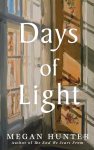 The dialogue is italicized in Women by Chloe Caldwell and Days of Light by Megan Hunter.
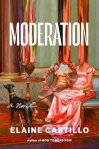
- The ‘you know it when you see it’ definition (originally for pornography) is cited in Moderation by Elaine Castillo and Bookish by Lucy Mangan.
- Women (including the protagonist) weightlifting in a gym in Moderation by Elaine Castillo and All Fours by Miranda July.
- Miranda July, whose All Fours I was also reading at the time, was mentioned in Chinese Parents Don’t Say I Love You by Candice Chung.
- A sibling story and a mystical light: late last year into early 2025 I read The Snow Queen by Michael Cunningham, and then I recognized this type of moment in Days of Light by Megan Hunter.
- A lesbian couple with a furniture store in Carol [The Price of Salt] by Patricia Highsmith and one story of Are You Happy? by Lori Ostlund.

- Not being able to see the stars in Las Vegas because of light pollution was mentioned in The Wild Dark by Craig Childs, then in Moderation by Elaine Castillo.
- A gynaecology appointment scene in All Fours by Miranda July and How to Be Somebody Else by Miranda Pountney.
- An awkwardly tall woman in Heartwood by Amity Gaige, How to Be Somebody Else by Miranda Pountney, and Stoner by John Williams.
- The 9/11 memorial lights’ disastrous effect on birds is mentioned in The Wild Dark by Craig Childs and How to Be Somebody Else by Miranda Pountney.
- A car accident precipitated by an encounter with wildlife is key to the denouement in the novellas Women by Chloe Caldwell and Wild Boar by Hannah Lutz.
- The plot is set in motion by the death of an older brother by drowning, and pork chops are served to an unexpected dinner guest, in Bug Hollow by Michelle Huneven and Days of Light by Megan Hunter, both of which I was reading for Shelf Awareness review.
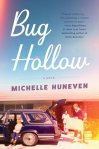
- Kids running around basically feral in a 1970s summer, and driving a box of human ashes around in Case Histories by Kate Atkinson and Bug Hollow by Michelle Huneven.
- A character becomes a nun in Case Histories by Kate Atkinson and Days of Light by Megan Hunter.
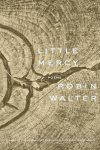
- Wrens nesting just outside one’s front door in Lifelines by Julian Hoffman and Little Mercy by Robin Walter.

- ‘The female Woody Allen’ is the name given to a character in Women by Chloe Caldwell and then a description (in a blurb) of French author Nolwenn Le Blevennec.
- A children’s birthday party scene in Single, Carefree, Mellow by Katherine Heiny and Friends and Lovers by Nolwenn Le Blevennec. A children’s party is also mentioned in Case Histories by Kate Atkinson and A Family Matter by Claire Lynch.
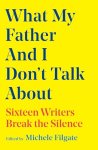
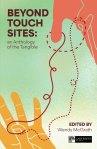
- A man who changes his child’s nappies, unlike his father – evidence of different notions of masculinity in different generations, in Case Histories by Kate Atkinson, What My Father and I Don’t Talk About, edited by Michele Filgate, and one piece in Beyond Touch Sites, edited by Wendy McGrath.
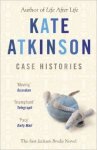
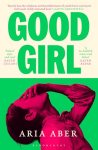
- What’s in a name? Repeated names I came across included Pansy (Case Histories by Kate Atkinson and Days of Light by Megan Hunter), Olivia (Case Histories by Kate Atkinson and A Family Matter by Claire Lynch), Jackson (Case Histories by Kate Atkinson and So Far Gone by Jess Walter), and Elias (Good Girl by Aria Aber and Dream State by Eric Puchner).
- The old wives’ tale that you should run in zigzags to avoid an alligator appeared in Alligator Tears by Edgar Gomez and then in The Girls Who Grow Big by Leila Mottley, both initially set in Florida.
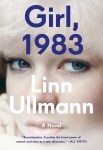
- A teenage girl is groped in a nightclub in Good Girl by Aria Aber and Girl, 1983 by Linn Ullmann.
- Discussion of the extinction of human and animal cultures and languages in both Nature’s Genius by David Farrier and Lifelines by Julian Hoffman, two May 2025 releases I was reading at the same time.
- In Body: My Life in Parts by Nina B. Lichtenstein, she mentions Linn Ullmann – who lived on her street in Oslo and went to the same school (not favourably – the latter ‘stole’ her best friend!); at the same time, I was reading Linn Ullmann’s Girl, 1983! And then, in both books, the narrator recalls getting a severe sunburn.
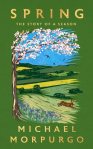 On the same day, I read about otter sightings in Lifelines by Julian Hoffman and Spring by Michael Morpurgo. The next day, I read about nesting swallows in both books.
- The Salish people (Indigenous to North America) are mentioned in Lifelines by Julian Hoffman, Dream State by Eric Puchner (where Salish, the town in Montana, is also a setting), and So Far Gone by Jess Walter.
- Driving into a compound of extremists, and then the car being driven away by someone who’s not the owner, in Dream State by Eric Puchner and So Far Gone by Jess Walter.
- A woman worries about her (neurodivergent) husband saying weird things at a party in The Honesty Box by Lucy Brazier and Normally Weird and Weirdly Normal by Robin Ince.
- Shooting raccoons in Ginseng Roots by Craig Thompson and So Far Gone by Jess Walter. (Raccoons also feature in Dream State by Eric Puchner.)
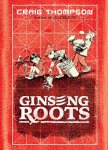
- A graphic novelist has Hollywood types adding (or at least threatening to add) wholly unsuitable supernatural elements to their plots in Spent by Alison Bechdel and Ginseng Roots by Craig Thompson.
- A novel in which a character named Dawn has to give up her daughter in the early 1980s, one right after the other: A Family Matter by Claire Lynch, followed by Love Forms by Claire Adam.
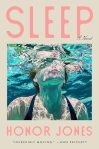
- A girl barricades her bedroom door for fear of her older brother in Love Forms by Claire Adam and Sleep by Honor Jones.
- A scene of an only child learning that her mother had a hysterectomy and so couldn’t have any more children in Dream Count by Chimamanda Ngozi Adichie and Other People’s Mothers by Julie Marie Wade.
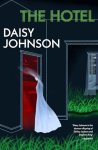
- An African hotel cleaner features in Dream Count by Chimamanda Ngozi Adichie and The Hotel by Daisy Johnson.

- Annie Dillard’s essay “Living Like Weasels” is mentioned in Nature’s Genius by David Farrier and The Dry Season by Melissa Febos.
- A woman assembles an inventory of her former lovers in Dream Count by Chimamanda Ngozi Adichie and The Dry Season by Melissa Febos.
What’s the weirdest reading coincidence you’ve had lately?
The 2025 McKitterick Prize Winner & SoA Awards Ceremony
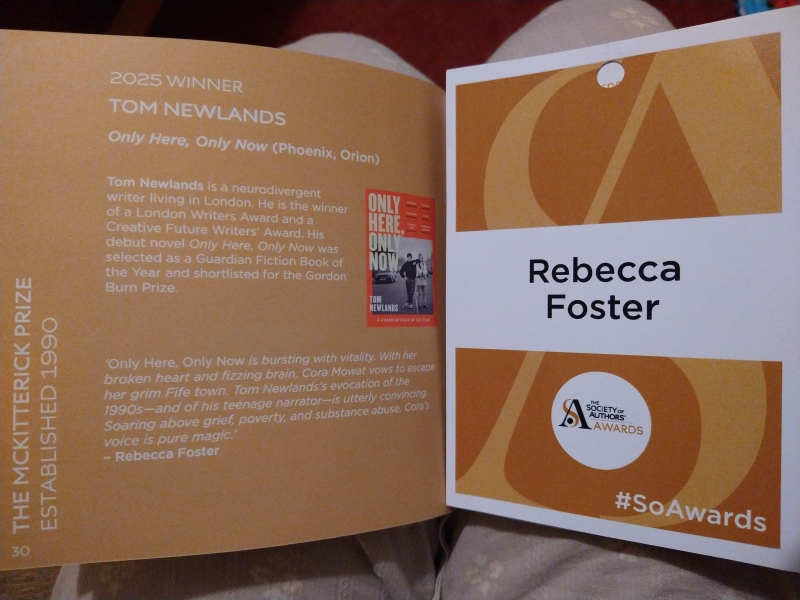
Yesterday the Society of Authors’ awards were announced and the prizes handed out at a ceremony in London. As a McKitterick Prize judge, I was asked last month to give a 50-word blurb on the shortlist as a whole—
Each of these six novels has a fully realized style. So confident and inviting are they that it’s hard to believe they are debuts. With nuanced characters and authentic settings and dilemmas, they engage the mind and delight the emotions. I will be following these authors’ careers with keen interest.
—and on each individual shortlisted title:
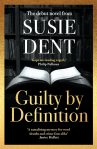 Etymology and Shakespeare studies are the keys to solving a cold case in Susie Dent’s clever, engrossing mystery, Guilty by Definition.
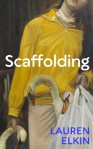 Psychoanalysis, motherhood, and violence against women are resounding themes in Lauren Elkin’s Scaffolding. As history repeats itself one sweltering Paris summer, the personal and political structures undergirding the protagonists’ parallel lives come into question. This fearless, sophisticated work ponders what to salvage from the past—and what to tear down.
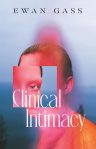 Clinical Intimacy’s mysterious antihero comes to life through interviews with his family, friends and clients. The brilliant oral history format builds a picture of isolation among vulnerable populations, only alleviated by care and touch—especially during Covid-19. Ewan Gass’s intricate story reminds us of the ultimate unknowability of other people.
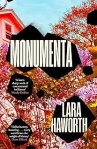
In Monumenta, Lara Haworth braids satire, magic realism, and metafiction into a compact and surprising meditation on how we seek to memorialise the tragedies of history.
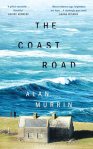
Set in small-town Ireland, The Coast Road is a subtle, compassionate novel in which the characters learn to write their own stories rather than bow to convention and fate. Alan Murrin is a must-read author for fans of Claire Keegan, Louise Kennedy, and Colm Tóibín.
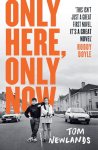 Only Here, Only Now is bursting with vitality. With her broken heart and fizzing brain, Cora Mowat vows to escape her grim Fife town. Tom Newlands’s evocation of the 1990s—and of his teenage narrator—is utterly convincing. Soaring above grief, poverty, and substance abuse, Cora’s voice is pure magic.
Our winner was Tom Newlands for Only Here, Only Now and our runner-up was Lauren Elkin for Scaffolding. (What an honour to have my blurb for the former used in the winners press release, the ceremony programme, and social media publicity.)


Newlands was also a runner-up for the ADCI Literary Prize “for a disabled or chronically ill writer, for an outstanding novel containing a disabled or chronically ill character or characters.” Here’s an excerpt from his statement for the press release:
To have my debut novel recognised in these two categories is particularly meaningful for me because they are linked by my experience. I didn’t start writing until the age of 40, in large part because growing up neurodivergent I didn’t feel my thought processes or methods of working were compatible with the production of a novel. There were no role models out there publishing stories like mine, and in the end, I wrote Only Here, Only Now because I couldn’t find the novel I wanted to read – a warm, vivid and funny story that examined poverty, disability and belonging, and that featured characters rarely found in British fiction.
Looking back to early on in this prize journey (which started back in November) … here was some of my early reading:
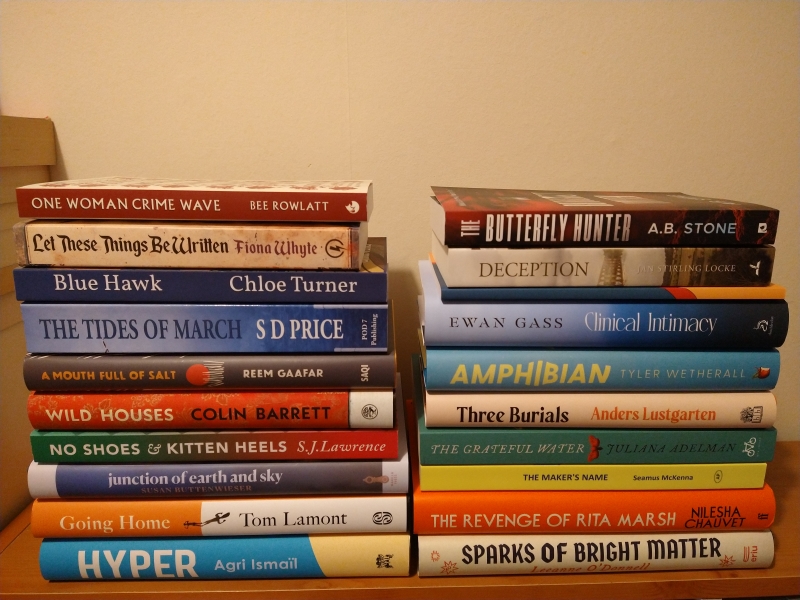
And our longlist:
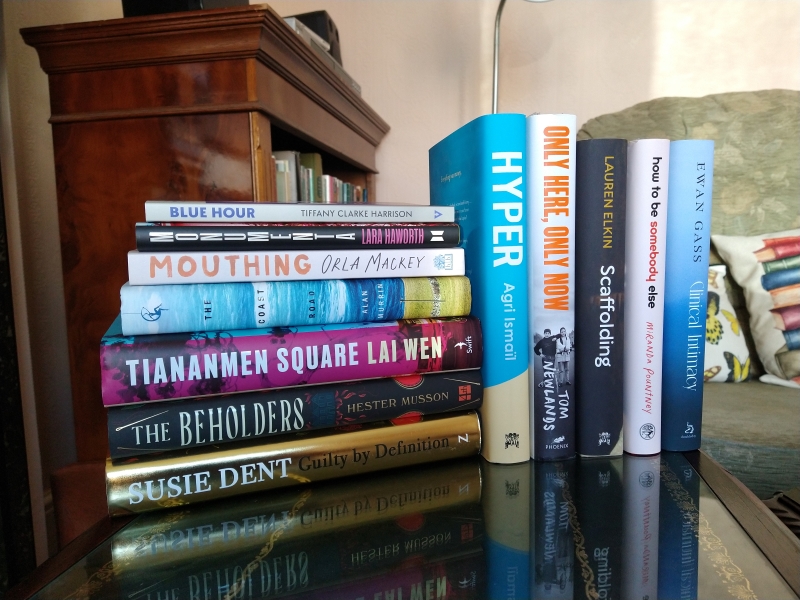
A couple of my favourite books from my reading that didn’t make the shortlist were:
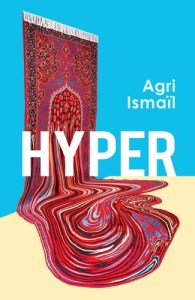 Hyper by Agri Ismaïl [I longlisted it – and then shortlisted it – but was outvoted]
Following a Kurdish family across several decades, this is a zeitgeist-y story that examines questions of national and personal autonomy. With its Dubai, Baghdad, London, and New York settings, it sets the second generation’s luxury, high finance, and fully online worlds against their parents’ bitter experience of exile after a failed independence movement. With its themes of dysfunction and failures and the long view of how we got here from there, it reminded me of Jonathan Franzen’s body of work.
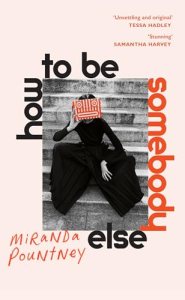 How to Be Somebody Else by Miranda Pountney [It had two votes to make the shortlist, but because it was so similar to Scaffolding in its basics (a thirtysomething woman in a big city, the question of motherhood, and pregnancy loss) we decided to cut it.]
This is the addictively readable story of Dylan, a late-thirties English woman who gives up her New York City advertising job and ponders authorship and motherhood while house-sitting an acquaintance’s apartment—and carrying on an affair with the married downstairs neighbour. As we see her interact with family and friends, we come to appreciate her not as some stereotypical ‘sad girl’ or ‘disaster woman’, but as an Everywoman seeking the time and space to become herself. It’s a sharp and witty novel for fans of Sally Rooney.
For the first time, I got to attend the SoA Awards ceremony in person yesterday. It was a hot day to be travelling in London, and after the oven of the Bakerloo line I was grateful to escape into the cool of Southwark Cathedral and its grounds. It was such a juxtaposition between the sleek City architecture and the ancient refuge of a church.
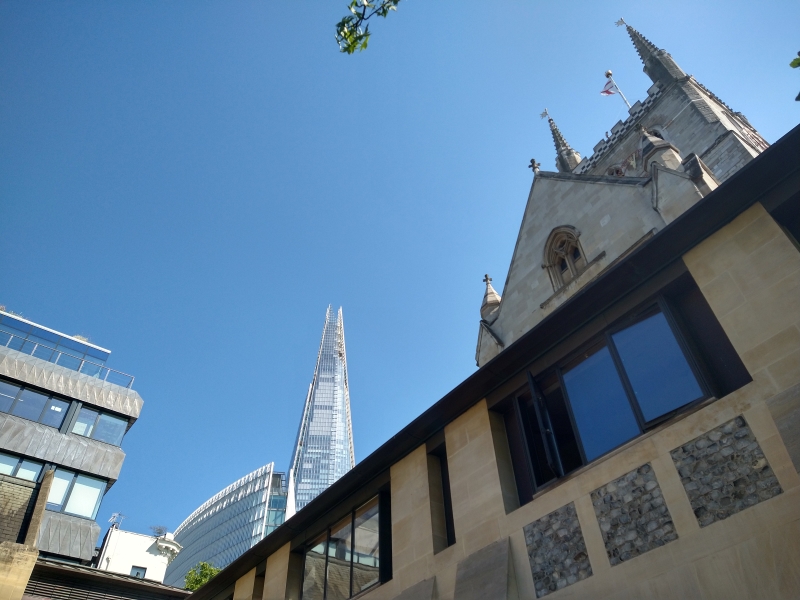
I worried that on such a warm and then busy day Hodge the cathedral cat wouldn’t show himself, but as I picked up my name badge he was asking to be let inside from the courtyard. He didn’t seem interested in strokes so I followed him at a respectful distance and let him settle in for a watchful rest.


Nominated authors and judges were treated to an exceptional afternoon tea, followed by the ceremony and drinks reception. It was lovely to meet my fellow judges Anietie Isong and Kathy O’Shaughnessy (author of the fantastic In Love with George Eliot, which won the SoA’s Paul Torday Memorial Prize) in the flesh as I’d only met them on Zoom before. We chatted a good bit with Lara Haworth, one of our shortlistees, and with Anne Booth, one of the Queen’s Knickers Award (children’s books) nominees, and also got to briefly meet Tom Newlands when he arrived for the ceremony. I always look out for literary ‘celebrities’ at such events and yesterday spotted Naomi Alderman, Caroline Bird, Joanne Harris and Alice Jolly.
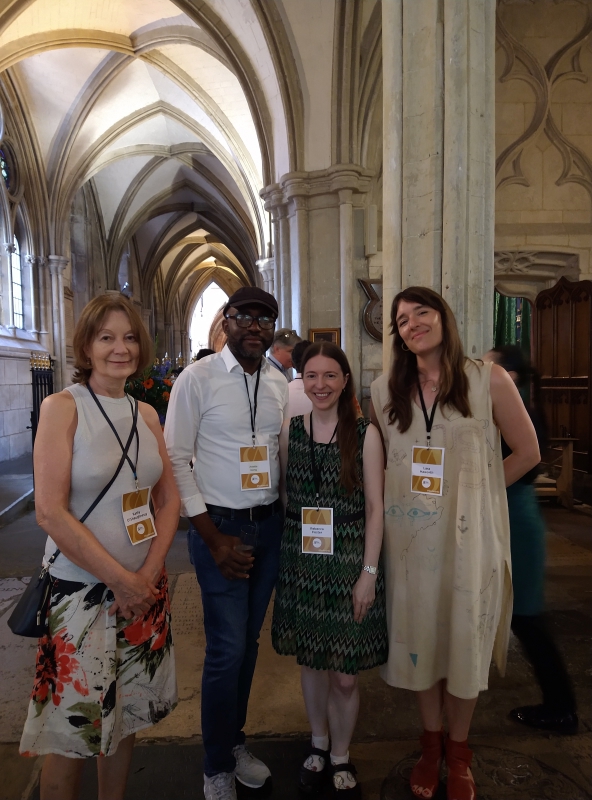


Dean Rev. Mark Oakley gave a welcome address via video, praising authors for bringing “resonance” rather than just “relevance.” He exhorted us, in the words of David Copperfield, to “read as if for life.” Joseph Coelho then gave a terrific keynote speech celebrating words written by humans (as opposed to an inaccurate AI-written bio of himself that he once encountered) and encouraging shortlistees, especially, to take time to bask in their achievement. Rejection is an ongoing, annual thing for him even at this stage of his career – he still remembers the £50 poetry gigs, changing in library toilets and school staff rooms; and the 12 years he spent trying to get published – even after he became the youngest-ever children’s laureate in 2022. “Wait for no one,” he challenged us: no one is going to give you permission or come save you, so go out there and do what you’re meant to do.
What an all-round fantastic experience this was! I’m so grateful to the Society of Authors for the opportunity.
Other notable winners announced yesterday included:
- Ashani Lewis (the only double winner): the Betty Trask Prize and Somerset Maugham award for Winter Animals
- Hisham Matar & Elif Shafak: the Gordon Bowker Volcano Prize (for a novel focusing on the experience of travel away from home), joint winners for My Friends and There Are Rivers in the Sky
May Graphic Novels by Alison Bechdel, Peter Kuper & Craig Thompson
May has been chock-full of new releases for me! For this first batch of reviews, I’m featuring three fantastic graphic novels that have made it onto my Best of 2025 (so far) list. I don’t read graphic books as often as I’d like to – my library tends to major on superhero comics and manga, which aren’t my cup of tea – but I sometimes get a chance to access them for paid review purposes. (The first two below are ones I was sent for potential Shelf Awareness reviews, but I missed the deadlines.) Reading these took me back to the early 2010s when I worked for a university library in South London and would walk to Lambeth Library on my lunch breaks to borrow huge piles of books, mostly taking advantage of their excellent graphic novel selection. That was where my education and fascination began.
Spent: A Comic Novel by Alison Bechdel
 I’ve read all but one of Bechdel’s works now. Fun Home was among the first graphic books I read and is a great choice if you’re new to this form of storytelling. It’s a family memoir about her father’s funeral home business and closeted lifestyle, which emerged shortly after her own coming-out – and shortly before his accidental death. In Spent, Alison and her handy wife Holly live on a Vermont pygmy goat farm. Alison has writer’s block and is struggling financially despite her famous memoir about her taxidermist father having been made into a successful TV series, Death & Taxidermy. Mostly, she’s consumed with anxiety about the state of the world, what with the ongoing pandemic, her sister’s right-wing opinions, and the litany of awful headlines. “Who can draw when the world is burning?” she exclaims.
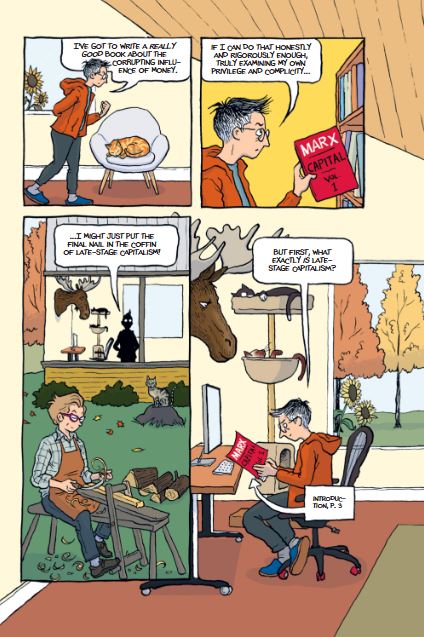
Then Alison has an idea for a book – or maybe a reality TV series – called $UM that will wean people off of capitalism. That creative journey is mirrored in Spent, which is composed of 12 “episodes” titled after Marxist terminology. Through Alison’s ageing hippie friends and their kids, Bechdel showcases alternative ways of living: a commune, a throuple, nonbinary identity, unpaid internships, Just Stop Oil demos, and the influencer lifestyle versus rejection of technology. It’s (auto)fiction exaggerated to the brink of absurdity, with details changed enough to mock but not enough to hide (e.g., she’s published by “Megalopub,” the hardware store is “Home Despot,” her show airs on “Schmamazon”).

Tiny details in the drawings reward close attention, such as Alison and Holly’s five cats’ antics during their morning routine, and a stuffed moose head rolling its eyes. It’s the funniest I can remember Bechdel being, with much broad humour derived from the outrageous screen mangling of her book – cannibalism, volcanoes and dragons come out of nowhere – and her middle-class friends’ hand-wringing over their liberal credentials. Even the throwaway phrases are hilarious. It’s a gleeful and zeitgeist-y satire, yet draws to a touching close as Alison has the epiphany that she can’t fix everything herself so must simply do what she can, “with a little help from her annoying, tender-hearted, and utterly luminous friends.”
Accessed as an e-book from Mariner Books. Published in the UK by Jonathan Cape (Penguin).
Insectopolis: A Natural History by Peter Kuper
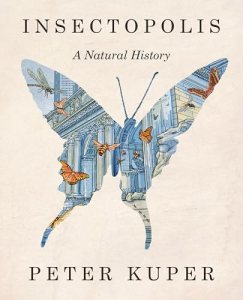 Nearly a decade ago, I reviewed Peter Kuper’s Ruins, which features monarch migration and has as protagonist a laid-off Natural History Museum entomologist. Here insects have even more of a starring role. The E. O. Wilson epigraph sets the stage: “If all mankind were to disappear, the world would regenerate back to the rich state of equilibrium that existed ten thousand years ago. If insects were to vanish, the environment would collapse into chaos.” We follow an African American brother-and-sister pair, the one dubious and the other eager, as they walk downtown to the New York Public Library. The sister, who holds a PhD in entomology, promises that its exhibition on insects is going to be amazing. But just before they reach the building, a red alert flashes up on every smartphone and sirens start blaring. A week later, the city is a ruin of overturned cabs and debris. Only insects remain and, group by group, they guide readers through the empty exhibit, interacting within and across species.


It’s a sly blend of science, history, stories and silliness. I loved the scenes of mosquitoes and ants railing against how they’ve been depicted as villainous, and dignified dung beetles resisting scatological jokes and standing up for their importance in ecosystems. There are interesting interludes about insects in literature (not just Kafka and Nabokov, but the Japanese graphic novel The Book of Human Insects by Osamu Tezuka), and unsung heroines of entomology get their moment in the sun. The pages in which Margaret Collins, an African American termite researcher in the 1950s, and Rachel Carson appear to a dragonfly as ghosts and tell their stories of being dismissed by male researchers were among my favourites. Informative and entertaining at once; what could be better? Welcome our insect overlords!
Accessed as an e-book from W. W. Norton & Company.
Ginseng Roots by Craig Thompson
 I’d read several of Thompson’s works and especially enjoyed his previous graphic memoir, Blankets, about his first love and loss of faith. When I read this blurb, I worried the niche subject couldn’t possibly sustain my attention for nearly 450 pages. But I was wrong; this is a vital book about everything, by way of ginseng. It begins with childhood summers working on American ginseng farms with his siblings in Marathon, Wisconsin. Theirs was a blue collar and highly religious family, but Thompson and his little brother Phil were allowed to spend their earnings from the back-breaking labour of weeding and picking rocks as they pleased. Each hour, each dollar, meant a new comic from the pharmacy. “Comics helped me survive my childhood. But what will help me survive my adulthood?” Thompson asks.

Together with Phil, he travels first to Midwest ginseng farms and festivals and then through China and Korea to learn about the plant’s history, cultivation practices, lore, and medicinal uses. As he meets producers – including a Hmong man whose early life mirrors his own – he feels sheepish about how he makes a living: “I carry this working-class guilt – what I do isn’t real work.” When his livelihood is threatened by worsening autoimmune conditions, he tries everything from acupuncture to psychotherapy to save his hands and his creativity.
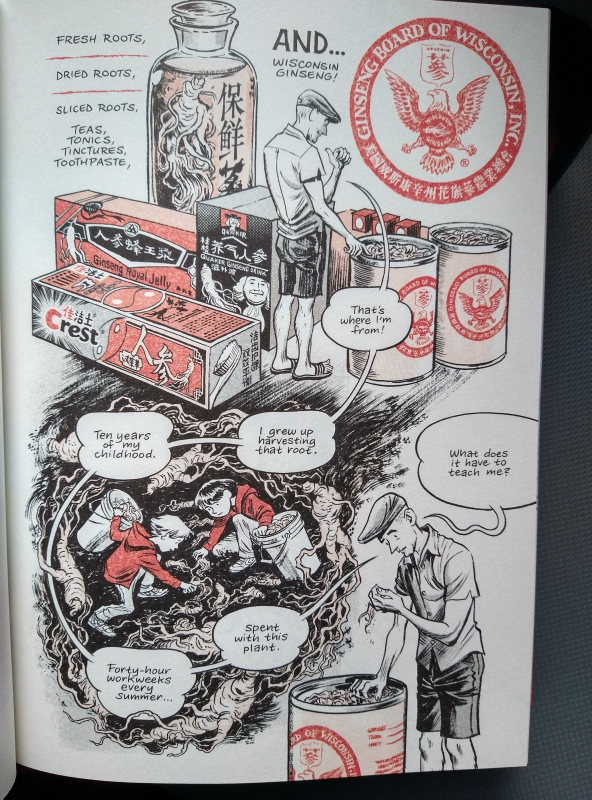
This chunky book has an appealing earth-tones palette and shifts smoothly between locations and styles, memories and research. When interviewing growers and Chinese medicine practitioners, the depictions are almost photorealistic, but there are also superhero pastiche panels and a cute ginseng mascot who pops up throughout the book. Like Spent, this pulls in class and economic issues in a lighthearted way and also explores its own composition process.
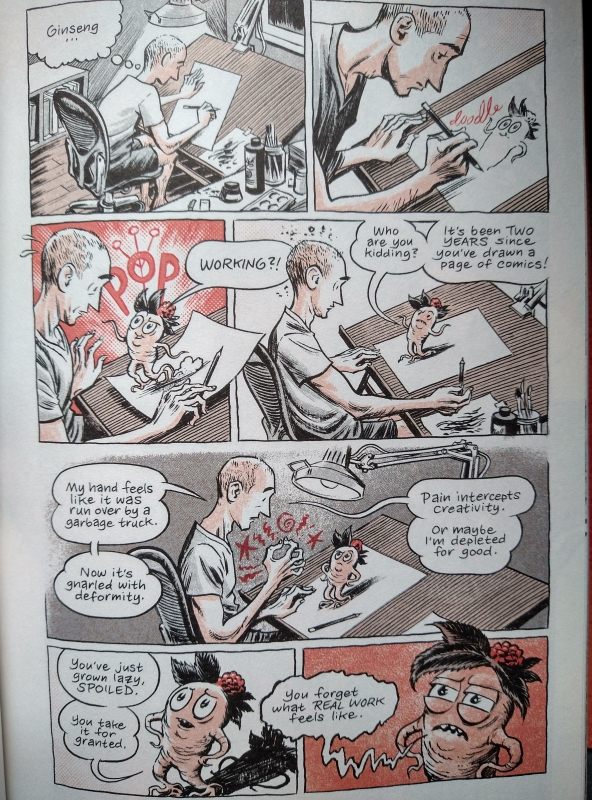
The story of ginseng is often sobering, involving the exploitation of immigrants (in the Notes, Thompson regrets that he was unable to speak with any of the Mexican migrant workers on whom the American ginseng harvest now depends), soil degradation, and pesticide pollution. The roots of the title are both literal and symbolic of the family story that unfolds in parallel. Both strands are captivating, but especially the autobiographical material: Thompson’s relationship with Phil, his new understanding but ongoing frustration with his parents, and the way all three siblings exhibit the damage of their upbringing – Phil’s marriage is crumbling; their sister Sarah, who has moved 26 times as an adult, wonders what she’s running from. A conversation with a Chinese herbal pharmacist gets to the heart of the matter: “I learned home is not WHERE I am. Home is HOW I am.”
Both expansive and intimate, this is a surprising gem from one of the best long-form graphic storytellers out there.
With thanks to Faber for the free copy for review. Published in the USA by Pantheon (Penguin).
Reading Ireland Month, I: Donoghue, Longley, Tóibín
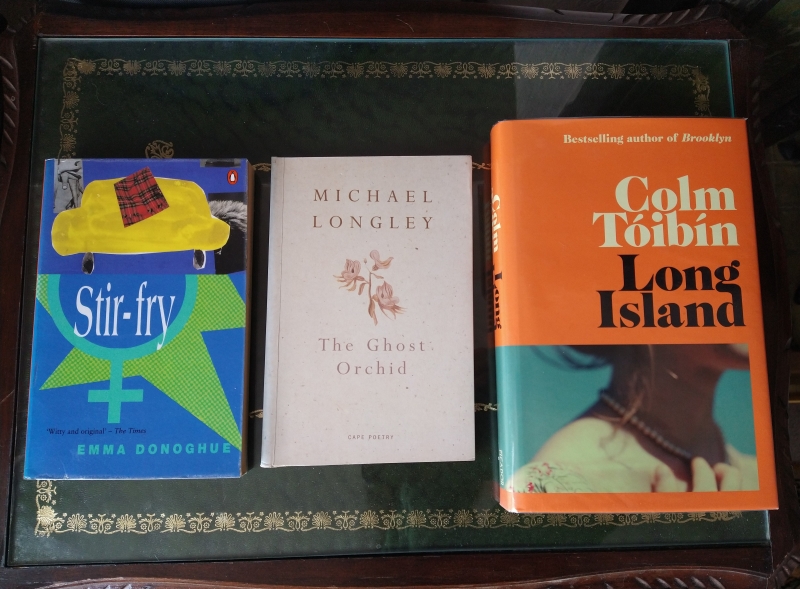
St. Patrick’s Day is a good occasion to compile my first set of contributions to Cathy’s Reading Ireland Month. Today I have an early novel by a favourite author, a poetry collection inspired by nature and mythology, and a sequel that I read for book club.
Stir-Fry by Emma Donoghue (1994)
After enjoying Slammerkin so much last year, I decided to catch up on more of Donoghue’s way-back catalogue. She tends to alternate between contemporary and historical settings. I have a slight preference for the former, but she can excel at both; it really depends on the book. I reckon this was edgy for its time. Maria (whose name rhymes with “pariah”) arrives in Dublin for university at age 17, green in every way after a religious upbringing in the countryside. In response to a flat-share advert stipulating “NO BIGOTS,” she ends up living with Ruth and Jael (pronounced “Yale”), two mature students. Ruth is the mother hen, doing all the cooking and fretting over the others’ wellbeing; Jael is a wild, henna-haired 30-year-old prone to drinking whisky by the mug-full. Maria attends lectures, takes a job cleaning office buildings, and finds a friend circle through her backstage student theatre volunteering. She’s mildly interested in American exchange student Galway and then leather-clad Damien (until she realizes he has a boyfriend), but nothing ever goes further than a kiss.
 It’s obvious to readers that Ruth and Jael are a couple, but Maria doesn’t work it out until a third of the way into the book. At first she’s mortified, but soon the realization is just one more aspect of her coming of age. Maria’s friend Yvonne can’t understand why she doesn’t leave – “how can you put up with being a gooseberry?” – but Maria insists, “They really don’t make me feel left out … I think they need me to absorb some of the static. They say they’d be fighting like cats if I wasn’t around to distract them.” Scenes alternate between the flat and the campus, which Donoghue depicts as a place where radicalism and repression jostle for position. Ruth drags Maria to a Tuesday evening Women’s Group meeting that ends abruptly: “A porter put his greying head in the door to comment that they’d have to be out in five minutes, girls, this room was booked for the archaeologists’ cheese ’n’ wine.” Later, Ruth’s is the Against voice in a debate on “That homosexuality is a blot on Irish society.”
Mostly, this short novel is a dance between the three central characters. The Irish-accented banter between them is a joy. Jael’s devil-may-care attitude contrasts with Ruth and Maria’s anxiety about how they are perceived by others. Ruth and Jael are figures in the Hebrew Bible and their devotion/boldness dichotomy is applicable to the characters here, too. The stereotypical markers of lesbian identity haven’t really changed, but had Donoghue written this now I think she would at least have made Maria a year older and avoided negativity about Damien and Jael’s bisexuality. At heart this is a sweet romance and an engaging picture of early 1990s feminism, but it doesn’t completely steer clear of predictability and I would have happily taken another 50–70 pages if it meant she could have fleshed out the characters and their interactions a little more. [Guess what was for my lunch this afternoon? Stir fry!] (Secondhand – Awesomebooks.com) 
The Ghost Orchid by Michael Longley (1995)
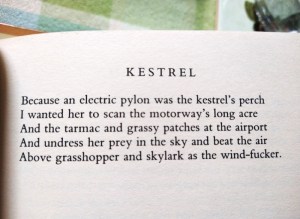
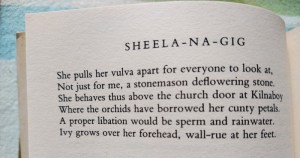
 Longley’s sixth collection draws much of its imagery from nature and Greek and Roman classics. Seven poems incorporate quotations and free translations of the Iliad and Odyssey; elsewhere, he retells the story of Baucis and Philemon and other characters from Ovid. The Orient and the erotic are also major influences; references to Hokusai bookend poems about Chinese artefacts. Poppies link vignettes of the First and Second World Wars. Longley’s poetry is earthy in its emphasis on material objects and sex. Alliteration and slant rhymes are common techniques and the vocabulary is always precise. This was the third collection I’ve read by the late Belfast poet, and with its disparate topics it didn’t all cohere for me. My two favourite poems are naughty indeed:
(Secondhand – Green Ink Booksellers, Hay-on-Wye) 
Long Island by Colm Tóibín (2024)
{SPOILERS in this one}
 I read Brooklyn when it first came out and didn’t revisit it (via book or film) before reading this. While recent knowledge of the first book isn’t necessary, it probably would make you better able to relate to Eilis, who is something of an emotional blank here. She’s been married for 20 years to Tony, a plumber, and is a mother to two teenagers. His tight-knit Italian American family might be considered nurturing, but for her it is more imprisoning: their four houses form an enclave and she’s secretly relieved when her mother-in-law tells her she needn’t feel obliged to join in the Sunday lunch tradition anymore.
When news comes that Tony has impregnated a married woman and the cuckolded husband plans to leave the baby on the Fiorellos’ doorstep when the time arrives, Eilis checks out of the marriage. She uses her mother’s upcoming 80th birthday as an excuse to go back to Ireland for the summer. Here Eilis gets caught up in a love triangle with publican Jim Farrell, who was infatuated with her 20 years ago and still hasn’t forgotten her, and Nancy Sheridan, a widow who runs a fish and chip shop and has been Jim’s secret lover for a couple of years. Nancy has a vision of her future and won’t let Eilis stand in her way.
I felt for all three in their predicaments but most admired Nancy’s pluck. Ironically given the title, the novel spends more of its time in Ireland and only really comes alive there. There’s also a reference to Nora Webster – cute that Tóibín is trying out the Elizabeth Strout trick of bringing multiple characters together in the same fictional community. But, all told, this was just a so-so book. I’ve read 10 or so works by Tóibín now, in all sorts of genres, and with its plain writing this didn’t stand out at all. It got an average score from my book club, with one person loving it, a couple hating it, and most fairly indifferent. (Public library)
Another batch will be coming up before the end of the month!
Adventures in Rereading: The History of Love by Nicole Krauss for Valentine’s Day
Special Valentine’s edition. Every year I say I’m really not a Valentine’s Day person and yet manage a themed post featuring one or more books with “Love” or “Heart” in the title. This is the ninth year in a row, in fact – after 2017, 2018, 2019, 2020, 2021, 2022, 2023, and 2024!
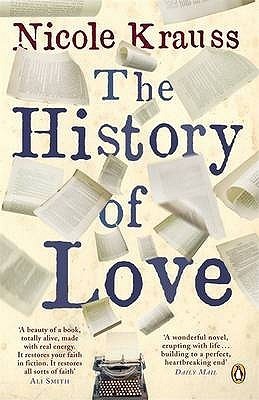 Leopold Gursky is an octogenarian Holocaust survivor, locksmith and writer manqué; Alma Singer is a misfit teenager grieving her father. What connects them? A philosophical novel called The History of Love, lost for years before being published in Spanish. Alma’s late father saw it in a bookshop window in Buenos Aires and bought it for his love. They adored it so much they named their daughter after the heroine. Now his widow is translating it into English on commission for a covert client. Leo and Alma’s distinctive voices, wry but earnest, really make this sparkle. Alma’s sections are numbered fragments from a diary and there are also excerpts from the book within the book. My only critique would be that she sounds young for her age; her precocity makes her seem closer to 10 than 15. But her little brother Bird, who thinks he may be the messiah, is a delight. The array of New York City locales includes a life drawing class, a record office, and a Central Park bench. A gentle air of mystery circulates as we work out who Leo’s son is and how Alma tracks down the author. It’s a bittersweet story that insists on love as an equivalent to loss. Complex but accessible, bookish and heartfelt, it’s one to recommend to my book club in the future. (Little Free Library)
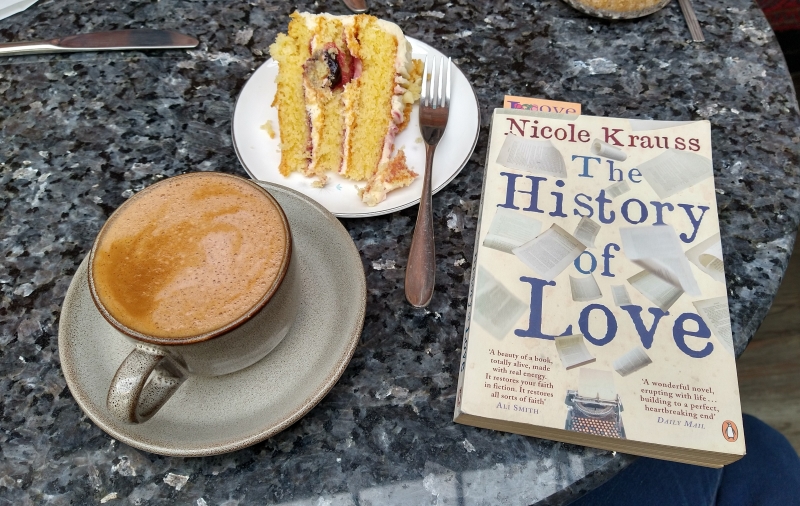
Finishing my reread during a coffee date in Hungerford this morning.
My original rating (2011):
When I first read this, I mostly considered it in comparison to Krauss’s former husband Jonathan Safran Foer’s work. (I’ve long since read everything by both of them.) I noted then that it
has a lot of elements in common with Everything is Illuminated, such as a preoccupation with Eastern European and Jewish ancestry, quirky methods of narration including multiple voices, and a sweet humour that lies alongside such heart-rending stories of family and loss that tears are never far from your eyes. Leo Gursky and Alma Singer are delightful and distinct characters. I wasn’t sure about the missing/plagiarized/mistaken The History of Love itself; the ruined copies, the different translations, the way the manuscript was constantly changing hands – all this was intriguing, but the book itself was a postmodern jumble of magic realism and pointless meanderings of thought.
Dang, I was harsh! But admirably pithy about the plot. It’s intriguing that I’ve successfully reread Krauss but failed with Foer when I attempted Everything is Illuminated again in 2020. Reading the first, 9/11-set section of Confessions by Catherine Airey, I’ve also been recalling his Extremely Loud and Incredibly Close and thinking it probably wouldn’t stand up to a reread either. I suspect I’d find it mawkish, especially with its child narrator. Alma evades that trap, perhaps by being that little bit older, though she sounds young because of how geeky and sheltered she is.
Winter Reads, I: Michael Cunningham & Helen Moat
It’s been feeling springlike in southern England with plenty of birdsong and flowers, yet cold weather keeps making periodic returns. (For my next instalment of wintry reads, I’ll try to attract some snow to match the snowdrops by reading three “Snow” books.) Today I have a novel drawing on a melancholy Hans Christian Andersen fairy tale and a nature/travel book about learning to appreciate winter.
The Snow Queen by Michael Cunningham (2014)
 It was among my favourite first lines encountered last year: “A celestial light appeared to Barrett Meeks in the sky over Central Park, four days after Barrett had been mauled, once again, by love.” Barrett is gay and shares an apartment with his brother, Tyler, and Tyler’s fiancée, Beth. Beth has cancer and, though none of them has dared to hope that she will live, Barrett’s epiphany brings a supernatural optimism that will fuel them through the next few years, from one presidential election autumn (2004) to the next (2008). Meanwhile, Tyler, a stalled musician, returns to drugs to try to find inspiration for his wedding song for Beth. The other characters in the orbit of this odd love triangle of sorts are Liz, Beth and Barrett’s boss at a vintage clothing store, and Andrew, Liz’s decades-younger boyfriend. It’s a peculiar family unit that expands and contracts over the years.
Of course, Cunningham takes inspiration, thematically and linguistically, from Hans Christian Andersen’s tale about love and conversion, most obviously in an early dreamlike passage about Tyler letting snow swirl into the apartment through the open windows:
He returns to the window. If that windblown ice crystal meant to weld itself to his eye, the transformation is already complete; he can see more clearly now with the aid of this minuscule magnifying mirror…
I was most captivated by the early chapters of the novel, picking it up late one night and racing to page 75, which is almost unheard of for me. The rest took me significantly longer to get through, and in the intervening five weeks or so much of the detail has evaporated. But I remember that I got Chris Adrian and Julia Glass vibes from the plot and loved the showy prose. (And several times while reading I remarked to people around me how ironic it was that these characters in a 2014 novel are so outraged about Dubya’s re-election. Just you all wait two years, and then another eight!)
I fancy going on a mini Cunningham binge this year. I plan to recommend The Hours for book club, which would be a reread for me. Otherwise, I’ve only read his travel book, Land’s End. I own a copy of Specimen Days and the library has Day, but I’d have to source all the rest secondhand. Simon of Stuck in a Book is a big fan and here are his rankings. I have some great stuff ahead! (Secondhand – Awesomebooks.com)
While the Earth Holds Its Breath: Embracing the Winter Season by Helen Moat (2024)
 Like many of us, Moat struggles with mood and motivation during the darkest and coldest months of the year. Over the course of three recent winters overlapping with the pandemic, she strove to change her attitude. The book spins short autobiographical pieces out of wintry walks near her Derbyshire home or further afield. Paying closer attention to the natural spectacles of the season and indulging in cosy food and holiday rituals helped, as did trips to places where winters are either a welcome respite (Spain) or so much harsher as to put her own into perspective (Lapland and Japan). My favourite pieces of all were about sharing English Christmas traditions with new Ukrainian refugee friends.
There were many incidents and emotions I could relate to here – a walk on the canal towpath always makes me feel better, and the car-heavy lifestyle I resume on trips to America feels unnatural.
Days are where we must live, but it didn’t have to be a prison of house and walls. I needed the rush of air, the slap of wind on my cheeks. I needed to feel alive. Outdoors.
I’d never liked the rain, but if I were to grow to love winters on my island, I had to learn to love wet weather, go out in it.
What can there be but winter? It belongs to the circle of life. And I belonged to winter, whether I liked it or not. Indoors, or moving from house to vehicle and back to house again, I lost all sense of my place on this Earth. This world would be my home for just the smallest of moments in the vastness of time, in the turning of the seasons. It was a privilege, I realised.
However, the content is repetitive such that the three-year cycle doesn’t add a lot and the same sorts of pat sentences about learning to love winter recur. Were the timeline condensed, there might have been more of a focus on the more interesting travel segments, which also include France and Scotland. So many have jumped on the Wintering bandwagon, but Katherine May’s book felt fresh in a way the others haven’t.
With thanks to Saraband for the free copy for review.
Any wintry reading (or weather) for you lately?
Paul Auster Reading Week: Invisible (#ReadIndies) & Siri Hustvedt’s The Blindfold (#AusterRW25)
The first time Annabel ran a Paul Auster Reading Week, in 2020, it was a great excuse for me to read six of his books (Winter Journal and The New York Trilogy were amazing; I also really enjoyed Oracle Night). I won’t manage so many this time, but maybe three, as well as one by his widow, Siri Hustvedt. Auster would have been 78 today but died of lung cancer in 2024. As a buddy read, Annabel is inviting people to read his final novel, Baumgartner. I’m partway through that and have another of his novellas waiting in the wings in case I find time.
For now, I’m focusing on a novel that exemplifies some recurring elements of his fiction: a book within a book, fragmented narratives, differing perspectives, cryptic events and the inscrutability of memory and language. I’m pairing it with Hustvedt’s debut novel, which is – not coincidentally, I should think – similarly intricate, weird and unsettling.
Invisible (2009)
To start with, I thought we were in autofiction territory, but Auster swiftly adopts a more typical metafictional approach. Adam Walker is a 20-year-old would-be poet studying at Columbia University in 1967. At a party he meets Rudolf Born, a visiting international affairs professor from Paris, and it seems a good omen: Born invests generously in Adam’s literary magazine and also seems open to sharing his beautiful girlfriend, Margot. But when the men are caught up in an attempted mugging, Adam turns against his idol.
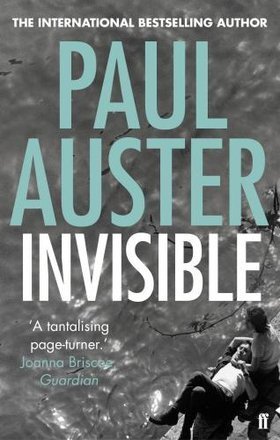 That’s at the heart of Part I (“Spring”). Across four sections, the perspective changes and the narrative is revealed to be 1967, a manuscript Adam began while dying of cancer. “Summer,” in the second person, shines a light on his relationship with his sister, Gwyn. “Fall,” adapted from Adam’s third-person notes by his college friend and fellow author, Jim Freeman, tells of Adam’s study abroad term in Paris. Here he reconnected with Born and Margot with unexpected results. Jim intends to complete the anonymized story with the help of a minor character’s diary, but the challenge is that Adam’s memories don’t match Gwyn’s or Born’s.
I can’t say more about the themes without giving too much away, but this is a provocative novel that makes you question how truth is created or preserved. Who has the right to tell the story, and will justice be done? I wouldn’t say I enjoyed it, but I certainly admired how it was constructed. Auster conjures such a sense of unease, and I always felt like I had no idea what might happen next. With no speech marks, it all flows together in a compulsively readable way. (Secondhand purchase – Awesomebooks.com)
Faber, Auster’s longtime publisher, counts towards Reading Independent Publishers Month.
The Blindfold by Siri Hustvedt (1992)
“Strange, I thought. Everything is strange.”
I read Hustvedt (The Blazing World) well before I ever tried Auster, and wouldn’t have realized then how similar their books are; they almost seem part of the same body of work. Was Hustvedt a fan or a student of his before they married? I don’t actually know and am loath to dispel the mystery for myself by looking into it. Anyway, there are striking connections between this and Invisible: the narrator is fairly autobiographical and a Columbia University student, the novel is in four loosely connected parts, and the sordid content culminates in a sudden, odd ending. (There’s also the little Easter egg here of “I heard someone shout the name Paul.”) But overall, this is more reminiscent of The New York Trilogy in its surreal randomness and subtly symbolic naming (e.g., the landlord is Mr. Then).
 Iris Vegan (Hustvedt’s mother’s surname), like many an Auster character, is bewildered by what happens to her. An impoverished graduate student in literature, she takes on peculiar jobs. First Mr. Morning hires her to make audio recordings meticulously describing artefacts of a woman he’s obsessed with. Iris comes to believe this woman was murdered and rejects the work as invasive. Next she’s a photographer’s model but hates the resulting portrait and tries to take it off display. Then she’s hospitalized for terrible migraines and has upsetting encounters with a fellow patient, old Mrs. O. Finally, she translates a bizarre German novella and impersonates its protagonist, walking the streets in a shabby suit and even telling people her name is Klaus.
I worked out that the chronological order of the parts is 2 – 4 – 3 – 1, with 1 including a recap of the others. The sections feel like separate vignettes, perhaps reflecting Hustvedt’s previous experience with the short story form, and make a less than satisfying whole. I was most engaged with the segment on working for Mr. Morning and thought that might recur, but it doesn’t. Many of the secondary characters are grotesque, whereas Iris is the intellectual waif trying to make her way in the cruel city, almost like a Dickens or Gissing (anti)hero.
It’s refreshing to get a female take on the Bildungsroman and a little bit of gender-bending with the cross-dressing. (Iris reminds me of Lauren Elkin’s Flaneuse.) The title felt like an enigma to me until close to the end, when it’s revealed to be a tool of sexual sadism. Indeed, each of the sections, in its own way, addresses male exploitation of and violence against women. Disappointingly, Iris remains defined by her relationships with men. She deserves better. Heck, she deserves a sequel! It’s interesting to see where Hustvedt got her start, but I didn’t warm to this as I did to later novels including What I Loved. (Secondhand purchase – Community Furniture Project, Newbury)
 Bookish Beck = Rebecca Foster. American transplant to England. Freelance proofreader and book reviewer.
 Bookish Beck