Reading Ireland Month, Part II: Barrett, More Donoghue, O’Farrell x 2
My second set of contributions to Cathy’s Reading Ireland Month. Emma Donoghue also appeared in my first instalment of reviews. Today I’m featuring her latest novel, published just a couple of weeks ago, and taking a quick look at a few other Irish books I’ve read recently: a light-hearted debut featuring small-town criminals, and two by Maggie O’Farrell: a reread of her only nonfiction work to date (for book club), and her newest children’s book.
Wild Houses by Colin Barrett (2024)
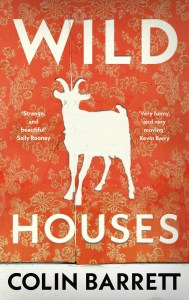 When Doll English is kidnapped by the Ferdia brothers in revenge for a huge loss on a drug deal, his girlfriend, mother and brother must go to unexpected lengths to set him free. There’s plenty of cursing and violence in this small-town crime caper, yet Barrett has a light touch; the dialogue, especially, is funny. The dialect is easy enough to decipher. Nicky, Doll’s girlfriend, lost both parents young and works in a hotel bar. She’s a strong character reminiscent of the protagonist in Trespasses. Overall, I felt that this was nicely written but that Barrett’s talent was somewhat wasted on a thin story. I’ve encountered similar plots in better books by Paul Murray and Donal Ryan. (Free from the publisher)
The Paris Express by Emma Donoghue
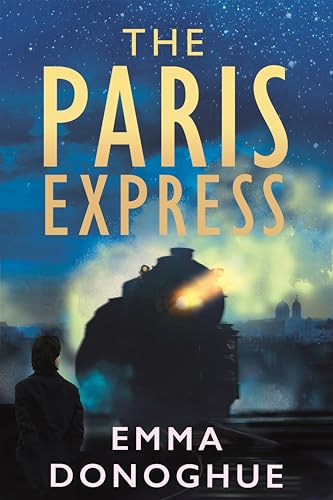 Inspired by a real-life disaster involving a train on the approach to Paris’s Montparnasse station in 1895. The Author’s Note at the end reveals the blend of characters included: people known to have been on that particular train, whether as crew or passengers; those who might have journeyed on it because they spent time in Paris at around that period (such as Irish playwright John Millington Synge); and those made up from scratch. It’s a who’s-who of historical figures, many of whom represent different movements or social issues, such as a woman medical student and an African American painter who can pass as white in certain circumstances. Donoghue clearly intends to encompass the entire social hierarchy, from a maid to a politician with a private carriage. She also crafts a couple of queer encounters.
The premise is appealing: a train hurtling toward catastrophe is in a sense a locked room, seeding much drama and intrigue. A young female radical is on board with a bomb, so all along you speculate about whether she’ll set it off and when. While I found the general thrust engaging, it was harder to develop interest in the large cast of characters. I also found the passages personifying the train (she “carries death in her belly”) hokey and thought that, as has sometimes been the case with Donoghue’s historical work, there’s too much research that’s there just for the sake of it, because she came across a fact she found fascinating and couldn’t bear to leave out (“These days every public building has three rubbish bins—one for the reclaiming of paper and cloth, the next for glass, ceramics, and oyster shells, and the last for perishables, which is where she drops the handkerchief.”). So this was enjoyable enough but not among her best.
With thanks to Picador for the proof copy for review.
I Am, I Am, I Am: Seventeen Brushes with Death by Maggie O’Farrell (2017)
 This was a reread for book club, and oh how brilliant it is. I’m more convinced than ever that the memoir-in-essays is a highly effective form because it focuses on themes or moments of great intensity and doesn’t worry about accounting for all the boring intermediate material. A few of these pieces feel throwaway, but together they form a vibrant picture of a life and also inspire awe at what the human body can withstand. No doubt on Wednesday we will each pick out different essays that resonated the most with us, perhaps because they run very close to our own experience. I imagine our discussion will start there – and with sharing our own NDEs. Stylistically, the book has a lot in common with O’Farrell’s fiction, which often employs the present tense and a complicated chronology. The present tense and a smattering of second person make the work immediate and invite readers to feel their way into her situations. Otherwise, my thoughts are as before – the last two essays are the pinnacle.
My original review from 2018:
We are, all of us, wandering about in a state of oblivion, borrowing our time, seizing our days, escaping our fates, slipping through loopholes, unaware of when the axe may fall.
O’Farrell captures fragments of her life through 17 essays on life-threatening illnesses and other narrow escapes she’s experienced. The pieces aren’t in chronological order and aren’t intended to be comprehensive. Instead, they crystallize the fear and pain of particular moments in time, and are rendered with the detail you’d expect from a scene in one of her novels. (Indeed, you can spot a lot of the real-life influences on her fiction, particularly This Must Be the Place – travels in China and Chile; eczema and stammering.)
She’s been mugged at machete point, has nearly drowned several times, had a risky first labour, and was almost the victim of a serial killer. (My life feels awfully uneventful by comparison!) But the best section of the book is its final quarter: an essay about her childhood encephalitis and its lasting effects, followed by another about her daughter’s extreme allergies. Only now, as a mother, can she understand how terrifying it must have been for her parents to wait at her side during days when she might not have survived. O’Farrell depicts parenthood better than any other author I can think of – letting those of us who haven’t experienced it do so vicariously. (Gift from my wish list)
My original rating (2018): 
My rating now: 
When the Stammer Came to Stay by Maggie O’Farrell (2024)
 This is actually her third children’s book, after Where Snow Angels Go (2020) and The Boy Who Lost His Spark (2022). All are illustrated by Daniela Jaglenka Terrazzini, who has a richly colourful and slightly old-fashioned style; she makes kids look as dignified as adults. The books are intended for slightly older children in that they’re on the longer side, have more words than pictures, and are more serious than average. They all weave in gentle magic as a way of understanding and coping with illness, a mental health challenge, or a disability.
When the Stammer Came to Stay is a perfect follow-on to I Am, I Am, I Am because it, too, draws on O’Farrell’s personal struggles. It’s the fable-like story of two sisters, Bea and Min, who share an attic room. The one is perfectly tidy; the other is a messy tomboy. When the stammer, pictured as a blob of silver ectoplasm above the shoulder, starts stealing Min’s words, they gather advice from their parents and the lodgers about how she can accept her new reality instead of fighting it or closing herself off by not speaking at all. The mycologist’s symbiosis metaphor is perhaps a bit too neat, but it contrasts with the impish connotations of the dibbuk, another useful parallel the girls discover. With this I’ve now read O’Farrell’s complete published works!
Some 2024 Reading Superlatives
Longest book read this year: The Bee Sting by Paul Murray

Shortest books read this year: The Wood at Midwinter by Susanna Clarke – a standalone short story (unfortunately, it was kinda crap); After the Rites and Sandwiches by Kathy Pimlott – a poetry pamphlet
 Authors I read the most by this year: Alice Oseman (5 rereads), Carol Shields (3 rereads); Margaret Atwood, Rachel Cusk, Pam Houston, T. Kingfisher, Sarah Manguso, Maggie O’Farrell, and Susan Allen Toth (2 each)
Publishers I read the most from: (Besides the ubiquitous Penguin Random House and its myriad imprints,) Carcanet (15), Bloomsbury & Faber (12 each), Alice James Books & Picador/Pan Macmillan (9 each)
My top author ‘discoveries’ of the year: Sherman Alexie and Bernardine Bishop

Proudest bookish achievements: Reading almost the entire Carol Shields Prize longlist; seeing The Bookshop Band on their huge Emerge, Return tour and not just getting my photo with them but having it published on both the Foreword Reviews and Shelf Awareness websites

Most pinching-myself bookish moment: Getting a chance to judge published debut novels for the McKitterick Prize
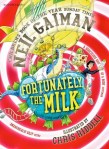
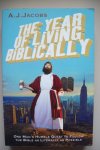
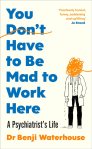
Books that made me laugh: Lots, but particularly Fortunately, the Milk… by Neil Gaiman, The Year of Living Biblically by A.J. Jacobs, and You Don’t Have to Be Mad to Work Here by Benji Waterhouse
Books that made me cry: On Chesil Beach by Ian McEwan, My Good Bright Wolf by Sarah Moss
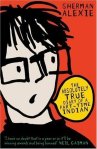
 Two books that hit the laughing-and-crying-at-the-same-time sweet spot: The Absolutely True Diary of a Part-Time Indian by Sherman Alexie and I’m Glad My Mom Died by Jennette McCurdy
Best book club selections: Clear by Carys Davies, Howards End by E.M. Forster, Strange Sally Diamond by Liz Nugent
Best first lines encountered this year:
- From Cocktail by Lisa Alward: “The problem with parties, my mother says, is people don’t drink enough.”
- From A Reason to See You Again by Jami Attenberg: “Oh, the games families play with each other.”
- From The Snow Queen by Michael Cunningham: “A celestial light appeared to Barrett Meeks in the sky over Central Park, four days after Barrett had been mauled, once again, by love.”

Best last lines encountered this year:
 From The Ministry of Time by Kaliane Bradley: “Forgiveness and hope are miracles. They let you change your life. They are time-travel.”
- From Mammoth by Eva Baltasar: “May I know to be alert when, at the stroke of midnight, life sends me its cavalry.”
- From Private Rites by Julia Armfield: “For now, they stay where they are and listen to the unwonted quiet, the hush in place of rainfall unfamiliar, the silence like a final snuffing out.”
- From Come to the Window by Howard Norman: “Wherever you sit, so sit all the insistences of fate. Still, the moment held promise of a full life.”
- From Intermezzo by Sally Rooney: “It doesn’t always work, but I do my best. See what happens. Go on in any case living.”
- From Barrowbeck by Andrew Michael Hurley: “And she thought of those Victorian paintings of deathbed scenes: the soul rising vaporously out of a spent and supine body and into a starry beam of light; all tears wiped away, all the frailty and grossness of a human life transfigured and forgiven at last.”
- From Small Rain by Garth Greenwell: “Pure life.”

Books that put a song in my head every time I picked them up: I’m the King of the Castle by Susan Hill (“Crash” by Dave Matthews Band); Y2K by Colette Shade (“All Star” by Smashmouth)
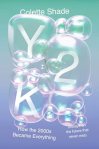
Shortest book titles encountered: Feh (Shalom Auslander) and Y2K (Colette Shade), followed by Keep (Jenny Haysom)
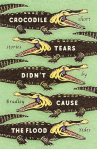 Best 2024 book titles: And I Will Make of You a Vowel Sound, I Can Outdance Jesus, Zombie Vomit Mad Libs, Crocodile Tears Didn’t Cause the Flood, This Is Why We Can’t Have Nice Things
Best book titles from other years: Recipe for a Perfect Wife, Tripping over Clouds, Waltzing the Cat, Dressing Up for the Carnival, The Met Office Advises Caution
Favourite title and cover combo of the year: I’m Mostly Here to Enjoy Myself by Glynnis MacNicol

Best punning title (and nominative determinism): Knead to Know: A History of Baking by Dr Neil Buttery
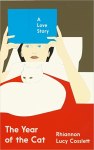 Biggest disappointments: The Glassmaker by Tracy Chevalier (I didn’t get past the first chapter because of all the info dumping from her research); The Year of the Cat by Rhiannon Lucy Cosslett; milk and honey by Rupi Kaur (that … ain’t poetry); 2 from the Observer’s 10 best new novelists feature (here and here)
A couple of 2024 books that everyone was reading but I decided not to: Creation Lake by Rachel Kushner, You Are Here by David Nicholls
 The worst books I read this year: Mammoth by Eva Baltasar, A Spy in the House of Love by Anaïs Nin
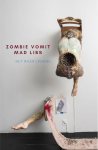
The downright strangest books I read this year: Zombie Vomit Mad Libs, followed by The Peculiar Life of a Lonely Postman. All Fours by Miranda July (I am at 44% now) is pretty weird, too.

Book Serendipity, August to October 2024
I call it “Book Serendipity” when two or more books that I read at the same time or in quick succession have something in common – the more bizarre, the better. This is a regular feature of mine every couple of months. Because I usually have 20–30 books on the go at once, I suppose I’m more prone to such incidents. People frequently ask how I remember all of these coincidences. The answer is: I jot them down on scraps of paper or input them immediately into a file on my PC desktop; otherwise, they flit away!
The following are in roughly chronological order.
- The William Carlos Williams line “no ideas but in things” is quoted in Home Is Where We Start by Susanna Crossman and echoed with a slight adaptation in Want, the Lake by Jenny Factor.
- A woman impulsively stops into a tattoo parlour in We Are Animals by Jennifer Case and Birdeye by Judith Heneghan.
- Cleaning up a partner’s bristles from the sink in 300 Arguments by Sarah Manguso and The Echoes by Evie Wyld.
- Sarah Manguso, by whom I was reading two books for a Bookmarks article, was quoted in Some of Us Just Fall by Polly Atkin.
- Someone is annoyed at their spouse making a mess cooking lemon preserves in How We Know Our Time Travelers by Anita Felicelli and Liars by Sarah Manguso, both of which are set in California.
- Rumpelstiltskin is referenced in one short story of a speculative collection: How We Know Our Time Travelers by Anita Felicelli and The Man in the Banana Trees by Marguerite Sheffer.
- A father who is hard of hearing, and an Australian woman looking for traces of her grandmother’s life in England in The House with All the Lights On by Jessica Kirkness and The Echoes by Evie Wyld.
- A character named Janie or Janey in Their Eyes Were Watching God by Zora Neale Hurston and The Echoes by Evie Wyld. The Pre-Raphaelite model Janey is also mentioned in The Garden Against Time by Olivia Laing.
 Contrasting one’s childhood love of the Little House on the Prairie books with reading them as an adult and being aware of the racial and colonial implications in Home Is Where We Start by Susanna Crossman and My Good Bright Wolf by Sarah Moss.
- A mention of Little Women in A Perfect Arrangement by Suzanne Berne and My Good Bright Wolf by Sarah Moss.
- A character grew up in a home hair-dressing business in A Perfect Arrangement by Suzanne Berne and Home Is Where We Start by Susanna Crossman.
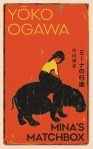
- The discovery of an old pram in an outbuilding in Instructions for a Heatwave by Maggie O’Farrell and Mina’s Matchbox by Yōko Ogawa.
- An Irish woman named Aoife in My Good Bright Wolf by Sarah Moss and Instructions for a Heatwave by Maggie O’Farrell.
- Cooking then throwing out entire meals in My Good Bright Wolf by Sarah Moss and The Echoes by Evie Wyld. (Also throwing out a fresh meal in Birdeye by Judith Heneghan. Such scenes distress me!)
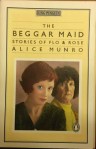 A new lover named Simon in one story of The Beggar Maid by Alice Munro and The Echoes by Evie Wyld.
- A character writes a recommendation letter for someone who then treats them vindictively, because they assumed the letter was negative when it wasn’t, in A Perfect Arrangement by Suzanne Berne and one story of The Beggar Maid by Alice Munro.
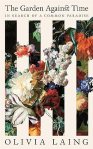
- After her parents’ divorce, the author never had a designated bedroom in her father’s house in Home Is Where We Start by Susanna Crossman and The Garden Against Time by Olivia Laing.
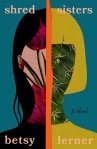 Reading The Bell Jar as a teenager in Shred Sisters by Betsy Lerner and My Good Bright Wolf by Sarah Moss.
- A contentious Town Hall meeting features in A Perfect Arrangement by Suzanne Berne and Birdeye by Judith Heneghan.
- The wife is pregnant with twins in A Perfect Arrangement by Suzanne Berne and The Year of Living Biblically by A.J. Jacobs. (There are also twins in Birdeye by Judith Heneghan. In general, I find that they occur far more often in fiction than in real life!)
- 1930s Florida as a setting in Florence Adler Swims Forever by Rachel Beanland and Their Eyes Were Watching God by Zora Neale Hurston.
- Dorothy Wordsworth and her journals are discussed in Some of Us Just Fall by Polly Atkin and My Good Bright Wolf by Sarah Moss.
- Wordsworth’s daffodils are mentioned in Signs, Music by Raymond Antrobus and My Good Bright Wolf by Sarah Moss.
- “F*ck off” is delivered in an exaggerated English accent in Birdeye by Judith Heneghan and The Souvenir Museum by Elizabeth McCracken.
- The main character runs a country store in Their Eyes Were Watching God by Zora Neale Hurston and The Beggar Maid by Alice Munro.
 Reading a second novel this year in which the younger sister of a pair wants to go into STEM and joins the Mathletes in high school: first was A Reason to See You Again by Jami Attenberg; later was Shred Sisters by Betsy Lerner.
- An older sister who has great trouble attending normal school and so is placed elsewhere (including a mental institution) for a total of two years in Learning to Think by Tracy King and Shred Sisters by Betsy Lerner.
- The idea of trees taking revenge on people for environmental destruction in one story of The Secret Life of Insects by Bernardo Esquinca and one poem of The Holy & Broken Bliss by Alicia Ostriker.
- An illiterate character in Instructions for a Heatwave by Maggie O’Farrell and Also Here by Brooke Randel.
-
 Controversy over throwing a dead body into the trash in Birdeye by Judith Heneghan and Strange Sally Diamond by Liz Nugent.
- A publishing assistant who wears a miniskirt and Doc Martens in Shred Sisters by Betsy Lerner and Summer Fridays by Suzanne Rindell.
- Ancestors’ experience in Auschwitz in Also Here by Brooke Randel and Transgenesis by Ava Winter.
- The protagonist finds it comforting when her boyfriend lies down with his full weight on her in Shred Sisters by Betsy Lerner and The Echoes by Evie Wyld.
- A woman badgers her ex-husband about when his affair with his high school/college sweetheart started (before or after the divorce) in Shred Sisters by Betsy Lerner and Liars by Sarah Manguso.
 I encountered an Irish matriarch who married the ‘wrong’ brother, not Frank, in The Bee Sting by Paul Murray earlier in the year, and then in Instructions for a Heatwave by Maggie O’Farrell.
- A boy is playing in the family car on the driveway when it rolls backwards and kills someone in A Perfect Arrangement by Suzanne Berne and Tell Me Everything by Elizabeth Strout.
- Quantoxhead, Somerset is mentioned in On Trying to Keep Still by Jenny Diski and A House Unlocked by Penelope Lively.
- Tapeworms are mentioned in On Trying to Keep Still by Jenny Diski and one story of The Best Short Stories 2023: The O. Henry Prize Winners, ed. Lauren Groff.
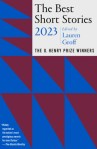
- A description of horrific teeth in one story of The Best Short Stories 2023: The O. Henry Prize Winners, ed. Lauren Groff, and one story of The Long Swim by Terese Svoboda.
- A character researches potato blight, and another keeps his smoking a secret from his wife, in one story of The Best Short Stories 2023: The O. Henry Prize Winners, ed. Lauren Groff, and Tell Me Everything by Elizabeth Strout.
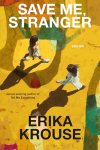 A piano gets mauled out of anger in one story of Save Me, Stranger by Erika Krouse and Strange Sally Diamond by Liz Nugent.
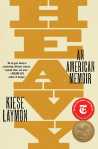
- Men experiencing eating disorders in Heavy by Kiese Laymon and Heartstopper Volumes 3 and 4 by Alice Oseman.
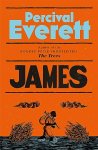
- Black people deliberately changing their vocabulary and speech register when talking to white people in James by Percival Everett and Heavy by Kiese Laymon.
- My second book of the year in which a woman from centuries ago who magically appears in the present requests to go night clubbing: first The Ministry of Time by Kaliane Bradley, then Isabella & Blodwen by Rachael Smith.
- Characters named Sadie in James by Percival Everett, The Souvenir Museum by Elizabeth McCracken, and Still Life at Eighty by Abigail Thomas.
- Creepy hares in horror: A Haunting on the Hill by Elizabeth Hand and What Moves the Dead by T. Kingfisher. There were weird rabbits in I’m the King of the Castle by Susan Hill, too.
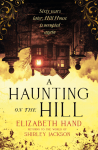
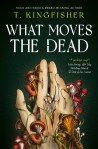
- I read two scenes of a calf being born, one right after the other: in Dangerous Enough by Becky Varley-Winter, then I’m the King of the Castle by Susan Hill.
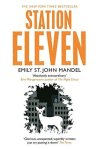
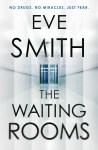
- I read about an animal scratch leading to infection leading to death in a future with no pharmaceuticals in Station Eleven by Emily St. John Mandel in the morning and then in the afternoon heard Eve Smith mention the same thing happening due to antibiotic resistance in her novel The Waiting Rooms. Forget about R.I.P.; this is the stuff that scares me…
What’s the weirdest reading coincidence you’ve had lately?
Heart, Be at Peace by Donal Ryan (Blog Tour)
I read Donal Ryan’s first three books – two short novels and a short story collection – but then lost track of his career. When I heard he was publishing a sequel of sorts to his terrific The Spinning Heart, I couldn’t resist. “Madness comes circling around. Ten-year cycles, as true as the sun will rise,” one character remarks here. Set a decade on, this replicates the structure of Ryan’s debut novella: 21 short chapters, each with a different first-person narrator. The Spinning Heart (see my BookBrowse review) took place in the wake of the financial crisis and centered on murder and kidnapping cases – both of which still resonate 10 years later. I read it as an e-ARC and can’t go back to check, but my impression is that Heart, Be at Peace focuses on many of the same characters, if not the same exact set and order.
Once again, Bobby Mahon is the closest thing to a protagonist. His construction business has recovered from the crash, but he still struggles with guilt and anxiety, including when a so-called friend tries to blackmail him over a compromising photograph. The main plot, which involves a small-town drug ring, pulls in so many people and incidents. You piece it all together through hints that accrete gradually. More so than parsing the Limerick organized crime network, though, the pleasure is encountering all the fully realized but very different voices. You can hear them in your head, the Irish accent stronger in some and the speech more slang-filled in others. Each narrative is self-contained but they also link together.
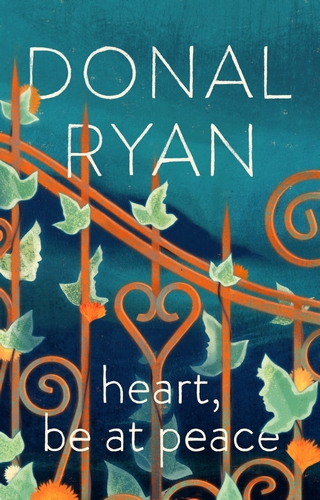
In what is quite a gritty, macho book, the women’s stories stand out all the more. Lily has ancient knowledge of spells that she’d love to pass on to her granddaughter, yet is dismayed when Millicent only wants the magic to bind her no-good boyfriend to her. Hillary is a defence lawyer whose clients never do themselves any favours with their behaviour and dress. Fathers and sons are key, as in this novel’s predecessor, but Ryan also features mothers, daughters and wives who often know more than they let on. Another interesting voice is that of Vasya, a Russian immigrant who chooses to live in an outdoor encampment.
It can be a challenge to keep track of who’s who and how everything is connected. Overall, this feels less fresh and timely than The Spinning Heart. But it’s certainly possible to enjoy it even if you haven’t read its companion novel. It reminded me especially of Paul Murray’s The Bee Sting, and you may also find the style reminiscent of Colin Barrett or Caoilinn Hughes. So many Irish writers are masters of voice and tone, and the same is true of Donal Ryan. Do try his work if you haven’t already. He has eight books to choose from now!
With thanks to Anne Cater of Random Things Tours and Doubleday for the free copy for review.
Buy Heart, Be at Peace from Bookshop.org [affiliate link]
I was delighted to be part of the blog tour for Heart, Be at Peace. See below for details of where other reviews have appeared or will appear soon.
Book Serendipity, March to April 2024
I call it “Book Serendipity” when two or more books that I read at the same time or in quick succession have something in common – the more bizarre, the better. This is a regular feature of mine every couple of months. Because I usually have 20–30 books on the go at once, I suppose I’m more prone to such incidents. The following are in roughly chronological order.
- I encountered quotes from “The Second Coming” by W.B. Yeats on the same day in Immanuel by Matthew McNaught and Waiting for the Monsoon by Rod Nordland. A week or so later, I found another allusion to it – a “rough _________ slouching toward ________” – in Mothership by Greg Wrenn.
- Reading my second memoir this year in which the author’s mother bathed them until they were age 17 (in other words, way past when it ceased to be appropriate): I’m Glad My Mom Died by Jennette McCurdy was followed by Mothership by Greg Wrenn.
- Quoting a poem with the word “riven” in it (by Christian Wiman) in Places I’ve Taken My Body by Molly McCully Brown and (by a character in the novel) in Bright and Tender Dark by Joanna Pearson. The word “riven” (which is really not a very common one, is it?) also showed up in Sleepless by Annabel Abbs. And then “riving” in one of the poems in The Intimacy of Spoons by Jim Minick.
- East Timor as a destination in Waiting for the Monsoon by Rod Nordland and Mothership by Greg Wrenn.
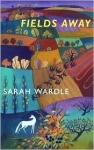
- Quoting John Donne in Places I’ve Taken My Body by Molly McCully Brown and The Bee Sting by Paul Murray (to which a Donne line is the epigraph); mimicking Donne in one poem of Fields Away by Sarah Wardle.
- “Who do you think you are?” as a question an abusive adult asks of a child in The Beggar Maid (aka Who Do You Think You Are?) by Alice Munro and Mothership by Greg Wrenn.
- Sylvia Plath is mentioned in Sleepless by Annabel Abbs and The Bee Sting by Paul Murray … and Katherine Mansfield in Sleepless by Annabel Abbs and The Beggar Maid by Alice Munro.
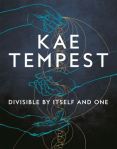
- Mosquitoes are mentioned in a poem in Rapture’s Road by Seán Hewitt and Divisible by Itself and One by Kae Tempest.

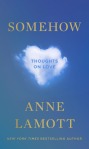
- Reading two memoirs that quote a Rumi poem (and that released on 9 April and that I reviewed for Shelf Awareness): Fi: A Memoir of My Son by Alexandra Fuller and Somehow: Thoughts on Love by Anne Lamott. (Rumi was also quoted as an epigraph in Viv Fogel’s poetry collection Imperfect Beginnings.)
- Bereavement memoirs that seek significance in eagle sightings (i.e. as visitations from the dead): Sleepless by Annabel Abbs and Fi: A Memoir of My Son by Alexandra Fuller.
- Snyder’s pretzels as a snack in Somehow: Thoughts on Love by Anne Lamott and Come and Get It by Kiley Reid.

- Reading two C-PTSD memoirs at the same time: A Flat Place by Noreen Masud and Mothership by Greg Wrenn.
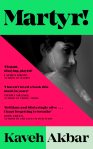 Information about coral reefs dying in Martyr! by Kaveh Akbar and Mothership by Greg Wrenn.
- The gay slang term “twink” appears in The Bee Sting by Paul Murray and Mothership by Greg Wrenn.
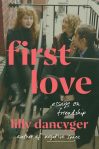
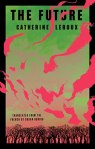
- Assisting a mother who reads tarot cards in Intervals by Marianne Brooker and The Year of the Cat by Rhiannon Lucy Cosslett. (Tarot is also read in First Love by Lilly Dancyger and The Future by Catherine Leroux.)

- An Asian American character who plays poker in a graphic novel: Advocate by Eddie Ahn and Lunar New Year Love Story by Gene Luen Yang.
- Vivian Gornick’s Fierce Attachments, which I was also reading at the time, is mentioned in Intervals by Marianne Brooker.
 An Uncle Frank in an Irish novel with no speech marks: Trespasses by Louise Kennedy and The Bee Sting by Paul Murray.
- Martin Luther King’s “I Have a Dream” speech is quoted in Some Kids I Taught & What They Taught Me by Kate Clanchy and How to Raise a Viking by Helen Russell.
- Using quarters for laundry in Come and Get It by Kiley Reid and one story from Dressing Up for the Carnival by Carol Shields.

- A scene of someone watching from a lawn chair as someone else splits wood in Martyr! by Kaveh Akbar and Becoming Little Shell by Chris La Tray.
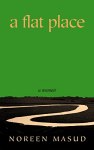 Quotes from cultural theorist Sara Ahmed in Intervals by Marianne Brooker and A Flat Place by Noreen Masud.
- I read about windows being blocked up because of high taxes on the same evening in Trespasses by Louise Kennedy and one story from Dressing Up for the Carnival by Carol Shields.
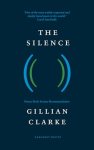
- I saw Quink ink mentioned in The Silence by Gillian Clarke and Trespasses by Louise Kennedy on the same evening.
- The song “It’s a Long Way to Tipperary” is mentioned in You’re on Your Own, Snoopy by Charles M. Schulz and Welcome to Glorious Tuga by Francesca Segal.
- A pet magpie in George by Frieda Hughes and A Council of Dolls by Mona Susan Power.

- A character tests to see what will happen (will God strike them down?) when they mess with the Host (by stealing the ciborium or dropping a wafer on the floor, respectively) in A Council of Dolls by Mona Susan Power and one story from Dressing Up for the Carnival by Carol Shields.
- Marrying the ‘wrong’ brother in The Bee Sting by Paul Murray and A Council of Dolls by Mona Susan Power.
 Indigenous author, Native versus Catholic religion, and descriptions of abuse and cultural suppression at residential schools in Becoming Little Shell by Chris La Tray and A Council of Dolls by Mona Susan Power.
- Teen girls obsessed with ‘sad girl’ poetry, especially by Sylvia Plath, in First Love by Lilly Dancyger and The Bee Sting by Paul Murray.
- “Hyacinth” is a poem in Solutions for the Problem of Bodies in Space by Catherine Barnett, and “Hyacinth Girl” a story in Cocktail by Lisa Alward. (Hyacinths are also mentioned in a poem in The Iron Bridge by Rebecca Hurst.)

- A character named Sissy in A Council of Dolls by Mona Susan Power and Stone Yard Devotional by Charlotte Wood.
- Harming amphibians, whether deliberately or accidentally, in a story in Barcelona by Mary Costello, a poem in Baby Schema by Isabel Galleymore, and Mothership by Greg Wrenn.
- A significant character called Paul in Dances by Nicole Cuffy, Daughter by Claudia Dey (those two were both longlisted for the Carol Shields Prize), and Moral Injuries by Christie Watson.

- Out of Africa (the film and then the book), which I was looking through for the #1937Club, is mentioned in The Whole Staggering Mystery by Sylvia Brownrigg – her writer grandfather lived in Nairobi’s “Happy Valley” in the 1930s.
- Reading two novels at the same time in which a teen girl’s plans to study medicine are derailed by war: Brotherless Night by V.V. Ganeshananthan and The Snow Hare by Paula Lichtarowicz.

What’s the weirdest reading coincidence you’ve had lately?
Reading Ireland Month, Part II: Hughes, Kennedy, Murray
My second contribution to Reading Ireland Month after a first batch that included poetry and a novel.

Today I have a poetry collection based around science and travel, and two multi-award-winning novels, one set in the thick of the Troubles in Belfast and another about the crumbling of an ordinary suburban family.
Gathering Evidence by Caoilinn Hughes (2014)
 I bought this in the same order as Patricia Lockwood’s poetry collection, thinking a segue to another genre within an author’s oeuvre (I’d enjoyed Hughes’s 2018 debut novel, Orchid & the Wasp) might be a clever strategy. That worked out with Lockwood, but not as well here. A collection about scientific discoveries and medical advances seemed likely to be up my street. “The Moon Should Be Turned” is about the future of the HeLa cells harvested from Henrietta Lacks; poems are dedicated to the Curies and Johannes Kepler and one has Fermi as a main character. Russian nuclear force is a background menace. There are also some poems about growing up in Dublin and travels in the Andes. “Vagabond Monologue” stood out for its voice, “Marbles” for its description of childhood booty: “A netted bag of green glass marbles with aquamarine swirls / deep in the otherworld of spherical transparency (simultaneous opacity) / was the first thing I ever stole when I was three and far from the last.” Elsewhere, though, I found the precision vocabulary austere and offputting. (New purchase with Amazon voucher)
Trespasses by Louise Kennedy (2022)
Despite its many accolades, not least a shortlisting for the Women’s Prize, I couldn’t summon much enthusiasm for reading a novel about the Troubles. I don’t know why I tend to avoid this topic; perhaps it’s the insidiousness of fighting that’s not part of a war somewhere else, but ongoing domestic terrorism instead. Combine that with an affair – Cushla is a 24-year-old schoolteacher who starts sleeping with a middle-aged, married barrister she meets in her family’s pub – and it sounded like a tired, ordinary plot. But after this won last year’s McKitterick Prize (for debut authors over 40) and I was sent the whole shortlist in thanks for being a manuscript judge, I thought I should get over myself and give it a try.
 Little surprise that Kennedy’s writing – compassionate, direct, heart-rending – is what sets the book apart. With no speech marks, radio reports of everyday atrocities blend in with thoughts and conversations. We meet and develop fondness for characters across classes and the Catholic–Protestant divide: Cushla’s favourite pupil, Davy, whose father was assaulted in the street; her alcoholic mother, Gina, who knows more than she lets on, despite her inebriation; Gerry, a colleague who takes Cushla on friend dates and covers for her when she goes to see Michael. An Irish language learning circle introduces the 1970s bourgeoisie with their dinner parties and opinions.
This doesn’t read like a first novel at all, with each character fully realized and the plot so carefully constructed that I was as shocked as Cushla by a revelation four-fifths of the way through. Desire is bound up with guilt; can anyone ever be happy when violence is so ubiquitous and random? “Booby trap. Incendiary device. Gelignite. Nitroglycerine. Petrol bomb. Rubber bullets. Saracen. Internment. The Special Powers Act. Vanguard. The vocabulary of a seven-year-old child now.” But a brief framing episode set in 2015 gives hope of life beyond seemingly inescapable tragedy. (Free from the Society of Authors)
The Bee Sting by Paul Murray (2023)
“The trouble is coming from inside; from his family. And unless something happens to stop it, it will keep billowing out, worse and worse”
Another great Irish novel I nearly missed out on, despite it being shortlisted for the Booker Prize and Writers’ Prize and winning the inaugural Nero Book Awards’ Gold Prize, this one because I was daunted by its doorstopper proportions. I’d gotten it in mind that it was all about money: Dickie Barnes’s car dealership is foundering and the straitened circumstances affect his whole family (wife Imelda, teenage daughter Cass, adolescent son PJ). A belated post-financial crash novel? Again, it sounded tired, maybe clichéd.
But actually, this turned out to be just the kind of wry, multi-perspective dysfunctional family novel that I love, such that I was mostly willing to excuse a baggy midsection. Murray opens with long sections of close third person focusing on each member of the Barnes family in turn. Cass is obsessed with sad-girl poetry and her best friend Elaine, but self-destructive habits threaten her university career before it’s begun. PJ is better at making friends through online gaming than in real life because of his family’s plunging reputation, so concocts a plan to run away to Dublin. Imelda is flirting with Big Mike, who’s taking over the dealership, but holds out hope that Dickie’s wealthy father will bail them out. Dickie, under the influence of a weird handyman named Victor, has become fixated on eradicating grey squirrels and building a bunker to keep his family safe.
There are no speech marks throughout, and virtually no punctuation in Imelda’s sections. There are otherwise no clever tricks to distinguish the points-of-view, though. The voice is consistent. Murray doesn’t have to strain to sound like a teenage girl; he fully and convincingly inhabits each character (even some additional ones towards the end). I particularly liked the final “Age of Loneliness” section, which starts rotating between the perspectives more quickly, each one now in the second person. It all builds towards a truly thrilling yet inconclusive ending. I could imagine this as a TV miniseries for sure.
SPOILERS, if you’re worried about that sort of thing:
It was all the details I didn’t pick up from my pre-reading about The Bee Sting that made it so intricate and rewarding. Imelda’s awful upbringing in macho poverty and how it seemed that Rose, then Frank, might save her. The cruelty of Frank’s accidental death and the way that, for both Imelda and Dickie, being together seemed like the only way of getting over him, even if Imelda was marrying the ‘wrong’ brother. The recurrence of same-sex attraction for Dickie, then Cass. The irony of the bee sting that never was.
BUT. Yes, it’s too long, particularly Imelda’s central section. I had to start skimming to have any hope of making it through. Trim the whole thing by 200 pages and then we’re really talking. But I will certainly read Murray again, and most likely will revisit this book in the future to give it the attention it deserves. I read it from the library’s Bestsellers collection; the story of how I own a copy as of this week is a long one…

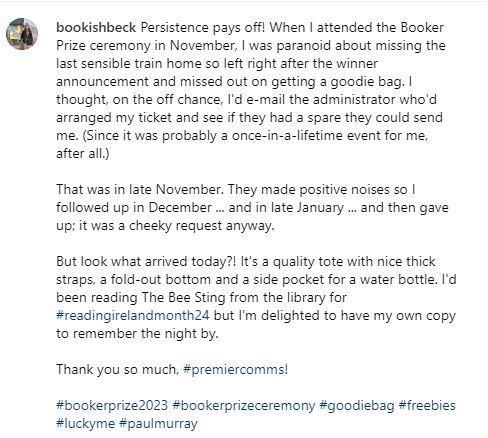
(Public library; free from the Booker Prize/Premier Comms)

I’ll be catching up on reviewing March releases in early April.
Happy Easter to those who celebrate!
Women’s Prize for Non-Fiction, Writers’ Prize & Young Writer of the Year Award Catch-Up
This time of year, it’s hard to keep up with all of the literary prize announcements: longlists, shortlists, winners. I’m mostly focussing on the Carol Shields Prize for Fiction this year, but I like to dip a toe into the others where I can. I ask: What do I have time to read? What can I find at the library? and Which books are on multiple lists so I can tick off several at a go??
Women’s Prize for Non-Fiction

(Shortlist to be announced on 27 March.)
Read so far: Intervals by Marianne Brooker, Matrescence by Lucy Jones
&
A Flat Place by Noreen Masud
Past: Sunday Times/Charlotte Aitken Young Writer of the Year Award shortlist
Currently: Jhalak Prize longlist
I also expect this to be a strong contender for the Wainwright Prize for nature writing, and hope it doesn’t end up being a multi-prize bridesmaid as it is an excellent book but an unusual one that is hard to pin down by genre. Most simply, it is a travel memoir taking in flat landscapes of the British Isles: the Cambridgeshire fens, Orford Ness in Suffolk, Morecambe Bay, Newcastle Moor, and the Orkney Islands.
 But flatness is a psychological motif as well as a physical reality here. Growing up in Pakistan with a violent Pakistani father and a passive Scottish mother, Masud chose the “freeze” option when in fight-or-flight situations. When she was 15, her father disowned her and she moved with her mother and sisters to Scotland. Though no particularly awful things happened, a childhood lack of safety, belonging and love left her with complex PTSD that still affects how she relates to her body and to other people, even after her father’s death.
Masud is clear-eyed about her self and gains a new understanding of what her mother went through during their trip to Orkney. The Newcastle chapter explores lockdown as a literal Covid-era circumstance but also as a state of mind – the enforced solitude and stillness suited her just fine. Her descriptions of landscapes and journeys are engaging and her metaphors are vibrant: “South Nuns Moor stretched wide, like mint in my throat”; “I couldn’t stop thinking about the Holm of Grimbister, floating like a communion wafer on the blue water.” Although she is an academic, her language is never off-puttingly scholarly. There is a political message here about the fundamental trauma of colonialism and its ongoing effects on people of colour. “I don’t want ever to be wholly relaxed, wholly at home, in a world of flowing fresh water built on the parched pain of others,” she writes.
What initially seems like a flat authorial affect softens through the book as Masud learns strategies for relating to her past. “All families are cults. All parents let their children down.” Geography, history and social justice are all a backdrop for a stirring personal story. Literally my only annoyance was the pseudonyms she gives to her sisters (Rabbit, Spot and Forget-Me-Not). (Read via Edelweiss)
And a quick skim:
Doppelganger: A Trip into the Mirror World by Naomi Klein
Past: Writers’ Prize shortlist, nonfiction category
 For years people have been confusing Naomi Klein (geography professor, climate commentator, author of No Logo, etc.) with Naomi Wolf (feminist author of The Beauty Myth, Vagina, etc.). This became problematic when “Other Naomi” espoused various right-wing conspiracy theories, culminating with allying herself with Steve Bannon in antivaxxer propaganda. Klein theorizes on Wolf’s ideological journey and motivations, weaving in information about the doppelganger in popular culture (e.g., Philip Roth’s novels) and her own concerns about personal branding. I’m not politically minded enough to stay engaged with this but what I did read I found interesting and shrewdly written. I do wonder how her publisher was confident this wouldn’t attract libel allegations? (Public library)
Predictions: Cumming (see below) and Klein are very likely to advance. I’m less drawn to the history or popular science/tech titles. I’d most like to read Some People Need Killing: A Memoir of Murder in the Philippines by Patricia Evangelista, Wifedom: Mrs Orwell’s Invisible Life by Anna Funder, and How to Say Babylon: A Jamaican Memoir by Safiya Sinclair. I’d be delighted for Brooker, Jones and Masud to be on the shortlist. Three or more by BIPOC would seem appropriate. I expect they’ll go for diversity of subject matter as well.
Writers’ Prize
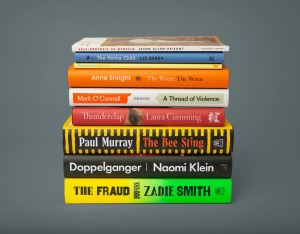
Last year I read most books from the shortlists and so was able to make informed (and, amazingly, thoroughly correct) predictions of the winners. I didn’t do as well this year. In particular, I failed with the nonfiction list in that I DNFed Mark O’Connell’s book and twice borrowed the Cumming from the library but never managed to make myself start it; I thought her On Chapel Sands overrated. (I did skim the Klein, as above.) But at least I read the poetry shortlist in full:
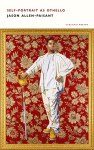 Self-Portrait as Othello by Jason Allen-Paisant: I found more to sink my teeth into here than I did with his debut collection, Thinking with Trees (2021). Part I’s childhood memories of Jamaica open out into a wider world as the poet travels to London, Paris and Venice, working in snippets of French and Italian and engaging with art and literature. “I’m haunted as much by the character Othello as by the silences in the story.” Part III returns home for the death of his grandmother and a coming to terms with identity. [Winner: Forward Prize for Best Collection; Past: T.S. Eliot Prize shortlist] (Public library)
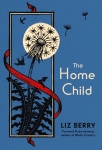 The Home Child by Liz Berry: A novel in verse “loosely inspired,” as Berry puts it, by her great-aunt Eliza Showell’s experience: she was a 12-year-old orphan when, in 1908, she was forcibly migrated from the English Midlands to Nova Scotia. The scenes follow her from her home to the Children’s Emigration Home in Birmingham, on the sea voyage, and in her new situation as a maid to an elderly invalid. Life is gruelling and lonely until a boy named Daniel also comes to the McPhail farm. This was a slow and not especially engaging read because of the use of dialect, which for me really got in the way of the story. (Public library)
 & Bright Fear by Mary Jean Chan (Current: Dylan Thomas Prize shortlist)
Three category winners:
- The Wren, The Wren by Anne Enright (Fiction)
- Thunderclap by Laura Cumming (Nonfiction) (Current: Women’s Prize for Non-Fiction longlist)
- The Home Child by Liz Berry (Poetry)
Overall winner: The Home Child by Liz Berry
Observations: The academy values books that cross genres. It appreciates when authors try something new, or use language in interesting ways (e.g. dialect – there’s also some in the Allen-Paisant, but not as much as in the Berry). But my taste rarely aligns with theirs, such that I am unlikely to agree with its judgements. Based on my reading, I would have given the category awards to Murray, Klein and Chan and the overall award perhaps to Murray. (He recently won the inaugural Nero Book Awards’ Gold Prize instead.)
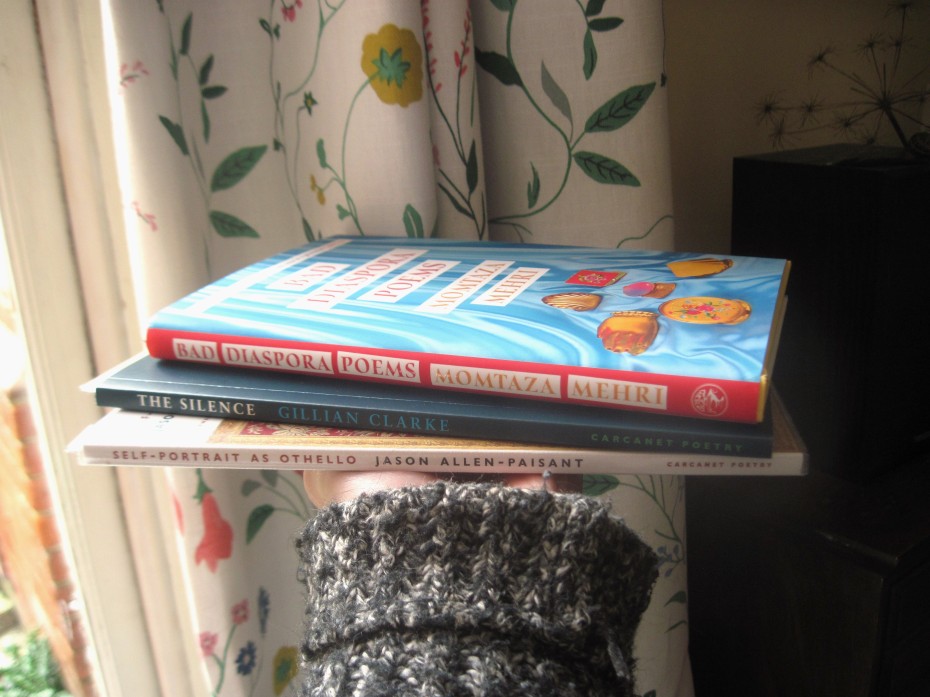
World Poetry Day stack last week
Young Writer of the Year Award
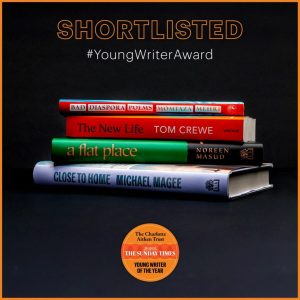
Shortlist:
- The New Life by Tom Crewe
 (Past: Nero Book Award shortlist, debut fiction)
 - Close to Home by Michael Magee (Winner: Nero Book Award, debut fiction category)
- A Flat Place by Noreen Masud (see above)
&
Bad Diaspora Poems by Momtaza Mehri
Winner: Forward Prize for Best First Collection
Nostalgia is bidirectional. Vantage point makes all the difference. Africa becomes a repository of unceasing fantasies, the sublimation of our curdled angst.
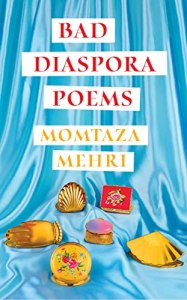 Crossing between Somalia, Italy and London and proceeding from the 1830s to the present day, this debut collection sets family history amid wider global movements. It’s peopled with nomads, colonisers, immigrants and refugees. In stanzas and prose paragraphs, wordplay and truth-telling, Mehri captures the welter of emotions for those whose identity is split between countries and complicated by conflict and migration. I particularly admired “Wink Wink,” which is presented in two columns and opens with the suspension of time before the speaker knew their father was safe after a terrorist attack. There’s super-clever enjambment in this one: “this time it happened / after evening prayer // cascade of iced tea / & sugared straws // then a line / break // hot spray of bullets & / reverb & // in less than thirty minutes we / they the land // lose twenty of our children”. Confident and sophisticated, this is a first-rate debut.
A few more favourite lines:
IX. Art is something we do when the war ends.
X. Even when no one dies on the journey, something always does.
(from “A Few Facts We Hesitantly Know to Be Somewhat True”)
You think of how casually our bodies are overruled by kin,
by blood, by heartaches disguised as homelands.
How you can count the years you have lived for yourself on one hand.
History is the hammer. You are the nail.
(from “Reciprocity is a Two-way Street”)
With thanks to Jonathan Cape (Penguin) for the free copy for review.
I hadn’t been following the Award on Instagram so totally missed the news of them bringing back a shadow panel for the first time since 2020. The four young female Bookstagrammers chose Mehri’s collection as their winner – well deserved.
Winner: The New Life by Tom Crewe
This was no surprise given that it was the Sunday Times book of the year last year (and my book of the year, to be fair). I’ve had no interest in reading the Magee. It’s a shame that a young woman of colour did not win as this year would have been a good opportunity for it. (What happened last year, seriously?!) But in that this award is supposed to be tied into the zeitgeist and honour an author on their way up in the world – as with Sally Rooney in my shadowing year – I do think the judges got it right.
 Bookish Beck = Rebecca Foster. American transplant to England. Freelance proofreader and book reviewer.
 Bookish Beck