The Dark Is Rising Readalong #TDiRS22 & #Headliners2023 Online Event
Annabel’s readalong was the excuse I needed to try something by children’s fantasy author Susan Cooper – she’s one of those much-beloved English writers who happened to pass me by during my upbringing in the States. I’ve been aware of The Dark Is Rising (1973) for just a few years, learning about it from the Twitter readalong run by Robert Macfarlane. (My husband took part in that, having also missed out on Cooper in his childhood.)

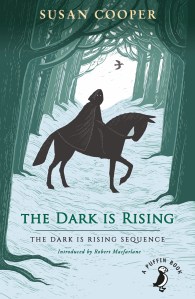 Christmas is approaching, and with it a blizzard, but first comes Will Stanton’s birthday on Midwinter Day. A gathering of rooks and a farmer’s ominous pronouncement (“The Walker is abroad. And this night will be bad, and tomorrow will be beyond imagining”) and gift of an iron talisman are signals that his eleventh birthday will be different than those that came before. While his large family gets on with their preparations for a traditional English Christmas, they have no idea Will is being ferried by a white horse to a magic hall, where he is let in on the secret of his membership in an ancient alliance meant to combat the forces of darkness. Merriman will be his guide as he gathers Signs and follows the Old Ones’ Ways.
I loved the evocation of a cosy holiday season, and its contrast with the cosmic conflict going on under the surface.
He was not the same Will Stanton that he had been a very few days before. Now and forever, he knew, he inhabited a different timescale from that of everyone he had ever known or loved…But he managed to turn his thoughts away from all these things, even from the two invading, threatening figures of the Dark. For this was Christmas, which had always been a time of magic, to him and to all the world. This was a brightness, a shining festival, and while its enchantment was on the world the charmed circle of his family and home would be protected against any invasion from outside.
The bustling family atmosphere is reminiscent of Madeleine L’Engle’s children’s books (e.g., Meet the Austins), as is the nebulous world-building (A Wrinkle in Time) – I found little in the way of concrete detail to latch onto, and like with Alan Garner’s The Owl Service, I felt out of my depth with the allusions to local legend. Good vs. evil battles are a mainstay of fantasy and children’s fiction, like in J.R.R. Tolkien’s books, or The Chronicles of Narnia I read over and over between the ages of about five and nine. Had I read this, too, as a child, I’m sure I would have loved it, but I guess I’m too literal-minded an adult these days; it’s hard for me to get swept up in the magic. See also Annabel’s review. (Public library)
Headliners 2023 Online Event
For a small fee (the proceeds went to The Arts Emergency Fund), I joined in this Zoom event hosted by Headline Books and Tandem Collective yesterday evening to learn about 10 of the publisher’s major 2023 releases.
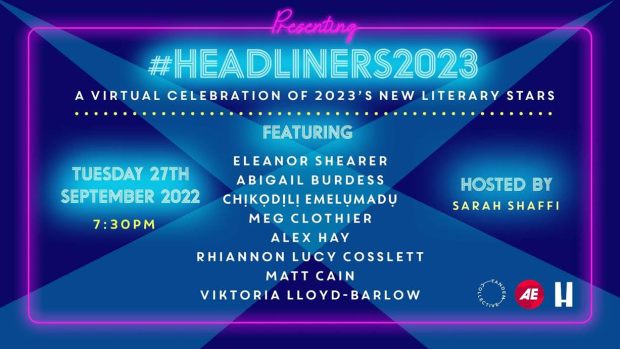
Six of the authors were interviewed live by Sarah Shaffi; the other four had contributed pre-recorded video introductions. Here’s a super-brief rundown, in the order in which they appeared, with my notes on potential readalikes:
Dazzling by Chikodili Emelumadu (16 February)
Two girls at a restrictive Nigerian boarding school tap into their power as “Leopard People” to bring back their missing fathers and achieve more than anyone expects of them.
Sounds like: Akwaeke Emezi’s works
A Pebble in the Throat by Aasmah Mir (2 March)
A memoir contrasting her upbringing in Glasgow with her mother’s in Pakistan, this promises to be thought-provoking on the topics of racism and gender stereotypes.
Sounds like: Brown Baby or Brit(ish)
River Sing Me Home by Eleanor Shearer (19 January)
In 1834 Barbados, a former slave leaves her sugarcane plantation to find her five children. Shearer is a mixed-race descendant of Windrush immigrants and wanted to focus not so much on slavery as on its aftermath and the effects of forced dispersion.
Sounds like: Sugar Money
Becoming Ted by Matt Cain (19 January)
In a Northern seaside town, Ted is dumped by his husband and decides to pursue his dream of becoming a drag queen.
Sounds like: Rachel Joyce’s works
Mother’s Day by Abigail Burdess (2 March)
As a baby, Anna was left by the side of the road*; now she’s found her birth mother, just as she learns she’s pregnant herself. Described as a darkly comic thriller à la Single White Female.
(*Burdess had forgotten that this really happened to her best childhood friend; her mum had to remind her of it!)
Sounds like: A Crooked Tree or When the Stars Go Dark
Me, Myself and Mini Me by Charlotte Crosby (2 March)
A reality TV star’s memoir of having a child after an ectopic pregnancy.
Sounds like: Something Katie Price would ‘write’. I had not heard of this celebrity author before and don’t mean to sound judgmental, but the impression made by her appearance (heavily altered by cosmetic surgery) was not favourable.
All the Little Bird Hearts by Viktoria Lloyd-Barlow (2 March)
In the Lake District in the 1980s, Sunday is an autistic mother raising a daughter, Dolly. The arrival of glamorous next-door neighbours upends their lives.
Sounds like: Claire Fuller’s works
The Year of the Cat by Rhiannon Lucy Cosslett (19 January)
A work of creative nonfiction about adopting a cat named Mackerel (who briefly appeared on the video) during lockdown, and deciding whether or not to have a child.
Sounds like: Motherhood, with a cat
The Book of Eve by Meg Clothier (30 March)
Set in Northern Italy in 1500, this is about a convent librarian who discovers a rich tradition of goddess worship that could upend the patriarchy.
Sounds like: Kiran Millwood Hargrave’s and Maggie O’Farrell’s historical novels
The Housekeepers by Alex Hay (6 July)
A historical heist novel set in 1905, this is about Mrs King, a Mayfair housekeeper who takes revenge for her dismissal by assembling a gang of disgruntled women to strip her former employer’s house right under her nose during a party.
Sounds like: Richard Osman’s works
If there was a theme to the evening, it was women’s power!
I’m most keen to read The Year of the Cat, but I’d happily try 3–4 of the novels if my library acquired them.
Which of these 2023 releases appeal to you most?
Women’s Prize 2022: Longlist Wishes vs. Predictions
Next Tuesday the 8th, the 2022 Women’s Prize longlist will be announced.
First I have a list of 16 novels I want to be longlisted, because I’ve read and loved them (or at least thought they were interesting), or am currently reading and enjoying them, or plan to read them soon, or am desperate to get hold of them.
Wishlist
Brown Girls by Daphne Palasi Andreades
Our Wives Under the Sea by Julia Armfield (my review)
Ghosted by Jenn Ashworth (my review)
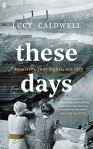
These Days by Lucy Caldwell

Damnation Spring by Ash Davidson – currently reading
Olga Dies Dreaming by Xóchitl González – currently reading
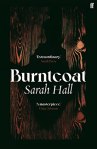
Burntcoat by Sarah Hall (my review)
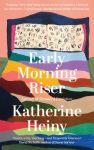
Early Morning Riser by Katherine Heiny (my review)


Pure Colour by Sheila Heti
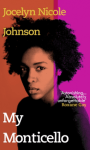
My Monticello by Jocelyn Nicole Johnson (my review)
Devotion by Hannah Kent – currently reading
Build Your House Around My Body by Violet Kupersmith – currently reading



When the Stars Go Dark by Paula McLain (my review)
The Swimmers by Julie Otsuka – review coming to Shiny New Books on Thursday
Brood by Jackie Polzin (my review)
The Performance by Claire Thomas (my review)


Then I have a list of 16 novels I think will be longlisted mostly because of the buzz around them, or they’re the kind of thing the Prize always recognizes (like danged GREEK MYTHS), or they’re authors who have been nominated before – previous shortlistees get a free pass when it comes to publisher submissions, you see – or they’re books I might read but haven’t gotten to yet.
Predictions
Love Marriage by Monica Ali
When We Were Birds by Ayanna Lloyd Banwo
Second Place by Rachel Cusk (my review)
Matrix by Lauren Groff

Free Love by Tessa Hadley
The Other Black Girl by Zakiya Dalila Harris (my review)
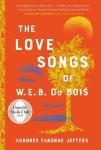
The Love Songs of W.E.B. Du Bois by Honorée Fanonne Jeffers
The Fell by Sarah Moss (my review)



My Phantoms by Gwendoline Riley
Beautiful World, Where Are You by Sally Rooney (my review)
Ariadne by Jennifer Saint
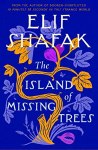
The Island of Missing Trees by Elif Shafak


Great Circle by Maggie Shipstead
Pandora by Susan Stokes-Chapman
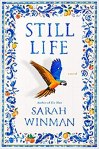
Still Life by Sarah Winman
To Paradise by Hanya Yanagihara – currently reading



*A wildcard entry that could fit on either list: Sorrow and Bliss by Meg Mason (my review).*

Okay, no more indecision and laziness. Time to combine these two into a master list that reflects my taste but also what the judges of this prize generally seem to be looking for. It’s been a year of BIG books – seven of these are over 400 pages; three of them over 600 pages even – and a lot of historical fiction, but also some super-contemporary stuff. Seven BIPOC authors as well, which would be an improvement over last year’s five and closer to the eight from two years prior. A caveat: I haven’t given thought to publisher quotas here.
MY WOMEN’S PRIZE FORECAST
Love Marriage by Monica Ali
Our Wives Under the Sea by Julia Armfield
When We Were Birds by Ayanna Lloyd Banwo
Olga Dies Dreaming by Xóchitl González
Matrix by Lauren Groff
The Love Songs of W.E.B. Du Bois by Honorée Fanonne Jeffers
Devotion by Hannah Kent
Build Your House Around My Body by Violet Kupersmith
The Fell by Sarah Moss
My Phantoms by Gwendoline Riley
Beautiful World, Where Are You by Sally Rooney
Ariadne by Jennifer Saint
The Island of Missing Trees by Elif Shafak
Great Circle by Maggie Shipstead
Pandora by Susan Stokes-Chapman
To Paradise by Hanya Yanagihara
What do you think?
See also Laura’s, Naty’s, and Rachel’s predictions (my final list overlaps with theirs on 10, 5 and 8 titles, respectively) and Susan’s wishes.
Just to further overwhelm you, here are the other 62 eligible 2021–22 novels that were on my radar but didn’t make the cut:
In Every Mirror She’s Black by Lola Akinmade Åkerström
Violeta by Isabel Allende
The Leviathan by Rosie Andrews
Somebody Loves You by Mona Arshi
The Stars Are Not Yet Bells by Hannah Lillith Assadi
The Manningtree Witches by A.K. Blakemore
Mary Jane by Jessica Anya Blau
Defenestrate by Renee Branum
Songs in Ursa Major by Emma Brodie
Assembly by Natasha Brown
We Were Young by Niamh Campbell
The Raptures by Jan Carson
A Very Nice Girl by Imogen Crimp
Scary Monsters by Michelle de Kretser
Empire of Wild by Cherie Dimaline
Infinite Country by Patricia Engel
Love & Saffron by Kim Fay
Mrs March by Virginia Feito
Booth by Karen Joy Fowler
Tides by Sara Freeman
I Couldn’t Love You More by Esther Freud
Of Women and Salt by Gabriela Garcia
Libertie by Kaitlyn Greenidge
Listening Still by Anne Griffin
The Twyford Code by Janice Hallett
Mrs England by Stacey Halls
Three Rooms by Jo Hamya
The Giant Dark by Sarvat Hasin
The Paper Palace by Miranda Cowley Heller
Violets by Alex Hyde
Fault Lines by Emily Itami
Beasts of a Little Land by Juhea Kim
Woman, Eating by Claire Kohda
Notes on an Execution by Danya Kukafka
Paul by Daisy Lafarge
Circus of Wonders by Elizabeth Macneal
The Truth About Her by Jacqueline Maley
Wahala by Nikki May
Once There Were Wolves by Charlotte McConaghy
Cleopatra and Frankenstein by Coco Mellors
The Exhibitionist by Charlotte Mendelson
Chouette by Claire Oshetsky
The Book of Form and Emptiness by Ruth Ozeki
The Anthill by Julianne Pachico
The Vixen by Francine Prose
The Five Wounds by Kirstin Valdez Quade
Malibu Rising by Taylor Jenkins Reid
Cut Out by Michèle Roberts
This One Sky Day by Leone Ross
Secrets of Happiness by Joan Silber
Cold Sun by Anita Sivakumaran
Hear No Evil by Sarah Smith
Oh William! by Elizabeth Strout
Animal by Lisa Taddeo
Daughter of the Moon Goddess by Sue Lynn Tan
Lily by Rose Tremain
French Braid by Anne Tyler
We Run the Tides by Vendela Vida
I Love You but I’ve Chosen Darkness by Claire Vaye Watkins
Black Cake by Charmaine Wilkerson
The Dictionary of Lost Words by Pip Williams
Nightbitch by Rachel Yoder
Best Books of 2021: Fiction and Poetry
I’ve chosen my 15 fiction and 15 nonfiction favourites (coming up tomorrow) from 2021, along with a few poetry selections at the end of this post. Two of my picks are graphic novels!
 Under the Blue by Oana Aristide: Fans of Station Eleven, this one’s for you: the best dystopian novel I’ve read since Mandel’s. Aristide started writing in 2017, and unknowingly predicted a much worse pandemic than Covid-19. In July 2020, Harry and sisters Ash and Jessie are among mere thousands of survivors worldwide. Their plan is to flee England for Uganda, out of range of Europe’s at-risk nuclear reactors. An epic road trip ensues. A propulsive cautionary tale that also reminded me of work by Louisa Hall and Maja Lunde.
 The Push by Ashley Audrain: Blythe Connor, living alone with her memories, ponders what went wrong with her seemingly perfect family: a handsome architect husband, Fox, and their daughter Violet and baby son Sam. How much of what happened was because of Violet’s nature, and how much was Blythe’s fault for failing to be the mother the girl needed? The fact that her experience with Sam was completely different makes her feel ambivalent about motherhood. A cracking psychological thriller with an unreliable narrator.
 Site Fidelity by Claire Boyles: A love for their Colorado homeland inspires women’s environmental activism in a linked short story collection. Hope and perseverance are watchwords for Boyles’s characters, many of whom are single mothers or unmarried women. Nearly half of the stories center on a trio of feisty sisters. This reminded me most of Love Medicine by Louise Erdrich, as well as Barbara Kingsolver’s early fiction set in the Southwest. It got me eagerly awaiting whatever Boyles writes next.
 A Lie Someone Told You About Yourself by Peter Ho Davies: Davies’ minimalist approach – short sections skating over the months and years, wryly pulling out representative moment – crystallizes fatherhood, illuminating its daily heartaches and joys. The tone is just right in this novella, showing both sides of parenthood and voicing things you aren’t allowed to think, or at least not to admit to, starting with abortion, which would-be fathers aren’t expected to have strong feelings about. I loved the rumination on the role that chance plays in a life.
 The Living Sea of Waking Dreams by Richard Flanagan: Extinction, personal and global, is at the heart of this timely and enchanting story. It starts off as a family drama. Francie, the 86-year-old matriarch, is in a Tasmanian hospital after a brain bleed. Her three middle-aged children can’t bear to let her go. In an Australia blighted by bushfires, species loss mirrors Francie’s physical and mental crumbling. Smartphone addiction threatens meaningful connection. And then characters start to literally disappear, part by part…
 Mrs Death Misses Death by Salena Godden: Grief Is the Thing with Feathers meets Girl, Woman, Other would be my marketing shorthand for this one. Poet Salena Godden’s debut novel is a fresh and fizzing work, passionate about exposing injustice but also about celebrating simple joys, and in the end it’s wholly life-affirming despite a narrative stuffed full of deaths real and imagined. The novel balances the cosmic and the personal through Wolf’s family story. Unusual, musical, and a real pleasure to read.
 Early Morning Riser by Katherine Heiny: This tickled my funny bone. A cross between Kitchens of the Great Midwest and Olive Kitteridge, it’s built of five extended episodes, crossing nearly two decades in the lives of Jane and Duncan and lovingly portraying the hangers-on who compose their unusual family constellation in Boyne City, Michigan. All the characters are incorrigible but wonderful. Bad things happen, but there’s a core of love as Heiny explores marriage and parenting. A good-natured book that feels wise and bittersweet.
 No One Is Talking About This by Patricia Lockwood: This starts as a flippant skewering of modern life. A woman who became a social media star by tweeting quips like “Can a dog be twins?” reflects on life on “the portal” and under “the dictator.” Midway through the book, she gets a wake-up call when her mother summons her back to the Midwest for a family emergency. It’s the about-face that makes this novel, forcing readers to question the value of a digital existence based on glib pretence. Funny, but with an ache behind it.
 When the Stars Go Dark by Paula McLain: I almost never pick up a thriller, but my love for McLain’s earlier fiction attracted me and I ended up loving this. Really, I can’t imagine a better take on the genre. Anna Hart is a detective who, fleeing tragedies from her past, throws herself into the linked mystery of three missing girls in California. The book is rich in atmosphere: McLain’s love of the coast and forests is clear, and the fact that the book is set in 1993 means that Anna has to rely on old-fashioned policework rather than technology.
 In by Will McPhail: Alternately laugh-out-loud funny and gentle. This debut graphic novel is a spot-on picture of modern life in a generic city. Nick never knows the right thing to say. The bachelor artist’s well-intentioned thoughts remain unvoiced; all he can manage is small talk. That starts to change when he meets Wren, a Black doctor who sees past his pretence. If only he can find the magic words that elicit honesty, he might make real connections with other human beings. A good old-fashioned story, with a wide emotional range.
 Heartstopper, Volume 4 by Alice Oseman: This super-cute series was my summer crush. I liked this best of the first four. I admired how Oseman works in serious issues teens might face but has still created something so full of queer joy. While Charlie has been figuring out when to tell Nick he loves him, Nick has been working out how to confront Charlie about his anorexia. They learn that love doesn’t solve everything, but that a friend or boyfriend can be there to listen. Oseman really brings out the supporting cast in this volume, too.
 Detransition, Baby by Torrey Peters: A sparkling, sexy comedy with a tender heart beneath the zingers. Peters has set herself up as the Jane Austen of the trans community, tracing the ins and outs of relationships with verve and nuance. For me this was a valuable book simply for normalizing trans sexuality. The themes are universal, after all: figuring out who you are and what the shape of your life will be. I admire when authors don’t pander to readers by making things easy for those who are unfamiliar with a culture. Great lines abound.
 Brood by Jackie Polzin: Polzin’s debut is a quietly touching story of a woman in the Midwest raising chickens and coming to terms with the shape of her life. The unnamed narrator is Everywoman and no one at the same time. At one point she reveals, with no fanfare, that she miscarried four months into pregnancy in the bathroom of one of the houses she cleans. There is a bittersweet tone to this short work. It’s a low-key, genuine portrait of life in the in-between stages and how it can be affected by fate or by other people’s decisions.
 Bewilderment by Richard Powers: As environmentally aware as The Overstory, but with a more intimate scope, focusing on a father and son who journey together in memory and imagination as well as in real life. Neurodivergent Robin is a scientific marvel and an environmental activist. Theo studies other planets that rival an ailing Earth, and another state allows Robin to reconnect with his late mother. When I came to the end, I felt despondent and overwhelmed. But as time has passed, the book’s feral beauty has stuck with me.

In the Company of Men: The Ebola Tales by Véronique Tadjo: This creative and compassionate work takes on various personae to plot the course of the Ebola outbreak in West Africa in 2014–16. The suffering is immense, and there are ironic situations that only compound the tragedy. Tadjo flows freely between all the first-person voices, even including non-human narrators such as baobab trees and a fruit bat. Local legends and songs, along with a few of her own poems, also enter into the text.
If I had to pick my novel of the year, it would be The Living Sea of Waking Dreams.

Books not pictured were from the library or read electronically.
Poetry
 Pilgrim Bell by Kaveh Akbar: An Iranian American poet imparts the experience of being torn between cultures and languages, as well as between religion and doubt, in this gorgeous collection of confessional verse. Food, plants, animals, and the body supply the book’s imagery. Wordplay and startling juxtapositions lend lightness to a wistful, intimate collection that seeks belonging and belief. (Reviewed for Shelf Awareness.)
 Field Requiem by Sheri Benning: Benning employs religious language to structure her solemn meditations on the degraded landscape of Saskatchewan, a place where old ways have been replaced by impersonal, industrial-scale farming. You can hear the rhythms of psalms and the echoes of the requiem mass. Alliteration pops out from lists of crops and the prairie species their cultivation has pushed to the edge of extinction. This is deeply place based writing. With its ecological conscience and liturgical sound, it’s just my kind of poetry.
 Eat or We Both Starve by Victoria Kennefick: In this audacious debut collection, the body is presented as a battleground: for the brain cancer that takes the poet’s father; for disordered eating that entwines with mummy issues; for the restructuring of pregnancy. Families break apart and fuse into new formations. Cannibalism and famine metaphors dredge up emotional states and religious doctrines. There’s a pleasingly morbid cast to the book, but it also has its lighter moments. Rich with imagery and alliteration, this is also just my kind of poetry.
What are some of the best books you’ve read so far this year?
What 2021 releases do I need to catch up on right away?
Book Serendipity, July to August 2021
I call it Book Serendipity when two or more books that I read at the same time or in quick succession have something pretty bizarre in common. Because I have so many books on the go at once (usually 20–30), I suppose I’m more prone to such incidents. I’ve realized that, of course, synchronicity is really the more apt word, but this branding has stuck. This used to be a quarterly feature, but to keep the lists from getting too unwieldy I’ve shifted to bimonthly.
The following are in roughly chronological order.
- I read two novels about the disappearance of a 15-year-old girl at the same time: Heatstroke by Hazel Barkworth and When the Stars Go Dark by Paula McLain.
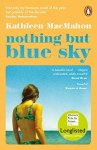
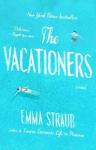
- Two novels in a row were set on a holiday in Spain: Nothing but Blue Sky by Kathleen MacMahon and The Vacationers by Emma Straub.
- I encountered mentions of the removal of the Edward Colston statue in God Is Not a White Man by Chine McDonald and I Belong Here by Anita Sethi on the same evening.
- Characters have the habit of making up names and backstories for strangers in Ruby by Ann Hood and Nothing but Blue Sky by Kathleen MacMahon.
- The main female character says she works out what she thinks by talking in Second Place by Rachel Cusk and The Amateur Marriage by Anne Tyler.

- A passive mother is bullied by her controlling husband in Nothing but Blue Sky by Kathleen MacMahon and Female Friends by Fay Weldon.
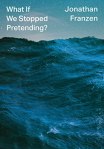
- Two reads in a row were a slim volume on the necessity of giving up denial: What White People Can Do Next by Emma Dabiri (re: racism) and What If We Stopped Pretending by Jonathan Franzen (re: climate change).

- Expressions of a strange sense of relief at disaster in Forecast by Joe Shute (re: flooding) and The Amateur Marriage by Anne Tyler (re: a car accident).
- The biomass ratios of livestock to humans to other mammals are cited in Silent Earth by Dave Goulson, The Anthropocene Reviewed by John Green, and Bewilderment by Richard Powers.
- Two Booker nominees referencing china crockery: An Island by Karen Jennings and China Room by Sunjeev Sahota (yep, it’s talking about the plates rather than the country).


- Teens sneak vodka in Heartstopper, Volume 3 by Alice Oseman and The Interestings by Meg Wolitzer.
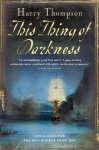
- Robert FitzRoy appears in The Glitter in the Green by Jon Dunn and Forecast by Joe Shute, and is the main subject of This Thing of Darkness by Harry Thompson, a doorstopper that has been languishing on my set-aside pile.
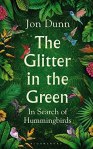

- Dave Goulson’s bumblebee research is mentioned in The Glitter in the Green by Jon Dunn, which I was reading at the same time as Goulson’s new book, Silent Earth.
- Reading two cancer memoirs that mention bucket lists at the same time: No Cure for Being Human by Kate Bowler and Year of Plagues by Fred D’Aguiar.


- Mentions of the damaging practice of clearing forest to plant eucalyptus in The Glitter in the Green by Jon Dunn and Forecast by Joe Shute.
- Mentions of mosquito coils being used (in Borneo or Australia) in Small Bodies of Water by Nina Mingya Powles and The Weekend by Charlotte Wood.


- Different words to the tune of Leonard Cohen’s “Hallelujah” in In Every Mirror She’s Black by Lola Akinmade Åkerström and How We Do Family by Trystan Reese.
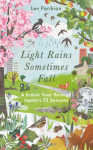 A brief mention of China and Japan’s 72 mini-seasons in Small Bodies of Water by Nina Mingya Powles: this will then be the setup for Light Rains Sometimes Fall by Lev Parikian, which I’ll be reading later in September.
- Beached whales feature in Fathoms by Rebecca Giggs and Small Bodies of Water by Nina Mingya Powles.
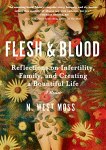
- A chapter in No Cure for Being Human by Kate Bowler is entitled “Flesh & Blood,” which is the title of the whole memoir by N. West Moss that I picked up next – and both are for Shelf Awareness reviews.
- A description of a sonogram appointment where the nurse calls the doctor in to interpret the results and they know right away that means the pregnancy is unviable, followed by an account of a miscarriage, in Flesh & Blood by N. West Moss and How We Do Family by Trystan Reese.

- Robin Wall Kimmerer and Robert Macfarlane quoted in Church of the Wild by Victoria Loorz and Small Bodies of Water by Nina Mingya Powles.
What’s the weirdest reading coincidence you’ve had lately?
Four Recent Review Books: Ernaux, Nunez, Rubin & Scharer
Two nonfiction books: a frank account of an abortion; clutter-busting techniques.
Two novels: amusing intellectual fare featuring a big dog or the Parisian Surrealists.
Happening by Annie Ernaux (2000; English translation, 2019)
[Translated from the French by Tanya Leslie]
 “I believe that any experience, whatever its nature, has the inalienable right to be chronicled,” Ernaux writes. In 1963, when she was 23 and living in a student residence in Rouen, she realized she was pregnant. An appointment with a gynecologist set out the facts starkly: “Pregnancy certificate of: Mademoiselle Annie Duchesne. Date of delivery: 8 July, 1964. I saw summer, sunshine. I tore up the certificate.” Abortion was illegal in France at that time. Ernaux tried to take things into her own hands – “plunging a knitting needle into a womb weighed little next to ruining one’s career” – but couldn’t go through with it. Instead she went to the home of a middle-aged nurse she’d heard about…
This very short book (just 60-some pages) is told in a matter-of-fact style – apart from the climactic moment when her pregnancy ends: “It burst forth like a grenade, in a spray of water that splashed the door. I saw a baby doll dangling from my loins at the end of a reddish cord.” It’s such a garish image, almost cartoonish, that I didn’t know whether to laugh or be horrified. Mostly, Ernaux reflects on memory and the reconstruction of events. I haven’t read many nonfiction accounts of abortion/miscarriage and for that reason found this interesting, but it was perhaps too brief and detached for me to be fully engaged.
My rating: 
With thanks to Fitzcarraldo Editions for the free copy for review.
The Friend by Sigrid Nunez (2018)
 “Does something bad happen to the dog?” We animal lovers are wary when approaching a book about a pet. Nunez playfully anticipates that question as she has her unnamed female narrator reflect on her duty of care to her dead friend’s dog. The narrator is a writer and academic – like her late friend, a Bellovian womanizer who recently committed suicide, leaving behind two ex-wives, a widow, and Apollo the aging Great Dane. She addresses the friend directly as “you” for almost the whole book, which unfolds – in a similar style to Jenny Offill’s Department of Speculation – via quotations, aphorisms, and stories from literary history as well as mini-incidents from a life.
This won the 2018 National Book Award in the USA and is an unashamedly high-brow work whose intertextuality comes through in direct allusions to many classic works of autofiction (Coetzee, Knausgaard and Lessing) and/or doggy lit (Ackerley; Coetzee again – Disgrace). As Apollo starts to take up more physical, mental and emotional space in the narrator’s life, she waits for a miracle that will allow her to keep him despite an eviction notice and muses on lots of questions: Is all writing autobiographical? Why does animal suffering pain us so much (especially compared to human suffering)? I was impressed: it feels like Nunez has encapsulated everything she’s ever known or thought about, all in just over 200 pages, and alongside a heart-warming little plot. (Animal lovers need not fear.)
My rating: 
With thanks to Virago for the free copy for review.
Outer Order, Inner Calm: Declutter and Organize to Make More Room for Happiness by Gretchen Rubin (2019)
 What with all the debate over Marie Kondo’s clutter-reducing tactics, the timing is perfect for this practical guide to culling and organizing all the stuff that piles up around us at home and at work. Unlike the rest of Rubin’s self-help books, this is not a narrative but a set of tips – 150 of them! It’s not so much a book to read straight through as one to keep at your bedside and read a few pages to summon up motivation for the next tidying challenge.
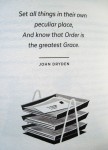 Famously, Kondo advises one to ask whether an item sparks joy. Rubin’s central questions are more down-to-earth: Do I need it? Do I love it? Do I use it? With no index, the book is a bit difficult to navigate; you just have to flip through until you find what you want. The advice seems in something of a random order and can be slightly repetitive. But since this is really meant as a book of inspiration, I think it will be a useful jumping-off point for anyone trying to get on top of clutter. I plan to work through the closet checklist before I pass the book to my sister – who’s dealing with a basement full of stuff after she and her second husband merged their households. If I could add one page, it would be a flowchart of what to do with unwanted stuff that corresponds to the latest green recommendations.
My rating: 
With thanks to Two Roads for the free copy for review.
The Age of Light by Whitney Scharer (2019)
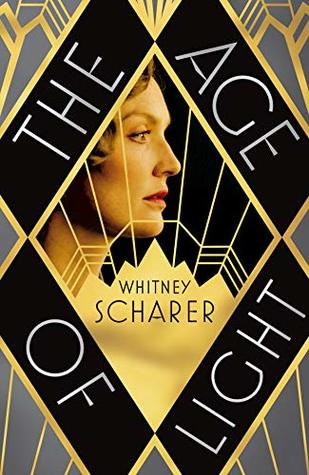 This novel about Lee Miller’s relationship with Man Ray is in the same vein as The Paris Wife, Z, Loving Frank and Frieda: all of these have sought to rescue a historical woman from the shadow of a celebrated, charismatic male and tell her own fascinating life story. Scharer captures the bohemian atmosphere of 1929–30 Paris in elegant but accessible prose. Along with the central pair we meet others from the Dada group plus Jean Cocteau, and get a glimpse of Josephine Baker. The novel is nearly 100 pages too long, I think, such that my interest in the politics of the central relationship – Man becomes too possessive and Lee starts to act out, longing for freedom again – started to wane.
Miller was a photographer as well as a model and journalist, and this is an appropriately visual novel that’s interested in appearances, lighting and what gets preserved for posterity. It’s also fairly sexually explicit for literary fiction, sometimes unnecessarily so, so keep that in mind if it’s likely to bother you. I especially enjoyed the brief flashes of Lee at other points in her life: in London during the Blitz, photographing the aftermath of the war in Germany (there’s a famous image of her in Hitler’s bathtub), and hoping she’s more than just a washed-up alcoholic in the 1960s. It would be a boon to have a prior interest in or some knowledge of the Surrealists.
My rating:
With thanks to Picador for the free copy for review.
Would you be interested in reading one or more of these?
Polishing off My 20 Books of Summer with Hay, Jones & Markham
I finished off strong with a few books I’ve been meaning to read for months or years.
Late Nights on Air by Elizabeth Hay (2007)
 (This was a Twitter buddy read with Naomi of Consumed by Ink and Penny of Literary Hoarders.) I read my first novel by Hay, A Student of Weather, last year. It was wonderfully rewarding even though it took me a month to read. By contrast, I read the Giller Prize-winning Late Nights on Air in half that time. Most of it is set in 1975–7 in Yellowknife, a small city in Canada’s Northwest Territories. Here winter lasts for eight months and you can still meet with snow and frozen lakes in early July. A tight-knit cast gathers around the local radio station: Harry and Gwen, refugees from Ontario starting new lives; Dido, an alluring Dutch newsreader; Ralph, the freelance book reviewer; menacing Eddie; and pious Eleanor.
Everyone is in love with everyone else, so you get these layers of unrequited romance and a sense of exposure: not just to the elements, but to the vulnerabilities of admitting one’s feelings and risking professional failure. The novel is also about appearances and assumptions – “You don’t look anything like how you sound,” Gwen says to Harry – and the dangers of obsession. Four of the station employees set out one summer to recreate the six-week journey of Arctic explorer John Hornby, a trip that ends up being as wondrous as it is fraught. Hay’s foreshadowing is a bit heavy-handed, and I found the final chapters after the expedition a slight letdown, but overall this is a marvellous story of quiet striving and dislocation. I saw bits of myself in each of the characters, and I loved the extreme setting, both mosquito-ridden summer and bitter winter. I need to read the rest of Hay’s oeuvre stat.
Favorite passages:
Harry’s professional advice to Gwen: “Radio was like poetry, he told her. At its best it could be, while television was like a blockbuster novel: one made you think and feel, the other dulled your mind. … ‘To be any good you have to believe it’s hard. It’s called creative tension. … And you won’t be any good until you’re dedicated to something outside yourself.’ … I learned that a mistake is just something you go on from.”
“Something blossoms in an unlikely place. An oasis of trees miles above the treeline. An arctic river warmer than any other water they’d come upon. The four of them bathed in the waters of the Thelon, wading out into it, almost swimming. On shore they towelled themselves dry and dressed, and there was no feeling to equal the splendour of warm clothes on river-cold skin.”
My rating: 
I ran out of time for Half of a Yellow Sun by Chimamanda Ngozi Adichie so substituted in…
An American Marriage by Tayari Jones (2018)
(If it’s good enough for Barack Obama and Oprah Winfrey, it’s good enough for me!)
 The title feels like an echo of An American Tragedy. It’s both monolithic and generic, as if saying: Here’s a marriage; make of it what you will. Is it representative of the average American situation, or is it exceptional? Roy and Celestial only get a year of happy marriage before he’s falsely accused of rape and sentenced to 12 years in prison in Louisiana. Through their alternating first-person narration and their letters back and forth while Roy is incarcerated, we learn more about this couple: how their family circumstances shaped them, how they met, and how they drift apart as Celestial turns to her childhood friend, Andre, for companionship. When Roy is granted early release, he returns to Georgia to find Celestial and see what might remain of their marriage. I ached for all three main characters: It’s an impossible situation. The novel ends probably the only way it could, on a realistic yet gently optimistic note. Life goes on, if not how you expect, and there will be joys still to come.
This would make a great book club pick: there’s a lot to probe about the characters’ personalities and motivations, and about how they reveal or disguise themselves through their narration. I found it remarkable how the letters, which together make up not even one-fifth of the text, enhance the raw honesty of the book. There are other marriages on display besides Roy and Celestial’s, their range providing a snapshot of African-American lower-middle- and upper-middle-class life in the South. I especially liked the use of two totem objects, Roy’s tooth and the hickory tree outside Celestial’s childhood home (what you see on the cover).
Favorite lines:
Celestial: “I believed that our marriage was a fine-spun tapestry, fragile but fixable. We tore it often and mended it, always with a silken thread, lovely but sure to give way.”
Andre: “I don’t believe that blood makes a family; kin is the circle you create, hands held tight.”
Celestial: “Our marriage was a sapling graft that didn’t have time to take.”
Roy: “mostly my life is good, only it’s a different type of good from what I figured on.”
My rating: 
An American Marriage was published in the UK by Oneworld on April 5th. My thanks to the publisher for the free copy for review.
West With the Night by Beryl Markham (1942)
 (Another Twitter buddy read, with Laila of Big Reading Life.) I’ve meant to pick this up ever since I read Paula McLain’s fantastic novel about Beryl Markham, Circling the Sun. I loved Markham’s memoir even more. She writes so vividly about the many adventures of her life in Africa: hunting lions, training race horses, and becoming one of the continent’s first freelance pilots, delivering mail and locating elephant herds.
It took me a while to get used to the structure – this is a set of discrete stories rather than a chronological narrative – but whether she’s reflecting on the many faces of Africa or the peculiar solitude of night flights, the prose is just stellar. Ernest Hemingway once asserted in a letter that Markham could “write rings around all of us who consider ourselves as writers,” and I certainly enjoyed this more than anything I’ve read by Hemingway.
The text is bookended by two momentous flights: it opens with Markham scrambling to deliver oxygen to an injured miner, and ends with her completing the first east–west solo flight across the Atlantic in 1936. Her engine cut out multiple times; it’s no less than a miracle that she survived to crash land in Nova Scotia. Laila and I agree that Markham’s life is so exciting it’s crying out for a movie version. In the meantime, I’d like to read some more about her circle – Denys Finch Hatton; and Baron von Blixen and his wife Karen (aka Danish writer Isak Dinesen, famous for Out of Africa). In my Circling the Sun review for BookTrib, I wrote that “Markham was the kind of real-life action adventure heroine you expect to find in Indiana Jones movies,” and that sense was only confirmed by her own account.
Favorite passages:
“to fly in unbroken darkness without even the cold companionship of a pair of ear-phones or the knowledge that somewhere ahead are lights and life and a well-marked airport is something more than just lonely. It is at times unreal to the point where the existence of other people seems not even a reasonable possibility. The hills, the forests, the rocks, and the plains are one with the darkness, and the darkness is infinite. The earth is no more your planet than is a distant star—if a star is shining; the plane is your planet and you are its sole inhabitant.”
“I saw how a man can be master of a craft, and how a craft can be master of an element. I saw the alchemy of perspective reduce my world, and all my other life, to grains in a cup. I learned to watch, to put my trust in other hands than mine. And I learned to wander. I learned what every dreaming child needs to know—that no horizon is so far that you cannot get above it or beyond it.”
My rating:
So how did I do on my first-ever #20BooksofSummer challenge? In that I read and reviewed (more than) 20 books by women that I owned in print, it was a smashing success. However, I only read 7 of the books I’d intended to, substituting in the rest from my review pile, books I owned in America, and others that grabbed my attention more than those I’d picked out in early June. Looks like I’m not great at sticking with the specific reading plans I set!
At any rate, as bonuses, here are the additional books by women that I read in print from my own shelves over the summer, not counting ones already reviewed on the blog (in chronological order, with ratings and links to any Goodreads reviews):
- Blue Horses, Mary Oliver

- The Egg and I, Betty Macdonald
- Eye of the Shoal: A Fish-watcher’s Guide to Life, the Ocean and Everything, Helen Scales
- The Partly Cloudy Patriot, Sarah Vowell

- Talk before Sleep, Elizabeth Berg
- The Incendiaries, R.O. Kwon [blog tour review coming on Monday]

- The Artist’s Way: A Spiritual Path to Higher Creativity, Julia Cameron
- Gross Anatomy: My Curious Relationship with the Female Body (The Top Half and the Bottom Half), Mara Altman [Glamour UK review coming soon]
- Questions of Travel, Elizabeth Bishop
- Writers & Company, Eleanor Wachtel

- Help Me!: One woman’s quest to find out if self-help really can change her life, Marianne Power
- Mrs Gaskell & Me: Two Women, Two Love Stories, Two Centuries Apart, Nell Stevens
I’d call that a result!
What have been the best books of the summer? Of the final 20, The Invisible Bridge by Julie Orringer was the winner, followed closely by The Life and Loves of Lena Gaunt by Tracy Farr, Late Nights on Air by Elizabeth Hay, and West With the Night by Beryl Markham. There were no real duds. I’m still very interested in all but one of the books I chose back in June, so I’ll see how many of the rest I can fit into this autumn and winter’s reading.
How was your summer of reading? Did you meet any goals you set?
Recommended May Releases
May and June are HUGE months for new releases. I’ve been doing enough early reading via NetGalley and Edelweiss that I’ve found plenty to recommend to you for next month. From a novel voiced by one of Hemingway’s wives to a physicist’s encouragement to waste more time, I hope there will be something here for everyone.
The Pisces by Melissa Broder
[Coming from Hogarth Press (USA) on the 1st and Bloomsbury (UK) on the 3rd]
 At first I thought this was one of those funny, quirky but somewhat insubstantial novels about a thirtysomething stuck with a life she isn’t sure she wants – something along the lines of Goodbye, Vitamin, The Portable Veblen, or All Grown Up. Then I thought it was just a crass sex comedy. But the further I read the deeper it all seemed to become: tropes from Greek myth and the fluidity of gender roles made me think of You Too Can Have a Body Like Mine, another debut novel that surprised me for its profundity. Lucy, a thirty-eight-year-old PhD student, agrees to spend a summer dog-sitting for her yoga entrepreneur sister in Venice Beach, California while she undertakes therapy for the twin problems of low self-esteem and love addiction. If you know one thing about this book, it’s that there’s sex with a merman. Ultimately, though, I’d say it’s about “the prison of the body” and choosing which of the different siren voices calling us to listen to. I found it outrageous but rewarding.
My rating:
How to Be a Perfect Christian by Adam Ford and Kyle Mann
[Coming from Multnomah (USA) on the 1st]
 The Babylon Bee is a Christian version of The Onion, so you know what you’re getting here: a very clever, pitch-perfect satire of evangelical Christianity today. If, like me, you grew up in a nondenominational church and bought into the subculture hook, line and sinker (Awana club, youth group, courtship, dc Talk albums, the whole shebang), you will find that so much of this rings true. The book is set up as a course for achieving superficial perfection through absolute “conformity to the status quo of the modern church.” Sample advice: find an enormous church that meets your needs, has a great coffee bar and puts on a laser-lit worship performance to rival “an amusement park for cats or a Def Leppard concert”; master the language of Christianese (“Keeping it in prayer” pretty much covers your bases); and bring as little as you can to the church potluck (a 25-pack of napkins) but consume as much as is anatomically possible. So, a lot of fun, just a little overlong because you get the joke early on.
My rating:
The Ensemble by Aja Gabel
[Coming from Riverhead (USA) on the 15th]
 In May 1994, the members of the Van Ness String Quartet are completing their final graduate recital at a San Francisco conservatory and preparing for the Esterhazy quartet competition in the Canadian Rockies. These four talented musicians – Jana, first violin; Brit, second violin; Henry, viola; and Daniel, cello – have no idea what the next 15 years will hold for them: a cross-country move, romances begun and lost, and career successes and failures. Drawing on her own history as a violinist and cellist, Aja Gabel infuses her debut novel with the simultaneous uncertainty and euphoria of both the artistic life and early adulthood in general. An alternating close third-person perspective gives glimpses into the main characters’ inner lives, and there are evocative descriptions of classical music. I think The Ensemble will mean even more to those readers who are involved in music, but anyone can relate to the slow fade from youth into middle age and the struggle to integrate art with the rest of life.
My rating:
Tropic of Squalor by Mary Karr
[Coming from Harper (USA) on the 8th]
 Mary Karr is mostly known as a memoirist, but this is actually her fifth poetry collection. Death is a major theme, with David Foster Wallace’s suicide and 9/11 getting multiple mentions. Karr also writes self-deprecatingly about her Texas childhood. Best of all is the multi-part “The Less Holy Bible”: a sort of Devil’s Dictionary based loosely around the books of the Bible, it bounces between Texas and New York City and twists biblical concepts into commonsense advice. Not one for those who are quick to cry heresy, perhaps, but I enjoyed it very much, especially “VI. Wisdom: The Voice of God”: “Ninety percent of what’s wrong with you could be cured with a hot bath, / says God through the manhole covers, but you want magic, to win / the lottery you never bought a ticket for. … Don’t look for initials in the geese honking / overhead or to see through the glass even darkly. It says the most obvious shit, / i.e. Put down that gun, you need a sandwich.”
My rating:
In Praise of Wasting Time by Alan Lightman
[Coming from Simon & Schuster / TED (USA and UK) on the 15th]
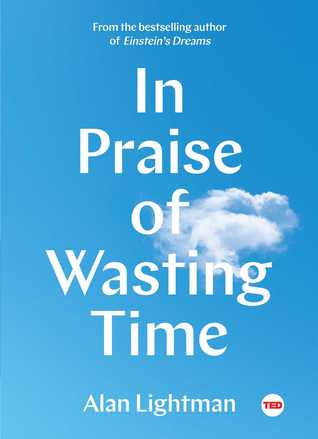 Lightman, a physicist and MIT professor, argues that only in unstructured time can we rediscover our true identity and recover our carefree childhood creativity. This work-as-play model goes against the modern idea that time is money and every minute must be devoted to a project. “For any unexpected opening of time that appears during the day, I rush to patch it, as if a tear in my trousers. … I feel compelled to find a project, to fill up the hole.” Yet there is another way of approaching time, as he discovered when doing research in a village in Cambodia. He realized that the women he talked to didn’t own watches and thus had no real sense of how long any task took them. This sharp, concise treatise ruminates on the cultural forces that have enslaved us in the West to productivity. (In short, he blames the Internet, but specifically smartphones.) Lightman insists on the spiritual benefits of free time and solitude. “With a little determination, each of us can find a half hour a day to waste time,” he asserts.
My rating:
Love and Ruin by Paula McLain
[Coming from Ballantine Books (USA) and Fleet (UK) on the 1st]
 This is the weakest of the three McLain novels I’ve read, but when we’re talking about a writer of this caliber that isn’t much of a criticism. It’s strange to me that, having written a novel from the perspective of Hadley Richardson, Ernest Hemingway’s first wife, McLain would choose to tell the story of another Hemingway wife – this time Martha Gellhorn, a war reporter and author in her own right. If I set aside this misgiving, though, and just assess the quality of the writing, there are definitely things to praise, such as the vivid scenes set during the Spanish Civil War, the dialogues between Martha and Hem, the way he perhaps fills in for her dead father, her fondness for his sons, and her jealousy over his growing success while her books sink like stones. I especially liked their first meeting in a bar in Key West, and the languid pace of their life in Cuba. I read such books because I’m intrigued about the appeal of a great man, but here I got a little bogged down with the many settings and events.
My rating:
What May books do you have on the docket? Have you already read any that you can recommend?
2017’s Runners-Up and Other Superlatives
The choices below are in alphabetical order by author, with any previously published reviews linked in (many of these books have already appeared on the blog in some way over the course of the year). You know the drill by now: to keep it simple for myself as well as for all of you who are figuring out whether you’re interested in these books or not, I’m limiting myself to two sentences per title. The first is a potted summary; the second tells you why you should read it. Across these three best-of posts (see also my Top Nonfiction and Best Fiction posts), I’ve spotlighted roughly the top 15% of my year’s reading.
Runners-Up:
 As a God Might Be by Neil Griffiths: The themes and central characters were strong enough to keep me powering through this 600-page novel of ideas about encounters with God and the nature of evil. This turned out to be just my sort of book: big and brazen, a deep well of thought that will only give up its deeper meanings upon discussion and repeat readings.
 Spaceman of Bohemia by Jaroslav Kalfař: The story of Jakub Procházka, a Czech astronaut who leaves his wife behind to undertake a noble research mission but soon realizes he can never escape his family history or the hazards of his own mind. A terrific blend of the past and the futuristic, Earth and space.
 English Animals by Laura Kaye: A young Slovakian becomes a housekeeper for a volatile English couple and discovers a talent for taxidermy. A fresh take on themes of art, sex, violence and belonging, this is one of the more striking debut novels I’ve encountered in recent years.
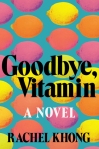 Goodbye, Vitamin by Rachel Khong: Reeling from a broken engagement, Ruth Young returns to her childhood home in California for a year to help look after her father, who has Alzheimer’s. This is a delightfully quirky little book, but you may well read it with a lump in your throat, too.
 Midwinter Break by Bernard MacLaverty: In MacLaverty’s quietly beautiful fifth novel, a retired couple faces up to past trauma and present incompatibility during a short vacation in Amsterdam. My overall response was one of admiration for what this couple has survived and sympathy for their current situation – with hope that they’ll make it through this, too. (Reviewed for BookBrowse.)
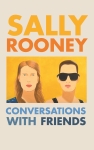 Conversations with Friends by Sally Rooney: An Irish college student navigates friendships and an affair with a married man. This is much more about universals than it is about particulars: realizing you’re stuck with yourself, exploring your sexuality and discovering sex is its own kind of conversation, and deciding whether ‘niceness’ is really the same as morality; a book I was surprised to love, but love it I did.
 Lincoln in the Bardo by George Saunders: The residents of Georgetown cemetery limbo don’t know they’re dead – or at least won’t accept it. An entertaining and truly original treatment of life’s transience; I know it’s on every other best-of-year list out there, but it really is a must-read.
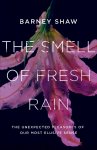 The Smell of Fresh Rain by Barney Shaw: Shaw travels through space, time and literature as he asks why we don’t have the vocabulary to talk about the smells we encounter every day. If you’re interested in exploring connections between smell and memory, discovering what makes the human sense of smell unique, and learning some wine-tasting-style tips for describing odors, this is a perfect introduction.
 A Life of My Own by Claire Tomalin: Tomalin is best known as a biographer of literary figures including Mary Wollstonecraft, Samuel Pepys and Charles Dickens, but her memoir is especially revealing about the social and cultural history of the earlier decades her life covers. A dignified but slightly aloof book – well worth reading for anyone interested in spending time in London’s world of letters in the second half of the twentieth century.
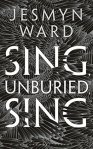 Sing, Unburied, Sing by Jesmyn Ward: The story of a mixed-race family haunted – both literally and figuratively – by the effects of racism, drug abuse and incarceration in Bois Sauvage, a fictional Mississippi town. Beautiful language; perfect for fans of Toni Morrison and Cynthia Bond.
I’ve really struggled with short stories this year, but here are four collections I can wholeheartedly recommend:
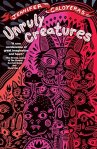 What It Means when a Man Falls from the Sky by Lesley Nneka Arimah (Reviewed for Shiny New Books.)
- Unruly Creatures: Stories by Jennifer Caloyeras
- Bad Dreams and Other Stories by Tessa Hadley
- The Great Profundo and Other Stories by Bernard MacLaverty (1987)
The Best 2017 Books You Probably Never Heard of (Unless You Heard about Them from Me!):
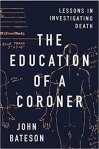 The Education of a Coroner by John Bateson: The coroner’s career is eventful no matter what, but Marin County, California has its fair share of special interest, what with Golden Gate Bridge suicides, misdeeds at San Quentin Prison, and various cases involving celebrities (e.g. Harvey Milk, Jerry Garcia and Tupac) in addition to your everyday sordid homicides. Ken Holmes was a death investigator and coroner in Marin County for 36 years; Bateson successfully recreates Holmes’ cases with plenty of (sometimes gory) details.
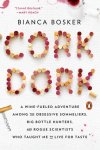 Cork Dork by Bianca Bosker: Tasting notes: gleeful, ebullient, learned, self-deprecating; suggested pairings: Sweetbitter by Stephanie Danler; Top Chef, The Great British Bake Off. A delightful blend of science, memoir and encounters with people who are deadly serious about wine.
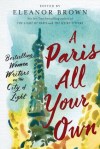 A Paris All Your Own: Bestselling Women Writers on the City of Light, edited by Eleanor Brown: A highly enjoyable set of 18 autobiographical essays that celebrate what’s wonderful about the place but also acknowledge disillusionment; highlights are from Maggie Shipstead, Paula McLain, Therese Anne Fowler, Jennifer Coburn, Julie Powell and Michelle Gable. If you have a special love for Paris, have always wanted to visit, or just enjoy armchair traveling, this collection won’t disappoint you.
 Ashland & Vine by John Burnside: Essentially, it’s about the American story, individual American stories, and how these are constructed out of the chaos and violence of the past – all filtered through a random friendship that forms between a film student and an older woman in the Midwest. This captivated me from the first page.
 Tragic Shores: A Memoir of Dark Travel, Thomas H. Cook: In 28 non-chronological chapters, Cook documents journeys he’s made to places associated with war, massacres, doomed lovers, suicides and other evidence of human suffering. This is by no means your average travel book and it won’t suit those who seek high adventure and/or tropical escapism; instead, it’s a meditative and often melancholy picture of humanity at its best and worst. (Reviewed for Nudge.)
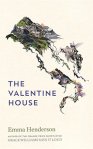 The Valentine House by Emma Henderson: This is a highly enjoyable family saga set mostly between 1914 and 1976 at an English clan’s summer chalet in the French Alps near Geneva, with events seen from the perspective of a local servant girl. You can really imagine yourself into all the mountain scenes and the book moves quickly –a great one to take on vacation.

The year’s runners-up and superlatives that I happen to have around in print.
Various Superlatives, Good and Bad:
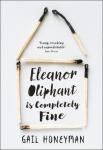 The 2017 Book Everybody Else Loved but I Didn’t: Eleanor Oliphant Is Completely Fine by Gail Honeyman. (See my Goodreads review for why.)
The Year’s Biggest Disappointments: All Grown Up by Jami Attenberg, Future Home of the Living God by Louise Erdrich, Between Them by Richard Ford and George and Lizzie by Nancy Pearl.
The Worst Book I Read This Year: Books by Charlie Hill (ironic, that). My only one-star review of the year.
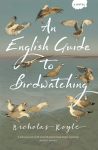 The Downright Strangest Book I Read This Year: An English Guide to Birdwatching by Nicholas Royle.
My Best Discoveries of the Year: Beryl Bainbridge, Saul Bellow, Bernard MacLaverty and Haruki Murakami. I’ve read two books by each of these authors this year and look forward to trying more from them.
The Debut Authors Whose Next Work I’m Most Looking Forward to: Lesley Nneka Arimah, Laura Kaye, Carmen Marcus, Julianne Pachico and Sally Rooney.
 The Best First Line of the Year: “History has failed us, but no matter.” (Pachinko, Min Jin Lee)
The Best Last Line of the Year: “If she was an instance of the goodness in this world then passing through by her side was miracle enough.” (Midwinter Break, Bernard MacLaverty)
Coming tomorrow: Some early recommendations for 2018.
Literary Blind Spots: Hemingway and Fitzgerald
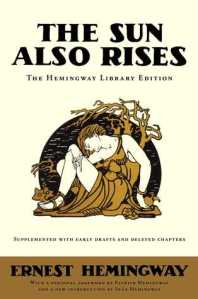 Despite being educated through university level in the United States, I’m better acquainted with British literature than American, in part due to my own predilections. Ernest Hemingway and F. Scott Fitzgerald are two of the American authors I’ve most struggled with. For one thing, their novels’ titles are interchangeable, abstract quotations that I can never keep straight. Which is which? The Sun Also Rises is the bullfighting one, right? And is A Farewell to Arms the other one I’ve read? Fitzgerald is an even worse offender as titles go, with The Great Gatsby the only one that actually refers to its contents.
 For the record, I recognize The Great Gatsby as a masterpiece, and I absolutely loved A Moveable Feast, Hemingway’s memoir of life in Paris. I also enjoy reading about the Hemingways (Paula McLain’s The Paris Wife and Naomi Wood’s Mrs. Hemingway) and the Fitzgeralds (Therese Anne Fowler’s Z: A Novel of Zelda Fitzgerald and R. Clifton Spargo’s Beautiful Fools). But when I’ve tried to go deeper into the authors’ work, it hasn’t been an unmitigated success. The above two Hemingway novels are just okay for me. The Sun Also Rises struck me as having a thin plot, two-dimensional characters and repetitious dialogue.
When I eagerly approached Tender Is the Night last year – having recently read a novel about the real-life couple who inspired Fitzgerald’s portrait of Dick and Nicole Diver, Gerald and Sara Murphy (Villa America by Liza Klaussmann) – I pulled out a lot of great individual lines but had trouble following the basic plot and only really enjoyed the early chapters of Book Two. Here are some of those pearls of prose:
The delight in Nicole’s face—to be a feather again instead of a plummet, to float and not to drag. She was a carnival to watch—at times primly coy, posing, grimacing and gesturing—sometimes the shadow fell and the dignity of old suffering flowed down into her finger tips.
somehow Dick and Nicole had become one and equal, not apposite and complementary; she was Dick too, the drought in the marrow of his bones. He could not watch her disintegrations without participating in them.
Well, you never knew exactly how much space you occupied in people’s lives.
women marry all their husbands’ talents and naturally, afterwards, are not so impressed with them as they may keep up the pretense of being.
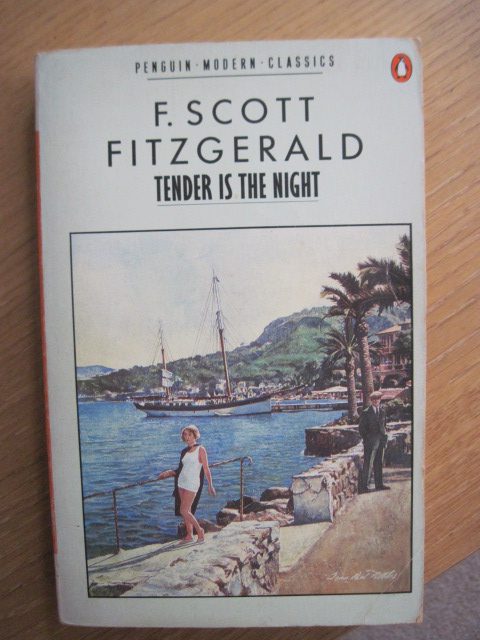
Imagine my surprise when I learned from a note at the end of my Penguin paperback that Fitzgerald made a major revision that rearranged the action into chronological order, thus opening with Book Two. That text, edited by Malcolm Cowley, appeared in 1951 and was printed by Penguin from 1955. However, the version I have – as reprinted from 1982 onwards – goes back to Fitzgerald’s first edition. Would I have had a more favorable reaction to the novel if I’d encountered it in its revised version? Somehow I think so.
Is there a Hemingway or Fitzgerald novel that will change my opinion about these literary lions? Share your favorites.
The Best Fiction of 2015: My Top 15
2015 was a great year for fiction, largely dominated by doorstoppers (like Death & Mr. Pickwick and City on Fire, in addition to the Franzen and Yanagihara listed below) and Harper Lee. I’ve decided to pass on Go Set a Watchman, but I’ve read plenty of the year’s big-name fiction, as well as some more obscure titles I’d like to bring to your attention.
As difficult as it is to pit books against each other and come up with a numbered list, I’ve given it a go and come up with my top 15 fiction works of the year. To keep it simple for myself and straightforward for potential readers, I’m limiting myself to two sentences per title: the first is a potted summary; the second tells you why you should read it. I also link to any full reviews.
Let the countdown begin!
- The Shore
 by Sara Taylor: Gritty and virtuosic, this debut novel-in-13-stories imagines 250 years of history on a set of islands. Every region needs a literary chronicler, and I reckon Taylor – channeling David Mitchell with her cross-centuries approach – is it for the Eastern Shore of Maryland and Virginia’s islands.
 Gold Fame Citrus by Claire Vaye Watkins: Gold, fame, citrus: reasons people once came to California; now, only a desperate remnant remains in the waterless wasteland. As a smart, believable dystopian with a family at its heart, this trumps any of last year’s efforts (like Station Eleven or California).
 Preparation for the Next Life by Atticus Lish: Like West Side Story, this debut novel is an updated Romeo and Juliet narrative – a tragedy-bound love story with a grimy contemporary setting and a sobering message about racism and the failure of the American dream. The matter-of-fact style somehow manages to elevate the everyday and urban into an art form. (Reviewed for Third Way magazine in August.)
- Circling the Sun
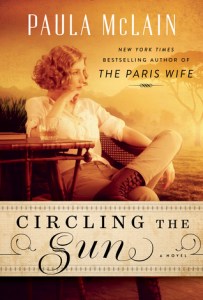 by Paula McLain: Before she ever thought of flying solo across the Atlantic, aviatrix Beryl Markham was just Beryl Clutterbuck: raised in Kenya, one of Africa’s first female horse trainers, its first professional female pilot, and the other side of the love triangle featuring Karen Blixen (Isak Dinesen) and Denys Finch Hatton. McLain describes her African settings beautifully, and focuses as much on the small emotional moments that make a life as she does on its external thrills.
 Kitchens of the Great Midwest by J. Ryan Stradal: One of my favorite debuts of the year: a culinary-themed collection of short stories loosely linked through the character of Eva Thorvald, a young chef with an unfortunate past and a rare palate. Read it for a glimpse of how ordinary, flawed Americans live – no fairytale endings here.
 Hausfrau by Jill Alexander Essbaum: This arresting debut reads like a modern retelling of Madame Bovary, with its main character a desperate American housewife in Zurich. Watch Anna’s trajectory with horror, but you cannot deny there is a little of her in you.
 The Versions of Us by Laura Barnett: In this impressively structured, elegantly written debut, Barnett chronicles the romantic lives of two Cambridge graduates through three-quarters of a century, giving three options for how their connection might play out. There is no one perfect person or story: unsentimental this may be, but it feels true to how life works. (Reviewed for Third Way magazine in July.)
 Fates and Furies by Lauren Groff: An incisive study of a marriage, beautifully written and rich with allusions to Shakespeare and Greek mythology. Groff makes it onto a short list of women I expect to produce the Great American Novel (along with Curtis Sittenfeld, Jennifer Egan, and Hanya Yanagihara).
 Purity by Jonathan Franzen: East Germany, Bolivia and Oakland, California: Franzen doesn’t quite pull all his settings and storylines together, but this is darn close to a 5-star Dickensian read. It’s strong on the level of character and theme, with secrecy, isolation and compassion as recurring topics.
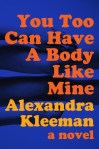 You Too Can Have a Body Like Mine by Alexandra Kleeman: Kleeman’s first novel is a full-on postmodern satire bursting with biting commentary on consumerism and conformity. Think of her as an heir to Dave Eggers and Douglas Coupland, with a hefty dollop of Margaret Atwood thrown in.
 The Animals by Christian Kiefer: Kiefer’s second novel contrasts wildness and civilization through the story of a man who runs an animal refuge to escape from his criminal past. A tough opening sequence establishes themes that will be essential to the novel: the fine line between instincts and decisions, the moral dilemmas involved in environmentalism, and the seeming inescapability of violence.
 The Tsar of Love and Techno by Anthony Marra: A collection of tightly linked short stories giving an intimate look at Russia and Chechnya in wartime and afterwards – revealing how politics, family, and art intertwine. Just as he did in his first novel, Marra renders unspeakable tragedies bearable through his warm and witty writing.
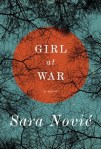 Girl at War by Sara Nović: This pitch-perfect debut novel is an inside look at the Yugoslavian Civil War and its aftermath, from the perspective of a young girl caught up in the fighting. The way Nović recreates a child’s perspective on the horrors of war is masterful: Ana’s viewpoint is realistic and matter-of-fact, without the melodrama an omniscient narrator might inject.
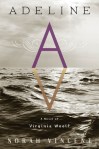 Adeline by Norah Vincent: Set in 1925–1941 and structured like a five-act play, the novel revolves around Virginia Woolf’s philosophical conversations with Leonard Woolf, Lytton Strachey and his lover Carrington, T.S. and Valerie Eliot, W.B. Yeats, and her doctor, Octavia Wilberforce. Vincent has produced a remarkable picture of mental illness from the inside.
- A Little Life
 by Hanya Yanagihara: Jude St. Francis: Dickensian orphan, patron saint of lost causes, Christlike Man of Sorrows, and one of the most memorable characters in recent fiction. This novel is an attempt to tackle the monolithic question of what makes life worth living; among the potential answers: love (though it doesn’t conquer all), friendship, creativity, and the family you create for yourself.
Best Discoveries of the Year: Mary Lawson (Road Ends), Daniel Kehlmann (F: A Novel), Jonathan Evison (This Is Your Life, Harriet Chance!) and Jonathan Coe (Number 11).
Debut Novelists Whose Next Work I’m Most Looking Forward to: Jessamyn Hope (Safekeeping – reviewed here in June) and Carmiel Banasky (The Suicide of Claire Bishop – reviewed for Foreword’s Fall 2015 issue).
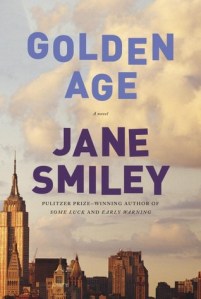 The Year’s Biggest Disappointments: Etta and Otto and Russell and James by Emma Hooper; Where My Heart Used to Beat by Sebastian Faulks and Avenue of Mysteries by John Irving (both rehash the authors’ familiar themes; I couldn’t make it past 15% in the latter).
Novels I Most Wish I’d Gotten to in 2015: Nell Zink’s Mislaid, Sara Baume’s Spill Simmer Falter Wither, and the final two volumes of Jane Smiley’s “Last Hundred Years” trilogy.
What are the best novels you read this year? Any new favorite books or authors? Your comments are always welcome.
I’ll be back tomorrow with my top 15 nonfiction books I read this year (most of them not published in 2015, however – I seem to have been a nonfiction slacker!)
 Bookish Beck = Rebecca Foster. American transplant to England. Freelance proofreader and book reviewer.
 Bookish Beck