Most Anticipated Books of 2026
Later than intended, but here we are. I’ve narrowed it down to the 25 books I’m most looking forward to in January–September, though no doubt I’ll have heard of many more unmissable titles before that time is up. My list is dominated by fiction, which I tend to find out about earlier. Also on my radar are novels by Sharon Bala, Freya Bromley, Mary Costello, Louise Kennedy, Ben Lerner, Paula McLain, Liz Nugent and Tom Perrotta; short stories by Jess Gibson (Margaret Atwood’s daughter); and nonfiction from Margaret Drabble, Cal Flyn, Siri Hustvedt and Anne Lamott.
In release date order, with UK publication info given first if available. The blurbs are adapted from Goodreads. I’ve taken the liberty of using whichever cover I prefer.
Fiction
 Departure(s) by Julian Barnes [20 Jan., Vintage (Penguin) / Knopf]: (Currently reading) I get more out of rereading Barnes’s classics than reading his latest stuff, but I’ll still attempt anything he publishes. He’s 80 and calls this his last book. So far, it’s heavily about memory. “Julian played matchmaker to Stephen and Jean, friends he met at university in the 1960s; as the third wheel, he was deeply invested in the success of their love”. Sounds way too similar to 1991’s Talking It Over, and the early pages have been tedious. (Review copy from publisher)
 Half His Age by Jennette McCurdy [20 Jan., Fourth Estate / Ballantine]: McCurdy’s memoir, I’m Glad My Mom Died, was stranger than fiction. I was so impressed by her recreation of her childhood perspective on her dysfunctional Mormon/hoarding/child-actor/cancer survivor family that I have no doubt she’ll do justice to this reverse-Lolita scenario about a 17-year-old who’s in love with her schlubby creative writing teacher. (Library copy on order)
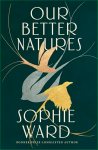 Our Better Natures by Sophie Ward [5 Feb., Corsair]: I loved Ward’s Booker-longlisted Love and Other Thought Experiments (though the follow-up, The Schoolhouse, was a letdown). “Amid the chaos and political upheaval of 1970s America, three very different women must accept the world as it is, or act to change it. Phyllis Patterson is a housewife in White Plains, Illinois. … Andrea Dworkin is an activist in Amsterdam. … Muriel Rukeyser is a poet in New York.” (Library copy on order)
 Brawler: Stories by Lauren Groff [Riverhead, Feb. 24]: (Currently reading) Controversial opinion: Short stories are where Groff really shines. Three-quarters in, this collection is just as impressive as Delicate Edible Birds or Florida. “Ranging from the 1950s to the present day and moving across age, class, and region (New England to Florida to California) these nine stories reflect and expand upon a shared the ceaseless battle between humans’ dark and light angels.” (For Shelf Awareness review) (Edelweiss download)
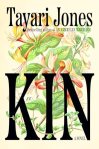 Kin by Tayari Jones [24 Feb., Oneworld / Knopf]: I’m a big fan of Leaving Atlanta and An American Marriage. This sounds like Brit Bennett meets Toni Morrison. “Vernice and Annie, two motherless daughters raised in Honeysuckle, Louisiana, have been best friends and neighbors since earliest childhood, but are fated to live starkly different lives. … A novel about mothers and daughters, about friendship and sisterhood, and the complexities of being a woman in the American South”. (Edelweiss download)
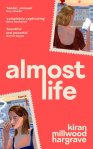 Almost Life by Kiran Millwood Hargrave [12 March, Picador / March 24, S&S/Summit Books]: There have often been queer undertones in Hargrave’s work, but this David Nicholls-esque plot sounds like her most overt. “Erica and Laure meet on the steps of the Sacré-Cœur in Paris, 1978. … The moment the two women meet the spark is undeniable. But their encounter turns into far more than a summer of love. It is the beginning of a relationship that will define their lives and every decision they have yet to make.” (Edelweiss download)
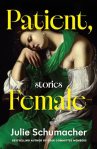 Patient, Female: Stories by Julie Schumacher [May 5, Milkweed Editions]: I found out about this via a webinar with Milkweed and a couple of other U.S. indie publishers. I loved Schumacher’s Dear Committee Members. “[T]his irreverent collection … balances sorrow against laughter. … Each protagonist—ranging from girlhood to senescence—receives her own indelible voice as she navigates social blunders, generational misunderstandings, and the absurdity of the human experience.” The publicist likened the tone to Meg Wolitzer.
 The Things We Never Say by Elizabeth Strout [7 May, Viking (Penguin) / May 5, Random House]: Hurrah for moving on from Lucy Barton at last! “Artie Dam is living a double life. He spends his days teaching history to eleventh graders … and, on weekends, takes his sailboat out on the beautiful Massachusetts Bay. … [O]ne day, Artie learns that life has been keeping a secret from him, one that threatens to upend his entire world. … [This] takes one man’s fears and loneliness and makes them universal.”
 Hunger and Thirst by Claire Fuller [7 May, Penguin / June 2, Tin House]: I’ve read everything of Fuller’s and hope this will reverse the worsening trend of her novels, though true crime is overdone. “1987: After a childhood trauma and years in and out of the care system, sixteen-year-old Ursula … is invited to join a squat at The Underwood. … Thirty-six years later, Ursula is a renowned, reclusive sculptor living under a pseudonym in London when her identity is exposed by true-crime documentary-maker.” (Edelweiss download)
 Little Vanities by Sarah Gilmartin [21 May, ONE (Pushkin)]: Gilmartin’s Service was great. “Dylan, Stevie and Ben have been inseparable since their days at Trinity, when everything seemed possible. … Two decades on, … Dylan, once a rugby star, is stranded on the sofa, cared for by his wife Rachel. Across town, Stevie and Ben’s relationship has settled into weary routine. Then, after countless auditions, Ben lands a role in Pinter’s Betrayal. As rehearsals unfold, the play’s shifting allegiances seep into reality, reviving old jealousies and awakening sudden longings.”
 Said the Dead by Doireann Ní Ghríofa [21 May, Faber / Sept. 22, Farrar, Straus and Giroux]: A Ghost in the Throat was brilliant and this sounds right up my street. “In the city of Cork, a derelict Victorian mental hospital is being converted into modern apartments. One passerby has always flinched as she passes the place. Had her birth occurred in another decade, she too might have lived within those walls. Now, … she finds herself drawn into an irresistible river of forgotten voices”.
 John of John by Douglas Stuart [21 May, Picador / May 5, Grove Press]: I DNFed Shuggie Bain and haven’t tried Stuart since, but the Outer Hebrides setting piqued my attention. “[W]ith little to show for his art school education, John-Calum Macleod takes the ferry back home to the island of Harris [and] begrudgingly resumes his old life, stuck between the two poles of his childhood: his father John, a sheep farmer, tweed weaver, and pillar of their local Presbyterian church, and his maternal grandmother Ella, a profanity-loving Glaswegian”. (For early Shelf Awareness review) (Edelweiss download)
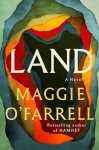 Land by Maggie O’Farrell [2 June, Tinder Press / Knopf]: I haven’t fully loved O’Farrell’s shift into historical fiction, but I’m still willing to give this a go. “On a windswept peninsula stretching out into the Atlantic, Tomás and his reluctant son, Liam [age 10], are working for the great Ordnance Survey project to map the whole of Ireland. The year is 1865, and in a country not long since ravaged and emptied by the Great Hunger, the task is not an easy one.” (Edelweiss download)
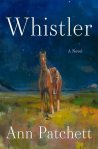 Whistler by Ann Patchett [2 June, Bloomsbury / Harper]: Patchett is hella reliable. “When Daphne Fuller and her husband Jonathan visit the Metropolitan Museum of Art, they notice an older, white-haired gentleman following them. The man turns out to be Eddie Triplett, her former stepfather, who had been married to her mother for a little more than year when Daphne was nine. … Meeting again, time falls away; … [in a story of] adults looking back over the choices they made, and the choices that were made for them.” (Edelweiss download)
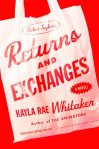 Returns and Exchanges by Kayla Rae Whitaker [2 June, Scribe / May 19, Random House]: Whitaker’s The Animators is one of my favourite novels that hardly anyone else has ever heard of. “A sweeping novel of one [discount department store-owning] Kentucky family’s rise and fall throughout the 1980s—a tragicomic tour de force about love and marriage, parents and [their four] children, and the perils of mixing family with business”. (Edelweiss download)
 The Great Wherever by Shannon Sanders [9 July, Viking (Penguin) / July 7, Henry Holt]: Sanders’s linked story collection Company left me keen to follow her career. Aubrey Lamb, 32, is “grieving the recent loss of her father and the end of a relationship.” She leaves Washington, DC for her Black family’s ancestral Tennessee farm. “But the land proves to be a burdensome inheritance … [and] the ghosts of her ancestors interject with their own exasperated, gossipy commentary on the flaws and foibles of relatives living and dead”. (Edelweiss download)
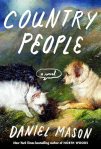 Country People by Daniel Mason [14 July, John Murray / July 7, Random House]: It doesn’t seem long enough since North Woods for there to be another Mason novel, but never mind. “Miles Krzelewski is … twelve years late with his PhD on Russian folktales … [W]hen his wife Kate accepts a visiting professorship at a prestigious college in the far away forests of Vermont, he decides that this will be his year to finally move forward with his life. … [A] luminous exploration of marriage and parenthood, the nature of belief and the power of stories, and the ways in which we find connection in an increasingly fragmented world.”
 It Will Come Back to You: Collected Stories by Sigrid Nunez [14 July, Virago / Riverhead]: Nunez is one of my favourite authors but I never knew she’d written short stories. The blurb reveals very little about them! “Carefully selected from three decades of work … Moving from the momentous to the mundane, Nunez maintains her irrepressible humor, bite, and insight, her expert balance between intimacy and universality, gravity and levity, all while entertainingly probing the philosophical questions we have come to expect, such as: How can we withstand the passage of time? Is memory the greatest fiction?” (Edelweiss download)
 Exit Party by Emily St. John Mandel [17 Sept., Picador / Sept. 15, Knopf]: The synopsis sounds a bit meh, but in my eyes Mandel can do no wrong. “2031. America is at war with itself, but for the first time in weeks there is some good news: the Republic of California has been declared, the curfew in Los Angeles is lifted, and everyone in the city is going to a party. Ari, newly released from prison, arrives with her friend Gloria … Years later, living a different life in Paris, Ari remains haunted by that night.”
The Housekeeper by Rose Tremain [17 Sept., Vintage (Penguin); no cover image yet]: “Set in 1930s England and fictionalises the inspiration behind Daphne du Maurier’s famous novel, Rebecca.” Strangely, this started life as a short story (in The American Lover), then become a screenplay authored by Tremain (the film is in production and stars Uma Thurman and Anthony Hopkins), and is now being expanded into a novel. Tremain is 82 and a survivor of major cancer; I do wonder if this is the last book we can expect from her.
Nonfiction
 Black Bear: A Story of Siblinghood and Survival by Trina Moyles [Jan. 6, Pegasus Books]: Out now! “When Trina Moyles was five years old, her father … brought home an orphaned black bear cub for a night before sending it to the Calgary Zoo. … After years of working for human rights organizations, Trina returned to northern Alberta for a job as a fire tower lookout, while [her brother] Brendan worked in the oil sands … Over four summers, Trina begins to move beyond fear and observe the extraordinary essence of the maligned black bear”. (For BookBrowse review) (Review e-copy)
 Moveable Feasts: A Story of Paris in Twenty Meals by Chris Newens [Feb. 3, Pegasus Books; came out in the UK in July 2025 but somehow I missed it!]: I’m a sucker for foodie books and Paris books. A “long-time resident of the historic slaughterhouse quartier Villette takes us on a delightful gastronomic journey around Paris … From Congolese catfish in the 18th to Middle Eastern falafels in the 4th, to the charcuterie served at the libertine nightclubs of Pigalle in the 9th, Newens lifts the lid on the city’s ever-changing, defining, and irresistible food culture.” (Edelweiss download)
 Frog: And Other Essays by Anne Fadiman [Feb. 10, Farrar, Straus and Giroux]: Fadiman publishes rarely, and it can be difficult to get hold of her books, but they are always worth it. “Ranging in subject matter from her deceased frog, to archaic printer technology, to the fraught relationship between Samuel Taylor Coleridge and his son Hartley, these essays unlock a whole world—one overflowing with mundanity and oddity—through sly observation and brilliant wit.”
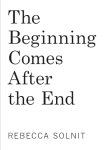 The Beginning Comes after the End: Notes on a World of Change by Rebecca Solnit [March 3, Haymarket Books]: A sequel to Hope in the Dark. Hope is a critically endangered species these days, but Solnit has her eyes open. “While the white nationalist and authoritarian backlash drives individualism and isolation, this new world embraces antiracism, feminism, a more expansive understanding of gender, environmental thinking, scientific breakthroughs, and Indigenous and non-Western ideas, pointing toward a more interconnected, relational world.” (Edelweiss download)
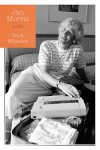 Jan Morris: A Life by Sara Wheeler [7 April, Faber / April 14, Harper]: I didn’t get on with the mammoth biography Paul Clements published in 2022 – it was dry and conventional; entirely unfitting for Morris – but hope for better things from a fellow female travel writer. “Wheeler uncovers the complexity of this twentieth-century icon … Drawing on unprecedented access to Morris’s papers as well as interviews with family, friends and colleagues, Wheeler assembles a captivating … story of longing, traveling and never reaching home.” (Edelweiss download)
Others’ lists whence a few of my ideas came!
What catches your eye here? What other 2026 titles do I need to know about?
Book Serendipity, November to December 2024
I call it “Book Serendipity” when two or more books that I read at the same time or in quick succession have something in common – the more bizarre, the better. This is a regular feature of mine every couple of months. Because I usually have 20–30 books on the go at once, I suppose I’m more prone to such incidents. People frequently ask how I remember all of these coincidences. The answer is: I jot them down on scraps of paper or input them immediately into a file on my PC desktop; otherwise, they would flit away! The following are in roughly chronological order.
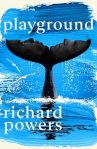
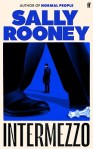
- Characters who were in a chess club and debating society in high school/college in Playground by Richard Powers and Intermezzo by Sally Rooney.
- Pondering the point of a memorial and a mention of hiring mourners in Immemorial by Lauren Markham and Basket of Deplorables by Tom Rachman.
- A mention of Rachel Carson, and her The Sea Around Us in particular, in Playground by Richard Powers, while I was also reading for review Rachel Carson and the Power of Queer Love by Lida Maxwell.
- A character pretends to be asleep when someone comes into the room to check on them in Knulp by Hermann Hesse and Rental House by Weike Wang.
- A mention of where a partner puts his pistachio shells in After the Rites and Sandwiches by Kathy Pimlott and Rental House by Weike Wang.
 A character who startles very easily (in the last two cases because of PTSD) in Life before Man by Margaret Atwood, A History of Sound by Ben Shattuck, and Disconnected by Eleanor Vincent.
- The husband is named Nate in Life before Man by Margaret Atwood and Rental House by Weike Wang.
- In People Collide by Isle McElroy, there’s a mention of Elizabeth reading “a popular feminist book about how men explained things to women.” The day I finished reading the novel, I started reading the book in question: Men Explain Things to Me by Rebecca Solnit.
- I learned about the “he’s-at-home” (19th-century dildo) being used by whalers’ wives on Nantucket while the husbands are away at sea through historical fiction – Daughters of Nantucket by Julie Gerstenblatt, which I read last year – and encountered the practice again through an artefact found in the present day in The History of Sound by Ben Shattuck. Awfully specific!
- A week after I finished reading Station Eleven by Emily St. John Mandel, it turned up in a discussion of Vancouver Island in Island by Julian Hanna.
- A Cape Cod setting in Sandwich by Catherine Newman (earlier in the year) plus The History of Sound by Ben Shattuck and Rental House by Weike Wang.
- A gay character references Mulder and Scully (of The X-Files) in the context of determining sexual preference, and there’s a female character named Kit, in The Old Haunts by Allan Radcliffe and one story of Show Don’t Tell by Curtis Sittenfeld.
- A mention of The Truman Show in the context of delusions in The Year of Living Biblically by A.J. Jacobs and You Don’t Have to Be Mad to Work Here by Benji Waterhouse.
- St. Lucia is mentioned in Beasts by Ingvild Bjerkeland, Brightly Shining by Ingvild Rishøi (two Norwegian authors named Ingvild there!), and Mudhouse Sabbath by Lauren Winner.
- A pet named Darwin: in Levels of Life by Julian Barnes it’s Sarah Bernhardt’s monkey; in Cold Kitchen by Caroline Eden it’s her beagle. Within days I met another pet beagle named Darwin in Island by Julian Hanna. (It took me a moment to realize why it’s a clever choice!)
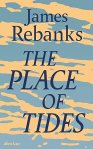
- A character named Henrik in The Place of Tides by James Rebanks and one story of Show Don’t Tell by Curtis Sittenfeld, and a Hendrik in The Safekeep by Yael van der Wouden.
- A hat with a green ribbon in The Safekeep by Yael van der Wouden and one story of Show Don’t Tell by Curtis Sittenfeld (in which it’s an emoji).
- Romanian neighbours who speak very good English in Island by Julian Hanna and Rental House by Weike Wang.
- A scene of returning to a house one used to live in in Hyper by Agri Ismaïl, The Old Haunts by Allan Radcliffe, and one story of Show Don’t Tell by Curtis Sittenfeld.
- A woman has had three abortions in The House of Dolls by Barbara Comyns and Without Exception by Pam Houston.
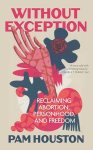
- Household items keep going missing and there’s broken china in The House of Dolls by Barbara Comyns and The Safekeep by Yael van der Wouden.
- Punctuated equilibrium (a term from evolutionary biology) is used as a metaphor in Hyper by Agri Ismaïl and Men Explain Things to Me by Rebecca Solnit.
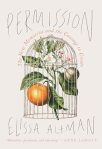 The author’s mother repeatedly asked her daughter a rhetorical question along the lines of “Do you know what I gave up to have you?” in Permission by Elissa Altman and Without Exception by Pam Houston.
- The author/character looks in the mirror at the end of a long day and hardly recognizes him/herself in The Place of Tides by James Rebanks, You Don’t Have to Be Mad to Work Here by Benji Waterhouse, and Amphibian by Tyler Wetherall.
- A man is afraid to hold his boyfriend’s hand in public in another country because he’s unsure about the cultural attitudes towards homosexuality in Clinical Intimacy by Ewan Gass and Small Rain by Garth Greenwell.
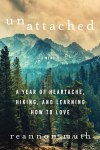
- The author’s mother is a therapist/psychologist and the author her/himself is undergoing some kind of mental health treatment in Unattached by Reannon Muth and You Don’t Have to Be Mad to Work Here by Benji Waterhouse.
- A man declares that dying in one’s mid-40s is nothing to complain about in A Beginner’s Guide to Dying by Simon Boas and Small Rain by Garth Greenwell.
- A woman ponders whether her ongoing anxiety is related to the stressful circumstances of her birth in Unattached by Reannon Muth and When the World Explodes by Amy Lee Scott.
What’s the weirdest reading coincidence you’ve had lately?
Hard-Hitting Nonfiction I Read for #NovNov24: Hammad, Horvilleur, Houston & Solnit
I often play it safe with my nonfiction reading, choosing books about known and loved topics or ones that I expect to comfort me or reinforce my own opinions rather than challenge me. I wasn’t sure if I could bear to read about Israel/Palestine, or sexual violence towards women, but these four works were all worthwhile – even if they provoked many an involuntary gasp of horror (and mild expletives).
Recognising the Stranger: On Palestine and Narrative by Isabella Hammad (2024)
 This is the text of the Edward W. Said Memorial Lecture that Hammad delivered at Columbia University on September 28, 2023. She posits that, in a time of crisis, storytelling can be a way of finding things out. Characters’ epiphanies, from Oedipus onward, see them encountering an Other but learning something about themselves in the process. In turning her great-grandfather’s life into her first novel, The Parisian, Hammad knew she had to avoid the pitfalls of nostalgia and unreliable memory. Fiction is always subjective, a matter of perspectives, and history is too. Sometimes the turning points will only be understood retrospectively.
Edward Said (1935–2003) was a Palestinian American academic and theorist who helped found the field of postcolonial studies. Hammad writes that, for him, being Palestinian was “a condition of chronic exile.” She takes his humanist ideology as a model of how to “dismantle the consoling fictions of fixed identity, which make it easier to herd into groups.” About half of the lecture is devoted to the Israel/Palestine situation. She recalls meeting an Israeli army deserter a decade ago who told her how a naked Palestinian man holding the photograph of a child had approached his Gaza checkpoint; instead of shooting the man in the leg as ordered, he fled. It shouldn’t take such epiphanies to get Israelis to recognize Palestinians as human, but Hammad acknowledges the challenge in a “militarized society” of “state propaganda.”
This was, for me, more appealing than Hammad’s Enter Ghost. Though the essay might be better aloud as originally intended, I found it fluent and convincing. It was, however, destined to date quickly. Less than two weeks later, on October 7, there was a horrific Hamas attack on Israel (see Horvilleur, below). The print version of the lecture includes an afterword written in the wake of the destruction of Gaza. Hammad does not address October 7 directly, which seems fair (Hamas ≠ Palestine). Her language is emotive and forceful. She refers to “settler colonialism and ethnic cleansing” and rejects the argument that it is a question of self-defence for Israel – that would require “a fight between two equal sides,” which this absolutely is not. Rather, it is an example of genocide, supported by other powerful nations.
The present onslaught leaves no space for mourning
To remain human at this juncture is to remain in agony
It will be easy to say, in hindsight, what a terrible thing
The Israeli government would like to destroy Palestine, but they are mistaken if they think this is really possible … they can never complete the process, because they cannot kill us all.
(Read via Edelweiss) [84 pages] 
How Isn’t It Going? Conversations after October 7 by Delphine Horvilleur (2025)
[Translated from the French by Lisa Appignanesi]
 Horvilleur is one of just five female rabbis in France and is the leader of the country’s Liberal Jewish Movement. Earlier this year, I reviewed her essay collection Living with Our Dead, about attitudes toward death as illustrated by her family history, Jewish traditions and teachings, and funerals she has conducted. It is important to note that she expresses sorrow for Palestinians’ situation and mentions that she has always favoured a two-state solution. Moreover, she echoes Hammad with her final line, which hopes for “a future for those who think of the other, for those who engage in dialogue one with another, and with the humanity within them.” However, this is a lament for the Jewish condition, and a warning of the continuing and insidious nature of antisemitism. Who am I to judge her lived experience and say, “she’s being paranoid” or “it’s not really like that”? My job as reader is simply to listen.
There is by turns a stream of consciousness or folktale quality to the narrative as Horvilleur enacts 11 dialogues – some real and others imagined – with her late grandparents, her children, or even abstractions (“Conversation with My Pain,” “Conversation with the Messiah”). She draws on history, scripture and her own life, wrestling with the kinds of thoughts that come to her during insomniac early mornings. It’s not all mourning; there is sometimes a wry sense of humour that feels very Jewish. While it was harder for me to relate to the point of view here, I admired the author for writing from her own ache and tracing the repeated themes of exile and persecution. It felt important to respect and engage. [125 pages] 
With thanks to Europa Editions for the advanced e-copy for review.
Without Exception: Reclaiming Abortion, Personhood, and Freedom by Pam Houston (2024)
 If you’re going to read a polemic, make sure it’s as elegantly written and expertly argued as this one. Houston responds to the overturning of Roe v. Wade with 60 micro-essays – one for each full year of her life – about what it means to be in a female body in a country that seeks to control and systematically devalue women. Roe was in force for 49 years, corresponding almost exactly to her reproductive years. She had three abortions and believes “childlessness might turn out to be the single greatest gift of my life.” Facts could serve as explanations: her grandmother died giving birth to her mother; her mother always said having her ruined her life; she was raped by her father from early childhood until she left home as a young adult; she is gender-fluid; she loves her life of adventure travel, spontaneity and chosen solitude; she adores the natural world and sees how overpopulation threatens it. But none are presented as causes or excuses. Houston is committed to nuance, recognizing individuality of circumstance and the primacy of choice.
Many of the book’s vignettes are autobiographical, but others recount statistics, track American cultural and political shifts, and reprint excerpts from the 2022 joint dissent issued by the Supreme Court. The cycling of topics makes for an exquisite structure. Houston has done extensive research on abortion law and health care for women. A majority of Americans actually support abortion’s legality, and some states have fought back by protecting abortion rights through referenda. (I voted for Maryland’s. I’ve come a long way since my Evangelical, vociferously pro-life high school and college days.) I just love Houston’s work. There are far too many good lines here to quote. She is among my top recommendations of treasured authors you might not know. I’ve read her memoir Deep Creek and her short story collections Cowboys Are My Weakness and Waltzing the Cat, and I’m already sad that I only have four more books to discover. (Read via Edelweiss) [170 pages] 
Men Explain Things to Me by Rebecca Solnit (2014)
 Solnit did not coin the term “mansplaining,” but it was created not long after the title essay’s publication in 2008 and was definitely inspired by her depiction of a male know-it-all. She was at a party in Aspen in 2003 when a man decided to tell her all about an important new book he’d heard of about Eadweard Muybridge. A friend had to interrupt him and say, “That’s her book.” A funny story, yes, but illustrative of a certain male arrogance that encourages a woman’s “belief in her superfluity, an invitation to silence” and imagines her “in some sort of obscene impregnation metaphor, an empty vessel to be filled with their wisdom and knowledge.”
This segues perfectly into “The Longest War,” about sexual violence against women, including rape and domestic violence. As in the Houston, there are some absolutely appalling statistics here. Yes, she acknowledges, it’s not all men, and men can be feminist allies, but there is a problem with masculinity when nearly all domestic violence and mass shootings are committed by men. There is a short essay on gay marriage and one (slightly out of place?) about Virginia Woolf’s mental health. The other five repeat some of the same messages about rape culture and believing women, so it is not a wholly classic collection for me, but the first two essays are stunners. (University library) [154 pages]
Have you read any of these authors? Or something else on these topics?
20 Books of Summer, 14–16: Barba, Bersweden and Solnit
I’m all about flowers today: American wildflowers in poetry and prose, a year of hunting down the flora of the British Isles, and a discursive account of a famous English author’s life and times through the prism of his rose garden.
American Wildflowers: A Literary Field Guide, ed. Susan Barba; illus. Leanne Shapton (2022)
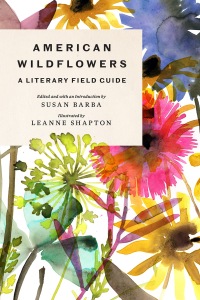 This comes out from Abrams Press in the USA on 8 November and I’ll be reviewing it for Shelf Awareness, so I’ll just give a few brief thoughts for now. Barba is a poet and senior editor for New York Review Books. She has collected pieces from a wide range of American literature, including essays, letters and early travel writings as well as poetry, which dominates.
Apart from a closing section on various/anonymous wildflowers, where particular species are named they are grouped into families, which are arranged alphabetically. The Asteraceae section is particularly strong, with poems on dandelions and sunflowers, a typically prophetic Aldo Leopold fragment about the decline of native flora, and “Asters and Goldenrod,” an extract from Robin Wall Kimmerer’s Braiding Sweetgrass (itself one of my 20 Books of Summer – review to come in the week) that I think was also excerpted in This Book Is a Plant.
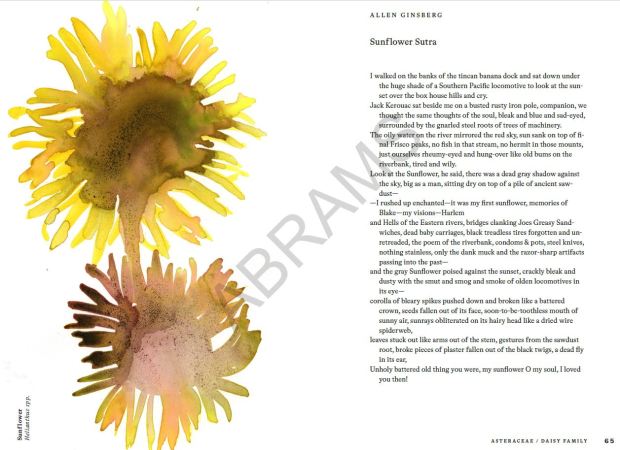
Sample two-page spread with a Leanne Shapton watercolor and part of an Allen Ginsberg poem.
In general, I engaged more with the poetry than with the prose. Barba has ensured a real variety of styles, with good representation for BIPOC. What draws it all together into a beautiful whole I wish I could see as a physical object is Leanne Shapton’s watercolor illustrations, painted from pressed flowers. “What a gift to stare at flowers—these ephemeral miracles of color and synthesis and botany,” she writes in an opening note. This would be a perfect coffee table book for any gardener or nature lover. (E-review copy)
Where the Wildflowers Grow: My Botanical Journey through Britain and Ireland by Leif Bersweden (2022)
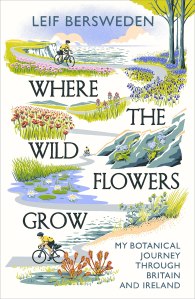 A good case of nominative determinism – the author’s name is pronounced “leaf” – and fun connections abound: during the course of his year-long odyssey, he spends time plant-hunting with Jon Dunn and Sophie Pavelle, whose books featured earlier in my flora-themed summer reading: Orchid Summer and Forget Me Not. With Dunn on Unst, Shetland, he sees not only rare flowers but close-up orcas. Like Pavelle, who he meets up with in Cornwall, he has an eye to how species will be affected by climate change and commits to doing his hunting by train and bike; there’s only so much you can see when zooming by in a car. Bersweden makes a case for spending time with plants – after all, they don’t move, so once you’ve found them you can commune in a way you can’t during, say, a fleeting mammal encounter.
He starts 2021 with a New Year Plant Hunt in central London with his mother – more is in bloom in January than ever before, at least in part due to climate warming. Even when the weather is foul on his travels, there is plenty to be seen. Everywhere he goes, he meets up with fellow experts and plant enthusiasts to marvel at bluebell woodlands or ancient pine forests, alpine or bog species. The floral circuit (documented in full on the book’s website through chapter-by-chapter photographs; there are two small sections of colour plates in the hardback) is also a chance to tour the British Isles, from Kent to Cork, coast to mountaintop.
Bersweden has been in love with plants ever since childhood; he believes they have nostalgia value for many people, and can be an easy way into appreciation of nature. “A wildflower growing from a crack in the wall is an everyday miracle.” His casual writing style and clear zeal for his subject – his author photo is of him hugging a tree, and another has such a cute caption: “Being given the opportunity to hold a Greater Bladderwort (Utricularia vulgaris) was one of the best things that’s ever happened to me!” – make this a pleasure even though it’s a bit overlong at points. (Public library)
Orwell’s Roses by Rebecca Solnit (2021)
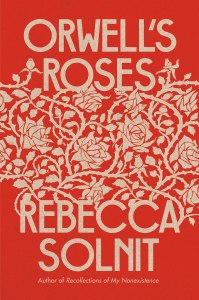 I was fascinated by the concept behind this one. “In the spring of 1936 a writer planted roses” is Solnit’s refrain; from there sprawls a book that’s somehow about everything: botany, geology, history, politics and war – as well as, of course, George Orwell’s life and works (with significant overlap with the graphic novel biography of him that I read last year). On a trip to England with a friend who is a documentary filmmaker, Solnit had the impulse to go find what might be left of Orwell’s garden. When she arrived in the Hertfordshire village of Wallington, the current owners of his home kindly showed her round. His fruit trees had long since been cut down, but the rosebushes were still going strong some 80 years later.
This goes down as a skim for me: though I read the first 30%, after that I just browsed to the end. Some side tracks lost me, e.g. Tina Modotti’s presentation of roses in her photographs; Orwell’s interest in mining, which leads Solnit to investigate how coal is formed; much history; and a week spent observing the rose-growing industry in Colombia. I most enjoyed the book when it stayed close to Orwell’s biography and writings, positing gardening as his way of grounding his ideas in the domestic and practical. “Pursuits like that can bring you back to earth from the ether and the abstractions.” I also liked – briefly, at least – thinking about the metaphorical associations of roses, and flowers in general.
If you’ve read Solnit before, you’ll know that her prose is exquisite, but I think this was the stuff of a long article rather than a full book. As it is, it’s a pretty indulgent project. (Kaggsy reviewed this recently and came to somewhat similar conclusions.) (NetGalley)
Book Serendipity, May to Mid-August 2022
This is a regular feature of mine every few months. I call it “Book Serendipity” when two or more books that I read at the same time or in quick succession have something in common – the more bizarre, the better. Because I usually have 20–30 books on the go at once, I suppose I’m more prone to such incidents. The following are in roughly chronological order.
- Not only did the opening scene of All Down Darkness Wide by Seán Hewitt share with Falling Angels by Tracy Chevalier a graveyard setting, but more specifically an angel statue whose head falls off.

- SPOILER: {The protagonist has a backstory of a mother who drowned, presumably by suicide, in Secrets of the Sea House by Elisabeth Gifford and The Dance Tree by Kiran Millwood Hargrave.}
- I started reading two e-books on the same day that had Taylor Swift lyrics as an epigraph: Bad Vibes Only by Nora McInerny and Tracy Flick Can’t Win by Tom Perrotta. I have never knowingly heard a Taylor Swift song.
- Rescuing insects from a swimming pool in Fledgling by Hannah Bourne-Taylor and In the Quaker Hotel by Helen Tookey.
- Reading two feminist works of historical fiction in which the protagonist refuses to marry (even though it’s true love) at the same time: Lessons in Chemistry by Bonnie Garmus and Madwoman by Louisa Treger (about Nellie Bly).
- Two London-set books featuring a daughter named Mabel, one right after the other: This Is Not a Pity Memoir by Abi Morgan and Bridget Jones: Mad about the Boy by Helen Fielding.
- In Jenn Shapland’s My Autobiography of Carson McCullers I came across the fact that McCullers married the same man twice. Just a few days before, I’d seen that same odd fact about Hilary Mantel in her Wikipedia bio.
- A character named Clodagh in Black Narcissus by Rumer Godden and “Rainbows” by Joseph O’Neill, one of the entries in The Best Short Stories 2022: The O. Henry Prize Winners.
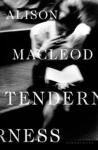
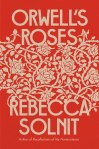
- Reading two books about an English author who died young of TB at the same time: Tenderness by Alison MacLeod (about D.H. Lawrence) and Orwell’s Roses by Rebecca Solnit.
- Reading two novels that mention the shipwreck of the Batavia at the same time: The Night Ship by Jess Kidd (where it’s a major element) and Cloudstreet by Tim Winton (just a tiny reference that nonetheless took me aback). According to Wikipedia, “Batavia was a ship of the Dutch East India Company. Built in Amsterdam in 1628 as the company’s new flagship, she sailed that year on her maiden voyage for Batavia, capital of the Dutch East Indies. On 4 June 1629, Batavia was wrecked on the Houtman Abrolhos, a chain of small islands off the western coast of Australia.”
- David Lack’s Swifts in a Tower is mentioned in Swifts and Us by Sarah Gibson (no surprise there) but also in From the Hedgerows by Lew Lewis.
- There’s a child nicknamed Chub in Damnation Spring by Ash Davidson and Cloudstreet by Tim Winton (which both also at least started off being buddy reads with Marcie of Buried in Print!).
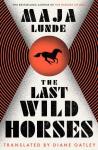
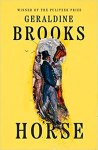
- Two novels in quick succession in which the discovery of a horse skeleton sparks the action in one story line: The Last Wild Horses by Maja Lunde and (coming up soon – I have a library reservation placed) Horse by Geraldine Brooks.
- Unst, Shetland as a setting in Orchid Summer by Jon Dunn, Sightlines by Kathleen Jamie, Julia and the Shark by Kiran Millwood Hargrave, and Where the Wildflowers Grow by Leif Bersweden.
- “Quiet as it’s kept” (a quote from the opening line of Toni Morrison’s The Bluest Eye) is borrowed in a poem in No Country for Eight-Spot Butterflies by Julian Aguon and one in the anthology American Wildflowers: A Literary Field Guide, ed. Susan Barba (“A Siren Patch of Indigo” by Cyrus Cassells).
- I didn’t recognize the word “swingeing” in The Reindeer Hunters by Lars Mytting and encountered it again the same day in Brief Lives by Anita Brookner before I had a chance to look it up (it means extreme or severe).
- A 1950s setting and a main character who is a man with missing fingers/arm in Cloudstreet by Tim Winton and The Young Accomplice by Benjamin Wood.
What’s the weirdest reading coincidence you’ve had lately?
10 Favorite Nonfiction Novellas from My Shelves
What do I mean by a nonfiction novella? I’m not claiming a new genre like Truman Capote did for the nonfiction novel (so unless they’re talking about In Cold Blood or something very similar, yes, I can and do judge people who refer to a memoir as a “nonfiction novel”!); I’m referring literally to any works of nonfiction shorter than 200 pages. Many of my selections even come well under 100 pages.
I’m kicking off this nonfiction-focused week of Novellas in November with a rundown of 10 of my favorite short nonfiction works. Maybe you’ll find inspiration by seeing the wide range of subjects covered here: bereavement, social and racial justice, hospitality, cancer, nature, politics, poverty, food and mountaineering. I’d reviewed all but one of them on the blog, half of them as part of Novellas in November in various years.
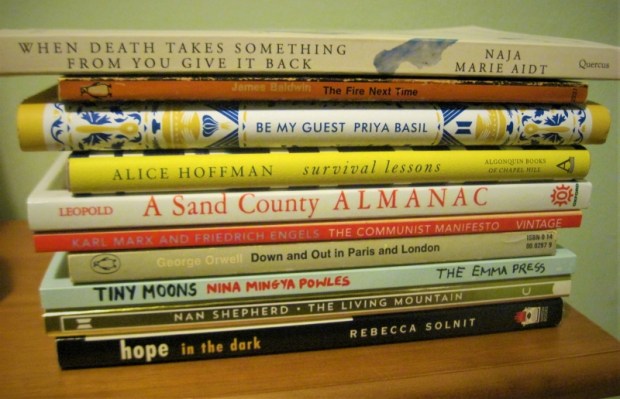
 When Death Takes Something from You Give It Back: Carl’s Book by Naja Marie Aidt [137 pages]: In March 2015 Aidt got word that her son Carl Emil was dead. The 25-year-old jumped out of his fifth-floor Copenhagen window after taking some mushrooms. The text is a collage of fragments: memories, dreams, dictionary definitions, journal entries, and quotations. The playful disregard for chronology and the variety of fonts, typefaces and sizes are a way of circumventing the feeling that grief has made words lose their meaning forever.
 The Fire Next Time by James Baldwin [89 pages]: A hard-hitting book composed of two essays: “My Dungeon Shook,” is a letter addressed to his nephew and namesake on the 100th anniversary of emancipation; and “Down at the Cross: Letter from a Region in My Mind,” which first appeared in the New Yorker and tells of a crisis of faith that hit Baldwin when he was a teenager and started to question to what extent Christianity of all stripes was upholding white privilege. This feels completely relevant, and eminently quotable, nearly 60 years later.
 Be My Guest: Reflections on Food, Community and the Meaning of Generosity by Priya Basil [117 pages]: A thought-provoking essay that reaches into many different topics. Part of an Indian family that has lived in Kenya and England, Basil is used to culinary abundance. However, living in Berlin increased her awareness of the suffering of the Other – hundreds of thousands of refugees have entered the EU to be met with hostility. Yet the Sikh tradition she grew up in teaches kindness to strangers. She asks how we can all cultivate a spirit of generosity.
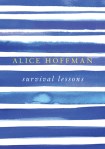 Survival Lessons by Alice Hoffman [83 pages]: Hoffman wrote this 15 years after her own experience of breast cancer to encourage anyone going through a crisis. Each chapter title begins with the word “Choose” – a reminder that, even when you can’t choose your circumstances, you can choose your response. This has been beautifully put together with blue-tinted watercolor-effect photographs and an overall yellow and blue theme (along with deckle edge pages – a personal favorite book trait). It’s a sweet little memoir with a self-help note.
 A Sand County Almanac by Aldo Leopold [92 pages]: Few know how much of our current philosophy of wilderness and the human impact on the world is indebted to Aldo Leopold. This was published in 1949, but so much rings true today: how we only appreciate wildlife if we can put an economic value on it, the troubles we get into when we eradicate predators and let prey animals run rampant, and the danger of being disconnected from the land that supplies our very life. And all this he delivers in stunning, incisive prose.
 The Communist Manifesto by Karl Marx and Friedrich Engels [70 pages]: Maybe you, like me, had always assumed this was an impenetrable tome of hundreds of pages? But, as I discovered when I read it on the train to Manchester some years ago, it’s very compact. That’s not to say it’s an easy read; I’ve never been politically or economically minded, so I struggled to follow the argument at times. Mostly what I appreciated was the language. Like The Origin of Species, it has many familiar lines and wonderful metaphors.
 Down and Out in Paris and London by George Orwell [189 pages]: Orwell’s first book, published when he was 30, is an excellent first-hand account of the working and living conditions of the poor in two world cities. He works as a dishwasher and waiter in Paris hotel restaurants for up to 80 hours a week and has to pawn his clothes to scrape together enough money to ward off starvation. Even as he’s conveying the harsh reality of exhaustion and indignity, Orwell takes a Dickensian delight in people and their eccentricities.
 Tiny Moons: A Year of Eating in Shanghai by Nina Mingya Powles [85 pages]: This lovely pamphlet of food-themed essays arose from a blog Powles kept while in Shanghai on a one-year scholarship to learn Mandarin. From one winter to another, she explores the city’s culinary offerings and muses on the ways in which food is bound up with her memories of people and places. This is about how food can help you be at home. I loved how she used the senses – not just taste, but also smell and sight – to recreate important places in her life.
 The Living Mountain by Nan Shepherd [108 pages]: This is something of a lost nature classic. Composed during the later years of World War II but only published in 1977, it’s Shepherd’s tribute to her beloved Cairngorms, a mountain region of Scotland. But it’s not a travel or nature book in the way you might usually think of those genres. It’s a subtle, meditative, even mystical look at the forces of nature, which are majestic but also menacing. Shepherd dwells on the senses, the mountain flora and fauna, and the special quality of time and existence (what we’d today call mindfulness) achieved in a place of natural splendor and solitude.
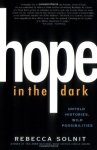 Hope in the Dark: Untold Histories, Wild Possibilities by Rebecca Solnit [143 pages]: Solnit believes in the power of purposeful individuals working towards social justice, even in the face of dispiriting evidence (e.g. the largest protests the world had seen didn’t stop the Iraq War). Instead of perfectionism, she advises flexibility and resilience; things could be even worse had we not acted. Her strong and stirring writing is a reminder that, though injustice is always with us, so is everyday heroism.
Keep in touch via Twitter (@bookishbeck / @cathy746books) and Instagram (@bookishbeck / @cathy_746books). We’ll add any of your review links in to our master posts. Feel free to use the terrific feature image Cathy made and don’t forget the hashtag #NovNov.

Any suitably short nonfiction on your shelves?
Pandemic Reading Strategies & Recommendations, Serious or Tongue-in-Cheek
If you’ve been spending time blog-hopping or on Twitter over the last few weeks, you will have seen countless riffs on this topic. Everyone’s pondering what’s best to read in these times. All we can get our hands on about plagues (Boccaccio, Camus, Defoe)? Allegories of similarly challenging worldwide disasters (WWII, 9/11)? Childhood favorites? Comfort reads? Funny books? Light, undemanding stuff? Rereads?
My general answer would be: as always, read whatever you want or can – anything that captures your attention is worthwhile. We’re under so much stress that our reading should be entirely unpressured. But to be a little more specific, I’ve gathered reading recommendations on a variety of topics, drawing on lists that others have made and linking to my own blog reviews where applicable.
(Some of these ideas are less serious than others.)
If you are brave enough to learn about zoonotic diseases:
 Spillover: Animal Infections and the Next Human Pandemic by David Quammen: This is top-notch scientific journalism: pacey, well-structured, and gripping. The best chapters are on Ebola and SARS; the SARS chapter, in particular, reads like a film screenplay, if this were a far superior version of Contagion. It’s a sobering subject, with some quite alarming anecdotes and statistics, but this is not scare-mongering for the sake of it; Quammen is frank about the fact that we’re still all more likely to get heart disease or be in a fatal car crash.
If you can’t look away from pandemic stories, historical or imagined:


I already had Philip Roth’s Nemesis (set in 1940s New Jersey amid a polio epidemic) out from the library because it was on the Wellcome Book Prize shortlist in 2011. I was also inspired to take Year of Wonders by Geraldine Brooks (set in the 1660s and featuring an English village that quarantined itself during the Plague) off the shelf. I’m nearing the end of these two and should have my reviews up next week.
You will see no one book referenced more than Station Eleven by Emily St. John Mandel. It’s a wholly believable dystopian novel in which 99% of the population has been wiped out by a pandemic. The remnant bands together not just to survive but to create and preserve art. “What was lost in the collapse: almost everything, almost everyone, but there is still such beauty.” (My full BookBrowse review from December 2014.)
See also this Publishers Weekly list of “13 Essential Pandemic Novels.”
If you’re feeling cooped up…
 Infinite Home by Kathleen Alcott: “Edith is a widowed landlady who rents apartments in her Brooklyn brownstone to an unlikely collection of humans, all deeply in need of shelter.” (I haven’t read it, but I do have a copy; now would seem like the time to read it!)
…yet want to appreciate the home you’re stuck in:


Years ago I read and loved At Home: A Short History of Private Life by Bill Bryson and Happier at Home by Gretchen Rubin. I can’t tell you anything more than that because it was before the days when I reviewed everything I read, but these are both reliable authors.
 I love the sound of A Journey Around My Room by Xavier de Maistre: “Finding himself locked in his room for six weeks, a young officer journeys around his room in his imagination, using the various objects it contains as inspiration for a delightful parody of contemporary travel writing and an exercise in Sternean picaresque.”
I’m also drawn to Home: The Story of Everyone Who Ever Lived in Our House by Julie Myerson, who combed archives for traces of all the former residents of her 1870s terraced house in Clapham.
If you’re struggling with being on your own:


The Lonely City by Olivia Laing: This remarkable book on outsider artists interweaves biography, art criticism and memoir. Laing is a tour guide into the peculiar, lonely crowdedness you find in a world city.
How to Be Alone by Sara Maitland: Maitland argues that although being alone is easy to achieve, there is an art to doing it properly, and solitude and loneliness are by no means the same thing. Profiling everyone from the Desert Fathers of early Christianity to the Romantic poets, she enumerates all the benefits that solitude confers.
Journal of a Solitude by May Sarton: A one-year account of her writing life in New Hampshire, this is Sarton’s best. The book dwells on the seasonal patterns of the natural world (shovelling snow, gardening, caring for animals) but also the rhythms of the soul – rising in hope but also falling into occasional, inevitable despair.
See also this Penguin UK list of books to read in self-isolation.
If you’ve been passing the time by baking…
 The City Baker’s Guide to Country Living by Louise Miller: As chief baker at the Sugar Maple Inn in Guthrie, Vermon, Olivia Rawlings settles into a daily routine of baking muffins, bread and cakes. This is a warm, cozy debut novel full of well-drawn secondary characters and romantic possibilities. There’s nothing clichéd about it, though. Livvy is a sassy narrator, and I loved how Miller documents the rhythms of the small-town country year, including tapping the maple trees in the early spring and a pie baking contest at the summer county fair.
 Sourdough by Robin Sloan: Lois Clary, a Bay Area robot programmer, becomes obsessed with baking. “I needed a more interesting life. I could start by learning something. I could start with the starter.” She attempts to link her job and her hobby by teaching a robot arm to knead the bread she makes for a farmer’s market. Madcap adventures ensue. It’s a funny and original novel and it makes you think, too – particularly about the extent to which we should allow technology to take over our food production.
…but can’t find yeast or eggs in the shop:
Yeast: A Problem by Charles Kingsley (1851). Nope, I haven’t read it, but our friend has a copy in his Everyman’s Library collection and the title makes us laugh every time we see it.
 The Egg & I by Betty Macdonald: MacDonald and her husband started a rural Washington State chicken farm in the 1940s. Her account of her failure to become the perfect farm wife is hilarious. The voice reminded me of Doreen Tovey’s: mild exasperation at the drama caused by household animals, neighbors, and inanimate objects. “I really tried to like chickens. But I couldn’t get close to the hen either physically or spiritually, and by the end of the second spring I hated everything about the chicken but the egg.” Perfect pre-Easter reading.
And here are a few lists I put together for Hungerford Bookshop:
If you need a laugh:
Fiction:
Lucky Jim by Kingsley Amis
The Darling Buds of May (and sequels) by H.E. Bates
Ella Minnow Pea by Mark Dunn
Heartburn by Nora Ephron
 Cold Comfort Farm by Stella Gibbons
Anything by Nick Hornby
Three Men in a Boat by Jerome K. Jerome
Anything by David Lodge
Dear Committee Members by Julie Schumacher
The Rosie Project (and sequels) by Graeme Simsion
To Say Nothing of the Dog by Connie Willis
Nonfiction:
 Anything by Bill Bryson
21st-Century Yokel by Tom Cox
Anything by Gerald Durrell
Anything by Nora Ephron (essays)
This Is Going to Hurt by Adam Kay
Priestdaddy by Patricia Lockwood
Dear Lupin by Roger Mortimer
Anything by David Sedaris
Little Failure by Gary Shteyngart
If you want to disappear into a long book:


The Heart’s Invisible Furies by John Boyne
Jonathan Strange & Mr Norrell by Susanna Clarke
David Copperfield by Charles Dickens
Middlesex by Jeffrey Eugenides
The Crimson Petal and the White by Michel Faber
The Signature of All Things by Elizabeth Gilbert
The Nix by Nathan Hill
We, the Drowned by Carsten Jensen
Mary Ann Sate, Imbecile by Alice Jolly
The Poisonwood Bible by Barbara Kingsolver
The Wind-Up Bird Chronicle by Haruki Murakami
The Sparrow by Mary Doria Russell
American Wife by Curtis Sittenfeld
East of Eden by John Steinbeck
The Goldfinch by Donna Tartt
Cutting for Stone by Abraham Verghese
The Paying Guests by Sarah Waters
If you’re looking for some hope:
Almost Everything: Notes on Hope by Anne Lamott
Hope in the Dark by Rebecca Solnit
Hope Dies Last: Making a Difference in an Indifferent World by Studs Terkel
I’ve been doing a combination of the above strategies, reading about historical plagues in fiction and nonfiction but also doing some rereading and consuming lighter genre stuff like mysteries. I continue to dip into new releases, and I enjoy the ongoing challenge of my reading projects. Right now, I’m working through a few current Women’s Prize longlistees, as well as some past Wellcome Book Prize nominees and Women’s Prize winners, and I’m about to start a third #1920Club title. Plus I’m already thinking about my 20 Books of Summer (I’m considering an all-foodie theme).
Further reading:
- Book Riot pinpoints seven categories of books to read during a pandemic.
- Clare surveys the post-pandemic literary landscape.
- Elle logs her pandemic reading and viewing.
- Laura discusses pandemic reading strategies and distraction reading.
- Literary Hub looks at parallel situations, including post-9/11 reads, to make predictions, and asks what your “go-to quarantine read” says about you. (I’ve read Kindred most recently, but I wouldn’t say that describes me.)
- Simon thinks about what we can and should read.
- Susan highlights some comfort reads.
What are your current reading strategies?
Novellas in November, Part 1: 3 Nonfiction, 2 Super-Short Fiction
Short books; short reviews.
Nonfiction:
The Measure of My Days by Florida Scott-Maxwell (1968)
[150 pages]
 I learned about this from one of May Sarton’s journals, which shares its concern with ageing and selfhood. The author was an American suffragist, playwright, mother and analytical psychologist who trained under Jung and lived in England and Scotland with her Scottish husband. She kept this notebook while she was 82, partly while recovering from gallbladder surgery. It’s written in short, sometimes aphoristic paragraphs. While I appreciated her thoughts on suffering, developing “hardihood,” the simplicity that comes with giving up many cares and activities, and the impossibility of solving “one’s own incorrigibility,” I found this somewhat rambly and abstract, especially when she goes off on a dated tangent about the equality of the sexes. (Free from The Book Thing of Baltimore)
Hope in the Dark: Untold Histories, Wild Possibilities by Rebecca Solnit (2004)
[143 pages]
 “Activism is not a journey to the corner store, it is a plunge into the unknown. The future is always dark.” This resonated with the Extinction Rebellion handbook I reviewed earlier in the year. Solnit believes in the power of purposeful individuals working towards social justice, even in the face of dispiriting evidence (the largest protests the world had seen didn’t stop the Iraq War). Instead of perfectionism, she advises flexibility and resilience; things could be even worse had we not acted. At first I thought it depressing that 15 years on we’re still dealing with many of the issues she mentions here, and the environmental crisis has only deepened. But her strong and stirring writing is a reminder that, though injustice is always with us, so is everyday heroism. (Free from The Book Thing of Baltimore)
Lama by Derek Tangye (1966)
[160 pages]
 Tangye wrote a series of cozy animal books similar to Doreen Tovey’s. He and his wife Jean ran a flower farm in Cornwall and had a succession of cats, along with donkeys and a Muscovy duck named Boris. After the death of their beloved cat Monty, Jean wanted a kitten for Christmas but Tangye, who considered himself a one-cat man rather than a wholesale cat lover, hesitated. The matter was decided for them when a little black stray started coming round and soon made herself at home. (Her name is a tribute to the Dalai Lama’s safe flight from Tibet.) Mild adventures ensue, such as Lama going down a badger sett and Jeannie convincing herself that she’s identified another stray as Lama’s mother. Pleasant, if slight; I’ll read more by Tangye. (From Kennet Centre free bookshop)
Fiction:
The Small Miracle by Paul Gallico (1951)
[47 pages]
 Like Tangye, Gallico is known for writing charming animal books, but fables rather than memoirs. Set in postwar Assisi, Italy, this stars Pepino, a 10-year-old orphan boy who runs errands with his donkey Violetta to earn his food and board. When Violetta falls ill, he dreads losing not just his livelihood but also his only friend in the world. But the powers that be won’t let him bring her into the local church so that he can pray to St. Francis for her healing. Pepino takes to heart the maxim an American corporal gave him – “don’t take no for an answer” – and takes his suit all the way to the pope. This story of what faith can achieve just manages to avoid being twee. (From Kennet Centre free bookshop)
Birthday Girl by Haruki Murakami (2002; English translation by Jay Rubin, 2003)
[42 pages]
 Reprinted as a stand-alone pamphlet to celebrate the author’s 70th birthday, this is about a waitress who on her 20th birthday is given the unwonted task of taking dinner up to the restaurant owner, who lives above the establishment. He is taken with the young woman and offers to grant her one wish. We never hear exactly what that wish was. It’s now more than 10 years later and she’s recalling the occasion for a friend, who asks her if the wish came true and whether she regrets what she requested. She surveys her current life and says that it remains to be seen whether her wish will be fulfilled; I could only assume that she wished for happiness, which is shifting and subjective. Encountering this in a larger collection would be fine, but it wasn’t particularly worth reading on its own. (Public library)
I’ve also had a number of novella DNFs so far this month, alas: Atlantic Winds by William Prendiville (not engaging in the least), By Grand Central Station I Sat Down and Wept by Elizabeth Smart (fascinating autobiographical backstory; pretentious prose) and The Dream Life of Balso Snell by Nathanael West (even more bizarre and crass than I’m used to from him).
Onwards!
Have you read any of these novellas? Which one takes your fancy?
Books in Brief: Five I Loved Recently
Feminist social history, visits with the world’s bees, a novel about a peculiar child and his reclusive writer mother, witty notes on Englishness, and tips on surviving heartbreak: five very different books, but I hope one or more of them is something that you’d enjoy.
Flâneuse: Women Walk the City in Paris, New York, Tokyo, Venice and London
By Lauren Elkin
 Raised in New York and now a Paris resident, Lauren Elkin has always felt at home in cities. Here she traces how women writers and artists have made the world’s great cities their own, blending memoir, social history and literary criticism. In a neat example of form flowing from content, the book meanders from city to city and figure to figure. My interest waned during later chapters on protesting (‘taking to the streets’) and the films of Agnès Varda. However, especially when she’s musing on Martha Gellhorn’s rootlessness, Elkin captures the angst of being a woman caught between places and purposes in a way that expatriates like myself will appreciate. It’s in making the history of the flâneuse personal that Elkin opens her book up to a wider swathe of readers than just the feminist social historians and literary critics who might seem like her natural audience. I would particularly recommend this to readers of Rebecca Solnit and Olivia Laing. (See my full review at The Bookbag.)
My rating: 
Bee Quest: In Search of Rare Bees
By Dave Goulson
 Goulson grows more like Bill Bryson and Gerald Durrell with each book. Although the topic of this, his third nature book (all of them are broadly about insects), is probably of least personal interest to me, there are plenty of wonderful asides and pieces of trivia that make it worth journeying along with him from Poland to Ecuador in the search for rare bees. For as close-up as his view often is, he also sees the big picture of environmental degradation and species loss. I learned some fairly dismaying facts: gold mining is extremely destructive to the environment, producing 20 tons of toxic material per ring; and it takes five liters of water to produce one almond in California. As for a more hopeful statistic: the billions of dollars it would take to set up conservation efforts for all the world’s species would still only equate to cutting world Coke consumption by 20%. It’s all a matter of priorities.
A favorite line:
“As is often the case in entomology, in the end it all comes down to the genitals.”
My rating:
Be Frank with Me
By Julia Claiborne Johnson
 Alice, a young publishing assistant, is sent from New York City to Los Angeles to encourage one-hit wonder and Harper Lee type M.M. Banning to produce her long-delayed second novel. But when she arrives she discovers her most pressing duty is keeping an eye on Mimi’s oddball son, nine-year-old Frank. I doubt you’ve ever met a character quite like Frank. (I appreciated how, although he is clearly on what would be termed the autistic spectrum, Johnson avoids naming his condition.) Alice narrates the whole book in the first person. She finds herself caught in a four-person battle of wits – Alice, Mimi, Frank, and “itinerant male role model” Xander – inside Mimi’s big glass-fronted fishbowl of a house. There were a couple moments when I wondered where this madcap plot could be going. In particular, we have to wait a long time to find out whether Mimi is actually going to deliver another book. But the payout is worth waiting for. (See my full review at The Bookbag.)
My rating:
How to Be an Alien
By George Mikes
 (The first volume in the How to Be a Brit omnibus; originally published in 1946.) You can draw a straight line from this through Bill Bryson’s Notes from a Small Island to the “Very British Problems” phenomenon. Mikes (that’s “mee-cash” – he was a Hungarian journalist who accidentally moved to England permanently when he was sent to London as a correspondent just before World War II) made humorous observations that have, in general, aged well. The mini-essays on tea, weather, and queuing struck me as particularly apt. I’d heard this line before, though I can’t remember where: “An Englishman, even if he is alone, forms an orderly queue of one.”
Another favorite passage:
“It is all right to have central heating in an English home, except the bath room, because that is the only place where you are naked and wet at the same time, and you must give British germs a fair chance.” [This reminds me of when my mother made her first trip to England in 2004 to visit me during my study abroad year; in her family newsletter reporting on the experience, one of her key observations was, “British bathrooms are antiquated.” My husband and I still quote this to each other regularly.]
My rating:
A Manual for Heartache
By Cathy Rentzenbrink
 This is a follow-up to Rentzenbrink’s memoir, The Last Act of Love, which was about the accident that left her brother in a vegetative state for eight years and the legal battle she and her parents fought to be able to end his life. The first quarter of this book contains fairly generic advice for people who have been through family tragedy, illness or some other hardship. It’s when Rentzenbrink makes things personal, talking about her own struggles with PTSD and depression and strategies that have helped her over the years, that the book improves, and it maintains a pretty high standard therafter. Although you wouldn’t really call anything in here groundbreaking, it’s a slim and accessible volume that I could see being helpful for anyone who’s grieving, even someone who’s not usually a reader or has a short attention span. (I won a copy in a Goodreads giveaway.)
A couple favorite passages:
“Experiencing grief for the first time is like the dark twin of falling in love. It feels a bit crazy, and we don’t think anyone has ever felt exactly as we do. But of course they have.”
“We don’t need to be unbroken. Our first step is simply to stop trying to hide our scars. Heartache is human.”
My rating:
 Bookish Beck = Rebecca Foster. American transplant to England. Freelance proofreader and book reviewer.
 Bookish Beck