Short Stories in September, Part II: Brautigan, Doyle, Minot, Simpson
Every time I do this self-set challenge, I am amazed anew by how different short story collections can be in mood and theme – even if their overall concerns are the same as in most fiction: life and death, relationships, identity, choices. Today I have one debut work, two new-to-me authors, and a disappointing showing from an old favourite.
Revenge of the Lawn: Stories 1962–1970 by Richard Brautigan (1972)
 There are more than five dozen stories in this slim volume, most just one to three pages and in the first person (55 of 62); bizarre or matter-of-fact slices of life in the Pacific Northwest or California, often with a grandiose title that’s then contradicted by the banality of the contents (e.g., in the three-page “A Short History of Religion in California,” some deer hunters encounter a group of Christian campers). The simple declarative sentences and mentions of drinking and hunting made me think of Carver and Hemingway, but Brautigan is funnier, coming out with the occasional darkly comic zinger. Here’s “The Scarlatti Tilt” in its entirety: “‘It’s very hard to live in a studio apartment in San Jose with a man who’s learning to play the violin.’ That’s what she told the police when she handed them the empty revolver.”
In the absurdist “Homage to the San Francisco YMCA,” a man replaces his plumbing with poetry: “He took out his bathtub and put in William Shakespeare. The bathtub did not know what was happening. He took out his kitchen sink and put in Emily Dickinson. The kitchen sink could only stare back in wonder.” Brautigan has an incomer’s admiration for California: “I come from someplace else and was gathered to the purpose of California like a metal-eating flower gathers the sunshine.” Many of the flash stories feel autobiographical and bridge country and city life with themes of bear hunting versus movie-going and riding buses.
There are some macho attitudes towards women, who are generally objects of male desire rather than subjects in their own right. But I appreciated this flash fiction collection for its unexpected metaphors and tonal range, from the over-the-top humour of “Complicated Banking Problems” to a pathos-filled rundown of a life in “The World War I Los Angeles Aeroplane.” (Secondhand – Westwood Books, Sedbergh, 2023) 
I Meant It Once by Kate Doyle (2023)
 A debut collection of 16 stories, three of them returning to the same sibling trio. Many of Doyle’s characters are young people who still define themselves by the experiences and romances of their college years. In “That Is Shocking,” Margaret can’t get over the irony of her ex breaking up with her on Valentine’s Day after giving her a plate of heart-shaped scones. Former roommates Christine and Daisy are an example of fading friendship in “Two Pisces Emote about the Passage of Time.”
The title phrase comes from “Cinnamon Baseball Coyote,” one of the Helen–Grace–Evan stories, when the sparring sisters are children and the one writes down “I hate my sister” and saves the paper in her desk because, as she tells their father, “I don’t mean it anymore. I only kept it because I meant it once.” Moments of great drama or emotion, and the regret that comes in their aftermath, are the stuff of these mainly New York City-set stories.
Across nine first-person and seven third-person stories, the content and point of view are pretty samey and minor; nothing here to make you feel you’re reading a rising star of American fiction. I only found a few standouts. “Hello It’s You” is about Meg’s history of same-sex partners: though she’s with Sara now, she can’t stop thinking about Jenny, her college girlfriend. “Aren’t We Lucky” has a soupçon of magic as it imagines a house and its ghosts resisting renovations. But my favourite was “Moments Earlier,” about Kelly’s medical crisis and the friends who never get past it. 
With thanks to Corsair for the free copy for review. See also Susan’s review.
Why I Don’t Write and Other Stories by Susan Minot (2020)
 Minot was new to me (as was Brautigan). These stories were first published between 1991 and 2019, so they span a good chunk of her career. “Polepole” depicts a short-lived affair between two white people in Kenya, one of whom seems to have a dated colonial attitude. In “The Torch,” a woman with dementia mistakes her husband for an old flame. “Occupied” sees Ivy cycling past the NYC Occupy camp on her way to pick up her daughter. The title story, published at LitHub in 2018, is a pithy list of authorial excuses. “Listen” is a nebulous set of lines of unattributed speech that didn’t add up to much for me. “The Language of Cats and Dogs” reminded me of Mary Gaitskill in tone, as a woman remembers her professor’s inappropriate behaviour 40 years later.
Eight of the stories are in the third person and two in the first person. They’re almost all accomplished in terms of scene setting and creating characters and motivations, but I can’t say Minot won me over such that I’ll seek out more of her work. Only a few stories will stay with me: “Green Glass,” in which a man encounters his ex-girlfriend at a wedding and cuts her down to size in a way that alarms his current partner; “Boston Common at Twilight,” an account of a strange but ultimately non-consensual sexual encounter; and my favourite, “Café Mort,” the only one with a speculative edge, about an establishment that only serves the dead. (New bargain purchase – Dollar Tree, Hagerstown, Maryland, 2023)
Hey Yeah Right Get a Life by Helen Simpson (2000)
This was my sixth collection from Simpson, who only appears to write short fiction. This was one of my least favourite of her books, unfortunately, because her common theme of frazzled mothers trying to balance parenting with career felt tired. The title story is about Dorrie, mum of three, and this set of characters recurs in the final piece, “Hurrah for the Hols.” Simpson does get the mindset just right:
She had to be thinking of other people all the time or the whole thing fell apart.
I can’t see how the family would work if I let myself start wanting things again, thought Dorrie; give me an inch and I’d run a mile, that’s what I’m afraid of.
The whole pattern of family life hung for a vivid moment above the chopping board as a seamless cycle of nourishment and devoural.
It was like being on holiday with Punch and Judy – lots of biffing and shrieking and fights over sausages.

But I’ve read too many of her exasperated-mum stories at this point. Two here were about female bankers. One, “Burns and the Bankers,” set at a seemingly endless Burns Night supper, rather outstayed its welcome and made overly obvious its message about this being a man’s field. Do read Simpson, but maybe not this (despite the amazing title); I’d recommend Four Bare Legs in a Bed or In the Driver’s Seat (UK title: Constitutional) instead. (Secondhand – Books for Amnesty, York, 2023)
I’ll have one more set of reviews and a roundup on the last day of the month.
Currently reading: If I Survive You by Jonathan Escoffery; The Best Short Stories 2023: The O. Henry Prize Winners, ed. Lauren Groff; How to Disappear by Tara Masih; Hateship, Friendship, Courtship, Loveship, Marriage by Alice Munro; The Human Origins of Beatrice Porter and Other Essential Ghosts by Soraya Palmer; Close Company: Stories of Mothers and Daughters, ed. Christine Park; Small, Burning Things by Cathy Ulrich
Cumbria Sights and Reading & A Return to Sedbergh
We returned on Friday from a one-week reunion with university friends – some we see very often and some less so; we hadn’t all been together since February 2020. After a protracted winter selection process pitting locations and cottages against each other, the nine of us had managed to agree on a converted inn in Appleby-in-Westmorland, Cumbria, and it ended up being the perfect base for us: roomy, with lots of communal space plus en suite rooms for each family unit, and well located.
This was my first time in the Lake District in 17 years, and I particularly enjoyed the outings to Haweswater, Acorn Bank, Keswick and Derwentwater, and Carlisle (that one by train), as well as some low-key walking closer to the cottage.


As apposite reading, I took along:
- Some of Us Just Fall by Polly Atkin: A memoir of chronic illness by a writer based in Grasmere.
- Haweswater by Sarah Hall: Purchased in Sedbergh last year. Hall’s debut novel is set in the run-up to the lake being dammed to provide water for the city of Manchester in 1936, flooding the village of Mardale. I’m finding it rather dry and the local accent over-the-top, but I’ll push through and call it one of my 20 Books of Summer.
- The Farmer’s Wife by Helen Rebanks: A recipe-studded memoir of daily life as the spouse of famous Lake District sheep farmer James Rebanks.
- Wild Fell by Lee Schofield: As featured in my Six Degrees post, a plant-loving and conservation-oriented memoir by the manager of the RSPB Haweswater site.

I also packed, but didn’t get time to read from, books by Margaret Forster and Dorothy Wordsworth. A good showing by women from the northwest!
Though we hadn’t planned on going back so soon, having been for the first time in September, when I learned that Sedbergh was only 40 minutes from where we were staying, I suggested it for a daytrip along with a scenic walk to a waterfall and cake and soft drinks at the Cross Keys Temperance Inn, and even the less book-obsessed of us seemed to enjoy.

My final haul – including, from Carlisle, one book each from a charity shop and Bookcase (above), which I learned about from Simon but actually found kind of overwhelmingly huge and mazelike – cost £9.50 after subtracting the sellback of a partial box of books at Westwood. A good selection of poetry and novellas, plus a favourite I couldn’t resist buying two copies of and might reread as a buddy read with my husband (the Orlean).

Any vacation reading or book hauls for you this August?
Scottish Travels & Book Haul: Wigtown, Arran, Islay and Glasgow
When I was a kid, one-week vacations were rare and precious – Orlando or Raleigh for my dad’s church conferences, summer camp in Amish-country Pennsylvania, spring break with my sister in California – and I mourned them when they were over. As an adult, I find that after a week I’m ready to be home … and yet just days after we got back from Scotland, I’m already wondering why I thought everyday life was so great. Oh well. I like to write up my holidays because otherwise it’s all too easy to forget them. This one had fixed start and end points – several days of beetle recording in Galloway for my husband; meeting up with my sister and nephew in Glasgow one evening the next week – and we filled in the intervening time with excursions to two new-to-us Scottish islands; we’re slowly collecting them all.
First Stop, Wigtown
Hard to believe it had been over five years since our first trip to Wigtown. The sleepy little town had barely changed; a couple of bookshops had closed, but there were a few new ones I didn’t remember from last time. The weather was improbably good, sunny and warm enough that I bought a pair of cutoffs at the Community Shop. Each morning my husband set off for bog or beach or wood for his fieldwork and I divided the time until he got back between bits of paid reviewing, reading and book shopping. Our (rather spartan) Airbnb apartment was literally a minute’s walk into town and so was a perfect base.


I paced myself and parcelled out the eight bookshops and several other stores that happen to sell books across the three and a bit days that I had. It felt almost like living there – except I would have to ration my Reading Lasses visits, as a thrice-weekly coffee-and-cake habit would soon get expensive as well as unhealthy. (I spent more on books than on drinks and cakes over the week, though only ~25% more: £44 vs. £32.)


I also had the novelty of seeing my husband interact with his students when we were invited to a barbecue at one’s family home on the Mull of Galloway – and realizing that we’re almost certainly closer in age to the mum than to the student. Getting there required two rural bus journeys to the middle of nowhere, an experience all in itself.
‘Pro’ tips: New Chapter Books was best for bargains, with sections for 50p and £1 paperbacks and free National Geographics. Well-Read Books was good for harder-to-find fiction: among my haul were two Jane Urquhart novels, and the owner was knowledgeable and pleasant. Byre Books carries niche subjects and has scant opening hours, but I procured two poetry collections and a volume of Dorothy Wordsworth’s journals. The Old Bank Bookshop and The Bookshop are the two biggest shops; wander for an hour or more if you can. The Open Book tends to get castoffs from other shops and withdrawn library stock, but I still made two purchases and ended up being the first customer for the week’s hosts: Debbie and Jenny, children’s book authors and long-distance friends from opposite coasts of the USA. Overall, I was pleased with my novella, short story and childhood memoir acquisitions. A better haul than last time.

‘Celebrity’ sightings: On our walk down to the bird hide on the first evening, we passed Jessica Fox, an American expat who’s been influential in setting up the literary festival and The Open Book. She gave us a cheery “hello.” I also spotted Ben of The Bookshop Band twice, once in Reading Lasses and another time on his way to the afternoon school run. Both times he had the baby in tow and I decided not to bother him, not even to introduce myself as one of their Patreon supporters.
On our last morning in town, we lucked out and found Shaun Bythell behind the counter at The Bookshop. He’d just taken delivery of a book-print kilt his staff surprised him by ordering with his credit card, and Nicky (not as eccentric as she’s portrayed in Diary of a Bookseller; she’s downright genteel, in fact) had him model it. He posted a video to Facebook that includes The Open Book hosts on the 23rd, if you wish to see it, and his new cover photo shows him and his staff members wearing the jackets that match the kilt. I bought a few works of paperback fiction and then got him to sign my own copies of two of his books.


As last time, he was chatty and polite, taking an interest in our travels and exhorting us to come back sooner than five years next time. I congratulated him on his success and asked if we could expect more books. He said that depends on his publisher, who worry the market is saturated at the moment, though he has another SIX YEARS of diaries in draft form and the Remainders of the Day epilogue would be quite different if he wrote it now. Tantalizing!
Note to self: Next time, plan to be in town through a Friday evening – we left at noon, so I was sad to miss out on a Beth Porter (the other half of The Bookshop Band) children’s songs concert at Foggie Toddle Books at 3:00, followed by a low-key cocktail party at The Open Book at 5:30 – but not until a Monday, as pretty much everything shuts that day. How I hope someone buys Reading Lasses (the owner is retiring) and maintains the café’s high standard!
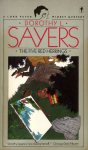 Appropriate reading: I read the first third of Dorothy L. Sayers’s The Five Red Herrings because it’s set in the area (first line: “If one lives in Galloway, one either fishes or paints”), and found it entertaining, though not enough to care whodunnit. In general, I’m terrible for trying mystery series and DNFing or giving up after the first book. Lord Peter Wimsey seemed like he’d be an amusing detective in the Sherlock Holmes vein, but the rendering of Scottish accents was OTT and the case relied too much on details of train schedules and bicycles.
Arran
Our short jaunt to Arran started off poorly with a cancelled ferry sailing, leaving us stranded in Ardrossan (which Bythell had almost prophetically dubbed a “sh*thole” that morning!) for several hours until the next one, and we struggled with a leaky rear tyre and showery weather for much of the time, but we were still enamoured with this island that calls itself “Scotland in miniature.” That was particularly delightful for me because I come from the state nicknamed “America in miniature,” Maryland. This Airbnb was plush by comparison, we obtained excellent food from the Blackwater Bakehouse and a posh French takeaway, and we enjoyed walks at the Machrie stone circles and Brodick Castle as well as at the various bays (one with a fossilized dinosaur footprint) that we stopped off at on our driving tour.


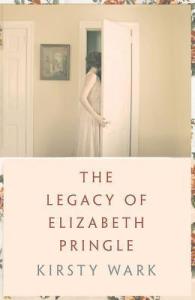 Appropriate reading: The Legacy of Elizabeth Pringle by Kirsty Wark, the only Arran-set novel on my library’s catalogue, is an enjoyable dual-timeline story linked by the Lamlash home of the title character. When she died in her nineties in 2006, she bequeathed her home to a kind woman who used to walk past on summer holidays with her daughter in a pram. Martha Morrison was that baby, and with her mother, Anna, suffering from dementia, it’s up to her to take possession and root out Elizabeth’s secrets. Every other chapter is a first-person fragment from Elizabeth’s memoir, cataloguing her losses of parents and lovers and leading ever closer to the present, when she befriended Saul, an American Buddhist monk based at Holy Island across the water, and Niall, a horticulturist at Brodick Castle. It’s a little too neat how the people in her life pair off (sub-Maggie O’Farrell; more Joanna Trollope, perhaps), but it was fun to be able to visualize the settings and to learn about Arran’s farming traditions and wartime history.
Islay
Islay is a tourist mecca largely because of its nine distilleries – what a pity we don’t care for whiskey! – but we sought it out for its wildlife and scenery, which were reminiscent of what we saw in the Outer Hebrides last year. Our B&B was a bit fusty (there was a rotary phone in the hall!), but we had an unbeatable view from our window and enjoyed visiting two RSPB reserves. The highlight for me was the walk to the Mull of Oa peninsula and the cow-guarded American Monument, which pays tribute to the troops who died in two 1918 naval disasters – a torpedoed boat and a shipwreck – and the heroism of locals who rescued survivors.


We spent a very rainy Tuesday mooching from one distillery shop to another. There are two gin-makers whose products we were eager to taste, but we also relished our mission to buy presents for two landmark birthdays, one of an American friend who’s a whiskey aficionado. Even having to get the tyre replaced didn’t ruin the day. There’s drink aplenty on Islay, but quality food was harder to acquire, so if we went back we’d plump for self-catering.


Incidental additional hauls: I found this 50th anniversary Virago tote bag under a bench at Bowmore harbour after our meal at Peatzeria. I waited a while to see if anyone would come back for it, but it was so sodden and sandy that it must have been there overnight. I cleaned it up and brought home additional purchases in it: two secondhand finds at a thrift store in Tarbert, the first town back on the mainland, and a Knausgaard book I got free with my card points from a Waterstones in Glasgow.


Glasgow
 My 15-year-old nephew is currently on a school trip to Scotland and my sister went along as an unofficial chaperone. I couldn’t let them come to the UK without meeting up, so for months we’d pencilled in an evening in Glasgow. When we booked our Airbnb room in a suburb, it was because it was on a super-convenient train line … which happened to be closed for engineering works while we were there. Plan B: rail replacement buses, which were fine. We greatly enjoyed the company of Santos the Airbnb cat, who mugged us for scraps of our breakfasts.
With our one day in Glasgow, we decided to prioritize the Burrell Collection, due to the enthusiastic recommendations from Susan, our Arran hosts, and Bill Bryson in Notes on a Small Island (“Among the city’s many treasures, none shines brighter, in my view”). It’s a museum with a difference, housed in a custom-built edifice that showcases the wooded surroundings as much as the stunning objects. We were especially partial to the stained glass.


Our whistle-stop city tour also included a walk past the cathedral, a ramble through the Necropolis (where, pleasingly, I saw a grave for one Elizabeth Pringle), and the Tenement Museum, a very different sort of National Trust house that showed how one woman, a spinster and hoarder, lived in the first half of the 20th century. Then on to an exceptional seafood-heavy meal at Kelp, also recommended by Susan, and an all-too-brief couple of hours with my family at their hotel and a lively pub.


We keep returning to Scotland. Where next in a few years? Possibly the southern islands of the Outer Hebrides, which we didn’t have time for last year, or the more obscure of the Inner Hebrides, before planning return visits to some favourites. All the short ferry rides were smooth this time around, so I can cope with the thought of more.

We got home to find our mullein plants attempting to take over the world.
10 Days in the USA and What I Read (Plus a Book Haul)
On October 29th, I went to an evening drinks party at a neighbour’s house around the corner. A friend asked me about whether the UK or the USA is “home” and I replied that the States feels less and less like home every time I go, that the culture and politics are ever more foreign to me and the UK’s more progressive society is where I belong. I even made an offhand comment to the effect of: once my mother passed, I didn’t think I’d fly back there often, if at all. I was thinking about 5–10 years into the future; instead, a few hours after I got home from the party, we were awoken by the middle-of-the-night phone call saying my mother had suffered a nonrecoverable brain bleed. The next day she was gone.
I haven’t reflected a lot on the irony of that timing, probably because it feels like too much, but it turns out I was completely wrong: in fact, I’m now returning to the States more often. With our mom gone and our dad not really in our lives, my sister and I have gotten closer. Since October I’ve flown back twice and she’s visited here once. There are 7.5 years between us and we’ve always been at different stages of life, with separate preoccupations and priorities; I was also lazy and let my mom be the go-between, passing family news back and forth. Now there’s a sense that we are all we have, and we have to stick together.


So it was doubly important for me to be there for my sister’s graduation from nursing school last week. If we follow each other on Facebook or Instagram, you will have already seen that she finished at the top of her cohort and was one of just two students recognized for academic excellence out of the college’s over 200 graduates – and all of this while raising four children and coping with the disruption of Mom’s death seven months ago. There were many times when she thought she would have to pause or give up her studies, but she persisted and will start work as a hospice nurse soon. We’re all as proud as could be, on our mom’s behalf, too.
The trip was a mixture of celebratory moments and sad duties. We started the process of going through our mom’s belongings and culling what we can, but the files, photos and mementoes are the real challenge and had to wait for another time. There were dozens of books I’d given her for birthdays and holidays, mostly by her favourite gentle writers – Gerald Durrell, Jan Karon, Gervase Phinn – invariably annotated with her name, the date and occasion. I looked back through them and then let them go.


Between my two suitcases I managed to bring back the rest of her first box of journals (there are 150 of them in total, spanning 1989 to 2022), and I’m halfway through #4 at the moment. We moved out of my first home when I was nine, and I don’t have a lot of vivid memories of those early years. But as I read her record of everyday life it’s like I’m right back in those rooms. I get new glimpses of myself, my dad, my sister, but especially of her – not as my mother, but as a whole person. As a child I never realized she was depressed: distressed about her job situation, worried over conflicts with her siblings and my sister, coping with ill health (she was later diagnosed with fibromyalgia) and resisting ageing. For as strong as her Christian faith was, she was really struggling in ways I couldn’t appreciate then.

I hope that later journals will introduce hindsight, now that she’s not around to give a more circumspect view. In any case, they’re an incredible legacy, a chance for me to relive much of my life that I otherwise would only remember in fragments through photographs, and perhaps have a preview of what I can expect from the course of our shared kidney disease.
What I Read
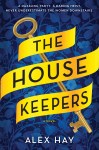 The Housekeepers by Alex Hay – A historical heist novel with shades of Downton Abbey, this comes out in July. Reviewed for Shelf Awareness.

Cowboys Are My Weakness by Pam Houston – Terrific: stark, sexy stories about women who live out West and love cowboys and hunters (as well as dogs and horses). Ten of the stories are in the first person, voiced by women in their twenties and thirties who are looking for romance and adventure and anxiously pondering motherhood (“by the time you get to be thirty, freedom has circled back on itself to mean something totally different from what it did at twenty-one”). The remaining two are in the second person, which I always enjoy. The occasional Montana setting reminded me of stories I’ve read by Maile Meloy and Maggie Shipstead, while the relationship studies made me think of Amy Bloom’s work.

The Harpy by Megan Hunter – Read for Literary Wives club. Review coming up on Monday.

The Lake Shore Limited by Sue Miller – A solid set of narratives alternating between the POVs of four characters whose lives converge around a play inspired by the playwright’s loss of her boyfriend on one of the hijacked planes on 9/11. Her mixed feelings about him towards the end of his life and about being shackled to his legacy as his ‘widow’ reverberate in other sections: one about the lead actor, whose wife has ALS; and one about a widower the playwright is being set up with on a date. Fitting for a book about a play, the scenes feel very visual. A little underpowered, but subtlety is to be expected from a Miller novel. She, Anne Tyler and Elizabeth Berg write easy reads with substance, just the kind of book I want to take on an airplane, as indeed I did with this one. I read the first 2/3 on my travel day (although with the 9/11 theme this maybe wasn’t the best choice!).
 For apposite plane reading, I also started Fly Girl by Ann Hood, her memoir of being a TWA flight attendant in the 1970s, the waning glory days of air travel. I’ve read 10 or so of Hood’s books before from various genres, but lost interest in the minutiae of her job applications and interviews. Another writer would probably have made a bigger deal of the inherent sexism of the profession, too. I read 30%.
 Hello Beautiful by Ann Napolitano – I knew I wanted to read this even before it was Oprah’s 100th book club pick. It’s a family story spanning three decades and focusing on the Padavanos, a working-class Italian American Chicago clan with four daughters: Julia, Sylvie, and twins Cecilia and Emeline. Julia meets melancholy basketball player William Waters while at Northwestern in the late 1970s and they marry and have a daughter; Sylvie, a budding librarian, makes out with boys in the stacks until her great romance comes along; Cecilia is an artist and Emeline loves babies and manages a nursery. More than once a character think of their collective story as a “soap opera,” and there’s plenty of melodrama here – an out-of-wedlock pregnancy, estrangements, a suicide attempt, a coming out, stealing another’s man – as well as far-fetched coincidences, including the two major deaths falling on the same day as a birth and a reconciliation.
There is such warmth and intensity to the telling, and brave reckoning with mental illness, prejudice and trauma, that I excused flaws such as dwelling overly much in characters’ heads through close third person narration, to the detriment of scenes and dialogue. I love sister stories in general, and the subtle echoes of Leaves of Grass and Little Women (the connections aren’t one to one and you’re kept guessing for most of the book who will be the Beth) add heft. I especially appreciated how a late parent is still remembered in daily life after 30 years have passed. This is, believe it or not, the second basketball novel I’ve loved this year, after Tell the Rest by Lucy Jane Bledsoe.
I always try to choose thematically appropriate reads, so I also started:
 Circling My Mother by Mary Gordon – A memoir she began after her nonagenarian mother’s death with dementia. Intriguingly, the structure is not chronological but topic by topic, built around key relationships: so far I’ve read “My Mother and Her Bosses” and “My Mother: Words and Music.”
Grave by Allison C. Meier – My sister and I made a day trip up to my mother’s grave for the first time since her burial. She has a beautiful spot in a rural cemetery dating back to the 1780s, but it’s in full sun and very dry, so we tried to cheer up the dusty plot with some extra topsoil and grass seed, marigolds, and a butterfly flag.


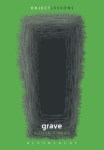 Meier is a cemetery tour guide in Brooklyn, where she lives. In the third of the e-book I’ve read so far, she looks at American burial customs, the lack of respect for Black and Native American burial sites, and the rise of garden cemeteries such as Mount Auburn in Cambridge, Massachusetts. I’ve been reading death-themed books for over a decade and have delighted in exploring cemeteries (including Mount Auburn, as part of my New England honeymoon) for even longer, so this is right up my street and one of the better Object Lessons monographs.
What I Bought
I traded in most of my mother’s books at 2nd & Charles and Wonder Book and Video but, no surprise, promptly spent the store credit on more secondhand books. Thanks to clearance shelves at both stores, I only had to chip in another $12.25 for the below haul, which also covered two Dollar Tree purchases (I felt bad for Susan Minot having signed editions end up remaindered!). Some tried and true authors here, as well as novelties to test out, with a bunch of short stories and novellas to read later in the year.


Three on a Theme for Valentine’s Day: “Love” Short Story Collections
Even though I’m really not a Valentine’s Day sort of person*, this is the seventh year in a row that I’ve put together a themed post featuring books that have “Love” or a similar word in the title in the run-up to mid-February (2017, 2018, 2019, 2020, 2021 and 2022).
I also don’t generally read short story collections if it’s not September – I seem to need that alliterative crutch to get to a dozen or so of them – but my “Birds” trio and these three were so great that I had to wonder why I don’t read them all year round.
Are these love stories? Some, to an extent. But also loss stories. Loneliness stories. Hatred stories. Abandonment stories. A few even verge on horror. In other words, realistic slivers of life. And as different as Carver’s lean, masculine tales of addiction and failure might seem from Bloom’s wry scenes of family life and Dunmore’s intimate pictures of isolation and mental illness, I found that all three resonated with each other. As for character detail, Dunmore’s “fat men” echo the overweight male protagonist in Bloom’s first story cycle.
Where the God of Love Hangs Out by Amy Bloom (2010)
One of these stories, “Sleepwalking,” was familiar to me because it is reprinted from her 1993 collection, Come to Me, and another two were originally published in 2000’s A Blind Man Can See How Much I Love You – isn’t she great at titles?! She excels at first lines, too: some from this volume are “At two o’clock in the morning, no one is to blame,” “William has gout,” “Clare can’t walk,” “No power” and “I had always planned to kill my father.”
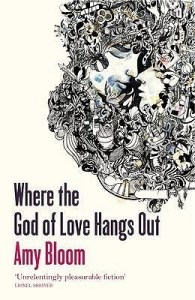 The book contains two quartets of linked stories and four stand-alone stories. The first set is about Clare and William, whose dynamic shifts from acquaintances to couple-friends to lovers to spouses. Bloom, a former psychotherapist, is interested in tracking how they navigate these changes over the years, and does so by switching between first- and third-person narration and adopting a different perspective for each story. She does the same with the four stories about Lionel and Julia, a Black man and his white stepmother. Over the course of maybe three decades, we see the constellations of relationships each one forms, while the family core remains. She also includes sexual encounters between characters who are middle-aged and older – when, according to stereotypes, lust should have been snuffed out.
Of the unlinked stories, the most memorable was “By-and-By,” a distressingly unemotional account of the ripple effects of a serial killer’s actions as seen by a victim’s roommate. I also loved the title story, which appears last. An older man and his daughter-in-law meet twice, by accident, in small-town eateries, the one wanting to come clean about a troubled past and the other wanting to embark on a new and surprising romance. This one reminded me of Richard Russo and early John Irving, while the collection as a whole would suit fans of Julia Glass, Tessa Hadley, Sue Miller, Lorrie Moore and Elizabeth Strout. (Secondhand – Bookbarn International)
What We Talk about When We Talk about Love by Raymond Carver (1981)
Such a famous title that it has spawned countless imitators, two of which I’ve even read (What We Talk about When We Talk about God by Rob Bell and What We Talk about When We Talk about Anne Frank by Nathan Englander). It turns out I had Carver confused with John Cheever, so I was expecting gritty stories of alcoholism in the 1950s Midwest. Yes to the alcohol abuse, but Carver was from the Pacific Northwest and was writing in the 1980s. A number of his protagonists are drunk, deadbeat dads who have been kicked out and make a scene to get back at their wives. Others are more passive, stuck in suburban ennui. Grown men fear turning into their fathers (“Sacks”). Ultimatums are defused (“Everything Stuck to Him”) and custody arrangements fought over (the Solomonic fable “Popular Mechanics”).
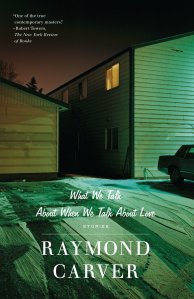 The declarative simplicity of the prose, and the interest in male activities like gambling, hunting and fishing, can’t fail to recall Ernest Hemingway, yet I warmed to Carver much more than Hem. Two of these stories struck me as feminist for how they expose nonchalant male violence towards women; elsewhere I spotted tiny gender-transgressing details (a man who knits, for instance). In “Tell the Women We’re Going,” two men escape their families to play pool and drink, then make a fateful decision on the way home. I don’t think I’ve been as shocked by the matter-of-fact brutality of a short story since “The Lottery.” My favourite was also chilling, “So Much Water So Close to Home.” Both reveal how homosocial peer pressure leads to bad behaviour; this was toxic masculinity before we had that term.
Many of the stories are only 3–8 pages long, such that 17 fit into a slender volume. They’re about half and half first- and third-person, sometimes with speech marks and sometimes not. At 15 pages, the title story is the longest and a great one. Two couples are having pre-dinner drinks and discussing types of love – physical, spiritual and so on. The POV character mostly conveys monologues by his friend Mel, a cardiologist (of course he would be a heart doctor!), comparing the obsessive love of his first wife’s ex, who turned out to be a stalker, and the mature devotion he saw in an elderly couple at his hospital after a horrific car accident. There were a few flippant or less memorable stories in here, but I’m impressed enough to seek out more of Carver’s work, poetry or prose. (Secondhand – Books for Amnesty, York)
Love of Fat Men by Helen Dunmore (1997)
This was an early work by Dunmore, who was so prolific in her two-decade career that I still come across titles of hers that I’ve never heard of before. I don’t think a book by this title would get published nowadays, but I won’t hold it against her. It is literal in that Ulli, a recurring character in 10 of these 19 stories, finds comfort in sleeping with larger men. I wondered what so captured Dunmore’s imagination about Scandinavia: you can work out that Ulli is from Finland and most of the stories are set there or in nearby countries.
 Every other story returns to Ulli, but the fragments of her life miss out the connective tissue: we suspect she’s pregnant as a teen, but don’t learn what she chose to do about it; we witness some dysfunctional scenes and realize she’s estranged from her family later on, but don’t find out if there was some big bust-up that prompted it. She comes across as a loner and a nomad, apt to be effaced by stronger personalities. In “The Ice Bear,” she’s on a ferry from Sweden back to Finland and can’t escape the prattle of a male missionary. In “A Question of Latitude” she’s out for a restaurant meal with friends, one of whom diagnoses her thus: “Nothing really affects you, does it? You just smile and put it out of your mind. And you cut people out of your life the same way, when you’ve finished with them.”
Whereas in the Bloom the interconnected stories are the strongest, here my preference was for the others. “The Bridge Painter” is about a man who leaves a peculiar calling card at each bridge he visits. “Annina” paints a woman with a questionable grasp on reality after the loss of a child. Best of all is probably “North Sea Crossing,” which contrasts two father-and-son pairs. If you only know Dunmore from novels, I can recommend her poetry and short stories, too. (Secondhand – Bas Books, Newbury)
All three:
Try all of these authors right away if you haven’t already!
*A daytrip into London on Thursday was our Valentine’s gift to selves. We toured the Tower of London and the Science Museum (the Wellcome medical collections for me) and had an exceptional late lunch at Dishoom (starters and drinks pictured below). Tonight we’ll be having chocolate prune pots in front of The Bookshop Band’s love-themed livestream concert.

Tricking Myself into Reading My Own Books
I suspect many of us have this bibliophile problem: we get tremendously excited about a particular book and just have to have it, whether as a proof from the publisher, pre-ordering it new, or (for an older book) snapping it up secondhand the minute we hear about it. Then months or even years pass and we realize that the novel or memoir we were once so desperate to read has simply joined the ranks of hundreds of other half-forgotten books we still plan to get to on that legendary ‘one day’ but always pass by in favour of newer acquisitions.
I’ve long strived to read more backlist books from my own collection, as well as to catch up on the dozens of books I’ve been foolish enough to pause partway through and group together on two “set-aside” shelves in the lounge. (Many of these I obtained as review copies from publishers, so I do feel a sense of obligation to write at least a mini review for each.) As Marcie (Buried in Print) noted in her recent reading goals post, vague intentions go by the wayside, so it’s time to get specific about how to incorporate these into my reading stacks.


- For my review backlog of 2022 releases, I get a second chance. I’ve noted the paperback release dates for around 20 books and will aim to have catch-up review posts (here or for Shiny New Books) ready for that date, or at least within that month. Having a deadline to work towards is essential for a last-minute worker like me.
- There are some authors I own 3 or more unread works by. Usually this means I enjoyed a book of theirs so much I went on a secondhand binge … then got distracted and didn’t explore their back catalogue as I meant to. Via Margaret, I just found out about What Cathy Read Next’s Backlist Burrow challenge, where she’s picked six authors who piqued her interest and two books by each to read this year. I’m unlikely to manage two each, but I fancy doing this adjacent/modified challenge: where I own 2 or more unread books by an author, I must read at least 1 this year. I have these authors to choose from, but also others in my sights, e.g. Sarah Hall, whose Haweswater I’ll take on holiday to the Lake District in July.
- Challenges like that one are the best way to get me rifling through my own shelves. I started a few low-key, long-term projects of my own back in 2020 (Journey through the Day and 4 in a Row) and am still ostensibly working on them, as well as on thematic pairs and trios (my Three on a Theme series) as they arise, along with regular tie-ins to seasons, holidays, etc. Hosted challenges are somehow better, though, perhaps due to the built-in companionship and accountability. Nordic FINDS this month, Reading Indies in February, Reading Ireland in March, the 1940 Club in April, and so on. Because they’re so useful for getting me reading from my shelves, I will participate in at least 1 reading challenge per month.
- How to tackle the dreaded set-aside shelves? One book at a time. So, in addition to the ones I’ll review to coincide with the paperback release, I’ll also reintroduce 1 set-aside book to my reading pile each week.
- How to ensure that book hauls from shopping excursions and gift-receiving occasions don’t get neglected? By undertaking regular “overhauls” such as this and this, and checking there are no more than 3 unread books remaining from any 1 haul. If there are, start reading the stragglers right away. This will be particularly important because it looks like this year I might complete the triple crown of UK book towns, with trips planned to Wigtown in June and the Sedbergh area in July/August and Hay-on-Wye a perpetual temptation.
- How to make time for all those lovely random books (such as this stack) that I keep meaning to read but somehow never do? I’m going to allow myself to start at least 1 “just because” book per fortnight.
- Connected to all of these will be requesting fewer 2023 review books from publishers. Almost all my recent requests have gone completely ignored, in fact, which is probably for the best. Unless I’m reviewing something for pay, I’ll just plan to read it from the library or, if I can’t find it that way, will add it to my wish list in advance of my birthday and Christmas.


How do you trick yourself into reading your own books?
Birthday Outing and Book Haul
I’m not quite sure why, but I’ve made it a habit of posting something about each birthday I’ve celebrated since I started blogging. Maybe because, otherwise, the years pass so quickly that I can’t remember from one to another what I did, ate, or received as presents! So, to follow on from my 2015, 2016, 2017, 2018, 2019, 2020, and 2021 posts, here’s this year’s rundown. (Oh dear, I realize I’ve read just one of the books I received last year!)
On Thursday, I treated myself to a charity shop crawl around Newbury (it’s a great place for thrift shopping, as is nearby Thatcham) and got two jumpers plus this small stack of secondhand books.

Then yesterday, my actual birthday, we took time off and went to Kelmscott Manor in West Oxfordshire/the Cotswolds (right on the border with Gloucestershire), where Victorian designer William Morris lived. We’re a fan of Morris’s floral-based wallpaper and textile designs and he was a progressive thinker, too, embracing socialism and environmentalism – I’ll get his utopian novel, News from Nowhere, out from the university library to read soon. Despite a drizzly start to the day, the place was packed with visitors. The tea shop’s cakes incorporate fruit from the manor’s own trees. Naturally, I had to sample two of their offerings, and still had room for a chocolate beetroot cupcake (with the requisite candle) once we got home.


On the way back, we stopped in Wantage for some secondhand book shopping. I’d found out about Regent market from Simon’s blog and he’s right – it’s huge, with an excellent stock and good prices (£2 or £2.50 for nearly everything I looked at, vs. when we were in Inverness I didn’t buy a thing at Leakey’s because even poor-condition paperbacks started at £4). I would happily have spent much longer there and acquired twice as much, but one must be restrained when there are further book hauls to come. I was pleased to find several books I’ve been interested in reading for a while, as well as a couple by authors I’ve enjoyed before.

 I requested a vegan Chinese feast, inspired by a recent cookbook I’ve reviewed for Shelf Awareness’s upcoming gift books feature, The Vegan Chinese Kitchen by Hannah Che. My husband made a special trip to an Asian grocery superstore in Reading and the recipes were fairly involved, but the results – cabbage rolls, wontons and bao buns, most featuring tofu and mushrooms – were worth waiting for. We have leftovers for the weekend, along with a banoffee cheesecake from Nigella Lawson’s Kitchen still to come. (When are complicated dishes for if not for birthdays?)


Here are the books I received as birthday gifts, with more to come, I expect, plus a significant amount of birthday money that I may well spend on books. Some good options for #NovNov22 in here!

Remainders of the Day by Shaun Bythell & What Remains? by Rupert Callender
I raced to finish all the September releases on my stack by the 30th, thinking I’d review them in one go, but that ended up being far too unwieldy. There was way too much to say about each of these excellent books (the first two pairs are here and here; Blurb Your Enthusiasm by Louise Willder is still to come, probably on Wednesday). I’ve mentioned before that the month’s crop of nonfiction was about either books or death. Here’s one of each, linked by their ‘remain’ titles. Both:
Remainders of the Day: More Diaries from The Bookshop, Wigtown by Shaun Bythell
 It’s just over five years since many of us were introduced to Wigtown and the ups and downs of running a bookshop there through Shaun Bythell’s The Diary of a Bookseller. (I’ve also reviewed the follow-up, Confessions of a Bookseller, which was an enjoyable read for me during a 2019 trip to Milan, and 2020’s Seven Kinds of People You Find in Bookshops.)
This third volume opens in February 2016. As in its predecessors, each monthly section is prefaced by an epigraph from a historical work on bookselling – this time R. M. Williamson’s 1904 Bits from an Old Bookshop. It’s the same winning formula as ever: the nearly daily entries start with the number of online orders received and filled, and end with the number of customers and the till takings for the day. (The average spend seems to be £10 per customer, which is fine in high tourist season but not so great in November and December when hardly anyone walks through the door.) In between, Bythell details notable customer encounters, interactions with shop helpers or local friends, trips out to buy book collections or go fishing, Wigtown events including the book festival, and the occasional snafu like the boiler breaking during a frigid November or his mum being hospitalized with a burst ulcer.
Reading May Sarton’s Encore recently, I came across a passage where she is reading a fellow writer’s journal (Doris Grumbach’s Coming into the End Zone):
I find hers extremely good reading, so I cannot bear to stop. I am reading it much too fast and I think I shall have to read it again. I know that I must not swallow it whole. There is something about a journal, I think, that does this to readers. So many readers tell me that they cannot put my journals down.
I’ve heard Zadie Smith say the same about Karl Ove Knausgaard’s My Struggle: it’s just the stuff of prosaic, everyday life and yet she refers to his memoirs/autofiction as literary crack.
I often read a whole month’s worth of entries at a sitting. I can think of a few specific reasons why Bythell’s journals are such addictive reading:
- “Sometimes you want to go where everybody knows your name.” Small-town settings are irresistible for many readers, and by now the fairly small cast of characters in Bythell’s books feel like old friends. Especially having been to Wigtown myself, I can picture many of the locations he writes about, and you get the rhythm of the seasons and the natural world as well as the town’s ebb and flow of visitors.
- (A related point) You know what to expect, and that’s a comforting thing. Bythell makes effective use of running gags. You know that when Granny, an occasional shop helper from Italy, appears, she will complain about her aches and pains, curse at Bythell and give him the finger. Petra’s belly-dancing class (held above the shop) will inevitably be poorly attended. If Eliot is visiting, he is sure to leave his shoes right where everyone will trip over them. Captain the cat will be portly and infuriating.
- What I most love about the series is the picture of the life cycle of books, from when they first enter the shop, or get picked up in his van, to when rejects are dropped at a Glasgow recycling plant. What happens in the meantime varies, with once-popular authors falling out of fashion while certain topics remain perennial bestsellers in the shop (railways, ornithology). There’s many a serendipitous moment when he comes across a book and it’s just what a customer wants, or buys a book as part of a lot and then sells it online the very next day. New, unpriced stock is always quick to go.
Also of note in this volume are his break-up with Amazon, after his account falls victim to algorithms and is suspended, the meta moment where he signs his first book contract with Profile, and the increasing presence of the Bookshop Band, who moved to Wigtown later in 2017. Bythell doesn’t seem to get much time to read – it’s a misconception of the bookselling life that you do nothing but read all day; you’d be better off as a book reviewer if that’s what you want – but when he does, it’s generally an intense experience: E.M. Forster’s sci-fi novella The Machine Stops (who knew it existed?!), Barbara Comyns’s A Touch of Mistletoe, Jonathan Safran Foer’s Everything Is Illuminated, and Oscar Wilde’s De Profundis.
I’m torn as to whether I hope there will be more year by year volumes filling in to the present day. As Annabel noted, the ‘where they are now’ approach in the Epilogue rather suggests that he and his publisher will leave it here at a trilogy. This might be for the best, as a few more pre-Covid years of the same routines could get old, though nosey parkers like myself will want to know how a confirmed bachelor turned into a family man…
Some favourite lines:
“Quiet day in the shop; even the cat looked bored.” (31 October)
“The life of the secondhand bookseller mainly involves moving boxes from one place to another, and trying to make them fit into a small space, like some sort of awful game of Tetris.”
(10 February and 15 March are great stand-alone entries that give a sense of what the whole is like. There are a lot of black-and-white photos printed amid the text in the first month; it’s a shame these don’t carry on through.)
With thanks to Profile Books for the free copy for review.
What Remains?: Life, Death and the Human Art of Undertaking by Rupert Callender
Call me morbid or call me realistic; in the last decade and a half I have read a lot of books about death, including terminal illness and bereavements. I’ve even read several nonfiction works by American mortician Caitlin Doughty. But I’ve not read anything quite like punk undertaker Rupert Callender’s manifesto about modern death and how much we get wrong in our conceptualization and conversations. It was poignant to be reading this in the weeks surrounding Queen Elizabeth II’s death – a time when death got more discussion than usual, yes, but when there was also some ridiculous pomp that obscured the basic human facts of it.
Callender is not okay with death, and never has been. When he was seven, his father died of a heart attack at age 63. His 1970s Edinburgh upbringing was shattered and his mother, who he has no doubt was doing her best, made a few terrible mistakes. First, a year before, she’d reassured him that his father wasn’t going to die. Second, she didn’t make him attend the funeral. (I still wish my mother had made me go back to tour my late grandmother’s house one final time when I was seven; instead, I stayed behind and played on a Ouija board with my cousins.) Third, she soon sent Callender away to boarding school, which left him feeling alone and betrayed. And lastly, when she died of cancer when he was 25, she had planned every detail of her funeral – whereas he believes that is a task for the survivors.
An orphan in his late twenties, Callender came across The Natural Death Handbook and it sealed his future. He’d been expelled from school and blown his inheritance; acid house culture had given him a sense of community. Now he had a vocation. The first funeral he coordinated was for a postman named Barry. The fourth was a suicide. Their first child burial was one of his partner’s daughter’s classmates.

Over the next two decades, he and his (now ex-)wife Claire based Totnes’ The Green Funeral Company on old-fashioned values and homespun ceremonies. They oppose the overmedicalization of death and the clinical detachment of places like crematoria. Callender is vehemently anti-embalming – an intrusive process that involves toxic substances. They encourage the bereaved to keep the body at home for the week before a funeral, if they feel able (ice packs like you’d use in a picnic cool bag will work a treat), and to be their own pallbearers to make the memory of the funeral day a physical one. He performs the eulogies himself, and they use cardboard coffins.
This is a slippery work for how it intersperses personal stories with polemic and poetic writing. Despite a roughly chronological throughline, it feels more like a thematic set of essays than a sequential narrative. Callender has turned death rituals into both performance art (including at festivals and in collaboration with The KLF) and political protests (e.g., a public funeral he conducted for a homeless man who died of exposure, the third such death in his town that year). While he doesn’t shy away from the gruesome realities of dealing with corpses, he always brings it back to fundamentals: matter is what we are, but who we were lives on in others’ loving memories. Death rituals plug us into a human lineage and proclaim meaning in the face of nothingness. Whether you’ve seen/read it all or never considered picking up a book about death, I recommend Callender’s sui generis approach.
Some favourite lines:
“[The practice of having official pallbearers] is all part of the emotional infantilising encouraged by the funeral industry, all part of being turned into an audience at one of the most significant moments in your family history, instead of being empowered as a family and a community.”
“each death we experience contains every death we have ever lived through, Russian dolls of bereavement waiting to be unpacked.”
“Only once you are dead can the full arc of your life be clearly seen, and telling that story out loud and truthfully to the people who shared it is a powerful social act that both binds us together and place us within our culture.”
With thanks to Chelsea Green for the proof copy for review.
And as a bonus, given that today is Indigenous Peoples’ Day in the USA, here’s an excerpt from my Shelf Awareness review of another book that came out last month:
No Country for Eight-Spot Butterflies: A Lyric Essay by Julian Aguon
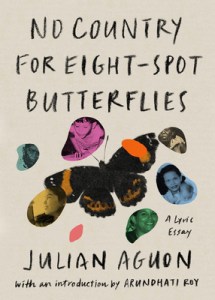 An indigenous human rights lawyer, Aguon is passionate about protecting his homeland of Guam, which is threatened by climate change and military expansion. His tender collage of autobiographical vignettes and public addresses inspires activism and celebrates beauty worth preserving. The U.S. Department of Defense’s plan to site more Marines and firing ranges on Guam will destroy more than 1,000 acres of limestone forest—home to endemic and endangered species, including the Mariana eight-spot butterfly. Aguon has been a lead litigator in appeals rising all the way to the U.S. Supreme Court. Rejecting fatalism, he endorses peaceful resistance. Two commencement speeches, poems, a eulogy and an interview round out the varied and heartfelt collection.
A Short Trip to Sedbergh, England’s Book Town
We’ve finally completed the ‘Triple Crown’ of British book towns: Hay-on-Wye in Wales is one of our favourite places and we’ve visited seven or more times over the years (the latest); inspired by Shaun Bythell’s memoirs, we then made the pilgrimage to Wigtown in Scotland in 2018. But we hadn’t made it to Sedbergh, England’s book town, until this past week. A short conference my husband was due to attend in the northwest of the country was the excuse we needed – though a medical emergency with our cat (fine now; just had to have an infected tooth out) shortened our trip and kept him from participating in the symposium at Lancaster.
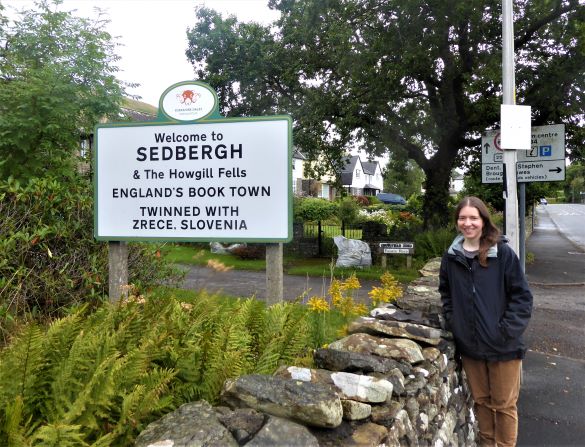
Sedbergh is technically in Cumbria but falls within the Yorkshire Dales National Park. The book town initiative was part of a drive to re-invigorate the local economy after the 2001 foot and mouth disease outbreak. It’s a very sleepy town, more so than Hay or Wigtown, and only has two dedicated bookshops. The flagship store is Westwood Books, which was based in Hay until 2006 and occupies a former cinema / factory building. It is indeed reminiscent of Hay’s Cinema Bookshop, and is similar in size and stock to the largest of the Hay shops.
The only other shop in town that only sells books is Clutterbooks charity bookshop, where we started our book hunting after we left the car at our Airbnb flat on the Wednesday. With everything priced at £1 or £1.50, it tempted me into my first six purchases. Next up was Westwood, which opens until 5, an hour later than some other places. I bought a couple more books (delighted with the pristine secondhand copy of Julian Hoffman’s first nature book) but also resold them a small box of antiquarian and signed books for more than I could ever have hoped for – covering all my book purchases for the trip, as well as our meals and snacks out. On the Thursday we had a quiet drink in a cosy local pub to toast Her Majesty’s memory.


Various main street eateries and shops have a shelf or two of books for sale. We perused these, and the Little Free Library in the old bus shelter, on the Wednesday afternoon and first thing Friday morning. I added one more purchase to my stack – a paperback copy of Fire on the Mountain by Jean McNeil for £1 – just before we left town. In general, there weren’t as many bookshops as expected, and lots of places opened later or closed earlier than advertised, presumably because it was off season and rather rainy. So, it was a little underwhelming as book town experiences go, and I can’t imagine Sedbergh ever drawing us back.
However, we enjoyed exploring the area in general, with stops at Little Moreton Hall, and Sizergh Castle and Chester, respectively, on the way up and back. As part of the conference, we joined in a walk from Grange to Cartmel that took in an interesting limestone pavement landscape. It was my first time in the Dales or Lake District in many a year, and a good chance to get back to that pocket of the world.


Three on a Theme for Valentine’s Day: “Love” Books by Natalie Diaz, Maile Meloy and Jane Smiley
This post is an annual tradition for me, somehow.* Love, whether erotic, romantic or familial, turns up in the titles of these three works by women writers: poems, short stories and a novella.
Postcolonial Love Poem by Natalie Diaz (2020)
Diaz, raised on a Mojave reservation in California, won a Pulitzer Prize for this honey-thick exploration of queer Native American identity. There are lustful moments aplenty here—
My lover comes to me like darkfall—long,
and through my open window. Mullion, transom. […]
I keep time on the hematite clocks of her shoulders.
(from “Like Church”)
 —but the mineral-heavy imagery (“the agate cups of your palms …the bronzed lamp of my breast”) is so weirdly archaic and the vocabulary so technical that I kept thinking of the Song of Solomon. Not that there’s anything wrong with that; it’s just not the model I expected to find.
So I ended up preferring the forthright political poems about contemporary Native American life. Police shootings, pipeline protests: it’s a fact that her people are disproportionately persecuted (see “American Arithmetic”). Her brother’s drug abuse and mental illness also form a repeating subject (e.g., “It Was the Animals”).
The collection is as much of a love poem to land as it is to a woman, with water bodies described as affectionately as female bodies. “The Colorado River is the most endangered river in the United States—also, it is a part of my body” is the opening line of “The First Water Is the Body”; see also “exhibits from the American Water Museum.”
My favourite single poem, “If I Should Come Upon Your House Lonely in the West Texas Desert,” is sexy but also, charmingly, features echoes of “Goldilocks and the Three Bears”:
I will swing my lasso of headlights
across your front porch,
let it drop like a rope of knotted light
at your feet.
While I put the car in park,
you will tie and tighten the loop
of light around your waist—
and I will be there with the other end
wrapped three times
around my hips horned with loneliness.
[…]
I will lie down in you.
Eat my meals at the red table of your heart.
Each steaming bowl will be, Just right.
I will eat it all up,
break all your chairs to pieces.
(New purchase, Awesomebooks.com) 
Half in Love by Maile Meloy (2002)
Meloy’s was a new name for me when I picked this up as part of a bargain secondhand book haul last year, but she’s actually published 10 books and is esteemed in literary circles; Ann Patchett even dedicated her latest release, These Precious Days, to her.
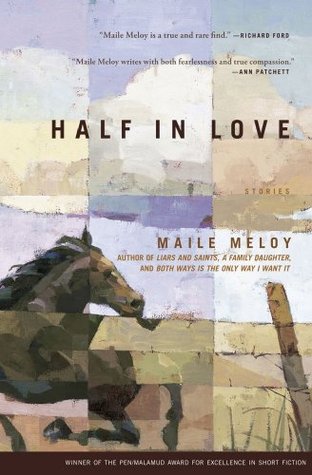 Meloy is from Montana and most of the 14 stories in this, her debut collection, are set in the contemporary American West among those who make their living from the outdoors, diving to work on hydroelectric dams or keeping cattle and horses. However, one of the more memorable stories, “Aqua Boulevard,” is set in Paris, where a geriatric father can’t tamp down his worries for his offspring.
The few historical stories have a melancholy air, with protagonists whose star has faded. There’s the brief, touching portrait of an outmoded career in “The Ice Harvester” and the secondhand reminiscences of being in late-colonial diplomatic service in the Middle East in “Last of the White Slaves”; “Red” is about an American soldier stationed in London during the Second World War.
Crime and its consequences recur. I loved the opening story, “Tome,” about a lawyer whose client wants her to keep in touch after he goes to jail. Teenage girls are the title characters in a couple of stories; “Ranch Girl” is in the second person. “Kite Whistler Aquamarine” is a heartbreaker about a filly born premature one winter. “Paint” was the standout for me: it’s pretty terrifying what a wife’s temporary attitude of neglect leads to when her luckless husband undertakes some DIY.
As is usual with a collection, a few of the stories left little impression on me. But there’s sufficient range and depth here to induce me to seek out more of Meloy’s work. I can recommend this to readers of Claire Boyles, David Guterson, Lily King, Jane Smiley (see below!) and David Vann. (Secondhand purchase, 2nd & Charles)
Favourite passages:
“Be interesting in your twenties,” Suzy says. “Otherwise you’ll want to do it in your thirties or forties, when it wreaks all kinds of havoc, and you’ve got a husband and kids.”
Eugénie invited my husband to Greece every summer because she wanted him to publish her memoir. She had lived a remarkable life but didn’t have a remarkable book, and it dragged through slow ghostwritten revisions. Every year, at work in the hot city, I thought of blue water and white bougainvillea and forgot how exhausting it was to be her guest, to stay in favor and say the right things. So each summer we would arrive, look at the new draft, give careful suggestions that would not be taken, and find ourselves on the terrace waiting for her to trip mercifully off to bed.
Ordinary Love by Jane Smiley (1990)
 This is one of Smiley’s earlier works and feels a little generic, like she hadn’t yet developed a signature voice or themes. One summer, a 52-year-old mother of five prepares for her adult son Michael’s return from India after two years of teaching. His twin brother, Joe, will pick him up from the airport later on. Through conversations over dinner and a picnic in the park, the rest of the family try to work out how Michael has changed during his time away. “I try to accept the mystery of my children, of the inexplicable ways they diverge from parental expectations, of how, however much you know or remember of them, they don’t quite add up.” The narrator recalls her marriage-ending affair and how she coped afterwards. Michael drops a bombshell towards the end of the 91-page novella. Readable yet instantly forgettable, alas. I bought it as part of a dual volume with Good Will, which I don’t expect I’ll read. (Secondhand purchase, Bookbarn International)
If you read just one … It’s got to be Postcolonial Love Poem, the most Eros-appropriate of the three by far.
*I’m really not a Valentine’s Day person, yet this is the sixth year in a row that I’ve put together a themed post featuring books that have “Love” or a similar word in the title in the run-up to mid-February (2017, 2018, 2019, 2020, and 2021).
Read any books about love lately?
 Bookish Beck = Rebecca Foster. American transplant to England. Freelance proofreader and book reviewer.
 Bookish Beck