And Finally by Henry Marsh & Sinkhole by Juliet Patterson
As I mentioned about my first batch of September releases, the nonfiction was on two broad themes: books about books (two still to come), and books about death (with What Remains? by Rupert Callender still to come). Here’s two from the latter camp.
And Finally: Matters of Life and Death by Henry Marsh
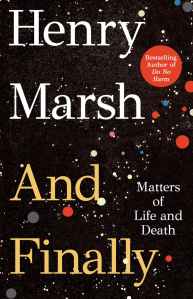 Marsh is a retired brain surgeon and the author of Do No Harm, one of the very best medical memoirs out there, as well as Admissions. As he was turning 70 a couple of years ago, two specific happenings prompted this third book. One: he volunteered for a brain scan as part of a medical study and, though he was part of a healthy cohort, was appalled at the degeneration his results showed. The other was that, after years of ignoring symptoms, he was diagnosed with advanced prostate cancer and a someday, far-off mortality started to seem a lot closer. The pandemic amplified his health worries and sense of isolation, so he threw himself into various domestic projects like clearing his loft, home renovations, and remodelling his daughter’s dollhouse to give to his beloved granddaughters.
As in Admissions, the book flits between topics: the hypoxia he experienced on a trip to Nepal, surgical mistakes made (he once operated on the wrong side of the neck), balcony gardens he created on his hospital’s neurosurgery wards, a potter friend who died of a brain tumour, and so on. Along with details of his cancer treatment, he discusses its typical course and waxes lyrical about the meaning of dreams, what we know about consciousness, and the fairy stories he made up to tell his granddaughters over Zoom during lockdown. He acknowledges his own limitations – he was conned not once but twice by cowboy builders, and declined to operate on a young Ukrainian doctor, leaving it to a colleague – and speaks out against technologies to extend the human lifespan and in favour of assisted dying.
In general, the book feels quite scattered and repetitious. However, I appreciated Marsh’s usual candour and could see how he would want to finish this quickly and get it out into the world, even if it would have benefited from further editing to make each chapter a more polished stand-alone essay. The good news is that his scan results were promising as of spring 2022 and I’ve seen on Twitter that he’s now in Ukraine with Rachel Clarke to speak at the Lviv BookForum. Is it selfish to hope we’ll get another book from him? 
With thanks to Jonathan Cape for the free copy for review.
Sinkhole: A Legacy of Suicide by Juliet Patterson
In December 2008, poet Juliet Patterson’s father died by suicide, hanging himself from a bridge near his Minnesota home in the middle of the night. When the news came, Patterson was recovering from a car accident the week before and in the middle of debates with her partner Rachel about whether they would have a child. Her father had been in his late seventies, in fine health and with full mental capacity; he left his affairs ship-shape, and his suicide note was mostly practicalities about insurance, bank accounts and car ownership.
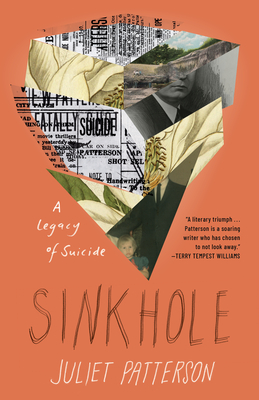 On the face of it, he wasn’t an obvious candidate, not someone you would worry about. Yet there was family history: both of Patterson’s parents lost their fathers to suicide. And there was a bizarre direct connection between their two Kansas-based families: her maternal grandmother’s best friend became her paternal grandfather’s secretary and mistress.
Patterson returns to Kansas on research trips to unearth her grandfathers’ lives: William a pottery manager who later struck it rich through Gulf Oil and Edward a New Deal Democratic congressman who lost his second bid for re-election. She pairs archival evidence – photographs and newspaper clippings – with skillfully imagined accounts of what each of her three ancestors did and felt on the day of his suicide. Her thinking is guided especially by the work of Edwin Shneidman, a psychologist who studied suicide notes.
Throughout, sinkholes, which are common in Kansas due to coal mining (one even opened up near her grandmother’s house), are both reality and metaphor for the chasm a suicide leaves. This gorgeously written family memoir approaches its difficult subject matter with brave tenderness and is one of my nonfiction favorites from the year so far. 
Published by Milkweed Editions in the USA. With thanks to Nectar Literary for the advanced e-copy for review.
Booker Prize Longlist Reading & Shortlist Predictions
I’ve polished off another four from the Booker Prize longlist (my initial reactions and excerpts from existing reviews are here), with one more coming up for me next month.
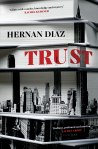
Trust by Hernan Diaz
“History itself is just a fiction—a fiction with an army. And reality? Reality is a fiction with an unlimited budget.”
My synopsis for Bookmarks magazine:
Set in the 1920s and 1930s, this expansive novel is about the early days of New York City high finance. It is told through four interlocking narratives. The first is Bonds, a novel by Harold Vanner, whose main character is clearly based on tycoon Andrew Bevel. Bevel, outraged at his portrayal as well as the allegation that his late wife, Mildred, was a madwoman, responds by writing a memoir—the book’s second part. Part 3 is an account by Ida Partenza, Bevel’s secretary, who helps him plot revenge on Vanner. In the final section, Mildred finally gets her say. Her journal caps off a sumptuous, kaleidoscopic look at American capitalism.
 Ghostwriter Ida’s section was much my favourite, for her voice as well as for how it leads you to go back to the previous part – some of it still in shorthand (“Father. Describe early memories of him. … MATH in great detail. Precocious talent. Anecdotes.”) and reassess its picture of Bevel. His short selling in advance of the Great Depression made him a fortune, but he defends himself: “My actions safeguarded American industry and business.” Mildred’s journal entries, clearly written through a fog of pain as she was dying from cancer, then force another rethink about the role she played in her husband’s decision making. With her genius-level memory, philanthropy and love of literature and music, she’s a much more interesting character than Bevel – that being the point, of course, that he steals the limelight. This is clever, clever stuff. However, as admirable as the pastiche sections might be (though they’re not as convincing as the first section of To Paradise), they’re ever so dull to read.
With thanks to Picador for the free copy for review.
Case Study by Graeme Macrae Burnet
 That GMB is quite the trickster. From the biographical sections, I definitely assumed that A. Collins Braithwaite was a real psychiatrist in the 1960s. A quick Google when I got to the end revealed that he only exists in this fictional universe. I enjoyed the notebooks recounting an unnamed young woman’s visits to Braithwaite’s office; holding the man responsible for her sister’s suicide, she books her appointments under a false name, Rebecca Smyth, and tries acting just mad (and sensual) enough to warrant her coming back. Her family stories, whether true or embellished, are ripe for psychoanalysis, and the more she inhabits this character she’s created the more she takes on her persona. (“And, perhaps on account of Mrs du Maurier’s novel, Rebecca had always struck me as the most dazzling of names. I liked the way its three short syllables felt in my mouth, ending in that breathy, open-lipped exhalation.” I had to laugh at this passage! I’ve always thought mine a staid name.) But the different documents don’t come together as satisfyingly as I expected, especially compared to His Bloody Project. (Public library)
Those two are both literary show-off stuff (the epistolary found documents strategy, metafiction): the kind of book I would have liked more in my twenties. I’m less impressed with games these days; I prefer the raw heart of this next one.
Nightcrawling by Leila Mottley
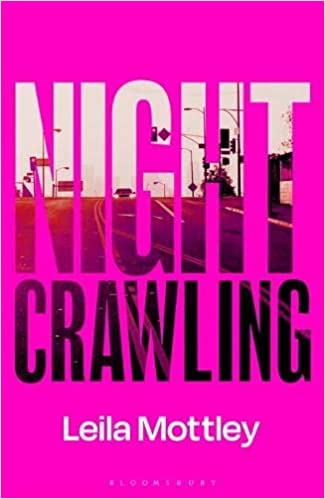 She may be only 20 years old, but Leila Mottley is the real deal. Her debut novel, laden with praise from her mentor Ruth Ozeki and many others, reminded me of Bryan Washington’s work. The first-person voice is convincing and mature as Mottley spins the (inspired by a true) story of an underage prostitute who testifies against the cops who have kept her in what is virtually sex slavery. At 17, Kiara is the de facto head of her household, with her father dead, her mother in a halfway house, and her older brother pursuing his dream of recording a rap album. When news comes of a rise in the rent and Kia stumbles into being paid for sex, she knows it’s her only way of staying in their Oakland apartment and looking after her neglected nine-year-old neighbour, Trevor.
I loved her relationships with Trevor, her best friend Alé (they crash funerals for the free food), and trans prostitute Camila, and the glimpses into prison life and police corruption. This doesn’t feel like misery for the sake of it, just realistic and compassionate documentation. There were a few places where I felt the joins showed, like a teacher had told her she needed to fill in some emotional backstory, and I noticed an irksome habit of turning adjectives into verbs or nouns (e.g., “full of all her loud,” “the sky is just starting to pastel”); perhaps this is an instinct from her start in poetry, but it struck me as precious. However, this is easily one of the more memorable 2022 releases I’ve read, and I’d love to see it on the shortlist and on other prize lists later this year and next. (Public library)
Oh William! by Elizabeth Strout
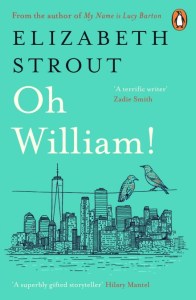 This was a DNF for me last year, but I tried again. The setup is simple: Lucy Barton’s ex-husband, William, discovers he has a half-sister he never knew about. William and Lucy travel from New York City to Maine in hopes of meeting her. For both of them, the quest sparks a lot of questions about how our origins determine who we are, and what William’s late mother, Catherine, was running from and to in leaving her husband and small child behind to forge a different life. Like Lucy, Catherine came from nothing; to an extent, everything that unfolded afterwards for them was a reaction against poverty and neglect.
The difficulty of ever really knowing another person, or even understanding oneself, is one of Strout’s recurring messages. There are a lot of strong lines and relatable feelings here. What I found maddening, though, is Lucy’s tentative phrasing, e.g. “And I cannot explain it except to say—oh, I don’t know what to say! Truly, it is as if I do not exist, I guess is the closest thing I can say.” She employs hedging statements like that all the time; it struck me as false that someone who makes a living by words would be so lacking in confidence about how to say what she means. So I appreciated the psychological insight but found Lucy’s voice annoying, even in such a short book. (Public library)
A Recap
I’ve read 6 of the 13 at this point, have imminent plans to read After Sappho for a Shelf Awareness review, and would still like to read the Mortimer if my library system acquires it. The others? Meh. I might consider catching up if they’re shortlisted.
My book group wasn’t chosen to shadow the Booker Prize this year, which is fair enough since we already officially shadowed the Women’s Prize earlier in the year (here are the six successful book clubs, if you’re interested). However, we have been offered the chance to send in up to five interview questions for the shortlisted authors. The Q&As will then be part of a website feature. And I was pleasantly surprised to see that my non-holiday snap of a Booker Prize nominee turned up in this round-up!
Here’s my (not particularly scientific) reasoning for what might make the shortlist:
A literary puzzle novel
Trust by Hernan Diaz or Case Study by Graeme Macrae Burnet
- Trust feels more impressive, and timely; GMB already had his chance.
A contemporary novel
Nightcrawling by Leila Mottley or Oh William! by Elizabeth Strout
- Oh William! is the weakest Strout novel I’ve read. Mottley’s is a fresh voice that deserves to be broadcast.

A satire
The Trees by Percival Everett or Seven Moons of Maali Almeida by Shehan Karunatilaka
- Without having read either, I’m going to hazard a guess that the Everett is too Ameri-centric/similar to The Sellout. The Booker tends to reward colourful Commonwealth books. [EDITED to add that I forgot to take into my considerations Glory by NoViolet Bulawayo; while it doesn’t perfectly fit this category, as a political allegory it’s close enough that I’ll include it here. I would not be at all surprised if it made the shortlist, along with the Karunatilaka.]

A couple of historical novels
Booth by Karen Joy Fowler or After Sappho by Selby Wynn Schwartz
and/or
A couple of Irish novels
Small Things Like These by Claire Keegan or The Colony by Audrey Magee
- I’m hearing such buzz about the Magee, and there’s such love out there for the Keegan, that I reckon both of these will make it through.


The odd one out?
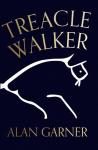
Treacle Walker by Alan Garner or Maps of Our Spectacular Bodies by Maddie Mortimer
- Maybe nostalgia will spur the judges to give Garner a chance in his 80s.

My predicted shortlist:



On Tuesday evening we’ll find out if I got any of these right!
What have you read from the longlist? What do you most want to read, or see on the shortlist?
Book Serendipity, May to Mid-August 2022
This is a regular feature of mine every few months. I call it “Book Serendipity” when two or more books that I read at the same time or in quick succession have something in common – the more bizarre, the better. Because I usually have 20–30 books on the go at once, I suppose I’m more prone to such incidents. The following are in roughly chronological order.
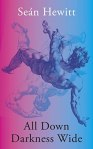
- Not only did the opening scene of All Down Darkness Wide by Seán Hewitt share with Falling Angels by Tracy Chevalier a graveyard setting, but more specifically an angel statue whose head falls off.

- SPOILER: {The protagonist has a backstory of a mother who drowned, presumably by suicide, in Secrets of the Sea House by Elisabeth Gifford and The Dance Tree by Kiran Millwood Hargrave.}
- I started reading two e-books on the same day that had Taylor Swift lyrics as an epigraph: Bad Vibes Only by Nora McInerny and Tracy Flick Can’t Win by Tom Perrotta. I have never knowingly heard a Taylor Swift song.
- Rescuing insects from a swimming pool in Fledgling by Hannah Bourne-Taylor and In the Quaker Hotel by Helen Tookey.
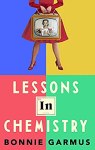
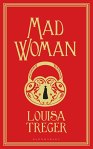
- Reading two feminist works of historical fiction in which the protagonist refuses to marry (even though it’s true love) at the same time: Lessons in Chemistry by Bonnie Garmus and Madwoman by Louisa Treger (about Nellie Bly).
- Two London-set books featuring a daughter named Mabel, one right after the other: This Is Not a Pity Memoir by Abi Morgan and Bridget Jones: Mad about the Boy by Helen Fielding.
- In Jenn Shapland’s My Autobiography of Carson McCullers I came across the fact that McCullers married the same man twice. Just a few days before, I’d seen that same odd fact about Hilary Mantel in her Wikipedia bio.
- A character named Clodagh in Black Narcissus by Rumer Godden and “Rainbows” by Joseph O’Neill, one of the entries in The Best Short Stories 2022: The O. Henry Prize Winners.
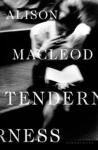
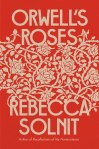
- Reading two books about an English author who died young of TB at the same time: Tenderness by Alison MacLeod (about D.H. Lawrence) and Orwell’s Roses by Rebecca Solnit.
- Reading two novels that mention the shipwreck of the Batavia at the same time: The Night Ship by Jess Kidd (where it’s a major element) and Cloudstreet by Tim Winton (just a tiny reference that nonetheless took me aback). According to Wikipedia, “Batavia was a ship of the Dutch East India Company. Built in Amsterdam in 1628 as the company’s new flagship, she sailed that year on her maiden voyage for Batavia, capital of the Dutch East Indies. On 4 June 1629, Batavia was wrecked on the Houtman Abrolhos, a chain of small islands off the western coast of Australia.”
- David Lack’s Swifts in a Tower is mentioned in Swifts and Us by Sarah Gibson (no surprise there) but also in From the Hedgerows by Lew Lewis.
- There’s a child nicknamed Chub in Damnation Spring by Ash Davidson and Cloudstreet by Tim Winton (which both also at least started off being buddy reads with Marcie of Buried in Print!).
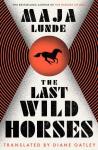
- Two novels in quick succession in which the discovery of a horse skeleton sparks the action in one story line: The Last Wild Horses by Maja Lunde and (coming up soon – I have a library reservation placed) Horse by Geraldine Brooks.
- Unst, Shetland as a setting in Orchid Summer by Jon Dunn, Sightlines by Kathleen Jamie, Julia and the Shark by Kiran Millwood Hargrave, and Where the Wildflowers Grow by Leif Bersweden.
- “Quiet as it’s kept” (a quote from the opening line of Toni Morrison’s The Bluest Eye) is borrowed in a poem in No Country for Eight-Spot Butterflies by Julian Aguon and one in the anthology American Wildflowers: A Literary Field Guide, ed. Susan Barba (“A Siren Patch of Indigo” by Cyrus Cassells).
- I didn’t recognize the word “swingeing” in The Reindeer Hunters by Lars Mytting and encountered it again the same day in Brief Lives by Anita Brookner before I had a chance to look it up (it means extreme or severe).
- A 1950s setting and a main character who is a man with missing fingers/arm in Cloudstreet by Tim Winton and The Young Accomplice by Benjamin Wood.
What’s the weirdest reading coincidence you’ve had lately?
The Best Books from the First Half of 2022
Yes, it’s that time of year already! At first I thought I wouldn’t have enough 2022-released standouts to fill a post, but the more I looked through my list the more I realized that, actually, it has been a pretty good reading year. It remains to be seen, of course, how many of these will make it onto my overall best-of year list, but for now, these are my highlights. I made it up to an even 20 by including one that doesn’t release until July. Fiction is winning thus far! I give review excerpts below and link to the full text here or elsewhere.
Fiction
 Our Wives under the Sea by Julia Armfield: Miri is relieved to have her wife back when Leah returns from an extended deep-sea expedition. Something went wrong with the craft when it was too late to evacuate, though. Chapters alternate between Miri describing their new abnormal and Leah recalling the voyage. As Miri tries to tackle life admin for both of them, she feels increasingly alone. This is a sensitive study of love, grief and dependency. Armfield gives an increasingly eerie story line a solid emotional foundation.
 These Days by Lucy Caldwell: A beautiful novel set in Belfast in April 1941. We see the Second World War mostly through the eyes of the Bell family – especially daughters Audrey, engaged to be married to a young doctor, and Emma, in love with a fellow female first aider. The evocation of a time of crisis is excellent. The lack of speech marks, fluid shifting between perspectives, and alternation between past and present tense keep the story from seeming too familiar or generic. All of the female characters have hidden depths.
 Groundskeeping by Lee Cole: In Cole’s debut novel, two aspiring writers meet on a Kentucky college campus and form a romantic connection despite very different backgrounds. There are stereotypes to be overcome as Owen introduces Alma to Kentucky culture and slang. Trump’s election divides families and colleagues. The gentle satire on the pretensions of writing programs is another enjoyable element. Three-dimensional characters, vivid scenes ripe for the Netflix treatment, timely themes and touching relationships: alright!
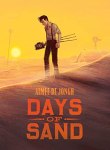 Days of Sand by Aimée de Jongh: This Great Depression-era story was inspired by the work of photographers such as Dorothea Lange. John Clark is following in his father’s footsteps as a photographer, leaving NYC for the Oklahoma panhandle. Locals are suspicious of John as an outsider, especially when they learn he is working to a checklist. Whether a cityscape or the midst of a dust storm, de Jongh’s scenes are stark and evocative. It’s rare for me to find the story and images equally powerful in a graphic novel, but that’s definitely the case here.
 Dance Move by Wendy Erskine: The 11 stories in Erskine’s second collection do just what short fiction needs to: dramatize an encounter, or a moment, that changes life forever. Her characters are ordinary, moving through the dead-end work and family friction that constitute daily existence, until something happens, or rises up in the memory, that disrupts the tedium. Erskine being from Belfast, evidence of the Troubles is never far away. Her writing is blunt and edgy, with no speech marks plus flat dialogue and slang.
 Antipodes by Holly Goddard Jones: Riveting stories of contemporary life in the American South and Midwest. Some have pandemic settings; others are gently magical. All are true to the anxieties of modern careers, marriage and parenthood. Endings elicit a gasp, particularly the audacious inconclusiveness of “Exhaust,” a tense tale of a quarreling couple driving through a blizzard. Worry over environmental crises fuels “Ark,” about a pyramid scheme for doomsday preppers. Nickolas Butler and Lorrie Moore fans will find much to admire.
 Sea of Tranquility by Emily St. John Mandel: This dazzlingly intricate novel blends historical fiction, up-to-the-minute commentary and science-fiction predictions. In 2401, the Time Institute hires Gaspery-Jacques Roberts to investigate a recurring blip in time. Fans of The Glass Hotel will recognize some characters, and those familiar with Station Eleven will find similarities in a pandemic plot that resonates with the Covid-19 experience. How does Mandel do it? One compulsively readable hit after another.
 Very Cold People by Sarah Manguso: The aphoristic style of some of Manguso’s previous books continues here as discrete paragraphs and brief vignettes build to a gloomy portrait of Ruthie’s archetypical affection-starved childhood in the fictional Massachusetts town of Waitsfield in the 1980s and 90s. The depiction of Ruthie’s narcissistic mother is especially acute. So much resonated with me. This is the stuff of girlhood – if not universally, then certainly for the (largely pre-tech) American 1990s as I experienced them.
 How High We Go in the Dark by Sequoia Nagamatsu: Just the right blend of literary fiction and science fiction. Opening in 2031 and stretching another 70 years into the future, this linked short story collection imagines how a pandemic reshapes the world and how communication and connection might continue after death. All but one story are in the first person, so they feel like personal testimonies. The whole is greater than the sum of the parts. The focus on illness and bereavement, but also on the love that survives, made this a winner.
 The Swimmers by Julie Otsuka: Otsuka’s third novel of the Japanese American experience again employs the first-person plural, as well as the second person – rarer perspectives that provide stylistic novelty. The first two chapters are set at a pool that, for the title swimmers, serves as a locus of escape and safety. On the first page we’re introduced to Alice, whose struggle with dementia becomes central. I admired Otsuka’s techniques for moving readers through the minds of the characters, alternating range with profundity and irony with sadness.
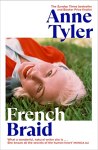 French Braid by Anne Tyler: My 17th from Tyler, and easily her best new work in 18 years. It joins my other favourites such as Dinner at the Homesick Restaurant which reveal a dysfunctional family’s quirks through a close look, in turn, at the various members. Mercy is a painter and essentially moves into her studio, but without announcing it, and her husband Robin spends the next 25+ years pretending they still share a home. Other surprises from Tyler this time: a mild sex scene and a gay character. A return to form. Brava!
Nonfiction
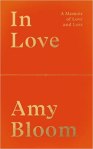 In Love by Amy Bloom: Bloom’s husband, Brian Ameche, was diagnosed with early-onset Alzheimer’s in his mid-60s, having exhibited mild cognitive impairment for several years. Brian quickly resolved to make a dignified exit while he still, mostly, had his faculties. This achieves the perfect tone, mixing black humour with teeth-gritted practicality as Bloom chronicles their relationship, the final preparations, his assisted suicide at Dignitas in Switzerland, and the aftermath. An essential, compelling read.
 Everything Is True by Roopa Farooki: Second-person, present-tense narration drops readers right into the life of a junior doctor. In February 2020, Farooki’s sister Kiron died of breast cancer. During the first 40 days of the initial UK lockdown, she continues to talk to Kiron. Grief opens the door for magic realism. There is also wry humour, wordplay, slang and cursing. A hybrid work that reads as fluidly as a novel while dramatizing real events, this is sure to appeal to people who wouldn’t normally pick up a bereavement or medical memoir.
 Body Work by Melissa Febos: A boldly feminist essay collection that explores how autobiographical writing can help one face regrets and trauma and extract meaning from the “pliable material” of memory. “In Praise of Navel Gazing” affirms the importance of women airing their stories of abuse and thereby challenging the power structures that aim to keep victims silent. “A Big Shitty Party” warns of the dangers of writing about real people. “The Return” employs religious language for the transformation writing can achieve.
 All Down Darkness Wide by Seán Hewitt: This poetic memoir about love and loss in the shadow of mental illness blends biography, queer history and raw personal experience. The book opens, unforgettably, in a Liverpool graveyard where Hewitt has assignations with anonymous men. His secret self, suppressed during teenage years in the closet, flies out to meet other ghosts: of his college boyfriend; of men lost to AIDS during his 1990s childhood; of English poet George Manley Hopkins; and of a former partner who was suicidal. (Coming out on July 12th from Penguin/Vintage (USA) and July 14th from Jonathan Cape (UK). My full review is forthcoming for Shelf Awareness.)
Poetry
 Thorpeness by Alison Brackenbury: This tenth collection features abundant imagery of animals and the seasons. Alliteration is prominent, but there is also a handful of rhymes. Family history and the perhaps-idyllic rural underpin the verse set in Lincolnshire and Gloucestershire as Brackenbury searches for ancestral graves and delivers elegies. I especially loved “Aunt Margaret’s Pudding,” a multipart poem about her grandmother’s life. There are also playful meetings between historical figures.
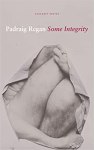 Some Integrity by Padraig Regan: The sensual poems in this debut collection are driven by curiosity, hunger and queer desire. Flora and foods are described as teasing mystery, with cheeky detail. An unusual devotion to ampersands; an erotic response to statuary; alternating between bold sexuality and masochism to the point of not even wanting to exist; a central essay on the Orlando nightclub shooting and videogames – the book kept surprising me. I loved the fertile imagery, and appreciated Regan’s exploration of a nonbinary identity.
 Love Poems in Quarantine by Sarah Ruhl: Having read Ruhl’s memoir Smile, I recognized the contours of her life and the members of her family. Cooking and laundry recur: everyday duties mark time as she tries to write and supervises virtual learning for three children. “Let this all be poetry,” she incants. Part 2 contains poems written after George Floyd’s murder, the structure mimicking the abrupt change in focus for a nation. Part 3’s haiku and tanka culminate in a series on the seasons. A welcome addition to the body of Covid-19 literature.
 Rise and Float by Brian Tierney: Although it tackles heavy subjects like grief and mental health, the collection’s candor and stunning images transform the melancholy into the sublime. Much of the verse is in the first person, building an intimate portrait of the poet and his relationships. A family history of mental illness and electroshock treatment occasions a visit to a derelict psychiatric hospital. Recurring metaphors of holes dramatize a struggle against the void. Tierney’s close attention lends beauty to bleak scenes.
 Vinegar Hill by Colm Tóibín: I didn’t realize when I started that this was Tóibín’s debut collection; so confident is his verse, I assumed he’d been publishing poetry for decades. There’s a wide range of tone, structures and topics. Bereavements and chemotherapy are part of a relatable current events background. Irish-Catholic nostalgia animates a witty sequence from “The Nun” to “Vatican II.” Come along on armchair travels. Poems are based around anecdotes or painterly observations. The line breaks are unfailingly fascinating.
What are some of the best books you’ve read so far this year?
What 2022 releases do I need to catch up on right away?
March Releases by Rebecca Brown, Luis Carrasco, A.J. Lees et al.
As busy as I am with house stuff, I’m endeavouring to keep up with the new releases publishers have been kind enough to send. Today I have a collection of essays on the seasons and mental health, a novella inhabiting a homeless girl’s situation, and a memoir about how skills of observation have been invaluable to a neurologist’s career. (I also mention a few other March releases that I have written about elsewhere or will be reviewing soon.)
You Tell the Stories You Need to Believe: On the four seasons, time and love, death and growing up by Rebecca Brown
 Brown has shown up twice now in my November novella reading (Excerpts from a Family Medical Dictionary in 2016 and the excellent The Gifts of the Body in 2018). I was delighted to learn from a recent Shelf Awareness newsletter that she had a new book, and its Didion-esque title intrigued me. These four essays, which were originally commissioned for The Stranger, Seattle’s alternative weekly, and appeared in print between 2014 and 2016, move methodically through the four seasons and through the weather of the heart, which doesn’t always follow nature’s cues. Depression can linger and mock by contrast the external signs of growth and happiness; it’s no wonder that spring is dubbed the “suicide season.”
The relaxed collages of experience and research blend stories from childhood and later life with references to etymology, literature, music, mythology and poetry. Spring brings to mind the Persephone legend and Vivaldi’s compositions. Summer makes her think of riding bikes on dusty roads and a pregnant dog that turned up just before a storm. Autumn has always been for falling in or out of love. Winter is hard to trudge through, but offers compensatory blessings: “You stand inside the house of your friends and feel and see and everyone is in love and alive and you get to be here, grateful, too, however long, this time, the winter lasts.”
A danger with seasonal books is that, with nostalgia tingeing everything, you end up with twee, obvious reflections. Here, the presence of grief and mental health struggles creates a balanced tone, and while the book as a whole feels a little evanescent, it’s a lovely read.
Another favorite passage:
Maybe like how in the winter it’s hard to imagine spring, I forgot there was anything else besides despair. I needed—I need—to remember the seasons change. I need to remember the dark abates, that light and life return. This is a story I need to believe.
With thanks to Chatwin Books for the e-copy for review.
Ghosts of Spring by Luis Carrasco
Carrasco’s second novella (after 2018’s El Hacho) takes an intimate journey with a young woman who sleeps rough on the streets of a city in the west of England (Cheltenham? Gloucester?). Elemental concerns guide her existence: where can she shelter for the night? Where can she store her meagre belongings during the day? Does she have enough coins to buy a cup of tea from a café, and how long can she stretch out one drink so she can stay in the warm? The creeping advance of the winter (and the holiday season) sets up an updated Christmas Carol type of scenario where the have-nots are mostly invisible to the haves but rely on their charity:
 Hidden in plain sight amongst them, in nooks and doorways and sitting with heads hanging against cold stone walls are huddled shapes, blanketed and inert, with faces of indifferent boredom. Too cold to fish for cash and pity[,] they sit with their faces wrapped in dirty scarves and stolen hats, working the empty corners of tobacco pouches and sucking cold coffee from yesterday’s cups. Ghosts of flesh, they are here and everywhere and nobody sees a thing.
With no speech marks, the narrative flows easily between dialogue and a third-person limited point of view. The protagonist, generally just called “the girl,” is friends with a group of prostitutes and tries out a night in a homeless hostel and sleeping in an allotment shed when she takes a bus to the suburbs. Carrasco is attentive to the everyday challenges she faces, such as while menstruating. We get hints of the family issues that drove her away, but also follow her into a new opportunity.
The book has an eye to her promising future but also bears in mind the worst that can happen to those who don’t escape poverty and abuse. At times underpowered, at others overwritten (as I found for my only other époque press read, What Willow Says), this succeeds as a compassionate portrait of extreme circumstances, something I always appreciate in fiction, and would make a good pairing with another story of homelessness, Kerstin Hensel’s Dance by the Canal from Peirene Press.
With thanks to époque press for the proof copy for review.
Brainspotting: Adventures in Neurology by A.J. Lees
 Dr Andrew Lees is a professor of neurology at the National Hospital in London and a world-renowned Parkinson’s disease researcher. The essays in this short autobiographical volume emphasize the importance of listening and noticing. The opening piece, in fact, is about birdwatching, a boyhood hobby that first helped him develop this observational ability. In further chapters he looks back to his medical education and early practice in London’s East End and in Paris in the 1960s and 1970s. He profiles the hospitals he has known over the last five decades, and the neurologists who paved the way for the modern science, such as Jean-Martin Charcot and François Lhermitte.
The professors whose lessons have most stuck with him are those who insisted on weaving patient histories and symptoms into a story. Lees likens the neurologist’s work to Sherlock Holmes’s deductions – even the smallest signs can mean so much. Indeed, Arthur Conan Doyle, himself a doctor, is known to have modelled Holmes on Joseph Bell, a Scottish surgeon. I particularly liked the essay “The Lost Soul of Neurology,” about science versus spirituality. As a whole, this didn’t particularly stand out for me compared to many of my other medical reads, but I’d still liken it to the works of Gavin Francis and Henry Marsh.
With thanks to Notting Hill Editions for the free copy for review.
Plus a few more March releases I’ve read recently:
Reviewed for BookBrowse:
Booth by Karen Joy Fowler
 In an epic fictional sweep from 1822 to nearly the close of the century, Fowler surveys the Booth family’s triumphs and tragedies. Short asides chronicle Lincoln’s rise in parallel. The foreshadowing is sometimes heavy-handed, and the extended timeline means there is also some skating over of long periods. Booth is low on scenes and dialogue, with Fowler conveying a lot of information through exposition. Luckily, the present-tense narration goes a long way toward making this less of a dull group biography and more of an unfolding story. I also appreciated that the Booth sisters are given major roles as point-of-view characters. The issues considered, like racial equality, political divisions and mistrust of the government, are just as important in our own day. Recommended to fans of March and Hamnet. (I also wrote a related article on the Booth family actors and Shakespeare in performance in the 19th-century USA.)
With thanks to Serpent’s Tail for the proof copy for review.
To review for BookBrowse soon: Groundskeeping by Lee Cole, one of my favourite 2022 releases so far; just the sort of incisive contemporary American novel I love. Big questions of class, family, fate and politics are bound up in a campus-set love story between a drifting manual labourer with literary ambitions and a visiting writer. (Faber)
And coming up tomorrow in my Reading Ireland Month roundup: Vinegar Hill, Colm Tóibín’s terrific debut collection of poems about current events, religion and travels. (Carcanet Press)
Do any of these books appeal to you?
Three on a Theme (and #ReadIndies): Nonfiction I Sponsored Last Year
Here in the UK we’re hunkering down against the high winds of Storm Eunice. We’ve already watched two trees come down in a neighbour’s garden (and they’re currently out there trying to shore up the fence!), and had news on the community Facebook page of a huge conifer down by the canal. Very sad. I hope you’re all safe and well and tucked up at home.
Today I’m looking back at several 2021 nonfiction releases I helped come into existence. The first and third I sponsored via Unbound, and the second through Dodo Ink. Supporting small publishers also ties this post into Karen and Lizzy’s February Read Indies initiative. All: 

This Party’s Dead: Grief, Joy and Spilled Rum at the World’s Death Festivals by Erica Buist
A death tourism book? I’m there! This is actually the third I’ve read in recent years, after From Here to Eternity by Caitlin Doughty and Near the Exit by Lori Erickson. Buist’s journey was sparked off by the sudden death of her fiancé Dion’s father, Chris – he was dead for a week before his cleaner raised the alarm – and her burden of guilt. It’s an act of atonement for what happened to Chris and the fact that she and Dion, who used to lodge with him, weren’t there when he really needed it. It’s also her way of discovering a sense of the sacred around death, instead of simply fearing and hiding from it.
 This takes place in roughly 2018. The author travelled to eight festivals in seven countries, starting with Mexico for the Day of the Dead and later for an exploration of Santa Muerte, a hero of the working class. Other destinations included Nepal, Sicily (“bones of the dead” biscotti), Madagascar (the “turning of the bones” ceremony – a days-long, extravagant party for a whole village), Thailand and Kyoto. The New Orleans chapter was a standout for me. It’s a city where the dead outnumber the living 10 to 1 (and did so even before Katrina), and graveyard and ghost tours are a common tourist activity.
Buist is an entertaining writer, snappy and upbeat without ever seeming flippant as she discusses heavy topics. The mix of experience and research, the everyday and the momentous, is spot on and she recreates dialogue very well. I appreciated the earnest seeking here, and would happily read a book of hers on pretty much any subject. (New purchase from Unbound)
Trauma: Essays on Art and Mental Health, ed. Thom Cuell & Sam Mills
I’ll never learn: I left it nearly 10 months between finishing this and writing it up. And took no notes. So it’s nearly impossible to recreate the reading experience. What I do recall, however, is how wide-ranging and surprising I found this book. At first I had my doubts, thinking it was overkill to describe sad events like a break-up or loss as “traumatic”. But an essay midway through (which intriguingly trades off autobiographical text by Kirsty Logan and Freudian interpretation by Paul McQuade) set me straight: trauma cannot be quantified or compared; it’s all about the “unpreparedness of the subject. A traumatic event overwhelms all the defences laid out in advance against the encroachment of negative experience.”
 The pieces can be straightforward memoir fragments or playful, experimental narratives more like autofiction. (Alex Pheby’s is in the second person, for instance.) Within those broad branches, though, the topics vary widely. James Miller writes about the collective horror at the Trump presidency. Emma Jane Unsworth recounts a traumatic delivery – I loved getting this taste of her autobiographical writing but, unfortunately, it outshone her full-length memoir, After the Storm, which I read later in the year. Susanna Crossman tells of dressing up as a clown for her clinical therapy work. Naomi Frisby (the much-admired blogger behind The Writes of Womxn) uses food metaphors to describe how she coped with the end of a bad relationship with a narcissist.
As is inevitable with a collection this long, there are some essays that quickly fade in the memory and could have been omitted without weakening the book as a whole. But it’s not gracious to name names, and, anyway, it’s likely that different pieces will stand out for other readers based on their own experiences. (New purchase from Dodo Ink)
Four favourites:
- “Inheritance” by Christiana Spens (about investigating her grandparents’ lives through screen prints and writing after her father’s death and her son’s birth)
- “Blank Spaces” by Yvonna Conza (about the lure of suicide)
- “The Fish Bowl” by Monique Roffey (about everyday sexual harassment and an assault she underwent as a teenager; I enjoyed this so much more than her latest novel)
- “Thanks, I’ll Take the Chair” by Jude Cook, about being in therapy.
Women on Nature: 100+ Voices on Place, Landscape & the Natural World, ed. Katharine Norbury
It was over three years between when I pledged support and held the finished book in my hands; I can only imagine what a mammoth job compiling it was for Katharine Norbury (author of The Fish Ladder). The subtitle on the title page explains the limits she set: “An anthology of women’s writing about the natural world in the east Atlantic archipelago.” So, broadly, British and Irish writers, but within that there’s a lot of scope for variety: fragments of fiction (e.g., a passage from Jane Eyre), plenty of poetry, but mostly nonfiction narratives – some work in autobiographical reflection; others are straightforward nature or travel writing. Excerpts from previously published works trade off with essays produced specifically for this volume. So I encountered snippets of works I’d read by the likes of Miriam Darlington, Melissa Harrison, Sara Maitland, Polly Samson and Nan Shepherd. The timeline stretches from medieval mystics to today’s Guardian Country Diarists and BIPOC nature writers.
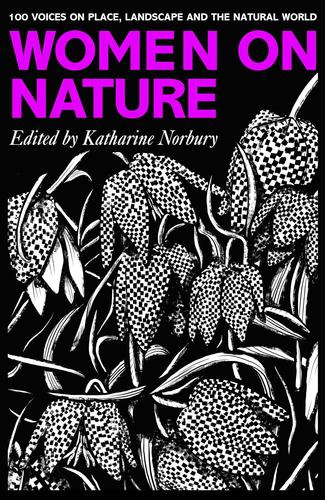 For most of the last seven months of 2021, I kept this as a bedside book, reading one or two pieces on most nights. It wasn’t until early this year that I brought it downstairs and started working it into my regular daily stacks so that I would see more progress. At first I quibbled (internally) with the decision to structure the book alphabetically by author. I wondered if more might have been done to group the pieces by region or theme. But besides being an unwieldy task, that might have made the contents seem overly determined. Instead, you get the serendipity of different works conversing with each other. So, for example, Katrina Porteous’s dialect poem about a Northumberland fisherman is followed immediately by Jini Reddy’s account of a trip to Lindisfarne; Margaret Cavendish’s 1653 dialogue in verse between an oak tree and the man cutting him down leads perfectly into an excerpt from Nicola Chester’s On Gallows Down describing a confrontation with tree fellers.
I’d highly recommend this for those who are fairly new to the UK nature writing scene and/or would like to read more by women. Keep it as a coffee table book or a bedside read and pick it up between other things. You’ll soon find your own favourites. (New purchase from Unbound)
Five favourites:
- “Caravan” by Sally Goldsmith (a Sheffield tree defender)
- “Enlli: The Living Island” by Pippa Marland (about the small Welsh island of Bardsey)
- “An Affinity with Bees” by Elizabeth Rose Murray (about beekeeping, and her difficult mother, who called herself “the queen bee”)
- “An Island Ecology” by Sarah Thomas (about witnessing a whale hunt on the Faroe Islands)
- My overall favourite: “Arboreal” by Jean McNeil (about living in Antarctica for a winter and the contrast between that treeless continent and Canada, where she grew up, and England, where she lives now)
“It occurred to me that trees were part of the grammar of one’s life, as much as any spoken language. … To see trees every day and to be seen by them is a privilege.”
Stay strong, trees!
Sponsored any books, or read any from indie publishers, recently?
Swedish Death Cleaning (#NordicFINDS and #ReadIndies) & Three Rereads
An unexpected opportunity to contribute another post for Nordic FINDS this week (after my skim of Sophie’s World): yesterday we went into London – for just the second time since the pandemic started – and I took along a couple of novella-length books, one of them this Swedish nonfiction work that I picked up from a charity shop the other week. As it was released by Canongate in 2017, it also fits into Karen and Lizzy’s Read Indies challenge.
Our previous London trip was to see Bell X1 play at Union Chapel back in December. Yesterday was also for a gig, this time The Lost Words: Spell Songs playing Cadogan Hall. I’d been dubious about this ensemble project based on Robert Macfarlane and Jackie Morris’s The Lost Words and The Lost Spells but ended up loving both books as well as the two albums of folk/world music based on them, and it was a brilliant evening of music.
Anyway, on to the books. I also reread a novella in advance of book club, so afterwards I’ll take a quick look at the rereading I’ve done so far this year.
Döstädning: The Gentle Art of Swedish Death Cleaning by Margareta Magnusson
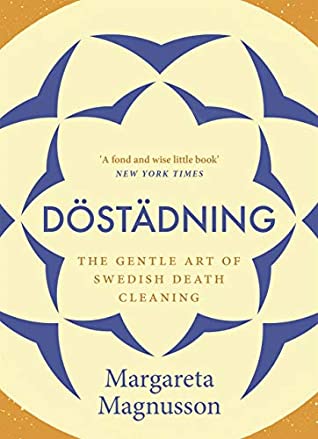 This is not about trauma cleaning, but downsizing and culling possessions so that the burden doesn’t fall to your children or other relatives after your death. Magnusson, who is in her 80s, has experience with death cleaning: first after her mother’s death, then after her mother-in-law’s, and finally after her husband’s, when she decided to move from the family home to a small flat. I enjoyed the little glimpses into her life as a mother of five and an artist. The family moved around a lot for her husband’s work, living in the USA and Singapore. She makes more of an allowance for possessions that hold sentimental value (especially photos and letters), being more concerned about the accumulation of STUFF.
As for general strategies, she suggests starting the process c. age 65 and beginning with the big things, from furniture on down, so that you make visible progress right away. “I’ve discovered that it is rewarding to spend time with these objects one last time and then dispose of them.” She goes category by category through her possessions. Clothing and cookbooks are pretty easy to shed: get rid of whatever doesn’t fit or suit you anymore, and only keep a couple of much-used cookbooks; you can find most any recipe on the Internet these days, after all. Leave the emotional material for last or you’ll get bogged down, she advises – you can take your time and enjoy reminiscing as you look through mementoes later on. She even considers what to do about old pets.
To let things, people and pets go when there is no better alternative is a lesson that has been very difficult for me to learn, and it is a lesson that life, as it goes further along, is teaching me more and more often.
Magnusson writes that she does not intend this to be a sad book, and it’s mostly very practical and unsentimental, even funny at times: on disposing of secret stuff, “save your favourite dildo but throw away the other fifteen!”; a little section on the perils of “man caves” and her memories of her clumsy cat Klumpeduns. I also laughed at the concept of a fulskåp (“a cabinet for the ugly”) for unwanted gifts that must eventually be rehomed or disposed of.
One problem that I have with decluttering books in general is that there isn’t enough of an anti-consumerist and green message. One, don’t accumulate the stuff in the first place (and reuse and buy secondhand wherever possible); two, possessions should almost never be thrown away, and only as an absolute last resort after doing everything possible to repair, refurbish, rehome or recycle them.
This was an enjoyable little book that I’ll pass on to someone else who might find it useful (so long as it’s not considered too on the nose as a book recommendation!), but it didn’t necessarily add anything for me beyond what I’d encountered in Outer Order, Inner Calm by Gretchen Rubin and Year of No Clutter by Eve O. Schaub. (Secondhand purchase)
[I’m a little confused as to whether this is in translation or not. It first appeared in Swedish, but as no translator is listed anywhere in the copyright info, I assume that Magnusson translated it herself. Apart from some wrong number/amount and during/over choices, it reads like a native speaker’s work.]
2022’s Rereading
I’ve reread three books so far this year, which for me is pretty good going. It helped that all three were novella length, and I had book club as an excuse to return to the two novels.
 The Sense of an Ending by Julian Barnes was the other book I popped in the back of my purse for yesterday’s London outing. Barnes is one of my favourite authors – I’ve read 21 books by him now! – but I remember not being very taken with this Booker winner when I read it just over 10 years ago. (I prefer to think of his win as being for his whole body of work as he’s written vastly more original and interesting books, like Flaubert’s Parrot.) It’s the story of an older man looking back on his youth, and his friend’s suicide, in the light of what he learns after a somewhat mysterious bequest. The themes of history, memory and regret certainly mean more to me now in my late 30s than they did in my late 20s, but I still find this work a little lightweight; sordid, too. (Free from mall bookshop)
Readalikes: Any Human Heart by William Boyd, Moon Tiger by Penelope Lively, The Child in Time by Ian McEwan
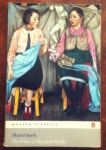 The Prime of Miss Jean Brodie by Muriel Spark was January’s book club selection. I had remembered no details apart from the title character being a teacher. It’s a between-the-wars story set in Edinburgh. Miss Brodie’s pet students are girls with attributes that remind her of aspects of herself. Our group was appalled at what we today would consider inappropriate grooming, and at Miss Brodie’s admiration for Hitler and Mussolini. Educational theory was interesting to think about, however. Spark’s work is a little astringent for me, and I also found this one annoyingly repetitive on the sentence level. (Public library)
 Brit-Think, Ameri-Think: A Transatlantic Survival Guide by Jane Walmsley: This is the revised edition from 2003, so I must have bought it as preparatory reading for my study abroad year in England. This may even be the third time I’ve read it. Walmsley, an American in the UK, compares Yanks and Brits on topics like business, love and sex, parenting, food, television, etc. I found my favourite lines again (in a panel entitled “Eating in Britain: Things that Confuse American Tourists”): “Why do Brits like snacks that combine two starches? (a) If you’ve got spaghetti, do you really need the toast? (b) What’s a ‘chip-butty’? Is it fatal?” The explanation of the divergent sense of humour is still spot on, and I like the Gray Jolliffe cartoons. Unfortunately, a lot of the rest feels dated – she’d updated it to 2003’s pop culture references, but these haven’t aged well. (New purchase?)
Any Nordic reads, or rereads, for you lately?
January 2022 Releases, Part I: Jami Attenberg and Roopa Farooki
It’s been a big month for new releases! I’m still working on a handful and will report back on two batches of three, tomorrow and Sunday; more will likely turn up in review roundups in future months. For today, I have a memoir in essays about a peripatetic writer’s life and an excerpt from my review of a junior doctor’s chronicle of the early days of the pandemic.
I Came All This Way to Meet You: Writing Myself Home by Jami Attenberg
 I’ve enjoyed Attenberg’s four most recent novels (reviewed here: The Middlesteins and All This Could Be Yours) so was intrigued to hear that she was trying out nonfiction. She self-describes as a “moderately successful author,” now in her early fifties – a single, independent feminist based in New Orleans after years in Manhattan and then Brooklyn. (Name-dropping of author friends: “Lauren” (Groff), “Kristen” (Arnett) and “Viola” (di Grado), with whom she stays in Italy.) Leaving places abruptly had become a habit; travelling from literary festival to holiday to writing residency was her way of counterbalancing a safe, quiet writing life at home. She tells of visiting a friend in Hong Kong and teaching fiction for two weeks in Vilnius – where she learned that, despite her Jewish heritage, Holocaust tourism is not her thing. Anxiety starts to interfere with travel, though, and she takes six months off flying. Owning a New Orleans home where she can host guests is the most rooted she’s ever been.
Along with nomadism, creativity and being a woman are key themes. Attenberg notices how she’s treated differently from male writers at literary events, and sometimes has to counter antifeminist perspectives even from women – as in a bizarre debate she ended up taking part in at a festival in Portugal. She takes risks and gets hurt, physically and emotionally. Break-ups sting, but she moves on and tries to be a better person. There are a lot of hard-hitting one-liners about the writing life and learning to be comfortable in one’s (middle-aged) body:
I believe that one must arrive at an intersection of hunger and fear to make great art.
Who was I hiding from? I was only ever going to be me. I was only ever going to have this body forever. Life was too short not to have radical acceptance of my body.
Whenever my life turns into any kind of cliché, I am furious. Not me, I want to scream. Not me, I am special and unusual. But none of us are special and unusual. Our stories are all the same. It is just how you tell them that makes them worth hearing again.
I did not know yet how books would save me over and over again. I did not know that a book was a reason to live. I did not know that being alive was a reason to live.
Late on comes her #MeToo story, which in some ways feels like the core of the book. When she was in college, a creative writing classmate assaulted her on campus while drunk. She reported it but nothing was ever done; it only led to rumours and meanness towards her, and a year later she attempted suicide. You know how people will walk into a doctor’s appointment and discuss three random things, then casually drop in a fourth that is actually their overriding concern? I felt that way about this episode: that really the assault was what Attenberg wanted to talk about, and could have devoted much more of the book to.
The chapters are more like mini essays, flitting between locations and experiences in the same way she has done, and sometimes repeating incidents. I think the intent was to mimic, and embrace, the random shape that a life takes. Each vignette is like a competently crafted magazine piece, but the whole is no more than the sum of the parts.
With thanks to Serpent’s Tail for the proof copy for review.
Everything Is True: A Junior Doctor’s Story of Life, Death and Grief in a Time of Pandemic by Roopa Farooki
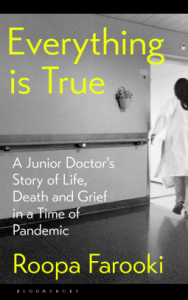 Farooki is a novelist, lecturer, mum of four, and junior doctor. Her storytelling choices owe more to literary fiction than to impassive reportage. The second-person, present-tense narration drops readers right into her position. Frequent line breaks and repetition almost give the prose the rhythm of performance poetry. There is also wry humour, wordplay, slang and cursing. In February 2020, her sister Kiron had died of breast cancer. During the first 40 days of the initial UK lockdown – the book’s limited timeframe – she continues to talk to Kiron, and imagines she can hear her sister’s chiding replies. Grief opens the door for magic realism, despite the title – which comes from a Balzac quote. A hybrid work that reads as fluidly as a novel while dramatizing real events, this is sure to appeal to people who wouldn’t normally pick up a bereavement or medical memoir. (Full review coming soon at Shiny New Books.)
A great addition to my Covid chronicles repertoire!
With thanks to Bloomsbury for the proof copy for review.
Would one of these books interest you?
Short Stories in September, Part II: Tove Jansson, Brandon Taylor, Eley Williams
Each September I make a special effort to read short stories, which otherwise tend to languish on my shelves and TBR unread. After my first four reviewed last week, I have another three wonderfully different collections, ranging from bittersweet children’s fantasy in translation to offbeat, wordplay-filled love notes via linked stories suffused with desire and desperation.
Tales from Moominvalley by Tove Jansson (1962; 1963)
[Trans. from the Swedish by Thomas Warburton]
 I only discovered the Moomins in my late twenties, but soon fell in love with the quirky charm of Jansson’s characters and their often melancholy musings. Her stories feel like they can be read on multiple levels, with younger readers delighting in the bizarre creations and older ones sensing the pensiveness behind their quests. There are magical events here: Moomintroll discovers a dragon small enough to be kept in a jar; laughter is enough to bring a fearful child back from literal invisibility. But what struck me more was the lessons learned by neurotic creatures. In “The Fillyjonk who believed in Disasters,” the title character fixates on her belongings—
“we are so very small and insignificant, and so are our tea cakes and carpets and all those things, you know, and still they’re important, but always they’re threatened by mercilessness…”
—but when a gale and a tornado come and sweep it all away, she experiences relief and joy:
“the strange thing was that she suddenly felt quite safe. It was a very strange feeling, and she found it indescribably nice. But what was there to worry about? The disaster had come at last.”
My other favourite was “The Hemulen who loved Silence.” After years as a fairground ticket-taker, he can’t wait to retire and get away from the crowds and the noise, but once he’s obtained his precious solitude he realizes he needs others after all. The final story, “The Fir Tree,” is a lovely Christmas one in which the Moomins, awoken midway through their winter hibernation, get caught up in seasonal stress and experience the holiday for the first time. (Public library)
Filthy Animals by Brandon Taylor (2021)
Real Life was one of my five favourite novels of 2020, and we are in parallel fictional territory here. Lionel, the protagonist in four of the 11 stories, is similar to Wallace insomuch as both are gay African Americans at a Midwestern university who become involved with a (straight?) white guy. The main difference is that Lionel has just been released from hospital after a suicide attempt. A mathematician (rather than a biochemist like Wallace), he finds numbers soothingly precise in comparison to the muddle of his thoughts and emotions.
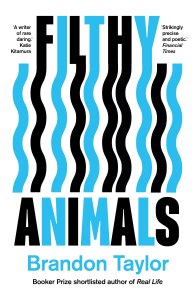 In the opening story, “Potluck,” he meets Charles, a dancer who’s dating Sophie, and the three of them shuffle into a kind of awkward love triangle where, as in Real Life, sex and violence are uncomfortably intertwined. It’s a recurring question in the stories, even those focused around other characters: how does tenderness relate to desire? In the throes of lust, is there room for a gentler love? The troubled teens of the title story are “always in the thick of violence. It moves through them like the Holy Ghost might.” Milton, soon to be sent to boot camp, thinks he’d like to “pry open the world, bone it, remove the ugly hardness of it all.”
Elsewhere, young adults face a cancer diagnosis (“Mass” and “What Made Them Made You”); a babysitter is alarmed by her charge’s feral tendencies (“Little Beast”); and same-sex couples renegotiate their relationships (Simon and Hartjes in “As Though That Were Love” and Sigrid and Marta in “Anne of Cleves,” one of my favourites). While the longer Lionel/Charles/Sophie stories, “Potluck” and “Proctoring,” are probably the best and a few others didn’t make much of an impression, the whole book has an icy angst that resonates. Taylor is a confident orchestrator of scenes and conversations, and the slight detachment of the prose only magnifies his characters’ longing for vulnerability (Marta says to Sigrid before they have sex for the first time: “I’m afraid I’ll mess it up. I’m afraid you’ll see me.” To which Sigrid replies, “I see you. You’re wonderful.”). (New purchase, Forum Books)
 A bonus story: “Oh, Youth” was published in Kink (2021), an anthology edited by Garth Greenwell and R.O. Kwon. I requested this from NetGalley just so I could read the stories by Carmen Maria Machado and Brandon Taylor. All of Taylor’s work feels of a piece, such that his various characters might be rubbing shoulders at a party – which is appropriate because the centrepiece of Real Life is an excruciating dinner party, Filthy Animals opens at a potluck, and “Oh, Youth” is set at a dinner party.
Grisha is here with Enid and Victor, his latest summer couple. He’s been a boytoy for hire since his architecture professor, Nate, surprised him by inviting him into his open marriage with Brigid. “His life at the time was a series of minor discomforts that accumulated like grit in a socket until rotation was no longer possible.” The liaisons are a way to fund a more luxurious lifestyle and keep himself in cigarettes.
While Real Life brought to mind Virginia Woolf, Taylor’s stories recall E.M. Forster or Thomas Mann. In other words, he’s the real deal: a blazing talent, here to stay.
Attrib. and Other Stories by Eley Williams (2017)
 After enjoying her debut novel, The Liar’s Dictionary, this time last year, I was pleased to find Williams’s first book in a charity shop last year. Her stories are brief (generally under 10 pages) and 15 of the 17 are first-person narratives, often voiced by a heartbroken character looking for the words to describe their pain or woo back a departed lover. A love of etymology is patent and, as in Ali Smith’s work, the prose is enlivened by the wordplay.
The settings range from an art gallery to a beach where a whale has washed up, and the speakers tend to have peculiar careers like an ortolan chef or a trainer of landmine-detecting rats. My favourite was probably “Synaesthete, Would Like to Meet,” whose narrator is coached through online dating by a doctor.
 I found a number of the stories too similar and thin, and it’s a shame that the hedgehog featured on the cover of the U.S. edition has to embody human carelessness in “Spines,” which is otherwise one of the standouts. But the enthusiasm and liveliness of the language were enough to win me over. (Secondhand purchase from the British Red Cross shop, Hay-on-Wye – how fun, then, to find the line “Did you know Timbuktu is twinned with Hay-on-Wye?”)
I’ll have one more set of short story reviews coming up before the end of the month, with a few other collections then spilling into October for R.I.P.
Saint Maybe by Anne Tyler (1991)
This year I’ve been joining in Liz’s Anne Tyler readalong for the novels I own and hadn’t read yet – I have one each lined up for the next three months as well. Saint Maybe was Tyler’s twelfth novel and forms part of what I consider to be her golden mid-period. It’s most like Dinner at the Homesick Restaurant, my absolute favourite, in that both might be classed as linked short story collections: each chapter is a standalone narrative with knockout first and last lines; together they build a careful picture of a dysfunctional family over the years.
 As the novel opens in the 1960s, Ian Bedloe is a lazy teenager contemplating college. When his older brother Danny marries Lucy, mother to Agatha and Thomas, Ian can’t help but comment on the timing of his sister-in-law’s third pregnancy. Danny didn’t realize he’s not the father of this new baby, Daphne, and the newfound knowledge pushes him over the edge. Lucy also fails to cope, and Ian is consumed with guilt at how he inadvertently caused the collapse of their family. In an effort to atone, he joins the puritanical Church of the Second Chance and drops out of college to help his parents raise the three children. Others have to convince him that life is not just about penance and that he deserves happiness, too.
This is one of those books where every character, no matter how minor, shines. I particularly loved Reverend Emmett, whose well-meaning doctrines have been taken further than he intended; Rita, whom the family hires to declutter the house (she’s reminiscent of the dog trainer in The Accidental Tourist); and Daphne, who turns into a rebellious teen for whom Ian will always have a soft spot. Ian’s parents could have faded into the background, but the book probes their grief and their feelings of purposelessness in retirement. My only slight qualm was about how Tyler describes the foreigners who live nearby: Middle Eastern graduate students at Johns Hopkins, they’re there simply to provide comic relief with their harebrained home maintenance schemes; the depiction is good-natured, yet seems dated.
In a few other Tyler novels, I’ve been put off by what can seem like flippancy or inconsequentiality. The works of hers that I love best emphasize both the humour and the sadness: the absurdity and tragedy of these ordinary suburban lives. Here, I especially noted the double-edged portrait of the nature of childcare: Ian “wondered how people endured children on a long-term basis—the monotony and irritation and confinement of them,” yet “They were all that gave his life color, and energy, and …well, life.” I also kept finding personal resonances – for instance, the whole theme of the short homily the pastor delivered at my mother’s wedding ceremony was second chances, my stepfather has a failing old dog like the Bedloes’ Beastie, and the account of Church summer camp rang all too true.
At the sentence level as well as the plot level, this is a very strong showing from Tyler, and a close second to Dinner at the Homesick Restaurant for me. I reckon anyone will be able to find themselves and their family in this story of the life chosen versus the life fallen into, and the difficult necessity of moving past regrets in the search for meaning. (Source: Charity shop) See also Liz’s review.
Favourite lines:
Bee (Ian’s mother): “We’ve had such extraordinary troubles, and somehow they’ve turned us ordinary. That’s what’s so hard to figure. We’re not a special family anymore. … We’ve turned uncertain. We’ve turned into worriers.”
“‘Mess up, I say!’ Daphne crowed. ‘Fall flat on your face! Make every mistake you can think of! Use all the life you’ve got.’”
“When is something philosophical acceptance and when is it dumb passivity? When is something a moral decision and when is it scar tissue?”
My rating: 
The 14 Tyler novels I’ve read, in order of preference (greatest to least), are:
Dinner at the Homesick Restaurant
Saint Maybe
Ladder of Years
The Accidental Tourist
Earthly Possessions
Breathing Lessons
Digging to America
Vinegar Girl
Back When We Were Grown-ups
Clock Dance
A Blue Spool of Thread
The Beginner’s Goodbye
Redhead by the Side of the Road
The Clock Winder
Next up for me will be A Patchwork Planet in late July.
 Bookish Beck = Rebecca Foster. American transplant to England. Freelance proofreader and book reviewer.
 Bookish Beck