Book Serendipity, January to February 2024
I call it “Book Serendipity” when two or more books that I read at the same time or in quick succession have something in common – the more bizarre, the better. This is a regular feature of mine every couple of months. Because I usually have 20–30 books on the go at once, I suppose I’m more prone to such incidents. The following are in roughly chronological order.
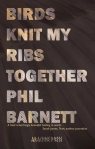
- I finished two poetry collections by a man with the surname Barnett within four days in January: Murmur by Cameron Barnett and Birds Knit My Ribs Together by Phil Barnett.

- I came across the person or place name Courtland in The Optimist’s Daughter by Eudora Welty, then Cortland in a story from The Orange Fish by Carol Shields, then Cotland (but where? I couldn’t locate it again! Was it in Elizabeth Is Missing by Emma Healey?).
- The Manet painting Olympia is mentioned in Christmas Holiday by W. Somerset Maugham and The Paris Novel by Ruth Reichl (both of which are set in Paris).


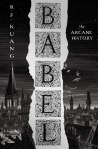
- There’s an “Interlude” section in Babel by R.F. Kuang and The Vulnerables by Sigrid Nunez.
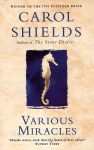
- The Morris (Minor) car is mentioned in Elizabeth Is Missing by Emma Healey and Various Miracles by Carol Shields.
- The “flour/flower” homophone is mentioned in Babel by R.F. Kuang and Various Miracles by Carol Shields.
- A chimney swift flies into the house in Cat and Bird by Kyoko Mori and The Optimist’s Daughter by Eudora Welty.
- A character named Cornelius in The Fruit Cure by Jacqueline Alnes and Wellness by Nathan Hill.
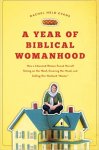
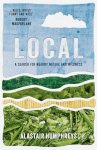
- Reading two year challenge books at the same time, A Year of Biblical Womanhood by Rachel Held Evans and Local by Alastair Humphreys, both of which are illustrated with frequent black-and-white photos by and of the author.
- A woman uses a bell to summon children in one story of Universally Adored and Other One Dollar Stories by Elizabeth Bruce and The Optimist’s Daughter by Eudora Welty.
- Apple turnovers get a mention in A Year of Biblical Womanhood by Rachel Held Evans and Wellness by Nathan Hill.
- A description of rolling out pie crust in A Year of Biblical Womanhood by Rachel Held Evans and Cat and Bird by Kyoko Mori.

- The idea of a house giving off good or bad vibrations in Wellness by Nathan Hill and a story from Various Miracles by Carol Shields.

- Emergency C-sections described or at least mentioned in Brother Do You Love Me by Manni Coe, The Unfamiliar by Kirsty Logan, Wellness by Nathan Hill, and lots more.
- Frustration with a toddler’s fussy eating habits, talk of “gentle parenting” methods, and mention of sea squirts in Wellness by Nathan Hill and Matrescence by Lucy Jones.
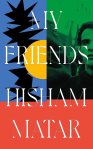
- The nickname “Poet” in The Tidal Year by Freya Bromley and My Friends by Hisham Matar.
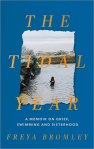
- A comment about seeing chicken bones on the streets of London in The Tidal Year by Freya Bromley and Went to London, Took the Dog by Nina Stibbe.
- Swans in poetry in The Tidal Year by Freya Bromley and Egg/Shell by Victoria Kennefick.
- A mention or image of Captcha technology in Egg/Shell by Victoria Kennefick and Went to London, Took the Dog by Nina Stibbe.
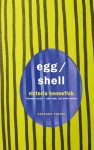

- An animal automaton in Loot by Tania James and Egg/Shell by Victoria Kennefick.
- A mention of Donna Tartt in The Tidal Year by Freya Bromley, Looking in the Distance by Richard Holloway, and Matrescence by Lucy Jones.
- Cathy Rentzenbrink appears in The Tidal Year by Freya Bromley and Went to London, Took the Dog by Nina Stibbe.
 Dialogue is given in italics in the memoirs The Tidal Year by Freya Bromley and The Unfamiliar by Kirsty Logan.
- An account of a man being forced to marry the sister of his beloved in A Year of Biblical Womanhood by Rachel Held Evans, Wellness by Nathan Hill, and The Tiger’s Wife by Téa Obreht.
- Saying that one doesn’t want to remember the loved one as ill (but really, not wanting to face death) so not saying goodbye (in Cat and Bird by Kyoko Mori) or having a closed coffin (Wellness by Nathan Hill).
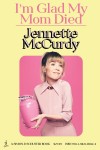
- An unhappy, religious mother who becomes a hoarder in Wellness by Nathan Hill and I’m Glad My Mom Died by Jennette McCurdy.
- Characters called Lidija and Jin in Exhibit by R. O. Kwon and Lydia and Jing in the first story of This Is Salvaged by Vauhini Vara.
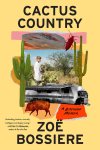
- Distress at developing breasts in Cactus Country by Zoë Bossiere and I’m Glad My Mom Died by Jennette McCurdy.
- I came across mentions of American sportscaster Howard Cosell in Heartburn by Nora Ephron and Stations of the Heart by Richard Lischer (two heart books I was planning on reviewing together) on the same evening. So random!
- Girls kissing and flirting with each other (but it’s clear one partner is serious about it whereas the other is only playing or considers it practice for being with boys) in Cactus Country by Zoë Bossiere and Winter’s Bone by Daniel Woodrell.
- A conversion to Catholicism in Places I’ve Taken My Body by Molly McCully Brown and Stations of the Heart by Richard Lischer.
- A zookeeper is attacked by a tiger when s/he goes into the enclosure (maybe not the greatest idea!!) in Tiger by Polly Clark and The Tiger’s Wife by Téa Obreht.

- The nickname Frodo appears in Tiger by Polly Clark and Brother Do You Love Me by Manni Coe.
- Opening scene of a parent in a coma, California setting, and striking pink and yellow cover to Death Valley by Melissa Broder and I’m Glad My Mom Died by Jennette McCurdy.

- An Englishman goes to Nigeria in Howards End by E.M. Forster and Immanuel by Matthew McNaught.
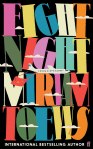 The Russian practice of whipping people with branches at a spa in Tiger by Polly Clark and Fight Night by Miriam Toews.
- A mother continues washing her daughter’s hair until she is a teenager old enough to leave home in Mrs. March by Virginia Feito and I’m Glad My Mom Died by Jennette McCurdy.
- Section 28 (a British law prohibiting the “promotion of homosexuality” in schools) is mentioned in A Bookshop of One’s Own by Jane Cholmeley, Some Kids I Taught and What They Taught Me by Kate Clanchy, and Brother Do You Love Me by Manni Coe.
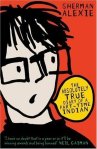
- Characters named Gord (in one story from Various Miracles by Carol Shields, and in Fight Night by Miriam Toews), Gordy (in The Absolutely True Diary of a Part-Time Indian by Sherman Alexie), and Gordo (in Blood Red by Gabriela Ponce).

- Montessori and Waldorf schools are mentioned in Cactus Country by Zoë Bossiere and When Fragments Make a Whole by Lory Widmer Hess.
- A trailer burns down in The Absolutely True Diary of a Part-Time Indian by Sherman Alexie and Cactus Country by Zoë Bossiere.
What’s the weirdest reading coincidence you’ve had lately?
Summer Reads, Part II: Cocker, Kroon, Levy & Lewis-Stempel
(Part I was here, ICYMI.) Cooler days here as we say a drawn-out farewell to summer and welcome in early autumn; I’ve been seeing ripe blackberries and Vs of geese for a few weeks now. This batch of books I read from the library truly encapsulated summer: swifts flying overhead, cold lemonade as a reward for sticky outdoor activities, and travels through the confusing cities and inviting countryside of the Continent.
One Midsummer’s Day: Swifts and the Story of Life on Earth by Mark Cocker (2023)
We saw our last swift in Newbury somewhere around 13 August. The three and a half months they were with us passed in what felt like an instant, leaving us bereft until they come back.
 Why is it that books seem to bunch together by topic, with several about Henry James or swifts or whatever all being published within the same year or few years? It’s unfortunate for Mark Cocker, a well-respected author on birds and environmental issues in general, that he is two years behind Charles Foster and Sarah Gibson with this work on swifts. I also think he attempts too much, in terms of both literary strategy and subject matter (see the second part of the subtitle), and so loses focus.
The book employs a circadian structure, recording what he sees from his garden from one midsummer evening to the next as he looks up at the sky. Within this framework he delivers a lot of information about the world’s swift species, a fair bit of it familiar to me from those previous books; more novel are his stories of remarkable sightings, like a vagrant white-throated needletail in the Outer Hebrides (it later died in a collision with a wind turbine). But he also tries to set swifts in the context of the grand sweep of evolution. I skipped over these sections, which felt superfluous. With his literary allusions, Cocker is aiming for something like Tim Dee’s exceptional Greenery but falls short.
This could have made a superb concentrated essay, maybe as part of a collection devoting each chapter to a different species, because his passion is clear and his metaphors excellent as he holds up swifts as an emblem of the aerial life, and of hope (“In a social screaming display these weaponised shapes blaze together as a black-swarming meteor in a widening orbit that burns over the houses or between them”). The few-page run-on sentence about how humanity has gotten itself into the climate crisis is pretty great (though Lev Parikian did so much more concisely in Into the Tangled Bank: It’s “f***ing f***ed”). But Foster has written the definitive tribute to swifts, The Screaming Sky, and in just 150 small pages. 
Rhubarb Lemonade by Oskar Kroon (2019; 2023)
[Translated from the Swedish by A. A. Prime]
 This was like an update of The Summer Book by Tove Jansson: the delicious innocence of a Scandinavian island summer is threatened by change and, ultimately, death. Vinga is happy to escape her troubles for a simple island life with Grandpa. They eat the same foods day after day, do the same things week after week, and slowly work on refurbishing the wooden sailing boat he gave her. Ruth, the shopkeeper’s granddaughter, couldn’t be more different: she hates the sea, misses the city, and is fully immersed in social media and celebrity culture. Yet Vinga finds her captivating and tingles when she’s near. “Things would be so much easier if we’d never met. Things would be so much more boring if we’d never met.”
Prime won Sweden’s August Prize for this YA novel (spot the reference to The Murderer’s Ape, which won the same prize!). As will be familiar to regular readers of YA, we see Vinga dealing with issues like bullying, loneliness, body image, and family breakdown. She’s called back to the mainland to meet the baby her father has had by the new woman in his life – a trip that coincides with the worst storm the island has seen in ages and a chance for Grandpa to play the sea captain hero. But falling for Ruth, kissing a girl, is not a reason for angst. It’s just the way things are. Kroon makes no grand claim that this will be true love, forever. It’s a teen summer romance, and exaggerated by the cover. Maybe it will last; maybe it won’t. The deeper love is familial, particularly between Vinga and her grandfather. 
August Blue by Deborah Levy (2023)
 My third novel from Levy, and a typically confounding one. The facts are simple enough: Elsa M. Anderson is a pianist who has had something of a breakdown. She retreats from giving concerts, dyes her hair blue, and bounces between European capitals in the later days of the pandemic, giving music lessons and caring for her mentor and adoptive father, Arthur, who’s dying on Sardinia. In between there are laughs and lovers, searching and sadness, all muffled by Elsa’s (Levy’s) matter-of-factness. Meanwhile, there’s a touch of the uncanny in the doppelganger Elsa keeps seeing. First, her double buys the carousel horses she had her eye on in Athens. Then Elsa steals her twin’s trilby hat. There’s a confrontation late on but it doesn’t seem to make much difference. The doubling appears to be a way of making literal the adopted Elsa’s divided self. I’m not entirely sure what to say about this one. I enjoyed reading it well enough. Though I never felt compelled to pick it up, when I did I easily got through several chapters at a time. But I’m not convinced it meant much.
La Vie: A Year in Rural France by John Lewis-Stempel (2023)
Lewis-Stempel’s best book in an age; my favourite, certainly, since Meadowland. I’m featuring it in a summer post because, like Peter Mayle’s Provence series, it’s ideal for armchair travelling. Especially with the heat waves that have swept Europe this summer, I’m much happier reading about France or Italy than being there. The author has written much about his Herefordshire haunts, but he’s now relocated permanently to southwest France (La Roche, in the Charente). He proudly calls himself a peasant farmer, growing what he can and bartering for much of the rest. La Vie chronicles a year in his quest to become self-sufficient. It opens one January and continues through the December, an occasional diary with recipes.
 The family’s small-scale potager is organic agriculture at its best. He likens it to turning the clock back to the 1970s, or earlier, before England wrecked its countryside with industrial production. (His list of birds in the area is impressive, including some you’d be lucky to come across in the UK – turtledove, nightingale, stone curlew.) In fact, he estimates that his yield per square metre is triple what it was when he participated in that damaging system, for the same amount of work. His lifestyle is also a deliberate resistance to hyper-speed modernity: he scythes his grass, spends days preserving a haul of walnuts, and tries his hand at pressing oil and making spirits. There’s a make-do-and-mend attitude here: when his sheep-shearing equipment goes missing, he buys a beard trimmer at the supermarket and uses that instead.
It’s a peaceful, comforting read that’s attuned to the seasons and the land. There is also gentle mockery of the French with their bureaucracy and obsession with hunting, and self-deprecation of his own struggle to get his point across in a second language. I could never make a living by manual labour, but I like reading about back-to-the-land adventures, especially ones as bucolic as this – two-hour lunches, six-course dinners with homemade wine? Mais oui! 
Spring Reads, Part II: Swifts, a Cuckoo, and a British Road Trip
Despite ongoing worries about biodiversity loss after last year’s drought, I had the most idyllic late spring evening yesterday. On the way home from an evening with Alice Winn hosted by Hungerford Bookshop (more on which anon), I sat at the station awaiting my train. It was 8:30 p.m. and still fully light, warm enough to be comfortable in a jacket, and a cuckoo serenaded me as I watched swifts wheeling by overhead.
For my second instalment of spring-themed reading (see Part I here), I have books about those very birds, one a nonfiction study of a species that is a welcome sign of late spring and summer in Europe, and a novel that takes up the metaphors associated with another notable species; plus a narrative of a circuitous route driven through a British spring.
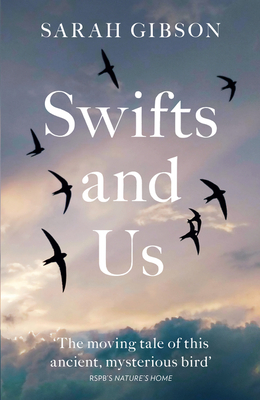
Swifts and Us by Sarah Gibson (2020)
We first noticed the swifts had returned to Newbury on 29 April. Best of all, we think ‘our’ birds that nested in the space between the roof and rear gutter last year (see footage here) are back. We’ve also installed one swift and two house martin boxes along the wall from the corner, just in case. Swifts are truly amazing for the distances they travel and the almost fully aerial life they lead. They only touch down to breed and otherwise do everything else – eat, sleep, mate – on the wing. I skimmed this book over the course of two springs and learned that the screaming parties you may, if you are lucky, see tearing down your street are likely to be made up of one- or two-year-old birds. Those tending to nestlings will be quieter. (They’ll be ruthless about displacing house sparrows who try to steal their space, so we hope the questing sparrows we saw at the gutter a few weeks before didn’t get as far as nest-building.)
 Beaks agape, swifts catch thousands of insects a day and keep them in a bolus in their throat to regurgitate for chicks. The sharp decline in insect numbers is a major concern, as well as the intensification of agriculture, climate change, and new houses or renovations that block up holes birds traditionally nest in. There are multiple species of swift – in southern Spain one can see five types – and in general they are considered to be of least conservation concern, but these matters are all relative in these days of climate crisis. Evolved to nest in cliffs and trees, they now live alongside humans except in rare places like Abernethy Forest near Inverness in Scotland, where they still nest in trees, in holes abandoned by woodpeckers.
Gibson surveys swifts’ distribution and evolution, key figures in how we came to understand them (Gilbert White et al.), and early landmark studies (e.g. David Lack’s in Oxford). She also takes us through a typical summer swift schedule, and interviews some people who rehabilitate and advocate for swifts. Other chapters see her travelling to Italy, Switzerland and Ireland, the furthest west that swifts breed. If you find a grounded swift, she learns from bitter experience, keep it in a box with air holes and give it water on a cotton bud, but don’t feed or throw it up in the air. To release, take it to an open space and hold it on your hand above your head. If it’s ready to fly, it will. The current push to help swifts is requiring that nest blocks or boxes be incorporated in every new home design. (I signed this petition.)
This is a great source of basic information, though some of the background may be more detailed than the average reader needs. If you’re only going to read one book about swifts, I would be more likely to recommend Charles Foster’s The Screaming Sky, a literary monograph, but do follow up with this one. And soon we’ll also have Mark Cocker’s book about swifts, One Midsummer’s Day, which I hope to get hold of. (Public library)
Favourite lines:
“It is their otherness that makes them so fascinating. They touch our lives briefly and then vanish; this is part of their magic.”
“The brevity of their summer stays enhances their hold on our hearts. The season is short, their bold, wild chases over the roofs and high-pitched screams a fleeting experience: they are a metaphor for life itself. We need to act now to ensure these birds will scythe across our skies forever; to keep them in our streets, to keep them in abundance and common. All of us can do something within the compass of our lives to help tilt the balance back in their favour. If the will to do it is there, it can be done.”
Cuckoo by Wendy Perriam (1991)
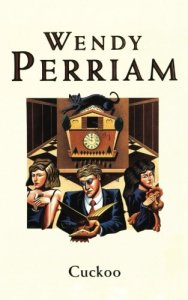 (We started hearing cuckoos locally last week!) My second by Perriam, after The Stillness The Dancing, and I’ve amassed quite a pile for afterwards. Frances Parry Jones, in her early thirties, is desperate for a baby but her husband, Charles, doesn’t seem fussed. He goes along with fertility treatment but remains aloof like the posh snob Perriam depicts him to be – the opening line is “Typical of Charles to decant his sperm sample into a Fortnum and Mason’s jar.” Their comfortable home in Richmond is cut off from the messy reality of life, as represented by Frances’s friend Viv and her brood.
Frances soon learns why Charles is unenthusiastic about having children: he already has one, a sullen teenager named Magda who lived with her mother in Hungary but has just arrived in London, “a greedy little cuckoo, commandeering the nest.” Though tempted to accept Magda as a replacement child, Frances just can’t manage it. However, they do find common ground through their japes with Ned, a free spirit Frances meets during her brief time as a taxi driver, and Frances starts to imagine how her life could be different. The portraits and sex scenes alike were a little grotesque here. I had to skim a lot to get through it. Here’s hoping for a better experience with the next one. (Secondhand copy passed on by Liz – thank you!) 
Springtime in Britain by Edwin Way Teale (1970)
 I discovered Teale a few years ago through the exceptional Autumn Across America, the first volume of a quartet illuminating the nature of the four seasons in the USA; he won a Pulitzer for the final book. Here he applied the same pattern across the pond, taking an 11,000-mile road trip around Britain with his wife Nellie. It’s a delight to see the country through his eyes, particularly places I know well (Devon, the New Forest, Wiltshire/Berkshire) or have visited recently (Northumberland). They find the early spring alarmingly cold and wet, but before long are rewarded with swathes of daffodils and bluebells. Several stake-outs finally result in hearing a nightingale. For the most part, the bird life is completely new to them, but he remarks on what North American species the European birds remind him of. “We felt we would travel to Britain just to hear the song thrush and the blackbird,” he maintains.
Nellie develops pneumonia and has to convalesce in Kent, but otherwise personal matters hardly come into the narrative. Teale is well versed in English nature writing and often references classics by the likes of John Clare and Gilbert White that inspired destinations. (They spend an excessive number of days on their pilgrimage to White’s Selborne.) He also reports on perceived threats of the time, such as small animals getting stuck in littered milk bottles. While it was, inevitably, a little distressing to think of the abundance and diversity he was still experiencing in the late 1960s that has since been lost to development, I mostly found this a pleasant meander. Some things never change: the magic of prehistoric sites; the grossness of some cities (“we forgot the misadventure of Slough”). (Secondhand) 
What signs of late spring are you seeing?
Book Serendipity, May to Mid-August 2022
This is a regular feature of mine every few months. I call it “Book Serendipity” when two or more books that I read at the same time or in quick succession have something in common – the more bizarre, the better. Because I usually have 20–30 books on the go at once, I suppose I’m more prone to such incidents. The following are in roughly chronological order.
- Not only did the opening scene of All Down Darkness Wide by Seán Hewitt share with Falling Angels by Tracy Chevalier a graveyard setting, but more specifically an angel statue whose head falls off.

- SPOILER: {The protagonist has a backstory of a mother who drowned, presumably by suicide, in Secrets of the Sea House by Elisabeth Gifford and The Dance Tree by Kiran Millwood Hargrave.}
- I started reading two e-books on the same day that had Taylor Swift lyrics as an epigraph: Bad Vibes Only by Nora McInerny and Tracy Flick Can’t Win by Tom Perrotta. I have never knowingly heard a Taylor Swift song.
- Rescuing insects from a swimming pool in Fledgling by Hannah Bourne-Taylor and In the Quaker Hotel by Helen Tookey.
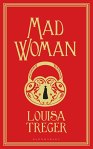
- Reading two feminist works of historical fiction in which the protagonist refuses to marry (even though it’s true love) at the same time: Lessons in Chemistry by Bonnie Garmus and Madwoman by Louisa Treger (about Nellie Bly).
- Two London-set books featuring a daughter named Mabel, one right after the other: This Is Not a Pity Memoir by Abi Morgan and Bridget Jones: Mad about the Boy by Helen Fielding.
- In Jenn Shapland’s My Autobiography of Carson McCullers I came across the fact that McCullers married the same man twice. Just a few days before, I’d seen that same odd fact about Hilary Mantel in her Wikipedia bio.
- A character named Clodagh in Black Narcissus by Rumer Godden and “Rainbows” by Joseph O’Neill, one of the entries in The Best Short Stories 2022: The O. Henry Prize Winners.
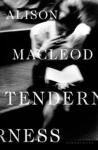
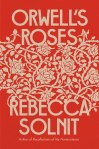
- Reading two books about an English author who died young of TB at the same time: Tenderness by Alison MacLeod (about D.H. Lawrence) and Orwell’s Roses by Rebecca Solnit.
- Reading two novels that mention the shipwreck of the Batavia at the same time: The Night Ship by Jess Kidd (where it’s a major element) and Cloudstreet by Tim Winton (just a tiny reference that nonetheless took me aback). According to Wikipedia, “Batavia was a ship of the Dutch East India Company. Built in Amsterdam in 1628 as the company’s new flagship, she sailed that year on her maiden voyage for Batavia, capital of the Dutch East Indies. On 4 June 1629, Batavia was wrecked on the Houtman Abrolhos, a chain of small islands off the western coast of Australia.”
- David Lack’s Swifts in a Tower is mentioned in Swifts and Us by Sarah Gibson (no surprise there) but also in From the Hedgerows by Lew Lewis.
- There’s a child nicknamed Chub in Damnation Spring by Ash Davidson and Cloudstreet by Tim Winton (which both also at least started off being buddy reads with Marcie of Buried in Print!).
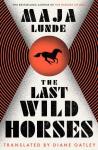
- Two novels in quick succession in which the discovery of a horse skeleton sparks the action in one story line: The Last Wild Horses by Maja Lunde and (coming up soon – I have a library reservation placed) Horse by Geraldine Brooks.
- Unst, Shetland as a setting in Orchid Summer by Jon Dunn, Sightlines by Kathleen Jamie, Julia and the Shark by Kiran Millwood Hargrave, and Where the Wildflowers Grow by Leif Bersweden.
- “Quiet as it’s kept” (a quote from the opening line of Toni Morrison’s The Bluest Eye) is borrowed in a poem in No Country for Eight-Spot Butterflies by Julian Aguon and one in the anthology American Wildflowers: A Literary Field Guide, ed. Susan Barba (“A Siren Patch of Indigo” by Cyrus Cassells).
- I didn’t recognize the word “swingeing” in The Reindeer Hunters by Lars Mytting and encountered it again the same day in Brief Lives by Anita Brookner before I had a chance to look it up (it means extreme or severe).
- A 1950s setting and a main character who is a man with missing fingers/arm in Cloudstreet by Tim Winton and The Young Accomplice by Benjamin Wood.
What’s the weirdest reading coincidence you’ve had lately?
Spring Reading, Part II: May, Moving and Swifts
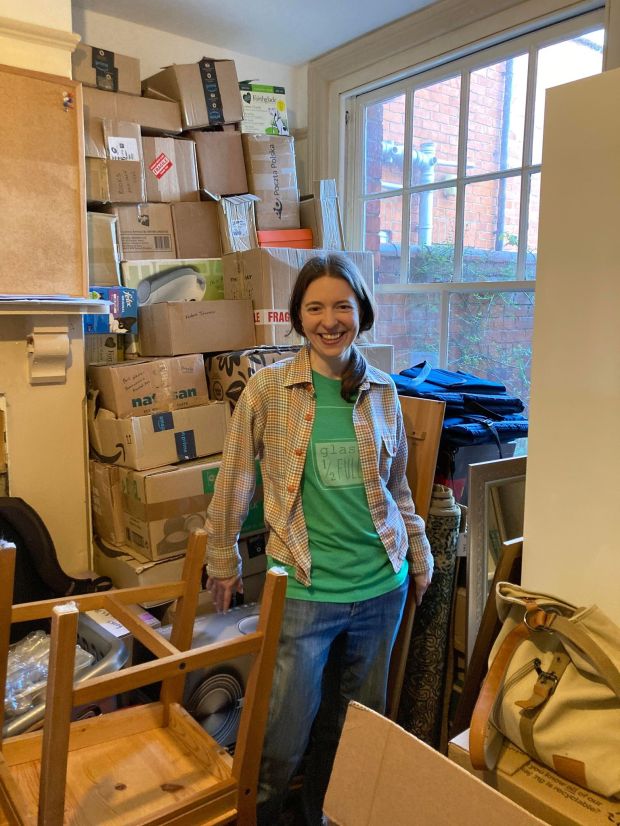
Eight days after our move, there are still piles of boxes, but the furniture is in place and there are clear walkways, so we’ll call that progress. We got a lot of help on moving day from neighbours, one of whom built a tower of book boxes in the corner of the dining room! I had fun dismantling it last week and assigning each box to a particular bookcase. Arranging the contents on shelves will be for once we’re back from Spain.
What with moving and DIY, I haven’t had a lot of time for reading lately, so didn’t finish any more of the spring books I’d intended to include – except for one children’s book from the library. I’ll give a little rundown of some of what has been on my coffee table stack.
Busy Spring: Nature Wakes Up by Sean Taylor and Alex Morss; illus. Cinyee Chiu (2021)
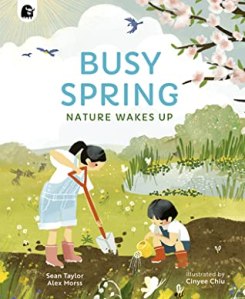 This was a cute read about two little girls helping their father in the garden and discovering the natural wonders of the season, like tadpoles in a pond, birds building nests, and insects and worms in the compost heap. A section at the end gives more information about the science of spring – unfortunately, it mislabels one bird and includes North American species without labelling them as such, whereas the rest of the book was clearly set in the UK. The strategy reminded me of that in Wild Child by Dara McAnulty. This year is the first time a children’s book Wainwright Prize will be awarded, so we’ll see this kind of book being recognized more.
May reads:
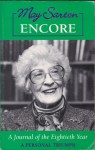 Encore is my last unread journal of May Sarton’s. It begins in May 1991, when she’s 79 and in recovery from major illness. She’s still plagued by pain and fatigue, but her garden and visits from friends are a solace. Although she has to lie down to garden, “to put my hands in the earth to dig is life giving … it is almost as if the earth were nourishing me at the moment.” As usual, there are lovely reflections on the freedoms as well as the losses of ageing. This book, like the previous, was dictated, so there is a bit of repetition. I’ve been amused to see how pretentious she found A.S. Byatt’s Possession! An entry or two at a sitting helped calm my mind during the stress of moving week.
“In a funny way what drives me is the spring, the fleeting spring. Because of the enormous wind and rain we have had, a lot of the daffodils have blown down, though not as many as I feared. But the truth is that their peak is past. We shall have them for another week and then they will be gone. It seems quite unbearable but that is what spring is—the letting go. The waiting and waiting and waiting, and then the letting go.”
I started a reread of Snow in May by Kseniya Melnik and am partway through the second story. It’s a linked short story collection set in Magadan in northeast Russia – known for Stalin’s forced-labour camps. In “Love, Italian Style, or in Line for Bananas,” it’s 1975 and Tanya is on a shopping spree in Moscow. At a time of deprivation, she buys even things she doesn’t need or that aren’t quite right. Propositioned by an Italian football player on the plane ride over, she fantasizes about the exotic and romantic, juxtaposed against her everyday life.
“The pollen swirled around her like snow. There was a time when the distinctions between right and wrong seemed indisputable, and doing right felt good. When all the decisions had been premade and in her best interest. Back when she didn’t need so much to be happy.”
Belonging
 I saw it on shelf at the library and knew now was the perfect time to read My Life in Houses by Margaret Forster, a memoir via the places she’s lived, starting with the house where she was born in 1938, on a council estate in Carlisle. There’s something appealing to me about tracing a life story through homes – Paul Auster did the same in part of Winter Journal. I’d be tempted to undertake a similar exercise myself someday.
 The swifts come screeching down our new street and we saw one investigating a crevice in our back roof for a nest! In Fledgling by Hannah Bourne-Taylor, she is lonely in rural Ghana, where she and her husband had moved for his work, and takes in a young swift displaced from its nest. I’m only in the early pages, but can tell that her care for the bird will be a way of exploring her own feeling of displacement and the desire to belong. “Although I was unaware of it at the time, the English countryside and the birds had turned into my anchor of home.”
Reading from the Wainwright Prize Longlists
The Wainwright Prize is one that I’ve ended up following closely almost by accident, simply because I tend to read most of the nature books released in the UK in any given year. A few months back I cheekily wrote to the prize director, proffering myself as a judge and appending a list of eligible titles I hoped were in consideration. Although they already had a full judging roster for 2021, I got a very kind reply thanking me for my recommendations and promising to bear me in mind for the future. Fifteen of my 25 suggestions made it onto the lists below.
This is the second year that there have been two awards, one for writing on UK nature and the other on global conservation themes. Tomorrow (August 4th) at 4 p.m., the longlists will be narrowed down to shortlists. I happened to have read and reviewed 12 of the nominees already, and I have a few others in progress.
UK nature writing longlist:

 The Circling Sky by Neil Ansell: Hoping to reclaim an ancestral connection, Ansell visited the New Forest some 30 times between January 2019 and January 2020, observing the unfolding seasons and the many uncommon and endemic species its miles house. He weaves together his personal story, the shocking history of forced Gypsy relocation into forest compounds starting in the 1920s, and the unfairness of land ownership in Britain. The New Forest is a model of both wildlife-friendly land management and freedom of human access. (On my Best of 2021 so far list.)
T he Screaming Sky by Charles Foster: A Renaissance man as well versed in law and theology as he is in natural history, Foster is obsessed with swifts and ashamed of his own species: for looking down at their feet when they could be watching the skies; for the “pathological tidiness” that leaves birds and other creatures no place to live. He delivers heaps of information on the birds but refuses to stick to a just-the-facts approach. The book quotes frequently from poetry and the prose is full of sharp turns of phrase and whimsy. (Also on my Best of 2021 so far list.)
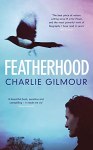 Featherhood by Charlie Gilmour: As an aimless twentysomething, Gilmour tried to rekindle a relationship with his unreliable poet father at the same time that he and his wife were pondering starting a family of their own. Meanwhile, he was raising Benzene, a magpie that fell out of the nest and ended up in his care. The experience taught him responsibility and compassionate care for another creature. Gilmour makes elegant use of connections and metaphors. He’s so good at scenes, dialogue and emotion – a natural writer.
 Seed to Dust by Marc Hamer: Hamer paints a loving picture of his final year at the 12-acre British garden he tended for decades. In few-page essays, the book journeys through a gardener’s year. This is creative nonfiction rather than straightforward memoir. The prose is adorned with lovely metaphors. In places, the language edges towards purple and the content becomes repetitive – a danger of the diary format. However, the focus on emotions and self-perception – rare for a male nature writer – is refreshing. (Reviewed for Foreword.)
 The Stubborn Light of Things by Melissa Harrison: A collection of five and a half years’ worth of Harrison’s monthly Nature Notebook columns for The Times. Initially based in South London, Harrison moved to the Suffolk countryside in late 2017. In the grand tradition of Gilbert White, she records when she sees her firsts of a year. I appreciate how hands-on and practical Harrison is. She never misses an opportunity to tell readers about ways they can create habitat for wildlife and get involved in citizen science projects. (Reviewed for Shiny New Books.)
 Birdsong in a Time of Silence by Steven Lovatt: During the UK’s first lockdown, with planes grounded and cars stationary, many remarked on the quiet. All the better to hear birds going about their usual spring activities. For Lovatt, it was the excuse he needed to return to his childhood birdwatching hobby. In between accounts of his spring walks, he tells lively stories of common birds’ anatomy, diet, lifecycle, migration routes, and vocalizations. Lovatt’s writing is introspective and poetic, delighting in metaphors for sounds.
 Vesper Flights by Helen Macdonald: Though written for various periodicals and ranging in topic from mushroom-hunting to deer–vehicle collisions and in scope from deeply researched travel pieces to one-page reminiscences, these essays form a coherent whole. Equally reliant on argument and epiphany, the book has more to say about human–animal interactions in one of its essays than some whole volumes manage. Her final lines are always breath-taking. I’d rather read her writing on any subject than almost any other author’s. (My top nonfiction release of 2020.)
 Skylarks with Rosie by Stephen Moss: Devoting a chapter each to the first 13 weeks of the initial UK lockdown, Moss traces the season’s development in Somerset alongside his family’s experiences and what was emerging on the national news. He welcomed migrating birds and marked his first sightings of butterflies and other insects. Nature came to him, too. For once, he felt that he had truly appreciated the spring, noting its every milestone and “rediscovering the joys of wildlife-watching close to home.”
 Thin Places by Kerri ní Dochartaigh: I received a proof copy from Canongate and twice tried the first few pages, but couldn’t wade through the excessive lyricism (and downright incorrect information – weaving a mystical description of a Winter Moth’s flight, she keeps referring to the creature as “she,” whereas when I showed the passage to my entomologist husband he told me that the females of that species are flightless). I’m told it develops into an eloquent memoir of growing up during the Troubles. Perhaps reminiscent of The Outrun?
 Into the Tangled Bank by Lev Parikian: A delightfully Bryson-esque tour that moves ever outwards, starting with the author’s own home and garden and proceeding to take in his South London patch and his journeys around the British Isles before closing with the wonders of the night sky. By slowing down to appreciate what is all around us, he proposes, we might enthuse others to engage with nature. With the zeal of a recent convert, he guides readers through momentous sightings and everyday moments of connection. (When I reviewed this in July 2020, I correctly predicted it would make the longlist!)
 English Pastoral by James Rebanks: This struck me for its bravery, good sense and humility. The topics of the degradation of land and the dangers of intensive farming are of the utmost importance. Daring to undermine his earlier work and his online persona, the author questions the mythos of modern farming, contrasting its practices with the more sustainable and wildlife-friendly ones his grandfather espoused. Old-fashioned can still be best if it means preserving soil health, river quality and the curlew population.
 I Belong Here by Anita Sethi: I recently skimmed this from the library. Two things are certain: 1) BIPOC writers should appear more frequently on prize lists, so it’s wonderful that Sethi is here; 2) this book was poorly put together. It’s part memoir of an incident of racial abuse, part political manifesto, and part quite nice travelogue. The parts don’t make a whole. The contents are repetitive and generic (definitions, overstretched metaphors). Sethi had a couple of strong articles here, not a whole book. I blame her editors for not eliciting better.
 The Wild Silence by Raynor Winn: I only skimmed this, too. I got the feeling her publisher was desperate to capitalize on the popularity of her first book and said “give us whatever you have,” cramming drafts of several different projects (a memoir that went deeper into the past, a ‘what happened next’ sequel to The Salt Path, and an Iceland travelogue) into one book and rushing it through to publication. Winn’s writing is still strong, though; she captures dialogue and scenes naturally, and you believe in how much the connection to the land matters to her.
Global conservation longlist:

Like last year, I’ve read much less from this longlist since I gravitate more towards nature writing and memoirs than to hard or popular science. So I have read, am reading or plan to read about half of this list, as opposed to pretty much all of the other one.
 Islands of Abandonment by Cal Flyn: This was on my Most Anticipated list for 2021 and I treated myself to a copy while we were up in Northumberland. I’m nearly a third of the way through this fascinating, well-written tour of places where nature has spontaneously regenerated due to human neglect: depleted mining areas in Scotland, former conflict zones, Soviet collective farms turned feral, sites of nuclear disaster, and so on. I’m about to start the chapter on Chernobyl, which I expect to echo Mark O’Connell’s Notes from an Apocalypse.
 What If We Stopped Pretending? by Jonathan Franzen: The message of this controversial 2019 New Yorker essay is simple: climate breakdown is here, so stop denying it and talking of “saving the planet”; it’s too late. Global warming is locked in; the will is not there to curb growth, overhaul economies, and ask people to relinquish developed world lifestyles. Instead, start preparing for the fallout (refugees) and saving what can be saved (particular habitats and species). Franzen is realistic about human nature and practical about what to do next.
 Entangled Life by Merlin Sheldrake: Sheldrake’s enthusiasm is infectious as he researches fungal life in the tropical forests of Panama, accompanies truffle hunters in Italy, and takes part in a clinical study on the effects of LSD (derived from a fungus). More than a travel memoir, though, this is a work of proper science – over 100 pages are taken up by notes, bibliography and index. This is a perspective-altering text that reveals our unconscious species bias. I’ve recommended it widely, even to those who tend not to read nonfiction.
 Ice Rivers by Jemma Wadham: I have this out from the library and am two-thirds through. Wadham, a leading glaciologist, introduces readers to the science of glaciers: where they are, what lives on and under them, how they move and change, and the grave threats they face (and, therefore, so do we). The science, even dumbed down, is a little hard to follow, but I love experiencing extreme landscapes like Greenland and Antarctica with her. She neatly inserts tiny mentions of her personal life, such as her mother’s death, a miscarriage and a benign brain cyst.
The rest of the longlist is:
- A Life on Our Planet by David Attenborough – I’ve never read a book by Attenborough (and tend to worry this sort of book would be ghostwritten), but wouldn’t be averse to doing so.
 Fathoms by Rebecca Giggs – All about whales. Kate raved about it. I have this on hold at the library.
- Net Zero: How We Stop Causing Climate Change by Dieter Helm
- Under a White Sky by Elizabeth Kolbert – I have read her before and would again.
- Riders on the Storm by Alistair McIntosh – My husband has read several of his books and rates them highly.
- The New Climate War by Michael E. Mann
- The Reindeer Chronicles by Judith D. Schwartz – I’ve been keen to read this one.
- A World on the Wing by Scott Weidensaul – My husband is reading this from the library.
My predictions/wishes for the shortlists:
It’s high time that a woman won again. And why not for both, eh? (Amy Liptrot is still the only female winner in the Prize’s seven-year history, for The Outrun in 2016.)
UK nature writing:
- The Circling Sky by Neil Ansell
- The Screaming Sky by Charles Foster
- Featherhood by Charlie Gilmour
- Vesper Flights by Helen Macdonald*
- English Pastoral by James Rebanks
- I Belong Here by Anita Sethi
- The Wild Silence by Raynor Winn
Writing on global conservation:
- Islands of Abandonment by Cal Flyn*
- Fathoms by Rebecca Giggs
- Under a White Sky by Elizabeth Kolbert
- Entangled Life by Merlin Sheldrake
- Ice Rivers by Jemma Wadham
- A World on the Wing by Scott Weidensaul
*Overall winners, if I had my way.


Have you read anything from the Wainwright Prize longlists?
Do any of these books interest you?
The Best Books from the First Half of 2021
Hard to believe we’ve already crossed the midpoint of the year. My top 20 releases of 2021 thus far, in alphabetical order within genre (fiction is dominating this year!), are below. I link to those I’ve already reviewed in full here or on Goodreads:
Fiction
 Under the Blue by Oana Aristide: Fans of Station Eleven, this one’s for you: the best dystopian novel I’ve read since Mandel’s. Aristide started writing in 2017, and unknowingly predicted a much worse pandemic than Covid-19. In July 2020, Harry and sisters Ash and Jessie are among mere thousands of survivors worldwide. Their plan is to flee England for Uganda, out of range of Europe’s at-risk nuclear reactors. An epic road trip ensues. A propulsive cautionary tale that also reminded me of work by Louisa Hall and Maja Lunde.
 The Push by Ashley Audrain: Blythe Connor, living alone with her memories, ponders what went wrong with her seemingly perfect family: a handsome architect husband, Fox, and their daughter Violet and baby son Sam. How much of what happened was because of Violet’s nature, and how much was Blythe’s fault for failing to be the mother the girl needed? The fact that her experience with Sam was completely different makes her feel ambivalent about motherhood. A cracking psychological thriller with an unreliable narrator.
 A Lie Someone Told You About Yourself by Peter Ho Davies: Davies’ minimalist approach – short sections skating over the months and years, wryly pulling out representative moment – crystallizes fatherhood, illuminating its daily heartaches and joys. The tone is just right in this novella, showing both sides of parenthood and voicing things you aren’t allowed to think, or at least not to admit to, starting with abortion, which would-be fathers aren’t expected to have strong feelings about. I loved the rumination on the role that chance plays in a life.
 The Living Sea of Waking Dreams by Richard Flanagan: Extinction, personal and global, is at the heart of this timely and enchanting story. It starts off as a family drama. Francie, the 86-year-old matriarch, is in a Tasmanian hospital after a brain bleed. Her three middle-aged children can’t bear to let her go. In an Australia blighted by bushfires, species loss mirrors Francie’s physical and mental crumbling. Smartphone addiction threatens meaningful connection. And then characters start to literally disappear, part by part…
 Mrs Death Misses Death by Salena Godden: Grief Is the Thing with Feathers meets Girl, Woman, Other would be my marketing shorthand for this one. Poet Salena Godden’s debut novel is a fresh and fizzing work, passionate about exposing injustice but also about celebrating simple joys, and in the end it’s wholly life-affirming despite a narrative stuffed full of deaths real and imagined. The novel balances the cosmic and the personal through Wolf’s family story. Unusual, musical, and a real pleasure to read.
 Early Morning Riser by Katherine Heiny: This tickled my funny bone. A cross between Kitchens of the Great Midwest and Olive Kitteridge, it’s built of five extended episodes, crossing nearly two decades in the lives of Jane and Duncan and lovingly portraying the hangers-on who compose their unusual family constellation in Boyne City, Michigan. All the characters are incorrigible but wonderful. Bad things happen, but there’s a core of love as Heiny explores marriage and parenting. A good-natured book that feels wise and bittersweet.
 No One Is Talking About This by Patricia Lockwood: This starts as a flippant skewering of modern life. A woman who became a social media star by tweeting quips like “Can a dog be twins?” reflects on life on “the portal” and under “the dictator.” Midway through the book, she gets a wake-up call when her mother summons her back to the Midwest for a family emergency. It’s the about-face that makes this novel, forcing readers to question the value of a digital existence based on glib pretence. Funny, but with an ache behind it.
 In by Will McPhail: Alternately laugh-out-loud funny and gentle. This debut graphic novel is a spot-on picture of modern life in a generic city. Nick never knows the right thing to say. The bachelor artist’s well-intentioned thoughts remain unvoiced; all he can manage is small talk. That starts to change when he meets Wren, a Black doctor who sees past his pretence. If only he can find the magic words that elicit honesty, he might make real connections with other human beings. A good old-fashioned story, with a wide emotional range.
 Detransition, Baby by Torrey Peters: A sparkling, sexy comedy with a tender heart beneath the zingers. Peters has set herself up as the Jane Austen of the trans community, tracing the ins and outs of relationships with verve and nuance. For me this was a valuable book simply for normalizing trans sexuality. The themes are universal, after all: figuring out who you are and what the shape of your life will be. I admire when authors don’t pander to readers by making things easy for those who are unfamiliar with a culture. Great lines abound.
 Brood by Jackie Polzin: Polzin’s debut is a quietly touching story of a woman in the Midwest raising chickens and coming to terms with the shape of her life. The unnamed narrator is Everywoman and no one at the same time. At one point she reveals, with no fanfare, that she miscarried four months into pregnancy in the bathroom of one of the houses she cleans. There is a bittersweet tone to this short work. It’s a low-key, genuine portrait of life in the in-between stages and how it can be affected by fate or by other people’s decisions.
Nonfiction
The Circling Sky by Neil Ansell: Hoping to reclaim an ancestral connection, Ansell visited the New Forest some 30 times between January 2019 and January 2020, observing the unfolding seasons and the many uncommon and endemic species its miles house. He weaves together his personal story, the shocking history of forced Gypsy relocation into forest compounds starting in the 1920s, and the unfairness of land ownership in Britain. The New Forest is a model of both wildlife-friendly land management and freedom of human access.
 The Inevitable by Katie Engelhart: Engelhart spends time with doctors and patients who are caught up in the assisted dying argument, chiefly in Western Europe and the United States. Each case is given its own long chapter, like an extended magazine profile. The stories are wrenching, but compassionately told. The author explores the nuances of each situation, crafting expert portraits of suffering people and the medical professionals who seek to help them, and adding much in the way of valuable context. A voice of reason and empathy.
The Screaming Sky by Charles Foster: A Renaissance man as well versed in law and theology as he is in natural history, Foster is obsessed with swifts and ashamed of his own species: for looking down at their feet when they could be watching the skies; for the “pathological tidiness” that leaves birds and other creatures no place to live. He delivers heaps of information on the birds but refuses to stick to a just-the-facts approach. The book quotes frequently from poetry and the prose is full of sharp turns of phrase and whimsy.
 Intensive Care by Gavin Francis: Francis, an Edinburgh physician, reflects on “the most intense months I have known in my twenty-year career.” He journeys back through 2020, from the January day when he received a bulletin about a “novel Wuhan coronavirus” to November, when he learned of promising vaccine trials but also a rumored third wave and winter lockdown. An absorbing first-hand account of a medical crisis, it compassionately bridges the gap between experts and laymen. The best Covid chronicle so far.
 A Still Life by Josie George: Over a year of lockdowns, many of us became accustomed to spending most of the time at home. But for Josie George, social isolation is nothing new. Chronic illness long ago reduced her territory to her home and garden. The magic of A Still Life is in how she finds joy and purpose despite extreme limitations. Opening on New Year’s Day and travelling from one winter to the next, the book is a window onto George’s quiet existence as well as the turning of the seasons. (Reviewed for TLS.)
 Dusk, Night, Dawn by Anne Lamott: Lamott’s best new essays in nearly a decade. The central theme is how to have hope in God and in other people even when the news – Trump, Covid, and climate breakdown – only heralds the worst. One key thing that has changed for her is getting married for the first time, in her mid-sixties, to a Buddhist. In thinking of marriage, she writes about friendship, constancy, and forgiveness, none of which comes easy. Opportunities for maintaining quiet faith in spite of the circumstances arise all the time.
 A Braided Heart by Brenda Miller: Miller, a professor of creative writing, delivers a master class on the composition and appreciation of autobiographical essays. In 18 concise pieces, she tracks her development as a writer and discusses the “lyric essay”—a form as old as Seneca that prioritizes imagery over narrative. These innovative and introspective essays, ideal for fans of Anne Fadiman, showcase the interplay of structure and content. (Coming out on July 13th from the University of Michigan Press. My first review for Shelf Awareness.)
 Sanctuary by Emily Rapp Black: A continuation of The Still Point of the Turning World, about the author’s son Ronan, who died of Tay-Sachs disease at age three. In the months surrounding his death, she split from her husband and raced into another relationship that led to her daughter, Charlie. Rapp Black questions the sorts of words she got branded with: “brave,” “resilient.” Sanctuary is full of allusions and flashbacks, threading life’s disparate parts into a chaotic tapestry. It’s measured and wrought, taming fire into light and warmth.
Poetry
 Pilgrim Bell by Kaveh Akbar: An Iranian American poet imparts the experience of being torn between cultures and languages, as well as between religion and doubt, in this gorgeous collection of confessional verse. Food, plants, animals, and the body supply the book’s imagery. Wordplay and startling juxtapositions lend lightness to a wistful, intimate collection that seeks belonging and belief. (Coming out on August 3rd from Graywolf Press. Reviewed for Shelf Awareness.)
 Eat or We Both Starve by Victoria Kennefick: In this audacious debut collection, the body is presented as a battleground: for the brain cancer that takes the poet’s father; for disordered eating that entwines with mummy issues; for the restructuring of pregnancy. Families break apart and fuse into new formations. Cannibalism and famine metaphors dredge up emotional states and religious doctrines. There’s a pleasingly morbid cast to the book, but it also has its lighter moments. Rich with imagery and alliteration, this is just my kind of poetry.
What are some of the best books you’ve read so far this year?
What 2021 releases do I need to catch up on right away?
Review Book Catch-Up: Ante, Evans, Foster and White
Today I have a book of poems about the Filipinx experience in the UK, a collection of short stories reflecting on racial injustice, a monograph on a bird that spells summer for many of us, and a biographical investigation into a little-understood medical condition.
Antiemetic for Homesickness by Romalyn Ante
I was drawn to this debut collection by the terrific title and cover, but also by the accolades it received: it was on the Dylan Thomas Prize longlist and the Jhalak Prize shortlist. I hope we’ll see it on the Sunday Times Young Writer of the Year Award shortlist, too. Ante grew up in the Philippines but at age 16 joined her mother in the UK, where she had moved years before to work as a nurse in the NHS. She has since followed in her mother’s footsteps as a nurse – indeed, overseas Filipinx workers (Jamaicans, too) are a mainstay of the NHS.
 Ante remembers the years when her mother was absent but promised to send for the rest of the family soon: “You said all I needed to do was to sleep and before I knew it, / you’d be back. But I woke to the rice that needed rinsing, / my siblings’ school uniforms that needed ironing.” The medical profession as a family legacy and noble calling is a strong element of these poems, especially in “Invisible Women,” an ode to the “goddesses of caring and tending” who walk the halls of any hospital. Hard work is a matter of survival, and family – whether physically present or not – bolsters weary souls. A series of short, untitled poems are presented as tape recordings made for her mother.
Food is inextricably entwined with memory (reminding me of Nina Mingya Powles’s approach in Tiny Moons) and provides some of the standout metaphors, especially in “Patis” and “Ode to a Pot Noodle.” Ante uses a lot of alliteration and adapts various forms. I especially liked “Tagay!”, a traditional drinking song, and “Mateo,” printed in the shape of a pound sign. The nuanced look at the immigrant experience reminded me of Jenny Xie’s Eye Level. Movement entails losses as well as benefits. The focus on the Filipinx experience also made me think of America Is Not the Heart. My favourite single poem was “The Making of a Smuggler,” which opens “Wherever we travel, we carry / the whole country with us – // our rice terraces are folded garments, / we have pillars of trees, a rainforest // on a hairbrush.”
Favourite lines:
“Gone are the nights he steals / the moon with a mango picker / and swaps it for her pocket mirror”
“The yellow admission papers in my hands escaped / flustering at my face into a flight of orioles.”
“I am halved in order to be whole – / I rebuild by leaving / everything I love.”
With thanks to Chatto & Windus for the free copy for review.
The Office of Historical Corrections by Danielle Evans
To boil these six stories and a novella down to the topic of race in America risks painting them as solemn or strident – more concerned with meaning than with art – when the truth is that they are playful and propulsive even though they keep cycling back to bereavement and injustice. Several of the protagonists are young Black women coming to terms with a loss.
 In “Happily Ever After,” Lyssa works in the gift shop of a Titanic replica and is cast as an extra in a pop star’s music video. Mythical sea monsters are contrasted with the real dangers of her life, like cancer and racism. “Anything Could Disappear” was a favourite of mine, though it begins with that unlikely scenario of a single woman acquiring a baby as if by magic. What starts off as a burden becomes a bond she can’t bear to let go. A family is determined to clear the name of their falsely imprisoned ancestor in “Alcatraz.” In “Richard of York Gave Battle in Vain” (a mnemonic for the colours of the rainbow), photojournalist Rena is wary about attending the wedding of a friend she met when their plane was detained in Africa some years ago. The only wedding she’s been in is her sister’s, which ended badly.
Mistakes and deceit seem to follow these characters. In the title novella that closes the book, Cassie and her colleagues combat fake news, going around putting correction labels on plaques that whitewash history. When she and her former colleague meet up in Wisconsin to find the truth behind a complex correction case, a clash with a white supremacist group quickly turns pedantry into a matter of life and death. The story I’d heard the most about beforehand was “Boys Go to Jupiter,” about a college girl who dons a Confederate flag bikini, not caring what message it sends to others in her dorm. It turns out she has history with a Black family, but has chosen to airbrush this experience out of her life.
There was only one story I didn’t care for, “Why Won’t Women Just Say What They Want,” about a celebrity who turns apologizing into performance art. Overall, this is a very strong collection I would recommend to readers of Brit Bennett and Raven Leilani, with some stories also reminding me of recent work by Curtis Sittenfeld and Mary South. I’ll be sure to seek out Evans’s previous book (also short stories), too.
With thanks to Picador for the proof copy for review.
The Screaming Sky by Charles Foster
The other week I was volunteering at our local community garden and looked up to see a dozen common swifts wheeling over the Kennet & Avon canal and picking off insects among the treetops. I hope this fellow Foster (for whom my husband was once confused on a nature conference attendee list) would be proud of me for pausing to gaze at the birds for a while. My impression of the author is as a misanthropic eccentric. A Renaissance man as well versed in law and theology as he is in natural history, he’s obsessed with swifts and ashamed of his own species: for looking down at their feet when they could be watching the skies; for the “pathological tidiness” that leaves swifts and so many other creatures no place to live.
 The obsession began when he was eight years old and someone brought him a dead swift fledgling for his taxidermy hobby. Ever since, he’s dated the summer by their arrival. “It is always summer for them,” though, as his opening line has it. This monograph is structured chronologically. Much like Tim Dee does in Greenery, Foster follows the birds for a year: from their winter territory in Africa to the edges of Europe in spring and then to his very own Oxford street in high summer. When they leave, he’s bereft and ready to book a flight back to Africa.
Along the way, Foster delivers heaps of information: the fossil evidence of swifts, how they know where to migrate (we have various theories but don’t really know), their nesting habits and lifespan, and the typical fates of those individuals that don’t survive. But, thumbing his nose at his “ex-friend” (a closed-minded biologist he repeatedly, and delightfully, rails against), he refuses to stick to a just-the-facts approach. Acknowledging the risks of anthropomorphizing, he speaks of swifts as symbols of aspiration, of life lived with intensity. He believes that we can understand animal emotions analogously through our own, so that, inappropriate as such words might seem, we can talk about what birds hope and plan for. He scorns reductive ecosystem services lingo that defines creatures by what we get out of them.
Also like Dee, Foster quotes frequently from poetry. His prose is full of sharp turns of phrase and moments of whimsy and made me eager to try more of his work (I know the most about but have not yet read Being a Beast).
Swifts know the roar of lions better than the roar of the M25, the piping of hornbills better than the Nunc Dimittis of parish Evensong … Are memories of our eaves spiralling high above the Gulf of Guinea? … They don’t seem to prevaricate. One moment they’re there, the next they’re off, diving straight into the journey. It’s the way we should run into cold water.
 As I’ve found with a number of Little Toller releases now (On Silbury Hill, Snow, Landfill), knowledge meets passion to create a book that could make an aficionado of the most casual of readers. Towards the close I was also reminded of Richard Smyth’s An Indifference of Birds: “When Homo sapiens has gone there will be lots of ideal swift holes in the decaying buildings we’ll leave behind.” It’s comforting to think of natural cycles continuing after we’re gone … but let’s start making the space for them now. Jonathan Pomroy’s black-and-white illustrations of swift behaviour only add to this short book’s charms.
With thanks to Little Toller Books for the free copy for review.
Waiting for Superman: One Family’s Struggle to Survive – and Cure – Chronic Fatigue Syndrome by Tracie White
Like Suzanne O’Sullivan’s books (most recently, The Sleeping Beauties), this is presented as an investigation into a medical mystery. White, a Stanford Medicine journalist, focuses on one family that has been indelibly changed by chronic fatigue syndrome – now linked with myalgic encephalomyelitis and termed ME/CFS for short. Whitney Dafoe was a world traveller and promising photographer before, in 2010, a diagnosis of ME/CFS explained his exhaustion and gastrointestinal problems. By the time White first met the family in 2016, the thirtysomething was bedbound in his parents’ home with a feeding tube, only able to communicate via gestures and rearranging Scrabble tiles. He couldn’t bear loud noises, or to be touched. At times he was nearly comatose.
 Whitney’s father, Ron Davis, is a Stanford geneticist whose research has contributed to the Human Genome Project. He has devoted himself to studying ME/CFS, which affects 20 million people worldwide yet receives little research funding; he calls it “the last major disease we know nothing about.” Testing his son’s blood, he found a problem with the citric acid cycle that produces ATP, essential fuel for the body’s cells – proof that there was a physiological reason for Whitney’s condition. Frustratingly, though, a Stanford colleague who examined Whitney prescribed a psychological intervention. This is in line with the current standard of care for ME/CFS: a graded exercise regime (nigh on impossible for someone who can’t get out of bed) and cognitive behavioural therapy.
White delves into Whitney’s past, looking for clues to what could have triggered his illness (having mono in high school? a parasite he picked up in India?). She also goes back to the mid-1980s to consider the Lake Tahoe outbreak of ME/CFS, whose victims “looked too healthy to be sick and were repeatedly disbelieved.” The media called it “yuppie flu,” downplaying the extreme fatigue involved. White also meets Laura Hillenbrand, author of Seabiscuit, who suffers from ME/CFS and managed to write her bestselling books from bed. Like Whitney, she only has a certain allotment of energy and mustn’t use it up too fast.
- A neat connection: Stephanie Land, author of Maid, was Whitney’s ex-girlfriend when he was 19 and living in Alaska; she wrote a Longreads article about their relationship.
- The title is from a Flaming Lips lyric and expresses Whitney’s trust in his dad’s ability to cure him; the U.S. title is The Puzzle Solver and the working title was The Invisible Patient.
With thanks to Atlantic Books for the free copy for review.
 Bookish Beck = Rebecca Foster. American transplant to England. Freelance proofreader and book reviewer.
 Bookish Beck