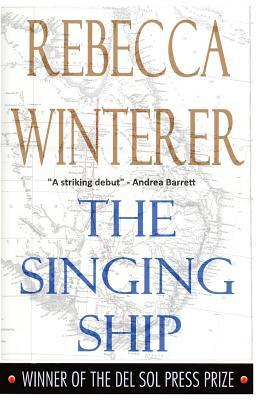
Virginia Woolf Down Under: The Singing Ship by Rebecca Winterer
Memories are stored vertically, fluid and accessible from the strangest depths. … [T]o explore was to salvage, to record a story was to remember one.
Rebecca Winterer won the 2016 Del Sol Press First Novel Prize for The Singing Ship, her sophisticated story of the afflictions and creative transformations that shape the Pilgrim family of Mt. Isaac, Queensland over the course of six decades. However, the book opens with an even longer view – a cosmic one – via a prologue offering a millennia-old perspective on human life. An epilogue returns full circle, telescoping from the Pilgrims back out to the enormity of the earth without belittling the value of the individual. In between those two points of vastness, we spend time on the dusty Australian ground with four characters who nurse their traumas with some unusual obsessions.
 Eleven-year-old Bernadette emulates her hero, nineteenth-century explorer Charles Sturt, by trekking out into the bush with a log book and carefully amassed provisions. Younger sister Jane combats her nightmares by focusing on stories of the saints and constructing little altars, “earnestly fabricating solace and safe havens.” Already the signs of who they’ll grow up to be are evident – Bernadette an award-winning historian, and Jane a nun. But the road there will not be easy: Winterer plants tiny hints of an attack the girls suffer out in the bush.
Meanwhile, the girls’ father, Robert, admits to a sexual peccadillo with a customer at his department store and has a nervous breakdown. Their mother Audrey, an unfulfilled housewife with creative ambitions, responds with affairs of her own but also embarks on her magnum opus, an enormous quilt decorated with her button collection. One day the quilt will be part of the permanent folk art collection at the National Gallery in Canberra. For now it’s like an echo of the bowerbird nest Bernadette finds: a visual display of newfound confidence.
The novel follows the Pilgrims from perhaps the late 1950s through to the present day; and from drought-plagued Mt. Isaac to the university where Bernadette teaches and the convent where Jane lives. There will be more losses along the way – deaths and broken relationships – but these characters keep reinventing themselves to survive. In two cases name changes are symbolic of leaving a previous life behind: we learn that Robert chose the new surname Pilgrim when he escaped from his father’s hotel-cum-brothel, to signify his eagerness in setting out on his life’s journey; and when Jane takes her vows she becomes Sister Ava.
I was impressed by how much ground this novel covers in just 210 pages. It takes in so many weighty topics: mental illness, adultery, sexual assault, bereavement, suicide, art, history, legacy and culture. Perhaps for that reason, I found that I had to parcel it out into small chunks, reading just 10 pages or so at a time. The chronology can be difficult to follow – unspecified lengths of time pass between the sections and the narrative skips back and forth, such that I longed for date headings to help me orient myself. But some of this is deliberate, I’m sure: as in Virginia Woolf’s work, the past bleeds into the present, with memory and action sometimes indistinguishable. Indeed, one part is entitled “The Voyage Out”; though I’m unfamiliar with that Woolf novel, I had To the Lighthouse in mind while reading.

The Singing Ship sculpture at Emu Park, Queensland. ZayZayEM at the English language Wikipedia [CC-BY-SA-3.0 (http://creativecommons.org/licenses/by-sa/3.0/)%5D, via Wikimedia Commons.
The title itself has metaphorical significance, referring to a sculpture of Captain Cook’s Endeavor, sited on a headland over Keppel Bay. It’s “white as bleached cuttlebone” and fitted with organ pipes so that when the wind passes through it creates an uncanny music. Later on Winterer likens the sculpture to the human body. That’s one of the images that will stick with me from this dreamy novel: of music emerging from the detritus of troubled lives.
My rating: 
The Singing Ship was published by Del Sol Press on July 21st. My thanks to the author for sending a free copy for review.
Writing for Bliss by Diana Raab
For Diana Raab, writing has been a way of coping with all that life has thrown at her, starting with her grandmother’s suicide and also including her daughter’s drug addiction and two bouts with cancer. She’s written poetry, memoir, and various books on the writer’s craft, with the latest, Writing for Bliss, specifically centered around life writing and mindfulness. In particular, I could see this one being helpful supplementary reading for those who have enjoyed Francine Prose’s Reading like a Writer and Mary Karr’s The Art of Memoir.
 Some keywords Raab emphasizes are patience, journey, healing, and transformation. Writing is often a long process, but it can also be a therapeutic one. It’s important to find a sacred space of one’s own – whether literal like Virginia Woolf’s room of one’s own, or simply a repurposed space that has been made conducive with candles and family photos. Raab encourages would-be memoir writers to look at the patterns in their lives and to focus on writing about moments that are relevant to the story of their personal growth.
As to the nitty-gritty of getting words onto the page, she insists that life writing is just as much about storytelling as fiction is. Fleshing out a story is more important than chronological accuracy, and she advises striving for a mixture of narrative, dialogue, scenes and reflection so that the resulting book does not seem like just a list of facts and events.
Raab also issues warnings. One is about causing offense by revealing family secrets. She suggests consulting the family members you intend to write about beforehand, and later running a rough draft past them for their approval. Another is about the danger of seeking one’s self-worth in publishing. Not all books lead to traditional publication, so it’s better if you write out of love and for yourself, simply because you find fulfillment in creativity.
This is a practical as well as a theoretical guide: 50 writing prompts are dotted through the text, and there’s also an appendix full of more. I’m someone who doesn’t necessarily aspire to write fiction, so I usually skip over such sections in a book about writing, but I think many of these could make a great launch pad for writing a personal essay. The book also ends with a terrific 15-page inventory of further reading, including a list of recommended memoirs.
My rating: 
Writing for Bliss was published by Loving Healing Press on September 1st. My thanks to the author for the free e-copy for review.
I’ve hoarded a number of books about writing on my Kindle, including:
- The Hero Is You by Kendra Levin
- Scratch, ed. by Manjula Martin
- Part Wild by Deb Norton
- Process by Sarah Stodola
Have you read any of these? What other books about writing have you read that you can vouch for?
I’ve read a lot of the classics – Dorothea Brande, Stephen King, Anne Lamott et al. – but I’m always interested to hear what similar books people have found to be helpful.
The Folded Clock by Heidi Julavits
I keep a long list of books that I’d love to read but know are only currently available in the USA. Occasionally I manage to chip away at it through my public library borrowing during trips back to visit my family, but I’m adding more titles all the time. I was pleased, then, to learn that The Folded Clock, a book I’ve wanted to get hold of ever since it was first released in the States in 2015, was recently published in the UK.
Heidi Julavits is a founding editor of The Believer magazine as well as a novelist and an associate professor of writing at Columbia University. She lives in New York City during the academic year and spends the rest of the time in Maine, where she was born and raised. The Folded Clock is a diary of two fairly average years in her life, but its dated entries (month and day only) are not in order; they’ve been rearranged into what at times feels like an arbitrary sequence. Yet this is in keeping with the overall theme of time’s fluidity.
The title comes from her daughter’s mishearing of “folded cloth” but is apt in that it suggests time stretching and collapsing back on itself. Indeed, one reason for starting the journal was that Julavits felt time had started to pass differently from how it did in her childhood. Whereas she once thought in terms of days, she realized in her forties that she now worked in weeks and months. She was also inspired by digging out her adolescent diary – though it was not nearly as profound or revelatory about her future writing career as she might have hoped.
Every single entry begins with “Today,” reflecting a determination to live in the present. But of course, that format still offers a broad scope for memory, with certain activities and objects provoking flashbacks. For instance, she finds her ten-year-old marriage vows in the pocket of an old coat, and rereads a biography of Edie Sedgwick (from Andy Warhol’s circle, she died of a drug overdose at 28), as she periodically does to gauge how her response changes as she ages.
Julavits also situates her writing in the context of other famous diarists, such as the Goncourt brothers and Henry David Thoreau. As the latter did in Walden, she’s seeking to live deliberately, though within her regular life and without venturing into nature all that much; “I am an outdoorsman of the indoors,” she quips.
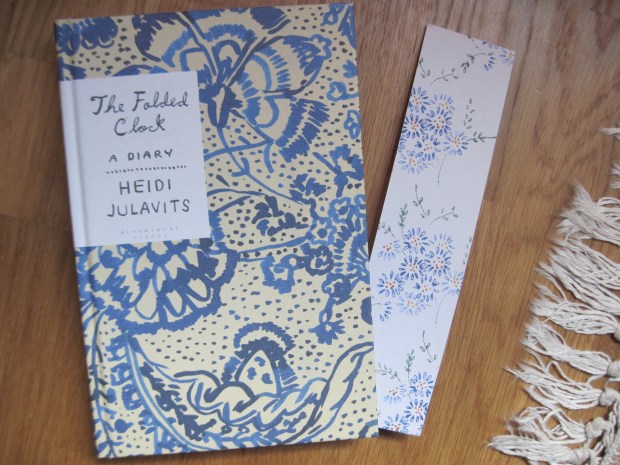
The cover design is by Leanne Shapton.
There’s a huge variety of topics here. She writes about being afraid of sharks, stealing names to use for characters in her novels, entering her small Maine town’s Fourth of July parade float competition, visiting E.B. White’s grave, mourning a tree half-lost to a hurricane, her insistence on dwelling in west-facing rooms, and regretting never telling her doctor how much she appreciated him before he died in a cycling accident. Travel features heavily, too, what with accompanying her husband to a fellowship in Germany and spending time at an art colony in Italy. Often it’s the tiny encounters and incidents that remain in her mind, though, like accidentally buying bitter apricot kernels instead of almonds at a German market and worrying that her husband might have given himself cyanide poisoning by eating 14 at once.
Some of these pieces would function well as stand-alone essays, like the one about her obsession with The Bachelor, an American reality television franchise, which leads into her belief that crushes are fostered by small spaces – she fell for her second husband (author Ben Marcus) at an arts colony even though they were both attached to other people at the time.
I was delighted to see Julavits quote the Julian Barnes passage on episodicism versus narrativism that inspired my post on that topic back in January. Unsurprisingly, Julavits sees herself as a narrativist, drawing connections between different points in her life. She’s always pondering what small incidents reveal about her character. We learn that she’s so averse to inconveniencing others that she continued a phone call while nursing a wasp sting and once planned to pee in an airsickness bag rather than wake the two sleepers between her and the aisle on a flight. She avoids yard sales because she’s so cutthroat, and she’s been known to romanticize her daily life when e-mailing a friend in London: “I probably didn’t tell the truthiest truths. I never made stuff up. But I did strive to be entertaining. Such embellishments do not constitute lies. They constitute your personality.”
In one of the pieces that stood out most for me, Julavits feels typecast as a woman of a certain age when she attends a Virginia Woolf reading. “I am of that age now where I am looking for the next age I will be. How will I dress? How will I act?” It’s a good example of how she uses these mini-essays to negotiate the stages of life and contemplate her changing roles. Elsewhere she sums up her composite identity and what she seeks from her writing:
I am a jack-of-all-trades. I edit and teach and at times desire to be a clothing designer or an artist … and I write everything but poetry and I am a mother and a social maniac and a misanthrope and a burgeoning self-help guru and a girl who wants to look pretty and a girl who wants to look sexy and a girl who wants to look girly and a woman in her middle forties who wishes not to look like anything at all, who wishes sometimes to vanish.
I sometimes think this is why I became a writer. Here was a way to regularly exercise my desire. I could desire to do this thing that no one does perfectly, and by doing it and doing it I could learn how to desire more, and better. Here was an activity that would always leave me wanting … not youth exactly, but the opposite of death. That to me is a way to always feel like I am nowhere near the end.
Inevitably, some entries are more interesting than others, and Julavits’ neuroticism may grate for some readers, but I found this book to be chock-full of quotable lines and insights into what it means to be a time-bound human being. Like one of May Sarton’s journals, I read it slowly, just a few pieces at a time over the course of weeks, and I’ll be keeping it on the shelf to flick through if I ever need an example of how to write a piercing, bite-sized fragment of autobiography. I highly recommend it.
(See also this brief Guardian interview with Julavits.)
The Folded Clock: A Diary was published by Bloomsbury Circus on March 9th. My thanks to the publisher for the free copy for review.
My rating:
Reading Goals for 2017
I’ve set just a few modest goals for the coming year’s reading:
- As always, I’d like to focus on reading more of the books I actually own. I went around and did an inventory of unread books in the house and came up with 221. That could easily fill two-thirds or more of next year, yet I know I’m unlikely to cut down on my library borrowing or NetGalley and Edelweiss requests. I think the strategy will be to always have two of my own books on the go at all times, one fiction and one nonfiction, no matter how many other public library or Kindle books I’m reading.
- Some of the books I most want to tackle have 500+ pages. I wonder if I have enough really long books to sustain a Doorstopper of the Month feature? To get a head start on this goal, this past week I started City on Fire by Garth Risk Hallberg and Titus Groan by Mervyn Peake. Also on the shelf are A Suitable Boy, This Thing of Darkness, An Instance of the Fingerpost, Until I Find You, and a few chunky biographies; I’m also sure to get some long books from the library and NetGalley.
-

The classics bookcase.
I read very few classics in 2016, just a couple short books by Jerome K. Jerome, a Stefan Zweig novella, Tender Is the Night, and two rediscovered 1930s works from the Apollo Classics series. So that’s something to rectify in 2017. Three classics from the list of “Books to Read in Your 30s” in The Novel Cure are calling to me, and it’s also high time I read some more Dickens (maybe I’ll finally return to Dombey and Son?), Trollope (at least The Warden, if not more of the Barsetshire series), Brontë (Anne, in this case) and Woolf (The Voyage Out). Maybe I’ll also start a Classic of the Month feature?
Regarding my career…
I’d like to replace some of my individual book reviewing with longer articles. For instance, this past year Foreword magazine invited me to write three articles surveying new and upcoming books in various genres: young adult, climate change and middle grade. It’s more rewarding (and remunerative) to prioritize full-length articles.
Regarding the blog…
I’d love to get involved in more blog tours and collaborative challenges. I also hope to continue maintaining a balance between straightforward reviews/lists and different stuff, whether that’s travel reports or more introspective pieces. My dream is still to judge a literary prize, even if that’s just as part of a shadow panel.
What are some of your goals for 2017 – reading-related or otherwise?
Tomorrow: Some final statistics on my reading for the year.
An Anthology for the Coming Winter
“the short dark days of winter
dear to me
as a bully to his mother.”
~from “Skulking,” a poem from Helen Dunmore’s The Malarkey
After more than ten years here, I still struggle with English winters. It’s not that they’re colder than what I grew up experiencing on America’s east coast. In terms of temperatures, snowfall and ice buildup, there’s no real comparison. I keenly remember the winter of 2004, when the wind-chill was about 10° F and all the fountains in Washington, D.C. froze solid.
But English winters have particularly disheartening qualities: they’re overwhelmingly dark, bone-seepingly wet, and seemingly endless. I’ll never forget when, in my first-ever winter in England (during my study abroad year in 2003), I looked out a University of Reading library window around 3:00 in the afternoon and realized the sun was setting behind the trees.
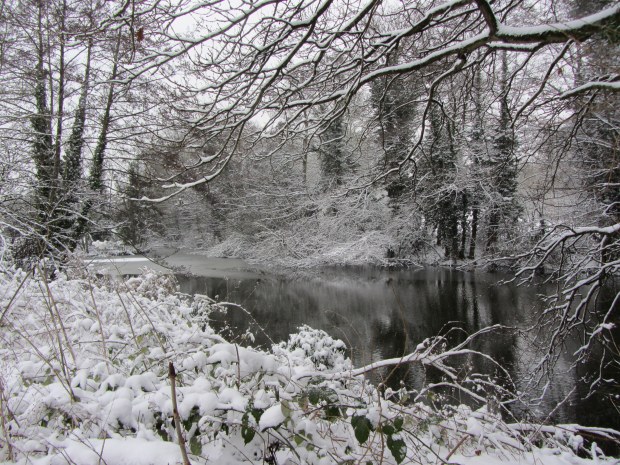
A snowy day on the University of Reading campus (Whiteknights Lake). Photo by Chris Foster.
All these years later, I still find that dim mid-afternoon light depressing, and the damp cold nearly intolerable. In our study abroad information packet we were warned that British interiors are kept 10 degrees cooler than American ones. But because we’re both thrifty and environmentally conscious, our house is significantly colder. Most of the time I’ll wear four to seven layers and huddle under blankets rather than turn on the heat – why warm a whole house for one person and one cat? I’m not entirely joking when I say to my husband that I wish I could hibernate from roughly November to April. Just wake me up for Christmas.
Ahhhhhh, Christmas, which the English do wonderfully – much better than Americans, in my opinion. Carol services, dense dried fruit desserts, booze in and with everything, a gentler tinge to the commercialism, plus maybe some nostalgic Dickensian tint I’m giving it all in my mind. I’ve had some wonderful Christmases here over the past 12 years.
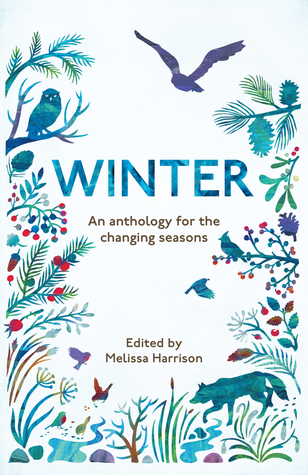 So I’m ambivalent about winter, and was interested to see how the authors collected in Melissa Harrison’s final seasonal anthology would explore its inherent contradictions. I especially appreciated the views of outsiders. Jini Reddy, a Quebec native, calls British winters “a long, grey sigh or a drawn-out ache.” In two of my favorite pieces, Christina McLeish and Nakul Krishna – from Australia and India, respectively – compare the warm, sunny winters they experienced in their homelands with their early experiences in Britain. McLeish remembers finding a disembodied badger paw on a frosty day during one of her first winters in England, while Krishna tells of a time he spent dogsitting in Oxford when all the students were on break. His decorous, timeless prose reminded me of J.R. Ackerley’s.
The series is in support of the Wildlife Trusts, and a key message of this volume in particular is that nature is always there to be experienced – even in what feels like a dead time of year. Kate Blincoe observes an urban starling murmuration in an essay that nicely blends the lofty and the earthy; Nicola Chester takes a wintry beach walk and documents what she finds in the strandline, such as goose barnacles; Joseph Addison celebrates the pleasures of a winter garden; Patrick Barkham examines the ways butterfly life* continues through the winter, usually as eggs; and Richard Adams (author of Watership Down) insists, “Wild flowers are like pubs. There are generally one or two open somewhere, if only you look hard enough.”
As in the other volumes, Harrison has chosen a lovely mixture of older and contemporary pieces. Occasional passages from Gilbert White and Thomas Furly Forster on the timing of natural phenomena help create a sense of chronological progression, from November through to February. The contemporary nature writing scene is represented by previously published material from Robert Macfarlane and Kathleen Jamie. Classic literature is here in the opening of Charles Dickens’s Bleak House and the Great Frost passage from Virginia Woolf’s Orlando. There are also excerpts from Coleridge’s diary and freed slave Olaudah Equiano’s account of seeing snow for the first time. In general, this volume is better at including diverse voices, like the final piece from Anita Sethi on her family’s unlikely garden in Manchester.
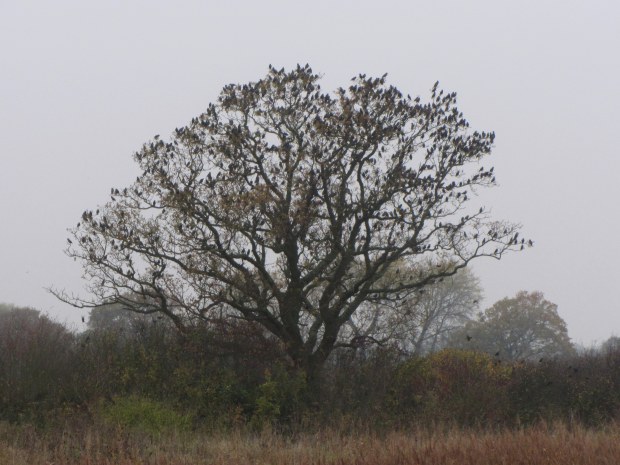
A starling roost at Otmoor RSPB Reserve in Oxfordshire. Photo by Chris Foster.
Christmas doesn’t really appear here; it’s a book about the natural year rather than the cultural year. But another event does, very powerfully: In another of my top few pieces, Jon Dunn (who authored my favorite piece in Autumn) tells how the overpowering darkness of a Shetland winter is broken by the defiant Up Helly Aa festival, in which the residents dress up as Vikings and ceremonially burn a longboat. Life goes on, no matter how bleak everything seems. That’s an important thing to keep in mind after all the troubling events of 2016.
*My husband’s piece, positioned between John Fowles’s and Richard Jeffries’s, is also about the surprising insect life that can be discovered in the winter.
My review of Summer.
My review of Autumn.
[I came late to the series so will be reading, but not reviewing, Spring next year.]
More beautiful lines to treasure:
- “Claws of grey rain break to rake through a gold half-light and the squall moves like a huge aerial jellyfish, obscuring then revealing this wreckers’ coast of muted blue headlands. Swirling white snowflakes move against a grey mass, turning Lundy Island into a Turner painting.” (Nicola Chester)
- “I am the garnet shock / of rosehip on frost / the robin’s titian flare.” (Julian Beach)
- “the tower blocks are advent calendars, / every curtain pulled to reveal a snow-blurred face.” (Liz Berry)
- “A whole year of concerns, worries and squabbles sloughed off in a bone-chilling baptism of copper water.” (Matt Gaw)
- “Two hundred jackdaws drape the skeleton of the winter beech like jet beads around the neck of a Victorian mourner.” (Jane Adams)
With thanks to Jennie Condell at Elliott & Thompson for the free copy for review.
My rating: 
Six Books I Abandoned Recently
Are they not criminals, books that have wasted our time and sympathy, are they not the most insidious enemies of society, corrupters, defilers, the writers of false books, faked books, books that fill the air with decay and disease?
Strong words there, from Virginia Woolf in “How Should One Read a Book?” I’m not quite so fervently opposed to these six books I abandoned recently, but I do share Woolf’s feeling of having had my time wasted. Particularly since I started as a freelance book reviewer, I’ve noticed that I am not very patient with my leisure reading: if a book doesn’t totally grab me and keep me turning the pages with rapt interest, I’m more likely to leave it unfinished. Better if I can do that before spending too much time with a book, but sometimes I approach the halfway point before finally giving up.
Below I give brief write-ups of the abandonees. I’d be interested to hear if you’ve read any of them and thought they were worth persisting with.
 Of Love and Desire by Louis de Bernières
Like so many, I enjoyed Captain Corelli’s Mandolin but haven’t tried much else from de Bernières. These are love poems: many of them Greek-influenced; most of them sentimental and not very interesting. I marked out one passage I liked, but even it then turns into a clichéd relationship poem: “I looked behind and saw the long straight line of my mistakes, / Faithful as hounds, their eyes alert, trailing in my wake. But / They weren’t dogs, they were women, some fair, some dark …” (from “Mistakes”). [Read the first 25 pages.]
My rating: 
 Yuki Chan in Brontë Country by Mick Jackson
The premise for this one – young Japanese woman visits the Brontë sites in Yorkshire as a way of reconnecting with her departed mother – sounded so interesting, but the third-person narration is very flat and detached. It makes Yuki and all the other characters seem like stereotypes: the fashion-obsessed Asian girl, the horde of Japanese tourists. I also noticed that far too many sentences and paragraphs start with “She.” I couldn’t be bothered to see how it would turn out. [Read the first 26%.]
My rating:
 Shylock Is My Name by Howard Jacobson
I’d read Jacobson’s three most recent novels and liked them all well enough. He’s certainly your go-to author if you want a witty discussion of the modern Jewish “persecution complex.” I think the problem with this one was that I wasn’t sure what it wanted to be: a contemporary Jewish novel, or a Hebrew fable, or some mixture thereof. Shylock is pretty much dropped in as is from The Merchant of Venice, so it’s unclear whether he’s Strulovitch’s hallucination or a time traveler or what. The exasperated father characters are well drawn, but their flighty daughters less so. I just got to a point where I didn’t care at all what happened next, which to me was the sign to give up and move on to something else. [Read the first 43%.]
My rating:
 As Close to Us as Breathing by Elizabeth Poliner
The writing is measured and lovely, and I appreciated the picture of late-1940s life for a Jewish family, but the pace was killing me: this is set in one summer, but with constant flashbacks and flash-forwards to other family stories, such that although we learn on page 1 that a character has died, even by the 60% mark I still had not learned how. Also, the narrator is telling everything in retrospect from 1999, but there is too little about her life at that present moment. I would direct readers to Elizabeth Graver’s The End of the Point instead. [Read the first 60%.]
My rating: 
 The Book of Aron by Jim Shepard
I’d read such rave reviews of this novel set in the Warsaw ghetto during the Second World War, and I’ve always meant to try something by Jim Shepard, so this seemed an ideal place to start. I decided to stop because although this is a fairly believable child’s voice, it is only being used to convey information. To me the spark of personality and the pull of storytelling are lacking. I felt like I was reading a history book about the Holocaust, subtly tweaked (i.e. dumbed down and flattened) to sound like it could be a child’s observations. [Read the first 53 pages.]
My rating: 
 Georgia by Dawn Tripp
Who doesn’t love Georgia O’Keeffe’s dreamy paintings of flowers and southwestern scenes? Initially I loved her tough-as-nails voice in this fictionalized autobiography, too, but as the story wore on it felt like she was withholding herself to some degree, only giving the bare facts of (dry, repetitive) everyday life and (wet, repetitive) sex scenes with 24-years-her-elder photographer Alfred Stieglitz. Call me impatient, but I couldn’t be bothered to stick around to see if something actually happened in this novel. I think I’d be interested in glancing through O’Keeffe and Stieglitz’s correspondence, though, just to see how the voices compare to what Tripp has created here. [Read the first 48%.]
My rating:
The Best Fiction of 2015: My Top 15
2015 was a great year for fiction, largely dominated by doorstoppers (like Death & Mr. Pickwick and City on Fire, in addition to the Franzen and Yanagihara listed below) and Harper Lee. I’ve decided to pass on Go Set a Watchman, but I’ve read plenty of the year’s big-name fiction, as well as some more obscure titles I’d like to bring to your attention.
As difficult as it is to pit books against each other and come up with a numbered list, I’ve given it a go and come up with my top 15 fiction works of the year. To keep it simple for myself and straightforward for potential readers, I’m limiting myself to two sentences per title: the first is a potted summary; the second tells you why you should read it. I also link to any full reviews.
Let the countdown begin!
- The Shore
 by Sara Taylor: Gritty and virtuosic, this debut novel-in-13-stories imagines 250 years of history on a set of islands. Every region needs a literary chronicler, and I reckon Taylor – channeling David Mitchell with her cross-centuries approach – is it for the Eastern Shore of Maryland and Virginia’s islands.
 Gold Fame Citrus by Claire Vaye Watkins: Gold, fame, citrus: reasons people once came to California; now, only a desperate remnant remains in the waterless wasteland. As a smart, believable dystopian with a family at its heart, this trumps any of last year’s efforts (like Station Eleven or California).
 Preparation for the Next Life by Atticus Lish: Like West Side Story, this debut novel is an updated Romeo and Juliet narrative – a tragedy-bound love story with a grimy contemporary setting and a sobering message about racism and the failure of the American dream. The matter-of-fact style somehow manages to elevate the everyday and urban into an art form. (Reviewed for Third Way magazine in August.)
- Circling the Sun
 by Paula McLain: Before she ever thought of flying solo across the Atlantic, aviatrix Beryl Markham was just Beryl Clutterbuck: raised in Kenya, one of Africa’s first female horse trainers, its first professional female pilot, and the other side of the love triangle featuring Karen Blixen (Isak Dinesen) and Denys Finch Hatton. McLain describes her African settings beautifully, and focuses as much on the small emotional moments that make a life as she does on its external thrills.
 Kitchens of the Great Midwest by J. Ryan Stradal: One of my favorite debuts of the year: a culinary-themed collection of short stories loosely linked through the character of Eva Thorvald, a young chef with an unfortunate past and a rare palate. Read it for a glimpse of how ordinary, flawed Americans live – no fairytale endings here.
 Hausfrau by Jill Alexander Essbaum: This arresting debut reads like a modern retelling of Madame Bovary, with its main character a desperate American housewife in Zurich. Watch Anna’s trajectory with horror, but you cannot deny there is a little of her in you.
 The Versions of Us by Laura Barnett: In this impressively structured, elegantly written debut, Barnett chronicles the romantic lives of two Cambridge graduates through three-quarters of a century, giving three options for how their connection might play out. There is no one perfect person or story: unsentimental this may be, but it feels true to how life works. (Reviewed for Third Way magazine in July.)
 Fates and Furies by Lauren Groff: An incisive study of a marriage, beautifully written and rich with allusions to Shakespeare and Greek mythology. Groff makes it onto a short list of women I expect to produce the Great American Novel (along with Curtis Sittenfeld, Jennifer Egan, and Hanya Yanagihara).
 Purity by Jonathan Franzen: East Germany, Bolivia and Oakland, California: Franzen doesn’t quite pull all his settings and storylines together, but this is darn close to a 5-star Dickensian read. It’s strong on the level of character and theme, with secrecy, isolation and compassion as recurring topics.
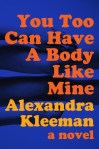 You Too Can Have a Body Like Mine by Alexandra Kleeman: Kleeman’s first novel is a full-on postmodern satire bursting with biting commentary on consumerism and conformity. Think of her as an heir to Dave Eggers and Douglas Coupland, with a hefty dollop of Margaret Atwood thrown in.
 The Animals by Christian Kiefer: Kiefer’s second novel contrasts wildness and civilization through the story of a man who runs an animal refuge to escape from his criminal past. A tough opening sequence establishes themes that will be essential to the novel: the fine line between instincts and decisions, the moral dilemmas involved in environmentalism, and the seeming inescapability of violence.
 The Tsar of Love and Techno by Anthony Marra: A collection of tightly linked short stories giving an intimate look at Russia and Chechnya in wartime and afterwards – revealing how politics, family, and art intertwine. Just as he did in his first novel, Marra renders unspeakable tragedies bearable through his warm and witty writing.
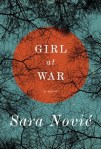 Girl at War by Sara Nović: This pitch-perfect debut novel is an inside look at the Yugoslavian Civil War and its aftermath, from the perspective of a young girl caught up in the fighting. The way Nović recreates a child’s perspective on the horrors of war is masterful: Ana’s viewpoint is realistic and matter-of-fact, without the melodrama an omniscient narrator might inject.
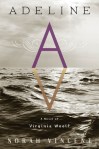 Adeline by Norah Vincent: Set in 1925–1941 and structured like a five-act play, the novel revolves around Virginia Woolf’s philosophical conversations with Leonard Woolf, Lytton Strachey and his lover Carrington, T.S. and Valerie Eliot, W.B. Yeats, and her doctor, Octavia Wilberforce. Vincent has produced a remarkable picture of mental illness from the inside.
- A Little Life
 by Hanya Yanagihara: Jude St. Francis: Dickensian orphan, patron saint of lost causes, Christlike Man of Sorrows, and one of the most memorable characters in recent fiction. This novel is an attempt to tackle the monolithic question of what makes life worth living; among the potential answers: love (though it doesn’t conquer all), friendship, creativity, and the family you create for yourself.
Best Discoveries of the Year: Mary Lawson (Road Ends), Daniel Kehlmann (F: A Novel), Jonathan Evison (This Is Your Life, Harriet Chance!) and Jonathan Coe (Number 11).
Debut Novelists Whose Next Work I’m Most Looking Forward to: Jessamyn Hope (Safekeeping – reviewed here in June) and Carmiel Banasky (The Suicide of Claire Bishop – reviewed for Foreword’s Fall 2015 issue).
 The Year’s Biggest Disappointments: Etta and Otto and Russell and James by Emma Hooper; Where My Heart Used to Beat by Sebastian Faulks and Avenue of Mysteries by John Irving (both rehash the authors’ familiar themes; I couldn’t make it past 15% in the latter).
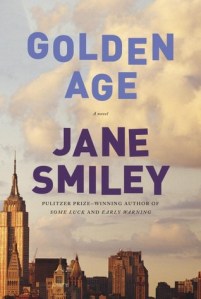
Novels I Most Wish I’d Gotten to in 2015: Nell Zink’s Mislaid, Sara Baume’s Spill Simmer Falter Wither, and the final two volumes of Jane Smiley’s “Last Hundred Years” trilogy.
What are the best novels you read this year? Any new favorite books or authors? Your comments are always welcome.
I’ll be back tomorrow with my top 15 nonfiction books I read this year (most of them not published in 2015, however – I seem to have been a nonfiction slacker!)
Small Books Are Good, Too
Last week I wrote in praise of doorstoppers – books over 500 pages. But I also love really short books: there’s just as much writing skill involved in making a narrative concise, and it can be supremely satisfying to pick up a book and polish it off within a couple hours, especially if you’re in a situation of captured attention as on a plane. Being honest and slightly selfish for a moment, short books are also a great way to build up a flagging year list.
Below I highlight poetry collections, memoirs, short stories and novellas that should be on your agenda if you’re looking for a quick read (number of pages in brackets after each title):
Poetry
I try to always have a book of contemporary poetry on the go, usually by a British poet since I pluck these at random from my local public library shelves. Poetry collections aren’t always ‘quick’ reads, nor should they be, because you often have to read a poem more than once to understand it or truly appreciate its techniques. Still, with most poetry books numbering somewhere between 45 and 90 pages, even if you parcel them out over days or weeks they’ll take much less time than a novel. Pick up something by Mark Doty, Kathleen Jamie, David Harsent or Christopher Reid and you’ll have plenty of beautiful verse to ponder.
Recently reviewed and recommended:
- Learning to Make an Oud in Nazareth by Ruth Padel [80]
- All One Breath by John Burnside [96]
- Praise in Which I Live and Move and Have My Being by Paul Durcan [176]
Short Memoirs
Depending on how thorough they are, autobiographies can often hover around 300 or 400 pages. Looking through my shelves, though, I’ve spotted a few in the 140–160 page range: My Movie Business by John Irving [158], The Diving-Bell and the Butterfly by Jean-Dominique Bauby [139], and Winter by Rick Bass [162]. Another short one well worth reading is the unusual The Sound of a Wild Snail Eating by Elisabeth Tova Bailey [170], a story about debilitating illness and taking comfort from nature.
Abigail Thomas, one of my favorite memoirists, writes in an episodic style that makes her 200-page books fly by as if they were half that length. Also, Anne Lamott has written two very short faith memoirs that would serve as a good introduction to her style and content for those who haven’t read Traveling Mercies et al.: Help Thanks Wow [102] and Stitches [112].
Recently reviewed and recommended:
- The Two Kinds of Decay by Sarah Manguso [192]
- The Light of the World by Elizabeth Alexander [208]
- What Comes Next and How to Like It by Abigail Thomas [240] – also included on my BookTrib list of mother–daughter memoirs to read for Mother’s Day
Short Stories
I used to shy away from short stories because I didn’t think they were worth the emotional investment, but recently I’ve decided I really like the rhythm of picking up a set of characters, a storyline and a voice and then, after 20 or so pages, following an epiphany or an aporia (or utter confusion), trading them in for a whole new scenario. Short stories are also the perfect length for reading during a quick meal or car ride. Two short story collections made it onto my “Best of 2014” list: White Man’s Problems by Kevin Morris and The Heaven of Animals by David James Poissant.
Recently reviewed and recommended (no page numbers listed here because each story can stand alone):
- Wallflowers by Eliza Robertson
- Funny Once by Antonya Nelson
- Thunderstruck and Other Stories by Elizabeth McCracken
Novellas
With some credits for free Penguin books I got hold of Borges and the Eternal Orang-Utans by Luis Fernando Verissimo (translated from the Portuguese by Margaret Jull Costa) [135], a book I’d been hankering to read ever since I came across that terrific title. It’s an enjoyable academic comedy and locked room mystery, with nods to Borges and Poe (though I probably didn’t get them all).
I also recently discovered Peirene Press, which exclusively publishes novellas in translation. Their motto is “Contemporary European Literature. Thought provoking, well designed, short.” They publish the novellas in thematic trilogies, with headings such as “Male Dilemma: Quests for Intimacy” and “Small Epic: Unravelling Secrets.” The book I own from Peirene (scored from a secondhand bookshop in Henley-on-Thames for £1), from the “Turning Point: Revolutionary Moments” series, is Mr. Darwin’s Gardener by Kristina Carlson [122] (translated from the Finnish by Emily and Fleur Jeremiah).
It’s an odd little book, with a mixture of past and present tense and first-, third- and first-person plural narration. Set in the village of Downe, it’s peripherally about the title character, Charles Darwin’s gardener Thomas Davies, a new widower with two children, one of whom has Duchenne muscular dystrophy (newly identified). It’s thin on plot, it must be said. Daniel Lewis, the verger of Downe for five years, was dismissed for stealing from the church and is beaten up when he comes back to town; some characters think and talk about Darwin’s theory and Davies’s bereavement; there’s an overturned cart.
My favorite section, “At the Anchor,” is composed of conversations at the village pub, and my favorite individual lines reflect on Darwin’s influence on contemporary thought:
“Mr Darwin is a tree that spreads light, Thomas Davies thinks.”
“Great men are remembered, like Mr Darwin, a genuine monolith. We small folk are mere sand, washed by the waves as they go back and forth.”
“People in future decades and centuries will react to our ideas superciliously, as if we were children playing at thinking. We shall look most amusing in the light of new thoughts and inventions.”
If you’re looking to get through a classic in an afternoon, why not try one of these (full text available for free online through Project Gutenberg or other initiatives): Animal Farm by George Orwell [95], Ethan Frome by Edith Wharton [181] or Flush by Virginia Woolf (her spoof ‘biography’ of Elizabeth Barrett Browning’s cocker spaniel) [108]. E. M. Forster’s novels also read very quickly, and several of John Steinbeck’s novels are quite short. Whether or not you’ve seen the Audrey Hepburn movie, you’ll want to read the sparkling, bittersweet Breakfast at Tiffany’s by Truman Capote [100]; my edition also includes several of his best known short stories, including the wonderful “A Christmas Memory.”
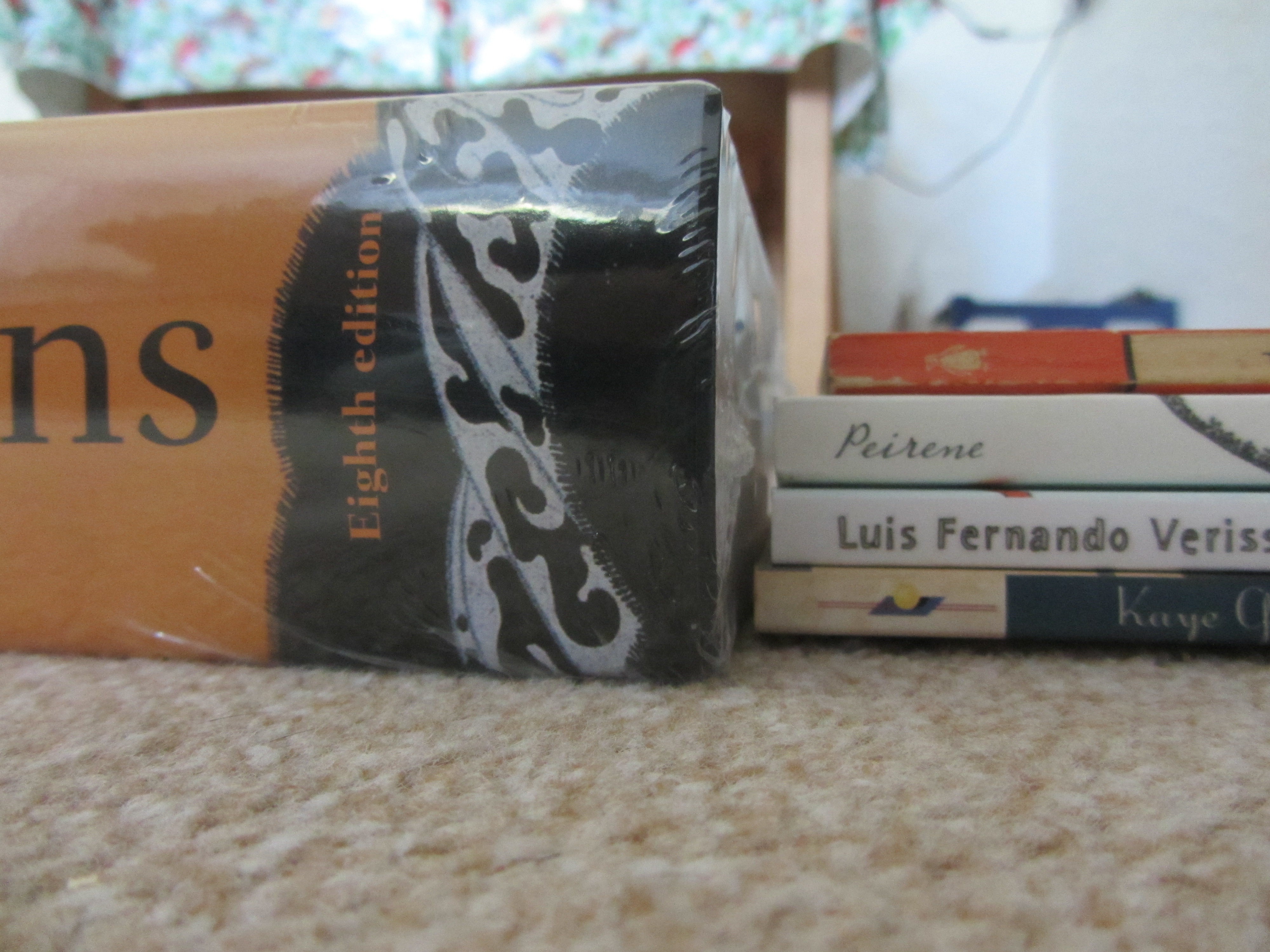
Even four novellas put together don’t stack up very far compared to the Oxford Dictionary of Quotations.
I recently finished The Bookshop by Penelope Fitzgerald [123]; all her books are similarly concise, so you may want to give her a try. The next novella on the pile for me is Ellen Foster by Kaye Gibbons [126]. I had never heard of the author, but the title and description lured me into buying it from a library book sale on a trip back to America (for 25 cents, why not?!). It’s a Southern Gothic story with an eleven-year-old narrator whom Walker Percy likened to Holden Caulfield. The alluring first line: “When I was little I would think of ways to kill my daddy.”
For more ideas, see these two Publishers Weekly’s lists:
“10 Best Books Shorter than 150 Pages” (only repeats one of my suggestions)
“10 Best Short Story Collections You’ve Never Read”
Off topic, but today is a milestone for me: it marks exactly two years that I’ve been a freelance writer!
Are you fond of short books? Do you prefer them to doorstoppers? What are some of your favorite novellas? All comments welcome!
Reviews Roundup, March–April
One of my goals with this blog is to have one convenient place where I can gather together all my writing that has appeared in disparate online locations. To that end, once a month – or maybe more often – I’ll provide links to all the book reviews I’ve published elsewhere, with a short taster and a rating (below) so you can decide whether to click to read more. (A couple of exceptions: I won’t point out my Kirkus Indie or BlueInk reviews since I don’t get a byline.)
BookBrowse
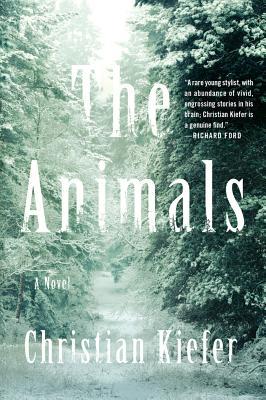 The Animals by Christian Kiefer [BookBrowse is a subscription service, but an excerpt is available for free on the website]: Kiefer’s second novel contrasts wildness and civilization through the story of a man who runs an animal refuge to escape from his criminal past.

The Bookbag
 The Sunlit Night by Rebecca Dinerstein: A debut novel as charming as it is quirky. Two young adults from Brooklyn meet in the far north of Norway, where one is an artist’s apprentice and the other is burying a beloved father. Bittersweet family backstories and burgeoning romance make this a winner.

Beauty and Chaos: Slices and Morsels of Tokyo Life by Michael Pronko (& interview): The pleasant and diverse travel essays in this collection draw on Pronko’s 15 years living in Japan. A long-term resident but still an outsider, he is perfectly placed to notice the many odd and wonderful aspects of Tokyo life.
The Blind Man of Hoy: A True Story by Red Szell: Red Széll started losing his sight at age 19. In 2013 he became the first blind person to climb the Old Man of Hoy, off the Orkney Islands. An inspirational rock-climbing adventure.

 Adeline: A Novel of Virginia Woolf by Norah Vincent: Set in 1925–1941 and focusing on Virginia Woolf’s marriage and later career, this is a remarkable picture of mental illness from the inside. For the depth of its literary reference and psychological insight, this is my favorite novel of 2015 so far.
Nudge
On Immunity: An Inoculation by Eula Biss: This wide-ranging work of nonfiction explores the facts, myths and metaphors of vaccination. Biss powerfully captures the modern phenomenon of feeling simultaneously responsible and powerless.
Chaplin and Company by Mave Fellowes: An aspiring mime buys a London canal boat and finds her father in this debut novel. Fellowes writes good descriptive passages and handles past and present capably. However, I was unsure whether Chaplin and Company overall has much narrative verve. What I will take away is an offbeat, bittersweet coming-of-age story.

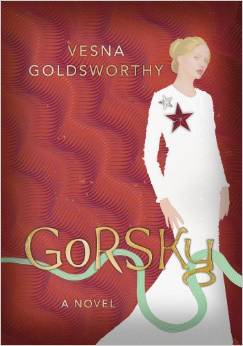 Gorsky by Vesna Goldsworthy: An updated version of The Great Gatsby set amongst contemporary London’s über-rich Russians. The novel is wise about the implications of class and immigration. However, as a whole it doesn’t work as well as some updated classics, such as The Innocents (Francesca Segal). In a sense, Goldsworthy’s literary debt is too obvious.

Quite a Good Time to Be Born: A Memoir, 1935-1975 by David Lodge [more personal musings and an overview of the book’s content]: David Lodge, one of Britain’s most celebrated comic novelists, surveys 40 years of personal and social change.
Better Than Before: Mastering the Habits of Our Everyday Lives by Gretchen Rubin: The author of The Happiness Project returns with a thorough guide to making and breaking habits, offering different strategies for different personality types.
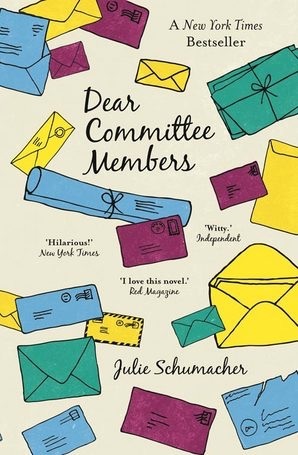 Dear Committee Members by Julie Schumacher: A very funny epistolary novel in the form of letters of recommendation written by a grouchy English professor. English graduates and teachers in particular will get a kick out of this, but I daresay anyone who has ever been fed up with bureaucracy at work will sympathize with Fitger.
The Last Asylum: A Memoir of Madness in Our Time by Barbara Taylor: Taylor was once a mental patient at Friern Hospital. This is an arresting vision of madness from the inside, as well as a history of England’s asylum system.
We Love This Book
 It’s What I Do: A Photographer’s Life of Love and War by Lynsey Addario: Photojournalist Lynsey Addario remembers a decade on the frontline of conflicts in the Middle East and Africa and strives for balance in her work and personal life. Journalists face real danger every day. It’s all here: bombs, car accidents, dehydration, beatings, and sexual assault. Yet all the risks over the years have been worth it “to convey beauty in war.”
Hausfrau by Jill Alexander Essbaum: Essbaum’s arresting debut novel reads like a modern retelling of Madame Bovary, with its main character a desperate housewife in Zurich. As deplorable as Anna’s actions may be, she is an entirely sympathetic tragic heroine. Watch her trajectory with horror but you cannot deny there is a little of Anna in you.
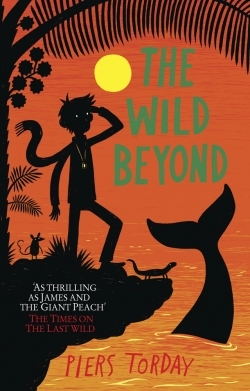 The Wild Beyond by Piers Torday: the suspenseful finale to “The Last Wild,” a fantasy trilogy for younger readers. The environmentalist message is not subtle but it is powerful and should inspire older children. Blending hints of Pullman and Tolkien with up-to-the-minute dystopian themes, this is an inventive take on the classic quest narrative.
The Time in Between: A Memoir of Hunger and Hope by Nancy Tucker: Nancy Tucker suffered from anorexia and bulimia for nearly a decade. Written in an original blend of styles, her eating disorder memoir is wrenching but utterly absorbing. You won’t find epiphanies or happy endings here, just a messy, ongoing recovery process – but 21-year-old Tucker narrates it exquisitely.
Quadrapheme literary magazine
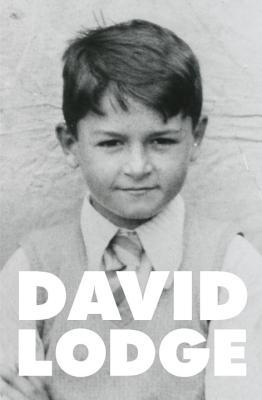 Quite a Good Time to Be Born: A Memoir, 1935-1975 by David Lodge [more of an essay about the context and sociological themes]: Even readers less familiar with Lodge’s work may be interested in the book’s insights into the social changes of post-war Britain. Lodge has not had a conventionally exciting life, and he knows it. From the title onward, his focus is more on his time period than his own uniqueness. He appears as an Everyman who superseded his working-class origins and expectations through hard work and luck.
Shiny New Books
 Reading the World: Confessions of a Literary Explorer by Ann Morgan: Not just another bibliomemoir. A better balance could have been struck between recycled blog content and academic musings on postcolonial literature and censorship. An interest in the politics of literature in translation would be a boon to anyone attempting this.
Foreword Reviews (self-published titles)
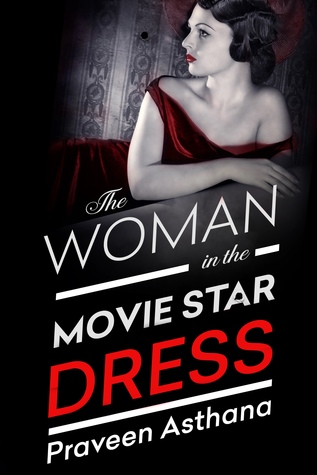 The Woman in the Movie Star Dress by Praveen Asthana: In this carefully plotted novel, a young Native American finds self-assurance and explores her sexuality by trying on the clothing – and personae – of Hollywood actresses. Spirited characters and dialogue make this an enjoyable read for classic film lovers.
Silence by Deborah Lytton: Lytton’s second novel for young adults concerns the unlikely match between a Broadway-bound singer who experiences temporary deafness after an accident and a pianist with a speech impediment and a traumatic past. It is a touching story about the forces that so often threaten us into silence and the struggle to find a voice anyway.
 Woody Allen: Reel to Real by Alex Sheremet: Woody Allen fans will prize this comprehensive, readable rundown of his oeuvre. This is an exhaustive study, ideal for established Allen enthusiasts and film students rather than the average moviegoer looking for an introduction.
I also post reviews of most of my casual reading on Goodreads.
The Mermaid’s Child by Jo Baker: This was Baker’s second novel, originally published in 2004. It doesn’t nearly live up to Longbourn, but it’s a fairly intriguing blend of historical fiction and fantasy. Malin’s father was a ferryman; her absent mother, so he swears, was a mermaid. Curiously timeless and placeless.
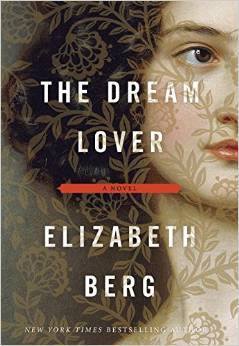 The Dream Lover: A Novel of George Sand by Elizabeth Berg: This historical novel about George Sand is a real slow burner. Berg makes the mistake of trying to be too comprehensive about Sand’s life; it would be better to just choose illustrative vignettes or representative love affairs (e.g. with Chopin) rather than include them all. There are two different timelines, 1831–1876 and 1804–1831, but together they’re still just a chronological slog.
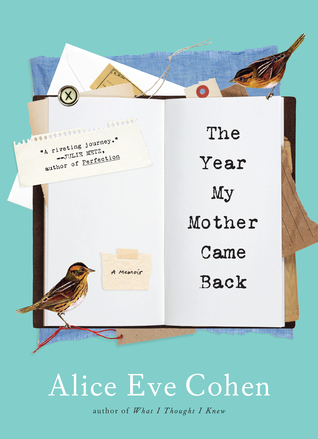 The Year My Mother Came Back by Alice Eve Cohen: There’s some gentle magic realism to this mother-daughter memoir. In the difficult year that forms the kernel of the memoir, Cohen’s younger daughter, Eliana, had a leg-lengthening surgery; her adopted older daughter, Julia, met her birth mother, Zoe; and Cohen herself underwent a lumpectomy and radiation for breast cancer. During radiation sessions, when she had to lie face-down, perfectly still, for 10 minutes at a time, her mother – dead for 20 years – would appear and talk to her.
A Sting in the Tale: My Adventures with Bumblebees by Dave Goulson: A wholly engaging tour through everything we know and are still trying to learn about bumblebees. I saw Goulson, founder of the UK’s Bumblebee Conservation Trust, speak at a nature conference in November and found him to be just as enthusiastic and well-informed in person. His occasional anthropomorphisms are unfailingly endearing.
 Black River by S.M. Hulse: Back in the town of Black River, Montana after his wife’s agonizing death, Wesley Carver must face the trauma he experienced as a prison guard when he was held hostage and tortured during an inmate riot. Now his attacker is up for parole, and Wes plans to attend the hearing and discourage the jury. At first you might think you’re reading a revenge story, but this is something subtler and sweeter than that. (What a shame that Hulse had to go by her initials, rather than Sarah, to be taken seriously in this genre, even though she’s on a level with Philipp Meyer.)
Trumbull Ave. by Michael Lauchlan: I didn’t like this quite as much as the other Made in Michigan books I’ve read, but Lauchlan does a good job of contrasting pastoral and post-industrial views of Detroit through free verse, as in “Detroit Pheasant,” the poem that gives the collection its cover image.
What Ridiculous Things We Could Ask of Each Other by Jeffrey Schultz: I enjoyed these poems set in a seemingly post-apocalyptic urban wasteland. They’re full of black humor, sarcasm and realistically pessimistic views of the American future. They’re very densely structured, usually in complete sentences of free verse.
 Bookish Beck = Rebecca Foster. American transplant to England. Freelance proofreader and book reviewer.
