Review Catch-Up: Medical Nonfiction & Nature Poetry
Catching up on four review copies I was sent earlier in the year and have finally got around to finishing and writing about. I have two works of health-themed nonfiction, one a narrative about organ transplantation and the other a psychiatrist’s memoir; and two books of nature poetry, a centuries-spanning anthology and a recent single-author collection.
The Story of a Heart by Rachel Clarke
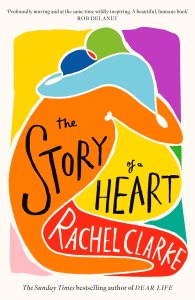 Rachel Clarke is a palliative care doctor and voice of wisdom on end-of-life issues. I was a huge fan of her Dear Life and admire her public critique of government policies that harm the NHS. (I’ve also reviewed Breathtaking, her account of hospital working during Covid-19.) While her three previous books all incorporate a degree of memoir, this is something different: narrative nonfiction based on a true story from 2017 and filled in with background research and interviews with the figures involved. Clarke has no personal connection to the case but, like many, discovered it via national newspaper coverage. Nine-year-old Max Johnson spent nearly a year in hospital with heart failure after a mysterious infection. Keira Ball, also nine, was left brain-dead when her family was in a car accident on a dangerous North Devon road. Keira’s heart gave Max a second chance at life.
Clarke zooms in on pivotal moments: the accident, the logistics of getting an organ from one end of the country to another, and the separate recovery and transplant surgeries. She does a reasonable job of recreating gripping scenes despite a foregone conclusion. Because I’ve read a lot around transplantation and heart surgery (such as When Death Becomes Life by Joshua D. Mezrich and Heart by Sandeep Jauhar), I grew impatient with the contextual asides. I also found that the family members and medical professionals interviewed didn’t speak well enough to warrant long quotation. All in all, this felt like the stuff of a long-read magazine article rather than a full book. The focus on children also results in mawkishness. However, the Baillie Gifford Prize judges who shortlisted this clearly disagreed. I laud Clarke for drawing attention to organ donation, a cause dear to my family. This case was instrumental in changing UK law: one must now opt out of donating organs instead of registering to do so.
With thanks to Abacus Books (Little, Brown) for the proof copy for review.
You Don’t Have to Be Mad to Work Here: A Psychiatrist’s Life by Dr Benji Waterhouse
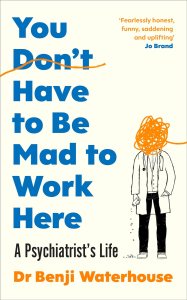 Waterhouse is also a stand-up comedian and is definitely channelling Adam Kay in his funny and touching debut memoir. Most chapters are pen portraits of patients and colleagues he has worked with. He also puts his own family under the microscope as he undergoes therapy to work through the sources of his anxiety and depression and tackles his reluctance to date seriously. In the first few years, he worked in a hospital and in community psychiatry, which involved house visits. Even though identifying details have been changed to make the case studies anonymous, Waterhouse manages to create memorable characters, such as Tariq, an unhoused man who travels with a dog (a pity Waterhouse is mortally afraid of dogs), and Sebastian, an outwardly successful City worker who had been minutes away from hanging himself before Waterhouse and his colleague rang on the door.
Along with such close shaves, there are tragic mistakes and tentative successes. But progress is difficult to measure. “Predicting human behaviour isn’t an exact science. We’re just relying on clinical assessment, a gut feeling and sometimes a prayer,” Waterhouse tells his medical student. The book gives a keen sense of the challenges of working for the NHS in an underfunded field, especially under Covid strictures. He is honest and open about his own failings but ends on the positive note of making advances in his relationship with his parents. This was a great read that I’d recommend beyond medical-memoir junkies like myself. Waterhouse has storytelling chops and the frequent one-liners lighten even difficult topics:
The sum total of my wisdom from time spent in the community: lots of people have complicated, shit lives.
Ambiguous statements … need clarification. Like when a depressed patient telephones to say they’re ‘in a bad place’. I need to check if they’re suicidal or just visiting Peterborough.
What is it about losing your mind that means you so often mislay your footwear too?
With thanks to Jonathan Cape (Penguin) for the proof copy for review.
Green Verse: An Anthology of Poems for Our Planet, ed. Rosie Storey Hilton
 Part of the “In the Moment” series, this anthology of nature poetry has been arranged seasonally – spring through to winter – and, within season, roughly thematically. No context or biographical information is given on the poets apart from birth and death years for those not living. Selections from Emily Dickinson, William Shakespeare and W.B. Yeats thus share space with the work of contemporary and lesser-known poets. This is a similar strategy to the Wildlife Trusts’ Seasons anthologies, the ranging across time meant to suggest continuity in human engagement with the natural world. However, with a few exceptions (the above plus Thomas Hardy’s “The Darkling Thrush” and Gerard Manley Hopkins’s “Inversnaid” are absolute classics, of course), the historical verse tends to be obscure, rhyming and sentimental; unfair to deem it all purple or doggerel, but sometimes bodies of work are forgotten for a reason. By contrast, I found many more standouts among the contemporary poets. Some favourites: “Cyanotype, by St Paul’s Cathedral” by Tamiko Dooley, “Eight Blue Notes” by Gillian Dawson (about eight species of butterfly), the gorgeously erotic “the bluebells are coming out & so am I” by Maya Blackwell, and “The Trees Don’t Know I’m Trans” by Eddy Quekett. It was also worthwhile to discover poems from other ancient traditions, such as haiku by Issa (“O Snail”) and wise aphoristic verse by Lao Tzu (“All things pass”). So, a bit of a mixed bag, but a nice introductory text for those newer to poetry.
With thanks to Saraband for the free copy for review.
Dangerous Enough by Becky Varley-Winter (2023)
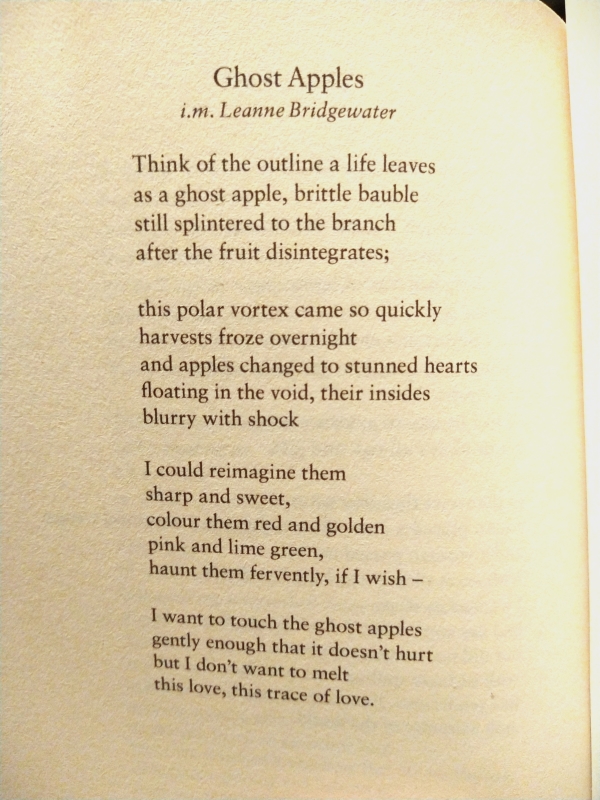
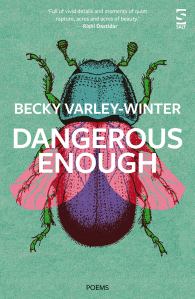 I requested this debut collection after hearing that it had been longlisted for the Laurel Prize for environmental poetry (funded by Simon Armitage, Poet Laureate). Varley-Winter crafts lovely natural metaphors for formative life experiences. Crows and wrens, foxes and fireflies, memories of a calf being born on a farm in Wales; gardens, greenhouses and long-lived orchids. These are the sorts of images that thread through poems about loss, parenting and the turmoil of lockdown. The last line or two of a poem is often especially memorable. It’s been months since I read this and I foolishly didn’t take any notes, so I haven’t retained more detail than that. But here is one shining example:
With thanks to Salt Publishing for the free copy for review.
#SciFiMonth: A Simple Intervention (#NovNov24 and #GermanLitMonth) & Station Eleven Reread
It’s rare for me to pick up a work of science fiction but occasionally I’ll find a book that hits the sweet spot between literary fiction and sci-fi. Parable of the Sower by Octavia Butler, The Book of Strange New Things by Michel Faber and The Sparrow by Mary Doria Russell are a few prime examples. It was the comparisons to Margaret Atwood and Kazuo Ishiguro, masters of the speculative, that drew me to my first selection, a Peirene Press novella. My second was a reread, 10 years on, for book club, whose postapocalyptic content felt strangely appropriate for a week that delivered cataclysmic election results.

A Simple Intervention by Yael Inokai (2022; 2024)
[Translated from the German by Marielle Sutherland]
Meret is a nurse on a surgical ward, content in the knowledge that she’s making a difference. Her hospital offers a pioneering procedure that cures people of mental illnesses. It’s painless and takes just an hour.
The doctor had to find the affected area and put it to sleep, like a sick animal. That was his job. Mine was to keep the patients occupied. I was to distract them from what was happening and keep them interacting with me. As long as they stayed awake, we knew the doctor and his instruments had found the right place.
 The story revolves around Meret’s emotional involvement in the case of Marianne, a feisty young woman who has uneasy relationships with her father and brothers. The two play cards and share family anecdotes. Until the last few chapters, the slow-moving plot builds mostly through flashbacks, including to Meret’s affair with her fellow nurse, Sarah. This roommates-to-lovers thread reminded me of Learned by Heart by Emma Donoghue. When Marianne’s intervention goes wrong, Meret and Sarah doubt their vocation and plan an act of heroism.
Inokai invites us to ponder whether what we perceive as defects are actually valuable personality traits. More examples of interventions and their aftermath would be a useful point of comparison, though, and the pace is uneven, with a lot of unnecessary-seeming backstory about Meret’s family life. In the letter that accompanied my review copy, Inokai explained her three aims: to portray a nurse (her mother’s career) because they’re underrepresented in fiction, “to explore our yearning to cut out our ‘demons’,” and to offer “a queer love story that was hopeful.” She certainly succeeds with those first and third goals, but with the central subject I felt she faltered through vagueness.
Born in Switzerland, Inokai now lives in Berlin. This also counts as my first contribution to German Literature Month; another is on the way!
[187 pages]
With thanks to Peirene Press for the free copy for review.


Station Eleven by Emily St. John Mandel (2014)
For synopsis and analysis I can’t do better than when I reviewed this for BookBrowse a few months after its release, so I’d direct you to the full text here. (It’s slightly depressing for me to go back to old reviews and see that I haven’t improved; if anything, I’ve gotten lazier.) A couple book club members weren’t as keen, I think because they’d read a lot of dystopian fiction or seen many postapocalyptic films and found this vision mild and with a somewhat implausible setup and tidy conclusion. But for me this and Cormac McCarthy’s The Road have persisted as THE literary depictions of post-apocalypse life because they perfectly blend the literary and the speculative in an accessible and believable way (this was a National Book Award finalist and won the Arthur C. Clarke Award), contrasting a harrowing future with nostalgia for an everyday life that we can already see retreating into the past.
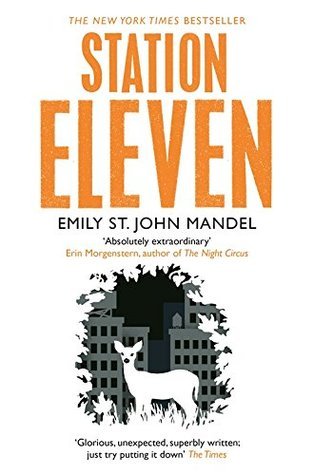 Station Eleven has become a real benchmark for me, against which I measure any other dystopian novel. On this reread, I was captivated by the different layers of the nonlinear story, from celebrity gossip to a rare graphic novel series, and enjoyed rediscovering the links between characters and storylines. I remembered a few vivid scenes and settings. Mandel also seeds subtle connections to later work, particularly The Glass Hotel (island off Vancouver, international shipping and finance) but also Sea of Tranquility (music, an airport terminal). I haven’t read her first three novels, but wouldn’t be surprised if they have additional links.
The two themes that most struck me this time were the enduring power of art and how societal breakdown would instantly eliminate the international – but compensate for it with the return of the extremely local. At a time when it feels difficult to trust central governments to have people’s best interests at heart, this is a rather comforting prospect. Just in my neighbourhood, I see how we implement this care on a small scale. In settlements of up to a few hundred, the remnants of Station Eleven create something like normal life by Year 20.
Book club members sniped that the characters could have better pooled skills, but we agreed that Mandel was wise to limit what could have been tedious details about survival. “Survival is insufficient,” as the Traveling Symphony’s motto goes (borrowed from Star Trek). Instead, she focuses on love, memory, and hunger for the arts. In some ways, this feels prescient of Covid-19, but even more so of the climate-related collapse I expect in my lifetime. I’ve rated this a little bit higher the second time for its lasting relevance. (Free from a neighbour) 
Some favourite passages:
the whole of Chapter 6, a bittersweet litany that opens “An incomplete list: No more diving into pools of chlorinated water lit green from below” and includes “No more pharmaceuticals,” “No more flight,” and “No more countries”
“what made it bearable were the friendships, of course, the camaraderie and the music and the Shakespeare, the moments of transcendent beauty and joy”
“The beauty of this world where almost everyone was gone. If hell is other people, what is a world with almost no people in it?”

Book Serendipity, April to May 2024
I call it “Book Serendipity” when two or more books that I read at the same time or in quick succession have something in common – the more bizarre, the better. Of course, the truer term would be synchronicity, but the branding has stuck. In Liz Jensen’s Your Wild and Precious Life, she mentions that Carl Jung coined the term “synchronicity” for what he described as “a meaningful coincidence of two or more events where something other than the probability of chance is involved.” I like thinking that it’s not just a matter of luck.
This is a regular feature of mine every couple of months. I would normally have waited until the end of June, but I had way too many coincidences stored up! Because I usually have 20–30 books on the go at once, I suppose I’m more prone to finding them. People frequently ask how I remember all of these incidents. The answer is: I jot them down on scraps of paper or input them immediately into a file on my PC desktop; otherwise, they would flit away.
The following are in roughly chronological order.
- Reading two King Lear updates at the same time: Private Rites by Julia Armfield and Daughter by Claudia Dey. The former has been specifically marketed as a “lesbian Lear,” but I had no idea that the latter also features two sisters plus a younger half-sister and their interactions with a larger-than-life father.

- Eating beans straight out of the tin in The Waterfall by Margaret Drabble and Of Mice and Men by John Steinbeck.
- Dead mice in Of Mice and Men by John Steinbeck and Stone Yard Devotional by Charlotte Wood.

-

- Screenshot
- Cloth holding the jaw of a corpse closed in one story from Barcelona by Mary Costello and A Woman’s Story by Annie Ernaux.
- Others see a character’s wife as a whore but the husband is oblivious in The Shipping News by E. Annie Proulx and Of Mice and Men by John Steinbeck.
 Setting up a game of solitaire in The Snow Hare by Paula Lichtarowicz and Of Mice and Men by John Steinbeck.
- Main character called Mona in Daughter by Claudia Dey and Mona of the Manor by Armistead Maupin.
- Being surprised at an older man still having his natural hair colour in one story of Barcelona by Mary Costello (where he’s aged 76) and Life in the Balance by Jim Down (where it’s Alan Bennett, at 84!).
- A character named Anjali in Brotherless Night by V.V. Ganeshananthan and Moral Injuries by Christie Watson.

- A character named Cherry in Daughter by Claudia Dey and one story of This Is Why We Can’t Have Nice Things by Naomi Wood.
- My second memoir in two months in which a twentysomething son dies suddenly of a presumed heart problem: Fi by Alexandra Fuller, followed by Your Wild and Precious Life by Liz Jensen. (And a third in which his young friend died in the same way: The Uptown Local by Cory Leadbeater.) Also, Fuller and Jensen both see signs of their sons’ continued presence in bird sightings.
- Scratches on the inside of a coffin as proof of being buried alive in one story of Barcelona by Mary Costello and Life in the Balance by Jim Down.


- Surprise that one didn’t know the exact moment that a loved one died in one story of Barcelona by Mary Costello and Your Wild and Precious Life by Liz Jensen.
- Discussion of the meaning of brain stem death and a mention of meningococcal sepsis in Life in the Balance by Jim Down and Moral Injuries by Christie Watson.
- A scene set in a Denny’s diner in The Whole Staggering Mystery by Sylvia Brownrigg and After Dark by Haruki Murakami.


- A description of halal butchery in Barcelona by Mary Costello and Between Two Moons by Aisha Abdel Gawad.
- A mention of ballet choreographer George Balanchine in Dances by Nicole Cuffy and The Uptown Local by Cory Leadbeater.
- A woman has an affair with a female postal worker in Mona of the Manor by Armistead Maupin and The Shipping News by Annie Proulx, both of which I DNFed.
- A character named Magdalena in Cloistered by Catherine Coldstream and The Snow Hare by Paula Lichtarowicz. The latter goes by Lena, which is also the name of the main character in Jungle House by Julianne Pachico. And there’s a character named Lina in Between Two Moons by Aisha Abdel Gawad.


- Being presented with powdered milk in Cloistered by Catherine Coldstream and Whale Fall by Elizabeth O’Connor.
- First I read a novel about a convent plagued by mice (Stone Yard Devotional by Charlotte Wood). Then I read a memoir about a convent plagued by feral cats (Cloistered by Catherine Coldstream).
- Buffalo, New York as a setting in Consent by Jill Ciment and The Age of Loneliness by Laura Marris. It’s also mentioned in Enter Ghost by Isabella Hammad.


- Watching pigeons on one’s balcony in Keep by Jenny Haysom, Your Wild and Precious Life by Liz Jensen, and The Uptown Local by Cory Leadbeater.
 The family’s pet chicken is cooked for dinner in Coleman Hill by Kim Coleman Foote and The Snow Hare by Paula Lichtarowicz.
- The mother is named Gloria in Consent by Jill Ciment and Cold Spring Harbor by Richard Yates (and The War for Gloria by Atticus Lish, a DNF).
- A character named Anton in The Snow Hare by Paula Lichtarowicz and Jungle House by Julianne Pachico.
- A cat named Dog in The Door-to-Door Bookstore by Carsten Henn and a dog named Tiger in Jungle House by Julianne Pachico.
- Two nature books that feature wild cold-water swimming (though don’t they all these days?!): In All Weathers by Matt Gaw and Your Wild and Precious Life by Liz Jensen.

- Two nature books that mention W.H. Hudson: In All Weathers by Matt Gaw and North with the Spring by Edwin Way Teale.
 A large anonymous donation to a church in Slammerkin by Emma Donoghue and Excellent Women by Barbara Pym (£10–11, which was much more in the 18th century of the former than in the 1950s of the latter).
- A mention of Poughkeepsie, New York in Birdeye by Judith Heneghan and Woman of Interest by Tracy O’Neill.
- A 1950s scene of perusing a lipstick display in Recipe for a Perfect Wife by Karma Brown and Excellent Women by Barbara Pym.

- A woman with a broken leg worries about how her garden will fare in Recipe for a Perfect Wife by Karma Brown and Remarkably Bright Creatures by Shelby Van Pelt.
- The same silent film image of a spaceship entering the moon’s eye (from Georges Méliès’s A Trip to the Moon) appears in Knife by Salman Rushdie and The Invention of Hugo Cabret by Brian Selznick. (I think this is the uncanniest coincidence of all this time!)

- A cleric who wears a biretta in Excellent Women by Barbara Pym and Daughters of the House by Michèle Roberts.
- A Black single mother who believes in the power of crystals in Company by Shannon Sanders and Another Word for Love by Carvell Wallace.


- An older woman really doesn’t want to leave her home but is moving into a retirement facility in Keep by Jenny Haysom and Remarkably Bright Creatures by Shelby Van Pelt. (There’s also a young woman who refuses to leave her house in Recipe for a Perfect Wife by Karma Brown.)
 A man throws his tie over his shoulder before eating in Recipe for a Perfect Wife by Karma Brown and Keep by Jenny Haysom.
- A mother writing a bad check becomes an important plot point in Remarkably Bright Creatures by Shelby Van Pelt and Another Word for Love by Carvell Wallace.
 A scene of self-induced abortion in Recipe for a Perfect Wife by Karma Brown and Sleeping with Cats by Marge Piercy.
- The Yiddish word feh (an expression of disappointment) appears in Feh by Shalom Auslander (no surprise there!) but also in A Reason to See You Again by Jami Attenberg, both of which are pre-release books I am reading for Shelf Awareness reviews.

What’s the weirdest reading coincidence you’ve had lately?
Carol Shields Prize Reading: Daughter and Dances
Two more Carol Shields Prize nominees today: from the shortlist, the autofiction-esque story of a father and daughter, both writers, and their dysfunctional family; and, from the longlist, a debut novel about the physical and emotional rigours of being a Black ballet dancer.
Daughter by Claudia Dey
Like her protagonist, Mona Dean, Dey is a playwright, but the Canadian author has clearly stated that her third novel is not autofiction, even though it may feel like it. (Fragmentary sections, fluidity between past and present, a lack of speech marks; not to mention that Dey quotes Rachel Cusk and there’s even a character named Sigrid.) Mona’s father, Paul, is a serial adulterer who became famous for his novel Daughter and hasn’t matched that success in the 20 years since. He left Mona and Juliet’s mother, Natasha, for Cherry, with whom he had another daughter, Eva. There have been two more affairs. Every time Mona meets Paul for a meal or a coffee, she’s returned to a childhood sense of helplessness and conflict.
I had a sordid contract with my father. I was obsessed with my childhood. I had never gotten over my childhood. Cherry had been cruel to me as a child, and I wanted to get back at Cherry, and so I guarded my father’s secrets like a stash of weapons, waiting for the moment I could strike.
It took time for me to warm to Dey’s style, which is full of flat, declarative sentences, often overloaded with character names. The phrasing can be simple and repetitive, with overuse of comma splices. At times Mona’s unemotional affect seems to be at odds with the melodrama of what she’s recounting: an abortion, a rape, a stillbirth, etc. I twigged to what Dey was going for here when I realized the two major influences were Hemingway and Shakespeare.
 Mona’s breakthrough play is Margot, based on the life of one Hemingway granddaughter, and she’s working on a sequel about another. There are four women in Paul’s life, and Mona once says of him during a period of writer’s block, “He could not write one true sentence.” So Paul (along with Mona, along with Dey) may be emulating Hemingway.
And then there’s the King Lear setup. (I caught on to this late, perhaps because I was also reading a more overt Lear update at the time, Private Rites by Julia Armfield.) The larger-than-life father; the two older daughters and younger half-sister; the resentment and estrangement. Dey makes the parallel explicit when Mona, musing on her Hemingway-inspired oeuvre, asks, “Why had Shakespeare not called the play King Lear’s Daughters?”
Were it not for this intertextuality, it would be a much less interesting book. And, to be honest, the style was not my favourite. There were some lines that really irked me (“The flowers they were considering were flamboyant to her eye, she wanted less flamboyant flowers”; “Antoine barked. He was barking.”; “Outside, it sunned. Outside, it hailed.”). However, rather like Sally Rooney, Dey has prioritized straightforward readability. I found that I read this quickly, almost as if in a trance, inexorably drawn into this family’s drama. 
Related reads: Monsters by Claire Dederer, The Wren, The Wren by Anne Enright, The Wife by Meg Wolitzer, Mrs. Hemingway by Naomi Wood
With thanks to publicist Nicole Magas and Farrar, Straus and Giroux for the free e-copy for review.
Also from the shortlist:
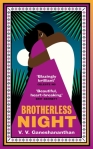 Brotherless Night by V.V. Ganeshananthan – The only novel that is on both the CSP and Women’s Prize shortlists. I dutifully borrowed a copy from the library, but the combination of the heavy subject matter (Sri Lanka’s civil war and the Tamil Tigers resistance movement) and the very small type in the UK hardback quickly defeated me, even though I was enjoying Sashi’s quietly resolute voice and her medical training to work in a field hospital. I gave it a brief skim. The author researched this second novel for 20 years, and her narrator is determined to make readers grasp what went on: “You must understand: that word, terrorist, is too simple for the history we have lived … You must understand: There is no single day on which a war begins.” I know from Laura and Marcie that this is top-class historical fiction, never mawkish or worthy, so I may well try it some other time when I have the fortitude.
Longlisted:
Dances by Nicole Cuffy
This was a buddy read with Laura (see her review); I think we both would have liked to see it on the shortlist as, though we’re not dancers ourselves, we’re attracted to the artistry and physicality of ballet. It’s always a privilege to get an inside glimpse of a rarefied world, and to see people at work, especially in a field that requires single-mindedness and self-discipline. Cuffy’s debut novel focuses on 22-year-old Celine Cordell, who becomes the first Black female principal in the New York City Ballet. Cece marvels at the distance between her Brooklyn upbringing – a single mother and drug-dealing older brother, Paul – and her new identity as a celebrity who has brand endorsements and gets stopped on the street for selfies.
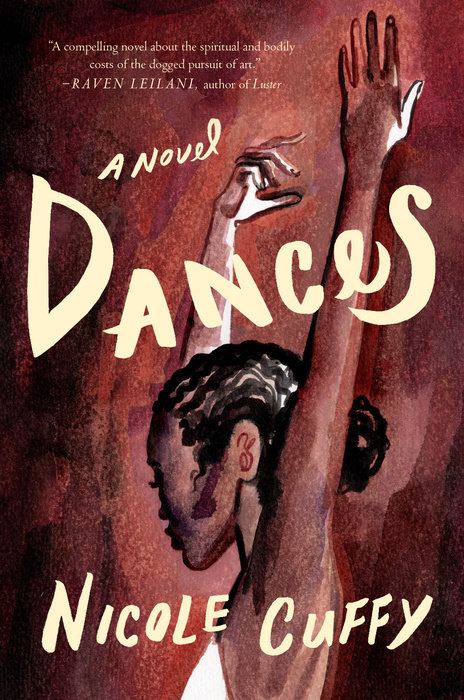
Even though Kaz, the director, insists that “Dance has no race,” Cece knows it’s not true. (And Kaz in some ways exaggerates her difference, creating a role for her in a ballet based around Gullah folklore from South Carolina.) Cece has always had to work harder than the others in the company to be accepted:
Ballet has always been about the body. The white body, specifically. So they watched my Black body, waited for it to confirm their prejudices, grew ever more anxious as it failed to do so, again and again.
A further complication is her relationship with Jasper, her white dance partner. It’s an open secret in the company that they’re together, but to the press they remain coy. Cece’s friends Irine and Ryn support her through rocky times, and her former teachers, Luca and Galina, are steadfast in their encouragement. Late on, Cece’s search for Paul, who has been missing for five years, becomes a surprisingly major element. While the sibling bond helps the novel stand out, I most enjoyed the descriptions of dancing. All of the sections and chapters are titled after ballet terms, and even when I was unfamiliar with the vocabulary or the music being referenced, I could at least vaguely picture all the moves in my head. It takes real skill to render other art forms in words. I’ll look forward to following Cuffy’s career. 
With thanks to publicist Nicole Magas and One World for the free e-copy for review.
Currently reading:
(Shortlist) Coleman Hill by Kim Coleman Foote
(Longlist) Between Two Moons by Aisha Abdel Gawad
Up next:
(Longlist) You Were Watching from the Sand by Juliana Lamy
I’m aiming for one more batch of reviews (and a prediction) before the winner is announced on 13 May.
The Complete Short Stories of A. A. Milne (Blog Tour)
Like many readers, I only knew A. A. Milne (1882–1956) for his Winnie-the-Pooh stories and had no idea of how much he wrote for adults: novels, plays, journalism, screenplays, and yes, short stories. This doorstopper of a collection includes some never-before-published material – undated and fragmentary stories. The stories span virtually his entire career, from 1914 to 1953.
I was daunted by the heft of the book when it arrived so got in touch with Simon Thomas (Stuck in a Book) because I remembered that Milne is his favourite author. With his direction, I decided to focus on the later stories originally published in the volume The Birthday Party and Other Stories (some of which originally had different titles).
Even within this subset, I found a lot of variety. One of my favourites was “In Vino Veritas,” a tricksy mystery story for fans of classic crime whether Sherlock Holmes, Agatha Christie or Raymond Chandler. The narrator is a writer of detective stories which are often inspired by cases recounted to him by his police superintendent friend Frederick Mortimer. Mortimer tells him of a murder accomplished using a poisoned bottle of wine. But “I could almost feel the murderer behind us, pushing us along the way he wanted us to go,” Mortimer says. The evidence seemed almost too neat, and a replication plus a couple of switchbacks reveal that everything was not as it appeared for the superintendent, or for our narrator.
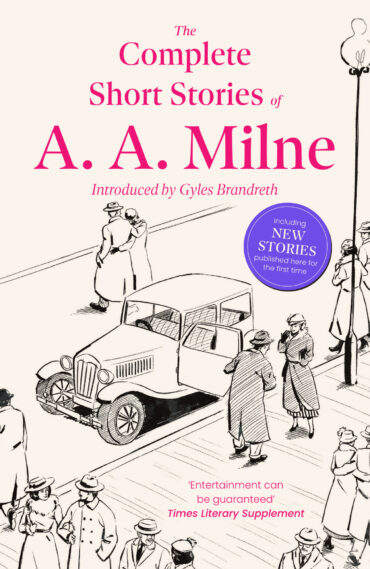
Milne plays with genre and history here. “The Secret” is a skewed fairy tale that even opens with “Once upon a time.” “The Lost Diary of Shakespeare” turns the authorship controversy on its head. “The General Takes off his Helmet” inhabits the time of Hannibal. “A.V. and R.V.” has a little girl distressed at a biblical account of mass death and her mother parroting an unsatisfactory mainline interpretation about punishment for sin and the need for faith; then we parachute into King David’s court and see him conspiring to blame it all on a woman.
But the stand-out for me was “The Birthday Party.” William Henry Baker, brimming with emotion after the birth of his first child, David Alistair Shawn, early one April morning, sets off by train for his office in the City. His wife has told him to have a good dinner and drink to the baby’s health, so after keeping his happy secret from his colleagues all day, he heads to the Savoy for a blowout meal. Just as he’s worried that he won’t be able to pay the large bill, a pair of diners takes him under their wing to form part of a harmless deception. He’s carried out Maggie’s instructions, but perhaps not in the way she might have imagined. Setting aside the injustice of his shell-shocked wife having to stay at home with an infant while he gets on with his normal life and has a luxurious meal (it was 1948, after all), this was a sweet straight-man-in-bizarre-circumstances story, the kind that might spark a screwball comedy.
There’s so much to discover just in this volume, and five other Milne titles have also been reissued in the last year or so. Soon adult readers will be saying, Winnie the who?
With thanks to Random Things Tours and Farrago (Duckworth Books) for the free copy for review.
Buy The Complete Short Stories of A. A. Milne from Bookshop.org [affiliate link]
I was happy to be part of the blog tour for the release of this book. See below for details of where other reviews have appeared or will be appearing soon.

A Quick Look Back at Hamnet by Maggie O’Farrell for #LiteraryWives
I read Maggie O’Farrell’s Women’s Prize winner, Hamnet, at its release in 2020. Unfortunately, it has been my least favourite of her novels (I’ve read all but My Lover’s Lover now), and it turns out 3.5 years is too soon to reread and appreciate anew. But I had a quick skim back through, this time focusing on the central marriage and the question we ask for the Literary Wives online book club:
What does this book say about wives or about the experience of being a wife?

From my original review: O’Farrell imagines the context of the death of William Shakespeare’s son Hamnet and the effect it had on the playwright’s work – including, four years later, Hamlet. Curiously, she has decided never to mention Shakespeare by name in her novel, so he remains a passive, shadowy figure seen only in relation to his wife and children – he’s referred to as “the father,” “the Latin tutor” or “her husband.” Instead, the key characters are his wife, Agnes (most will know her as Anne, but Agnes was the name her father, Richard Hathaway, used for her in his will), and Hamnet himself.
It is refreshing, especially for the time period, to have the wife’s experience and perspective be primary, and the husband in the background to the extent of being unnamed. Both, however, blame themselves for not being there when 11-year-old Hamnet fell ill with what O’Farrell posits was the Plague. Shakespeare was away in London with his theatre company; Agnes was off tending her bees. Shakespeare is only present in flashbacks – in which he morphs from eager tutor to melancholy drinker – until three-quarters of the way through the novel, when he returns to Stratford, too late. All he can do then is carry his son’s corpse.
I have heard it said many times that few marriages survive the death of a child. And for a while that looks like it will be the case here, too:
Her husband takes her arm as they reach the gate; she turns to look at him and it is as if she has never seen him before, so odd and distorted and old do his features seem. Is it their long separation, is it grief, is it all the tears? she wonders, as she regards him. Who is this person next to her, claiming her arm, holding it to him?
How were they to know that Hamnet was the pin holding them together? That without him they would all fragment and fall apart, like a cup shattered on the floor?
With his earnings, Shakespeare buys the family a new house, but never moves them to London as he once intended. He continues to stay away for long periods at a time, leaving Agnes to her grief. When, four years after Hamnet’s death, Agnes and their daughters learn that he has written a play about a character called Hamlet, they feel betrayed, but Agnes goes to a performance and her anger melts as she recognizes her son. “It is him. It is not him. … grown into a near-man, as he would be now, had he lived, on the stage, walking with her son’s gait, talking in her son’s voice, speaking words written for him by her son’s father.”
Although O’Farrell leaves it there, creating uncertainty about the couple’s future, she implies that the play has been the saving of both of them. For Shakespeare, it was the outlet for his grief. For Agnes, it was the proof she needed that he loved their son, grieved him as bitterly as she did, and still remembers him. That seems to be enough to hold them together.
While her next novel, The Marriage Portrait, which I liked a lot more as historical fiction goes, might seem on the surface better suited for this club, Hamnet was in fact perfect for the prompt, revealing an aspect I don’t recall looking at before: the strain that a child’s illness and death can place on a marriage. At my first reading I found the prose flat and detached, to the point of vagueness, and thought there was anachronistic language and unsubtle insertion of research. This time, I was more aware of how the deliberate evenness softens the emotion, making it more bearable – though, still, I have a friend who gave up reading this partway because she found it too raw.
See also Kay’s and Naomi’s responses!
The next book, for March 2024, will be Mrs. March by Virginia Feito.
#NovNov23 Buddy Reads Reviewed: Western Lane & A Room of One’s Own
This year we set two buddy reads for Novellas in November: one contemporary work of fiction and one classic work of short nonfiction. Do let us know if you’ve been reading them and what you think!
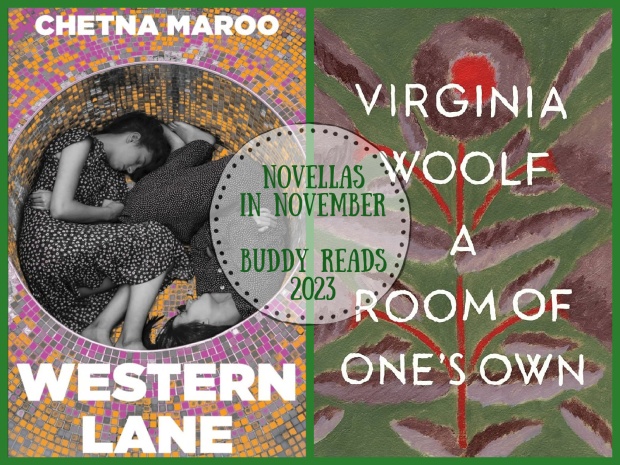 A version of the below review, submitted via their Facebook book club group, won me a pair of tickets to this year’s Booker Prize ceremony!
You may also wish to have a look at the excellent reading guide on the Booker website.
Western Lane by Chetna Maroo (2023)
In the same way that you don’t have to love baseball or video games to enjoy The Art of Fielding or Tomorrow, and Tomorrow, and Tomorrow, it’s easy to warm to Western Lane even if you’ve never played squash. Debut author Chetna Maroo assumes reader unfamiliarity with her first line: “I don’t know if you have ever stood in the middle of a squash court – on the T – and listened to what is going on next door.” As Gopi looks back to the year that she was eleven – the year after she lost her mother – what she remembers is the echo of a ball hitting a wall. That first year of mourning, which was filled with compulsive squash training, reverberates just as strongly in her memory.
To make it through, Pa tells his three daughters, “You have to address yourself to something.” That something will be their squash hobby, he decides, but ramped up to the level of an obsession. Having lost my own mother just over a year ago, I could recognize in these characters the strategies people adopt to deflect grief. Keep busy. Go numb. Ignore your feelings. Get angry for no particular reason. Even within this small family, there’s a range of responses. Pa lets his electrician business slip; fifteen-year-old Mona develops a mild shopping addiction; thirteen-year-old Khush believes she still sees their mother.
Preparing for an upcoming squash tournament gives Gopi a goal to work towards, and a crush on thirteen-year-old Ged brightens long practice days. Maroo emphasizes the solitude and concentration required, alternating with the fleeting elation of performance. Squash players hover near the central T, from which most shots can be reached. Maroo, too, sticks close to the heart. Like all the best novellas, hers maintains a laser focus on character and situation. A child point-of-view can sound precocious or condescending. That is by no means the case here. Gopi’s perspective is convincing for her age at the time, yet hindsight is the prism that reveals the spectrum of intense emotions she experienced: sadness, estrangement from her immediate family, and rejection on the one hand; first love and anticipation on the other.

This offbeat, delicate coming-of-age story eschews the literary fireworks of other Booker Prize nominees. In place of stylistic flair is the sense that each word and detail has been carefully placed. Less is more. Rather than the dark horse in the race, I’d call it the reader favourite: accessible but with hidden depths. There are cinematic scenes where little happens outwardly yet what is unspoken between the characters – the gazes and tension – is freighted with meaning. (I could see this becoming a successful indie film.)
she and my uncle stood outside under the balcony of my bedroom until much later, and I knelt above them with my blanket around me. The three of us looked out at the black shapes of the rose arbour, the trees, the railway track. Stars appeared and disappeared. My knees began to ache. Below me, Aunt Ranjan wanted badly to ask Uncle Pavan how things stood now and Uncle Pavan wanted to tell her, but she wasn’t sure how to ask and he wasn’t sure how to begin. Soon, I thought, it would be morning, and night, and morning again, and it wouldn’t matter, except to someone watching from so far off that they couldn’t know yet.
The novella is illuminating on what is expected of young Gujarati women in England; on sisterhood and a bereaved family’s dynamic; but especially on what it is like to feel sealed off from life by grief. “I think there’s a glass court inside me,” Gopi says, but over the course of one quietly momentous year, the walls start to crack. (Public library) [161 pages] 
A Room of One’s Own by Virginia Woolf (1929)
Here’s the thing about Virginia Woolf. I know she’s one of the world greats. I fully acknowledge that her books are incredibly important in the literary canon. But I find her unreadable. The last time I had any success was when I was in college. Orlando and To the Lighthouse both blew me away half a lifetime ago, but I’ve not been able to reread them or force my way through anything else (and I have tried: Mrs Dalloway, The Voyage Out and The Waves). In the meantime, I’ve read several novels about Woolf and multiple Woolf-adjacent reads (ones by Vita Sackville-West, or referencing the Bloomsbury Group). So I thought a book-length essay based on lectures she gave at Cambridge’s women’s colleges in 1928 would be the perfect point of attack.
Hmm. Still unreadable. Oh well!
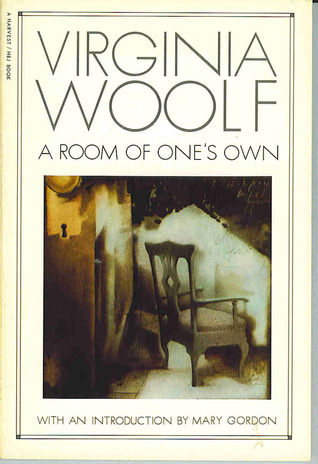 In the end I skimmed A Room of One’s Own for its main ideas – already familiar to me, as was some of the language – but its argumentation, reliant as much on her own made-up examples as on literary history, failed to move me. Woolf alternately imagines herself as Mary Carmichael, a lady novelist trawling an Oxbridge library and the British Museum for her forebears; and as a reader of Carmichael’s disappointingly pedestrian Life’s Adventure. If only Carmichael had had the benefit of time and money, Woolf muses, she might have been good. As it is, it would take her another century to develop her craft. She also posits a sister for Shakespeare and probes the social conditions that made her authorship impossible.
This is important to encounter as an early feminist document, but I would have been okay with reading just the excerpts I’d already come across.
Some favourite lines:
“I thought how unpleasant it is to be locked out; and I thought how it is worse perhaps to be locked in”
“A very queer, composite being thus emerges. Imaginatively she [the woman in literature] is of the highest importance; practically she is completely insignificant. She pervades poetry from cover to cover; she is all but absent from history.”
“Poetry depends upon intellectual freedom. And women have always been poor, not for two hundred years merely, but from the beginning of time. Women have had less intellectual freedom than the sons of Athenian slaves. Women, then, have not had a dog’s chance of writing poetry. That is why I have laid so much stress on money and a room of one’s own.”
(Secondhand purchase many years ago) [114 pages]

Short Stories in September, Part II: Brautigan, Doyle, Minot, Simpson
Every time I do this self-set challenge, I am amazed anew by how different short story collections can be in mood and theme – even if their overall concerns are the same as in most fiction: life and death, relationships, identity, choices. Today I have one debut work, two new-to-me authors, and a disappointing showing from an old favourite.
Revenge of the Lawn: Stories 1962–1970 by Richard Brautigan (1972)
 There are more than five dozen stories in this slim volume, most just one to three pages and in the first person (55 of 62); bizarre or matter-of-fact slices of life in the Pacific Northwest or California, often with a grandiose title that’s then contradicted by the banality of the contents (e.g., in the three-page “A Short History of Religion in California,” some deer hunters encounter a group of Christian campers). The simple declarative sentences and mentions of drinking and hunting made me think of Carver and Hemingway, but Brautigan is funnier, coming out with the occasional darkly comic zinger. Here’s “The Scarlatti Tilt” in its entirety: “‘It’s very hard to live in a studio apartment in San Jose with a man who’s learning to play the violin.’ That’s what she told the police when she handed them the empty revolver.”
In the absurdist “Homage to the San Francisco YMCA,” a man replaces his plumbing with poetry: “He took out his bathtub and put in William Shakespeare. The bathtub did not know what was happening. He took out his kitchen sink and put in Emily Dickinson. The kitchen sink could only stare back in wonder.” Brautigan has an incomer’s admiration for California: “I come from someplace else and was gathered to the purpose of California like a metal-eating flower gathers the sunshine.” Many of the flash stories feel autobiographical and bridge country and city life with themes of bear hunting versus movie-going and riding buses.
There are some macho attitudes towards women, who are generally objects of male desire rather than subjects in their own right. But I appreciated this flash fiction collection for its unexpected metaphors and tonal range, from the over-the-top humour of “Complicated Banking Problems” to a pathos-filled rundown of a life in “The World War I Los Angeles Aeroplane.” (Secondhand – Westwood Books, Sedbergh, 2023)
I Meant It Once by Kate Doyle (2023)
 A debut collection of 16 stories, three of them returning to the same sibling trio. Many of Doyle’s characters are young people who still define themselves by the experiences and romances of their college years. In “That Is Shocking,” Margaret can’t get over the irony of her ex breaking up with her on Valentine’s Day after giving her a plate of heart-shaped scones. Former roommates Christine and Daisy are an example of fading friendship in “Two Pisces Emote about the Passage of Time.”
The title phrase comes from “Cinnamon Baseball Coyote,” one of the Helen–Grace–Evan stories, when the sparring sisters are children and the one writes down “I hate my sister” and saves the paper in her desk because, as she tells their father, “I don’t mean it anymore. I only kept it because I meant it once.” Moments of great drama or emotion, and the regret that comes in their aftermath, are the stuff of these mainly New York City-set stories.
Across nine first-person and seven third-person stories, the content and point of view are pretty samey and minor; nothing here to make you feel you’re reading a rising star of American fiction. I only found a few standouts. “Hello It’s You” is about Meg’s history of same-sex partners: though she’s with Sara now, she can’t stop thinking about Jenny, her college girlfriend. “Aren’t We Lucky” has a soupçon of magic as it imagines a house and its ghosts resisting renovations. But my favourite was “Moments Earlier,” about Kelly’s medical crisis and the friends who never get past it. 
With thanks to Corsair for the free copy for review. See also Susan’s review.
Why I Don’t Write and Other Stories by Susan Minot (2020)
 Minot was new to me (as was Brautigan). These stories were first published between 1991 and 2019, so they span a good chunk of her career. “Polepole” depicts a short-lived affair between two white people in Kenya, one of whom seems to have a dated colonial attitude. In “The Torch,” a woman with dementia mistakes her husband for an old flame. “Occupied” sees Ivy cycling past the NYC Occupy camp on her way to pick up her daughter. The title story, published at LitHub in 2018, is a pithy list of authorial excuses. “Listen” is a nebulous set of lines of unattributed speech that didn’t add up to much for me. “The Language of Cats and Dogs” reminded me of Mary Gaitskill in tone, as a woman remembers her professor’s inappropriate behaviour 40 years later.
Eight of the stories are in the third person and two in the first person. They’re almost all accomplished in terms of scene setting and creating characters and motivations, but I can’t say Minot won me over such that I’ll seek out more of her work. Only a few stories will stay with me: “Green Glass,” in which a man encounters his ex-girlfriend at a wedding and cuts her down to size in a way that alarms his current partner; “Boston Common at Twilight,” an account of a strange but ultimately non-consensual sexual encounter; and my favourite, “Café Mort,” the only one with a speculative edge, about an establishment that only serves the dead. (New bargain purchase – Dollar Tree, Hagerstown, Maryland, 2023)
Hey Yeah Right Get a Life by Helen Simpson (2000)
This was my sixth collection from Simpson, who only appears to write short fiction. This was one of my least favourite of her books, unfortunately, because her common theme of frazzled mothers trying to balance parenting with career felt tired. The title story is about Dorrie, mum of three, and this set of characters recurs in the final piece, “Hurrah for the Hols.” Simpson does get the mindset just right:
She had to be thinking of other people all the time or the whole thing fell apart.
I can’t see how the family would work if I let myself start wanting things again, thought Dorrie; give me an inch and I’d run a mile, that’s what I’m afraid of.
The whole pattern of family life hung for a vivid moment above the chopping board as a seamless cycle of nourishment and devoural.
It was like being on holiday with Punch and Judy – lots of biffing and shrieking and fights over sausages.

But I’ve read too many of her exasperated-mum stories at this point. Two here were about female bankers. One, “Burns and the Bankers,” set at a seemingly endless Burns Night supper, rather outstayed its welcome and made overly obvious its message about this being a man’s field. Do read Simpson, but maybe not this (despite the amazing title); I’d recommend Four Bare Legs in a Bed or In the Driver’s Seat (UK title: Constitutional) instead. (Secondhand – Books for Amnesty, York, 2023)
I’ll have one more set of reviews and a roundup on the last day of the month.
Currently reading: If I Survive You by Jonathan Escoffery; The Best Short Stories 2023: The O. Henry Prize Winners, ed. Lauren Groff; How to Disappear by Tara Masih; Hateship, Friendship, Courtship, Loveship, Marriage by Alice Munro; The Human Origins of Beatrice Porter and Other Essential Ghosts by Soraya Palmer; Close Company: Stories of Mothers and Daughters, ed. Christine Park; Small, Burning Things by Cathy Ulrich
Book Serendipity, Mid-February to Mid-April
I call it “Book Serendipity” when two or more books that I read at the same time or in quick succession have something in common – the more bizarre, the better. This is a regular feature of mine every couple of months. Because I usually have 20–30 books on the go at once, I suppose I’m more prone to such incidents. The following are in roughly chronological order.
Last time, my biggest set of coincidences was around books set in or about Korea or by Korean authors; this time it was Ghana and Ghanaian authors:
- Reading two books set in Ghana at the same time: Fledgling by Hannah Bourne-Taylor and His Only Wife by Peace Adzo Medie. I had also read a third book set in Ghana, What Napoleon Could Not Do by DK Nnuro, early in the year and then found its title phrase (i.e., “you have done what Napoleon could not do,” an expression of praise) quoted in the Medie! It must be a popular saying there.
- Reading two books by young Ghanaian British authors at the same time: Quiet by Victoria Adukwei Bulley and Maame by Jessica George.


And the rest:
- An overweight male character with gout in Where the God of Love Hangs Out by Amy Bloom and The Secret Diaries of Charles Ignatius Sancho by Paterson Joseph.
- I’d never heard of “shoegaze music” before I saw it in Michelle Zauner’s bio at the back of Crying in H Mart, but then I also saw it mentioned in Pulling the Chariot of the Sun by Shane McCrae.
- Sheila Heti’s writing on motherhood is quoted in Without Children by Peggy O’Donnell Heffington and In Vitro by Isabel Zapata. Before long I got back into her novel Pure Colour. A quote from another of her books (How Should a Person Be?) is one of the epigraphs to Lorrie Moore’s I Am Homeless If This Is Not My Home.


- Reading two Mexican books about motherhood at the same time: Still Born by Guadalupe Nettel and In Vitro by Isabel Zapata.
- Two coming-of-age novels set on the cusp of war in 1939: The Inner Circle by T.C. Boyle and Martha Quest by Doris Lessing.
- A scene of looking at peculiar human behaviour and imagining how David Attenborough would narrate it in a documentary in Notes from a Small Island by Bill Bryson and I Have Some Questions for You by Rebecca Makkai.
- The painter Caravaggio is mentioned in a novel (The Things We Do to Our Friends by Heather Darwent) plus two poetry books (The Fourth Sister by Laura Scott and Manorism by Yomi Sode) I was reading at the same time.


- Characters are plagued by mosquitoes in The Last Animal by Ramona Ausubel and Through the Groves by Anne Hull.
- Edinburgh’s history of grave robbing is mentioned in The Things We Do to Our Friends by Heather Darwent and Womb by Leah Hazard.
- I read a chapter about mayflies in Lev Parikian’s book Taking Flight and then a poem about mayflies later the same day in Ephemeron by Fiona Benson.
- Childhood reminiscences about playing the board game Operation and wetting the bed appear in Homesick by Jennifer Croft and Through the Groves by Anne Hull.

- Fiddler on the Roof songs are mentioned in Through the Groves by Anne Hull and We All Want Impossible Things by Catherine Newman.
- There’s a minor character named Frith in Shadow Girls by Carol Birch and Rebecca by Daphne du Maurier.
- Scenes of a female couple snogging in a bar bathroom in Through the Groves by Anne Hull and The Garnett Girls by Georgina Moore.

- The main character regrets not spending more time with her father before his sudden death in Maame by Jessica George and Pure Colour by Sheila Heti.
- The main character is called Mira in Birnam Wood by Eleanor Catton and Pure Colour by Sheila Heti, and a Mira is briefly mentioned in one of the stories in Before You Suffocate Your Own Fool Self by Danielle Evans.
- Macbeth references in Shadow Girls by Carol Birch and Birnam Wood by Eleanor Catton – my second Macbeth-sourced title in recent times, after Tomorrow and Tomorrow and Tomorrow by Gabrielle Zevin last year.


- A ‘Goldilocks scenario’ is referred to in Womb by Leah Hazard (the ideal contraction strength) and Taking Flight by Lev Parikian (the ideal body weight for a bird).
- Caribbean patois and mention of an ackee tree in the short story collection If I Survive You by Jonathan Escoffery and the poetry collection Cane, Corn & Gully by Safiya Kamaria Kinshasa.
- The Japanese folktale “The Boy Who Drew Cats” appeared in Our Missing Hearts by Celeste Ng, which I read last year, and then also in Enchantment by Katherine May.


- Chinese characters are mentioned to have taken part in the Tiananmen Square massacre/June 4th incident in Dear Chrysanthemums by Fiona Sze-Lorrain and Oh My Mother! by Connie Wang.
- Endometriosis comes up in What My Bones Know by Stephanie Foo and Womb by Leah Hazard.

What’s the weirdest reading coincidence you’ve had lately?
Recommended March Releases by Jane Aldous, Danielle Evans, Katherine May & Genanne Walsh
Sonnets, short stories, nature-fuelled wonder, and an autobiographical essay about a father’s death … from postwar Edinburgh to modern-day San Francisco and from fiction about young African American women to pilgrimages along the English coast, I have a real variety to recommend this month. (And coming up in a separate post: Womb by Leah Hazard.)
More Patina than Gleam by Jane Aldous
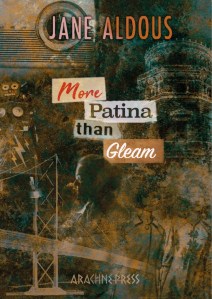 This was my second Arachne Press collection after Routes by Rhiya Pau. Intriguingly, it’s a story composed of 70 sonnets, untraditional in that they do not follow a particular rhyme scheme apart from the odd couplet. There is scant punctuation, with within-line spaces separating the phrases. Aldous, who has recently been featured in a Guardian article on debut authors over 60, imagines a sort of alternative future for her mother had she run away with her when she was a baby. Here, Linda escapes her abusive common-law husband, Vernon, and travels from England to Edinburgh with her 11-year-old daughter, Angie. They settle with an eccentric older woman named Elsie Datlow, who hires Linda as a lady’s companion and keeps her on as a housekeeper when financial struggles force her to accept paying guests. It’s impressive how much Aldous fits into comparatively little text, including Angie’s coming of age, the ups and downs of the Datlows’ picture restoring business, and transgressive romance as both Elsie and Linda fall in love across accepted gender or racial boundaries. This was a pleasant surprise that called to mind works by Muriel Spark and Sarah Waters.
With thanks to Arachne Press for the free copy for review.
Before You Suffocate Your Own Fool Self by Danielle Evans (2010)
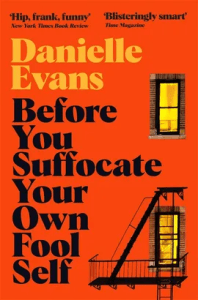 A couple of years ago I reviewed Evans’s second short story collection, The Office of Historical Corrections. This was her first book but has only just been published in the UK. Six of the eight stories are in the first person, the other two in third person. The protagonists tend to be young African American women in moments of transition or clinging to unhealthy relationships. In “Virgins,” 15-year-old Erica and Jasmine want to shed their innocence but can’t necessarily control how it happens. “Snakes” has Tara, a transracial adoptee, spending her ninth summer with her white cousin, Allison, down at their grandmother’s home in Florida. The response to a series of accidents makes it clear to her who is valued in this family. The college girls in “Harvest” consider a variety of reproductive experiences, from selling their eggs to abortion. In “The King of a Vast Empire,” a brother and sister decide to track down a survivor of a car accident their family had when they were children. “Jellyfish” sees a father and daughter meeting for lunch in Harlem and pondering their separate futures.
Many settings were familiar to me from the Delmarva area where I grew up. Here on the cusp of the South, Confederate sympathy still exists, as high schoolers Crystal and Geena discover in “Robert E. Lee Is Dead.” The best friends collaborate on pranks, but Crystal’s grades point to a promising future whereas everyone has given up on Geena, including herself. Along with that one, my two favourites were “Someone Ought to Tell Her There’s Nowhere to Go” and “Wherever You Go, There You Are.” In the former, military veteran Georgie tries to ingratiate himself with his ex-girlfriend by treating her daughter to a princess experience; in the latter, Carla takes her would-be-sexpot 14-year-old niece, Chrissie, on a road trip to North Carolina to meet her ex’s fiancée. Both are exemplary of the assets of the whole collection: strong characters, natural dialogue, and subtle treatment of themes of class and race. I’d proffer this for fans of Sidik Fofana, and as a better option than Dantiel Moniz’s stories.
With thanks to Picador for the proof copy for review.
Enchantment: Reawakening wonder in an exhausted age by Katherine May
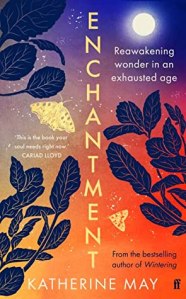 I was a big fan of Katherine May’s Wintering, which published just before the pandemic and, as if presciently, offers strategies for coping with seasons of depression. Coming after a few years of upheaval and disconnection, this follow-up voices May’s longing for rituals of the transcendent that will allow her to live in harmony and close attention to the world around her. Her usual way of communing with nature and other people was group swims in the sea, but that temporarily stopped with lockdown. She sought alternatives, such as visiting a sacred well with a friend, beekeeping, cultivating a wild garden, and chasing a meteor shower. The Earth – Water – Fire – Air structure is sometimes forced, and the content sparse; like Raynor Winn, May, I feel, was pressured to capitalize on the success of her previous work and quickly publish unfinished and rather nebulous material. It’s all surprisingly woo-woo from an English author. Yet May’s writing is unfailingly lovely and this went down easy a chapter at a time. It’s a comparable read to Wanderland by Jini Reddy.
With thanks to Faber for the proof copy for review.
Eggs in Purgatory by Genanne Walsh
I reviewed Genanne Walsh’s novel Twister as part of my summer reading in 2018. This autobiographical essay, recently published by WTAW Press and a finalist in their Alcove Chapbook Series Open, tells the story of the last few months of her father’s life. Aged 89, he lived downstairs from Walsh and her wife in San Francisco. He was quite the character: idealist, stubborn, outspoken; a former Catholic priest influenced by A Course in Miracles and convinced of the oneness of everything. Although he had no terminal conditions, he was sick of old age and its indignities and ready to exit. (“He wanted to be put on an ice floe and pushed offshore. The problem was, I lived above him on the iceberg and would be tasked with shoving him off.”) However, there was confusion about California state laws and whether doctors could help him with this, and at one point the police showed up at the door.
 The title refers to a Middle Eastern dish (see this Nigella Lawson recipe) I’ve known as shakshuka. It was the last proper meal her father ate, Christmas morning 2017 with her and her wife, before he went on his final hunger strike. Later Walsh writes, “Mourning is a kind of purgatory. You exist between worlds. For a long time I walked through, not fully feeling the world of the living or the world of the dead but aware of both.”
The task of a memoir is to fully mine the personal details of a situation but make of it something universal, and that’s just what she does here. Her father’s past with her mother (who died decades before, following a stroke) renders the family dynamic a backdrop to a final pyrrhic battle. Aware that she doesn’t come out of this a saint, Walsh admits to contradictory feelings, including “my life will be so much easier when he dies.” The prediction, no less than its reality, makes her feel guilty. Though she has no faith as such, she senses her father’s influence in her very desire to keep communing with him after his death.
This stunning little book met me at a deep place and I can highly recommend it, especially if you were a fan of In Love by Amy Bloom and All Things Consoled by Elizabeth Hay. (See also The Inevitable – one of its case studies reminded me of this.)
With thanks to the author for the free e-copy for review.
And one dud:
 Birnam Wood by Eleanor Catton – This year’s Klara and the Sun for me: I have trouble remembering why I was so excited about Catton’s third novel that I put it on my Most Anticipated list for 2023, especially given my decidedly mixed feelings about The Luminaries. I’d read a lot about Birnam Wood so its plot held no surprises for me. An American tech billionaire is up to no good on a New Zealand nature reserve; though the members of a guerrilla gardening group summon courage to fight back, his drones see all.
From early on I had little interest in the cast and their doings, especially the buzzword-filled dialogues, and skimmed the rest. Literary fiction usually distinguishes itself from commercial genre fiction by its focus on character depth (and prose quality), but in Catton’s case that was achieved through endless backstory. Her attempt at edginess entails adding at least one F-word to each spoken sentence. (The Bookshop Band, usually so mild-mannered, reflected this by dropping an F-bomb in their song based on the book – see the music video, which cleverly employs a derelict greenhouse and drones.) I’d heard that the ending was a knockout, so I skipped ahead and did find the last 40 pages gripping and the gruesome final tableau worthy of the Shakespearean allusions, but there’s a lot of blah to wade through before that.
With thanks to Granta for the free copy for review.
Would you be interested in reading one or more of these?
 Bookish Beck = Rebecca Foster. American transplant to England. Freelance proofreader and book reviewer.
 Bookish Beck