Prize Updates: McKitterick Prize Winner and Wainwright Prize Longlists
It was my second year as a first-round manuscript judge for the McKitterick Prize; have a look at my rundown of the shortlist here.
 The winner, Louise Kennedy, and runner-up, Liz Hyder, were announced on 29 June. (Nominee Aamina Ahmad won a different SoA Award that night, the Gordon Bowker Volcano Prize for a novel focusing on the experience of travel away from home.) Other recipients included Travis Alabanza, Caroline Bird, Bonnie Garmus and Nicola Griffith. For more on all of this year’s SoA Award winners, see their website.


I’m a big fan of the Wainwright Prize for nature and conservation writing, and have been following it particularly closely since 2020, when I happened to read most of the nominees. In 2021 I also managed to read quite a lot from the longlists; 2022, the first year of an additional prize for children’s literature, saw me reading about a third of the total nominees.
This is the third year that I’ve been part of an “academy” of bloggers, booksellers, former judges and previously shortlisted authors asked to comment on a very long list of publisher submissions. I’m delighted that a few of my preferences made it through to the longlists.
My taste generally runs more to the narrative nature writing than the popular science or travel-based books. I find I’ve read just two from the Nature list (Bersweden and Huband) and one each from Conservation (Pavelle) and Children’s (Hargrave) so far.

The 2023 James Cropper Wainwright Prize for Nature Writing longlist:
- The Swimmer: The Wild Life of Roger Deakin, Patrick Barkham (Hamish Hamilton)
- The Flow: Rivers, Water and Wildness, Amy-Jane Beer (Bloomsbury)
- Where the Wildflowers Grow, Leif Bersweden (Hodder)
- Twelve Words for Moss, Elizabeth-Jane Burnett (Allen Lane)
- Cacophony of Bone, Kerri ní Dochartaigh (Canongate)
- Sea Bean, Sally Huband (Hutchinson)
- Ten Birds that Changed the World, Stephen Moss (Faber)
- A Line in the World: A Year on the North Sea Coast, Dorthe Nors, translated by Caroline Waight (Pushkin)
- The Golden Mole: And Other Living Treasure, Katherine Rundell, illustrated by Talya Baldwin (Faber)
- Belonging: Natural Histories of Place, Identity and Home, Amanda Thomson (Canongate)
- Why Women Grow: Stories of Soil, Sisterhood and Survival, Alice Vincent (Canongate)
- Landlines, Raynor Winn (Penguin)

The 2023 James Cropper Wainwright Prize for Writing on Conservation longlist:
- Sarn Helen: A Journey Through Wales, Past, Present and Future, Tom Bullough, illustrated by Jackie Morris (Granta)
- Beastly: A New History of Animals and Us, Keggie Carew (Canongate)
- Rewilding the Sea: How to Save Our Oceans, Charles Clover (Ebury)
- Birdgirl, Mya-Rose Craig (Jonathan Cape)
- The Orchid Outlaw, Ben Jacob (John Murray)
- Elixir: In the Valley at the End of Time, Kapka Kassabova (Jonathan Cape)
- Rooted: How Regenerative Farming Can Change the World, Sarah Langford (Viking)
- Black Ops and Beaver Bombing: Adventures with Britain’s Wild Mammals, Fiona Mathews and Tim Kendall (Oneworld)
- Forget Me Not, Sophie Pavelle (Bloomsbury)
- Fen, Bog, and Swamp: A Short History of Peatland Destruction and its Role in the Climate Crisis, Annie Proulx (Fourth Estate)
- The Lost Rainforests of Britain, Guy Shrubsole (HarperCollins)
- Nomad Century: How to Survive the Climate Upheaval, Gaia Vince (Allen Lane)

The 2023 James Cropper Wainwright Prize for Children’s Writing on Nature and Conservation longlist:
- The Earth Book, Hannah Alice (Nosy Crow)
- The Light in Everything, Katya Balen, illustrated by Sydney Smith (Bloomsbury)
- Billy Conker’s Nature-Spotting Adventure, Conor Busuttil (O’Brien)
- Protecting the Planet: The Season of Giraffes, Nicola Davies, illustrated by Emily Sutton (Walker)
- Blobfish, Olaf Falafel (Walker)
- A Friend to Nature, Laura Knowles, illustrated by Rebecca Gibbon (Welbeck)
- Spark, M G Leonard (Walker)
- A Wild Child’s Book of Birds, Dara McAnulty (Macmillan)
- Leila and the Blue Fox, Kiran Millwood Hargrave, illustrated by Tom de Freston (Hachette Children’s Group)
- The Zebra’s Great Escape, Katherine Rundell, illustrated by Sara Ogilvie (Bloomsbury)
- Archie’s Apple, Hannah Shuckburgh, illustrated by Octavia Mackenzie (Little Toller)
- Grandpa and the Kingfisher, Anna Wilson, illustrated by Sarah Massini (Nosy Crow)
It’s impressive that women writers are represented so well this year: 9/12 for Nature, 8/12 for Conservation, and 8/12 for Children’s. Amusingly, Katherine Rundell is on TWO of the lists. There are also, refreshingly, several BIPOC authors, and – I think for the first time ever – a work in translation (A Line in the World by Dorthe Nors, which I have as a set-aside proof copy and will get back into at once).
Here is where I have to admit that quite a number of the nominees, overall, are books I DNFed, authors whose work I’ve tried before and not enjoyed, or books I’ve been turned off of by the reviews. I’ll not mention these by name just now, and will leave any predictions for a future date when I’ve read a few more of the nominees. It seems that I’m most likely to catch up with the majority of the children’s longlist, if anything.
The shortlists will be announced on 10 August, and winners will be announced on 14 September at a 10th Anniversary live event held as part of the Kendal Mountain Festival in Cumbria (tickets available here).
See any nominees you’ve read? Who would you like to see shortlisted?
The Best Books from the First Half of 2023
Yes, it’s that time of year already! It remains to be seen how many of these will make it onto my overall best-of year list, but for now, these are my 20 highlights. Plus, I sneakily preview another great novel that won’t release until September. (For now I’m highlighting 2023 releases, whereas at the end of the year I divide my best-of lists into current year and backlist. I’ve read 86 current-year releases so far and am working on another 20, so I’m essentially designating a top 20% here.) I give review excerpts and link to the full text from this site or elsewhere. Pictured below are the books I read in print; all the others were e-copies.

Fiction
 Shoot the Horses First by Leah Angstman: In 16 sumptuous historical stories, outsiders and pioneers face disability and prejudice with poise. The flash entries crystallize moments of realization, often about health. Longer pieces shine as their out-of-the-ordinary romances have space to develop. In the novella Casting Grand Titans, a botany professor in 1850s Iowa learns her salary is 6% of a male colleague’s. She strives for intellectual freedom, reporting a new-to-science species of moss, while working towards liberation for runaway slaves.
 The House Is on Fire by Rachel Beanland: Moving at a propulsive pace, Beanland’s powerful second novel rotates through the perspectives of these main characters – two men and two women; two white people and two enslaved Black people – caught up in the Richmond Theater Fire of 1811 (one of the deadliest events in early U.S. history) and its aftermath. Painstakingly researched and full of historical detail and full-blooded characters, it dramatizes the range of responses to tragedy and how people rebuild their lives.
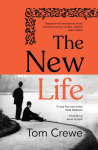 The New Life by Tom Crewe: Two 1890s English sex researchers (based on John Addington Symonds and Havelock Ellis) write a book called Sexual Inversion drawing on ancient Greek history and containing case studies of homosexual behaviour. Oscar Wilde’s trial puts everyone on edge; not long afterwards, their own book becomes the subject of an obscenity trial, and each man has to decide what he’s willing to give up in devotion to his principles. This is deeply, frankly erotic stuff, and, on the sentence level, just exquisite writing.
 Daughters of Nantucket by Julie Gerstenblatt: (Yes, another historical fire novel, and I reviewed both for Shelf Awareness!) This engrossing debut explores the options for women in the mid-19th century. Metaphorical conflagrations blaze in the background in the days leading up to the great Nantucket fire of 1846: each of three female protagonists (a whaling captain’s wife, a museum curator, and a pregnant Black entrepreneur) holds a burning secret and longs for a more expansive, authentic life. Tense and sultry; for Sue Monk Kidd fans.
 I Have Some Questions for You by Rebecca Makkai: When an invitation comes from her boarding school alma mater, Granby, to teach a two-week course on podcasting, Bodie indulges her obsession with the 1995 murder of her former roommate. Makkai has taken her cues from the true crime genre and constructed a convincing mesh of evidence and theories. She so carefully crafts her pen portraits, and so intimately involves us in Bodie’s psyche, that it’s impossible not to get invested. This is timely, daring, intelligent, enthralling storytelling.
 Sidle Creek by Jolene McIlwain: In this debut collection of 22 short stories, loosely linked by their location in the Appalachian hills in western Pennsylvania and a couple of recurring minor characters, McIlwain softens the harsh realities of addiction, poverty and violence with the tender bruises of infertility and lost love. Grief is a resonant theme in many of the stories, with pregnancy or infant loss a recurring element. At times harrowing, always clear-eyed, these stories are true to life and compassionate about human foibles and animal pain.
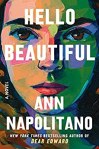 Hello Beautiful by Ann Napolitano: Oprah’s 100th book club pick. It’s a family story spanning three decades and focusing on the Padavanos, a working-class Italian American Chicago clan with four daughters. Julia meets melancholy basketball player William Waters while at Northwestern in the late 1970s. There is such warmth and intensity to the telling, and brave reckoning with bereavement, mental illness, prejudice and trauma. I love sister stories in general, and the subtle echoes of Leaves of Grass and Little Women add heft.
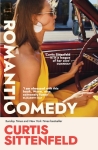 Romantic Comedy by Curtis Sittenfeld: Through her work as a writer for a sketch comedy show modelled on Saturday Night Live, Sally Milz meets Noah Brewster, a pop star with surfer-boy good looks. Plain Jane getting the hot guy – that never happens, right? In fact, Sally has a theory about this very dilemma… As always, Sittenfeld’s inhabiting of a first-person narrator is flawless, and Sally’s backstory and Covid-lockdown existence endeared her to me. Could this be called predictable? Well, what does one want from a romcom?
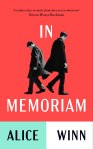 In Memoriam by Alice Winn: Heartstopper on the Western Front; swoon! Will Sidney Ellwood and Henry Gaunt both acknowledge that this is love and not just sex, as it is for so many teenage boys at their English boarding school? And will one or both survive the trenches of the First World War? Winn depicts the full horror of war, but in between there is banter, friendship and poetry. Some moments are downright jolly. This debut is obsessively researched, but Winn has a light touch with it. Engaging, thrilling, and, yes, romantic.
A bonus:
 The Vaster Wilds by Lauren Groff (Riverhead/Hutchinson Heinemann, 12 September): Groff’s fifth novel combines visceral detail and magisterial sweep as it chronicles a runaway Jamestown servant’s struggle to endure the winter of 1610. Flashbacks to traumatic events seep into her mind as she copes with the harsh reality of life in the wilderness. The style is archaic and postmodern all at once. Evocative and affecting – and as brutal as anything Cormac McCarthy wrote. A potent, timely fable as much as a historical novel. (Review forthcoming for Shelf Awareness.)
Nonfiction
 All My Wild Mothers by Victoria Bennett: A lovely memoir about grief and gardening, caring for an ill child and a dying parent. The book is composed of dozens of brief autobiographical, present-tense essays, each titled after a wildflower with traditional healing properties. The format realistically presents bereavement and caring as ongoing, cyclical challenges rather than one-time events. Sitting somewhere between creative nonfiction and nature essays, it’s a beautiful read for any fan of women’s life writing.
 Monsters by Claire Dederer: The question posed by this hybrid work of memoir and cultural criticism is “Are we still allowed to enjoy the art made by horrible people?” It begins, in the wake of #MeToo, by reassessing the work of film directors Roman Polanski and Woody Allen. The book is as compassionate as it is incisive. While there is plenty of outrage, there is also much nuance. Dederer’s prose is forthright and droll; lucid even when tackling thorny issues. Erudite, empathetic and engaging from start to finish.
 Womb by Leah Hazard: A wide-ranging and accessible study of the uterus, this casts a feminist eye over history and future alike. Blending medical knowledge and cultural commentary, it cannot fail to have both personal and political significance for readers of any gender. The thematic structure of the chapters also functions as a roughly chronological tour of how life with a uterus might proceed: menstruation, conception, pregnancy, labour, caesarean section, ongoing health issues, menopause. Inclusive and respectful of diversity.
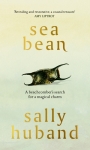 Sea Bean by Sally Huband: Stories of motherhood, the quest to find effective treatment in a patriarchal medical system, volunteer citizen science projects, and studying Shetland’s history and customs mingle in a fascinating way. Huband travels around the archipelago and further afield, finding vibrant beachcombing cultures. In many ways, this is about coming to terms with loss, and the author presents the facts about climate crisis with sombre determination. She writes with such poetic tenderness in this radiant debut memoir.
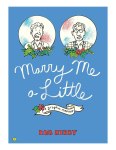 Marry Me a Little by Robert Kirby: Hopping around in time, this graphic memoir tells the story of how the author and his partner John decided to get married in 2013. The blue and red color scheme is effective at evoking a polarized America and the ebb and flow of emotions, with blue for calm, happy scenes and concentrated red for confusion or anger. This is political, for sure, but it’s also personal, and it balances those two aims well by tracing the history of gay marriage in the USA and memorializing his own relationship.
 All of Us Together in the End by Matthew Vollmer: In 2019, Vollmer’s mother died of complications of Alzheimer’s and Parkinson’s. Months later, his father reported blinking lights in the woods near the family cemetery. Although Vollmer had left the Seventh-Day Adventist Church in college, his religious upbringing influenced his investigation, which overlapped with COVID-19. Grief, mysticism, and acceptance of the unexplained are resonant themes. An unforgettable record of “a collision with the ineffable.”
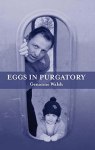 Eggs in Purgatory by Genanne Walsh: This autobiographical essay tells the story of the last few months of her father’s life. Aged 89, he lived downstairs from Walsh and her wife in San Francisco. He was quite the character: idealist, stubborn, outspoken; a former Catholic priest. Although he had no terminal conditions, he was sick of old age and its indignities and ready to exit. The task of a memoir is to fully mine the personal details of a situation but make of it something universal, and that’s just what she does here. Stunning.
Poetry
 More Sky by Joe Carrick-Varty: In this debut collection, the fact of his alcoholic father’s suicide is inescapable. The poet alternates between an intimate “you” address and third-person scenarios, auditioning coping mechanisms. His frame of reference is wide: football, rappers, Buddhist cosmology. The word “suicide” itself is repeated to the point where it becomes just a sibilant collection of syllables. The tone is often bitter, as is to be expected, but there is joy in the deft use of language.
 Lo by Melissa Crowe: This incandescent autobiographical collection delves into the reality of sexual abuse and growing up in rural poverty. Guns are insidious, used for hunting or mass shootings. Trauma lingers. “Maybe home is what gets on you and can’t / be shaken loose.” The collection is so carefully balanced in tone that it never feels bleak. In elegies and epithalamiums (poems celebrating marriage), Crowe honors family ties that bring solace. The collection has emotional range: sensuality, fear, and wonder at natural beauty.
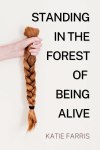 Standing in the Forest of Being Alive by Katie Farris: This debut collection addresses the symptoms and side effects of breast cancer treatment at age 36, but often in oblique or cheeky ways – it can be no mistake that “assistance” appears two lines before a mention of haemorrhoids, for instance, even though it closes an epithalamium distinguished by its gentle sibilance (Farris’s husband is Ukrainian American poet Ilya Kaminsky.) She crafts sensual love poems, and exhibits Japanese influences. (Review forthcoming at The Rumpus.)
 The House of the Interpreter by Lisa Kelly: Kelly is half-Danish and has single-sided deafness, and her second collection engages with questions of split identity. One section ends with the Deaf community’s outrage that the Prime Minister’s Covid briefings were not translated into BSL. Bizarre but delightful is the sequence of alliteration-rich poems about fungi, followed by a miscellany of autobiographical poems full of references to colour, nature and travel.
What are some of the best books you’ve read so far this year?
What 2023 releases should I catch up on right away?
Introducing the 2023 McKitterick Prize Shortlist
For the second year in a row, I was a first-round judge for the McKitterick Prize (for a first novel by a writer over 40), helping to assess the unpublished manuscripts. Perhaps lockdowns gave people time to achieve a long-held goal of writing a novel, because submissions were up by 50%. None of the manuscripts made it through to the shortlist this year or last, but one day it could happen!

The Society of Authors kindly sent me a parcel with five of the shortlisted novels, and I picked up the remaining one from the library this week. Below are synopses from Goodreads and author bios from the SoA:
 The Return of Faraz Ali by Aamina Ahmad (Sceptre): “Sent back to his birthplace—Lahore’s notorious red-light district—to hush up the murder of a girl, a man finds himself in an unexpected reckoning with his past. … Profoundly intimate and propulsive, The Return of Faraz Ali is a spellbindingly assured first novel that poses a timeless question: Whom do we choose to protect, and at what price?”
Aamina Ahmad was born and raised in London, where she worked for BBC Drama and other independent television companies as a script editor. Her play The Dishonoured was produced by Kali Theatre Company in 2016. She has an MFA from the Iowa Writers’ Workshop and is a recipient of a Stegner Fellowship from Stanford University, a Pushcart Prize and a Rona Jaffe Writers Award. Her short fiction has appeared in journals including One Story, the Southern Review and Ecotone. She teaches creative writing at the University of Minnesota.
 When We Were Birds by Ayanna Lloyd Banwo (Hamish Hamilton): “Yejide and Darwin will meet inside the gates of Fidelis, Port Angeles’s largest and oldest cemetery, where the dead lie uneasy in their graves and a reckoning with fate beckons them both. A masterwork of lush imagination and immersive lyricism, When We Were Birds is a spellbinding novel about inheritance, loss, and love’s seismic power to heal.”
Ayanna Lloyd Banwo is a writer from Trinidad and Tobago. She is a graduate of the University of the West Indies and holds an MA in Creative Writing from the University of East Anglia, where she is now a Creative and Critical Writing PhD candidate. Her work has been published in Moko Magazine, Small Axe and PREE, among others, and shortlisted for the Small Axe Literary Competition and the Wasafiri New Writing Prize. When We Were Birds, Ayanna’s first novel, was shortlisted for the Jhalak Prize and won the OCM Bocas Prize for Fiction. She is now working on her second novel. Ayanna lives with her husband in London.
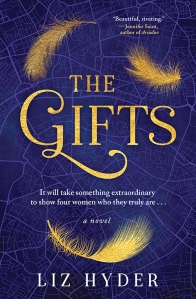 The Gifts by Liz Hyder (Manilla Press): “October 1840. A young woman staggers alone through a forest in the English countryside as a huge pair of impossible wings rip themselves from her shoulders. In London, rumours of a “fallen angel” cause a frenzy across the city, and a surgeon desperate for fame and fortune finds himself in the grips of a dangerous obsession. … [A] spellbinding tale told through five different perspectives …, it explores science, nature and religion, enlightenment, the role of women in society and the dark danger of ambition.”
Liz Hyder has been making up stories for as long she can remember. She has a BA in drama from the University of Bristol and, in early 2018, won the Bridge Award/Moniack Mhor Emerging Writer Award. Bearmouth, her debut young adult novel, won a Waterstones Children’s Book Prize, the Branford Boase Award and was chosen as the Children’s Book of the Year by The Times. Originally from London, she now lives in South Shropshire. The Gifts is her debut adult novel.
 Trespasses by Louise Kennedy (Bloomsbury Publishing): “Set in Northern Ireland during the Troubles, a shattering novel about a young woman caught between allegiance to community and a dangerous passion. … As tender as it is unflinching, Trespasses is a heart-pounding, heart-rending drama of thwarted love and irreconcilable loyalties, in a place what you come from seems to count more than what you do, or whom you cherish.”
Louise Kennedy grew up a few miles from Belfast. She is the author of the Women’s Prize-shortlisted novel Trespasses, and the acclaimed short story collection The End of the World is a Cul de Sac, and is the only woman to have been shortlisted twice for the Sunday Times Audible Short Story Award (2019 and 2020). Before starting her writing career, she spent nearly thirty years working as a chef. She lives in Sligo.
 The Whalebone Theatre by Joanna Quinn (Fig Tree): “One blustery night in 1928, a whale washes up on the shores of the English Channel. By law, it belongs to the King, but twelve-year-old orphan Cristabel Seagrave has other plans. She and the rest of the household … build a theatre from the beast’s skeletal rib cage. … As Cristabel grows into a headstrong young woman, World War II rears its head.”
Joanna Quinn was born in London and grew up in the southwest of England, where her bestselling debut novel, The Whalebone Theatre, is set. Joanna has worked in journalism and the charity sector. She is also a short story writer, published by The White Review and Comma Press, among others. She lives in a village near the sea in Dorset.
 Other Names for Love by Taymour Soomro (Harvill Secker): “A seductive coming-of-age story about queer desire, Other Names for Love is a charged, hypnotic debut novel about a boy’s life-changing summer in rural Pakistan: a story of fathers, sons, and the consequences of desire. … Decades later, Fahad is living abroad when he receives a call from his mother summoning him home. … [A] tale of masculinity, inheritance, and desire set against the backdrop of a country’s violent history, told with uncommon urgency and beauty.”
Taymour Soomro is the author of Other Names for Love and co-editor of Letters to a Writer of Colour. His writing has been published in the New Yorker, the New York Times and elsewhere. He is the recipient of fellowships from the Wisconsin Institute for Creative Writing, Bread Loaf Writers’ Conference and the Sozopol Fiction Seminars. He has degrees from Cambridge University and Stanford Law School and a PhD in creative writing from the University of East Anglia. He currently teaches on the MFA program at Bennington College.
Fellow judge Selma Dabbagh summarises the shortlist thus: “Family estates in rural Pakistan (Other Names for Love) and England (The Whalebone Theatre) fall into decline reflecting the hubris and short-sightedness of their owners[;] in The Return of Faraz Ali, it is the decaying grandeur of the courtesans of Lahore that is lovingly depicted. Whereas in both The Gifts and When We Were Birds, the otherworldly brings new possibilities to the tawdry and impoverished as mystical wings fly over the slums of Victorian London and the graveyards of Trinidad.”
I was already interested in reading a couple of these novels, and was pleased to discover a few new-to-me titles. As it’s also shortlisted for the Women’s Prize (which will be awarded on Wednesday), it seems to make sense to start with Trespasses, and I’m also particularly keen on The Gifts, which sounds like a great holiday read and right up my street, so I’m packing it for our trip to Scotland later this month. One or more of the others might end up on my 20 Books of Summer list. I’ll be sure to follow up with reviews of any I manage to read this summer.
The winner and runner-up will be announced at the SoA Awards ceremony in London on 29 June. I’ll be away at the time but will hope to watch part of the livestream. For more on all of the SoA Awards, see the press release on their website.
See any nominees you’ve read? Who would you like to see win?
Most Anticipated Releases of 2023
In real life, it can feel like I have little to look forward to. A catch-up holiday gathering and a shortened visit from my sister were over all too soon, and we have yet to book any trips for the summer months. Thankfully, there are always pre-release books to get excited about.


This list of my 20 most anticipated titles covers a bit more than the first half of the year, with the latest publication dates falling in August. I’ve already read 14 releases from 2023 (written up here), and I’m also looking forward to new work from Margaret Atwood, Rowan Hisayo Buchanan, Angie Cruz, Patrick deWitt, Naoise Dolan, Tessa Hadley, Louisa Hall, Leah Hazard, Christian Kiefer, Max Porter, Tom Rachman, Gretchen Rubin, Will Schwalbe, Jenn Shapland, Abraham Verghese, Bryan Washington, Anne Youngson and more, as well as to trying out various debut authors.
The following are in (UK) release date order, within sections by genre. U.S. details given too/instead if USA-only. Quotes are excerpts from the publisher blurbs, e.g., from Goodreads.
Fiction
 The End of Drum-Time by Hanna Pylväinen [Jan. 24, Henry Holt and Co.] I loved Pylväinen’s 2012 debut, We Sinners. This sounds like a winning combination of The Bell in the Lake and The Mercies. “A richly atmospheric saga that charts the repercussions of a scandalous nineteenth century love affair between a young Sámi reindeer herder in the Arctic Circle and the daughter of the renegade Lutheran minister whose teachings are upending the Sámi way of life.” (Edelweiss download)
Heartstopper, Volume 5 by Alice Oseman [Feb. 2, Hodder Children’s] A repeat from my 2022 Most Anticipated post. Will this finally be the year?? I devoured the first four volumes of this teen comic in 2021. Nick will be getting ready to go off to university, so I guess we’ll see how he leaves things with Charlie and whether their relationship will survive a separation. (No cover art yet.)
I Have Some Questions for You by Rebecca Makkai [Feb. 21, Viking / Feb. 23, Fleet] Makkai has written a couple of stellar novels; this sounds quite different from her usual lit fic but promises Secret History vibes. “A fortysomething podcaster and mother of two, Bodie Kane is content to forget her past [, including] the murder of one of her high school classmates, Thalia Keith. … [But] when she’s invited back to Granby, the elite New England boarding school where she spent four largely miserable years, to teach a course, Bodie finds herself inexorably drawn to the case and its increasingly apparent flaws.” (Proof copy)
 Birnam Wood by Eleanor Catton [March 7, Granta / Farrar, Straus and Giroux] I was lukewarm on The Luminaries (my most popular Goodreads review ever) but fancy trying Catton again – though this sounds like Atwood’s Year of the Flood, redux. “Five years ago, Mira Bunting founded a guerrilla gardening group … Natural disaster has created an opportunity, a sizable farm seemingly abandoned. … Robert Lemoine, the enigmatic American billionaire, has snatched it up to build his end-times bunker. … A gripping psychological thriller … Shakespearean in its wit, drama, and immersion in character.” (NetGalley download)
 Romantic Comedy by Curtis Sittenfeld [April 4, Random House / April 6, Doubleday] Sittenfeld is one of my favourite contemporary novelists. “Sally Milz is a sketch writer for The Night Owls, the late-night live comedy show that airs each Saturday. … Enter Noah Brewster, a pop music sensation with a reputation for dating models, who signed on as both host and musical guest for this week’s show. … Sittenfeld explores the neurosis-inducing and heart-fluttering wonder of love, while slyly dissecting the social rituals of romance and gender relations in the modern age.”
 The Last Animal by Ramona Ausubel [April 18, Riverhead] “Jane is … on the cutting-edge team of a bold project looking to ‘de-extinct’ the woolly mammoth. … As Jane and her daughters ping-pong from the slopes of Siberia to a university in California, from the shores of Iceland to an exotic animal farm in Italy, The Last Animal takes readers on an expansive, bighearted journey that explores the possibility and peril of the human imagination on a changing planet, what it’s like to be a woman and a mother in a field dominated by men, and how a wondrous discovery can best be enjoyed with family. Even teenagers.”
 Saturday Night at the Lakeside Supper Club by J. Ryan Stradal [April 18, Pamela Dorman Books] Kitchens of the Great Midwest is one of my all-time favourite debuts. A repeat from my 2021 Most Anticipated post, hopefully here at last! “A story of a couple from two very different restaurant families in rustic Minnesota, and the legacy of love and tragedy, of hardship and hope, that unites and divides them … full of his signature honest, lovable yet fallible Midwestern characters as they grapple with love, loss, and marriage.” (Edelweiss download)
 The Memory of Animals by Claire Fuller [April 20, Fig Tree (Penguin) / June 6, Tin House] Fuller is another of my favourite contemporary novelists and never disappoints. “Neffy is a young woman running away from grief and guilt … When she answers the call to volunteer in a controlled vaccine trial, it offers her a way to pay off her many debts … [and] she is introduced to a pioneering and controversial technology which allows her to revisit memories from her life before.” And apparently there’s also an octopus? (NetGalley download)
 The Late Americans by Brandon Taylor [May 23, Riverhead / June 22, Jonathan Cape (Penguin)] “In the shared and private spaces of Iowa City, a loose circle of lovers and friends encounter, confront, and provoke one another in a volatile year of self-discovery. … These three [main characters] are buffeted by a cast of poets, artists, landlords, meat-packing workers, and mathematicians who populate the cafes, classrooms, and food-service kitchens … [T]he group heads to a cabin to bid goodbye to their former lives—a moment of reckoning that leaves each of them irrevocably altered.” (Proof copy)
Speak to Me by Paula Cocozza [June 8, Tinder Press] I loved her debut novel, How to Be Human, and this sounds timely. (I have never owned a smartphone.) “When Kurt’s phone rings during sex—and he reaches to pick it up—Susan knows that their marriage has passed the point of no return. … This sense of loss becomes increasingly focused on a cache of handwritten letters, from her first love, Antony, mementoes of a time when devotion seemed to spill out easily onto paper. Increasingly desperate and out of synch with the contemporary world, Susan embarks on a journey of discovery that will reconnect her to her younger self, while simultaneously revealing her future.” (No cover art yet.)
 I Am Homeless If This Is Not My Home by Lorrie Moore [June 20, Faber / Knopf] What a title! I’m keen to read more from Moore after her Birds of America got a 5-star rating from me late last year. “Finn is in the grip of middle-age and on an enforced break from work: it might be that he’s too emotional to teach history now. He is living in an America hurtling headlong into hysteria, after all. High up in a New York City hospice, he sits with his beloved brother Max, who is slipping from one world into the next. But when a phone call summons Finn back to a troubled old flame, a strange journey begins, opening a trapdoor in reality.”
 A Manual for How to Love Us by Erin Slaughter [July 5, Harper Collins] “A debut, interlinked collection of stories exploring the primal nature of women’s grief. … Slaughter shatters the stereotype of the soft-spoken, sorrowful woman in distress, queering the domestic and honoring the feral in all of us. … Seamlessly shifting between the speculative and the blindingly real. … Set across oft-overlooked towns in the American South.” Linked short stories are irresistible for me, and I like the idea of a focus on grief.
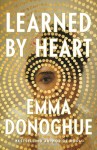 Learned by Heart by Emma Donoghue [Aug. 24, Pan Macmillan / Aug. 29, Little, Brown] Donoghue’s contemporary settings have been a little more successful for me, but she’s still a reliable author whose career I am happy to follow. “Drawing on years of investigation and Anne Lister’s five-million-word secret journal, … the long-buried love story of Eliza Raine, an orphan heiress banished from India to England at age six, and Anne Lister, a brilliant, troublesome tomboy, who meet at the Manor School for young ladies in York in 1805 … Emotionally intense, psychologically compelling, and deeply researched”.
Nonfiction
 The Year of the Cat: A Love Story by Rhiannon Lucy Cosslett [Jan. 19, Tinder Press] “When Rhiannon fell in love with, and eventually married her flatmate, she imagined they might one day move on. … The desire for a baby is never far from the surface, but … after a childhood spent caring for her autistic brother, does she really want to devote herself to motherhood? Moving through the seasons over the course of lockdown, [this] nimbly charts the way a kitten called Mackerel walked into Rhiannon’s home and heart, and taught her to face down her fears and appreciate quite how much love she had to offer.”
 Fieldwork: A Forager’s Memoir by Iliana Regan [Jan. 24, Blackstone] “As Regan explores the ancient landscape of Michigan’s boreal forest, her stories of the land, its creatures, and its dazzling profusion of plant and vegetable life are interspersed with her and Anna’s efforts to make a home and a business of an inn that’s suddenly, as of their first full season there in 2020, empty of guests due to the COVID-19 pandemic. … Along the way she struggles … with her personal and familial legacies of addiction, violence, fear, and obsession—all while she tries to conceive a child that she and her immune-compromised wife hope to raise in their new home.” (Edelweiss download)
 Enchantment: Reawakening Wonder in an Exhausted Age by Katherine May [Feb. 28, Riverhead / March 9, Faber] I was a fan of her previous book, Wintering. “After years of pandemic life—parenting while working, battling anxiety about things beyond her control, feeling overwhelmed by the news-cycle and increasingly isolated—Katherine May feels bone-tired, on edge and depleted. Could there be another way to live? One that would allow her to feel less fraught and more connected, more rested and at ease, even as seismic changes unfold on the planet? Craving a different path, May begins to explore the restorative properties of the natural world”. (Proof copy)
Monsters: A Fan’s Dilemma by Claire Dederer [April 25, Knopf / May 25, Sceptre] “What do we do with the art of monstrous men? Can we love the work of Roman Polanski and Michael Jackson, Hemingway and Picasso? Should we love it? Does genius deserve special dispensation? Is history an excuse? What makes women artists monstrous? And what should we do with beauty, and with our unruly feelings about it? Dederer explores these questions and our relationships with the artists whose behaviour disrupts our ability to apprehend the work on its own terms. She interrogates her own responses and her own behaviour, and she pushes the fan, and the reader, to do the same.”
 Undercurrent: A Cornish Memoir of Poverty, Nature and Resilience by Natasha Carthew [May 25, Hodder Studio] Carthew hangs around the fringes of UK nature writing, mostly considering the plight of the working class. “Carthew grew up in rural poverty in Cornwall, battling limited opportunities, precarious resources, escalating property prices, isolation and a community marked by the ravages of inequality. Her world existed alongside the postcard picture Cornwall … part-memoir, part-investigation, part love-letter to Cornwall. … This is a journey through place, and a story of hope, beauty, and fierce resilience.”
Grief Is for People by Sloane Crosley [June 25, MCD Books] According to Crosley, this is “a five-part book about many kinds of loss.” The press release adds to that: “Telling the interwoven story of a burglary, the suicide of Crosley’s closest friend, and the onset of Covid in New York City, [this] is the first full-length work of nonfiction by a writer best known for her acclaimed, bestselling books of essays.” (No cover art yet.)
Poetry
Bright Fear by Mary Jean Chan [Aug. 23, Faber] Their debut collection, Flèche, was my top poetry release in 2019. “These piercing poems fearlessly explore intertwined themes of queer identity, multilingualism and postcolonial legacy: interrogating acts of Covid racism, instances of queerphobia and the hegemony of the English language. Questions of acceptance and assimilation are further explored through a family’s evolving dynamics over time, or through the specious jargon of ‘Equality, Diversity and Inclusion’.” (No cover art yet.)
Other lists for more ideas:
What catches your eye here? What other 2023 titles do I need to know about?
Best Books from 2022
I’m keeping it simple this year with one post covering a baker’s dozen from all genres: the 13 current-year releases that stood out to me the most. (No rankings this time; anything from my Best of First Half post that didn’t make it through to here can be considered a runner-up.)
Fiction
 Groundskeeping by Lee Cole: In Cole’s debut novel, two aspiring writers meet on a Kentucky college campus and form a romantic connection despite very different backgrounds. There are stereotypes to be overcome as Owen introduces Alma to Kentucky culture and slang. Trump’s election divides families and colleagues. The gentle satire on the pretensions of writing programs is another enjoyable element. Three-dimensional characters, vivid scenes ripe for the Netflix treatment, timely themes and touching relationships.
 Stories from the Tenants Downstairs by Sidik Fofana: Fofana’s novel-in-stories orbits a Harlem apartment complex and spins bittersweet tales of ambition and disappointment in a range of vibrant voices. Endearing scoundrels are the focus in a number of stories. Minor characters from some go on to have starring roles in others. Though these tenants’ lives are filled with difficulties, their optimism and sheer joy shine through in their picaresque antics. A stellar debut from a very talented writer; Fofana should win all the prizes.
 Sea of Tranquility by Emily St. John Mandel: This dazzlingly intricate novel blends historical fiction, up-to-the-minute commentary and science-fiction predictions. In 2401, the Time Institute hires Gaspery-Jacques Roberts to investigate a recurring blip in time. Fans of The Glass Hotel will recognize some characters, and those familiar with Station Eleven will find similarities in a pandemic plot that resonates with the Covid-19 experience. How does Mandel do it? One compulsively readable hit after another.
 Very Cold People by Sarah Manguso: The aphoristic style of some of Manguso’s previous books continues here as discrete paragraphs and brief vignettes build to a gloomy portrait of Ruthie’s archetypical affection-starved childhood in the fictional Massachusetts town of Waitsfield in the 1980s and 90s. The depiction of Ruthie’s narcissistic mother is especially acute. So much resonated with me. This is the stuff of girlhood – if not universally, then certainly for the (largely pre-tech) American 1990s as I experienced them.
 Body Kintsugi by Senka Marić: This intense work of autofiction is all the more powerful due to the second-person narration that displaces the pain of breast cancer from the protagonist and onto the reader. Coming of age in a female body was traumatic in itself; now that same body threatens to kill her. Even as she loses the physical signs of femininity, she remains resilient: Her body will document what she’s been through. As forthright as it is about the brutality of cancer treatment, the novella is also creative, playful and darkly comic.
 The Hero of This Book by Elizabeth McCracken: Is it autofiction or bereavement memoir? Both and neither. In 2019, an American writer wanders London, seeing the sights but mostly reminiscing about her mother, whom she describes through bare facts and apt anecdotes. London had been a favourite destination, their final trip together falling just three years before. As well as a tribute to a beloved mother and a matter-of-fact record of dealing with ageing parents and the aftermath of loss, this is a playful cross-examination of literary genres.
 The Swimmers by Julie Otsuka: Otsuka’s third novel of the Japanese American experience again employs the first-person plural, as well as the second person – rarer perspectives that provide stylistic novelty. The first two chapters are set at a pool that, for the title swimmers, serves as a locus of escape and safety. On the first page we’re introduced to Alice, whose struggle with dementia becomes central. I admired Otsuka’s techniques for moving readers through the minds of the characters, alternating range with profundity and irony with sadness.
 Which Side Are You On by Ryan Lee Wong: Wong’s dynamite debut novel weaves timely issues of racism and protest into a pacy, funny story of idealism versus cynicism. Reed, an Asian American college student committed to social justice, rethinks how best to live out his values in the real world when he goes home for a few days. Wong probes the generational gap between him and his parents through snappy dialogue and enjoyable scenes that constitute an incidental tour of multi-ethnic Los Angeles.
 Tomorrow, and Tomorrow, and Tomorrow by Gabrielle Zevin: Sam and Sadie’s friendship, which over the years becomes a business partnership that also incorporates Sam’s college roommate, Marx Watanabe, is a joy. Their creative energy and banter are enviable. Marx is the uncomplicated, optimistic go-between when Sam and Sadie butt heads and take offense at betrayals. Underneath their conflicts is a love different from, and maybe superior to, romantic love. An immersive story of friendship and obsession; nostalgic, even cathartic.
Nonfiction
 In Love by Amy Bloom: Bloom’s husband, Brian Ameche, was diagnosed with early-onset Alzheimer’s in his mid-60s, having exhibited mild cognitive impairment for several years. Brian quickly resolved to make a dignified exit while he still, mostly, had his faculties. This achieves the perfect tone, mixing black humour with teeth-gritted practicality as Bloom chronicles their relationship, the final preparations, his assisted suicide at Dignitas in Switzerland, and the aftermath. An essential, compelling read.
 Sinkhole: A Natural History of a Suicide by Juliet Patterson: This gorgeously written family memoir approaches its subject matter with brave tenderness. In December 2008, poet Patterson’s father died by suicide near his Minnesota home. He wasn’t an obvious risk. Yet there was family history: both of Patterson’s parents lost their fathers to suicide. She returns to Kansas on research trips to unearth her grandfathers’ lives. Throughout, sinkholes, common in Kansas, are both reality and metaphor for the chasm a suicide leaves.
 Blurb Your Enthusiasm: An A-Z of Literary Persuasion by Louise Willder: A delightful bibliophile’s miscellany about ways of pithily spreading excitement about books. Over the last 25 years, Willder has written jacket copy for thousands of Penguin releases, so she has it down to a science as well as an art. (Reviewing is an adjacent skill.) The art of the first line, serialization and self-promotion, guidelines for good writing, differences between British and American jacket copy, the use of punctuation, and so much more. Very funny to boot.
Poetry
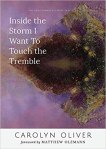 Inside the Storm I Want to Touch the Tremble by Carolyn Oliver: Carolyn used to blog at Rosemary and Reading Glasses and won the Agha Shahid Ali Prize for this debut collection. Every line feels tirelessly honed to elicit maximal meaning and a memorable sound. Traditional forms are adapted to great effect. Chronic illness, gardening, and everyday sexual danger are themes, but the poems that pierced me most were about her son: quirky things he says, but also the reality of modern parenting, where active shooter drills are de rigueur.

This year’s best-of selections (the ones I own in print, anyway; the rest were read on Kindle or have already gone back to the library).
Have you read any of my 2022 favourites?
What releases do I need to catch up on right away?
Best Backlist Reads of the Year
Like many bloggers, I’m irresistibly drawn to the new books released each year. However, I consistently find that many of my most memorable reads were published years or even decades ago. These 16 selections, in alphabetical order within genre, together with my Best of 2022 post (coming up tomorrow), make up the top 9.5% or so of my reading for the year. Three of the below were rereads.
Fiction
First, a special mention for this trio:
Birds of a Lesser Paradise by Megan Mayhew Bergman
Delicate Edible Birds by Lauren Groff
Birds of America by Lorrie Moore
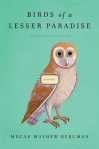
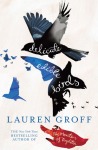
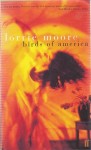
It’s unusual for me to fall so wholeheartedly for short stories. I intended to write up these three “Birds” collections as part of my short story focus in September but ultimately decided to spend more time with the latter two (and then fell ill with Covid before I could write them up, so look out for my full reviews early in the new year). The word from the title is incidental, really; the books do have a lot in common in terms of theme and tone, though. The environment, fidelity and motherhood are recurring elements. The warmth and psychological depth are palpable. Each story feels fleshed out enough that I would happily read an entire novel set in its world, but also such that it is complete unto itself. Two of these writers (Bergman and Moore) are best known for short stories; the third, to my mind, should be.
 Falling Angels by Tracy Chevalier: I’ve read all of Chevalier’s novels and always thought of this one as my favourite. A reread didn’t change that. I loved the neat structure that bookends the action between the death of Queen Victoria and the death of Edward VII, and the focus on funerary customs (with Highgate Cemetery a major setting) and women’s rights.
 Julia and the Shark by Kiran Millwood Hargrave: Julia and her parents are on an island adventure to Unst, in the north of Shetland, where her father will keep the lighthouse for a summer and her mother, a marine biologist, will search for the Greenland shark. Hargrave treats the shark as both a real creature and a metaphor for all that lurks – all that we fear and don’t understand. Beautifully illustrated, too; a modern children’s classic in the making.
 We Have Always Lived in the Castle by Shirley Jackson: A brooding character study of two sisters isolated by their scandalous family history and the suspicion of the townspeople. I loved the offbeat voice and unreliable narration, and the way the Blackwood house is both a refuge and a prison for the sisters. Who is protecting whom, and from what? There are a lot of great scenes, all so discrete that I could see this working very well as a play
 Foster by Claire Keegan: A delicate, heart-rending novella about a deprived young Irish girl sent to live with rural relatives for one pivotal summer. It bears all the hallmarks of a book several times its length: a convincing and original voice, rich character development, an evocative setting, just enough backstory, psychological depth, conflict and sensitive treatment of difficult themes like poverty and neglect. I finished the one-sitting read in a flood of tears.
 Small Things Like These by Claire Keegan: One good man’s small act of rebellion is a way of standing up to the injustice of the Magdalen Laundries, a church-sanctioned system that must have seemed too big to tackle. Keegan fits so much into so few pages, including Bill working out who his father was and deciding what to make of the middle of his life. Like Foster, this is set in the 1980s but feels timeless. Absolutely beautiful.
 The Murderer’s Ape by Jakob Wegelius: Sally Jones is a ship’s engineer who journeys from Portugal to India to clear her captain’s name when he is accused of murder. She’s also a gorilla. This was the perfect rip-roaring adventure story to read at sea (on the ferry to Spain in May); the twisty plot and larger-than-life characters who aid or betray Sally Jones kept the nearly 600 pages turning quickly.
Poetry
 Honorifics by Cynthia Miller: Miller is a Malaysian American poet in Edinburgh. The themes of her debut include living between countries and feeling like an exile versus finding a sense of home. There’s much variety here, and so many beautiful lines and evocative images. Miller incorporates a lot of unusual structures, some of them traditional forms and others freer: a numbered list, columns, dictionary definitions or prose paragraphs. Flora and fauna references plus a consideration of the expat life meant this was custom made for me.
Nonfiction
 The Boys in the Boat by Daniel James Brown: The University of Washington rowing team in general, and Joe Rantz in particular, were unlikely champions. Boatbuilding and rowing both come across as admirable skills involving hard physical labour, scientific precision and an artist’s mind. All along, Brown subtly weaves in the historical background: Depression-era Seattle with its shantytowns, and the rise of Hitler in Germany. A classic underdog story.
 My Life in Houses by Margaret Forster: Having become a homeowner for the first time earlier this year, I was interested in how an author would organize their life around the different places they’ve lived. The early chapters about being a child in Carlisle are compelling in terms of cultural history; later on she observes gentrification in London, and her home becomes a haven for her during her cancer treatment.
 Sightlines by Kathleen Jamie: A reread started on our July trip to the Outer Hebrides. I’d forgotten how closely Jamie’s interests align with my own: Scotland and its islands, birds, the prehistoric, museums, archaeology. I particularly appreciated “Three Ways of Looking at St Kilda,” but everything she writes is profound: “if we are to be alive and available for joy and discovery, then it’s as an animal body, available for cancer and infection and pain.”
 Reflections from the North Country by Sigurd F. Olson: Olson was a well-known environmental writer in his time (through 1970s), also serving as president of the National Parks Association. This collection of passionate, philosophically oriented essays about the state of nature places him in the vein of Aldo Leopold – before-their-time conservationists. He ponders solitude, wilderness and human nature, asking what is primal in us.
 Smile by Sarah Ruhl: These warm and beautifully observed autobiographical essays stem from the birth of her twins and the slow-burning medical crises that followed. Shortly after delivery, Ruhl developed Bell’s palsy, a partial paralysis of the face. Having a lopsided face, grimacing and squinting when she tried to show expression – it was a minor problem in the grand scheme of things, yet provoked questions about whether the body equates to identity.
 Owls of the Eastern Ice by Jonathan C. Slaght: Slaght has become an expert on the Blakiston’s fish owl during nearly two decades of fieldwork in the far east of Russia. Slaght thinks of Russia as his second home, and you can sense his passion for the fish owl and for conservation in general. Amid the science, this is a darn good story, full of bizarre characters. Top-notch nature and travel writing; a ride along on a consequential environmentalist quest.

Some of the best backlist reads I own and could lay my hands on.
What were your best backlist reads this year?
What to Read during a Heat Wave
The short answer is whatever you want. A longer answer: you could get stuck into heat-themed and summer-set books; escape by reading about a holiday destination, whether you can get there or not; will yourself cool by reading about icy places; and/or sink into a stack of lighter reading material.
I’ll be employing some or all of these strategies as the mercury climbs. I keep thinking I’ll just give up on work one of these days – my new study has a big window that traps the midday sun, but it remains bearable as long as I use blackout curtains and a desk fan – and read on a couch all afternoon. That hasn’t happened yet, but on Tuesday peak temperatures (of 36 °C) are expected here in the UK, so I may well carry out my threat.
Here’s what I’m reading now in each of those categories, along with some earlier reads I can recommend (with excerpts from my reviews and a link to the full text):
Embrace the Heat
My current reads:
Contemporary
 Golden Boys by Phil Stamper: Four gay high school students in small-town Ohio look forward to a summer of separate travels for jobs and internships and hope their friendships will stay the course. With alternating first-person passages and conversation threads, this YA novel is proving to be a sweet, fun page turner and the perfect follow-up to the Heartstopper series (my summer crush from last year).
Classic
 Summer by Edith Wharton: An adopted young woman (and half-hearted librarian) named Charity Royall gets a shot at romance when a stranger arrives in her New England town. I’m only 30 pages in so far, but this promises to be a great read – but please not as tragic as Ethan Frome? (Apparently, Wharton called it a favourite among her works, and referred to it as “the Hot Ethan,” which I’m going to guess she meant thermally.)
My top recommendations:
Contemporary
 Heatstroke by Hazel Barkworth: From the first word (“Languid”) on, this drips with hot summer atmosphere, with connotations of discomfort and sweaty sexuality. Rachel is a teacher of adolescents as well as the mother of a 15-year-old, Mia. When Lily, a pupil who also happens to be one of Mia’s best friends, goes missing, Rachel is put in a tough spot…
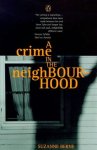 A Crime in the Neighbourhood by Suzanne Berne: Marsha remembers the summer of 1972, when her father left her mother for Aunt Ada and news came of a young boy’s sexual assault and murder in the woods behind a mall. “If you hadn’t known what had happened in our neighborhood, the street would have looked like any other suburban street in America.”
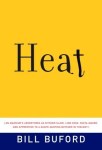 Heat by Bill Buford: You know what they say: if you can’t stand the heat, get out of the kitchen (eat some cold salads instead!). Buford traces TV chef Mario Batali’s culinary pedigree through Italy and London, and later spends stretches of several months in Italy as an apprentice to a pasta-maker and a Tuscan butcher. Exactly what I want from food writing.
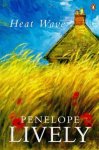 Heat Wave by Penelope Lively: Pauline, a freelance copyeditor in her fifties, has escaped from London to spend a hot summer at World’s End, the Midlands holiday cottage complex she shares with her daughter and her family. The increasing atmospheric threats (drought or storms; combine harvesters coming ever nearer) match the tensions in the household.
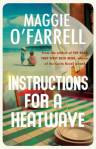 Instructions for a Heatwave by Maggie O’Farrell: Another spot-on tale of family and romantic relationships. The language is unfailingly elegant. It opens with the heat as the most notable character: “It inhabits the house like a guest who has outstayed his welcome: it lies along corridors, it circles around curtains, it lolls heavily on sofas and chairs.”
- This is set during the UK heatwave of 1976, which lives on in collective memory and legend in this country even though its temperature record has been topped (but not the length of the streak). I’ve since tried two other novels set during the summer of ’76 but neither took (maybe you’ll get on better with them?): Water Shall Refuse Them by Lucie McKnight Hardy and In the Place of Fallen Leaves by Tim Pears.
 Or try the American summer of 1975 instead, with Mary Jane by Jessica Anya Blau, a juicy coming-of-age novel set in Baltimore.
Classic
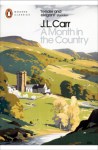 A Month in the Country by J. L. Carr: Tom Birkin, a First World War veteran whose wife has left him, arrives in Oxgodby to uncover the local church’s wall painting of the Judgment Day. “There was so much time that marvelous summer.” There is something achingly gorgeous about this Hardyesque tragicomic romance, as evanescent as ideal summer days.
 The Go-Between by L. P. Hartley: Twelve-year-old Leo Colston is invited to spend the several July weeks leading up to his birthday at his school friend Marcus Maudsley’s home, Brandham Hall. The heat becomes a character in its own right, gloweringly presiding over the emotional tension caused by secrets, spells and betrayals.
 In a Summer Season by Elizabeth Taylor: The title is not only literal, when much of the action takes place, but a metaphor for the fleeting nature of happiness (as well as life itself). Kate remembers pleasant days spent with her best friend and their young children: “It was a long summer’s afternoon and it stood for all the others now. … Their friendship was as light and warming as the summer’s air.”
Escape on Holiday
I try to read on location whenever possible, but if it’s a staycation for you this year, you can still transport yourself somewhere exciting or tropical through fiction.
My current read:
 Mustique Island by Sarah McCoy: “A sun-splashed romp with a rich divorcée and her two wayward daughters in 1970s Mustique, the world’s most exclusive private island [in the Caribbean], where Princess Margaret and Mick Jagger were regulars and scandals stayed hidden from the press.”
My top recommendations:
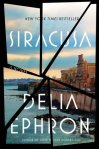 Siracusa by Delia Ephron: A snappy literary thriller about two American couples who holiday together on the Sicilian island of Siracusa. Shifting between the perspectives of the four main characters, it looks back to ask what went disastrously wrong on that trip. A delicious story ripe for a cinematic adaptation.
 Nothing but Blue Sky by Kathleen MacMahon: Set in Aiguaclara, a hidden gem on Spain’s Costa Brava where David and Mary Rose holidayed every summer for 20 years. Most of the book remembers their life together and their previous vacations here. Grief, memory, fate: some of my favourite themes, elegantly treated.
 A Theatre for Dreamers by Polly Samson: Set on the Greek island of Hydra in 1960, this zeroes in on several authors, including a young poet from Canada named Leonard Cohen. We see all of the real-life characters from the perspective of a starry-eyed 17-year-old narrator. You can feel the Mediterranean heat soaking up through your sandals.
 The Vacationers by Emma Straub: Perfect summer reading; perfect vacation reading. Straub writes great dysfunctional family novels featuring characters so flawed and real you can’t help but love and laugh at them. Here, Franny and Jim Post borrow a friend’s home in Mallorca for two weeks, hoping sun and relaxation will temper the memory of Jim’s affair.
Read Yourself Cool
Will reading about snow and ice actually make you feel any cooler? It can’t hurt.
My current reads:
I had a vague Antarctica reading theme going for a while, but have yet to get back into two set-aside reads, Empire Antarctica by Gavin Francis and Lean Fall Stand by Jon McGregor (or pick up Snow Widows by Katherine MacInnes and South Pole Station by Ashley Shelby). Maybe next week!
My top recommendations:
 Among the Summer Snows by Christopher Nicholson: After the death from cancer of his wife Kitty, a botanical illustrator, Nicholson set off for Scotland’s Cairngorms and Ben Nevis in search of patches of snow that persist into summer. “Summer snow is a miracle, a piece of out-of-season magic: to see it is one thing, to make physical contact with it is another.”
 The Still Point by Amy Sackville: A sweltering summer versus an encasing of ice; an ordinary day versus decades of futile waiting. Sackville explores these contradictions only to deflate them, collapsing time such that a polar explorer’s wife and her great-great-niece can inhabit the same literal and emotional space despite being separated by more than a century.
Keep it Light
I’m more likely to read genre fiction (crime, especially) during the summer, it seems. I recently read The Daughter of Time by Josephine Tey for book club, for instance – but it was so permeated in Plantagenet history that it wasn’t your standard detective drama at all.
I also like to pick up lighter reads that edge towards women’s fiction. I’ve been starting my days with passages from these two, though it might make more sense to read them later in the day as a reward for getting through parts of weightier books.
My current reads:
 Bridget Jones: Mad About the Boy by Helen Fielding: I’d never read this second sequel from 2013, so we’re doing it for our August book club – after some darker reads, people requested something light! Bridget is now a single mother in her early 50s, but some things never change, like constant yo-yo dieting and obsessive chronicling of the stats of her life.
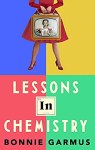 Lessons in Chemistry by Bonnie Garmus: This year’s It book. I’m nearly halfway through and enjoying it, if not as rapturously as so many. Katherine Heiny meets John Irving is the vibe I’m getting. Elizabeth Zott is a scientist through and through, applying a chemist’s mindset to her every venture, including cooking, rowing and single motherhood in the 1950s.
My top recommendations:
 Sunburn by Laura Lippman: While on a beach vacation in 1995, a woman walks away from her husband and daughter and into a new life as an unattached waitress. I liked that I recognized many Maryland/Delaware settings. Quick and enjoyable. (I’ve never been hotter than during the July week we spent in Milan in 2019. This is one of the books I read on that trip.)
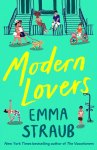 Modern Lovers by Emma Straub: Short chapters flip between all the major characters’ perspectives, showing that she completely gets each one of them. The novel is about reassessing as one approaches adulthood or midlife, about reviving old dreams and shoring up flagging relationships. Nippy and funny and smart and sexy. So many lines ring true. (Yes, a second entry from Straub: she writes such accessible and addictive literary fiction.)
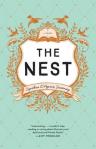 The Nest by Cynthia D’Aprix Sweeney: The four dysfunctional Plumb siblings must readjust their expectations when the truth comes out. This also affects their trust fund, “the nest.” A nest is, of course, also a home, so for as much as this seems to be about money, it is really more about family and how we reclaim our notion of home after a major upheaval.
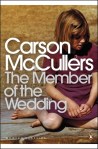 This article on the Penguin website has a few more ideas, including To Kill a Mockingbird (you think we’ve got it bad? Try a summer in the American South!), Atonement, and poetry. I took up one of Alice Vincent’s recommendations right away: since I’m reading My Autobiography of Carson McCullers by Jenn Shapland, it made sense to get a copy of McCullers’s The Member of the Wedding out from the public library. Already on the first page you’re steeped in a sweltering Georgia summer (like McCullers, my dad is from Columbus):
It happened that green and crazy summer when Frankie was twelve years old. … The sidewalks of the town were grey in the early morning and at night, but the noon sun put a glaze on them, so that the cement burned and glittered like glass. The sidewalks finally became too hot for Frankie’s feet. … The world seemed to die each afternoon and nothing moved any longer. At last the summer was like a green sick dream, or like a silent crazy jungle under glass.
What are your current reading strategies?
Have you ever spent all day reading, just because you could?
The Best Books from the First Half of 2022
Yes, it’s that time of year already! At first I thought I wouldn’t have enough 2022-released standouts to fill a post, but the more I looked through my list the more I realized that, actually, it has been a pretty good reading year. It remains to be seen, of course, how many of these will make it onto my overall best-of year list, but for now, these are my highlights. I made it up to an even 20 by including one that doesn’t release until July. Fiction is winning thus far! I give review excerpts below and link to the full text here or elsewhere.
Fiction
 Our Wives under the Sea by Julia Armfield: Miri is relieved to have her wife back when Leah returns from an extended deep-sea expedition. Something went wrong with the craft when it was too late to evacuate, though. Chapters alternate between Miri describing their new abnormal and Leah recalling the voyage. As Miri tries to tackle life admin for both of them, she feels increasingly alone. This is a sensitive study of love, grief and dependency. Armfield gives an increasingly eerie story line a solid emotional foundation.
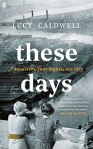 These Days by Lucy Caldwell: A beautiful novel set in Belfast in April 1941. We see the Second World War mostly through the eyes of the Bell family – especially daughters Audrey, engaged to be married to a young doctor, and Emma, in love with a fellow female first aider. The evocation of a time of crisis is excellent. The lack of speech marks, fluid shifting between perspectives, and alternation between past and present tense keep the story from seeming too familiar or generic. All of the female characters have hidden depths.
Groundskeeping by Lee Cole: In Cole’s debut novel, two aspiring writers meet on a Kentucky college campus and form a romantic connection despite very different backgrounds. There are stereotypes to be overcome as Owen introduces Alma to Kentucky culture and slang. Trump’s election divides families and colleagues. The gentle satire on the pretensions of writing programs is another enjoyable element. Three-dimensional characters, vivid scenes ripe for the Netflix treatment, timely themes and touching relationships: alright!
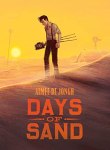 Days of Sand by Aimée de Jongh: This Great Depression-era story was inspired by the work of photographers such as Dorothea Lange. John Clark is following in his father’s footsteps as a photographer, leaving NYC for the Oklahoma panhandle. Locals are suspicious of John as an outsider, especially when they learn he is working to a checklist. Whether a cityscape or the midst of a dust storm, de Jongh’s scenes are stark and evocative. It’s rare for me to find the story and images equally powerful in a graphic novel, but that’s definitely the case here.
 Dance Move by Wendy Erskine: The 11 stories in Erskine’s second collection do just what short fiction needs to: dramatize an encounter, or a moment, that changes life forever. Her characters are ordinary, moving through the dead-end work and family friction that constitute daily existence, until something happens, or rises up in the memory, that disrupts the tedium. Erskine being from Belfast, evidence of the Troubles is never far away. Her writing is blunt and edgy, with no speech marks plus flat dialogue and slang.
 Antipodes by Holly Goddard Jones: Riveting stories of contemporary life in the American South and Midwest. Some have pandemic settings; others are gently magical. All are true to the anxieties of modern careers, marriage and parenthood. Endings elicit a gasp, particularly the audacious inconclusiveness of “Exhaust,” a tense tale of a quarreling couple driving through a blizzard. Worry over environmental crises fuels “Ark,” about a pyramid scheme for doomsday preppers. Nickolas Butler and Lorrie Moore fans will find much to admire.
Sea of Tranquility by Emily St. John Mandel: This dazzlingly intricate novel blends historical fiction, up-to-the-minute commentary and science-fiction predictions. In 2401, the Time Institute hires Gaspery-Jacques Roberts to investigate a recurring blip in time. Fans of The Glass Hotel will recognize some characters, and those familiar with Station Eleven will find similarities in a pandemic plot that resonates with the Covid-19 experience. How does Mandel do it? One compulsively readable hit after another.
Very Cold People by Sarah Manguso: The aphoristic style of some of Manguso’s previous books continues here as discrete paragraphs and brief vignettes build to a gloomy portrait of Ruthie’s archetypical affection-starved childhood in the fictional Massachusetts town of Waitsfield in the 1980s and 90s. The depiction of Ruthie’s narcissistic mother is especially acute. So much resonated with me. This is the stuff of girlhood – if not universally, then certainly for the (largely pre-tech) American 1990s as I experienced them.
 How High We Go in the Dark by Sequoia Nagamatsu: Just the right blend of literary fiction and science fiction. Opening in 2031 and stretching another 70 years into the future, this linked short story collection imagines how a pandemic reshapes the world and how communication and connection might continue after death. All but one story are in the first person, so they feel like personal testimonies. The whole is greater than the sum of the parts. The focus on illness and bereavement, but also on the love that survives, made this a winner.
The Swimmers by Julie Otsuka: Otsuka’s third novel of the Japanese American experience again employs the first-person plural, as well as the second person – rarer perspectives that provide stylistic novelty. The first two chapters are set at a pool that, for the title swimmers, serves as a locus of escape and safety. On the first page we’re introduced to Alice, whose struggle with dementia becomes central. I admired Otsuka’s techniques for moving readers through the minds of the characters, alternating range with profundity and irony with sadness.
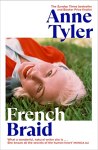 French Braid by Anne Tyler: My 17th from Tyler, and easily her best new work in 18 years. It joins my other favourites such as Dinner at the Homesick Restaurant which reveal a dysfunctional family’s quirks through a close look, in turn, at the various members. Mercy is a painter and essentially moves into her studio, but without announcing it, and her husband Robin spends the next 25+ years pretending they still share a home. Other surprises from Tyler this time: a mild sex scene and a gay character. A return to form. Brava!
Nonfiction
In Love by Amy Bloom: Bloom’s husband, Brian Ameche, was diagnosed with early-onset Alzheimer’s in his mid-60s, having exhibited mild cognitive impairment for several years. Brian quickly resolved to make a dignified exit while he still, mostly, had his faculties. This achieves the perfect tone, mixing black humour with teeth-gritted practicality as Bloom chronicles their relationship, the final preparations, his assisted suicide at Dignitas in Switzerland, and the aftermath. An essential, compelling read.
 Everything Is True by Roopa Farooki: Second-person, present-tense narration drops readers right into the life of a junior doctor. In February 2020, Farooki’s sister Kiron died of breast cancer. During the first 40 days of the initial UK lockdown, she continues to talk to Kiron. Grief opens the door for magic realism. There is also wry humour, wordplay, slang and cursing. A hybrid work that reads as fluidly as a novel while dramatizing real events, this is sure to appeal to people who wouldn’t normally pick up a bereavement or medical memoir.
 Body Work by Melissa Febos: A boldly feminist essay collection that explores how autobiographical writing can help one face regrets and trauma and extract meaning from the “pliable material” of memory. “In Praise of Navel Gazing” affirms the importance of women airing their stories of abuse and thereby challenging the power structures that aim to keep victims silent. “A Big Shitty Party” warns of the dangers of writing about real people. “The Return” employs religious language for the transformation writing can achieve.
 All Down Darkness Wide by Seán Hewitt: This poetic memoir about love and loss in the shadow of mental illness blends biography, queer history and raw personal experience. The book opens, unforgettably, in a Liverpool graveyard where Hewitt has assignations with anonymous men. His secret self, suppressed during teenage years in the closet, flies out to meet other ghosts: of his college boyfriend; of men lost to AIDS during his 1990s childhood; of English poet George Manley Hopkins; and of a former partner who was suicidal. (Coming out on July 12th from Penguin/Vintage (USA) and July 14th from Jonathan Cape (UK). My full review is forthcoming for Shelf Awareness.)
Poetry
 Thorpeness by Alison Brackenbury: This tenth collection features abundant imagery of animals and the seasons. Alliteration is prominent, but there is also a handful of rhymes. Family history and the perhaps-idyllic rural underpin the verse set in Lincolnshire and Gloucestershire as Brackenbury searches for ancestral graves and delivers elegies. I especially loved “Aunt Margaret’s Pudding,” a multipart poem about her grandmother’s life. There are also playful meetings between historical figures.
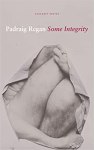 Some Integrity by Padraig Regan: The sensual poems in this debut collection are driven by curiosity, hunger and queer desire. Flora and foods are described as teasing mystery, with cheeky detail. An unusual devotion to ampersands; an erotic response to statuary; alternating between bold sexuality and masochism to the point of not even wanting to exist; a central essay on the Orlando nightclub shooting and videogames – the book kept surprising me. I loved the fertile imagery, and appreciated Regan’s exploration of a nonbinary identity.
 Love Poems in Quarantine by Sarah Ruhl: Having read Ruhl’s memoir Smile, I recognized the contours of her life and the members of her family. Cooking and laundry recur: everyday duties mark time as she tries to write and supervises virtual learning for three children. “Let this all be poetry,” she incants. Part 2 contains poems written after George Floyd’s murder, the structure mimicking the abrupt change in focus for a nation. Part 3’s haiku and tanka culminate in a series on the seasons. A welcome addition to the body of Covid-19 literature.
 Rise and Float by Brian Tierney: Although it tackles heavy subjects like grief and mental health, the collection’s candor and stunning images transform the melancholy into the sublime. Much of the verse is in the first person, building an intimate portrait of the poet and his relationships. A family history of mental illness and electroshock treatment occasions a visit to a derelict psychiatric hospital. Recurring metaphors of holes dramatize a struggle against the void. Tierney’s close attention lends beauty to bleak scenes.
 Vinegar Hill by Colm Tóibín: I didn’t realize when I started that this was Tóibín’s debut collection; so confident is his verse, I assumed he’d been publishing poetry for decades. There’s a wide range of tone, structures and topics. Bereavements and chemotherapy are part of a relatable current events background. Irish-Catholic nostalgia animates a witty sequence from “The Nun” to “Vatican II.” Come along on armchair travels. Poems are based around anecdotes or painterly observations. The line breaks are unfailingly fascinating.
What are some of the best books you’ve read so far this year?
What 2022 releases do I need to catch up on right away?
The Wainwright Prize 2022 Longlists
The Wainwright Prize is my favourite nonfiction prize and one I follow closely because I tend to read many of the nature books released in the UK in any given year, as well as some popular science. I was honoured to be part of an “academy” of bloggers, booksellers, previous year judges and previously shortlisted authors asked to comment on a very long list of publisher submissions. These votes were used to help arrive at the longlists. This year, the categories have been subtly adjusted to avoid the problem there has been the past two years of certain books falling between the cracks because they are set between the UK and overseas. Now there is a clearer thematic division between narrative nature writing and conservation, without the UK/global dichotomy. For the first year, there is also a prize for children’s books on nature (fiction and non-). Several of my picks made it through to each longlist.
I’m snatching a few moments between a bistro dinner and seal watching out our B&B window on the tiny island of Berneray to put this together. Below I give brief comments based on what I’ve read so far and would like to read.
The 2022 James Cropper Wainwright Prize for Nature Writing longlist:
- Otherlands: A World in the Making, Dr Thomas Halliday (Allen Lane)
- 12 Birds to Save Your Life: Nature’s Lessons in Happiness, Charlie Corbett (Penguin)
- Goshawk Summer: A New Forest Season Unlike Any Other, James Aldred (Elliott & Thompson)
- Much Ado About Mothing: A year intoxicated by Britain’s rare and remarkable moths, James Lowen (Bloomsbury Wildlife)
- On Gallows Down: Place, Protest and Belonging, Nicola Chester (Chelsea Green Publishing)
- Shadowlands: A Journey through Lost Britain, Matthew Green (Faber & Faber)
- The Heeding, Rob Cowen, illustrated by Nick Hayes (Elliott & Thompson)
- The Instant, Amy Liptrot (Canongate)
- The Sea Is Not Made of Water: Life Between the Tides, Adam Nicolson (William Collins)
- The Trespasser’s Companion, Nick Hayes (Bloomsbury)
- Time on Rock: A Climber’s Route into the Mountains, Anna Fleming (Canongate)
- Wild Green Wonders: A Life in Nature, Patrick Barkham (Guardian Faber Publishing)
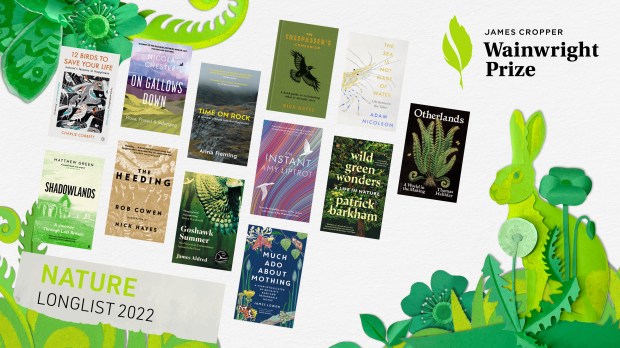
My thoughts: I have read and loved Goshawk Summer and On Gallows Down—the latter would be my overall top recommendation for the prize for how it fuses place-based memoir and passion for protecting wildlife and landscapes. I’ve also read The Heeding and The Instant but had mixed feelings about both. I’ve had the Barkham, Halliday and Nicolson out from the library but realized I only wanted to skim them – they were too dense (or, in the case of Barkham’s collected columns, too disparate) to read right through. I have a review copy of Much Ado about Mothing and have been finding it a delightful nature quest. I don’t know much about the four other titles, but would gladly read them if I found copies.
The 2022 James Cropper Wainwright Prize for Writing on Conservation:
- Abundance: Nature in Recovery, Karen Lloyd (Bloomsbury Wildlife)
- Aurochs and Auks, John Burnside (Little Toller Books)
- Climate Change Is Racist, Jeremy Williams and Dr Shola Mos-Shogbamimu (Icon Books)
- Divide: The relationship crisis between town and country, Anna Jones (Kyle Books)
- Eating to Extinction: The World’s Rarest Foods and Why We Need to Save Them, Dan Saladino (Jonathan Cape)
- Our Biggest Experiment: A History of the Climate Crisis, Alice Bell (Bloomsbury Sigma)
- Regenesis: Feeding the World Without Devouring the Planet, George Monbiot (Allen Lane)
- Silent Earth: Averting the Insect Apocalypse, Dave Goulson (Vintage)
- Soundings: Journeys in the Company of Whales, Doreen Cunningham (Virago)
- The Insect Crisis: The Fall of the Tiny Empires that Run the World, Oliver Milman (Atlantic Books)
- The Treeline: The Last Forest and the Future of Life on Earth, Ben Rawlence (Jonathan Cape)
- The Women Who Saved the English Countryside, Matthew Kelly (Yale University Press)
- Wild Fell: Fighting for nature on a Lake District hill farm, Lee Schofield (Doubleday)
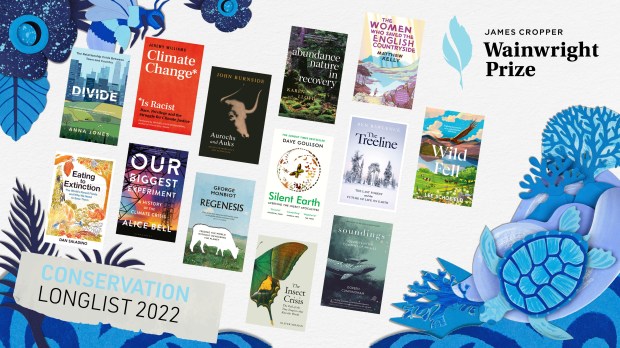
My thoughts: I’ve only read Aurochs and Auks and Silent Earth (which I reviewed for Shelf Awareness and would gladly see win the prize for shedding light on an aspect of the biodiversity crisis that’s not talked about enough; curious to longlist a second book, the Milman, on the same topic, though). I’d happily read any of the others. I’m particularly interested in Soundings, which I already have on my e-reader from a review opportunity I passed up.
The 2022 James Cropper Wainwright Prize for Children’s Writing on Nature and Conservation longlist:
- A Bug’s World, Dr Erica McAlister, illustrated by Stephanie Fizer Coleman (Wren & Rook)
- Around the World in 80 Trees, Ben Lerwill, illustrated by Kaja Kajfež (Welbeck)
- By Rowan and Yew, Melissa Harrison (Chicken House)
- Julia and the Shark, Kiran Millwood Hargrave, illustrated by Tom de Freston (Orion Children’s Books)
- Nests, Susan Ogilvy (Particular Books)
- October, October, Katya Balen, illustrated by Angela Harding (Bloomsbury Children’s Books)
- One World: 24 Hours on Planet Earth, Nicola Davies, illustrated by Jenni Desmond (Walker Books)
- Spark, Mitch Johnson (Orion Children’s Books)
- The Biggest Footprint: Eight billion humans. One clumsy giant, Rob Sears, illustrated by Tom Sears (Canongate)
- The Summer We Turned Green, William Sutcliffe (Bloomsbury YA)
- Twitch, M.G. Leonard (Walker Books)
- Wild Child: A Journey Through Nature, Dara McAnulty, illustrated by Barry Falls (Macmillan Children’s Books)

My thoughts: To my surprise, I’d read two of these: October, October and Wild Child. I’ve also read the Harrison novel that preceded this one. I’ve read other novels by Hargrave so would read this one, too. I’m unlikely to seek out any of the rest, but I’m pleased this new prize exists. If children are our only hope for surviving the climate crisis as a species, then we have to get them on-side as early as possible.
Overall thoughts: Pretty good representation of women on the lists! Just one person of colour this year, I think. A good mix of subjects; not too much repetition. (My husband (an entomologist) was pleased to see four books about insects.) And a decent balance of veteran versus new writers. I look forward to following the process and seeing who makes it through to the shortlist (on 28 July, with the winners to be announced on 7 September).
Have you read anything from the Wainwright Prize longlists?
Which of these books take your fancy?
Women’s Prize Shadowing & Men Reading Books by Women
Back in April I announced that my book club was one of six selected to shadow this year’s Women’s Prize shortlist by reading and discussing one of the finalists. Our assigned title was one I’d already read, but I skimmed back through it before our meet-up and enjoyed getting reacquainted with Martha Friel. Here’s our group’s review:

Sorrow and Bliss by Meg Mason
Readability: 5/5
Characters: 5/5
Storyline: 4/5
Can’t Put It Down: 4.5/5
Total = 18.5/20
 Our joint highest rating, and one of our best discussions – taking in mental illness and its diagnosis and treatment, marriage, childlessness, alcoholism, sisterhood, creativity, neglect, unreliable narrators and loneliness. For several of us, these issues hit close to home due to personal or family experience. We particularly noted the way that Mason sets up parallels between pairs of characters, accurately reflecting how family dynamics can be replicated in later generations.
Even the minor characters are fully rounded, and although Martha is not always pleasant to spend time with, her voice is impressively rendered. The picture of mental illness from the inside feels authentic, including the fact that Martha uses it as an excuse for her bad behaviour, becoming self-absorbed and not seeing how she is affecting others around her. Our main point of disagreement was about Mason’s decision not to name the mental illness Martha is suffering from. It seemed clear to several of us that it was meant to be bipolar disorder, so we wondered if it was a copout not to identify it as such.
We also thought about the meaning of the term “literary fiction”, and whether this has the qualities of a prize winner and will stand the test of time.
We had to fill out a feedback questionnaire about our experience of shadowing, and most of us sent in individual blurbs in response to the book. Some ended up in the final Reading Agency article. Here was mine:
“This deceptively light novel was a perfect book club selection, eliciting deep discussion about mental illness, family relationships and parenthood. Martha’s (unreliable) narration is a delight, wry and deadpan but also with moments of wrenching emotion. Mason masterfully controls the tone to create something that is witty and poignant all at once.”
Probably the main reason we were chosen for this opportunity is that we have a man – my husband, that is! – who attends regularly. This year the prize has been particularly keen to get more men reading books by women (see more below). So, he was responsible for giving The Male Response to the novel. No pressure, right? Luckily, he enjoyed it just as much as the rest of us. From the cover and blurb, it didn’t necessarily seem like the sort of book that he would pick up to read for himself, but he was fully engaged with the themes of mental illness, family relationships, and the question of whether or not to have children, and was so compelled that he read over half of it in a day.
I’m not sure who I expect to be awarded the Women’s Prize tomorrow. We of West Fields Readers would be delighted if it went to Meg Mason for Sorrow and Bliss, but I’d also be happy with a win for Louise Erdrich or Ruth Ozeki – though I wasn’t taken with their latest works compared with earlier ones I’ve read, they are excellent authors who deserve recognition. I don’t think The Bread the Devil Knead has a chance; I’d be disappointed in a win by Elif Shafak in that I would feel obligated to try her novel – the kind that gives magic realism a bad name – again; and, while I’m a Maggie Shipstead fan in general and admire the ambition of Great Circle, it would be galling for a book I DNFed twice to take the title!
Who are you rooting for/predicting?
I’d like to mock you with that thought,
jeer at the man
who won’t read novels
written by women –
at least not if they’re still alive
~from The Poet by Louisa Reid
Maybe you’ve seen on social media that the Women’s Prize has been canvassing opinion on the books by women that all men should read. This was prompted by some shocking statistics suggesting that even bestselling female authors can only attract a 20% male readership, whereas the best-known male authors are almost equally popular with men and women. They solicited 60 nominations from big names and ran a public poll. I voted for these 10:
Half of a Yellow Sun (Chimamanda Ngozi Adichie)
Possession (A.S. Byatt)
Homegoing (Yaa Gyasi)
The Poisonwood Bible (Barbara Kingsolver)
The Sea, The Sea (Iris Murdoch)
The Stone Diaries (Carol Shields)
We Need to Talk about Kevin (Lionel Shriver)
Olive Kitteridge (Elizabeth Strout)
The Goldfinch (Donna Tartt)
Orlando (Virginia Woolf)
*If I could have added to that list, though, my top recommendations for all men to read would be Station Eleven by Emily St. John Mandel and Bring Up the Bodies by Hilary Mantel (and probably a different Octavia E. Butler novel from the one nominated).


Three of my selections were among the 10 essential reads announced on the WP website. Their list was headed by Margaret Atwood’s The Handmaid’s Tale, though of her works I’d be more likely to direct men to Oryx and Crake.
I’ve seen discussions on Twitter about why men don’t read novels (at all, prioritizing nonfiction), or specifically not ones by women. Do you have any theories?
 Bookish Beck = Rebecca Foster. American transplant to England. Freelance proofreader and book reviewer.
 Bookish Beck